
BMW 328 Roadster
Brand
Produced from
Portal
Vehicle category
Model line
Predecessor
Successor
Submodel Overview
In the swirling mists of the Eifel mountains in June 1936, the European motorsport establishment was utterly transfixed by the pursuit of absolute, supercharged power. The paddock of the Nürburgring was a deafening theatre dominated by the monstrous, shrieking Silver Arrows of Mercedes-Benz and Auto Union. Against this backdrop of heavy, brutalist machinery, a relatively young Bavarian automaker unveiled a vehicle that fundamentally rejected the era’s obsession with brute force. BMW, having cut its teeth on the charming but ultimately outgunned 315/1 and 319/1 sports cars, recognized that to conquer the lucrative 2.0-liter class, they required a clean-sheet paradigm shift. The result was the 1936 BMW 328 Roadster in its purest, standard factory configuration. Before the experimental ‘Bügelfalte’ or the slippery Touring-bodied coupes emerged for the Mille Miglia, this original open-top roadster was the absolute genesis of the legend. It stepped into a fiercely competitive arena, staring down the rugged Aston Martin 2-Litre Speed models, the exquisite Alfa Romeo 6C 2300s, and the nimble Riley TT Sprites. Yet, the 328 Roadster did not merely join their ranks; it wielded a devastating combination of featherweight construction, surgical handling, and mechanical ingenuity that instantly rendered the traditional sports car architecture gloriously obsolete.
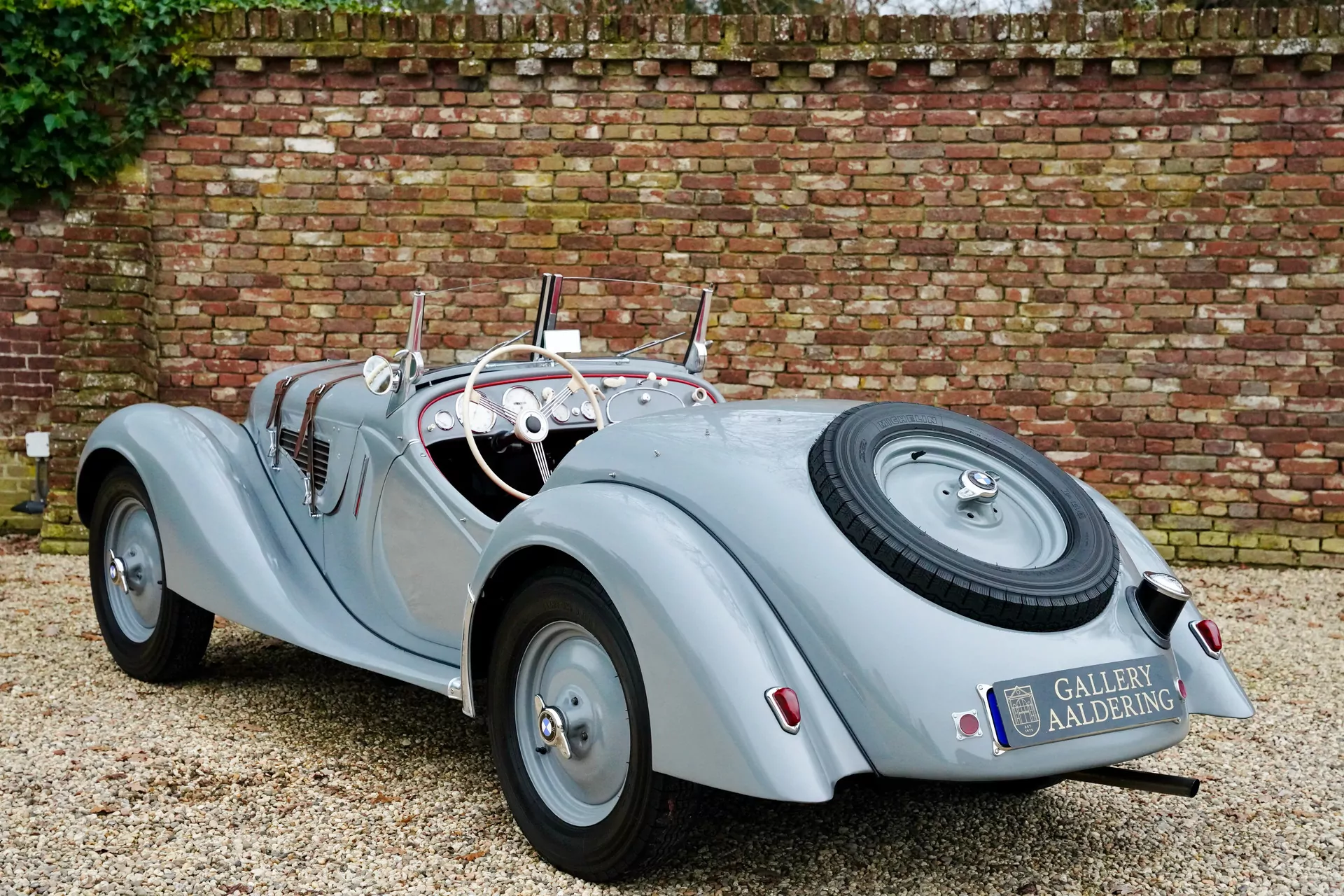
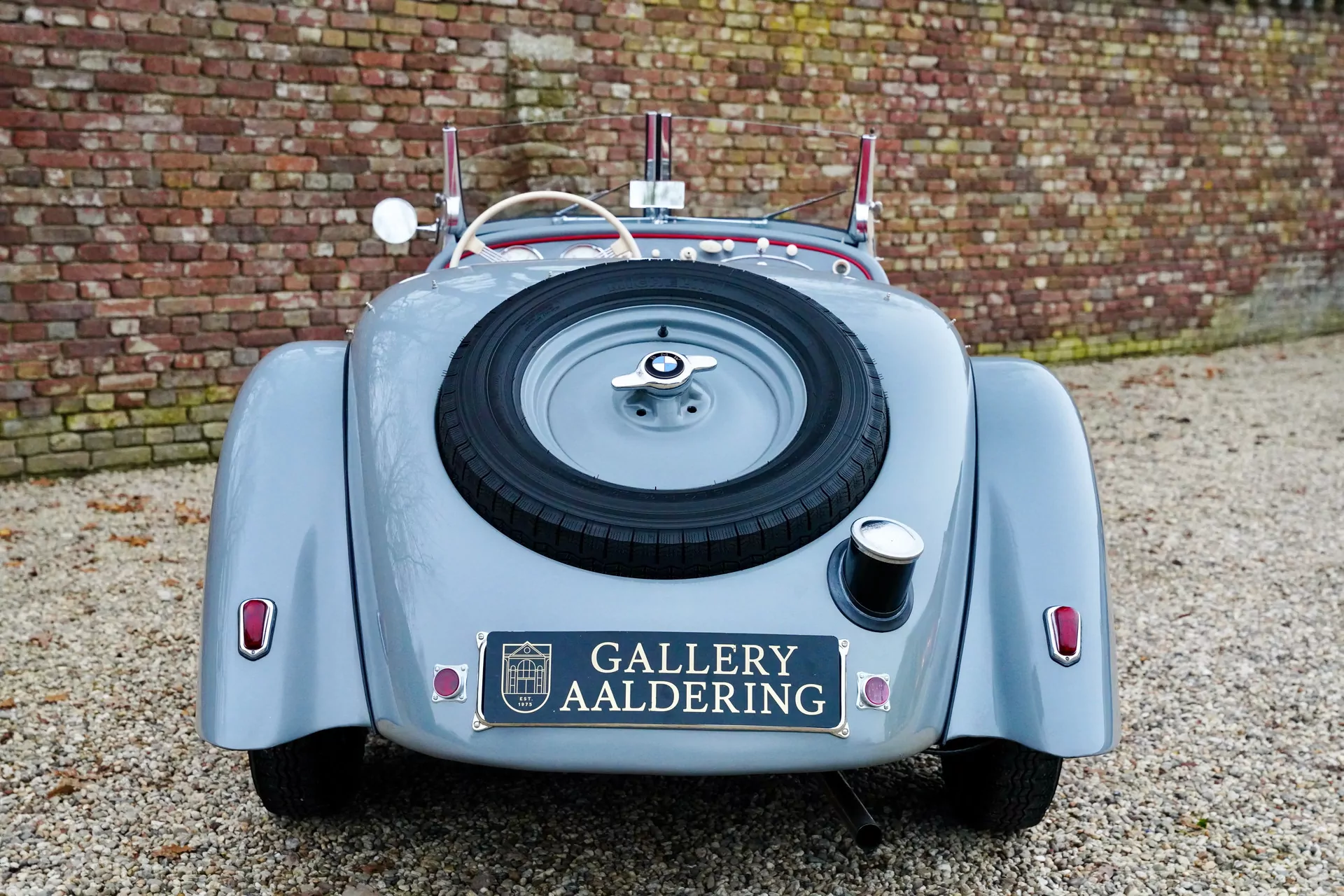
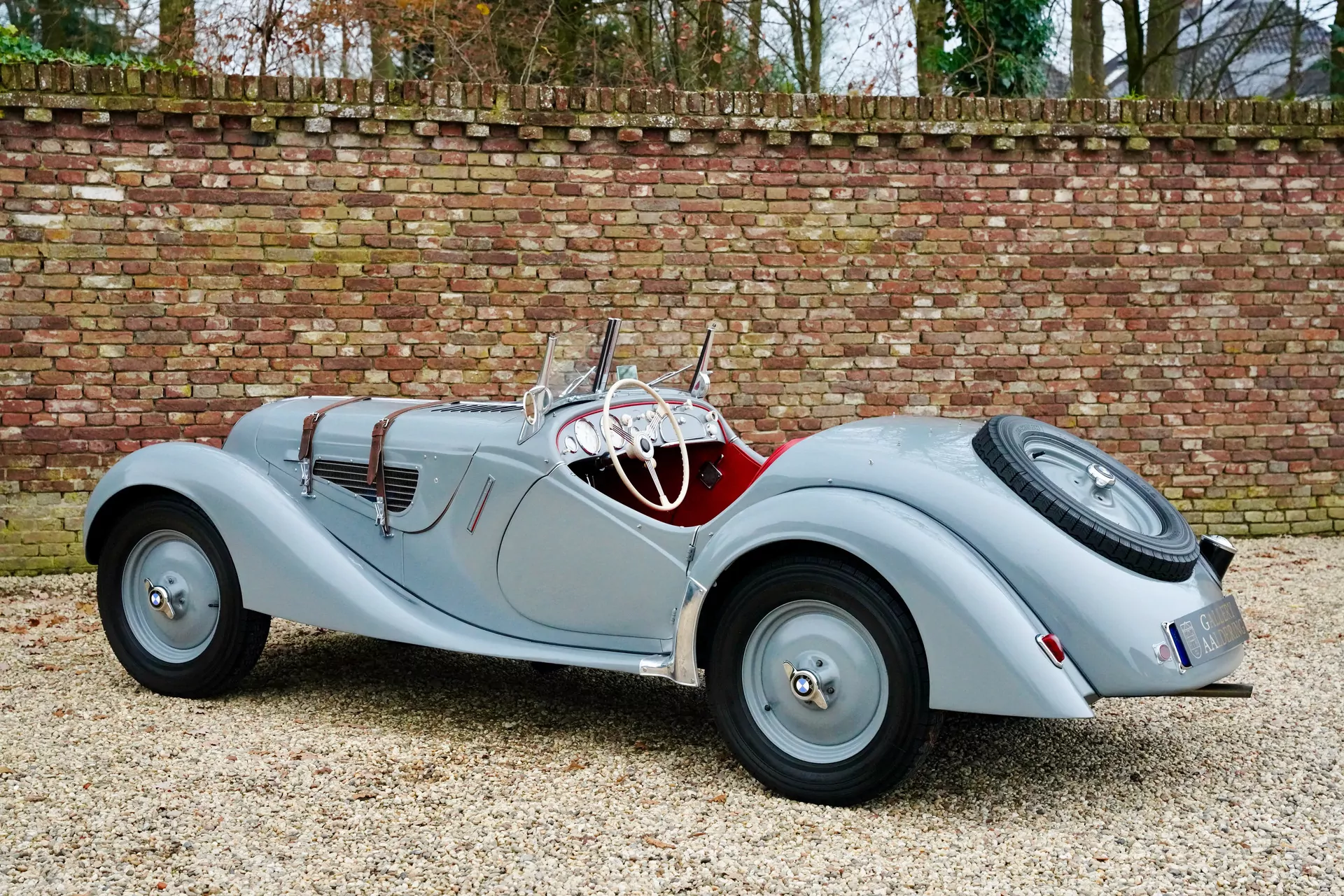
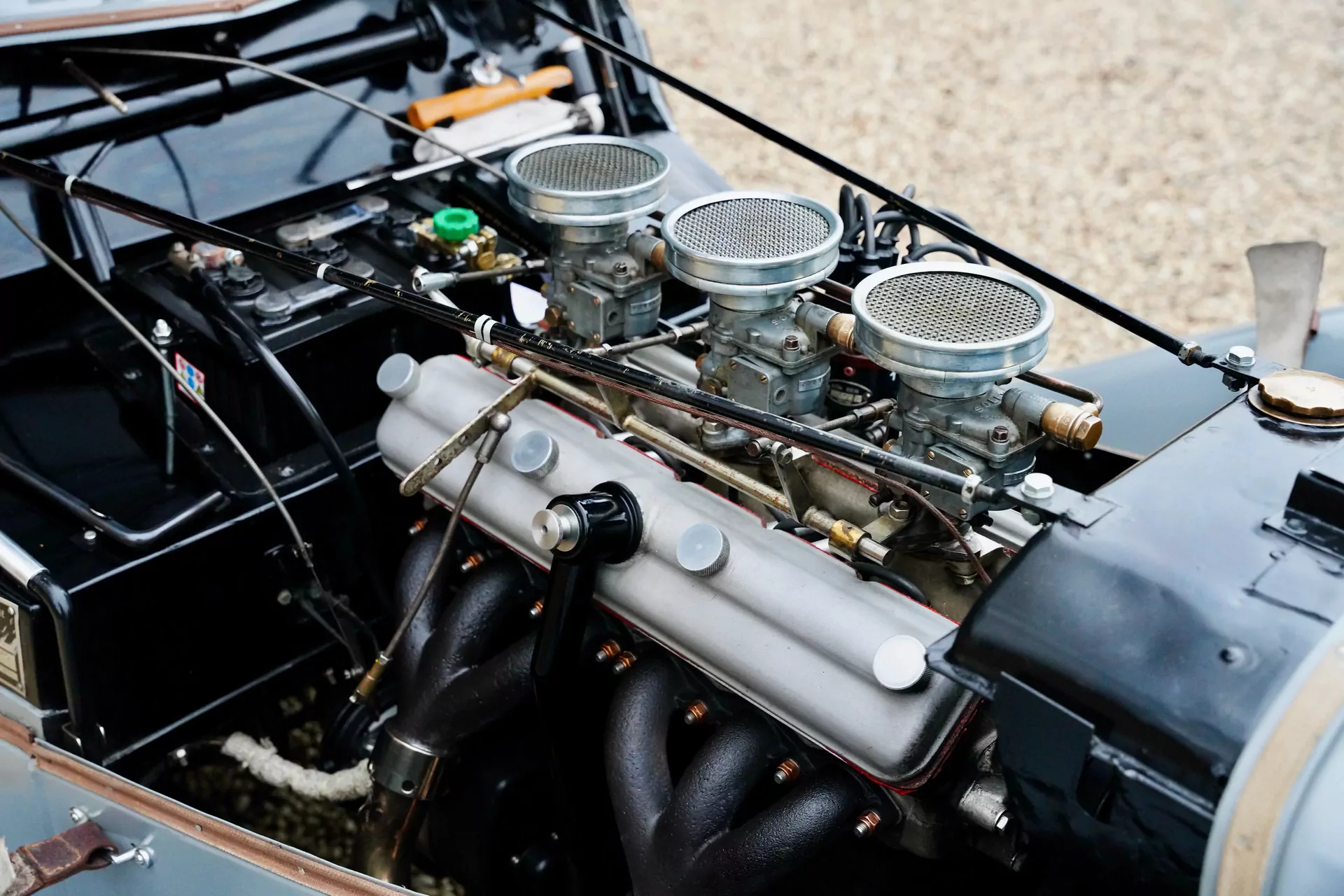
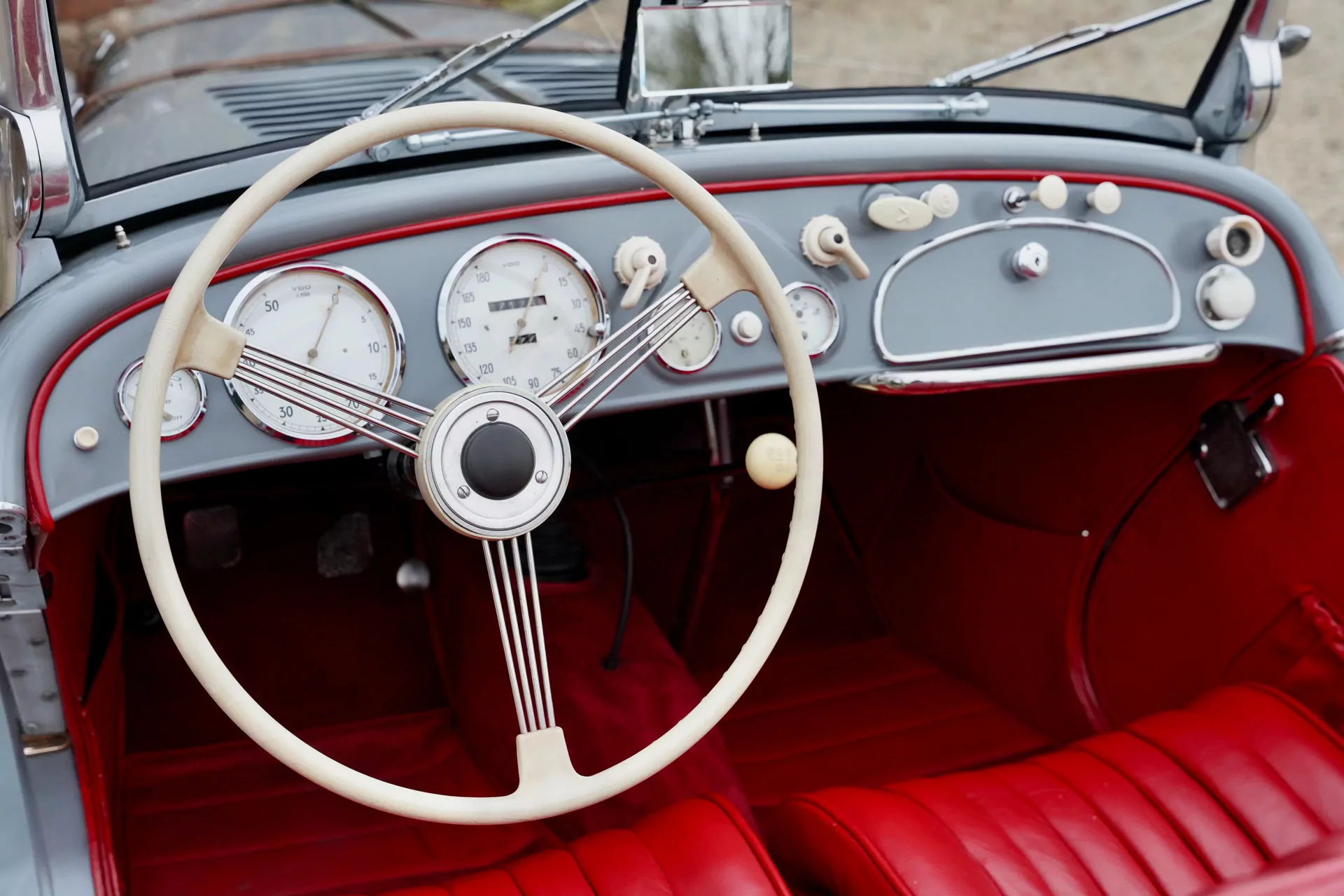
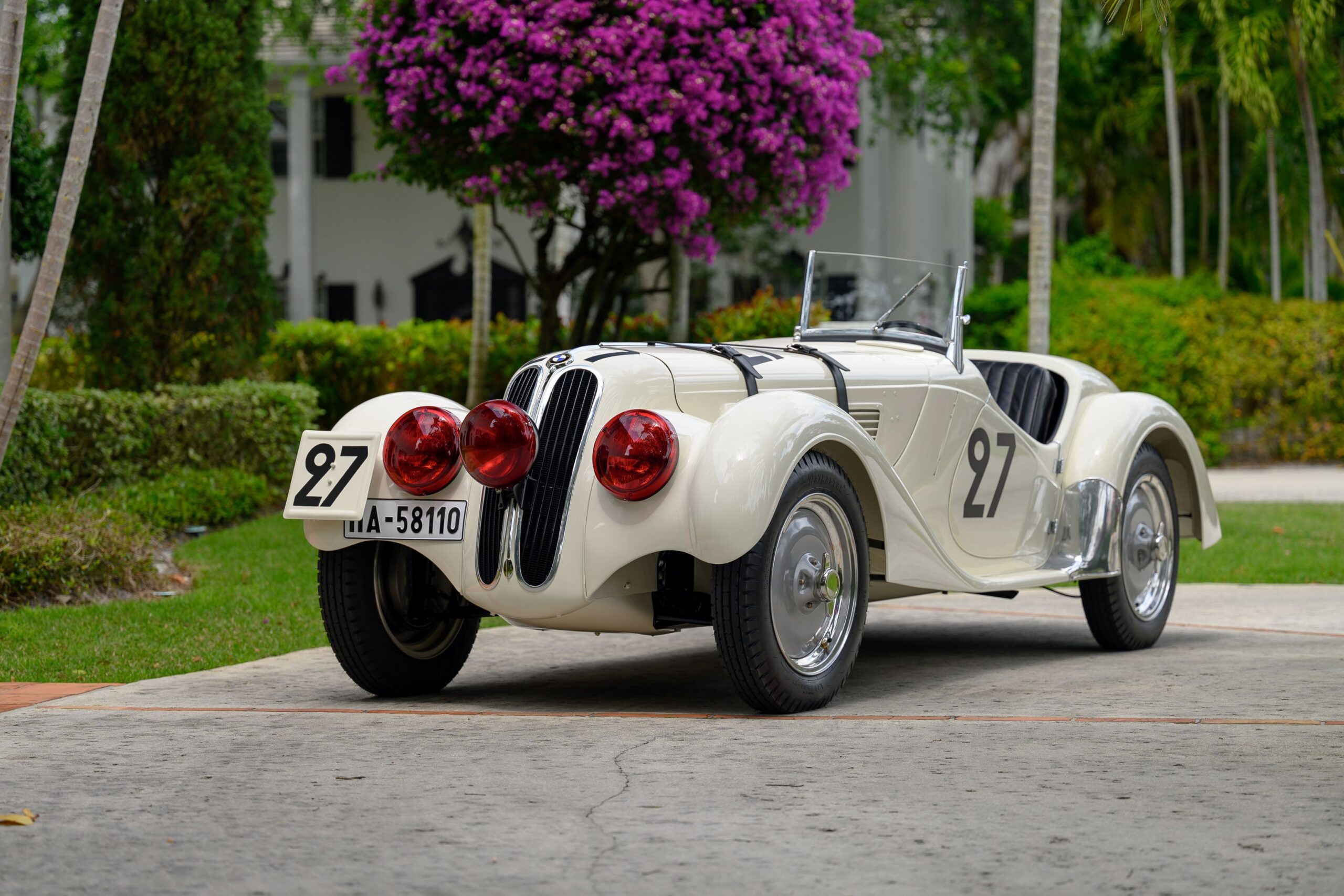
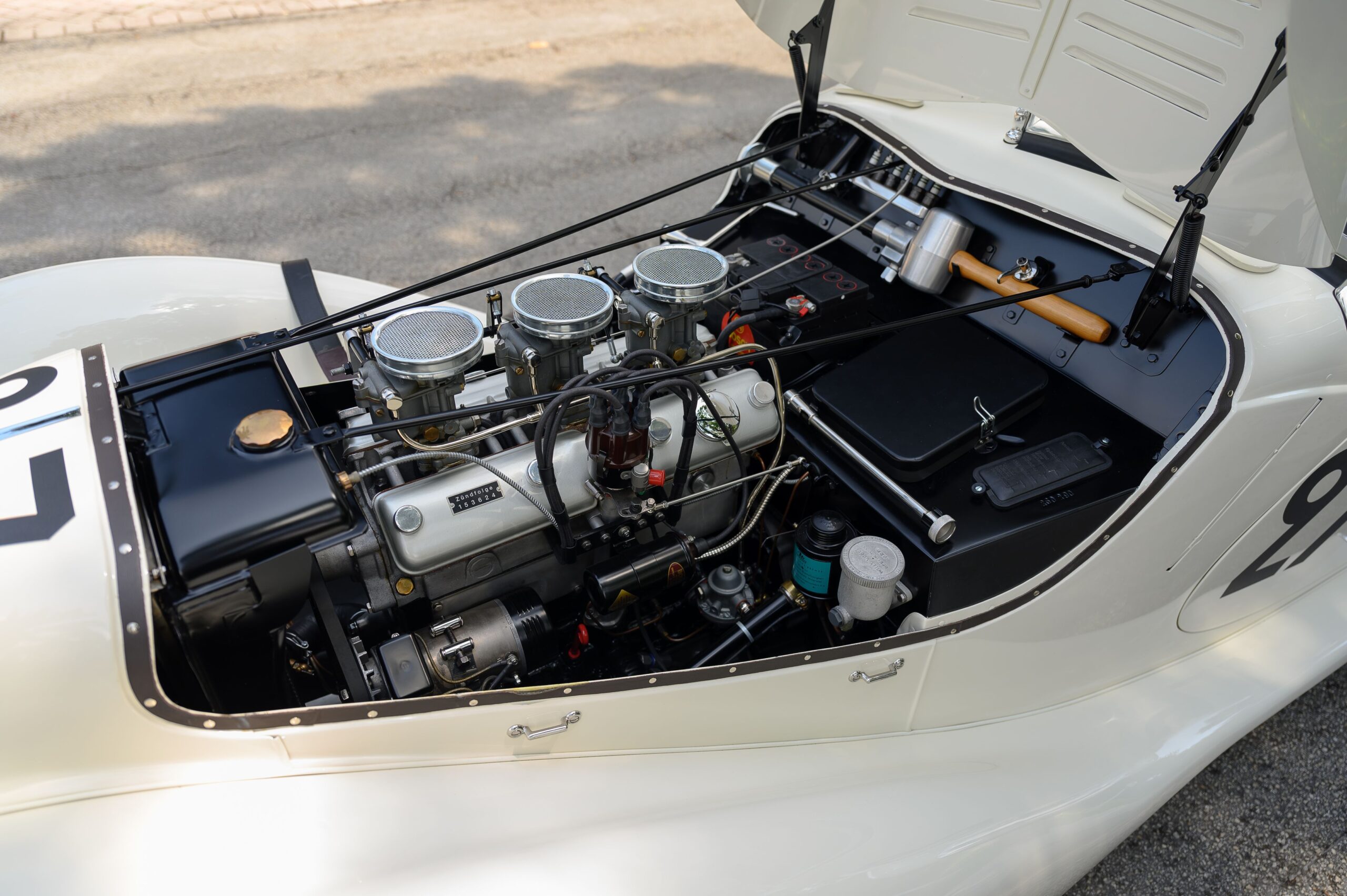
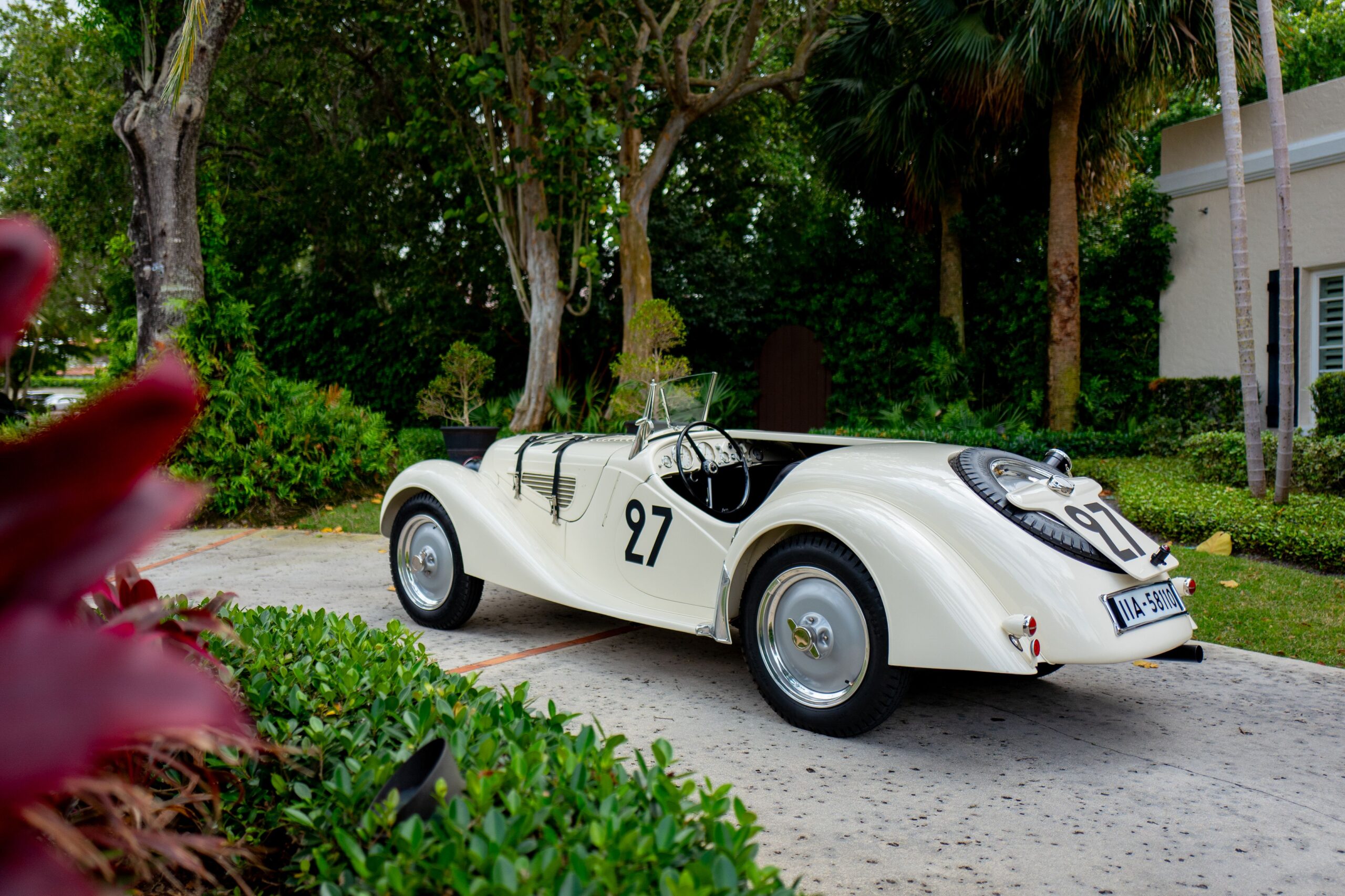
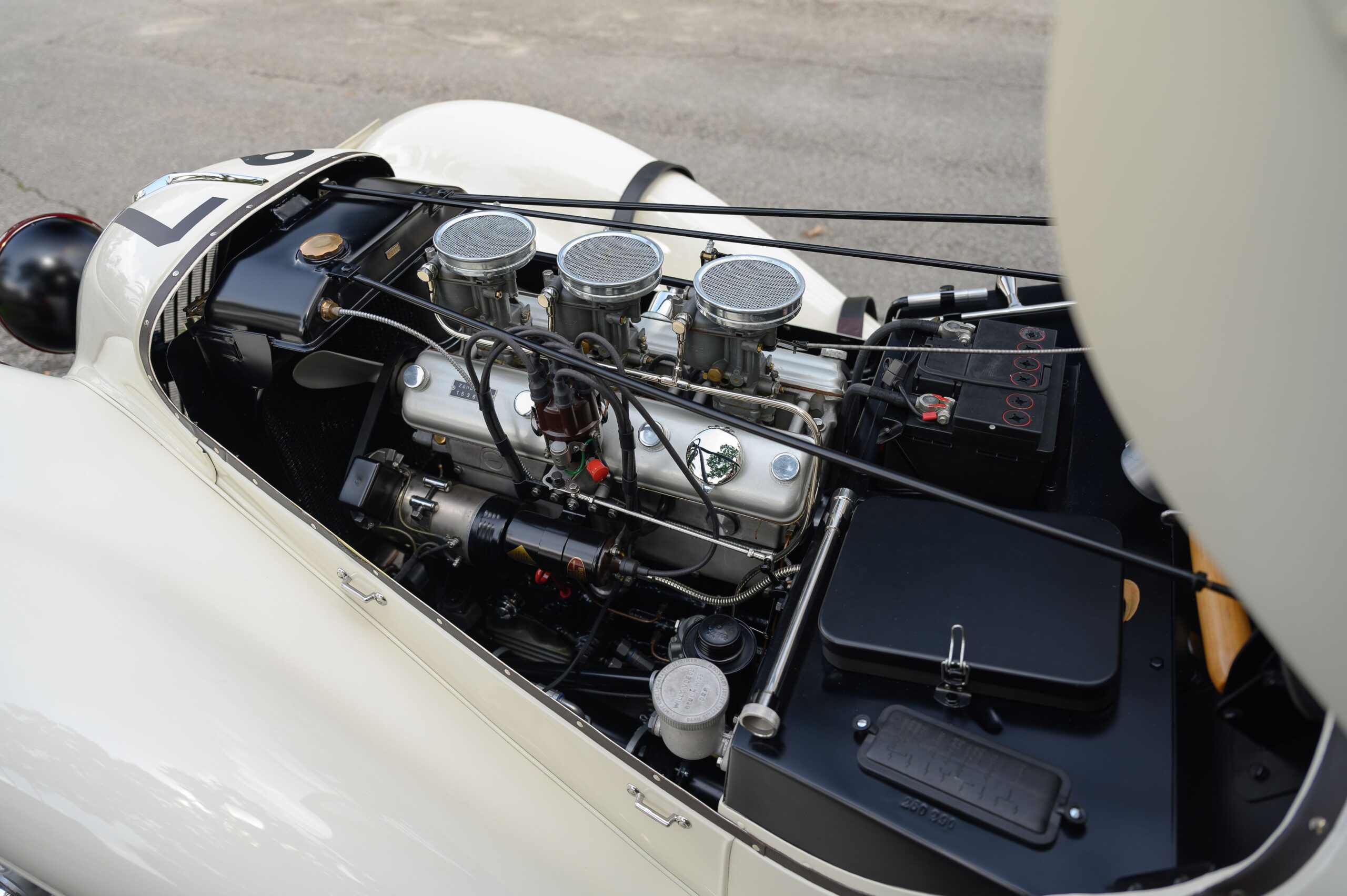
To trace the flowing, deeply scalloped fenders of the 1936 BMW 328 Roadster is to witness the birth of modern automotive dynamics. The exterior design was a triumph of functional elegance, featuring integrated headlamps—a stark departure from the freestanding chrome buckets of its rivals—and a long, leather-strapped bonnet crowned by the now-iconic, vertical twin-kidney grille. Beneath this beautiful, lightweight aluminum skin, chief engineer Fritz Fiedler had engineered an incredibly stiff, tubular A-frame chassis, entirely abandoning the heavy, flexible ladder-frame orthodoxy of the 1930s. The suspension utilized a sophisticated independent transverse leaf spring arrangement at the front, paired with a live rear axle and hydraulic shock absorbers. Stopping power was provided by advanced hydraulic drum brakes, ensuring the featherweight 830-kilogram roadster could out-brake heavier competition. However, the undisputed jewel of the 328 Roadster was its engine: the 1,971cc M328 naturally aspirated straight-six. Engineer Rudolf Schleicher, seeking the breathing advantages of a hemispherical combustion chamber without the immense cost and weight of a twin-cam setup, devised a mechanical masterstroke. He utilized a single, block-mounted camshaft. The intake valves were operated by conventional pushrods, while the exhaust valves were actuated by an ingenious secondary system of transverse pushrods and bell cranks reaching across the cylinder head. Breathing through a trio of downdraft Solex carburetors, this 80-horsepower marvel was a paragon of smooth, high-revving tractability, propelling the roadster to speeds approaching 150 km/h (93 mph). Inside, the cockpit was a beautifully spartan, driver-focused sanctuary. The pilot sat behind a large, thin-rimmed steering wheel, facing a painted metal dash equipped with large, highly legible white-on-black VDO instruments. There was no radio, no excess trim—just the vital telemetry required to operate a precision instrument at the absolute limit.
The historical impact of the standard 328 Roadster is the stuff of pure motorsport mythology. Its competition debut occurred at the grueling Eifelrennen at the Nürburgring on June 14, 1936. Piloted by the fearless German motorcycle record-breaker Ernst Henne, the prototype 328 Roadster, completely unsupercharged, shattered the 2.0-liter class lap record and secured an astonishing victory that left the supercharged fraternity in a state of shock. From that single afternoon, the standard 328 Roadster became the absolute weapon of choice for the serious privateer and gentleman racer across Europe. It possessed an inherent, forgiving balance that allowed drivers to carry immense momentum through corners, preserving momentum where heavier cars had to brake and accelerate. It dominated the grueling Alpine Rallies, conquered the RAC Tourist Trophy in the hands of British aces like A.F.P. Fane, and secured over a hundred class victories by the end of 1937. Commercially, the 328 Roadster was an exclusive, highly coveted halo car. BMW produced just 464 examples before the outbreak of the Second World War brought civilian production to a grinding halt. It was a car driven by aristocrats, wealthy playboys, and dedicated racers, cementing BMW’s reputation across the continent not just as an engine builder, but as a creator of dynamic perfection.
The legacy of the 1936 BMW 328 Roadster is sovereign and undeniable. It is the purest distillation of the philosophy that would eventually earn BMW the title of the “Ultimate Driving Machine”. While the specialized aerodynamic coupes of 1939 and 1940 often steal the historical limelight for their Mille Miglia exploits, it was this standard, open-top roadster that laid the indestructible foundation. Furthermore, the sheer brilliance of the 328’s engineering could not be extinguished by global conflict. After the war, the blueprints and tooling for the M328 engine and the Fiedler chassis were requisitioned as war reparations by the British, directly birthing Bristol Cars and providing the legendary straight-six heartbeat for the iconic AC Ace. Today, a genuine 1936-specification BMW 328 Roadster is one of the most revered and highly sought-after pre-war sports cars in existence. It is an absolute blue-chip masterpiece, celebrated not just for its breathtaking aesthetic beauty, but as the featherweight, straight-six giant-killer that forever changed the trajectory of performance driving.
Brand
Produced from
Portal
Vehicle category
Model line
Predecessor
Sucessor
Brand
Produced from
Portal
Vehicle category
Model line
Model generation
Predecessor
Sucessor
Submodel Overview
In the swirling mists of the Eifel mountains in June 1936, the European motorsport establishment was utterly transfixed by the pursuit of absolute, supercharged power. The paddock of the Nürburgring was a deafening theatre dominated by the monstrous, shrieking Silver Arrows of Mercedes-Benz and Auto Union. Against this backdrop of heavy, brutalist machinery, a relatively young Bavarian automaker unveiled a vehicle that fundamentally rejected the era’s obsession with brute force. BMW, having cut its teeth on the charming but ultimately outgunned 315/1 and 319/1 sports cars, recognized that to conquer the lucrative 2.0-liter class, they required a clean-sheet paradigm shift. The result was the 1936 BMW 328 Roadster in its purest, standard factory configuration. Before the experimental ‘Bügelfalte’ or the slippery Touring-bodied coupes emerged for the Mille Miglia, this original open-top roadster was the absolute genesis of the legend. It stepped into a fiercely competitive arena, staring down the rugged Aston Martin 2-Litre Speed models, the exquisite Alfa Romeo 6C 2300s, and the nimble Riley TT Sprites. Yet, the 328 Roadster did not merely join their ranks; it wielded a devastating combination of featherweight construction, surgical handling, and mechanical ingenuity that instantly rendered the traditional sports car architecture gloriously obsolete.
To trace the flowing, deeply scalloped fenders of the 1936 BMW 328 Roadster is to witness the birth of modern automotive dynamics. The exterior design was a triumph of functional elegance, featuring integrated headlamps—a stark departure from the freestanding chrome buckets of its rivals—and a long, leather-strapped bonnet crowned by the now-iconic, vertical twin-kidney grille. Beneath this beautiful, lightweight aluminum skin, chief engineer Fritz Fiedler had engineered an incredibly stiff, tubular A-frame chassis, entirely abandoning the heavy, flexible ladder-frame orthodoxy of the 1930s. The suspension utilized a sophisticated independent transverse leaf spring arrangement at the front, paired with a live rear axle and hydraulic shock absorbers. Stopping power was provided by advanced hydraulic drum brakes, ensuring the featherweight 830-kilogram roadster could out-brake heavier competition. However, the undisputed jewel of the 328 Roadster was its engine: the 1,971cc M328 naturally aspirated straight-six. Engineer Rudolf Schleicher, seeking the breathing advantages of a hemispherical combustion chamber without the immense cost and weight of a twin-cam setup, devised a mechanical masterstroke. He utilized a single, block-mounted camshaft. The intake valves were operated by conventional pushrods, while the exhaust valves were actuated by an ingenious secondary system of transverse pushrods and bell cranks reaching across the cylinder head. Breathing through a trio of downdraft Solex carburetors, this 80-horsepower marvel was a paragon of smooth, high-revving tractability, propelling the roadster to speeds approaching 150 km/h (93 mph). Inside, the cockpit was a beautifully spartan, driver-focused sanctuary. The pilot sat behind a large, thin-rimmed steering wheel, facing a painted metal dash equipped with large, highly legible white-on-black VDO instruments. There was no radio, no excess trim—just the vital telemetry required to operate a precision instrument at the absolute limit.
The historical impact of the standard 328 Roadster is the stuff of pure motorsport mythology. Its competition debut occurred at the grueling Eifelrennen at the Nürburgring on June 14, 1936. Piloted by the fearless German motorcycle record-breaker Ernst Henne, the prototype 328 Roadster, completely unsupercharged, shattered the 2.0-liter class lap record and secured an astonishing victory that left the supercharged fraternity in a state of shock. From that single afternoon, the standard 328 Roadster became the absolute weapon of choice for the serious privateer and gentleman racer across Europe. It possessed an inherent, forgiving balance that allowed drivers to carry immense momentum through corners, preserving momentum where heavier cars had to brake and accelerate. It dominated the grueling Alpine Rallies, conquered the RAC Tourist Trophy in the hands of British aces like A.F.P. Fane, and secured over a hundred class victories by the end of 1937. Commercially, the 328 Roadster was an exclusive, highly coveted halo car. BMW produced just 464 examples before the outbreak of the Second World War brought civilian production to a grinding halt. It was a car driven by aristocrats, wealthy playboys, and dedicated racers, cementing BMW’s reputation across the continent not just as an engine builder, but as a creator of dynamic perfection.
The legacy of the 1936 BMW 328 Roadster is sovereign and undeniable. It is the purest distillation of the philosophy that would eventually earn BMW the title of the “Ultimate Driving Machine”. While the specialized aerodynamic coupes of 1939 and 1940 often steal the historical limelight for their Mille Miglia exploits, it was this standard, open-top roadster that laid the indestructible foundation. Furthermore, the sheer brilliance of the 328’s engineering could not be extinguished by global conflict. After the war, the blueprints and tooling for the M328 engine and the Fiedler chassis were requisitioned as war reparations by the British, directly birthing Bristol Cars and providing the legendary straight-six heartbeat for the iconic AC Ace. Today, a genuine 1936-specification BMW 328 Roadster is one of the most revered and highly sought-after pre-war sports cars in existence. It is an absolute blue-chip masterpiece, celebrated not just for its breathtaking aesthetic beauty, but as the featherweight, straight-six giant-killer that forever changed the trajectory of performance driving.
Tech Specs
Technical Specifications
Tech Specs
Technical Specifications
Engine
01
03
Internal combustion engine
Configuration
BMW M328, Inline-6
Location
Front, longitudinally mounted
Construction
Cast iron block and Aluminium alloy head (Hemispherical combustion chambers)
Displacement (cc)
1,971 cc
Displacement (cu in)
120.3 cu in
Compression
7.5:1
Bore x Stroke
66.0 mm x 96.0 mm
Valvetrain
2 valves per cylinder, OHV (Ingenious transverse pushrod layout for exhaust valves)
Fuel feed
3 x Solex 30 JF downdraft carburetors
Lubrication
Wet sump
Aspiration
Naturally aspirated
Output
Power (hp)
80 hp
Power (kW)
59 kW
Max power at
5,000 RPM
Torque (Nm)
128 Nm
Torque (ft lbs)
94 ft lbs
Max torque at
4,000 RPM
Drivetrain
02
03
Chassis
Type
Tubular A-frame ladder chassis
Material
Steel
Body
Material
Aluminium
Transmission
Gearbox
Hurth or ZF 4-speed manual
Drive
Rear Wheel Drive
Suspension
Front
Independent, lower wishbones, transverse semi-elliptic leaf spring, hydraulic shock absorbers
Rear
Live axle, semi-elliptic leaf springs, hydraulic shock absorbers
Steering
Type
Rack and pinion, unassisted
Brakes
Front
Hydraulic drum brakes Ø280 mm
Rear
Hydraulic drum brakes Ø280 mm
Wheels
Front
16" Center-lock steel disc or wire wheels
Rear
16" Center-lock steel disc or wire wheels
Tires
Front
5.50-16 (Cross-ply)
Rear
5.50-16 (Cross-ply)
Dimensions and performance
03
03
Dimensions
Length (mm)
3,900 mm
Length (in)
153.5 in
Width (mm)
1,550 mm
Width (in)
61.0 in
Height (mm)
1,400 mm
Height (in)
55.1 in
Wheelbase (mm)
2,400 mm
Wheelbase (in)
94.5 in
Weight (kg)
830 kg
Weight (lbs)
1,830 lbs
Performance
Power to weight
~0.10 hp/kg
Top speed (km/h)
+150 km/h
Top speed (mph)
93 mph
0-100 km/h (0-60 mph)
~10.5 s