Porsche 911 IV (996.1)
Brand
Produced from
Vehicle category
Portal
Model line
Model generation
Sucessor
Generation Overview
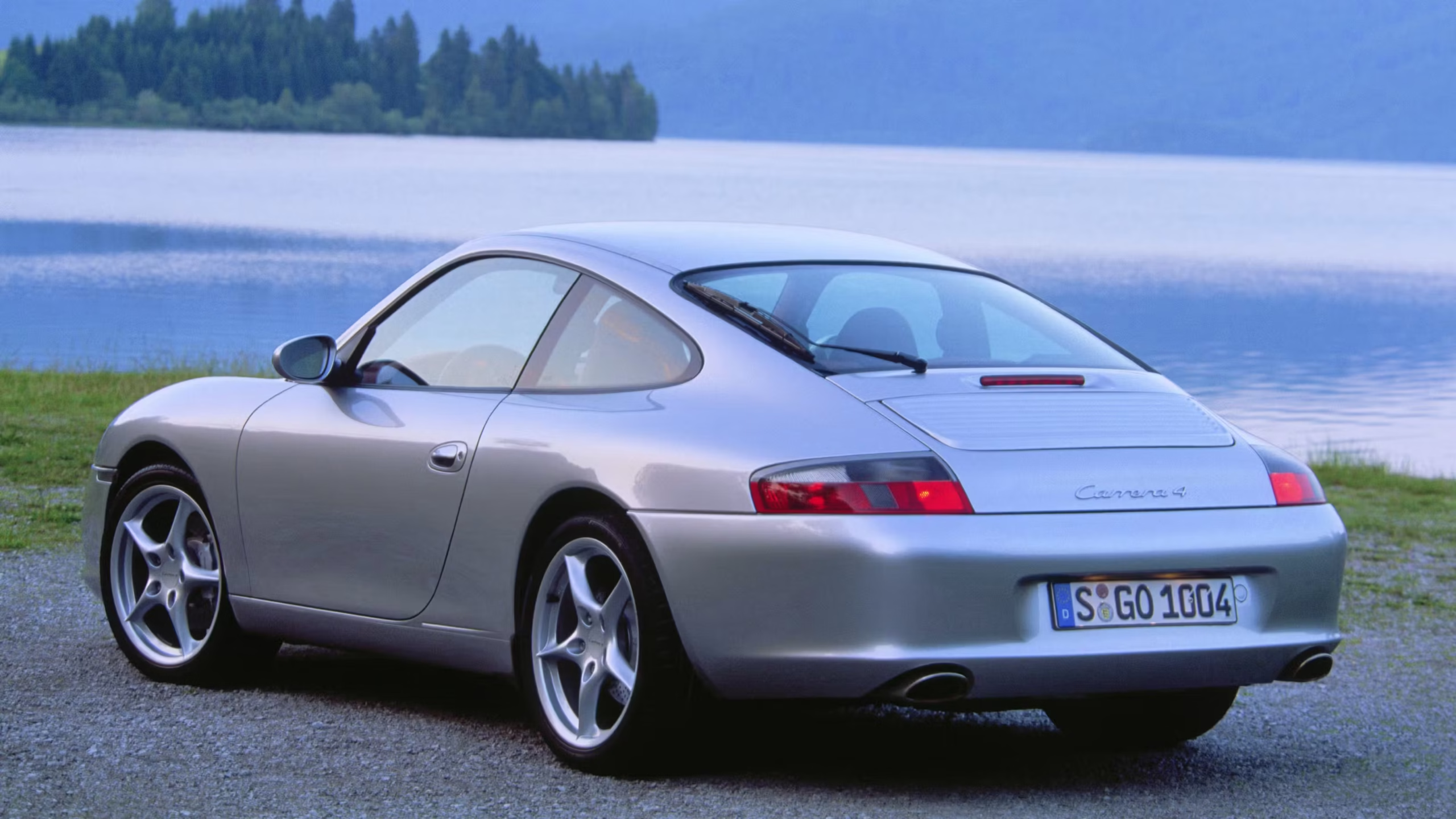
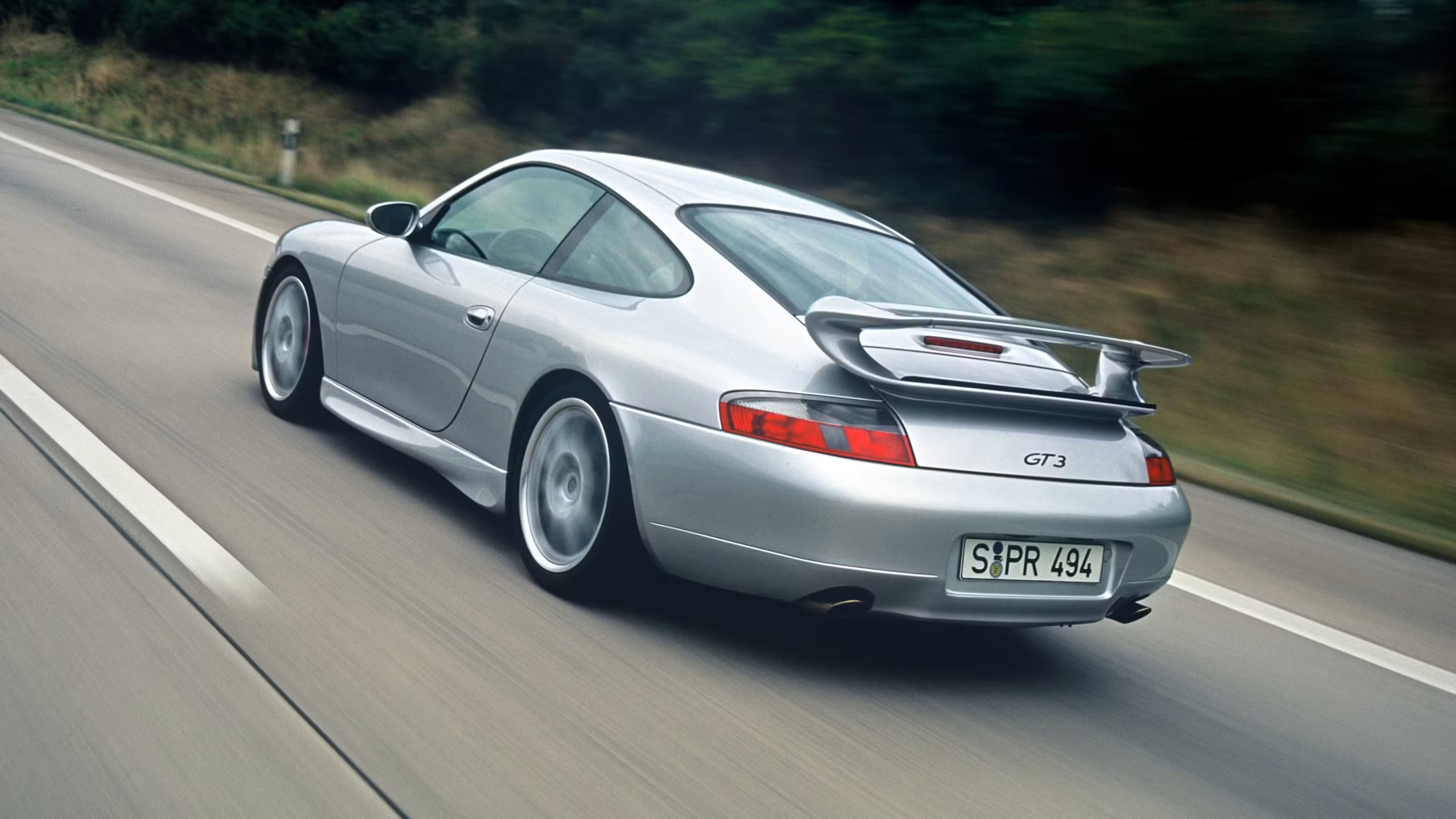
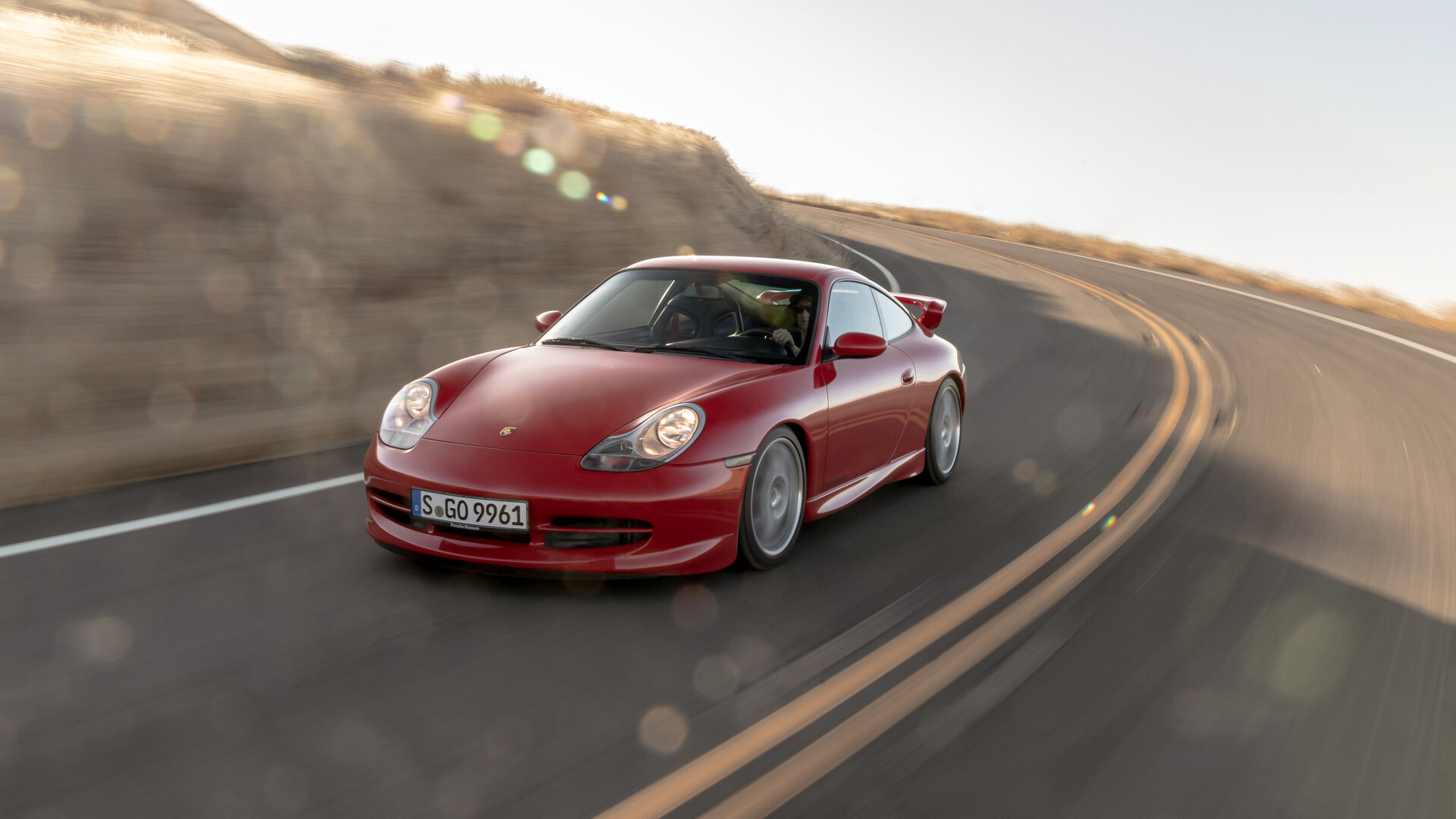
To fully grasp the magnitude of the 1997 Porsche 911 (Type 996.1), one must first understand the existential dread gripping Zuffenhausen in the early 1990s. Porsche was hemorrhaging money, trapped by its own heritage. The outgoing 993 generation, while arguably the ultimate, most refined expression of the air-cooled philosophy, took twice as long to build as its Japanese competitors and cost a fortune to manufacture. The company was staring down the barrel of acquisition or bankruptcy. Enter CEO Wendelin Wiedeking, who initiated a ruthless, Japanese-inspired lean manufacturing revolution. To survive, the beloved 911 had to be fundamentally reinvented. When the 996.1 was finally unveiled at the 1997 Frankfurt Motor Show, it landed like a bombshell. It shared nothing with its predecessor save for the badge. It was larger, sleeker, and most shockingly, it had abandoned the sacred air-cooled flat-six for a water-cooled engine to meet looming emission and noise regulations. The purists cried treason. Yet, this brave new architecture spawned a diverse and formidable family of submodels. The era began with the 3.4-liter Carrera and Carrera 4, followed by the introduction of a mythological badge in 1999: the very first 911 GT3. By 2000, the brutally fast 996 Turbo arrived to do battle with Maranello’s new Ferrari 360 Modena, the sophisticated Honda NSX, and the muscular Chevrolet Corvette C5.
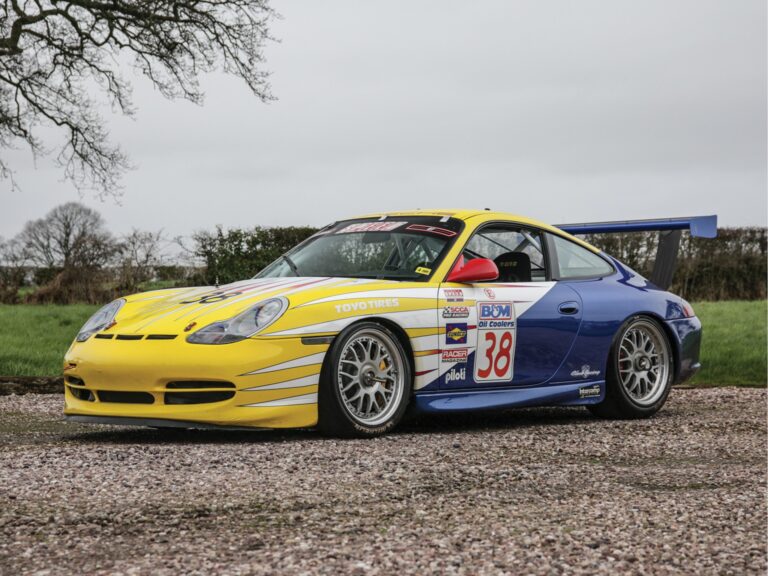
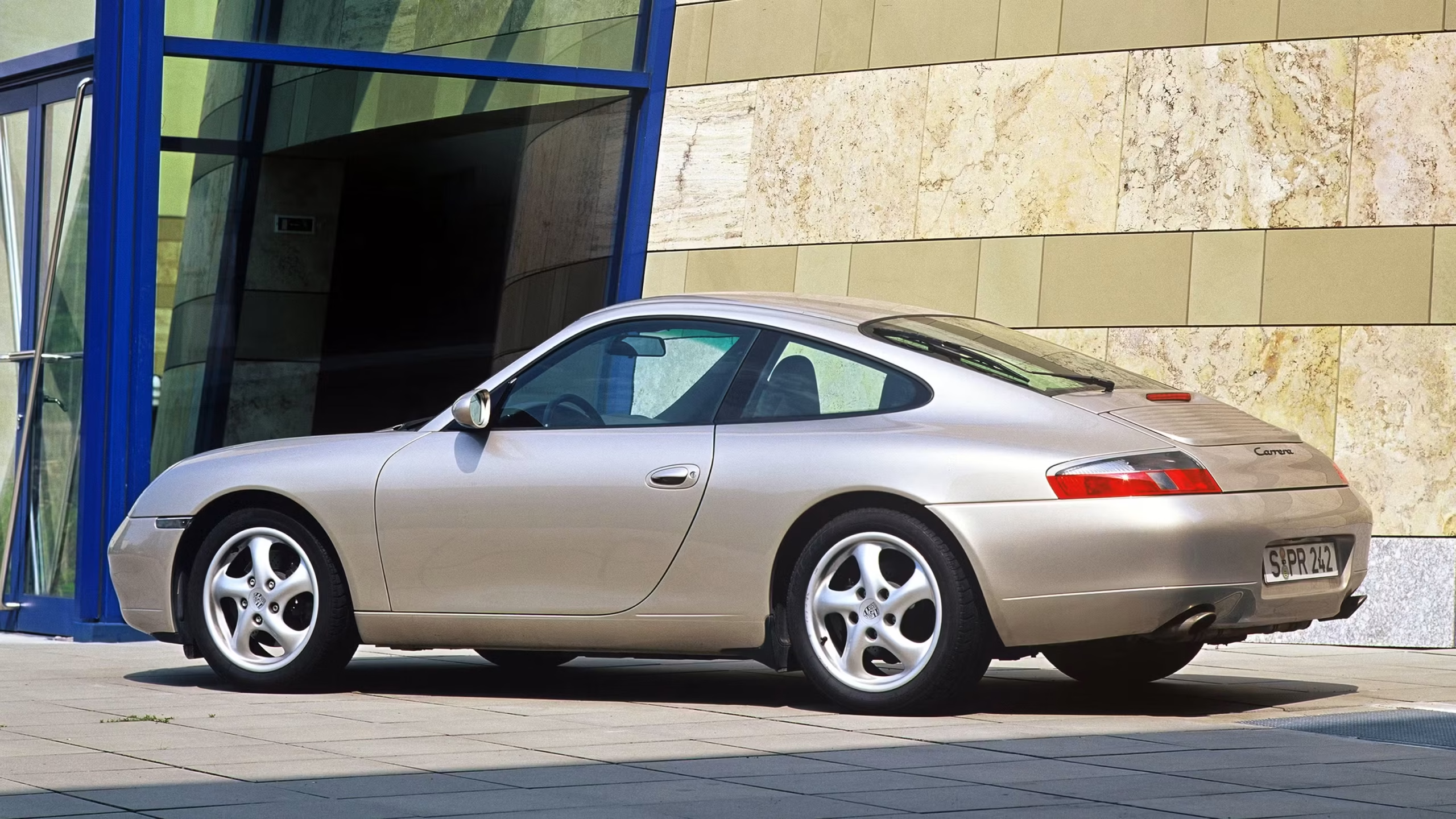
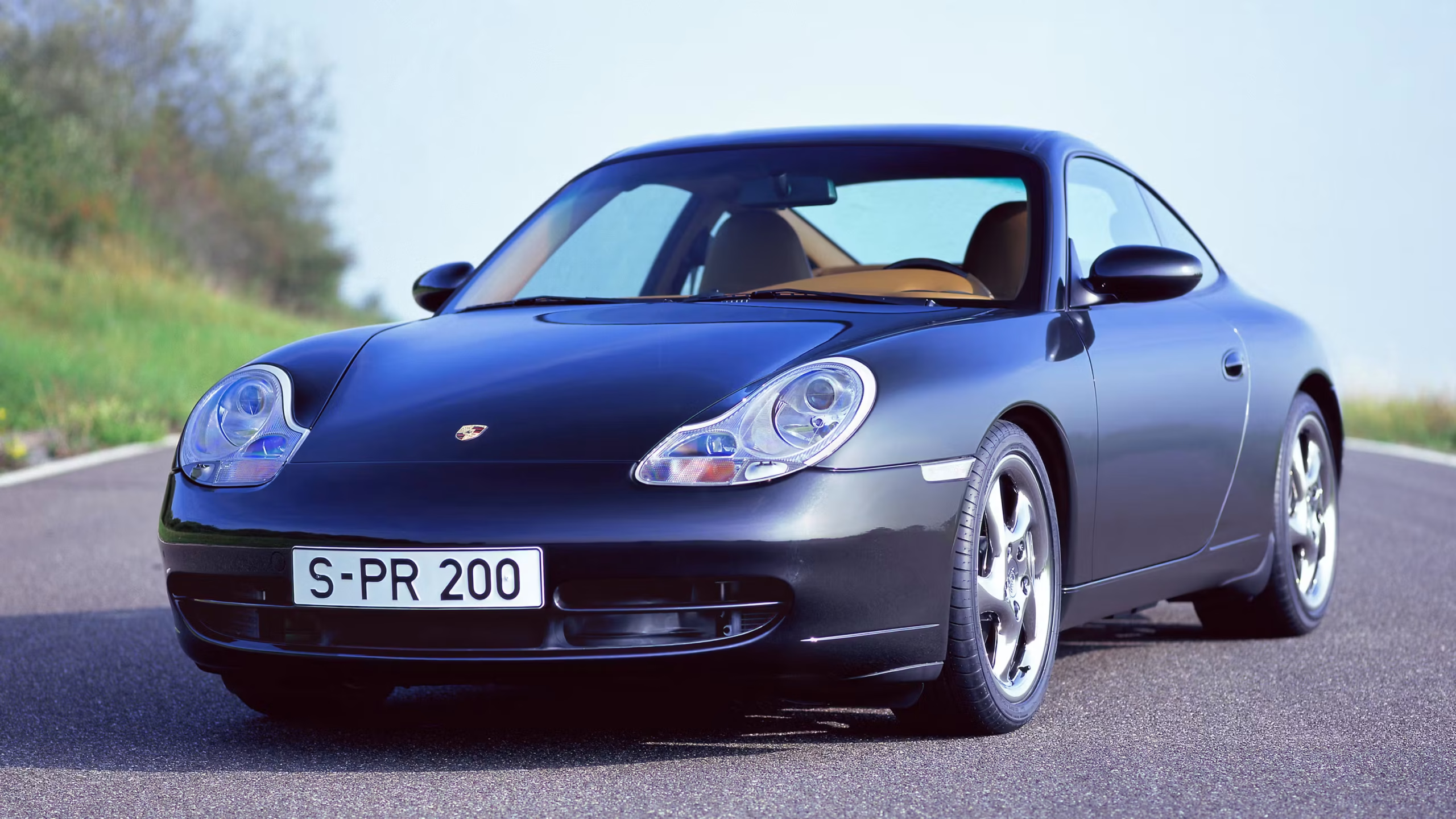
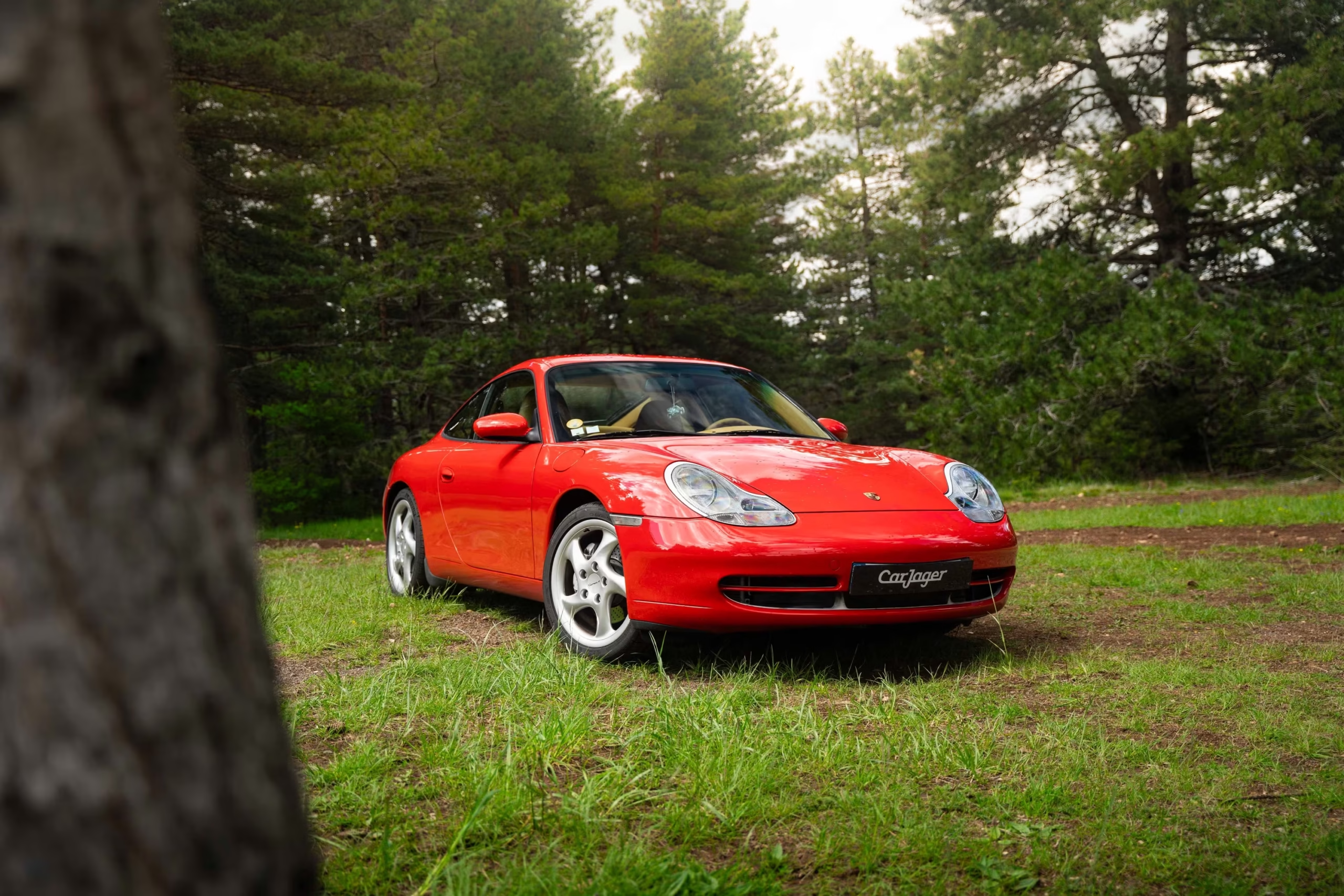
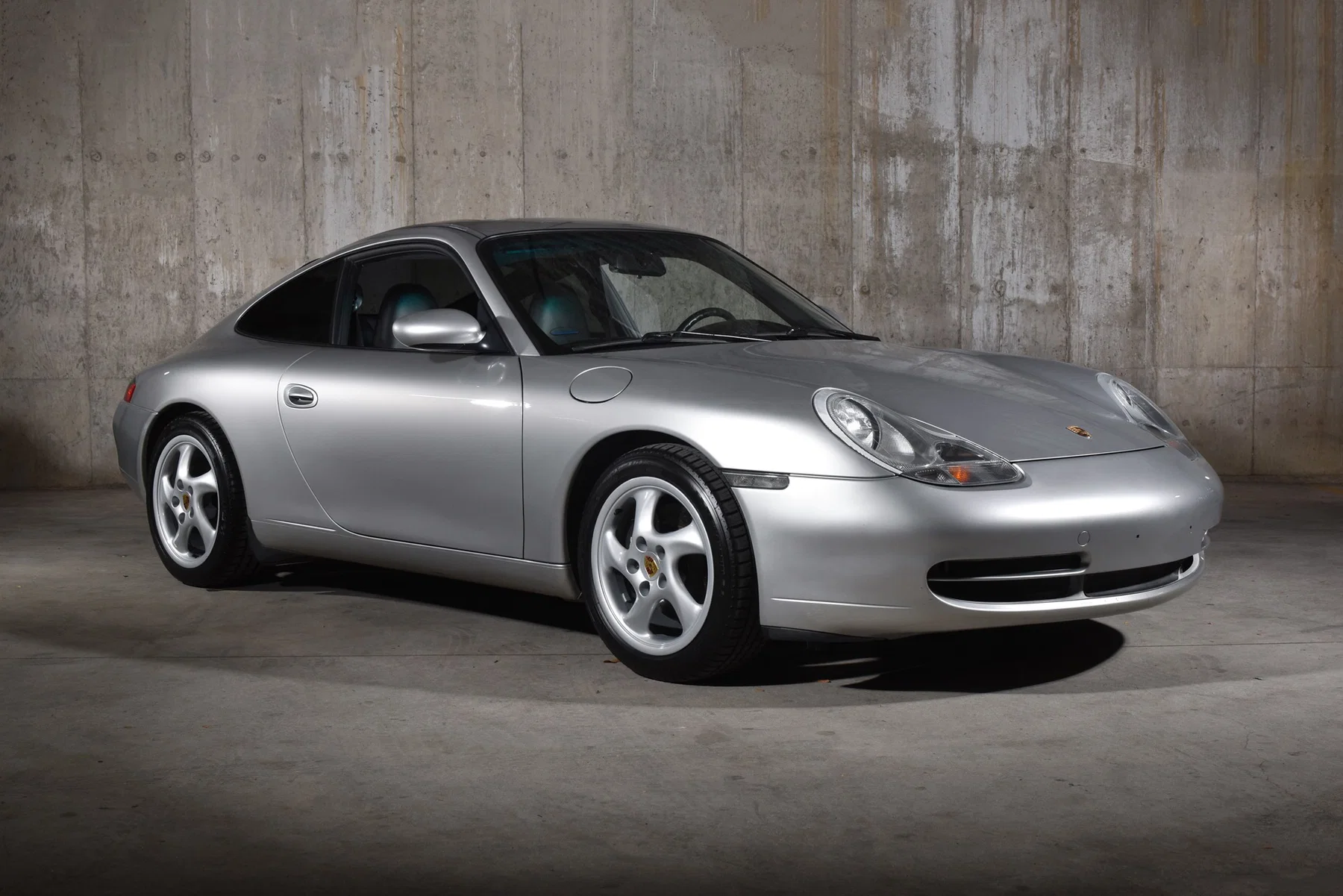
Approaching the 996.1 requires putting aside decades of air-cooled prejudice to appreciate a brilliant piece of industrial design. Penned by Pinky Lai under the direction of Harm Lagaay, the exterior was deeply aerodynamic, featuring a drag coefficient of just 0.30. The most violently debated element was the front fascia. To slash production costs, the 996.1 shared its entire front end—windshield forward—with the entry-level 986 Boxster, including the infamous “fried egg” headlights that integrated the main beam, turn signal, and washer into a single, teardrop-shaped unit. Beneath this divisive skin lay a vastly superior, 45-percent stiffer steel chassis with a 3.1-inch longer wheelbase, transforming the 911 from a twitchy, snap-oversteering “Widowmaker” into a stable, high-speed grand tourer. The beating heart of the standard Carrera was the all-new M96 engine. This 3.4-liter, water-cooled flat-six produced a smooth 300 brake horsepower, featuring four valves per cylinder and VarioCam variable valve timing. However, the M96 carries a dark, inescapable legacy: the notorious intermediate shaft (IMS) bearing and rear main seal (RMS) failures that could cause catastrophic engine destruction. Yet, Porsche offered salvation for the hardcore enthusiast. The track-focused GT3 and the 420-horsepower, twin-turbocharged 996 Turbo completely bypassed the M96 block. Instead, they utilized the immortal “Mezger” engine—a true dry-sump, water-cooled flat-six directly derived from the Le Mans-winning 911 GT1 race car. These engines were absolutely bulletproof, allowing the GT3 to rev to a shrieking 7,800 rpm and cementing its status as an apex predator. Inside, the cabin was a radical departure from the ergonomic chaos of the past. The dashboard featured an overlapping five-dial instrument cluster, vastly improved ergonomics, and a unified center console, finally bringing the 911 interior into the modern era, even if the early plastics lacked the vault-like feel of the 993.
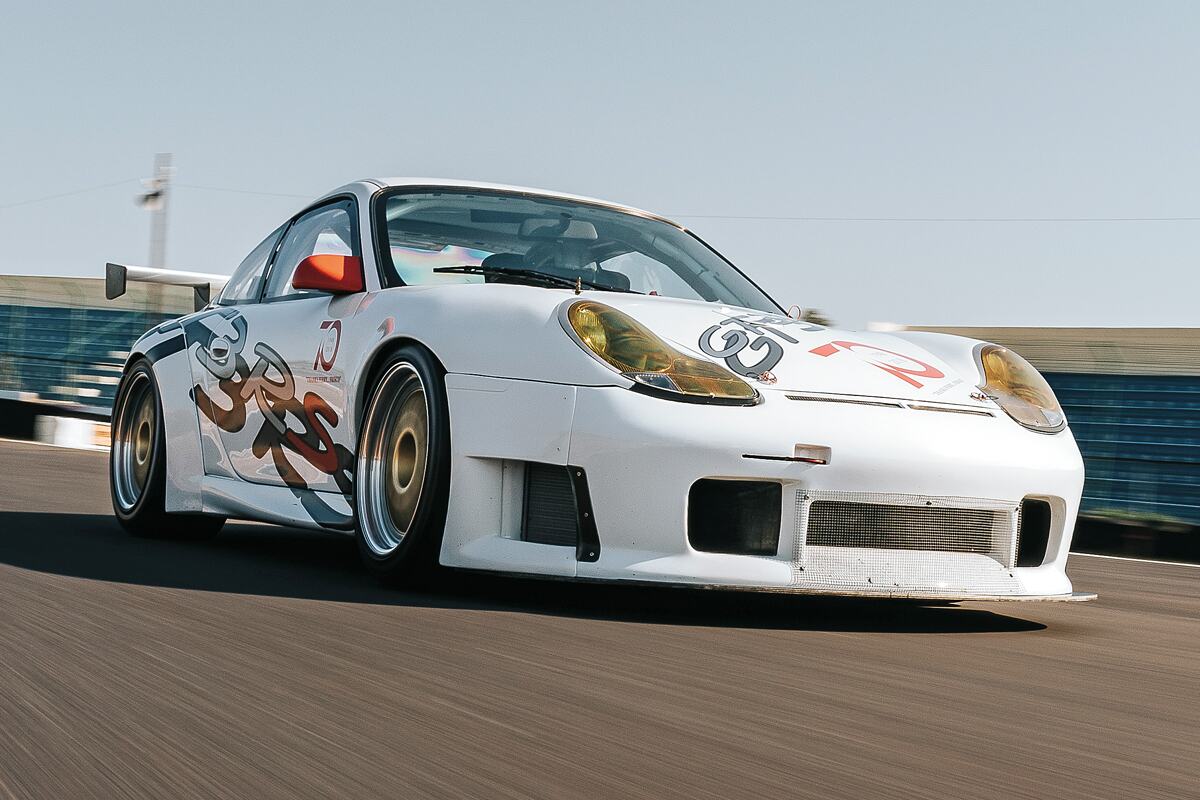
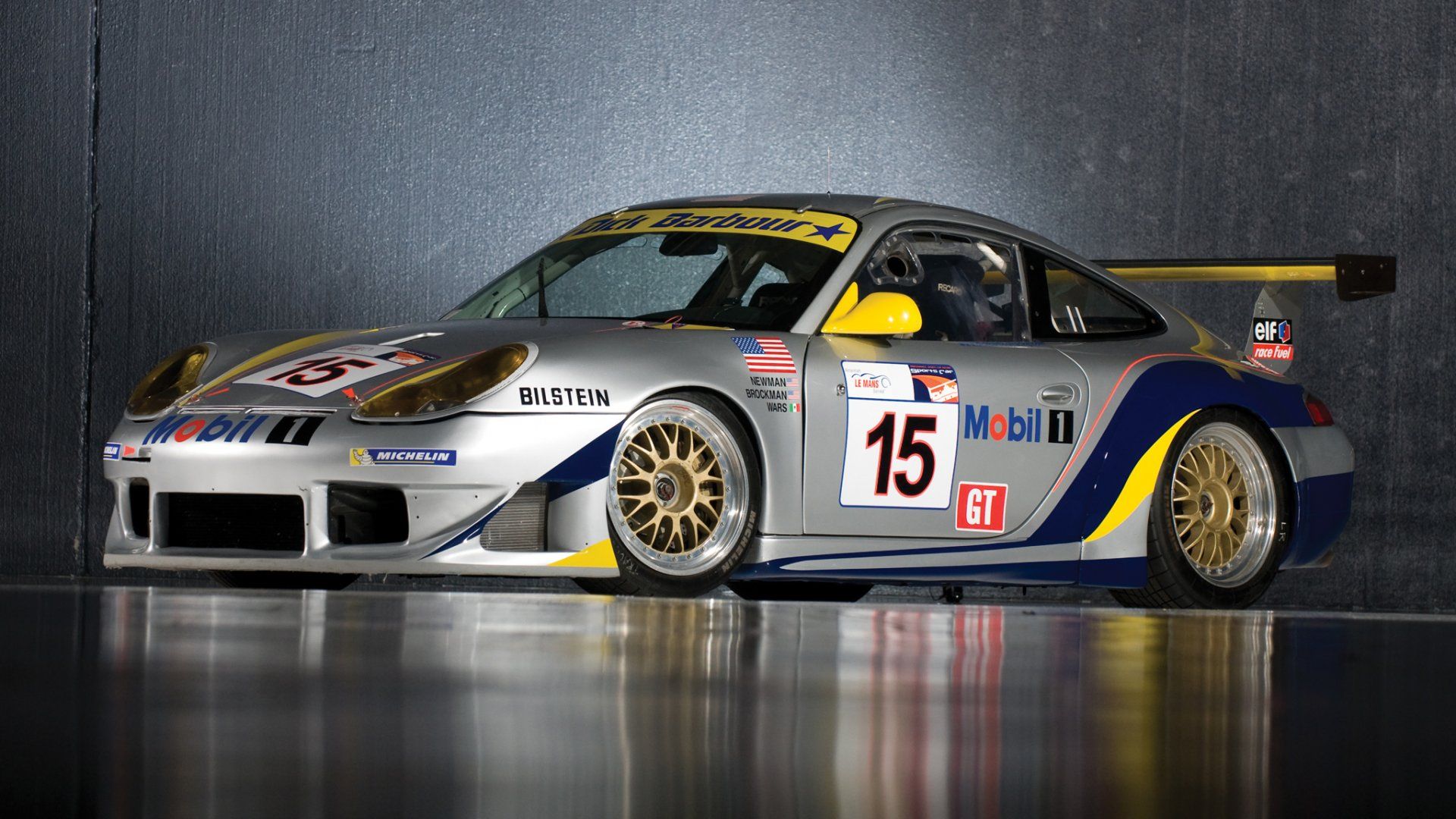
The historical impact of the 996.1 is a tale of incredible commercial triumph paired with relentless motorsport domination. Simply put, the 996 saved Porsche. By sharing so many components with the Boxster, profit margins skyrocketed, and the car’s newfound usability and comfort attracted tens of thousands of new buyers who had previously been intimidated by the quirks of the air-cooled era. On the racetrack, the 996.1 silenced any lingering doubts about its pedigree. The stripped-out, aggressive 996 GT3 R and RS variants became the absolute weapons of choice for privateer racing teams across the globe. They dominated the GT classes in the American Le Mans Series, the FIA GT Championship, and secured spectacular class victories at the 24 Hours of Le Mans, Daytona, and Sebring. The introduction of the GT3 also provided a road-going homologation special that was famously piloted by legendary test driver Walter Röhrl to a sub-8-minute lap around the Nürburgring Nordschleife, a monumental achievement for a production car in 1999. The 996.1 proved that while it was civilized enough to commute to the office, its underlying architecture possessed the mechanical bandwidth to conquer the world’s most grueling endurance races.
The legacy of the 1997 Porsche 911 IV (996.1) is complex but undeniably vital. For years, it languished at the bottom of the 911 valuation hierarchy, heavily penalized by the IMS bearing hysteria and the controversial headlight design. Yet, time is a great equalizer, and the automotive community has finally begun to recognize the 996.1 for what it truly is: the absolute genesis of the modern Porsche 911. It was the necessary, agonizing tear from the past that allowed the 911 lineage to survive into the 21st century. It birthed the GT3 badge, it introduced the phenomenal water-cooled Mezger engine, and it saved an independent Porsche from being swallowed whole by a larger conglomerate. When it was eventually replaced by the face-lifted 996.2—which featured upgraded 3.6-liter engines and the Turbo-style headlights across the range—the foundation had already been poured.
Portal
Model line
Model generation
Sucessor
Brand
Produced from
Vehicle category
Generation Overview
To fully grasp the magnitude of the 1997 Porsche 911 (Type 996.1), one must first understand the existential dread gripping Zuffenhausen in the early 1990s. Porsche was hemorrhaging money, trapped by its own heritage. The outgoing 993 generation, while arguably the ultimate, most refined expression of the air-cooled philosophy, took twice as long to build as its Japanese competitors and cost a fortune to manufacture. The company was staring down the barrel of acquisition or bankruptcy. Enter CEO Wendelin Wiedeking, who initiated a ruthless, Japanese-inspired lean manufacturing revolution. To survive, the beloved 911 had to be fundamentally reinvented. When the 996.1 was finally unveiled at the 1997 Frankfurt Motor Show, it landed like a bombshell. It shared nothing with its predecessor save for the badge. It was larger, sleeker, and most shockingly, it had abandoned the sacred air-cooled flat-six for a water-cooled engine to meet looming emission and noise regulations. The purists cried treason. Yet, this brave new architecture spawned a diverse and formidable family of submodels. The era began with the 3.4-liter Carrera and Carrera 4, followed by the introduction of a mythological badge in 1999: the very first 911 GT3. By 2000, the brutally fast 996 Turbo arrived to do battle with Maranello’s new Ferrari 360 Modena, the sophisticated Honda NSX, and the muscular Chevrolet Corvette C5.
Approaching the 996.1 requires putting aside decades of air-cooled prejudice to appreciate a brilliant piece of industrial design. Penned by Pinky Lai under the direction of Harm Lagaay, the exterior was deeply aerodynamic, featuring a drag coefficient of just 0.30. The most violently debated element was the front fascia. To slash production costs, the 996.1 shared its entire front end—windshield forward—with the entry-level 986 Boxster, including the infamous “fried egg” headlights that integrated the main beam, turn signal, and washer into a single, teardrop-shaped unit. Beneath this divisive skin lay a vastly superior, 45-percent stiffer steel chassis with a 3.1-inch longer wheelbase, transforming the 911 from a twitchy, snap-oversteering “Widowmaker” into a stable, high-speed grand tourer. The beating heart of the standard Carrera was the all-new M96 engine. This 3.4-liter, water-cooled flat-six produced a smooth 300 brake horsepower, featuring four valves per cylinder and VarioCam variable valve timing. However, the M96 carries a dark, inescapable legacy: the notorious intermediate shaft (IMS) bearing and rear main seal (RMS) failures that could cause catastrophic engine destruction. Yet, Porsche offered salvation for the hardcore enthusiast. The track-focused GT3 and the 420-horsepower, twin-turbocharged 996 Turbo completely bypassed the M96 block. Instead, they utilized the immortal “Mezger” engine—a true dry-sump, water-cooled flat-six directly derived from the Le Mans-winning 911 GT1 race car. These engines were absolutely bulletproof, allowing the GT3 to rev to a shrieking 7,800 rpm and cementing its status as an apex predator. Inside, the cabin was a radical departure from the ergonomic chaos of the past. The dashboard featured an overlapping five-dial instrument cluster, vastly improved ergonomics, and a unified center console, finally bringing the 911 interior into the modern era, even if the early plastics lacked the vault-like feel of the 993.
The historical impact of the 996.1 is a tale of incredible commercial triumph paired with relentless motorsport domination. Simply put, the 996 saved Porsche. By sharing so many components with the Boxster, profit margins skyrocketed, and the car’s newfound usability and comfort attracted tens of thousands of new buyers who had previously been intimidated by the quirks of the air-cooled era. On the racetrack, the 996.1 silenced any lingering doubts about its pedigree. The stripped-out, aggressive 996 GT3 R and RS variants became the absolute weapons of choice for privateer racing teams across the globe. They dominated the GT classes in the American Le Mans Series, the FIA GT Championship, and secured spectacular class victories at the 24 Hours of Le Mans, Daytona, and Sebring. The introduction of the GT3 also provided a road-going homologation special that was famously piloted by legendary test driver Walter Röhrl to a sub-8-minute lap around the Nürburgring Nordschleife, a monumental achievement for a production car in 1999. The 996.1 proved that while it was civilized enough to commute to the office, its underlying architecture possessed the mechanical bandwidth to conquer the world’s most grueling endurance races.
The legacy of the 1997 Porsche 911 IV (996.1) is complex but undeniably vital. For years, it languished at the bottom of the 911 valuation hierarchy, heavily penalized by the IMS bearing hysteria and the controversial headlight design. Yet, time is a great equalizer, and the automotive community has finally begun to recognize the 996.1 for what it truly is: the absolute genesis of the modern Porsche 911. It was the necessary, agonizing tear from the past that allowed the 911 lineage to survive into the 21st century. It birthed the GT3 badge, it introduced the phenomenal water-cooled Mezger engine, and it saved an independent Porsche from being swallowed whole by a larger conglomerate. When it was eventually replaced by the face-lifted 996.2—which featured upgraded 3.6-liter engines and the Turbo-style headlights across the range—the foundation had already been poured.
Submodels