
Porsche 914/6 GT
Brand
Produced from
Portal
Vehicle category
Model line
Predecessor
Successor
Submodel Overview
In the high-octane crucible of 1970, the standard Porsche 914 was fighting a bitter public relations battle, often unfairly dismissed by brand purists as a Volkswagen in Porsche clothing due to its joint-venture origins. But within the hallowed motorsport department at Zuffenhausen, the brilliant and ruthless Ferdinand Piëch saw an entirely different reality. He recognized that the 914’s mid-engine architecture possessed an inherent dynamic superiority over the rear-engined 911, offering a phenomenally low center of gravity and neutral turn-in. To prove this to the world and completely shatter the “VoPo” (Volkswagen-Porsche) stigma, Porsche’s racing division took the six-cylinder 914/6 and transformed it into a dedicated, wide-hipped homologation weapon. The resulting 1970 Porsche 914/6 GT was an uncompromising, factory-built street brawler that stepped onto the international stage ready to humiliate established titans, crossing swords with the agile Alpine A110 on rally stages and outlasting massive V12 Ferraris on the endurance circuits.
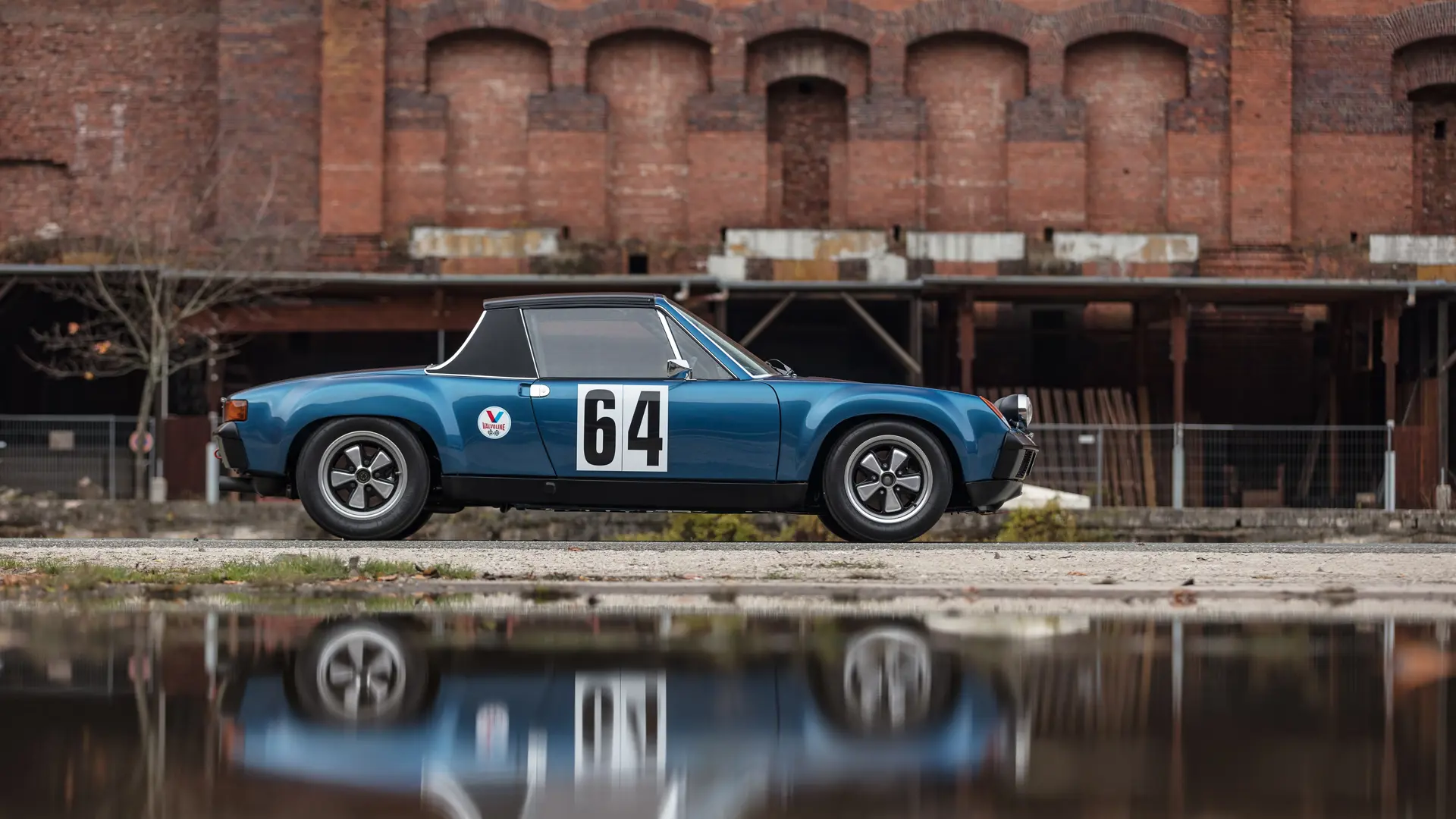
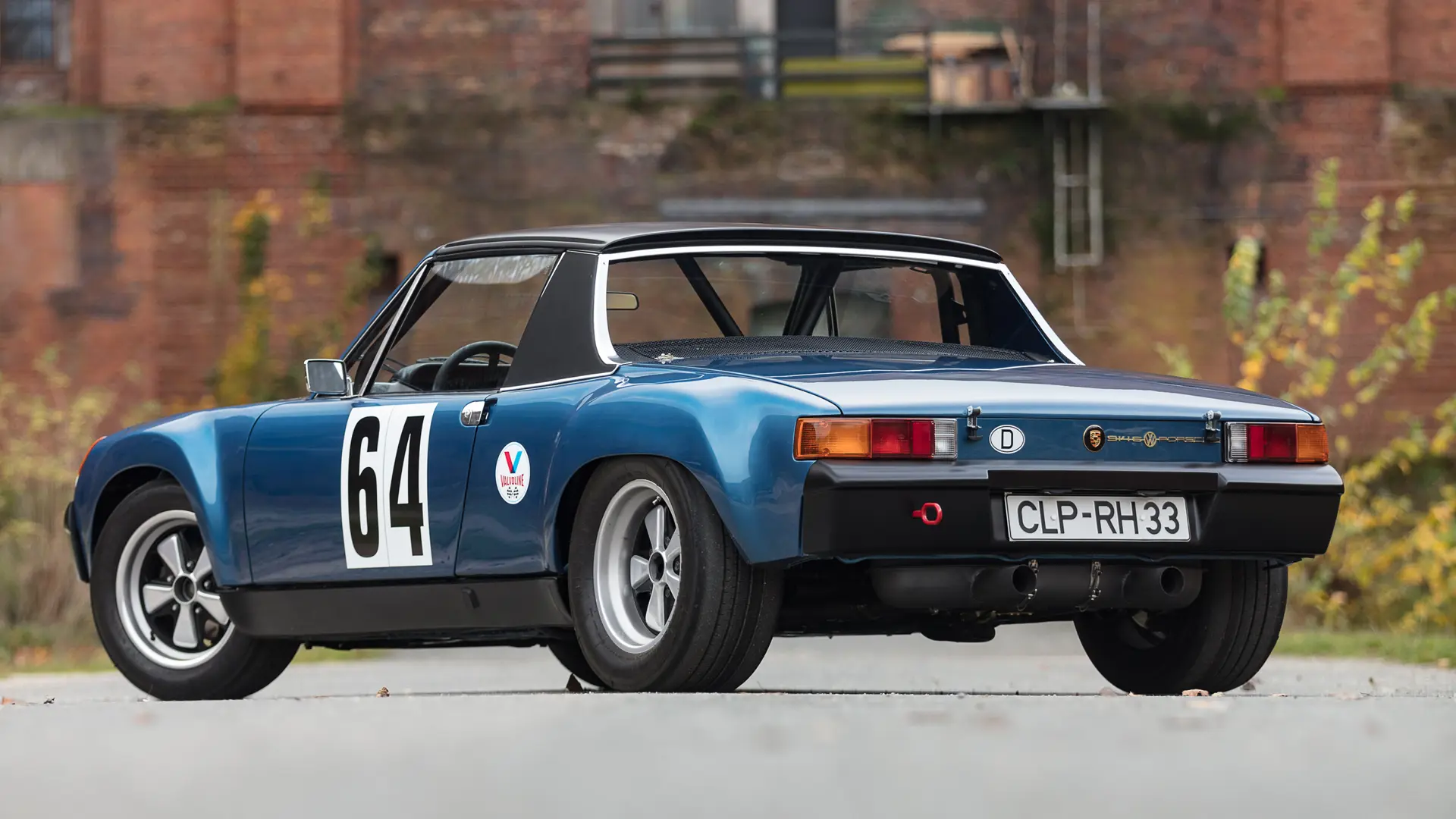
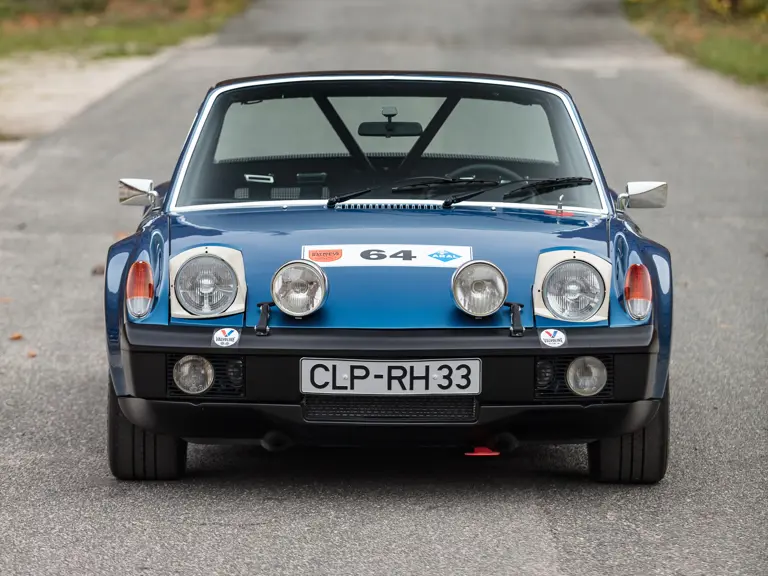
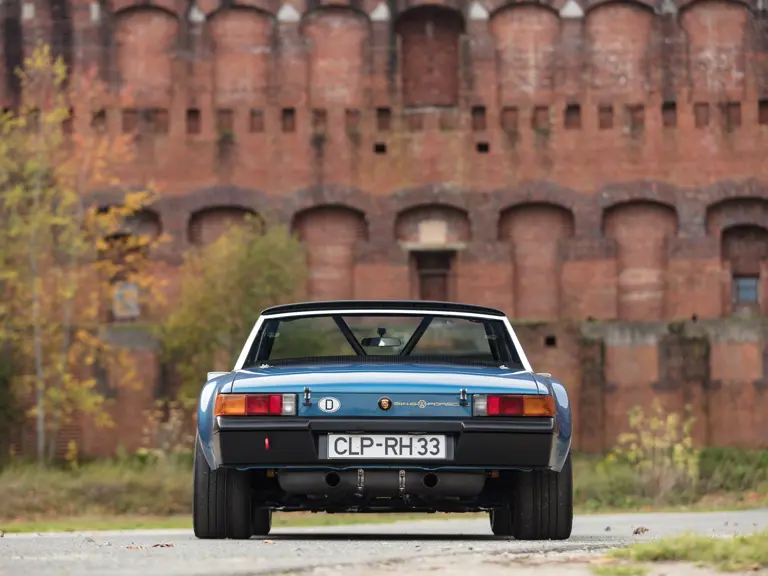
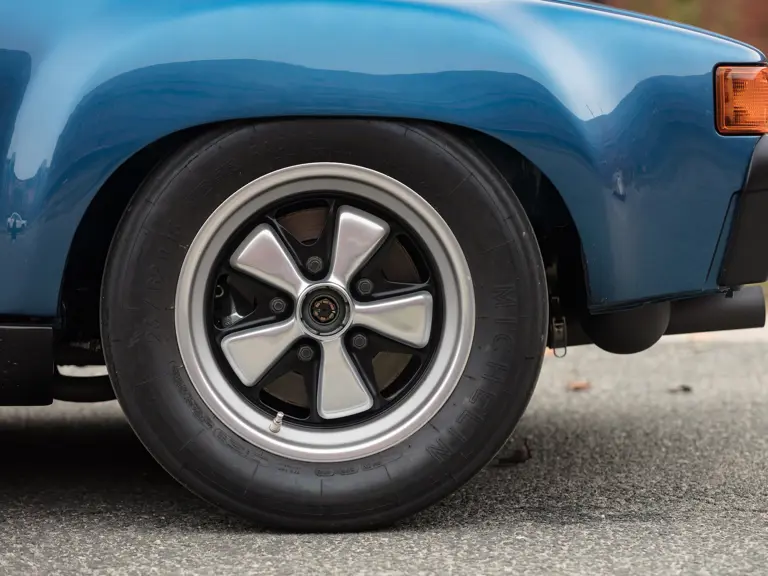
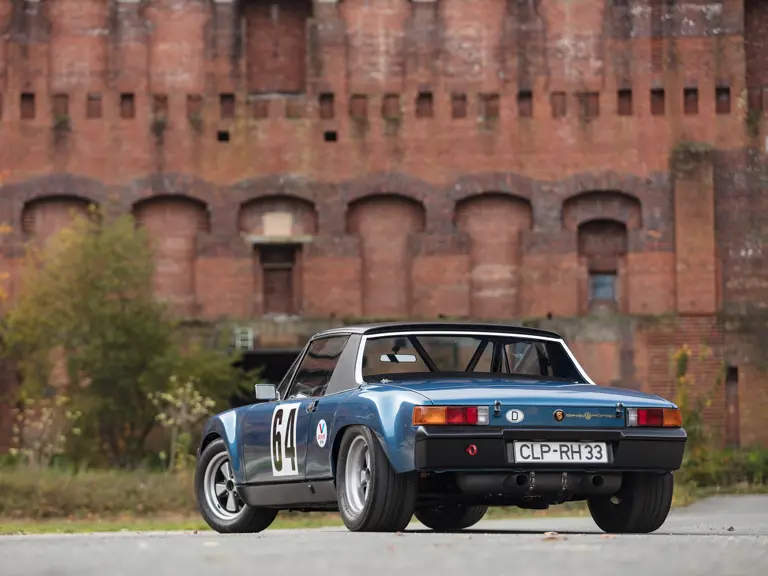
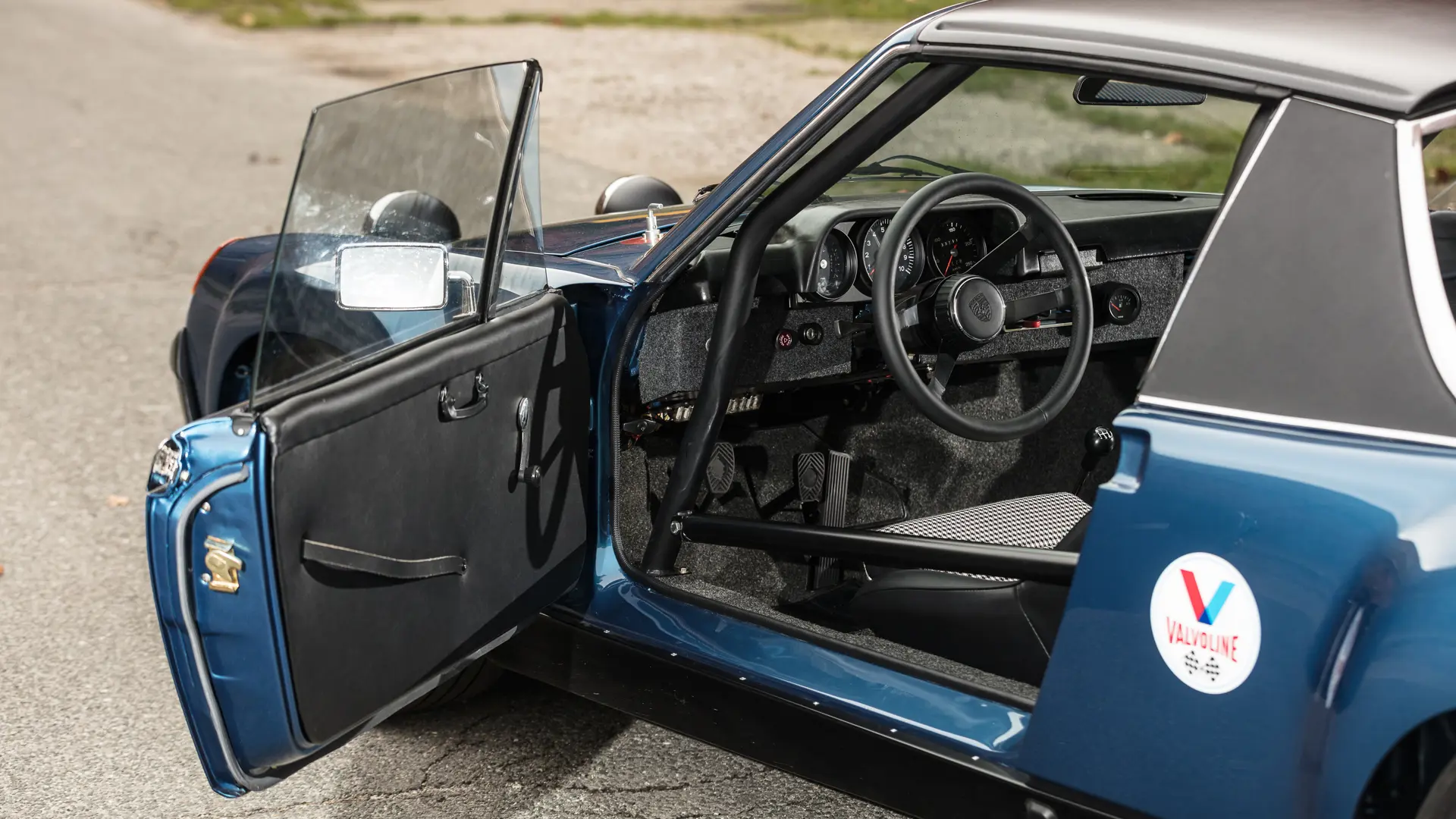
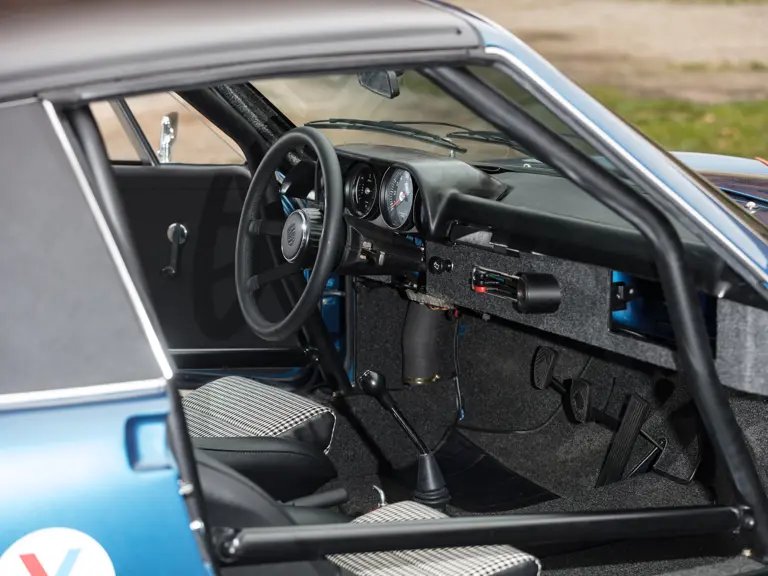
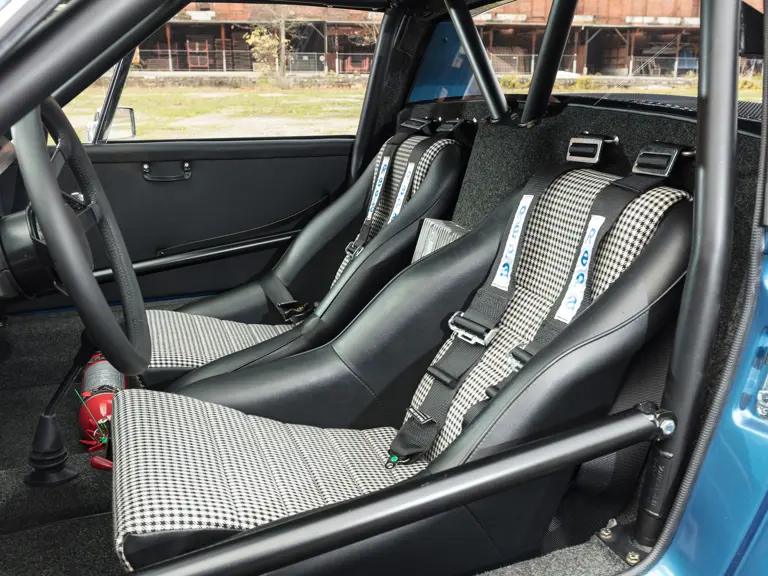
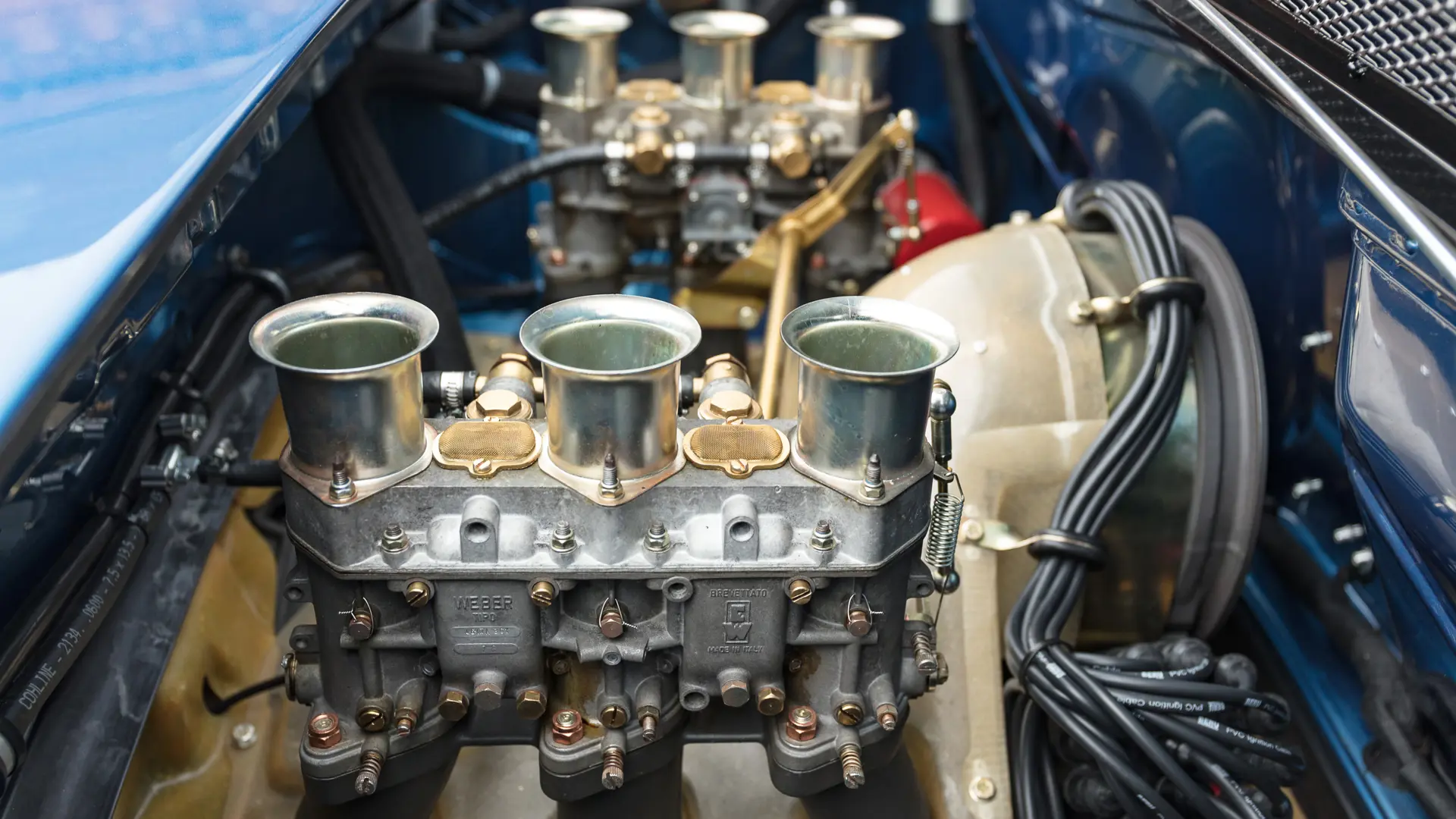
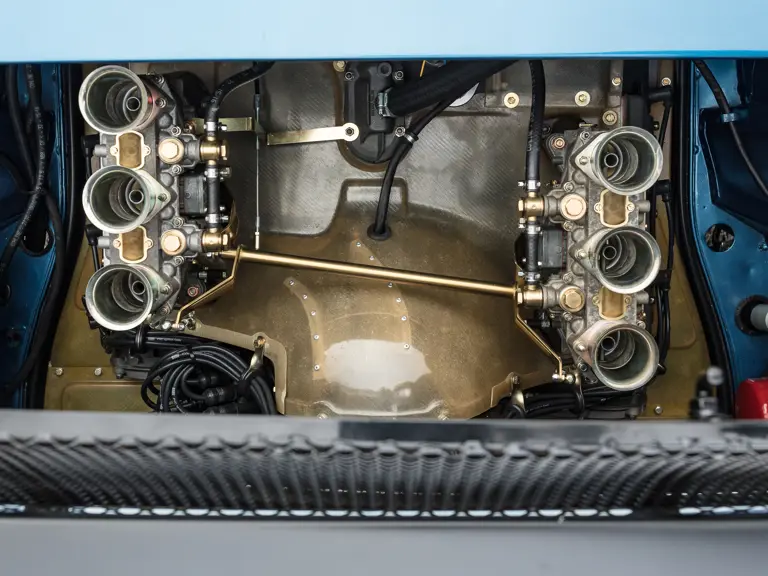
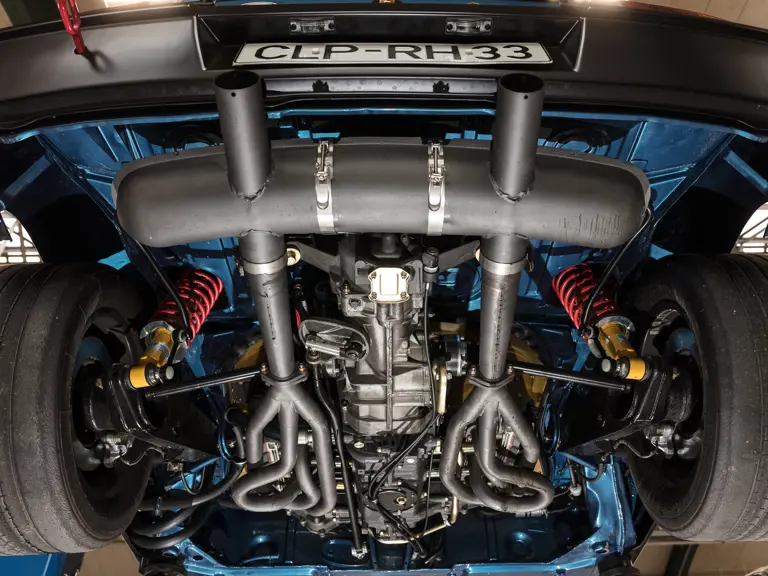
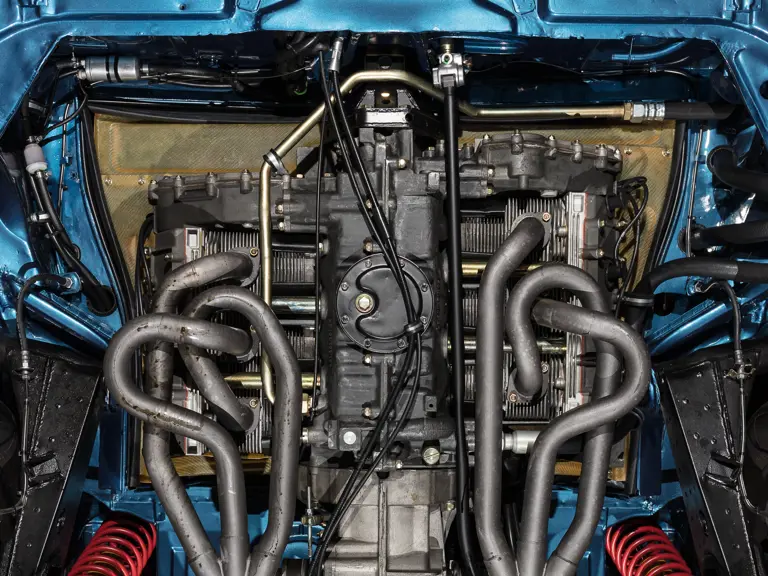
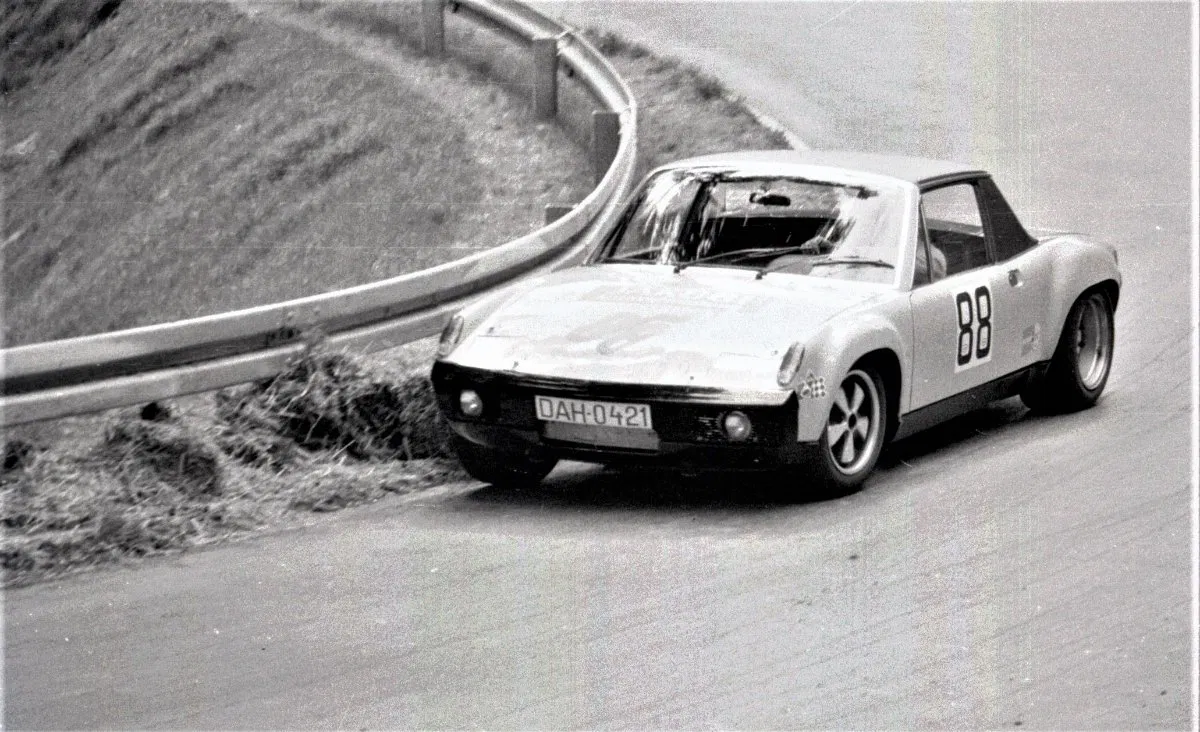
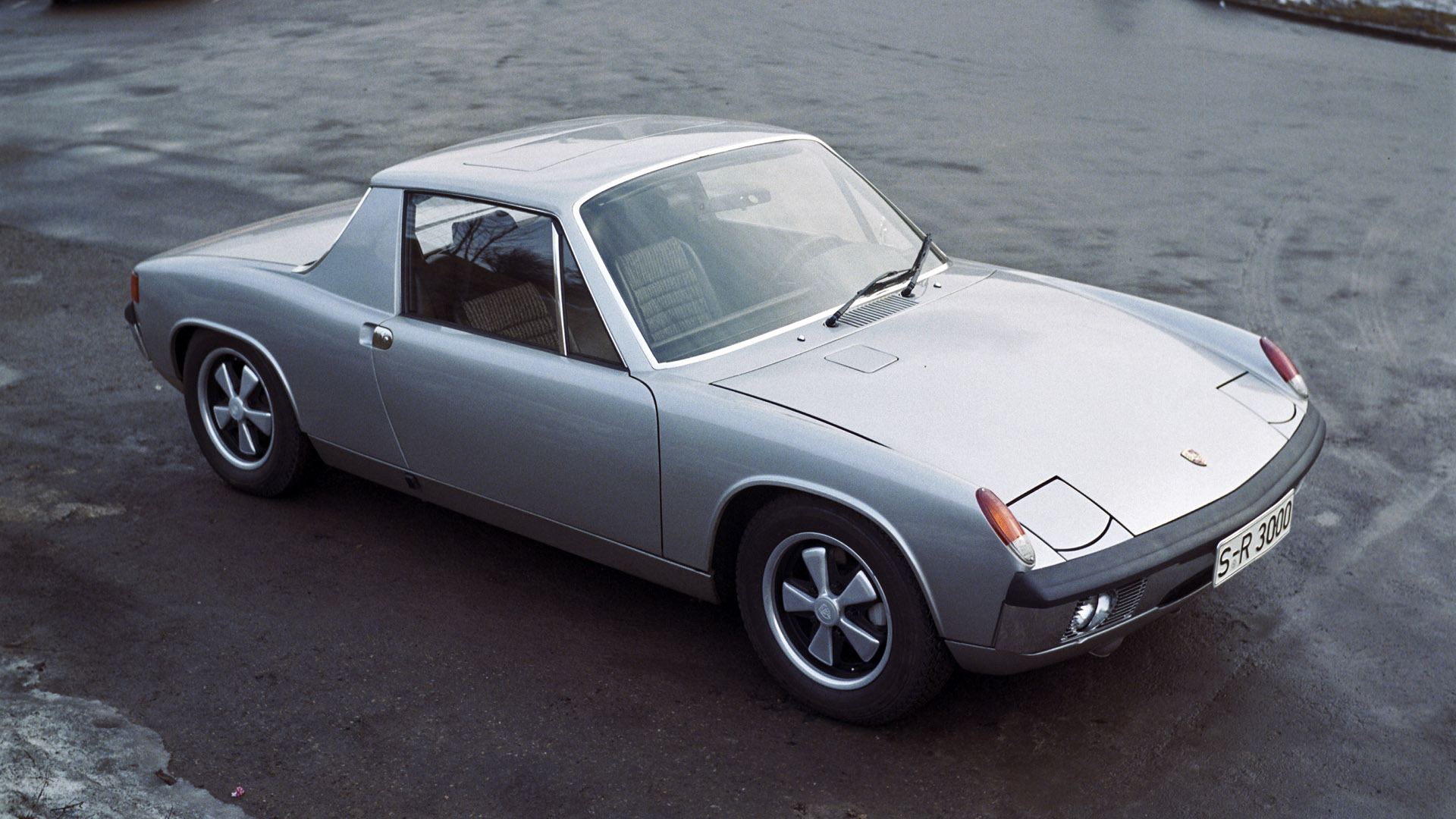
To examine the physical form of the 914/6 GT is to witness the absolute weaponization of a utilitarian shape. The most immediate and striking visual departures from the standard car were the aggressive, squared-off steel wheel arch extensions. These cavernous flares were grafted onto the bodywork to house massive, staggered Fuchs alloy wheels wrapped in sticky racing rubber, giving the car a menacing, bulldog stance. Beneath the fiberglass engine lid—shaved of every ounce of unnecessary weight—sat the absolute crown jewel of the GT: a highly tuned 2.0-liter flat-six engine. Directly lifted from the 911 S and sprinkled with internal magic derived from the 906 prototype, this air-cooled masterpiece breathed ferociously through twin triple-choke Weber 46 IDA downdraft carburetors. It produced a reliable, screaming 210 brake horsepower at 8,000 rpm. Because the mid-engine chassis offered near-perfect weight distribution, the car could deploy every single horsepower with devastating efficiency. The suspension was aggressively stiffened, featuring upgraded torsion bars and Bilstein shock absorbers, while stopping power was guaranteed by adopting the massive, ventilated disc brakes from the 911 S. To meet homologation weight targets, the factory ruthlessly stripped the car. Fiberglass front and rear bumpers, plexiglass side and rear windows, and a spartan cabin stripped of all sound deadening dropped the curb weight to a featherweight 900 kilograms. The driver was left with nothing but a competition bucket seat, a structural roll bar, and the deafening, metallic howl of the flat-six situated mere inches behind their skull.
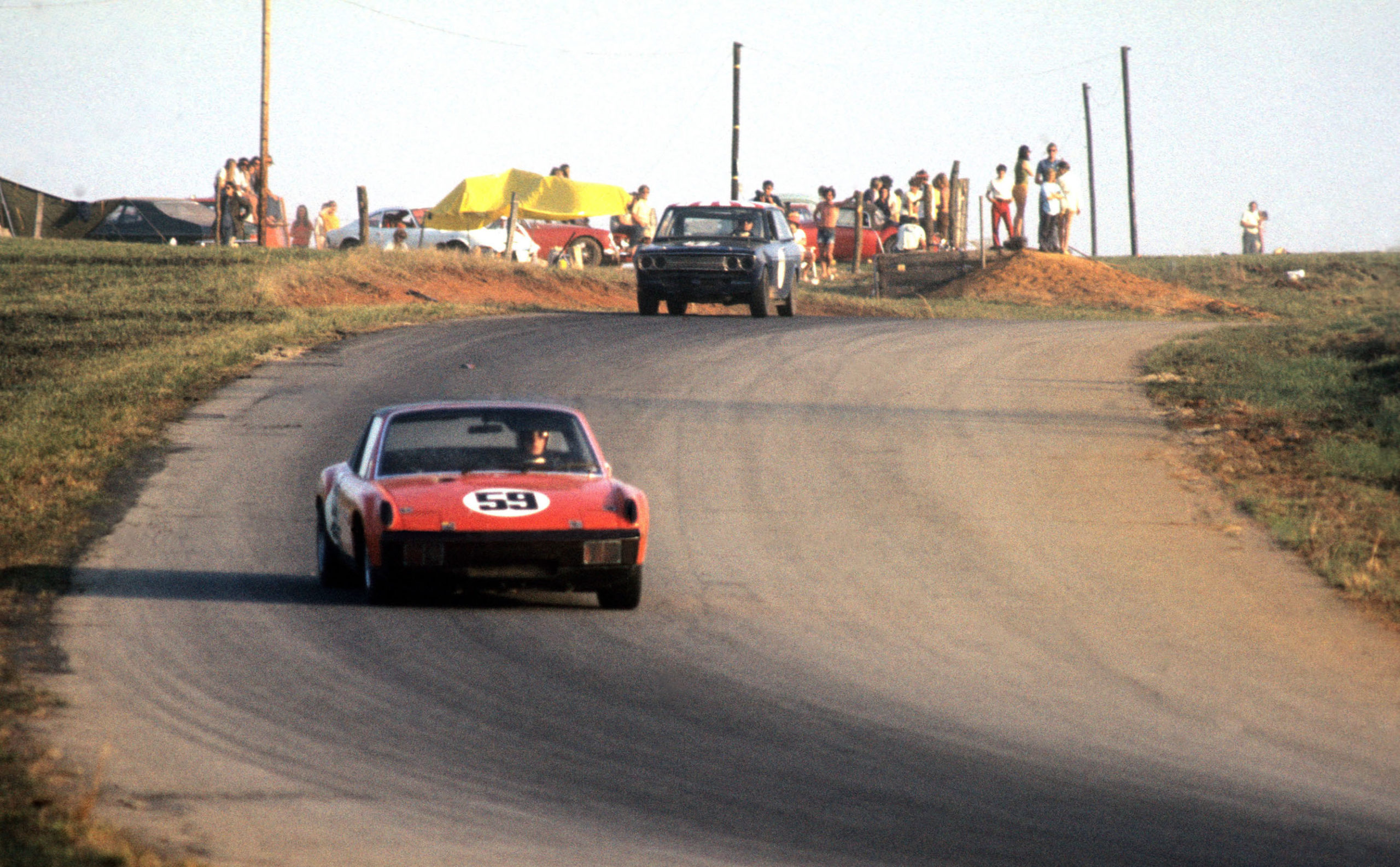
The competitive palmares of the 1970 Porsche 914/6 GT is nothing short of mythological. It was the quintessential endurance giant-killer. Its most famous hour arrived at the treacherous, rain-soaked 1970 24 Hours of Le Mans. While the titanic Porsche 917s and Ferrari 512s battled for the overall victory, the privately entered, factory-supported Sonauto 914/6 GT—piloted by Frenchmen Claude Ballot-Léna and Guy Chasseuil—ran a flawless, metronomic race. In torrential downpours that demanded supreme chassis balance over outright power, the nimble mid-engined Porsche danced past vastly more powerful machinery to finish an astonishing 6th overall and secure a dominant GT class victory. A few months later, the factory dispatched three 914/6 GTs to the grueling Marathon de la Route—an insane 86-hour endurance race held on the fearsome Nürburgring Nordschleife. The Porsches simply broke the will of the competition, crossing the finish line in a spectacular, orchestrated 1-2-3 sweep. Beyond the circuits, the 914/6 GT proved to be a lethal tarmac rally weapon, successfully campaigned by privateers and works drivers alike, utilizing its surgical turn-in to conquer tight Alpine hairpins.
The legacy of the 1970 Porsche 914/6 GT is that of ultimate vindication. Only an estimated 47 genuine, factory-built examples were ever produced, making it one of the rarest and most fiercely coveted blue-chip homologation specials in the Porsche pantheon. It proved definitively that Stuttgart’s mid-engine experiment was not a corporate compromise, but a legitimate, race-winning philosophy. When the 914/6 GT humiliated heavier, more powerful cars at Le Mans and the Nürburgring, it laid the indestructible philosophical groundwork for every mid-engined Porsche GT car that followed.
Brand
Produced from
Portal
Vehicle category
Model line
Predecessor
Sucessor
Brand
Produced from
Portal
Vehicle category
Model line
Model generation
Predecessor
Sucessor
Submodel Overview
In the high-octane crucible of 1970, the standard Porsche 914 was fighting a bitter public relations battle, often unfairly dismissed by brand purists as a Volkswagen in Porsche clothing due to its joint-venture origins. But within the hallowed motorsport department at Zuffenhausen, the brilliant and ruthless Ferdinand Piëch saw an entirely different reality. He recognized that the 914’s mid-engine architecture possessed an inherent dynamic superiority over the rear-engined 911, offering a phenomenally low center of gravity and neutral turn-in. To prove this to the world and completely shatter the “VoPo” (Volkswagen-Porsche) stigma, Porsche’s racing division took the six-cylinder 914/6 and transformed it into a dedicated, wide-hipped homologation weapon. The resulting 1970 Porsche 914/6 GT was an uncompromising, factory-built street brawler that stepped onto the international stage ready to humiliate established titans, crossing swords with the agile Alpine A110 on rally stages and outlasting massive V12 Ferraris on the endurance circuits.
To examine the physical form of the 914/6 GT is to witness the absolute weaponization of a utilitarian shape. The most immediate and striking visual departures from the standard car were the aggressive, squared-off steel wheel arch extensions. These cavernous flares were grafted onto the bodywork to house massive, staggered Fuchs alloy wheels wrapped in sticky racing rubber, giving the car a menacing, bulldog stance. Beneath the fiberglass engine lid—shaved of every ounce of unnecessary weight—sat the absolute crown jewel of the GT: a highly tuned 2.0-liter flat-six engine. Directly lifted from the 911 S and sprinkled with internal magic derived from the 906 prototype, this air-cooled masterpiece breathed ferociously through twin triple-choke Weber 46 IDA downdraft carburetors. It produced a reliable, screaming 210 brake horsepower at 8,000 rpm. Because the mid-engine chassis offered near-perfect weight distribution, the car could deploy every single horsepower with devastating efficiency. The suspension was aggressively stiffened, featuring upgraded torsion bars and Bilstein shock absorbers, while stopping power was guaranteed by adopting the massive, ventilated disc brakes from the 911 S. To meet homologation weight targets, the factory ruthlessly stripped the car. Fiberglass front and rear bumpers, plexiglass side and rear windows, and a spartan cabin stripped of all sound deadening dropped the curb weight to a featherweight 900 kilograms. The driver was left with nothing but a competition bucket seat, a structural roll bar, and the deafening, metallic howl of the flat-six situated mere inches behind their skull.
The competitive palmares of the 1970 Porsche 914/6 GT is nothing short of mythological. It was the quintessential endurance giant-killer. Its most famous hour arrived at the treacherous, rain-soaked 1970 24 Hours of Le Mans. While the titanic Porsche 917s and Ferrari 512s battled for the overall victory, the privately entered, factory-supported Sonauto 914/6 GT—piloted by Frenchmen Claude Ballot-Léna and Guy Chasseuil—ran a flawless, metronomic race. In torrential downpours that demanded supreme chassis balance over outright power, the nimble mid-engined Porsche danced past vastly more powerful machinery to finish an astonishing 6th overall and secure a dominant GT class victory. A few months later, the factory dispatched three 914/6 GTs to the grueling Marathon de la Route—an insane 86-hour endurance race held on the fearsome Nürburgring Nordschleife. The Porsches simply broke the will of the competition, crossing the finish line in a spectacular, orchestrated 1-2-3 sweep. Beyond the circuits, the 914/6 GT proved to be a lethal tarmac rally weapon, successfully campaigned by privateers and works drivers alike, utilizing its surgical turn-in to conquer tight Alpine hairpins.
The legacy of the 1970 Porsche 914/6 GT is that of ultimate vindication. Only an estimated 47 genuine, factory-built examples were ever produced, making it one of the rarest and most fiercely coveted blue-chip homologation specials in the Porsche pantheon. It proved definitively that Stuttgart’s mid-engine experiment was not a corporate compromise, but a legitimate, race-winning philosophy. When the 914/6 GT humiliated heavier, more powerful cars at Le Mans and the Nürburgring, it laid the indestructible philosophical groundwork for every mid-engined Porsche GT car that followed.
Tech Specs
Technical Specifications
Tech Specs
Technical Specifications
Engine
01
03
Internal combustion engine
Configuration
Porsche Type 901/25, Flat-6 (Boxer) - Air-cooled
Location
Mid, longitudinally mounted
Construction
Magnesium alloy block and Aluminium heads
Displacement (cc)
1,991 cc
Displacement (cu in)
121.5 cu in
Compression
10.3:1
Bore x Stroke
80.0 mm x 66.0 mm
Valvetrain
2 valves per cylinder, SOHC
Fuel feed
2 x Weber 46 IDA triple-choke carburetors
Lubrication
Dry sump
Aspiration
Naturally aspirated
Output
Power (hp)
210 hp
Power (kW)
157 kW
Max power at
8,000 RPM
Torque (Nm)
196 Nm
Torque (ft lbs)
145 ft lbs
Max torque at
6,000 RPM
Drivetrain
02
03
Chassis
Type
Monocoque unibody
Material
Steel
Body
Material
Steel with Fibreglass (GRP) panels (bumpers, front lid) and steel flared fenders
Transmission
Gearbox
Porsche Type 901, 5-speed manual
Drive
Rear Wheel Drive (Limited Slip Differential)
Suspension
Front
Independent, McPherson struts, longitudinal torsion bars, telescopic dampers, anti-roll bar
Rear
Independent, semi-trailing arms, coil springs over telescopic dampers, anti-roll bar
Steering
Type
Rack and pinion, unassisted
Brakes
Front
Ventilated steel discs, ATE aluminium calipers
Rear
Ventilated steel discs, ATE calipers
Wheels
Front
7" x 15" (Fuchs forged alloy)
Rear
8" x 15" (Fuchs forged alloy)
Tires
Front
-
Rear
-
Dimensions and performance
03
03
Dimensions
Length (mm)
3,985 mm
Length (in)
156.9 in
Width (mm)
1,710 mm
Width (in)
67.3 in
Height (mm)
1,220 mm
Height (in)
48.0 in
Wheelbase (mm)
2,450 mm
Wheelbase (in)
96.5 in
Weight (kg)
~900 kg
Weight (lbs)
~1,984 lbs
Performance
Power to weight
~0.23 hp/kg
Top speed (km/h)
~240 km/h
Top speed (mph)
~149 mph
0-100 km/h (0-60 mph)
~5.0 s