Shelby
Type
Foundation Year
Founder/s
Country
Headquarters
Brand Overview
In the polished, aristocratic world of mid-century motorsport, where success was measured in overhead camshafts and Italian pronunciation, Carroll Shelby was a sledgehammer crashing through a stained-glass window. He was not an engineer in the traditional academic sense; he was a force of nature, a failed chicken farmer turned Le Mans winner who wore bib overalls to the track and possessed a hustle that would make a Las Vegas bookie blush. The brand he created is not merely a manufacturer of automobiles; it is the physical manifestation of the American Dream—specifically, the part of the dream that involves taking something polite and underpowered, stuffing it with enough horsepower to reverse the rotation of the earth, and then beating the Europeans at their own game. Shelby American is the story of hot-rodding graduating from the stoplight to the Mulsanne Straight.
The genesis of the legend is so oft-told it has become folklore, yet the sheer audacity of it remains breathtaking. In 1961, Carroll Shelby, forced to retire from driving due to a heart condition (after popping nitroglycerin pills to win Le Mans in 1959 for Aston Martin), needed a new project. He famously approached AC Cars in Thames Ditton, England, asking if they would build him a car if he could find an engine. They said yes. He then approached Chevrolet, who politely declined, seeing no benefit in funding a rival to their Corvette. He then knocked on the door of Ford. Lee Iacocca and the Ford executives, desperate to inject some youth into their lineup, gave Shelby a couple of unparalleled gifts: a little bit of money and a brand-new, lightweight, thin-wall casting 260 cubic-inch V8.
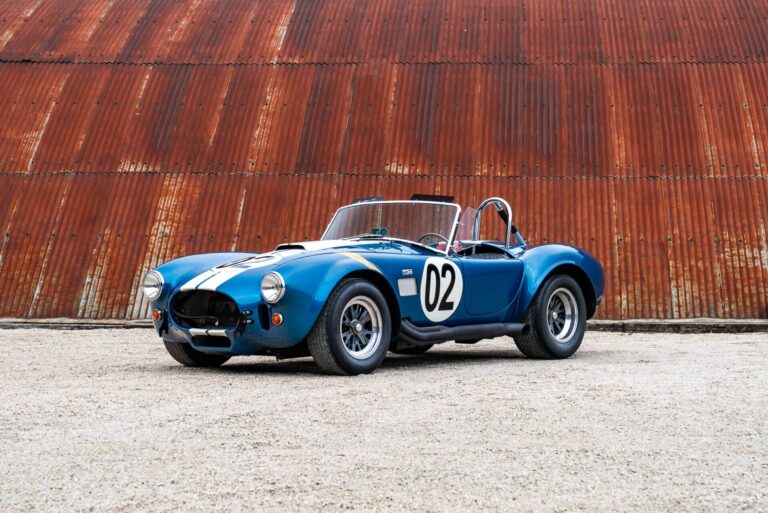
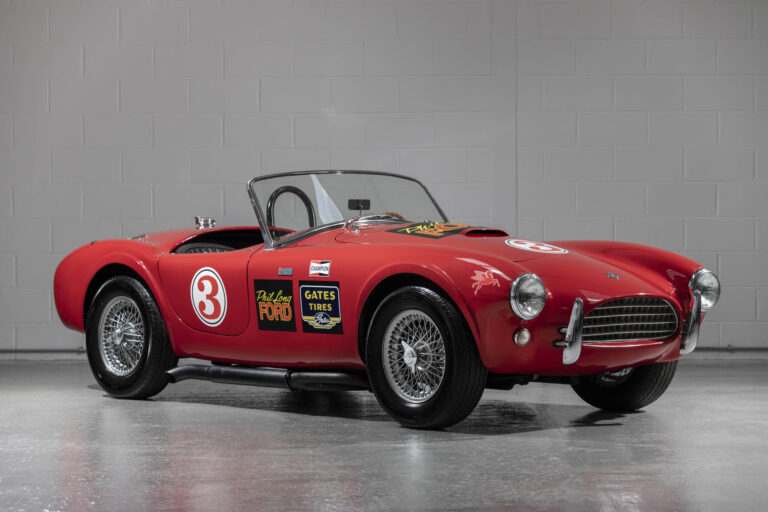
The result was the Shelby Cobra. The prototype, CSX2000, was painted a different color every time a magazine tested it to create the illusion that Shelby had a fleet of cars. He didn’t. He had one. But that one car was a revelation. By mating the crude, torque-rich American V8 with the lithe, aluminium-bodied AC Ace chassis, Shelby created a hybrid that was more than the sum of its parts. It was violent, visceral, and terrifyingly fast. It didn’t accelerate so much as it exploded. When the engine grew to 289 cubic inches, the Cobra dominated the US Road Racing Championship. It was the “Corvette Killer”. But Shelby’s eyes were fixed on a bigger prize: Enzo Ferrari.
The rivalry between the Texan and Il Commendatore is the stuff of Hollywood, but the engineering war it spawned was very real. The Cobra roadster, for all its acceleration, was a brick aerodynamically. It hit an invisible wall at 160 mph on the long straights of Europe, while the sleek Ferrari GTOs sailed past. Shelby’s solution was to hand a sketchpad to a young designer named Peter Brock. Against the advice of almost everyone else in the shop, who thought the design was ugly, they built the Shelby Daytona Coupe. With its chopped tail (Kammback) and smooth nose, it gained 20 mph in top speed for free. In 1965, this scrappy team of hot-rodders operating out of a warehouse in Venice, California, did the unthinkable: they beat Ferrari to win the World Sportscar Championship for GT cars. It was the first and only time an American manufacturer has taken that crown.
While the Cobras were conquering Europe, Ford handed Shelby another problem: the Mustang. They wanted the “secretary’s car” to have a racing pedigree. Shelby, initially reluctant, famously called the Mustang a “mule”, but agreed to see if he could make it a race horse. The 1965 Shelby GT350 was not a marketing sticker package; it was a competition car with license plates. The back seat was thrown out, the suspension was stiffened to the point of punishment, the brakes were upgraded, and the engine was tuned to scream. It was raw, noisy, and smelled of gasoline and hot oil. It was perfect. It dominated the SCCA B-Production class so thoroughly that it effectively killed the class. It established the template for every pony car performance variant that has existed since.
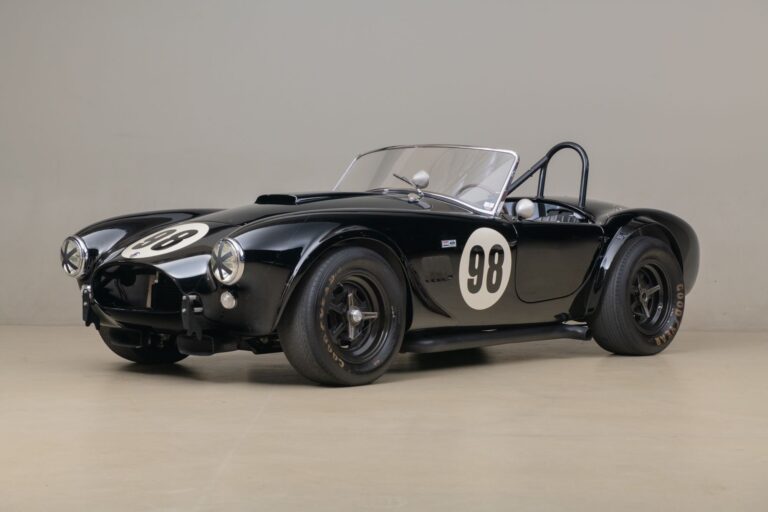
Then came the excess. If the 289 Cobra was a scalpel, the 427 Cobra was a nuclear bomb. Widened, strengthened, and fitted with a massive 7.0-liter Ford big-block engine, the 427 S/C (Semi-Competition) is perhaps the most chemically pure definition of “muscle car” ever created. With 485 horsepower in a car weighing just over 2,000 pounds, it had a power-to-weight ratio that rivaled fighter jets. It was a caricature of performance—a car that could spin its tires in fourth gear and frightened even professional drivers. It was Shelby’s philosophy of “too much is just right” made metal.
But Shelby’s greatest contribution to Ford—and perhaps to American motorsport history—was not a car that bore his name on the nose, but one he was hired to save: the GT40. After Ford’s in-house team failed to make the GT40 reliable or fast enough to beat Ferrari in 1964 and 1965, the program was handed to Shelby American. Ken Miles, Shelby’s development driver and mechanical genius, along with Phil Remington, the fabricator who could fix anything, went to work. They refined the aerodynamics, fixed the brakes, and installed the 427 engine. The result was the 1-2-3 finish at the 1966 24 Hours of Le Mans. It was the culmination of Shelby’s personal vendetta against Ferrari, achieved on the world’s biggest stage.
As the late 60s progressed, the cars became heavier and more civilized. The GT500 was a grand tourer compared to the jagged GT350. Shelby, tired of the corporate bureaucracy at Ford and the changing emissions regulations, walked away in 1970. He famously spent years in Africa, away from the car world, before returning in the 80s to help his old friend Lee Iacocca at Chrysler (giving birth to the Dodge Viper, a spiritual successor to the Cobra). But the Shelby brand never truly died; it just hibernated.
The modern resurrection of Shelby, before Carroll’s death in 2012, saw the company return to its roots. The Shelby Series 1 was the only car designed from a clean sheet of paper by Shelby, and the renewed partnership with Ford brought the GT350 and GT500 badges back to the showroom. But the soul of the brand remains in the 1960s.
Shelby is unique because it represents the triumph of the “Garagista” in America. It is the story of Phil Remington fixing a cracked chassis with a hammer and a welding torch in the pits while the Europeans stood by with clipboards. It is the story of Ken Miles testing a car in the desert heat until he collapsed, just to find another tenth of a second. It is a brand that proves you don’t need a century of heritage or a castle in Italy to build the fastest cars in the world. You just need a big engine, a small car, and the grit to keep your foot planted when every instinct tells you to lift. To drive a Shelby is to wrestle with a rattlesnake; if you respect it, it will give you the ride of your life. If you don’t, it will bite you. And that is exactly how Carroll wanted it.
Type
Foundation Year
Country
Founder/s
Headquarters

Type
Foundation Year
Country
Founder/s
Headquarters
About this brand
In the polished, aristocratic world of mid-century motorsport, where success was measured in overhead camshafts and Italian pronunciation, Carroll Shelby was a sledgehammer crashing through a stained-glass window. He was not an engineer in the traditional academic sense; he was a force of nature, a failed chicken farmer turned Le Mans winner who wore bib overalls to the track and possessed a hustle that would make a Las Vegas bookie blush. The brand he created is not merely a manufacturer of automobiles; it is the physical manifestation of the American Dream—specifically, the part of the dream that involves taking something polite and underpowered, stuffing it with enough horsepower to reverse the rotation of the earth, and then beating the Europeans at their own game. Shelby American is the story of hot-rodding graduating from the stoplight to the Mulsanne Straight.
The genesis of the legend is so oft-told it has become folklore, yet the sheer audacity of it remains breathtaking. In 1961, Carroll Shelby, forced to retire from driving due to a heart condition (after popping nitroglycerin pills to win Le Mans in 1959 for Aston Martin), needed a new project. He famously approached AC Cars in Thames Ditton, England, asking if they would build him a car if he could find an engine. They said yes. He then approached Chevrolet, who politely declined, seeing no benefit in funding a rival to their Corvette. He then knocked on the door of Ford. Lee Iacocca and the Ford executives, desperate to inject some youth into their lineup, gave Shelby a couple of unparalleled gifts: a little bit of money and a brand-new, lightweight, thin-wall casting 260 cubic-inch V8.
The result was the Shelby Cobra. The prototype, CSX2000, was painted a different color every time a magazine tested it to create the illusion that Shelby had a fleet of cars. He didn’t. He had one. But that one car was a revelation. By mating the crude, torque-rich American V8 with the lithe, aluminium-bodied AC Ace chassis, Shelby created a hybrid that was more than the sum of its parts. It was violent, visceral, and terrifyingly fast. It didn’t accelerate so much as it exploded. When the engine grew to 289 cubic inches, the Cobra dominated the US Road Racing Championship. It was the “Corvette Killer”. But Shelby’s eyes were fixed on a bigger prize: Enzo Ferrari.
The rivalry between the Texan and Il Commendatore is the stuff of Hollywood, but the engineering war it spawned was very real. The Cobra roadster, for all its acceleration, was a brick aerodynamically. It hit an invisible wall at 160 mph on the long straights of Europe, while the sleek Ferrari GTOs sailed past. Shelby’s solution was to hand a sketchpad to a young designer named Peter Brock. Against the advice of almost everyone else in the shop, who thought the design was ugly, they built the Shelby Daytona Coupe. With its chopped tail (Kammback) and smooth nose, it gained 20 mph in top speed for free. In 1965, this scrappy team of hot-rodders operating out of a warehouse in Venice, California, did the unthinkable: they beat Ferrari to win the World Sportscar Championship for GT cars. It was the first and only time an American manufacturer has taken that crown.
While the Cobras were conquering Europe, Ford handed Shelby another problem: the Mustang. They wanted the “secretary’s car” to have a racing pedigree. Shelby, initially reluctant, famously called the Mustang a “mule”, but agreed to see if he could make it a race horse. The 1965 Shelby GT350 was not a marketing sticker package; it was a competition car with license plates. The back seat was thrown out, the suspension was stiffened to the point of punishment, the brakes were upgraded, and the engine was tuned to scream. It was raw, noisy, and smelled of gasoline and hot oil. It was perfect. It dominated the SCCA B-Production class so thoroughly that it effectively killed the class. It established the template for every pony car performance variant that has existed since.
Then came the excess. If the 289 Cobra was a scalpel, the 427 Cobra was a nuclear bomb. Widened, strengthened, and fitted with a massive 7.0-liter Ford big-block engine, the 427 S/C (Semi-Competition) is perhaps the most chemically pure definition of “muscle car” ever created. With 485 horsepower in a car weighing just over 2,000 pounds, it had a power-to-weight ratio that rivaled fighter jets. It was a caricature of performance—a car that could spin its tires in fourth gear and frightened even professional drivers. It was Shelby’s philosophy of “too much is just right” made metal.
But Shelby’s greatest contribution to Ford—and perhaps to American motorsport history—was not a car that bore his name on the nose, but one he was hired to save: the GT40. After Ford’s in-house team failed to make the GT40 reliable or fast enough to beat Ferrari in 1964 and 1965, the program was handed to Shelby American. Ken Miles, Shelby’s development driver and mechanical genius, along with Phil Remington, the fabricator who could fix anything, went to work. They refined the aerodynamics, fixed the brakes, and installed the 427 engine. The result was the 1-2-3 finish at the 1966 24 Hours of Le Mans. It was the culmination of Shelby’s personal vendetta against Ferrari, achieved on the world’s biggest stage.
As the late 60s progressed, the cars became heavier and more civilized. The GT500 was a grand tourer compared to the jagged GT350. Shelby, tired of the corporate bureaucracy at Ford and the changing emissions regulations, walked away in 1970. He famously spent years in Africa, away from the car world, before returning in the 80s to help his old friend Lee Iacocca at Chrysler (giving birth to the Dodge Viper, a spiritual successor to the Cobra). But the Shelby brand never truly died; it just hibernated.
The modern resurrection of Shelby, before Carroll’s death in 2012, saw the company return to its roots. The Shelby Series 1 was the only car designed from a clean sheet of paper by Shelby, and the renewed partnership with Ford brought the GT350 and GT500 badges back to the showroom. But the soul of the brand remains in the 1960s.
Shelby is unique because it represents the triumph of the “Garagista” in America. It is the story of Phil Remington fixing a cracked chassis with a hammer and a welding torch in the pits while the Europeans stood by with clipboards. It is the story of Ken Miles testing a car in the desert heat until he collapsed, just to find another tenth of a second. It is a brand that proves you don’t need a century of heritage or a castle in Italy to build the fastest cars in the world. You just need a big engine, a small car, and the grit to keep your foot planted when every instinct tells you to lift. To drive a Shelby is to wrestle with a rattlesnake; if you respect it, it will give you the ride of your life. If you don’t, it will bite you. And that is exactly how Carroll wanted it.
Submodels
Latest Variants


Model Lines