
Auto Union Type C
Brand
Produced from
Portal
Vehicle category
Predecessor
Successor
Submodel Overview
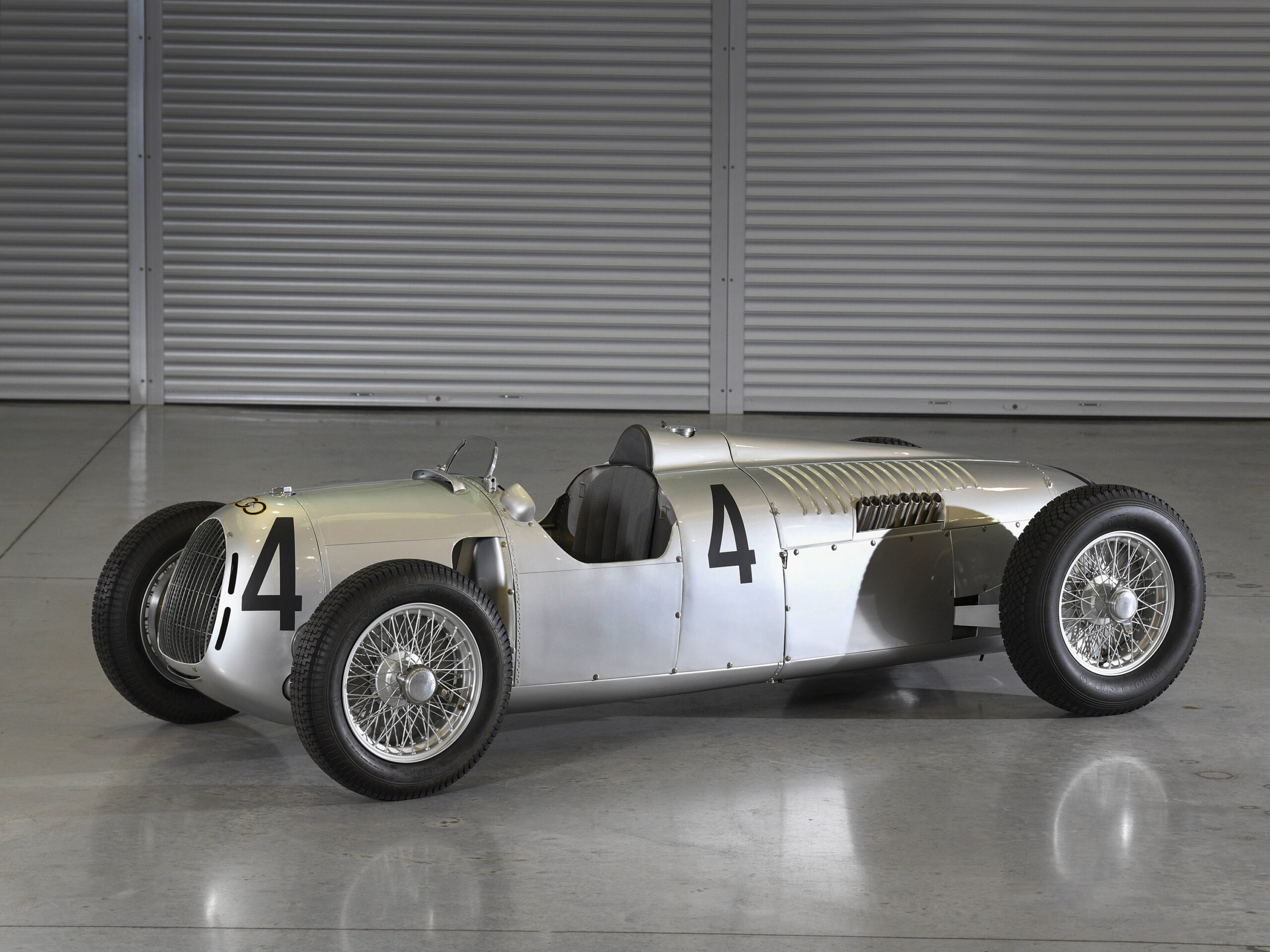
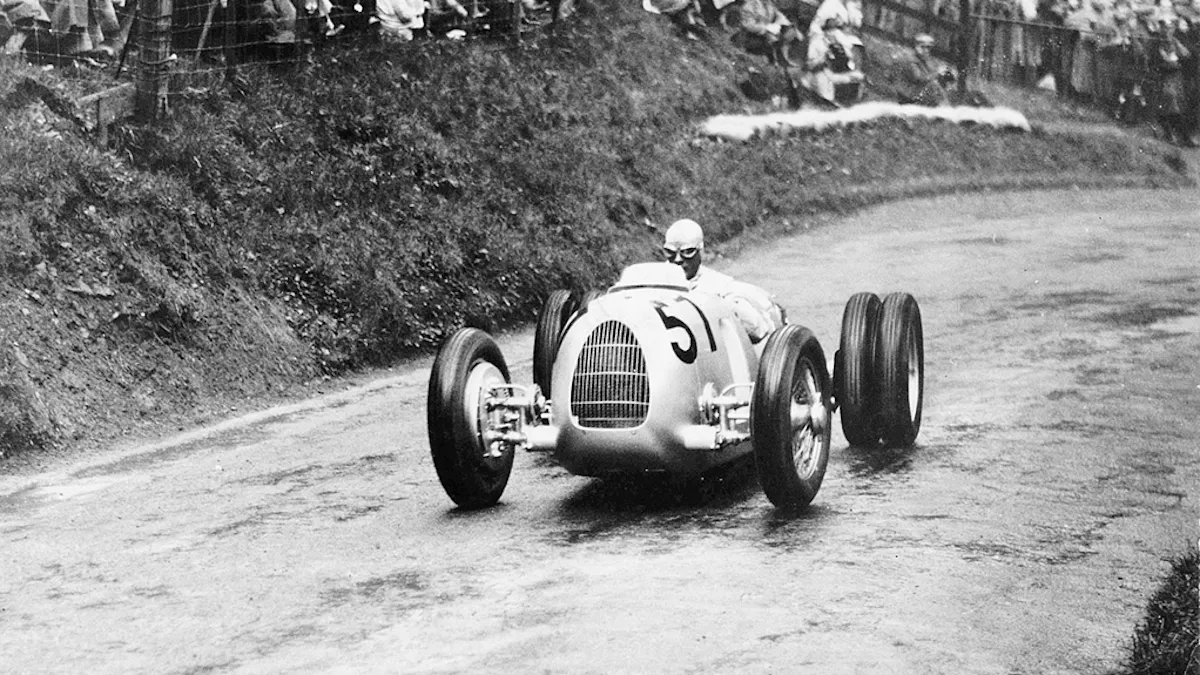
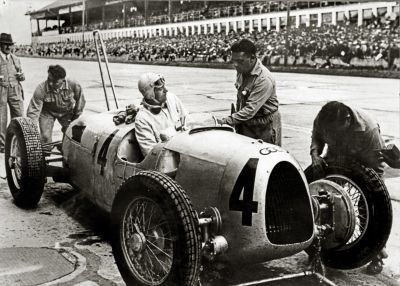
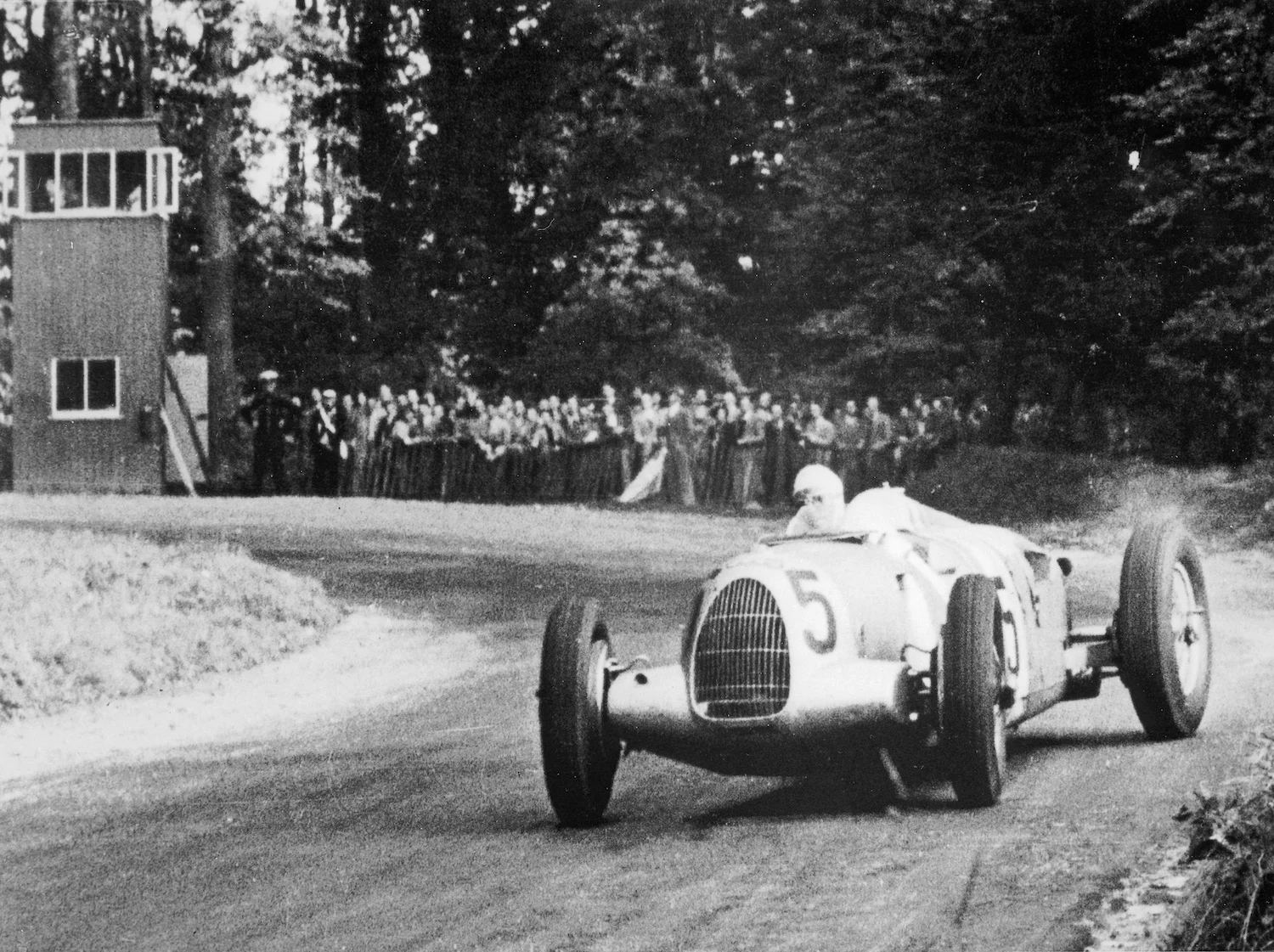
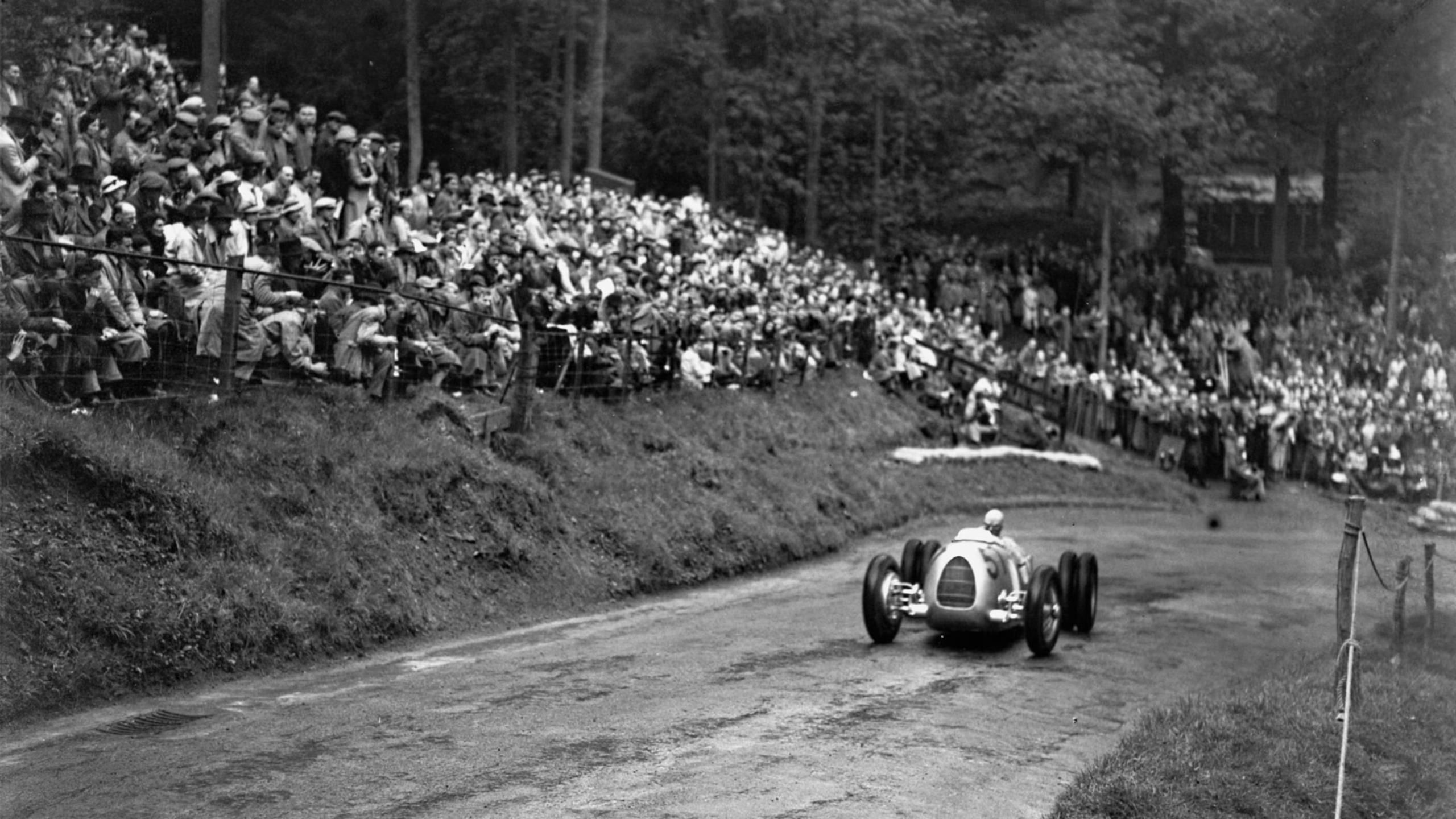
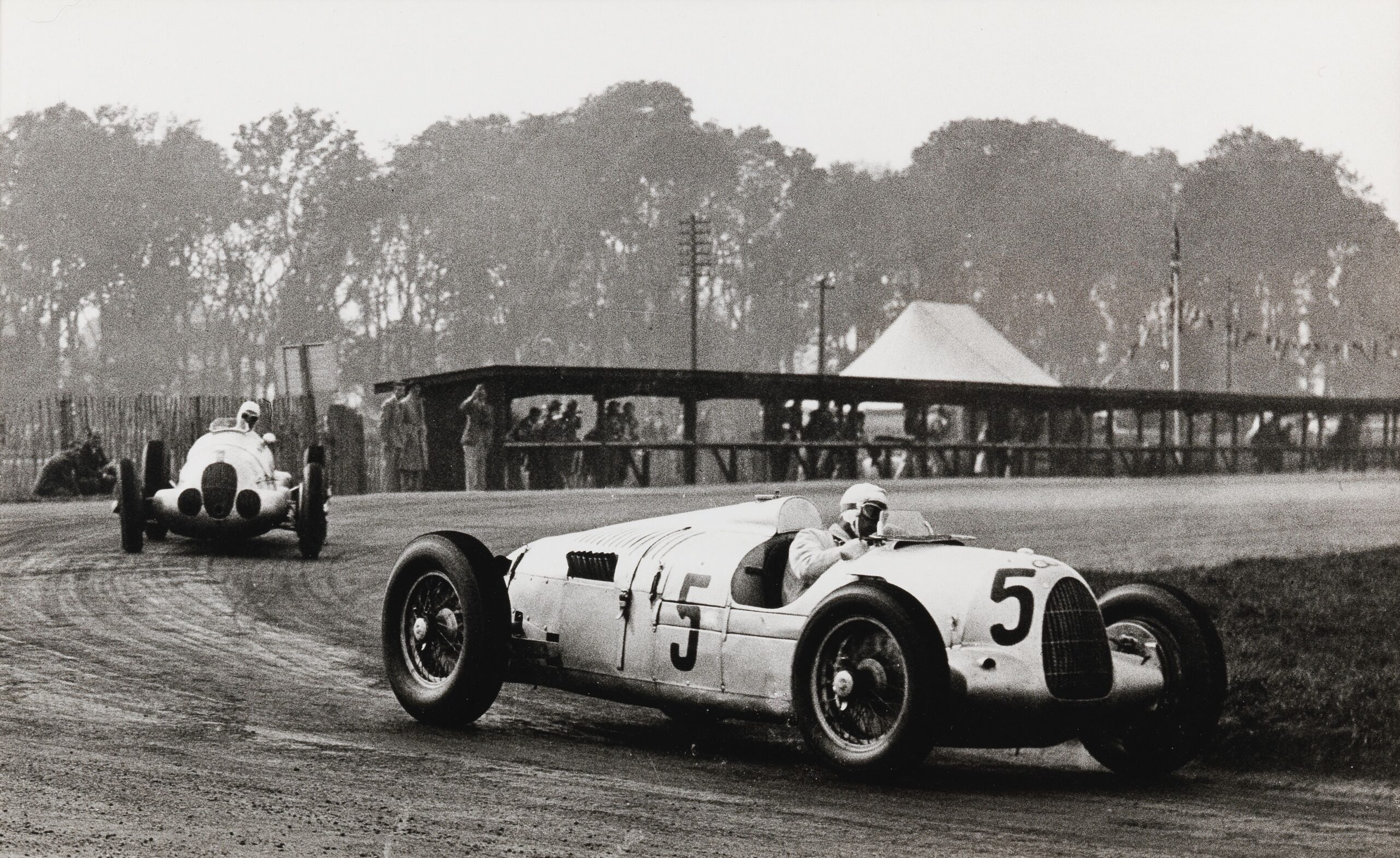
Black tyre marks smeared across the sweeping curves of the Nürburgring told a tale of barely contained violence. In 1936, the 750 kg (1653 lbs) maximum weight formula had been theoretically devised to curb the escalating speeds of grand prix racing. Instead, it spectacularly backfired, birthing unmanageable monsters. Chief among these was the Auto Union Type C, the ultimate and most terrifying evolution of Ferdinand Porsche’s radical mid-engined philosophy. Succeeding the temperamental Type B, the Type C was engineered to obliterate the supremacy of the Mercedes-Benz W25 and silence the agile, but hopelessly outgunned, Italian resistance from Alfa Romeo and Maserati. It was a silver projectile of pure intimidation, a machine so inherently ferocious that it required an entirely new breed of driver just to keep it on the tarmac.
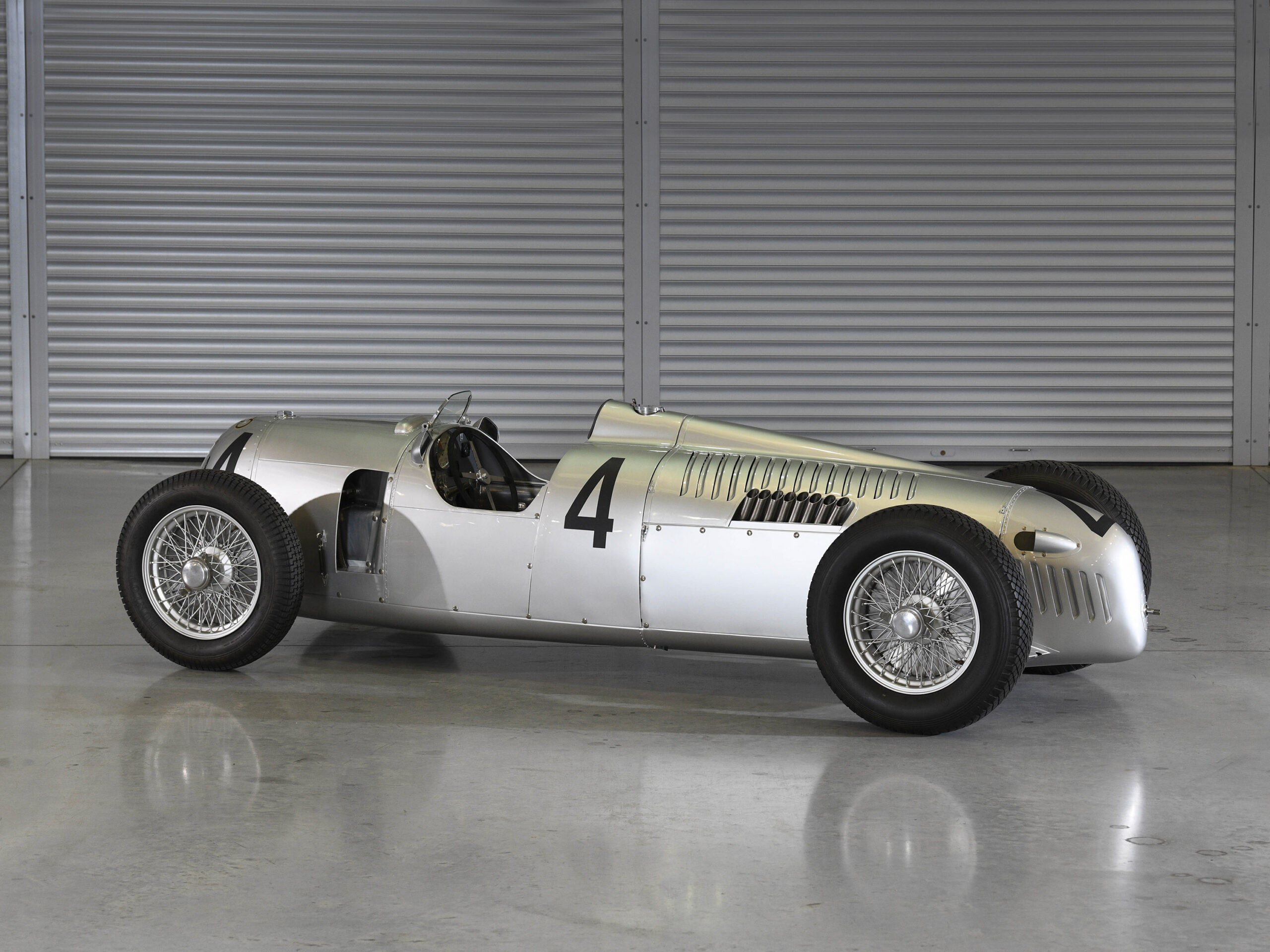
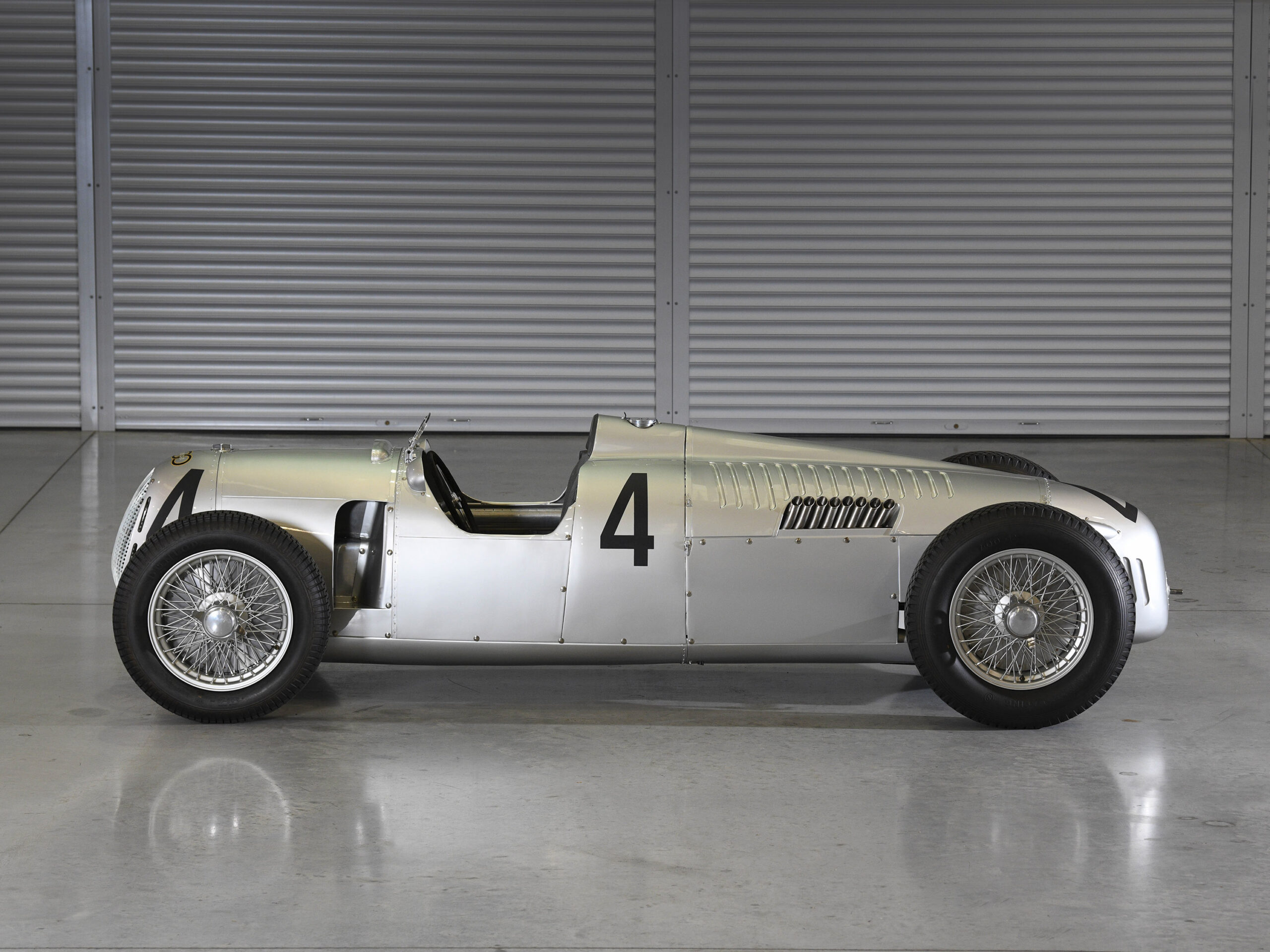
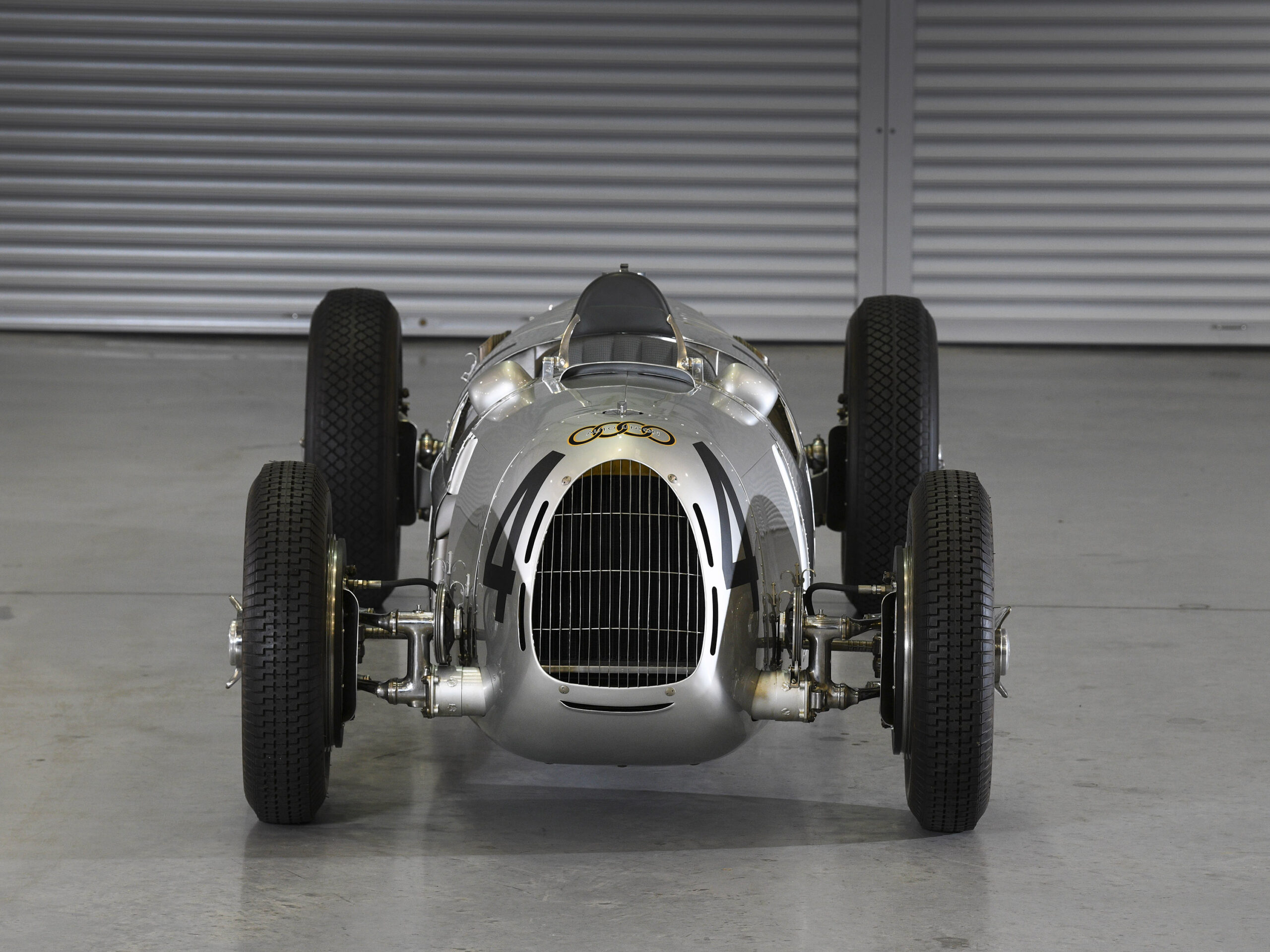
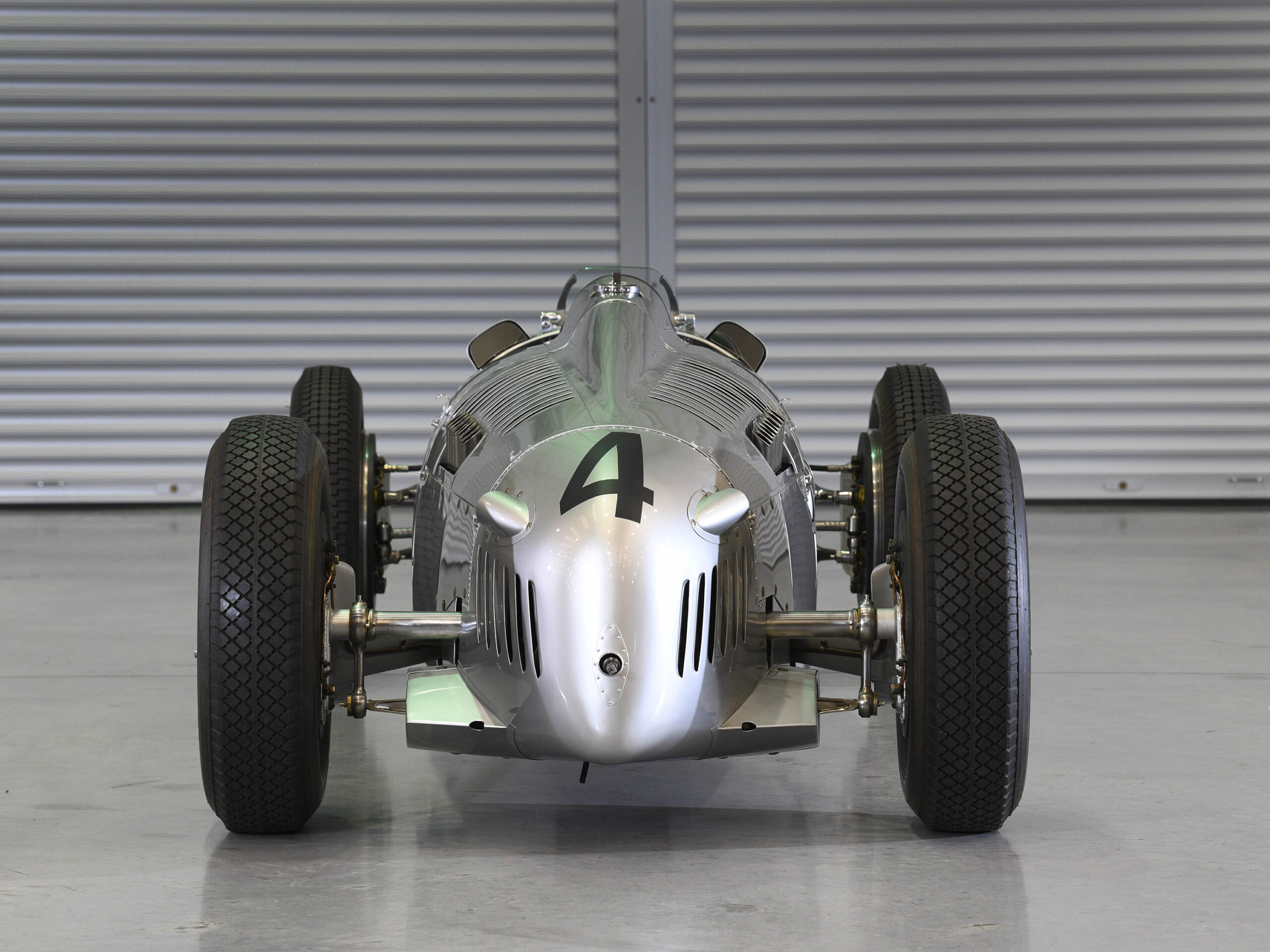
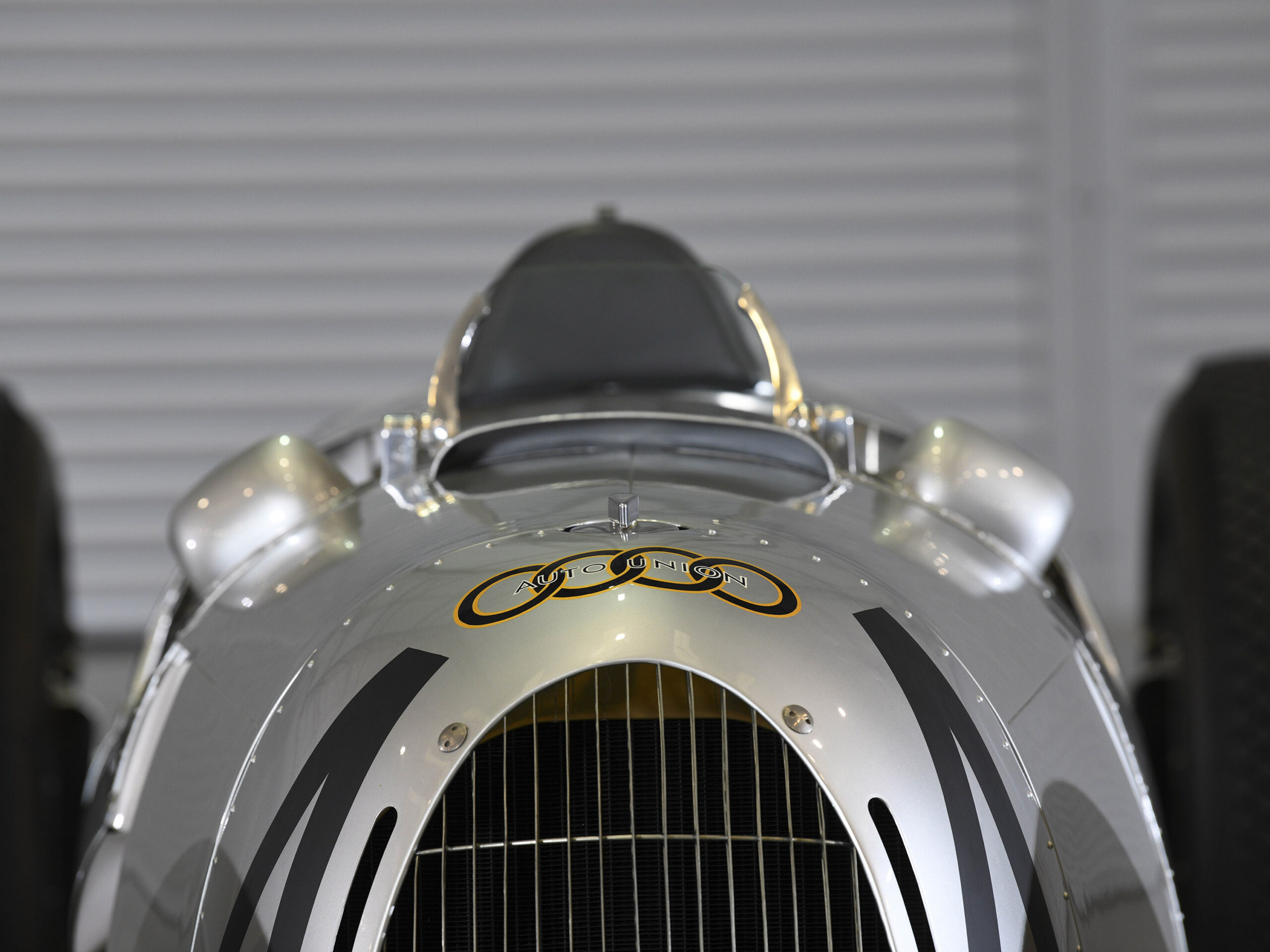
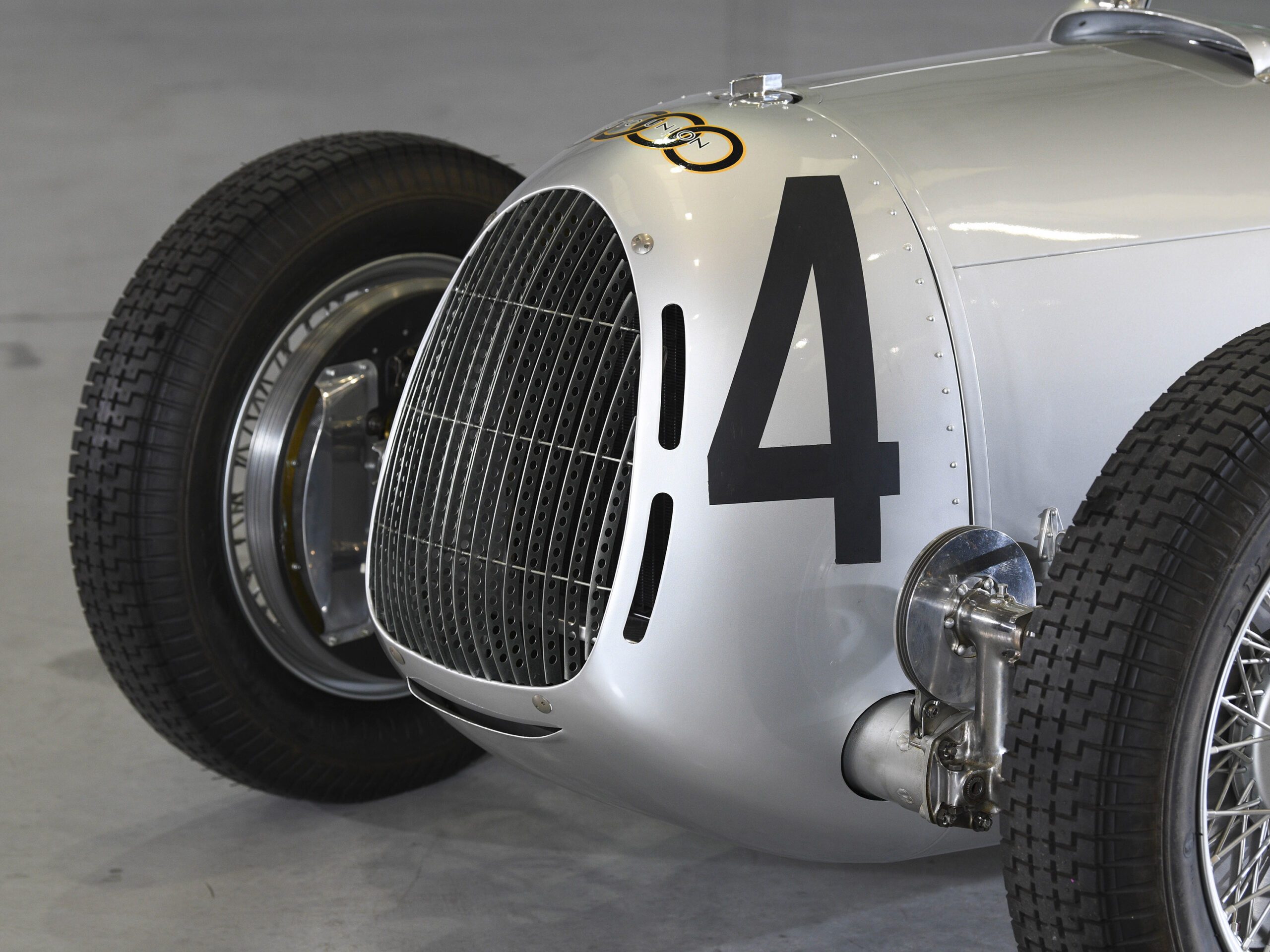
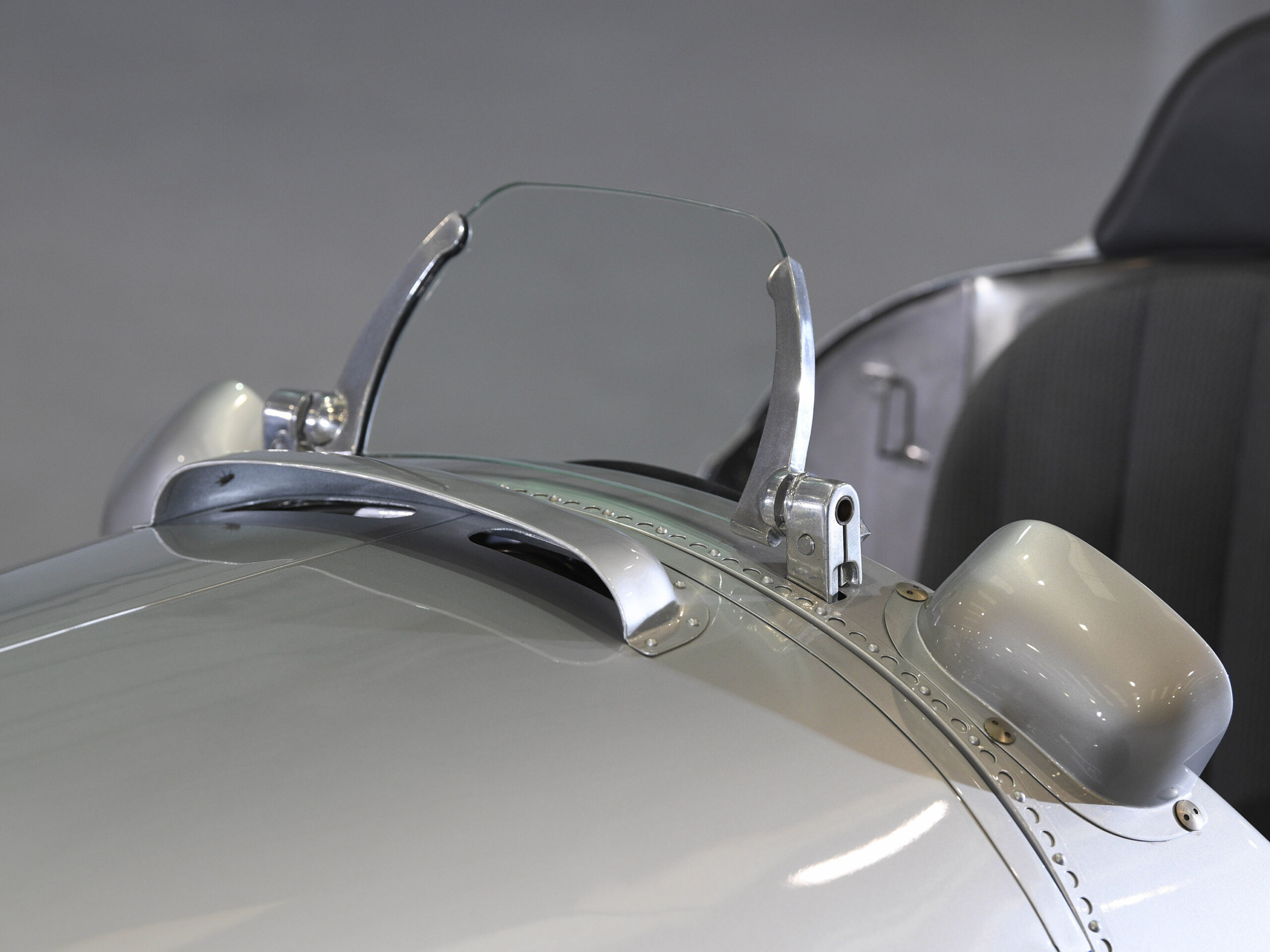
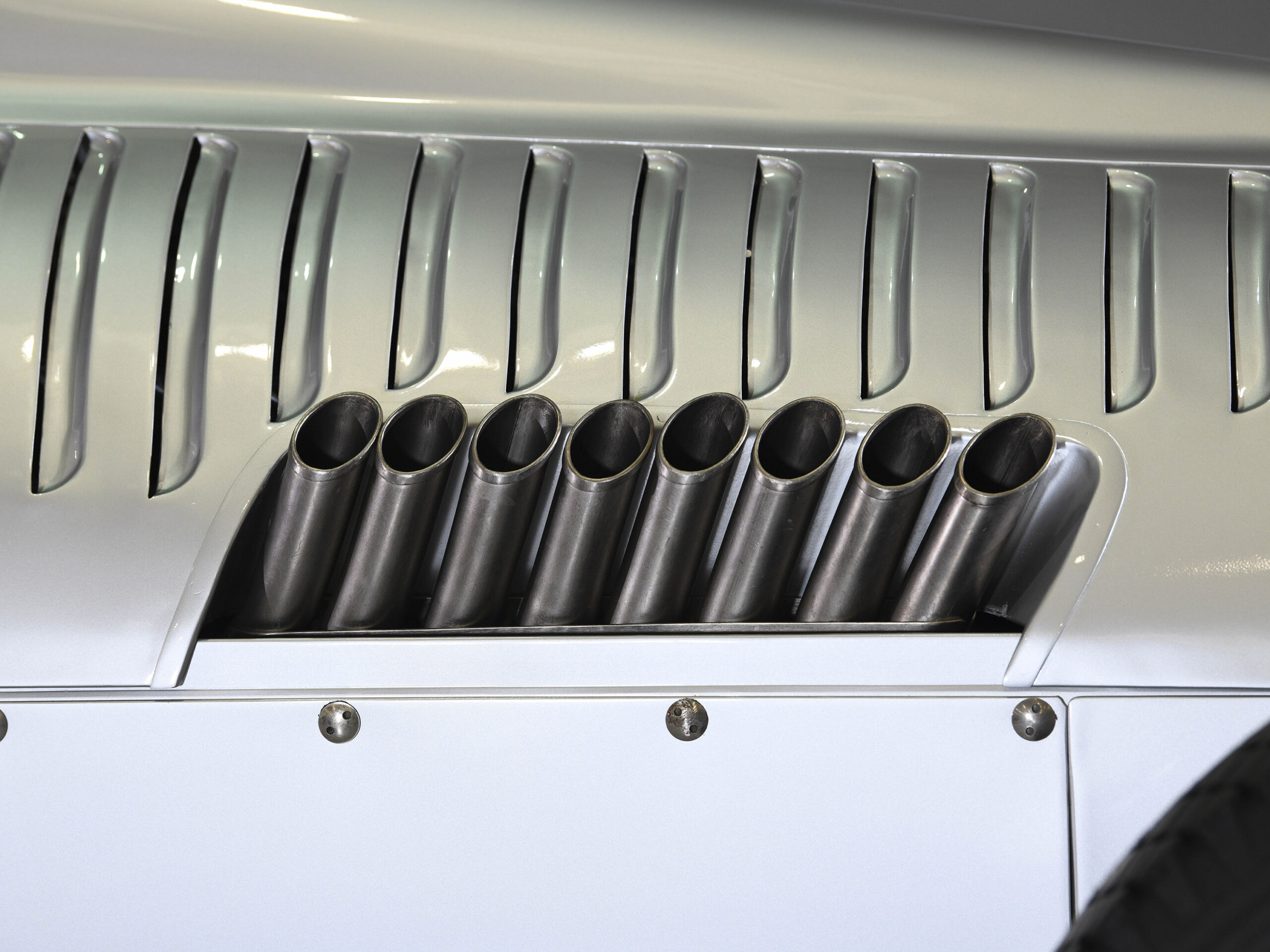
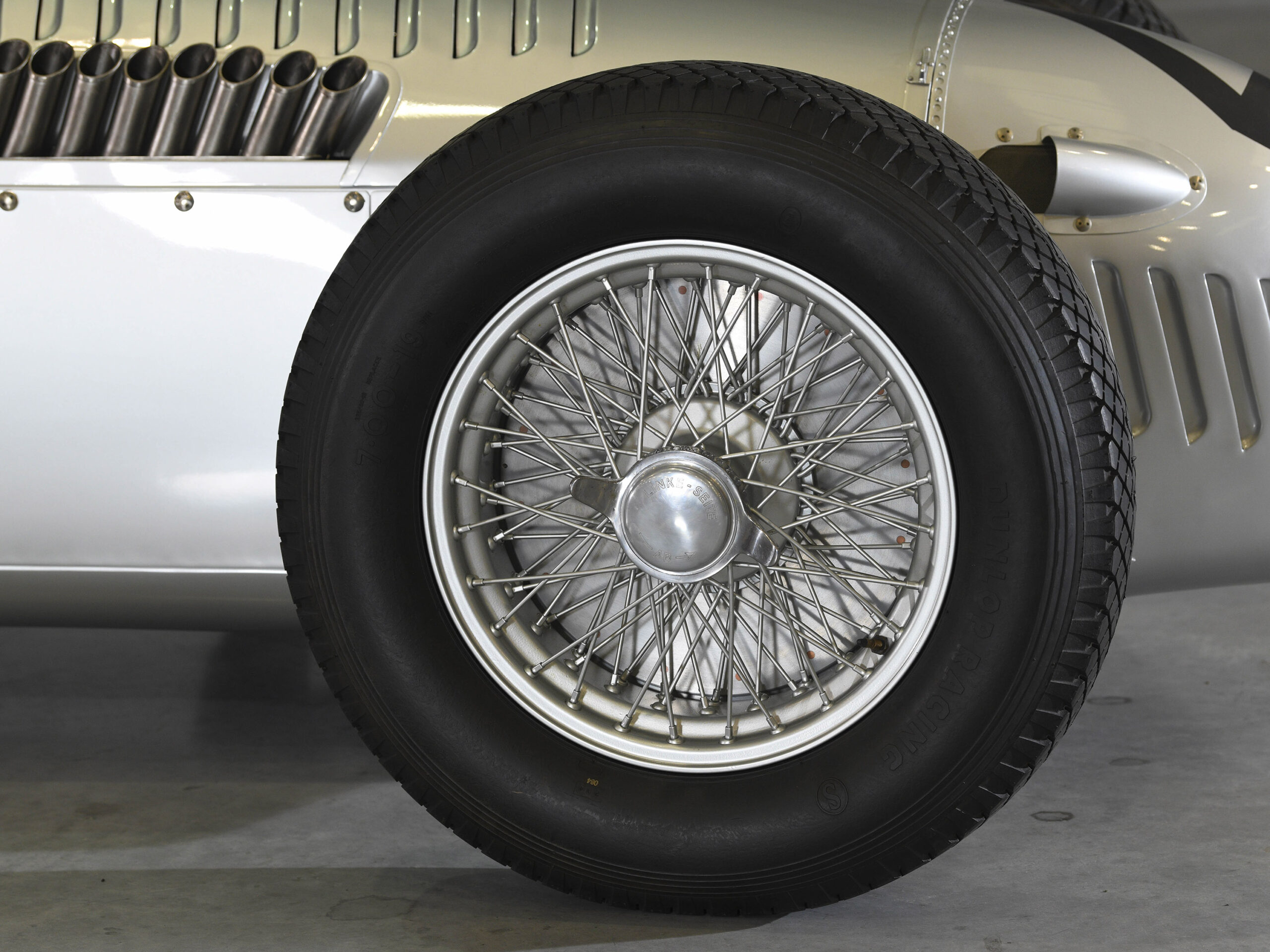
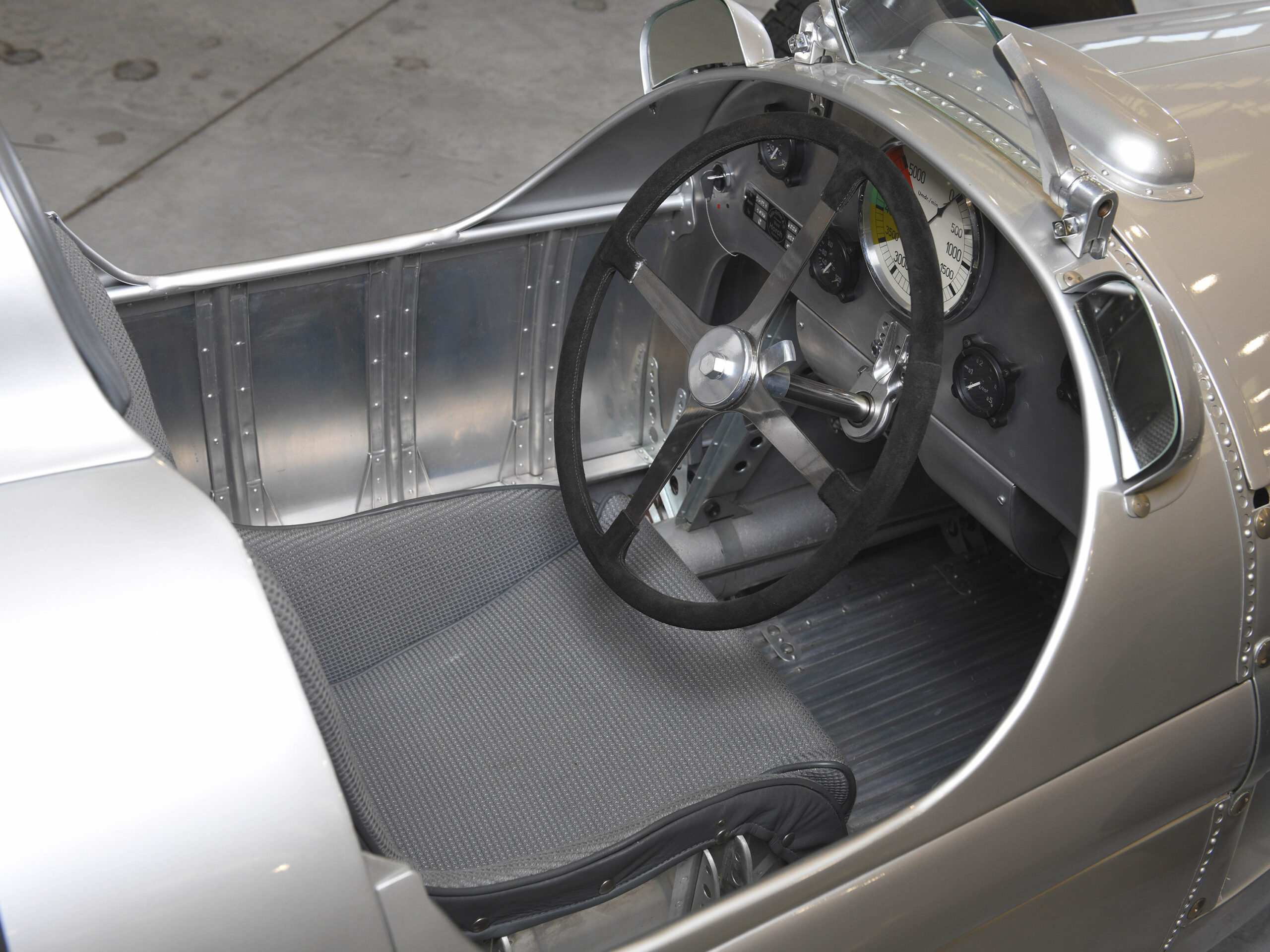
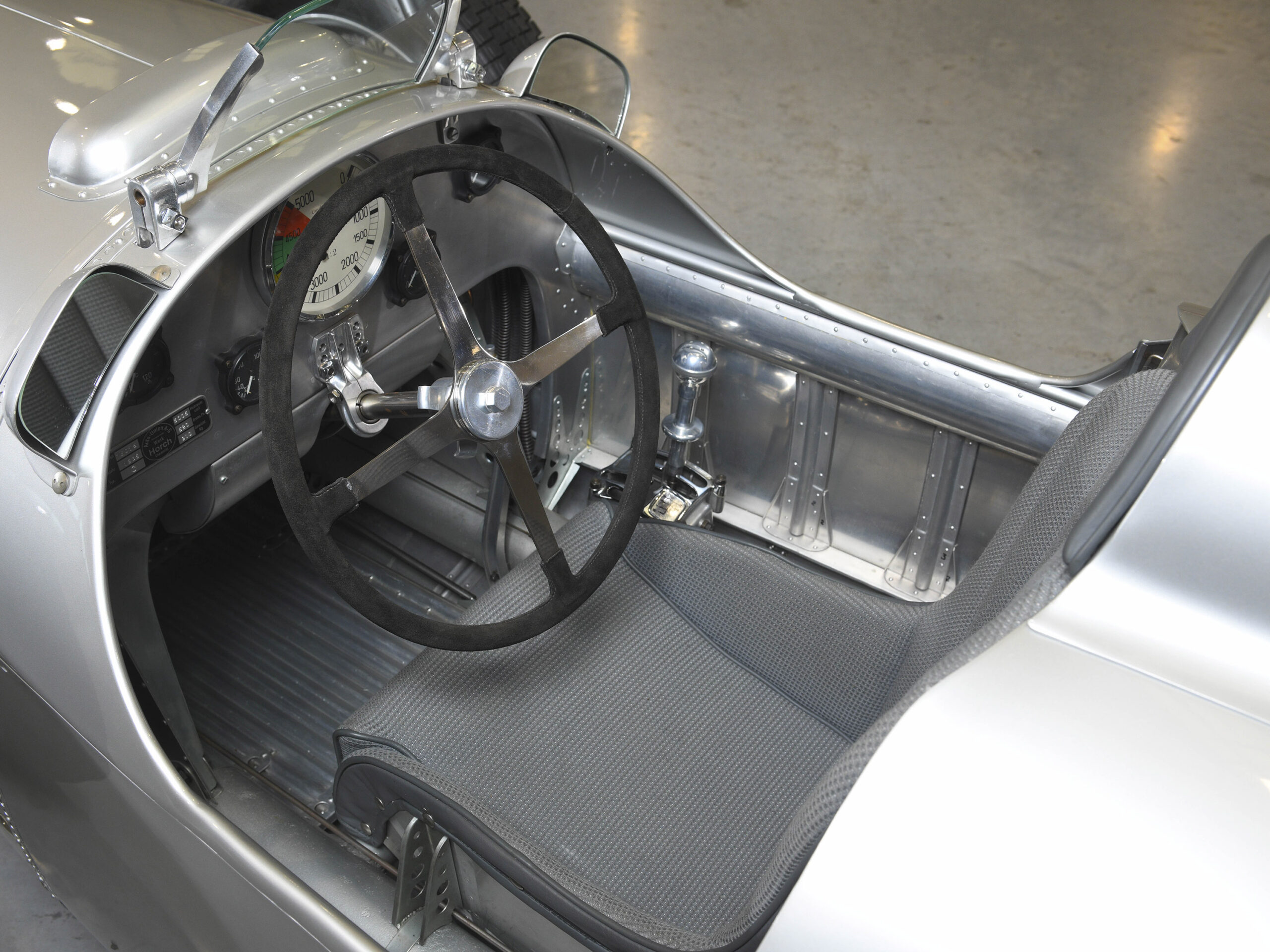
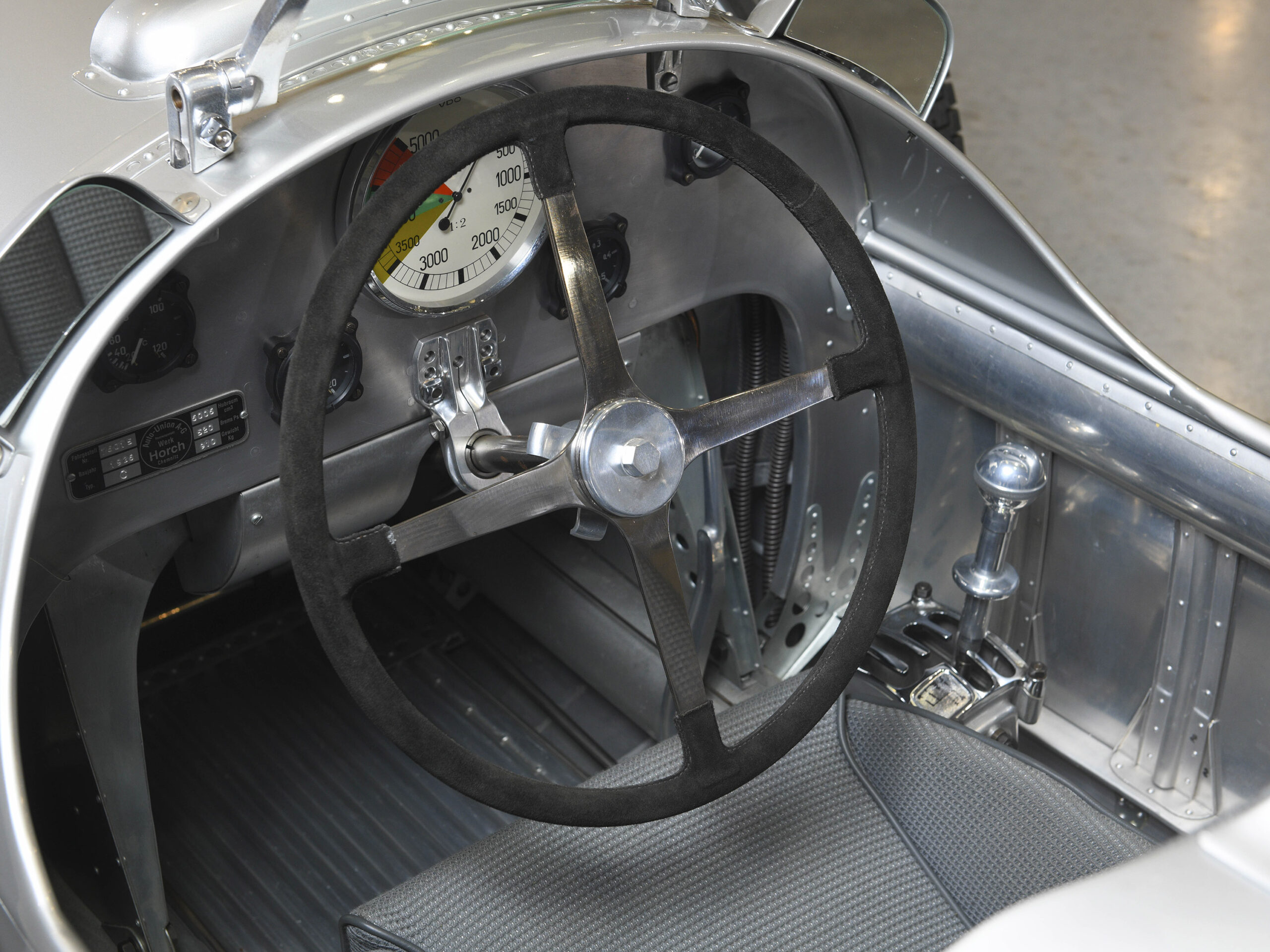
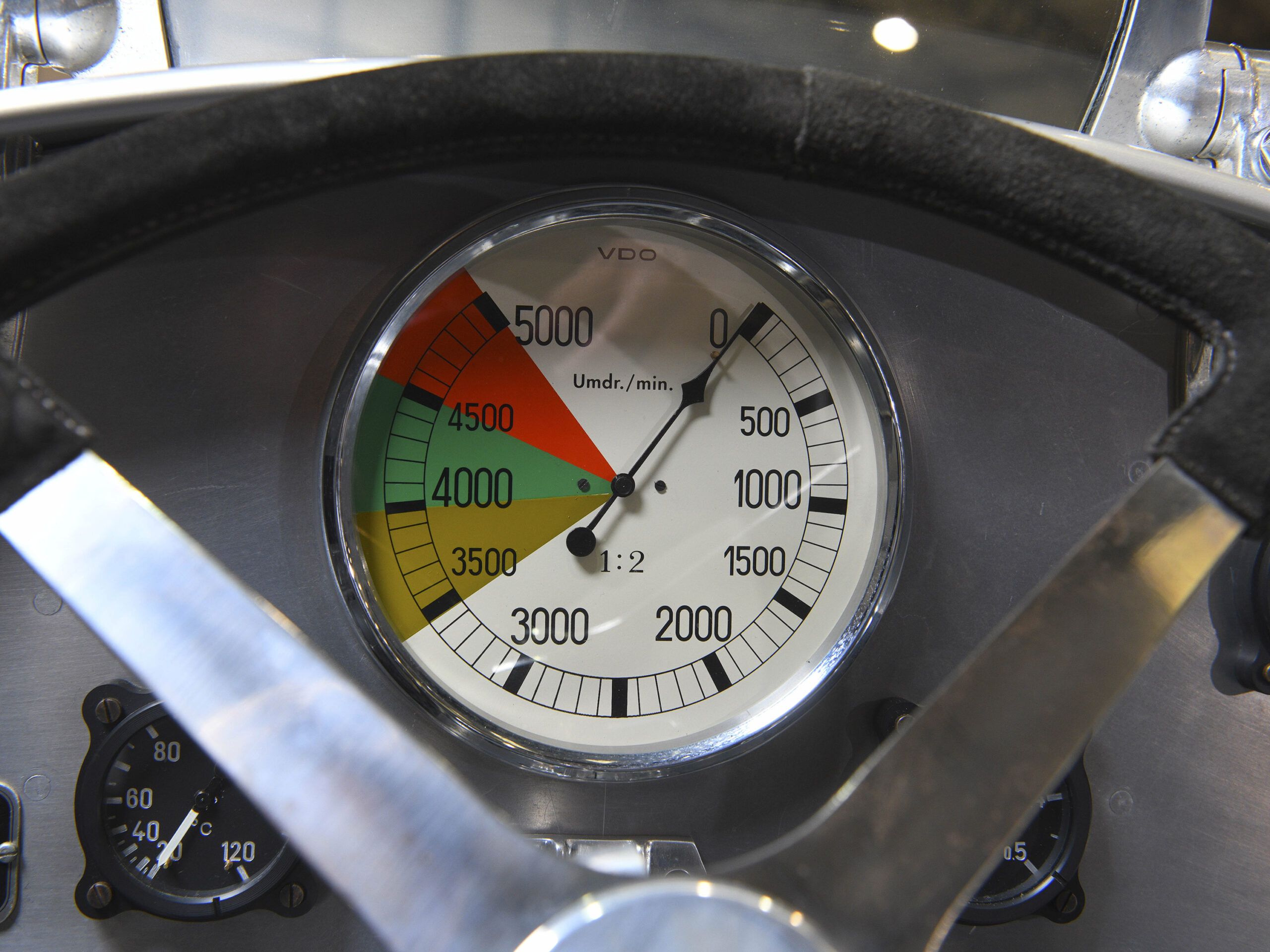
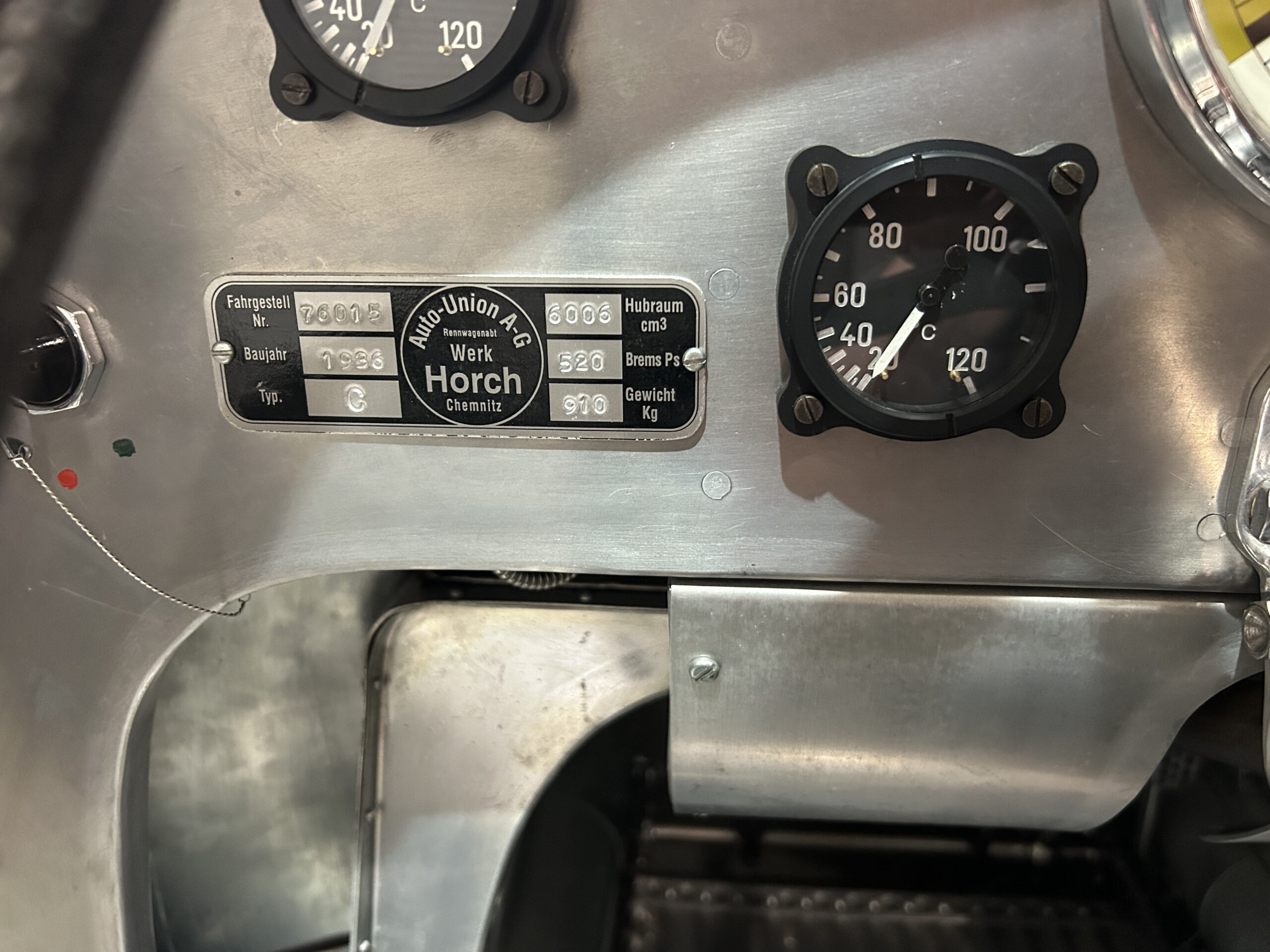
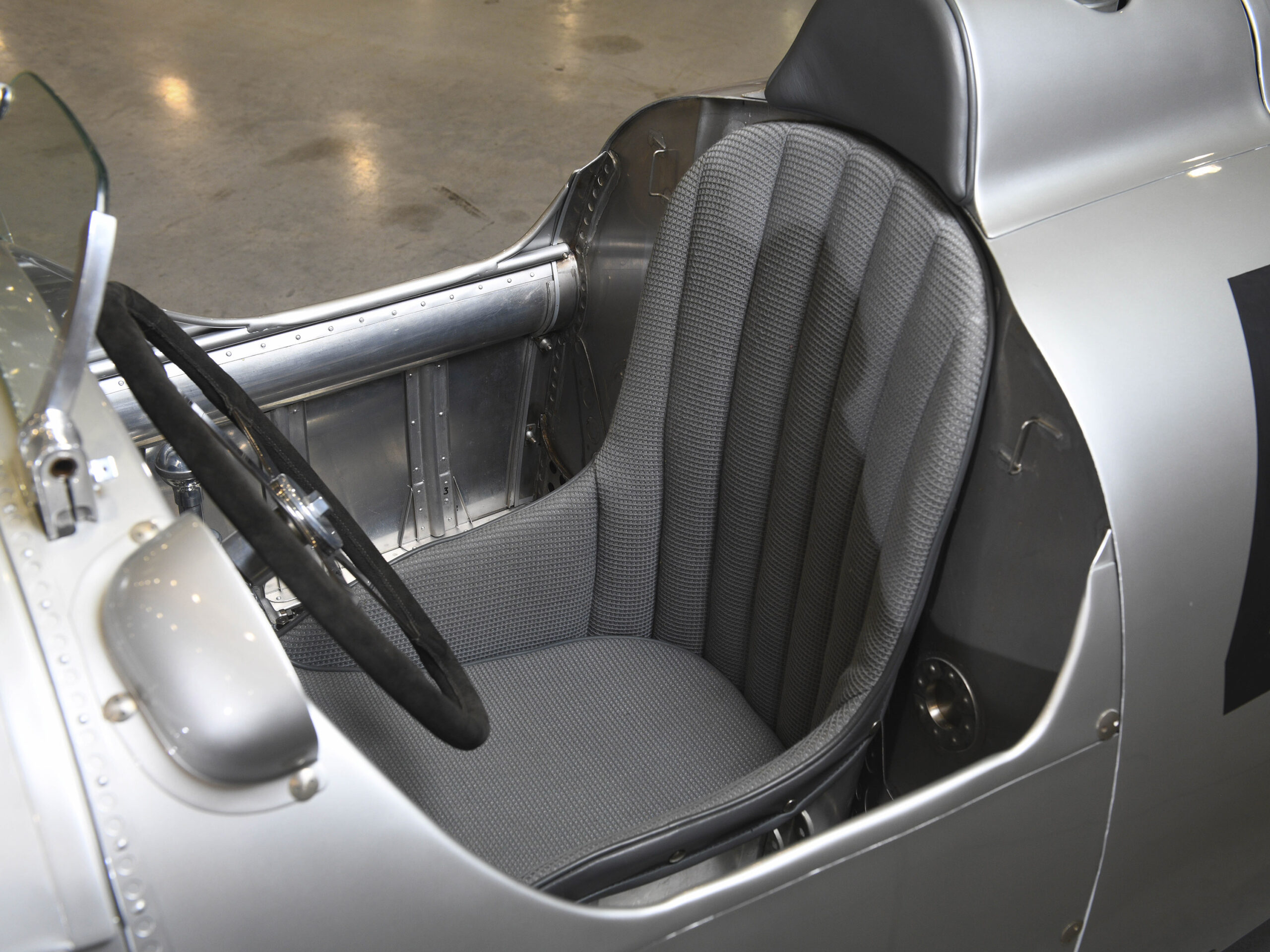
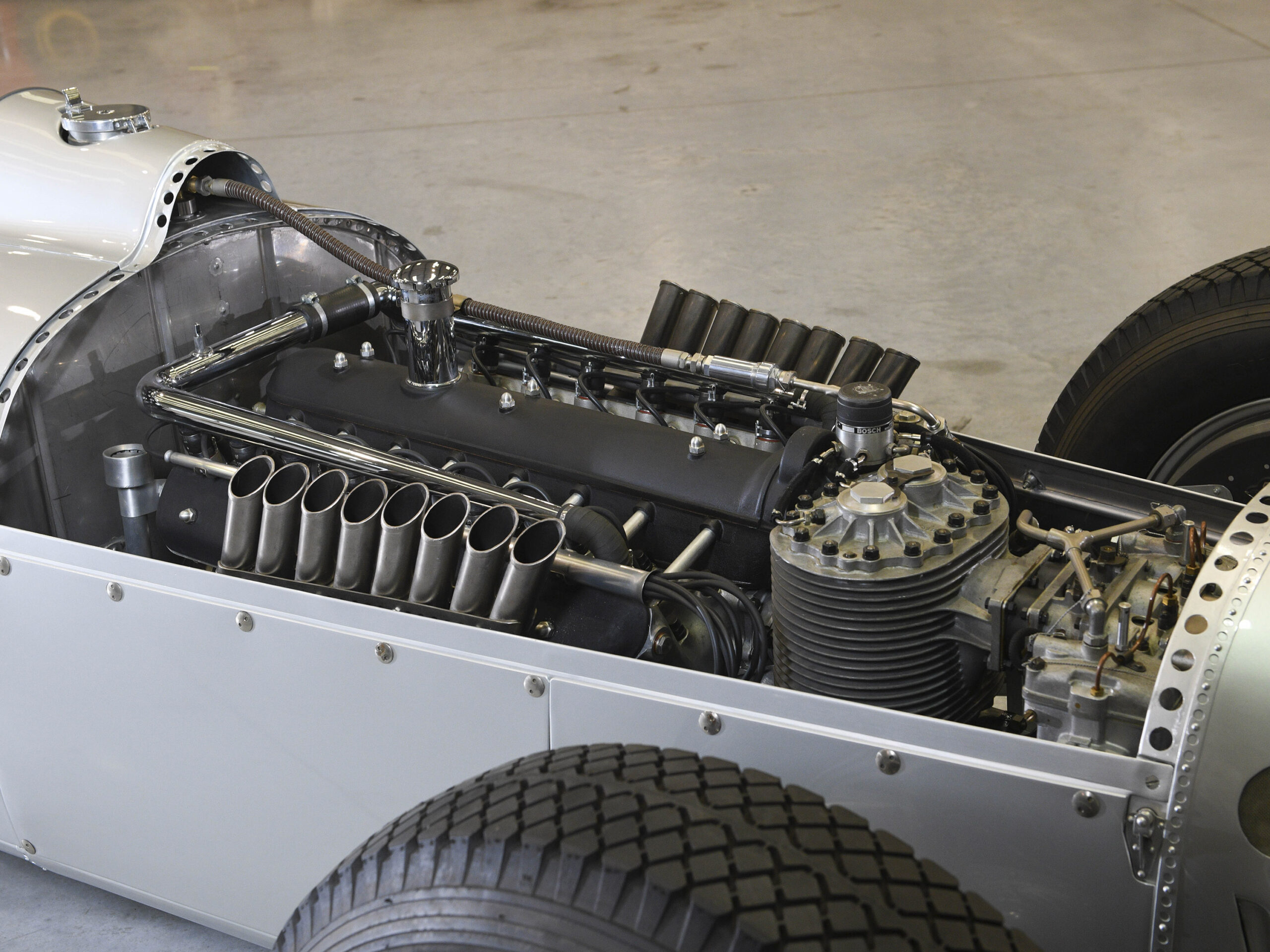
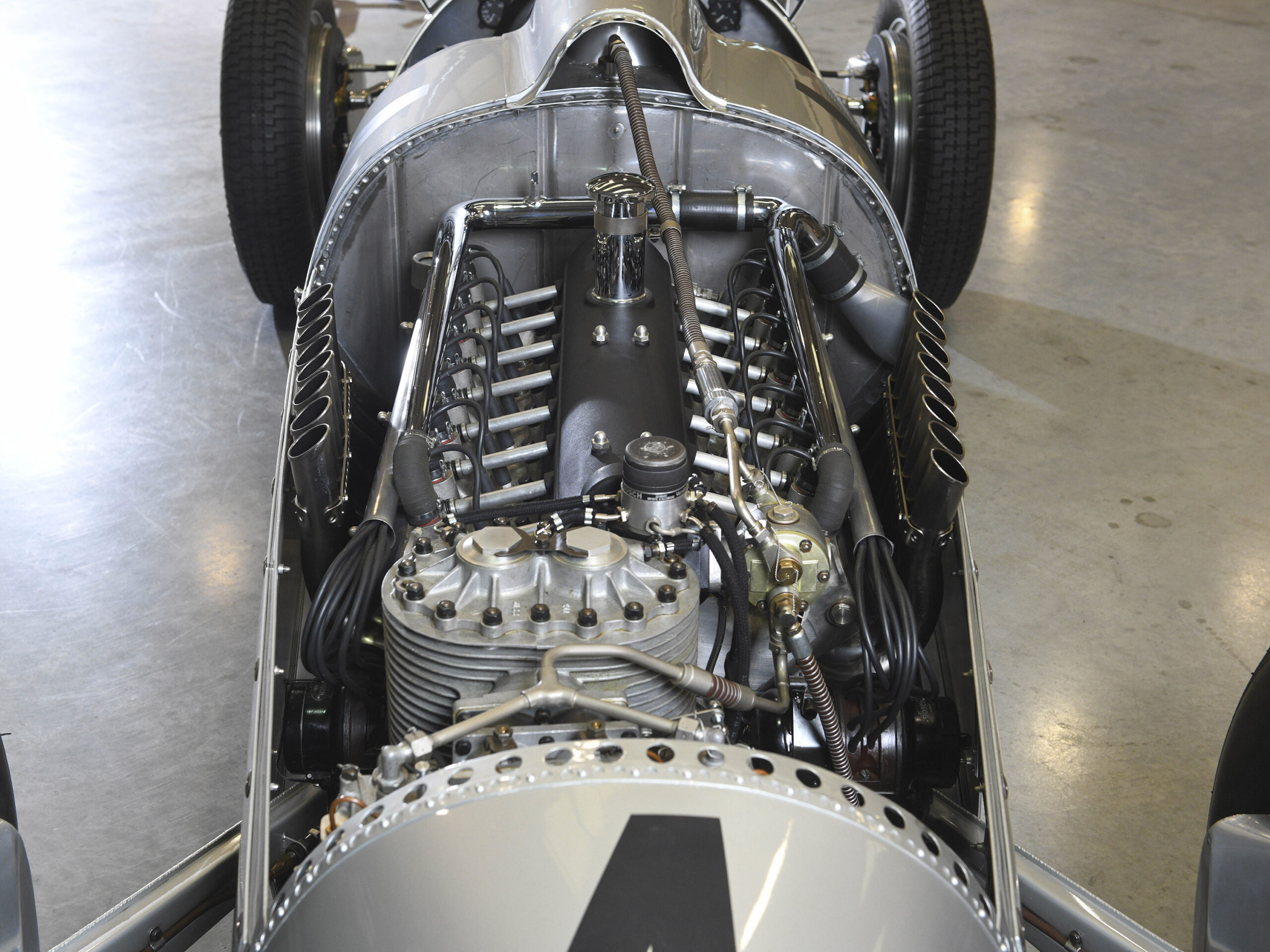
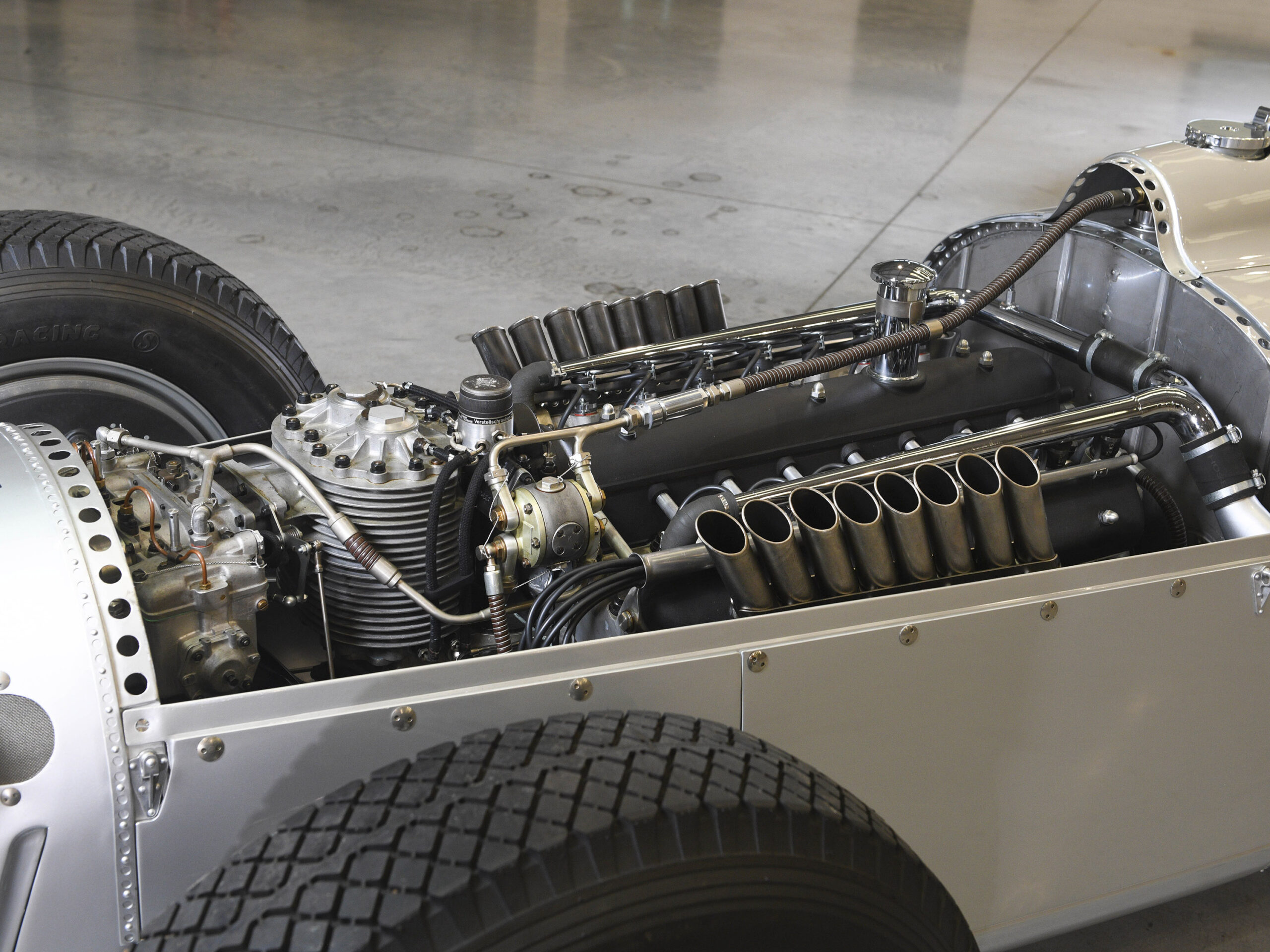
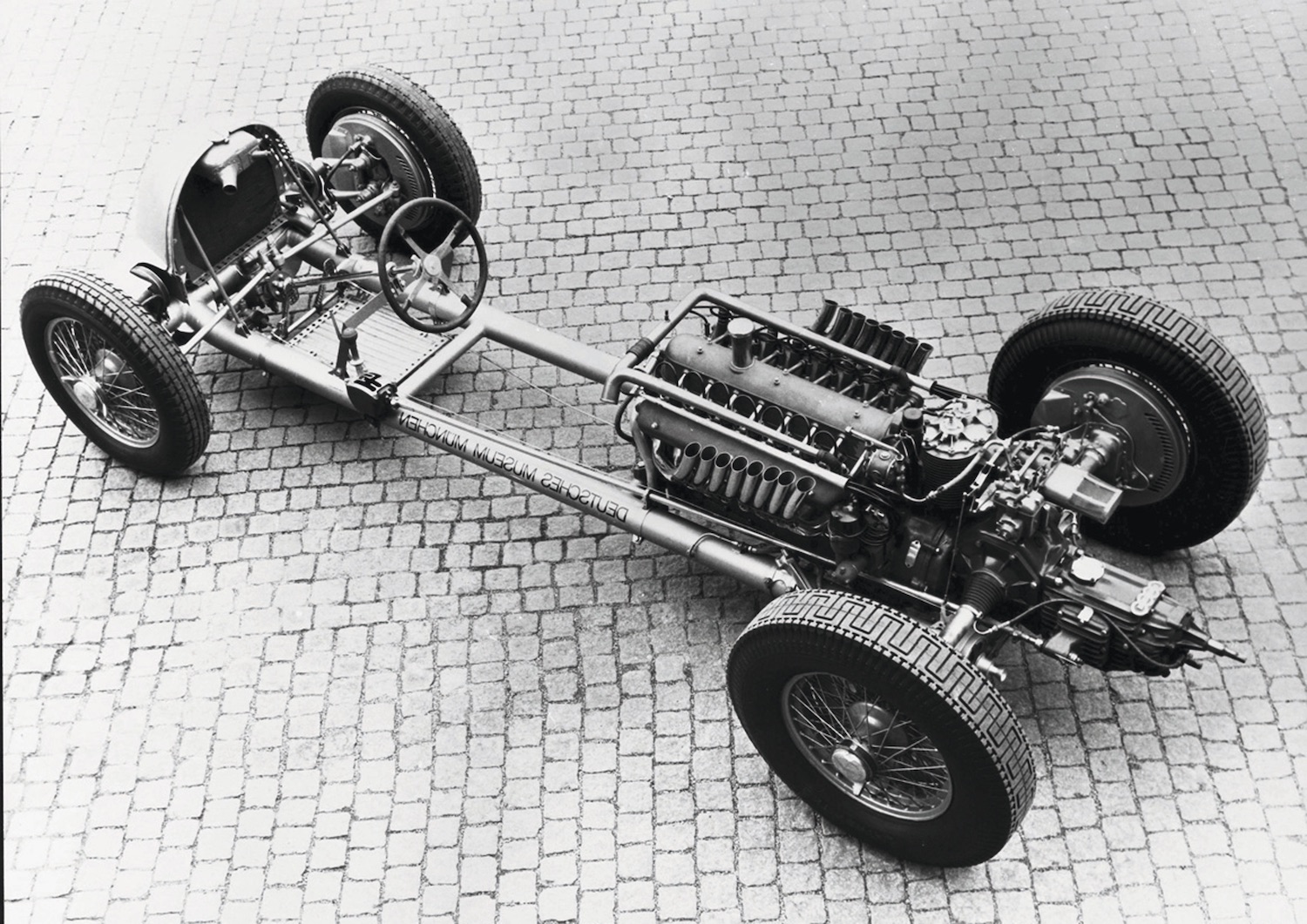
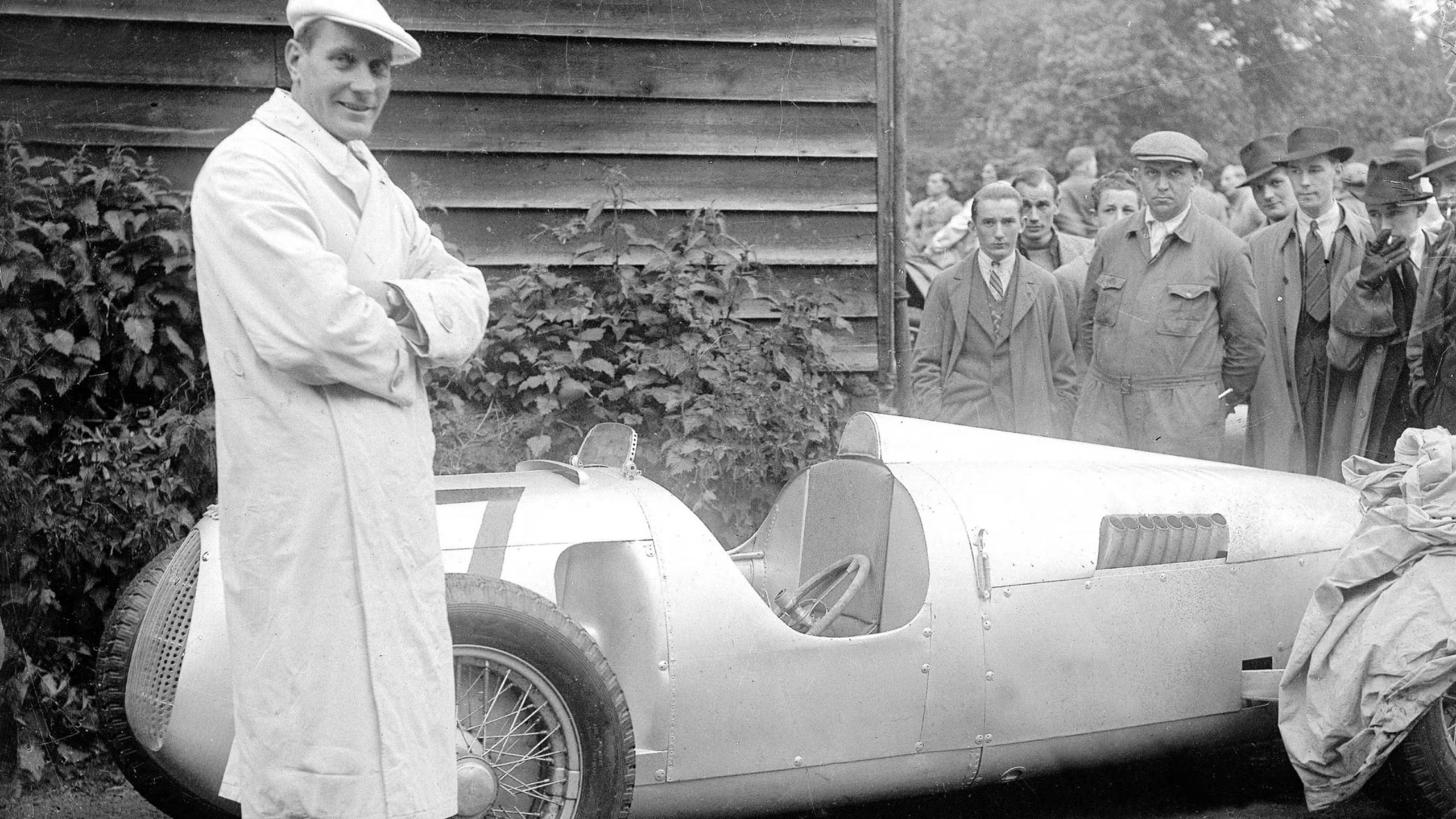
To gaze upon the teardrop silhouette of the Type C is to stare into the abyss of unadulterated pre-war performance. Stripped of paint to save precious weight, its hammered aluminium skin stretched tightly over a tubular steel ladder frame. Porsche ingeniously routed the engine coolant directly through these chassis tubes, an elegant if perilous weight-saving measure. Nestled dangerously close behind the driver’s spine sat the heart of the beast: a 6.0-litre (366 cu in) supercharged V16 engine. Breathing through a massive Roots-type supercharger, this monolithic block of light alloy produced a colossal 520 bhp and an earth-shattering wave of low-end torque. Unlike the high-pitched, shrieking inline-eights of its rivals, the V16 emitted a deep, concussive bellow—a guttural thunder that reverberated in the chests of spectators long before the car flashed into view. Power was delivered to the notoriously narrow rear cross-ply tyres via a five-speed manual transaxle. The chassis dynamics, however, were fundamentally malevolent. The rear swing-axle suspension, combined with a severe rearward weight bias, induced vicious, unpredictable snap-oversteer. The Type C could effortlessly spin its rear wheels at 160 km/h (100 mph) in top gear. In the sweltering, cramped cockpit, pushed far forward into the nose of the car, the driver wrestled a massive cord-bound steering wheel, dancing on the pedals to scrub off speeds exceeding 300 km/h (186 mph) using massively overworked, finned aluminium drum brakes.
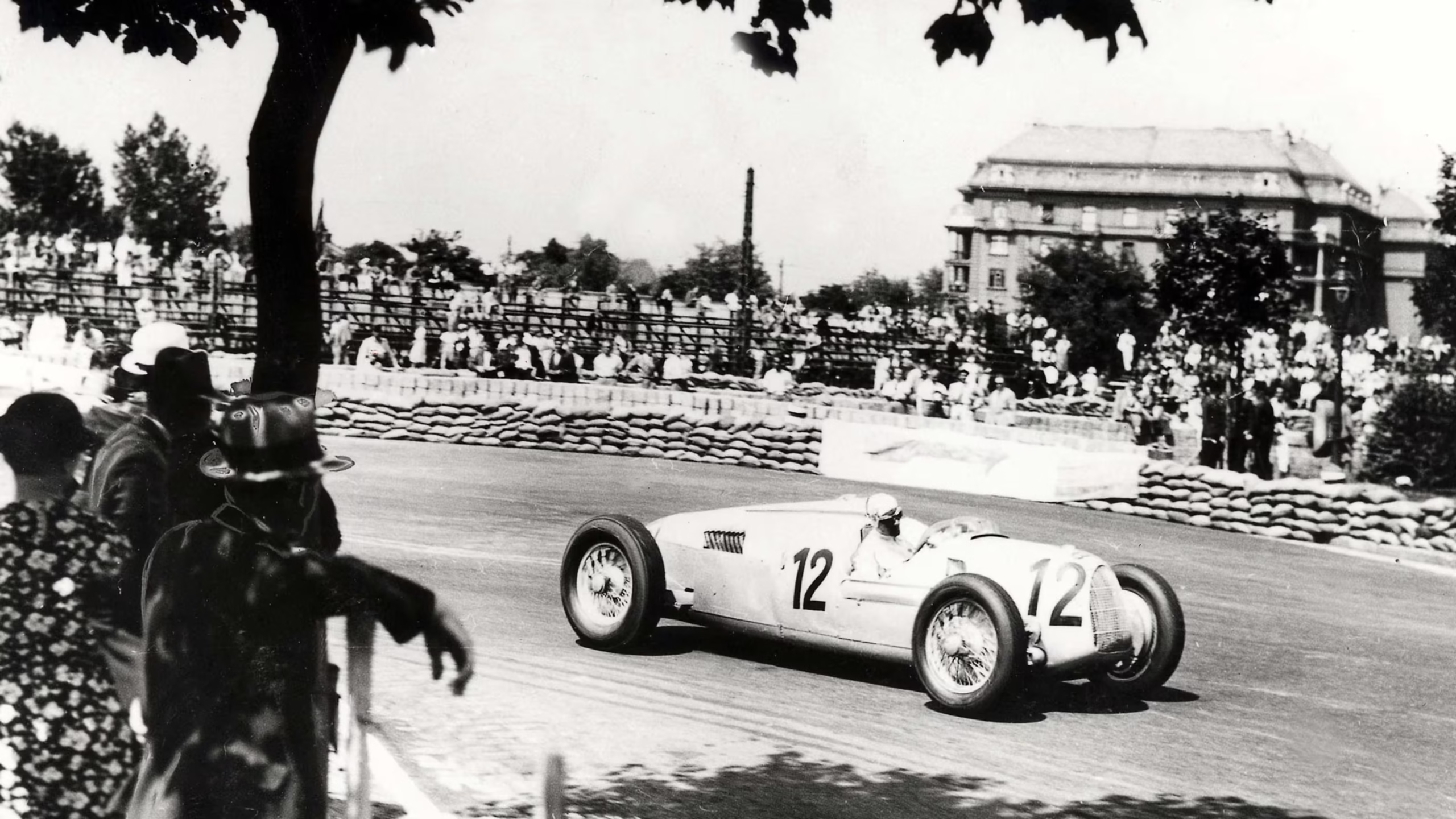
Unlocking the devastating potential of this mid-engine required a total disregard for traditional driving techniques. Veteran aces accustomed to the predictable front-engine dynamics of the era found the Type C utterly terrifying. Enter Bernd Rosemeyer, a fearless former motorcycle racer untainted by conventional four-wheeled wisdom. Rosemeyer treated the Type C’s chronic oversteer not as a fatal flaw, but as a tactical weapon. He steered the car primarily with the throttle, initiating massive four-wheel drifts to slide the silver missile through high-speed apexes. In 1936, the combination of Rosemeyer and the 6.0-litre (366 cu in) Auto Union proved invincible. He claimed the European Championship with a string of dominant victories, humiliating Mercedes-Benz on their home soil at the German Grand Prix and conquering the perilous AVUS banking, the Eifelrennen, and the Italian and Swiss Grands Prix. During the mist-shrouded Eifelrennen, his supernatural car control earned him the nickname of “Nebelmeister”, cementing his status as a national hero. The Type C was not merely a racing car; it was an instrument of geopolitical supremacy, funded by the German state to demonstrate absolute engineering superiority. Yet, it was a delicate high-wire act. The sheer brutality of the V16 demanded supreme physical stamina and reflexes that bordered on the supernatural, proving that Rosemeyer was the only man who could truly make the beast dance to his tune.
The Auto Union Type C was the absolute zenith of the 750 kg (1653 lbs) formula. When the international regulations finally shifted for the 1938 season, capping supercharged engines at a mere 3.0-litre (183 cu in), the magnificent 6.0-litre V16 was forcibly retired, succeeded by the smaller, V12-powered Auto Union Type D. However, the legacy of the Type C remains unparalleled. It proved, definitively, that the mid-engine layout was the ultimate path for single-seater motorsport, an architectural revolution that would not be fully embraced by the wider racing world for another two decades.
Brand
Produced from
Portal
Vehicle category
Predecessor
Sucessor
Brand
Produced from
Portal
Vehicle category
Model generation
Predecessor
Sucessor
Submodel Overview
Black tyre marks smeared across the sweeping curves of the Nürburgring told a tale of barely contained violence. In 1936, the 750 kg (1653 lbs) maximum weight formula had been theoretically devised to curb the escalating speeds of grand prix racing. Instead, it spectacularly backfired, birthing unmanageable monsters. Chief among these was the Auto Union Type C, the ultimate and most terrifying evolution of Ferdinand Porsche’s radical mid-engined philosophy. Succeeding the temperamental Type B, the Type C was engineered to obliterate the supremacy of the Mercedes-Benz W25 and silence the agile, but hopelessly outgunned, Italian resistance from Alfa Romeo and Maserati. It was a silver projectile of pure intimidation, a machine so inherently ferocious that it required an entirely new breed of driver just to keep it on the tarmac.
To gaze upon the teardrop silhouette of the Type C is to stare into the abyss of unadulterated pre-war performance. Stripped of paint to save precious weight, its hammered aluminium skin stretched tightly over a tubular steel ladder frame. Porsche ingeniously routed the engine coolant directly through these chassis tubes, an elegant if perilous weight-saving measure. Nestled dangerously close behind the driver’s spine sat the heart of the beast: a 6.0-litre (366 cu in) supercharged V16 engine. Breathing through a massive Roots-type supercharger, this monolithic block of light alloy produced a colossal 520 bhp and an earth-shattering wave of low-end torque. Unlike the high-pitched, shrieking inline-eights of its rivals, the V16 emitted a deep, concussive bellow—a guttural thunder that reverberated in the chests of spectators long before the car flashed into view. Power was delivered to the notoriously narrow rear cross-ply tyres via a five-speed manual transaxle. The chassis dynamics, however, were fundamentally malevolent. The rear swing-axle suspension, combined with a severe rearward weight bias, induced vicious, unpredictable snap-oversteer. The Type C could effortlessly spin its rear wheels at 160 km/h (100 mph) in top gear. In the sweltering, cramped cockpit, pushed far forward into the nose of the car, the driver wrestled a massive cord-bound steering wheel, dancing on the pedals to scrub off speeds exceeding 300 km/h (186 mph) using massively overworked, finned aluminium drum brakes.
Unlocking the devastating potential of this mid-engine required a total disregard for traditional driving techniques. Veteran aces accustomed to the predictable front-engine dynamics of the era found the Type C utterly terrifying. Enter Bernd Rosemeyer, a fearless former motorcycle racer untainted by conventional four-wheeled wisdom. Rosemeyer treated the Type C’s chronic oversteer not as a fatal flaw, but as a tactical weapon. He steered the car primarily with the throttle, initiating massive four-wheel drifts to slide the silver missile through high-speed apexes. In 1936, the combination of Rosemeyer and the 6.0-litre (366 cu in) Auto Union proved invincible. He claimed the European Championship with a string of dominant victories, humiliating Mercedes-Benz on their home soil at the German Grand Prix and conquering the perilous AVUS banking, the Eifelrennen, and the Italian and Swiss Grands Prix. During the mist-shrouded Eifelrennen, his supernatural car control earned him the nickname of “Nebelmeister”, cementing his status as a national hero. The Type C was not merely a racing car; it was an instrument of geopolitical supremacy, funded by the German state to demonstrate absolute engineering superiority. Yet, it was a delicate high-wire act. The sheer brutality of the V16 demanded supreme physical stamina and reflexes that bordered on the supernatural, proving that Rosemeyer was the only man who could truly make the beast dance to his tune.
The Auto Union Type C was the absolute zenith of the 750 kg (1653 lbs) formula. When the international regulations finally shifted for the 1938 season, capping supercharged engines at a mere 3.0-litre (183 cu in), the magnificent 6.0-litre V16 was forcibly retired, succeeded by the smaller, V12-powered Auto Union Type D. However, the legacy of the Type C remains unparalleled. It proved, definitively, that the mid-engine layout was the ultimate path for single-seater motorsport, an architectural revolution that would not be fully embraced by the wider racing world for another two decades.
Tech Specs
Technical Specifications
Tech Specs
Technical Specifications
Engine
01
03
Internal combustion engine
Configuration
Auto Union V16 - 45º
Location
Mid, longitudinally mounted
Construction
Aluminium alloy block and heads
Displacement (cc)
6,010 cc
Displacement (cu in)
366.7 cu in
Compression
9.2:1
Bore x Stroke
75.0 mm x 85.0 mm
Valvetrain
2 valves per cylinder, single central camshaft operating all 32 valves (pushrods for exhausts, rocker arms for intakes)
Fuel feed
2 x Solex downdraft carburettors
Lubrication
Dry sump
Aspiration
Supercharged (Roots-type supercharger)
Output
Power (hp)
520 hp
Power (kW)
388 kW
Max power at
5,000 RPM
Torque (Nm)
853 Nm
Torque (ft lbs)
630 ft lbs
Max torque at
2,500 RPM
Drivetrain
02
03
Chassis
Type
Tubular ladder frame
Material
Steel
Body
Material
Aluminium
Transmission
Gearbox
5-speed manual transaxle
Drive
Rear Wheel Drive (ZF Limited Slip Differential)
Suspension
Front
Independent, trailing arms, transverse torsion bars, friction dampers
Rear
Independent, swing axles, longitudinal torsion bars, friction dampers
Steering
Type
Worm and nut, unassisted
Brakes
Front
Hydraulic drum brakes Ø400 mm (Porsche twin leading shoe design)
Rear
Hydraulic drum brakes Ø400 mm (Porsche twin leading shoe design)
Wheels
Front
19" (Wire spoke wheels)
Rear
19" (Wire spoke wheels)
Tires
Front
5.25-19
Rear
7.00-19
Dimensions and performance
03
03
Dimensions
Length (mm)
3,920 mm
Length (in)
154.3 in
Width (mm)
1,690 mm
Width (in)
66.5 in
Height (mm)
1,020 mm
Height (in)
40.2 in
Wheelbase (mm)
2,910 mm
Wheelbase (in)
114.6 in
Weight (kg)
~750 kg
Weight (lbs)
~1,653 lbs
Performance
Power to weight
~0.69 hp/kg
Top speed (km/h)
~340 km/h
Top speed (mph)
~211 mph
0-100 km/h (0-60 mph)
-