
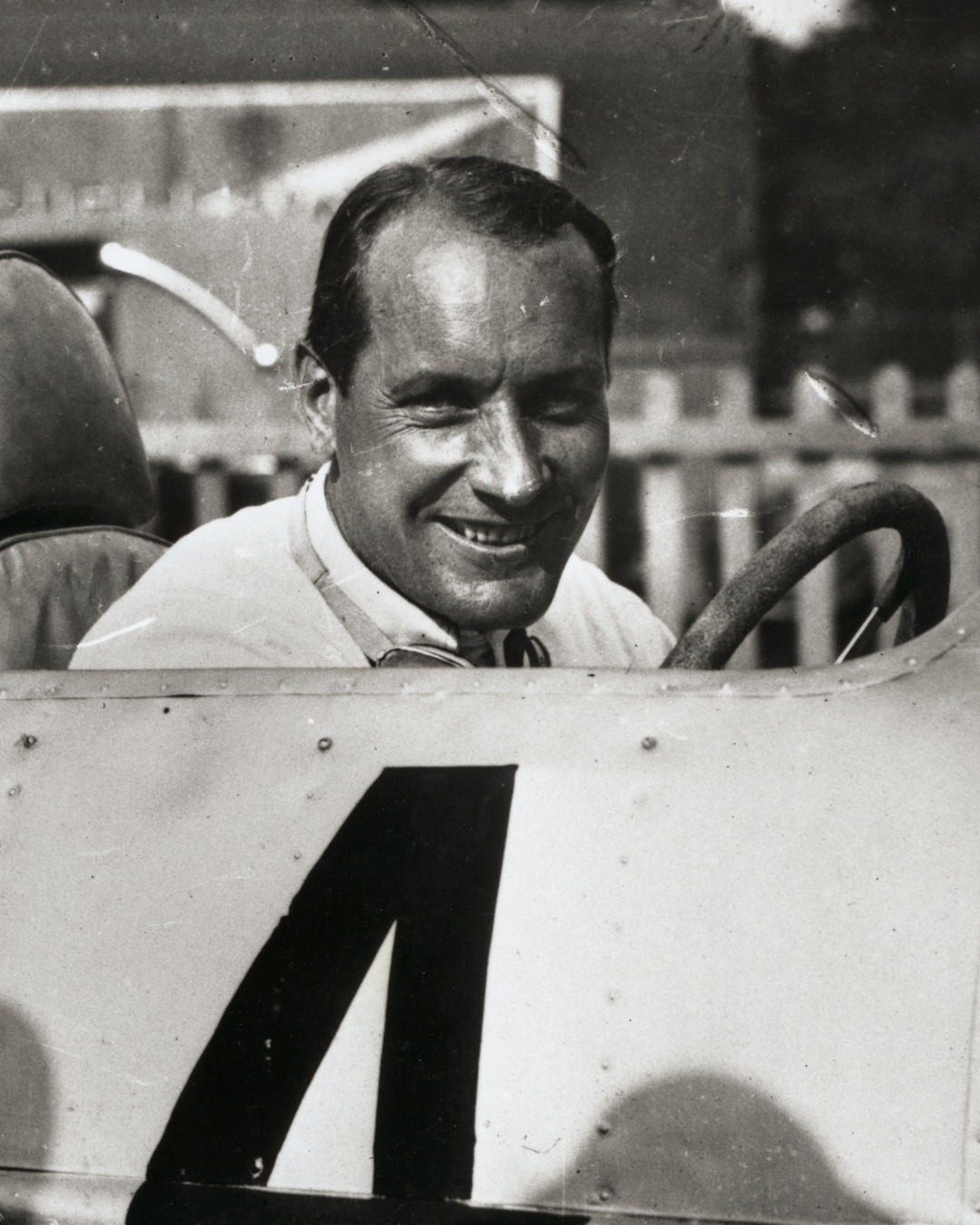
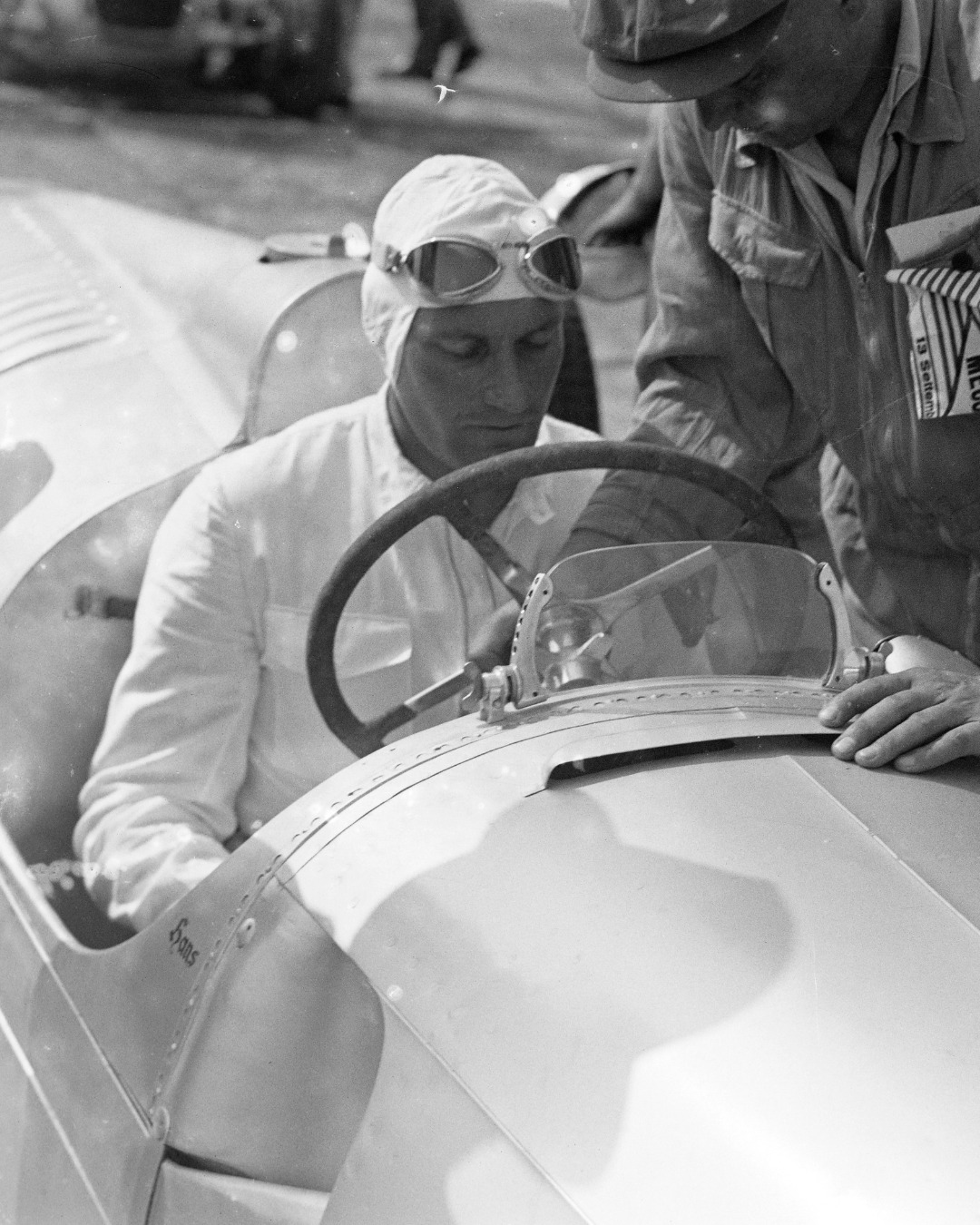
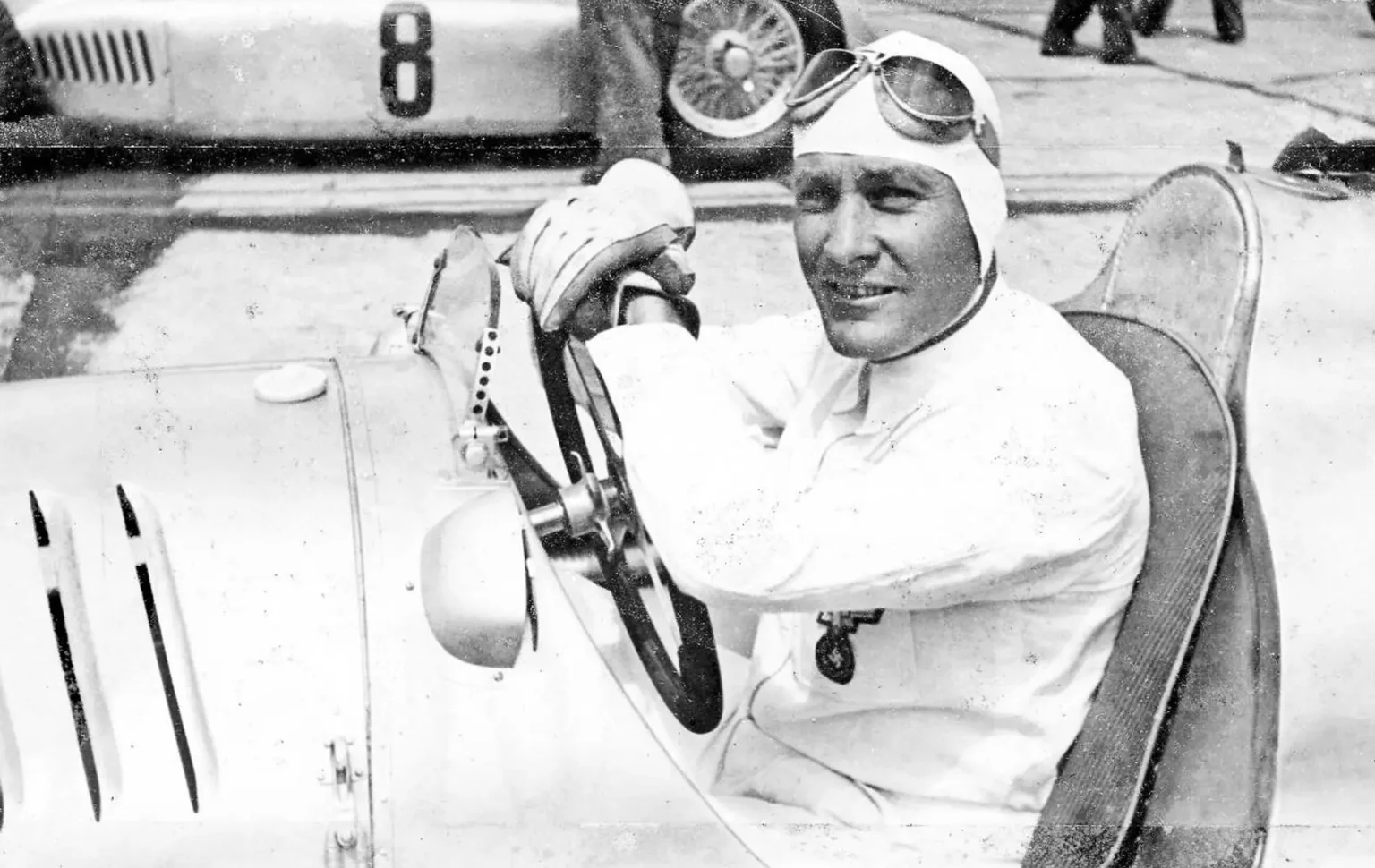
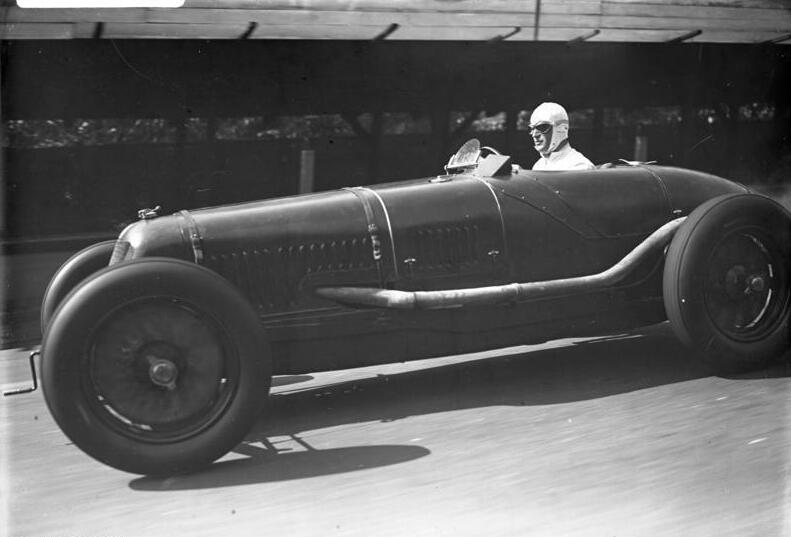
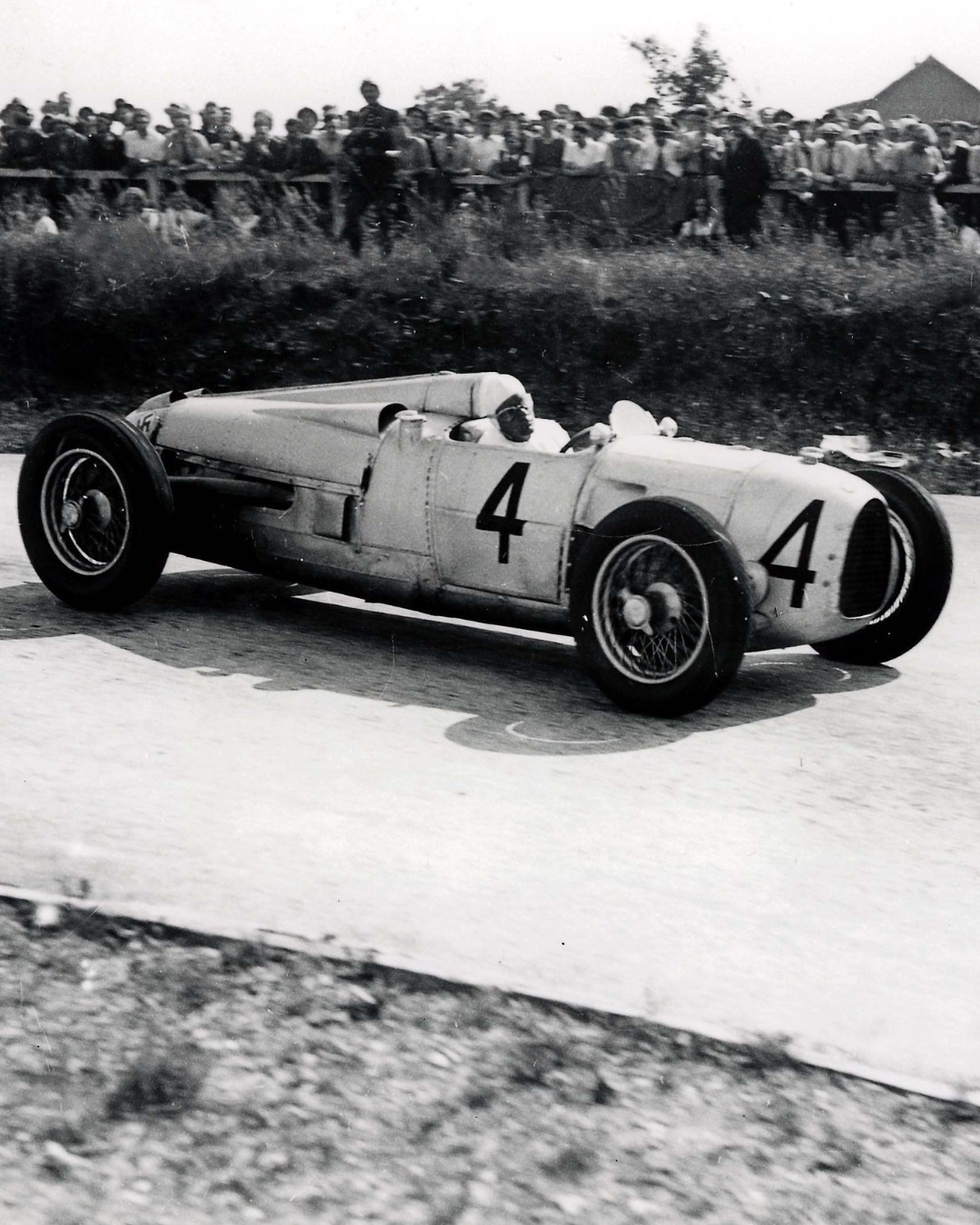
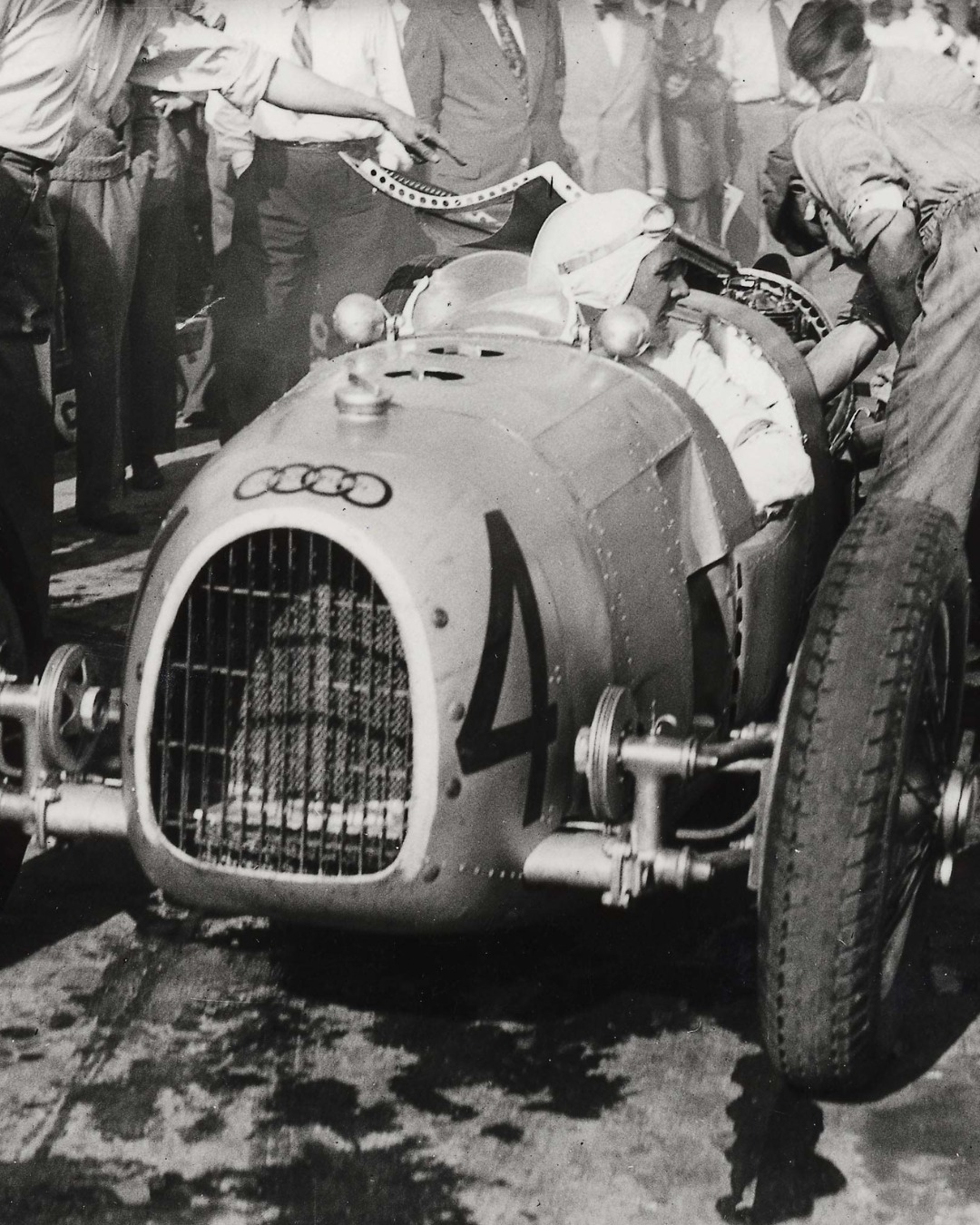
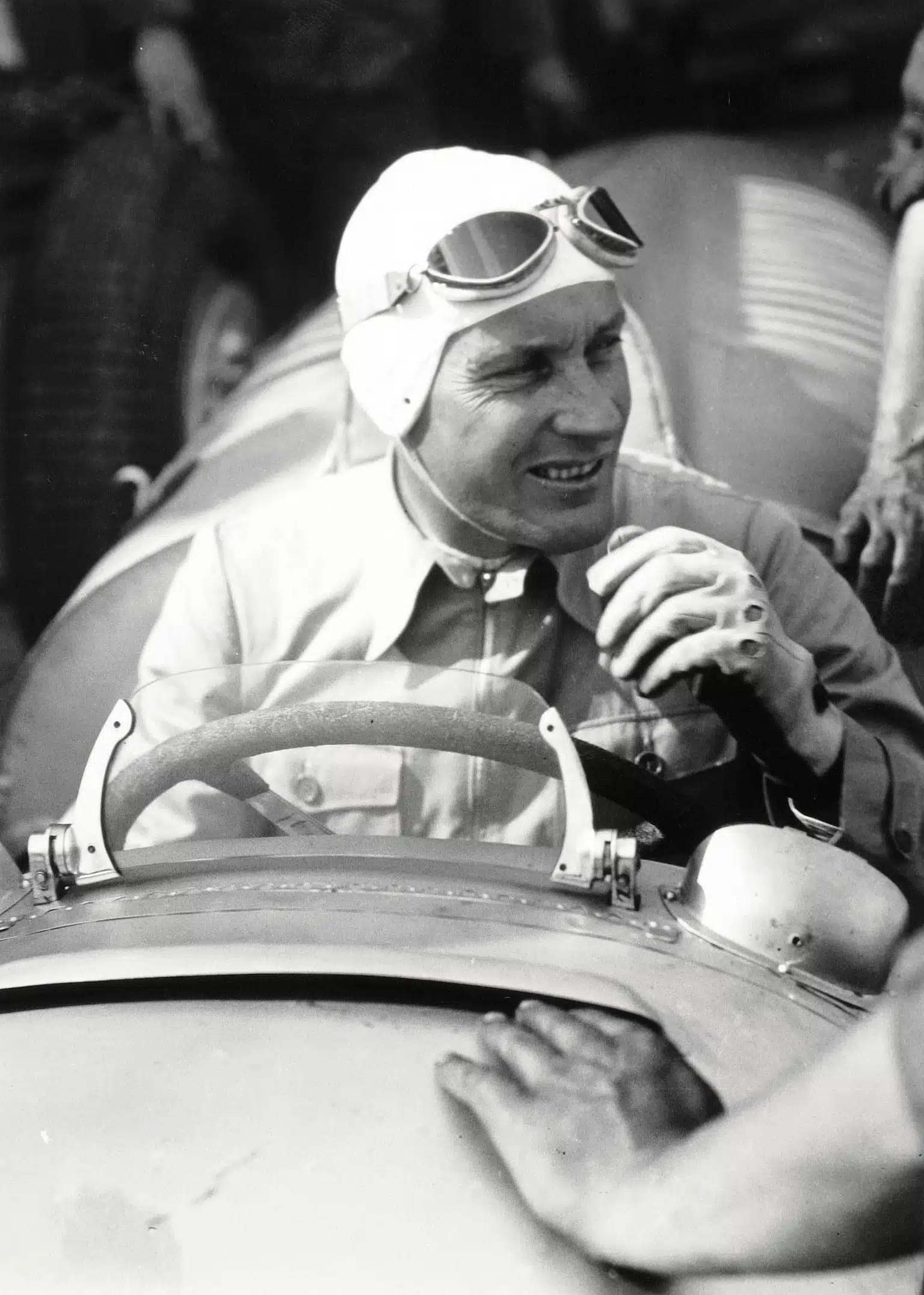
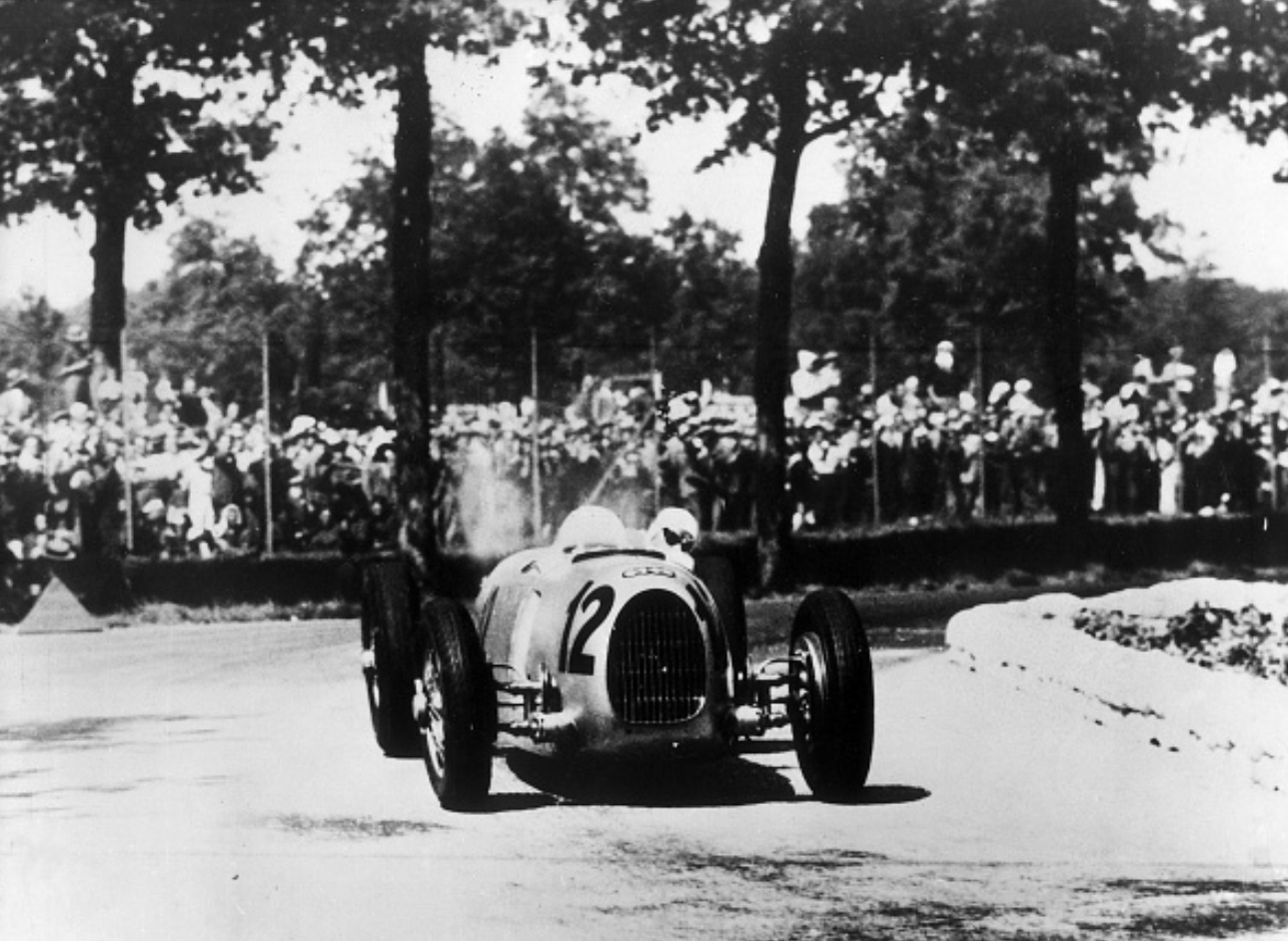
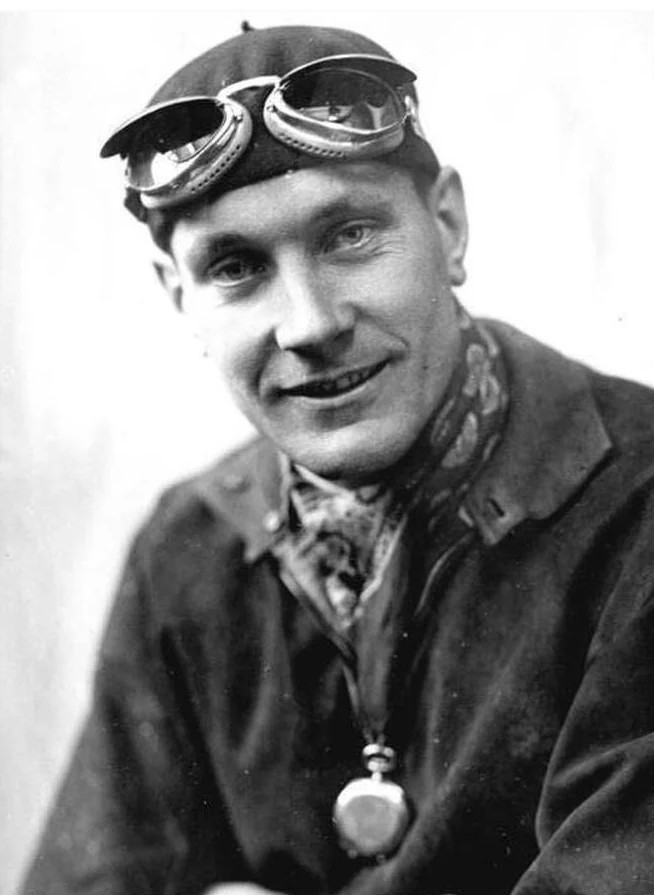
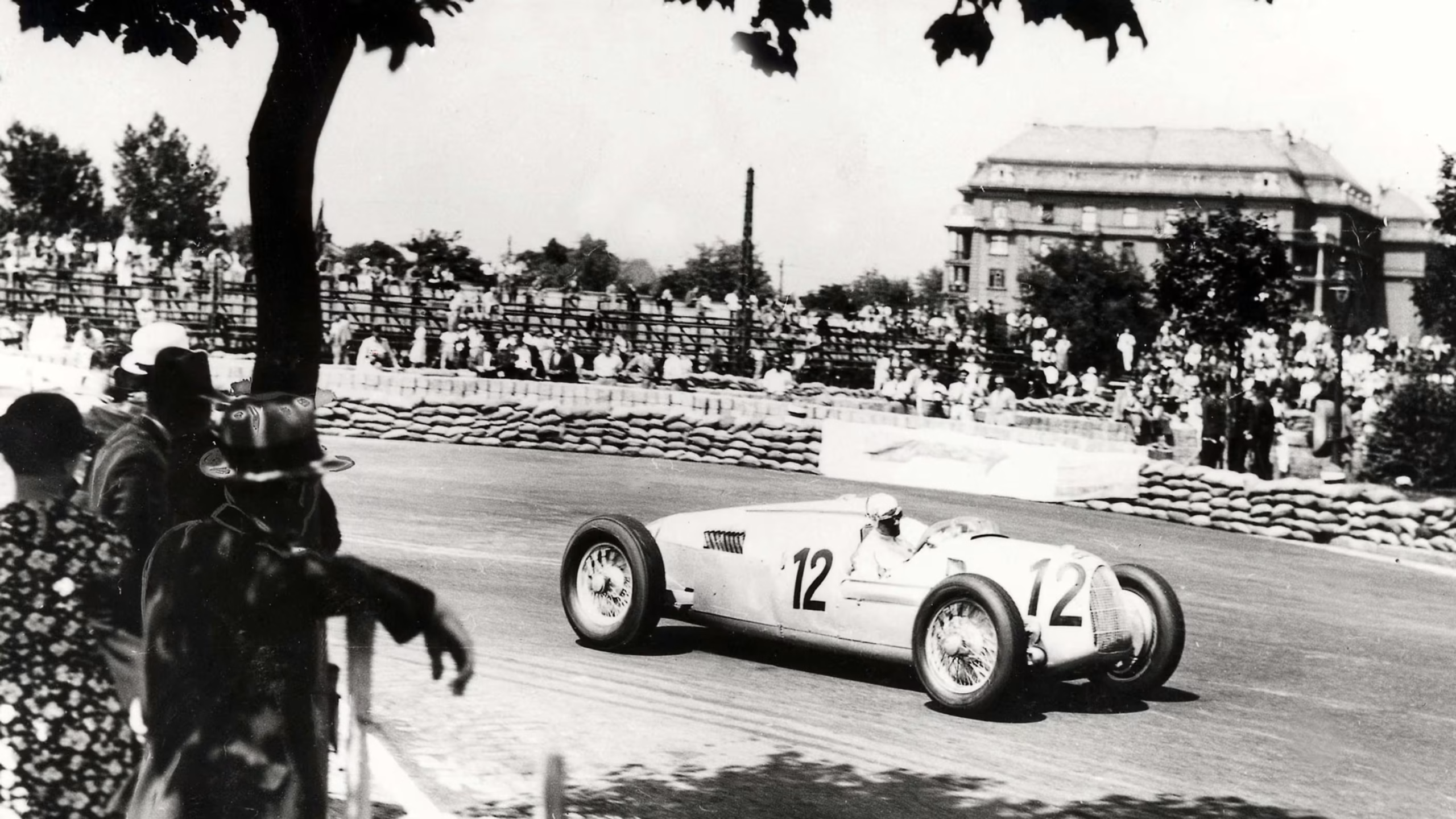
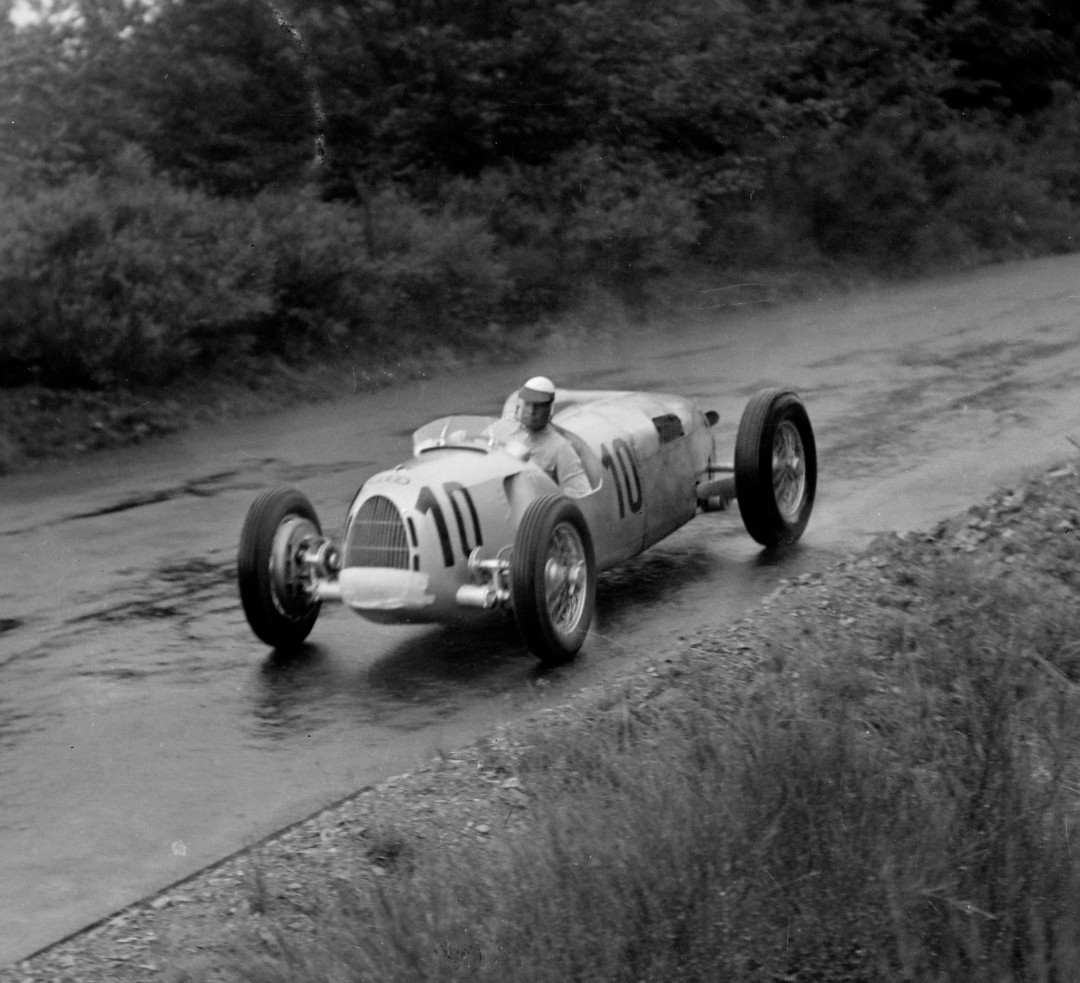
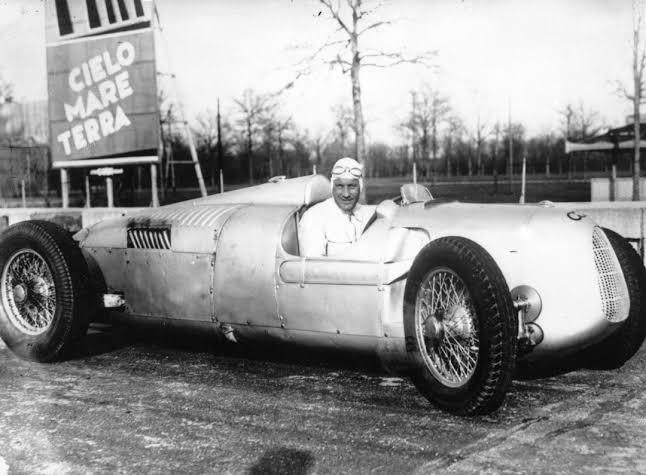
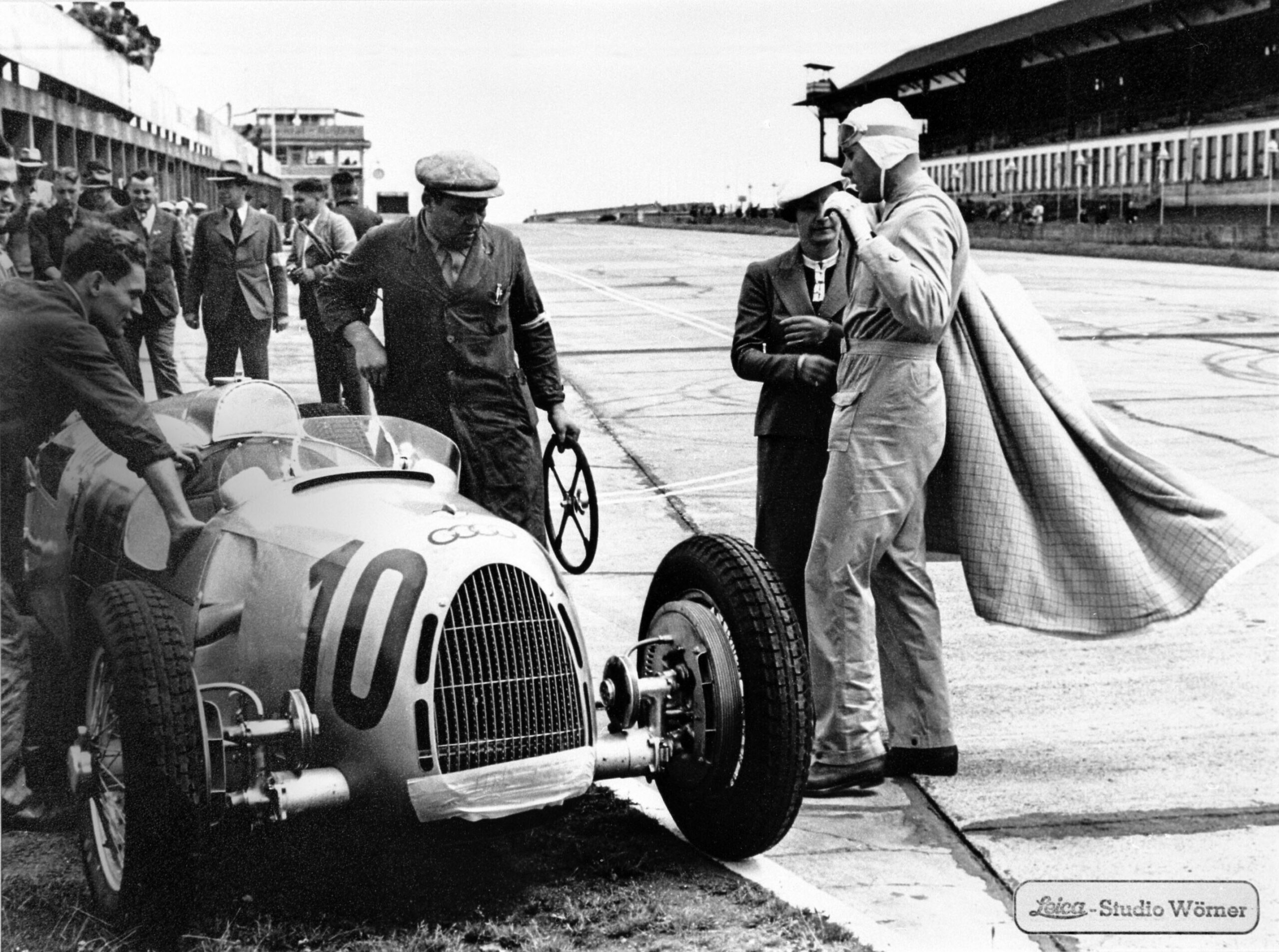
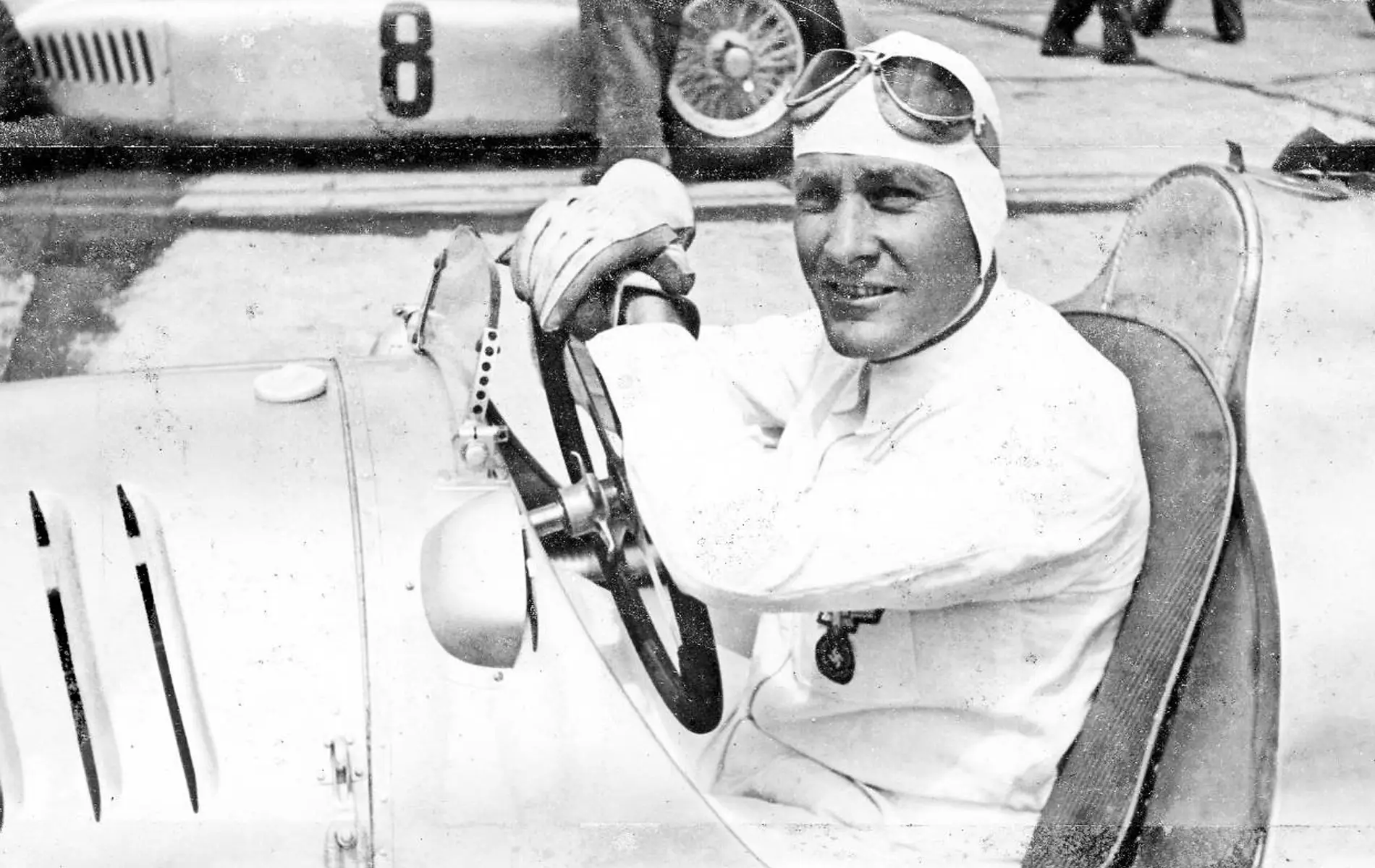
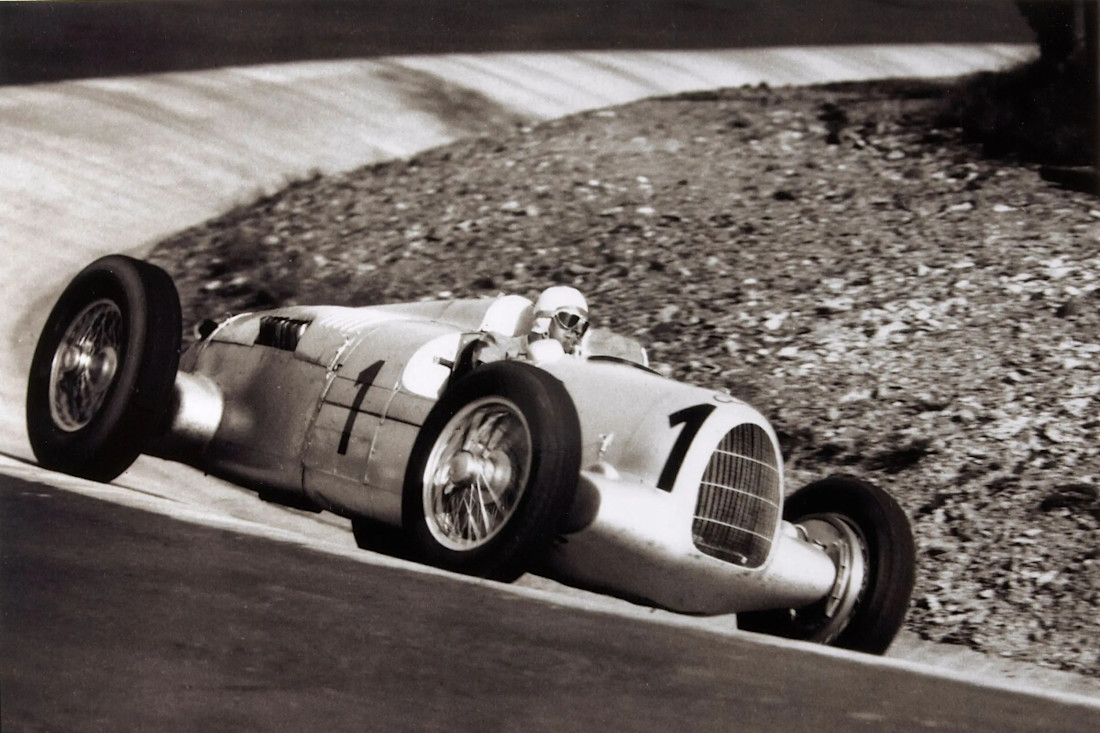
When the starting flag dropped at the Nürburgring in July 1934, the damp Eifel air was instantly atomised by the deafening, guttural bark of a 4.4-litre (268 cu in) supercharged V16 engine. Hans Stuck, his face grimed with soot and his goggles speckled with hot oil, wrestled the revolutionary mid-engined Auto Union Type A into the lead. This was not a racing car to be coaxed; it was an 825 kg (1819 lbs) brute with 58 per cent of its dry weight suspended pendulum-like over the rear swing axles. Wedged so far forward that his feet rested just behind the centre line of the front wheels, Stuck was insulated from the terrifying velocity by nothing more than canvas cockpit sides. Enveloped by the toxic fumes of a high-octane blend of methanol, acetone, and castor oil, Stuck drifted the tail-heavy leviathan to claim Auto Union’s first-ever Grand Prix victory, forging a legend built on superlative car control.
Born in Warsaw in December 1900 to parents of Swiss heritage, Stuck’s early life offered little hint of the mechanical symphonies he would later conduct. After surviving the horrors of the First World War in an artillery regiment on the Western Front, he studied agriculture and engineering, fully intending to manage his parents’ estate in Freiburg. However, the visceral thrill of speed seduced him. Debuting in 1923 at a local hillclimb in a Dürkobb, Stuck quickly realised his calling. Blessed with matinee-idol looks, standing 185 cm (6 ft 1 in) tall, and armed with immense natural charm, he rapidly became a favourite of the European paddocks. His private life was often as turbulent as his racing, marked by three marriages, but behind the steering wheel, he possessed absolute clarity. The jagged, unforgiving ascents of the Alps became his proving ground. He mastered the tactile art of managing wheelspin on loose gravel, feeling the tyre bite through the seat of his trousers, long before he ever strapped himself into a Grand Prix machine.
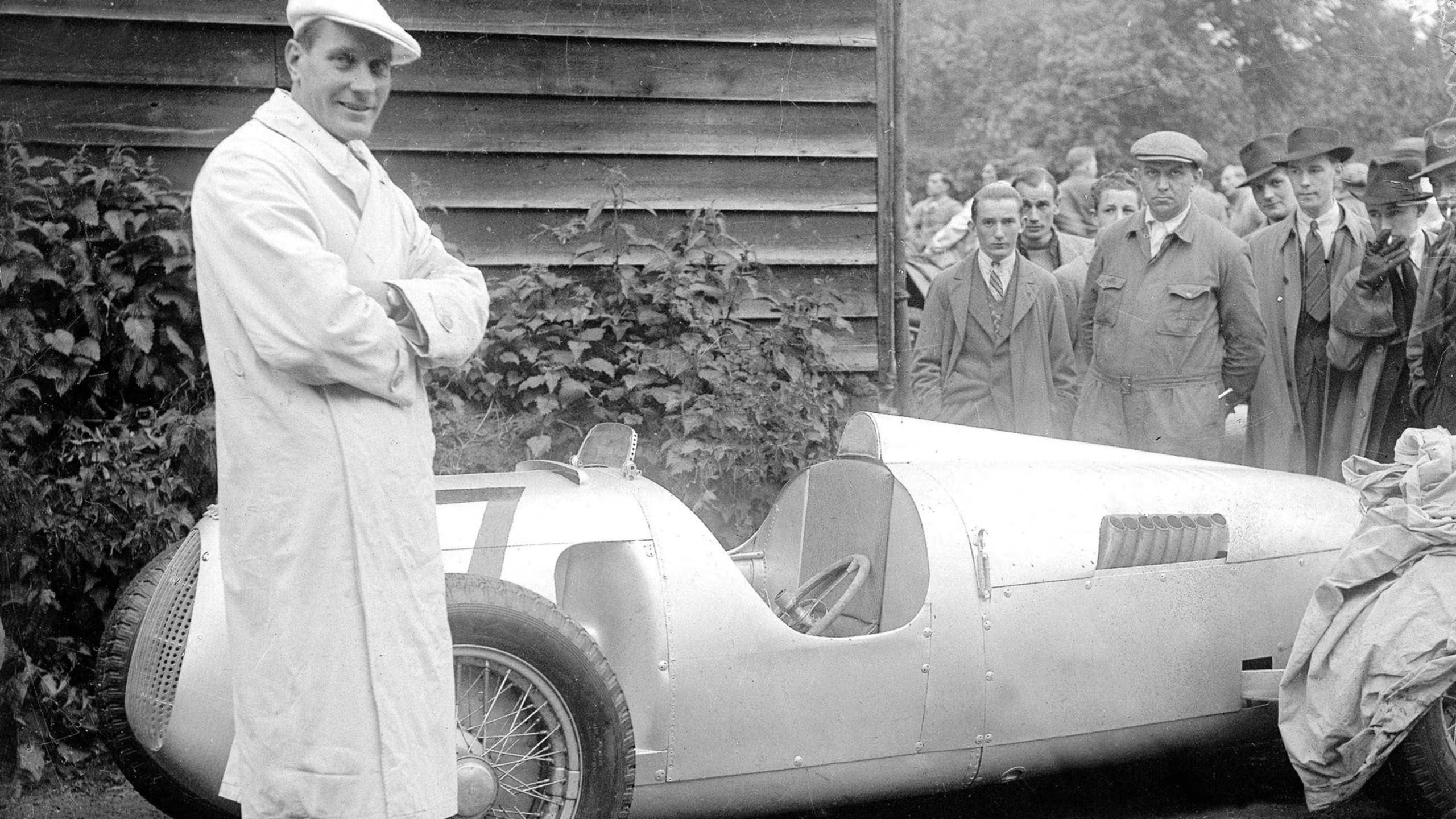
His zenith arrived when Ferdinand Porsche tapped him to pilot the formidable “P-Wagen”, later officially designated the Auto Union Type A. The car’s tubular chassis enveloped the driver between a 170-litre (37.4 UK gal) main fuel tank behind the spine and a 40-litre (8.8 UK gal) reserve tank over the feet. Fed by twin Solex carburettors and a single Roots supercharger pushing 1.66 ata of boost, the V16 was designed for colossal mid-range pull rather than sheer top speed, generating a seismic 530 Nm (391 lb-ft) of torque at just 2700 rpm. Stuck harnessed this brutality perfectly. In March 1934, he shattered speed records at the AVUS speedway in Berlin, sustaining an astonishing average of 217.110 km/h (134.906 mph) over an hour. He dominated the 1934 Grand Prix season, capturing the German, Swiss, and Czechoslovakian races.
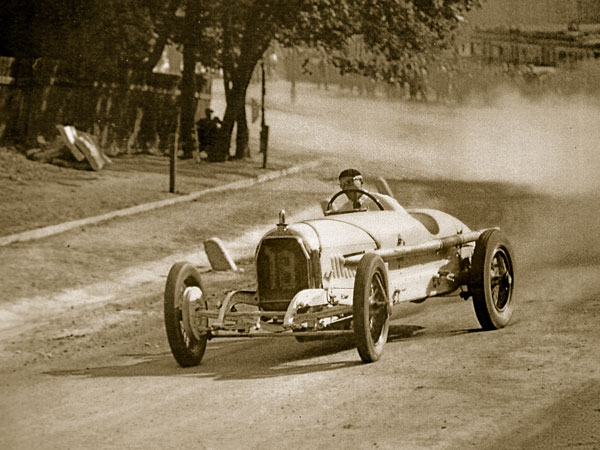
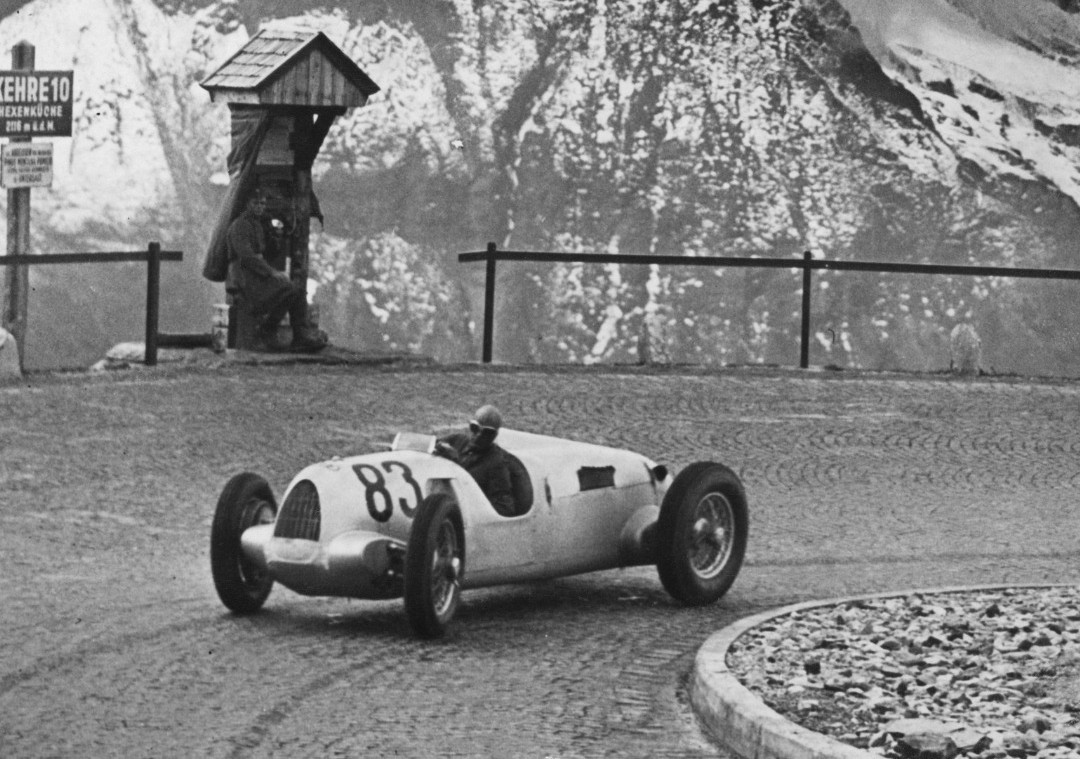
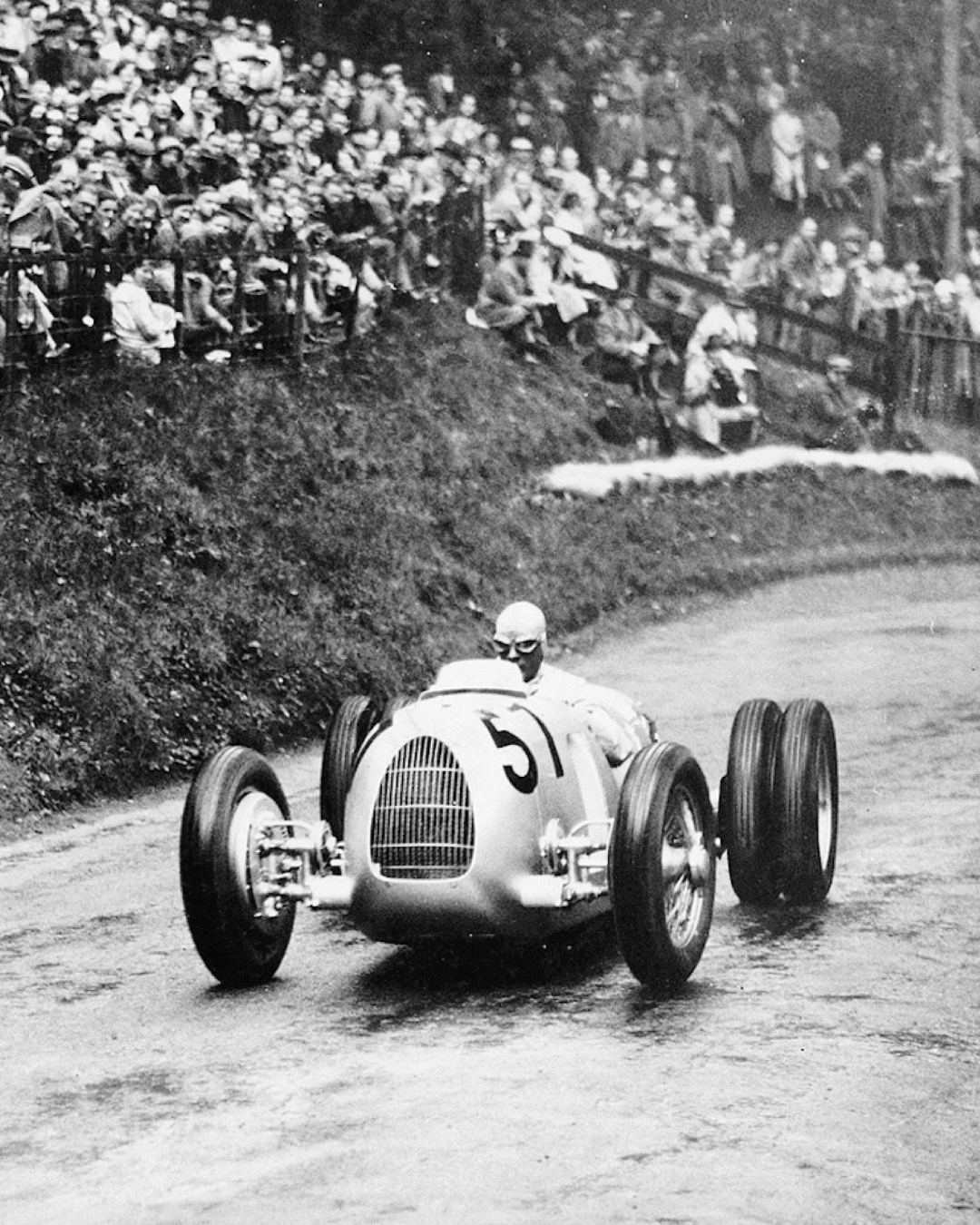
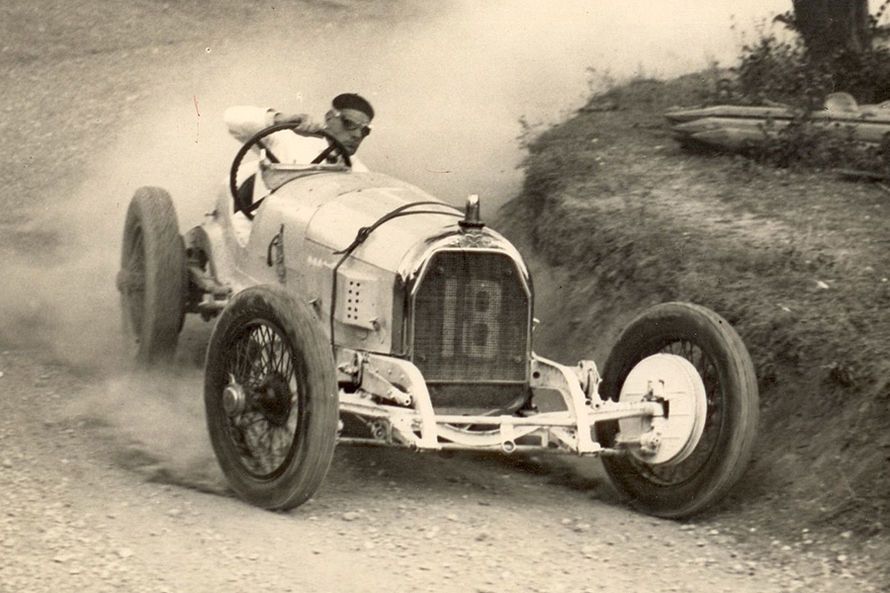
Yet, it was upon the perilously steep inclines of the Schauinsland, Klausen, and Grossglockner passes that Stuck earned his immortal moniker: the “Bergkönig”. At the Grossglockner, climbing to an oxygen-starved altitude of 3798 m (12460 ft) through 92 breathless curves and 14 terrifying hairpins, he was virtually untouchable. By the time he was driving the evolved Type C, which displaced 6.0-litre (366 cu in) and produced 520 bhp, Auto Union engineers were fitting twin rear tyres simply to deploy the ferocious power onto the dirt tracks. Stuck drove with a calculated smoothness that belied the physical violence taking place in the cockpit. His philosophy was rooted in unrelenting forward momentum. On one harrowing occasion, oblivious to the flames licking the aluminium bodywork behind him, Stuck drove a blazing Auto Union flat-out until the fire boiled his brake fluid, leaving him fighting to halt the inferno.
The Grand Prix hierarchy of the 1930s was ruthlessly unsentimental. By 1936, Stuck found his status as team leader usurped by the meteoric rise of former motorcycle racer Bernd Rosemeyer. Where Stuck’s style was precise and oversteer-managed, Rosemeyer relied on pure, fearless instinct to extract the absolute maximum from the monstrous Type C on closed circuits. Political darkness also encroached upon his career; Stuck was unceremoniously sacked in 1937 and harassed by the Gestapo, only to be reinstated when the SS directly ordered his comeback. Vindicating his return, he piloted the hybrid Type C/D Bergrennwagen—mating a Type C engine to a Type D chassis—to secure his third European Mountain Championship in 1938.
The outbreak of the Second World War silenced the roaring V16s, but it could not extinguish Stuck’s competitive fire. Banned from racing as a German citizen in the immediate post-war years, the resourceful veteran obtained Austrian citizenship to secure his return to the paddock. He briefly drove for the Alex von Falkenhausen Formula 2 team before finding a poetic swan song with BMW. Defying all logic, in 1960 at the grand age of 60, the old master clinched the German Hill-Climb Championship at the wheel of a diminutive BMW 700 Coupé. It was a lyrical conclusion for a man whose right foot had lost none of its tactile genius, transitioning seamlessly from the thundering 520 bhp behemoths of the pre-war era to the featherweight momentum cars of the swinging sixties. When Hans Stuck passed away in February 1978, motorsport lost not just a peerless driver, but the founding father of the mid-engined revolution and the eternal king of the clouds.
When the starting flag dropped at the Nürburgring in July 1934, the damp Eifel air was instantly atomised by the deafening, guttural bark of a 4.4-litre (268 cu in) supercharged V16 engine. Hans Stuck, his face grimed with soot and his goggles speckled with hot oil, wrestled the revolutionary mid-engined Auto Union Type A into the lead. This was not a racing car to be coaxed; it was an 825 kg (1819 lbs) brute with 58 per cent of its dry weight suspended pendulum-like over the rear swing axles. Wedged so far forward that his feet rested just behind the centre line of the front wheels, Stuck was insulated from the terrifying velocity by nothing more than canvas cockpit sides. Enveloped by the toxic fumes of a high-octane blend of methanol, acetone, and castor oil, Stuck drifted the tail-heavy leviathan to claim Auto Union’s first-ever Grand Prix victory, forging a legend built on superlative car control.
Born in Warsaw in December 1900 to parents of Swiss heritage, Stuck’s early life offered little hint of the mechanical symphonies he would later conduct. After surviving the horrors of the First World War in an artillery regiment on the Western Front, he studied agriculture and engineering, fully intending to manage his parents’ estate in Freiburg. However, the visceral thrill of speed seduced him. Debuting in 1923 at a local hillclimb in a Dürkobb, Stuck quickly realised his calling. Blessed with matinee-idol looks, standing 185 cm (6 ft 1 in) tall, and armed with immense natural charm, he rapidly became a favourite of the European paddocks. His private life was often as turbulent as his racing, marked by three marriages, but behind the steering wheel, he possessed absolute clarity. The jagged, unforgiving ascents of the Alps became his proving ground. He mastered the tactile art of managing wheelspin on loose gravel, feeling the tyre bite through the seat of his trousers, long before he ever strapped himself into a Grand Prix machine.
His zenith arrived when Ferdinand Porsche tapped him to pilot the formidable “P-Wagen”, later officially designated the Auto Union Type A. The car’s tubular chassis enveloped the driver between a 170-litre (37.4 UK gal) main fuel tank behind the spine and a 40-litre (8.8 UK gal) reserve tank over the feet. Fed by twin Solex carburettors and a single Roots supercharger pushing 1.66 ata of boost, the V16 was designed for colossal mid-range pull rather than sheer top speed, generating a seismic 530 Nm (391 lb-ft) of torque at just 2700 rpm. Stuck harnessed this brutality perfectly. In March 1934, he shattered speed records at the AVUS speedway in Berlin, sustaining an astonishing average of 217.110 km/h (134.906 mph) over an hour. He dominated the 1934 Grand Prix season, capturing the German, Swiss, and Czechoslovakian races.
Yet, it was upon the perilously steep inclines of the Schauinsland, Klausen, and Grossglockner passes that Stuck earned his immortal moniker: the “Bergkönig”. At the Grossglockner, climbing to an oxygen-starved altitude of 3798 m (12460 ft) through 92 breathless curves and 14 terrifying hairpins, he was virtually untouchable. By the time he was driving the evolved Type C, which displaced 6.0-litre (366 cu in) and produced 520 bhp, Auto Union engineers were fitting twin rear tyres simply to deploy the ferocious power onto the dirt tracks. Stuck drove with a calculated smoothness that belied the physical violence taking place in the cockpit. His philosophy was rooted in unrelenting forward momentum. On one harrowing occasion, oblivious to the flames licking the aluminium bodywork behind him, Stuck drove a blazing Auto Union flat-out until the fire boiled his brake fluid, leaving him fighting to halt the inferno.
The Grand Prix hierarchy of the 1930s was ruthlessly unsentimental. By 1936, Stuck found his status as team leader usurped by the meteoric rise of former motorcycle racer Bernd Rosemeyer. Where Stuck’s style was precise and oversteer-managed, Rosemeyer relied on pure, fearless instinct to extract the absolute maximum from the monstrous Type C on closed circuits. Political darkness also encroached upon his career; Stuck was unceremoniously sacked in 1937 and harassed by the Gestapo, only to be reinstated when the SS directly ordered his comeback. Vindicating his return, he piloted the hybrid Type C/D Bergrennwagen—mating a Type C engine to a Type D chassis—to secure his third European Mountain Championship in 1938.
The outbreak of the Second World War silenced the roaring V16s, but it could not extinguish Stuck’s competitive fire. Banned from racing as a German citizen in the immediate post-war years, the resourceful veteran obtained Austrian citizenship to secure his return to the paddock. He briefly drove for the Alex von Falkenhausen Formula 2 team before finding a poetic swan song with BMW. Defying all logic, in 1960 at the grand age of 60, the old master clinched the German Hill-Climb Championship at the wheel of a diminutive BMW 700 Coupé. It was a lyrical conclusion for a man whose right foot had lost none of its tactile genius, transitioning seamlessly from the thundering 520 bhp behemoths of the pre-war era to the featherweight momentum cars of the swinging sixties. When Hans Stuck passed away in February 1978, motorsport lost not just a peerless driver, but the founding father of the mid-engined revolution and the eternal king of the clouds.