

Austin Healey 100 Series BN1
Brand
Produced from
Vehicle category
Portal
Model line
Model generation
Predecessor
Sucessor
About this Model Generation
The automotive landscape of 1952 was a starkly polarized realm. If you desired a British sports car, you were faced with a distinct dichotomy: the charming but antiquated MG TD, which offered pre-war dynamics and pedestrian pace, or the majestic Jaguar XK120, an aristocratic bruiser that demanded a ransom few could afford. Recognizing this glaring void in the market, the irrepressible Donald Healey—a man whose engineering brilliance was matched only by his keen commercial instincts—arrived at the 1952 Earls Court Motor Show with a stunning prototype dubbed the “Healey Hundred”. Before the show had even closed its doors, Leonard Lord, the formidable head of the Austin Motor Company, laid eyes on the bespoke roadster. Struck by its beauty and recognizing its immense export potential, Lord struck a deal with Healey on the spot. The car was immediately rebadged, and the Austin-Healey 100 BN1 was born. It arrived on the scene to do battle with the utilitarian Triumph TR2, but the “Big Healey” brought a level of sculptural elegance and muscular sophistication that completely rewrote the rules of the mid-market sports car segment.
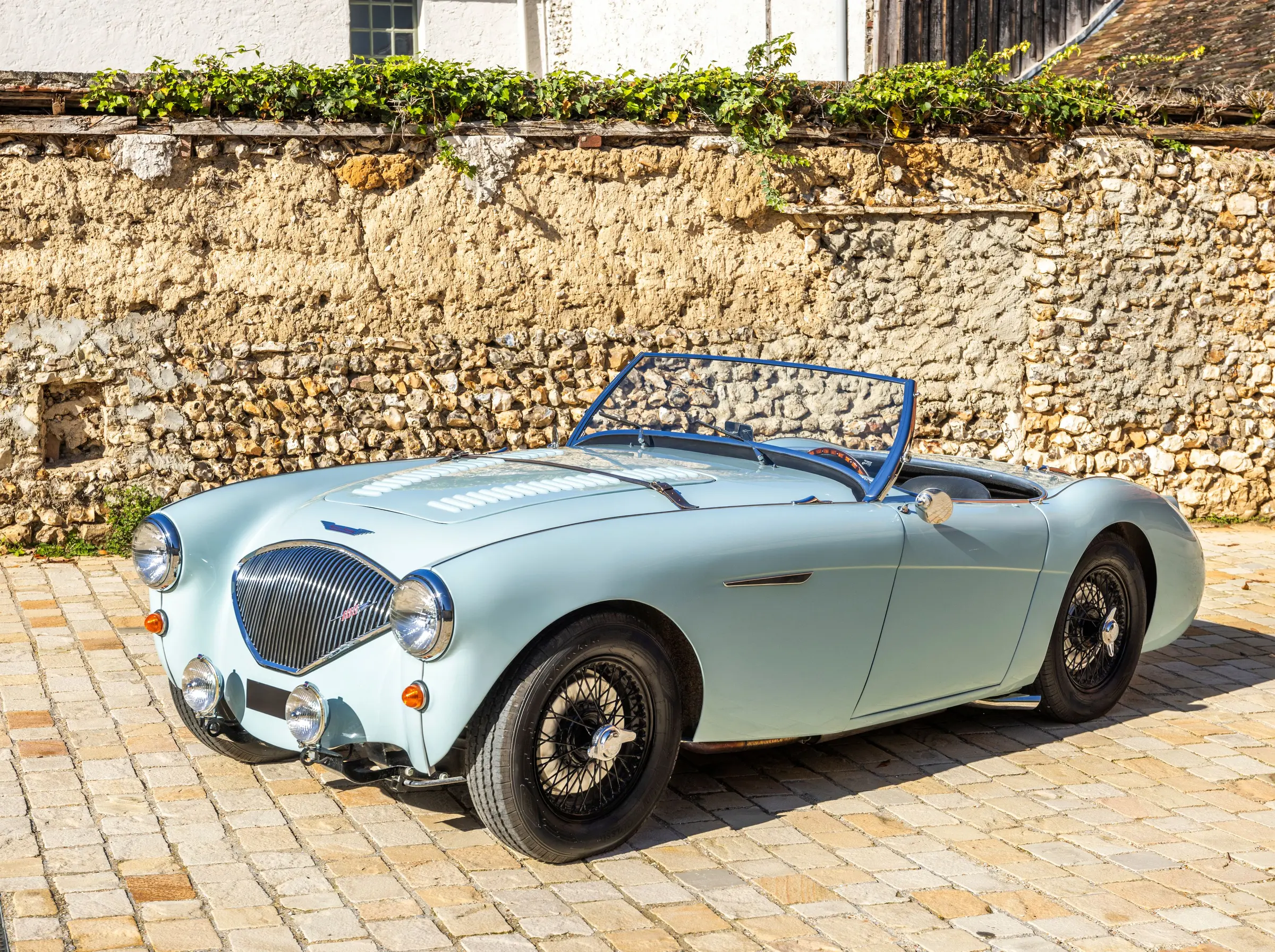
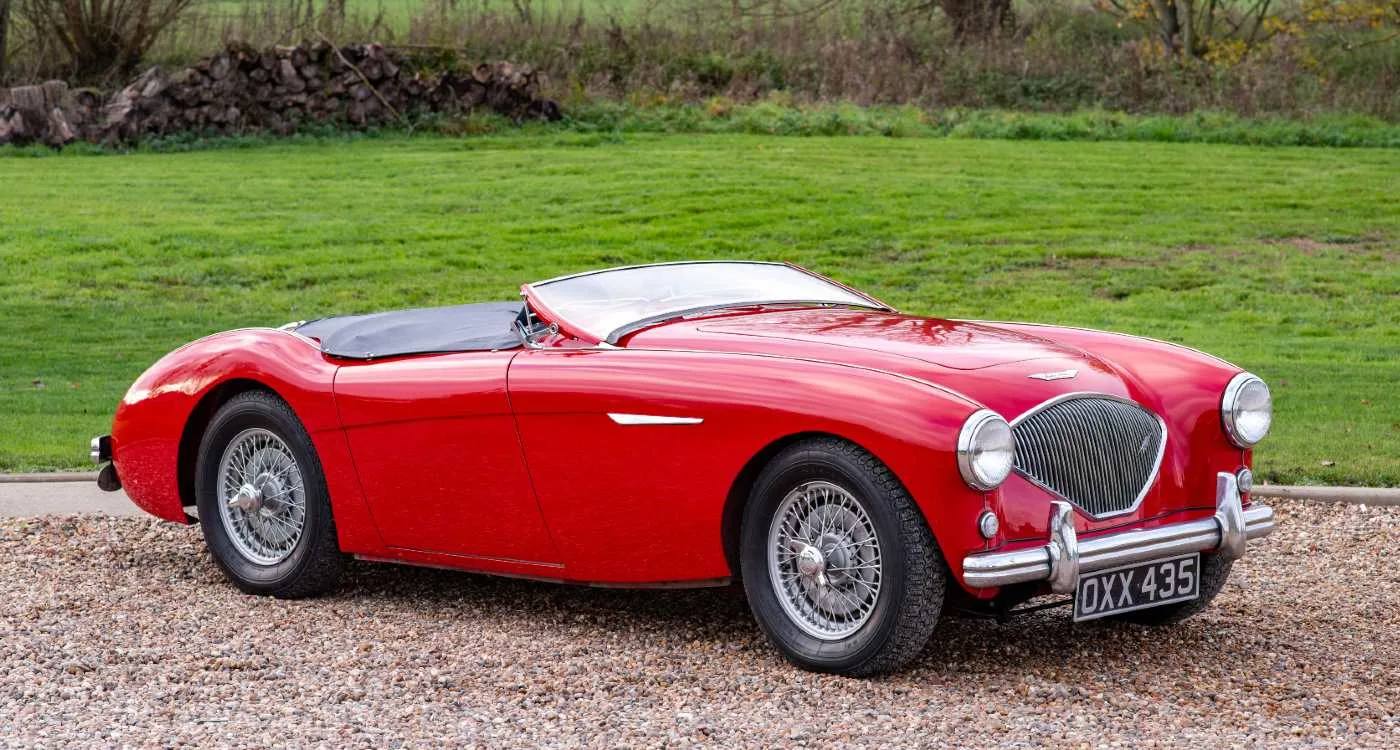
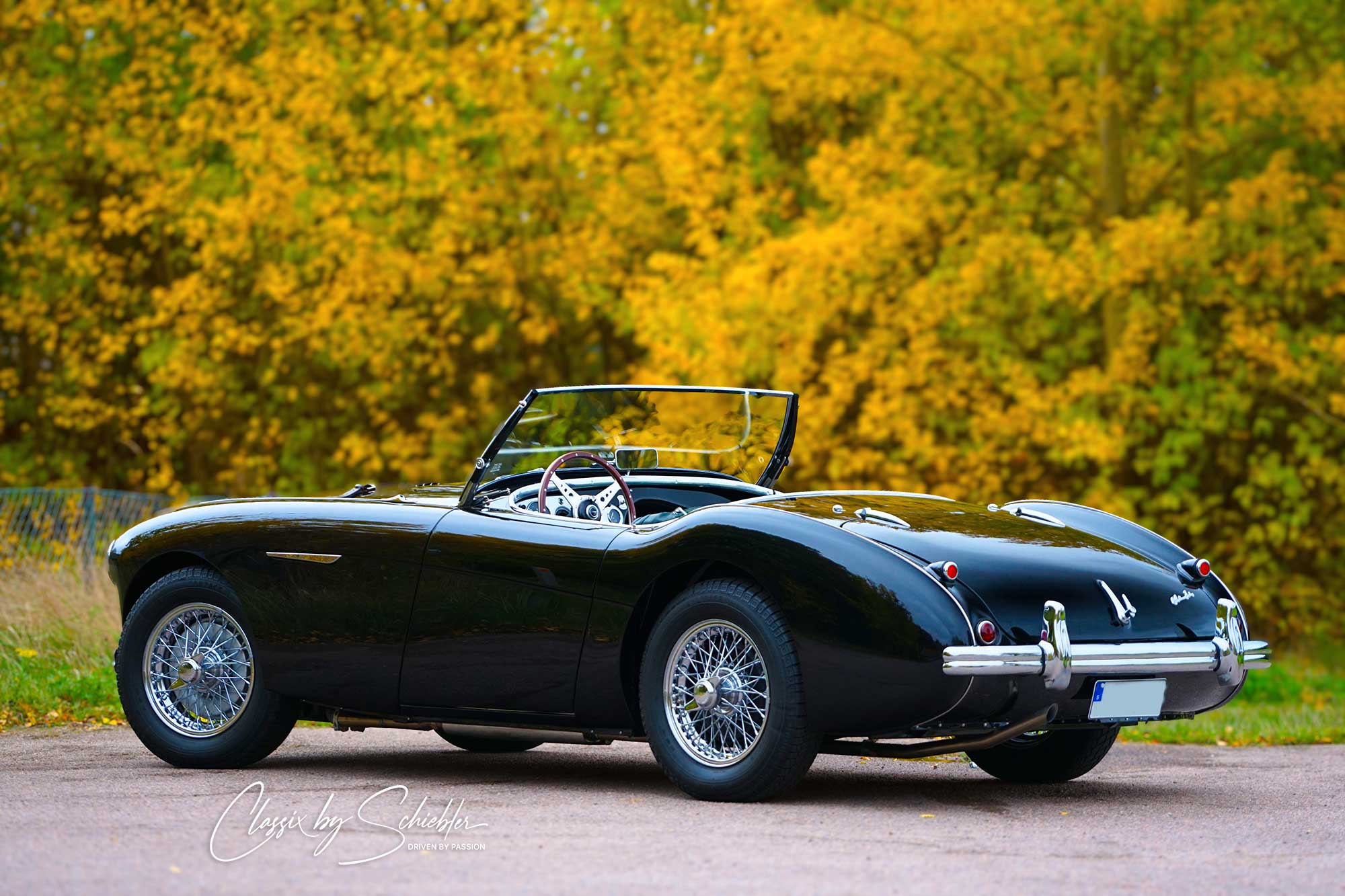
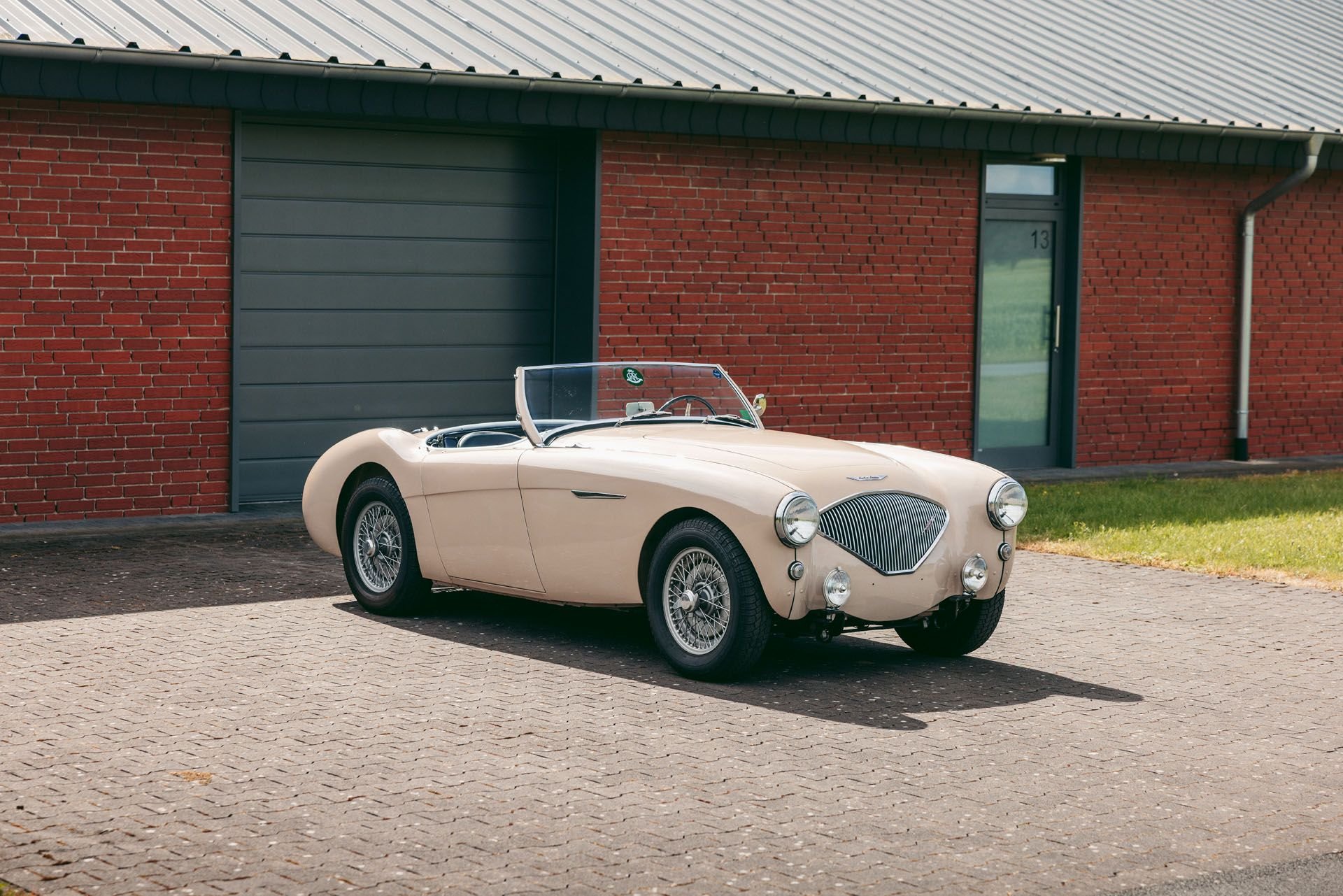
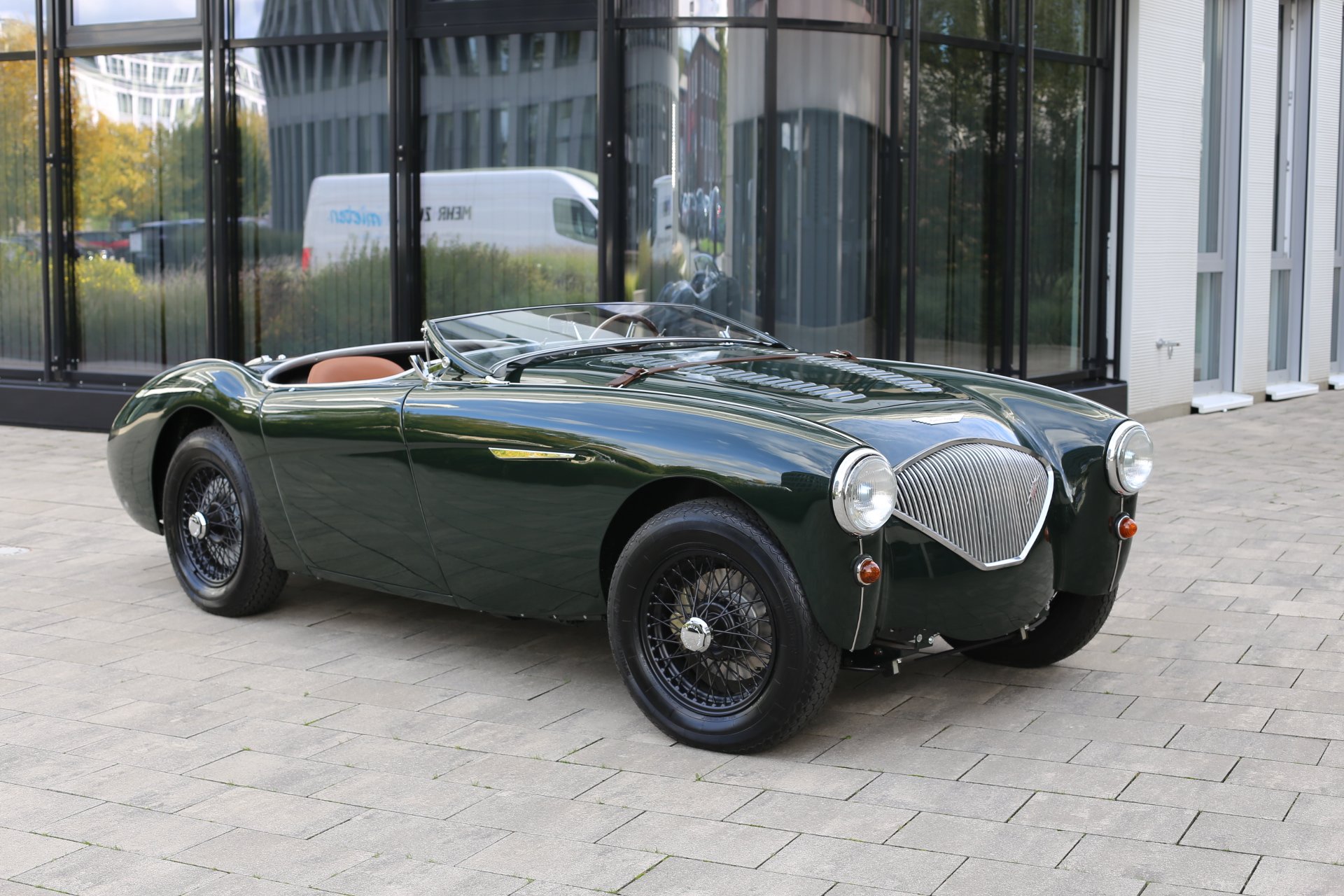
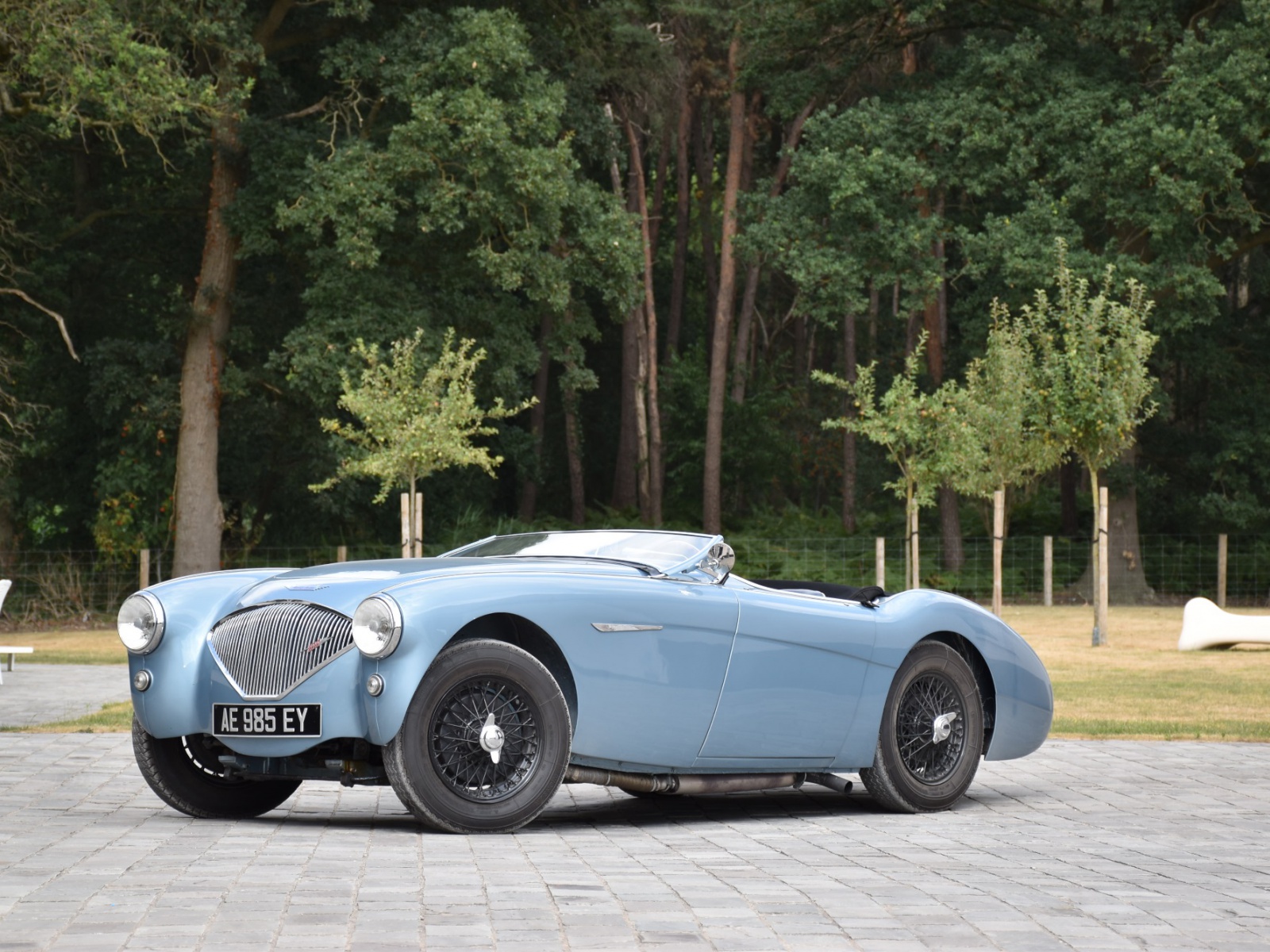
To gaze upon the BN1 is to study one of the most perfectly proportioned shapes ever pressed into metal. Penned by the immensely talented Gerry Coker, the bodywork was a masterclass in flowing lines and unadulterated aerodynamic grace. The silhouette was defined by a sweeping, unbroken fender line that cascaded from the headlights to the rear haunches, giving the car a sense of perpetual motion. The BN1’s party piece, however, was its fold-flat windscreen. Raked back for normal driving, it could be folded entirely flat over the cowl, transforming the car into a wind-in-the-teeth, salt-flats-ready speedster. Beneath this sensual skin lay a robust, conventional ladder-type chassis, but Donald Healey applied a stroke of genius by underslinging the rear axle. This routing of the chassis frame beneath the axle allowed the car to sit astonishingly low to the ground, significantly dropping the center of gravity and providing a planted, aggressive stance that its rivals entirely lacked.
The beating heart of the BN1 was a masterclass in pragmatic engineering, sourced directly from the Austin A90 Atlantic parts bin. This 2.6-liter (2660cc) inline-four engine was a long-stroke, heavy-iron lump that, on paper, seemed an unlikely candidate for a nimble sports car. While it produced a modest 90 brake horsepower, its true character lay in its mountainous delivery of torque. The BN1 did not require the driver to chase the redline; instead, it surged forward on an unrelenting wave of low-end grunt, pulling with locomotive force out of tight corners. This torque curve necessitated one of the most famous mechanical quirks in British motoring history. The BN1 utilized an Austin four-speed gearbox, but because the A90’s first gear was incredibly low—essentially a “stump-puller” ratio—Healey simply blanked it off within the shift gate. The result was effectively a three-speed manual transmission, supplemented by an electronically engaged Laycock de Normanville overdrive on the second and third gears, giving the driver five distinct forward ratios. Braking was handled by Girling drums all around, which, while prone to fade under racing conditions, were entirely adequate for the spirited touring the car was designed for. Inside, the cabin was a lesson in functional minimalism, dominated by a large, thin-rimmed steering wheel, a purposeful array of Smiths gauges, and a snug seating position that placed the driver at the very pivot point of the chassis.
The impact of the Austin-Healey 100 BN1 was nothing short of seismic, serving as a vital artery for post-war Britain by vacuuming up crucial American export dollars. The US market fell instantly in love with its rugged torque and devastatingly handsome looks. But Donald Healey knew that racing pedigree was the ultimate sales tool. In 1953, two lightly modified BN1s were entered into the grueling 24 Hours of Le Mans. Against a grid of purpose-built, exotic machinery, the plucky, torquey four-cylinder Healeys ran like clockwork, finishing an astonishing 12th and 14th overall. This early success proved the fundamental strength of the chassis and engine, paving the way for the legendary 100M Le Mans kits and the later, bespoke 100S racers. Furthermore, Donald Healey took heavily modified, streamlined BN1s to the Bonneville Salt Flats, setting numerous international speed records and cementing the car’s reputation as a genuine 100-mph-plus sports car—hence the “100” in its name.
The Austin-Healey 100 BN1 represents the absolute genesis of a dynasty. It was produced until 1955, when it was superseded by the BN2 generation, which finally gifted the car a true four-speed gearbox and slightly larger brakes. Eventually, the four-cylinder cars gave way to the heavier, smoother six-cylinder 100-Six and 3000 models. Yet, for the true aficionado, the BN1 remains the purest, lightest, and most evocative expression of the “Big Healey” breed. It is the uncorrupted original, a testament to Donald Healey’s vision and Gerry Coker’s artistry. To pilot a BN1 today—slotting the heavy gear lever into place, deploying the overdrive with a flick of a switch, and riding that tidal wave of four-cylinder torque—is to experience the raw, unfiltered essence of the 1950s British roadster.
Brand
Produced from
Vehicle category
Portal
Model line
Model generation
Predecessor
Sucessor
Brand
Produced from
Vehicle category
Portal
Model line
Model generation
Predecessor
Sucessor
About this Model Generation
The automotive landscape of 1952 was a starkly polarized realm. If you desired a British sports car, you were faced with a distinct dichotomy: the charming but antiquated MG TD, which offered pre-war dynamics and pedestrian pace, or the majestic Jaguar XK120, an aristocratic bruiser that demanded a ransom few could afford. Recognizing this glaring void in the market, the irrepressible Donald Healey—a man whose engineering brilliance was matched only by his keen commercial instincts—arrived at the 1952 Earls Court Motor Show with a stunning prototype dubbed the “Healey Hundred”. Before the show had even closed its doors, Leonard Lord, the formidable head of the Austin Motor Company, laid eyes on the bespoke roadster. Struck by its beauty and recognizing its immense export potential, Lord struck a deal with Healey on the spot. The car was immediately rebadged, and the Austin-Healey 100 BN1 was born. It arrived on the scene to do battle with the utilitarian Triumph TR2, but the “Big Healey” brought a level of sculptural elegance and muscular sophistication that completely rewrote the rules of the mid-market sports car segment.
To gaze upon the BN1 is to study one of the most perfectly proportioned shapes ever pressed into metal. Penned by the immensely talented Gerry Coker, the bodywork was a masterclass in flowing lines and unadulterated aerodynamic grace. The silhouette was defined by a sweeping, unbroken fender line that cascaded from the headlights to the rear haunches, giving the car a sense of perpetual motion. The BN1’s party piece, however, was its fold-flat windscreen. Raked back for normal driving, it could be folded entirely flat over the cowl, transforming the car into a wind-in-the-teeth, salt-flats-ready speedster. Beneath this sensual skin lay a robust, conventional ladder-type chassis, but Donald Healey applied a stroke of genius by underslinging the rear axle. This routing of the chassis frame beneath the axle allowed the car to sit astonishingly low to the ground, significantly dropping the center of gravity and providing a planted, aggressive stance that its rivals entirely lacked.
The beating heart of the BN1 was a masterclass in pragmatic engineering, sourced directly from the Austin A90 Atlantic parts bin. This 2.6-liter (2660cc) inline-four engine was a long-stroke, heavy-iron lump that, on paper, seemed an unlikely candidate for a nimble sports car. While it produced a modest 90 brake horsepower, its true character lay in its mountainous delivery of torque. The BN1 did not require the driver to chase the redline; instead, it surged forward on an unrelenting wave of low-end grunt, pulling with locomotive force out of tight corners. This torque curve necessitated one of the most famous mechanical quirks in British motoring history. The BN1 utilized an Austin four-speed gearbox, but because the A90’s first gear was incredibly low—essentially a “stump-puller” ratio—Healey simply blanked it off within the shift gate. The result was effectively a three-speed manual transmission, supplemented by an electronically engaged Laycock de Normanville overdrive on the second and third gears, giving the driver five distinct forward ratios. Braking was handled by Girling drums all around, which, while prone to fade under racing conditions, were entirely adequate for the spirited touring the car was designed for. Inside, the cabin was a lesson in functional minimalism, dominated by a large, thin-rimmed steering wheel, a purposeful array of Smiths gauges, and a snug seating position that placed the driver at the very pivot point of the chassis.
The impact of the Austin-Healey 100 BN1 was nothing short of seismic, serving as a vital artery for post-war Britain by vacuuming up crucial American export dollars. The US market fell instantly in love with its rugged torque and devastatingly handsome looks. But Donald Healey knew that racing pedigree was the ultimate sales tool. In 1953, two lightly modified BN1s were entered into the grueling 24 Hours of Le Mans. Against a grid of purpose-built, exotic machinery, the plucky, torquey four-cylinder Healeys ran like clockwork, finishing an astonishing 12th and 14th overall. This early success proved the fundamental strength of the chassis and engine, paving the way for the legendary 100M Le Mans kits and the later, bespoke 100S racers. Furthermore, Donald Healey took heavily modified, streamlined BN1s to the Bonneville Salt Flats, setting numerous international speed records and cementing the car’s reputation as a genuine 100-mph-plus sports car—hence the “100” in its name.
The Austin-Healey 100 BN1 represents the absolute genesis of a dynasty. It was produced until 1955, when it was superseded by the BN2 generation, which finally gifted the car a true four-speed gearbox and slightly larger brakes. Eventually, the four-cylinder cars gave way to the heavier, smoother six-cylinder 100-Six and 3000 models. Yet, for the true aficionado, the BN1 remains the purest, lightest, and most evocative expression of the “Big Healey” breed. It is the uncorrupted original, a testament to Donald Healey’s vision and Gerry Coker’s artistry. To pilot a BN1 today—slotting the heavy gear lever into place, deploying the overdrive with a flick of a switch, and riding that tidal wave of four-cylinder torque—is to experience the raw, unfiltered essence of the 1950s British roadster.
Submodels
Discover all the variants of this model Generation
Submodels
Discover all the variants of this model Generation
Vehicles
Legendary Vehicles
Vehicles