

Austin Healey 3000 Mark II
Brand
Produced from
Vehicle category
Portal
Model line
Model generation
Predecessor
Sucessor
About this Model Generation
The dawn of the 1960s brought a ferocious wind of change to the British sports car industry. While the 1959 Austin-Healey 3000 Mark I had successfully established the template for the torquey, large-displacement “Big Healey”, the marketplace was evolving with terrifying speed. By the spring of 1961, the automotive landscape was shifting beneath Abingdon’s feet; Triumph was readying the sharp-suited TR4, and Jaguar was about to drop the atomic bomb that was the E-Type. Buyers still craved the chest-thumping bravado of a traditional British roadster, but they increasingly demanded more power and, crucially, a modicum of civilization. To meet this challenge, the British Motor Corporation unleashed the Austin-Healey 3000 Mark II in March 1961. This generation is arguably the most fascinating chapter in the 3000’s lineage, serving as the great transitional bridge. It was a model defined by two distinct phases: the early BN7 (two-seater) and BT7 (2+2) submodels that pushed the engine to its mechanical limits, and the pivotal BJ7 submodel of 1962, which fundamentally altered the Healey’s DNA from a raw, side-screen roadster into a sophisticated grand tourer capable of taking on the continent.
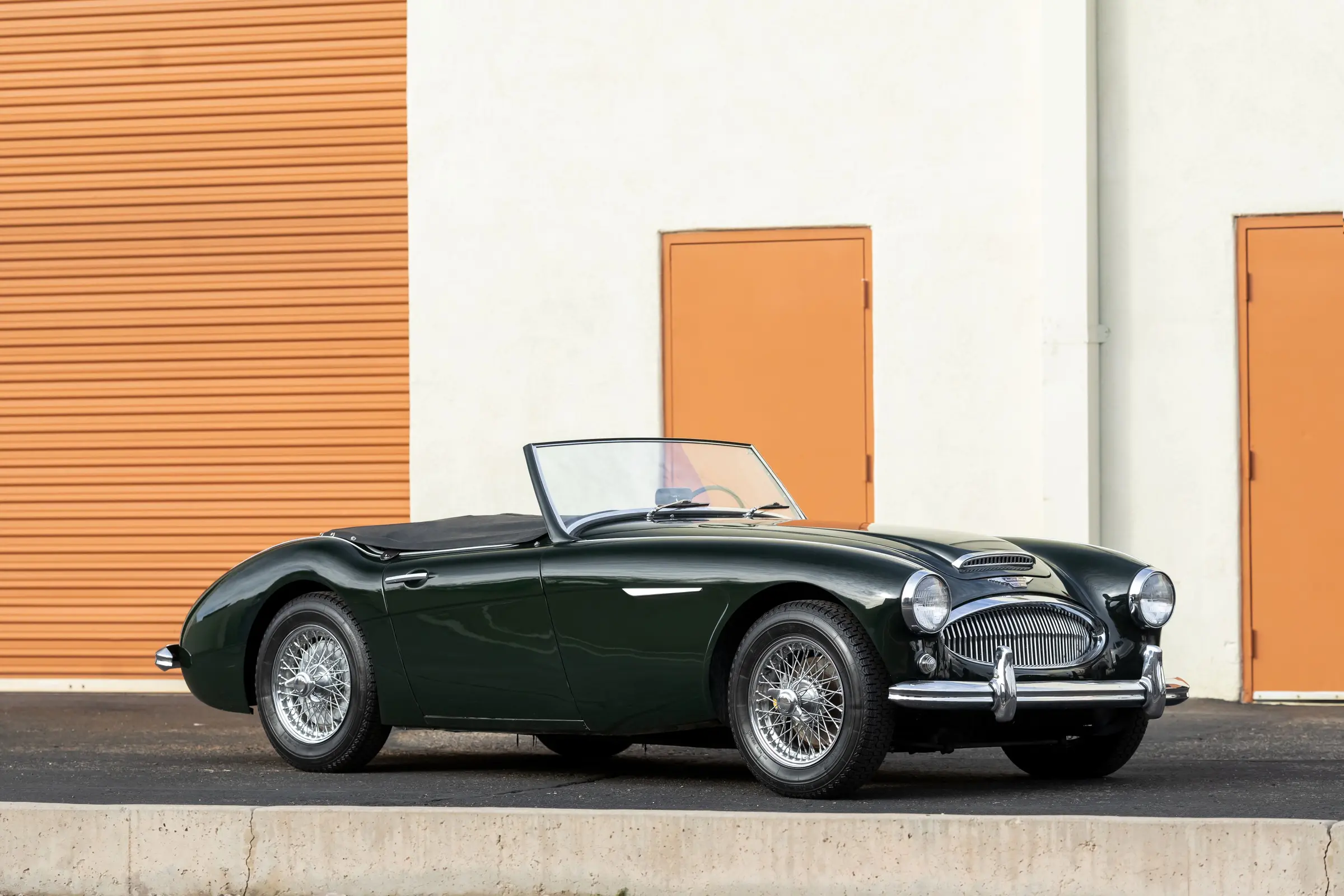
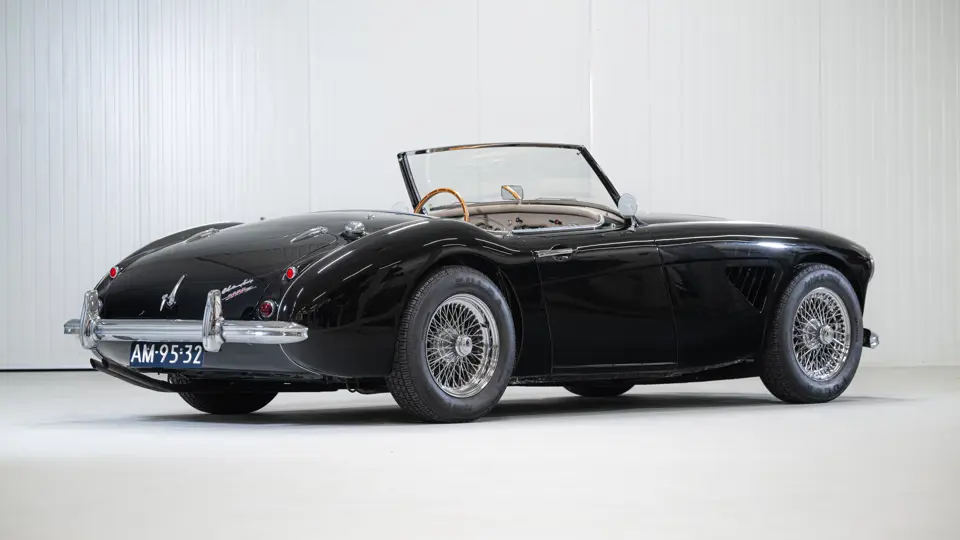
To examine the engineering of the early Mark II is to look at a factory team chasing outright performance for the rally stages. Beneath the sweeping, Gerry Coker-designed bonnet—now distinguished by a new grille featuring vertical bars rather than the earlier horizontal slats—the venerable 2,912cc C-Series inline-six received a heavy dose of hot-rodding. In a bid to improve high-rpm breathing and secure homologation for international motorsport, BMC engineers discarded the twin SU carburetors of the Mark I and fitted a complex bank of three SU HS4 carburetors. Paired with a revised, hotter camshaft, this triple-carburetor symphony bumped output to 132 brake horsepower. On a crisp morning, with the throttle pinned and all three carburetors inhaling deeply, the Mark II was a magnificent brute, surging forward with a raspy, tearing-calico exhaust note. However, this mechanical ambition came at a cost. The triple-carburetor setup was notoriously difficult to keep synchronized. For the works rally mechanics, it was a necessary chore for extra power; for the average Californian enthusiast trying to commute to the office, it was a tuning nightmare that often resulted in rough idling and fouled spark plugs.
Recognizing that their export market demanded reliability and comfort alongside speed, BMC executed a mid-cycle pivot in August 1962 that changed the Big Healey forever. They introduced the 3000 Mark II Sports Convertible, internally designated the BJ7. Mechanically, the factory surrendered the finicky triple-carburetor setup, returning to a much more user-friendly twin SU HS6 arrangement. While it lost a negligible two horsepower, it gained immense drivability. But the true revolution of the BJ7 was structural. The archaic, drafty side-screens that had defined the Healey since 1952 were banished to the history books. In their place came a wrap-around windscreen, quarter-lights, wind-up windows, and a genuinely weatherproof, folding convertible top that could be erected by one person in seconds rather than minutes. The cabin, while still purposeful, became a significantly more hospitable environment. The Big Healey had grown up; it was no longer just a weekend brawler, but a genuine high-speed tourer capable of crossing state lines or Alpine passes in relative comfort.
Despite the creeping gentrification of the BJ7, the Mark II generation’s reputation was undeniably forged in the crucible of European rallying. The early triple-carburetor BT7s were the absolute weapons of choice for the BMC Competitions Department. These cars were heavy, boasting notoriously low ground clearance, and required the physical strength of a blacksmith to hustle through tight hairpins. Yet, they possessed traction and low-end torque that could pull them out of any snowbank or mud rut. In 1961 and 1962, the legendary British rallying brothers, Don and Erle Morley, used the Mark II to absolute perfection. They secured back-to-back outright victories at the grueling Alpine Rally (Coupe des Alpes), manhandling the big, sliding Healey through the narrow, perilous mountain passes to claim the coveted Coupe d’Or. In the hands of legends like Pat Moss and the emerging “Flying Finns” Timo Mäkinen and Rauno Aaltonen, the Mark II proved that a traditional, ladder-frame sports car could still bludgeon the lighter, more agile Porsches and Alfa Romeos into submission through sheer, indestructible force.
The Austin-Healey 3000 Mark II ceased production in late 1963, making way for the opulent, walnut-trimmed Mark III (BJ8). Yet, its place in the pantheon of British motoring is absolutely vital. It is the missing link of the Healey evolution. In the BN7 and BT7, you have the ultimate expression of the raw, traditional roadster, pushed to its mechanical brink with the exotic triple-carburetor setup. In the BJ7, you witness the exact moment the British sports car realized it needed to offer comfort to survive the 1960s. Today, the Mark II is revered by enthusiasts precisely for this duality. It is the sweet spot of the lineage—offering the muscular, uncorrupted styling of the early cars, the stopping power of front disc brakes, and, depending on the submodel chosen, either the race-bred fury of three carburetors or the wind-up window practicality that makes classic touring a joy. It remains a rolling monument to an era when sports cars transitioned from the racetrack to the grand tour, trailing a six-cylinder roar in their wake.
Brand
Produced from
Vehicle category
Portal
Model line
Model generation
Predecessor
Sucessor
Brand
Produced from
Vehicle category
Portal
Model line
Model generation
Predecessor
Sucessor
About this Model Generation
The dawn of the 1960s brought a ferocious wind of change to the British sports car industry. While the 1959 Austin-Healey 3000 Mark I had successfully established the template for the torquey, large-displacement “Big Healey”, the marketplace was evolving with terrifying speed. By the spring of 1961, the automotive landscape was shifting beneath Abingdon’s feet; Triumph was readying the sharp-suited TR4, and Jaguar was about to drop the atomic bomb that was the E-Type. Buyers still craved the chest-thumping bravado of a traditional British roadster, but they increasingly demanded more power and, crucially, a modicum of civilization. To meet this challenge, the British Motor Corporation unleashed the Austin-Healey 3000 Mark II in March 1961. This generation is arguably the most fascinating chapter in the 3000’s lineage, serving as the great transitional bridge. It was a model defined by two distinct phases: the early BN7 (two-seater) and BT7 (2+2) submodels that pushed the engine to its mechanical limits, and the pivotal BJ7 submodel of 1962, which fundamentally altered the Healey’s DNA from a raw, side-screen roadster into a sophisticated grand tourer capable of taking on the continent.
To examine the engineering of the early Mark II is to look at a factory team chasing outright performance for the rally stages. Beneath the sweeping, Gerry Coker-designed bonnet—now distinguished by a new grille featuring vertical bars rather than the earlier horizontal slats—the venerable 2,912cc C-Series inline-six received a heavy dose of hot-rodding. In a bid to improve high-rpm breathing and secure homologation for international motorsport, BMC engineers discarded the twin SU carburetors of the Mark I and fitted a complex bank of three SU HS4 carburetors. Paired with a revised, hotter camshaft, this triple-carburetor symphony bumped output to 132 brake horsepower. On a crisp morning, with the throttle pinned and all three carburetors inhaling deeply, the Mark II was a magnificent brute, surging forward with a raspy, tearing-calico exhaust note. However, this mechanical ambition came at a cost. The triple-carburetor setup was notoriously difficult to keep synchronized. For the works rally mechanics, it was a necessary chore for extra power; for the average Californian enthusiast trying to commute to the office, it was a tuning nightmare that often resulted in rough idling and fouled spark plugs.
Recognizing that their export market demanded reliability and comfort alongside speed, BMC executed a mid-cycle pivot in August 1962 that changed the Big Healey forever. They introduced the 3000 Mark II Sports Convertible, internally designated the BJ7. Mechanically, the factory surrendered the finicky triple-carburetor setup, returning to a much more user-friendly twin SU HS6 arrangement. While it lost a negligible two horsepower, it gained immense drivability. But the true revolution of the BJ7 was structural. The archaic, drafty side-screens that had defined the Healey since 1952 were banished to the history books. In their place came a wrap-around windscreen, quarter-lights, wind-up windows, and a genuinely weatherproof, folding convertible top that could be erected by one person in seconds rather than minutes. The cabin, while still purposeful, became a significantly more hospitable environment. The Big Healey had grown up; it was no longer just a weekend brawler, but a genuine high-speed tourer capable of crossing state lines or Alpine passes in relative comfort.
Despite the creeping gentrification of the BJ7, the Mark II generation’s reputation was undeniably forged in the crucible of European rallying. The early triple-carburetor BT7s were the absolute weapons of choice for the BMC Competitions Department. These cars were heavy, boasting notoriously low ground clearance, and required the physical strength of a blacksmith to hustle through tight hairpins. Yet, they possessed traction and low-end torque that could pull them out of any snowbank or mud rut. In 1961 and 1962, the legendary British rallying brothers, Don and Erle Morley, used the Mark II to absolute perfection. They secured back-to-back outright victories at the grueling Alpine Rally (Coupe des Alpes), manhandling the big, sliding Healey through the narrow, perilous mountain passes to claim the coveted Coupe d’Or. In the hands of legends like Pat Moss and the emerging “Flying Finns” Timo Mäkinen and Rauno Aaltonen, the Mark II proved that a traditional, ladder-frame sports car could still bludgeon the lighter, more agile Porsches and Alfa Romeos into submission through sheer, indestructible force.
The Austin-Healey 3000 Mark II ceased production in late 1963, making way for the opulent, walnut-trimmed Mark III (BJ8). Yet, its place in the pantheon of British motoring is absolutely vital. It is the missing link of the Healey evolution. In the BN7 and BT7, you have the ultimate expression of the raw, traditional roadster, pushed to its mechanical brink with the exotic triple-carburetor setup. In the BJ7, you witness the exact moment the British sports car realized it needed to offer comfort to survive the 1960s. Today, the Mark II is revered by enthusiasts precisely for this duality. It is the sweet spot of the lineage—offering the muscular, uncorrupted styling of the early cars, the stopping power of front disc brakes, and, depending on the submodel chosen, either the race-bred fury of three carburetors or the wind-up window practicality that makes classic touring a joy. It remains a rolling monument to an era when sports cars transitioned from the racetrack to the grand tour, trailing a six-cylinder roar in their wake.
Submodels
Discover all the variants of this model Generation
Submodels
Discover all the variants of this model Generation
Vehicles
Legendary Vehicles
Vehicles