Chevrolet Corvette C1
Brand
Produced from
Vehicle category
Portal
Model line
Model generation
Generation Overview
When American servicemen returned from Europe following the Second World War, they brought home an infatuation with nimble, lightweight sports cars like the MG and Jaguar XK120. General Motors’ domestic catalogue, brimming with heavy saloons, offered absolutely nothing comparable. Recognising this glaring void, styling chief Harley Earl initiated “Project Opel” to create a pure two-seater. The resulting EX-122 concept debuted at the prestigious New York GM Motorama in January 1953. Public reception was so overwhelming that Chevrolet rushed it into production by that summer. To bypass immense tooling costs associated with steel stamping, engineers made a pioneering decision: the body would be constructed entirely from glass-reinforced plastic, or fibreglass. This was a global revolution for mass-produced automobiles.
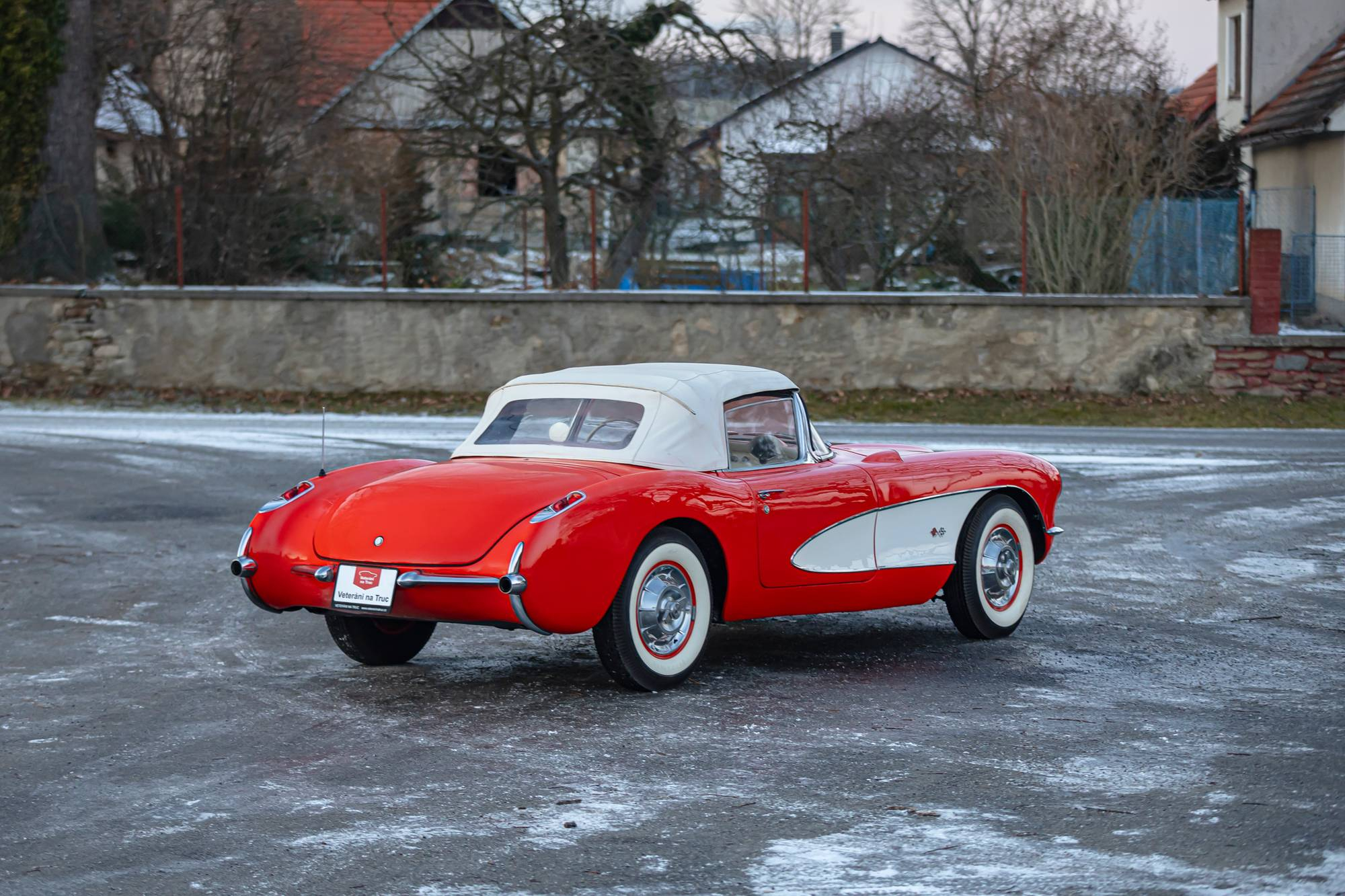
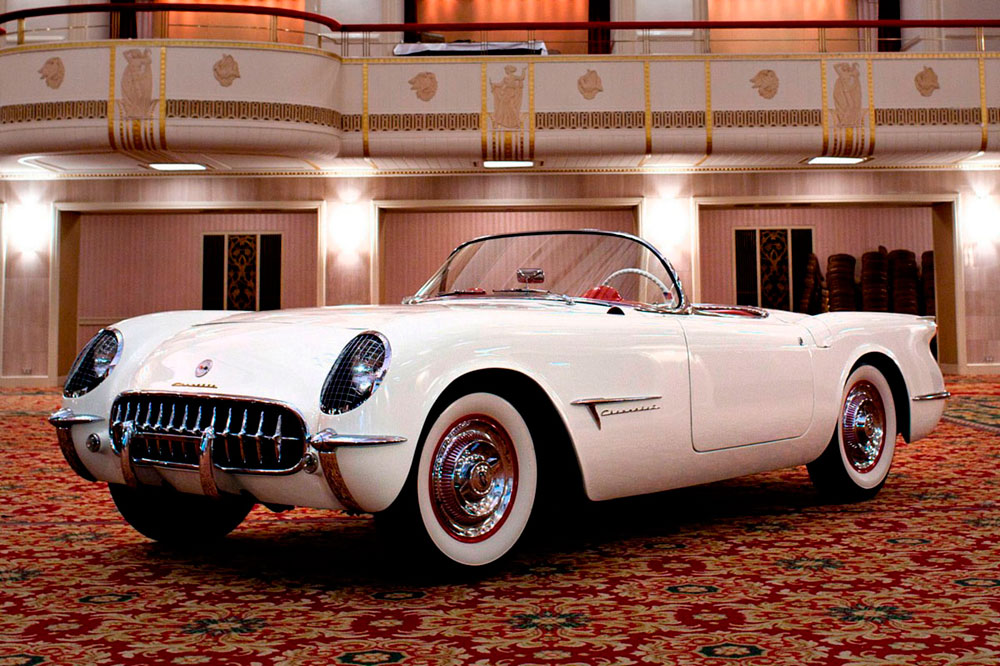
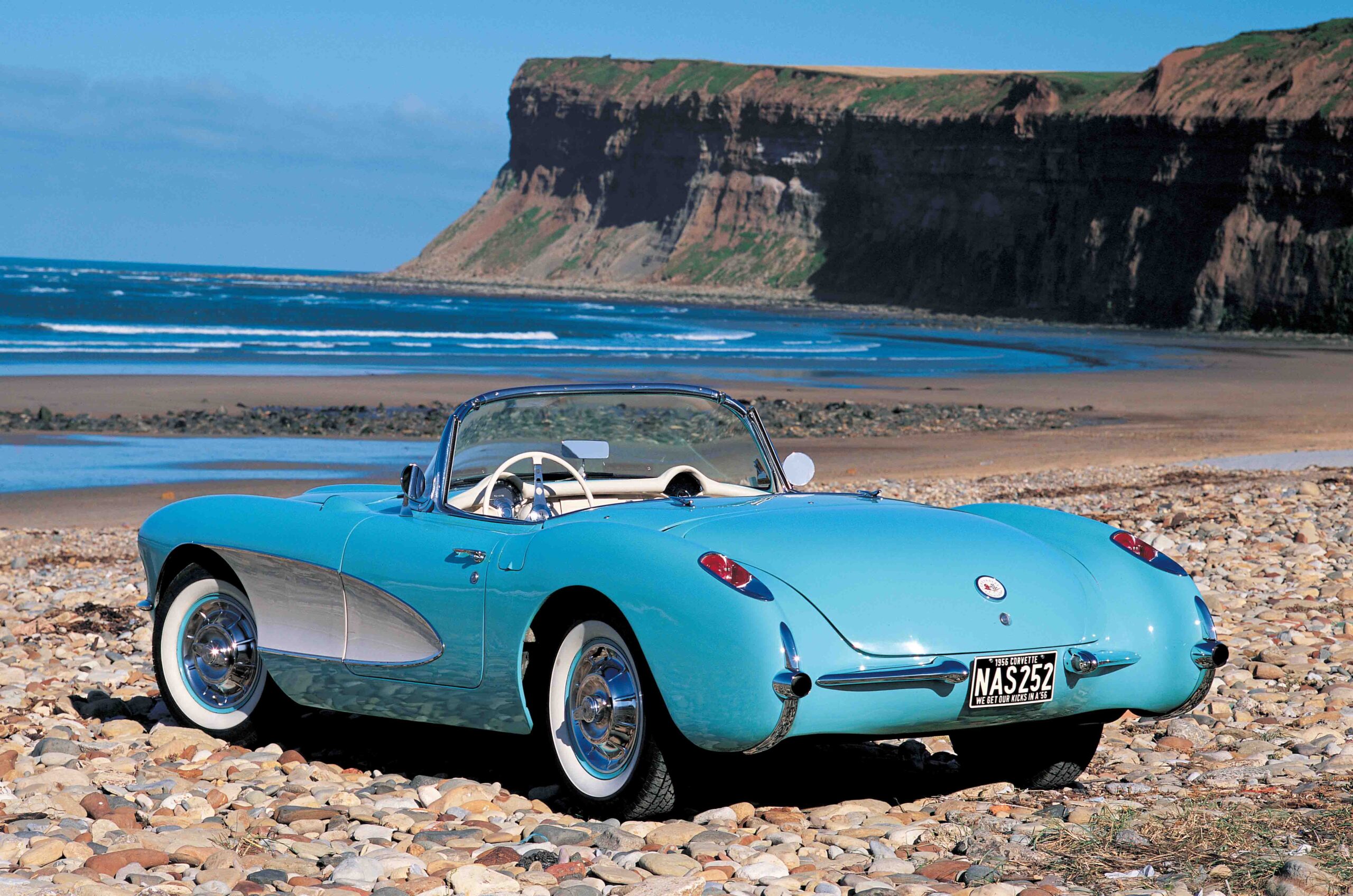
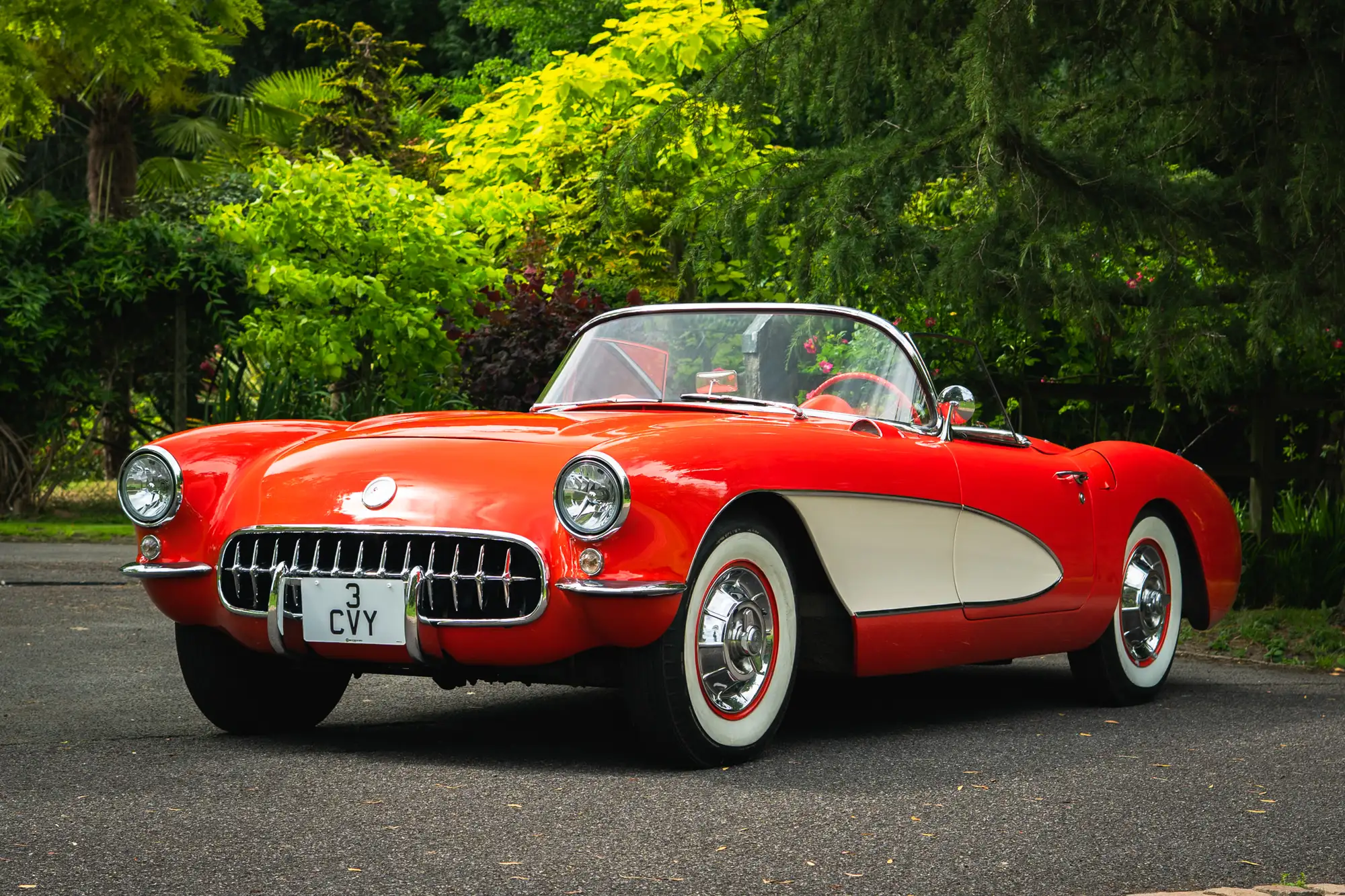
The initial 1953 run comprised just 300 hand-built units assembled in Flint, Michigan, all uniformly finished in Polo White with a Sportsman Red interior and a black canvas roof. Despite the composite skin, the mechanical underpinnings were drastically flawed. Under the bonnet lay a heavy “Blue Flame” 3.9-litre (235 cu in) inline-six producing a modest 112 kW (150 bhp), mated obligatorily to a sluggish two-speed Powerglide automatic transmission. Plagued by water leaks, plastic side curtains instead of glass windows, and lacklustre dynamics, the model flirted with cancellation by 1954. Salvation arrived in 1955 via Zora Arkus-Duntov, who championed the installation of Chevrolet’s 4.3-litre (265 cu in) Small-Block V8. This decision, combined with a three-speed manual gearbox and sudden competition from the Ford Thunderbird, saved the Corvette. The platform matured rapidly; a 1956 redesign eradicated the antiquated tailfins, introducing exposed headlamps, real glass windows, and the iconic scalloped side “coves”. By 1957, Duntov introduced the revolutionary Rochester Ramjet mechanical fuel injection. Bolted to an enlarged 4.6-litre (283 cu in) V8 and paired with a four-speed manual, it delivered 211 kW (283 bhp)—achieving the magical threshold of one horsepower per cubic inch—and turned the car into a fearsome racer.
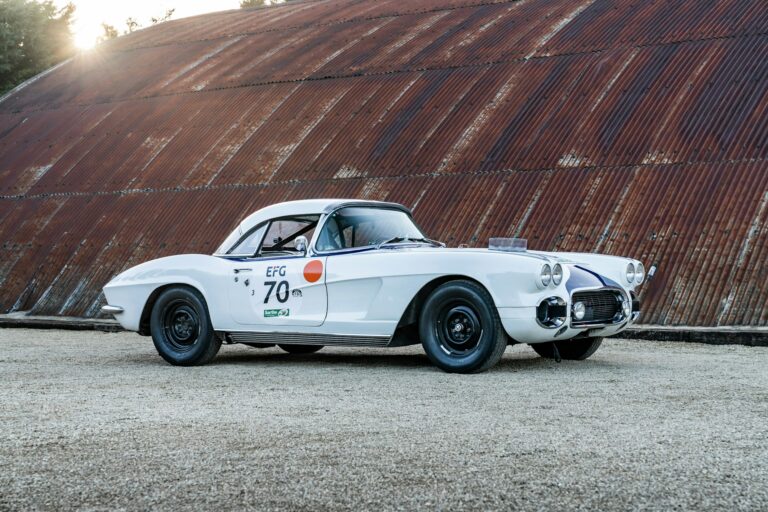
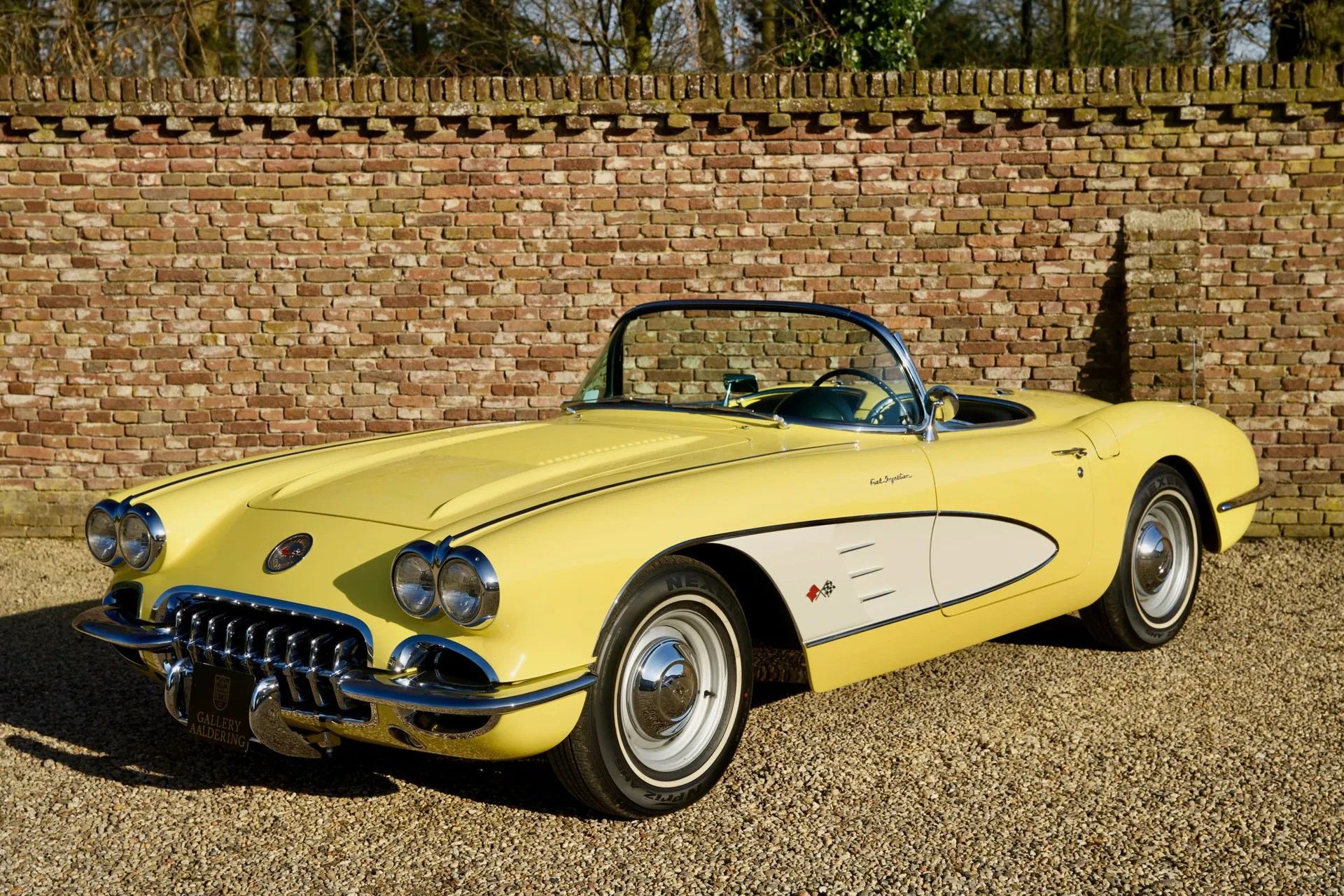
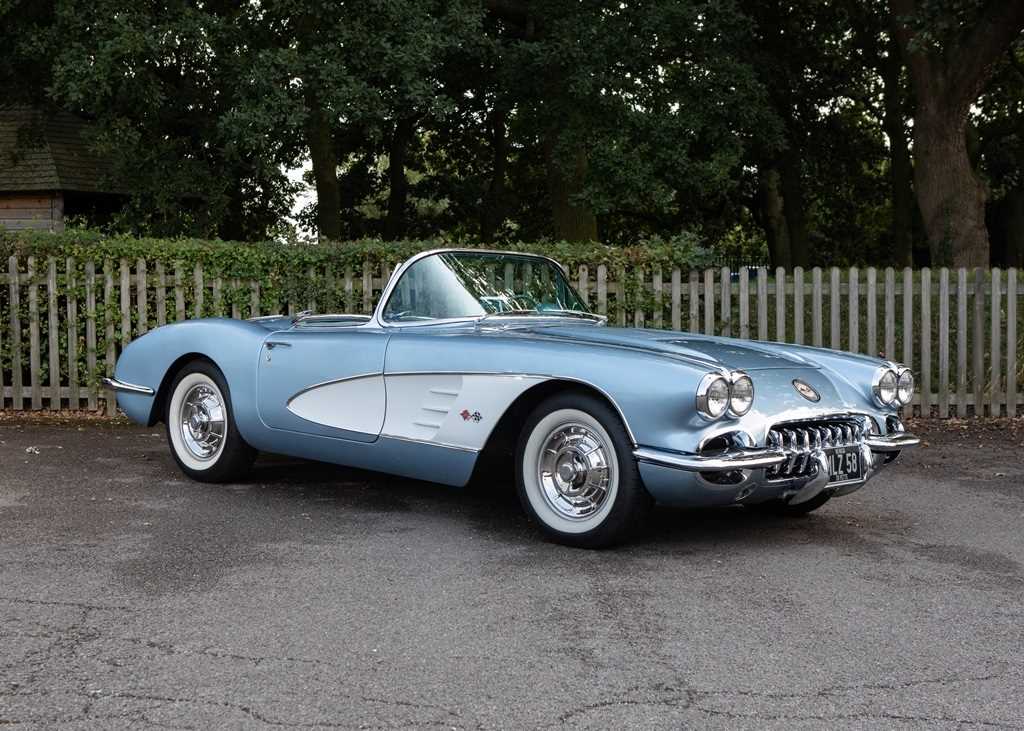
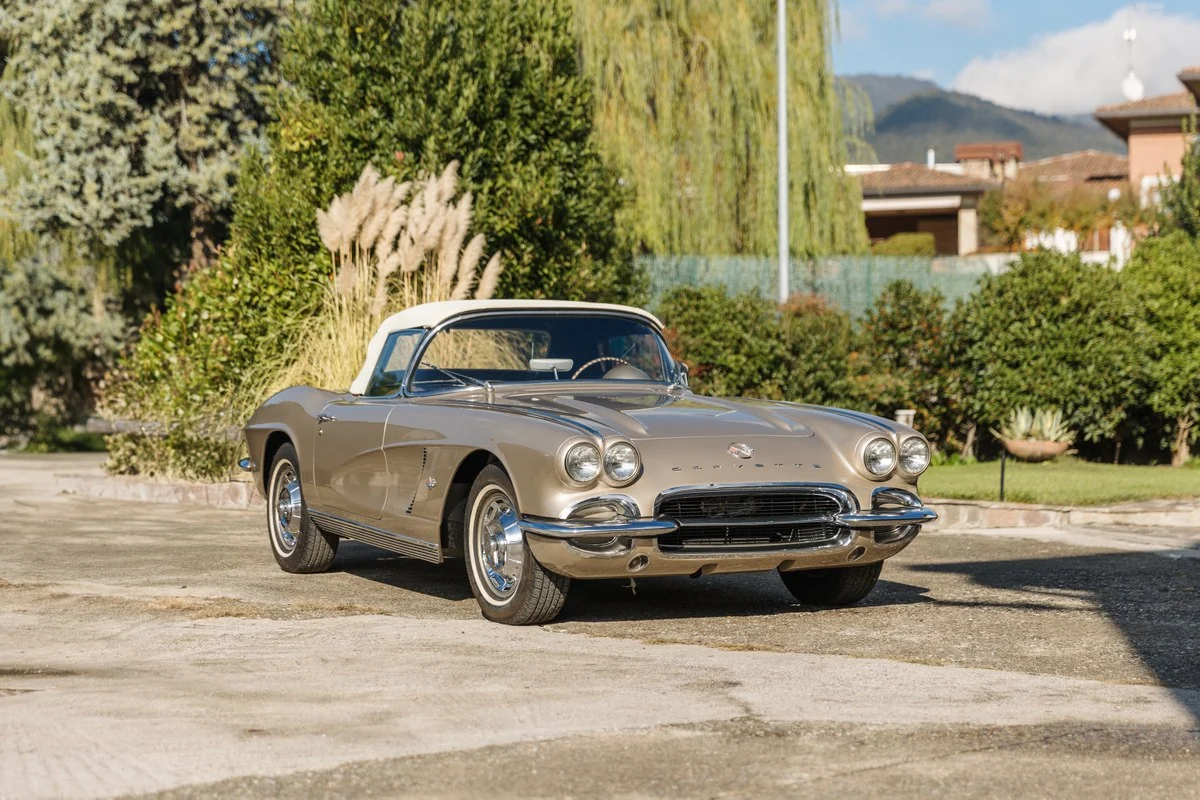
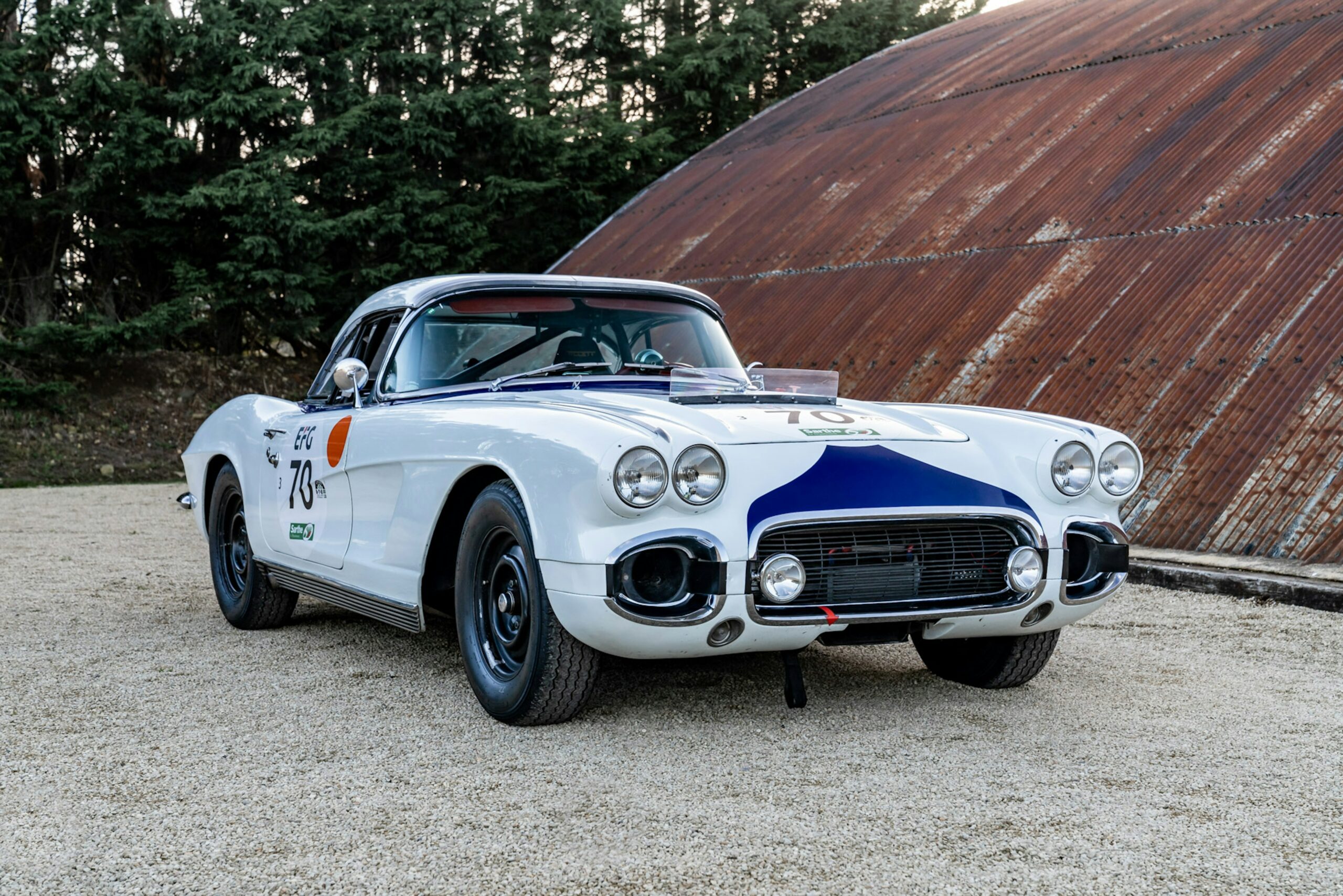
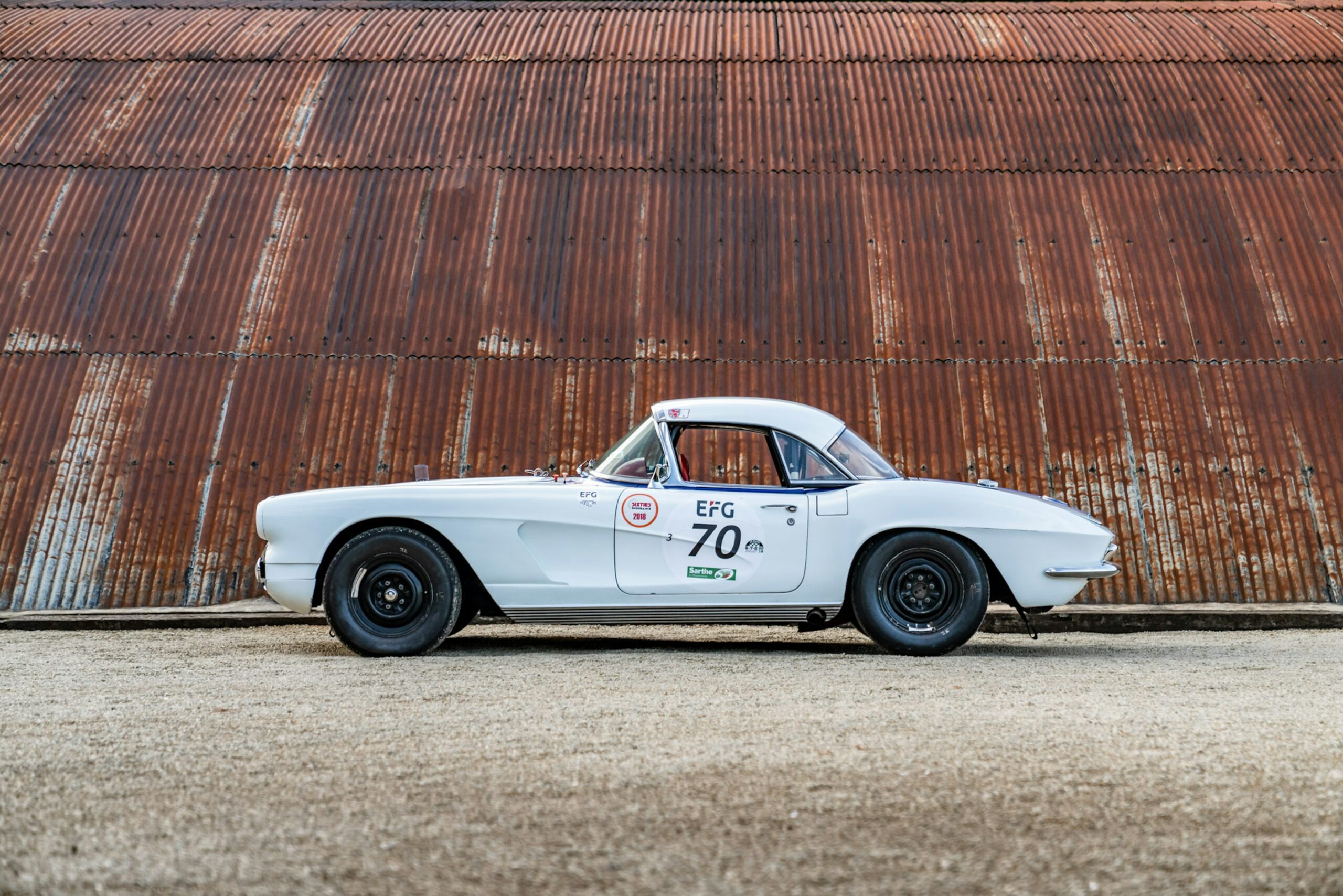
Mirroring Detroit’s obsession with excess, the 1958 model gained quad headlamps, a redesigned driver-centric instrument cluster, prominent chrome twin spears on the boot lid, and a faux louvered bonnet—affectionately termed the “washboard hood”. However, this excessive ornamentation was heavily criticised at the time, prompting Chevrolet to immediately remove the bonnet louvers and boot spears for the 1959 and 1960 model years to achieve a much cleaner aesthetic, though the quad headlamps remained. Although kerb weight swelled to roughly 1354 kg (2985 lbs), V8 development easily offset the mass. The aesthetic climax arrived in 1961, when the rounded tail vanished in favour of a sharply creased “ducktail” rear end with four round taillights that hinted at what was to come, followed by the 1962 swansong that eschewed two-tone paint and introduced the 5.4-litre (327 cu in) V8, peaking at 268 kW (360 bhp). Beyond showrooms, the flexible ladder chassis spawned spectacular variants. Harley Earl commissioned the 1956 SR-2, or “Sebring Racer”, for his son to combat Ferraris, featuring an aerodynamic tail fin behind the driver. A year later, Duntov conceived his masterpiece for Le Mans: the Corvette SS. This one-off featured a tubular chassis and a magnesium body weighing an incredible 840 kg (1852 lbs). It generated immense expectations but debuted at Sebring with severe heat failures, before the AMA gentleman’s agreement banned factory racing and froze the project. Similarly exotic was the 1959 Scaglietti Coupe, clothed in lightweight aluminium by the Modenese coachbuilder. Duntov also utilised the CERV I, a 1960 open-wheel rolling laboratory with independent suspension and a mid-mounted aluminium V8, to validate future technologies.
On the asphalt, the C1 vanquished the myth of American dynamic inferiority. It dominated SCCA B-Production classes throughout the late 1950s, famously piloted by Dr Dick Thompson, the “Flying Dentist”. His dominance cemented the slogan that the Corvette was America’s definitive sports car. This motorsport pedigree drove a historic commercial renaissance; from a mere 300 units in 1953, sales skyrocketed to over 14,500 vehicles in 1962, embedding the car into popular culture alongside the television series Route 66. Yet, the first generation had reached its dynamic ceiling. It remained tethered to a modified 1950s passenger car architecture equipped with a live rear axle, severely penalising its handling against European rivals. Arkus-Duntov demanded perfect weight distribution, extreme aerodynamics, and independent rear suspension. Achieving this required starting entirely from scratch, motivating the cancellation of the C1 and giving birth to the second generation in 1963: the mythical Corvette C2 Sting Ray.
Portal
Model line
Model generation
Brand
Produced from
Vehicle category
Generation Overview
When American servicemen returned from Europe following the Second World War, they brought home an infatuation with nimble, lightweight sports cars like the MG and Jaguar XK120. General Motors’ domestic catalogue, brimming with heavy saloons, offered absolutely nothing comparable. Recognising this glaring void, styling chief Harley Earl initiated “Project Opel” to create a pure two-seater. The resulting EX-122 concept debuted at the prestigious New York GM Motorama in January 1953. Public reception was so overwhelming that Chevrolet rushed it into production by that summer. To bypass immense tooling costs associated with steel stamping, engineers made a pioneering decision: the body would be constructed entirely from glass-reinforced plastic, or fibreglass. This was a global revolution for mass-produced automobiles.
The initial 1953 run comprised just 300 hand-built units assembled in Flint, Michigan, all uniformly finished in Polo White with a Sportsman Red interior and a black canvas roof. Despite the composite skin, the mechanical underpinnings were drastically flawed. Under the bonnet lay a heavy “Blue Flame” 3.9-litre (235 cu in) inline-six producing a modest 112 kW (150 bhp), mated obligatorily to a sluggish two-speed Powerglide automatic transmission. Plagued by water leaks, plastic side curtains instead of glass windows, and lacklustre dynamics, the model flirted with cancellation by 1954. Salvation arrived in 1955 via Zora Arkus-Duntov, who championed the installation of Chevrolet’s 4.3-litre (265 cu in) Small-Block V8. This decision, combined with a three-speed manual gearbox and sudden competition from the Ford Thunderbird, saved the Corvette. The platform matured rapidly; a 1956 redesign eradicated the antiquated tailfins, introducing exposed headlamps, real glass windows, and the iconic scalloped side “coves”. By 1957, Duntov introduced the revolutionary Rochester Ramjet mechanical fuel injection. Bolted to an enlarged 4.6-litre (283 cu in) V8 and paired with a four-speed manual, it delivered 211 kW (283 bhp)—achieving the magical threshold of one horsepower per cubic inch—and turned the car into a fearsome racer.
Mirroring Detroit’s obsession with excess, the 1958 model gained quad headlamps, a redesigned driver-centric instrument cluster, prominent chrome twin spears on the boot lid, and a faux louvered bonnet—affectionately termed the “washboard hood”. However, this excessive ornamentation was heavily criticised at the time, prompting Chevrolet to immediately remove the bonnet louvers and boot spears for the 1959 and 1960 model years to achieve a much cleaner aesthetic, though the quad headlamps remained. Although kerb weight swelled to roughly 1354 kg (2985 lbs), V8 development easily offset the mass. The aesthetic climax arrived in 1961, when the rounded tail vanished in favour of a sharply creased “ducktail” rear end with four round taillights that hinted at what was to come, followed by the 1962 swansong that eschewed two-tone paint and introduced the 5.4-litre (327 cu in) V8, peaking at 268 kW (360 bhp). Beyond showrooms, the flexible ladder chassis spawned spectacular variants. Harley Earl commissioned the 1956 SR-2, or “Sebring Racer”, for his son to combat Ferraris, featuring an aerodynamic tail fin behind the driver. A year later, Duntov conceived his masterpiece for Le Mans: the Corvette SS. This one-off featured a tubular chassis and a magnesium body weighing an incredible 840 kg (1852 lbs). It generated immense expectations but debuted at Sebring with severe heat failures, before the AMA gentleman’s agreement banned factory racing and froze the project. Similarly exotic was the 1959 Scaglietti Coupe, clothed in lightweight aluminium by the Modenese coachbuilder. Duntov also utilised the CERV I, a 1960 open-wheel rolling laboratory with independent suspension and a mid-mounted aluminium V8, to validate future technologies.
On the asphalt, the C1 vanquished the myth of American dynamic inferiority. It dominated SCCA B-Production classes throughout the late 1950s, famously piloted by Dr Dick Thompson, the “Flying Dentist”. His dominance cemented the slogan that the Corvette was America’s definitive sports car. This motorsport pedigree drove a historic commercial renaissance; from a mere 300 units in 1953, sales skyrocketed to over 14,500 vehicles in 1962, embedding the car into popular culture alongside the television series Route 66. Yet, the first generation had reached its dynamic ceiling. It remained tethered to a modified 1950s passenger car architecture equipped with a live rear axle, severely penalising its handling against European rivals. Arkus-Duntov demanded perfect weight distribution, extreme aerodynamics, and independent rear suspension. Achieving this required starting entirely from scratch, motivating the cancellation of the C1 and giving birth to the second generation in 1963: the mythical Corvette C2 Sting Ray.
Submodels