

Jaguar E-Type Series 1
Brand
Produced from
Vehicle category
Portal
Model line
Model generation
Predecessor
Sucessor
About this Model Generation
On the frantic, rain-swept evening of March 14, 1961, Jaguar executive Bob Berry was tearing across the French countryside in a prototype fixed-head coupe, desperately trying to reach Switzerland. His mission was simple yet monumental: deliver the car to the Parc des Eaux-Vives in time for the Geneva Motor Show press reveal. When he finally arrived, wiping the grime from the sweeping, impossibly long bonnet, the automotive world collectively stopped breathing. The 1961 Jaguar E-Type Series 1 had landed like a thunderbolt, instantly rendering every other sports car on the planet obsolete. Tasked with replacing the aging, bulbous XK150, the E-Type was not merely an evolution; it was a revolution born directly from the Le Mans-winning D-Type race cars. It arrived in a market dominated by the aristocratic Aston Martin DB4 and the exotic Ferrari 250 GT, but the Jaguar possessed a devastating trump card. For roughly half the price of an Aston Martin, a buyer could acquire a 150-mph supercar that looked like it had been sculpted by the wind itself.
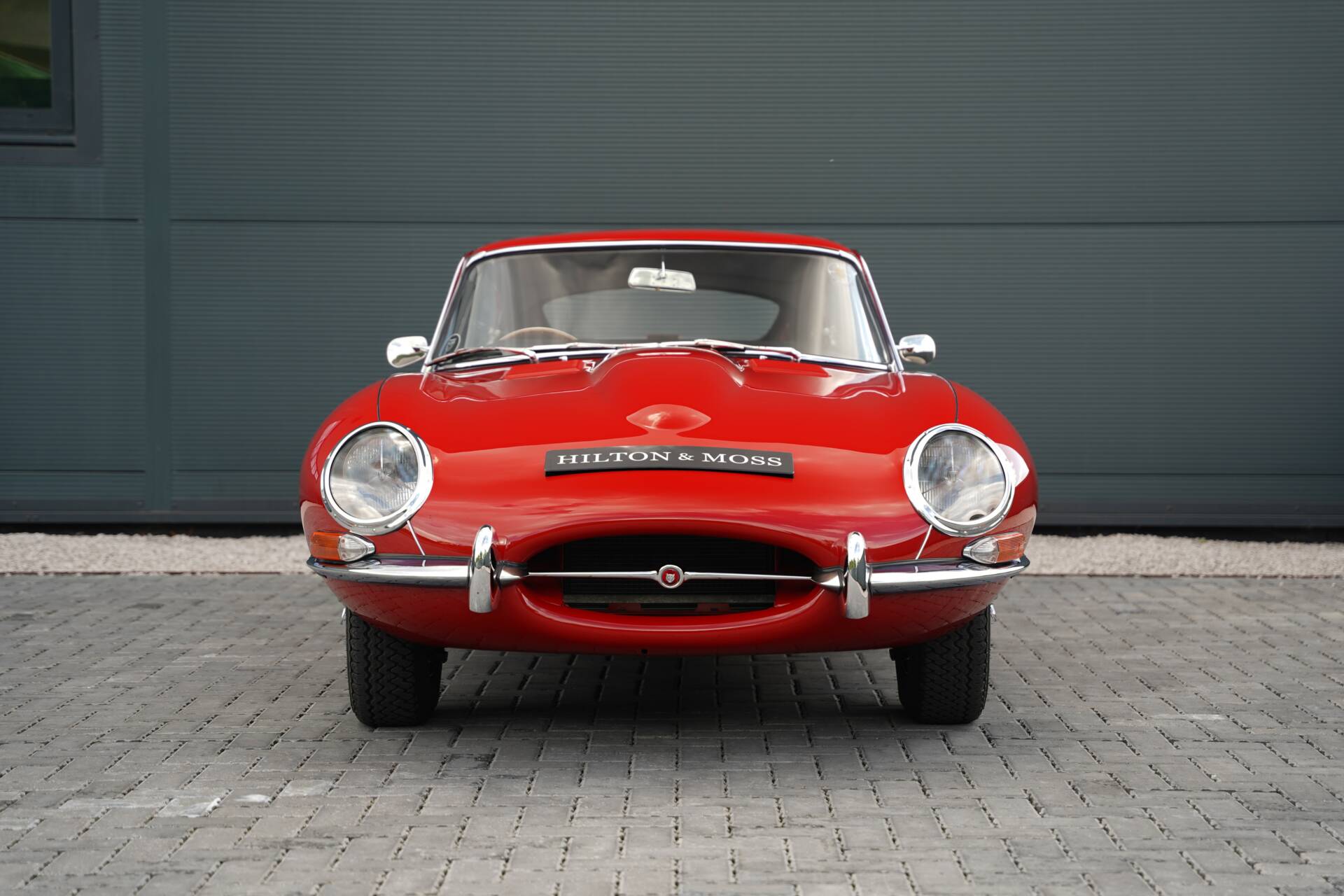
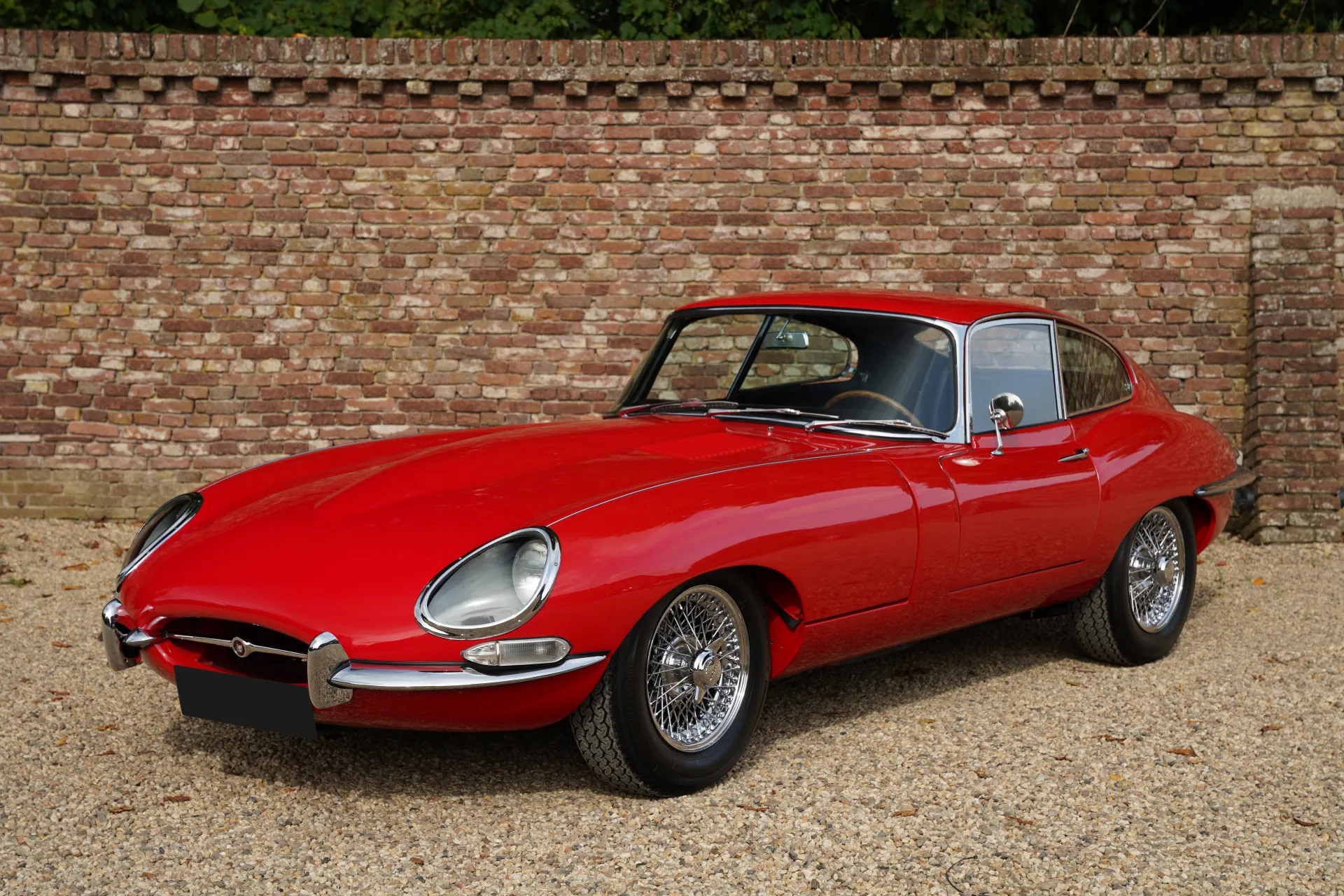
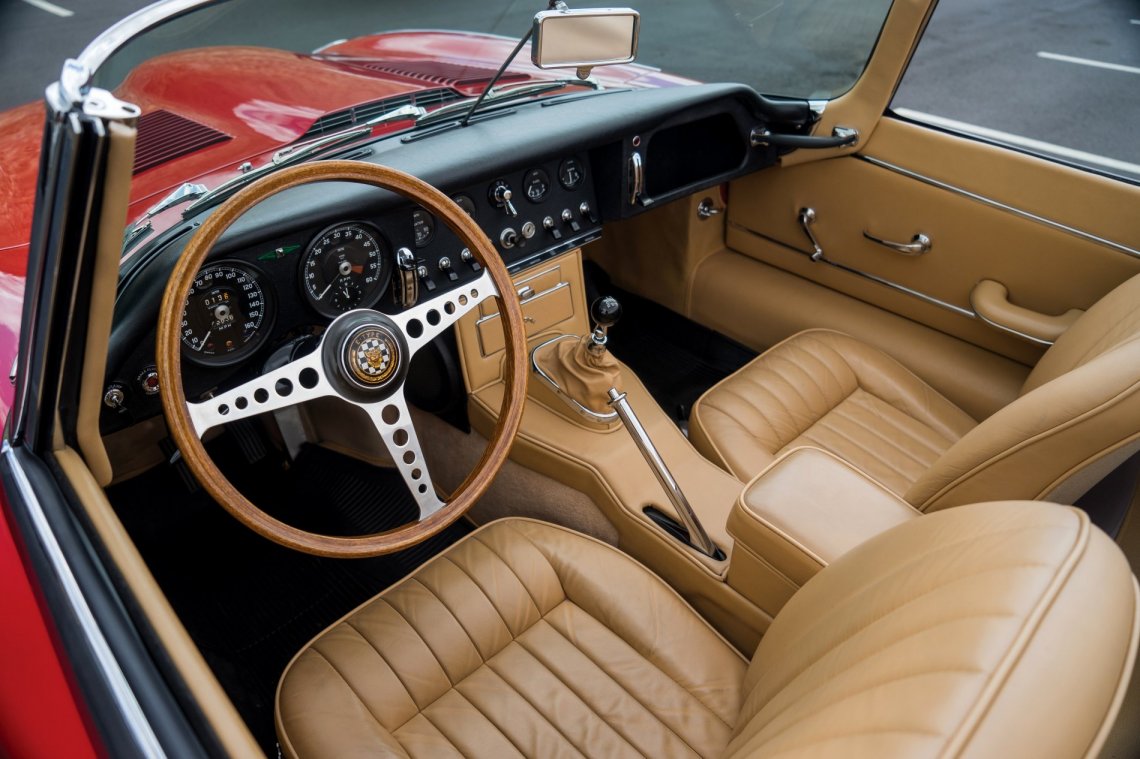
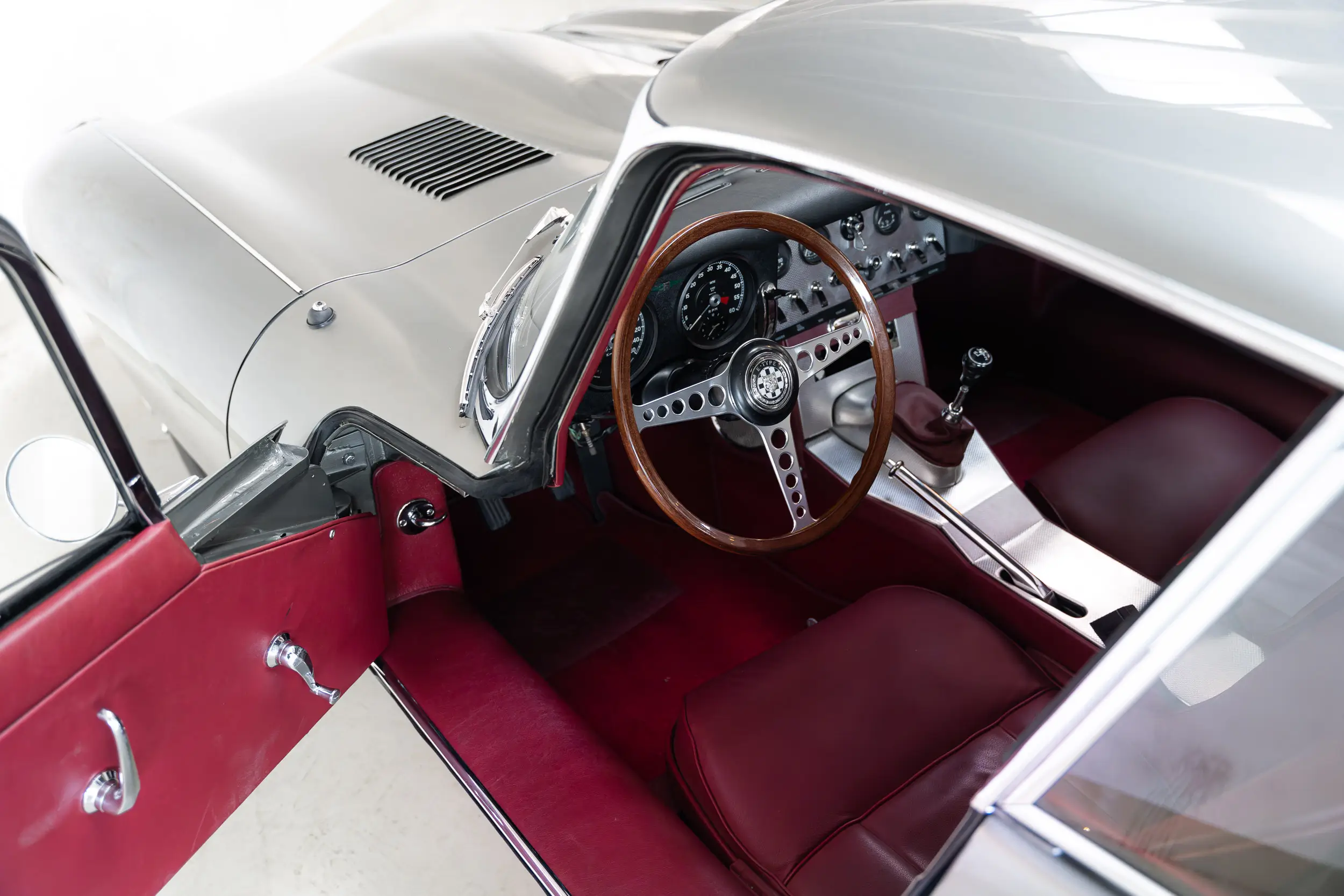
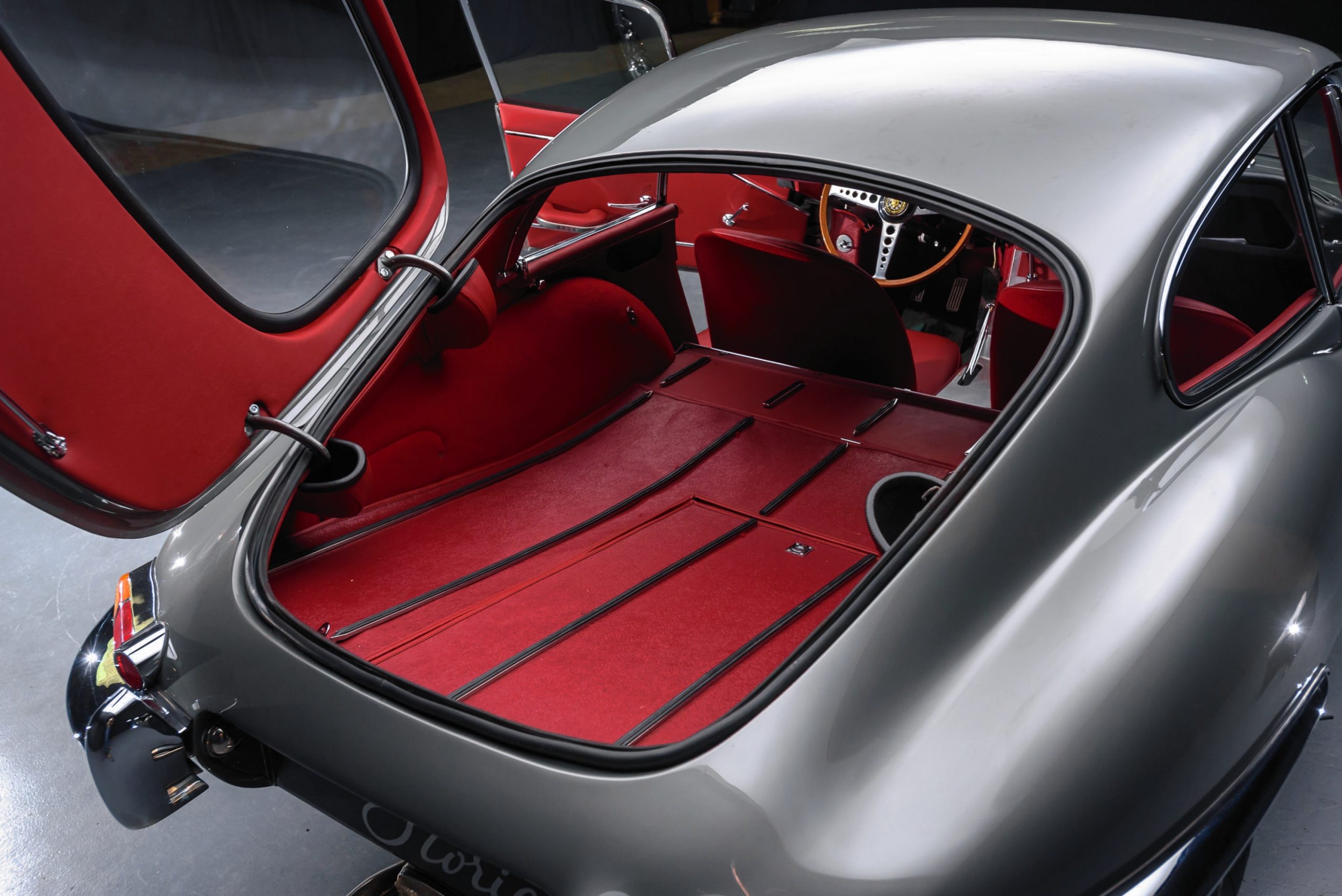
To analyze the anatomy of the Series 1 E-Type is to understand the absolute intersection of mathematics and art. The exterior was penned not by a traditional stylist, but by Malcolm Sayer, a brilliant aerodynamicist with a background in the aviation industry. Using complex logarithmic formulas, Sayer crafted a phallic, impossibly elongated nose, deeply recessed glass-covered headlights, and a tapered, Kamm-like tail that cheated the wind. Beneath this sensual sheet metal lay an advanced semi-monocoque tub mated to a tubular steel front subframe—a direct, unadulterated transfer of aviation and motorsport technology to the street. Nestled within that tubular cradle was Jaguar’s legendary XK inline-six engine. Initially displacing 3.8 liters and breathing through triple SU carburetors, this twin-cam masterpiece produced a claimed 265 brake horsepower. In 1964, the beating heart was upgraded to 4.2 liters; while the peak horsepower remained identical, torque increased significantly, and the archaic, non-synchronized first gear of the Moss gearbox was finally replaced by a much sweeter, fully synchronized transmission. The E-Type also pioneered independent rear suspension for the masses. Designed by Bob Knight in a matter of weeks to win a bet with Jaguar founder William Lyons, the rear axle featured inboard disc brakes mounted alongside the differential to drastically reduce unsprung mass, gifting the E-Type with a supple ride and phenomenal mechanical grip. Inside, the early 3.8-liter cars were a symphony of jet-age romance, featuring aluminum-turned center consoles and rows of heavy toggle switches that looked as if they had been stolen from the cockpit of an Avro Vulcan bomber.
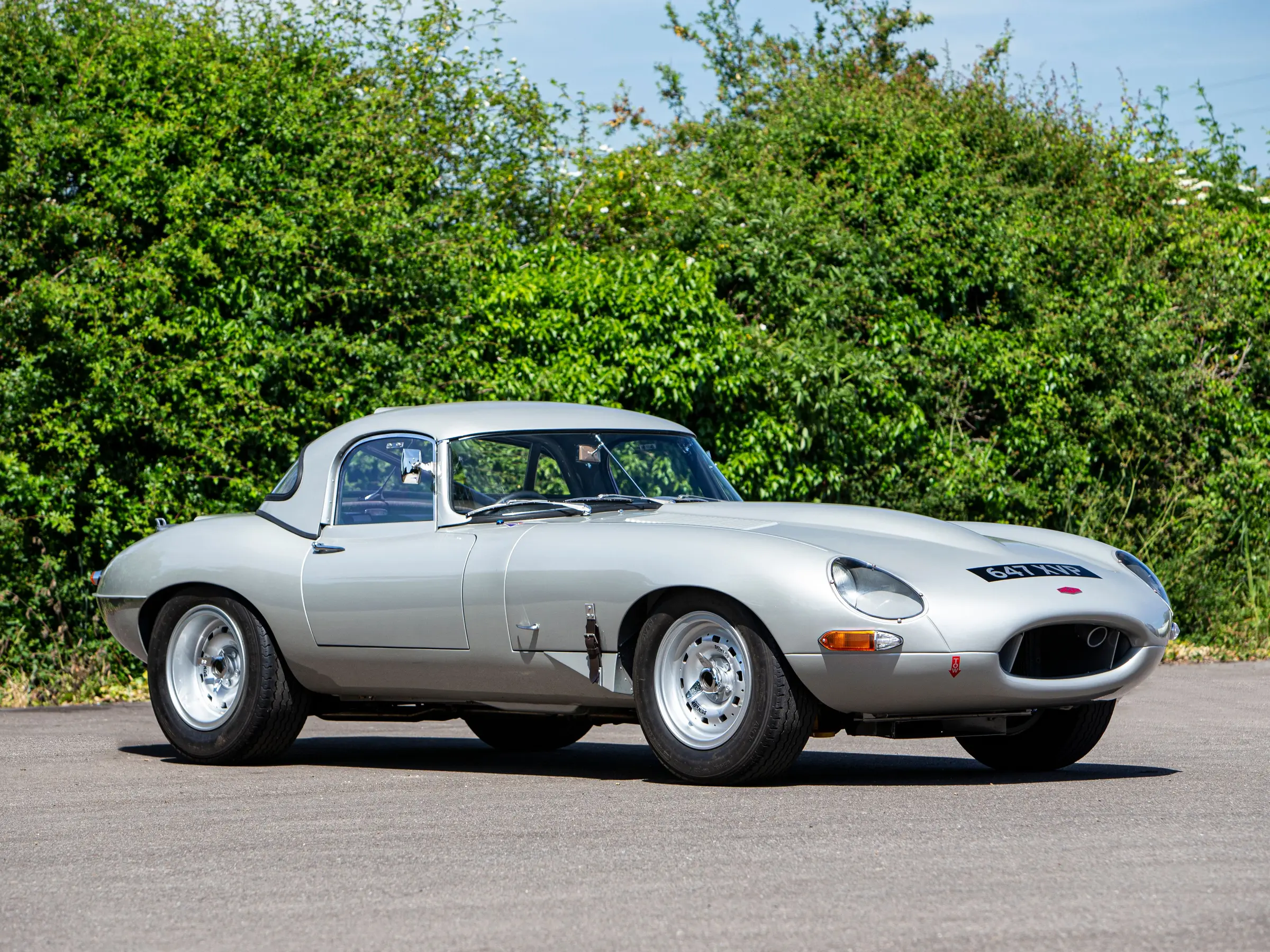
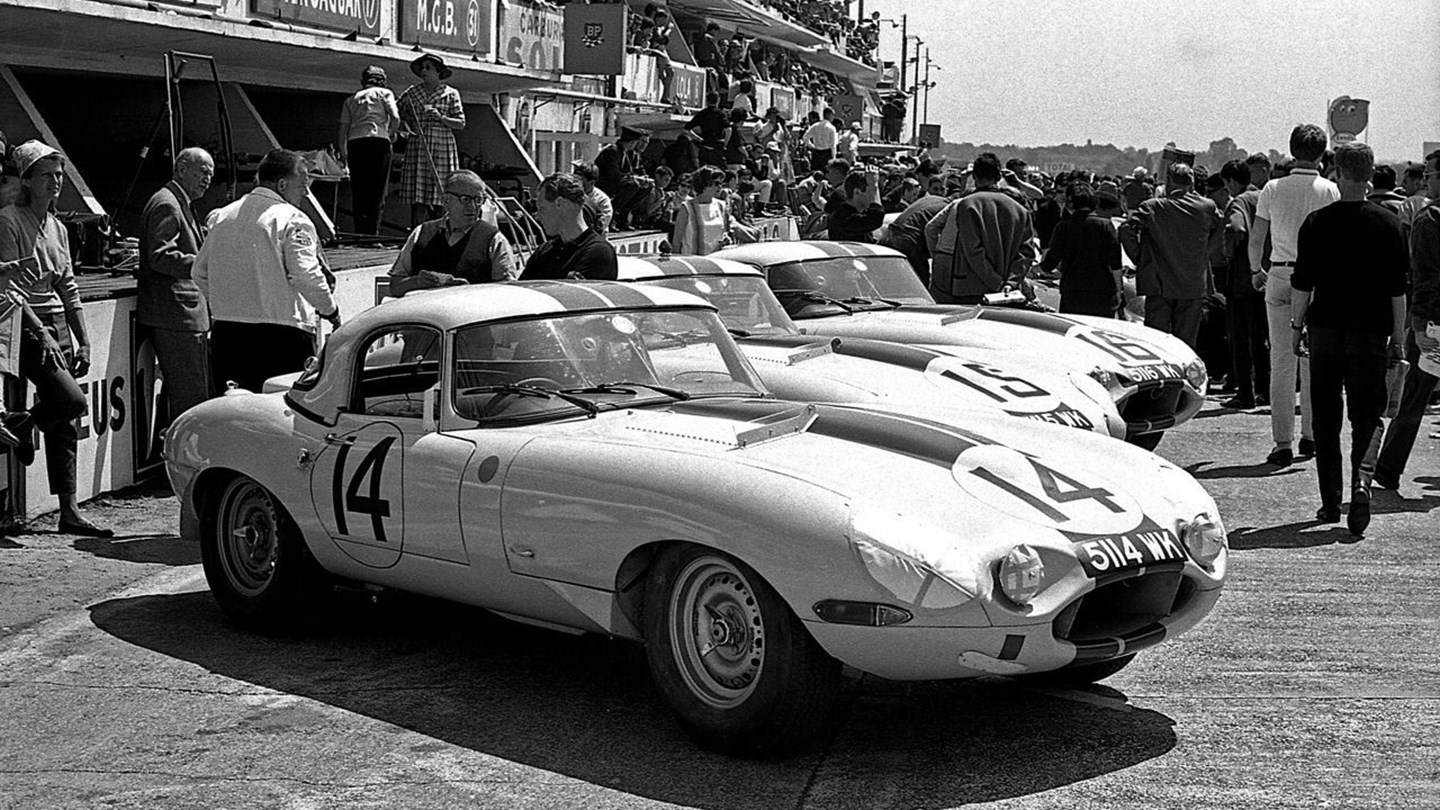
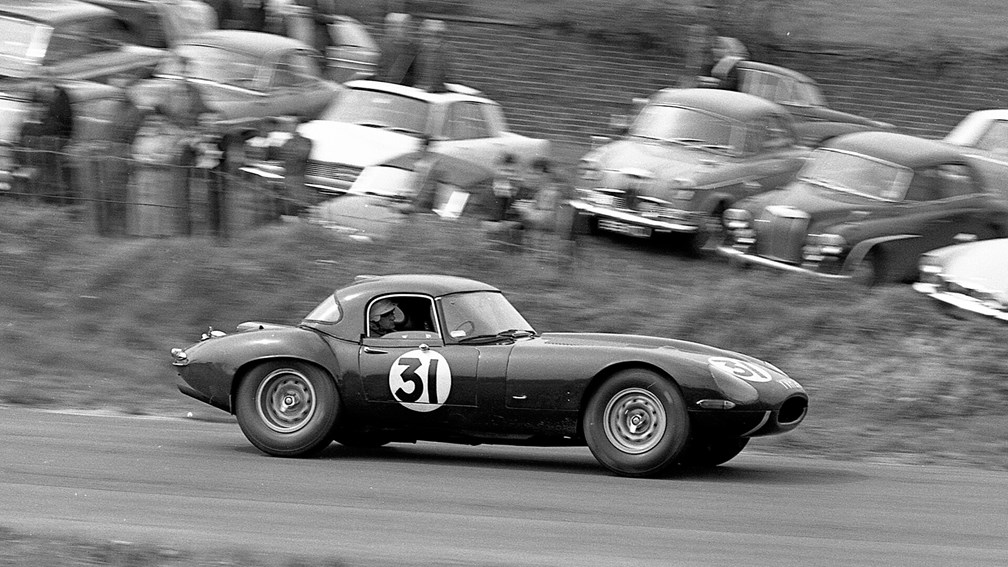
The cultural and motorsport impact of the Series 1 E-Type is perhaps unmatched in British automotive history. Enzo Ferrari, a man not prone to praising his rivals, famously declared it to be “the most beautiful car ever made.” It instantly became the ultimate symbol of Swinging Sixties London, purchased by rock stars, actors, and royalty; George Harrison, Frank Sinatra, and Steve McQueen all fell under its spell. But William Lyons knew that a sports car required a racing pedigree. Jaguar rapidly developed a handful of highly modified “ZP” project cars, and later, the mythical Lightweight E-Types. Constructed entirely from aluminum, featuring fuel-injected alloy-block engines, the Lightweights were built explicitly to wage war against the Ferrari 250 GTOs. Driven by absolute titans like Graham Hill—who famously took a debut victory in the E-Type at Oulton Park mere weeks after the Geneva launch—and campaigned heavily by the Briggs Cunningham team at Le Mans and Sebring, the racing E-Types proved incredibly fast, though often plagued by the sheer aerodynamic superiority and reliability of the Maranello opposition. Nevertheless, the sight of a brilliant white Cunningham Lightweight E-Type blasting down the Mulsanne Straight remains one of the most evocative images of 1960s endurance racing.
When the Series 1 eventually bowed out in 1968, forced to morph into the Series 2 to comply with stringent US safety and emissions regulations—losing its beautiful glass headlight covers and delicate toggle switches in the process—the world mourned the loss of its purity. The E-Type lineage would continue into the 1970s with the V12-powered Series 3, before finally being replaced by the XJ-S grand tourer. Yet, it is the original Series 1 that commands absolute reverence. It is the purest distillation of Jaguar’s “Grace, Space, Pace” philosophy. The 1961 Jaguar E-Type Series 1 resides permanently in the absolute highest echelon of the automotive pantheon. It is one of the few vehicles inducted into the permanent design collection of the Museum of Modern Art in New York, an immortal, 150-mph icon that defined a generation and taught the world exactly what a sports car was meant to be.
Brand
Produced from
Vehicle category
Portal
Model line
Model generation
Predecessor
Sucessor
Brand
Produced from
Vehicle category
Portal
Model line
Model generation
Predecessor
Sucessor
About this Model Generation
On the frantic, rain-swept evening of March 14, 1961, Jaguar executive Bob Berry was tearing across the French countryside in a prototype fixed-head coupe, desperately trying to reach Switzerland. His mission was simple yet monumental: deliver the car to the Parc des Eaux-Vives in time for the Geneva Motor Show press reveal. When he finally arrived, wiping the grime from the sweeping, impossibly long bonnet, the automotive world collectively stopped breathing. The 1961 Jaguar E-Type Series 1 had landed like a thunderbolt, instantly rendering every other sports car on the planet obsolete. Tasked with replacing the aging, bulbous XK150, the E-Type was not merely an evolution; it was a revolution born directly from the Le Mans-winning D-Type race cars. It arrived in a market dominated by the aristocratic Aston Martin DB4 and the exotic Ferrari 250 GT, but the Jaguar possessed a devastating trump card. For roughly half the price of an Aston Martin, a buyer could acquire a 150-mph supercar that looked like it had been sculpted by the wind itself.
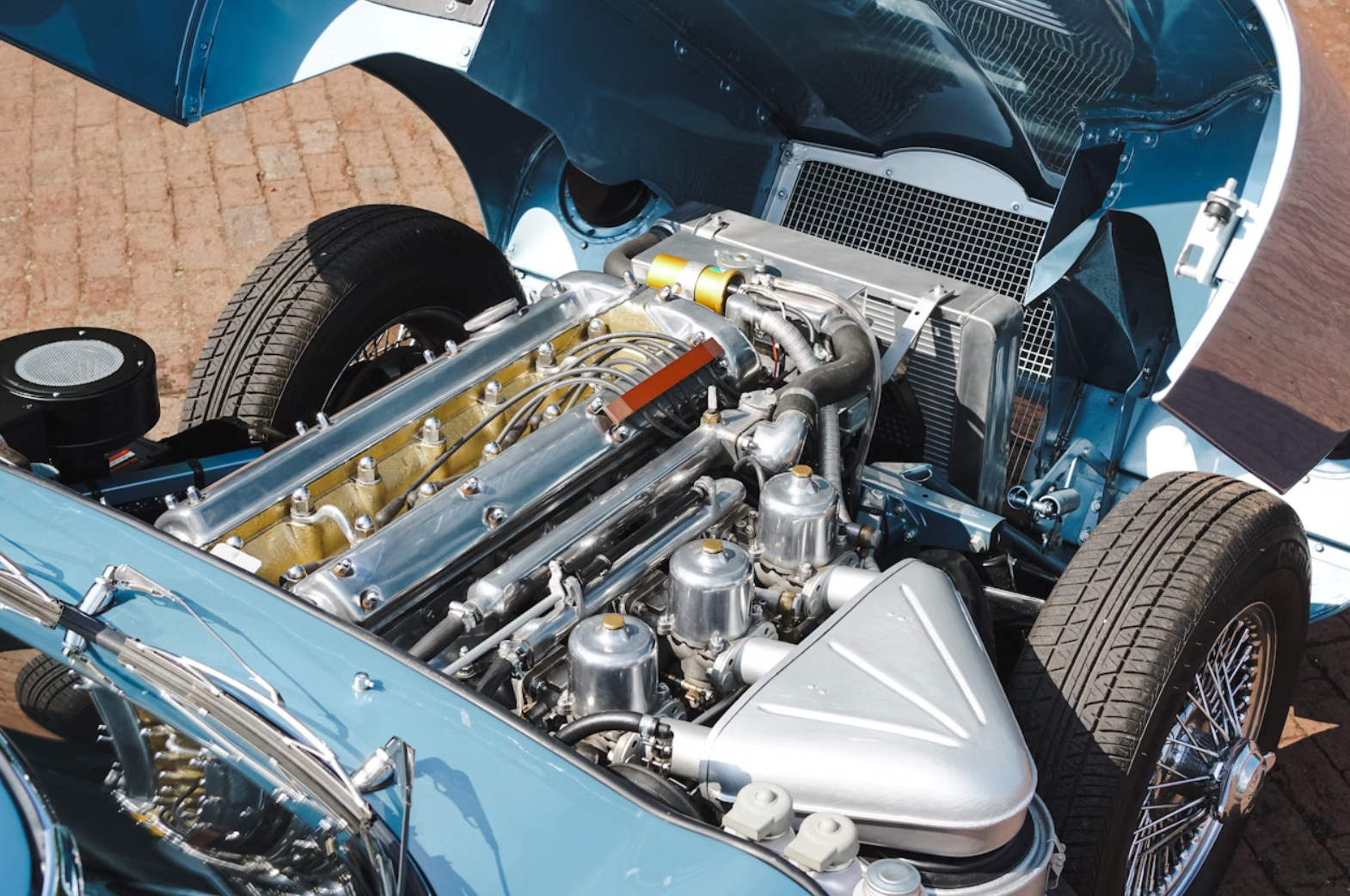
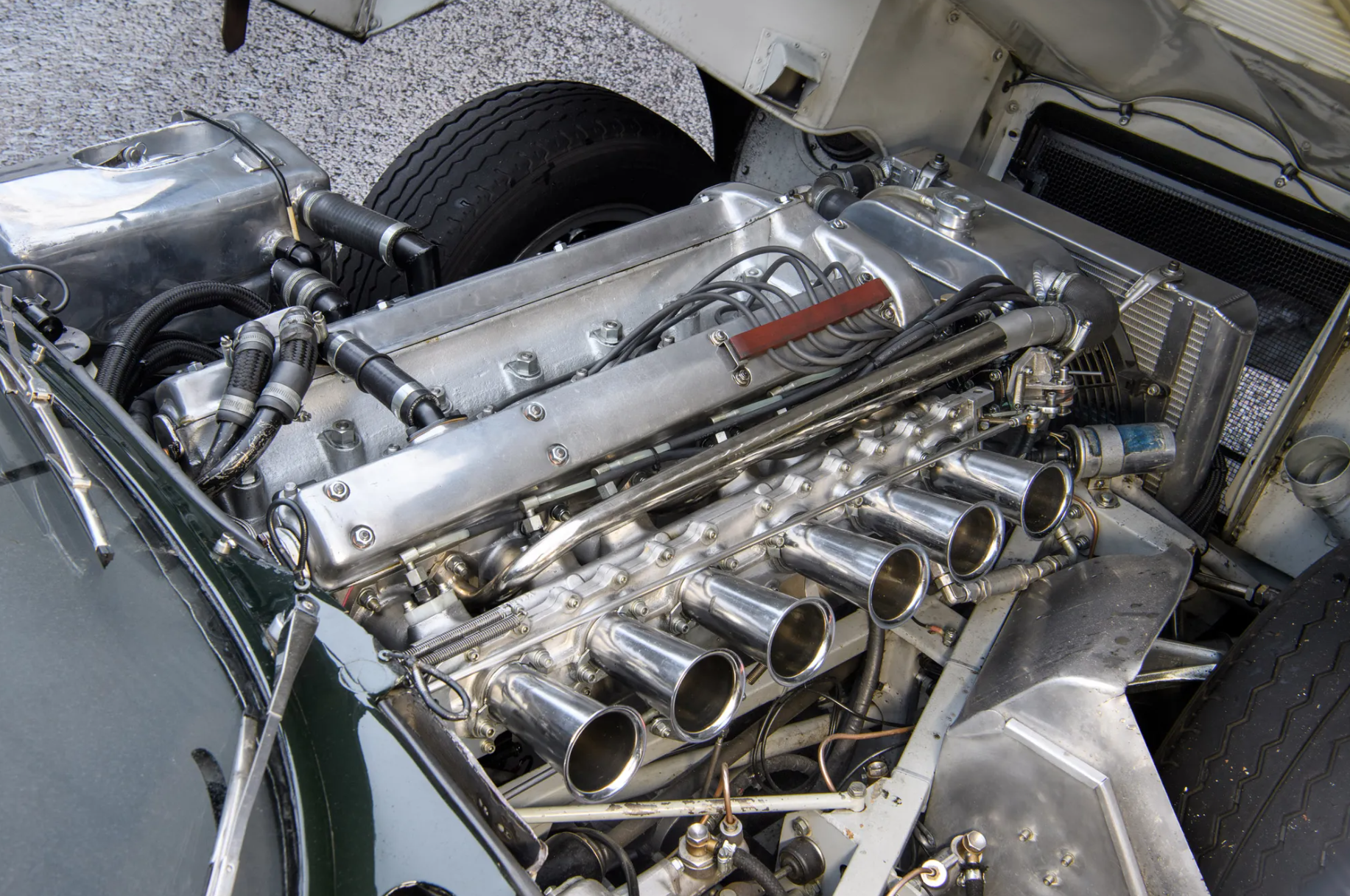
To analyze the anatomy of the Series 1 E-Type is to understand the absolute intersection of mathematics and art. The exterior was penned not by a traditional stylist, but by Malcolm Sayer, a brilliant aerodynamicist with a background in the aviation industry. Using complex logarithmic formulas, Sayer crafted a phallic, impossibly elongated nose, deeply recessed glass-covered headlights, and a tapered, Kamm-like tail that cheated the wind. Beneath this sensual sheet metal lay an advanced semi-monocoque tub mated to a tubular steel front subframe—a direct, unadulterated transfer of aviation and motorsport technology to the street. Nestled within that tubular cradle was Jaguar’s legendary XK inline-six engine. Initially displacing 3.8 liters and breathing through triple SU carburetors, this twin-cam masterpiece produced a claimed 265 brake horsepower. In 1964, the beating heart was upgraded to 4.2 liters; while the peak horsepower remained identical, torque increased significantly, and the archaic, non-synchronized first gear of the Moss gearbox was finally replaced by a much sweeter, fully synchronized transmission. The E-Type also pioneered independent rear suspension for the masses. Designed by Bob Knight in a matter of weeks to win a bet with Jaguar founder William Lyons, the rear axle featured inboard disc brakes mounted alongside the differential to drastically reduce unsprung mass, gifting the E-Type with a supple ride and phenomenal mechanical grip. Inside, the early 3.8-liter cars were a symphony of jet-age romance, featuring aluminum-turned center consoles and rows of heavy toggle switches that looked as if they had been stolen from the cockpit of an Avro Vulcan bomber.
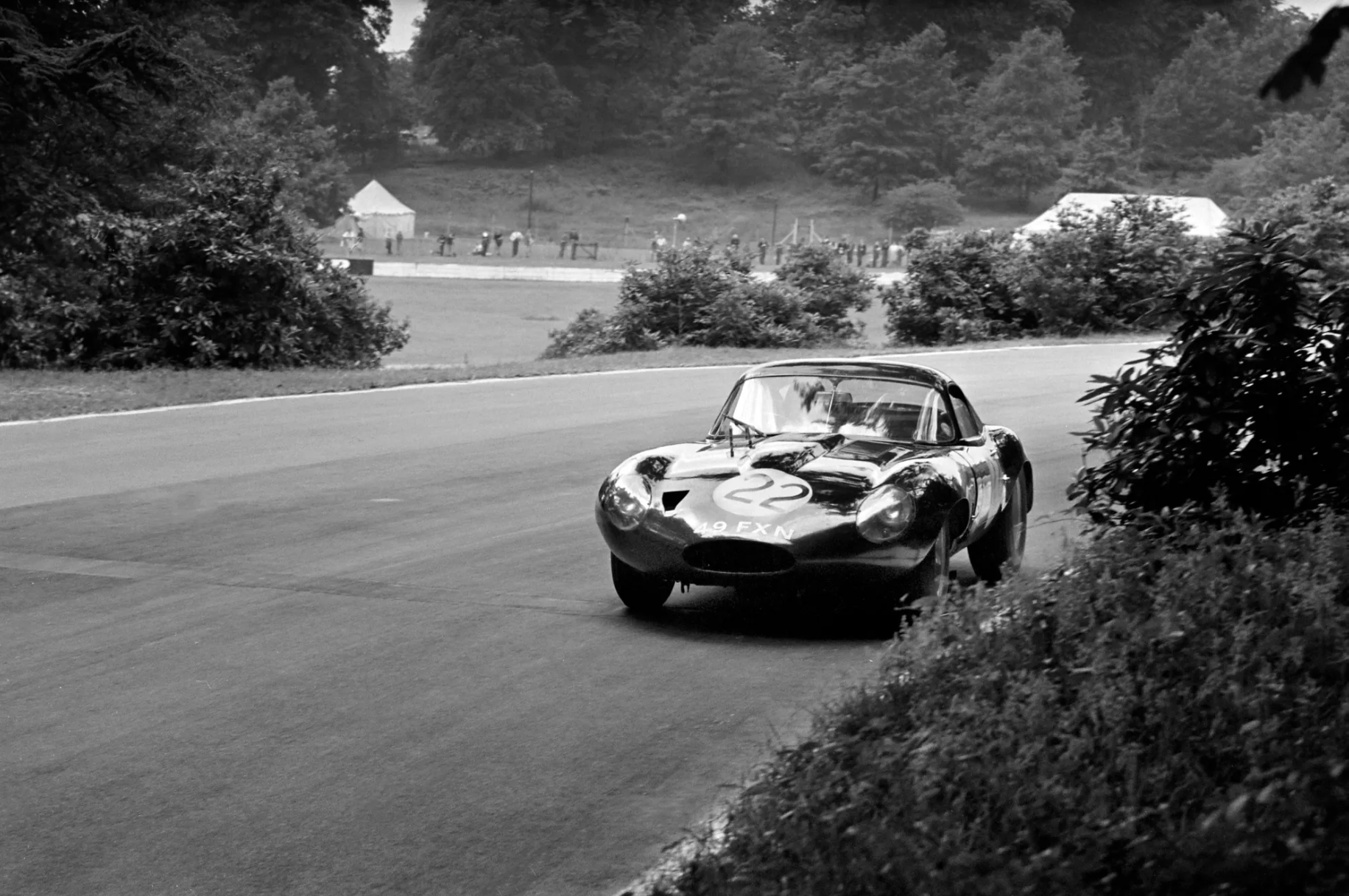
The cultural and motorsport impact of the Series 1 E-Type is perhaps unmatched in British automotive history. Enzo Ferrari, a man not prone to praising his rivals, famously declared it to be “the most beautiful car ever made.” It instantly became the ultimate symbol of Swinging Sixties London, purchased by rock stars, actors, and royalty; George Harrison, Frank Sinatra, and Steve McQueen all fell under its spell. But William Lyons knew that a sports car required a racing pedigree. Jaguar rapidly developed a handful of highly modified “ZP” project cars, and later, the mythical Lightweight E-Types. Constructed entirely from aluminum, featuring fuel-injected alloy-block engines, the Lightweights were built explicitly to wage war against the Ferrari 250 GTOs. Driven by absolute titans like Graham Hill—who famously took a debut victory in the E-Type at Oulton Park mere weeks after the Geneva launch—and campaigned heavily by the Briggs Cunningham team at Le Mans and Sebring, the racing E-Types proved incredibly fast, though often plagued by the sheer aerodynamic superiority and reliability of the Maranello opposition. Nevertheless, the sight of a brilliant white Cunningham Lightweight E-Type blasting down the Mulsanne Straight remains one of the most evocative images of 1960s endurance racing.
When the Series 1 eventually bowed out in 1968, forced to morph into the Series 2 to comply with stringent US safety and emissions regulations—losing its beautiful glass headlight covers and delicate toggle switches in the process—the world mourned the loss of its purity. The E-Type lineage would continue into the 1970s with the V12-powered Series 3, before finally being replaced by the XJ-S grand tourer. Yet, it is the original Series 1 that commands absolute reverence. It is the purest distillation of Jaguar’s “Grace, Space, Pace” philosophy. The 1961 Jaguar E-Type Series 1 resides permanently in the absolute highest echelon of the automotive pantheon. It is one of the few vehicles inducted into the permanent design collection of the Museum of Modern Art in New York, an immortal, 150-mph icon that defined a generation and taught the world exactly what a sports car was meant to be.
Submodels
Discover all the variants of this model Generation
Submodels
Discover all the variants of this model Generation
Vehicles
Legendary Vehicles
Vehicles