

Lola T70 Mk II
Brand
Produced from
Vehicle category
Portal
Model line
Model generation
Predecessor
Sucessor
About this Model Generation
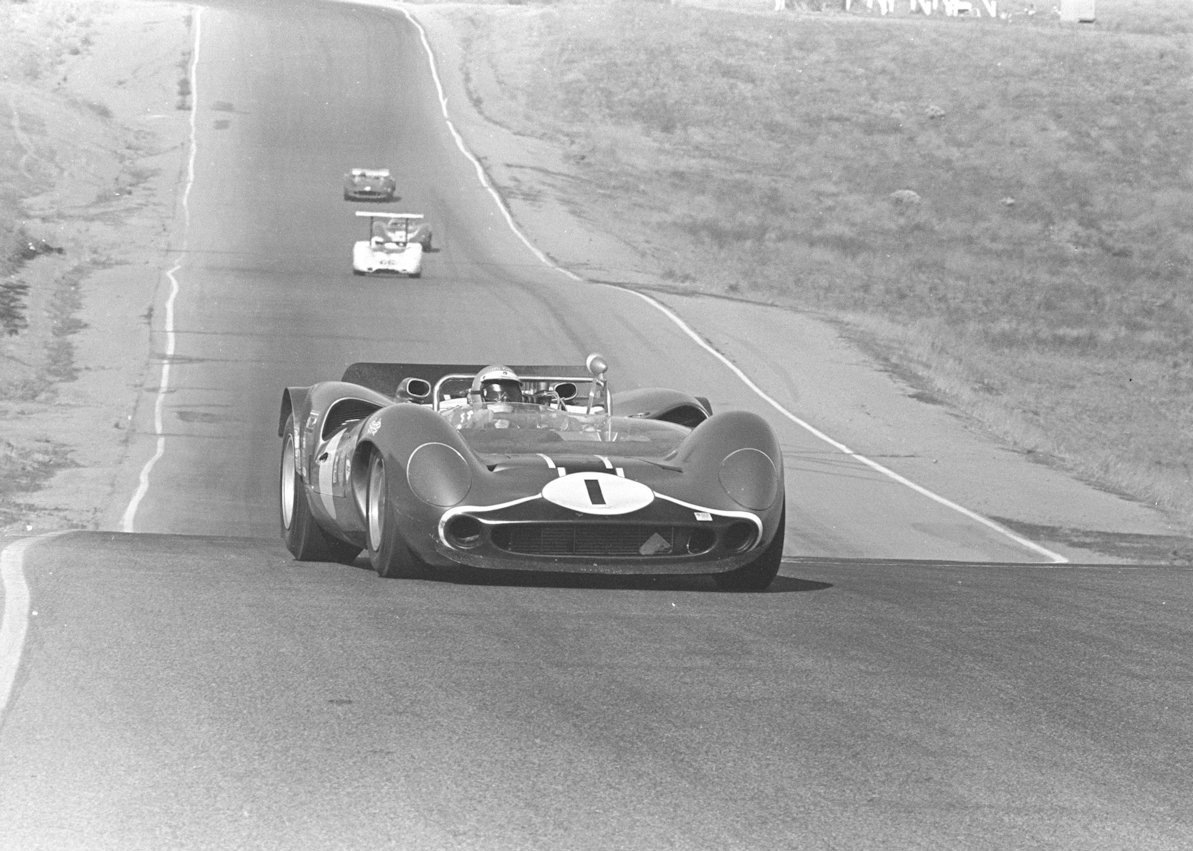
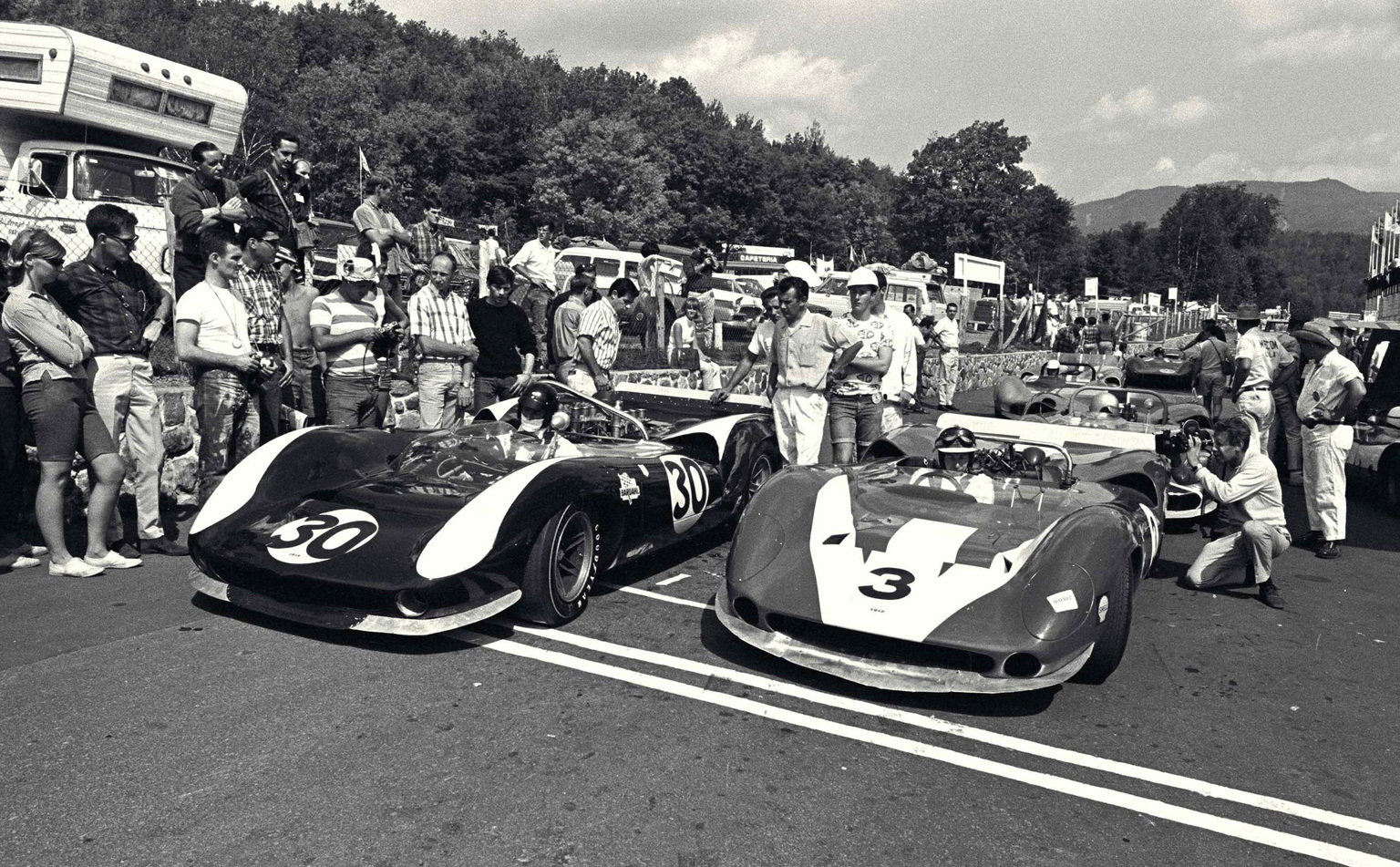
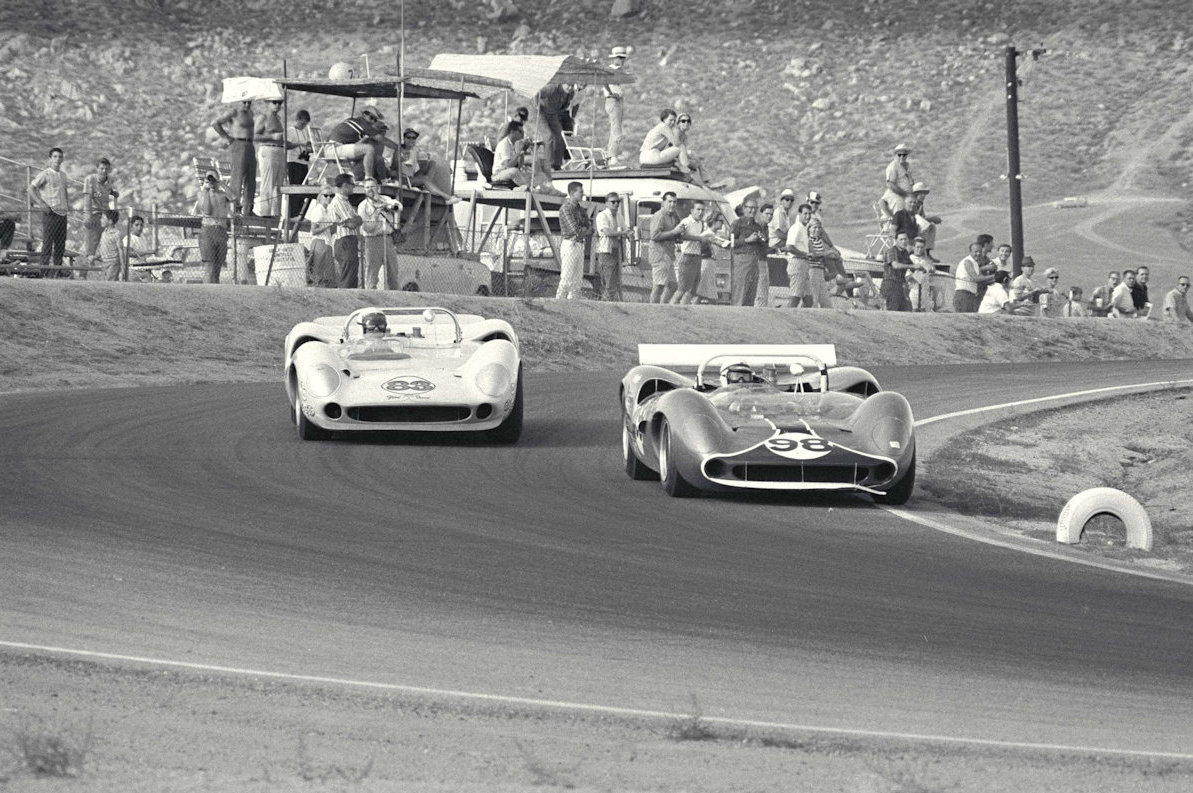
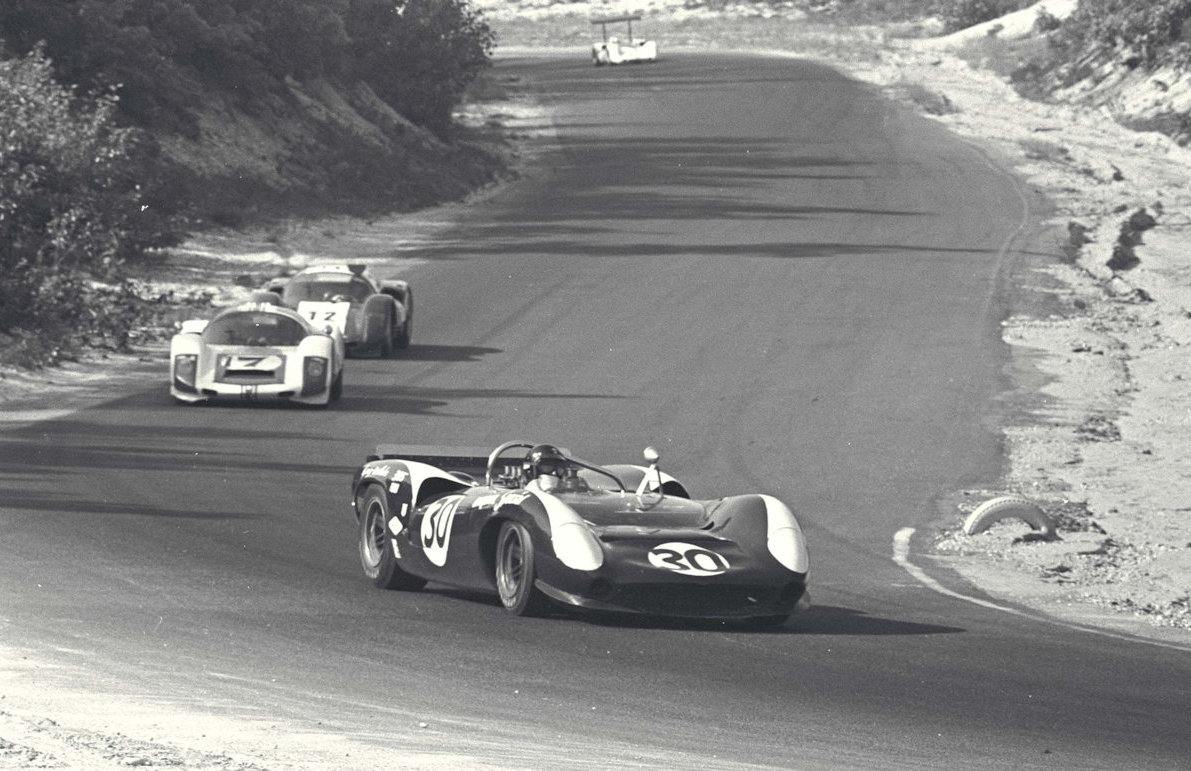
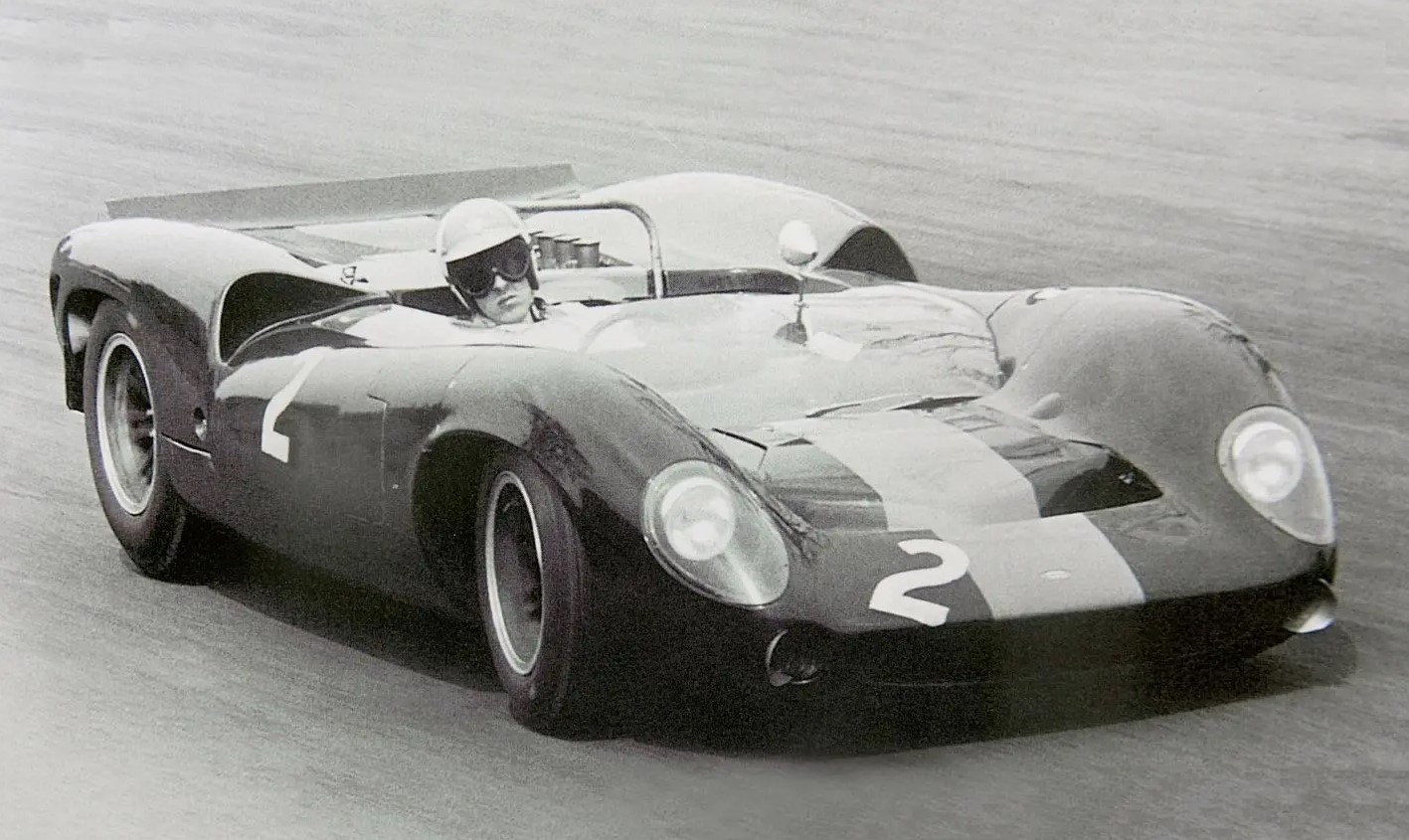
In the mid-1960s, the world of international sports car racing was undergoing a violent, thunderous metamorphosis. The delicate, small-displacement European barchettas were suddenly finding themselves hunted by a new breed of apex predator: the big-banger Group 7 sports racers. At the epicenter of this seismic shift was Eric Broadley, a brilliant, fiercely independent British engineer who had famously walked away from the bureaucratic confines of the Ford GT40 project to resurrect his own company, Lola Cars. Broadley took the lessons learned from Dearborn and channeled them into the original 1965 Lola T70 Mk I, an open-cockpit brute that showed immense promise. But it was in 1966, with the introduction of the significantly refined Lola T70 Mk II Spyder, that Broadley created a masterpiece. Born to exploit the virtually unrestricted rulebook of the newly formed Canadian-American Challenge Cup (Can-Am), the Mk II arrived as a fully realized weapon. It was tasked with out-muscling the brilliant McLaren M1B, outsmarting Jim Hall’s aerodynamically radical Chaparral 2E, and providing well-heeled privateers with a turn-key machine capable of humiliating factory efforts.
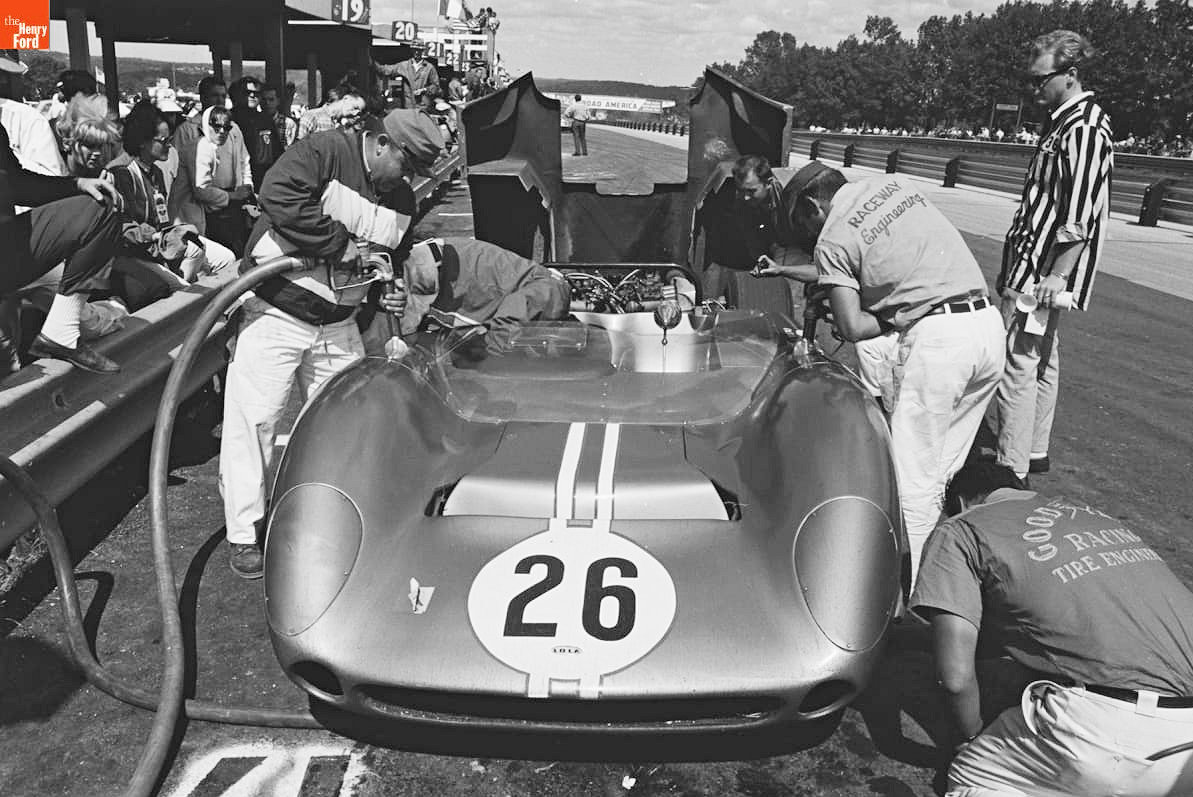
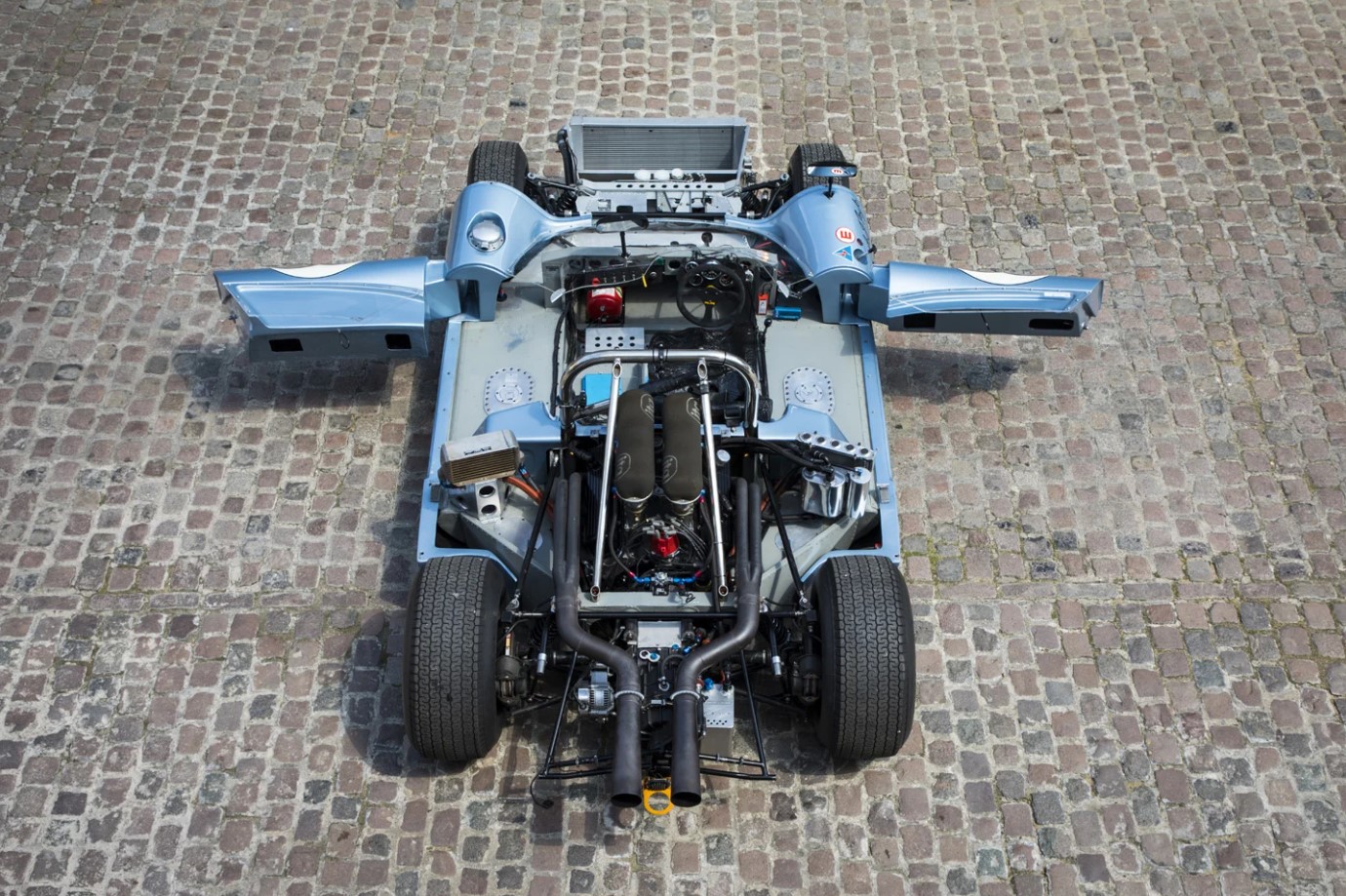
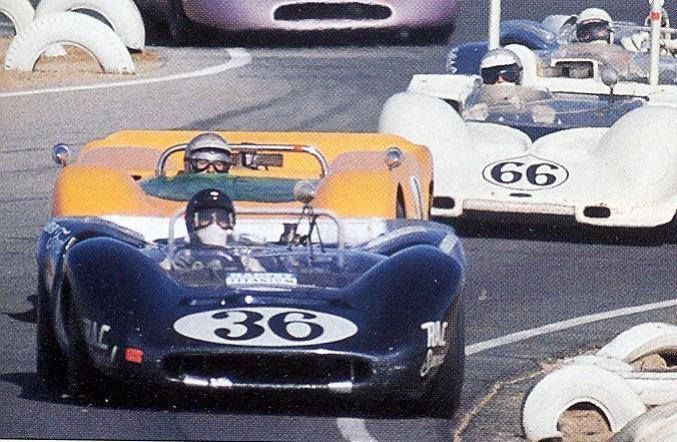
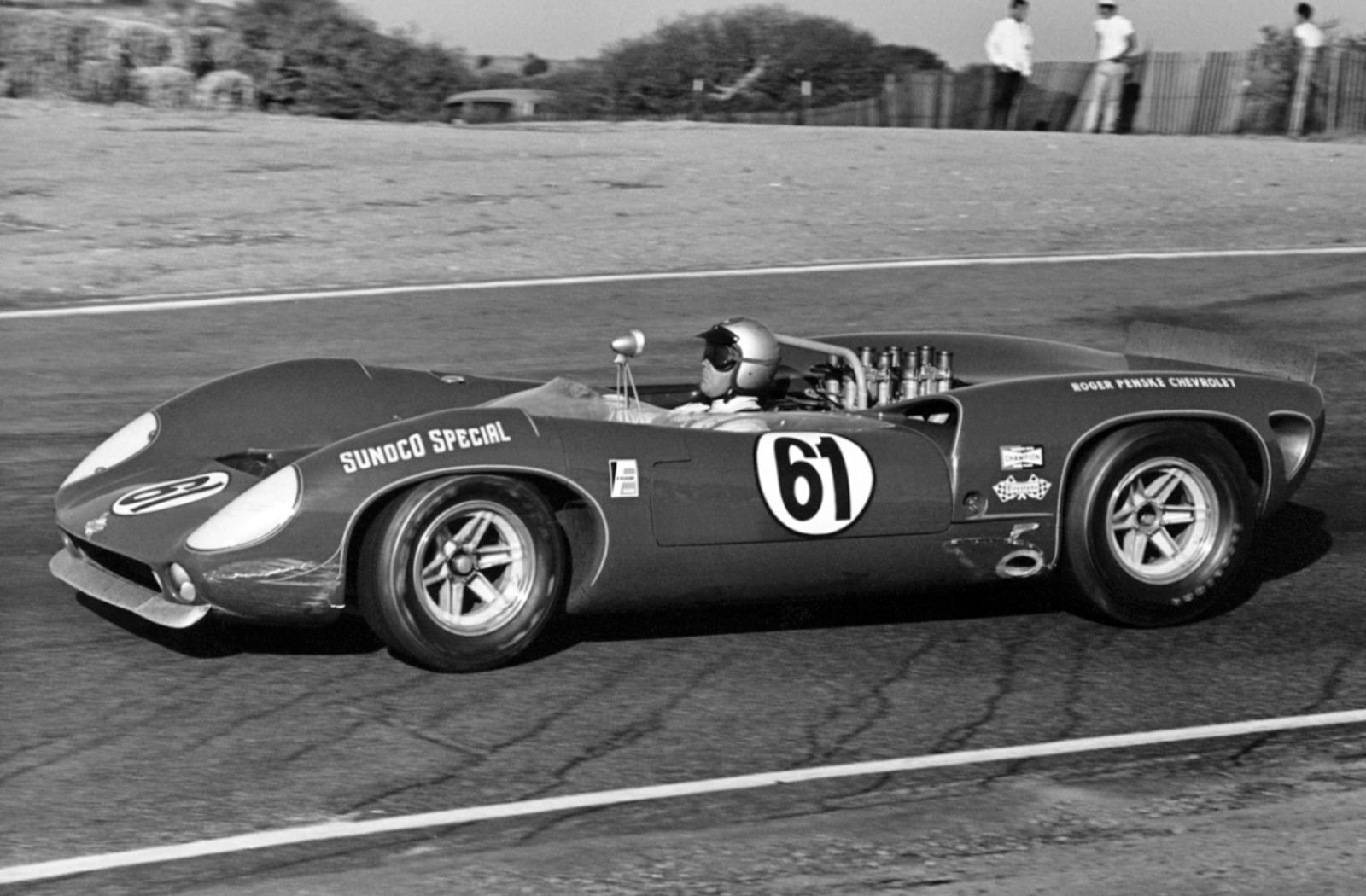
To peel back the fiberglass skin of the T70 Mk II is to witness a masterclass in 1960s racing pragmatism. The most critical evolution from the Mk I lay in its skeletal structure. Broadley discarded the heavy, hybrid steel-and-aluminium chassis of the previous year in favour of a full monocoque tub riveted entirely from lightweight aluminium, saving over 70 pounds while drastically increasing torsional rigidity. Draped over this advanced tub was a sensuously curved, broad-shouldered Spyder bodywork that looked as though it were sculpted entirely by the rushing wind. However, the true soul of the T70 Mk II resided directly behind the driver’s shoulder blades. Broadley designed the engine bay to accommodate massive, mid-mounted American V8s. While a few brave souls experimented with Ford powerplants, and John Surtees briefly tortured an Aston Martin V8, the definitive setup relied on the Chevrolet small-block. Tuned by outfits like Traco, these 5.9-liter (327 cubic inch) pushrod leviathans breathed through a dazzling array of quad Weber carburetors, churning out well over 500 brake horsepower. This apocalyptic power was channeled to the massive rear slicks via a robust Hewland LG500 four-speed transaxle. To rein in the 160-mph speeds, Broadley fitted massive outboard Girling disc brakes, nestled within independent double-wishbone suspension at all four corners. Inside, the cockpit was a stark, aluminium-clad workspace; the driver sat semi-reclined on the right-hand side, shifting with a thick, mechanical right-hand lever, completely exposed to the deafening cacophony of the unsilenced V8 exhaust.
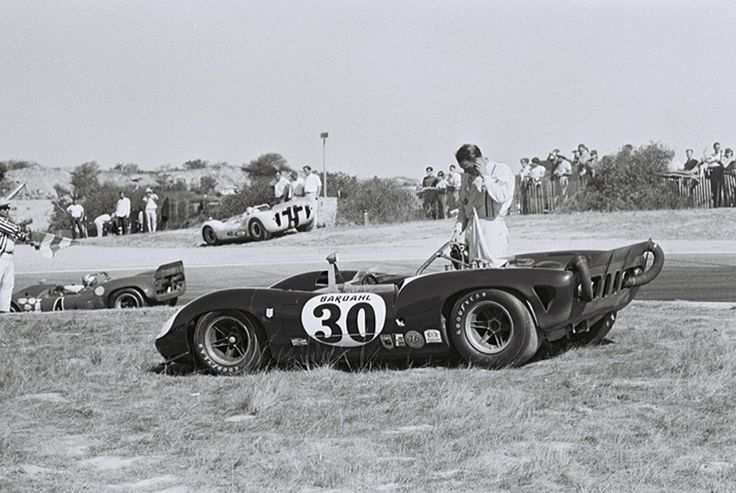
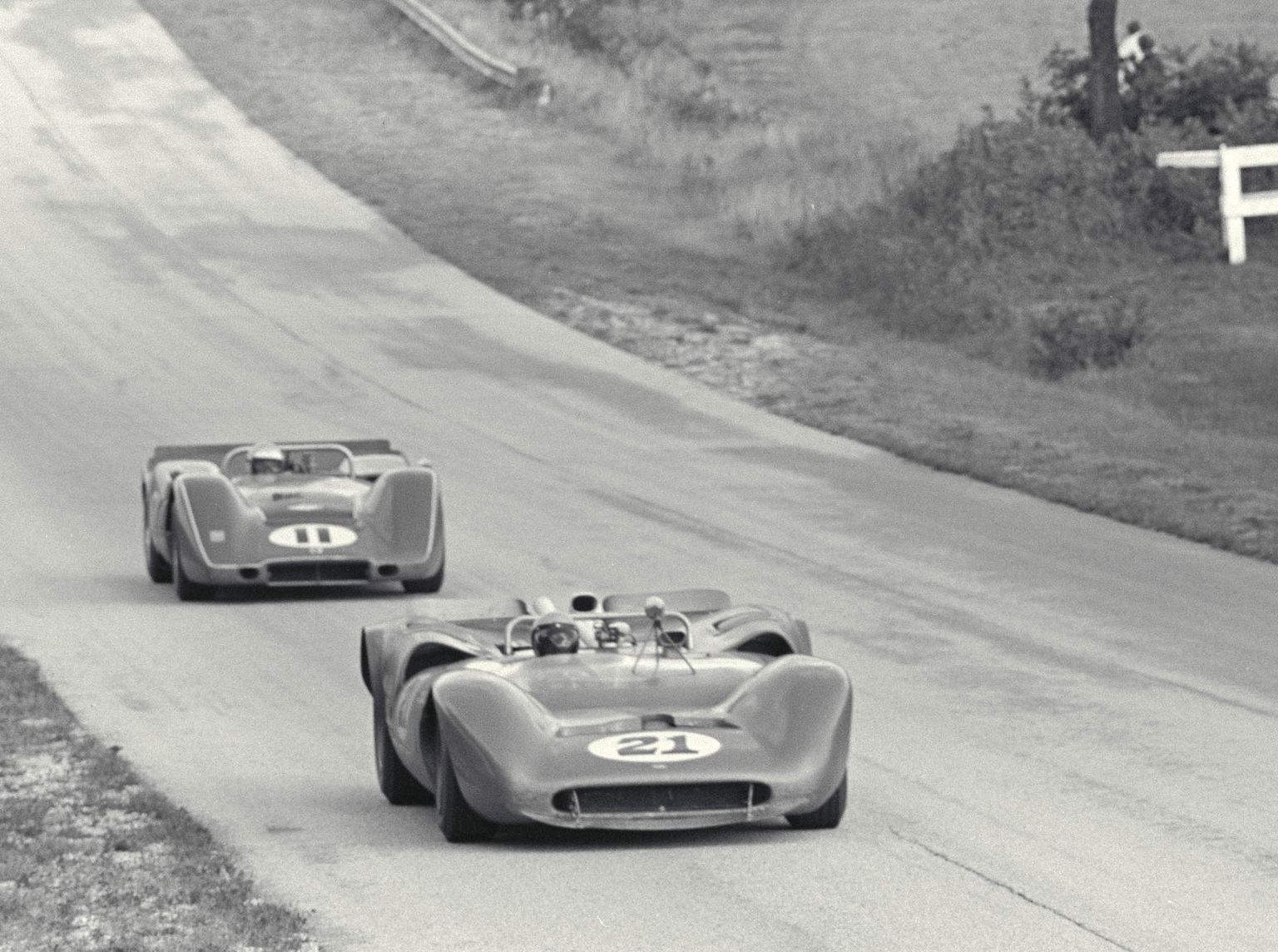
The historical impact of the Lola T70 Mk II is inextricably linked to the inaugural 1966 Can-Am season, a championship that instantly became the richest and most dangerous racing series on the planet. The hero of this era was John Surtees, the only man to win World Championships on two wheels and four. Fresh off an incredibly bitter, mid-season split with Scuderia Ferrari, Surtees was a man possessed, out to prove a point to Maranello. He purchased a Lola T70 Mk II, painted it a brilliant, angry red with white arrows, formed Team Surtees, and embarked on a North American crusade. The combination of Surtees’ surgical driving precision and the Mk II’s brutal reliability proved utterly devastating. Surtees won three of the six Can-Am rounds—St. Jovite, Riverside, and Las Vegas—clinching the inaugural championship in spectacular fashion. Furthermore, the T70 Mk II became the absolute weapon of choice for the grid’s finest drivers. Mark Donohue scored his first major victory for Roger Penske’s team in a Sunoco-blue Mk II at Mosport, while Dan Gurney won at Bridgehampton utilizing Ford power. In 1966, if a team arrived at a Group 7 race without a Lola T70 Mk II, they were essentially racing for second place.
The reign of the Lola T70 Mk II Spyder was as fleeting as it was glorious. By 1967, Bruce McLaren introduced the papaya-orange M6A, initiating the “Bruce and Denny Show” that would dominate Can-Am for years to come. In response, Eric Broadley pivoted the T70 lineage toward endurance racing, resulting in the gorgeous, closed-cockpit Mk III and Mk IIIB coupes that would go on to win the 1969 24 Hours of Daytona. Yet, the 1966 Mk II Spyder remains the absolute high-water mark of early, unrestricted sports car racing. It validated Eric Broadley’s genius, proving that a bespoke British chassis paired with sledgehammer American horsepower was the ultimate recipe for speed. Today, the T70 Mk II occupies a hallowed position in the motorsport pantheon. It is the definitive big-banger sports racer of the 1960s—a visceral, broad-shouldered icon that legitimized Can-Am, empowered the privateer, and allowed John Surtees to exact the ultimate revenge on the global stage.
Brand
Produced from
Vehicle category
Portal
Model line
Model generation
Predecessor
Sucessor
Brand
Produced from
Vehicle category
Portal
Model line
Model generation
Predecessor
Sucessor
About this Model Generation
In the mid-1960s, the world of international sports car racing was undergoing a violent, thunderous metamorphosis. The delicate, small-displacement European barchettas were suddenly finding themselves hunted by a new breed of apex predator: the big-banger Group 7 sports racers. At the epicenter of this seismic shift was Eric Broadley, a brilliant, fiercely independent British engineer who had famously walked away from the bureaucratic confines of the Ford GT40 project to resurrect his own company, Lola Cars. Broadley took the lessons learned from Dearborn and channeled them into the original 1965 Lola T70 Mk I, an open-cockpit brute that showed immense promise. But it was in 1966, with the introduction of the significantly refined Lola T70 Mk II Spyder, that Broadley created a masterpiece. Born to exploit the virtually unrestricted rulebook of the newly formed Canadian-American Challenge Cup (Can-Am), the Mk II arrived as a fully realized weapon. It was tasked with out-muscling the brilliant McLaren M1B, outsmarting Jim Hall’s aerodynamically radical Chaparral 2E, and providing well-heeled privateers with a turn-key machine capable of humiliating factory efforts.
To peel back the fiberglass skin of the T70 Mk II is to witness a masterclass in 1960s racing pragmatism. The most critical evolution from the Mk I lay in its skeletal structure. Broadley discarded the heavy, hybrid steel-and-aluminium chassis of the previous year in favour of a full monocoque tub riveted entirely from lightweight aluminium, saving over 70 pounds while drastically increasing torsional rigidity. Draped over this advanced tub was a sensuously curved, broad-shouldered Spyder bodywork that looked as though it were sculpted entirely by the rushing wind. However, the true soul of the T70 Mk II resided directly behind the driver’s shoulder blades. Broadley designed the engine bay to accommodate massive, mid-mounted American V8s. While a few brave souls experimented with Ford powerplants, and John Surtees briefly tortured an Aston Martin V8, the definitive setup relied on the Chevrolet small-block. Tuned by outfits like Traco, these 5.9-liter (327 cubic inch) pushrod leviathans breathed through a dazzling array of quad Weber carburetors, churning out well over 500 brake horsepower. This apocalyptic power was channeled to the massive rear slicks via a robust Hewland LG500 four-speed transaxle. To rein in the 160-mph speeds, Broadley fitted massive outboard Girling disc brakes, nestled within independent double-wishbone suspension at all four corners. Inside, the cockpit was a stark, aluminium-clad workspace; the driver sat semi-reclined on the right-hand side, shifting with a thick, mechanical right-hand lever, completely exposed to the deafening cacophony of the unsilenced V8 exhaust.
The historical impact of the Lola T70 Mk II is inextricably linked to the inaugural 1966 Can-Am season, a championship that instantly became the richest and most dangerous racing series on the planet. The hero of this era was John Surtees, the only man to win World Championships on two wheels and four. Fresh off an incredibly bitter, mid-season split with Scuderia Ferrari, Surtees was a man possessed, out to prove a point to Maranello. He purchased a Lola T70 Mk II, painted it a brilliant, angry red with white arrows, formed Team Surtees, and embarked on a North American crusade. The combination of Surtees’ surgical driving precision and the Mk II’s brutal reliability proved utterly devastating. Surtees won three of the six Can-Am rounds—St. Jovite, Riverside, and Las Vegas—clinching the inaugural championship in spectacular fashion. Furthermore, the T70 Mk II became the absolute weapon of choice for the grid’s finest drivers. Mark Donohue scored his first major victory for Roger Penske’s team in a Sunoco-blue Mk II at Mosport, while Dan Gurney won at Bridgehampton utilizing Ford power. In 1966, if a team arrived at a Group 7 race without a Lola T70 Mk II, they were essentially racing for second place.
The reign of the Lola T70 Mk II Spyder was as fleeting as it was glorious. By 1967, Bruce McLaren introduced the papaya-orange M6A, initiating the “Bruce and Denny Show” that would dominate Can-Am for years to come. In response, Eric Broadley pivoted the T70 lineage toward endurance racing, resulting in the gorgeous, closed-cockpit Mk III and Mk IIIB coupes that would go on to win the 1969 24 Hours of Daytona. Yet, the 1966 Mk II Spyder remains the absolute high-water mark of early, unrestricted sports car racing. It validated Eric Broadley’s genius, proving that a bespoke British chassis paired with sledgehammer American horsepower was the ultimate recipe for speed. Today, the T70 Mk II occupies a hallowed position in the motorsport pantheon. It is the definitive big-banger sports racer of the 1960s—a visceral, broad-shouldered icon that legitimized Can-Am, empowered the privateer, and allowed John Surtees to exact the ultimate revenge on the global stage.
Submodels
Discover all the variants of this model Generation
Submodels
Discover all the variants of this model Generation
Vehicles
Legendary Vehicles
Vehicles