

Alfa Romeo Giulia TZ1 Corsa
Brand
Produced from
Portal
Vehicle category
Model line
Predecessor
Sucessor
About this submodel
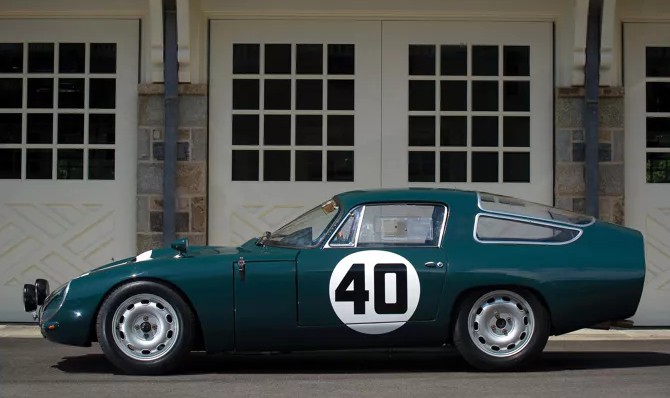
In the early 1960s, the landscape of international Gran Turismo racing was defined by agile handling and the obsessive pursuit of lightweight engineering. The established order, often relying on production-based machinery like the Alfa Romeo Giulietta SZ, was facing a profound challenge. Rivals such as the mid-engined Porsche 904 Carrera GTS and the featherweight Lotus Elan were redefining performance benchmarks in the crucial 1.6-liter class. In Milan, Alfa Romeo realized that modifying a production sedan tub was no longer sufficient. To maintain dominance, they needed a purpose-built weapon. The result, birthed from the minds at Alfa Romeo, Carrozzeria Zagato, and the newly formed Autodelta racing division, was the 1963 Giulia TZ. While technically a single generation—retrospectively known as the TZ1 to distinguish it from the fiberglass-bodied TZ2—it existed in two highly focused forms: the Stradale for the road, and the bare-knuckle Corsa for the track. While the Stradale was a sophisticated tourer, the Alfa Romeo Giulia TZ1 Corsa was the uncompromising racing monster that defined the giant-killer archetype of its era.
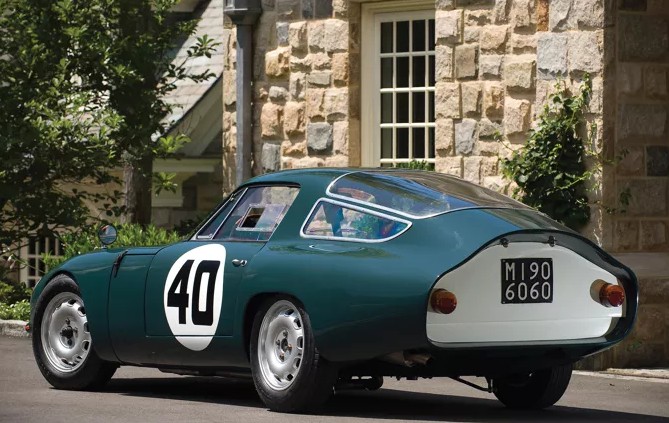
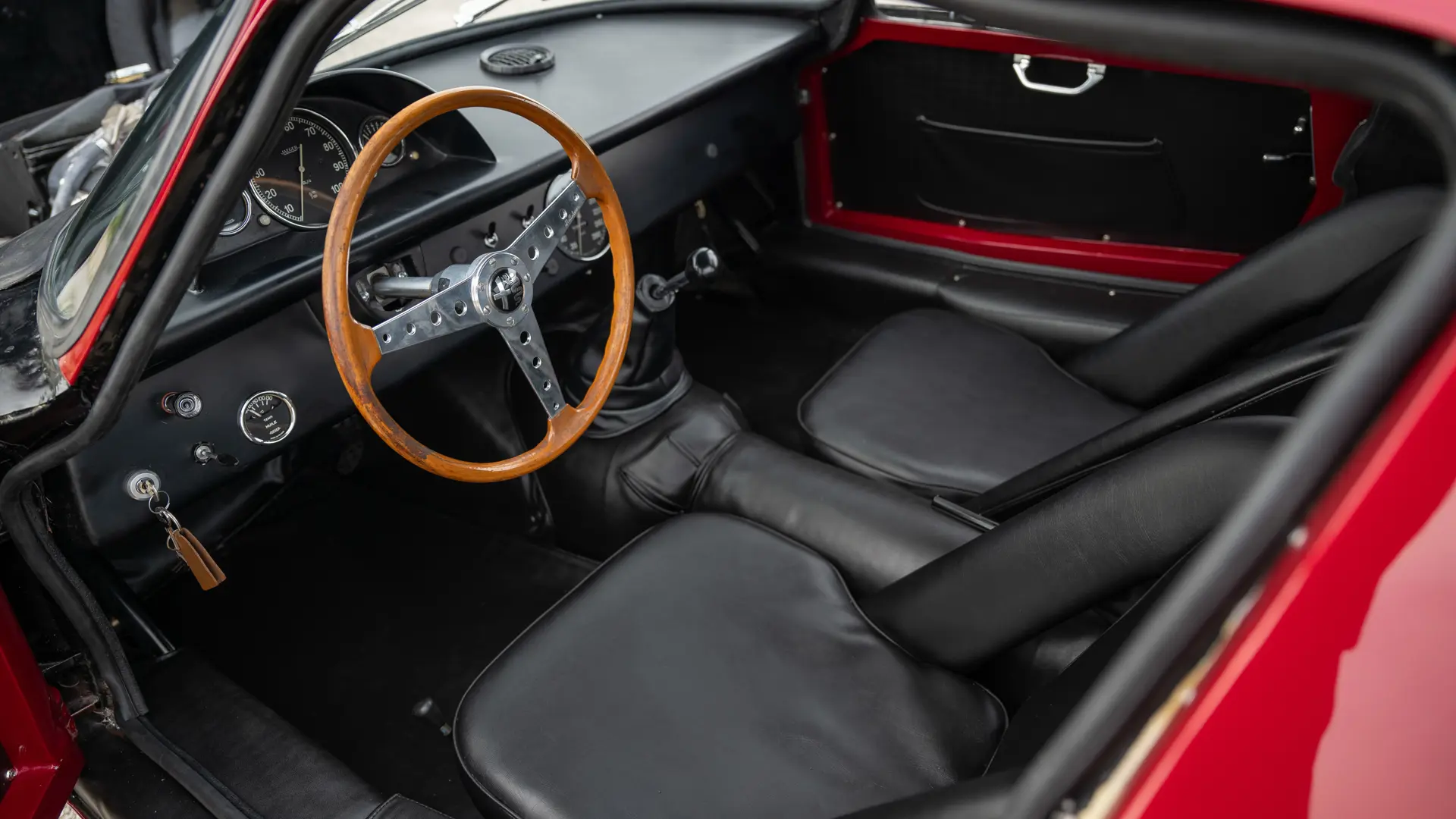
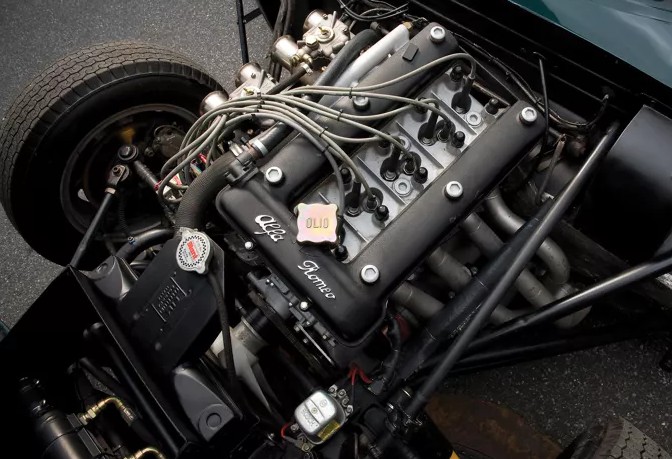
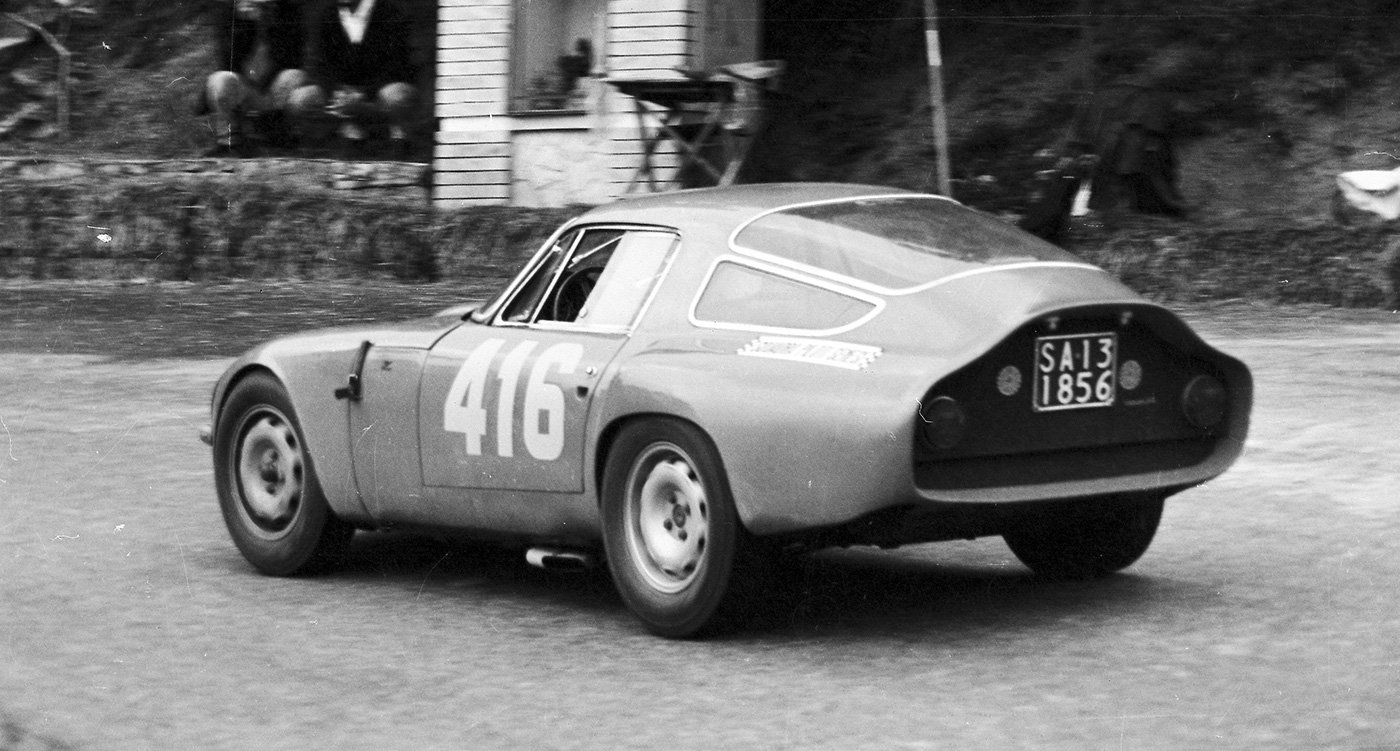
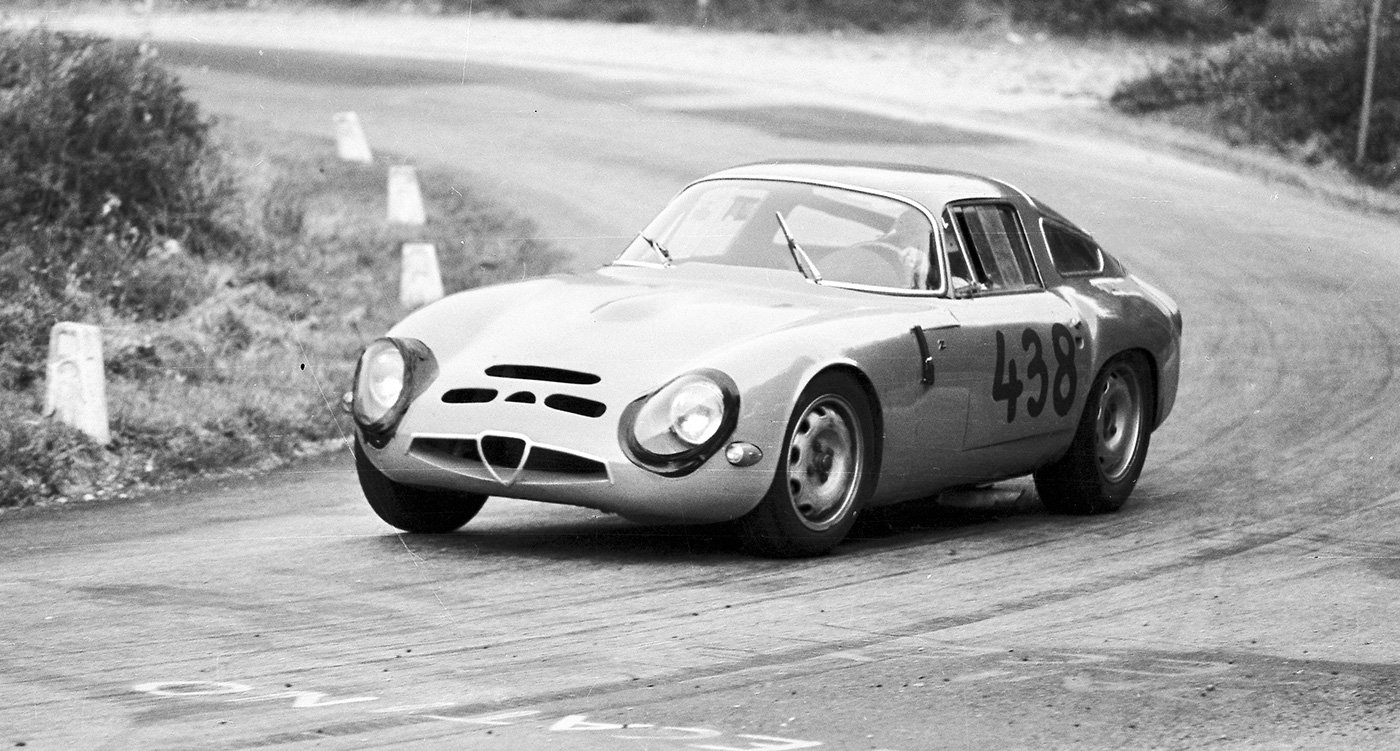
To analyze the anatomy of the TZ1 Corsa is to understand the absolute dedication to saving weight. The “TZ” moniker stands for Tubolare Zagato, defining its unique structural and aesthetic identity. The mechanical nucleus of the Corsa was a complex, multi-tubular steel spaceframe designed by Autodelta. This skeleton provided immense torsional rigidity while weighing a mere 62 kilograms (roughly 137 pounds). To cloak this fragile lattice, Ercole Spada, working for Zagato, penned one of the most sublime and aerodynamically efficient silhouettes of the 20th century. Hand-beaten from ultra-thin aluminum panels, the Corsa bodywork was a masterclass in the “long hood, short deck” philosophy. Spada famously applied Dr. Wunibald Kamm’s aerodynamic theories, utilizing the abrupt Coda Tronca—a sheer, chopped-off tail section—to drastically reduce drag and enhance stability at speeds approaching 150 mph. Beneath that elongated bonnet, the legendary 1,570cc Bialbero (twin-cam) inline-four engine was tilted 15 degrees to minimize the frontal profile. In Corsa specification, Autodelta discarded road civility, fitting aggressive high-compression pistons, special camshafts, and massive twin-choke Weber 45 DCOE carburetors, pushing output well past 160 brake horsepower—a staggering 100 horsepower per liter. To exploit this performance, Carlo Chiti utilized fully independent rear suspension and, critically, fitted inboard rear disc brakes directly to the differential. This minimized unsprung weight, gifting the Corsa with telepathic handling and an agility that allowed it to out-corner cars boasting twice the displacement. Inside, the cabin was a lesson in motorsport functionalism: deep racing buckets, a large wood-rimmed steering wheel, exposed tubular chassis sections, and a Spartan dashboard dominated by the essential Veglia Borletti instruments.
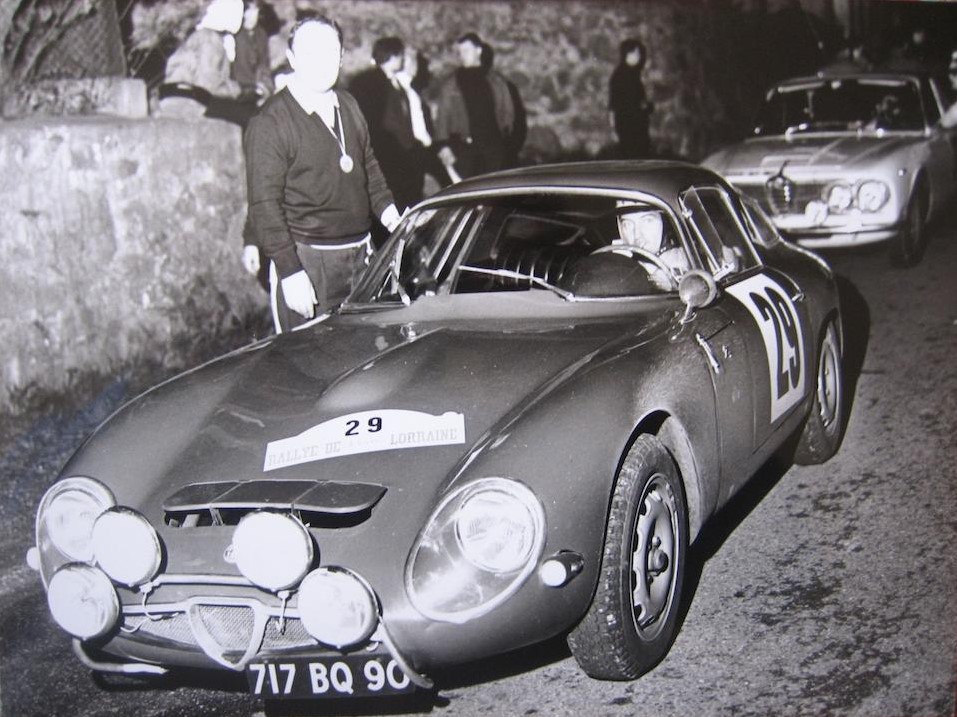
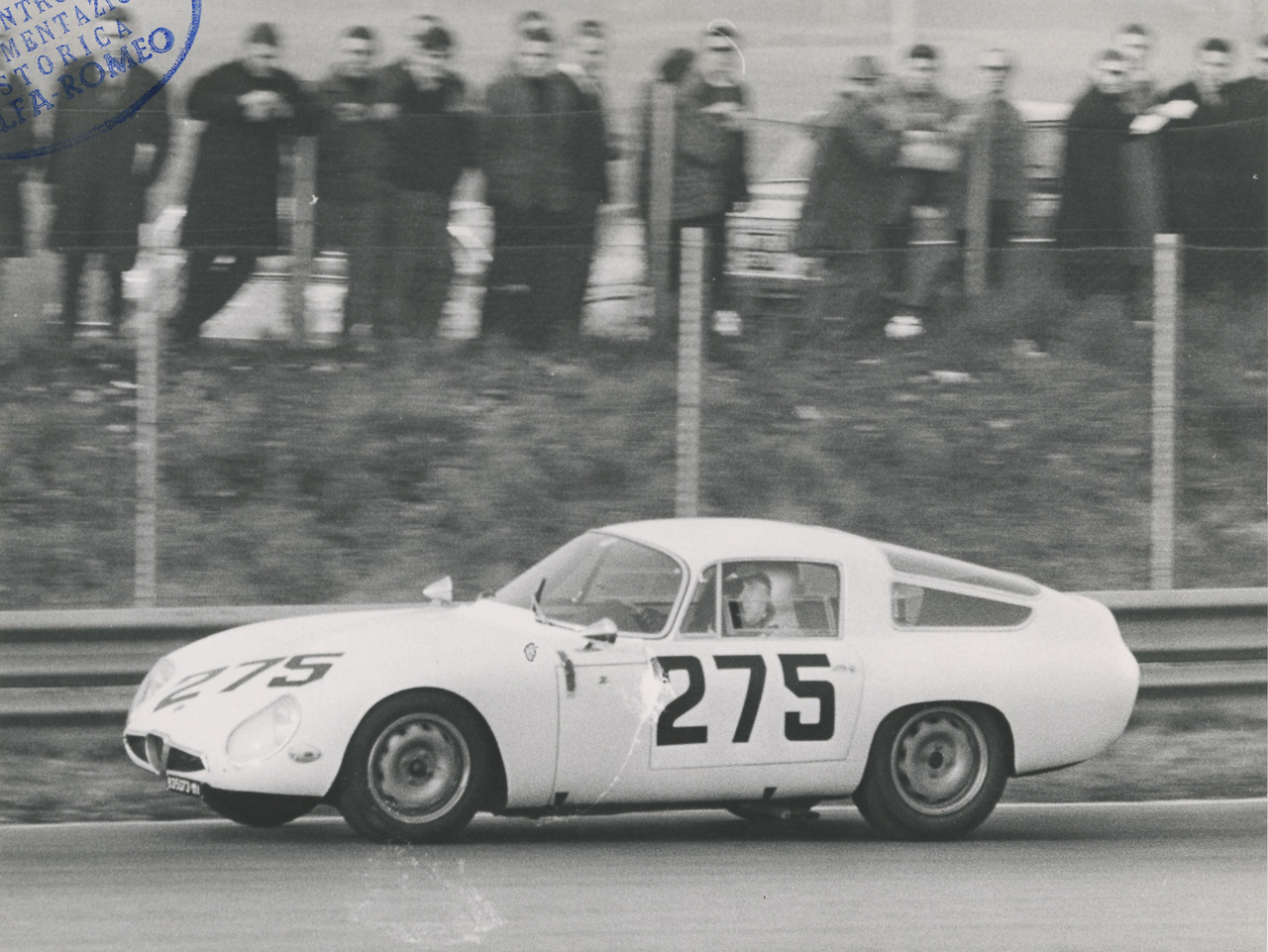
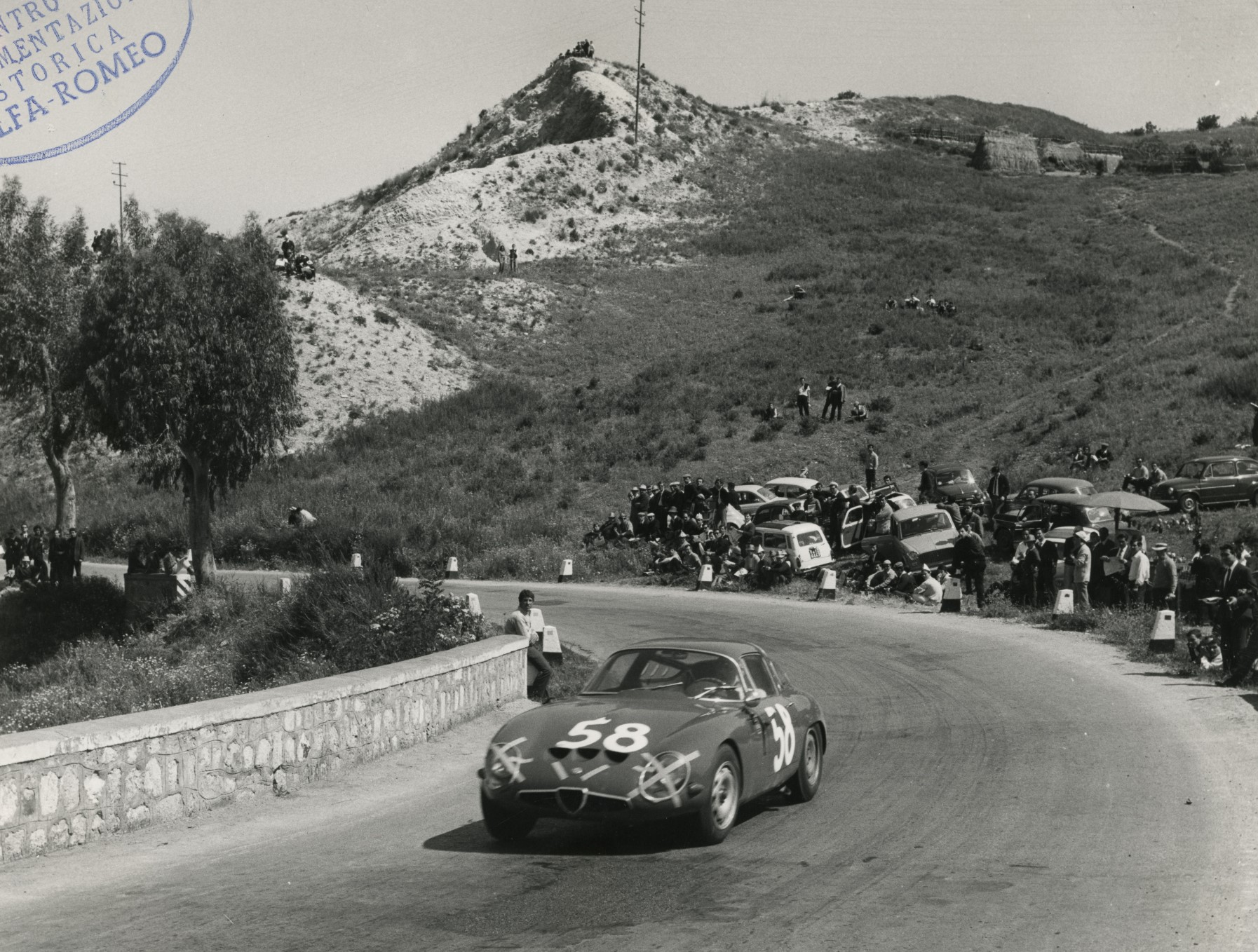
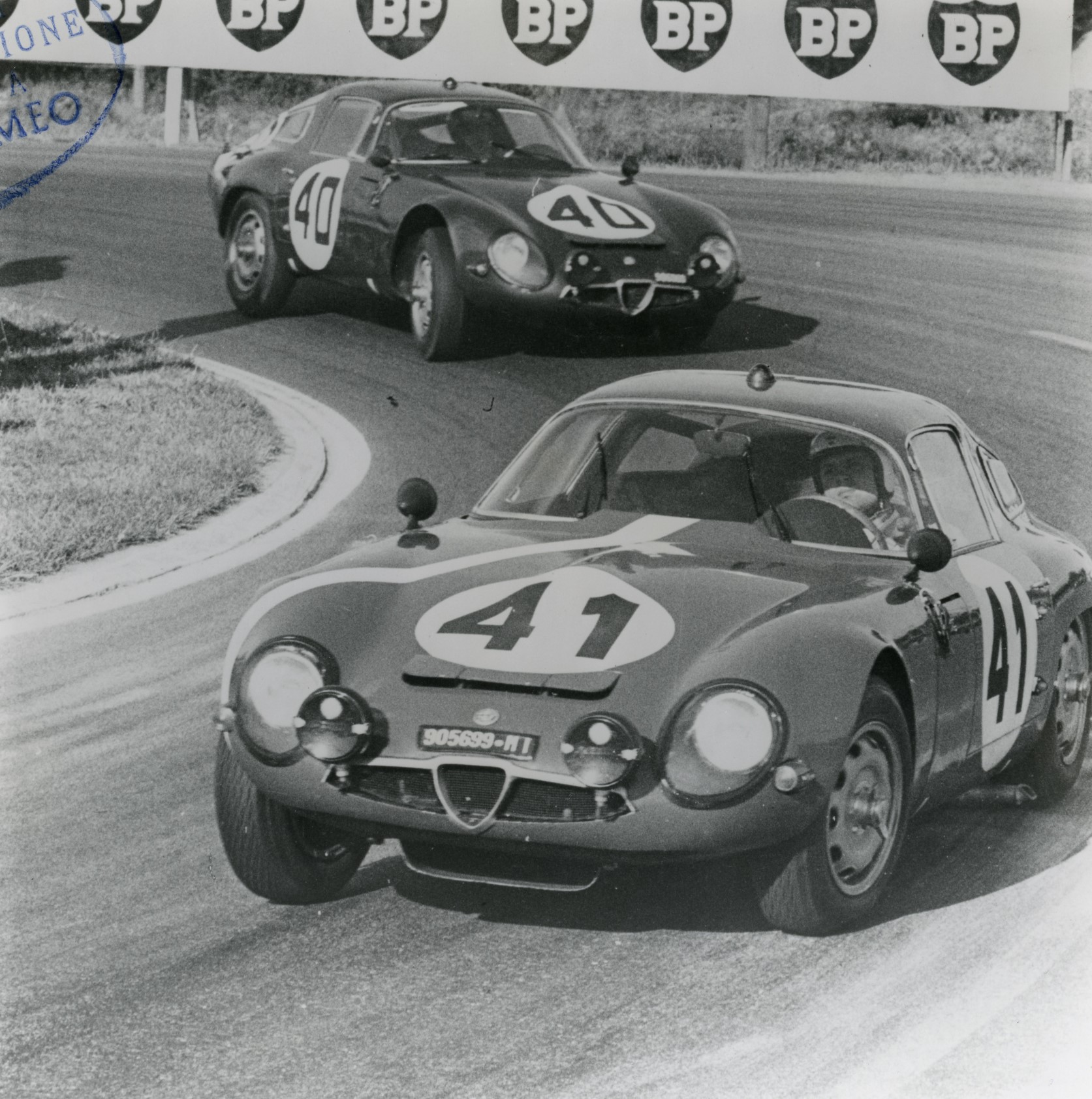
The competition history of the TZ1 Corsa is a tapestry of relentless, class-crushing domination. It made its official, ominous debut at the 1963 FISA Cup at Monza, utterly destroying the opposition by sweeping the top four places in its category. For the next three years, the Autodelta-prepared Corsas embarked on a class-winning rampage across the globe. Driven by legends like Lorenzo Bandini, Roberto Bussinello, and Jean Rolland, the Corsa proved indestructible. In 1964 alone, it secured class victories at the grueling 12 Hours of Sebring, the legendary Targa Florio, the Nürburgring 1000km, and the 24 Hours of Le Mans. It was not merely a 1600cc class contender; the Corsa was a genuine giant-killer, utilizing its incredible braking and nimble chassis to chase down much larger Ferraris and AC Cobras in the overall standings, thriving on technical circuits and treacherous, undulating road courses like the Piccolo Circuito delle Madonie. Total production of the TZ1 range was small, estimated at approximately 112 units, ensuring that almost every single example produced saw significant and successful competition use, cementing its legacy not just as a beautiful design, but as a motorsport legend.
The legacy of the Alfa Romeo Giulia TZ1 Corsa is absolute. It represents the ultimate crescendo of Alfa Romeo’s front-engined, small-displacement sports car philosophy before the inevitable transition to the mid-engined configuration. It was the crucial homologation vehicle that validated the founding of Autodelta, providing the springboard for Alfa Romeo’s total dominance in Touring and Sportscar racing throughout the following decade. It paved the way for the lower, wider, and fiberglass-bodied TZ2, and eventually, the World Championship-winning Tipo 33 prototypes. In the automotive pantheon, the TZ1 Corsa sits sovereigns as a perfect storm of tubular chassis engineering, Zagato’s aerodynamic artistry, and the screaming soul of the Bialbero engine. It remains one of the most coveted and desirable automobiles on the planet, an immortal testament to an era when a lightweight, naturally aspirated Italian coupe could march into the forests of Sicily or the straights of Le Mans and bludgeon the established order into submission through sheer dynamic superiority.
Brand
Produced from
Portal
Vehicle category
Model line
Predecessor
Sucessor
Brand
Produced from
Portal
Vehicle category
Model line
Model generation
Predecessor
Sucessor
About this submodel
In the early 1960s, the landscape of international Gran Turismo racing was defined by agile handling and the obsessive pursuit of lightweight engineering. The established order, often relying on production-based machinery like the Alfa Romeo Giulietta SZ, was facing a profound challenge. Rivals such as the mid-engined Porsche 904 Carrera GTS and the featherweight Lotus Elan were redefining performance benchmarks in the crucial 1.6-liter class. In Milan, Alfa Romeo realized that modifying a production sedan tub was no longer sufficient. To maintain dominance, they needed a purpose-built weapon. The result, birthed from the minds at Alfa Romeo, Carrozzeria Zagato, and the newly formed Autodelta racing division, was the 1963 Giulia TZ. While technically a single generation—retrospectively known as the TZ1 to distinguish it from the fiberglass-bodied TZ2—it existed in two highly focused forms: the Stradale for the road, and the bare-knuckle Corsa for the track. While the Stradale was a sophisticated tourer, the Alfa Romeo Giulia TZ1 Corsa was the uncompromising racing monster that defined the giant-killer archetype of its era.
To analyze the anatomy of the TZ1 Corsa is to understand the absolute dedication to saving weight. The “TZ” moniker stands for Tubolare Zagato, defining its unique structural and aesthetic identity. The mechanical nucleus of the Corsa was a complex, multi-tubular steel spaceframe designed by Autodelta. This skeleton provided immense torsional rigidity while weighing a mere 62 kilograms (roughly 137 pounds). To cloak this fragile lattice, Ercole Spada, working for Zagato, penned one of the most sublime and aerodynamically efficient silhouettes of the 20th century. Hand-beaten from ultra-thin aluminum panels, the Corsa bodywork was a masterclass in the “long hood, short deck” philosophy. Spada famously applied Dr. Wunibald Kamm’s aerodynamic theories, utilizing the abrupt Coda Tronca—a sheer, chopped-off tail section—to drastically reduce drag and enhance stability at speeds approaching 150 mph. Beneath that elongated bonnet, the legendary 1,570cc Bialbero (twin-cam) inline-four engine was tilted 15 degrees to minimize the frontal profile. In Corsa specification, Autodelta discarded road civility, fitting aggressive high-compression pistons, special camshafts, and massive twin-choke Weber 45 DCOE carburetors, pushing output well past 160 brake horsepower—a staggering 100 horsepower per liter. To exploit this performance, Carlo Chiti utilized fully independent rear suspension and, critically, fitted inboard rear disc brakes directly to the differential. This minimized unsprung weight, gifting the Corsa with telepathic handling and an agility that allowed it to out-corner cars boasting twice the displacement. Inside, the cabin was a lesson in motorsport functionalism: deep racing buckets, a large wood-rimmed steering wheel, exposed tubular chassis sections, and a Spartan dashboard dominated by the essential Veglia Borletti instruments.
The competition history of the TZ1 Corsa is a tapestry of relentless, class-crushing domination. It made its official, ominous debut at the 1963 FISA Cup at Monza, utterly destroying the opposition by sweeping the top four places in its category. For the next three years, the Autodelta-prepared Corsas embarked on a class-winning rampage across the globe. Driven by legends like Lorenzo Bandini, Roberto Bussinello, and Jean Rolland, the Corsa proved indestructible. In 1964 alone, it secured class victories at the grueling 12 Hours of Sebring, the legendary Targa Florio, the Nürburgring 1000km, and the 24 Hours of Le Mans. It was not merely a 1600cc class contender; the Corsa was a genuine giant-killer, utilizing its incredible braking and nimble chassis to chase down much larger Ferraris and AC Cobras in the overall standings, thriving on technical circuits and treacherous, undulating road courses like the Piccolo Circuito delle Madonie. Total production of the TZ1 range was small, estimated at approximately 112 units, ensuring that almost every single example produced saw significant and successful competition use, cementing its legacy not just as a beautiful design, but as a motorsport legend.
The legacy of the Alfa Romeo Giulia TZ1 Corsa is absolute. It represents the ultimate crescendo of Alfa Romeo’s front-engined, small-displacement sports car philosophy before the inevitable transition to the mid-engined configuration. It was the crucial homologation vehicle that validated the founding of Autodelta, providing the springboard for Alfa Romeo’s total dominance in Touring and Sportscar racing throughout the following decade. It paved the way for the lower, wider, and fiberglass-bodied TZ2, and eventually, the World Championship-winning Tipo 33 prototypes. In the automotive pantheon, the TZ1 Corsa sits sovereigns as a perfect storm of tubular chassis engineering, Zagato’s aerodynamic artistry, and the screaming soul of the Bialbero engine. It remains one of the most coveted and desirable automobiles on the planet, an immortal testament to an era when a lightweight, naturally aspirated Italian coupe could march into the forests of Sicily or the straights of Le Mans and bludgeon the established order into submission through sheer dynamic superiority.
Tech Specs
Discover the technical specifications
Tech Specs
Discover the technical specifications
Engine
01
03
Internal combustion engine
Configuration
Alfa Romeo Twin Cam (Bialbero), Inline-4
Location
Front, longitudinally mounted
Construction
Aluminium alloy block and head
Displacement (cc)
1,570 cc
Displacement (cu in)
95.8 cu in
Compression
11.4:1
Bore x Stroke
78.0 mm x 82.0 mm
Valvetrain
2 valves per cylinder, DOHC (Chain driven)
Fuel feed
2 x Weber 45 DCOE carburetors
Lubrication
Wet sump
Aspiration
Naturally aspirated
Output
Power (hp)
160 hp
Power (kW)
119 kW
Max power at
7,000 RPM
Torque (Nm)
157 Nm
Torque (ft lbs)
116 ft lbs
Max torque at
5,000 RPM
Drivetrain
02
03
Chassis
Type
Tubular spaceframe
Material
Steel (Nickel-Chrome-Molybdenum tubes)
Body
Material
Aluminium
Transmission
Gearbox
Alfa Romeo, 5-speed manual
Drive
Rear Wheel Drive (Limited Slip Differential)
Suspension
Front
Independent, double wishbones, coil springs, telescopic dampers, anti-roll bar
Rear
Independent, lower wishbones, trailing arms, coil springs, telescopic dampers (anti-roll bar on Corsa models)
Steering
Type
Worm and roller
Brakes
Front
Discs Ø267 mm, 3-piston calipers
Rear
discs Ø254 mm
Wheels
Front
5" x 15" or 5.5" x 15" (Campagnolo Magnesium alloy)
Rear
5" x 15" or 5.5" x 15" (Campagnolo Magnesium alloy)
Tires
Front
5.00 M 15
Rear
5.00 M 15
Dimensions and performance
03
03
Dimensions
Lenght (mm)
3,950 mm
Lenght (in)
155.5 in
Width (mm)
1,509 mm
Width (in)
59.4 in
Height (mm)
1,199 mm
Height (in)
47.2 in
Wheelbase (mm)
2,350 mm
Wheelbase (in)
92.5 in
Weight (kg)
~660 kg
Weight (lbs)
1,455 lbs
Performance
Power to weight
~0.24 hp/kg
Top speed (km/h)
~240 km/h
Top speed (mph)
~149 mph
0-100 km/h (0-60 mph)
~6.5 s
Submodels
Other variants of this model
Submodels