
Aston Martin DB2/4 Competition Spider (Bertone)
Brand
Produced from
Portal
Vehicle category
Model line
Model generation
Predecessor
Successor
Submodel Overview
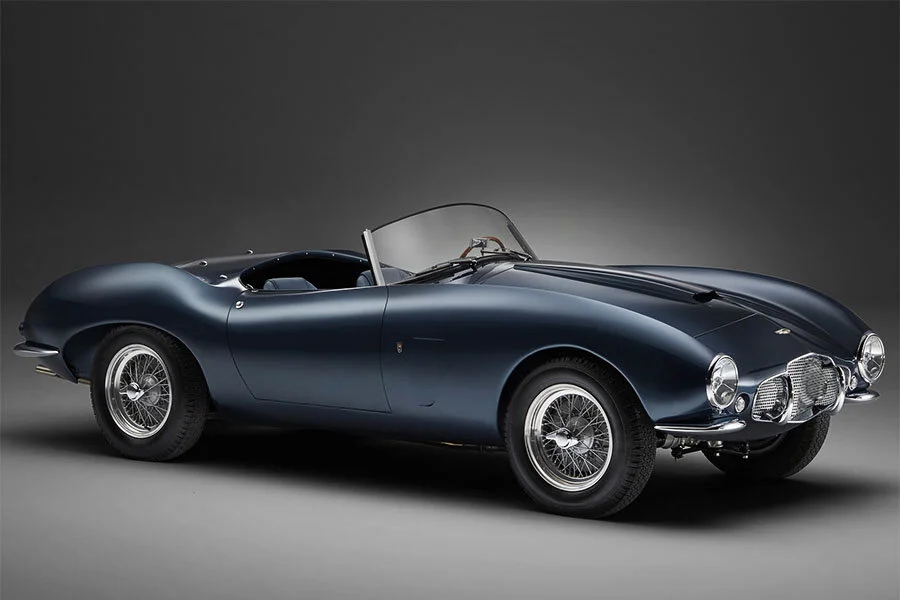
In the intoxicating, high-octane atmosphere of 1950s sports car racing, the lines between manufacturer, privateer, and visionary importer were often gloriously blurred. It was an era when an eccentric, wildly ambitious individual could pick up the telephone, order a batch of bare rolling chassis from a storied British marque, and ship them across the continent to be clothed by the greatest automotive artisans in Italy. Enter Stanley H. “Wacky” Arnolt, a flamboyant Chicago-based industrialist who had already made waves by importing MGs and Bristols wrapped in bespoke Italian coachwork. Arnolt cast his gaze upon the Aston Martin DB2/4—a magnificent, W.O. Bentley-powered grand tourer that was undeniably brilliant, yet undeniably heavy. He recognized that beneath David Brown’s aristocratic, gentlemanly coachwork lay a robust, highly capable racing chassis begging to be unburdened. Arnolt purchased a handful of bare DB2/4 chassis and dispatched them directly to Carrozzeria Bertone in Turin. His mandate was simple: create an uncompromising, featherweight racing spider capable of terrorizing the American SCCA circuits and taking the fight directly to the Jaguar C-Types, Maserati A6GCSs, and four-cylinder Ferrari Mondials. The resulting 1954 Aston Martin DB2/4 Competition Spider by Bertone is a transatlantic chimera of the highest order, a vehicle that violently stripped away Feltham’s drawing-room luxury to reveal a visceral, bare-knuckle track weapon.
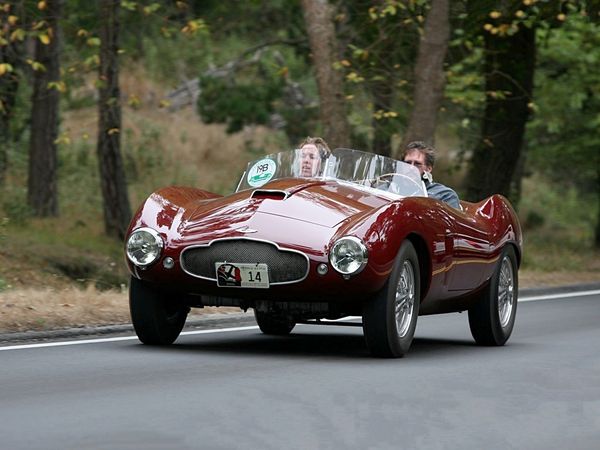
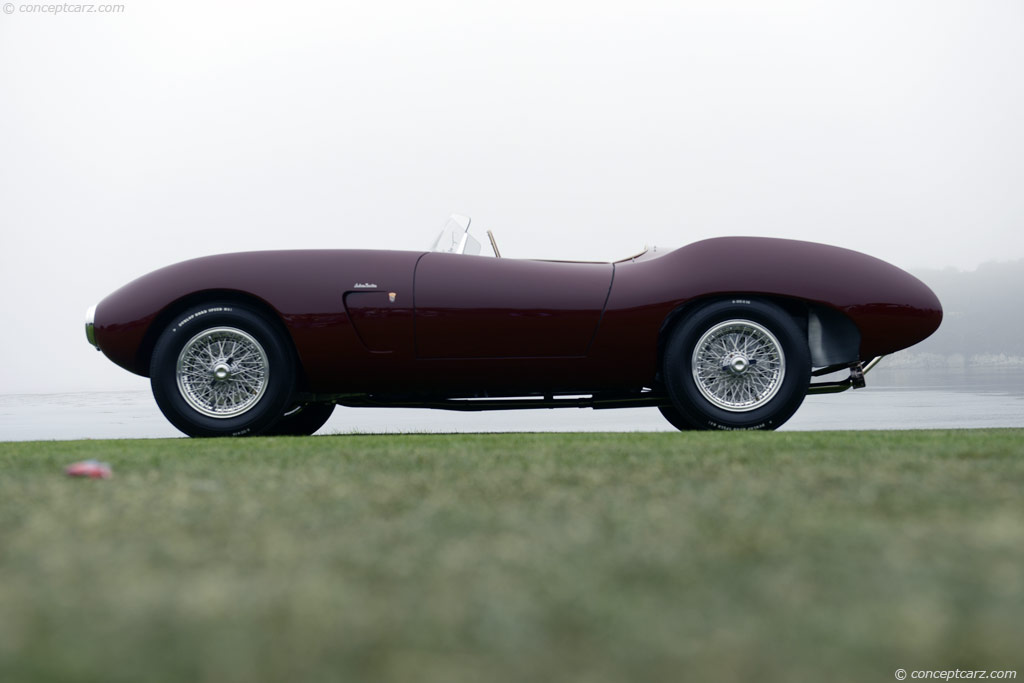
To dissect the anatomy of the Bertone Competition Spider is to witness a magnificent collision of traditional British engineering and avant-garde Italian aerodynamics. The mechanical foundation was pure Aston Martin. It utilized Claude Hill’s immensely rigid rectangular-tube spaceframe, suspended by trailing arms at the front and a live rear axle located by a Panhard rod. The beating heart of the machine was the sublime 2.9-liter (2922cc) VB6/J straight-six engine. Designed by W.O. Bentley and further developed by Willie Watson, this all-alloy, twin-cam masterpiece breathed through a pair of large SU carburettors to deliver a highly tractable 140 brake horsepower. But the true sorcery was performed in Turin. Under the guidance of Nuccio Bertone, the visionary chief designer Franco Scaglione was tasked with clothing the British bones. Scaglione, the genius who would later pen the Alfa Romeo B.A.T. cars, completely discarded the tall, sweeping profile of the factory DB2/4. In its place, he hammered out an astonishingly low, brutally minimalist aluminium spider body. It featured a plunging, aggressive front grille, sweeping, cycle-style fenders that hugged the wire wheels tightly, and cutaway doors devoid of exterior handles or wind-up windows. The windshield was reduced to a tiny, aerodynamic perspex flyscreen, and the luxurious Connolly leather interior of the standard car was entirely banished. The cockpit became a stark, spartan workspace dominated by exposed painted metal, lightweight bucket seats, and the essential Smiths instrumentation. By shedding hundreds of pounds of grand touring excess, Scaglione transformed the DB2/4 from a 120-mph express into a terrifyingly rapid, communicative, and wind-battered racing machine.
The history of the DB2/4 Competition Spider is defined by its breathtaking exclusivity and its mythical status among mid-century American road racers. Bertone built a very limited run of Aston Martins for Arnolt, but only three were specifically designated and constructed as pure, stripped-out Competition Spiders (bearing chassis numbers LML/502, LML/505, and LML/507). Arnolt explicitly intended these ultra-lightweight unicorns for the grueling endurance events of the United States, most notably the 12 Hours of Sebring and the booming SCCA National Sports Car Championship. When they arrived on American shores, they were an absolute sensation. The sight of a bespoke, Italian-bodied Aston Martin howling around the concrete runways and tree-lined street circuits of the US was a spectacular anomaly. Freed from the heft of its standard coachwork, the Bentley-designed straight-six pulled with ferocious urgency, while the stiffened suspension and vastly reduced weight allowed the Spider to dance through corners with a newfound, tail-happy agility. While they never achieved the global, factory-backed dominance of Aston Martin’s own DB3S, the Bertone Spiders became the absolute darlings of the American privateer elite. They were viciously fast, undeniably beautiful, and represented the ultimate expression of Wacky Arnolt’s eccentric, brilliant vision for an Anglo-Italian racing hybrid.
The legacy of the 1954 Aston Martin DB2/4 Competition Spider occupies an ultra-rarefied, almost mythical space within the pantheon of classic motoring. It was a fleeting, glorious experiment that definitively proved that mating British mechanical brawn with Italian sartorial elegance was an intoxicating and highly successful recipe. While Arnolt’s relationship with Aston Martin was relatively short-lived—preventing the Bertone Aston from becoming a high-volume production reality—the conceptual seed had been planted. This very philosophy of sending British chassis to Italy would later be perfected by David Brown himself, culminating in the legendary partnership with Carrozzeria Touring for the DB4, and the immortal racing collaboration with Zagato. Today, the three surviving Competition Spiders are universally regarded as multi-million-dollar crown jewels. They are celebrated at the world’s most prestigious concours events not merely as beautiful artifacts, but as the ultimate, uncorrupted realization of a 1950s privateer’s dream—a howling, wind-in-the-hair masterpiece that perfectly bridged the gap between Feltham and Turin.
Brand
Produced from
Portal
Vehicle category
Model line
Model generation
Predecessor
Sucessor
Brand
Produced from
Portal
Vehicle category
Model line
Model generation
Predecessor
Sucessor
Submodel Overview
In the intoxicating, high-octane atmosphere of 1950s sports car racing, the lines between manufacturer, privateer, and visionary importer were often gloriously blurred. It was an era when an eccentric, wildly ambitious individual could pick up the telephone, order a batch of bare rolling chassis from a storied British marque, and ship them across the continent to be clothed by the greatest automotive artisans in Italy. Enter Stanley H. “Wacky” Arnolt, a flamboyant Chicago-based industrialist who had already made waves by importing MGs and Bristols wrapped in bespoke Italian coachwork. Arnolt cast his gaze upon the Aston Martin DB2/4—a magnificent, W.O. Bentley-powered grand tourer that was undeniably brilliant, yet undeniably heavy. He recognized that beneath David Brown’s aristocratic, gentlemanly coachwork lay a robust, highly capable racing chassis begging to be unburdened. Arnolt purchased a handful of bare DB2/4 chassis and dispatched them directly to Carrozzeria Bertone in Turin. His mandate was simple: create an uncompromising, featherweight racing spider capable of terrorizing the American SCCA circuits and taking the fight directly to the Jaguar C-Types, Maserati A6GCSs, and four-cylinder Ferrari Mondials. The resulting 1954 Aston Martin DB2/4 Competition Spider by Bertone is a transatlantic chimera of the highest order, a vehicle that violently stripped away Feltham’s drawing-room luxury to reveal a visceral, bare-knuckle track weapon.
To dissect the anatomy of the Bertone Competition Spider is to witness a magnificent collision of traditional British engineering and avant-garde Italian aerodynamics. The mechanical foundation was pure Aston Martin. It utilized Claude Hill’s immensely rigid rectangular-tube spaceframe, suspended by trailing arms at the front and a live rear axle located by a Panhard rod. The beating heart of the machine was the sublime 2.9-liter (2922cc) VB6/J straight-six engine. Designed by W.O. Bentley and further developed by Willie Watson, this all-alloy, twin-cam masterpiece breathed through a pair of large SU carburettors to deliver a highly tractable 140 brake horsepower. But the true sorcery was performed in Turin. Under the guidance of Nuccio Bertone, the visionary chief designer Franco Scaglione was tasked with clothing the British bones. Scaglione, the genius who would later pen the Alfa Romeo B.A.T. cars, completely discarded the tall, sweeping profile of the factory DB2/4. In its place, he hammered out an astonishingly low, brutally minimalist aluminium spider body. It featured a plunging, aggressive front grille, sweeping, cycle-style fenders that hugged the wire wheels tightly, and cutaway doors devoid of exterior handles or wind-up windows. The windshield was reduced to a tiny, aerodynamic perspex flyscreen, and the luxurious Connolly leather interior of the standard car was entirely banished. The cockpit became a stark, spartan workspace dominated by exposed painted metal, lightweight bucket seats, and the essential Smiths instrumentation. By shedding hundreds of pounds of grand touring excess, Scaglione transformed the DB2/4 from a 120-mph express into a terrifyingly rapid, communicative, and wind-battered racing machine.
The history of the DB2/4 Competition Spider is defined by its breathtaking exclusivity and its mythical status among mid-century American road racers. Bertone built a very limited run of Aston Martins for Arnolt, but only three were specifically designated and constructed as pure, stripped-out Competition Spiders (bearing chassis numbers LML/502, LML/505, and LML/507). Arnolt explicitly intended these ultra-lightweight unicorns for the grueling endurance events of the United States, most notably the 12 Hours of Sebring and the booming SCCA National Sports Car Championship. When they arrived on American shores, they were an absolute sensation. The sight of a bespoke, Italian-bodied Aston Martin howling around the concrete runways and tree-lined street circuits of the US was a spectacular anomaly. Freed from the heft of its standard coachwork, the Bentley-designed straight-six pulled with ferocious urgency, while the stiffened suspension and vastly reduced weight allowed the Spider to dance through corners with a newfound, tail-happy agility. While they never achieved the global, factory-backed dominance of Aston Martin’s own DB3S, the Bertone Spiders became the absolute darlings of the American privateer elite. They were viciously fast, undeniably beautiful, and represented the ultimate expression of Wacky Arnolt’s eccentric, brilliant vision for an Anglo-Italian racing hybrid.
The legacy of the 1954 Aston Martin DB2/4 Competition Spider occupies an ultra-rarefied, almost mythical space within the pantheon of classic motoring. It was a fleeting, glorious experiment that definitively proved that mating British mechanical brawn with Italian sartorial elegance was an intoxicating and highly successful recipe. While Arnolt’s relationship with Aston Martin was relatively short-lived—preventing the Bertone Aston from becoming a high-volume production reality—the conceptual seed had been planted. This very philosophy of sending British chassis to Italy would later be perfected by David Brown himself, culminating in the legendary partnership with Carrozzeria Touring for the DB4, and the immortal racing collaboration with Zagato. Today, the three surviving Competition Spiders are universally regarded as multi-million-dollar crown jewels. They are celebrated at the world’s most prestigious concours events not merely as beautiful artifacts, but as the ultimate, uncorrupted realization of a 1950s privateer’s dream—a howling, wind-in-the-hair masterpiece that perfectly bridged the gap between Feltham and Turin.
Tech Specs
Technical Specifications
Tech Specs
Technical Specifications
Engine
01
03
Internal combustion engine
Configuration
Lagonda VB6J, Inline-6
Location
Front, longitudinally mounted
Construction
Cast iron block and Aluminium alloy head
Displacement (cc)
2,922 cc
Displacement (cu in)
178.3 cu in
Compression
8.2:1
Bore x Stroke
83.0 mm x 90.0 mm
Valvetrain
2 valves per cylinder, DOHC
Fuel feed
2 x SU 1¾-inch carburetors
Lubrication
Wet sump
Aspiration
Naturally aspirated
Output
Power (hp)
140 hp
Power (kW)
104 kW
Max power at
5,000 RPM
Torque (Nm)
241 Nm
Torque (ft lbs)
178 ft lbs
Max torque at
3,000 RPM
Drivetrain
02
03
Chassis
Type
Tubular frame structure
Material
Steel
Body
Material
Steel
Transmission
Gearbox
David Brown 4-speed manual
Drive
Rear Wheel Drive
Suspension
Front
Independent, trailing arms, coil springs, hydraulic dampers, anti-roll bar
Rear
Live axle, parallel radius arms, Panhard rod, coil springs, hydraulic dampers
Steering
Type
Worm and roller, unassisted
Brakes
Front
Girling hydraulic Drum brakes Ø305 mm (12 in)
Rear
Girling hydraulic Drum brakes Ø305 mm (12 in)
Wheels
Front
5.75" x 16" (Borrani or Dunlop wire wheels)
Rear
5.75" x 16" (Borrani or Dunlop wire wheels)
Tires
Front
6.00-16
Rear
6.00-16
Dimensions and performance
03
03
Dimensions
Length (mm)
~4,305 mm
Length (in)
~169.5 in
Width (mm)
1,651 mm
Width (in)
65.0 in
Height (mm)
~1,220 mm
Height (in)
~48.0 in
Wheelbase (mm)
2,515 mm
Wheelbase (in)
99.0 in
Weight (kg)
~1,120 kg
Weight (lbs)
~2,469 lbs
Performance
Power to weight
~0.12 hp/kg
Top speed (km/h)
~195 km/h
Top speed (mph)
~121 mph
0-100 km/h (0-60 mph)
~10.0 s