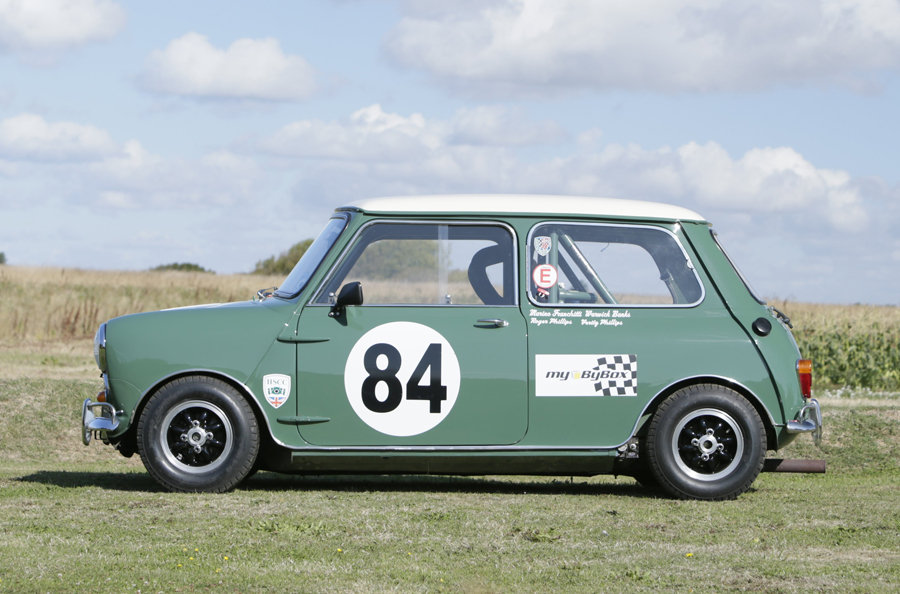
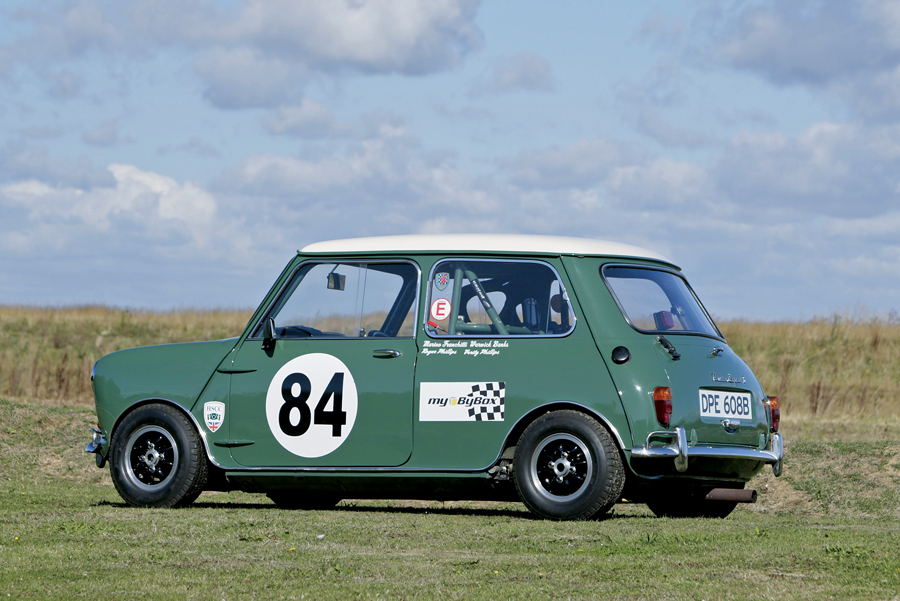
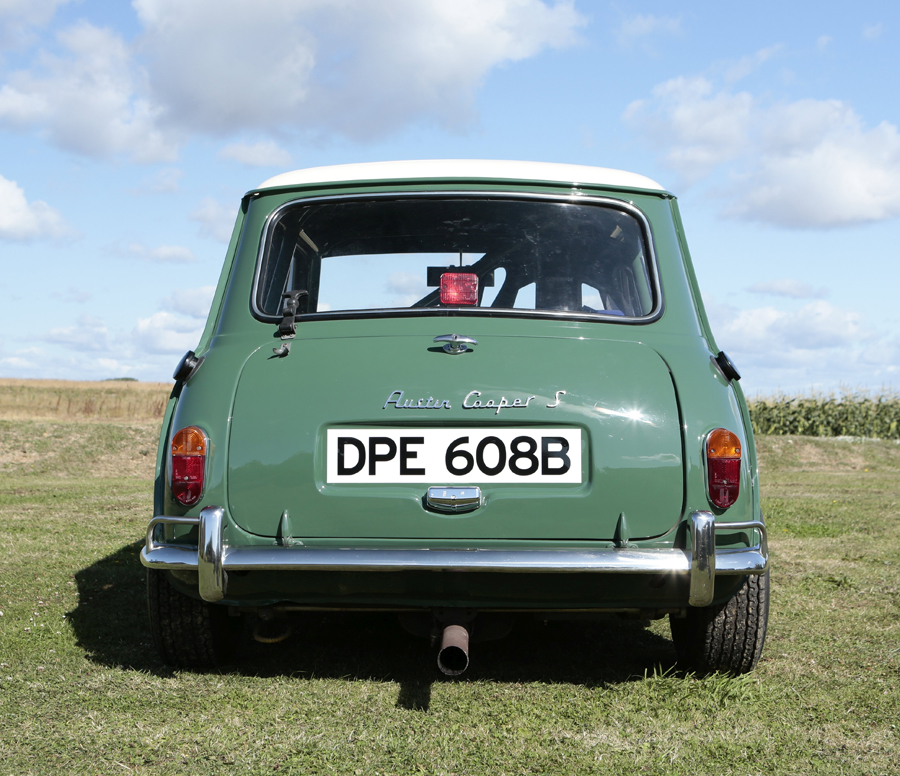
Austin Mini Cooper S 1275 Group 2
Brand
Produced from
Portal
Vehicle category
Model line
Model generation
Predecessor
Successor
Submodel Overview
The pungent scent of hot Castrol oil and the frantic, high-pitched mechanical rasp of an A-Series engine firing into life defined the British motorsport boom of the mid-1960s. By 1964, Alec Issigonis’s miraculous little brick had already proven its worth, but the competitive landscape of Group 2 touring car racing and international rallying was rapidly escalating. The earlier 997cc and 1071cc Cooper variants had tasted blood, yet Formula 1 constructor John Cooper knew that to permanently dethrone the howling Alfa Romeo Giulia GTAs, the twin-cam Ford Lotus Cortinas, and the thundering American Ford Falcon V8s, the Mini needed a bigger punch. Thus, the Abingdon Competitions Department homologated the ultimate weapon of the Mk I era: the 1964 Austin Mini Cooper S 1275 Group 2. This was not merely a city car with a tuned engine; it was a bespoke, giant-killing homologation special engineered to exploit the fiercely competitive FIA Group 2 regulations. It arrived in the paddock as a terrifyingly agile featherweight, ready to wage a spectacular David versus Goliath war on the fastest circuits and most treacherous rally stages in the world.
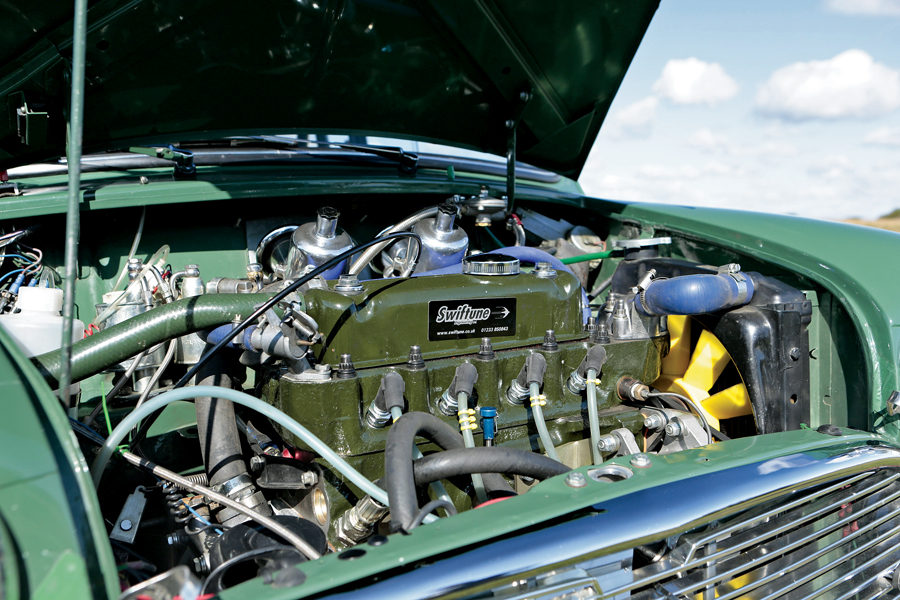
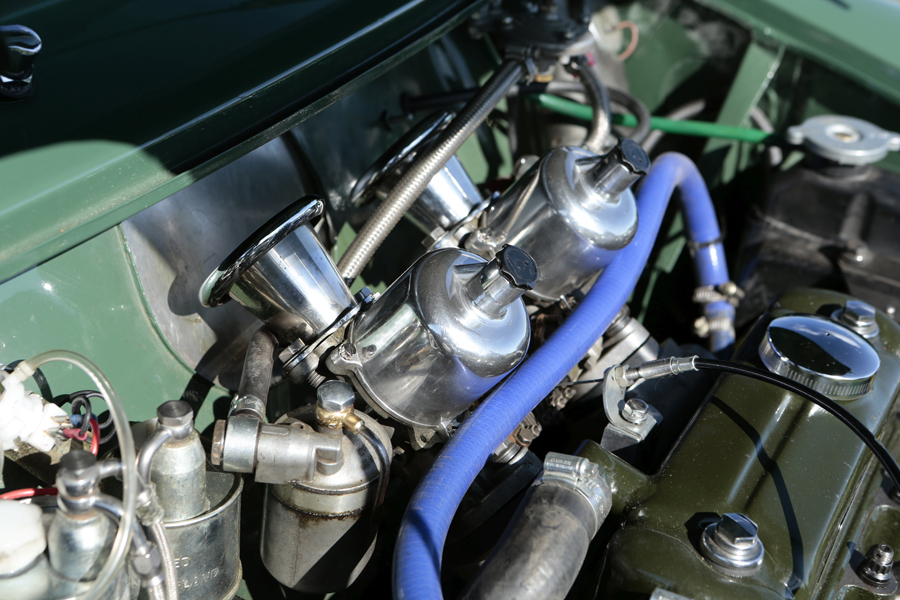
To peer beneath the Tartan Red and Old English White coachwork of a Works Group 2 Cooper S is to witness a masterclass in pragmatic, high-performance packaging. The absolute soul of the machine was the bored-out 1275cc iron-block A-Series engine. In Group 2 specification, this transverse marvel featured a nitrided forged steel crankshaft, a highly modified cylinder head, and breathed fiercely through a pair of twin SU carburettors. Pushing out well over 100 brake horsepower in race trim, it transformed the 600-kilogram box into a frantic, 100-mph (160 km/h) missile. Power was delivered to the front wheels via a robust, close-ratio four-speed straight-cut gearbox sitting squarely in the engine’s oil sump. However, straight-line speed was never the Mini’s primary weapon; it was all about momentum management. The Group 2 cars frequently sat on wide, magnesium Minilite wheels wrapped in sticky Dunlop racing rubber, pushed to the absolute extremities of the chassis. Suspension tuning was a dark art of rubber cones, uprated dampers, and aggressive negative camber that allowed the car to pivot around its nose with telepathic precision. To haul the featherweight racer down from speed, it relied on specialized 7.5-inch Lockheed front disc brakes. The interior was stripped of any swinging-sixties luxury; a single bucket seat, a stark roll hoop, a massive central tachometer, and a thick wood-rimmed steering wheel were the only tools provided to the brave pilot.
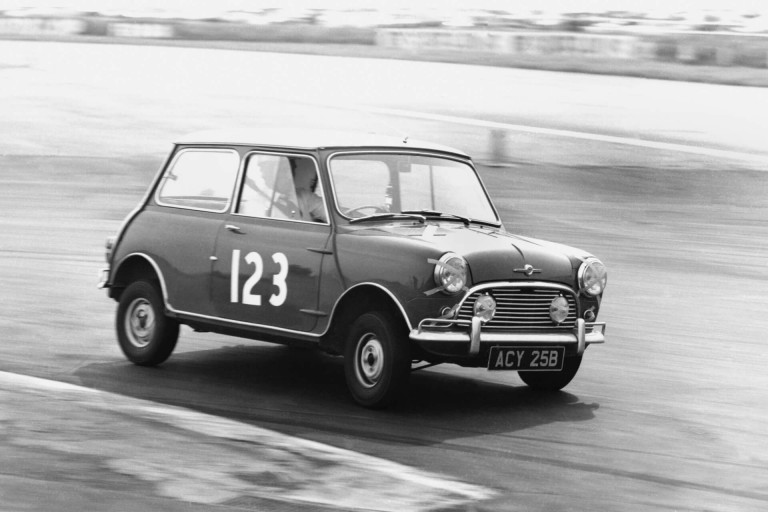
When unleashed upon the tarmac and gravel, the 1275 Cooper S orchestrated an absolute massacre of the establishment. In the British Saloon Car Championship (BSCC), the sight of the Group 2 Minis aggressively lifting their inside rear wheels while harassing massive American iron became the defining spectacle of the decade. Drivers like the legendary ‘Smoking’ John Rhodes practically drifted the front-wheel-drive cars through the corners of Brands Hatch and Crystal Palace, notoriously burning the inside front tire to ashes as he kept the A-Series engine boiling. In international rallying, the 1275cc engine cemented the Mini’s immortal status. While Paddy Hopkirk won the ’64 Monte Carlo in a 1071cc, it was the 1275 that allowed Timo Mäkinen to conquer the snow in 1965, and Rauno Aaltonen to repeat the feat in 1967. The model’s most infamous moment, however, was the 1966 Monte Carlo Rally, where the Works Minis secured a brilliant 1-2-3 finish, only to be scandalously disqualified by French officials over a dubious headlight regulation. This perceived injustice only amplified the car’s heroic underdog mythology, endearing it permanently to the global motorsport fanbase.
The legacy of the 1964 Austin Mini Mk I Cooper S 1275 Group 2 is sovereign and untouchable. It was the absolute zenith of the Mk I lineage, proving unequivocally that a brilliantly packaged, front-wheel-drive platform could out-corner, out-brake, and out-last the traditional rear-wheel-drive titans of the era. It effectively wrote the blueprint for the modern hot hatch decades before the term was even coined. While the Mk II and Mk III Minis would eventually succeed it, and the Ford Escort would eventually take its crown in the 1970s, the 1275 Cooper S remains the ultimate expression of Abingdon’s engineering magic. Today, an authentic, period-raced Group 2 Cooper S is an immensely prized blue-chip artifact. It holds a sacred place in the pantheon of motorsport as the tiny, screaming brick that refused to be intimidated, forever reminding us that in racing, absolute agility and sheer bravery can conquer brute force.
Brand
Produced from
Portal
Vehicle category
Model line
Model generation
Predecessor
Sucessor
Brand
Produced from
Portal
Vehicle category
Model line
Model generation
Predecessor
Sucessor
Submodel Overview
The pungent scent of hot Castrol oil and the frantic, high-pitched mechanical rasp of an A-Series engine firing into life defined the British motorsport boom of the mid-1960s. By 1964, Alec Issigonis’s miraculous little brick had already proven its worth, but the competitive landscape of Group 2 touring car racing and international rallying was rapidly escalating. The earlier 997cc and 1071cc Cooper variants had tasted blood, yet Formula 1 constructor John Cooper knew that to permanently dethrone the howling Alfa Romeo Giulia GTAs, the twin-cam Ford Lotus Cortinas, and the thundering American Ford Falcon V8s, the Mini needed a bigger punch. Thus, the Abingdon Competitions Department homologated the ultimate weapon of the Mk I era: the 1964 Austin Mini Cooper S 1275 Group 2. This was not merely a city car with a tuned engine; it was a bespoke, giant-killing homologation special engineered to exploit the fiercely competitive FIA Group 2 regulations. It arrived in the paddock as a terrifyingly agile featherweight, ready to wage a spectacular David versus Goliath war on the fastest circuits and most treacherous rally stages in the world.
To peer beneath the Tartan Red and Old English White coachwork of a Works Group 2 Cooper S is to witness a masterclass in pragmatic, high-performance packaging. The absolute soul of the machine was the bored-out 1275cc iron-block A-Series engine. In Group 2 specification, this transverse marvel featured a nitrided forged steel crankshaft, a highly modified cylinder head, and breathed fiercely through a pair of twin SU carburettors. Pushing out well over 100 brake horsepower in race trim, it transformed the 600-kilogram box into a frantic, 100-mph (160 km/h) missile. Power was delivered to the front wheels via a robust, close-ratio four-speed straight-cut gearbox sitting squarely in the engine’s oil sump. However, straight-line speed was never the Mini’s primary weapon; it was all about momentum management. The Group 2 cars frequently sat on wide, magnesium Minilite wheels wrapped in sticky Dunlop racing rubber, pushed to the absolute extremities of the chassis. Suspension tuning was a dark art of rubber cones, uprated dampers, and aggressive negative camber that allowed the car to pivot around its nose with telepathic precision. To haul the featherweight racer down from speed, it relied on specialized 7.5-inch Lockheed front disc brakes. The interior was stripped of any swinging-sixties luxury; a single bucket seat, a stark roll hoop, a massive central tachometer, and a thick wood-rimmed steering wheel were the only tools provided to the brave pilot.
When unleashed upon the tarmac and gravel, the 1275 Cooper S orchestrated an absolute massacre of the establishment. In the British Saloon Car Championship (BSCC), the sight of the Group 2 Minis aggressively lifting their inside rear wheels while harassing massive American iron became the defining spectacle of the decade. Drivers like the legendary ‘Smoking’ John Rhodes practically drifted the front-wheel-drive cars through the corners of Brands Hatch and Crystal Palace, notoriously burning the inside front tire to ashes as he kept the A-Series engine boiling. In international rallying, the 1275cc engine cemented the Mini’s immortal status. While Paddy Hopkirk won the ’64 Monte Carlo in a 1071cc, it was the 1275 that allowed Timo Mäkinen to conquer the snow in 1965, and Rauno Aaltonen to repeat the feat in 1967. The model’s most infamous moment, however, was the 1966 Monte Carlo Rally, where the Works Minis secured a brilliant 1-2-3 finish, only to be scandalously disqualified by French officials over a dubious headlight regulation. This perceived injustice only amplified the car’s heroic underdog mythology, endearing it permanently to the global motorsport fanbase.
The legacy of the 1964 Austin Mini Mk I Cooper S 1275 Group 2 is sovereign and untouchable. It was the absolute zenith of the Mk I lineage, proving unequivocally that a brilliantly packaged, front-wheel-drive platform could out-corner, out-brake, and out-last the traditional rear-wheel-drive titans of the era. It effectively wrote the blueprint for the modern hot hatch decades before the term was even coined. While the Mk II and Mk III Minis would eventually succeed it, and the Ford Escort would eventually take its crown in the 1970s, the 1275 Cooper S remains the ultimate expression of Abingdon’s engineering magic. Today, an authentic, period-raced Group 2 Cooper S is an immensely prized blue-chip artifact. It holds a sacred place in the pantheon of motorsport as the tiny, screaming brick that refused to be intimidated, forever reminding us that in racing, absolute agility and sheer bravery can conquer brute force.
Tech Specs
Technical Specifications
Tech Specs
Technical Specifications
Engine
01
03
Internal combustion engine
Configuration
BMC A-Series, Inline-4
Location
Front, transversely mounted
Construction
Cast iron block and head
Displacement (cc)
1,275 cc
Displacement (cu in)
77.8 cu in
Compression
~11.0:1
Bore x Stroke
70.6 mm x 81.3 mm
Valvetrain
2 valves per cylinder, OHV
Fuel feed
2 x SU HS4 carburetors (Weber 45 DCOE was also common for circuit racing)
Lubrication
Wet sump
Aspiration
Naturally aspirated
Output
Power (hp)
~105 hp
Power (kW)
~78 kW
Max power at
7,000 RPM
Torque (Nm)
125 Nm
Torque (ft lbs)
92 ft lbs
Max torque at
4,500 RPM
Drivetrain
02
03
Chassis
Type
Monocoque unibody
Material
Steel
Body
Material
Steel
Transmission
Gearbox
BMC 4-speed manual
Drive
Front Wheel Drive (Limited Slip Differential)
Suspension
Front
Independent, unequal length wishbones, Hydrolastic interconnected fluid displacers (or rubber cone springs), telescopic dampers
Rear
Independent, trailing arms, Hydrolastic interconnected fluid displacers (or rubber cone springs), telescopic dampers
Steering
Type
Rack and pinion, unassisted
Brakes
Front
Solid steel discs Ø190.5 mm (7.5 in), Lockheed calipers
Rear
Drum brakes Ø178 mm (7 in) (often finned alloy "Minifins")
Wheels
Front
4.5" x 10" (Minilite cast magnesium alloy)
Rear
4.5" x 10" (Minilite cast magnesium alloy)
Tires
Front
5.00-10
Rear
5.00-10
Dimensions and performance
03
03
Dimensions
Length (mm)
3,054 mm
Length (in)
120.2 in
Width (mm)
1,410 mm
Width (in)
55.5 in
Height (mm)
~1,310 mm
Height (in)
~51.6 in
Wheelbase (mm)
2,036 mm
Wheelbase (in)
80.1 in
Weight (kg)
~620 kg
Weight (lbs)
~1,366 lbs
Performance
Power to weight
~0.17 hp/kg
Top speed (km/h)
~165 km/h
Top speed (mph)
~103 mph
0-100 km/h (0-60 mph)
~8.2 s