
Auto Union Type B
Brand
Produced from
Portal
Vehicle category
Predecessor
Successor
Submodel Overview
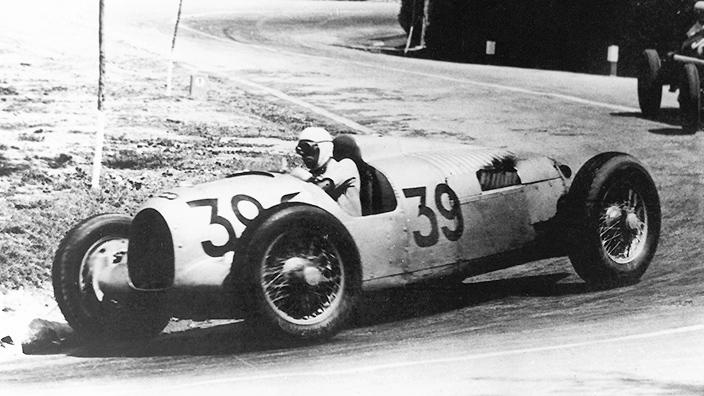
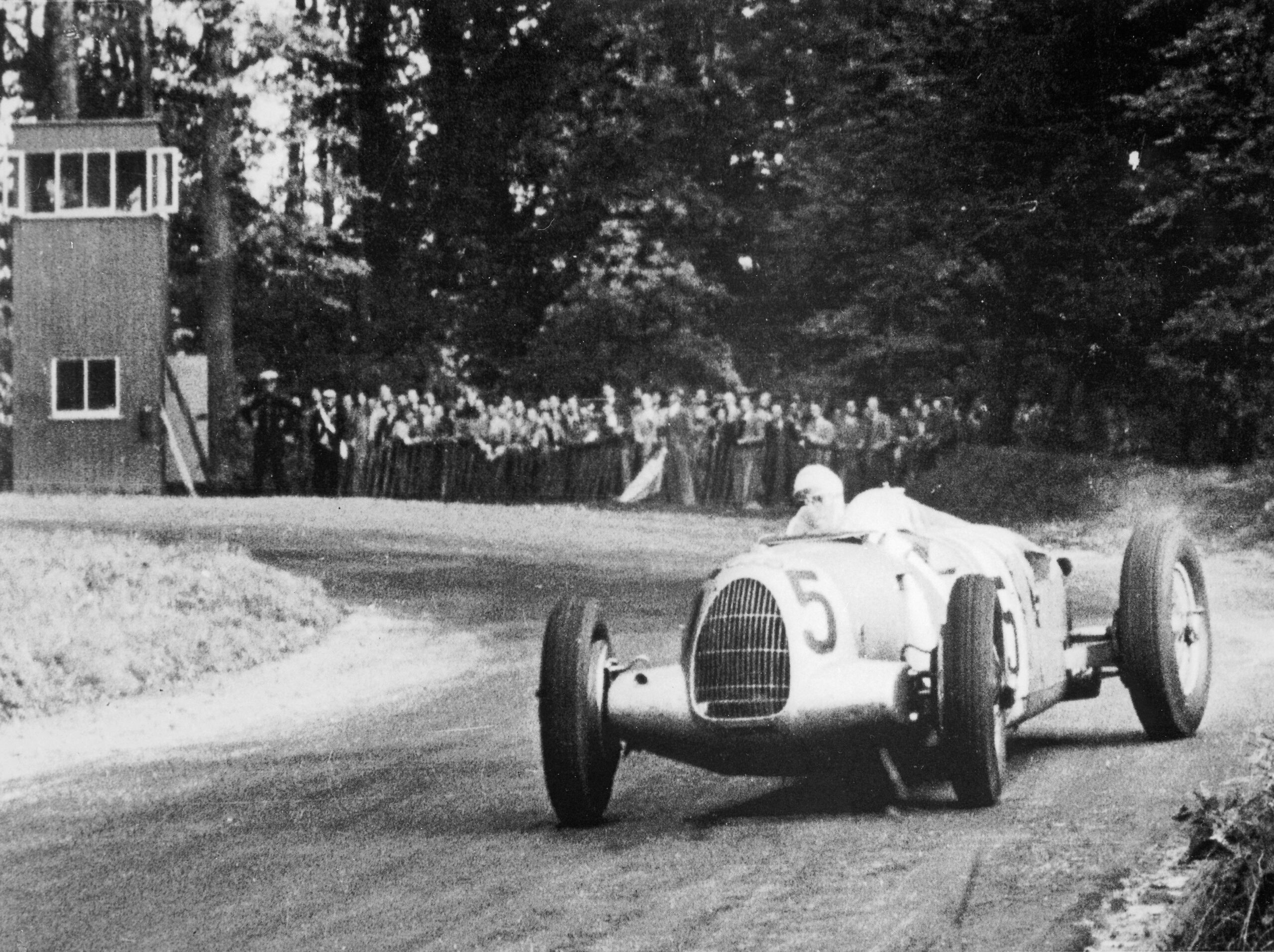
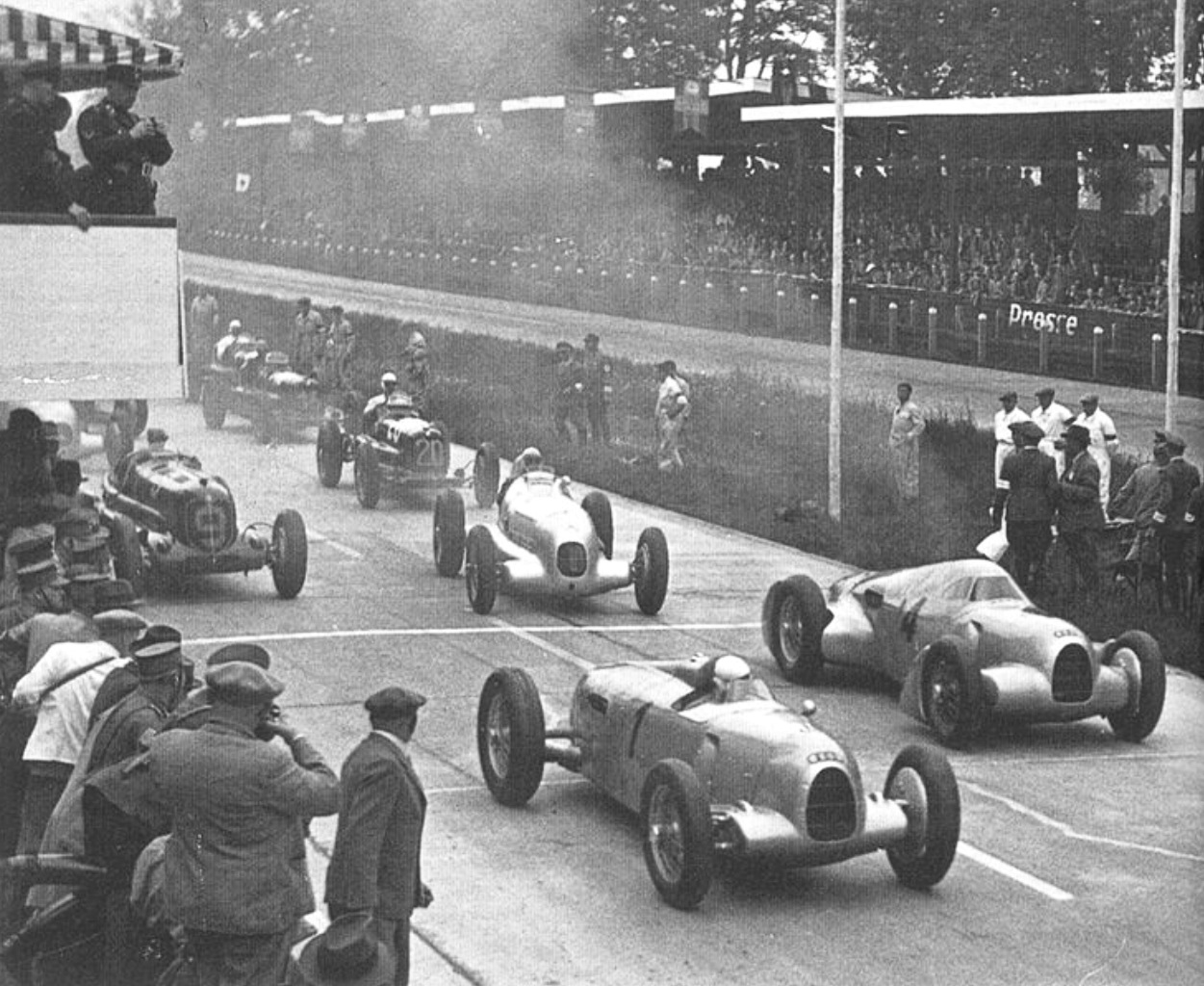
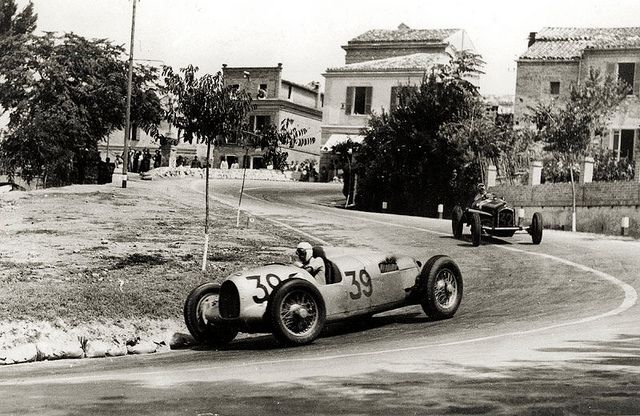
The acrid scent of a highly volatile brew of methanol and benzole stung the air, instantly overpowered by the apocalyptic roar of sixteen cylinders detonating just inches behind the driver’s spine. In 1935, the Auto Union Type B was not merely a racing car; it was a terrifying projectile of national ambition. Building upon Ferdinand Porsche’s radical Type A from the previous year, the Type B emerged as the second brutal iteration of the infamous “Silver Arrows”, designed under the governing body’s 750 kg (1653 lbs) maximum weight formula. The regulations had been conceived with the naïve assumption that limiting overall mass would naturally restrict engine size and top speeds. Instead, German engineers utilised lightweight aerospace alloys to build immense powerplants. The Type B was tasked with utterly destroying the dominance of Alfa Romeo’s Tipo B and Maserati’s conventional front-engined machines, whilst fighting a bitter, state-sponsored civil war against the mighty Mercedes-Benz W25.
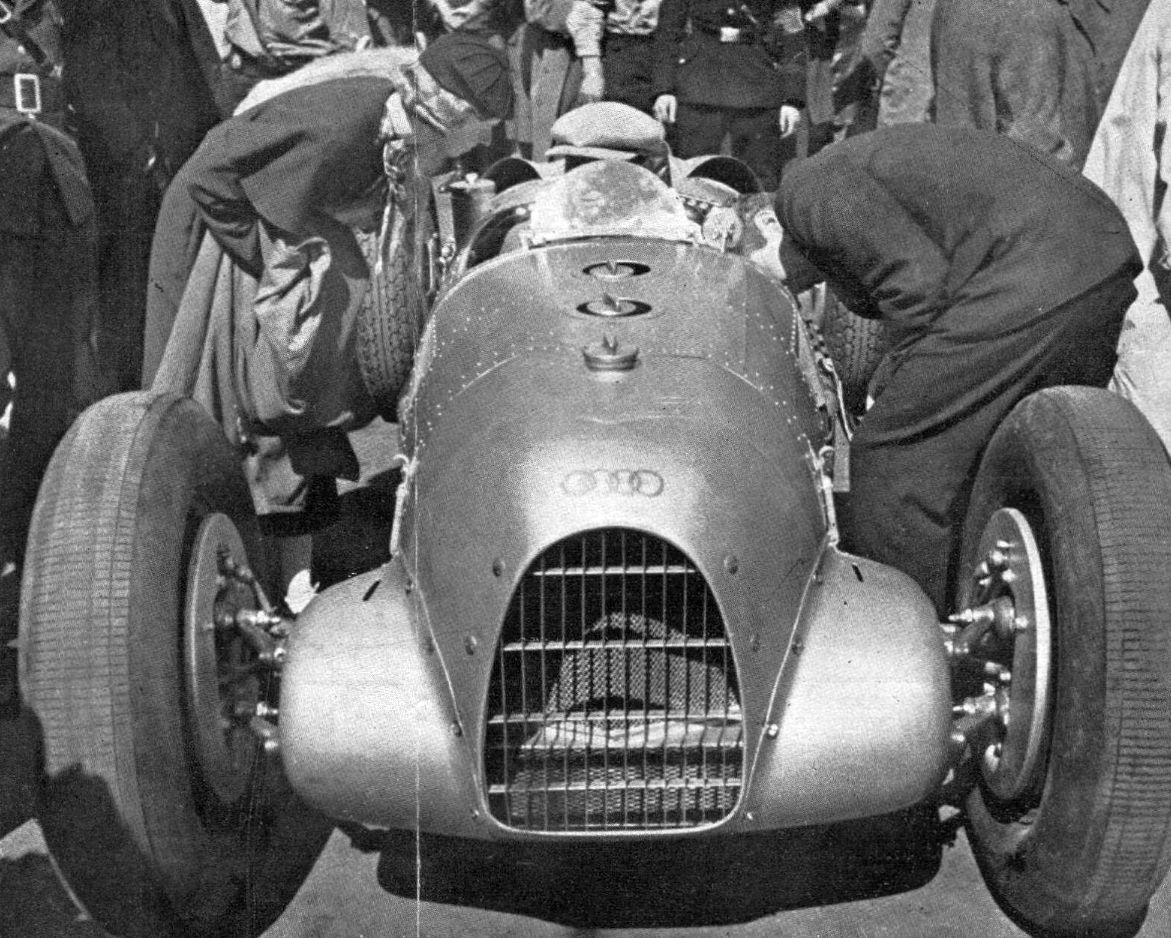
Porsche’s engineering heresy lay in his uncompromising rear-mid-engine layout. The tubular steel ladder frame chassis—with its very tubes ingeniously carrying water coolant from the front radiator to the engine—cradled a monstrous 4.9-litre (302 cu in) supercharged V16. This aluminium-block leviathan, breathing through a single Roots-type supercharger, produced a thunderous 375 bhp. It sent violent, shuddering shockwaves through a five-speed transaxle, emitting a deep, low-revving bellow that stood in stark contrast to the high-pitched shriek of Italian inline-eights. The bodywork was a teardrop of hammered aluminium, draped over a chassis that utilised a notoriously tricky swing-axle rear suspension setup alongside front trailing arms and torsion bars.
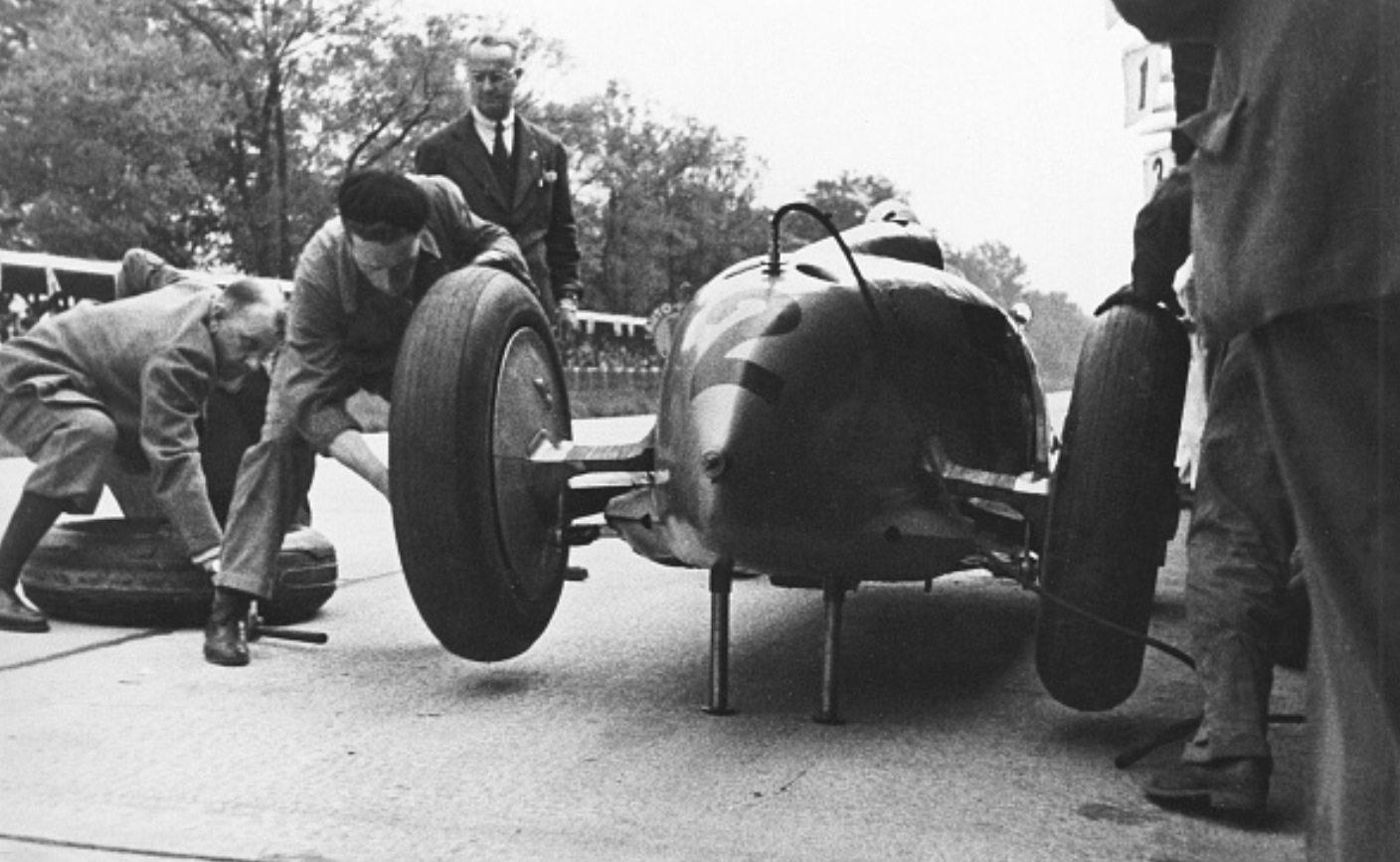
This rear geometry, combined with a severe rearward weight bias and hilariously narrow cross-ply tyres, made the Type B a tail-happy beast. Drivers sat intimately close to the steering wheel, pushed far forward in the nose, disconnected from the traditional sensory feedback of a long bonnet. They danced on the pedals in a cramped, sweltering cockpit, wrestling with immense torque that could easily break rear traction at 160 km/h (100 mph). Stopping this silver missile relied on massive, finned aluminium drum brakes, which fought a losing battle against the sheer kinetic energy of a machine capable of reaching 290 km/h (180 mph) on the long straights of Europe.
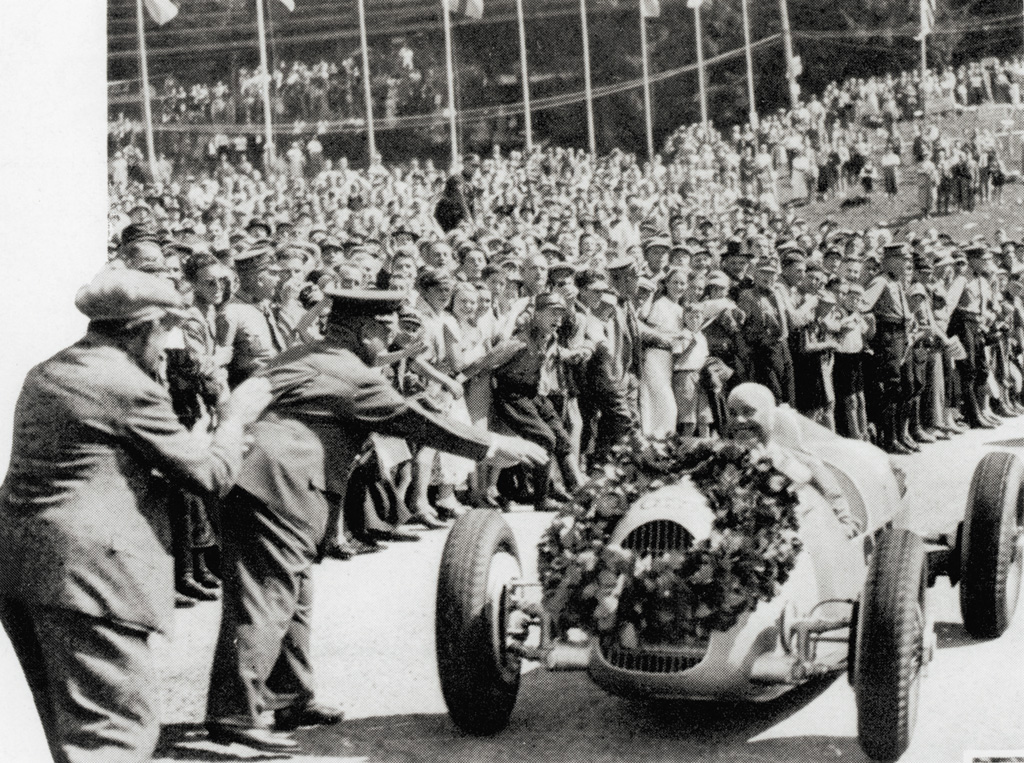
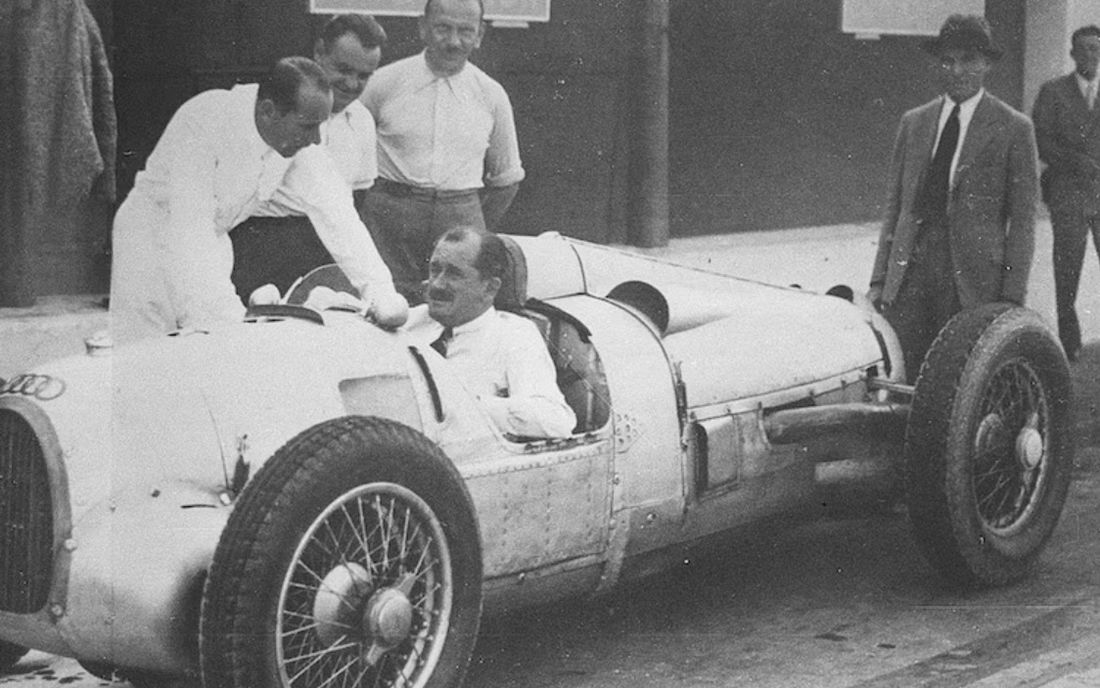
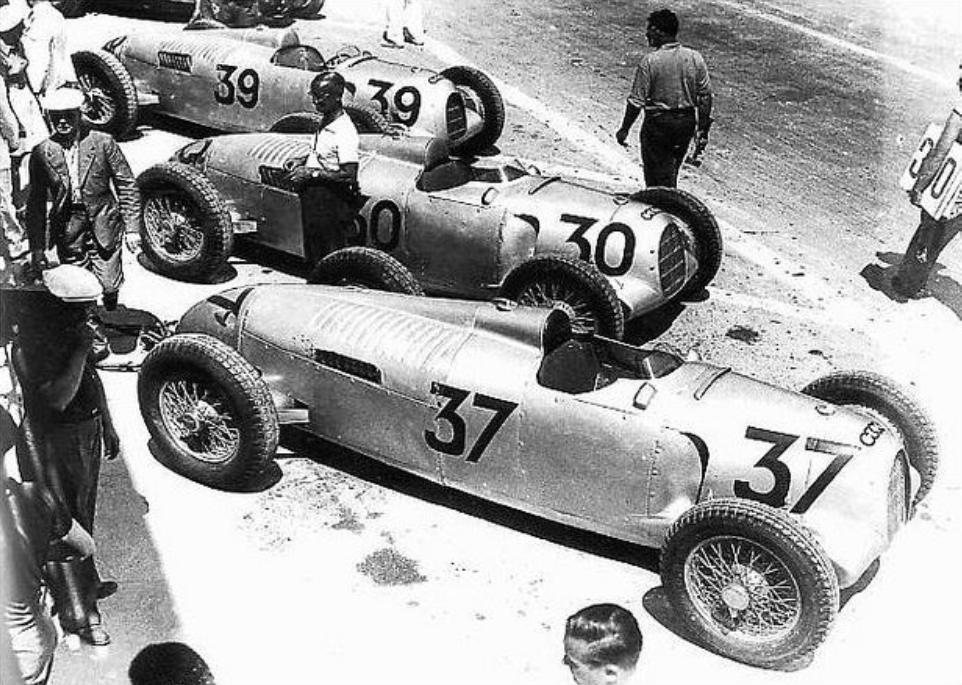
Piloting this mid-engined widowmaker required a rare blend of aristocratic bravery and delicate car control. The veteran Hans Stuck and the meticulously smooth Italian Achille Varzi were its primary tamers, though a young, fearless former motorcycle racer named Bernd Rosemeyer was just beginning to learn its dark arts. Because Rosemeyer had no prior experience with conventional front-engined grand prix cars, he was uniquely unbothered by the Auto Union’s bizarre handling characteristics. During the 1935 season, the Type B proved devastatingly fast but mechanically temperamental. Varzi showcased its supreme potential by conquering the high-speed blasts of the Tunis Grand Prix and the Coppa Acerbo. Stuck, battling fierce opposition from Rudolf Caracciola’s Mercedes-Benz, wrestled the Type B to a glorious victory at the Italian Grand Prix at Monza, cementing its status as a grand prix titan. Yet, the car was entirely unforgiving. The sudden snap-oversteer generated by the swing axles required preternatural reflexes, earning it a fearsome reputation in the paddock as a machine that demanded absolute, unyielding submission from its pilot.
Ultimately, the Type B served as the vital evolutionary bridge in the Auto Union saga. It ironed out the initial cooling and handling flaws of the Type A and laid the essential mechanical groundwork for the legendary 6.0-litre (366 cu in) Type C that would utterly dominate the 1936 season. More profoundly, this supercharged V16 monster proved that Ferdinand Porsche’s radical mid-engine layout was not merely an eccentric German experiment, but the definitive future of single-seater motorsport. It was a brilliant, dangerous blueprint that the rest of the racing world would not fully understand or adopt for another two decades.
Brand
Produced from
Portal
Vehicle category
Predecessor
Sucessor
Brand
Produced from
Portal
Vehicle category
Model generation
Predecessor
Sucessor
Submodel Overview
The acrid scent of a highly volatile brew of methanol and benzole stung the air, instantly overpowered by the apocalyptic roar of sixteen cylinders detonating just inches behind the driver’s spine. In 1935, the Auto Union Type B was not merely a racing car; it was a terrifying projectile of national ambition. Building upon Ferdinand Porsche’s radical Type A from the previous year, the Type B emerged as the second brutal iteration of the infamous “Silver Arrows”, designed under the governing body’s 750 kg (1653 lbs) maximum weight formula. The regulations had been conceived with the naïve assumption that limiting overall mass would naturally restrict engine size and top speeds. Instead, German engineers utilised lightweight aerospace alloys to build immense powerplants. The Type B was tasked with utterly destroying the dominance of Alfa Romeo’s Tipo B and Maserati’s conventional front-engined machines, whilst fighting a bitter, state-sponsored civil war against the mighty Mercedes-Benz W25.
Porsche’s engineering heresy lay in his uncompromising rear-mid-engine layout. The tubular steel ladder frame chassis—with its very tubes ingeniously carrying water coolant from the front radiator to the engine—cradled a monstrous 4.9-litre (302 cu in) supercharged V16. This aluminium-block leviathan, breathing through a single Roots-type supercharger, produced a thunderous 375 bhp. It sent violent, shuddering shockwaves through a five-speed transaxle, emitting a deep, low-revving bellow that stood in stark contrast to the high-pitched shriek of Italian inline-eights. The bodywork was a teardrop of hammered aluminium, draped over a chassis that utilised a notoriously tricky swing-axle rear suspension setup alongside front trailing arms and torsion bars.
This rear geometry, combined with a severe rearward weight bias and hilariously narrow cross-ply tyres, made the Type B a tail-happy beast. Drivers sat intimately close to the steering wheel, pushed far forward in the nose, disconnected from the traditional sensory feedback of a long bonnet. They danced on the pedals in a cramped, sweltering cockpit, wrestling with immense torque that could easily break rear traction at 160 km/h (100 mph). Stopping this silver missile relied on massive, finned aluminium drum brakes, which fought a losing battle against the sheer kinetic energy of a machine capable of reaching 290 km/h (180 mph) on the long straights of Europe.
Piloting this mid-engined widowmaker required a rare blend of aristocratic bravery and delicate car control. The veteran Hans Stuck and the meticulously smooth Italian Achille Varzi were its primary tamers, though a young, fearless former motorcycle racer named Bernd Rosemeyer was just beginning to learn its dark arts. Because Rosemeyer had no prior experience with conventional front-engined grand prix cars, he was uniquely unbothered by the Auto Union’s bizarre handling characteristics. During the 1935 season, the Type B proved devastatingly fast but mechanically temperamental. Varzi showcased its supreme potential by conquering the high-speed blasts of the Tunis Grand Prix and the Coppa Acerbo. Stuck, battling fierce opposition from Rudolf Caracciola’s Mercedes-Benz, wrestled the Type B to a glorious victory at the Italian Grand Prix at Monza, cementing its status as a grand prix titan. Yet, the car was entirely unforgiving. The sudden snap-oversteer generated by the swing axles required preternatural reflexes, earning it a fearsome reputation in the paddock as a machine that demanded absolute, unyielding submission from its pilot.
Ultimately, the Type B served as the vital evolutionary bridge in the Auto Union saga. It ironed out the initial cooling and handling flaws of the Type A and laid the essential mechanical groundwork for the legendary 6.0-litre (366 cu in) Type C that would utterly dominate the 1936 season. More profoundly, this supercharged V16 monster proved that Ferdinand Porsche’s radical mid-engine layout was not merely an eccentric German experiment, but the definitive future of single-seater motorsport. It was a brilliant, dangerous blueprint that the rest of the racing world would not fully understand or adopt for another two decades.
Tech Specs
Technical Specifications
Tech Specs
Technical Specifications
Engine
01
03
Internal combustion engine
Configuration
Auto Union V16 - 45º
Location
Mid, longitudinally mounted
Construction
Aluminium alloy block and heads
Displacement (cc)
4,951 cc
Displacement (cu in)
302.1 cu in
Compression
~7.0:1
Bore x Stroke
72.5 mm x 75.0 mm
Valvetrain
2 valves per cylinder, single central camshaft operating all 32 valves via pushrods and rocker arms
Fuel feed
2 x Solex carburetors
Lubrication
Dry sump
Aspiration
Supercharged (Single Roots-type supercharger)
Output
Power (hp)
375 hp
Power (kW)
276 kW
Max power at
4,800 RPM
Torque (Nm)
~630 Nm
Torque (ft lbs)
~465 ft lbs
Max torque at
3,000 RPM
Drivetrain
02
03
Chassis
Type
Tubular ladder frame (the large main tubes also functioned as cooling pipes between the engine and front radiator)
Material
Steel
Body
Material
Aluminium
Transmission
Gearbox
5-speed manual transaxle
Drive
Rear Wheel Drive (ZF Limited Slip Differential)
Suspension
Front
Independent, trailing arms, transverse torsion bars, friction dampers
Rear
Independent, swing axles, transverse torsion bars, friction dampers
Steering
Type
Worm and nut, unassisted
Brakes
Front
Hydraulic drum brakes Ø400 mm
Rear
Hydraulic drum brakes Ø400 mm
Wheels
Front
19" (Wire spoke wheels)
Rear
19" (Wire spoke wheels)
Tires
Front
5.25-19
Rear
7.00-19
Dimensions and performance
03
03
Dimensions
Length (mm)
~4,500 mm
Length (in)
~177.2 in
Width (mm)
~1,650 mm
Width (in)
~65.0 in
Height (mm)
~1,050 mm
Height (in)
~41.3 in
Wheelbase (mm)
2,900 mm
Wheelbase (in)
114.2 in
Weight (kg)
~825 kg
Weight (lbs)
~1,819 lbs
Performance
Power to weight
~0.45 hp/kg
Top speed (km/h)
~295 km/h
Top speed (mph)
~183 mph
0-100 km/h (0-60 mph)
~4.0 s