
Porsche 718 RS 60 1.5 (Type 547/3)
Brand
Produced from
Portal
Vehicle category
Model line
Predecessor
Successor
Submodel Overview
To fully appreciate the 1960 Porsche 718 RS 60 1.5L, one must dive into the bureaucratic upheaval that struck the international motorsport paddock at the dawn of the 1960s. The governing body of motorsport, the FIA, had grown increasingly concerned with the blurring lines between pure, open-wheel racing cars and the two-seater sports prototypes competing in the World Sportscar Championship. In an attempt to force prototypes to bear a closer resemblance to road-going grand tourers, the FIA introduced the new “Appendix C” regulations for the 1960 season. These rules mandated a significantly wider cockpit, regulation-sized passenger doors, a space for a mandatory “FIA suitcase”, and, most controversially, a towering windshield measuring at least 25 centimeters in height. For the aerodynamicists in Stuttgart, who had just perfected the sleek, low-slung 718 RSK, these rules were a draconian nightmare. Yet, under the pragmatic guidance of Huschke von Hanstein and Porsche’s brilliant engineering team, the RSK was heavily revised to comply, birthing the RS 60. While its larger 1.6-liter sibling famously snatched overall victories at Sebring and the Targa Florio, the 1.5-liter iteration—powered by the exquisite Type 547/3 engine—was built with a singular, ruthless focus: to absolutely annihilate the 1.5-liter class, fending off the featherweight Lotus 15s, the sophisticated OSCA 1500s, and the biting Ferrari 156 Dinos.
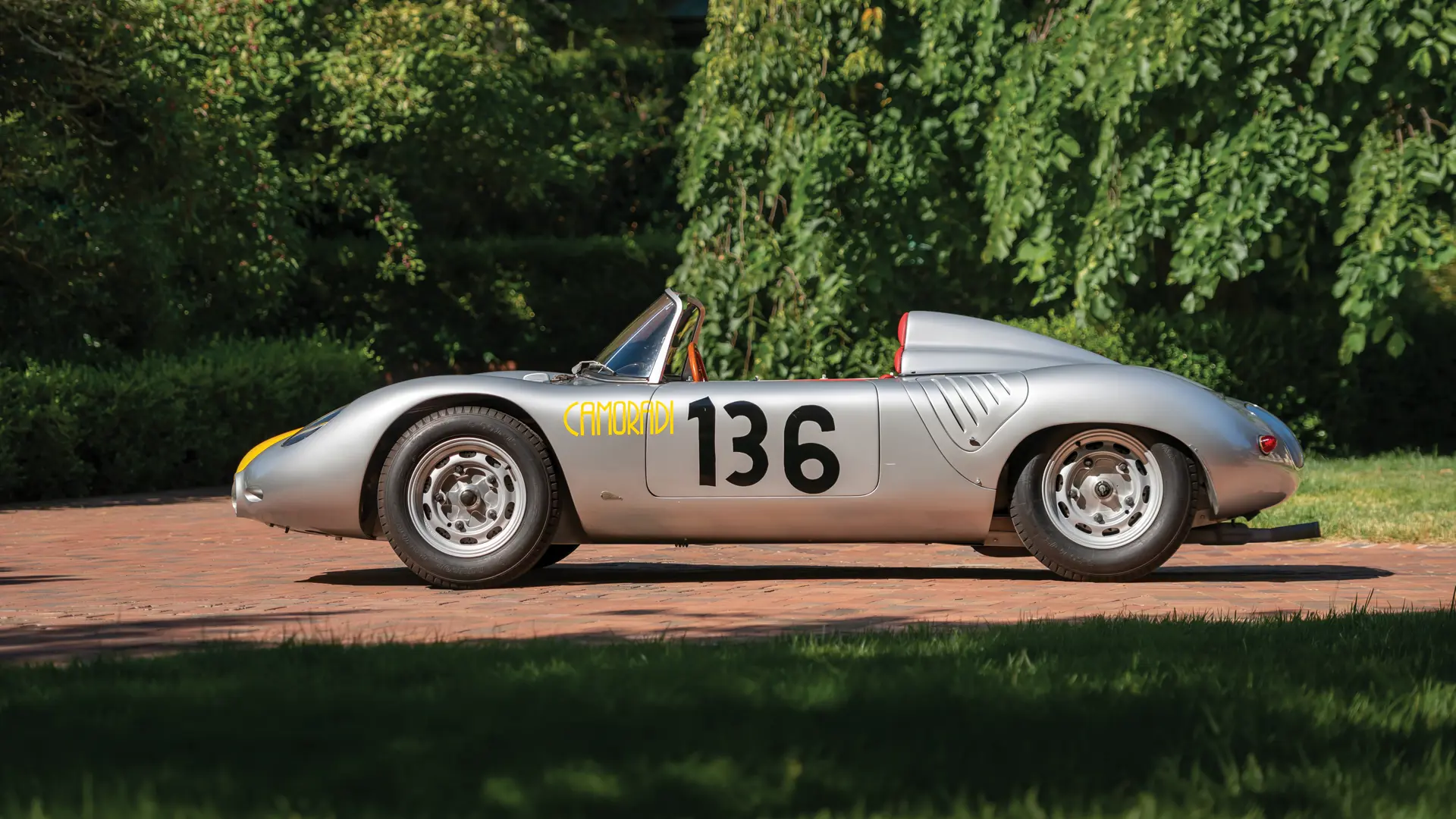
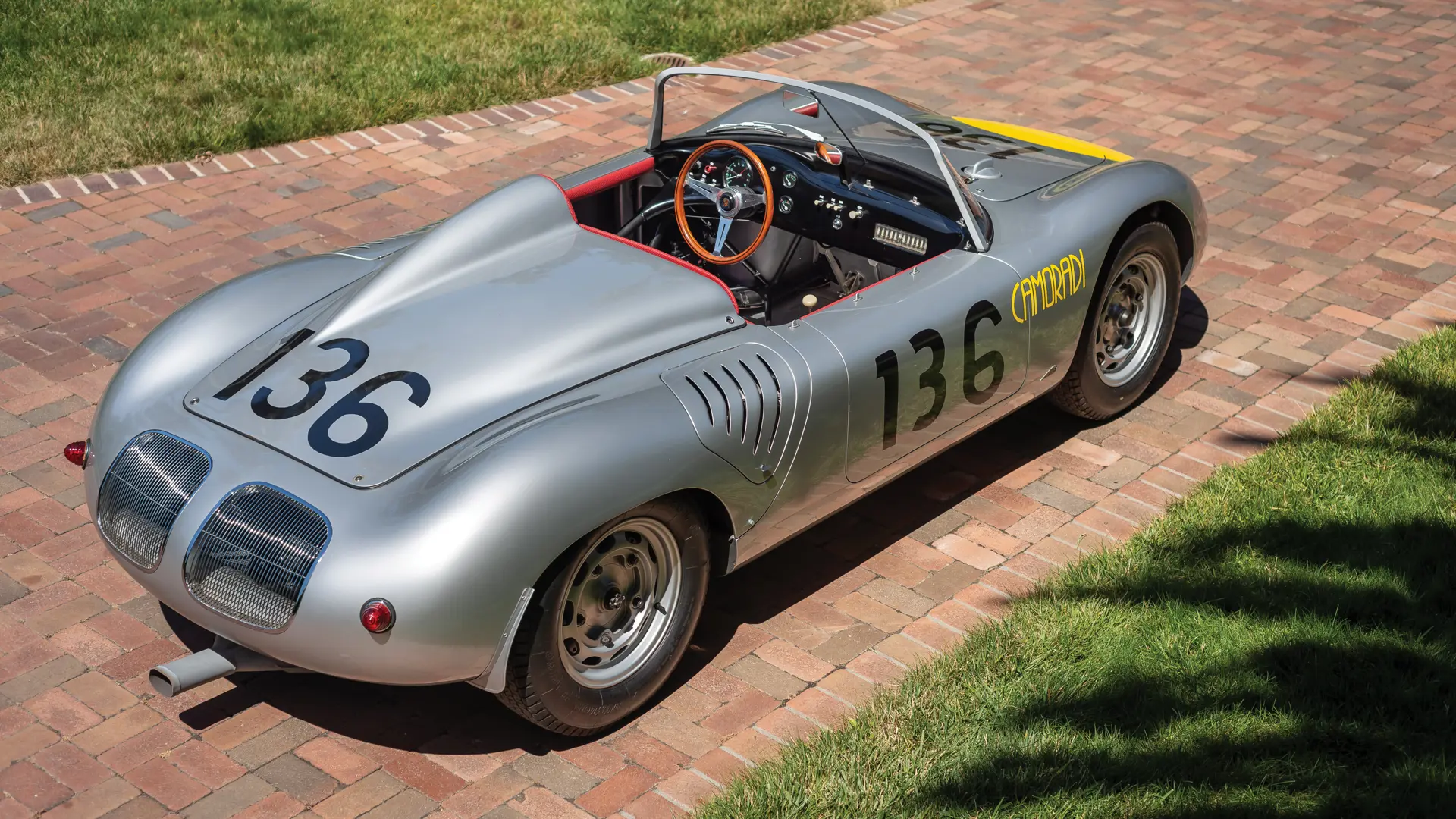
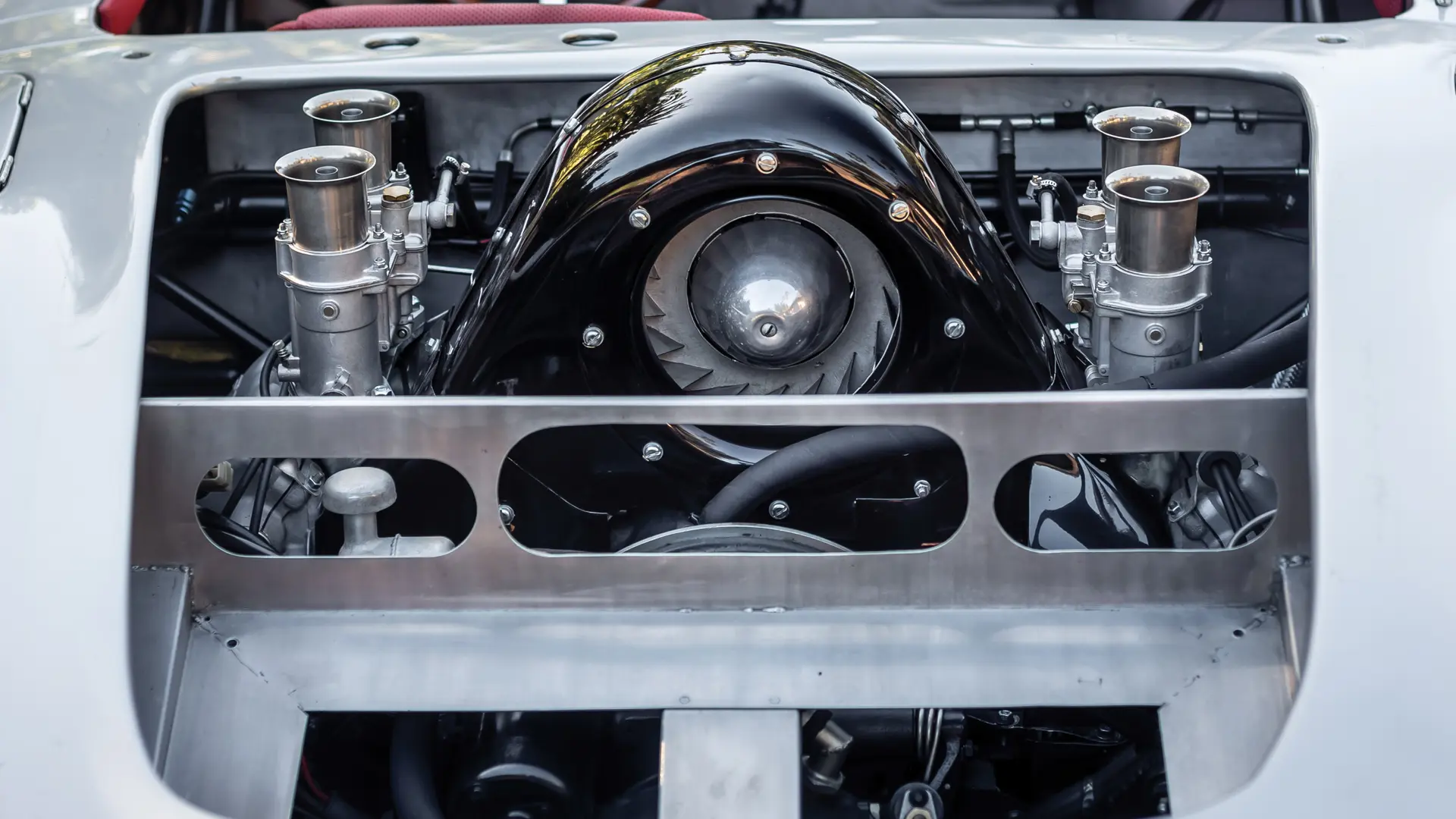
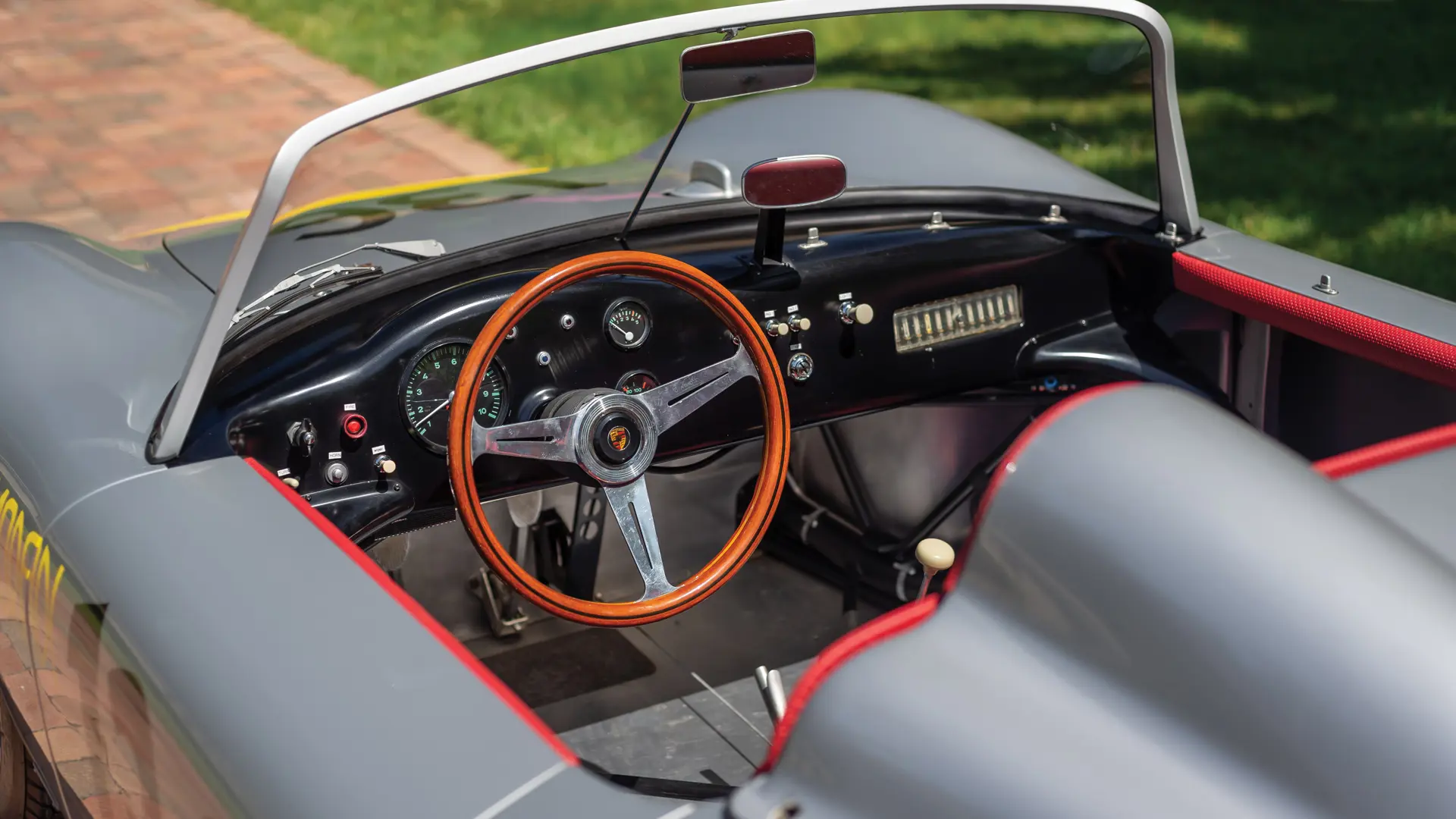
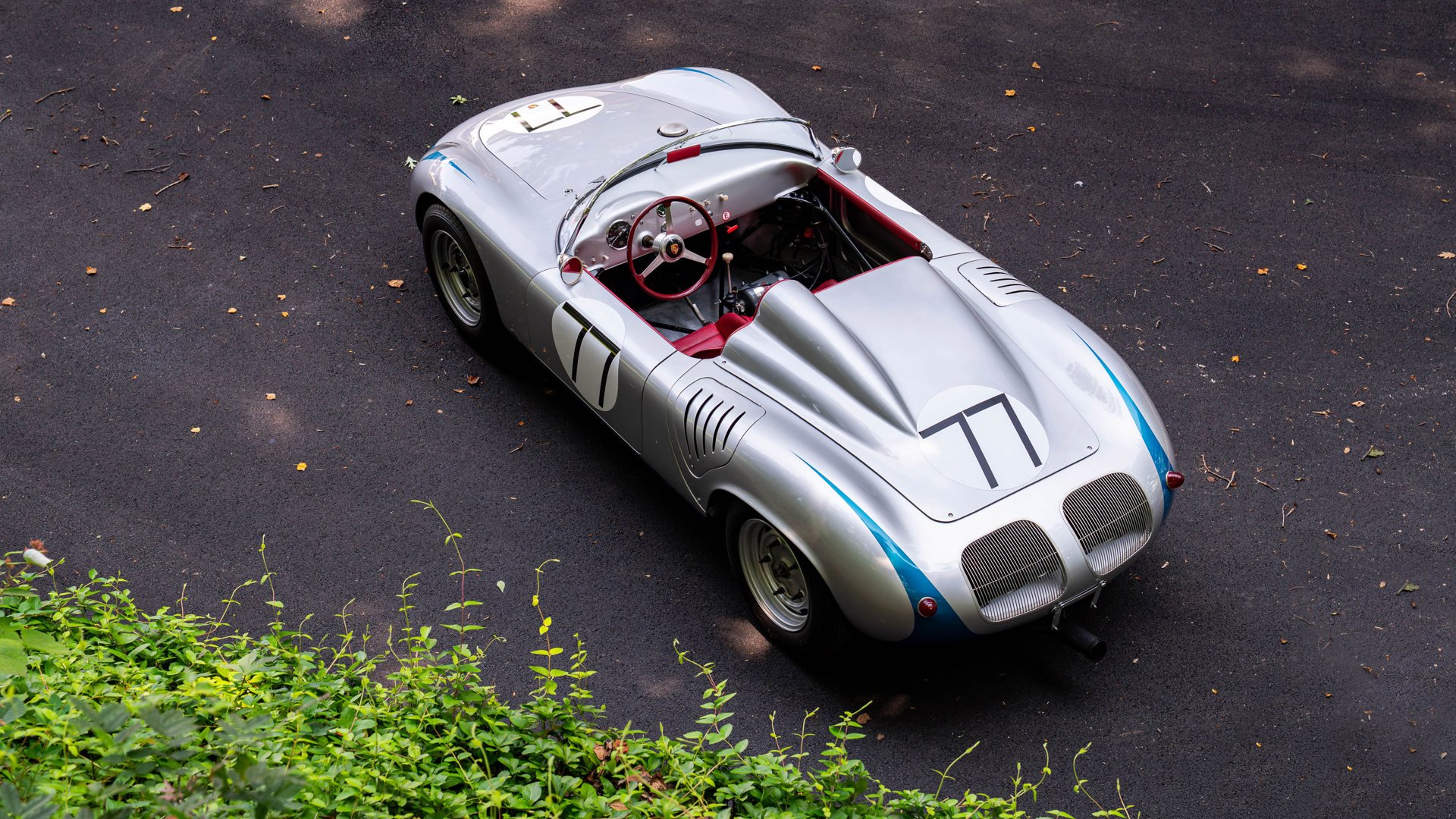
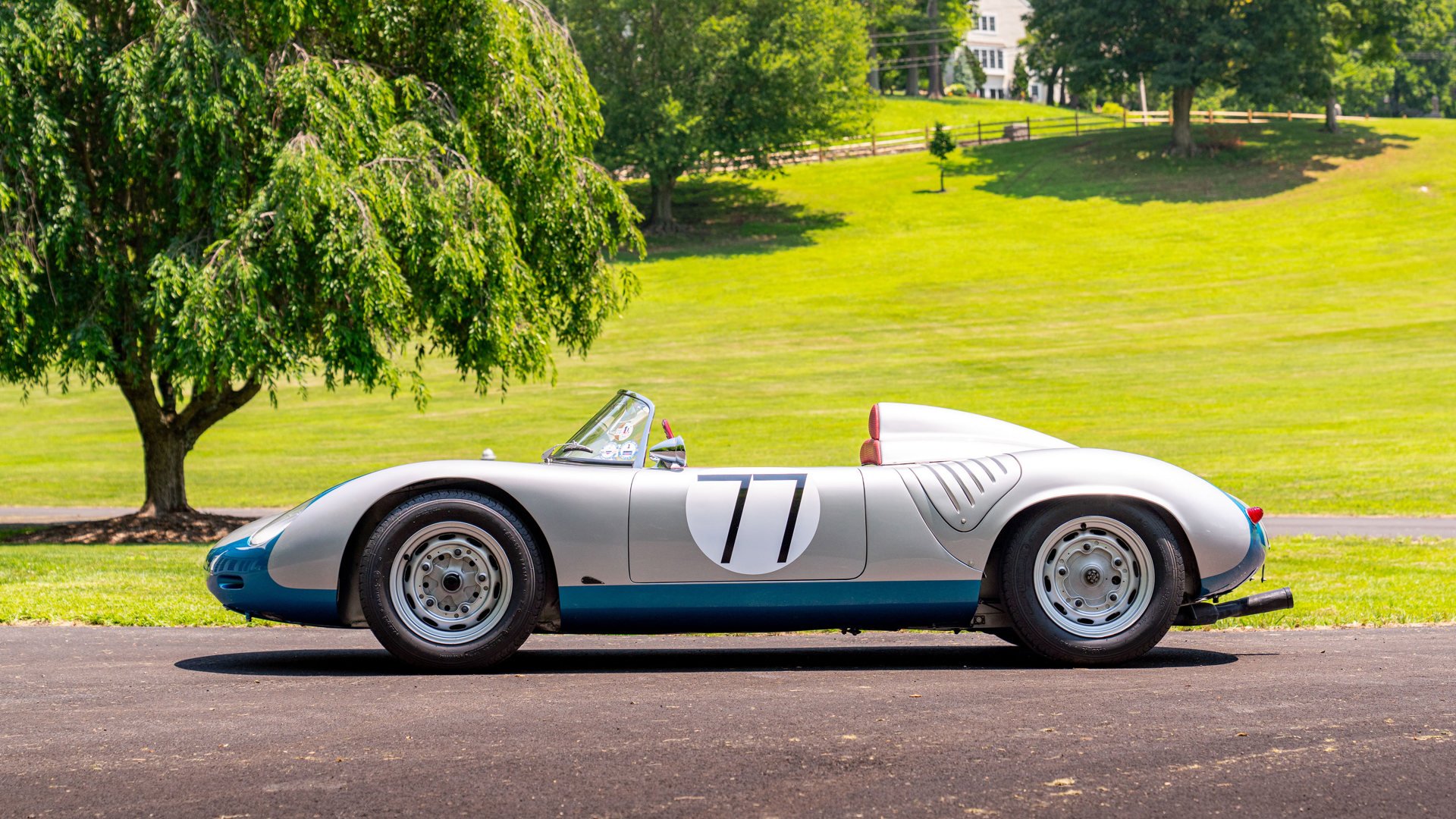
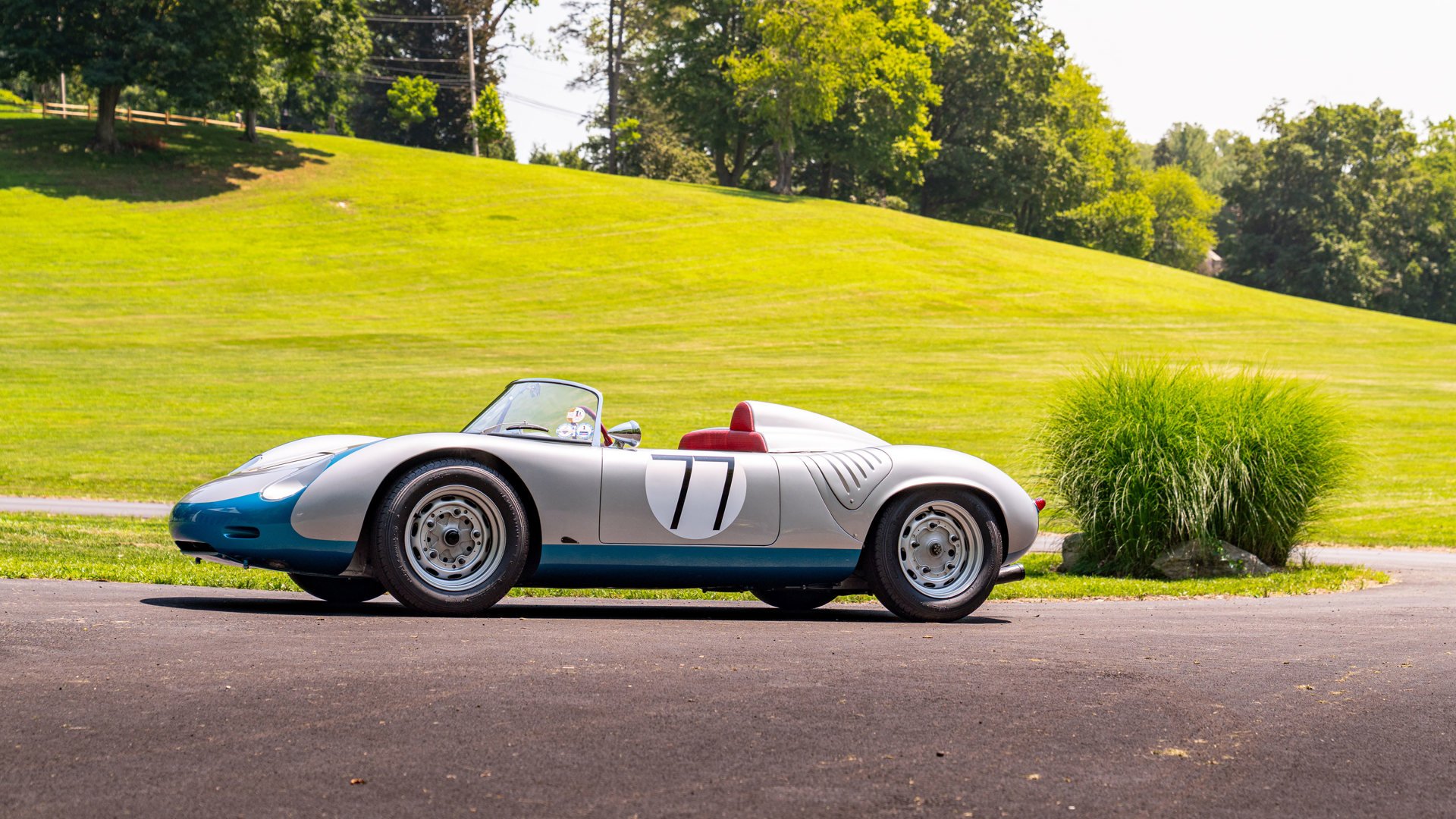
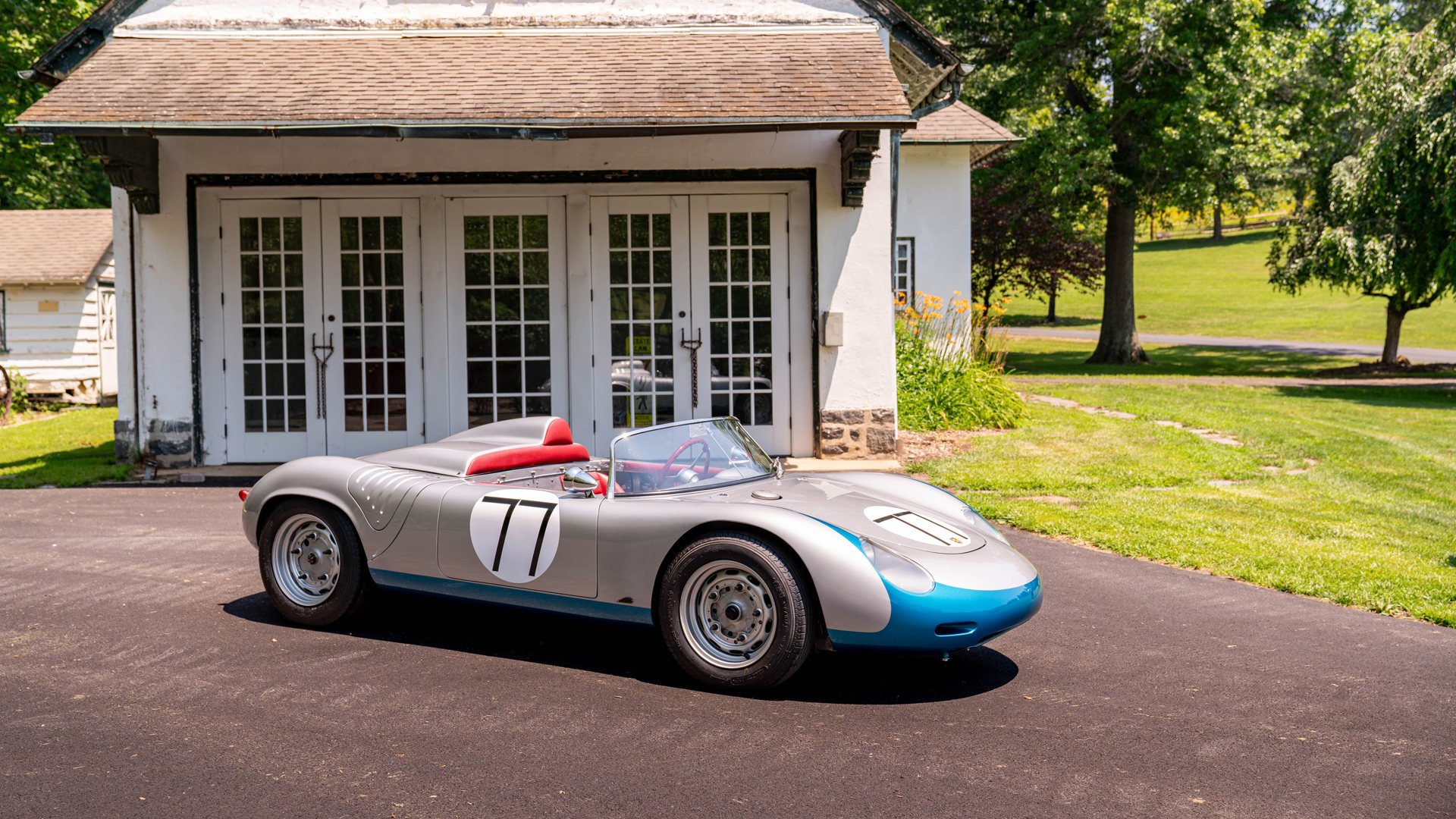
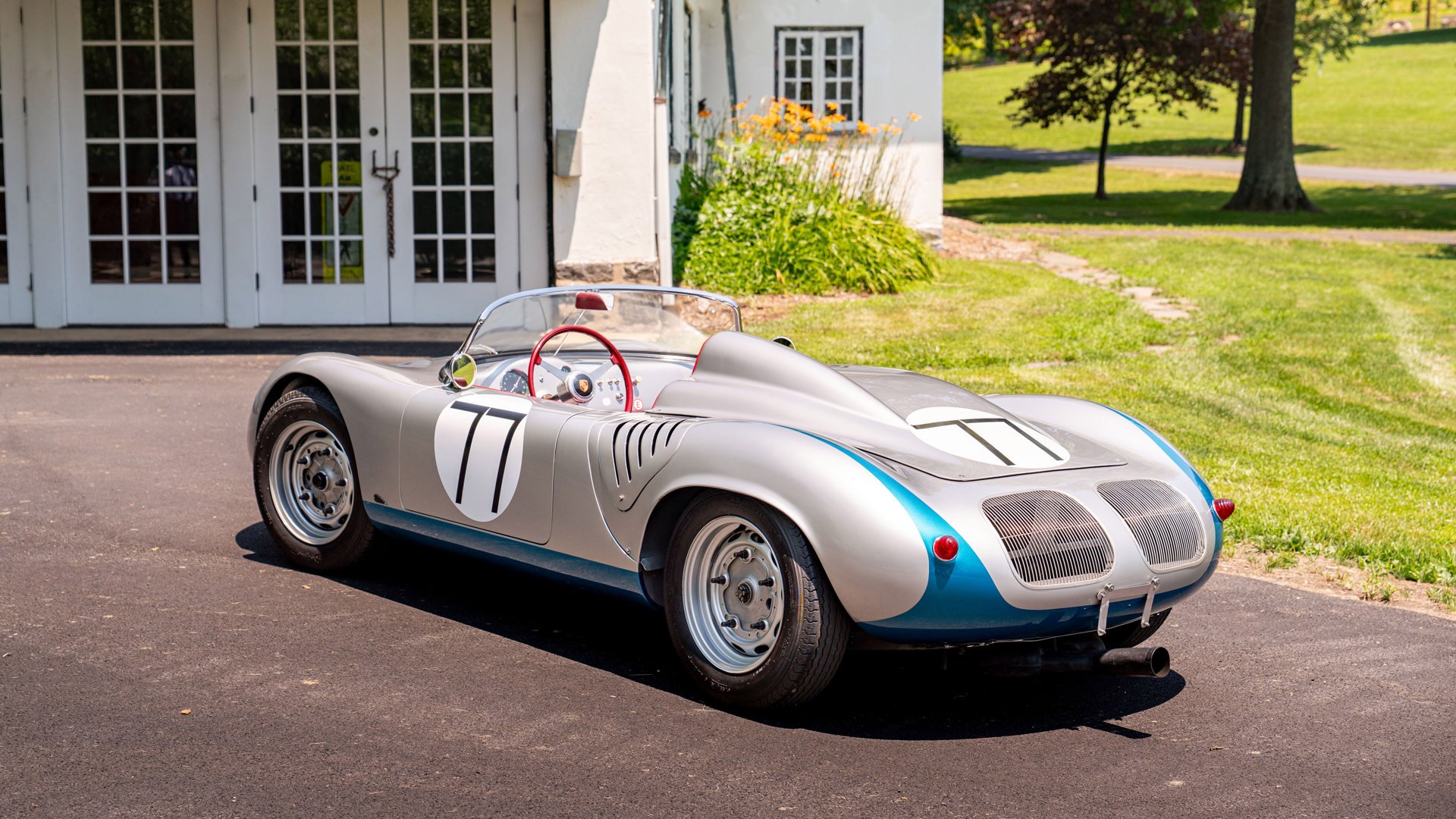
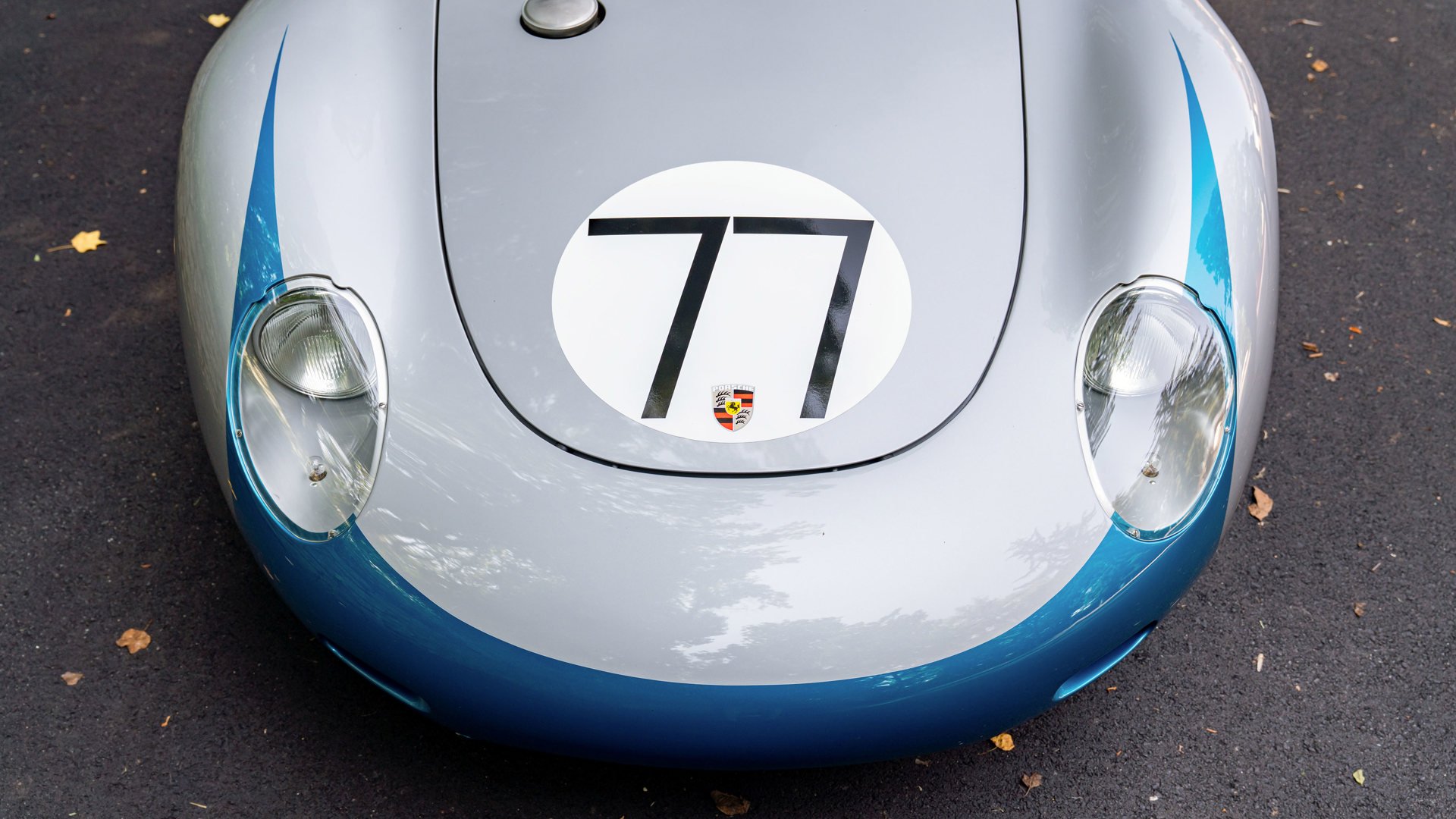
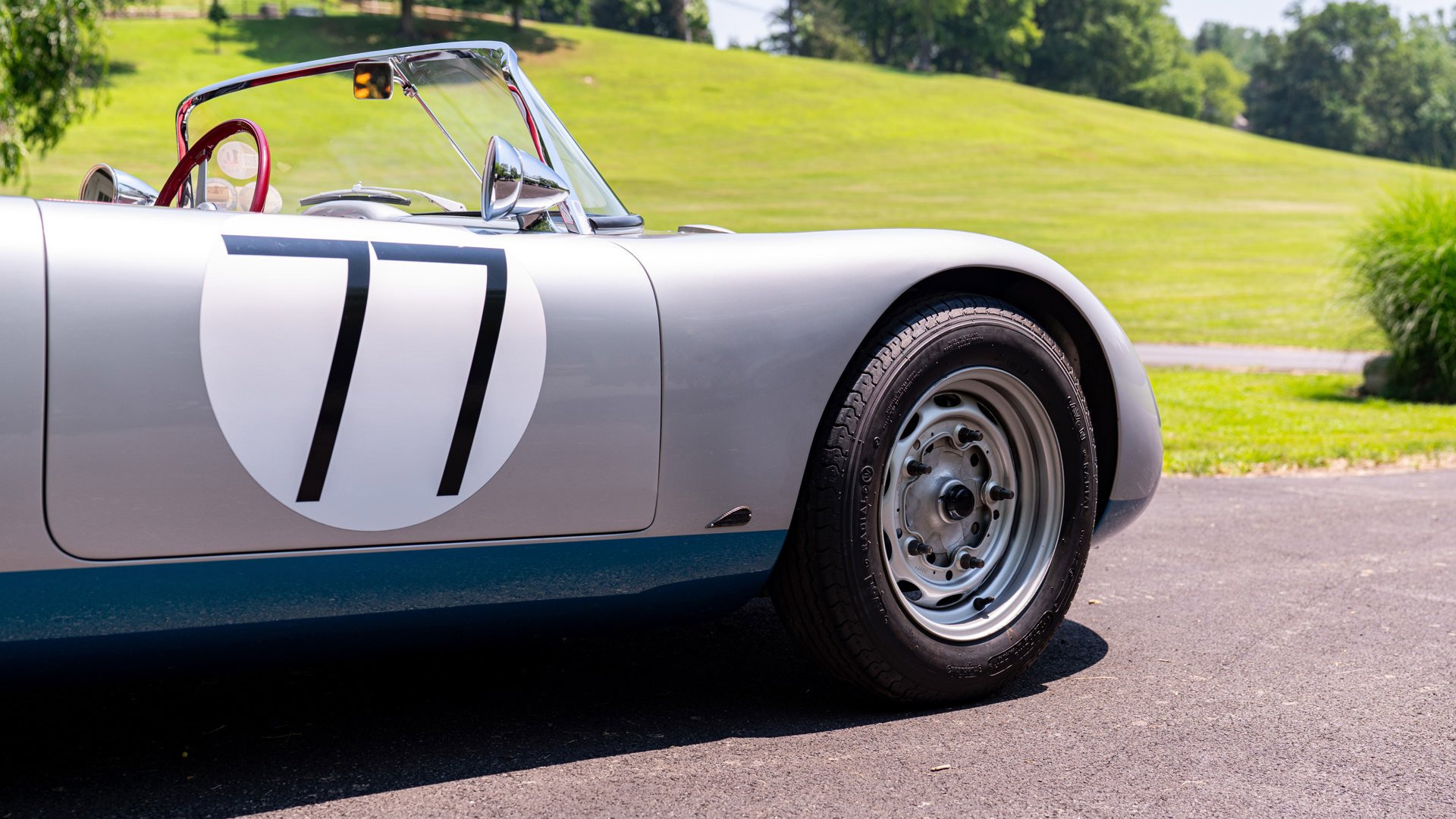
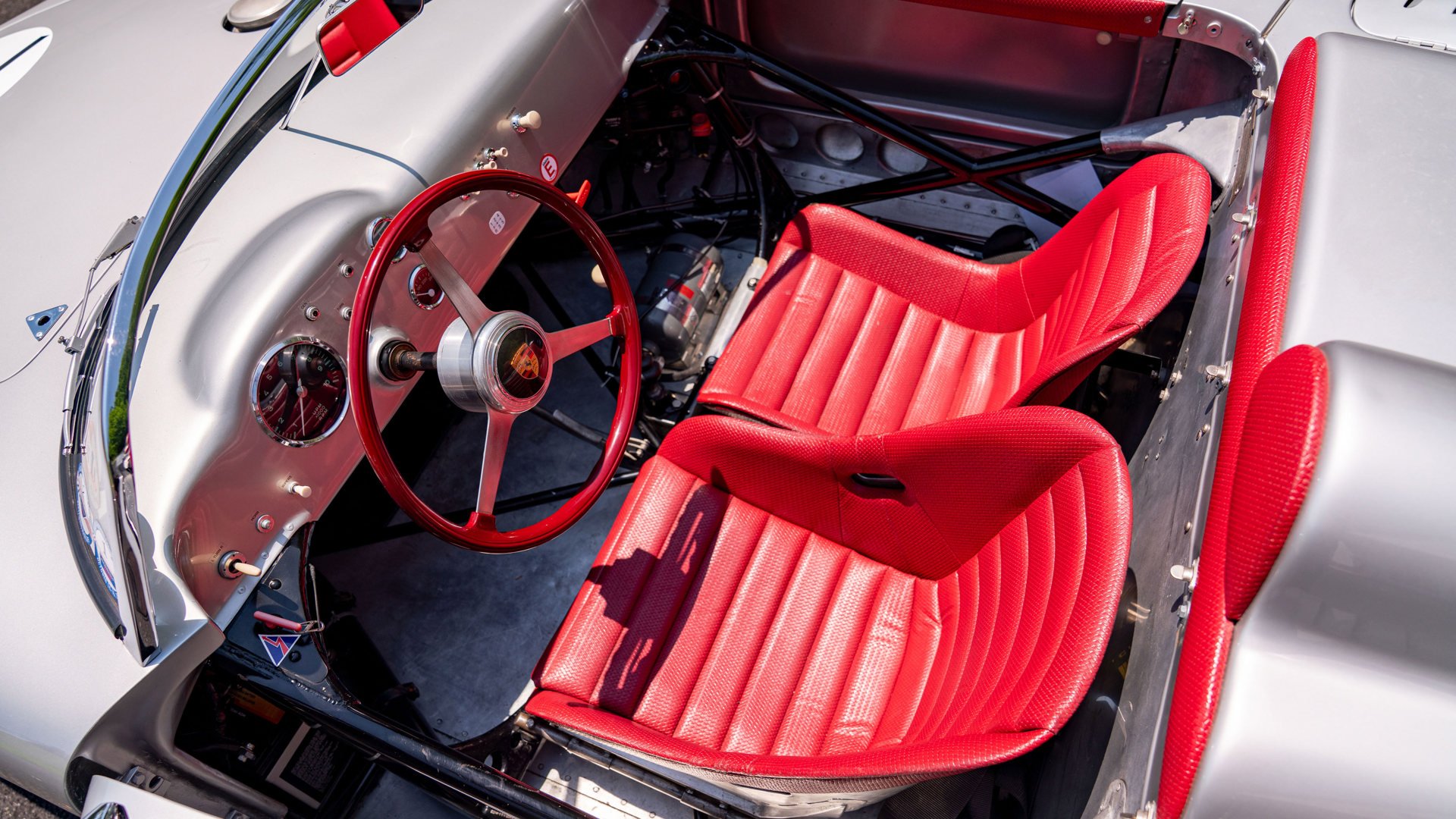
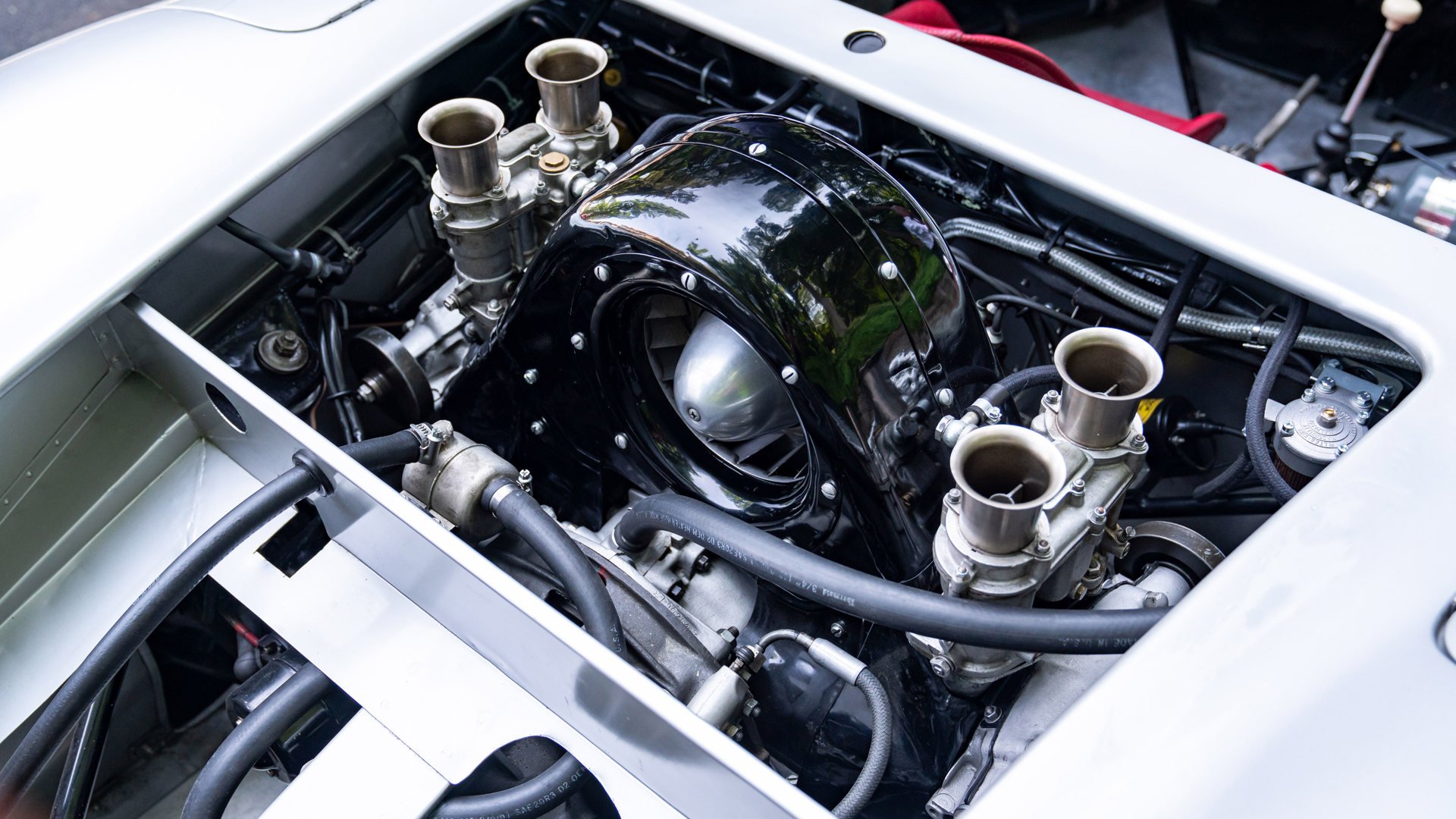
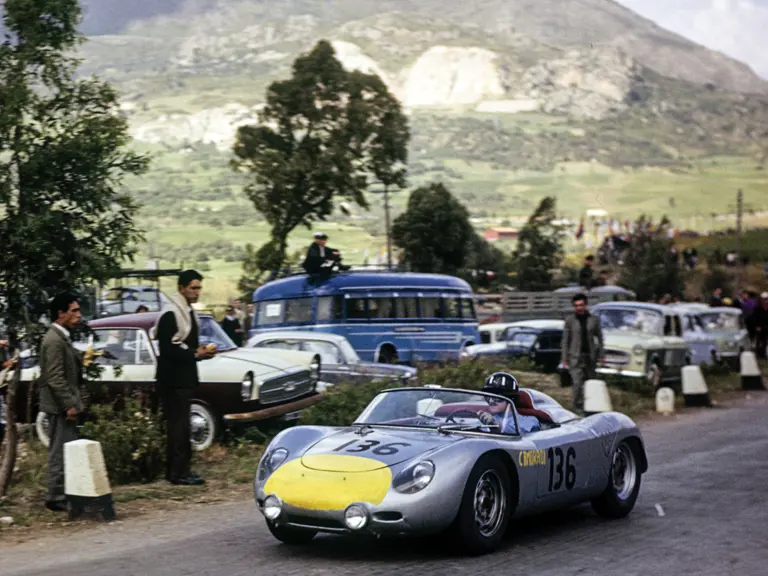
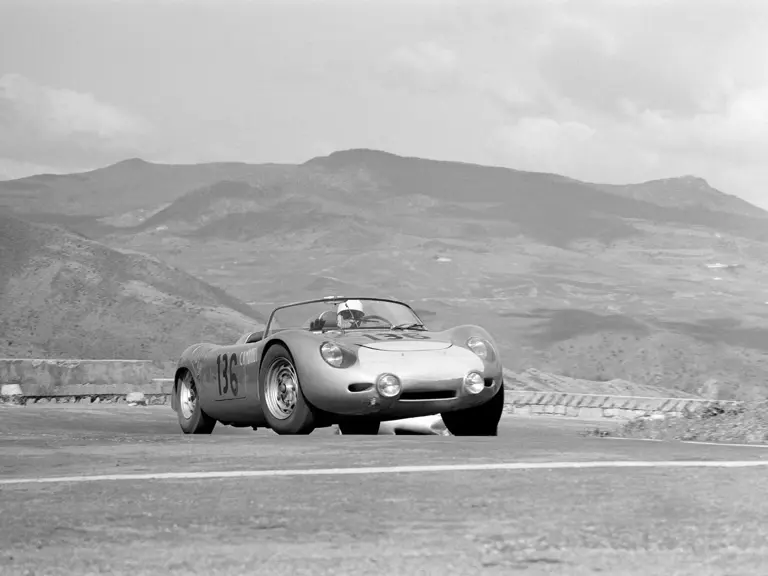
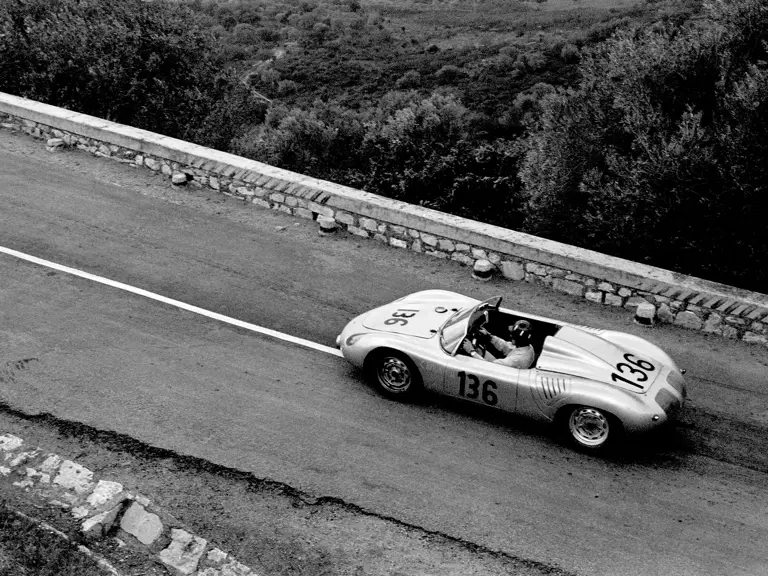
Beneath the hand-beaten aluminum bodywork crafted by Carrozzeria Wendler, the RS 60 was an evolution of Stuttgart’s most brilliant mid-century architecture. To accommodate the new FIA cockpit width regulations, the seamless steel-tube spaceframe chassis was widened, which inadvertently provided the RS 60 with a broader, more stable track. Visually, the car was characterized by the mandated, somewhat ungainly high windshield, complete with a windshield wiper, yet it retained the beautiful, sweeping rear clamshell and faired-in headlights of its predecessor. Nestled amidships was the beating heart of this specific submodel: Dr. Ernst Fuhrmann’s Type 547/3 engine. Displacing exactly 1,498cc to slip under the class limit, this all-alloy, air-cooled flat-four was a masterpiece of mechanical complexity. Utilizing four overhead camshafts driven by an intricate network of bevel gears and shafts, it breathed through a pair of large twin-choke Weber downdraft carburetors. It produced a highly tractable 150 brake horsepower at a screaming 7,800 rpm. The chassis dynamics had finally matured; the treacherous swing axles of the early 550s were long gone, replaced by a sophisticated independent double-wishbone rear suspension with coil-over shock absorbers and an anti-roll bar. This endowed the RS 60 with a predictable, forgiving limit. Stopping the featherweight 550-kilogram spyder relied on massive, heavily finned aluminum drum brakes that peeked through the wide-five wheels. Inside, the widened cockpit remained a spartan, heat-soaked aluminum cavern, offering only deeply bucketed seats, a large wood-rimmed steering wheel, and a central tachometer that served as the driver’s sole lifeline to the furious four-cam symphony unfolding just behind their shoulders.
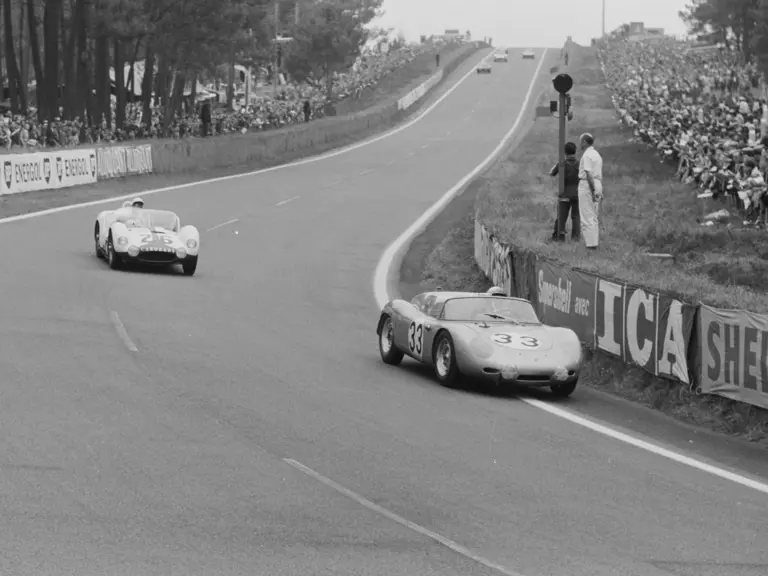
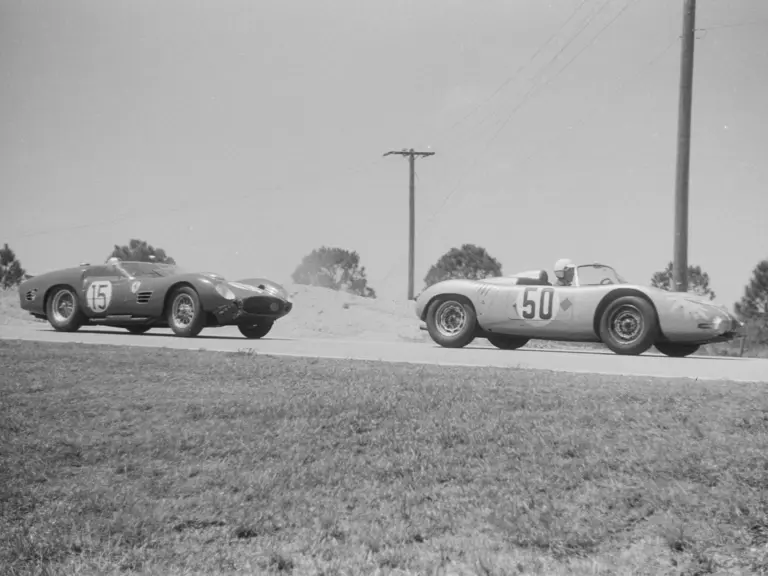
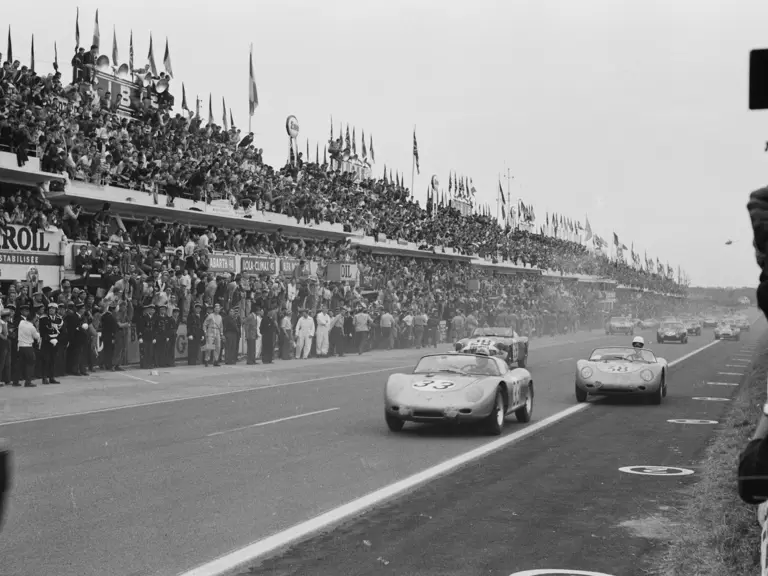
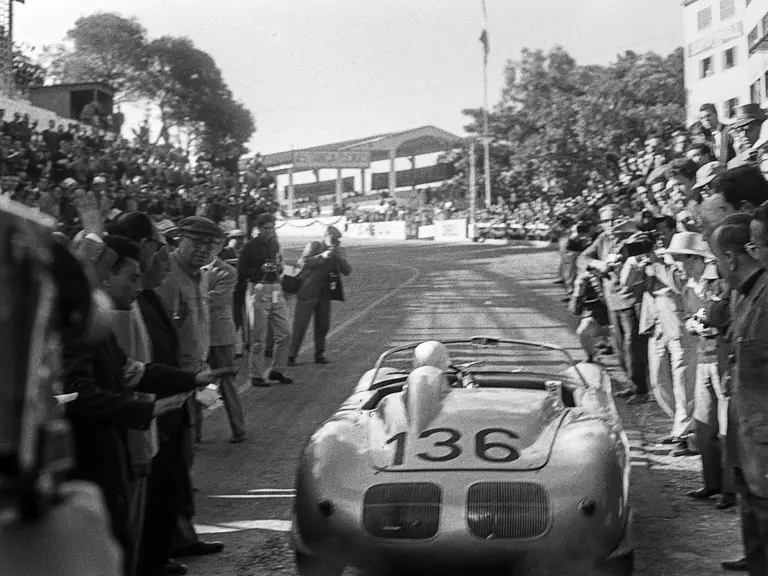
While the 1.6-liter RS 60s grabbed the international headlines with their overall giant-killing feats, the 1.5-liter Type 547/3 variants were the undeniable, unyielding backbone of Porsche’s World Sportscar Championship campaign. The 1.5-liter class (S1.5) was a ferocious battleground of international pride, and the RS 60 1.5L proved to be an unstoppable weapon. Its most defining characteristic was its supreme, unburstable reliability. At the 1960 24 Hours of Le Mans, the high-revving 1.5-liter RS 60s ran like Swiss watches through the grueling day and night. Driven by masters of endurance like Edgar Barth and Wolfgang Seidel, they secured a resounding class victory, placing 11th overall and completely outclassing the fragile British and Italian opposition. In the gruelling Nürburgring 1000km, the RS 60 1.5L once again took class honors, utilizing its double-wishbone rear suspension to dance across the terrifying bumps and jumps of the Nordschleife with unmatched precision. Beyond the factory efforts, the 1.5-liter RS 60 became the holy grail for wealthy privateers competing in the SCCA National Championships in the United States, where its sheer mechanical grip and torque out of slow corners made it virtually unbeatable on tight airfield circuits.
The legacy of the 1960 Porsche 718 RS 60 1.5L is that of the ultimate, rule-bending survivor. It is a monument to an era when an engineering team could take a set of restrictive, aerodynamic-ruining regulations and still produce a car capable of dominating the world’s most punishing endurance races. It validated the final, perfected iteration of the Fuhrmann four-cam engine in its purest 1.5-liter displacement. Following its success, Porsche would subtly evolve the chassis into the RS 61, before eventually transitioning to the flat-eight powered W-RS and the fiberglass-bodied 904. Today, a genuine 1.5-liter RS 60 is an undisputed blue-chip treasure. It is a coveted jewel of historic motorsport, celebrated at events like the Goodwood Revival and the Le Mans Classic, where the unmistakable, frantic wail of its bevel-gear driven flat-four continues to echo as a glorious reminder of Stuttgart’s absolute mastery of the 1.5-liter class.
Brand
Produced from
Portal
Vehicle category
Model line
Predecessor
Sucessor
Brand
Produced from
Portal
Vehicle category
Model line
Model generation
Predecessor
Sucessor
Submodel Overview
To fully appreciate the 1960 Porsche 718 RS 60 1.5L, one must dive into the bureaucratic upheaval that struck the international motorsport paddock at the dawn of the 1960s. The governing body of motorsport, the FIA, had grown increasingly concerned with the blurring lines between pure, open-wheel racing cars and the two-seater sports prototypes competing in the World Sportscar Championship. In an attempt to force prototypes to bear a closer resemblance to road-going grand tourers, the FIA introduced the new “Appendix C” regulations for the 1960 season. These rules mandated a significantly wider cockpit, regulation-sized passenger doors, a space for a mandatory “FIA suitcase”, and, most controversially, a towering windshield measuring at least 25 centimeters in height. For the aerodynamicists in Stuttgart, who had just perfected the sleek, low-slung 718 RSK, these rules were a draconian nightmare. Yet, under the pragmatic guidance of Huschke von Hanstein and Porsche’s brilliant engineering team, the RSK was heavily revised to comply, birthing the RS 60. While its larger 1.6-liter sibling famously snatched overall victories at Sebring and the Targa Florio, the 1.5-liter iteration—powered by the exquisite Type 547/3 engine—was built with a singular, ruthless focus: to absolutely annihilate the 1.5-liter class, fending off the featherweight Lotus 15s, the sophisticated OSCA 1500s, and the biting Ferrari 156 Dinos.
Beneath the hand-beaten aluminum bodywork crafted by Carrozzeria Wendler, the RS 60 was an evolution of Stuttgart’s most brilliant mid-century architecture. To accommodate the new FIA cockpit width regulations, the seamless steel-tube spaceframe chassis was widened, which inadvertently provided the RS 60 with a broader, more stable track. Visually, the car was characterized by the mandated, somewhat ungainly high windshield, complete with a windshield wiper, yet it retained the beautiful, sweeping rear clamshell and faired-in headlights of its predecessor. Nestled amidships was the beating heart of this specific submodel: Dr. Ernst Fuhrmann’s Type 547/3 engine. Displacing exactly 1,498cc to slip under the class limit, this all-alloy, air-cooled flat-four was a masterpiece of mechanical complexity. Utilizing four overhead camshafts driven by an intricate network of bevel gears and shafts, it breathed through a pair of large twin-choke Weber downdraft carburetors. It produced a highly tractable 150 brake horsepower at a screaming 7,800 rpm. The chassis dynamics had finally matured; the treacherous swing axles of the early 550s were long gone, replaced by a sophisticated independent double-wishbone rear suspension with coil-over shock absorbers and an anti-roll bar. This endowed the RS 60 with a predictable, forgiving limit. Stopping the featherweight 550-kilogram spyder relied on massive, heavily finned aluminum drum brakes that peeked through the wide-five wheels. Inside, the widened cockpit remained a spartan, heat-soaked aluminum cavern, offering only deeply bucketed seats, a large wood-rimmed steering wheel, and a central tachometer that served as the driver’s sole lifeline to the furious four-cam symphony unfolding just behind their shoulders.
While the 1.6-liter RS 60s grabbed the international headlines with their overall giant-killing feats, the 1.5-liter Type 547/3 variants were the undeniable, unyielding backbone of Porsche’s World Sportscar Championship campaign. The 1.5-liter class (S1.5) was a ferocious battleground of international pride, and the RS 60 1.5L proved to be an unstoppable weapon. Its most defining characteristic was its supreme, unburstable reliability. At the 1960 24 Hours of Le Mans, the high-revving 1.5-liter RS 60s ran like Swiss watches through the grueling day and night. Driven by masters of endurance like Edgar Barth and Wolfgang Seidel, they secured a resounding class victory, placing 11th overall and completely outclassing the fragile British and Italian opposition. In the gruelling Nürburgring 1000km, the RS 60 1.5L once again took class honors, utilizing its double-wishbone rear suspension to dance across the terrifying bumps and jumps of the Nordschleife with unmatched precision. Beyond the factory efforts, the 1.5-liter RS 60 became the holy grail for wealthy privateers competing in the SCCA National Championships in the United States, where its sheer mechanical grip and torque out of slow corners made it virtually unbeatable on tight airfield circuits.
The legacy of the 1960 Porsche 718 RS 60 1.5L is that of the ultimate, rule-bending survivor. It is a monument to an era when an engineering team could take a set of restrictive, aerodynamic-ruining regulations and still produce a car capable of dominating the world’s most punishing endurance races. It validated the final, perfected iteration of the Fuhrmann four-cam engine in its purest 1.5-liter displacement. Following its success, Porsche would subtly evolve the chassis into the RS 61, before eventually transitioning to the flat-eight powered W-RS and the fiberglass-bodied 904. Today, a genuine 1.5-liter RS 60 is an undisputed blue-chip treasure. It is a coveted jewel of historic motorsport, celebrated at events like the Goodwood Revival and the Le Mans Classic, where the unmistakable, frantic wail of its bevel-gear driven flat-four continues to echo as a glorious reminder of Stuttgart’s absolute mastery of the 1.5-liter class.
Tech Specs
Technical Specifications
Tech Specs
Technical Specifications
Engine
01
03
Internal combustion engine
Configuration
Porsche Type 547/3, Flat-4 (Boxer) - Air-cooled
Location
Mid, longitudinally mounted
Construction
Aluminium alloy block and heads
Displacement (cc)
1,498 cc
Displacement (cu in)
91.4 cu in
Compression
9.8:1
Bore x Stroke
85.0 mm x 66.0 mm
Valvetrain
2 valves per cylinder, DOHC
Fuel feed
2 x Weber 46 IDM1 carburetors
Lubrication
Dry sump
Aspiration
Naturally aspirated
Output
Power (hp)
150 hp
Power (kW)
112 kW
Max power at
8,000 RPM
Torque (Nm)
147 Nm
Torque (ft lbs)
108 ft lbs
Max torque at
6,500 RPM
Drivetrain
02
03
Chassis
Type
Tubular steel spaceframe
Material
Steel
Body
Material
Lightweight Aluminium
Transmission
Gearbox
Porsche Type 718, 5-speed manual
Drive
Rear Wheel Drive (Limited Slip Differential)
Suspension
Front
Independent, trailing arms, transverse torsion bars, telescopic dampers, anti-roll bar
Rear
Independent, unequal length double wishbones, coil springs over telescopic dampers, anti-roll bar
Steering
Type
ZF worm and peg, unassisted
Brakes
Front
Finned aluminium drum brakes, dual-circuit
Rear
Finned aluminium drum brakes, dual-circuit
Wheels
Front
4.5" x 15" (Steel/Aluminium composite)
Rear
5.5" x 15" (Steel/Aluminium composite)
Tires
Front
5.50-15
Rear
6.00-15
Dimensions and performance
03
03
Dimensions
Length (mm)
3,700 mm
Length (in)
145.7 in
Width (mm)
1,510 mm
Width (in)
59.4 in
Height (mm)
980 mm
Height (in)
38.6 in
Wheelbase (mm)
2,200 mm
Wheelbase (in)
86.6 in
Weight (kg)
550 kg
Weight (lbs)
1,212 lbs
Performance
Power to weight
0.27 hp/kg
Top speed (km/h)
250 km/h
Top speed (mph)
155 mph
0-100 km/h (0-60 mph)
~5.5 s