
Porsche 904/6 Carrera GTS
Brand
Produced from
Portal
Vehicle category
Model line
Predecessor
Successor
Submodel Overview
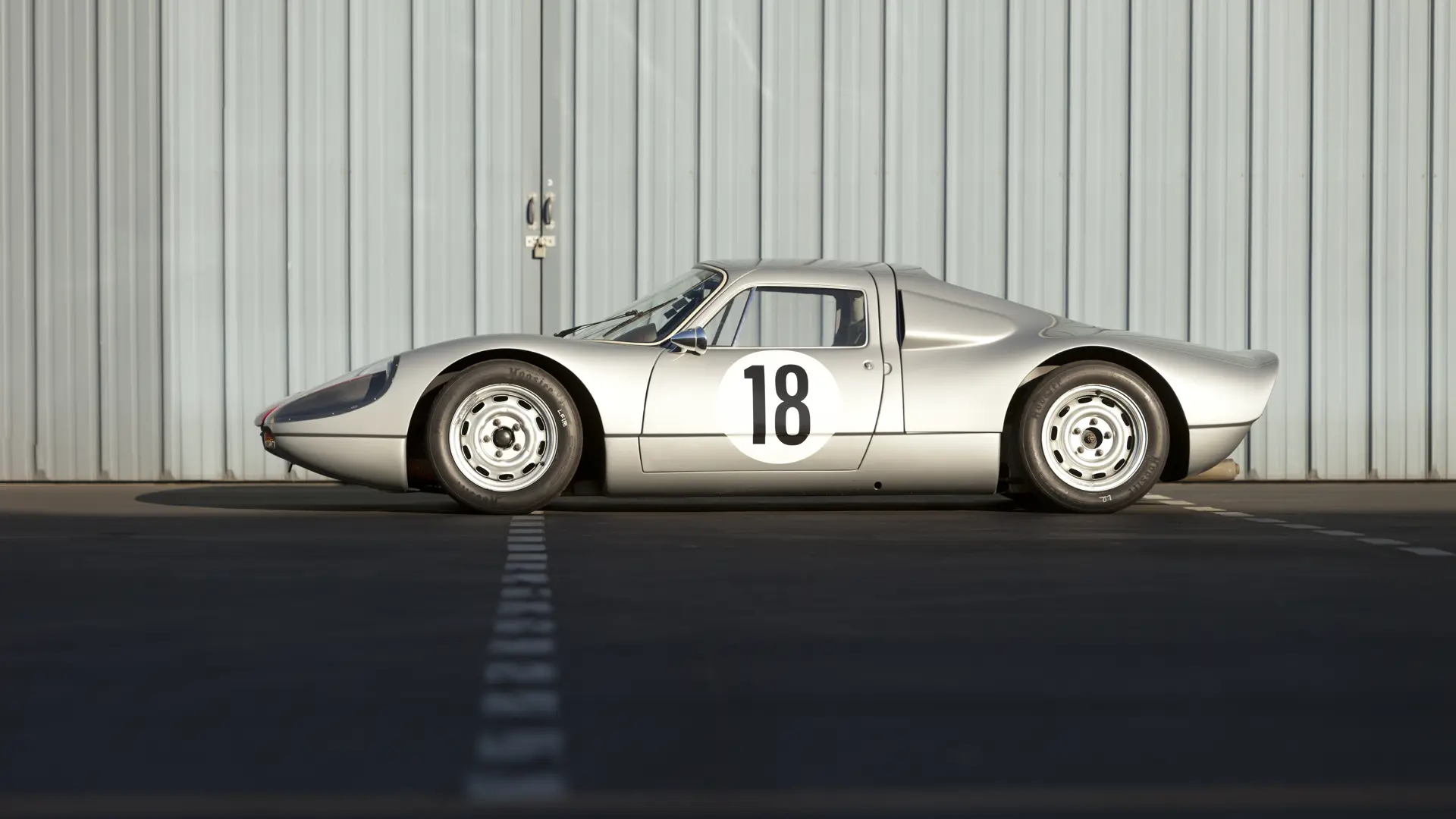
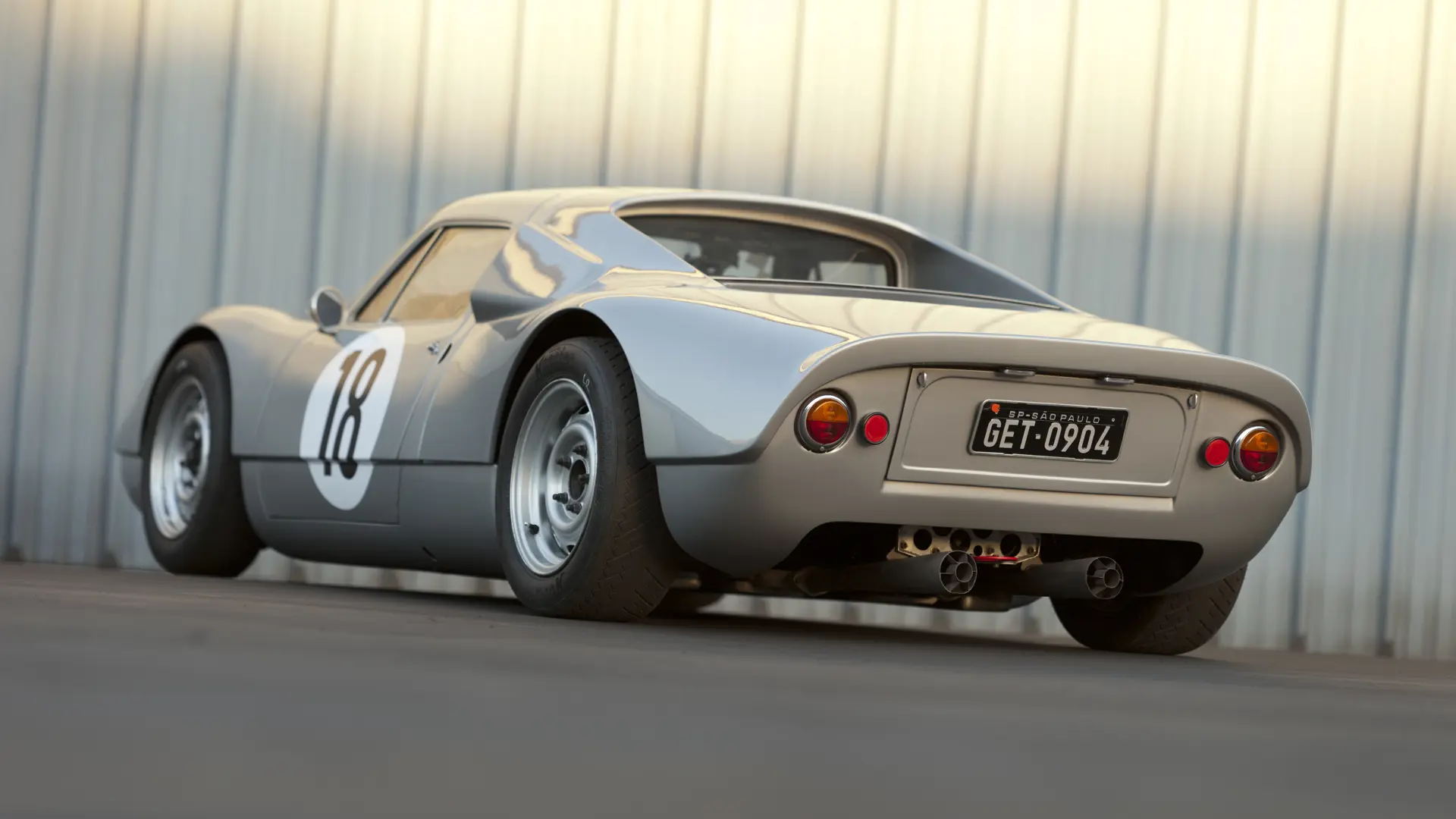
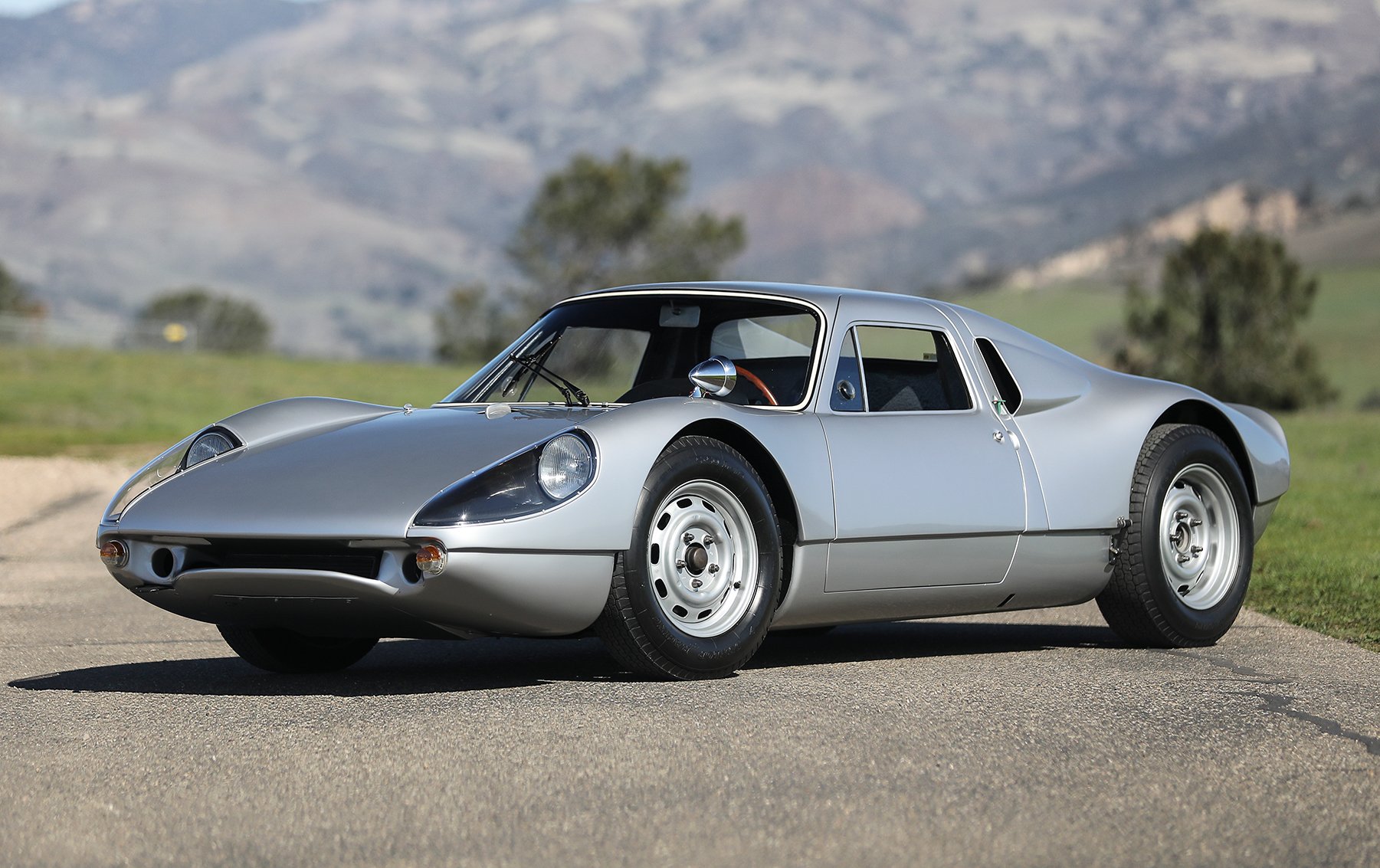
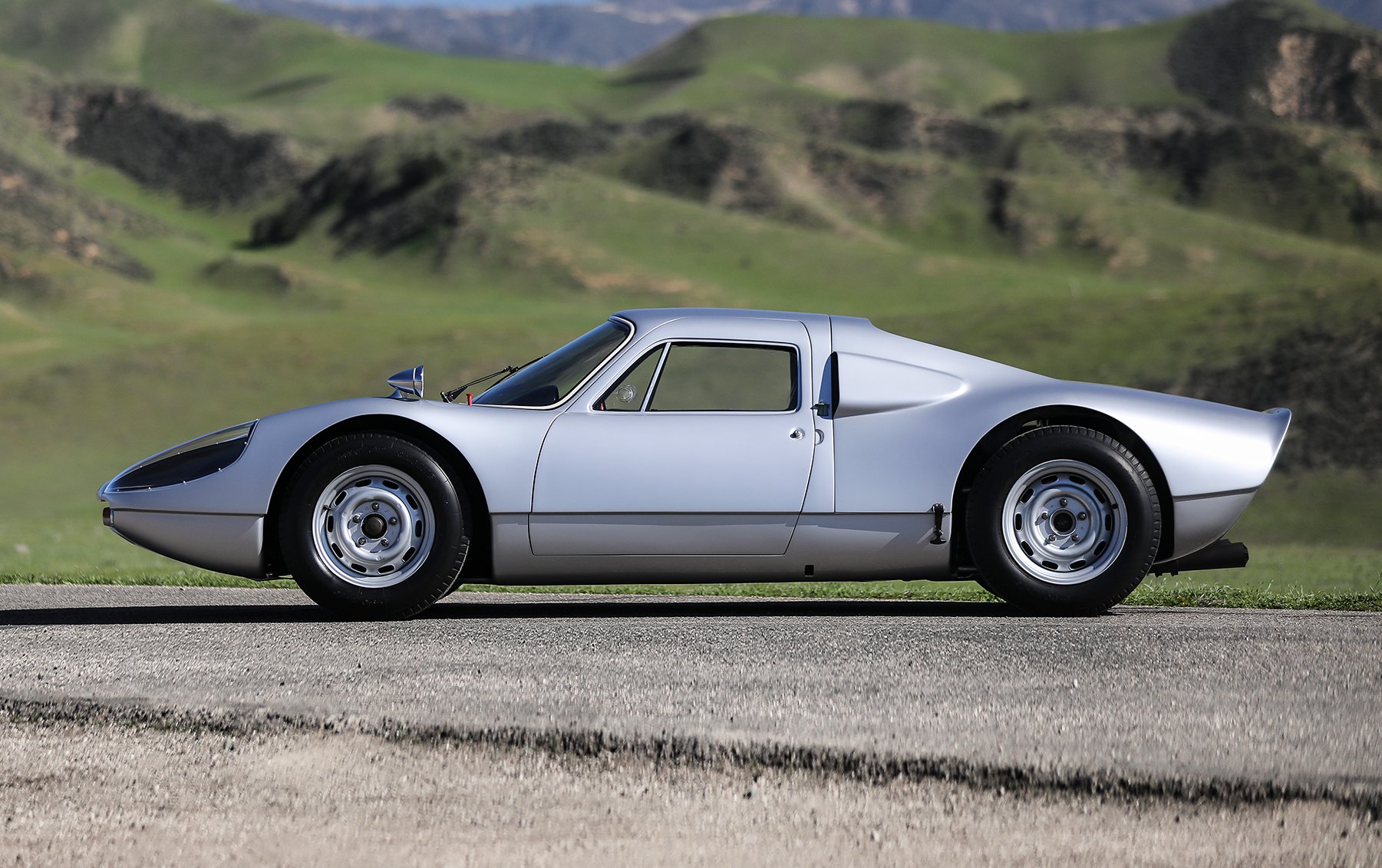
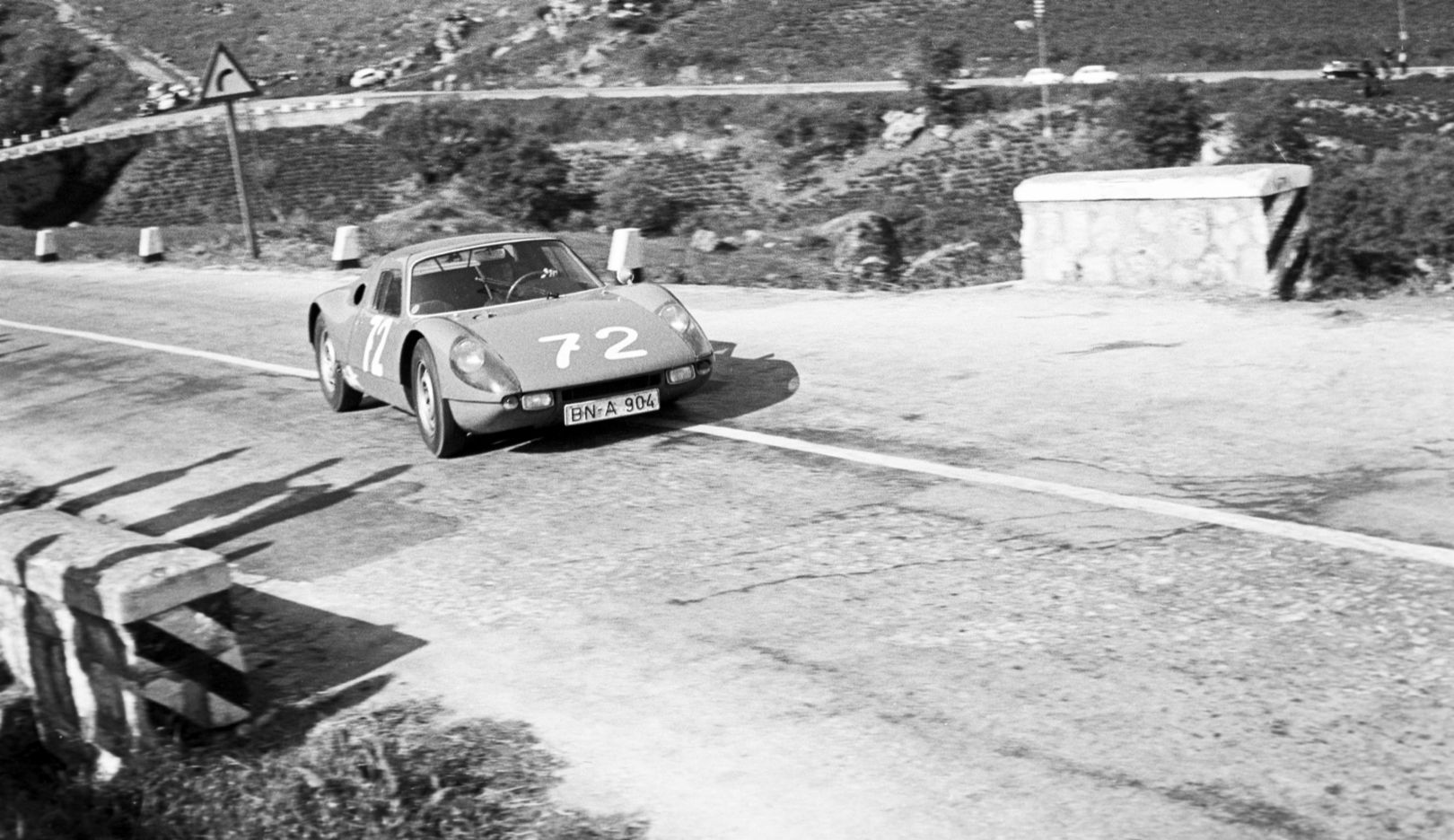
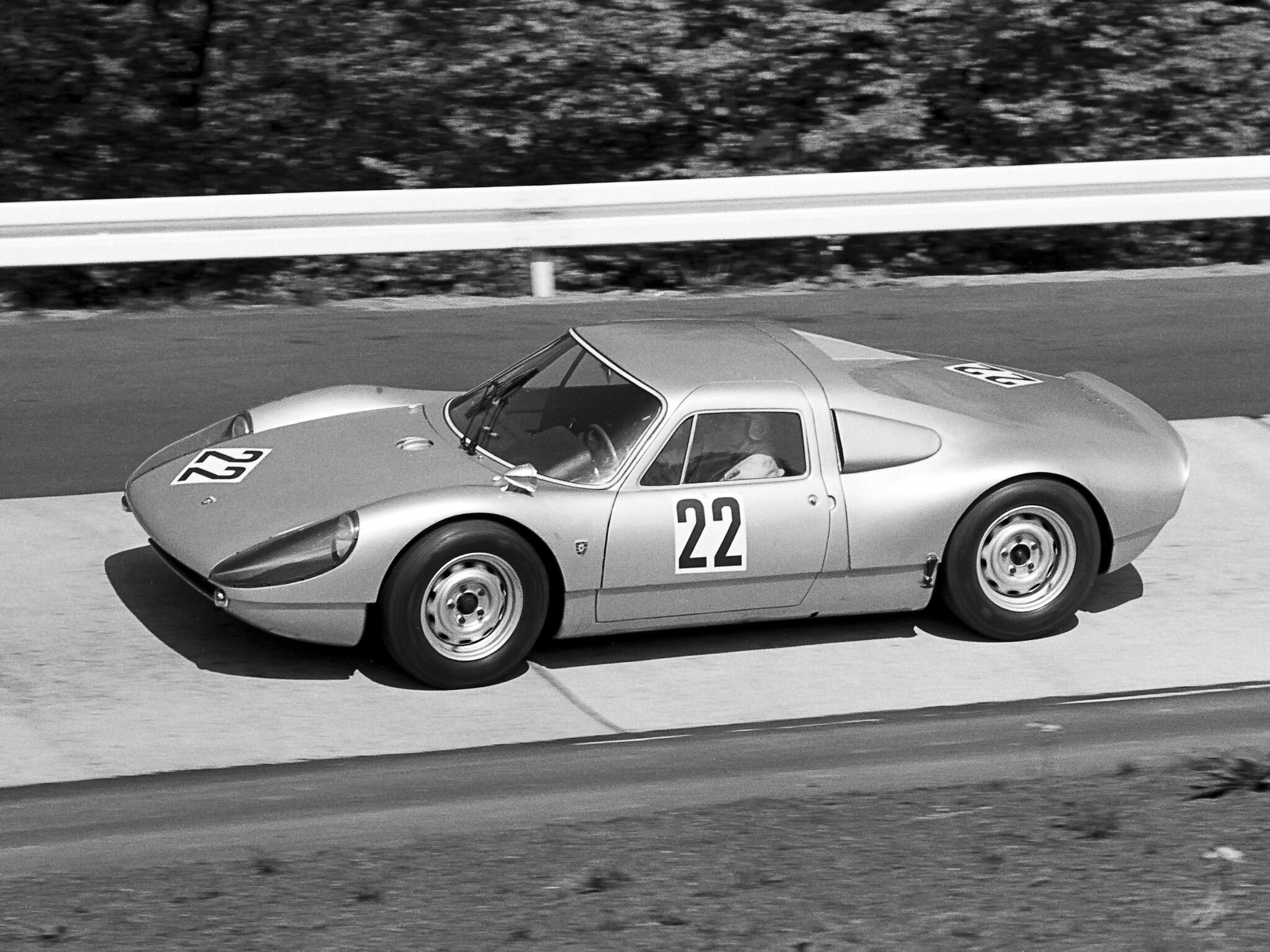
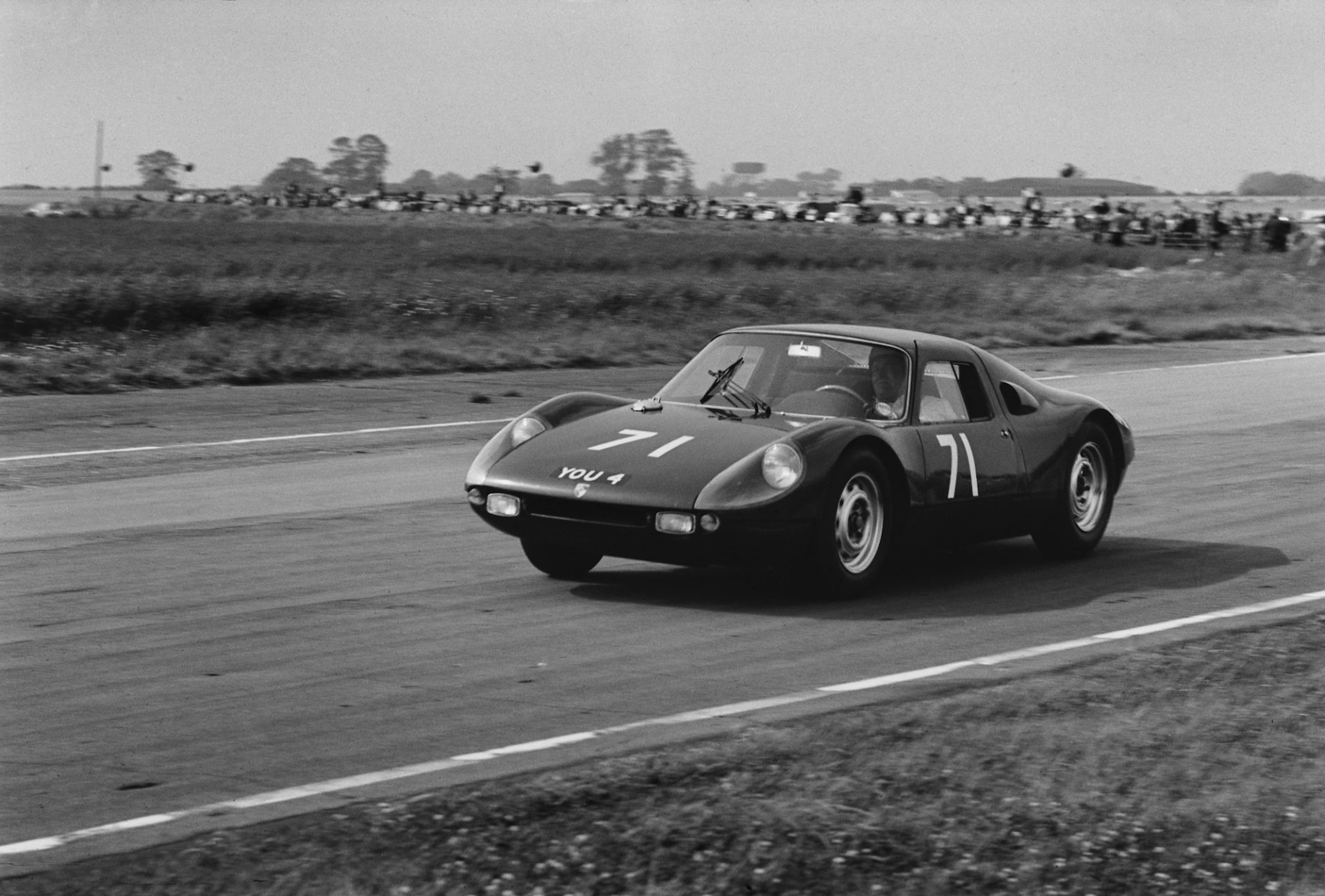
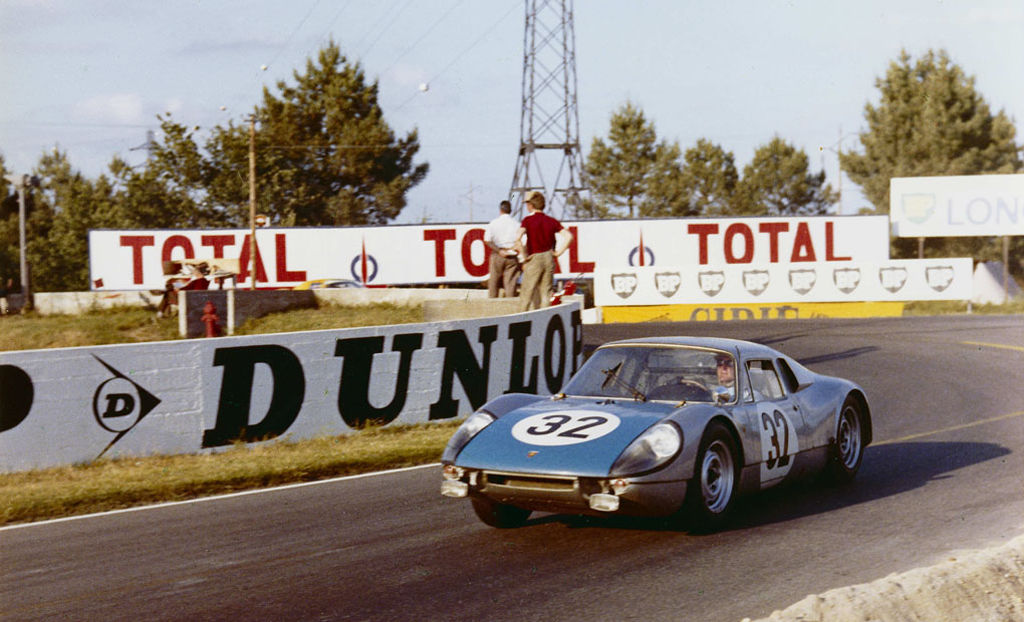
To fully grasp the historical magnitude of the 1964 Porsche 904/6 Carrera GTS, one must peer behind the curtain of Stuttgart’s fiercely pragmatic racing department during a period of profound transition. When Ferdinand Alexander ‘Butzi’ Porsche sculpted the breathtaking, fiberglass-bodied 904, it was fundamentally designed to house the brand-new, 2.0-liter flat-six engine that was concurrently being developed for the upcoming 901 (the car that would become the immortal 911). However, the harsh realities of motorsport homologation intervened. The FIA demanded 100 production cars to qualify for the lucrative 2.0-liter Grand Touring class, and the new six-cylinder simply had not yet proven its endurance reliability. Forced to compromise, Porsche launched the standard 904 with the venerable, complex, but proven four-cylinder Fuhrmann engine. Yet, the engineers at Zuffenhausen never abandoned their original vision. For the factory racing team, they produced a highly exclusive batch of prototypes—only around ten to twelve chassis—and finally united Butzi’s wind-cheating silhouette with the glorious, howling flat-six. This was the 904/6. Thrust directly into the fiercely contested prototype category, it stepped into a brutal arena, forced to trade blows with bespoke racing machinery like the V12-powered Ferrari 250 LM, the featherweight Alfa Romeo Giulia TZ2, and the explosive Abarth 2000 sports racers. The 904/6 was not merely a racing car; it was a high-speed, rolling laboratory designed to prove that Porsche’s new flat-six architecture was robust enough to conquer the world.
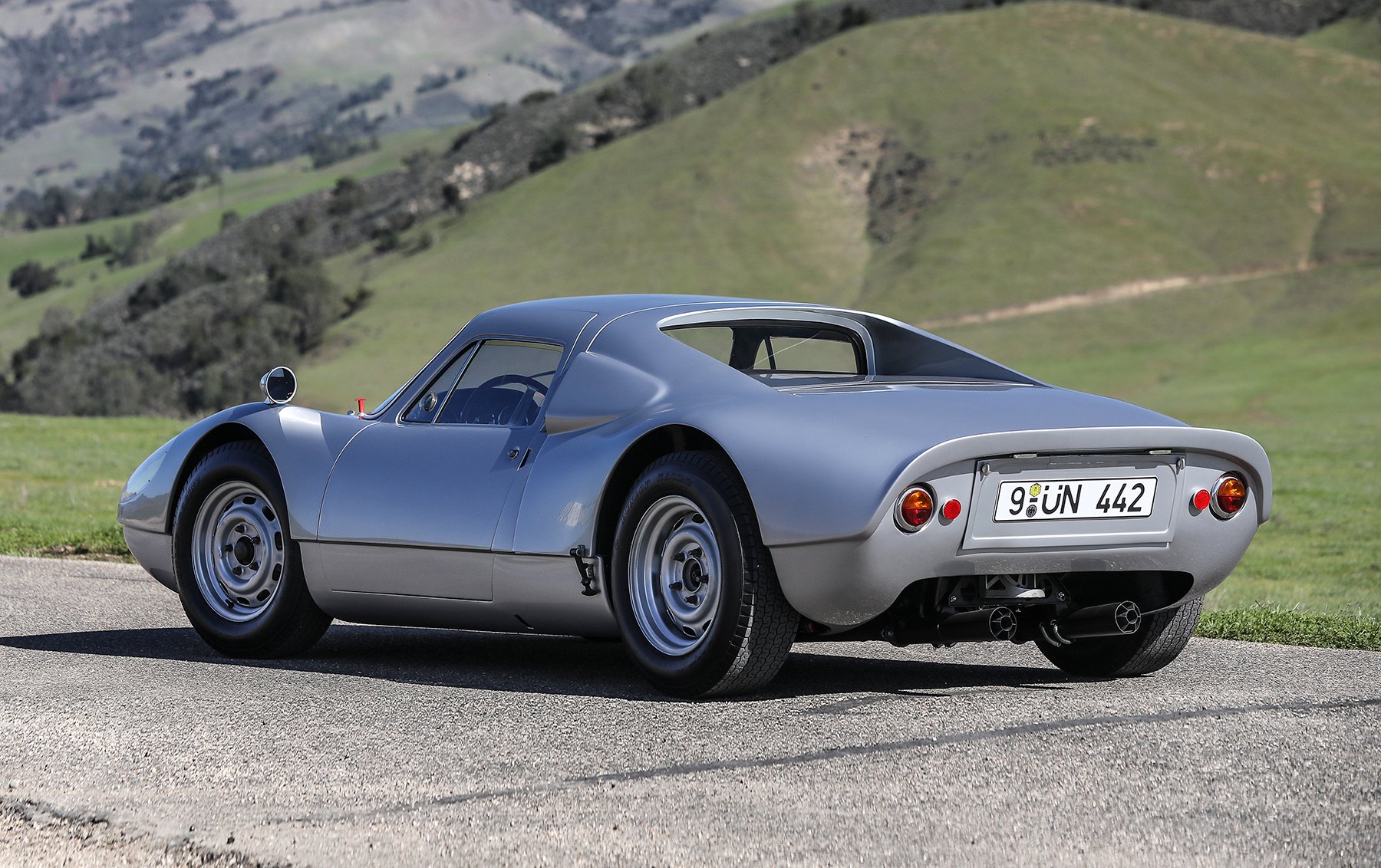
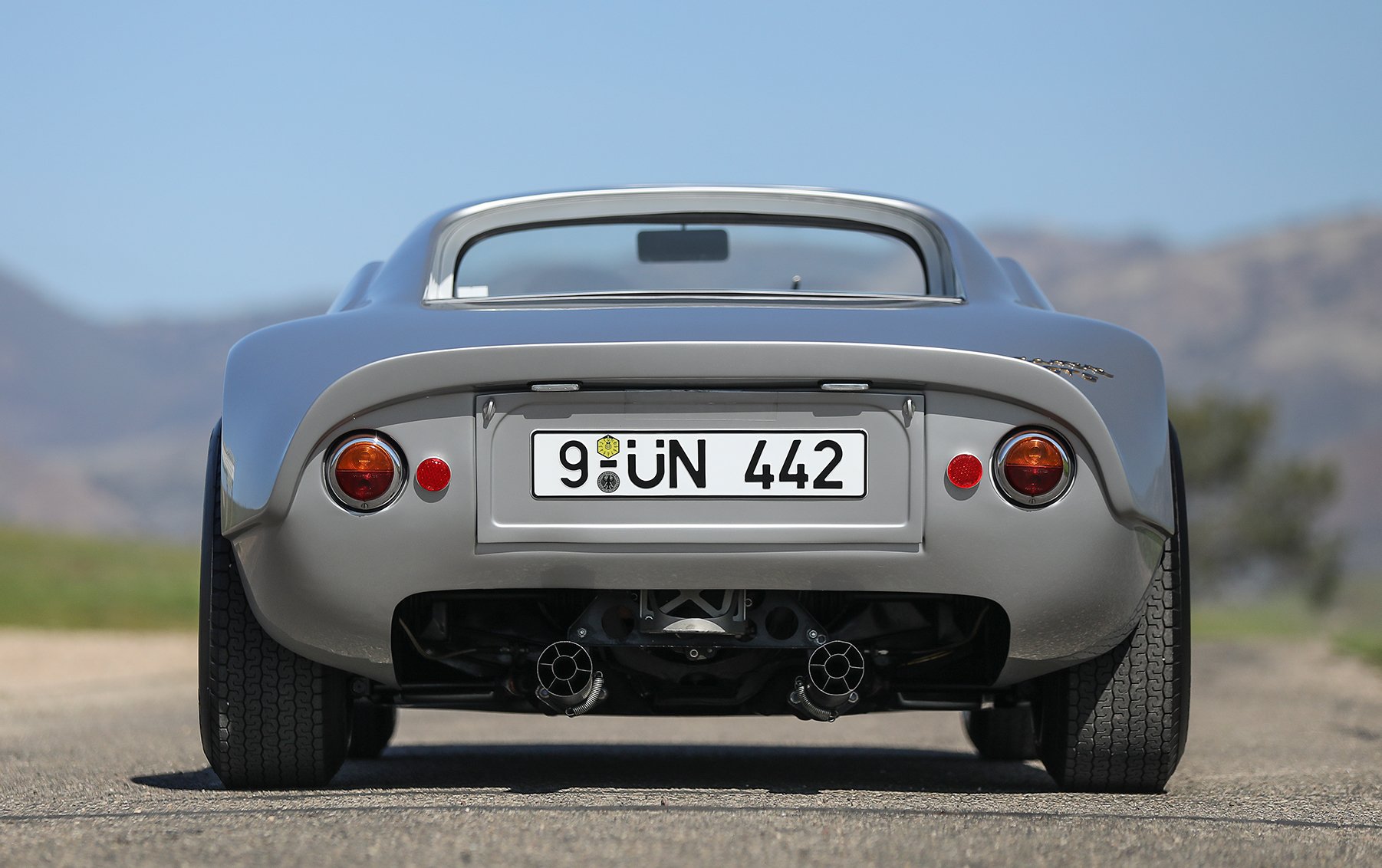
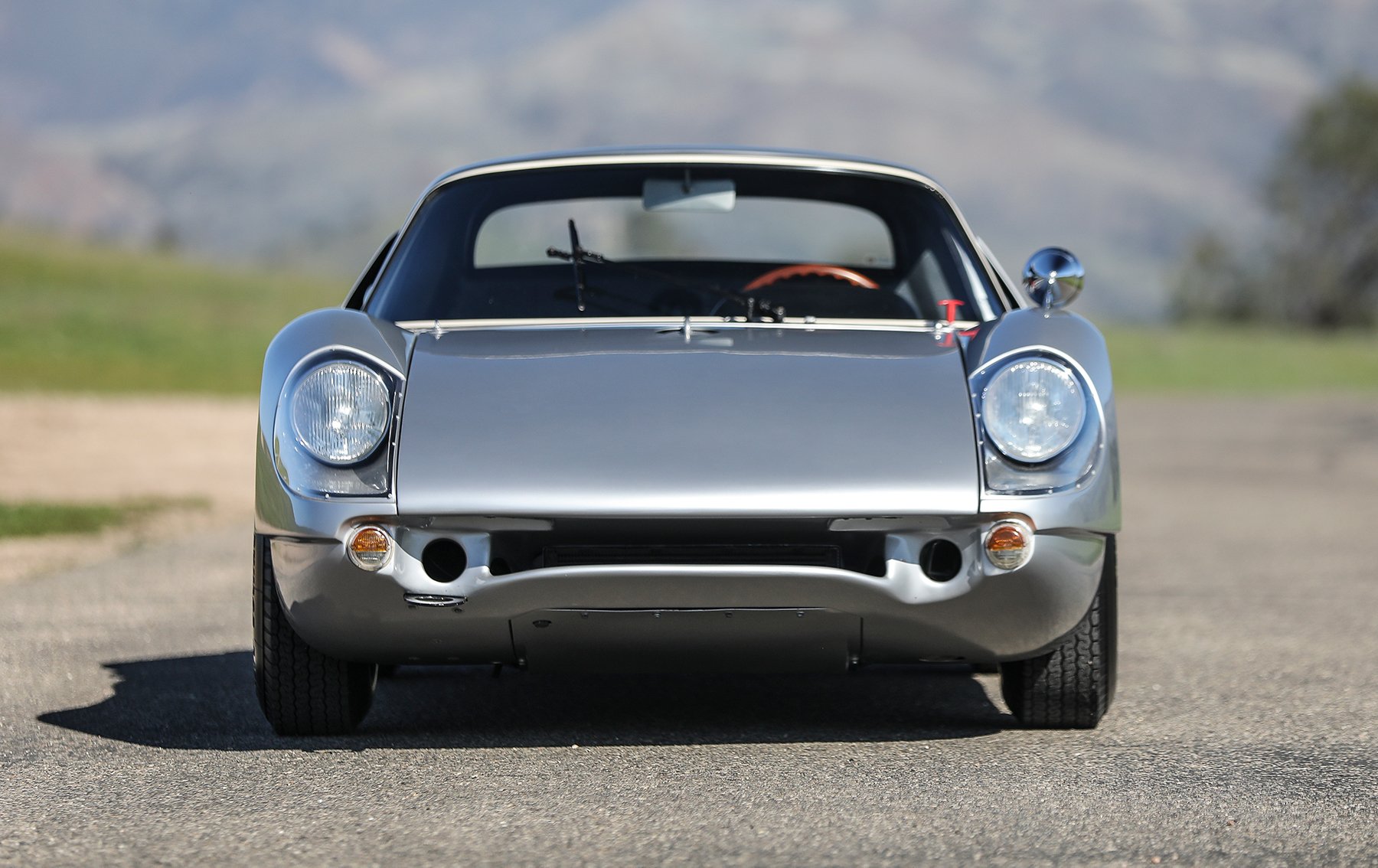
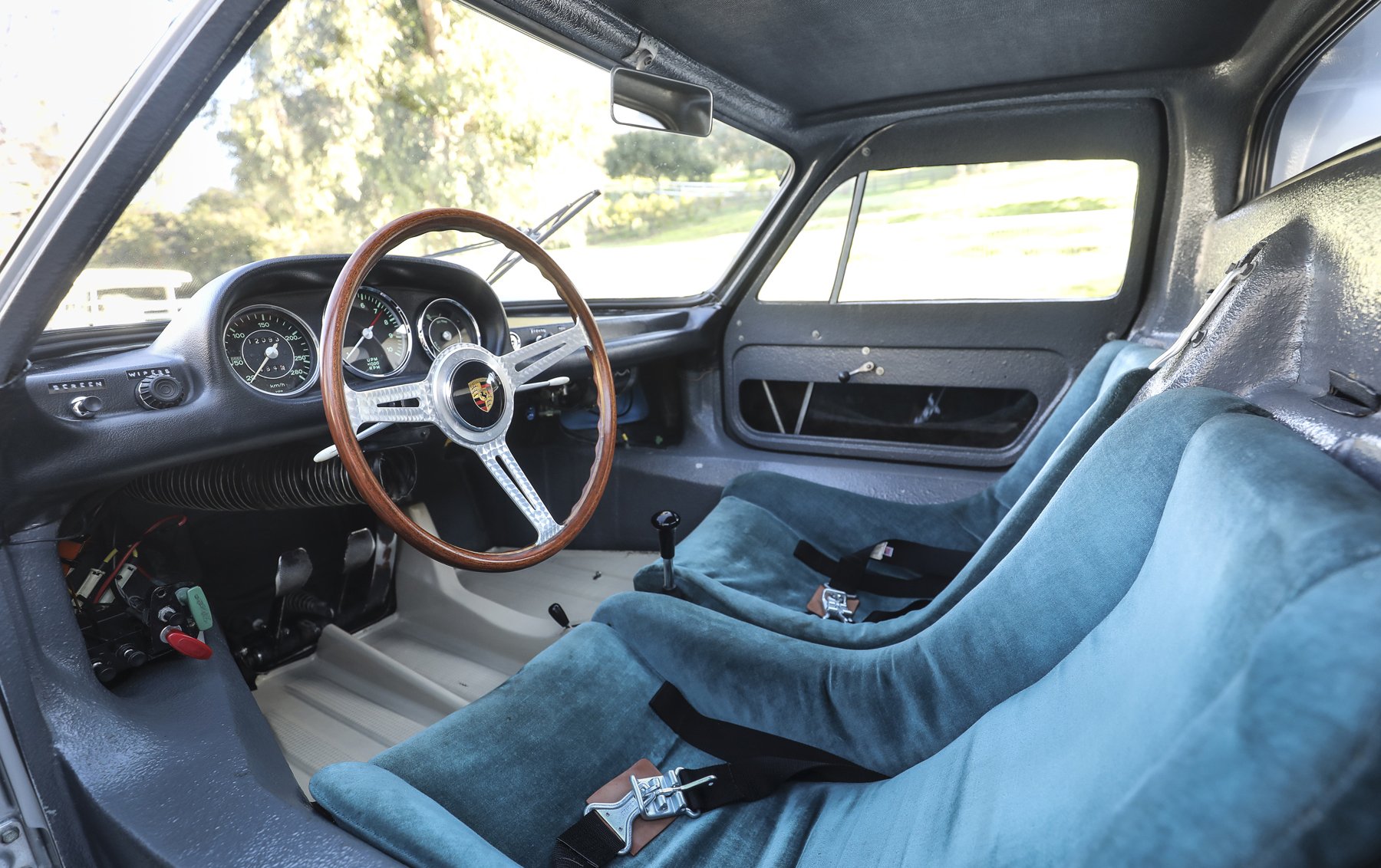
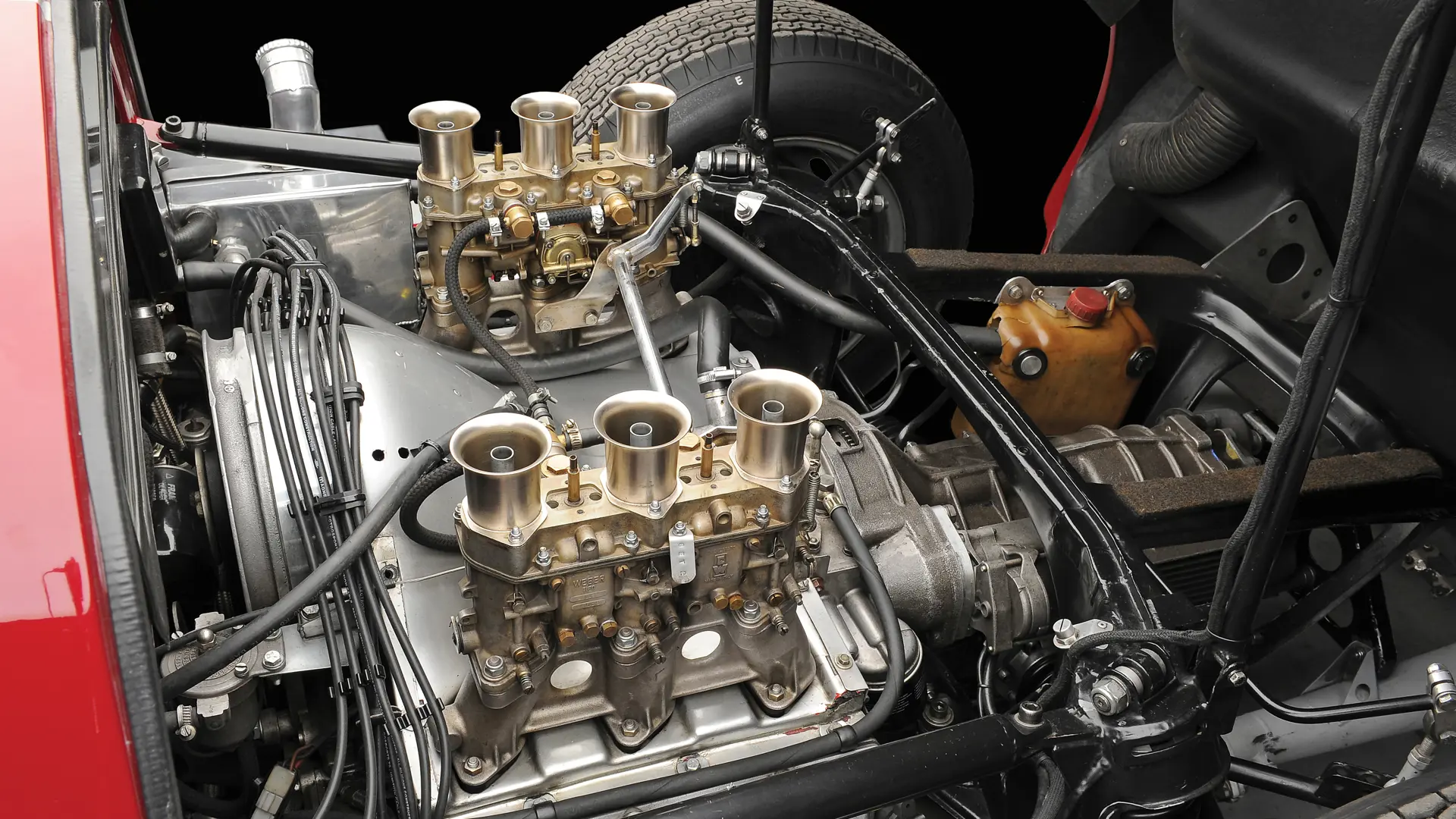
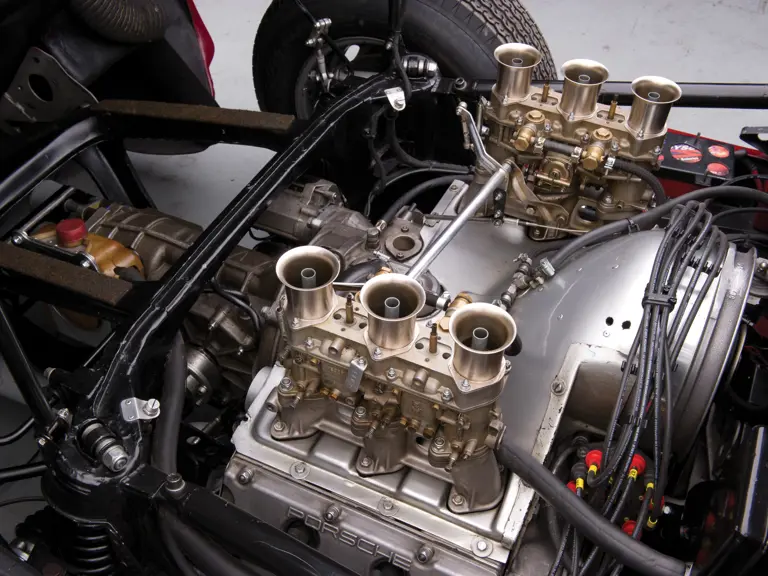
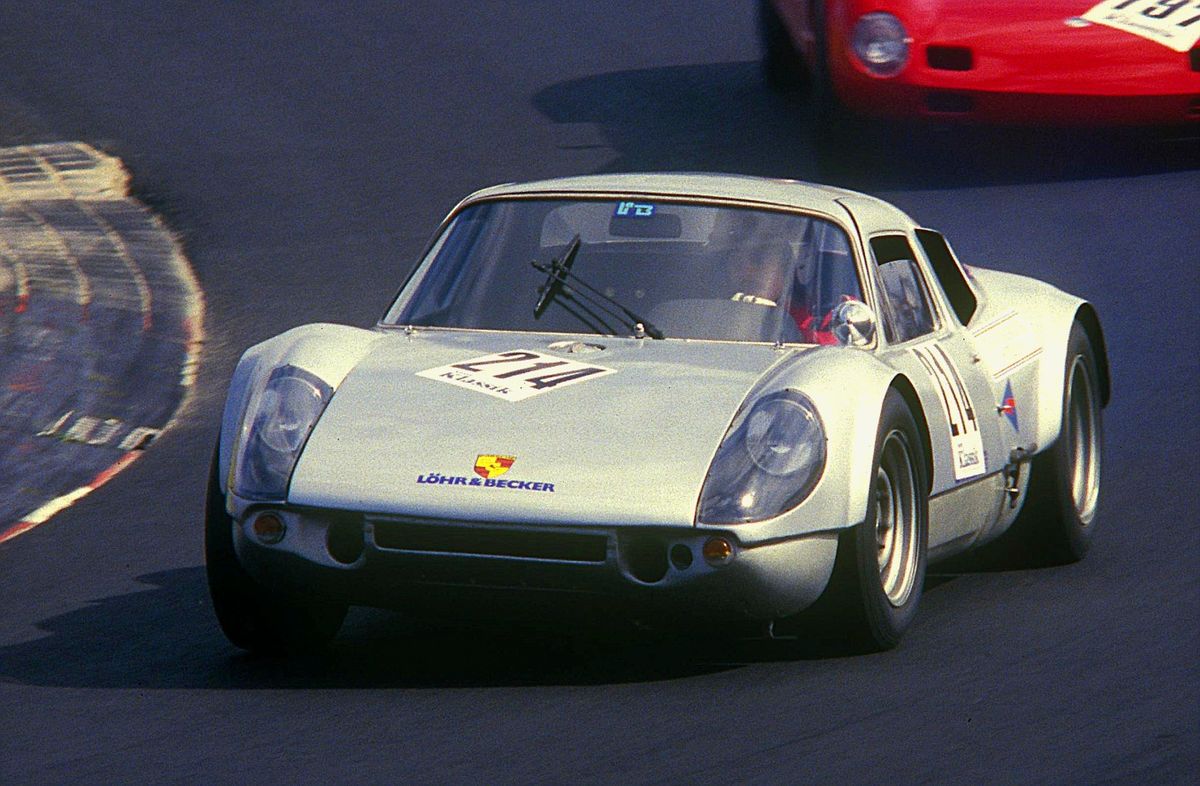
Peeling back the impossibly low, silver fiberglass skin of the 904/6 reveals a spectacular marriage of innovative chassis design and next-generation powertrain engineering. The foundation remained Hans Tomala’s brilliantly stiff structure, where the fiberglass body was bonded directly to a box-section steel ladder frame. This endowed the car with incredible torsional rigidity while keeping the weight perilously close to a featherweight 650 kilograms. But the undisputed soul of this specific submodel resided amidships: the Type 901/20 2.0-liter flat-six engine. Gone was the frantic, bevel-gear-driven shriek of the four-cylinder, replaced by the smoother, more sophisticated, and undeniably operatic wail of chain-driven overhead camshafts. Breathing deeply through a pair of massive, triple-choke Weber 46 IDA downdraft carburetors, this all-alloy marvel produced approximately 210 brake horsepower—a significant and highly noticeable leap over the four-cylinder variants. Mated to a robust five-speed transaxle, the flat-six completely transformed the dynamic character of the 904. It offered a vastly wider, more tractable torque band, allowing factory drivers to exit tight corners with seamless, surging momentum rather than frantically dancing on the clutch. The chassis retained the sophisticated independent double-wishbone suspension and four-wheel ATE disc brakes of the standard car, ensuring the extra power could be reliably harnessed. Inside, the cockpit retained its purposeful, driver-centric quirks, featuring the fixed fiberglass bucket seats and fully adjustable steering column and pedals, enveloping the driver in a heat-soaked, visceral environment entirely focused on the relentless pursuit of speed.
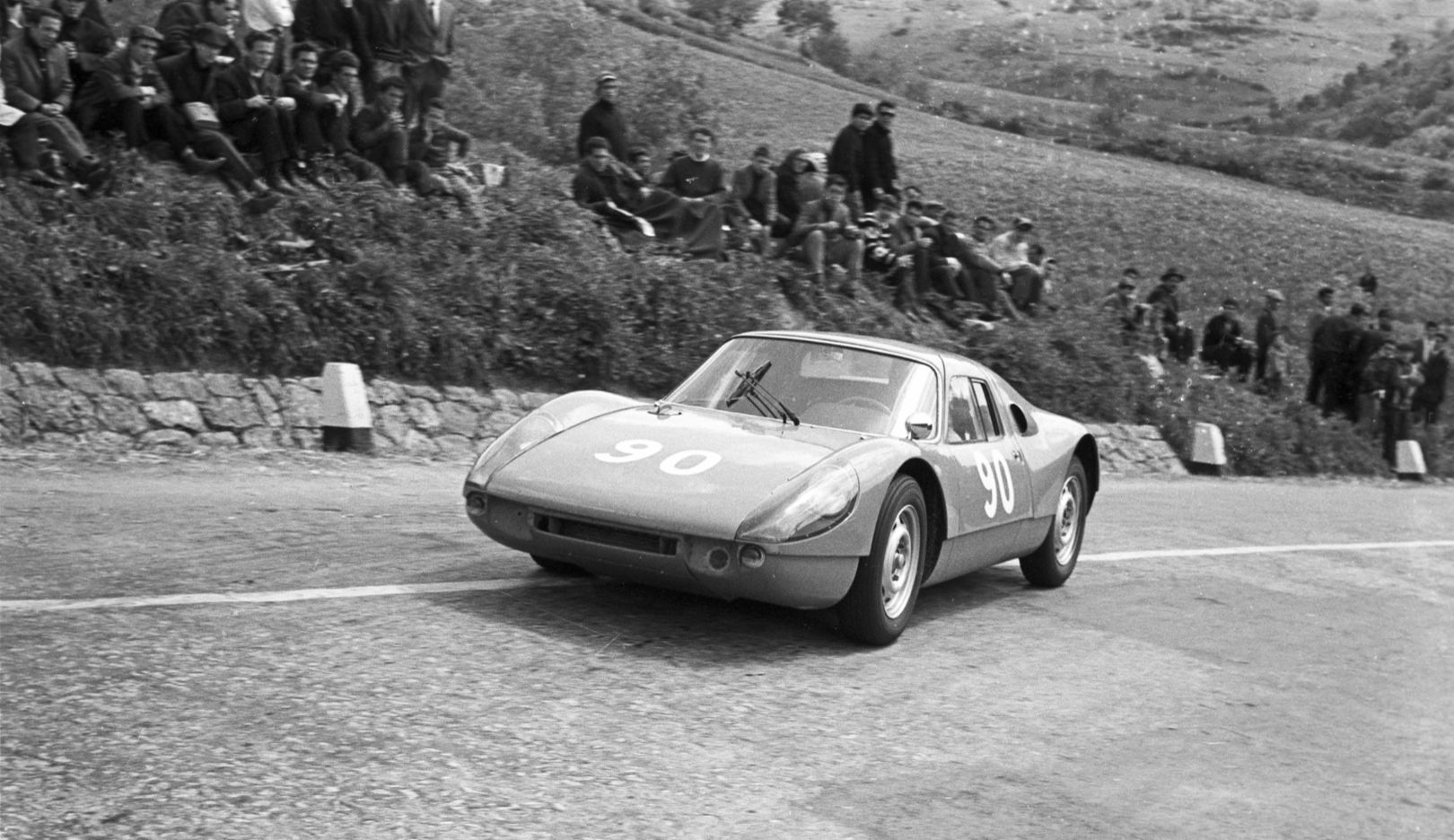
Because the 904/6 was produced in such minuscule numbers, it could not legally compete in the GT class that its four-cylinder brethren were currently dominating. Instead, it was campaigned exclusively as a factory works entry in the prototype class. Its competitive history is a testament to the absolute correctness of Porsche’s flat-six philosophy. Throughout the 1964 and 1965 seasons, the 904/6 served as Stuttgart’s premier endurance weapon, proving astonishingly fast and unburstably reliable. At the 1965 24 Hours of Le Mans, a factory-entered 904/6 driven by Herbert Müller and Gerhard Koch executed a masterclass in pace and preservation. While larger, more powerful prototypes tore themselves apart over the grueling day and night, the howling flat-six survived to finish an incredible 4th overall and secure a dominant victory in the 2.0-liter prototype class. It was a staggering achievement that officially validated the 911’s engine architecture on the world’s most punishing stage. The 904/6 also conquered the grueling Nürburgring 1000km and danced across the treacherous mountain passes of the Targa Florio, often piloted by legendary wheelmen like Günter Klass and Colin Davis. For the factory, the 904/6 was a resounding triumph; it gathered invaluable telemetry and endurance data that would directly benefit the road-going 911 for decades to come.
The legacy of the 1964 Porsche 904/6 Carrera GTS is that of a magnificent, ultra-rare missing link. It sits at the exact evolutionary crossroads of Porsche’s motorsport dynasty. It was the vehicle that finally retired the brilliant but antiquated four-cam, four-cylinder engine, proving unequivocally that the future of Zuffenhausen belonged to the flat-six. The success of the 904/6 directly birthed its successor, the Porsche 906 (Carrera 6), which fully embraced the six-cylinder engine within a bespoke, tubular spaceframe chassis. Today, surviving genuine 904/6 factory works cars are amongst the most mythical, heavily coveted unicorns in the entire classic car pantheon. They are the absolute zenith of the 904 lineage—a fleeting, beautiful moment when Butzi Porsche’s mid-century aesthetic masterpiece was finally united with the engine it was always destined to carry.
Brand
Produced from
Portal
Vehicle category
Model line
Predecessor
Sucessor
Brand
Produced from
Portal
Vehicle category
Model line
Model generation
Predecessor
Sucessor
Submodel Overview
To fully grasp the historical magnitude of the 1964 Porsche 904/6 Carrera GTS, one must peer behind the curtain of Stuttgart’s fiercely pragmatic racing department during a period of profound transition. When Ferdinand Alexander ‘Butzi’ Porsche sculpted the breathtaking, fiberglass-bodied 904, it was fundamentally designed to house the brand-new, 2.0-liter flat-six engine that was concurrently being developed for the upcoming 901 (the car that would become the immortal 911). However, the harsh realities of motorsport homologation intervened. The FIA demanded 100 production cars to qualify for the lucrative 2.0-liter Grand Touring class, and the new six-cylinder simply had not yet proven its endurance reliability. Forced to compromise, Porsche launched the standard 904 with the venerable, complex, but proven four-cylinder Fuhrmann engine. Yet, the engineers at Zuffenhausen never abandoned their original vision. For the factory racing team, they produced a highly exclusive batch of prototypes—only around ten to twelve chassis—and finally united Butzi’s wind-cheating silhouette with the glorious, howling flat-six. This was the 904/6. Thrust directly into the fiercely contested prototype category, it stepped into a brutal arena, forced to trade blows with bespoke racing machinery like the V12-powered Ferrari 250 LM, the featherweight Alfa Romeo Giulia TZ2, and the explosive Abarth 2000 sports racers. The 904/6 was not merely a racing car; it was a high-speed, rolling laboratory designed to prove that Porsche’s new flat-six architecture was robust enough to conquer the world.
Peeling back the impossibly low, silver fiberglass skin of the 904/6 reveals a spectacular marriage of innovative chassis design and next-generation powertrain engineering. The foundation remained Hans Tomala’s brilliantly stiff structure, where the fiberglass body was bonded directly to a box-section steel ladder frame. This endowed the car with incredible torsional rigidity while keeping the weight perilously close to a featherweight 650 kilograms. But the undisputed soul of this specific submodel resided amidships: the Type 901/20 2.0-liter flat-six engine. Gone was the frantic, bevel-gear-driven shriek of the four-cylinder, replaced by the smoother, more sophisticated, and undeniably operatic wail of chain-driven overhead camshafts. Breathing deeply through a pair of massive, triple-choke Weber 46 IDA downdraft carburetors, this all-alloy marvel produced approximately 210 brake horsepower—a significant and highly noticeable leap over the four-cylinder variants. Mated to a robust five-speed transaxle, the flat-six completely transformed the dynamic character of the 904. It offered a vastly wider, more tractable torque band, allowing factory drivers to exit tight corners with seamless, surging momentum rather than frantically dancing on the clutch. The chassis retained the sophisticated independent double-wishbone suspension and four-wheel ATE disc brakes of the standard car, ensuring the extra power could be reliably harnessed. Inside, the cockpit retained its purposeful, driver-centric quirks, featuring the fixed fiberglass bucket seats and fully adjustable steering column and pedals, enveloping the driver in a heat-soaked, visceral environment entirely focused on the relentless pursuit of speed.
Because the 904/6 was produced in such minuscule numbers, it could not legally compete in the GT class that its four-cylinder brethren were currently dominating. Instead, it was campaigned exclusively as a factory works entry in the prototype class. Its competitive history is a testament to the absolute correctness of Porsche’s flat-six philosophy. Throughout the 1964 and 1965 seasons, the 904/6 served as Stuttgart’s premier endurance weapon, proving astonishingly fast and unburstably reliable. At the 1965 24 Hours of Le Mans, a factory-entered 904/6 driven by Herbert Müller and Gerhard Koch executed a masterclass in pace and preservation. While larger, more powerful prototypes tore themselves apart over the grueling day and night, the howling flat-six survived to finish an incredible 4th overall and secure a dominant victory in the 2.0-liter prototype class. It was a staggering achievement that officially validated the 911’s engine architecture on the world’s most punishing stage. The 904/6 also conquered the grueling Nürburgring 1000km and danced across the treacherous mountain passes of the Targa Florio, often piloted by legendary wheelmen like Günter Klass and Colin Davis. For the factory, the 904/6 was a resounding triumph; it gathered invaluable telemetry and endurance data that would directly benefit the road-going 911 for decades to come.
The legacy of the 1964 Porsche 904/6 Carrera GTS is that of a magnificent, ultra-rare missing link. It sits at the exact evolutionary crossroads of Porsche’s motorsport dynasty. It was the vehicle that finally retired the brilliant but antiquated four-cam, four-cylinder engine, proving unequivocally that the future of Zuffenhausen belonged to the flat-six. The success of the 904/6 directly birthed its successor, the Porsche 906 (Carrera 6), which fully embraced the six-cylinder engine within a bespoke, tubular spaceframe chassis. Today, surviving genuine 904/6 factory works cars are amongst the most mythical, heavily coveted unicorns in the entire classic car pantheon. They are the absolute zenith of the 904 lineage—a fleeting, beautiful moment when Butzi Porsche’s mid-century aesthetic masterpiece was finally united with the engine it was always destined to carry.
Tech Specs
Technical Specifications
Tech Specs
Technical Specifications
Engine
01
03
Internal combustion engine
Configuration
Porsche Type 901/20, Flat-6 (Boxer) - Air-cooled
Location
Mid, longitudinally mounted
Construction
Aluminium/Magnesium alloy block and heads
Displacement (cc)
1,991 cc
Displacement (cu in)
121.5 cu in
Compression
10.3:1
Bore x Stroke
80.0 mm x 66.0 mm
Valvetrain
2 valves per cylinder, SOHC
Fuel feed
2 x Weber 46 IDA 3C triple-choke carburetors
Lubrication
Dry sump
Aspiration
Naturally aspirated
Output
Power (hp)
210 hp
Power (kW)
157 kW
Max power at
8,000 RPM
Torque (Nm)
196 Nm
Torque (ft lbs)
145 ft lbs
Max torque at
6,000 RPM
Drivetrain
02
03
Chassis
Type
Box-section ladder frame bonded to the fiberglass body
Material
Steel
Body
Material
Fibreglass (GRP)
Transmission
Gearbox
Porsche Type 904, 5-speed manual
Drive
Rear Wheel Drive (Limited Slip Differential)
Suspension
Front
Independent, double unequal length wishbones, coil springs over telescopic dampers, anti-roll bar
Rear
Independent, unequal length double wishbones, coil springs over telescopic dampers, anti-roll bar
Steering
Type
ZF rack and pinion, unassisted
Brakes
Front
Solid steel discs Ø275 mm, ATE calipers
Rear
Solid steel discs Ø285 mm, ATE calipers
Wheels
Front
5" x 15" (Steel center with alloy rim)
Rear
6" x 15" (Steel center with alloy rim)
Tires
Front
5.50-15
Rear
6.00-15
Dimensions and performance
03
03
Dimensions
Length (mm)
4,090 mm
Length (in)
161.0 in
Width (mm)
1,540 mm
Width (in)
60.6 in
Height (mm)
1,065 mm
Height (in)
41.9 in
Wheelbase (mm)
2,300 mm
Wheelbase (in)
90.6 in
Weight (kg)
~640 kg
Weight (lbs)
~1,411 lbs
Performance
Power to weight
0.33 hp/kg
Top speed (km/h)
~260 km/h
Top speed (mph)
~162 mph
0-100 km/h (0-60 mph)
~4.5 s