Porsche 904 Carrera GTS
Brand
Produced from
Vehicle category
Portal
Model line
Model generation
Predecessor
Sucessor
Model Overview
In the early 1960s, the landscape of international endurance racing was shifting beneath the feet of the established giants. The governing body, the FIA, had altered the regulations for the World Sportscar Championship, shifting the primary focus away from bespoke, open-cockpit prototypes and heavily prioritizing the Grand Touring (GT) category. To compete in the crucial 2.0-liter Group 3 GT class, a manufacturer was required to build and sell a staggering minimum of one hundred road-legal examples of their racing car. For Porsche, a company that had previously relied on the brilliant but aging aluminum-bodied 718 Spyders and the coachbuilt 356 Carrera Abarth GTL, this homologation requirement presented a monumental financial and engineering challenge. They needed a vehicle that was inexpensive enough to produce in triple digits, docile enough to be driven to the track by a wealthy amateur, and lethal enough to decimate rivals like the Alfa Romeo Giulia TZ and the Abarth-Simca 2000 once the green flag dropped. Entrusted with this monumental task was Ferdinand Alexander ‘Butzi’ Porsche, the grandson of the company’s founder. What he delivered in late 1963 was officially designated the Carrera GTS—due to Peugeot’s staunchly defended trademark on three-digit names with a zero in the middle—but the world would forever immortalize it as the Porsche 904. It was a masterpiece of mid-century design and a technological vanguard that completely severed Porsche’s stylistic and structural ties to the past.
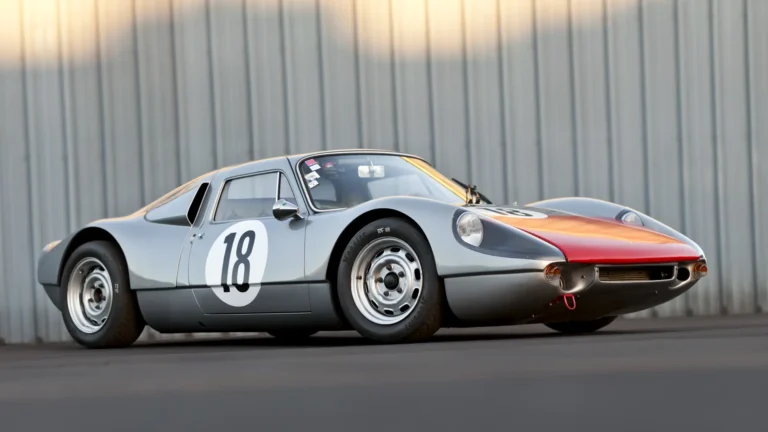
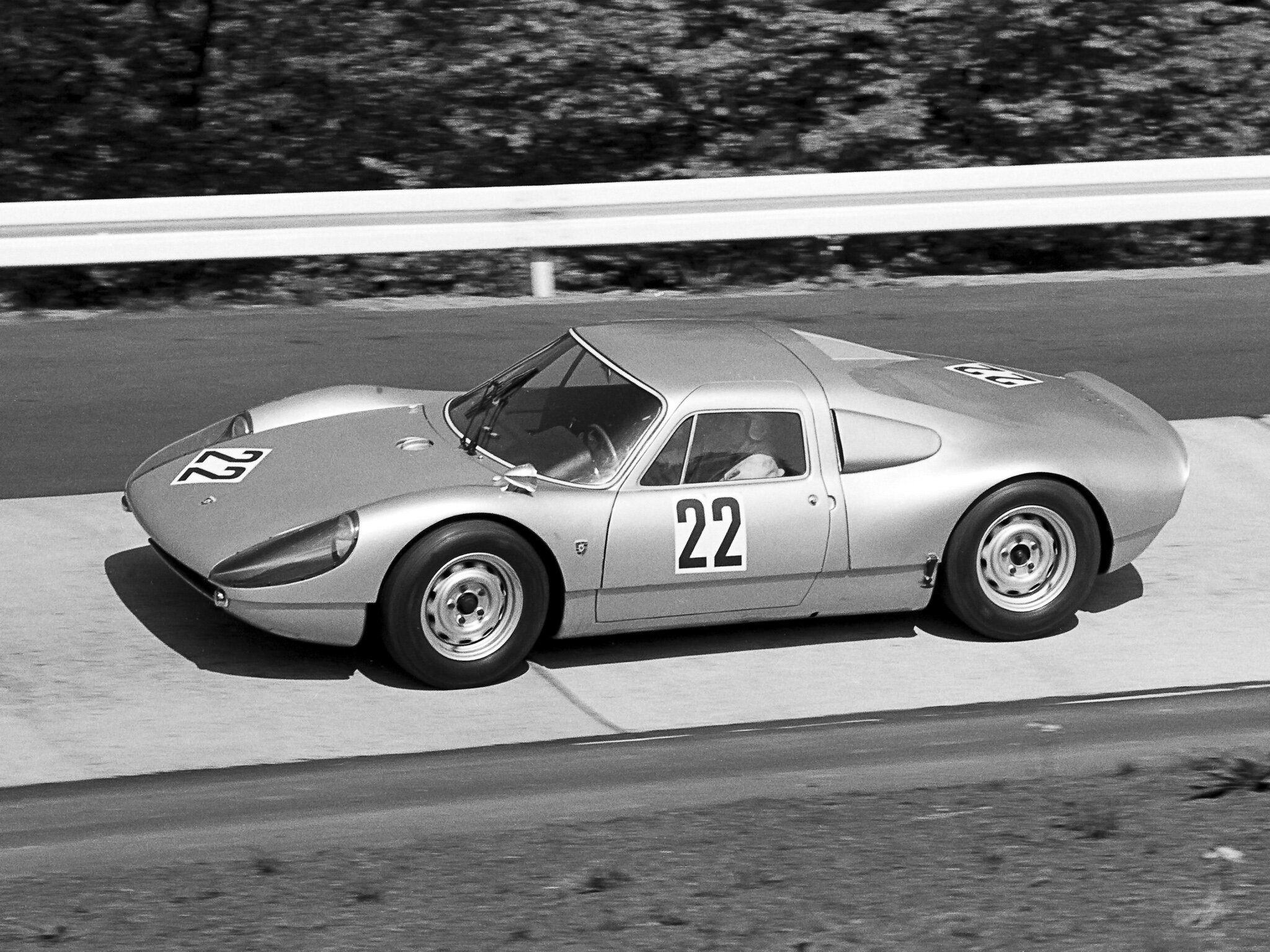
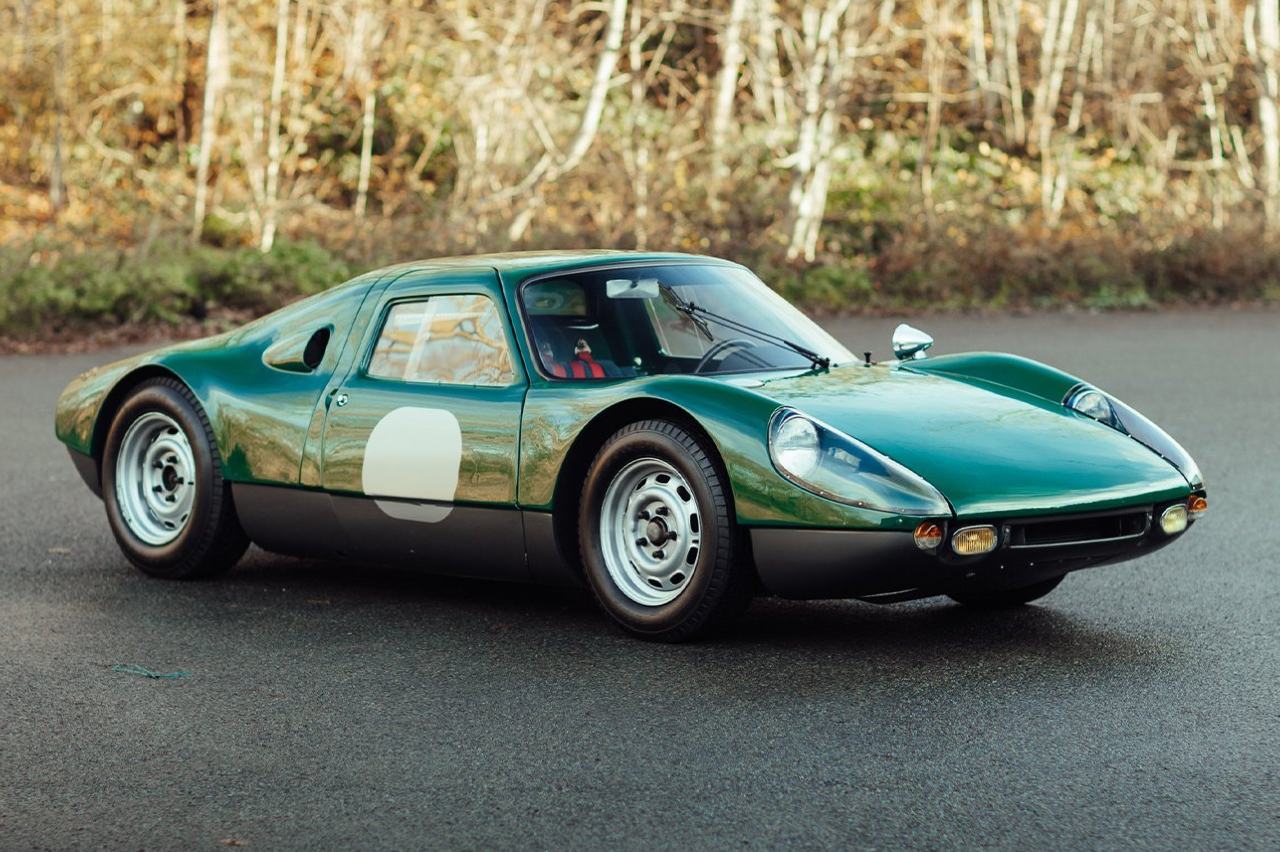
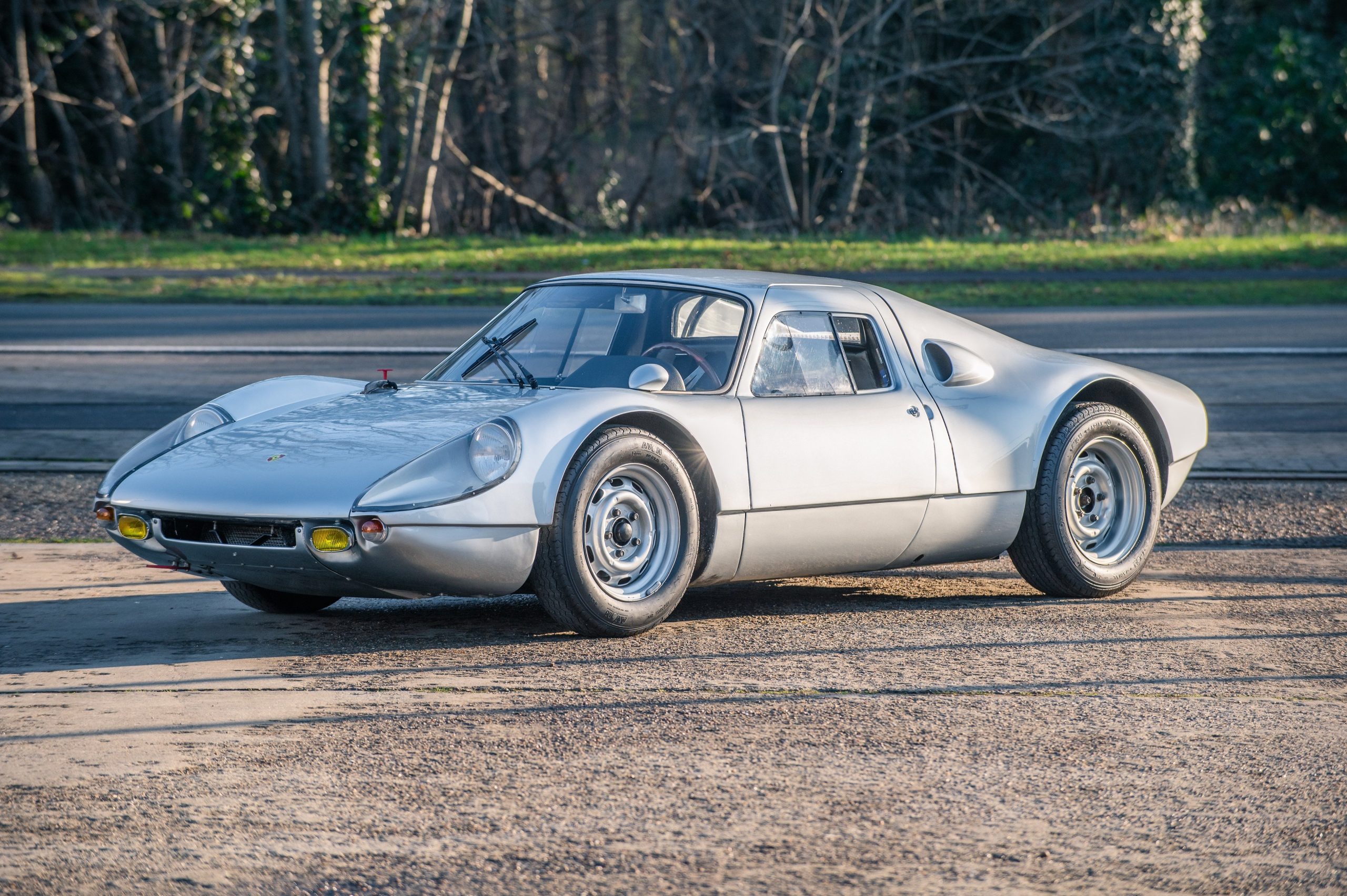
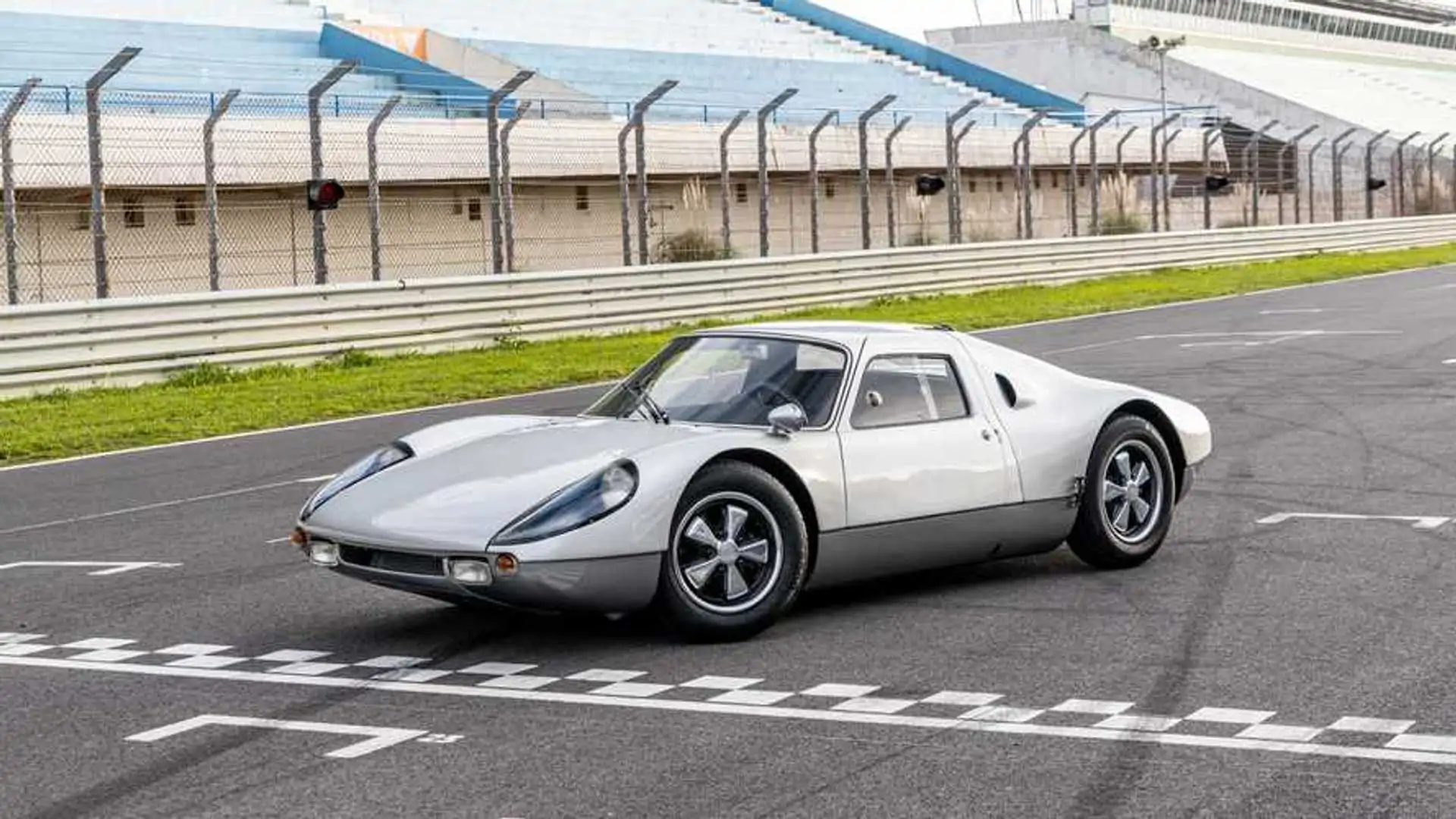
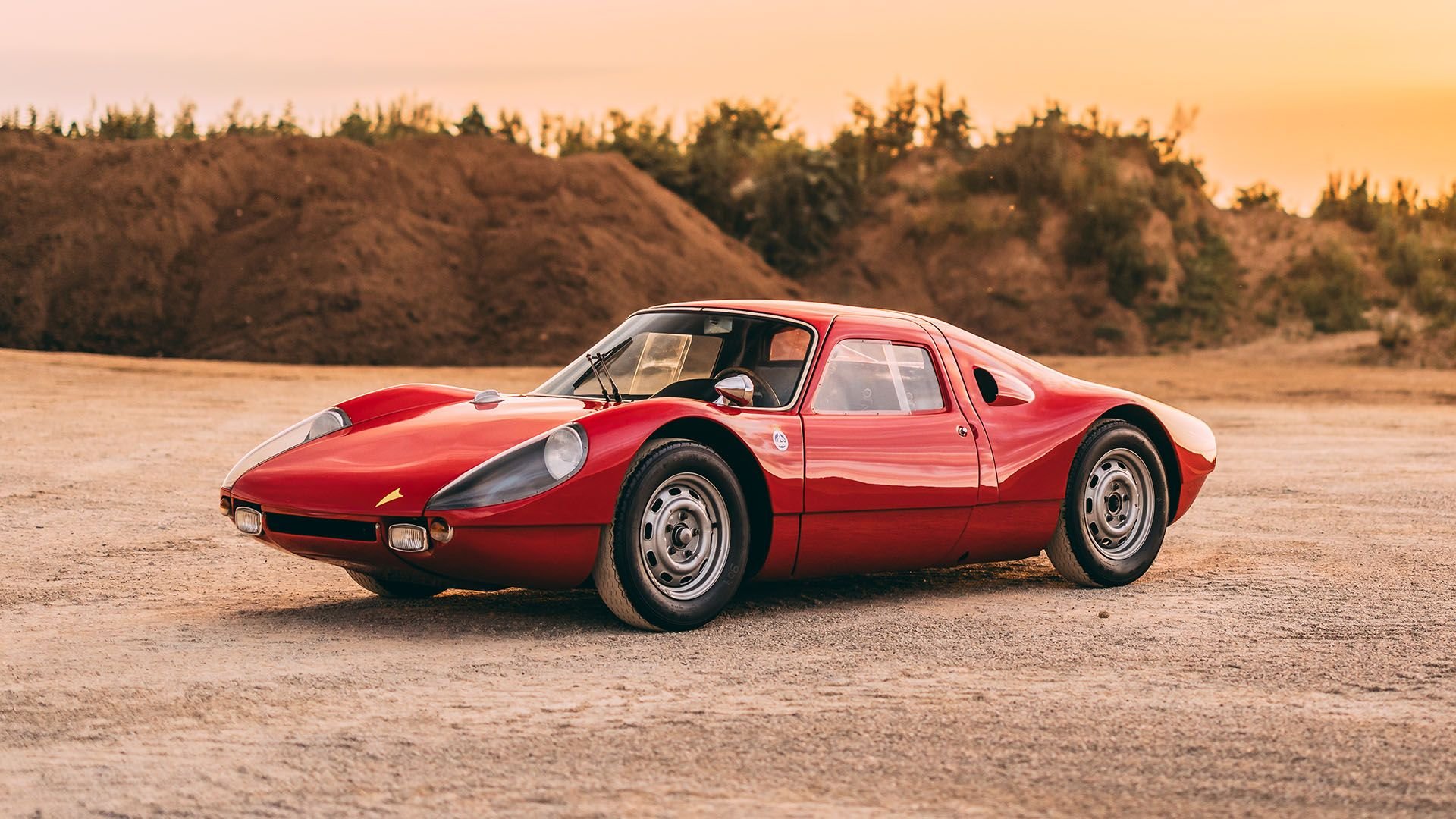
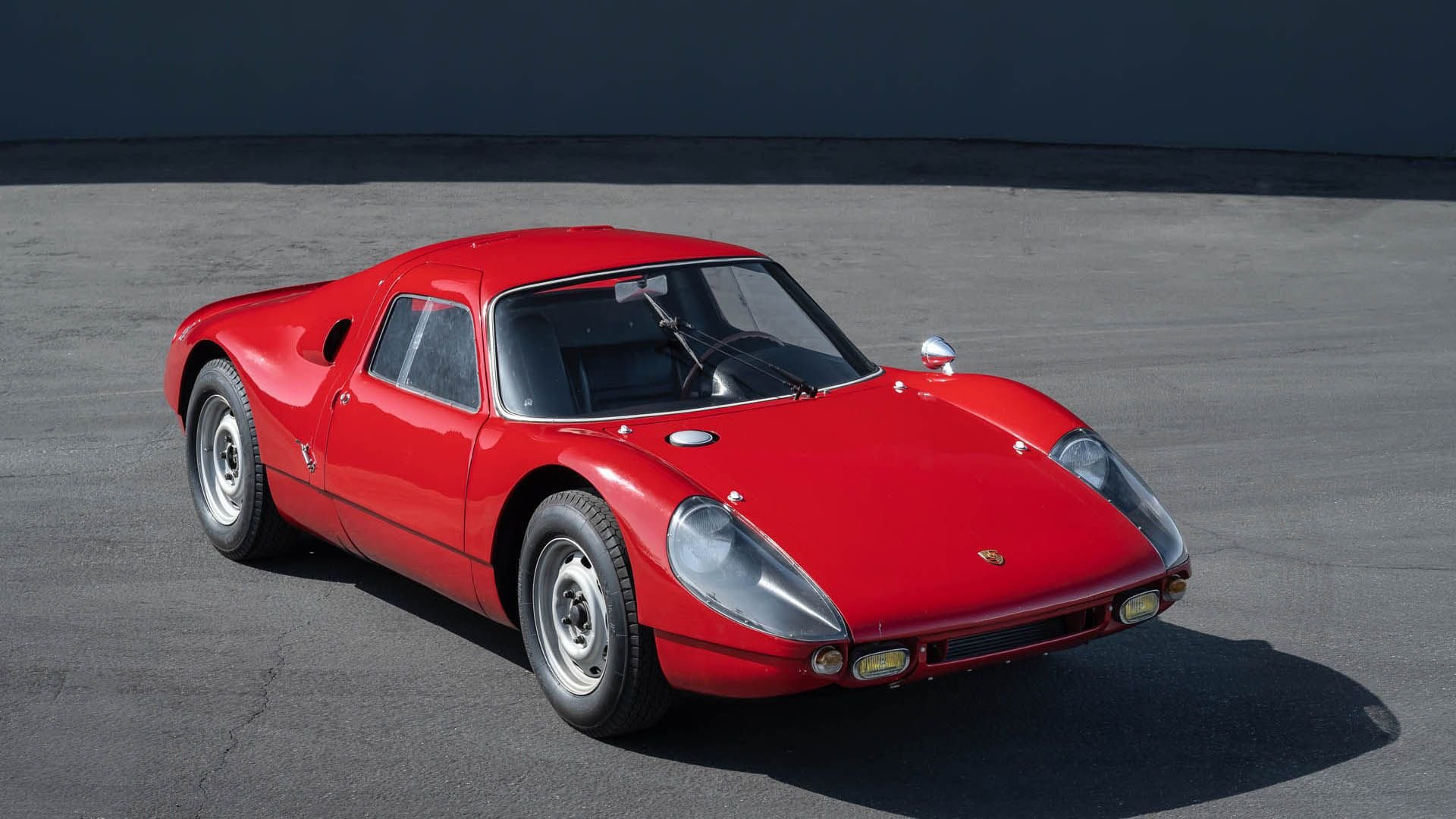
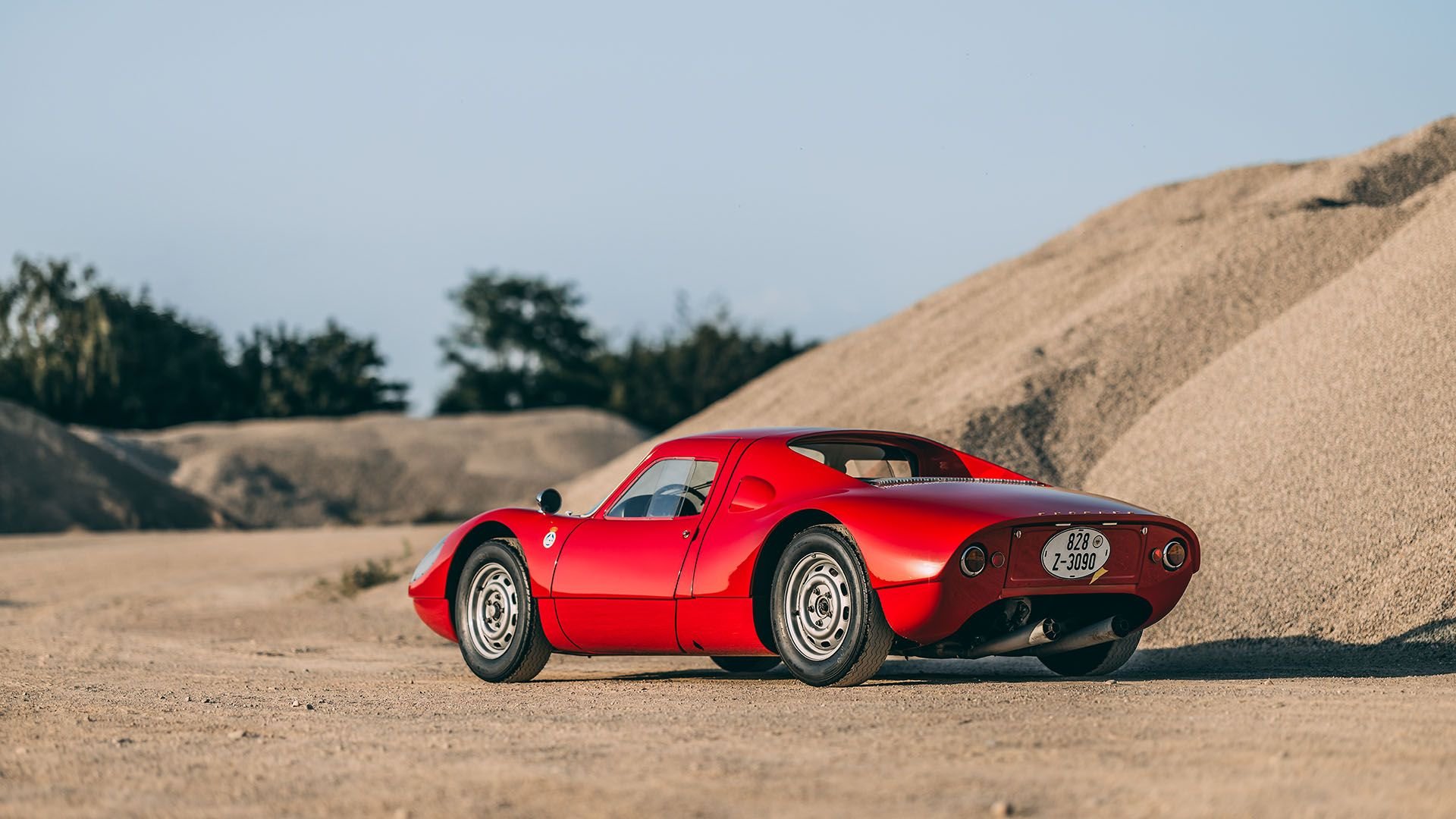
To look upon the Porsche 904 Carrera GTS is to witness one of the most breathtakingly beautiful shapes ever to emerge from Zuffenhausen. Butzi Porsche famously stated that he designed the car purely by instinct, without the aid of a wind tunnel, yet its aerodynamic efficiency was astonishing. However, the true revolution lay beneath its impossibly low, sweeping skin. Abandoning the complex, labor-intensive tubular spaceframes of the 718 era, Porsche’s technical director Hans Tomala engineered a novel chassis consisting of two box-section steel longitudinal tubes. In a pioneering move, the gorgeous bodywork—crafted from fiberglass-reinforced plastic (GRP)—was bonded directly to this steel ladder frame. This structural marriage, executed with the manufacturing assistance of the Heinkel aircraft company, resulted in a chassis of immense torsional rigidity that weighed a mere fraction of a traditional steel setup. The exterior design was incredibly purposeful, featuring deeply scalloped side air intakes to feed the mid-mounted engine, faired-in headlights to slice through the night at Le Mans, and an aerodynamically effective Kamm tail.
The mechanical heart of the 904 is a tale of exquisite pragmatism. Porsche had originally intended to launch the Carrera GTS with the brand-new, 2.0-liter flat-six engine developed for the upcoming 901 (911). However, as the homologation deadline loomed, the six-cylinder unit had not yet proven its endurance reliability. Consequently, Porsche turned to their most legendary, battle-tested weapon: the Type 587/3 “Fuhrmann” four-cam, flat-four engine. In this ultimate, final 2.0-liter evolution, the all-alloy, air-cooled masterpiece produced a staggering 180 horsepower. Breathing through massive Weber carburetors and utilizing a dizzyingly complex array of bevel gears and shafts to drive its overhead camshafts, the Fuhrmann engine unleashed a frantic, mechanical shriek that became the defining soundtrack of the 2.0-liter class. Mated to a sophisticated five-speed transaxle featuring a limited-slip differential, the 1,400-pound 904 was capable of exceeding 250 km/h (160 mph). The chassis dynamics were equally modernized; the 904 featured independent double-wishbone suspension and coil springs at all four corners, finally discarding the archaic trailing arms of the 356 era. Massive ATE disc brakes ensured the lightweight coupe could out-brake heavier, larger-displacement rivals. Inside, the 904 offered a fascinating, driver-centric quirk: the fiberglass bucket seats were molded directly into the bodywork and could not be moved. Instead, to accommodate drivers of different statures, the steering column and the pedal box were fully adjustable—a pure racing feature wrapped in a surprisingly comfortable, beautifully trimmed grand touring cockpit.
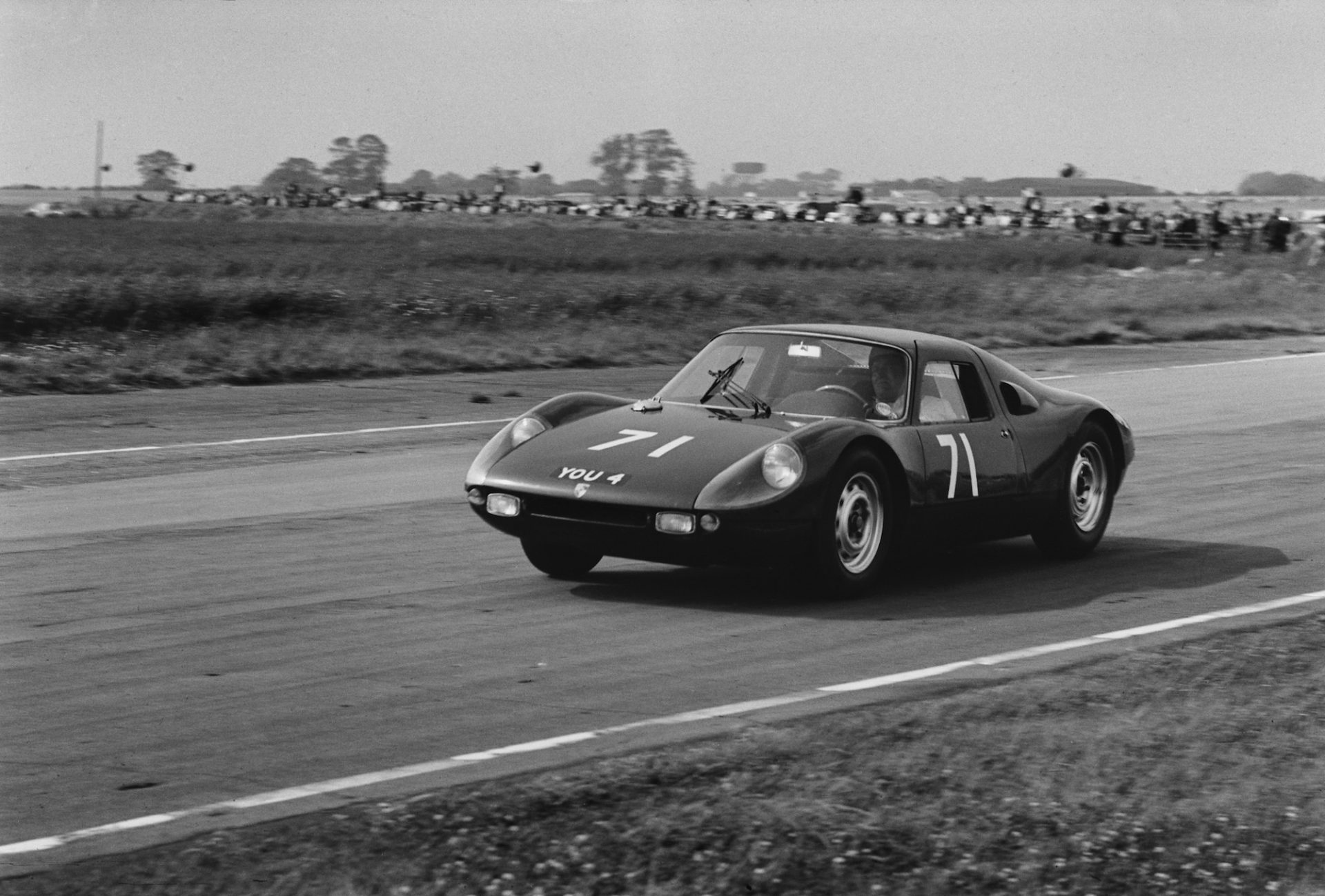
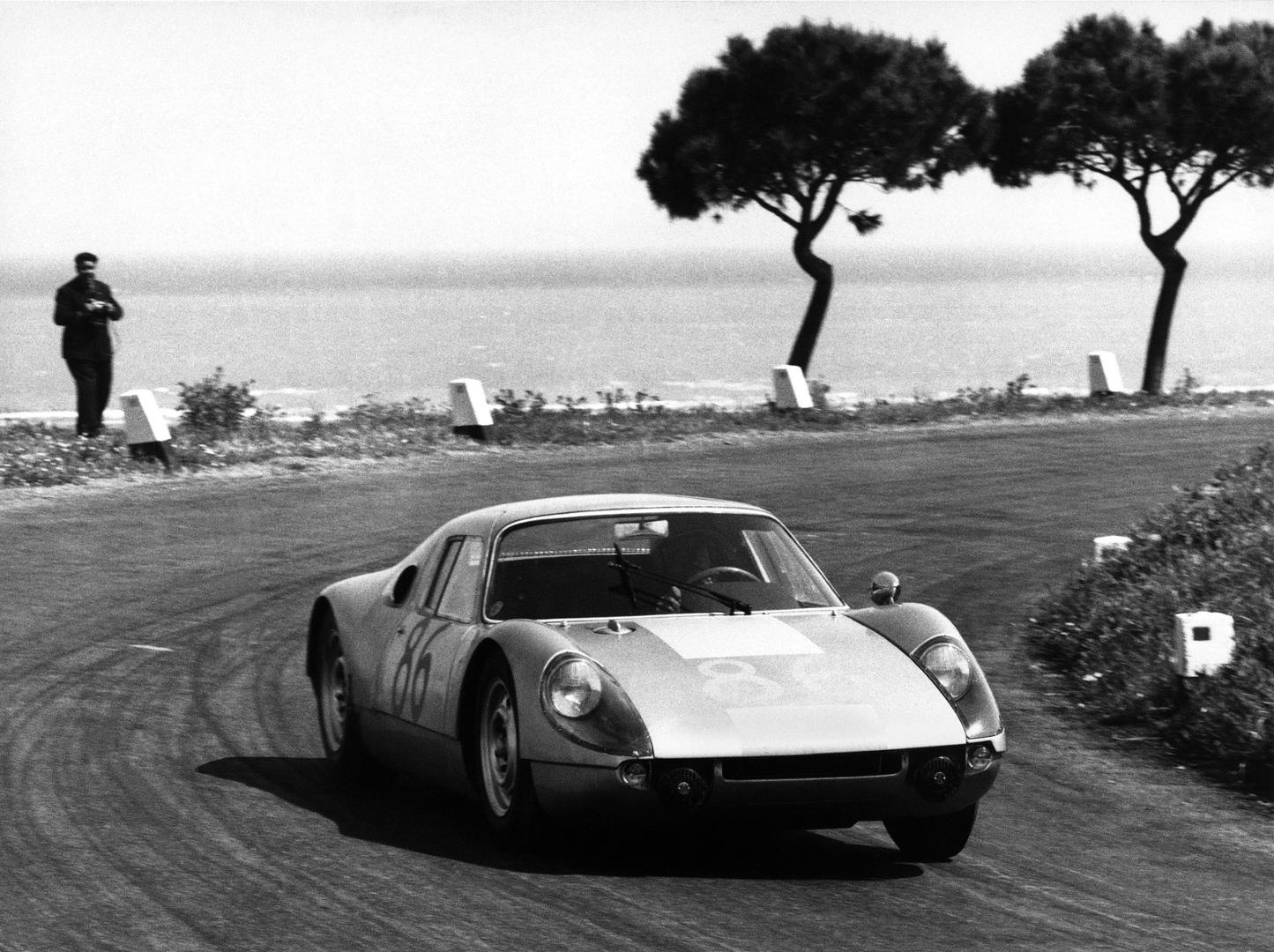
The competitive impact of the Porsche 904 Carrera GTS was immediate, devastating, and far-reaching. It was the quintessential “giant-killer”, a car that routinely humiliated machinery with twice the displacement. Its crowning achievement arrived under the blazing Sicilian sun at the 1964 Targa Florio. On the punishing, 44-mile Piccolo Circuito delle Madonie, the nimble, impeccably balanced 904s proved absolutely untouchable. Driven by Colin Davis and Antonio Pucci, a factory-entered 904 secured a historic overall victory, outlasting and out-cornering the mighty Shelby Cobras and V12 Ferraris, while another 904 finished second. At the 24 Hours of Le Mans, the Carrera GTS completely locked out the 2.0-liter GT class, proving the unburstable endurance nature of the Fuhrmann four-cam engine. Yet, perhaps the most astonishing testament to the 904’s versatility occurred on the ice and snow of the 1964 Monte Carlo Rally. Against all conventional wisdom, Eugen Böhringer piloted the mid-engined, fiberglass, rear-wheel-drive sports car to an incredible second-place overall finish, cementing the 904 as one of the most tractable and rugged high-performance vehicles of its era.
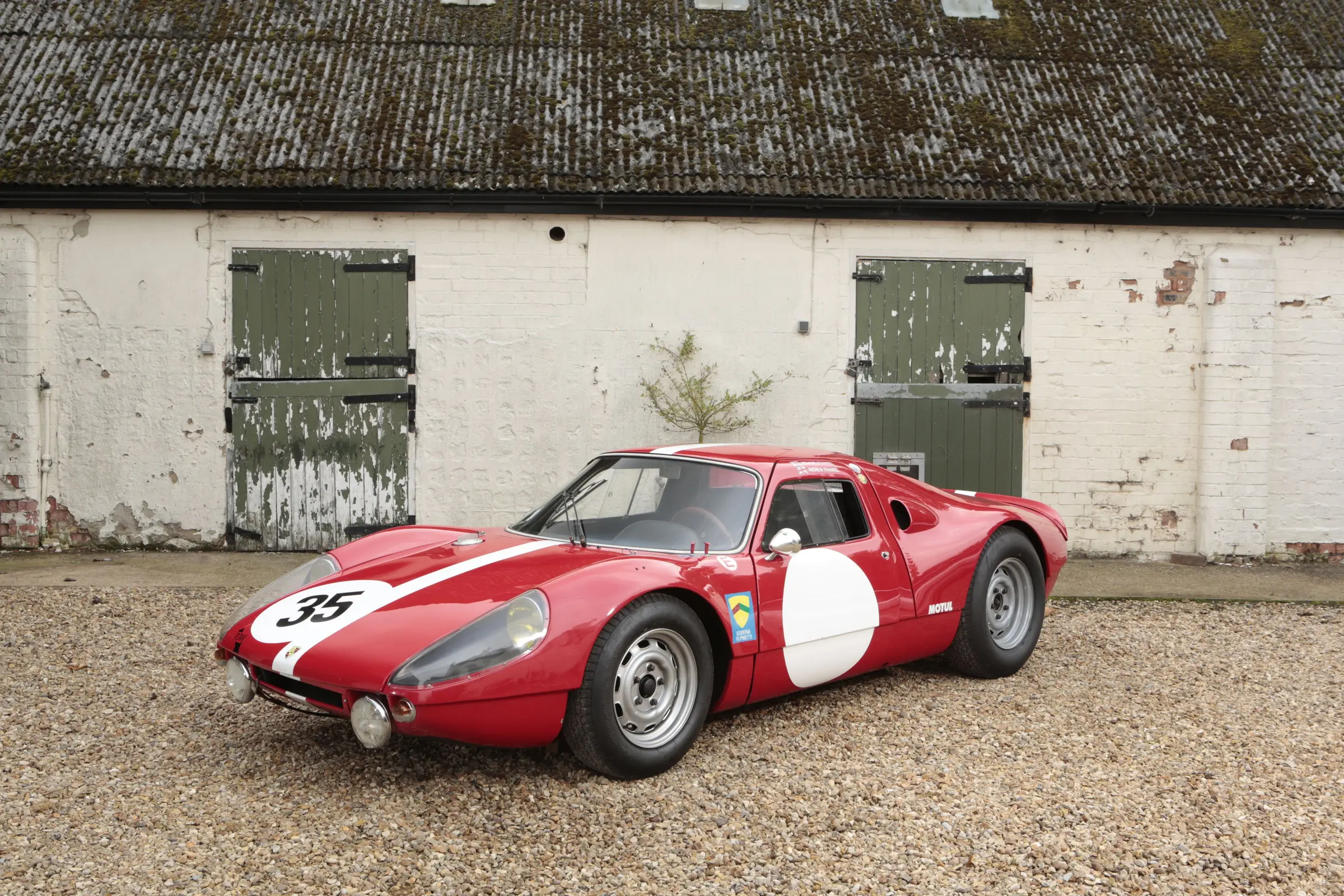
While the four-cylinder GT cars conquered the showrooms and customer racing classes, the factory also utilized the 904 platform as a rolling laboratory for their prototype ambitions. A handful of works cars were fitted with the 2.0-liter flat-six (the 904/6) and the incredibly exotic 2.0-liter flat-eight (the 904/8) derived from Porsche’s Formula 1 efforts. These prototype variants terrorized the European Hill Climb Championship and prototype endurance classes, paving the way for the multi-cylinder future of the brand. Commercially, the 904 was a resounding triumph. Porsche comfortably exceeded the 100-car homologation requirement, ultimately building around 120 chassis. It represented the ultimate dual-purpose machine; it was not uncommon for a gentleman driver to purchase a 904 from the factory, drive it across the Alps to a circuit like Monza or the Nürburgring, win their class, and drive it home.
The legacy of the Porsche 904 Carrera GTS sits at the very crux of the marque’s history. It was the vital, beautiful bridge between the artisanal, hand-hammered aluminum 356/718 era and the ruthless, aerodynamically focused “plastic fantastic” prototype era that followed. The 904 proved that fiberglass construction was a viable, race-winning technology for Zuffenhausen, directly laying the groundwork for the Porsche 906, 908, and ultimately the world-conquering 917 under the future direction of Ferdinand Piëch. Furthermore, it served as the glorious, deafening swan song for Ernst Fuhrmann’s legendary four-cam, four-cylinder engine in top-tier international racing. Today, the Porsche 904 Carrera GTS is universally recognized as one of the most beautiful and historically significant vehicles ever to wear the Porsche crest. It is an absolute blue-chip unicorn in the collector car market, revered not just as a static piece of mid-century design art, but as a visceral, screaming time machine that embodies the purest essence of the golden era of gentleman racing.
Portal
Model line
Brand
Produced from
Vehicle category
Model Overview
In the early 1960s, the landscape of international endurance racing was shifting beneath the feet of the established giants. The governing body, the FIA, had altered the regulations for the World Sportscar Championship, shifting the primary focus away from bespoke, open-cockpit prototypes and heavily prioritizing the Grand Touring (GT) category. To compete in the crucial 2.0-liter Group 3 GT class, a manufacturer was required to build and sell a staggering minimum of one hundred road-legal examples of their racing car. For Porsche, a company that had previously relied on the brilliant but aging aluminum-bodied 718 Spyders and the coachbuilt 356 Carrera Abarth GTL, this homologation requirement presented a monumental financial and engineering challenge. They needed a vehicle that was inexpensive enough to produce in triple digits, docile enough to be driven to the track by a wealthy amateur, and lethal enough to decimate rivals like the Alfa Romeo Giulia TZ and the Abarth-Simca 2000 once the green flag dropped. Entrusted with this monumental task was Ferdinand Alexander ‘Butzi’ Porsche, the grandson of the company’s founder. What he delivered in late 1963 was officially designated the Carrera GTS—due to Peugeot’s staunchly defended trademark on three-digit names with a zero in the middle—but the world would forever immortalize it as the Porsche 904. It was a masterpiece of mid-century design and a technological vanguard that completely severed Porsche’s stylistic and structural ties to the past.
To look upon the Porsche 904 Carrera GTS is to witness one of the most breathtakingly beautiful shapes ever to emerge from Zuffenhausen. Butzi Porsche famously stated that he designed the car purely by instinct, without the aid of a wind tunnel, yet its aerodynamic efficiency was astonishing. However, the true revolution lay beneath its impossibly low, sweeping skin. Abandoning the complex, labor-intensive tubular spaceframes of the 718 era, Porsche’s technical director Hans Tomala engineered a novel chassis consisting of two box-section steel longitudinal tubes. In a pioneering move, the gorgeous bodywork—crafted from fiberglass-reinforced plastic (GRP)—was bonded directly to this steel ladder frame. This structural marriage, executed with the manufacturing assistance of the Heinkel aircraft company, resulted in a chassis of immense torsional rigidity that weighed a mere fraction of a traditional steel setup. The exterior design was incredibly purposeful, featuring deeply scalloped side air intakes to feed the mid-mounted engine, faired-in headlights to slice through the night at Le Mans, and an aerodynamically effective Kamm tail.
The mechanical heart of the 904 is a tale of exquisite pragmatism. Porsche had originally intended to launch the Carrera GTS with the brand-new, 2.0-liter flat-six engine developed for the upcoming 901 (911). However, as the homologation deadline loomed, the six-cylinder unit had not yet proven its endurance reliability. Consequently, Porsche turned to their most legendary, battle-tested weapon: the Type 587/3 “Fuhrmann” four-cam, flat-four engine. In this ultimate, final 2.0-liter evolution, the all-alloy, air-cooled masterpiece produced a staggering 180 horsepower. Breathing through massive Weber carburetors and utilizing a dizzyingly complex array of bevel gears and shafts to drive its overhead camshafts, the Fuhrmann engine unleashed a frantic, mechanical shriek that became the defining soundtrack of the 2.0-liter class. Mated to a sophisticated five-speed transaxle featuring a limited-slip differential, the 1,400-pound 904 was capable of exceeding 250 km/h (160 mph). The chassis dynamics were equally modernized; the 904 featured independent double-wishbone suspension and coil springs at all four corners, finally discarding the archaic trailing arms of the 356 era. Massive ATE disc brakes ensured the lightweight coupe could out-brake heavier, larger-displacement rivals. Inside, the 904 offered a fascinating, driver-centric quirk: the fiberglass bucket seats were molded directly into the bodywork and could not be moved. Instead, to accommodate drivers of different statures, the steering column and the pedal box were fully adjustable—a pure racing feature wrapped in a surprisingly comfortable, beautifully trimmed grand touring cockpit.
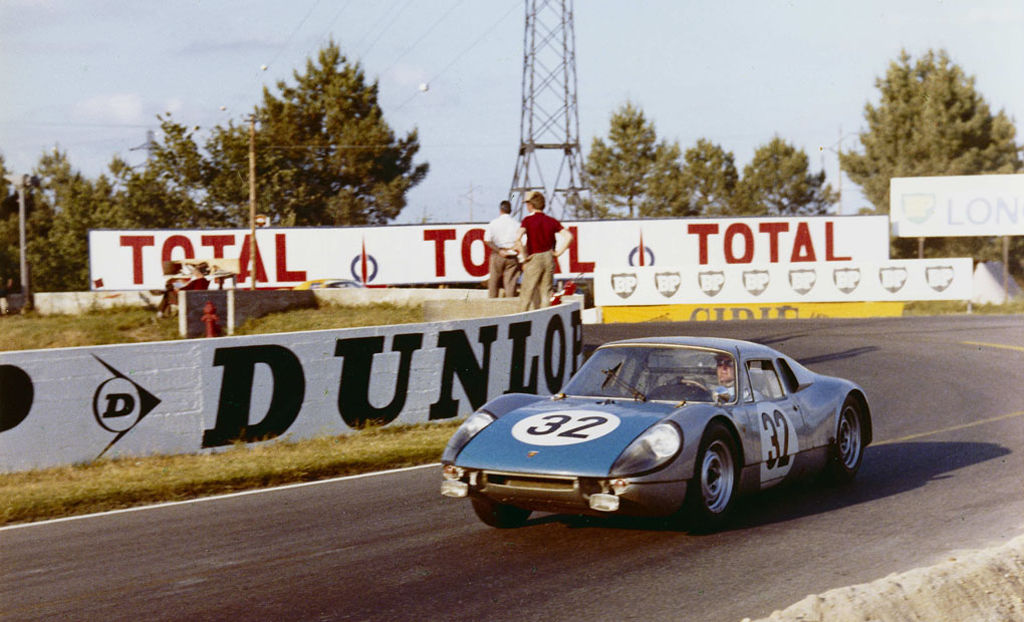
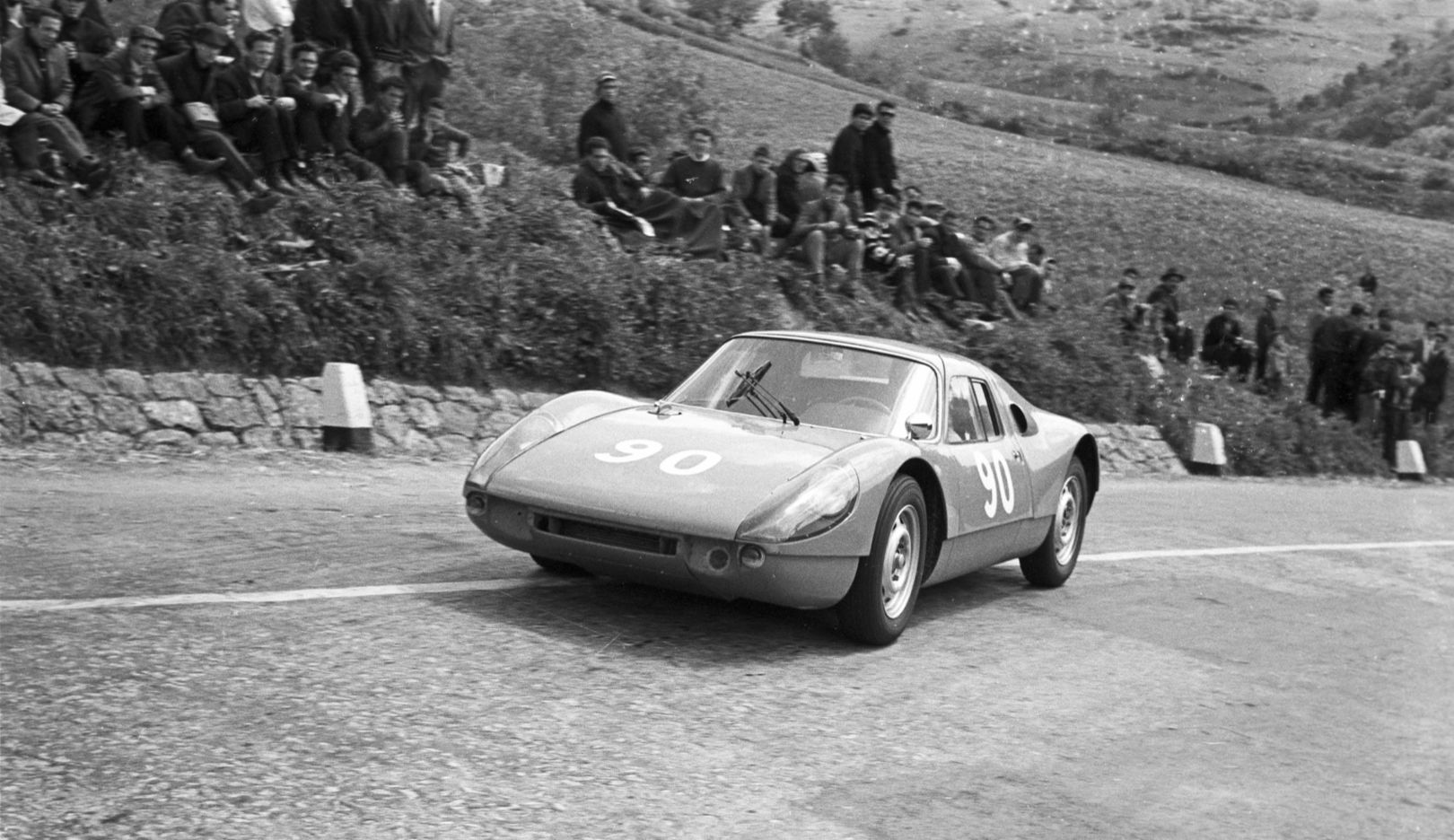
The competitive impact of the Porsche 904 Carrera GTS was immediate, devastating, and far-reaching. It was the quintessential “giant-killer”, a car that routinely humiliated machinery with twice the displacement. Its crowning achievement arrived under the blazing Sicilian sun at the 1964 Targa Florio. On the punishing, 44-mile Piccolo Circuito delle Madonie, the nimble, impeccably balanced 904s proved absolutely untouchable. Driven by Colin Davis and Antonio Pucci, a factory-entered 904 secured a historic overall victory, outlasting and out-cornering the mighty Shelby Cobras and V12 Ferraris, while another 904 finished second. At the 24 Hours of Le Mans, the Carrera GTS completely locked out the 2.0-liter GT class, proving the unburstable endurance nature of the Fuhrmann four-cam engine. Yet, perhaps the most astonishing testament to the 904’s versatility occurred on the ice and snow of the 1964 Monte Carlo Rally. Against all conventional wisdom, Eugen Böhringer piloted the mid-engined, fiberglass, rear-wheel-drive sports car to an incredible second-place overall finish, cementing the 904 as one of the most tractable and rugged high-performance vehicles of its era.
While the four-cylinder GT cars conquered the showrooms and customer racing classes, the factory also utilized the 904 platform as a rolling laboratory for their prototype ambitions. A handful of works cars were fitted with the 2.0-liter flat-six (the 904/6) and the incredibly exotic 2.0-liter flat-eight (the 904/8) derived from Porsche’s Formula 1 efforts. These prototype variants terrorized the European Hill Climb Championship and prototype endurance classes, paving the way for the multi-cylinder future of the brand. Commercially, the 904 was a resounding triumph. Porsche comfortably exceeded the 100-car homologation requirement, ultimately building around 120 chassis. It represented the ultimate dual-purpose machine; it was not uncommon for a gentleman driver to purchase a 904 from the factory, drive it across the Alps to a circuit like Monza or the Nürburgring, win their class, and drive it home.
The legacy of the Porsche 904 Carrera GTS sits at the very crux of the marque’s history. It was the vital, beautiful bridge between the artisanal, hand-hammered aluminum 356/718 era and the ruthless, aerodynamically focused “plastic fantastic” prototype era that followed. The 904 proved that fiberglass construction was a viable, race-winning technology for Zuffenhausen, directly laying the groundwork for the Porsche 906, 908, and ultimately the world-conquering 917 under the future direction of Ferdinand Piëch. Furthermore, it served as the glorious, deafening swan song for Ernst Fuhrmann’s legendary four-cam, four-cylinder engine in top-tier international racing. Today, the Porsche 904 Carrera GTS is universally recognized as one of the most beautiful and historically significant vehicles ever to wear the Porsche crest. It is an absolute blue-chip unicorn in the collector car market, revered not just as a static piece of mid-century design art, but as a visceral, screaming time machine that embodies the purest essence of the golden era of gentleman racing.
Submodels