
Porsche 911 GT3 RSR
Brand
Produced from
Portal
Model line
Model generation
Predecessor
Successor
Submodel Overview
As the 2004 motorsport season approached, the sun was beginning to set on the Type 996 generation of the Porsche 911. For over half a decade, Zuffenhausen’s first water-cooled chassis had waged a relentless, highly successful war across the globe with its GT3 R and RS variants. Yet, in the fiercely competitive crucible of the FIA N-GT and American Le Mans Series GT classes, standing still is akin to moving backward. Maranello had recently homologated the heavily revised, wider, and faster Ferrari 360 GTC, while the thunderous Panoz Esperante GTLM was finding its pace on American soil. Porsche required a definitive, crushing statement to close out the 996 era and secure its customer racing supremacy before the impending arrival of the 997 generation. The answer forged in the Weissach motorsport department was the 2004 Porsche 911 GT3 RSR. It was not merely a subtle evolution; it was a massively widened, technologically overhauled swan song that represented the absolute, uncompromising pinnacle of the first-generation water-cooled racing 911.
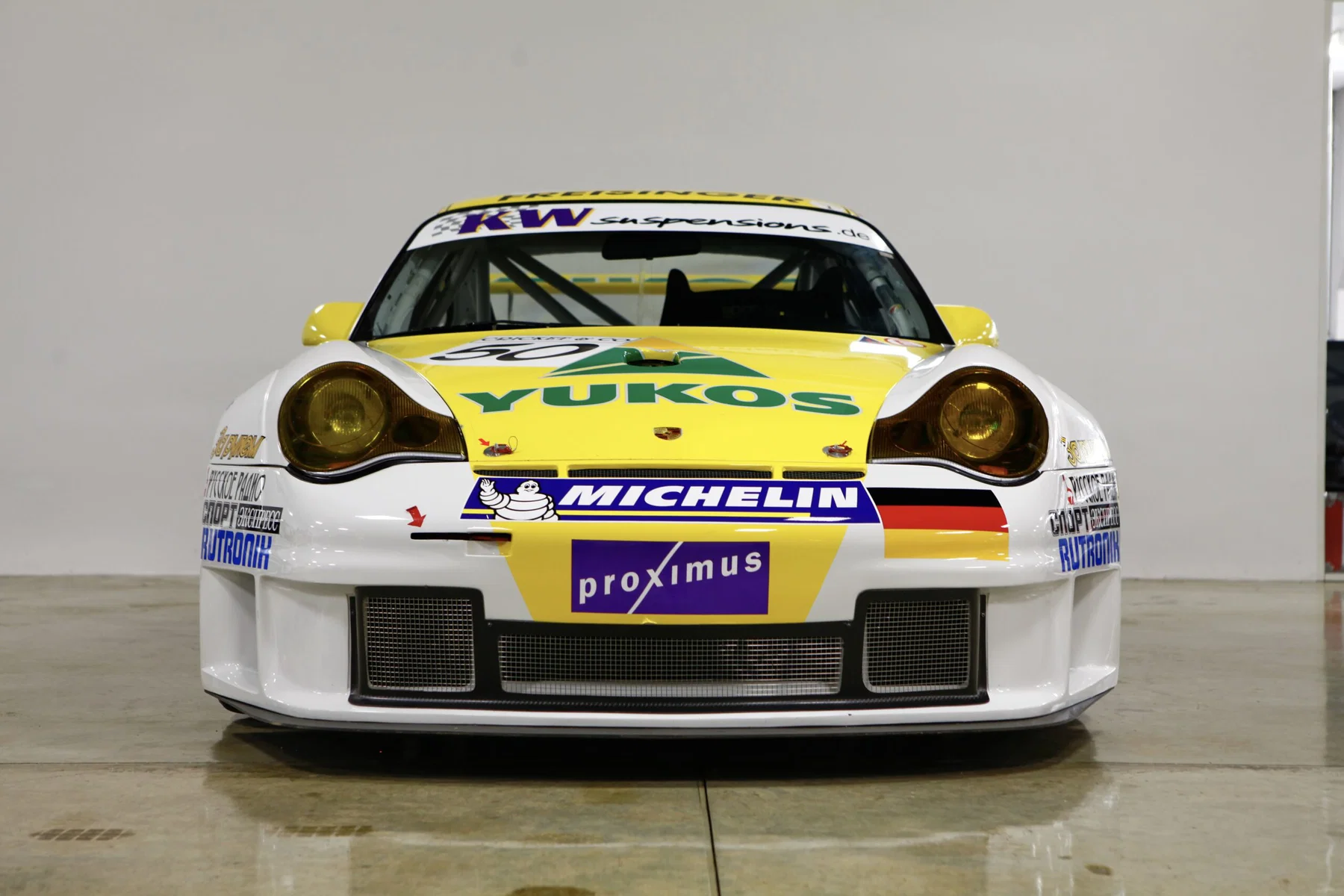
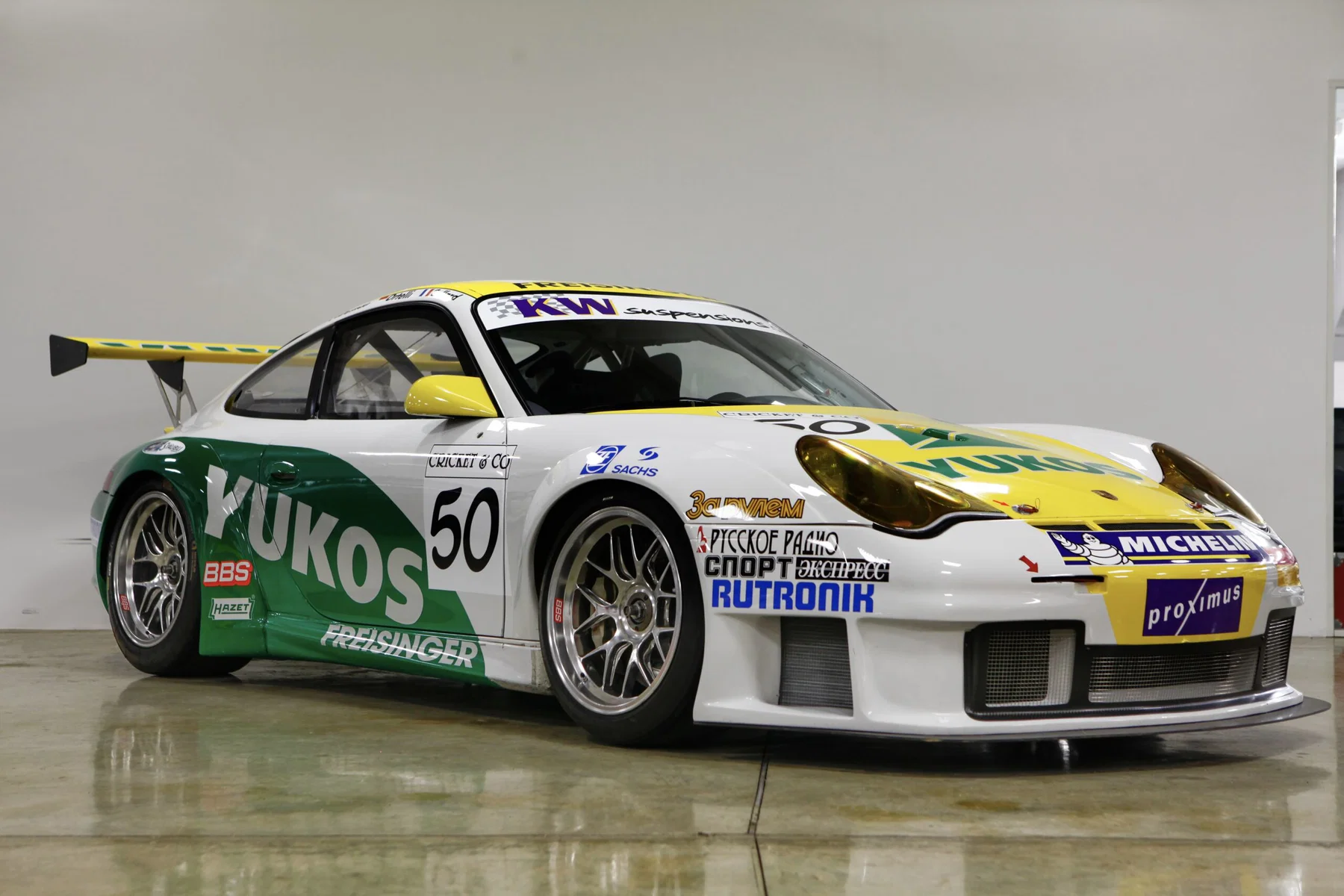
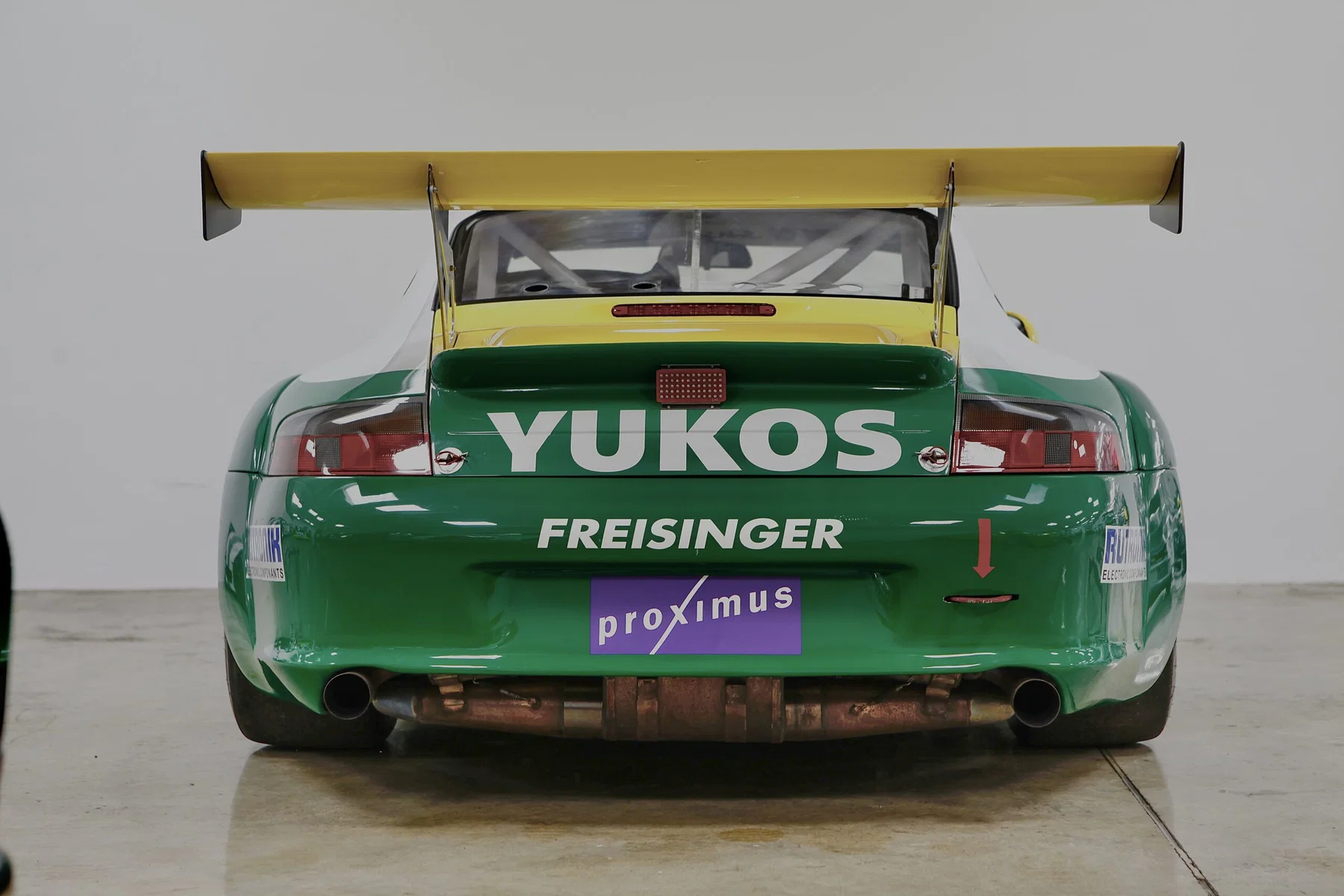
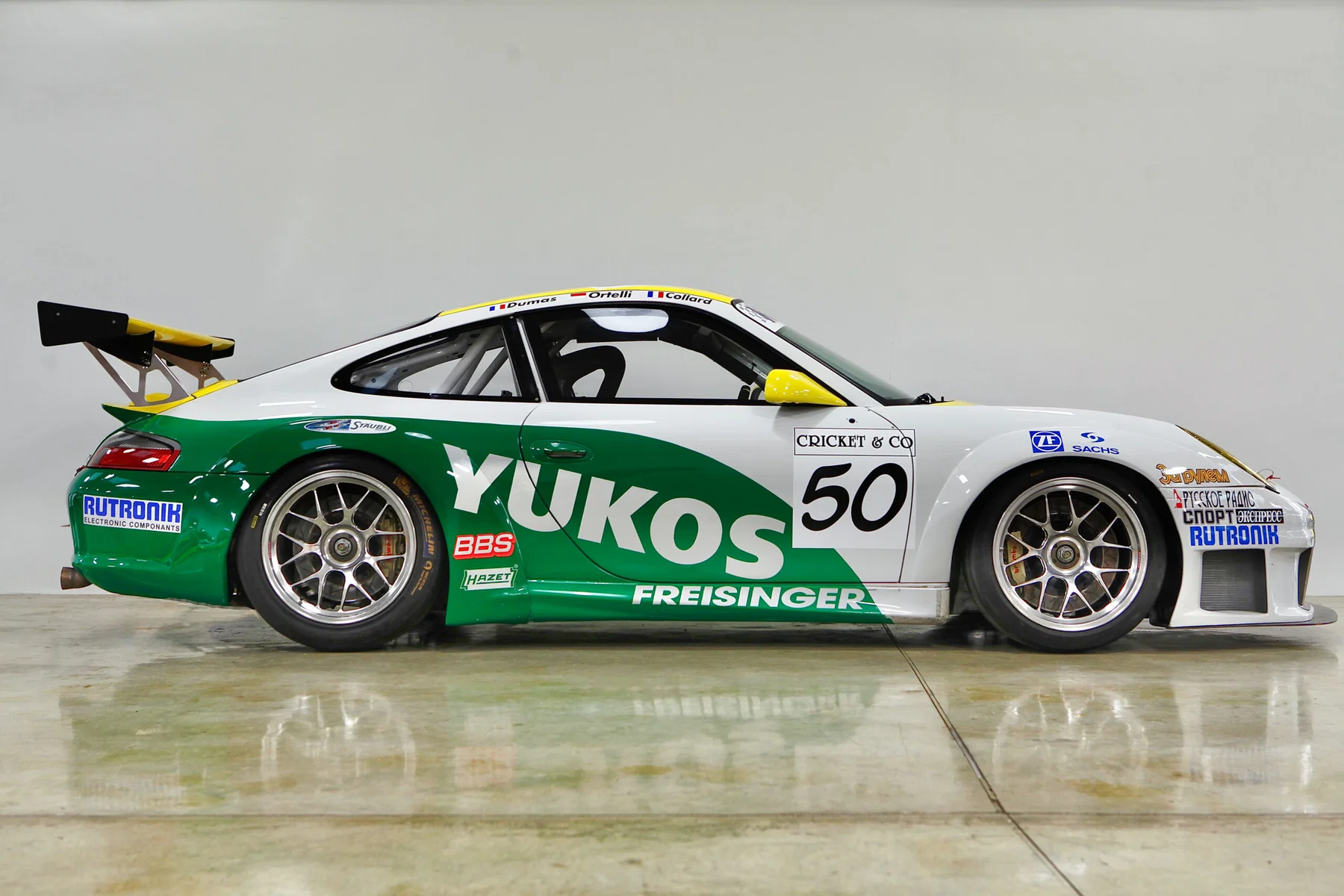
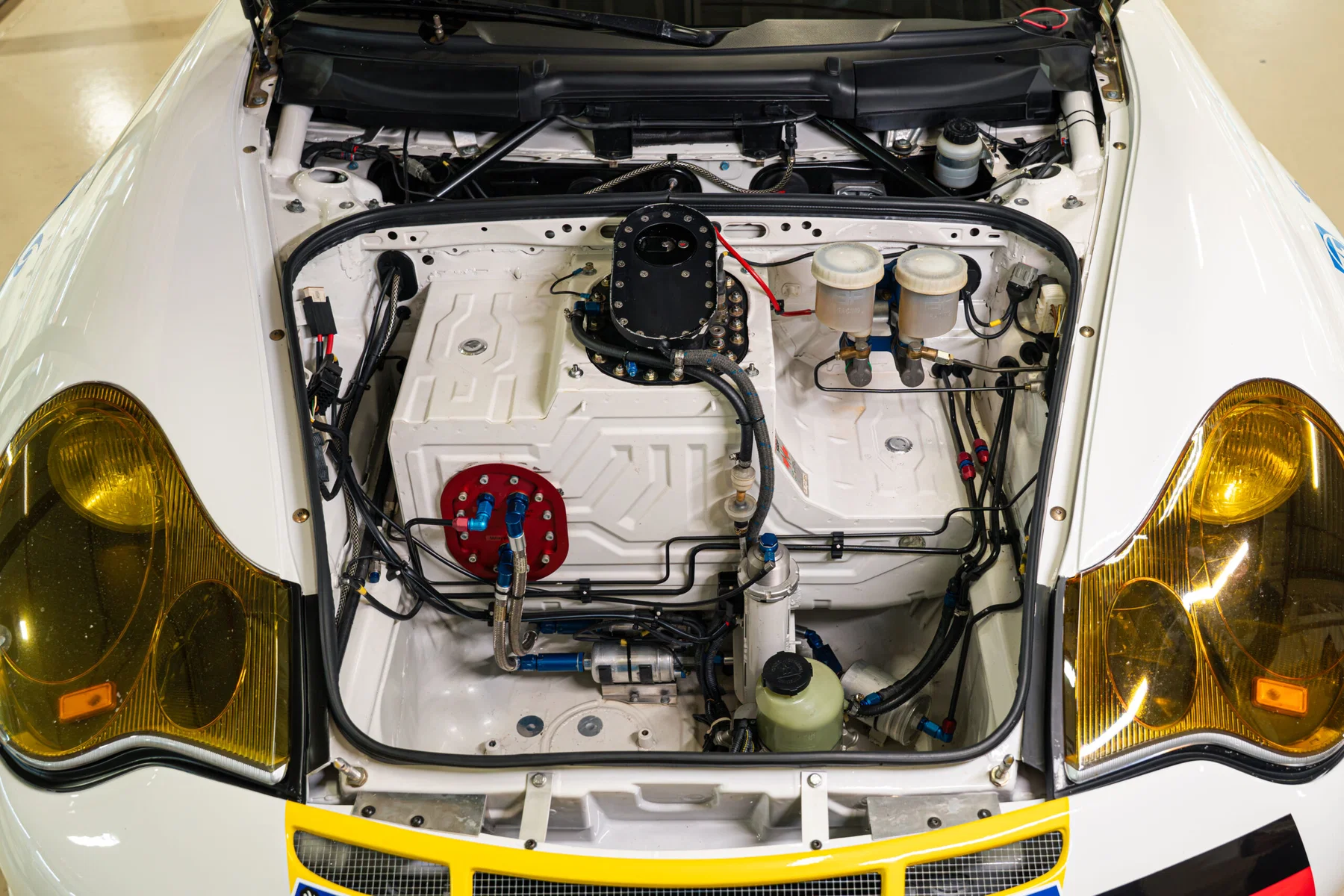
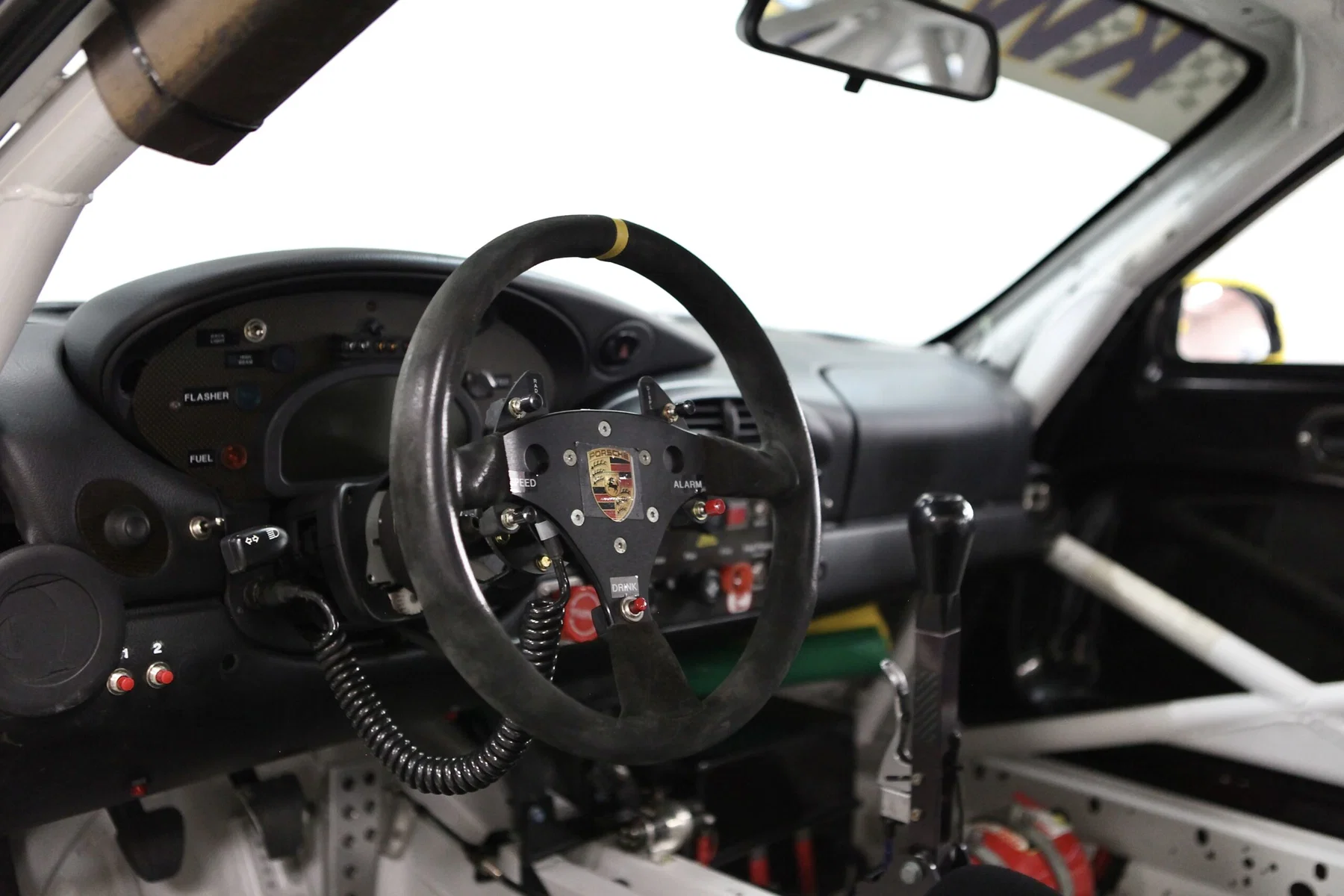
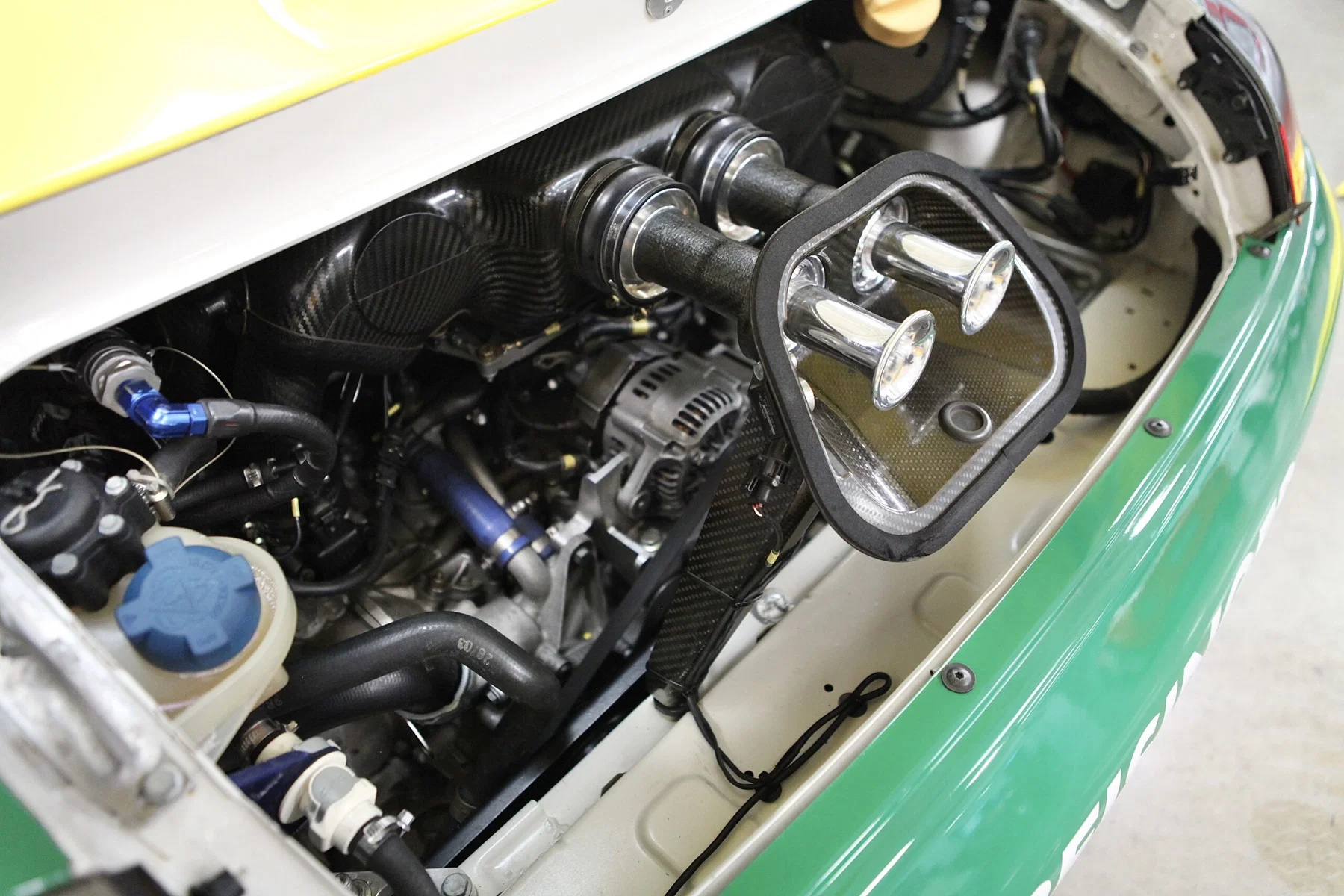
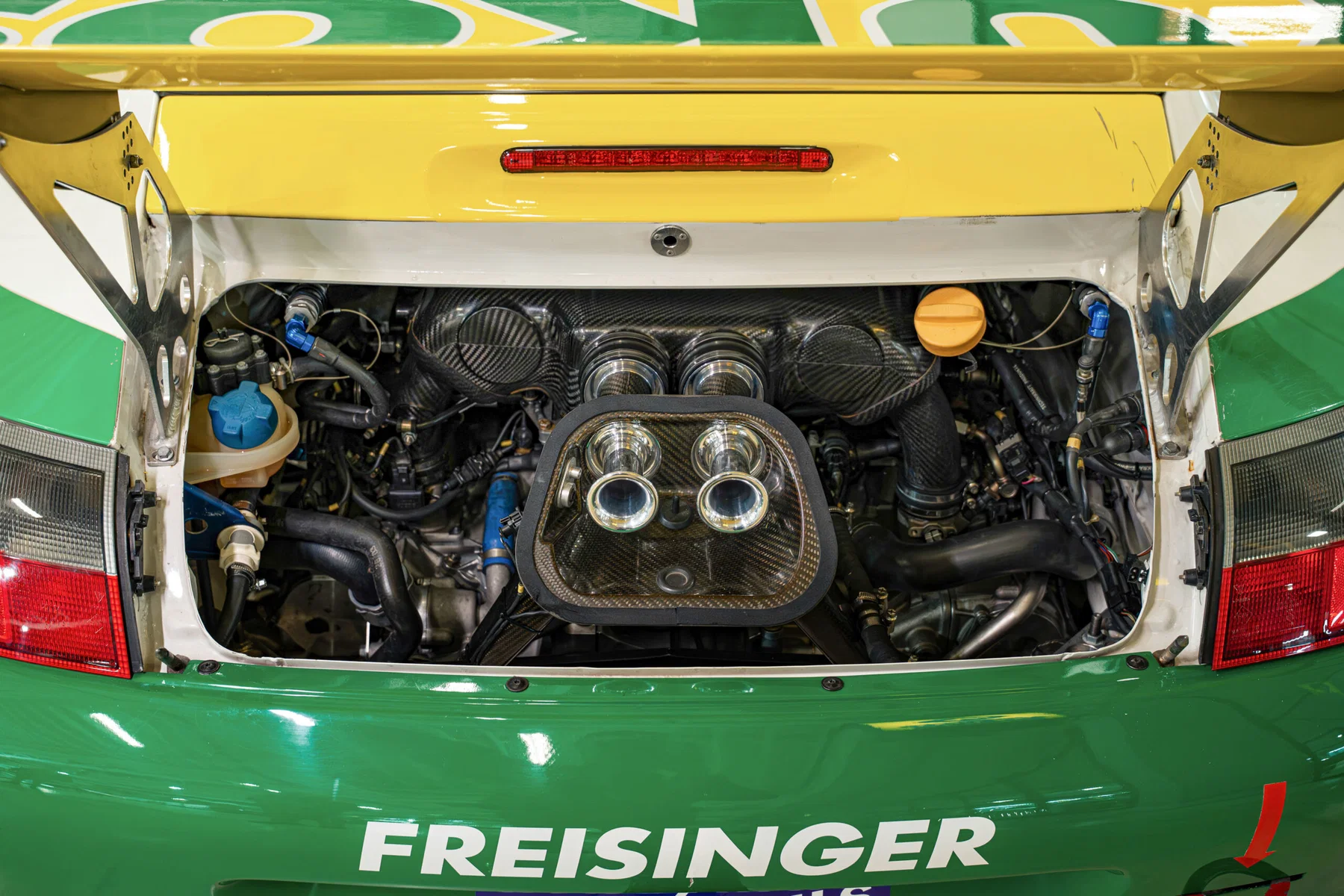
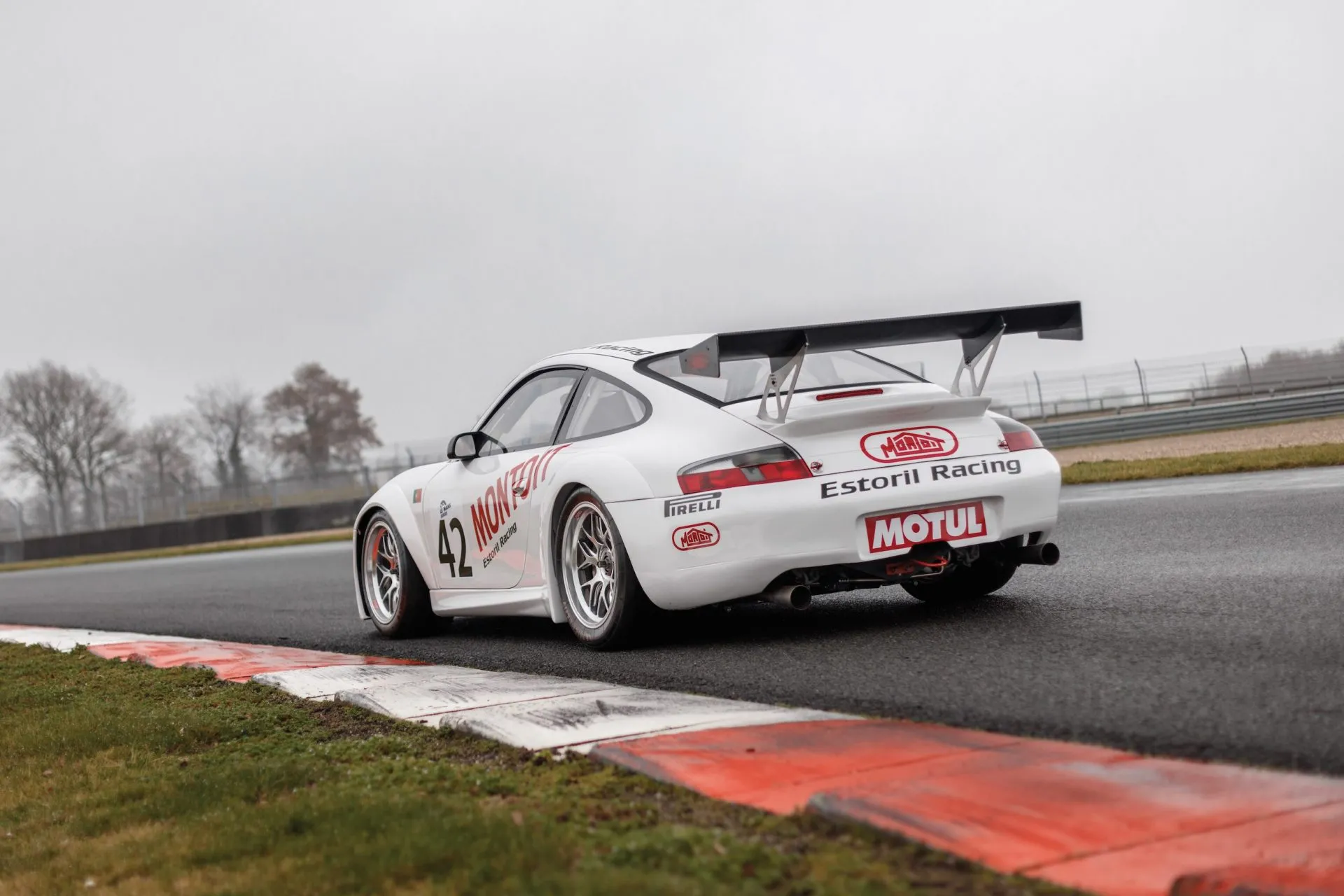
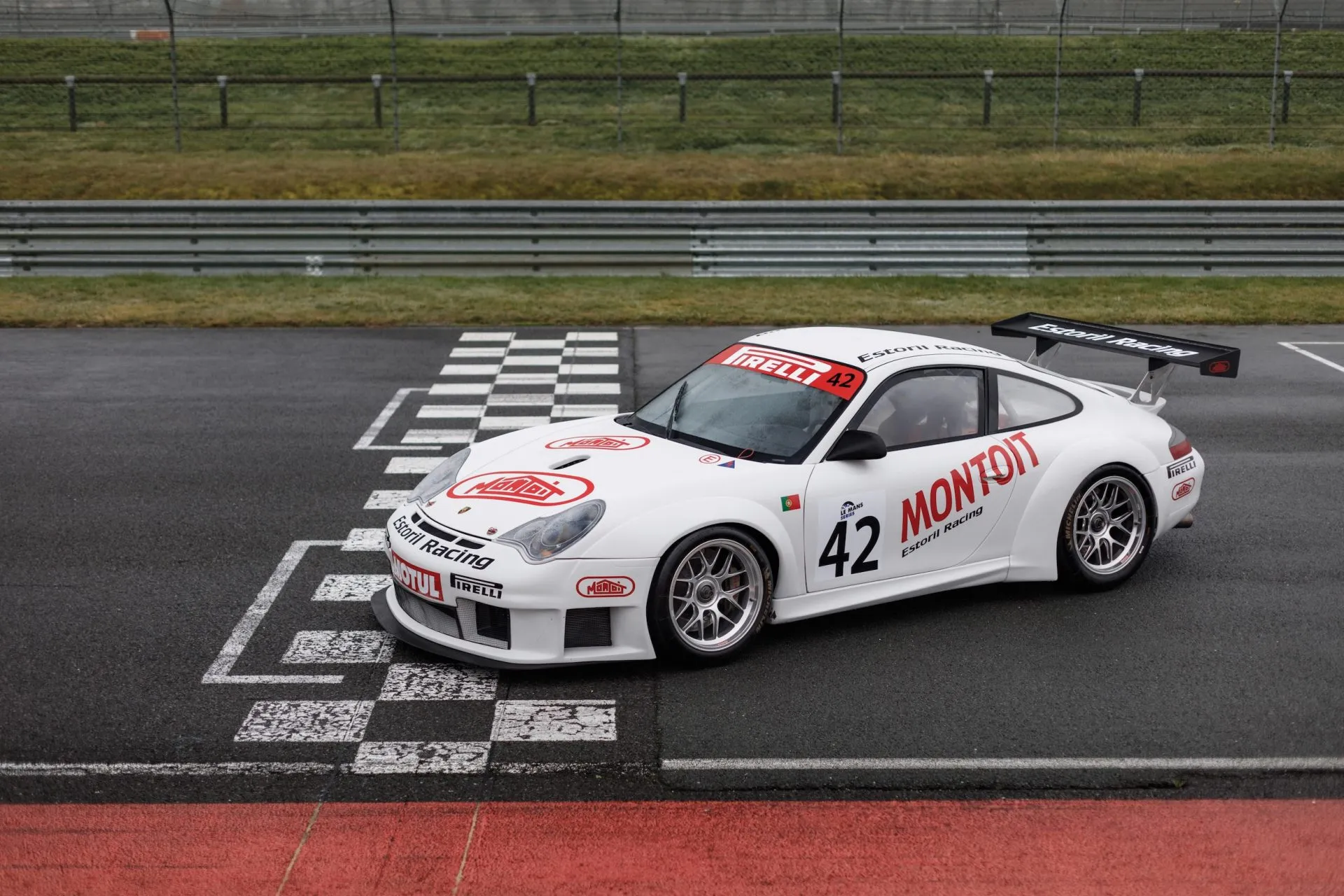
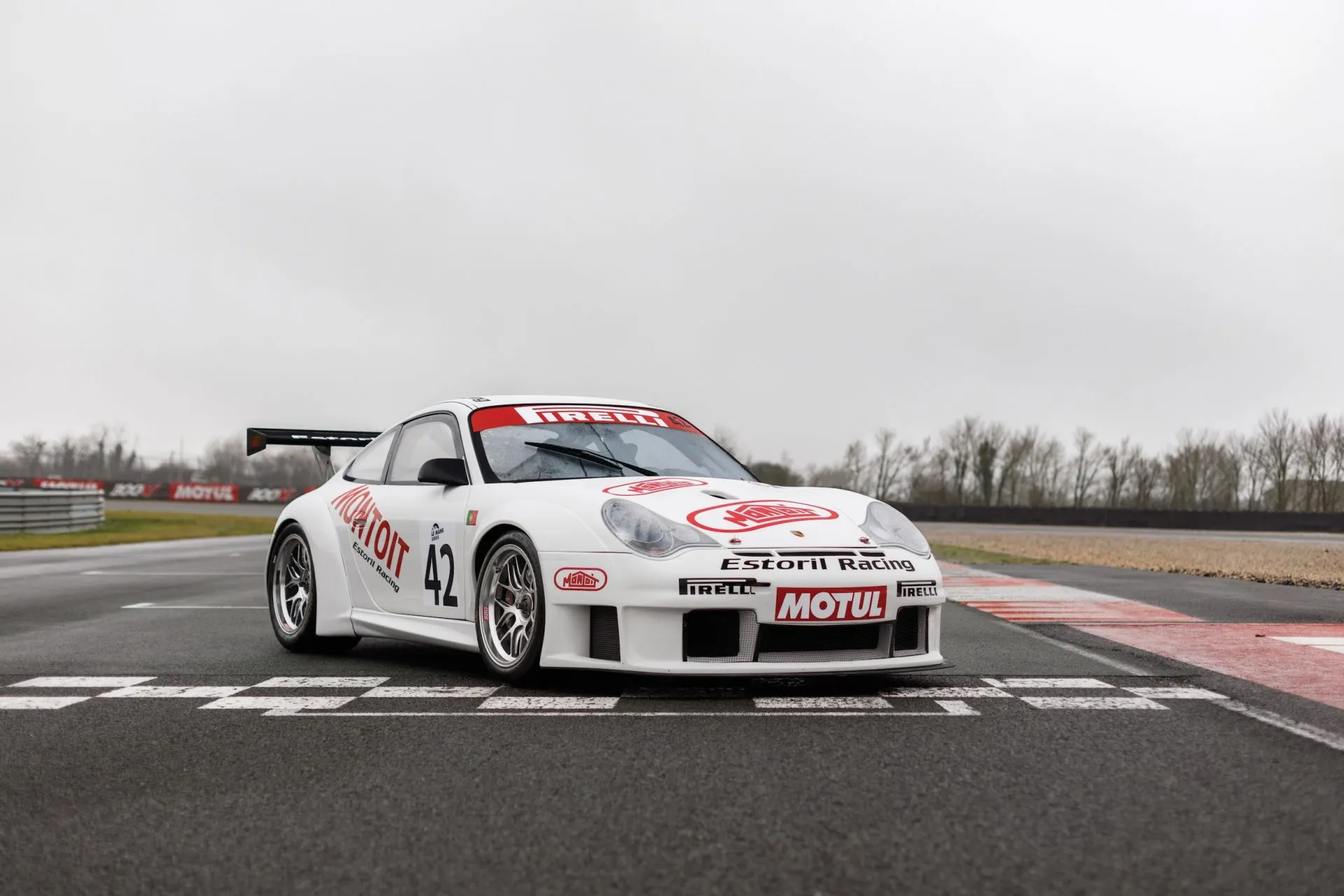
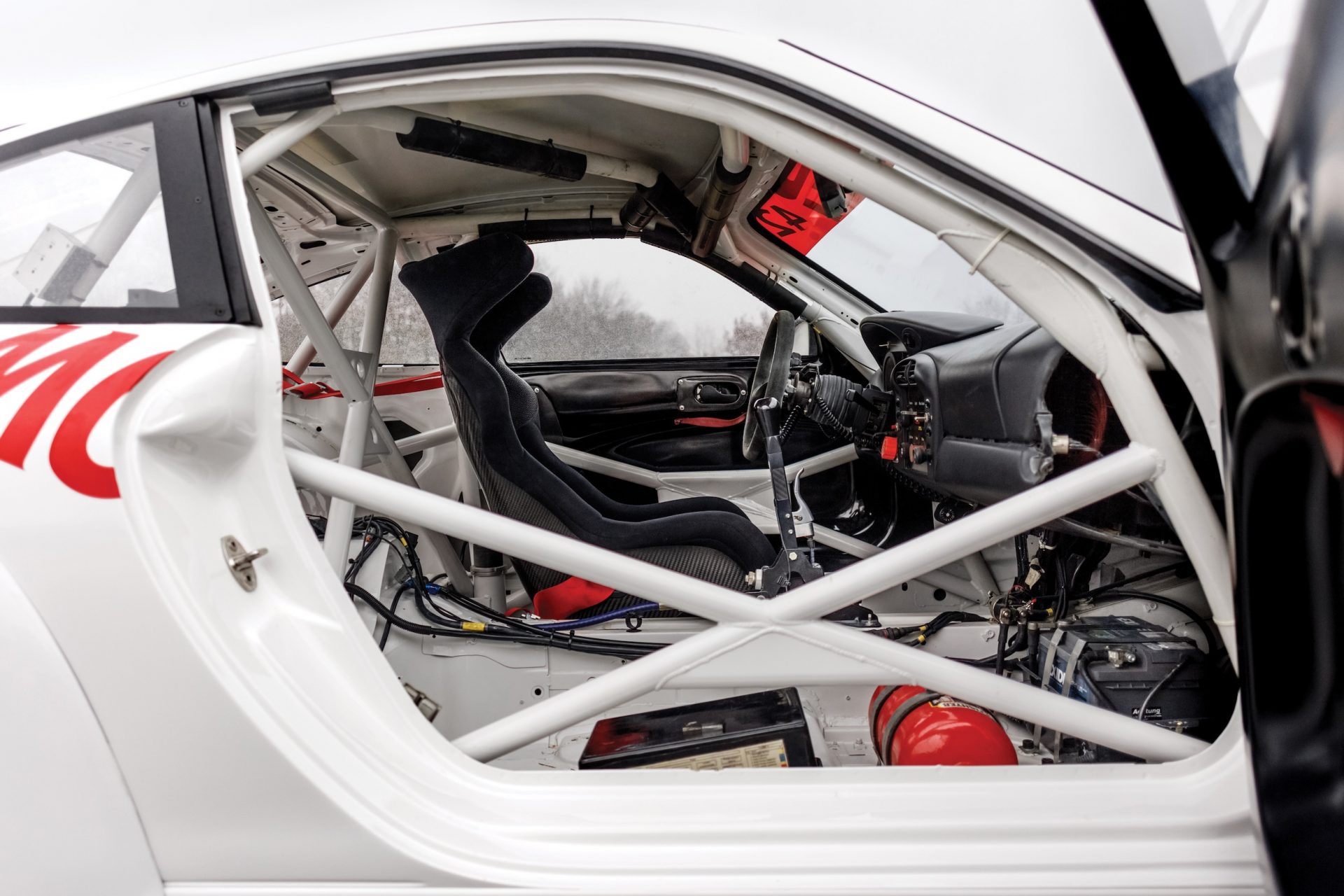
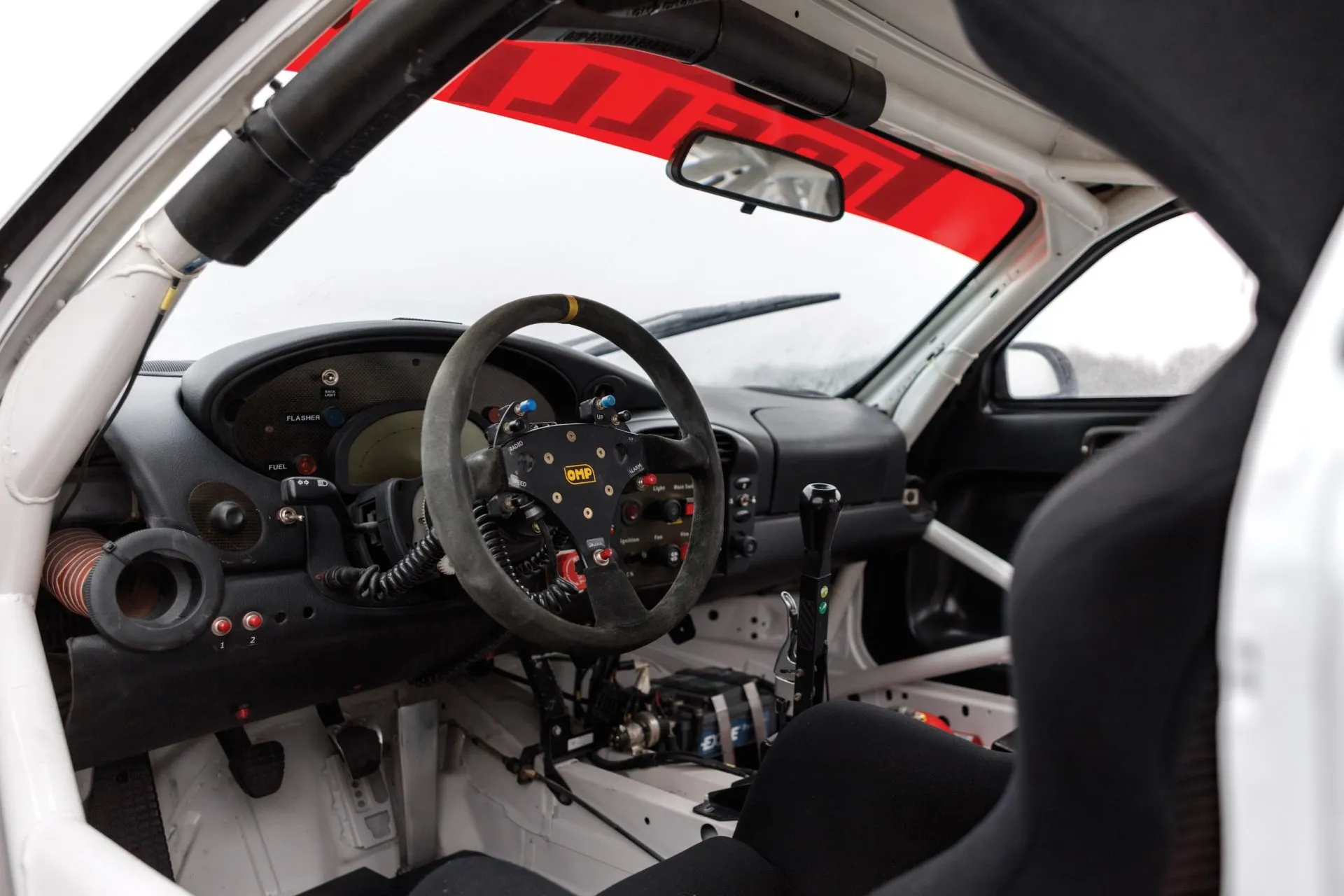
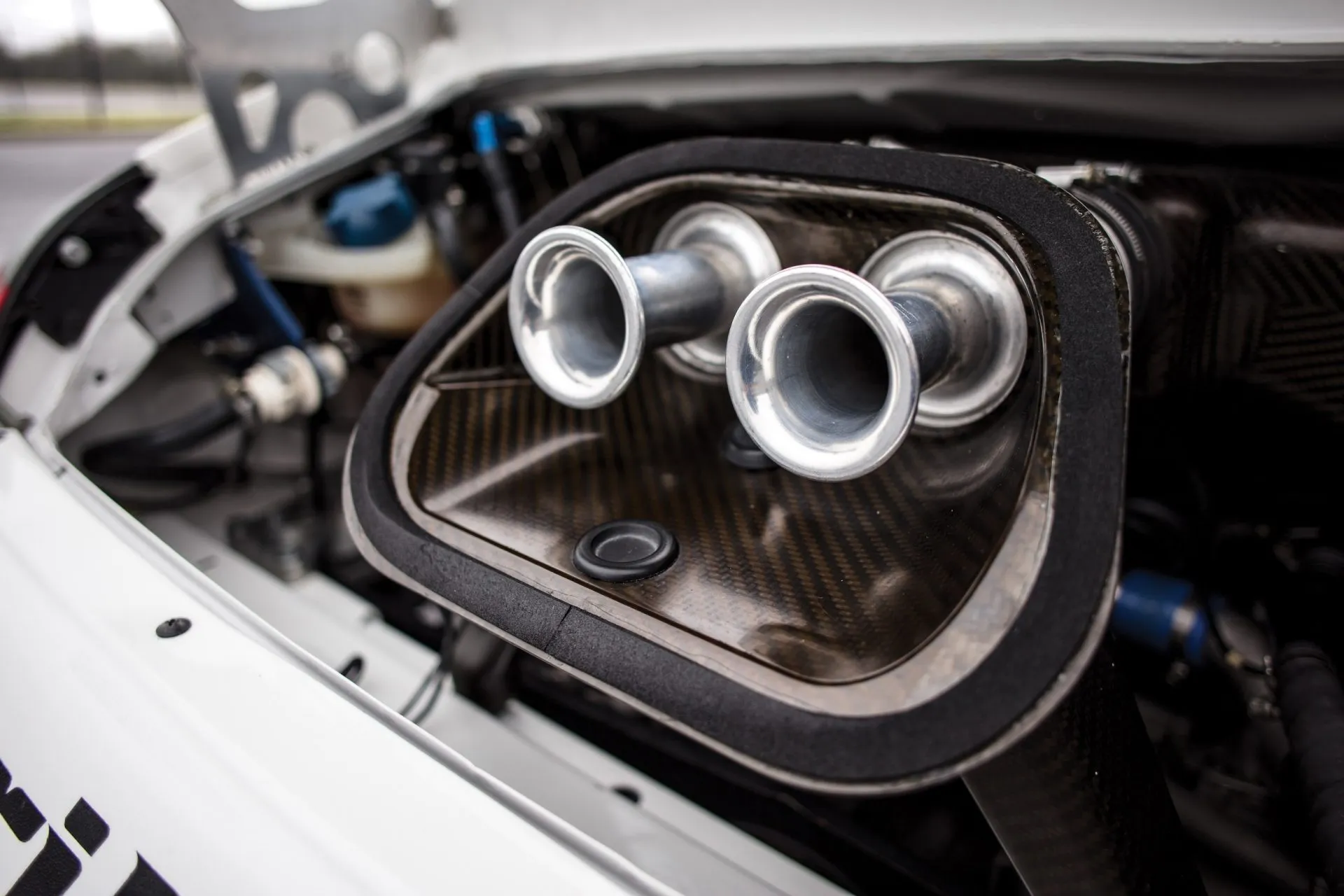
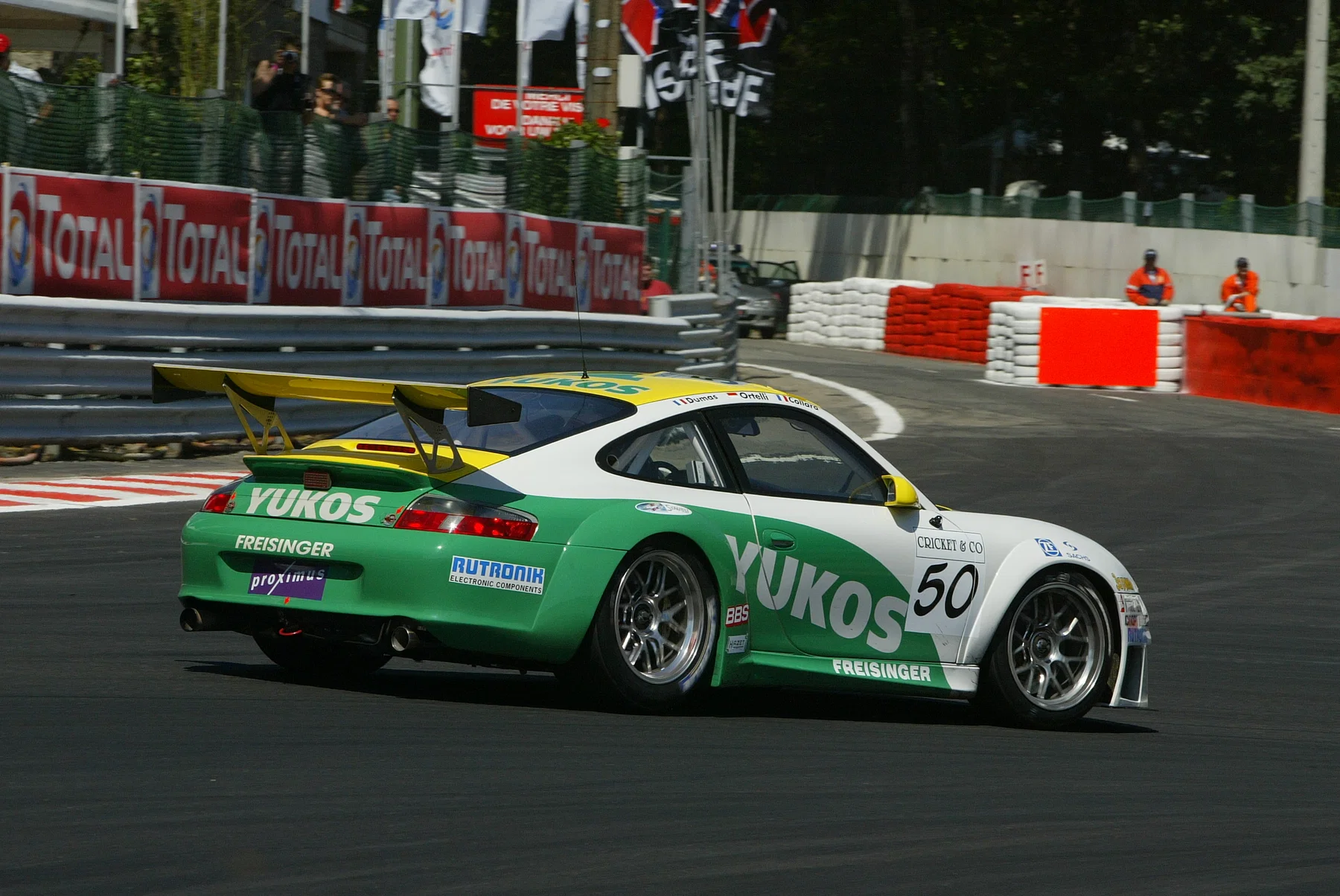
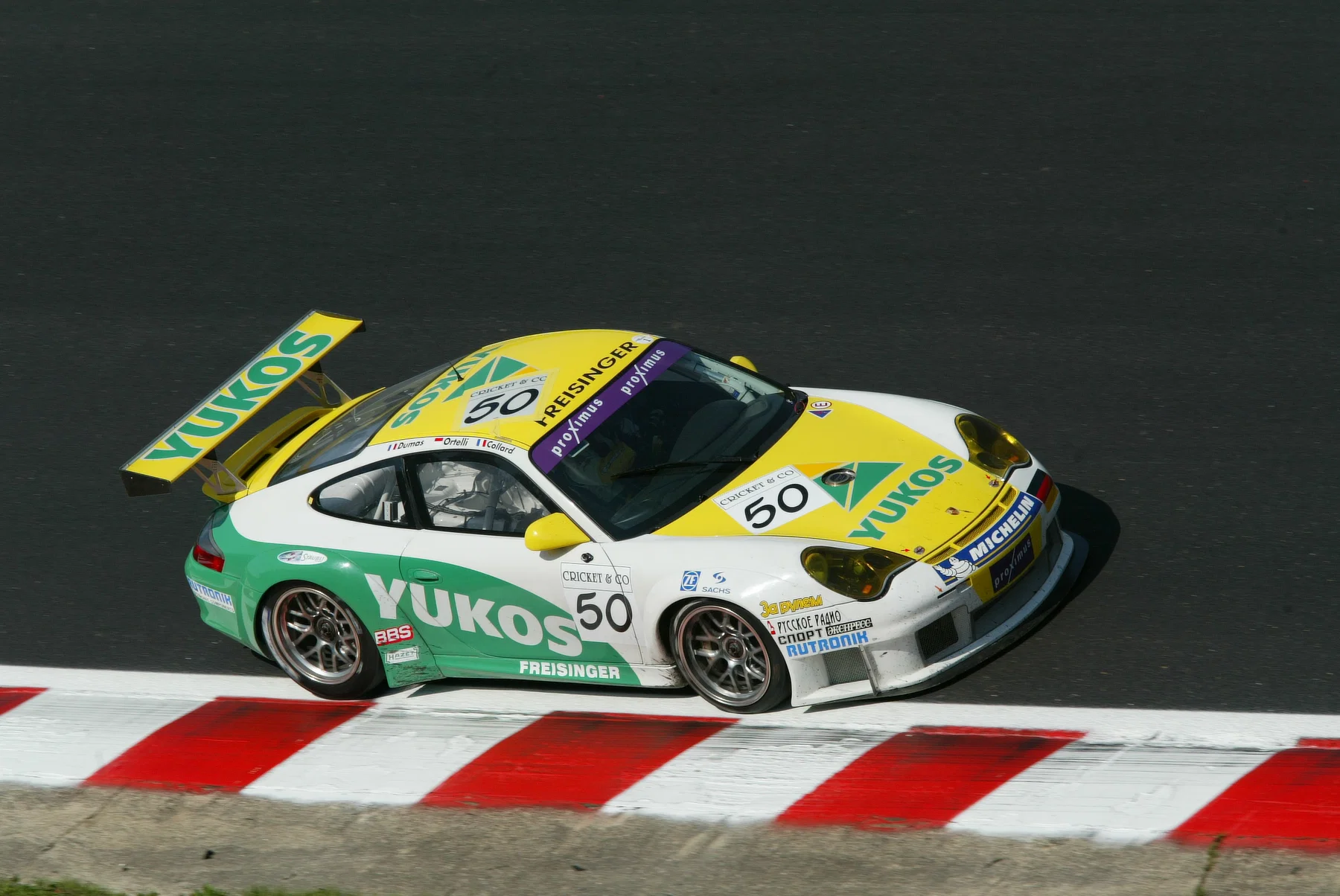
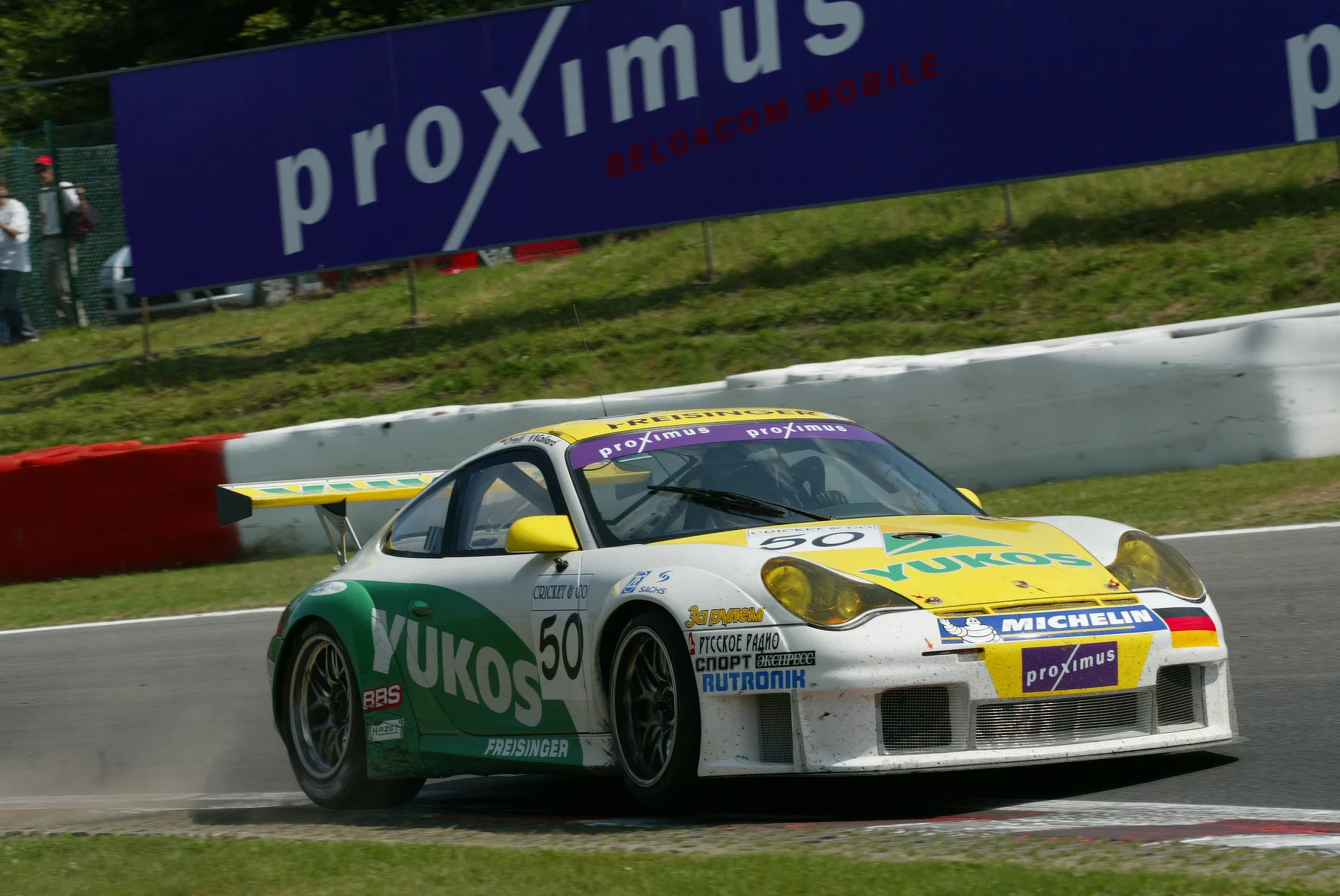
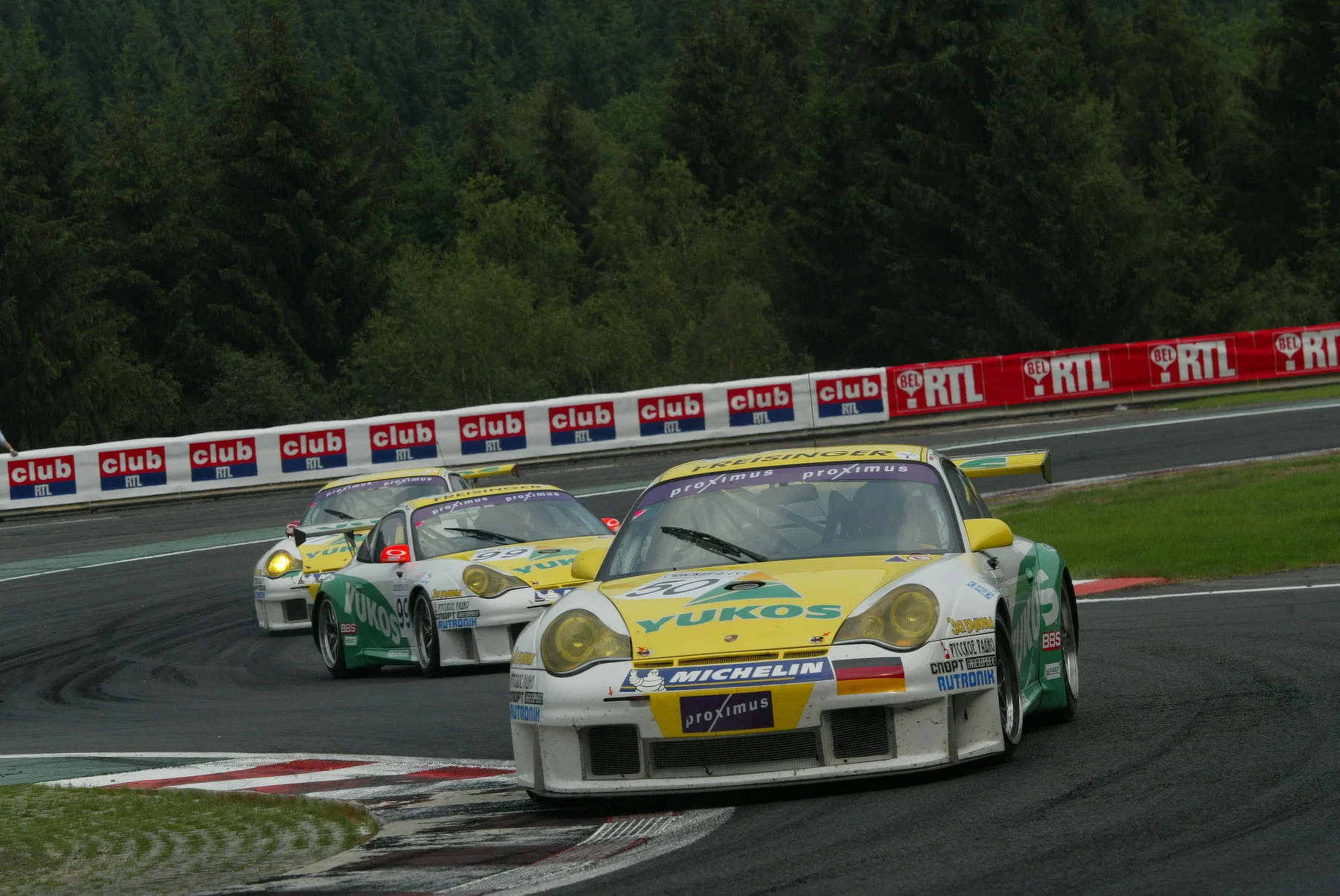
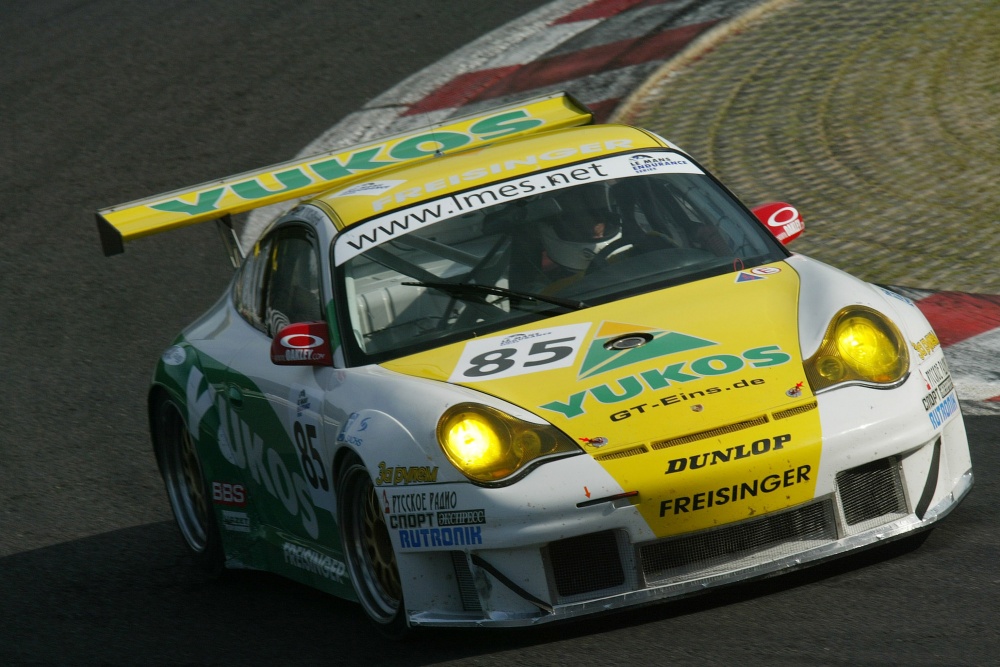
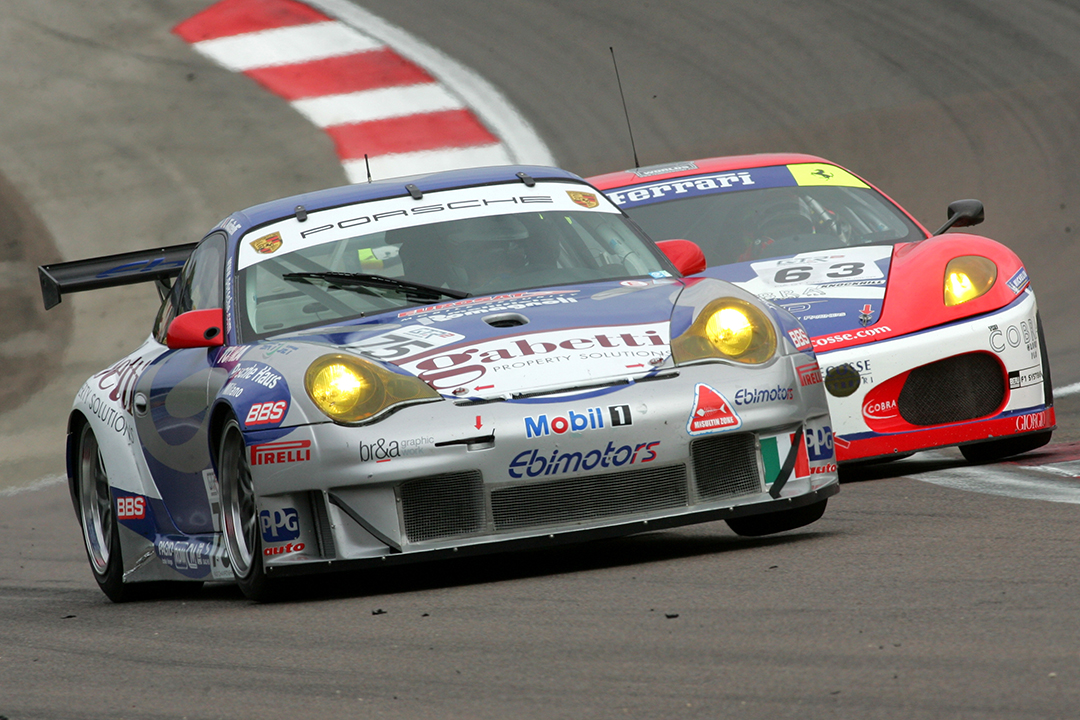
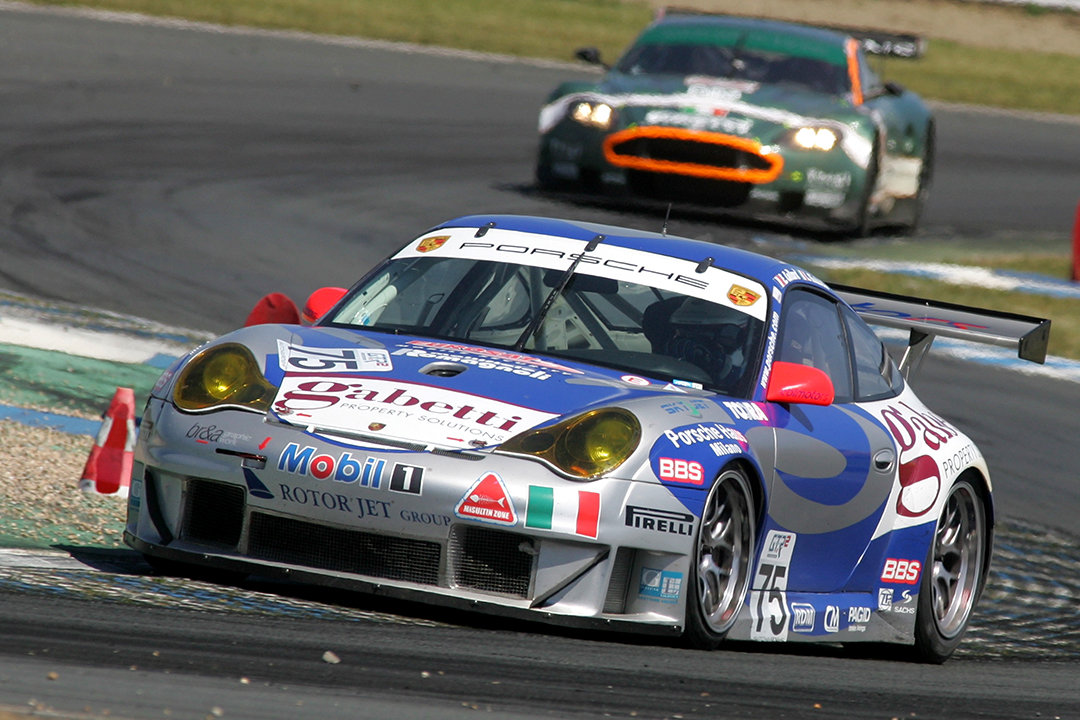
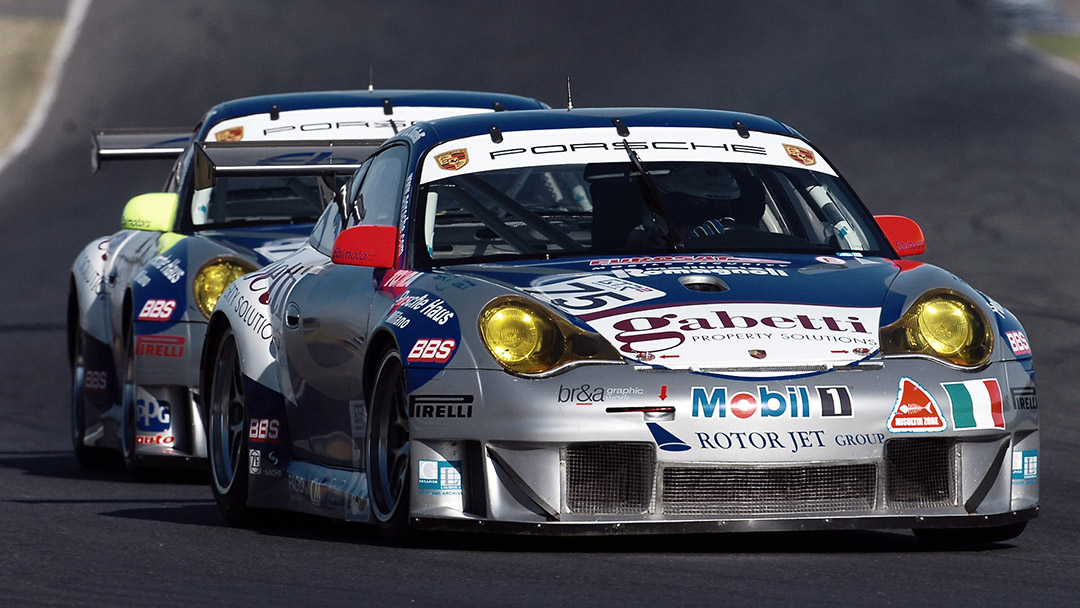
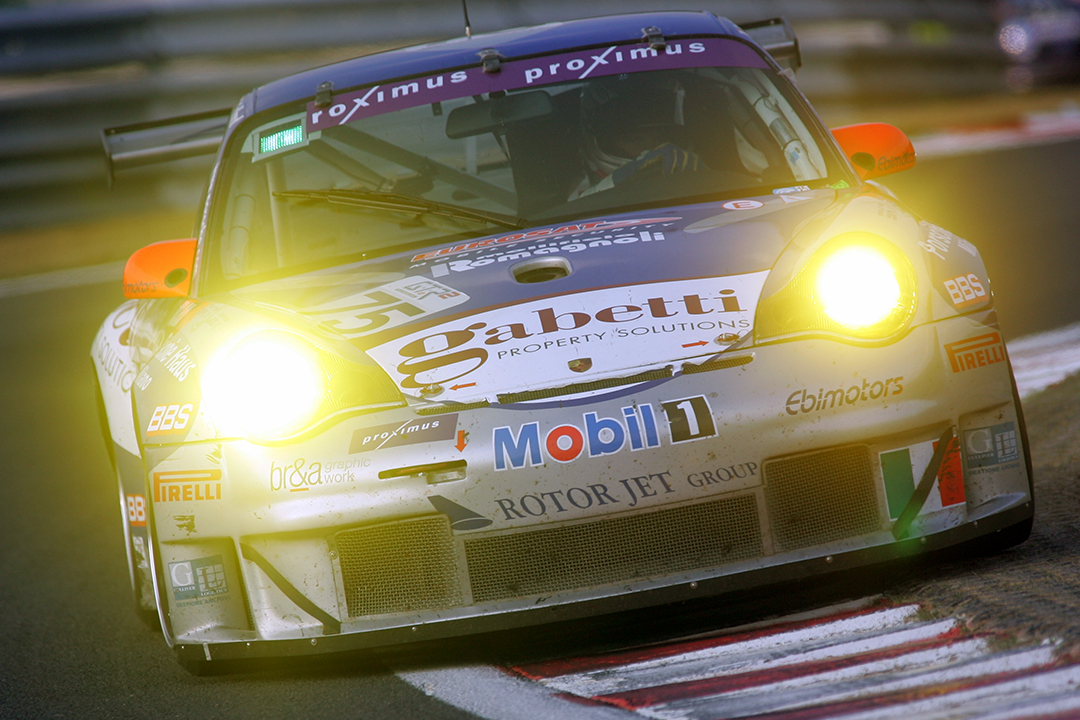
To stand before the 2004 GT3 RSR is to be confronted by a machine that has violently outgrown its original silhouette. The most immediately striking visual departure from the outgoing RS model was its sheer, imposing width. Porsche utilized aggressively flared carbon-Kevlar fenders to shroud a significantly widened track and massive Michelin racing slicks, giving the car a squat, predatory stance. The front fascia, borrowing the teardrop headlights of the 996.2, featured a sprawling carbon-fiber splitter and a heavily revised aerodynamic undertray, while the rear was dominated by a towering, adjustable carbon wing working in tandem with a deeper diffuser. However, the true quantum leap resided beneath this widened skin. The beating heart remained Hans Mezger’s immortal 3.6-liter, dry-sump flat-six. Fitted with twin 30.8mm air restrictors as per FIA regulations, the water-cooled masterpiece produced a highly tractable 445 brake horsepower, revving with a ferocious, metallic shriek to 8,250 rpm. But the absolute game-changer for the 2004 RSR was what this engine was bolted to. For the first time in a customer GT racing 911, Porsche abandoned the traditional H-pattern manual transmission, replacing it with a lightning-fast, six-speed sequential dog-type gearbox. Actuated by a towering, floor-mounted lever, this sequential box allowed drivers to flat-shift without lifting the throttle, shaving crucial tenths of a second off every lap and massively reducing driver fatigue during grueling 24-hour marathons. The suspension kinematics were entirely redesigned to capitalize on the wider track, utilizing stiffer uniball joints, while stopping power was guaranteed by colossal, cross-drilled steel rotors gripped by six-piston front and four-piston rear Brembo calipers.
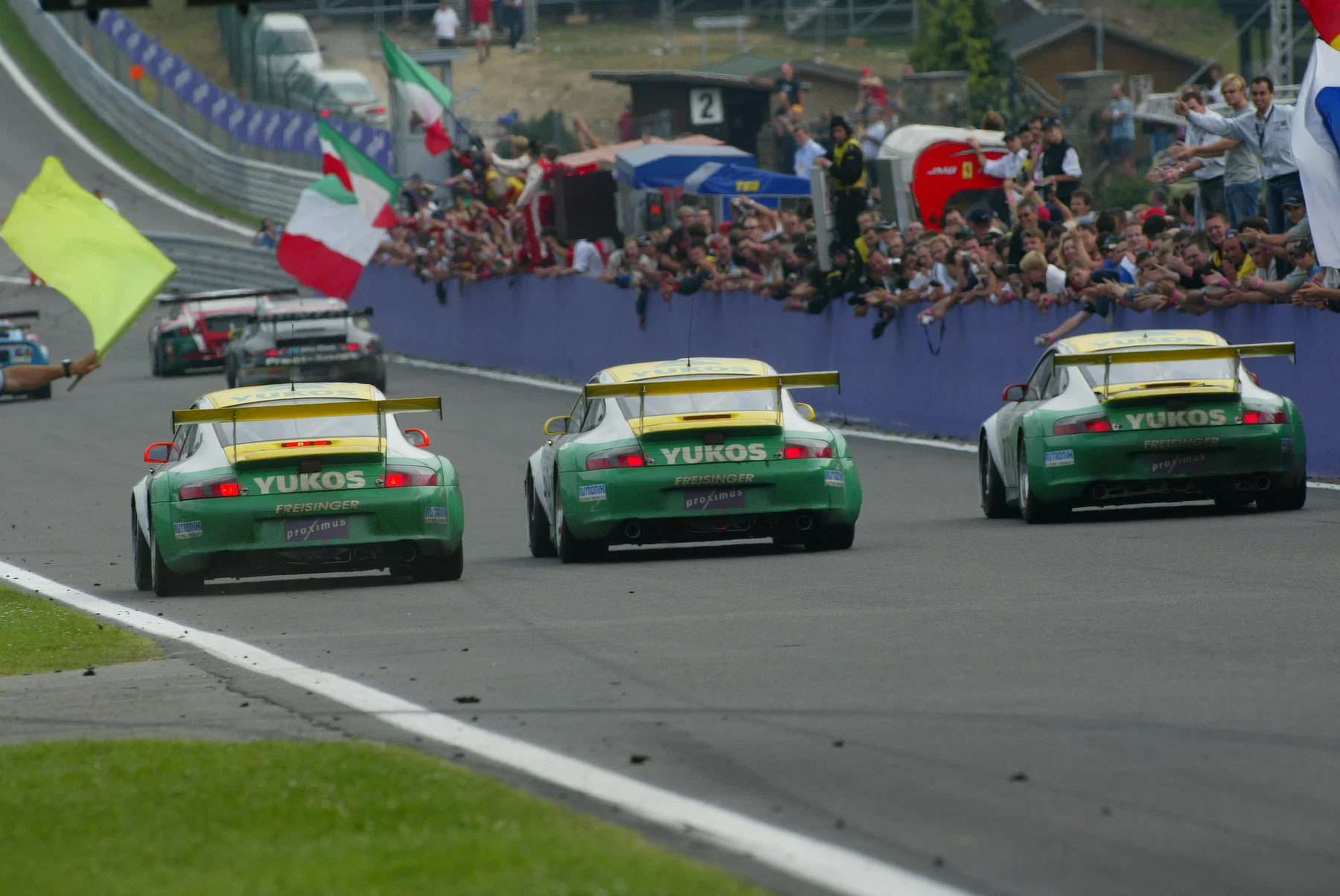
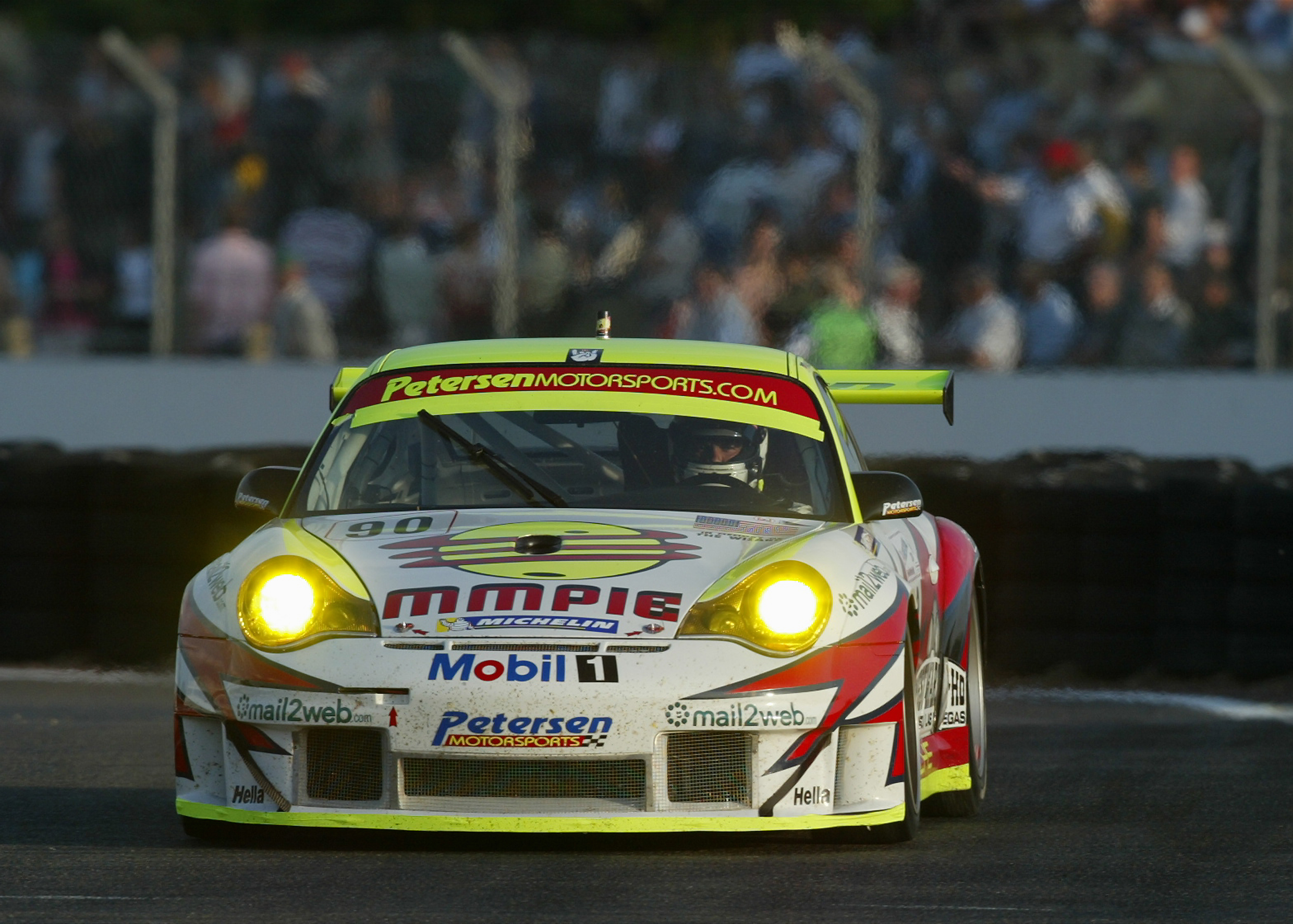
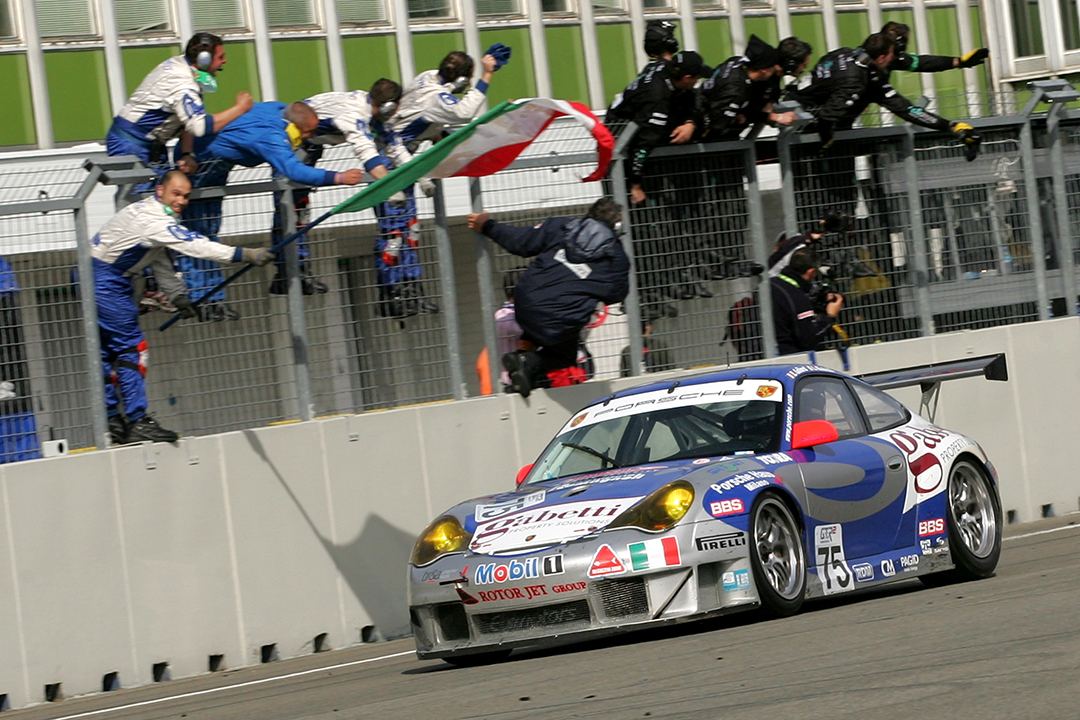
When unleashed upon the 2004 endurance racing calendar, the GT3 RSR orchestrated an absolute massacre. Released to the world’s most elite privateer outfits—such as Alex Job Racing, White Lightning Racing, and the newly formed, iconic Flying Lizard Motorsports—the widened Porsche proved to be an invincible weapon. Its defining triumph occurred at the 2004 24 Hours of Le Mans. The Petersen Motorsports/White Lightning Racing 911 GT3 RSR, piloted by the phenomenal trio of Sascha Maassen, Jörg Bergmeister, and Patrick Long, survived the grueling French marathon to secure a dominant GT class victory, entirely vanquishing the Ferrari armada. Across the Atlantic, the RSR turned the American Le Mans Series into a Porsche playground. Alex Job Racing utilized the sequential gearbox and immense mechanical grip of the RSR to systematically dismantle the competition, securing class victories at the 12 Hours of Sebring and the Petit Le Mans, and ultimately capturing the ALMS GT Championship. The introduction of the sequential transmission proved to be a masterstroke; it not only improved outright sprint pace but practically eliminated the risk of missed “money shifts” that had previously destroyed engines during exhausting nighttime endurance stints.
The legacy of the 2004 Porsche 911 GT3 RSR is firmly cemented as the ultimate, blue-chip apex of the 996 racing lineage. It took a fundamentally brilliant chassis and stretched it to the absolute limits of the rulebook, marrying widened aerodynamic aggression with the vital technological leap of sequential shifting. With roughly 37 original examples built by the factory, it is today an exceptionally rare and highly coveted artifact among historic racing connoisseurs.
Brand
Produced from
Portal
Model line
Model generation
Predecessor
Sucessor
Brand
Produced from
Portal
Model line
Model generation
Predecessor
Sucessor
Submodel Overview
As the 2004 motorsport season approached, the sun was beginning to set on the Type 996 generation of the Porsche 911. For over half a decade, Zuffenhausen’s first water-cooled chassis had waged a relentless, highly successful war across the globe with its GT3 R and RS variants. Yet, in the fiercely competitive crucible of the FIA N-GT and American Le Mans Series GT classes, standing still is akin to moving backward. Maranello had recently homologated the heavily revised, wider, and faster Ferrari 360 GTC, while the thunderous Panoz Esperante GTLM was finding its pace on American soil. Porsche required a definitive, crushing statement to close out the 996 era and secure its customer racing supremacy before the impending arrival of the 997 generation. The answer forged in the Weissach motorsport department was the 2004 Porsche 911 GT3 RSR. It was not merely a subtle evolution; it was a massively widened, technologically overhauled swan song that represented the absolute, uncompromising pinnacle of the first-generation water-cooled racing 911.
To stand before the 2004 GT3 RSR is to be confronted by a machine that has violently outgrown its original silhouette. The most immediately striking visual departure from the outgoing RS model was its sheer, imposing width. Porsche utilized aggressively flared carbon-Kevlar fenders to shroud a significantly widened track and massive Michelin racing slicks, giving the car a squat, predatory stance. The front fascia, borrowing the teardrop headlights of the 996.2, featured a sprawling carbon-fiber splitter and a heavily revised aerodynamic undertray, while the rear was dominated by a towering, adjustable carbon wing working in tandem with a deeper diffuser. However, the true quantum leap resided beneath this widened skin. The beating heart remained Hans Mezger’s immortal 3.6-liter, dry-sump flat-six. Fitted with twin 30.8mm air restrictors as per FIA regulations, the water-cooled masterpiece produced a highly tractable 445 brake horsepower, revving with a ferocious, metallic shriek to 8,250 rpm. But the absolute game-changer for the 2004 RSR was what this engine was bolted to. For the first time in a customer GT racing 911, Porsche abandoned the traditional H-pattern manual transmission, replacing it with a lightning-fast, six-speed sequential dog-type gearbox. Actuated by a towering, floor-mounted lever, this sequential box allowed drivers to flat-shift without lifting the throttle, shaving crucial tenths of a second off every lap and massively reducing driver fatigue during grueling 24-hour marathons. The suspension kinematics were entirely redesigned to capitalize on the wider track, utilizing stiffer uniball joints, while stopping power was guaranteed by colossal, cross-drilled steel rotors gripped by six-piston front and four-piston rear Brembo calipers.
When unleashed upon the 2004 endurance racing calendar, the GT3 RSR orchestrated an absolute massacre. Released to the world’s most elite privateer outfits—such as Alex Job Racing, White Lightning Racing, and the newly formed, iconic Flying Lizard Motorsports—the widened Porsche proved to be an invincible weapon. Its defining triumph occurred at the 2004 24 Hours of Le Mans. The Petersen Motorsports/White Lightning Racing 911 GT3 RSR, piloted by the phenomenal trio of Sascha Maassen, Jörg Bergmeister, and Patrick Long, survived the grueling French marathon to secure a dominant GT class victory, entirely vanquishing the Ferrari armada. Across the Atlantic, the RSR turned the American Le Mans Series into a Porsche playground. Alex Job Racing utilized the sequential gearbox and immense mechanical grip of the RSR to systematically dismantle the competition, securing class victories at the 12 Hours of Sebring and the Petit Le Mans, and ultimately capturing the ALMS GT Championship. The introduction of the sequential transmission proved to be a masterstroke; it not only improved outright sprint pace but practically eliminated the risk of missed “money shifts” that had previously destroyed engines during exhausting nighttime endurance stints.
The legacy of the 2004 Porsche 911 GT3 RSR is firmly cemented as the ultimate, blue-chip apex of the 996 racing lineage. It took a fundamentally brilliant chassis and stretched it to the absolute limits of the rulebook, marrying widened aerodynamic aggression with the vital technological leap of sequential shifting. With roughly 37 original examples built by the factory, it is today an exceptionally rare and highly coveted artifact among historic racing connoisseurs.
Tech Specs
Technical Specifications
Tech Specs
Technical Specifications
Engine
01
03
Internal combustion engine
Configuration
Porsche Flat-6 (Boxer) "Mezger" - Water-cooled
Location
Rear, longitudinally mounted
Construction
Aluminium alloy block and heads
Displacement (cc)
3,598 cc
Displacement (cu in)
219.6 cu in
Compression
~13.0:1
Bore x Stroke
100.0 mm x 76.4 mm
Valvetrain
4 valves per cylinder, DOHC
Fuel feed
Bosch Motronic MS 3.1 multi-point sequential fuel injection
Lubrication
Dry sump
Aspiration
Naturally aspirated (with 2 x 30.8 mm FIA/ACO air restrictors)
Output
Power (hp)
445 hp
Power (kW)
332 kW
Max power at
8,250 RPM
Torque (Nm)
405 Nm
Torque (ft lbs)
299 ft lbs
Max torque at
7,200 RPM
Drivetrain
02
03
Chassis
Type
Monocoque unibody (with factory welded-in roll cage)
Material
Steel
Body
Material
Carbon fibre composite panels (doors, widened fenders, hood, engine lid) over steel shell
Transmission
Gearbox
Porsche 6-speed sequential manual (straight-cut gears, racing clutch, external oil cooler)
Drive
Rear Wheel Drive (Limited Slip Differential)
Suspension
Front
Independent, McPherson struts, coil springs over double-adjustable telescopic dampers, anti-roll bar (revised kinematics)
Rear
Independent, multi-link, coil springs over double-adjustable telescopic dampers, anti-roll bar
Steering
Type
Rack and pinion, power assisted
Brakes
Front
Ventilated steel discs Ø380 mm, 6-piston aluminium racing calipers
Rear
Ventilated steel discs Ø355 mm, 4-piston aluminium racing calipers
Wheels
Front
11" x 18" (BBS 3-piece center-lock alloy)
Rear
13" x 18" (BBS 3-piece center-lock alloy)
Tires
Front
270/650-18
Rear
310/710-18
Dimensions and performance
03
03
Dimensions
Length (mm)
4,430 mm
Length (in)
174.4 in
Width (mm)
1,830 mm
Width (in)
72.0 in
Height (mm)
1,250 mm
Height (in)
49.2 in
Wheelbase (mm)
2,350 mm
Wheelbase (in)
92.5 in
Weight (kg)
~1,100 kg
Weight (lbs)
~2,425 lbs
Performance
Power to weight
~0.40 hp/kg
Top speed (km/h)
~295 km/h
Top speed (mph)
~183 mph
0-100 km/h (0-60 mph)
~3.3 s