
Sauber C8 Mercedes-Benz
Brand
Produced from
Portal
Vehicle category
Predecessor
Successor
Submodel Overview
For three decades, a heavy, unspoken ghost haunted the boardrooms of Stuttgart. Following the catastrophic tragedy at the 1955 24 Hours of Le Mans, Mercedes-Benz had instituted an absolute, draconian ban on factory motorsport involvement. As the 1980s dawned and the fuel-restricted Group C era transformed endurance racing into a high-speed technological battleground, the monolithic presence of Porsche’s 956 and 962 seemed entirely untouchable. Enter Peter Sauber, a pragmatic and relentlessly ambitious Swiss garagiste who had been steadily building a reputation with his BMW-powered C6 and C7 prototypes. Sauber recognized that to truly threaten the establishment, he needed a powerplant of immense capability. Through a series of clandestine meetings and unofficial handshakes, Sauber convinced a group of passionate Mercedes-Benz engineers to covertly supply him with engines. The resulting machine, debuting for the 1985 season, was the Sauber C8. It was not merely a new racing car; it was a highly classified, rolling experiment that represented the first tentative, unsanctioned steps of the three-pointed star returning to the global racing stage, stepping into a terrifying arena populated by the mighty Porsches, the agile Lancia LC2s, and Tom Walkinshaw’s thunderous V12 Jaguars.
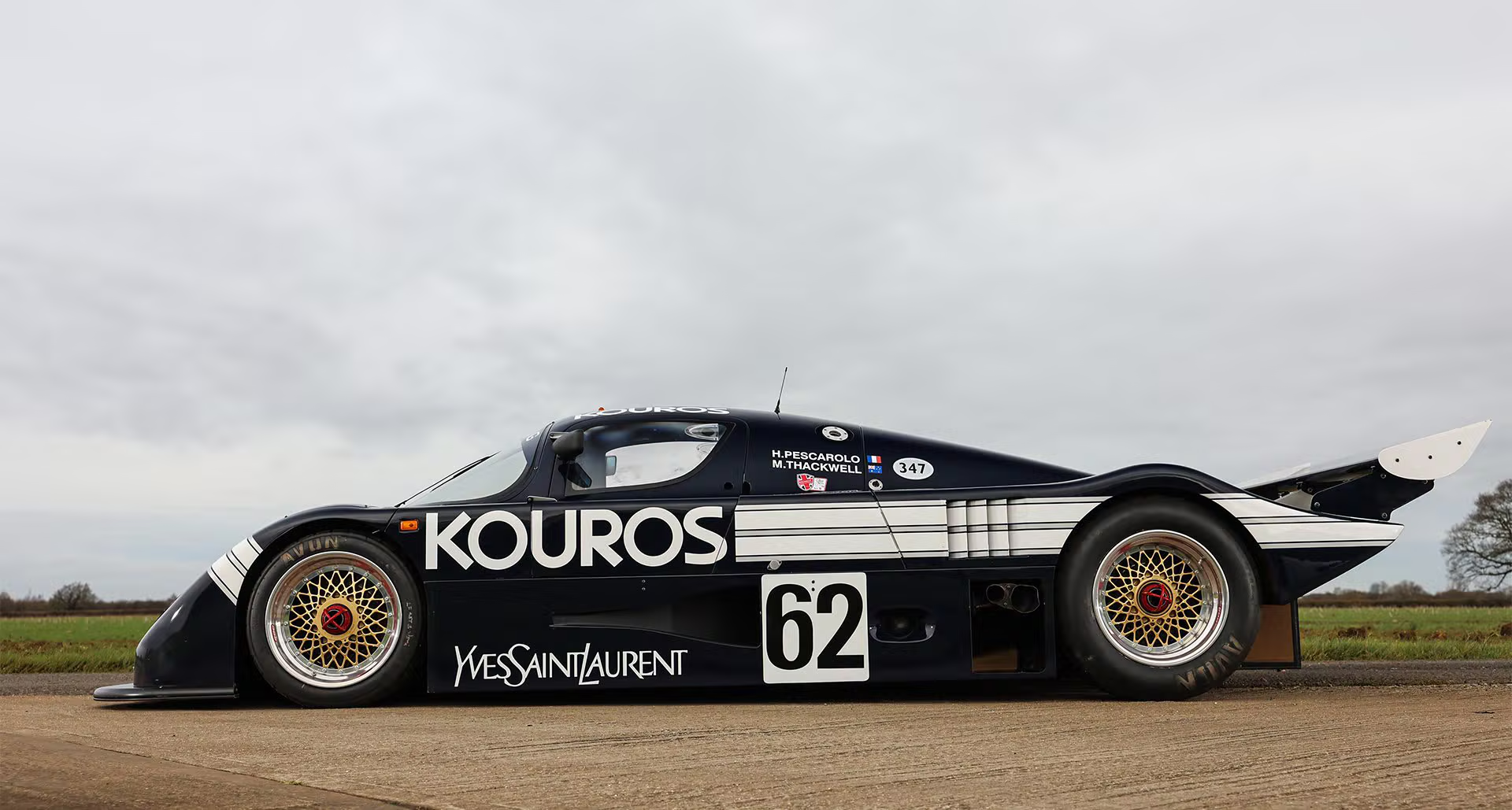
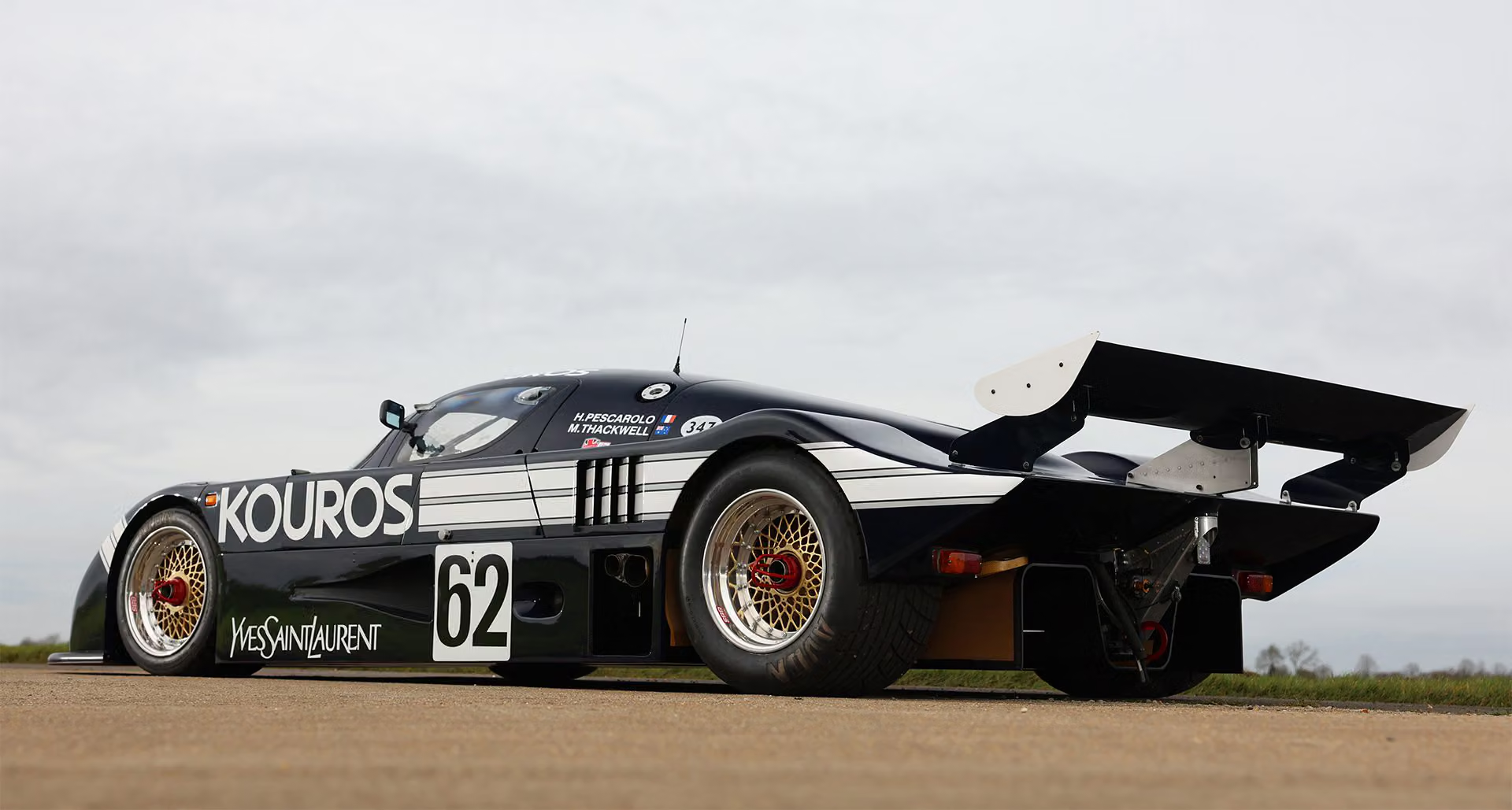
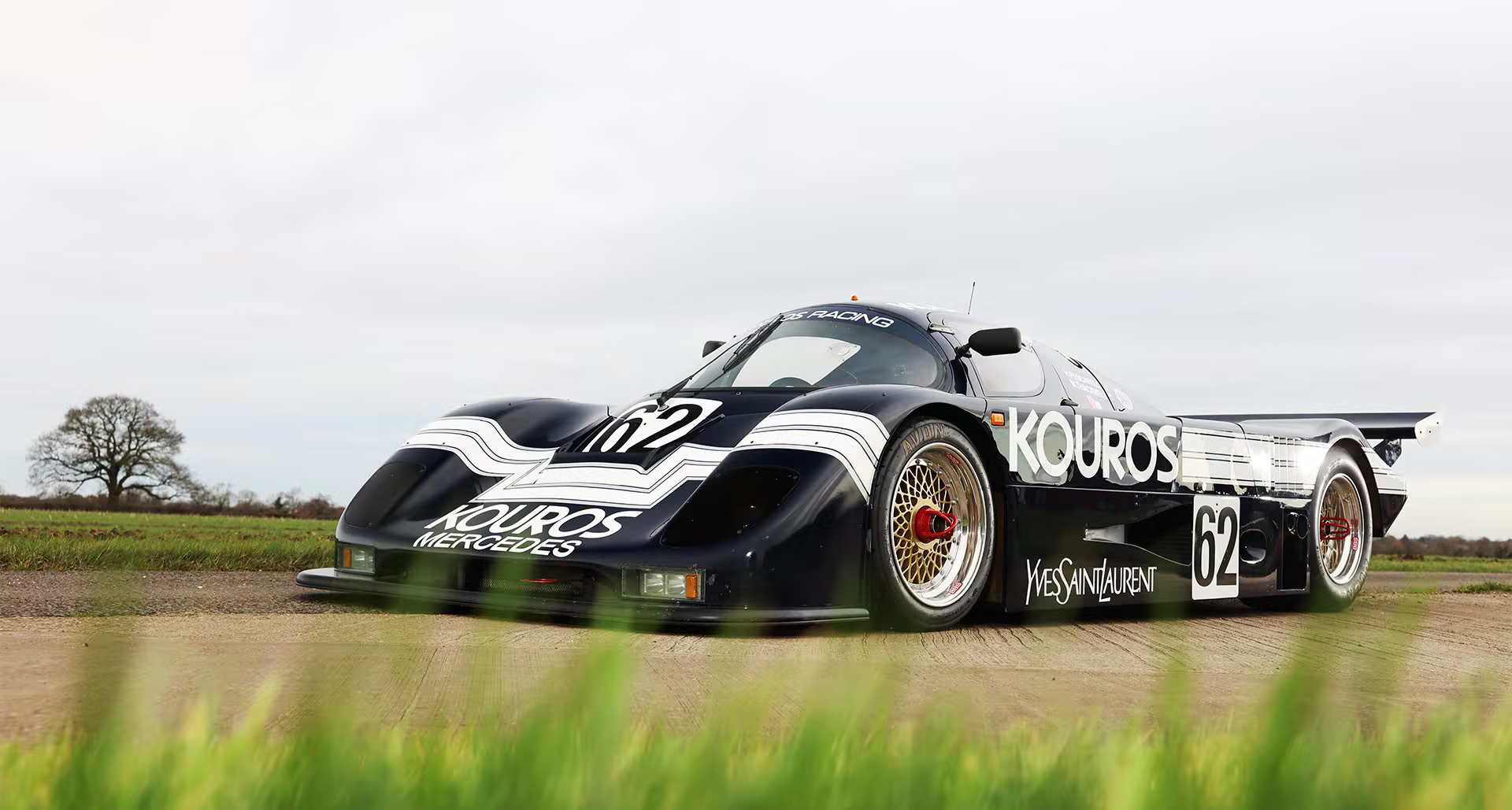
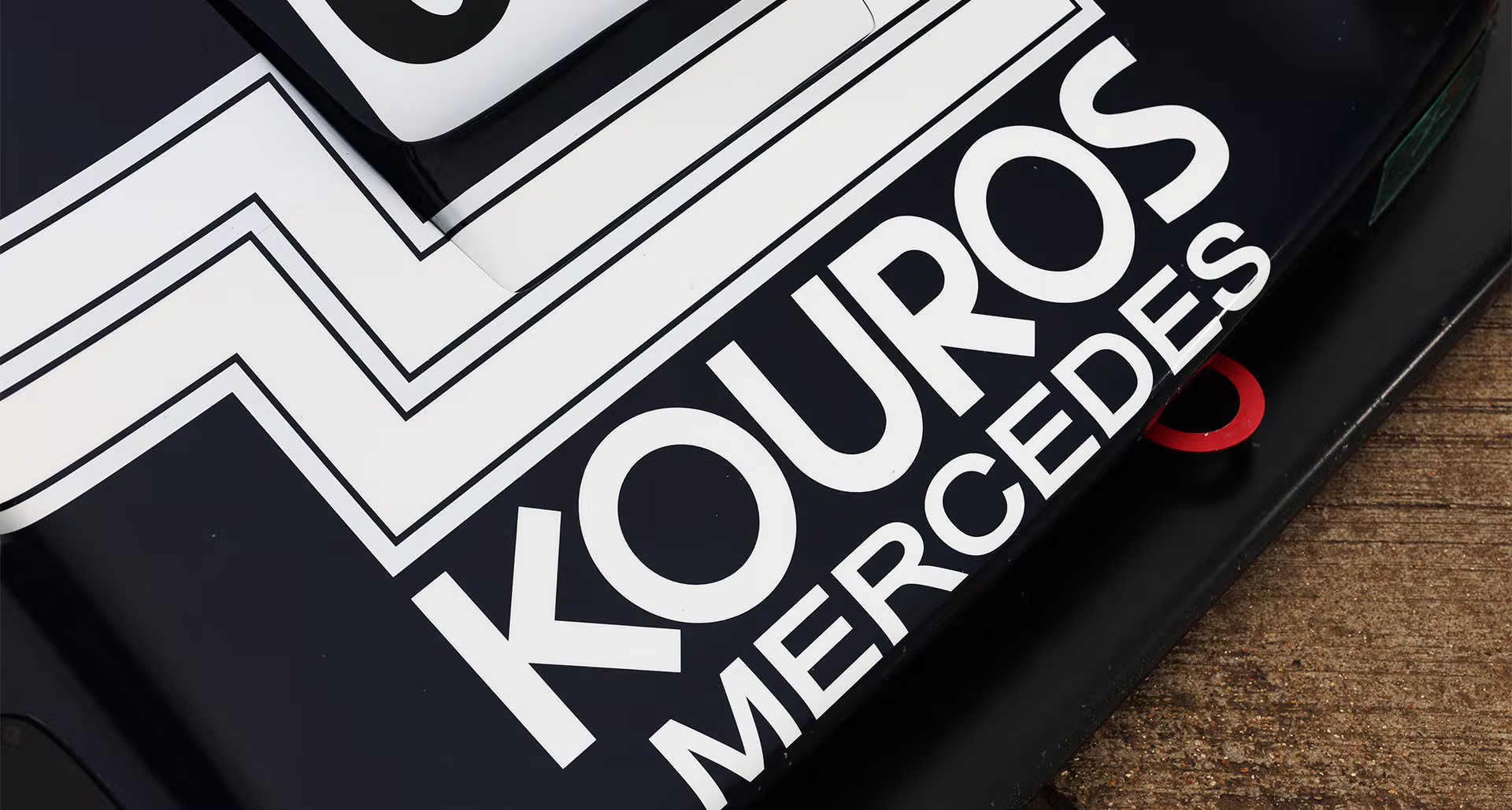
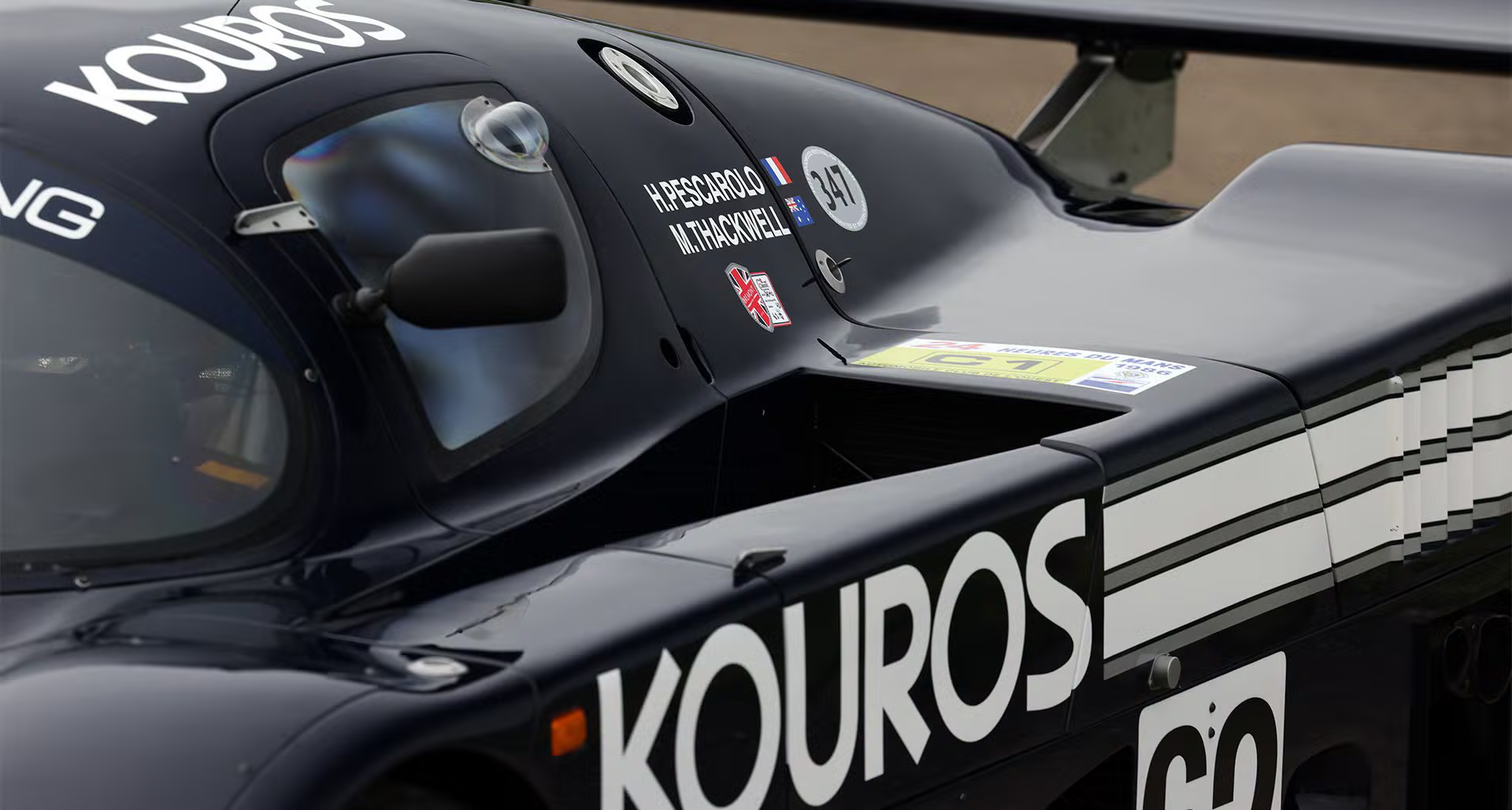
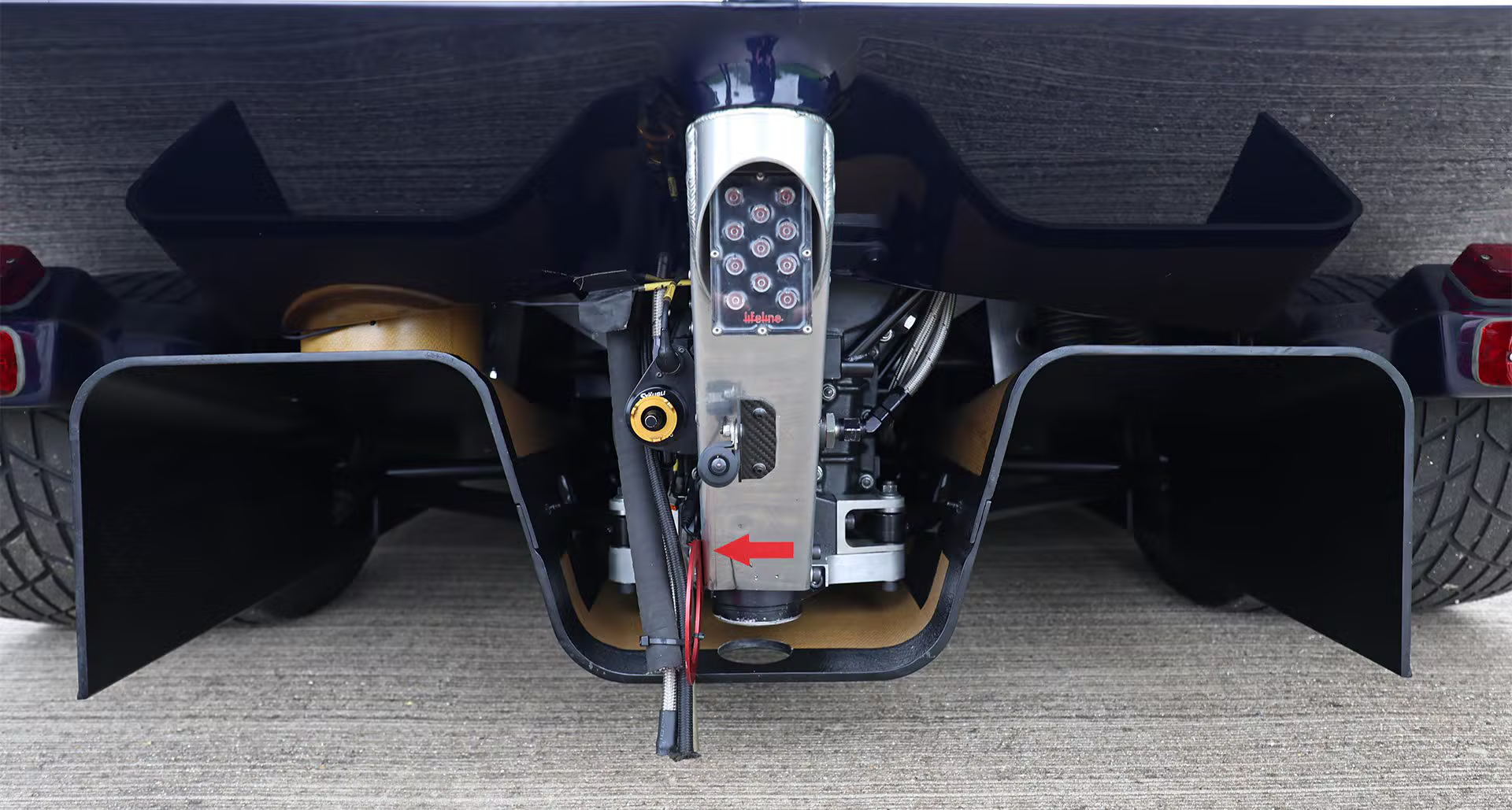
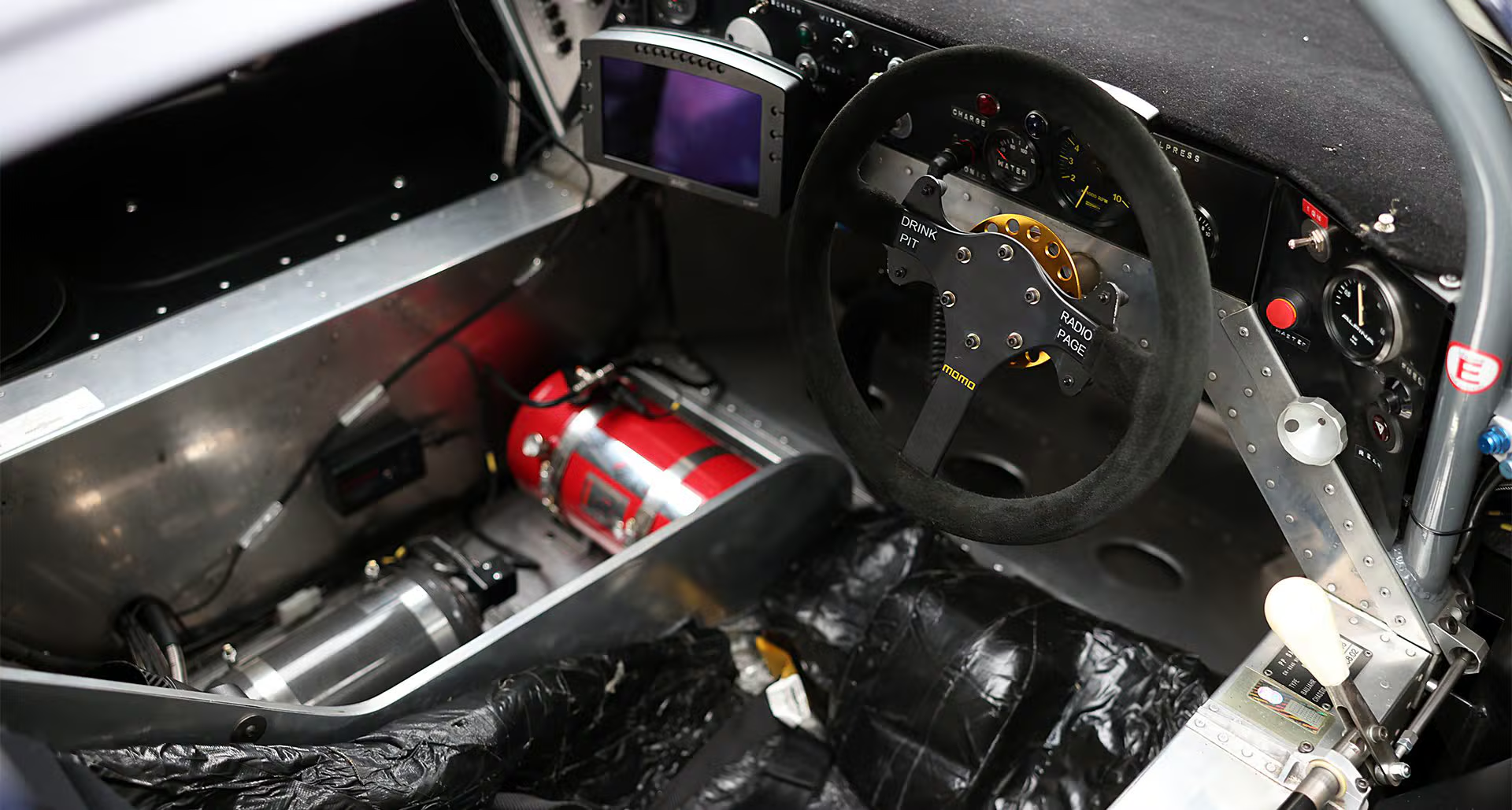
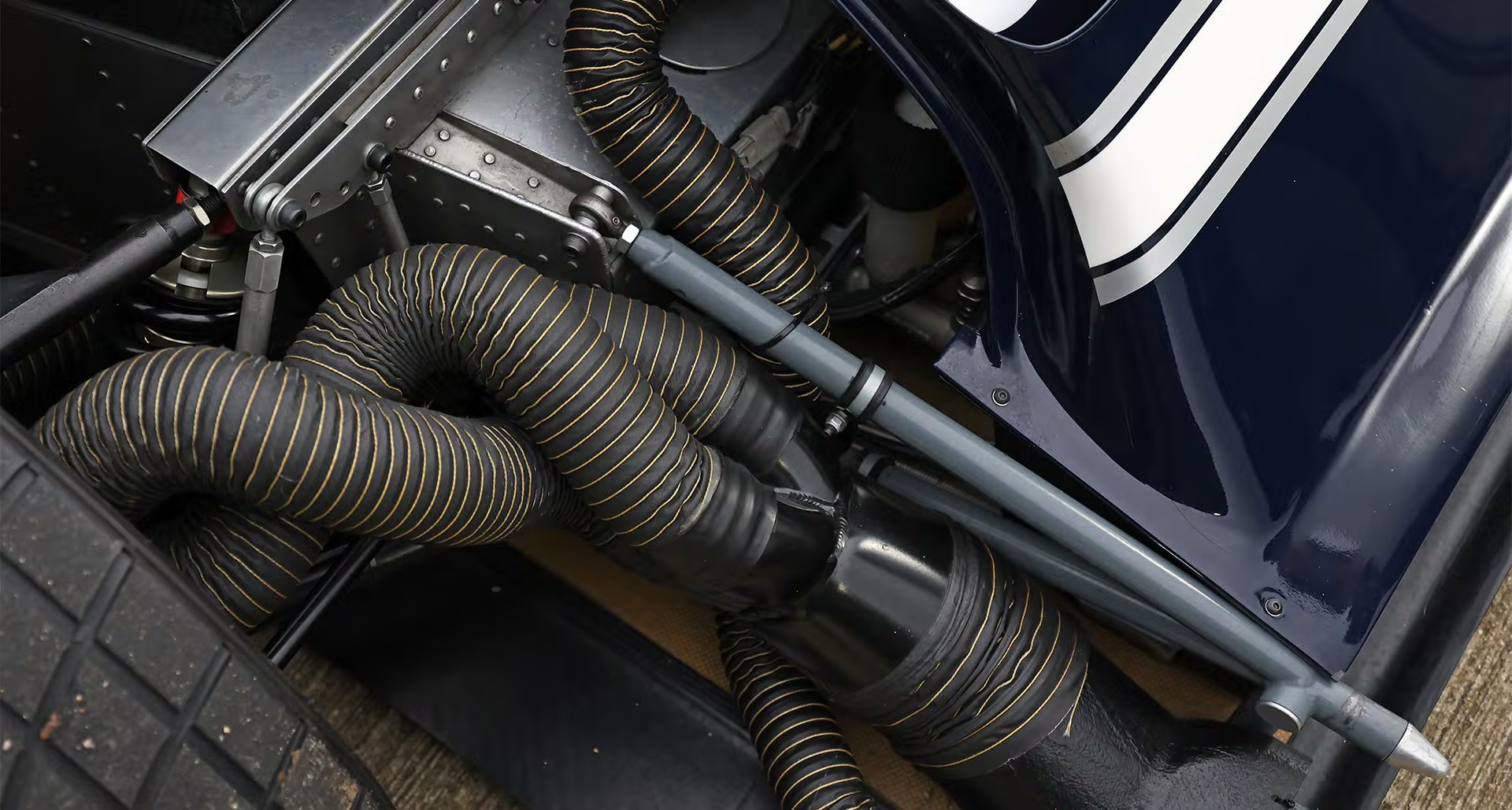
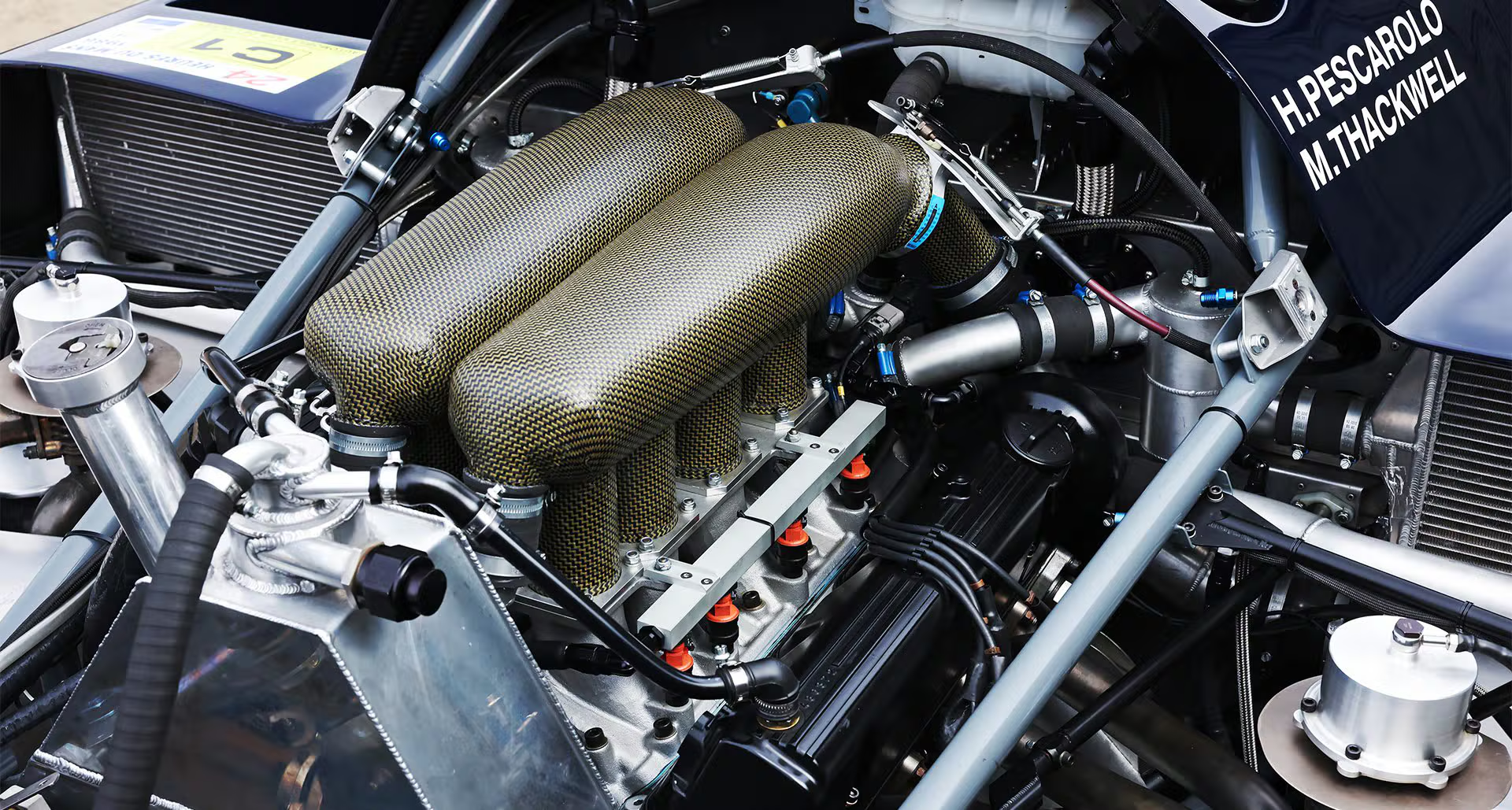
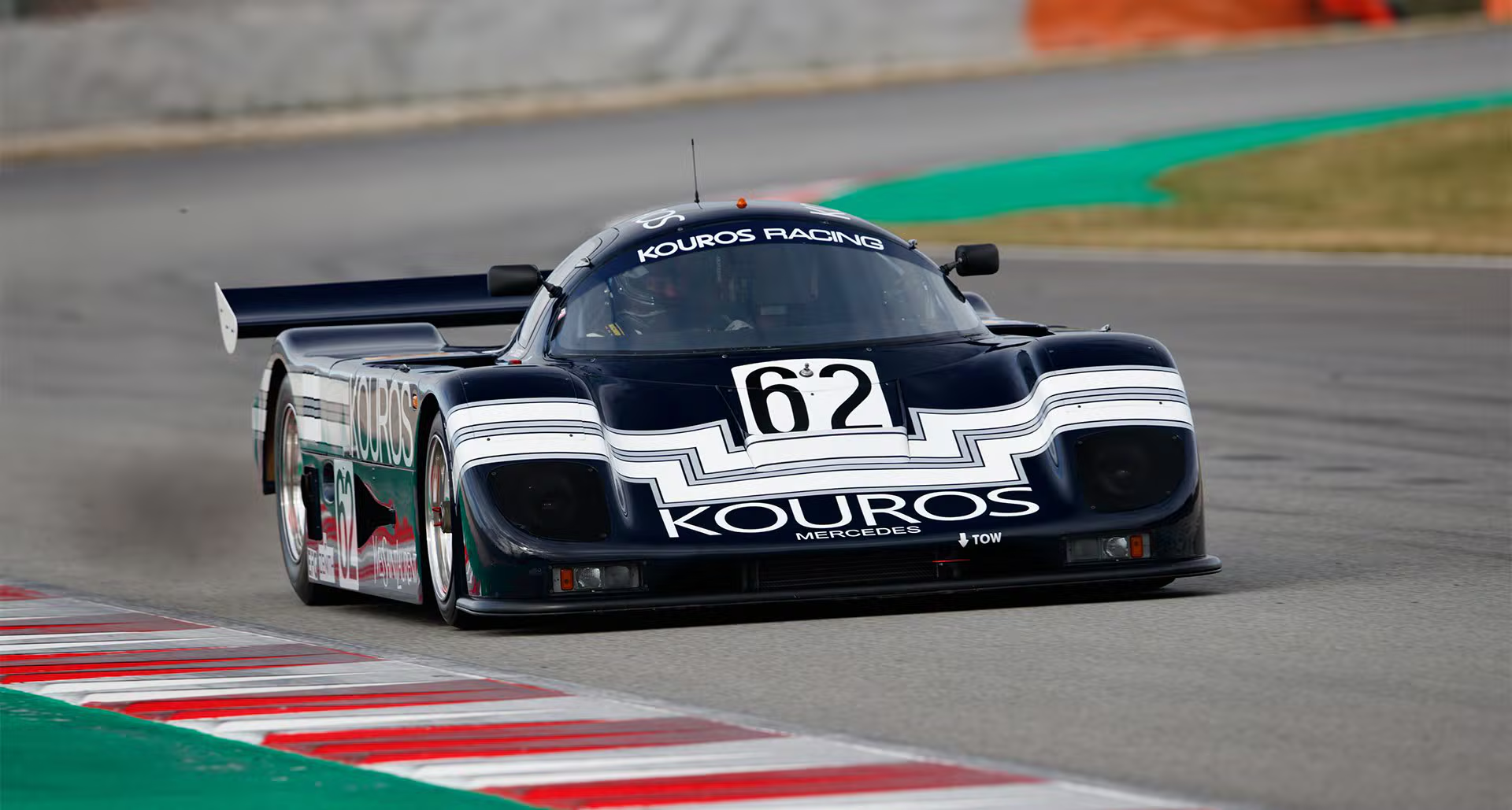
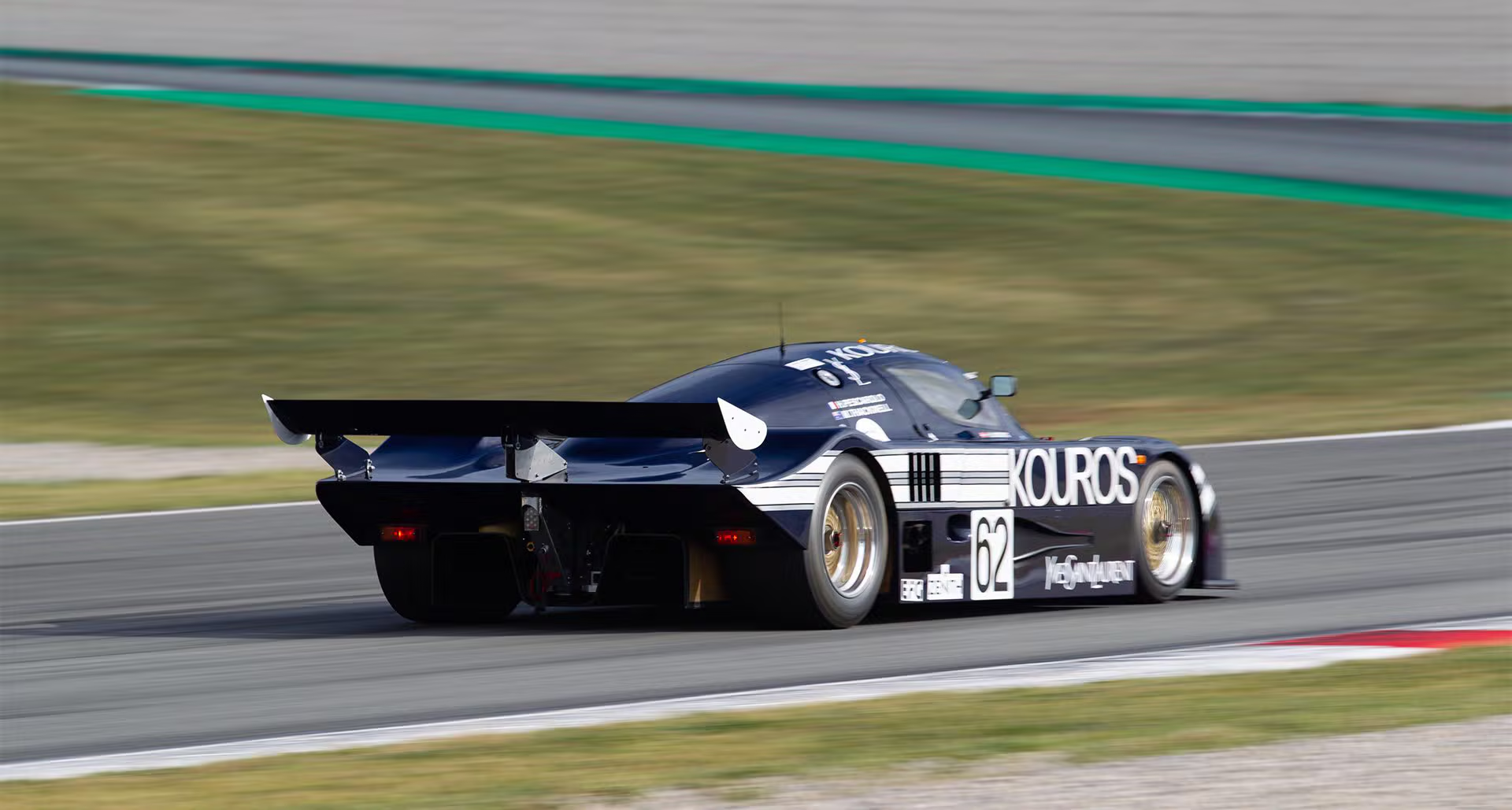
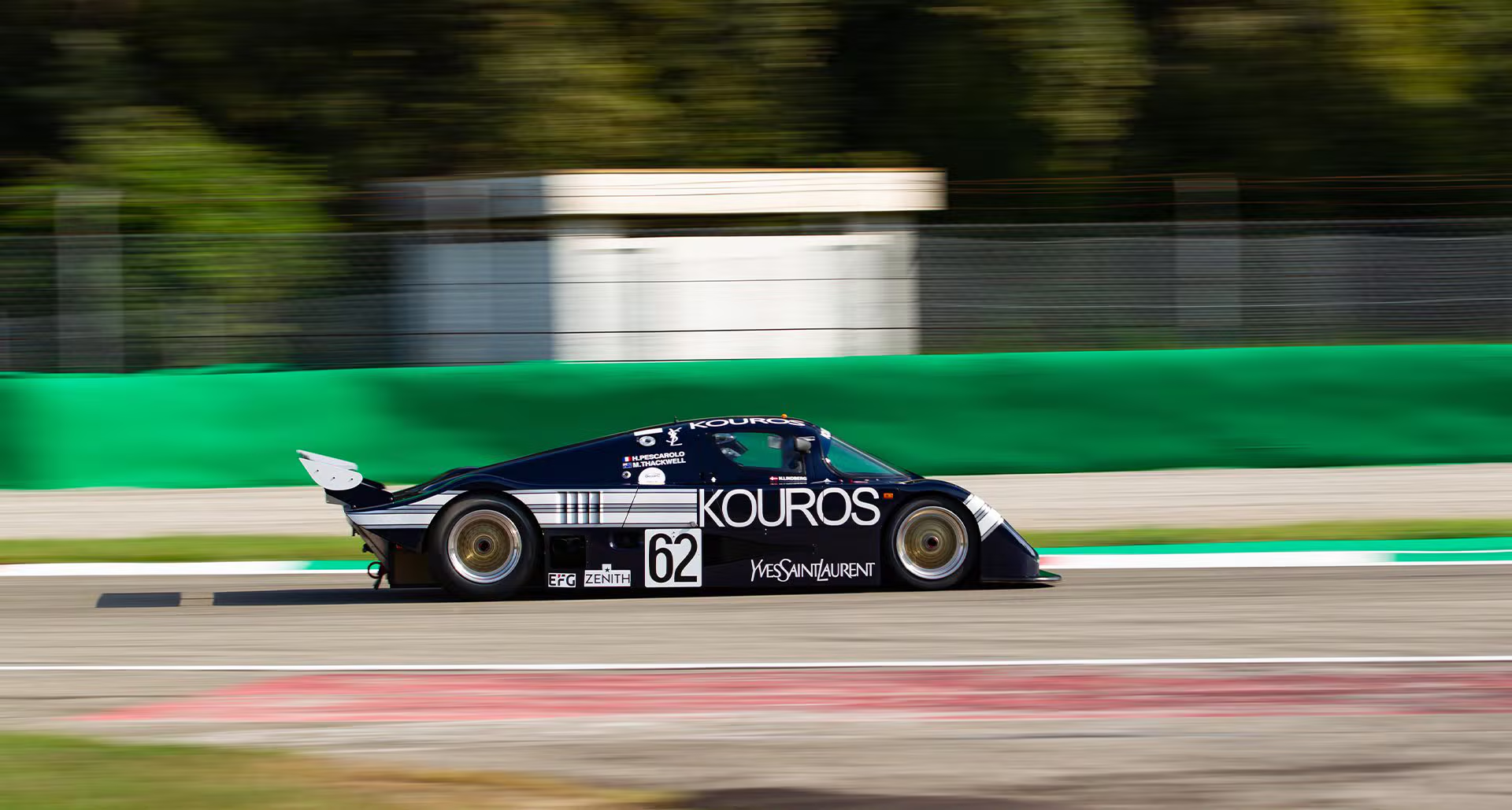
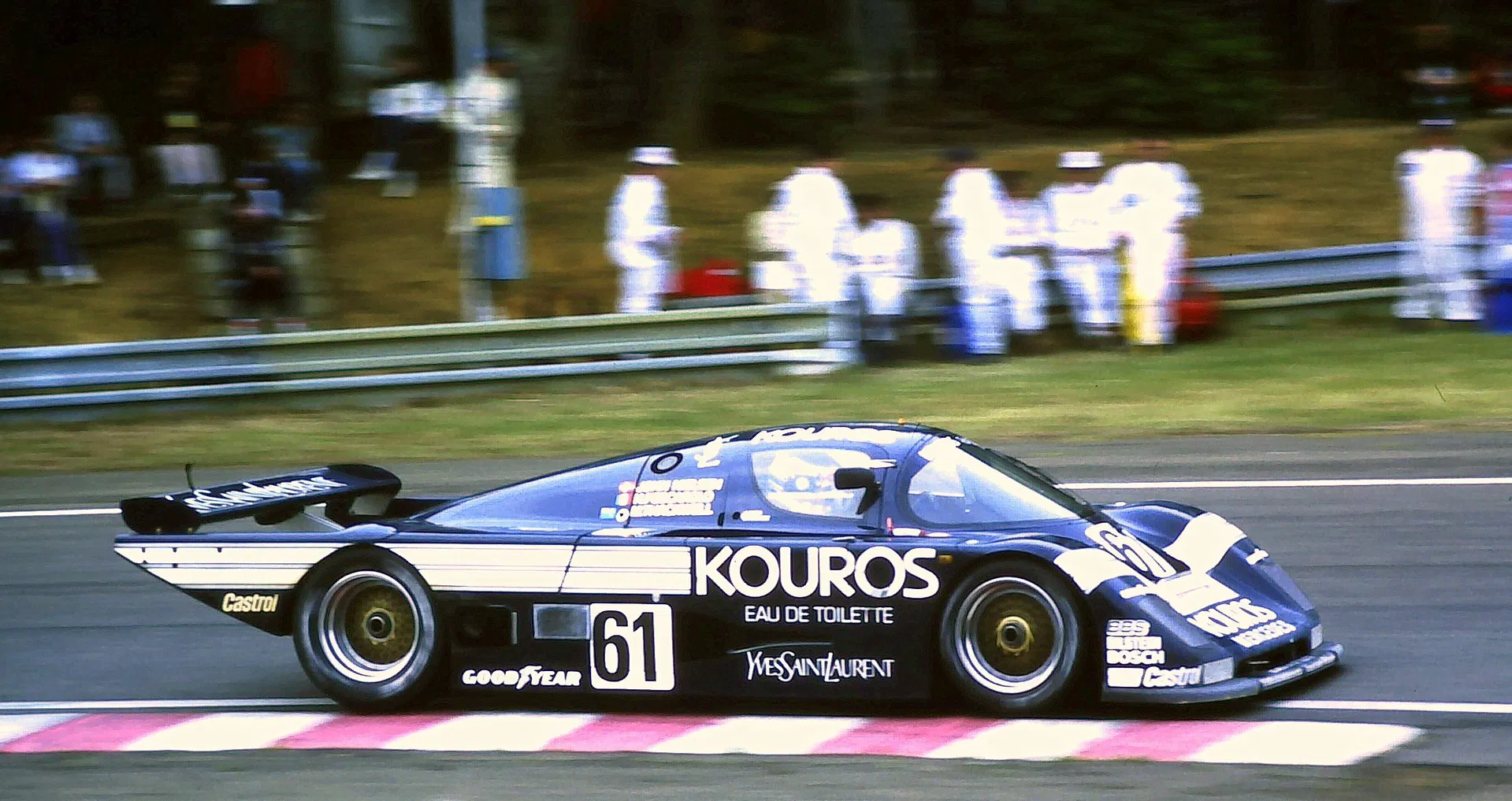
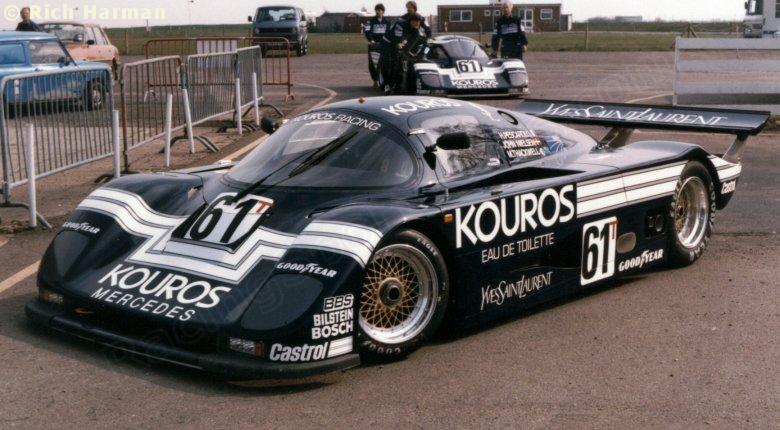
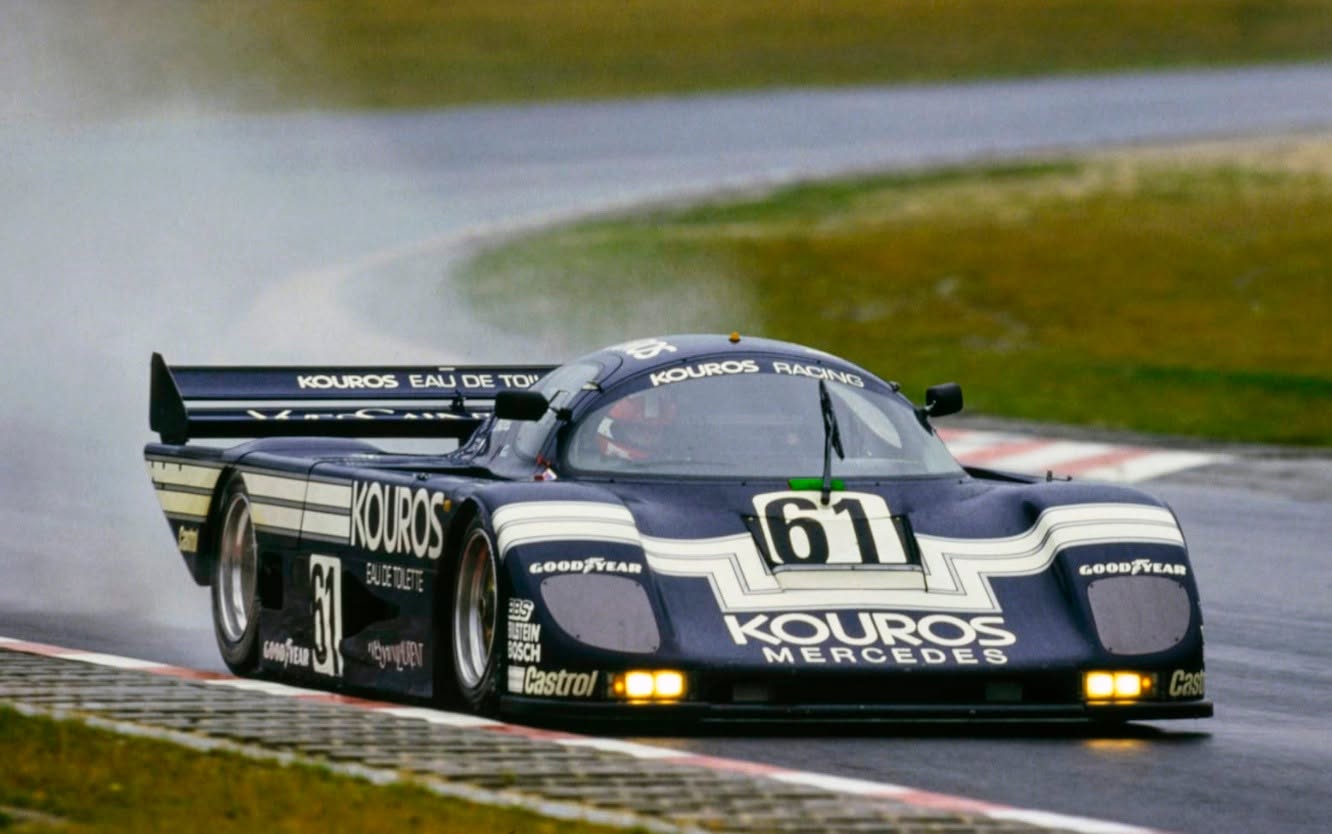
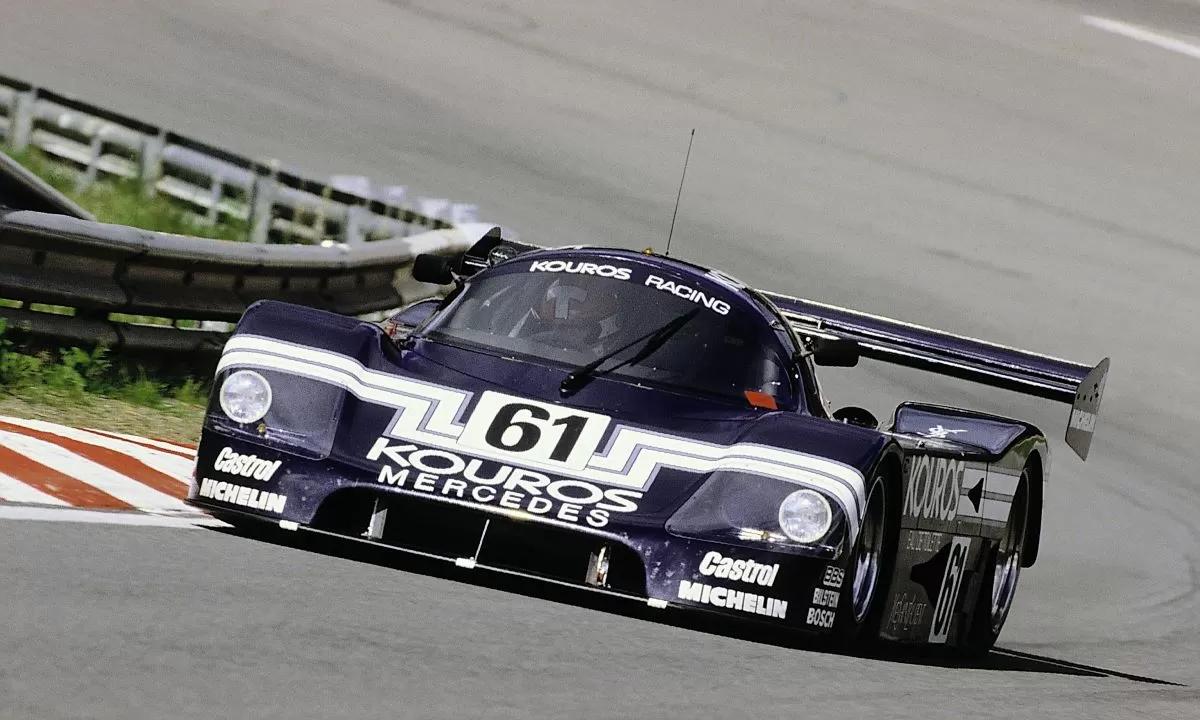
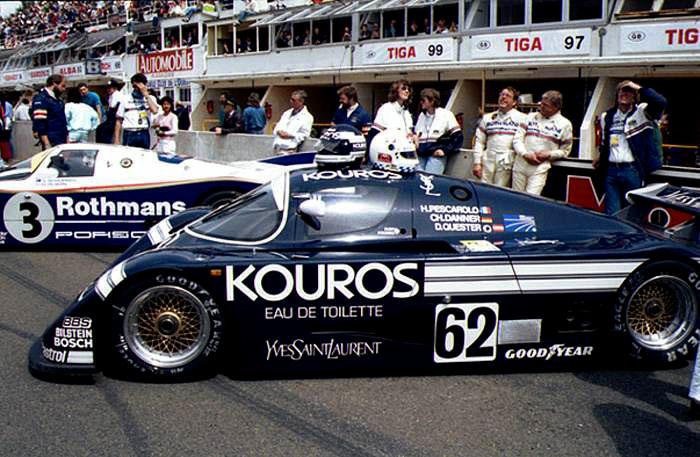
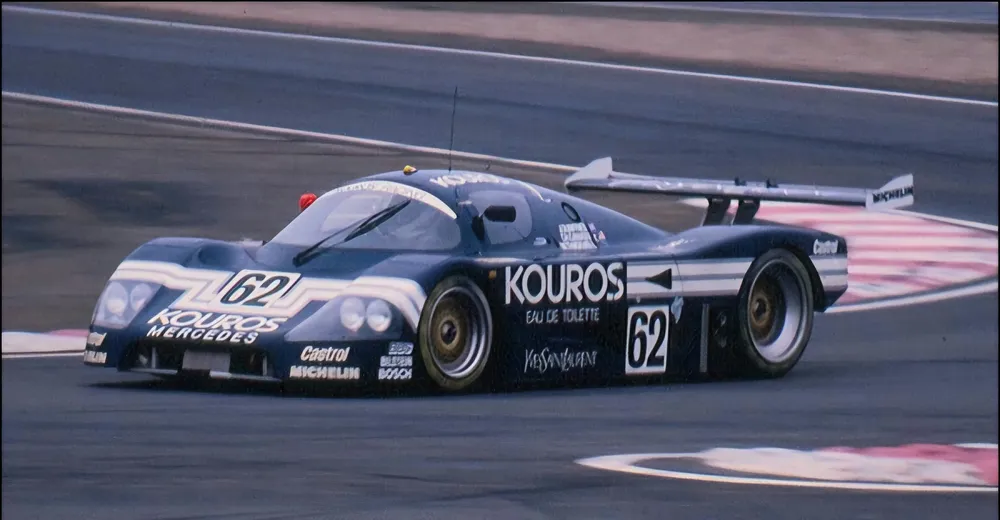
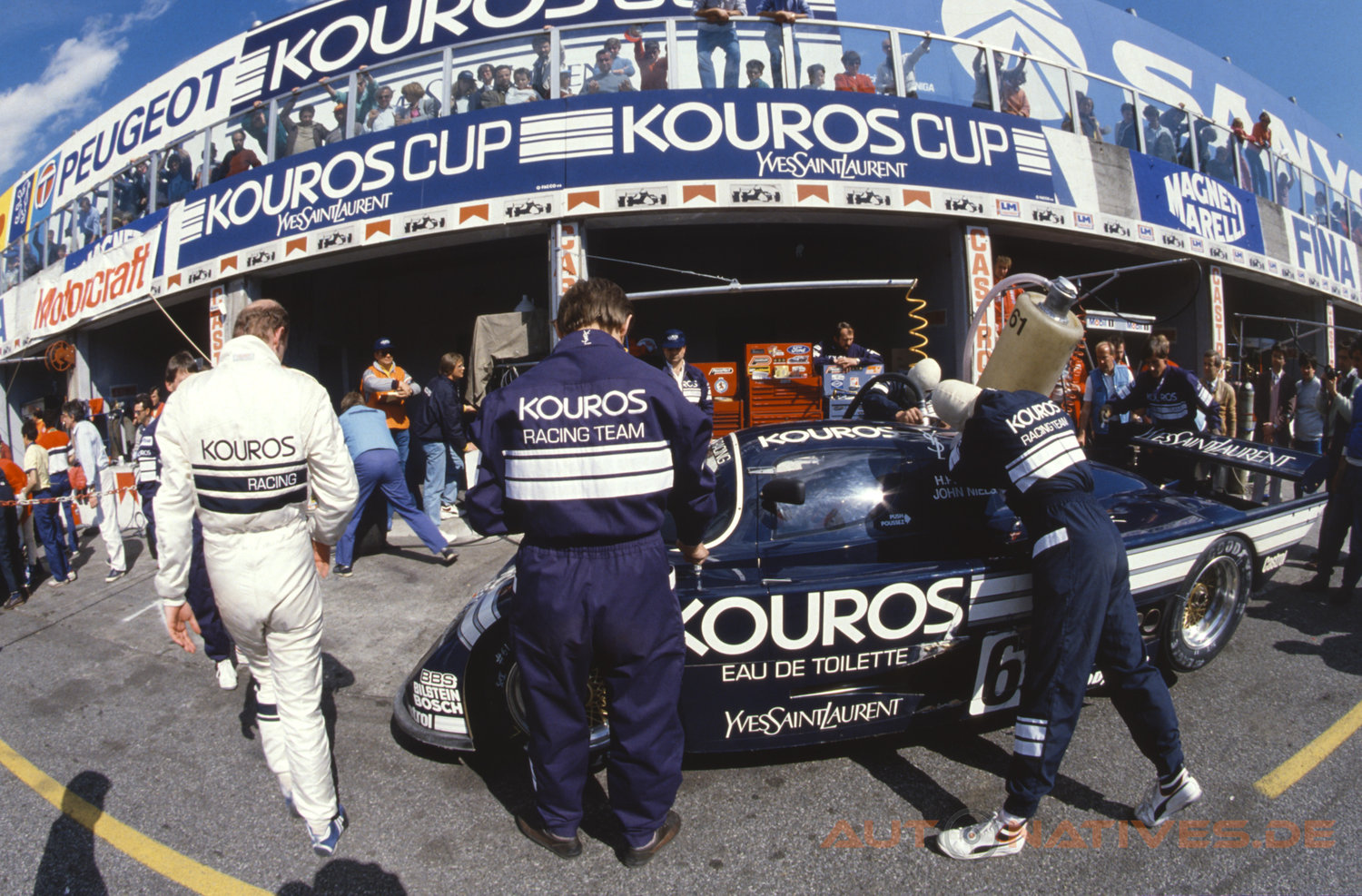
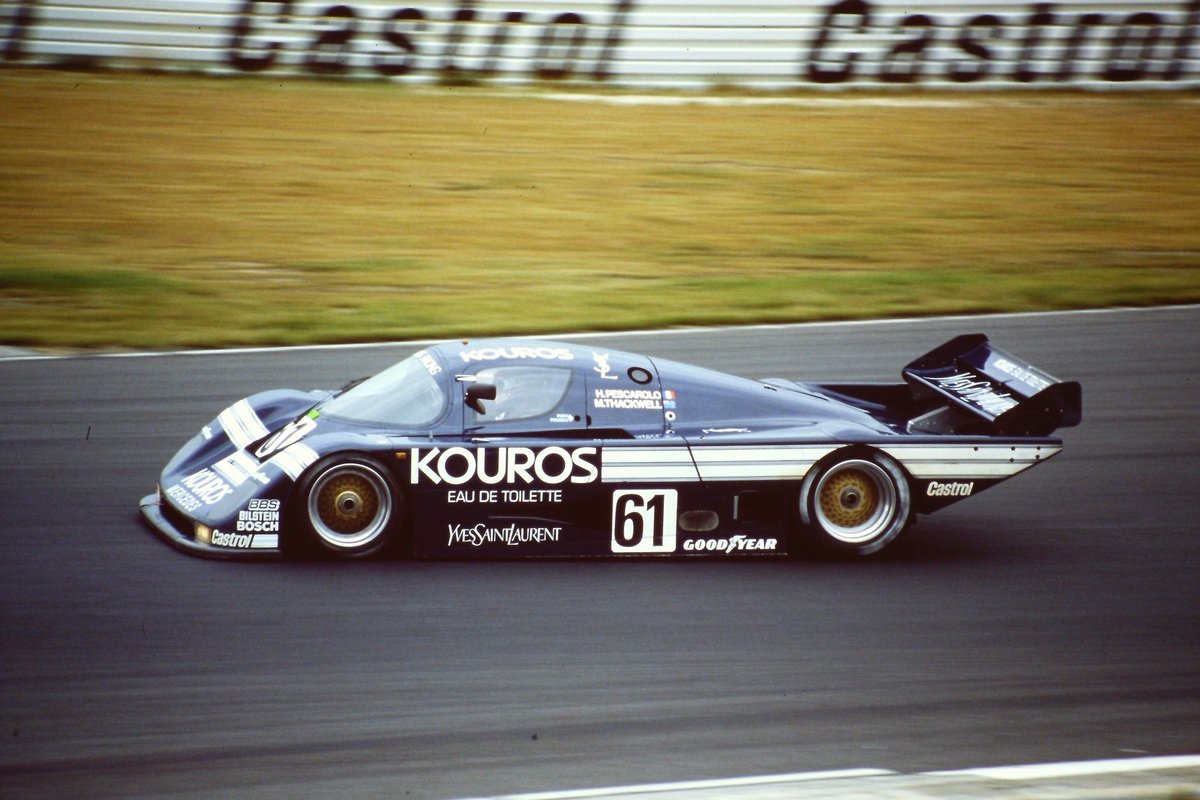
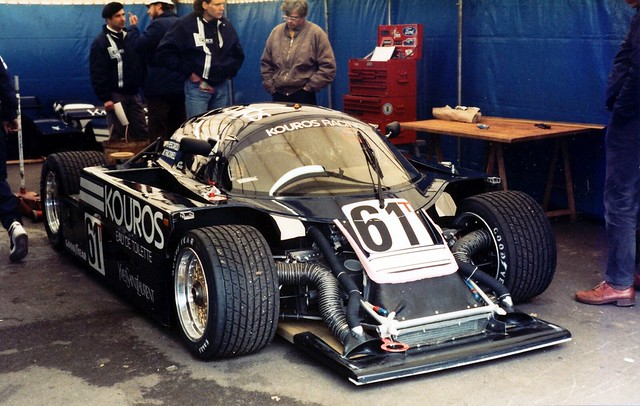
To look beneath the impossibly sleek, wind-tunnel-sculpted Kevlar and fiberglass bodywork of the Sauber C8 is to witness a masterpiece of structural efficiency and raw, brute-force engineering. The foundation of the machine was designed by the brilliant Leo Ress, who crafted a highly rigid, lightweight aluminium monocoque chassis capable of withstanding the immense aerodynamic loads of Group C ground effects. However, the absolute crown jewel of the C8 was mid-mounted directly behind the driver’s bulkhead. Instead of a bespoke racing block, Sauber utilized the Mercedes-Benz M117 5.0-liter, all-aluminum V8—an engine traditionally found wafting elite executives down the Autobahn in the S-Class. The engine was shipped to Swiss tuning wizard Heini Mader, who completely overhauled the internals and strapped on twin KKK turbochargers. The resulting powerplant was an absolute monster, producing a reliable 700 brake horsepower while delivering a tidal wave of torque that the smaller-displacement Porsches simply could not match. The aerodynamic profile was radically smooth, prioritizing incredibly low drag for the unbroken expanses of the Mulsanne Straight, and power was sent to the massive rear slicks via a robust Hewland five-speed transaxle. Clad in the elegant, dark blue livery of its primary sponsor, Kouros (a fragrance by Yves Saint Laurent), the C8 looked every bit the sophisticated, lethal assassin it was designed to be.
The historical footprint of the 1985 Sauber C8 is defined by a terrifying baptism of fire, followed by a deeply romantic redemption. Its highly anticipated debut occurred during practice for the 1985 24 Hours of Le Mans. The car proved instantly, violently fast, but its low-drag aerodynamics harbored a fatal flaw. While cresting the infamous hump on the Mulsanne Straight at well over 320 km/h (200 mph), driver John Nielsen experienced a catastrophic aerodynamic blow-over. The nose lifted, and the dark blue C8 somersaulted backward through the air in a horrifying display of physics. Miraculously, Nielsen survived without serious injury, but the car was destroyed, and the team withdrew. Undeterred, Sauber and Ress returned to the wind tunnel, heavily revising the aerodynamics for the 1986 World Sportscar Championship season. The redemption of the C8, and the validation of the entire secret Mercedes program, arrived at the grueling 1000 km of Nürburgring. Amidst treacherous, constantly shifting weather conditions, the driving duo of Henri Pescarolo and Mike Thackwell utilized the immense torque of the Mader-tuned V8 and the revised chassis stability to completely outclass the factory Rothmans Porsches. The Kouros Sauber C8 crossed the finish line to secure a stunning overall victory, sending absolute shockwaves through the paddock and proving that the mighty teutonic giant from Zuffenhausen could indeed bleed.
The Sauber C8 is the crucial, missing link—the brave, unsanctioned icebreaker that proved to the conservative Mercedes-Benz board of directors that endurance racing could yield glorious victories rather than tragic headlines. The triumph at the Nürburgring directly convinced Stuttgart to officially step out of the shadows. The C8’s architecture and V8 engine served as the direct, evolutionary blueprint for the legendary Sauber-Mercedes C9, which would arrive a few years later with full factory backing to utterly dominate the World Sportscar Championship and secure a historic 1-2 finish at Le Mans in 1989.
Brand
Produced from
Portal
Vehicle category
Predecessor
Sucessor
Brand
Produced from
Portal
Vehicle category
Model generation
Predecessor
Sucessor
Submodel Overview
For three decades, a heavy, unspoken ghost haunted the boardrooms of Stuttgart. Following the catastrophic tragedy at the 1955 24 Hours of Le Mans, Mercedes-Benz had instituted an absolute, draconian ban on factory motorsport involvement. As the 1980s dawned and the fuel-restricted Group C era transformed endurance racing into a high-speed technological battleground, the monolithic presence of Porsche’s 956 and 962 seemed entirely untouchable. Enter Peter Sauber, a pragmatic and relentlessly ambitious Swiss garagiste who had been steadily building a reputation with his BMW-powered C6 and C7 prototypes. Sauber recognized that to truly threaten the establishment, he needed a powerplant of immense capability. Through a series of clandestine meetings and unofficial handshakes, Sauber convinced a group of passionate Mercedes-Benz engineers to covertly supply him with engines. The resulting machine, debuting for the 1985 season, was the Sauber C8. It was not merely a new racing car; it was a highly classified, rolling experiment that represented the first tentative, unsanctioned steps of the three-pointed star returning to the global racing stage, stepping into a terrifying arena populated by the mighty Porsches, the agile Lancia LC2s, and Tom Walkinshaw’s thunderous V12 Jaguars.
To look beneath the impossibly sleek, wind-tunnel-sculpted Kevlar and fiberglass bodywork of the Sauber C8 is to witness a masterpiece of structural efficiency and raw, brute-force engineering. The foundation of the machine was designed by the brilliant Leo Ress, who crafted a highly rigid, lightweight aluminium monocoque chassis capable of withstanding the immense aerodynamic loads of Group C ground effects. However, the absolute crown jewel of the C8 was mid-mounted directly behind the driver’s bulkhead. Instead of a bespoke racing block, Sauber utilized the Mercedes-Benz M117 5.0-liter, all-aluminum V8—an engine traditionally found wafting elite executives down the Autobahn in the S-Class. The engine was shipped to Swiss tuning wizard Heini Mader, who completely overhauled the internals and strapped on twin KKK turbochargers. The resulting powerplant was an absolute monster, producing a reliable 700 brake horsepower while delivering a tidal wave of torque that the smaller-displacement Porsches simply could not match. The aerodynamic profile was radically smooth, prioritizing incredibly low drag for the unbroken expanses of the Mulsanne Straight, and power was sent to the massive rear slicks via a robust Hewland five-speed transaxle. Clad in the elegant, dark blue livery of its primary sponsor, Kouros (a fragrance by Yves Saint Laurent), the C8 looked every bit the sophisticated, lethal assassin it was designed to be.
The historical footprint of the 1985 Sauber C8 is defined by a terrifying baptism of fire, followed by a deeply romantic redemption. Its highly anticipated debut occurred during practice for the 1985 24 Hours of Le Mans. The car proved instantly, violently fast, but its low-drag aerodynamics harbored a fatal flaw. While cresting the infamous hump on the Mulsanne Straight at well over 320 km/h (200 mph), driver John Nielsen experienced a catastrophic aerodynamic blow-over. The nose lifted, and the dark blue C8 somersaulted backward through the air in a horrifying display of physics. Miraculously, Nielsen survived without serious injury, but the car was destroyed, and the team withdrew. Undeterred, Sauber and Ress returned to the wind tunnel, heavily revising the aerodynamics for the 1986 World Sportscar Championship season. The redemption of the C8, and the validation of the entire secret Mercedes program, arrived at the grueling 1000 km of Nürburgring. Amidst treacherous, constantly shifting weather conditions, the driving duo of Henri Pescarolo and Mike Thackwell utilized the immense torque of the Mader-tuned V8 and the revised chassis stability to completely outclass the factory Rothmans Porsches. The Kouros Sauber C8 crossed the finish line to secure a stunning overall victory, sending absolute shockwaves through the paddock and proving that the mighty teutonic giant from Zuffenhausen could indeed bleed.
The Sauber C8 is the crucial, missing link—the brave, unsanctioned icebreaker that proved to the conservative Mercedes-Benz board of directors that endurance racing could yield glorious victories rather than tragic headlines. The triumph at the Nürburgring directly convinced Stuttgart to officially step out of the shadows. The C8’s architecture and V8 engine served as the direct, evolutionary blueprint for the legendary Sauber-Mercedes C9, which would arrive a few years later with full factory backing to utterly dominate the World Sportscar Championship and secure a historic 1-2 finish at Le Mans in 1989.
Tech Specs
Technical Specifications
Tech Specs
Technical Specifications
Engine
01
03
Internal combustion engine
Configuration
Mercedes-Benz M117, V8 - 90º
Location
Mid, longitudinally mounted
Construction
Light aluminium alloy block and heads
Displacement (cc)
4,973 cc
Displacement (cu in)
303.5 cu in
Compression
8.0:1
Bore x Stroke
96.5 mm x 85.0 mm
Valvetrain
2 valves per cylinder, SOHC
Fuel feed
Bosch Motronic MP 1.2 electronic fuel injection
Lubrication
Dry sump
Aspiration
Twin KKK Turbochargers
Output
Power (hp)
700 hp
Power (kW)
515 kW
Max power at
7,000 RPM
Torque (Nm)
800 Nm
Torque (ft lbs)
590 ft lbs
Max torque at
5,500 RPM
Drivetrain
02
03
Chassis
Type
Monocoque unibody
Material
Aluminium with steel rear subframe
Body
Material
Carbon-fibre and Kevlar composite
Transmission
Gearbox
Hewland 5-speed manual transaxle
Drive
Rear Wheel Drive (Limited Slip Differential)
Suspension
Front
Independent, double wishbones, coil springs over shock absorbers, torsion bar stabilizer
Rear
Independent, double wishbones, horizontally mounted coil springs over shock absorbers, torsion bar stabilizer
Steering
Type
Rack and pinion, unassisted
Brakes
Front
Ventilated steel discs, 4-piston aluminium calipers
Rear
Ventilated steel discs, 4-piston aluminium calipers
Wheels
Front
13" x 17"
Rear
14.5" x 19"
Tires
Front
-
Rear
-
Dimensions and performance
03
03
Dimensions
Length (mm)
4,800 mm
Length (in)
189.0 in
Width (mm)
1,980 mm
Width (in)
78.0 in
Height (mm)
1,070 mm
Height (in)
42.1 in
Wheelbase (mm)
2,700 mm
Wheelbase (in)
106.3 in
Weight (kg)
870 kg
Weight (lbs)
1,918 lbs
Performance
Power to weight
0.80 hp/kg
Top speed (km/h)
~370 km/h
Top speed (mph)
~230 mph
0-100 km/h (0-60 mph)
~3.1 s