
Tojeiro-Climax Mk II ‘Le Mans’ 1.1 FWA
Brand
Produced from
Portal
Vehicle category
Predecessor
Successor
Submodel Overview
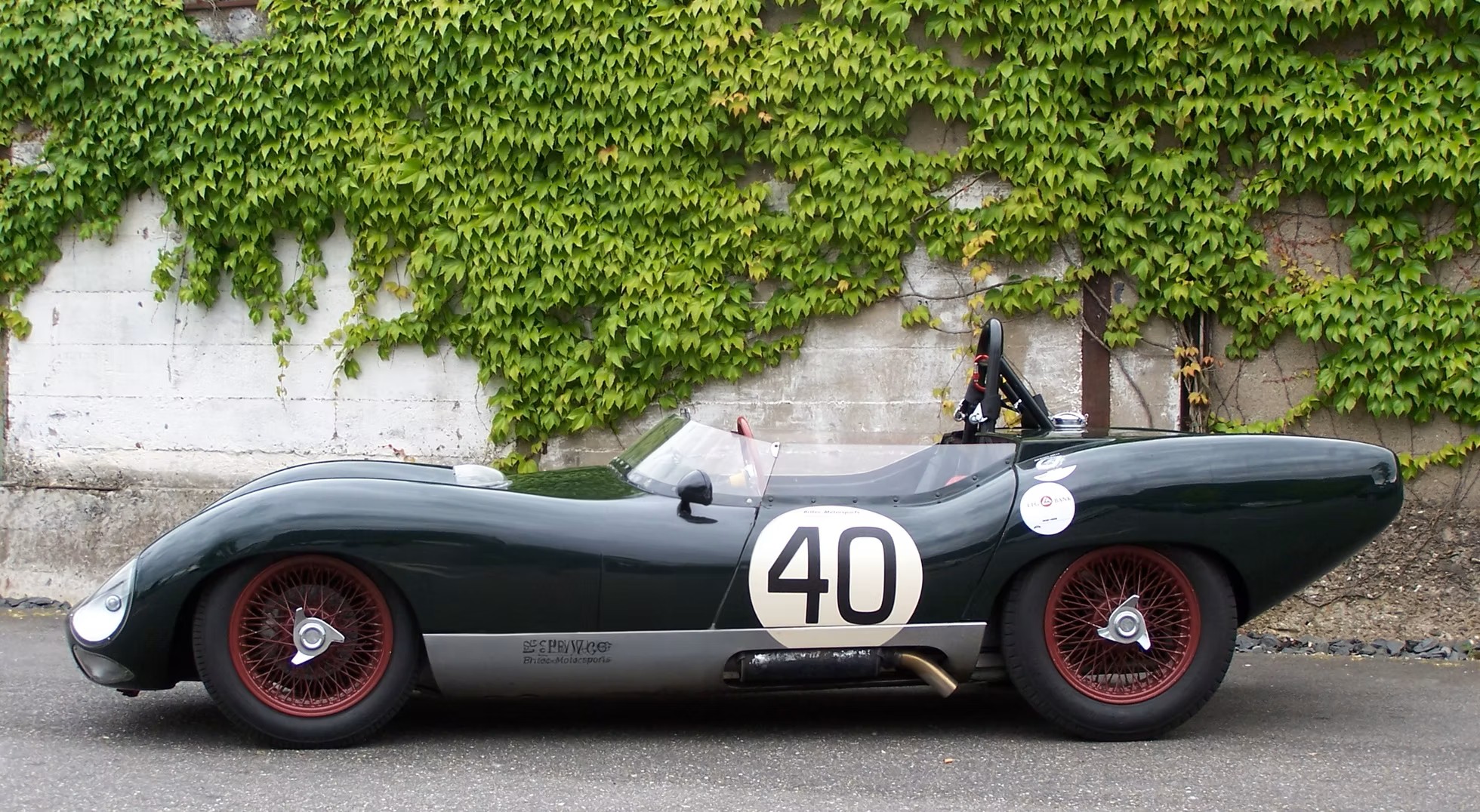
The gruelling 24 Hours of Le Mans has always been a ruthless crucible, a place where the romantic dreams of small-scale constructors are routinely shattered by the brutal, high-speed reality of the French countryside. Yet, in the late 1950s, the Circuit de la Sarthe was the ultimate global proving ground for the thriving British cottage industry of race car builders. By 1958, the 1100cc sports-prototype class had become a fiercely contested, high-stakes dogfight. Colin Chapman was unleashing his ultra-slippery Lotus Elevens, while Eric Broadley was making massive waves with his impossibly light Lola Mk1. Not to be outdone by his contemporaries, the quiet, meticulous craftsman John Tojeiro unveiled a highly specialized weapon of his own: the Tojeiro-Climax Mk II ‘Le Mans’. Evolving from his earlier, highly successful multi-tubular club racers, this specific Mk II was a bespoke endurance special. It was a vehicle explicitly designed not just for the frantic, short sprints of British domestic racing, but to endure the relentless punishment of international 24-hour marathons, directly challenging Lotus and OSCA for the highly coveted Index of Performance.
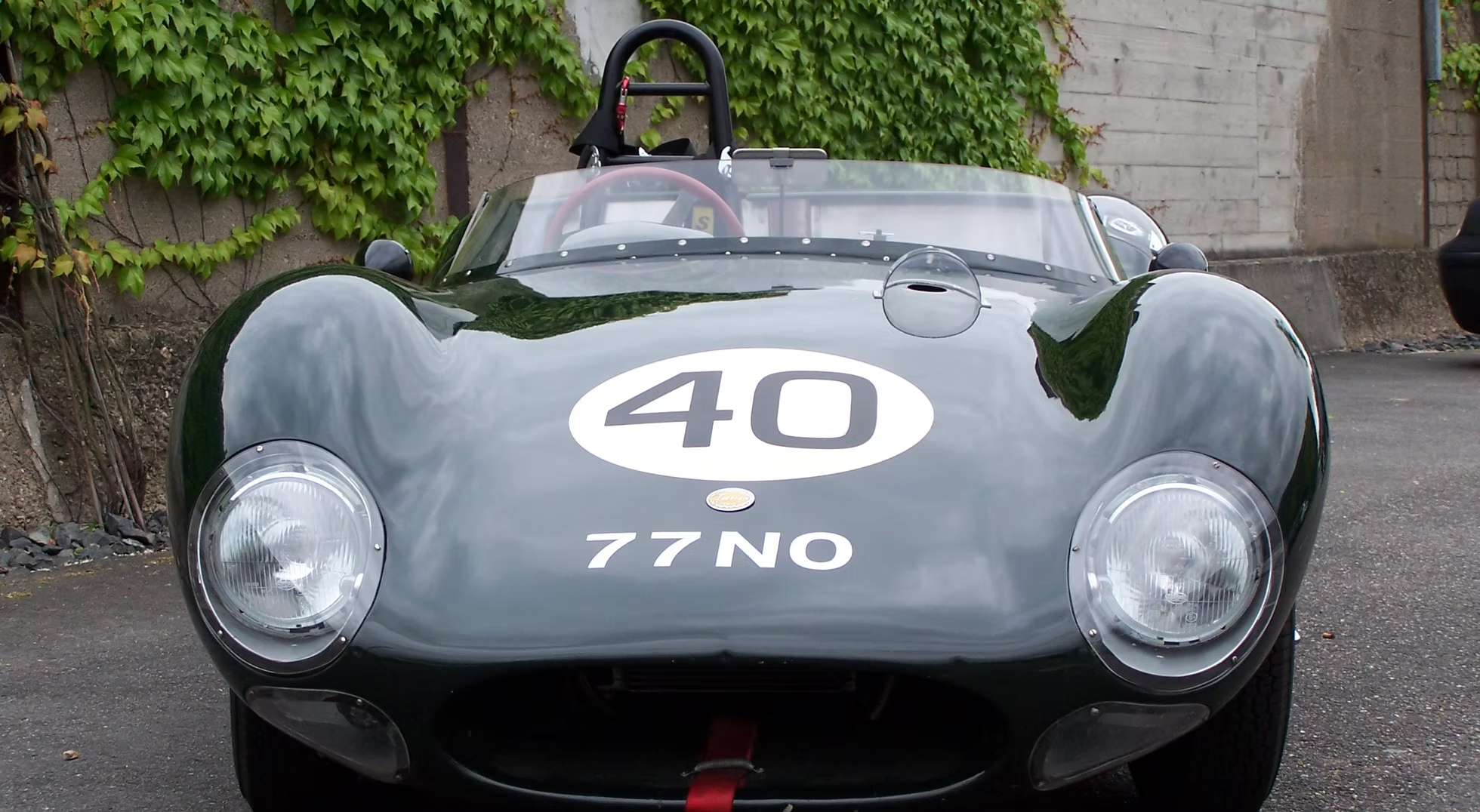
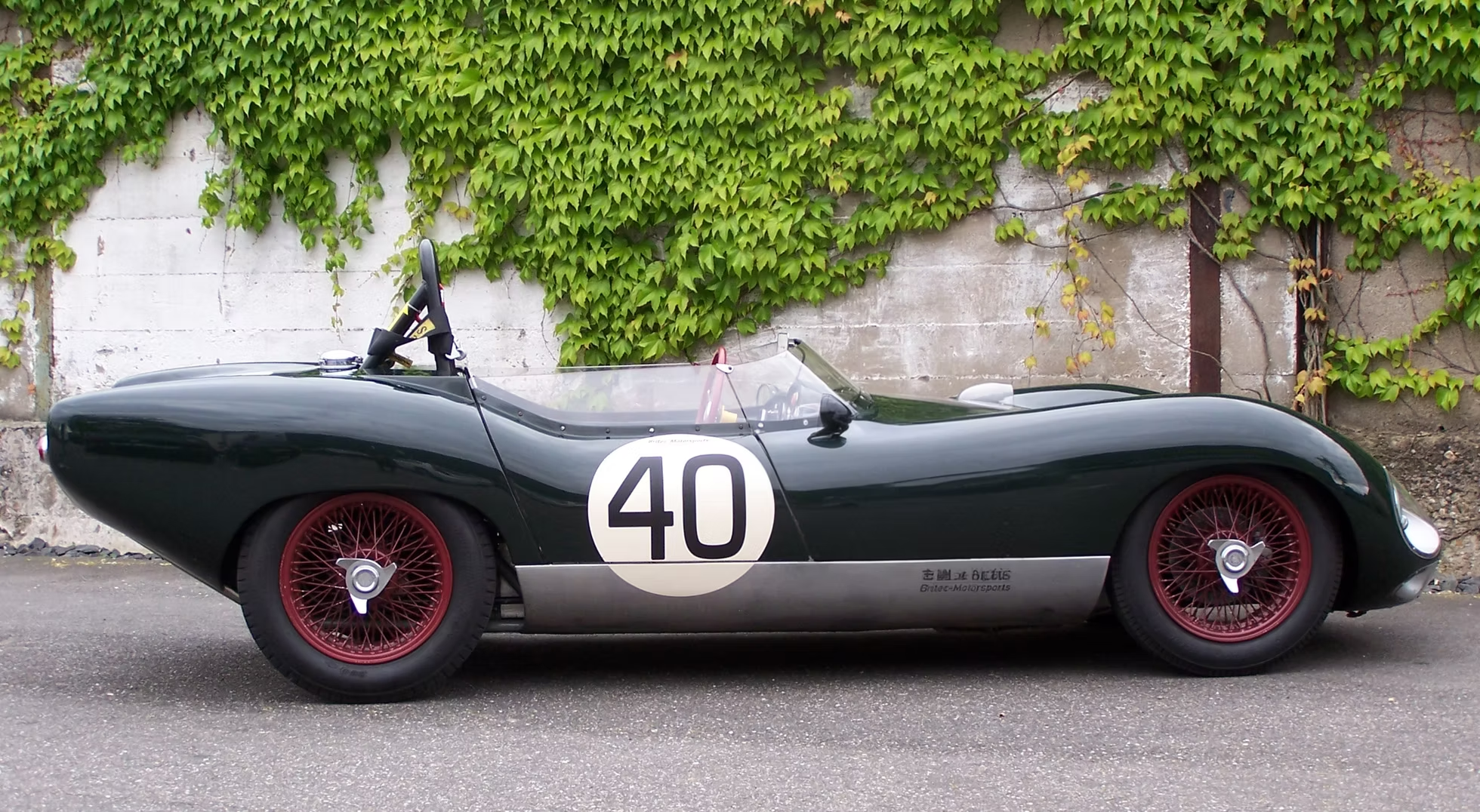
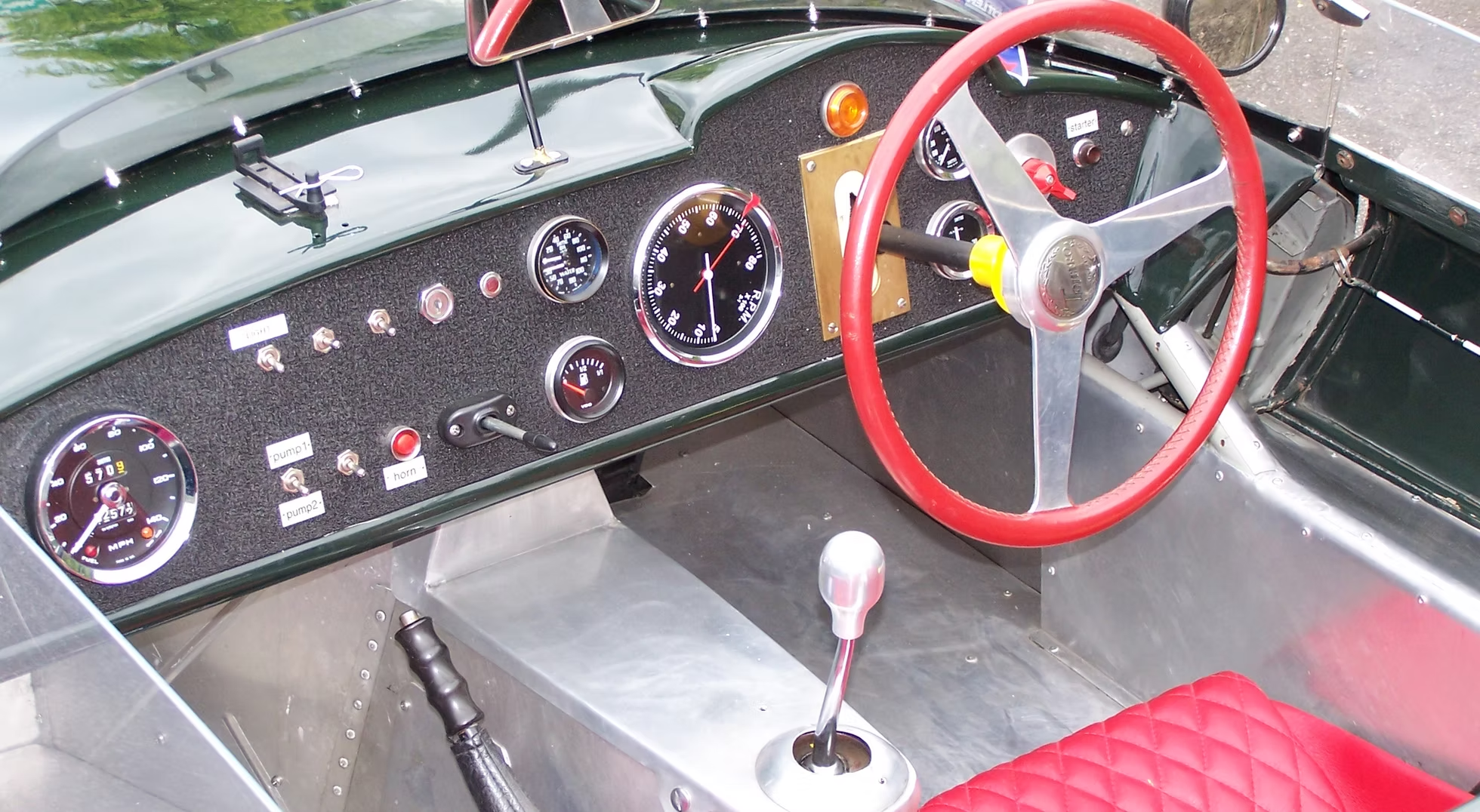
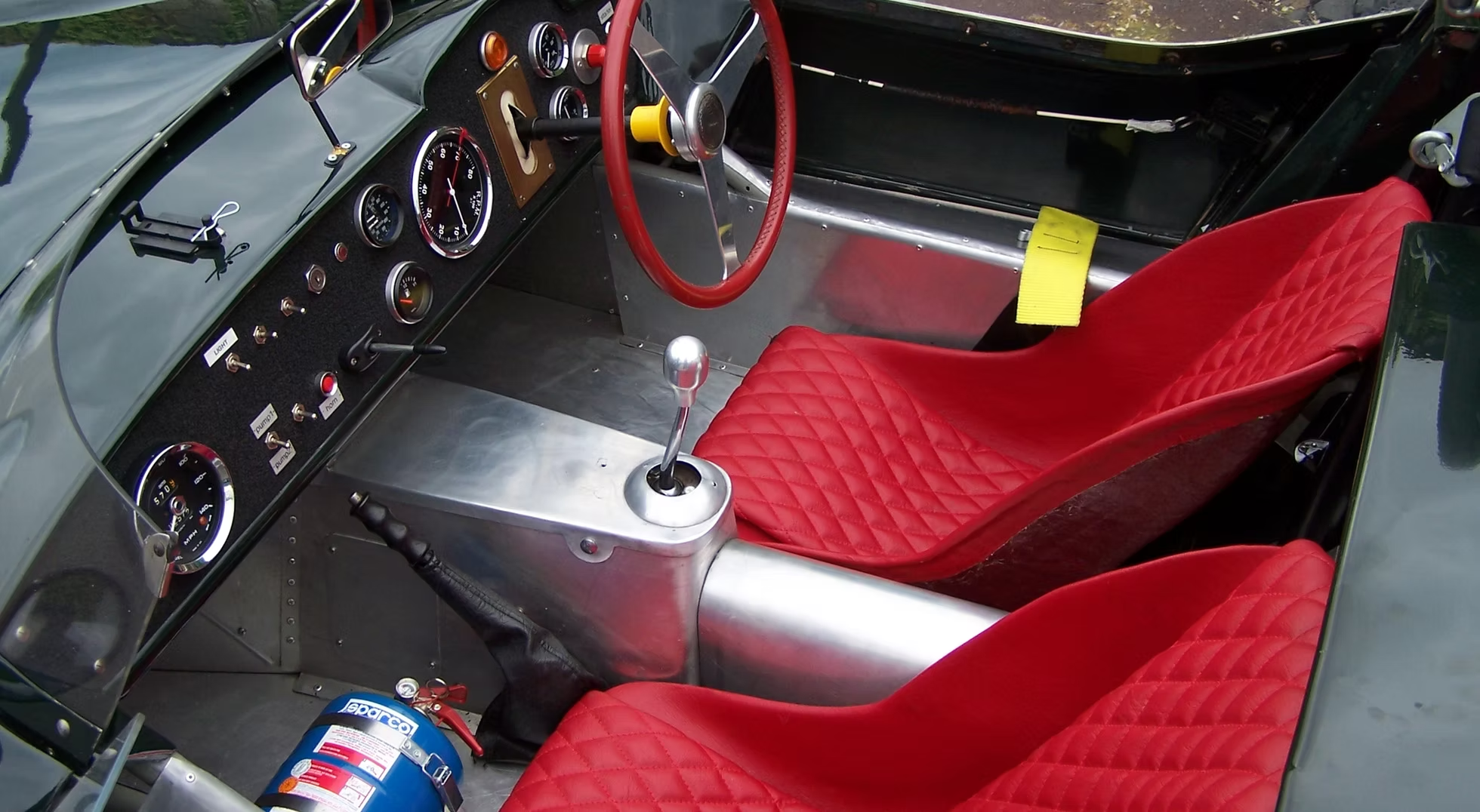
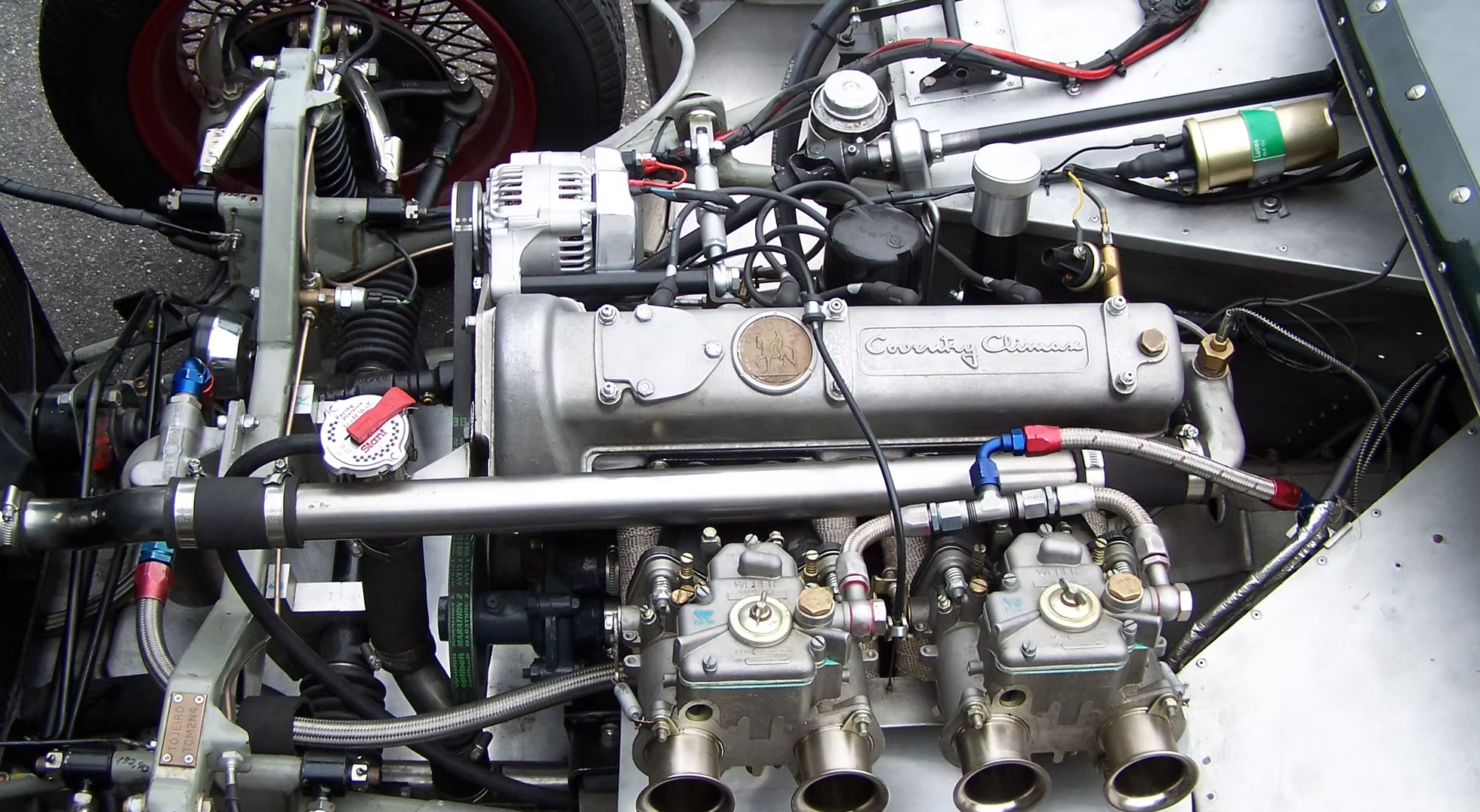
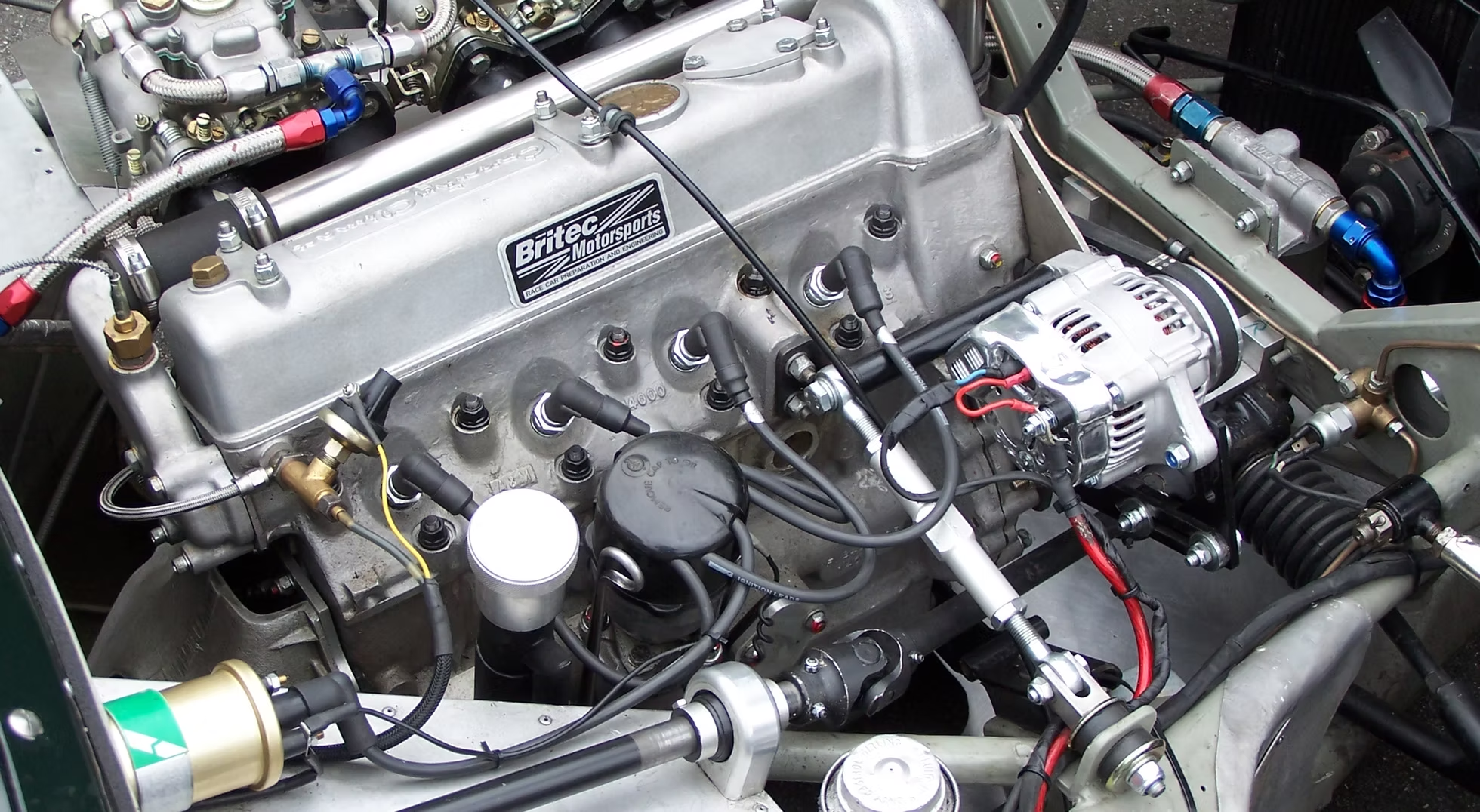
To achieve maximum terminal velocity on the long French straights without sacrificing the agility required for the treacherous Esses, Tojeiro heavily revised the car’s architecture. Beneath the stunning, hand-formed aluminium bodywork—which was significantly more streamlined and enclosed than the earlier club-racer iterations, featuring a lowered nose, faired-in headlights, and an extended, aerodynamic tail to cheat the wind—lay a strengthened multi-tubular spaceframe. This chassis was a marvel of rigidity and lightness. Nestled low and far back behind the front axle line to ensure near-perfect weight distribution was the legendary 1.1-liter Coventry Climax FWA engine. Originally designed by Walter Hassan and Harry Mundy as a portable fire-pump motor, this 1098cc, all-aluminium overhead-camshaft unit was a high-revving jewel. In endurance tune, breathing fiercely through twin Weber carburettors, it produced around 80 brake horsepower. While that figure seems quaint today, in a car weighing a mere 500 kilograms, it was enough to propel the Mk II to speeds well over 130 mph. Power was transmitted via a close-ratio four-speed manual gearbox. The suspension relied on independent unequal-length wishbones at the front and a sophisticated De Dion rear axle, keeping the narrow Dunlop racing tires firmly planted on the imperfect tarmac. Crucially, to survive the heavy braking zones of Le Mans, the Mk II abandoned traditional drums in favour of modern, fade-resistant Girling disc brakes. The cockpit was a cramped, heat-soaked office built strictly for purpose, featuring a large central tachometer, essential fluid gauges, and a cut-down wraparound aeroscreen that offered the driver only the barest protection from the elements and track debris.
The racing pedigree of the Mk II Le Mans 1.1 FWA is a testament to the heroic, sleep-deprived efforts of independent garagistes. When the car arrived at Le Mans, it represented the absolute pinnacle of front-engined, small-capacity design. Driving a 1.1-liter car at the Sarthe meant spending hours with the accelerator pinned flat to the floor, managing slipstreams, and praying the highly strung Coventry Climax engine wouldn’t vibrate itself to pieces. It was in this chaotic mix of heavy rain, blinding fog, and massive V12 Ferraris blowing past at terrifying speeds that the nimble, predictable Tojeiro proved its true worth. The Tojeiro-Climax was campaigned by brave privateers and small syndicates who valued its predictable handling over outright ragged-edge speed. The De Dion rear end made the Tojeiro exceptionally stable through high-speed sweepers compared to the occasionally twitchy swing-axle designs of its competitors. While it often lacked the sheer factory budget and numbers of the Lotus operation, the Mk II proved to be a highly effective, beautifully balanced machine. Beyond France, these aerodynamically refined cars were a menace on fast British circuits like Goodwood and Silverstone, where their slippery shape and reliable Climax power allowed them to punch far above their displacement class, frequently embarrassing 1.5-liter and 2.0-liter machinery in multi-class endurance events.
Brand
Produced from
Portal
Vehicle category
Predecessor
Sucessor
Brand
Produced from
Portal
Vehicle category
Model generation
Predecessor
Sucessor
Submodel Overview
The gruelling 24 Hours of Le Mans has always been a ruthless crucible, a place where the romantic dreams of small-scale constructors are routinely shattered by the brutal, high-speed reality of the French countryside. Yet, in the late 1950s, the Circuit de la Sarthe was the ultimate global proving ground for the thriving British cottage industry of race car builders. By 1958, the 1100cc sports-prototype class had become a fiercely contested, high-stakes dogfight. Colin Chapman was unleashing his ultra-slippery Lotus Elevens, while Eric Broadley was making massive waves with his impossibly light Lola Mk1. Not to be outdone by his contemporaries, the quiet, meticulous craftsman John Tojeiro unveiled a highly specialized weapon of his own: the Tojeiro-Climax Mk II ‘Le Mans’. Evolving from his earlier, highly successful multi-tubular club racers, this specific Mk II was a bespoke endurance special. It was a vehicle explicitly designed not just for the frantic, short sprints of British domestic racing, but to endure the relentless punishment of international 24-hour marathons, directly challenging Lotus and OSCA for the highly coveted Index of Performance.
To achieve maximum terminal velocity on the long French straights without sacrificing the agility required for the treacherous Esses, Tojeiro heavily revised the car’s architecture. Beneath the stunning, hand-formed aluminium bodywork—which was significantly more streamlined and enclosed than the earlier club-racer iterations, featuring a lowered nose, faired-in headlights, and an extended, aerodynamic tail to cheat the wind—lay a strengthened multi-tubular spaceframe. This chassis was a marvel of rigidity and lightness. Nestled low and far back behind the front axle line to ensure near-perfect weight distribution was the legendary 1.1-liter Coventry Climax FWA engine. Originally designed by Walter Hassan and Harry Mundy as a portable fire-pump motor, this 1098cc, all-aluminium overhead-camshaft unit was a high-revving jewel. In endurance tune, breathing fiercely through twin Weber carburettors, it produced around 80 brake horsepower. While that figure seems quaint today, in a car weighing a mere 500 kilograms, it was enough to propel the Mk II to speeds well over 130 mph. Power was transmitted via a close-ratio four-speed manual gearbox. The suspension relied on independent unequal-length wishbones at the front and a sophisticated De Dion rear axle, keeping the narrow Dunlop racing tires firmly planted on the imperfect tarmac. Crucially, to survive the heavy braking zones of Le Mans, the Mk II abandoned traditional drums in favour of modern, fade-resistant Girling disc brakes. The cockpit was a cramped, heat-soaked office built strictly for purpose, featuring a large central tachometer, essential fluid gauges, and a cut-down wraparound aeroscreen that offered the driver only the barest protection from the elements and track debris.
The racing pedigree of the Mk II Le Mans 1.1 FWA is a testament to the heroic, sleep-deprived efforts of independent garagistes. When the car arrived at Le Mans, it represented the absolute pinnacle of front-engined, small-capacity design. Driving a 1.1-liter car at the Sarthe meant spending hours with the accelerator pinned flat to the floor, managing slipstreams, and praying the highly strung Coventry Climax engine wouldn’t vibrate itself to pieces. It was in this chaotic mix of heavy rain, blinding fog, and massive V12 Ferraris blowing past at terrifying speeds that the nimble, predictable Tojeiro proved its true worth. The Tojeiro-Climax was campaigned by brave privateers and small syndicates who valued its predictable handling over outright ragged-edge speed. The De Dion rear end made the Tojeiro exceptionally stable through high-speed sweepers compared to the occasionally twitchy swing-axle designs of its competitors. While it often lacked the sheer factory budget and numbers of the Lotus operation, the Mk II proved to be a highly effective, beautifully balanced machine. Beyond France, these aerodynamically refined cars were a menace on fast British circuits like Goodwood and Silverstone, where their slippery shape and reliable Climax power allowed them to punch far above their displacement class, frequently embarrassing 1.5-liter and 2.0-liter machinery in multi-class endurance events.
Tech Specs
Technical Specifications
Tech Specs
Technical Specifications
Engine
01
03
Internal combustion engine
Configuration
Coventry Climax FWA, Inline-4
Location
Front-mid, longitudinally mounted
Construction
Aluminium alloy block and head
Displacement (cc)
1,098 cc
Displacement (cu in)
67.0 cu in
Compression
9.8:1
Bore x Stroke
72.4 mm x 66.6 mm
Valvetrain
2 valves per cylinder, SOHC
Fuel feed
Twin SU or Weber carburettors
Lubrication
Wet sump
Aspiration
Naturally aspirated
Output
Power (hp)
~96 hp
Power (kW)
~72 kW
Max power at
7,300 RPM
Torque (Nm)
~95 Nm
Torque (ft lbs)
~70 ft lbs
Max torque at
5,500 RPM
Drivetrain
02
03
Chassis
Type
Tubular spaceframe
Material
Steel
Body
Material
Aluminium
Transmission
Gearbox
4-speed manual
Drive
Rear Wheel Drive
Suspension
Front
Independent, double wishbones, coil springs over telescopic dampers, anti-roll bar
Rear
De Dion axle, coil springs over telescopic dampers
Steering
Type
Rack and pinion, unassisted
Brakes
Front
Solid steel discs, hydraulic
Rear
Solid steel discs, hydraulic
Wheels
Front
4.5" x 15"
Rear
4.5" x 15"
Tires
Front
5.00-15
Rear
5.00-15
Dimensions and performance
03
03
Dimensions
Length (mm)
~3,600 mm
Length (in)
~141.7 in
Width (mm)
~1,450 mm
Width (in)
~57.1 in
Height (mm)
~980 mm
Height (in)
~38.6 in
Wheelbase (mm)
~2,210 mm
Wheelbase (in)
~87.0 in
Weight (kg)
~480 kg
Weight (lbs)
~1,058 lbs
Performance
Power to weight
~0.20 hp/kg
Top speed (km/h)
~210 km/h
Top speed (mph)
~130 mph
0-100 km/h (0-60 mph)
~7.5 s