
Vanwall VW5
Brand
Produced from
Portal
Vehicle category
Model line
Predecessor
Successor
Submodel Overview
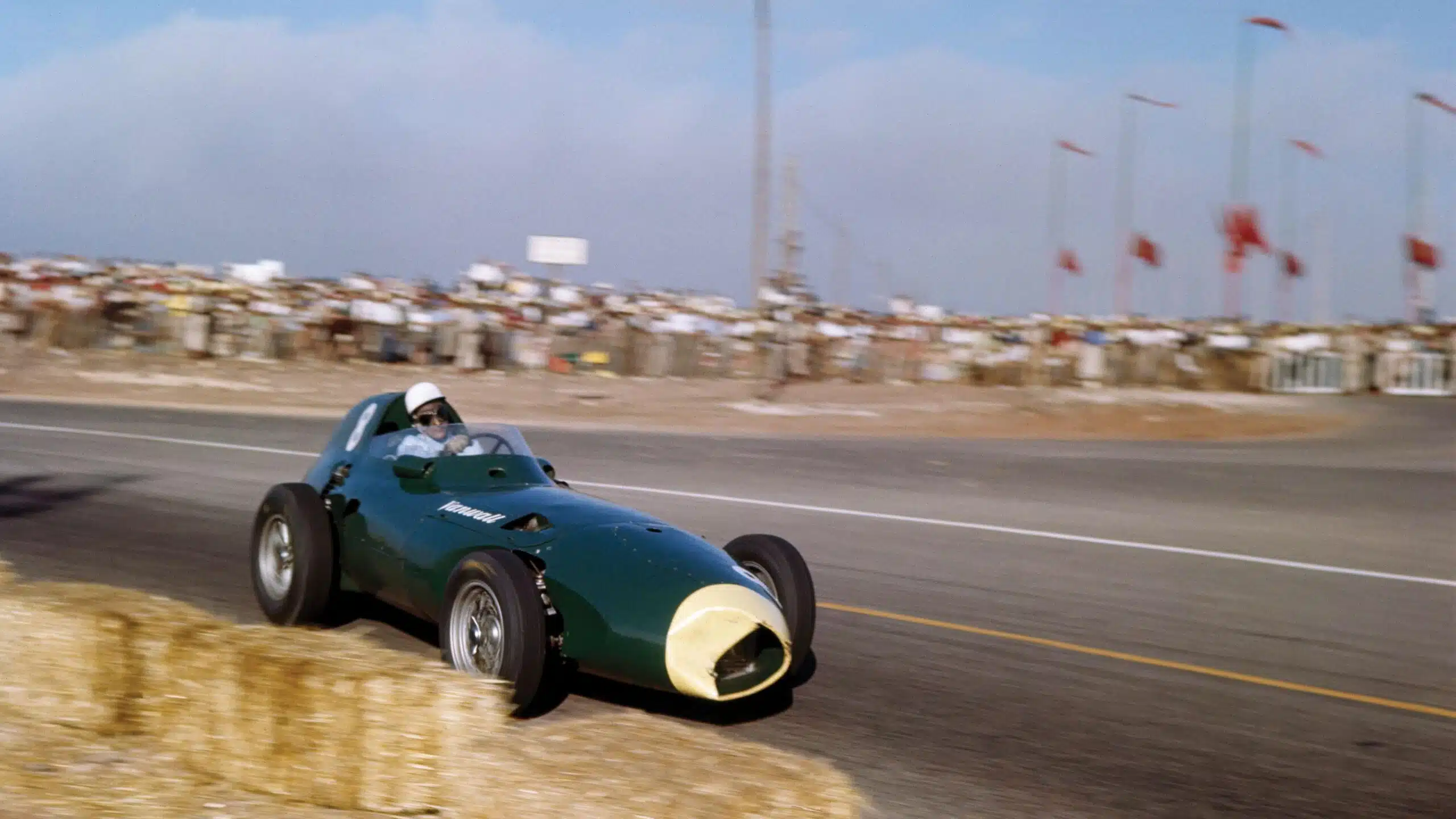
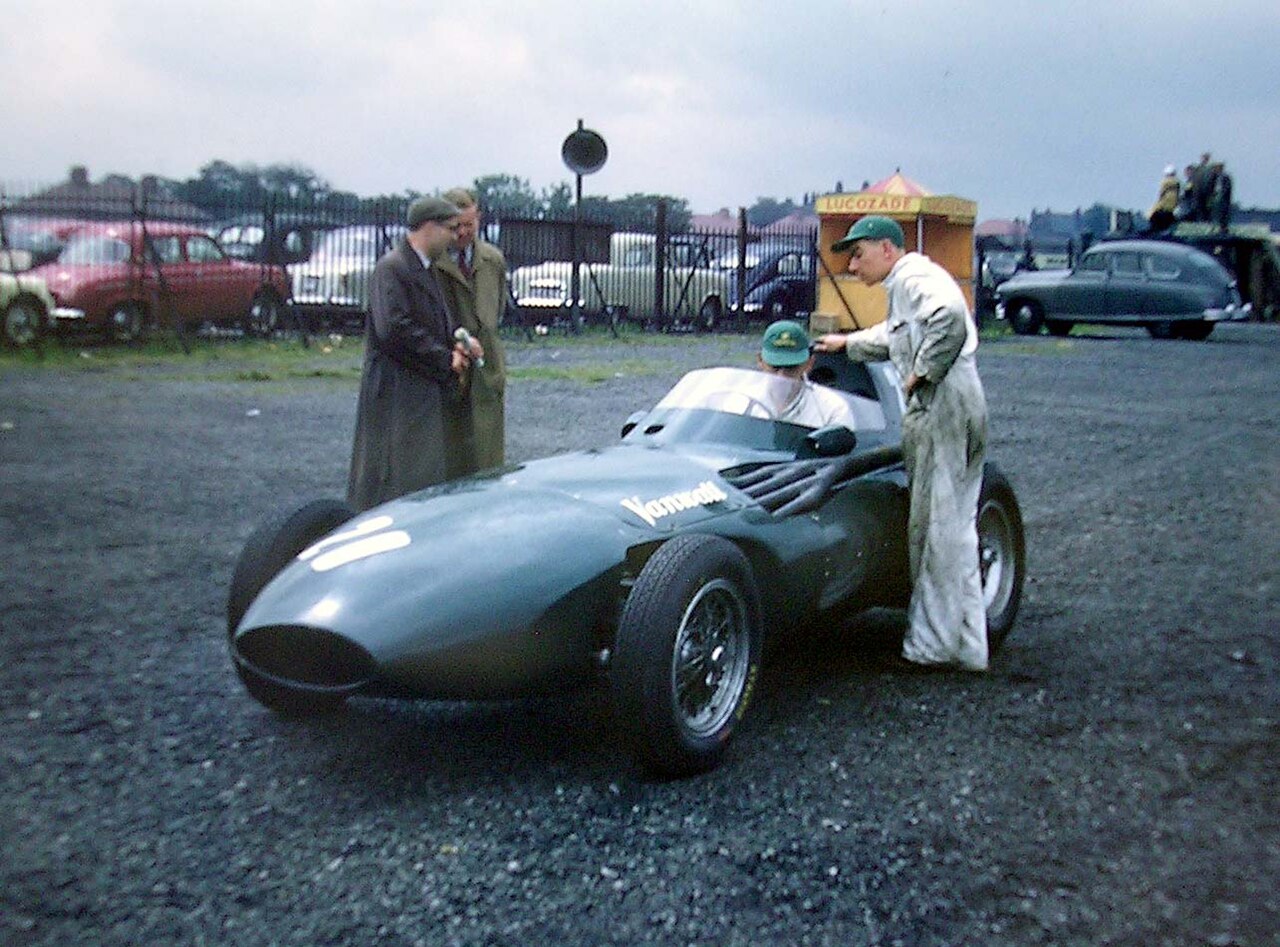
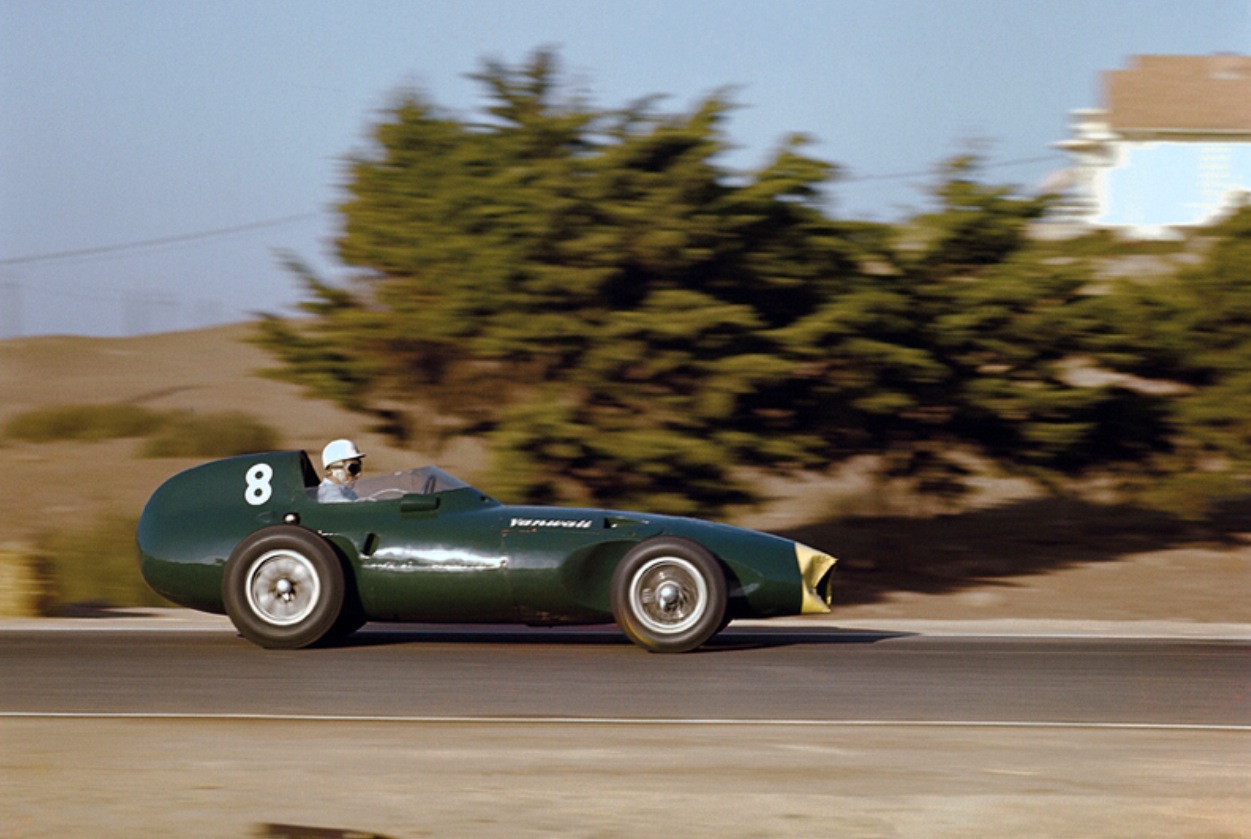
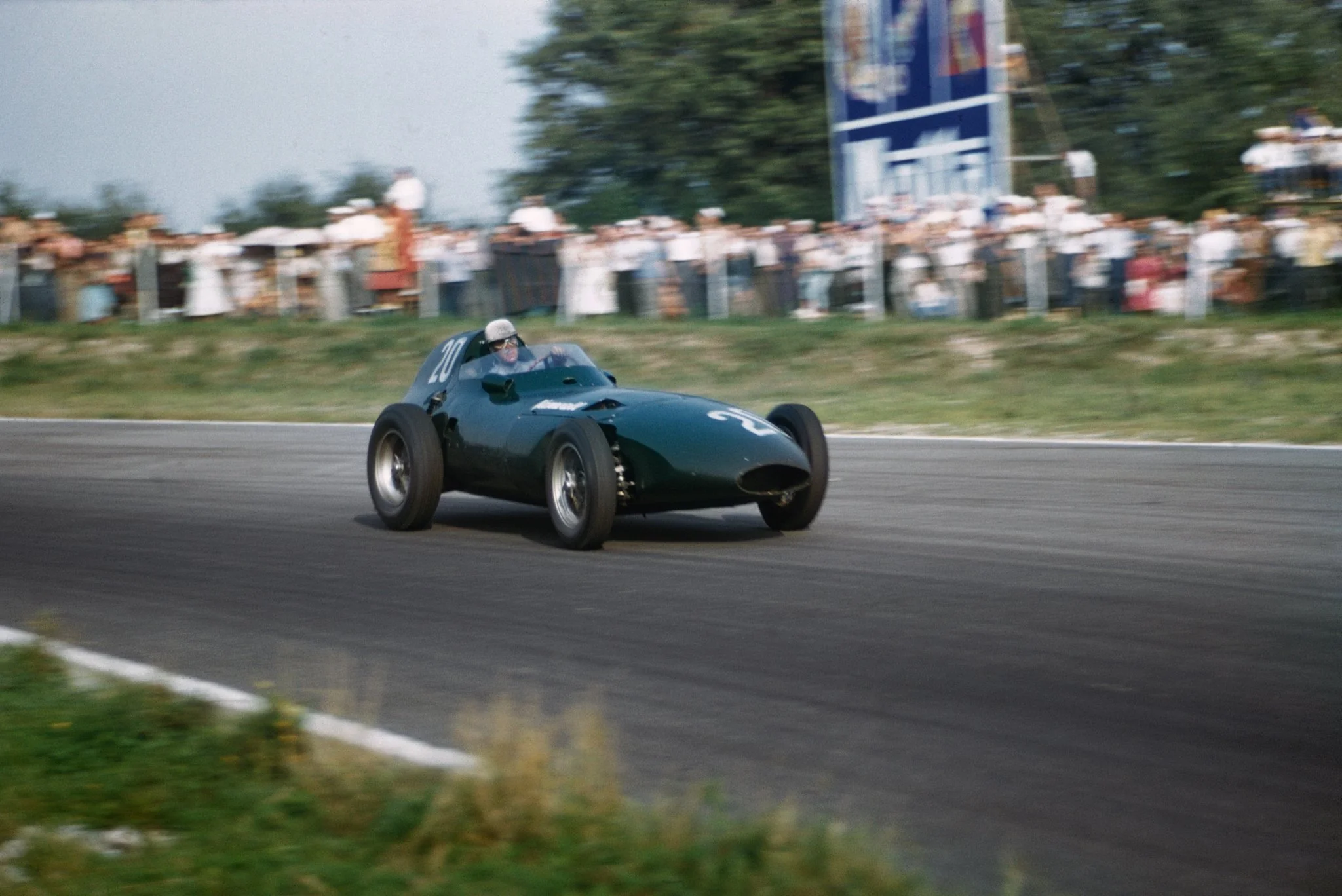
On 8 September 1957 at Monza, the suffocating smell of burnt methanol and Castrol R heralded the definitive end of Italian supremacy on its most sacred ground. As Stirling Moss hurtled past the chequered flag in a high-waisted, British Racing Green projectile bearing the number 18, Tony Vandervell’s obsessive dream reached its zenith. The car beneath Moss was the Vanwall VW5, constructed at the Vandervell Products workshops in Acton, London, for the 1957 European season. Where its direct predecessors—the 1956 VW1 to VW4 series designed by Colin Chapman and Frank Costin, notably the VW2 that Moss drove to victory in Silverstone’s non-championship International Trophy—suffered from brutal four-cylinder vibrations, the VW5 represented ultimate maturity. Built entirely from scratch without recycling frames or components from the 1955 machines, it boasted the structural and suspension reinforcements needed to topple continental royalty. In 1957, it squared off against Juan Manuel Fangio’s sublime, 270 hp six-cylinder Maserati 250F and the 275 hp V8 Lancia-Ferrari 801. By 1958, its sights were set on Maranello’s new 280 hp 65-degree V6 Ferrari 246 F1 piloted by Mike Hawthorn, Peter Collins and Luigi Musso, alongside the BRM P25 and the revolutionary rear-engined Cooper T45.
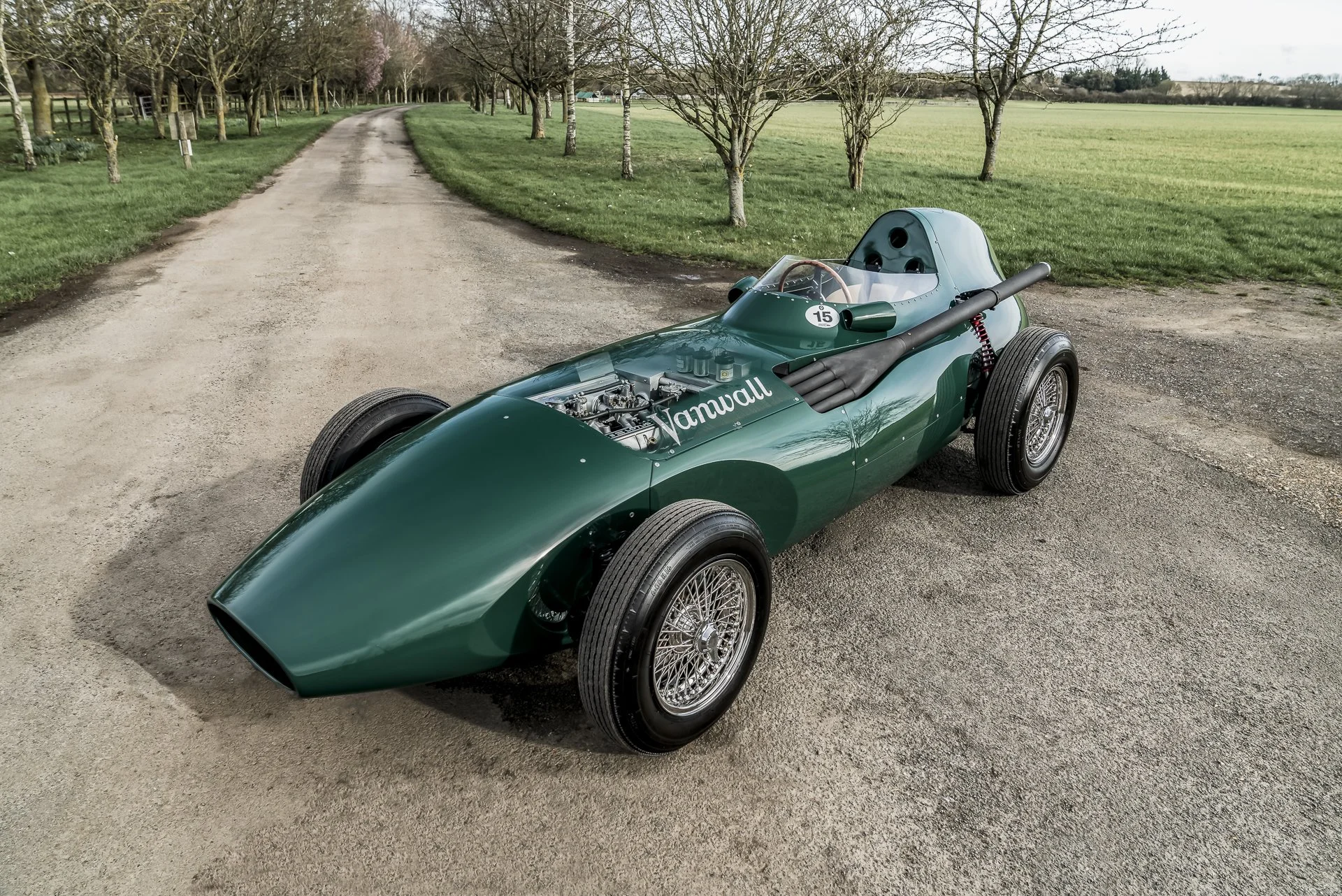
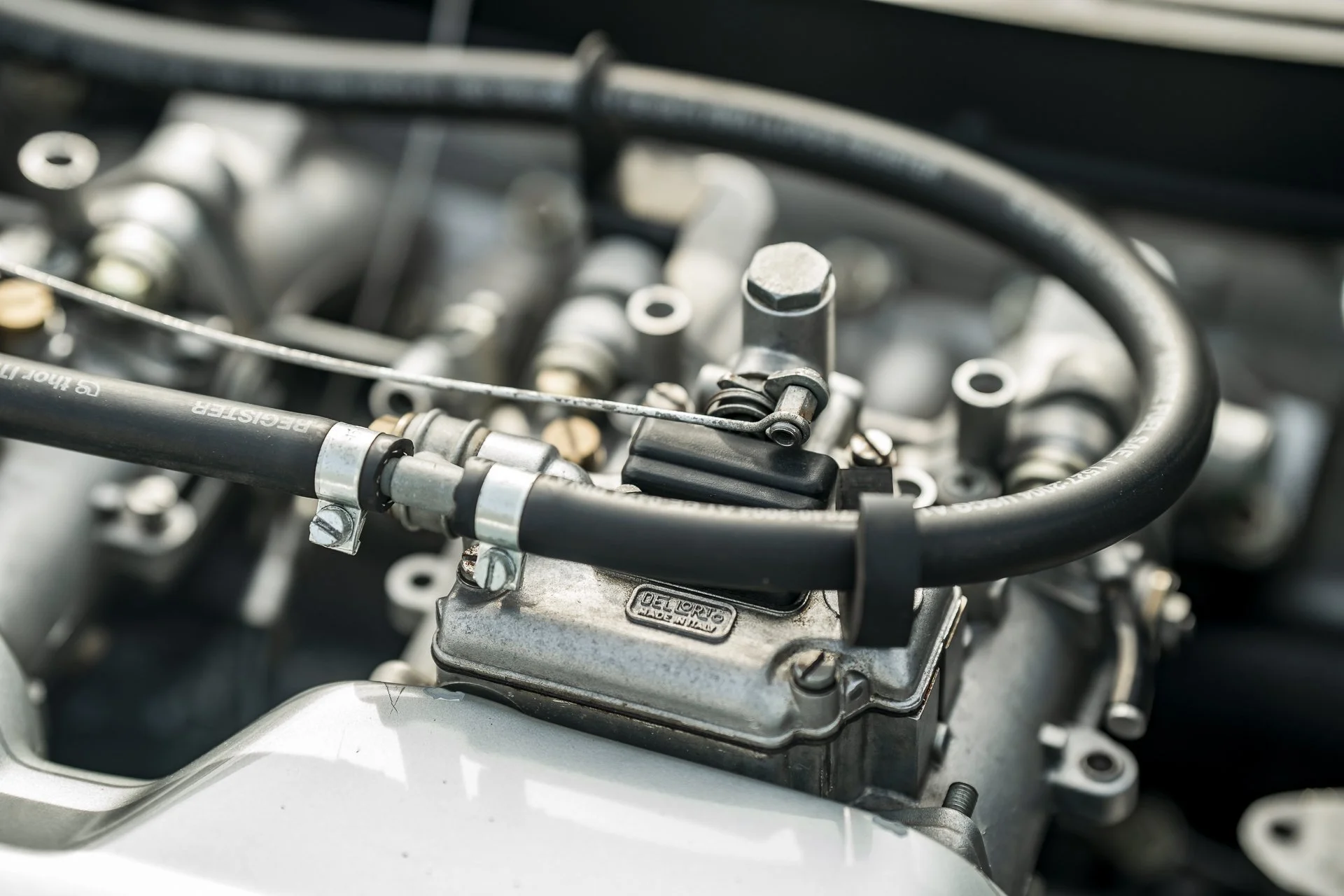
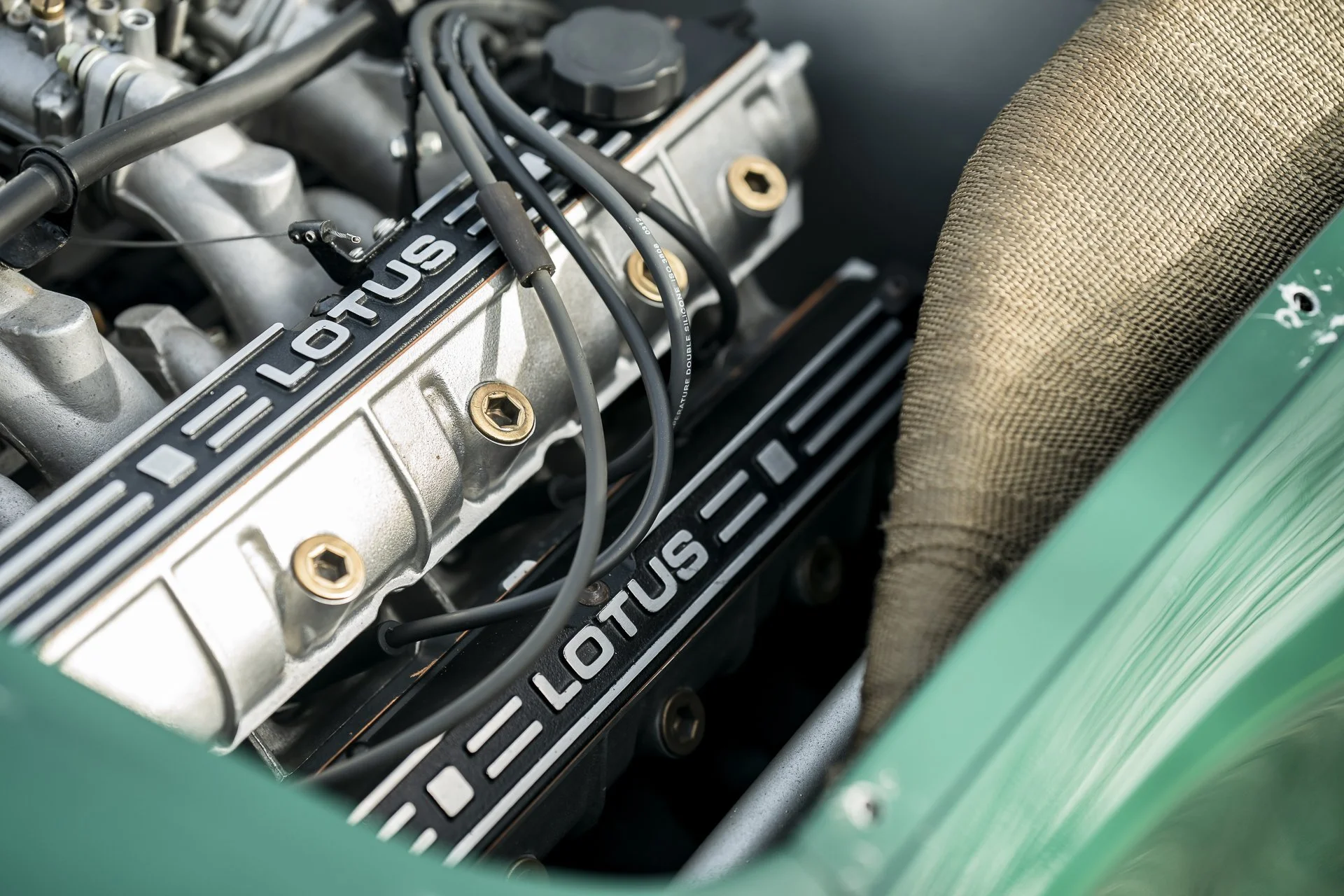
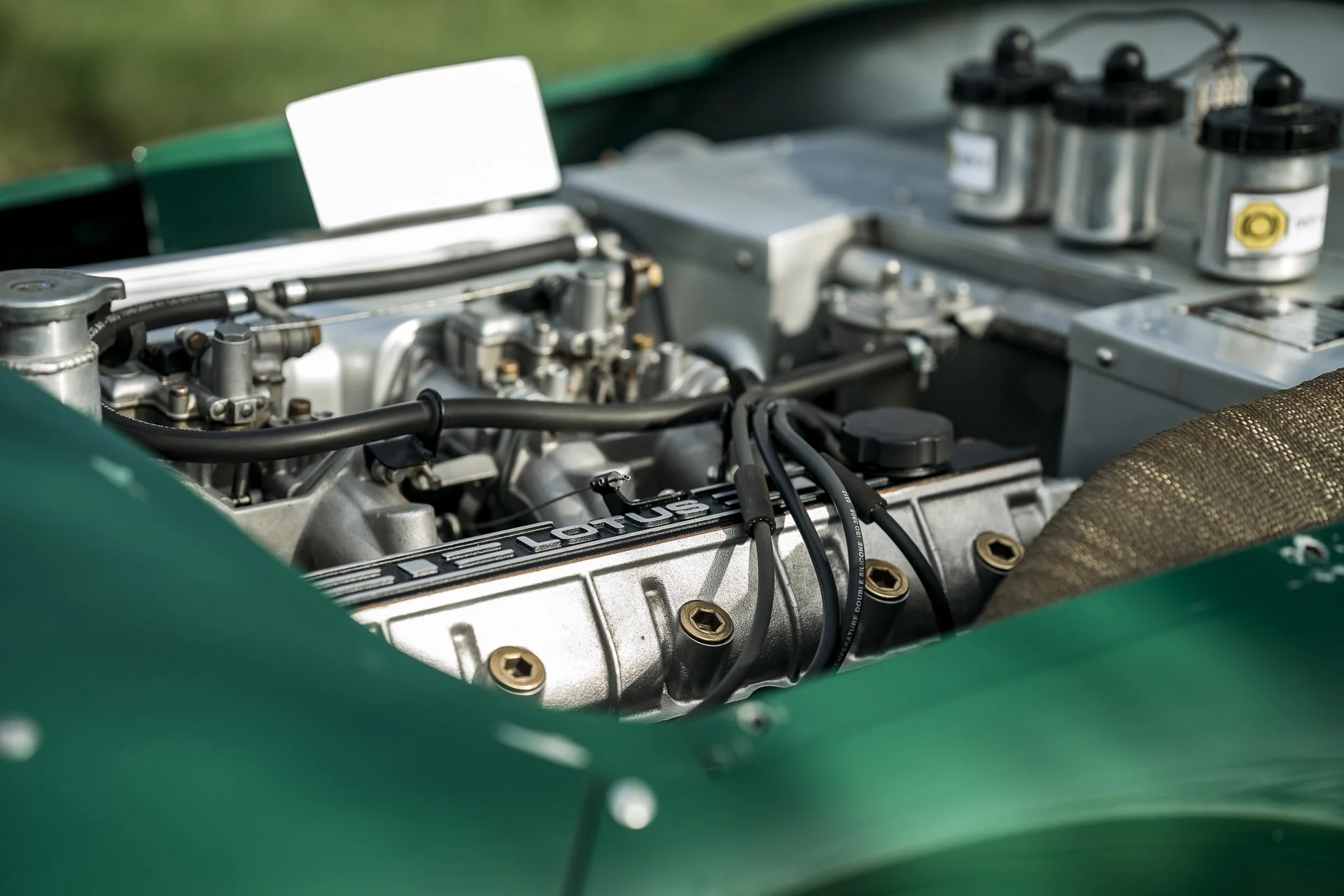
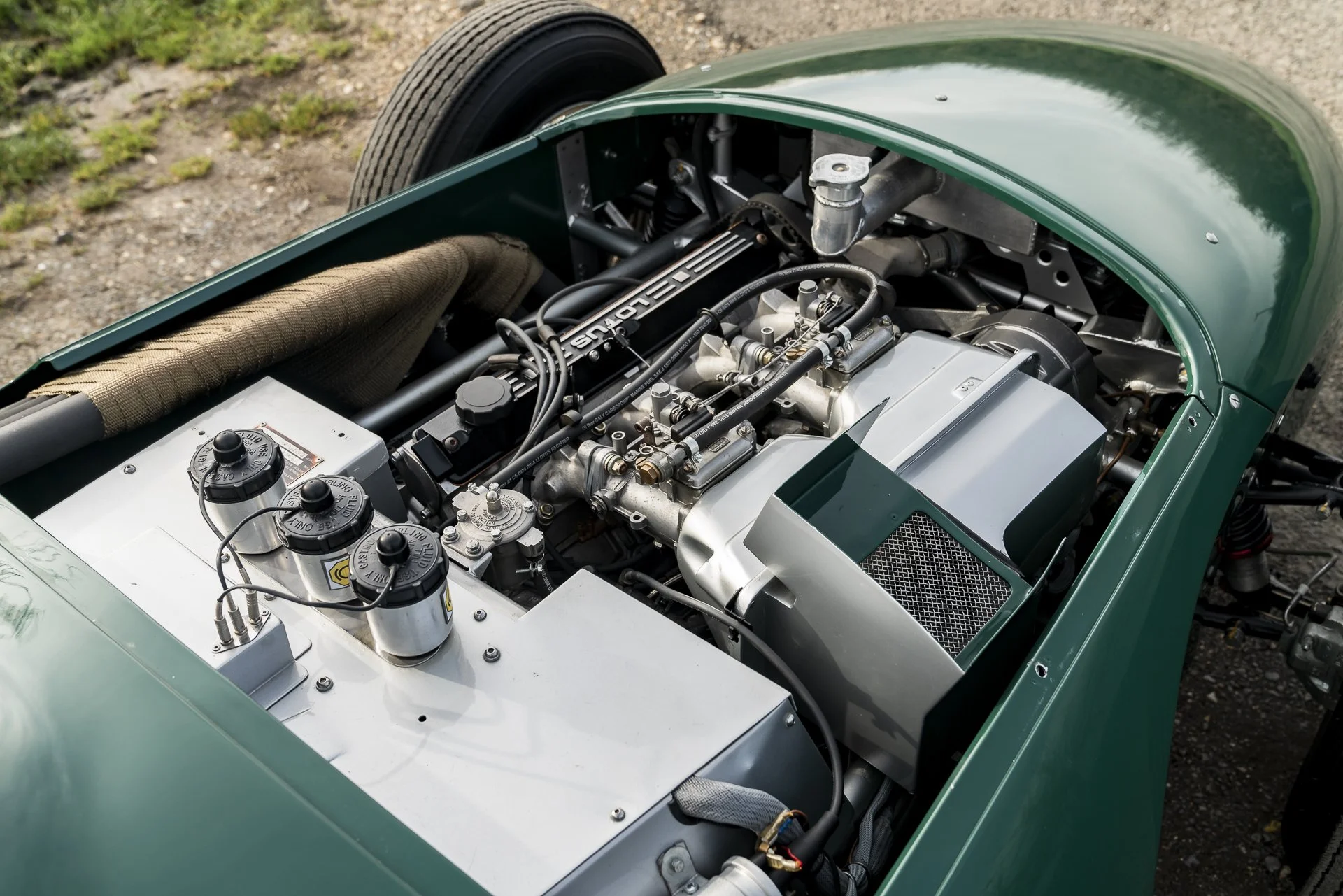
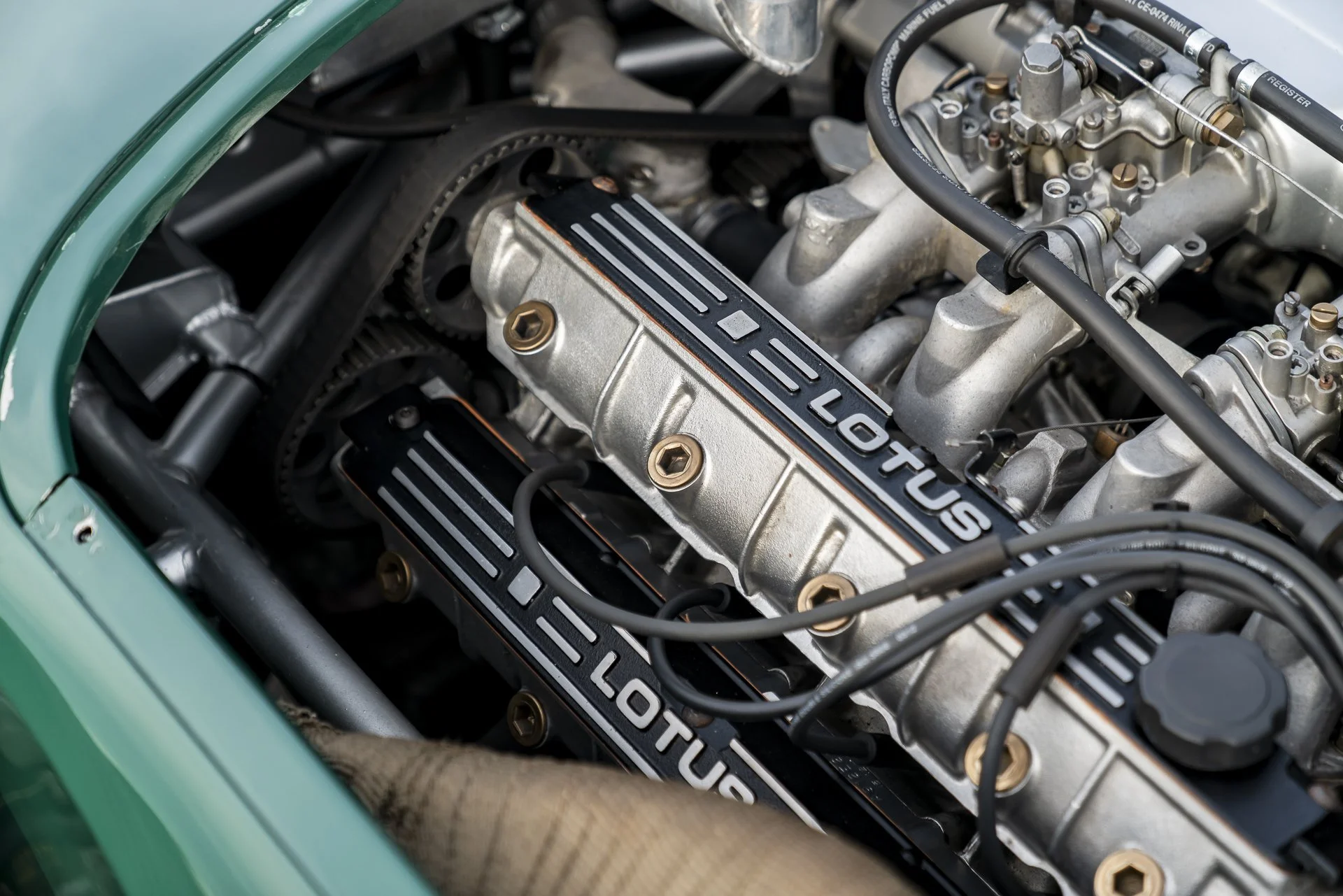
Beneath the hand-beaten aluminium bonnet lay a ferocious heart engineered by Leo Kuzmicki. Displacing 2,490 cc (151.9 cu in) with a bore and stroke of 96 mm by 86 mm (3.78 in by 3.39 in), this DOHC inline-four married the architecture of four Norton Manx motorcycle cylinders to a Rolls-Royce aluminium crankcase with wet liners, capped by a bronze-and-aluminium hemispherical cylinder head with exposed hairpin valve springs. Fed by Bosch mechanical indirect fuel injection squirting upstream into four gutless Amal motorcycle carburettor bodies—stripped of their float bowls and jets to serve purely as vertical cylindrical air throttle slides—its bark was ear-splitting. In 1957, gulping a witch’s brew of methanol, benzol, acetone and nitromethane, it unleashed 285 hp at 7,400 rpm. When the FIA mandated commercial 100/130-octane AvGas for 1958, losing the alcohol’s internal cooling forced a lower compression ratio, trimming output to 265–270 hp at 7,200 rpm.
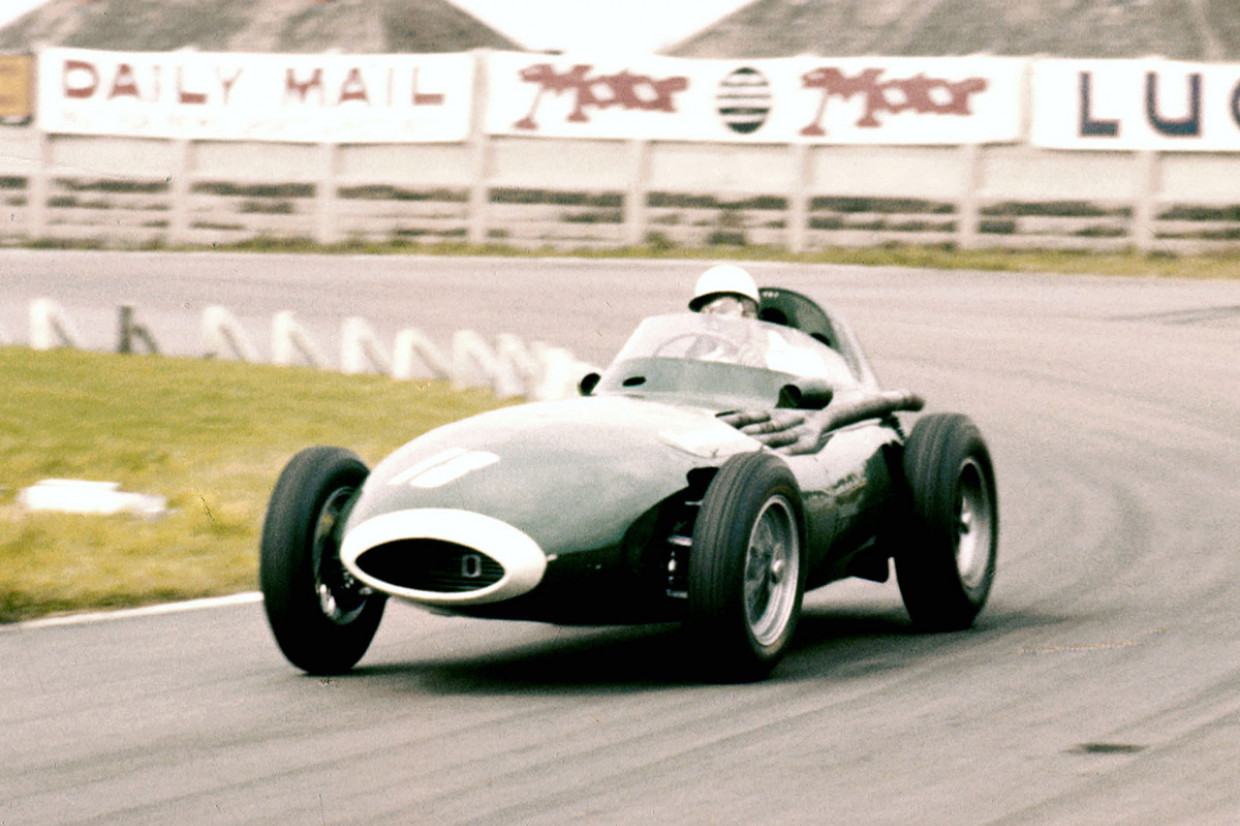
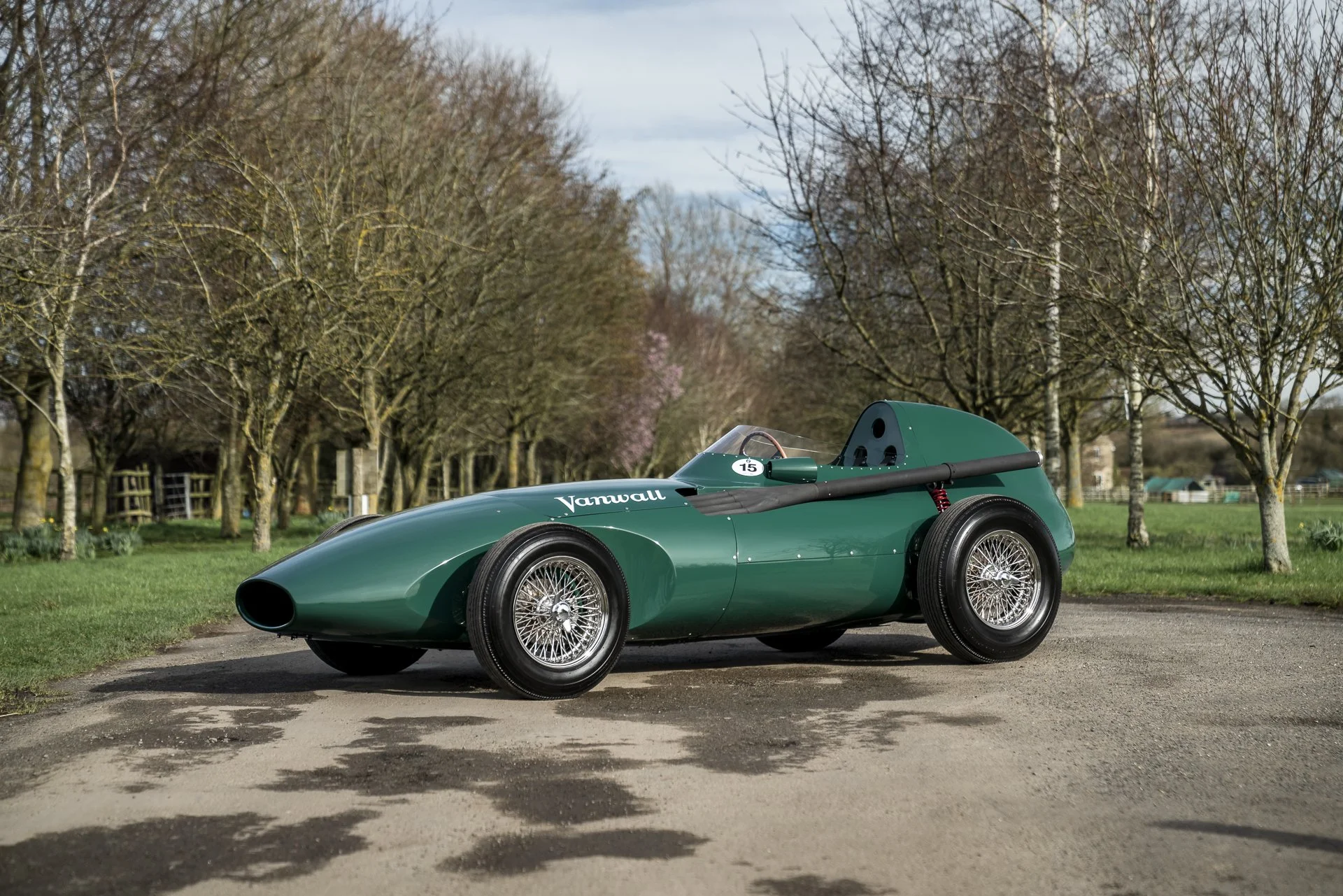
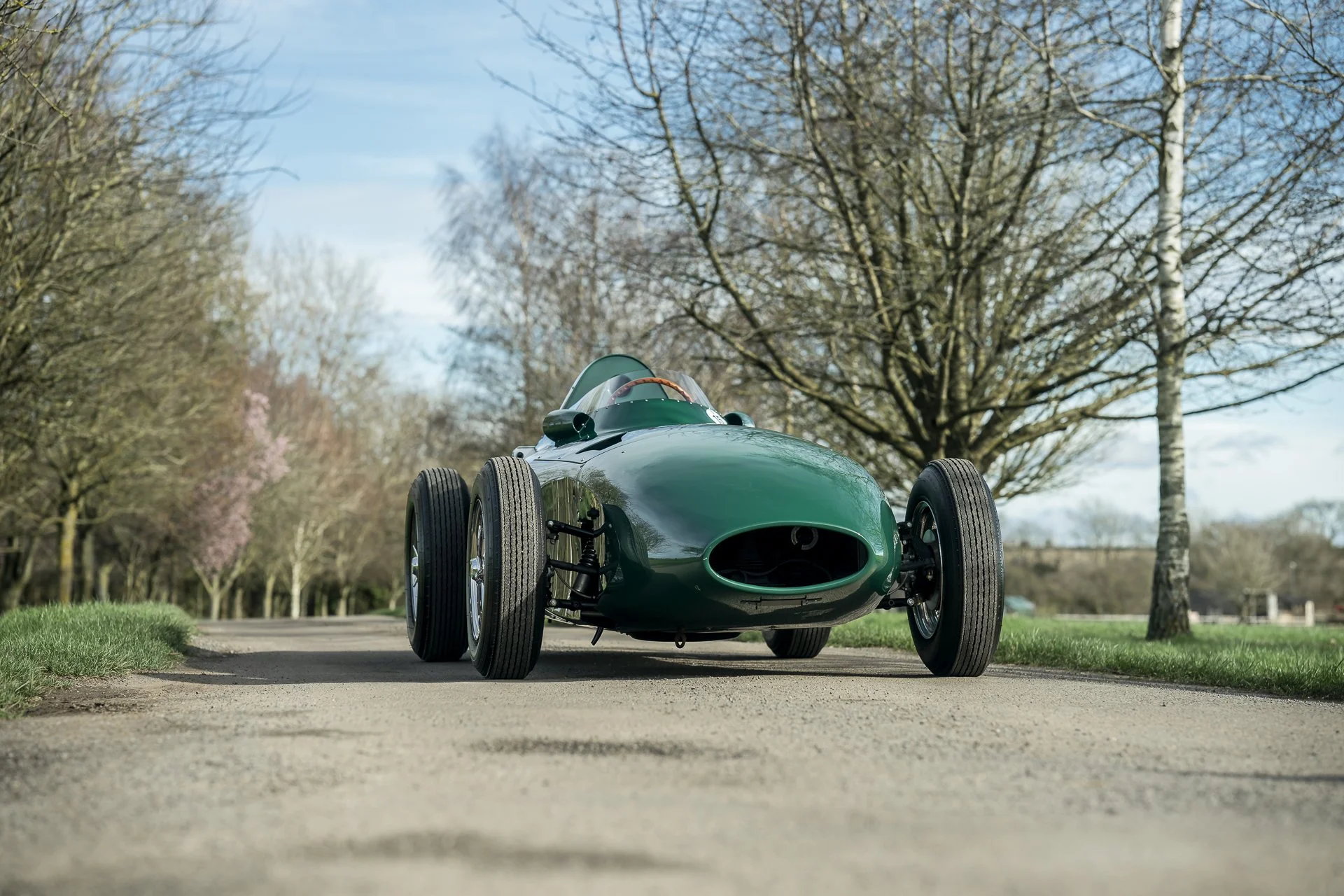
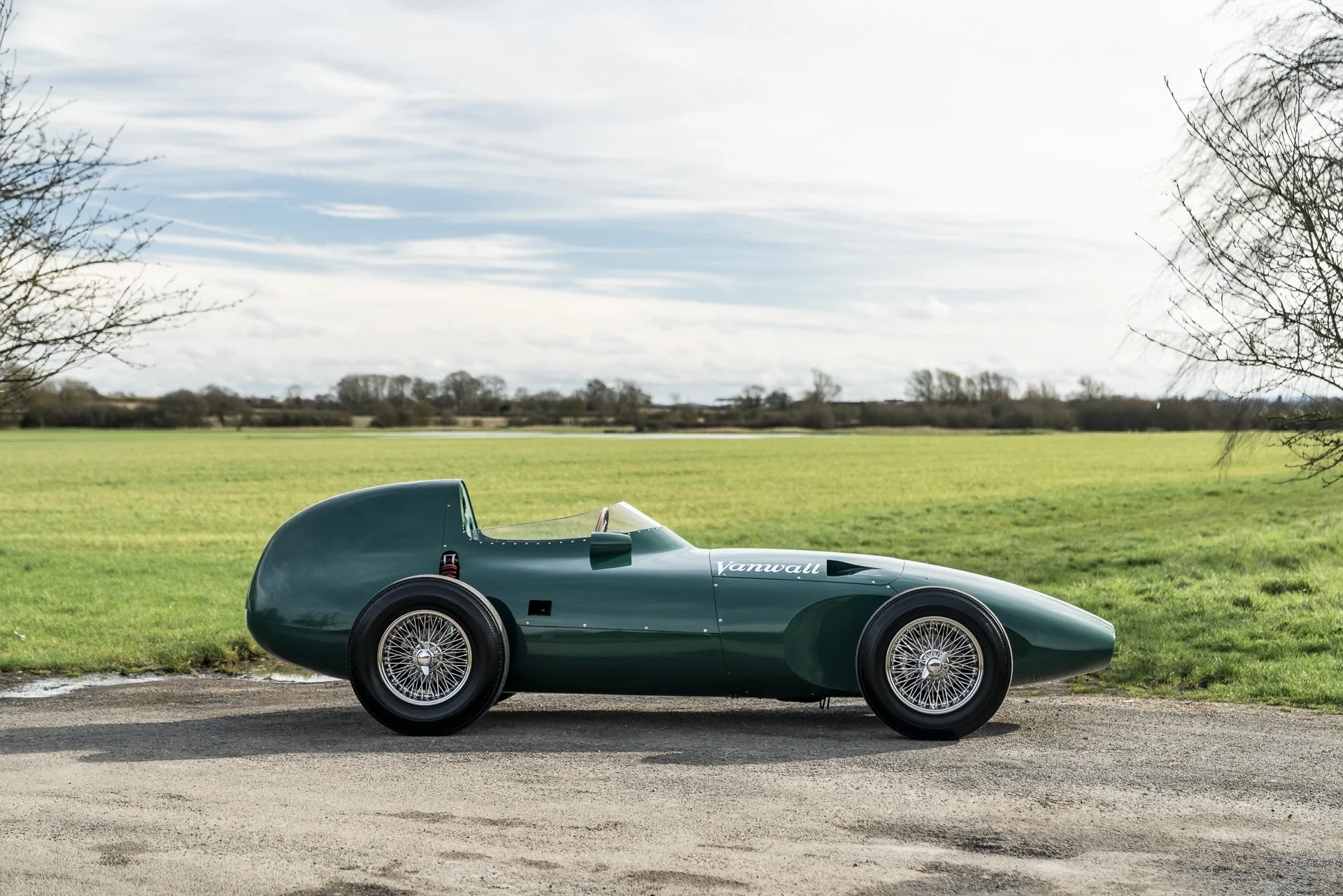
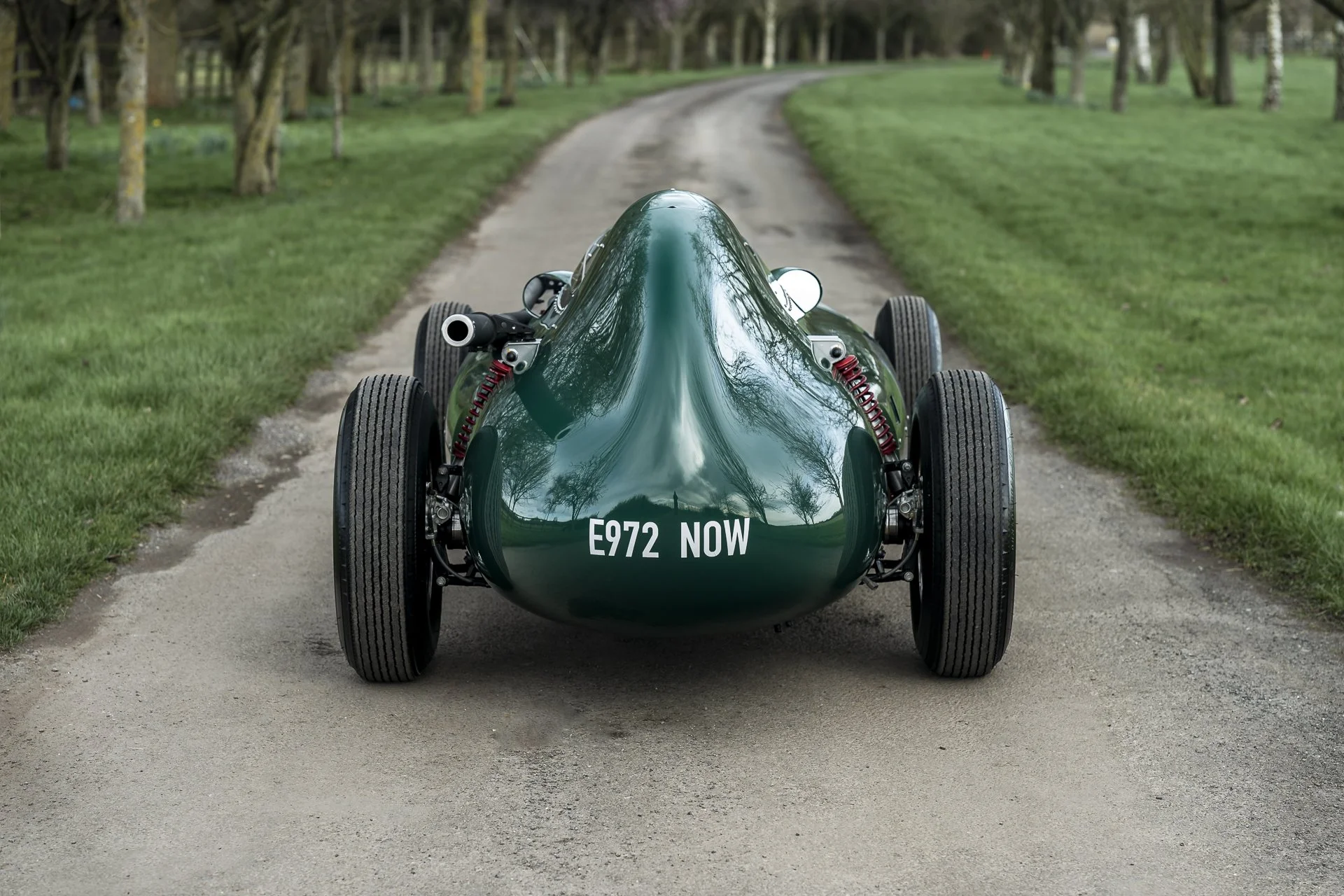
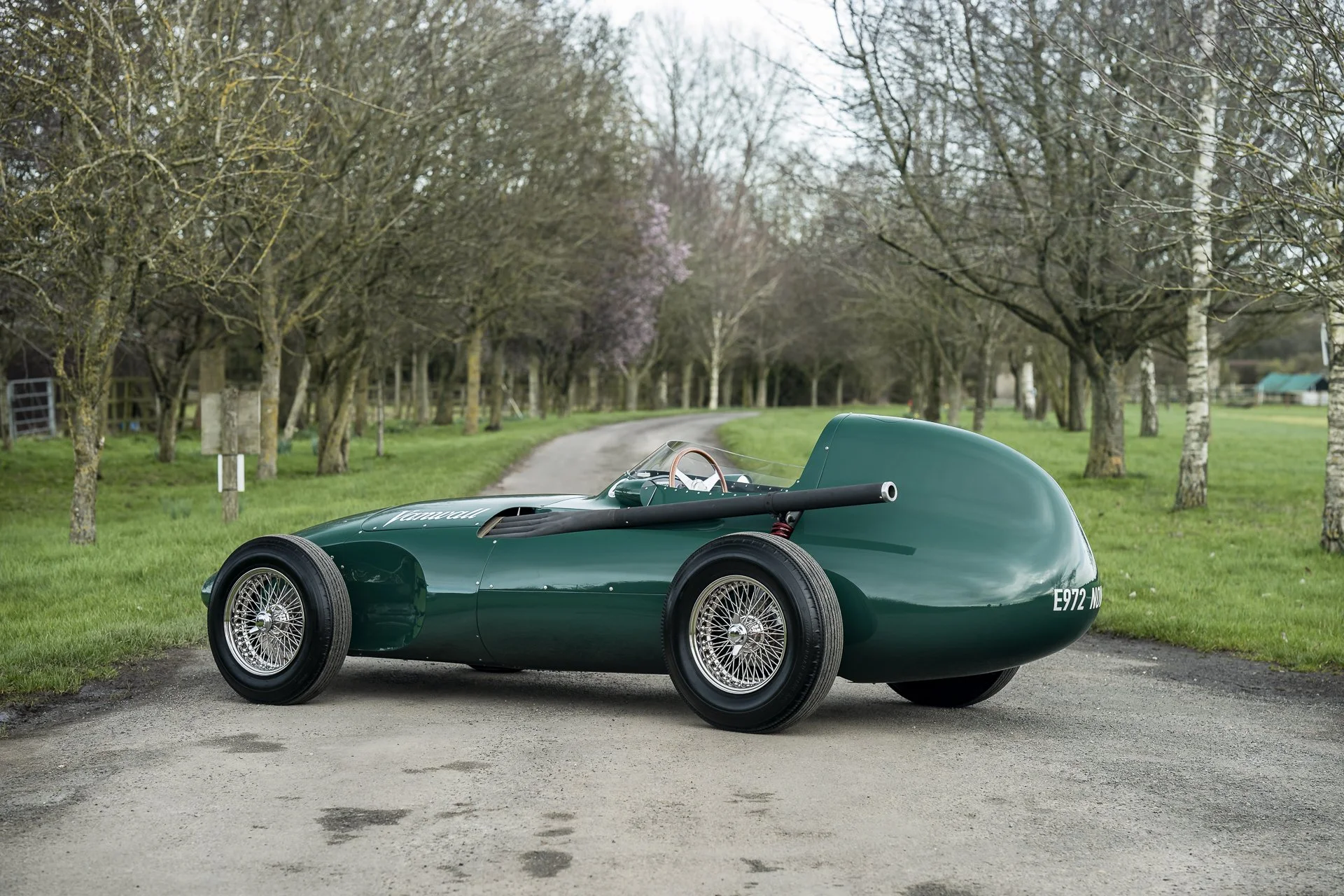
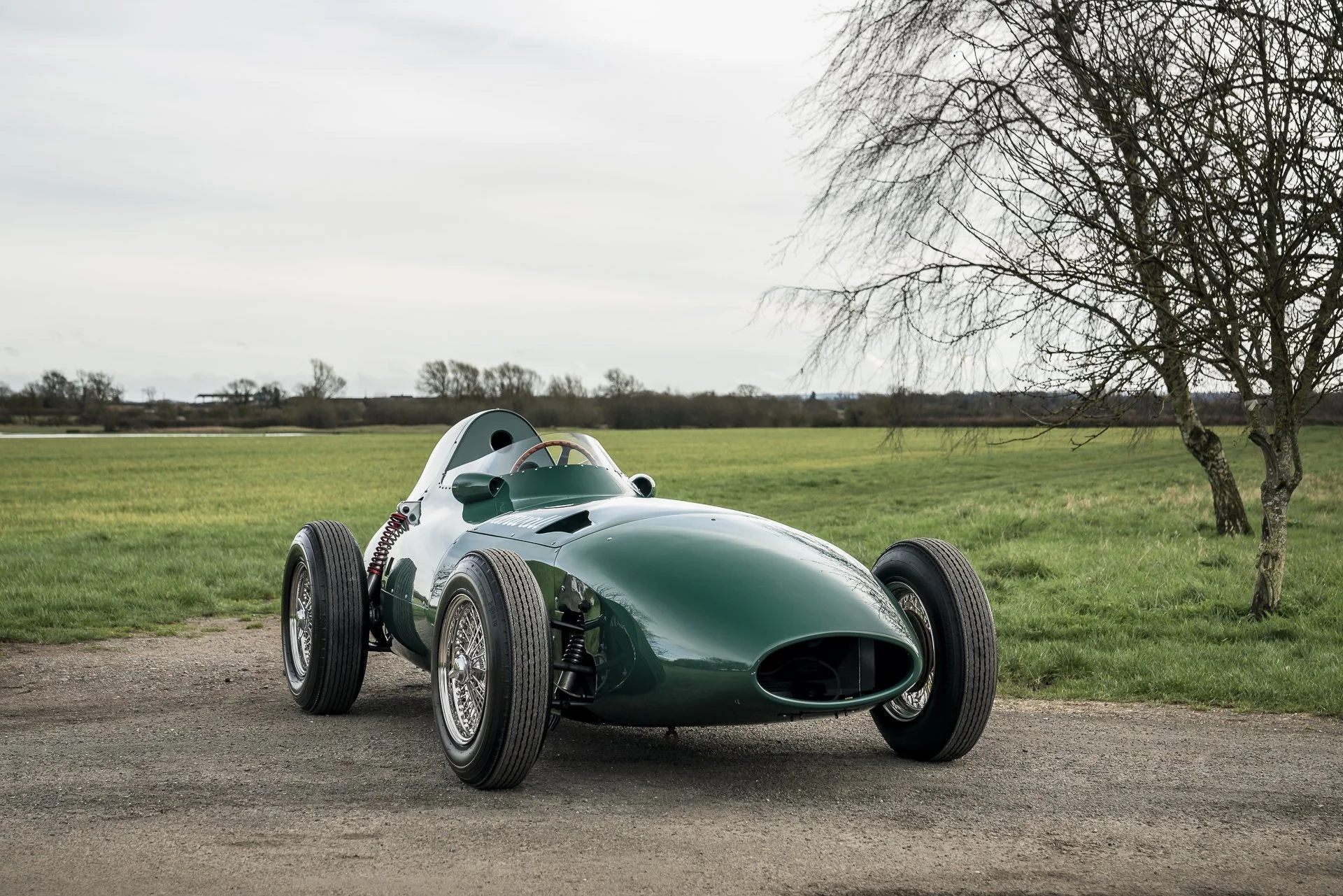
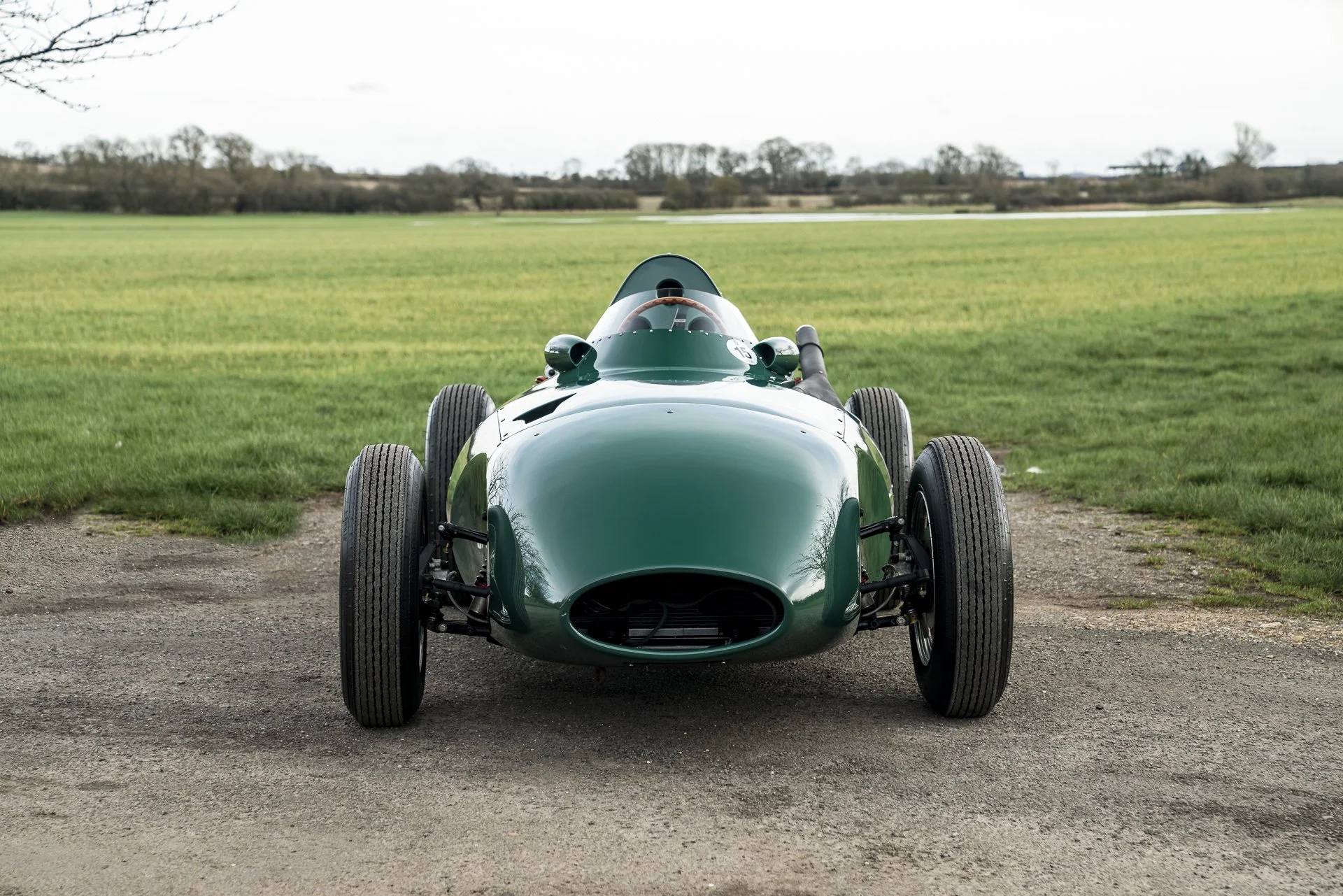
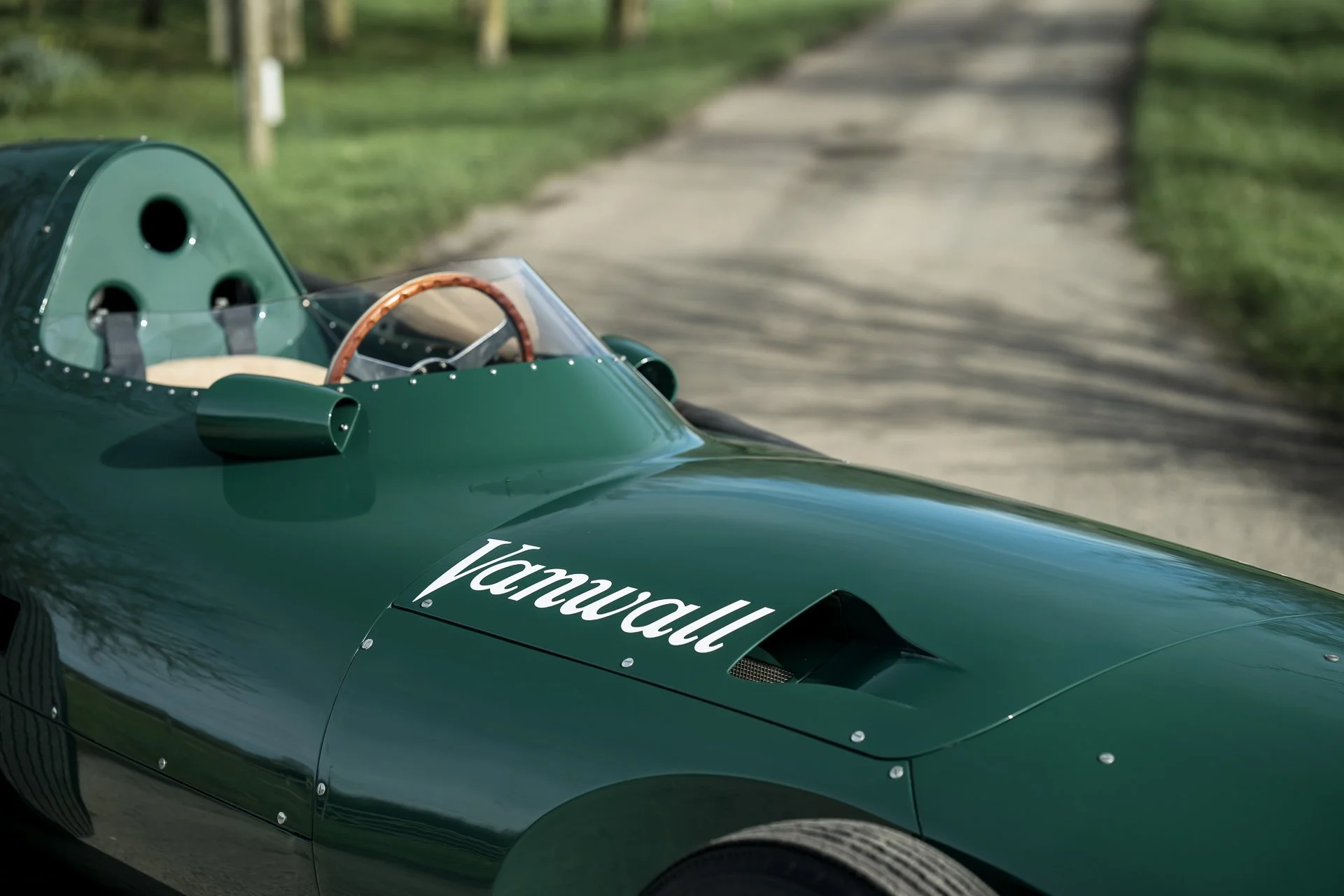
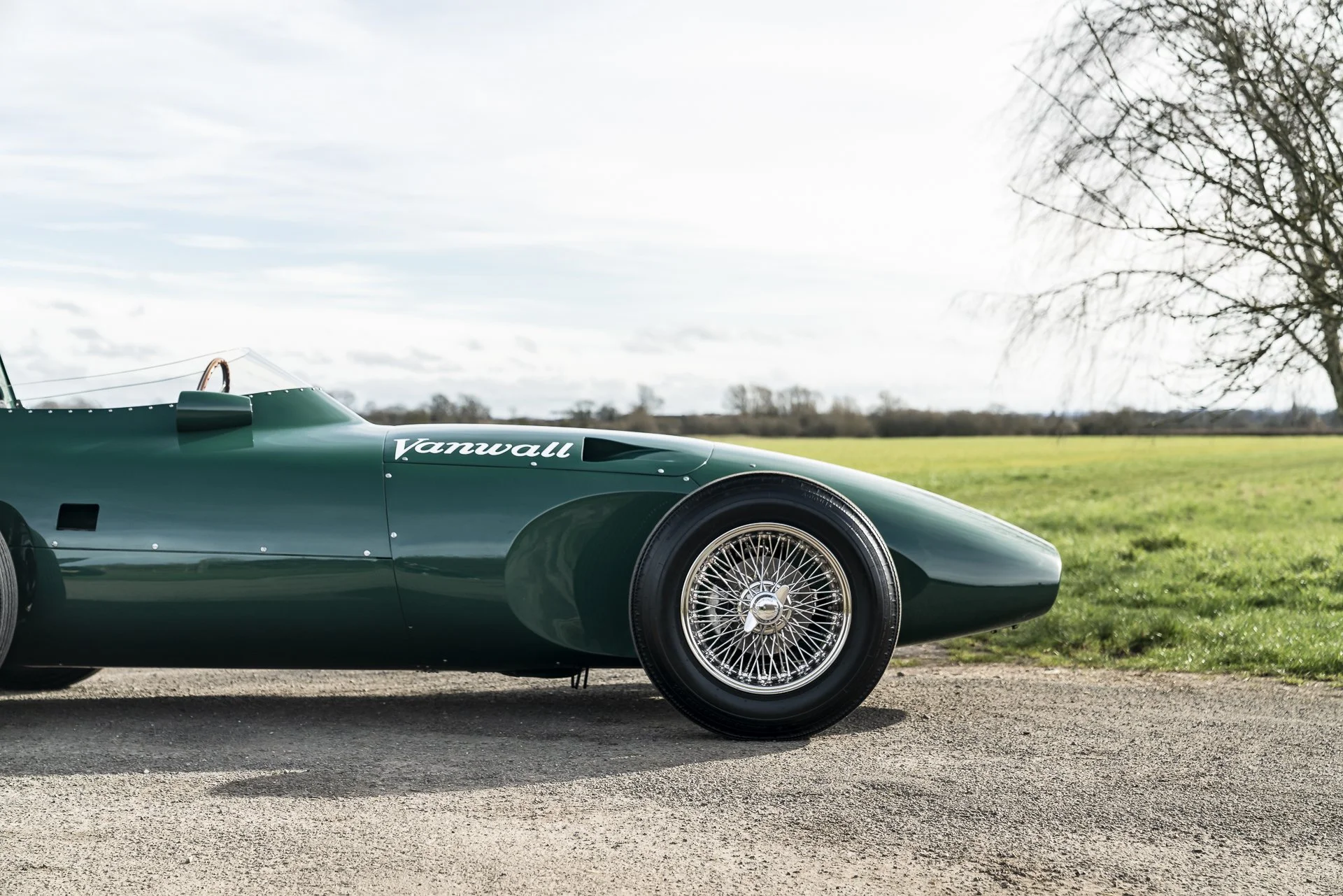
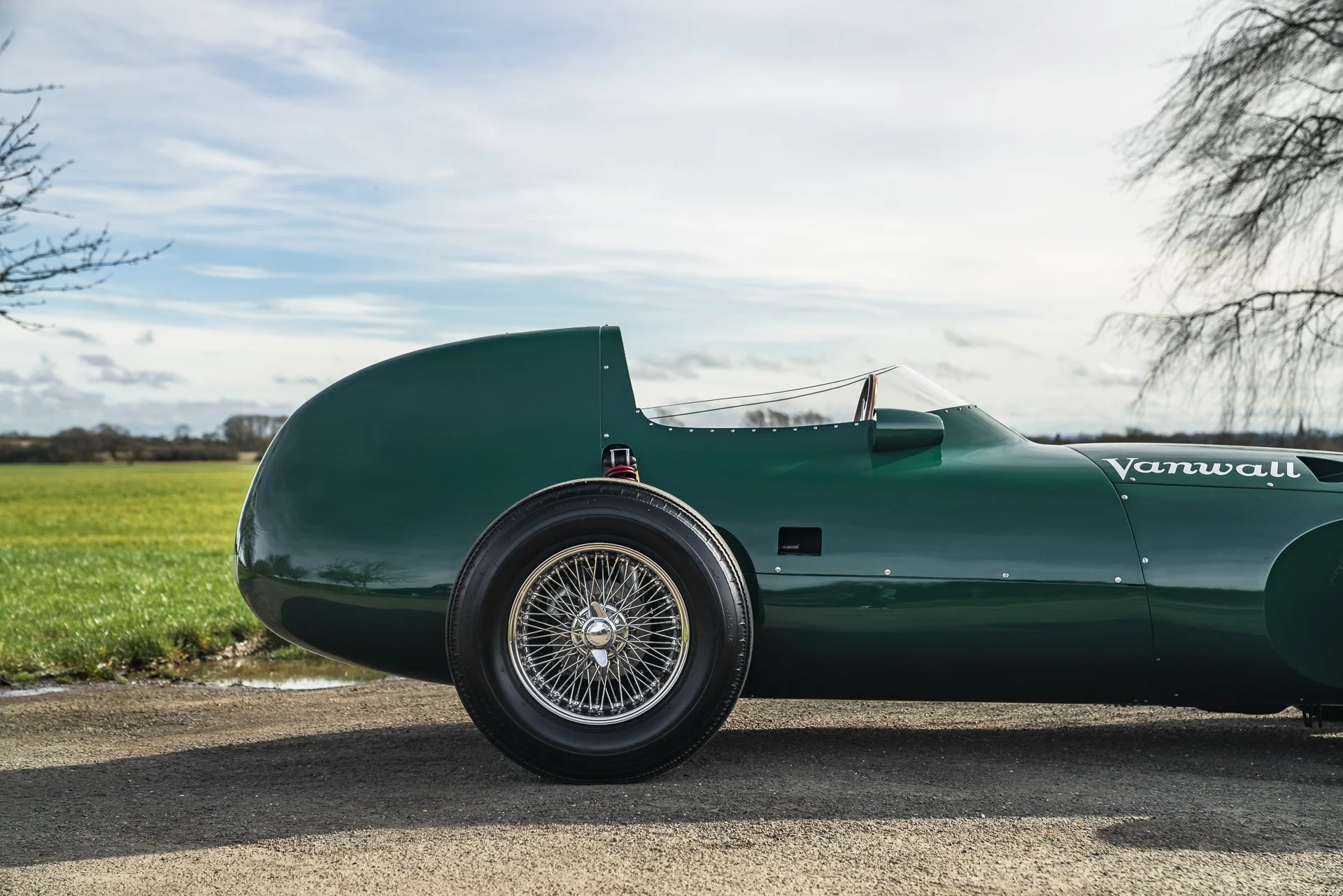
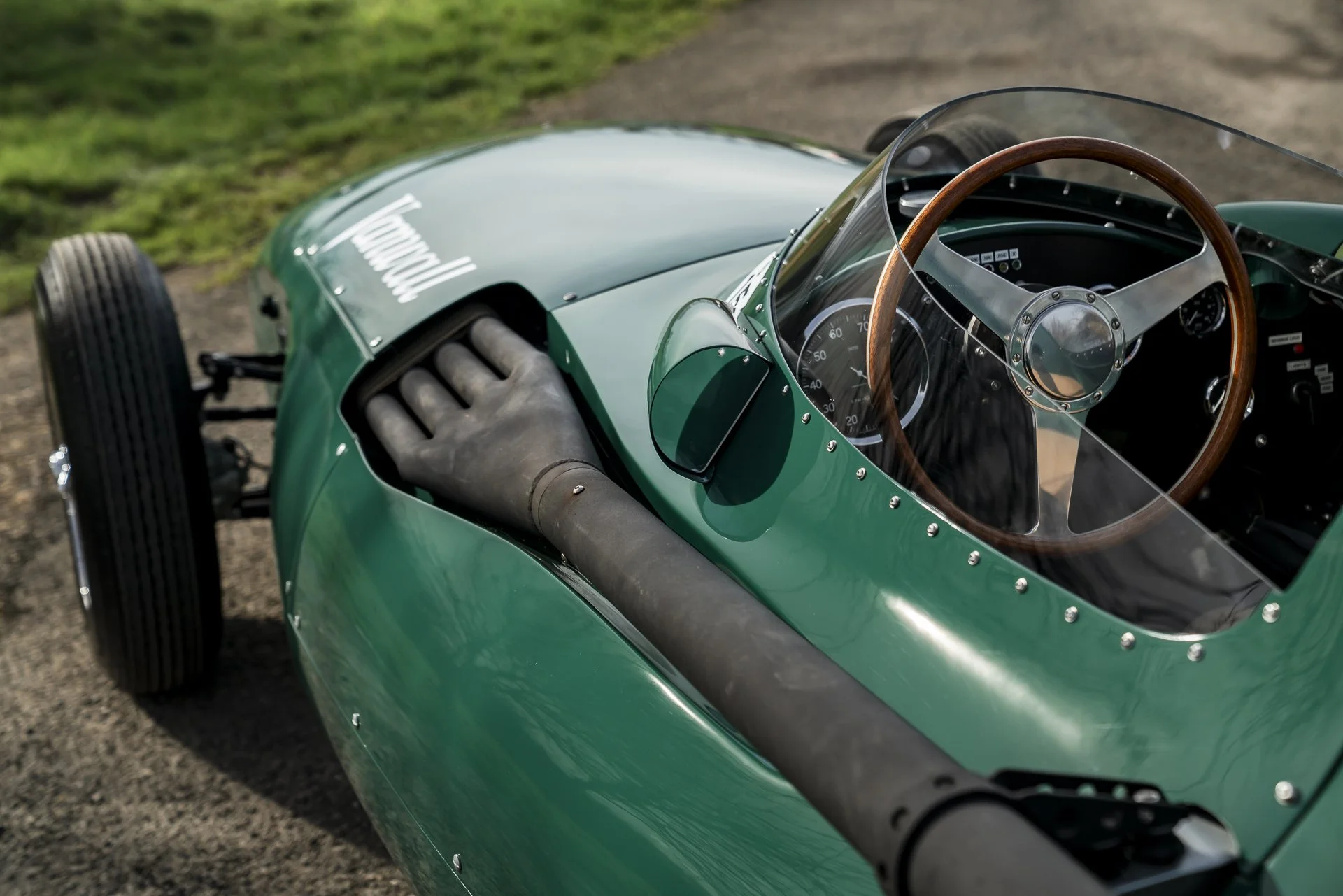
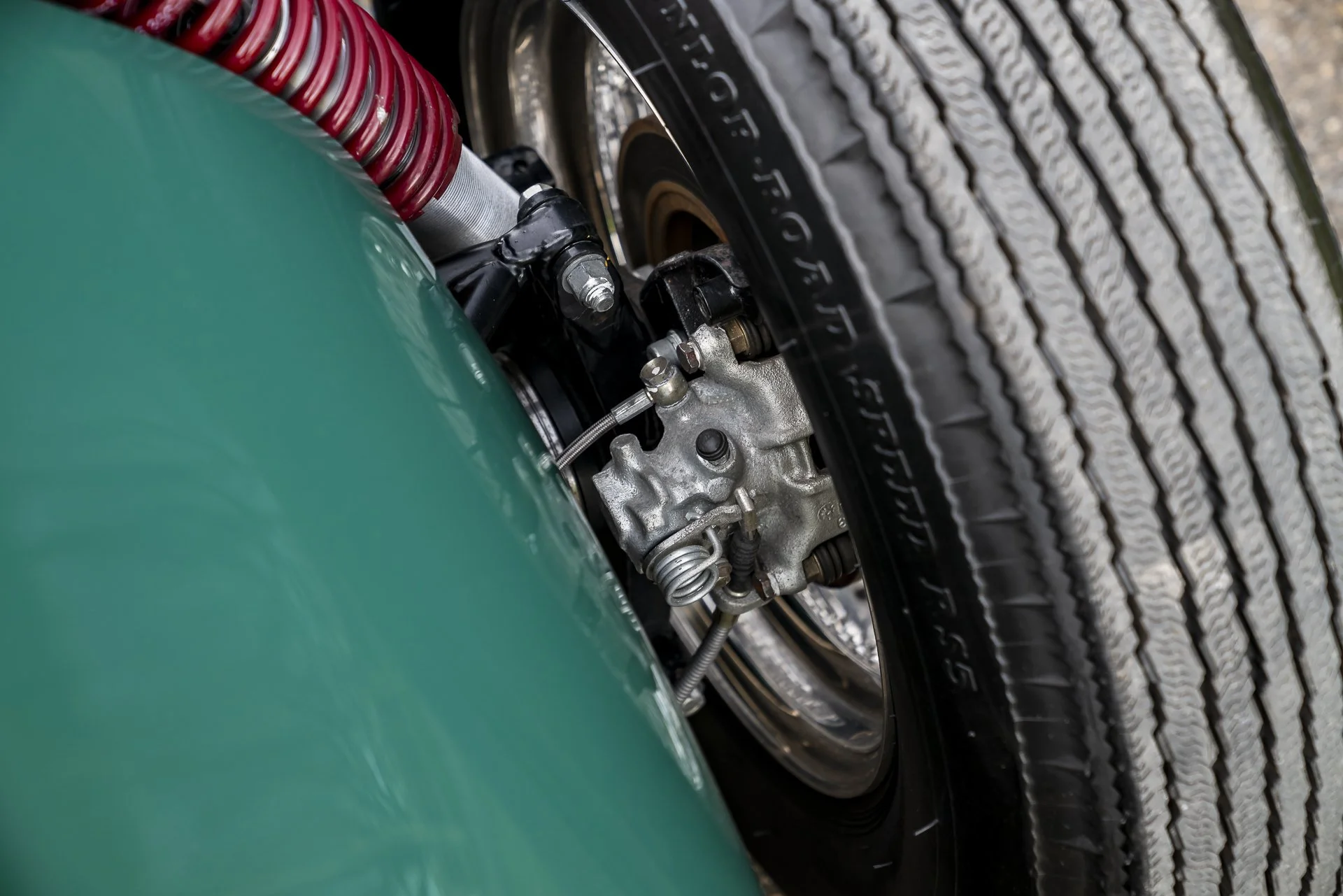
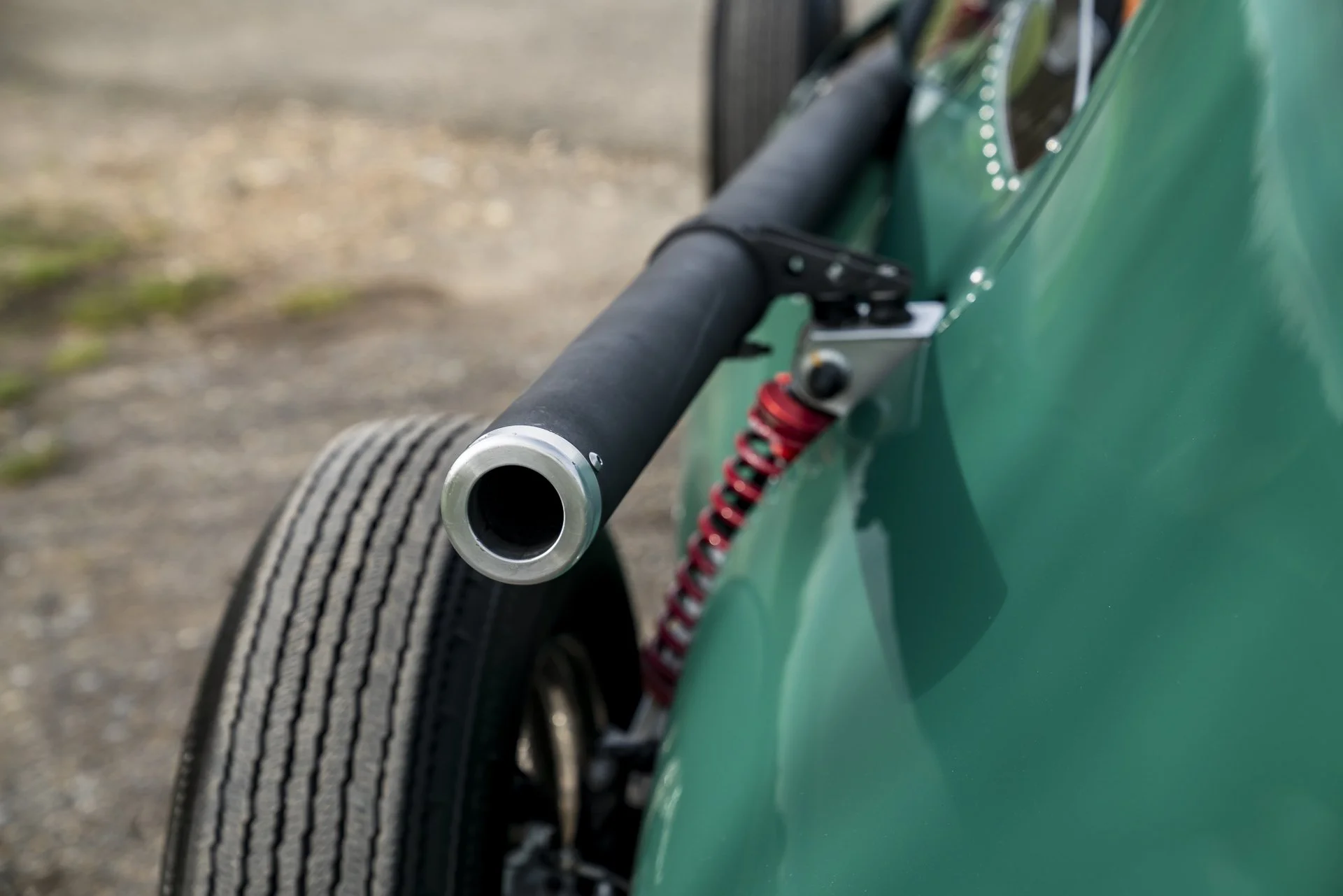
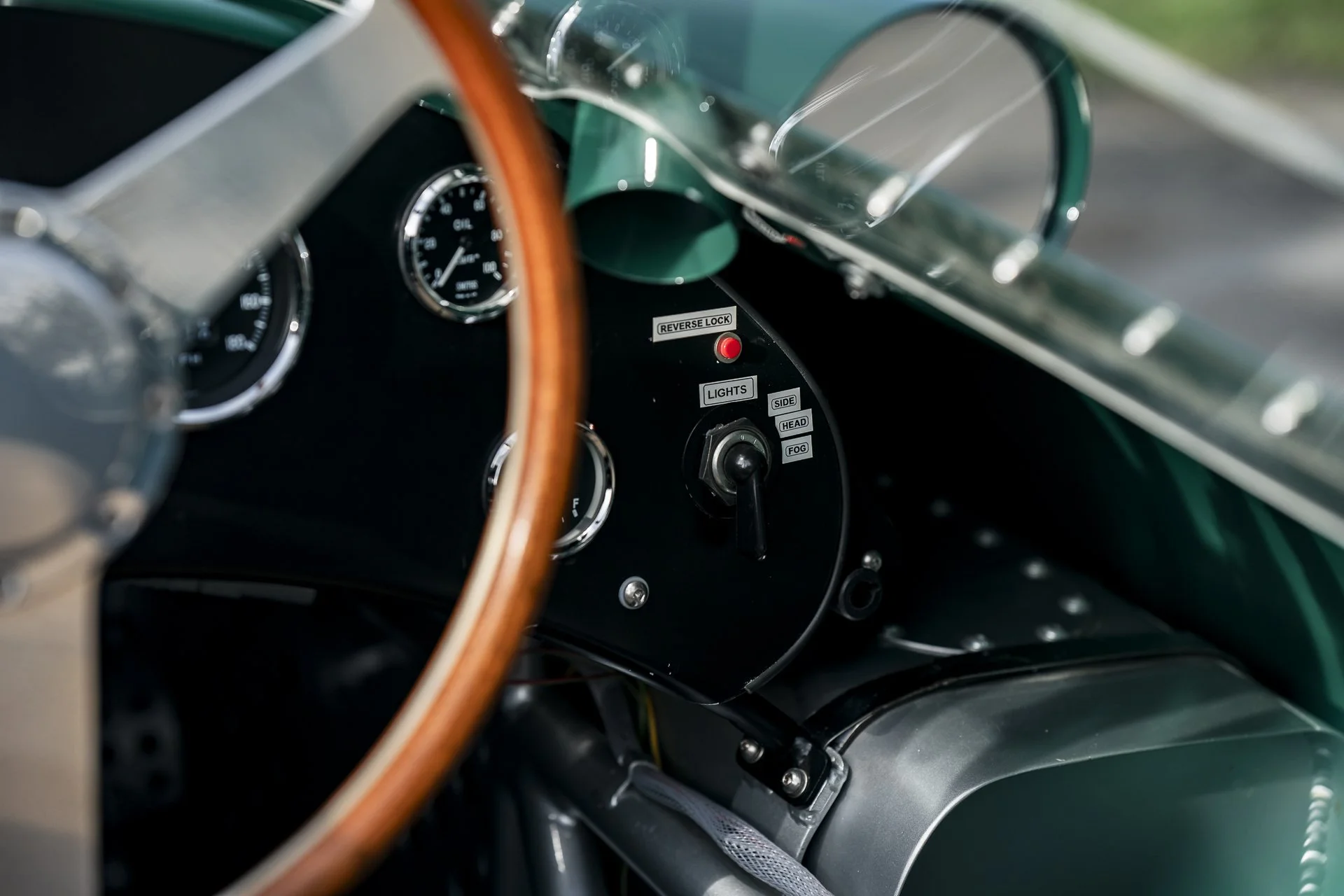
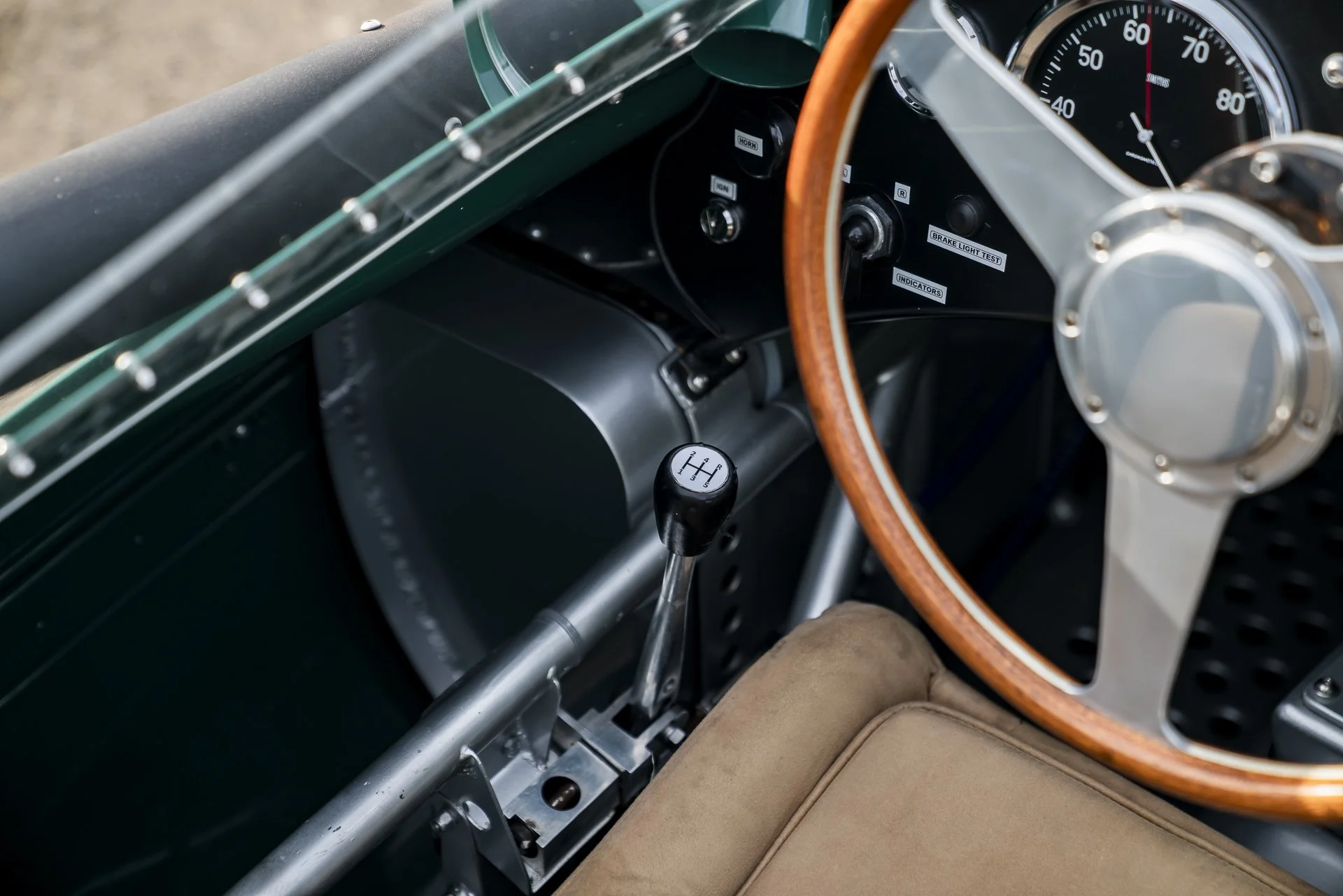
This brute was cradled in Colin Chapman’s Reynolds 531 chrome-molybdenum steel spaceframe, weighing a mere 40 kg (88 lbs). Front suspension relied on unequal-length double wishbones sprung by a high-mounted transverse semi-elliptic leaf spring, Fichtel & Sachs telescopic dampers and a beefed-up anti-roll bar, while the rear employed a high-mounted De Dion tube arching over the differential, located by radius rods, a central Watt’s linkage and an upper transverse leaf spring. Drive went through an unsynchronised, straight-cut five-speed manual transaxle built into Rolls-Royce-derived casings. Its secret weapon in braking zones was a quartet of aircraft-derived Goodyear disc brakes featuring pierced steel rotors—mounted outboard up front and inboard at the rear to pare down unsprung weight—framed by Borrani wire wheels in 1957 and iconic cast-magnesium “wobbly-web” rear alloys in 1958. Cloaking the mechanics was Frank Costin’s aerodynamic masterwork: a narrow, teardrop-tailed body with an oval nose intake hiding the water and oil radiators. Sitting upright above the prop shaft in a spartan green-and-black leather cockpit, peering through a tall Perspex wrap-around windscreen—occasionally enclosed into a full aerodynamic canopy in 1958—and working a left-hand gearlever and three-spoke wood-rim steering wheel, Moss could exceed 295 km/h (183 mph) at Monza or Reims.
The VW5’s baptism of fire came at Monaco on 19 May 1957. Moss seized the lead on lap one before brake failure sent him smashing into the harbour chicane’s sandbags and timber logs on lap four. Rebuilt at Acton for the British Grand Prix at Aintree on 20 July, Moss placed VW5 (#18) on pole position and led comfortably until a misfire forced him to pit on lap 22. Vandervell called in Tony Brooks—still nursing deep friction grazes and severe lacerations from his Le Mans crash—on lap 26 so Moss could take over Brooks’s VW1 (#20) to score a historic victory, while Brooks gamely took the ailing VW5 back out until a broken valve spring ended its afternoon on lap 51. Redemption was swift: on 18 August, over the 25.579 km (15.89 miles) of Pescara, Moss used VW5 (#26) along the 6 km (3.7 miles) straights and Goodyear’s fade-free discs down from Montesilvano to crush Fangio by over three minutes and 13 seconds. On 8 September at Monza, he drove VW5 (#18) to humble Ferrari and Maserati at a blistering average of 209.1 km/h (129.9 mph).
Returning for 1958 after valve gear failure at Monaco, Moss drove VW5 to a lights-to-flag triumph through the Zandvoort dunes in May and took second at Reims in July behind Hawthorn. Because Acton notoriously swapped chassis plates across active spaceframes to match border-crossing carnets de passages, VW5’s identity also intersected with campaigns at Silverstone and Oporto—commonly attributed in contemporary logs to Brooks in VW5 while Moss raced VW4—where Moss won on rain-slicked cobbles and famously defended Hawthorn before stewards, sacrificing the Drivers’ crown by one point while securing Vanwall the inaugural Constructors’ Championship.
Following Stuart Lewis-Evans’s fatal crash in Morocco and Vandervell’s failing health, the chassis underwent a radical metamorphosis at Acton over the winter of 1958–1959. Desperate to counter the agile rear-engined Coopers, mechanics modified and lowered the spaceframe, dropping the engine and seat by 10 cm (4 in), fitting front coil springs and shedding 35 kg (77 lbs) to create the squat ‘Lowline’ prototype—officially designated VW11 (and often cited by historians as VW5/59). Brooks retired it on lap 13 at Aintree in 1959 before the Colotti-equipped VW12 appeared for 1960.
Brand
Produced from
Portal
Vehicle category
Model line
Predecessor
Sucessor
Brand
Produced from
Portal
Vehicle category
Model line
Model generation
Predecessor
Sucessor
Submodel Overview
On 8 September 1957 at Monza, the suffocating smell of burnt methanol and Castrol R heralded the definitive end of Italian supremacy on its most sacred ground. As Stirling Moss hurtled past the chequered flag in a high-waisted, British Racing Green projectile bearing the number 18, Tony Vandervell’s obsessive dream reached its zenith. The car beneath Moss was the Vanwall VW5, constructed at the Vandervell Products workshops in Acton, London, for the 1957 European season. Where its direct predecessors—the 1956 VW1 to VW4 series designed by Colin Chapman and Frank Costin, notably the VW2 that Moss drove to victory in Silverstone’s non-championship International Trophy—suffered from brutal four-cylinder vibrations, the VW5 represented ultimate maturity. Built entirely from scratch without recycling frames or components from the 1955 machines, it boasted the structural and suspension reinforcements needed to topple continental royalty. In 1957, it squared off against Juan Manuel Fangio’s sublime, 270 hp six-cylinder Maserati 250F and the 275 hp V8 Lancia-Ferrari 801. By 1958, its sights were set on Maranello’s new 280 hp 65-degree V6 Ferrari 246 F1 piloted by Mike Hawthorn, Peter Collins and Luigi Musso, alongside the BRM P25 and the revolutionary rear-engined Cooper T45.
Beneath the hand-beaten aluminium bonnet lay a ferocious heart engineered by Leo Kuzmicki. Displacing 2,490 cc (151.9 cu in) with a bore and stroke of 96 mm by 86 mm (3.78 in by 3.39 in), this DOHC inline-four married the architecture of four Norton Manx motorcycle cylinders to a Rolls-Royce aluminium crankcase with wet liners, capped by a bronze-and-aluminium hemispherical cylinder head with exposed hairpin valve springs. Fed by Bosch mechanical indirect fuel injection squirting upstream into four gutless Amal motorcycle carburettor bodies—stripped of their float bowls and jets to serve purely as vertical cylindrical air throttle slides—its bark was ear-splitting. In 1957, gulping a witch’s brew of methanol, benzol, acetone and nitromethane, it unleashed 285 hp at 7,400 rpm. When the FIA mandated commercial 100/130-octane AvGas for 1958, losing the alcohol’s internal cooling forced a lower compression ratio, trimming output to 265–270 hp at 7,200 rpm.
This brute was cradled in Colin Chapman’s Reynolds 531 chrome-molybdenum steel spaceframe, weighing a mere 40 kg (88 lbs). Front suspension relied on unequal-length double wishbones sprung by a high-mounted transverse semi-elliptic leaf spring, Fichtel & Sachs telescopic dampers and a beefed-up anti-roll bar, while the rear employed a high-mounted De Dion tube arching over the differential, located by radius rods, a central Watt’s linkage and an upper transverse leaf spring. Drive went through an unsynchronised, straight-cut five-speed manual transaxle built into Rolls-Royce-derived casings. Its secret weapon in braking zones was a quartet of aircraft-derived Goodyear disc brakes featuring pierced steel rotors—mounted outboard up front and inboard at the rear to pare down unsprung weight—framed by Borrani wire wheels in 1957 and iconic cast-magnesium “wobbly-web” rear alloys in 1958. Cloaking the mechanics was Frank Costin’s aerodynamic masterwork: a narrow, teardrop-tailed body with an oval nose intake hiding the water and oil radiators. Sitting upright above the prop shaft in a spartan green-and-black leather cockpit, peering through a tall Perspex wrap-around windscreen—occasionally enclosed into a full aerodynamic canopy in 1958—and working a left-hand gearlever and three-spoke wood-rim steering wheel, Moss could exceed 295 km/h (183 mph) at Monza or Reims.
The VW5’s baptism of fire came at Monaco on 19 May 1957. Moss seized the lead on lap one before brake failure sent him smashing into the harbour chicane’s sandbags and timber logs on lap four. Rebuilt at Acton for the British Grand Prix at Aintree on 20 July, Moss placed VW5 (#18) on pole position and led comfortably until a misfire forced him to pit on lap 22. Vandervell called in Tony Brooks—still nursing deep friction grazes and severe lacerations from his Le Mans crash—on lap 26 so Moss could take over Brooks’s VW1 (#20) to score a historic victory, while Brooks gamely took the ailing VW5 back out until a broken valve spring ended its afternoon on lap 51. Redemption was swift: on 18 August, over the 25.579 km (15.89 miles) of Pescara, Moss used VW5 (#26) along the 6 km (3.7 miles) straights and Goodyear’s fade-free discs down from Montesilvano to crush Fangio by over three minutes and 13 seconds. On 8 September at Monza, he drove VW5 (#18) to humble Ferrari and Maserati at a blistering average of 209.1 km/h (129.9 mph).
Returning for 1958 after valve gear failure at Monaco, Moss drove VW5 to a lights-to-flag triumph through the Zandvoort dunes in May and took second at Reims in July behind Hawthorn. Because Acton notoriously swapped chassis plates across active spaceframes to match border-crossing carnets de passages, VW5’s identity also intersected with campaigns at Silverstone and Oporto—commonly attributed in contemporary logs to Brooks in VW5 while Moss raced VW4—where Moss won on rain-slicked cobbles and famously defended Hawthorn before stewards, sacrificing the Drivers’ crown by one point while securing Vanwall the inaugural Constructors’ Championship.
Following Stuart Lewis-Evans’s fatal crash in Morocco and Vandervell’s failing health, the chassis underwent a radical metamorphosis at Acton over the winter of 1958–1959. Desperate to counter the agile rear-engined Coopers, mechanics modified and lowered the spaceframe, dropping the engine and seat by 10 cm (4 in), fitting front coil springs and shedding 35 kg (77 lbs) to create the squat ‘Lowline’ prototype—officially designated VW11 (and often cited by historians as VW5/59). Brooks retired it on lap 13 at Aintree in 1959 before the Colotti-equipped VW12 appeared for 1960.
Tech Specs
Technical Specifications
Tech Specs
Technical Specifications
Engine
01
03
Internal combustion engine
Configuration
Vanwall V254, Inline-4
Location
Front, longitudinally mounted
Construction
Aluminium alloy block (with cast-iron cylinder liners) and head, light-alloy crankcase
Displacement (cc)
2,490 cc
Displacement (cu in)
151.9 cu in
Compression
11.5:1 - 12.8:1 (Higher in 1957 on methanol fuel; lowered in 1958 for 100/130 Avgas)
Bore x Stroke
96.0 mm x 86.0 mm
Valvetrain
2 valves per cylinder, DOHC (Gear-driven, Norton-derived hairpin valve springs)
Fuel feed
Bosch mechanical fuel injection
Lubrication
Dry sump
Aspiration
Naturally aspirated
Output
Power (hp)
265 - 285 hp
Power (kW)
198 - 213 kW
Max power at
7,300 - 7,500 RPM
Torque (Nm)
276 - 293 Nm
Torque (ft lbs)
203 - 216 ft lbs
Max torque at
5,840 - 6,200 RPM
Drivetrain
02
03
Chassis
Type
Multi-tubular spaceframe
Material
Steel
Body
Material
Aluminium
Transmission
Gearbox
Vanwall / Porsche-Schmid 5-speed manual transaxle (with Porsche synchromesh)
Drive
Rear Wheel Drive (ZF / cam-and-pawl Limited Slip Differential)
Suspension
Front
Independent, unequal-length double wishbones, coil springs over telescopic dampers, anti-roll bar
Rear
De Dion axle, twin parallel trailing arms, Watt's linkage, coil springs over telescopic dampers
Steering
Type
Worm and sector
Brakes
Front
Vanwall-Goodyear ventilated steel discs (outboard), hydraulic calipers
Rear
Vanwall-Goodyear ventilated steel discs (inboard), hydraulic calipers
Wheels
Front
16"
Rear
16"
Tires
Front
5.50-16
Rear
6.50-16 or 7.00-16
Dimensions and performance
03
03
Dimensions
Length (mm)
~4,267 mm
Length (in)
~168.0 in
Width (mm)
~1,499 mm
Width (in)
~59.0 in
Height (mm)
1,143 mm
Height (in)
45.0 in
Wheelbase (mm)
2,294 mm
Wheelbase (in)
90.3 in
Weight (kg)
640 kg
Weight (lbs)
1,411 lbs
Performance
Power to weight
0.41 - 0.45 hp/kg
Top speed (km/h)
~275 km/h
Top speed (mph)
~171 mph
0-100 km/h (0-60 mph)
~5.0 s