
Vanwall GP
Brand
Produced from
Vehicle category
Portal
Model line
Model generation
Predecessor
Sucessor
Model Overview
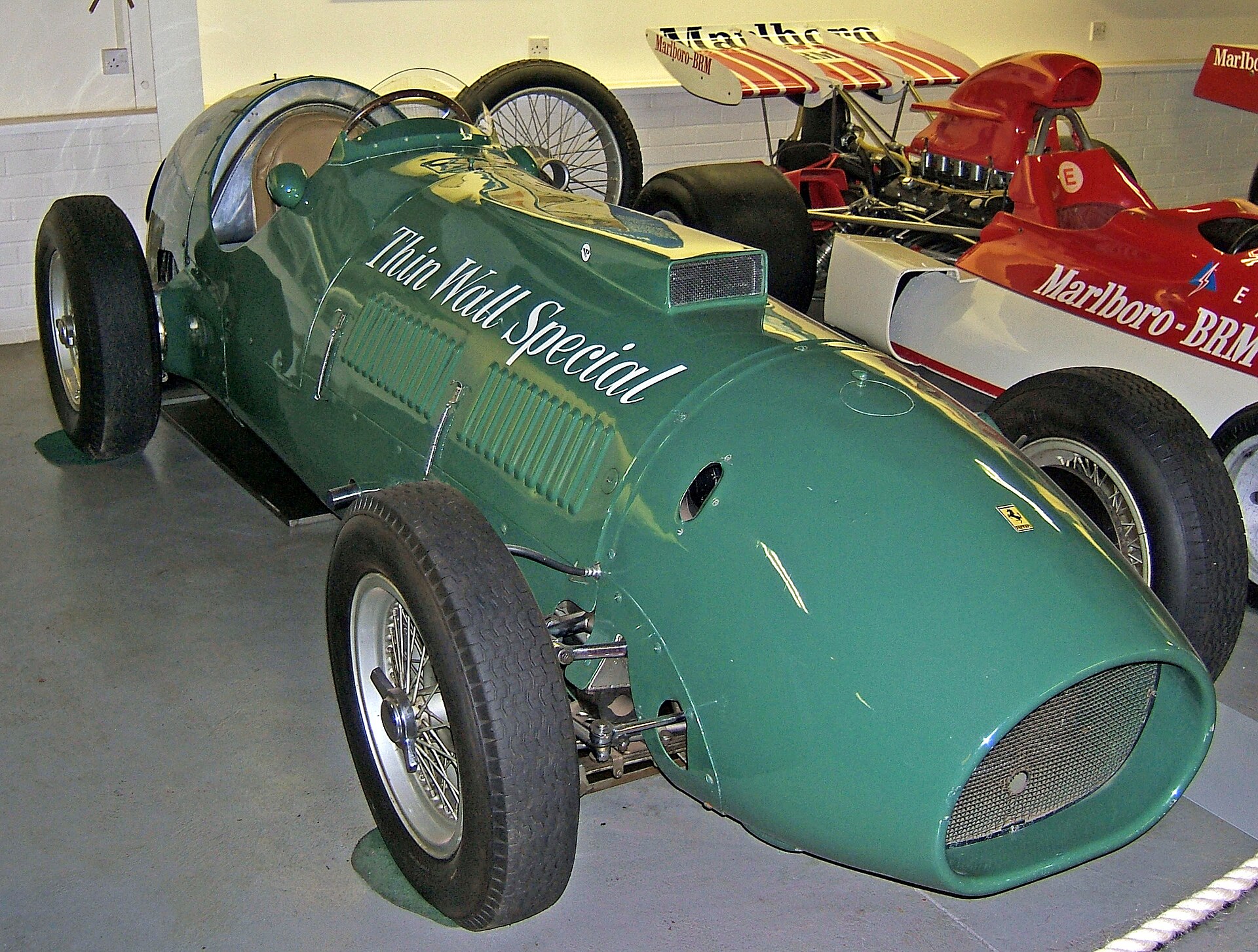
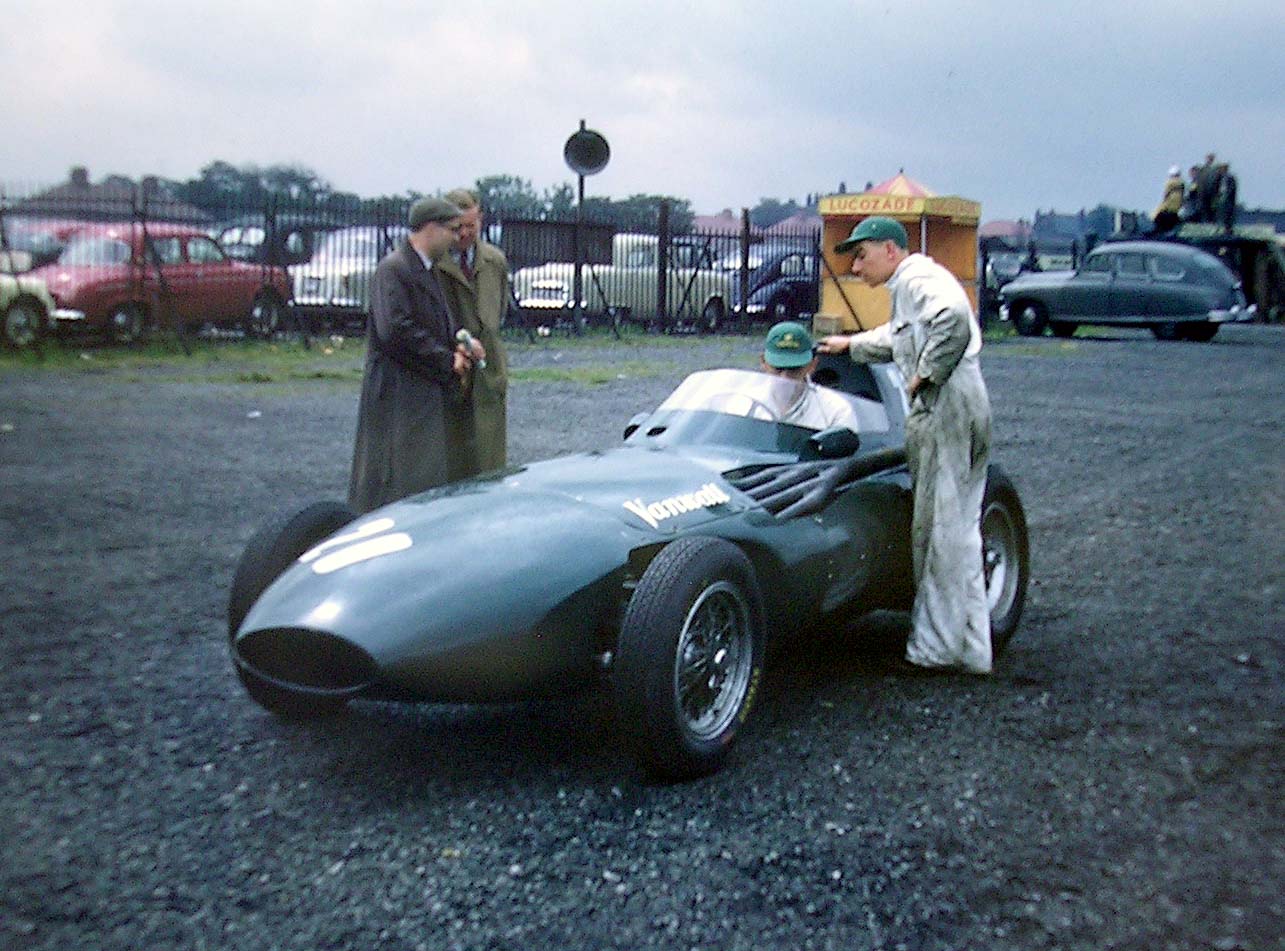
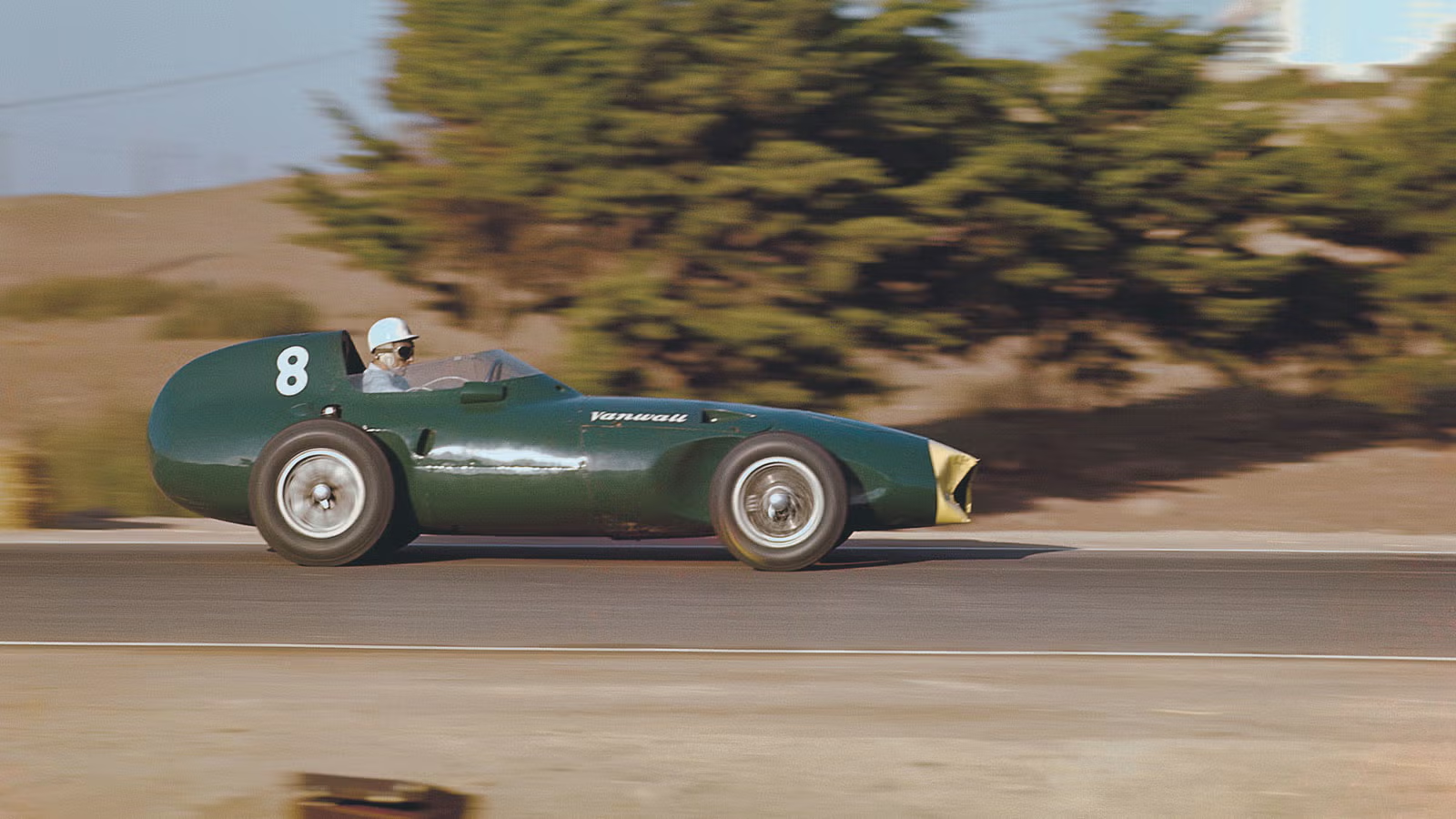
On 20 July 1957, the air above Aintree vibrated to the percussive bark of a British Racing Green silhouette as Stirling Moss hurled chassis VW1 across the finishing line, shattering half a century of Continental hegemony in Grand Prix racing. That afternoon, the Vanwall GP ceased to be industrialist Tony Vandervell’s millionaire obsession and became the vanguard of a motorsport revolution. Born inside the Vandervell Products factory in Acton, London, the lineage was conceived to meet the 1954 Formula 1 regulations calling for 2.5-litre (152.5 cu in) naturally aspirated or 750 cc (45.7 cu in) supercharged engines. While Vanwall boasted no formal predecessor of its own manufacture, its DNA descended directly from the four modified Ferrari 125 and 375 F1 chassis campaigned by Vandervell between 1949 and 1953 as the “Thinwall Specials”. From those scarlet laboratory mules, Acton’s engineers extrapolated a rear De Dion tube layout, a transverse rear transaxle, and pioneering Goodyear disc brakes. Across its eight-year career, the Vanwall GP fought three distinct generations of rivals: initially facing the invincible Teutonic might of the Mercedes-Benz W196 (1954–1955); clashing at its zenith (1956–1958) with its Italian arch-enemies, the Maserati 250F, the Lancia-Ferrari D50, and the Ferrari 246 Dino; and finally confronting the rear-engined British insurgency led by the Cooper T51/T53 and the Lotus 18 (1959–1961).
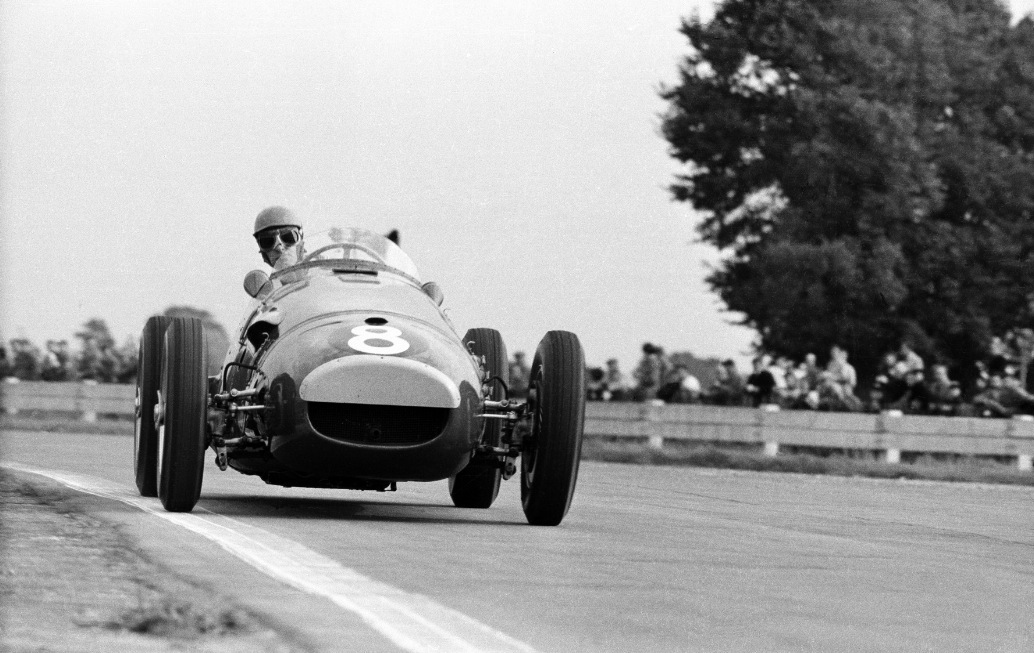
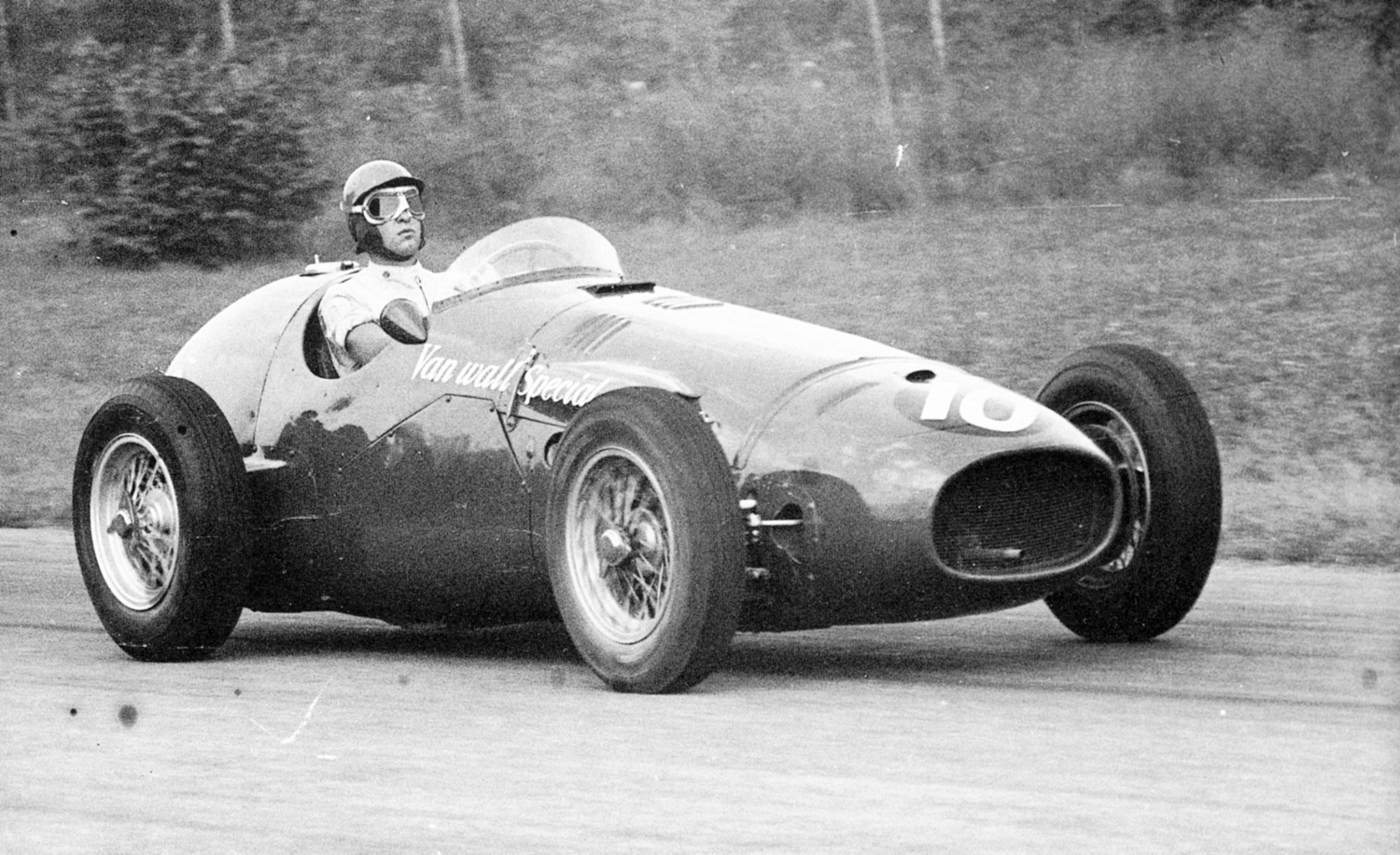
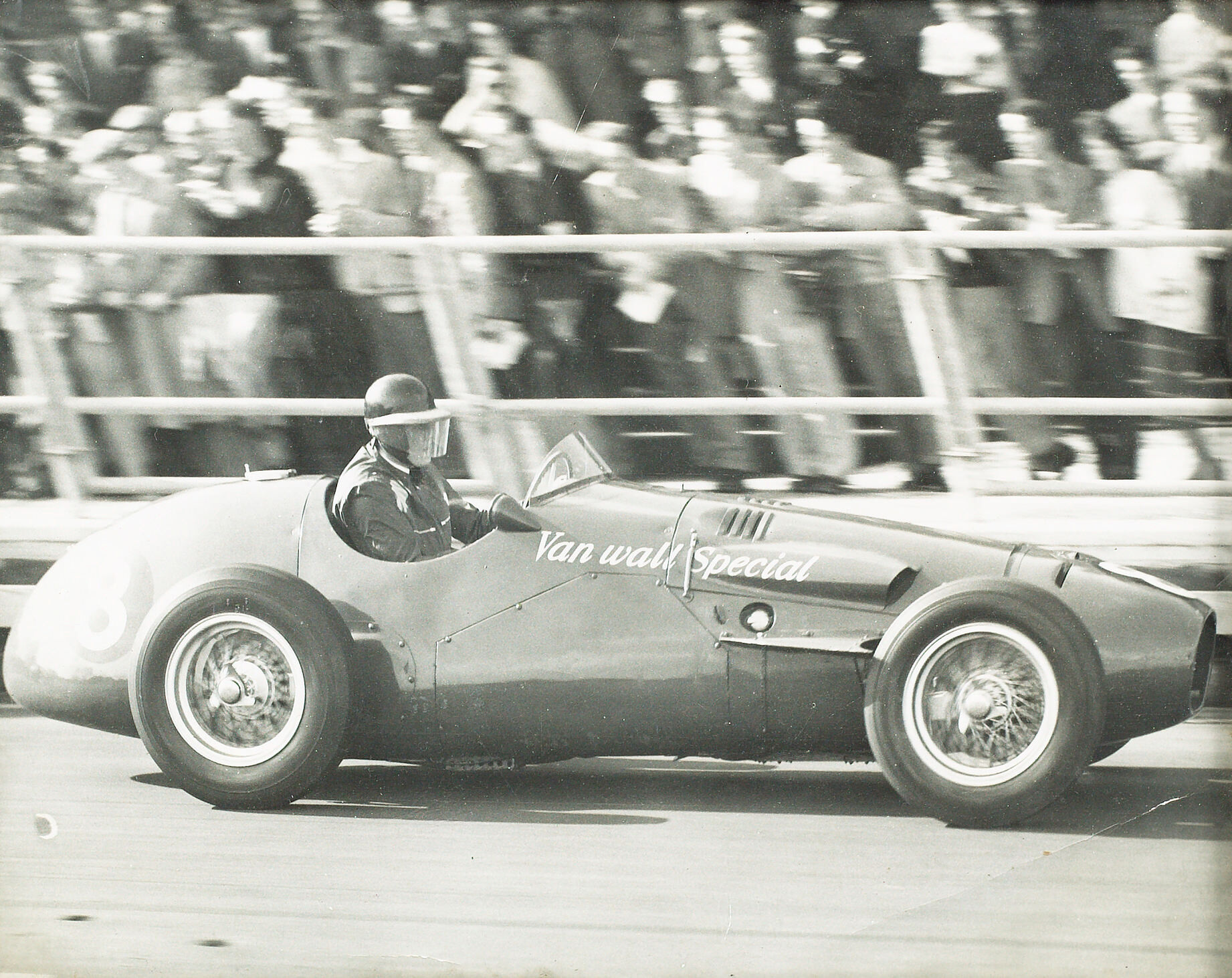
Beneath the sculpted aluminium bonnet of every Vanwall GP variant beat the same magnificent heart: a double-overhead-camshaft (DOHC) inline-four engineered by Leo Kuzmicki in collaboration with Norton. Kuzmicki effectively married the single-cylinder geometry of four 500 cc (30.5 cu in) Norton Manx racing motorcycle engines onto an aluminium crankcase patterned after the Rolls-Royce B40 architecture and cast by High Duty Alloys, housing wet Sheepbridge Stokes cast-iron cylinder liners sealed at the head via Cooper’s Mechanical Joint rings, and topped by a bronze-and-aluminium cylinder head featuring exposed hairpin valve springs for direct air cooling. The bloodline debuted in 1954 as the Owen Maddock-designed, Cooper-built ladder-frame “Vanwall Special”, featuring a transverse front leaf spring and an exposed nose radiator. Breathing through four single-choke Amal motorcycle carburettors, it appeared at the 1954 British Grand Prix with a 1.988-litre (121.3 cu in) unit producing 210 hp coupled to a 4-speed or 5-speed manual transaxle, before growing at Monza to a 2.287-litre (139.6 cu in) 235 hp specification, and reaching the full 2.490-litre (151.9 cu in) 250 hp capacity at Pedralbes. For 1955, the Cooper-built ladder-frame series expanded into three consecutively numbered cars—VW1, VW2, and VW3—trading carburettors for Bosch mechanical fuel injection (secured via Vandervell’s bearing supply relationship with Mercedes-Benz) to yield 265 hp at 7,000 rpm. Yet despite blistering straight-line urge, the ladder chassis writhed under load.
Salvation arrived late in 1955 when Vandervell commissioned Colin Chapman and aviation aerodynamicist Frank Costin to re-engineer the car from the tyres up. Built from the outset in early 1956 around the new architecture, chassis VW4 led the charge before VW1, VW2, and VW3 were progressively rebuilt to the same Chapman/Costin specification, retaining their existing identity plates to circumvent European customs bureaucracy and carnet paperwork.
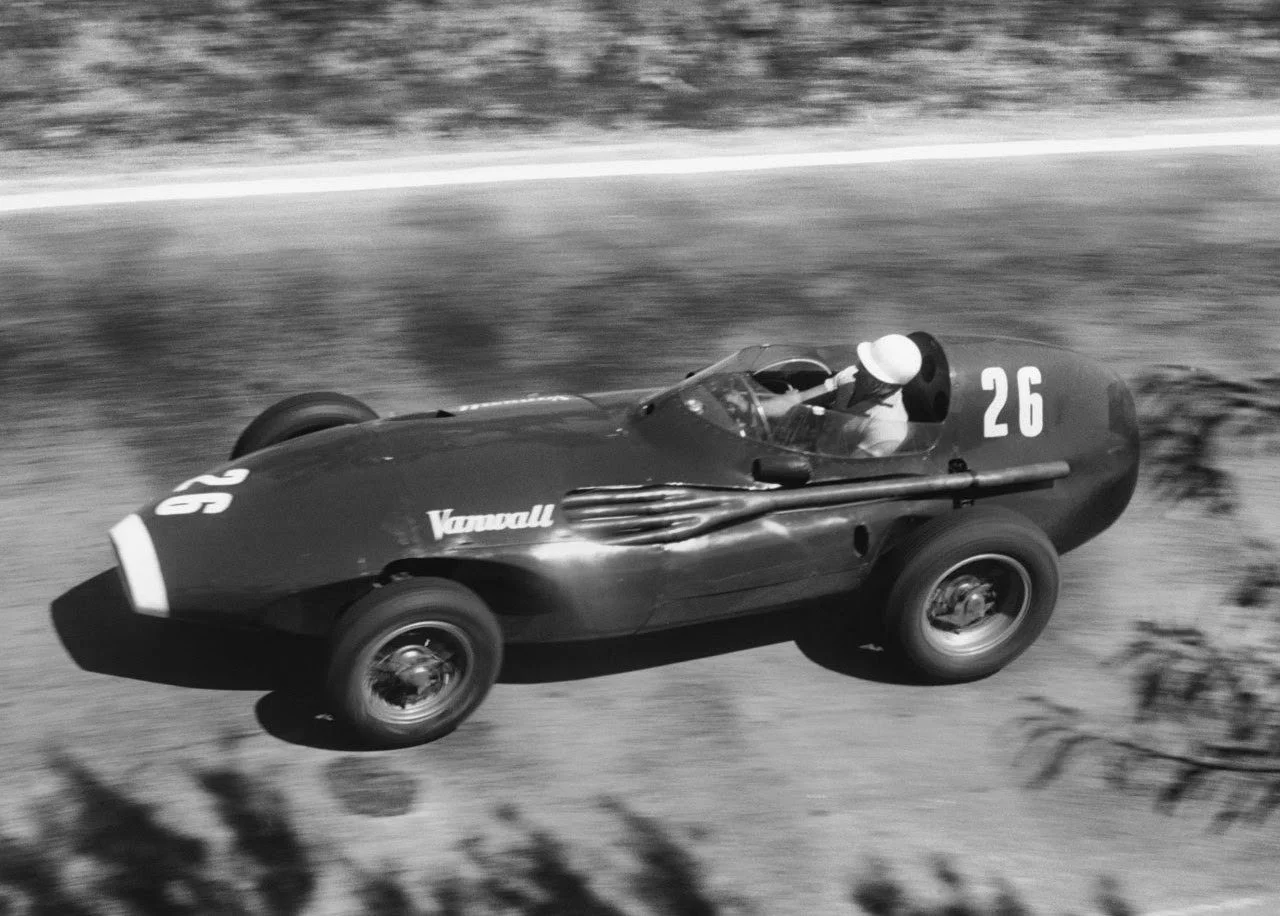
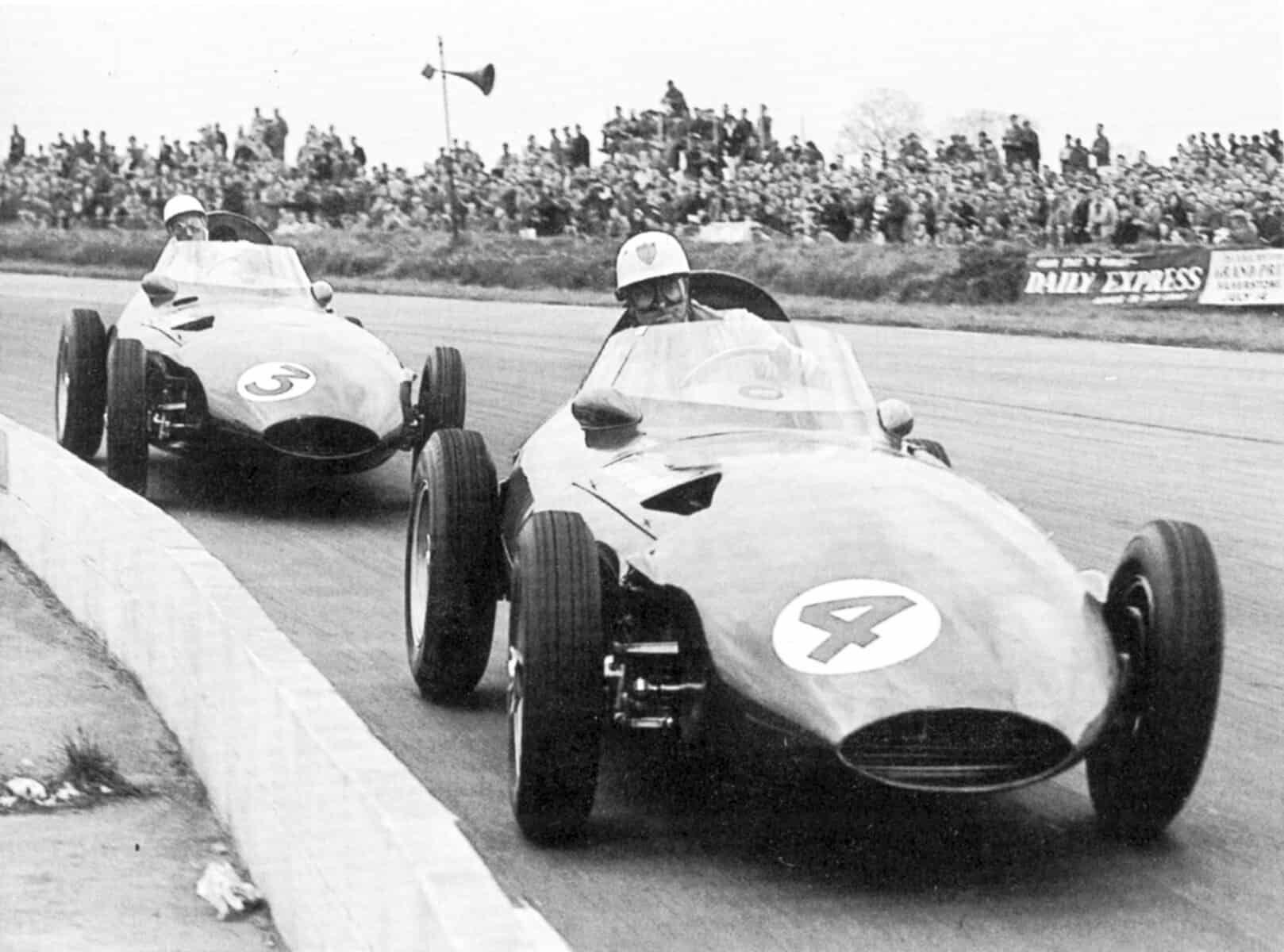
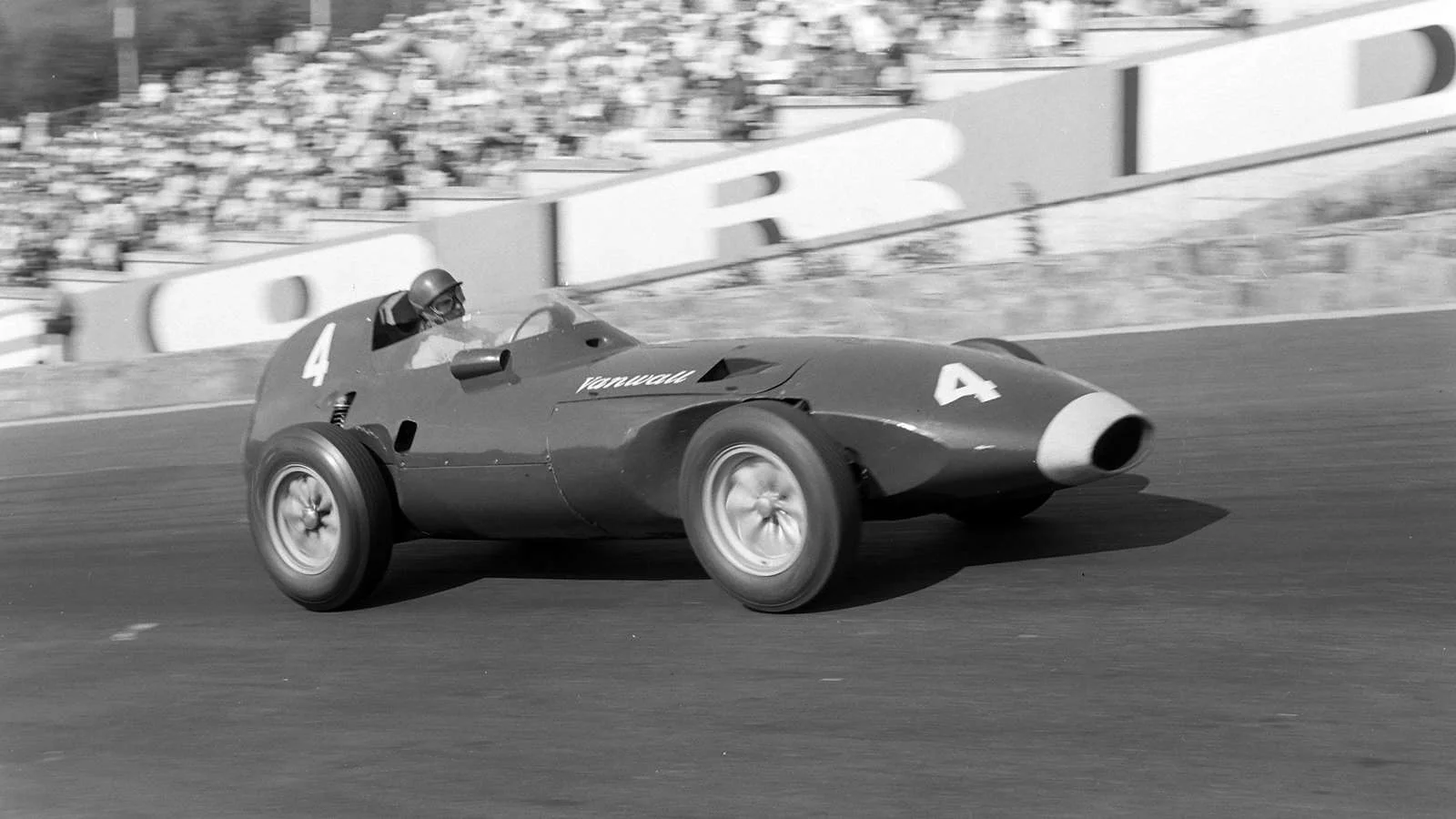
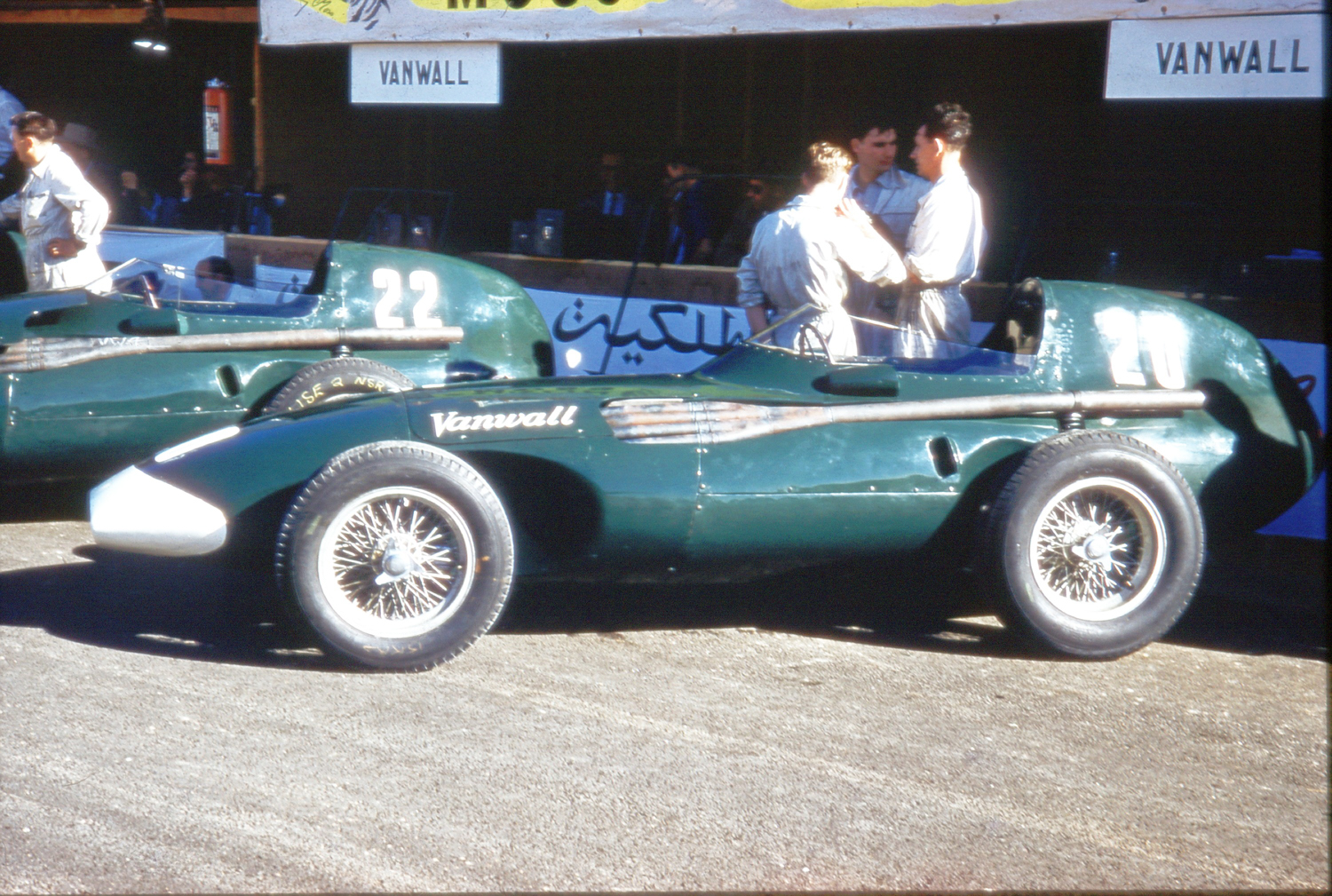
Chapman’s multi-tubular Reynolds 531 steel spaceframe tipped the scales at a featherweight 39.5 kg (87 lbs). At the front, unequal-length wishbones were sprung by a high-mounted transverse semi-elliptic leaf spring damped by Fichtel & Sachs telescopic units, while the rear De Dion tube was located laterally by a central Watt’s linkage and longitudinally by twin radius rods, suspended via another high-mounted transverse leaf spring. Perched high in the sparse cockpit behind a wraparound Perspex windscreen, the driver looked out over Costin’s long, streamlined aluminium bodywork, which tucked the radiators behind a diminutive oval intake and tapered into a signature high-waisted teardrop tail. Fed a volatile brew of methanol, benzol, and nitromethane, the injected 2.5-litre (151.9 cu in) four-cylinder screamed to 7,400 rpm, unleashing 285 hp.
Between 1957 and 1958, six further chassis—VW5, VW6, VW7, VW8, VW9, and VW10—joined the armada with stiffer front anti-roll bars and refined transaxle cooling. For the high-speed sweeps of Reims in July 1957, Costin clothed chassis VW6 as the enclosed-wheel ‘Reims Streamliner’. Tested in practice by Stuart Lewis-Evans and British-born Roy Salvadori, the enveloping bodywork generated alarming front-end lift and vague steering above 270 km/h (168 mph); after Salvadori raced it at Reims and retired on lap 20 with a broken clutch shaft, VW6 was reconverted to open-wheel configuration.
Even when the FIA mandated 100/130-octane AvGas aviation petrol for 1958—paring output on the active fleet (VW4, VW5, VW6, VW7, VW9, and the new 265 hp VW10) down from 285 hp to 265 hp—Vanwall compensated with cast magnesium “wobbly-web” rear wheels and sleek cockpit canopies. In just four full Championship seasons, Vanwall amassed nine Championship Grand Prix victories, seven pole positions, and six fastest laps. After Moss won the non-championship 1956 International Trophy at Silverstone in VW2, his shared triumph at Aintree in 1957—taking over Tony Brooks’s VW1 after retiring his pole-sitting VW5—unlocked the floodgates, followed by victories in VW5 at Pescara and Monza. In 1958, Moss and Brooks conquered Zandvoort, Spa, Boavista, the Nürburgring, Monza and Ain-Diab, clinching the inaugural Formula 1 Constructors’ Championship. Tragically, the triumph in Morocco was overshadowed when the engine in Lewis-Evans’s VW10 seized, resulting in a fatal crash that broke Vandervell’s spirit.
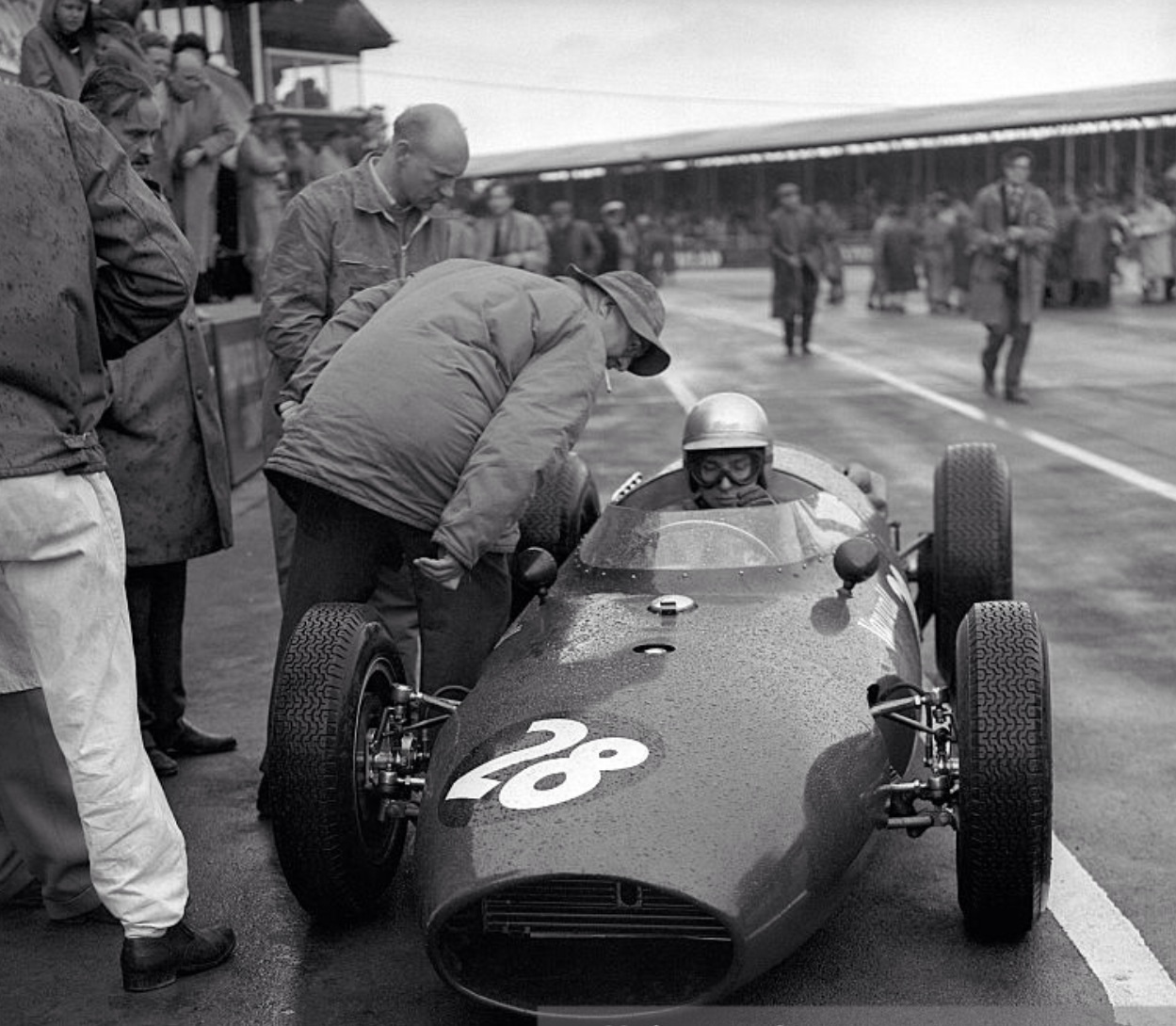
A shattered Vandervell fought a rearguard action against the rear-engined tide. For 1959, components from veteran chassis were lowered by over 10 cm (4 in) and lightened by 35 kg (77 lbs) to create the 270 hp ’Lowline’ officially designated VW11 (often referred to as VW5/59), followed in 1960 by the final front-engined car, the 270 hp coil-sprung VW12 “Lowline”, featuring a prominent bonnet scoop and a lightweight 5-speed Colotti gearbox. Both proved obsolete against mid-engined rivals, convincing Acton to graft its 270 hp engine and Colotti transaxle into a lengthened Lotus 18 spaceframe—the 1960 rear-engined prototype VW12 ‘Lotus 18 Mule’. Refusing to build 1.5-litre (91.5 cu in) “lawnmower engines” for 1961, Vandervell instead entered the Intercontinental Formula with the rear-engined VW14 Mk I and revised Mk II, powered by a canted 2.605-litre (159 cu in) unit delivering 290 hp through a 5-speed Colotti gearbox. Plagued by excess weight and chronic understeer despite John Surtees wrestling it to fifth in a drenched 1961 Silverstone International Trophy, the VW14 marked the end of the line when Vandervell shuttered the racing department later that year. Although no direct Vanwall successor followed, its technical legacy lived on directly through Team Lotus: Chapman and Costin channeled every lesson from the Vanwall spaceframe and teardrop silhouette straight into the Lotus 12 and the Lotus 16 ‘Mini-Vanwall’, laying the cornerstone of Britain’s Motorsport Valley.
Portal
Model line
Model generation
Predecessor
Sucessor
Brand
Produced from
Vehicle category
Portal
Model line
Model generation
Predecessor
Sucessor
Model Overview
On 20 July 1957, the air above Aintree vibrated to the percussive bark of a British Racing Green silhouette as Stirling Moss hurled chassis VW1 across the finishing line, shattering half a century of Continental hegemony in Grand Prix racing. That afternoon, the Vanwall GP ceased to be industrialist Tony Vandervell’s millionaire obsession and became the vanguard of a motorsport revolution. Born inside the Vandervell Products factory in Acton, London, the lineage was conceived to meet the 1954 Formula 1 regulations calling for 2.5-litre (152.5 cu in) naturally aspirated or 750 cc (45.7 cu in) supercharged engines. While Vanwall boasted no formal predecessor of its own manufacture, its DNA descended directly from the four modified Ferrari 125 and 375 F1 chassis campaigned by Vandervell between 1949 and 1953 as the “Thinwall Specials”. From those scarlet laboratory mules, Acton’s engineers extrapolated a rear De Dion tube layout, a transverse rear transaxle, and pioneering Goodyear disc brakes. Across its eight-year career, the Vanwall GP fought three distinct generations of rivals: initially facing the invincible Teutonic might of the Mercedes-Benz W196 (1954–1955); clashing at its zenith (1956–1958) with its Italian arch-enemies, the Maserati 250F, the Lancia-Ferrari D50, and the Ferrari 246 Dino; and finally confronting the rear-engined British insurgency led by the Cooper T51/T53 and the Lotus 18 (1959–1961).
Beneath the sculpted aluminium bonnet of every Vanwall GP variant beat the same magnificent heart: a double-overhead-camshaft (DOHC) inline-four engineered by Leo Kuzmicki in collaboration with Norton. Kuzmicki effectively married the single-cylinder geometry of four 500 cc (30.5 cu in) Norton Manx racing motorcycle engines onto an aluminium crankcase patterned after the Rolls-Royce B40 architecture and cast by High Duty Alloys, housing wet Sheepbridge Stokes cast-iron cylinder liners sealed at the head via Cooper’s Mechanical Joint rings, and topped by a bronze-and-aluminium cylinder head featuring exposed hairpin valve springs for direct air cooling. The bloodline debuted in 1954 as the Owen Maddock-designed, Cooper-built ladder-frame “Vanwall Special”, featuring a transverse front leaf spring and an exposed nose radiator. Breathing through four single-choke Amal motorcycle carburettors, it appeared at the 1954 British Grand Prix with a 1.988-litre (121.3 cu in) unit producing 210 hp coupled to a 4-speed or 5-speed manual transaxle, before growing at Monza to a 2.287-litre (139.6 cu in) 235 hp specification, and reaching the full 2.490-litre (151.9 cu in) 250 hp capacity at Pedralbes. For 1955, the Cooper-built ladder-frame series expanded into three consecutively numbered cars—VW1, VW2, and VW3—trading carburettors for Bosch mechanical fuel injection (secured via Vandervell’s bearing supply relationship with Mercedes-Benz) to yield 265 hp at 7,000 rpm. Yet despite blistering straight-line urge, the ladder chassis writhed under load.
Salvation arrived late in 1955 when Vandervell commissioned Colin Chapman and aviation aerodynamicist Frank Costin to re-engineer the car from the tyres up. Built from the outset in early 1956 around the new architecture, chassis VW4 led the charge before VW1, VW2, and VW3 were progressively rebuilt to the same Chapman/Costin specification, retaining their existing identity plates to circumvent European customs bureaucracy and carnet paperwork.
Chapman’s multi-tubular Reynolds 531 steel spaceframe tipped the scales at a featherweight 39.5 kg (87 lbs). At the front, unequal-length wishbones were sprung by a high-mounted transverse semi-elliptic leaf spring damped by Fichtel & Sachs telescopic units, while the rear De Dion tube was located laterally by a central Watt’s linkage and longitudinally by twin radius rods, suspended via another high-mounted transverse leaf spring. Perched high in the sparse cockpit behind a wraparound Perspex windscreen, the driver looked out over Costin’s long, streamlined aluminium bodywork, which tucked the radiators behind a diminutive oval intake and tapered into a signature high-waisted teardrop tail. Fed a volatile brew of methanol, benzol, and nitromethane, the injected 2.5-litre (151.9 cu in) four-cylinder screamed to 7,400 rpm, unleashing 285 hp.
Between 1957 and 1958, six further chassis—VW5, VW6, VW7, VW8, VW9, and VW10—joined the armada with stiffer front anti-roll bars and refined transaxle cooling. For the high-speed sweeps of Reims in July 1957, Costin clothed chassis VW6 as the enclosed-wheel ‘Reims Streamliner’. Tested in practice by Stuart Lewis-Evans and British-born Roy Salvadori, the enveloping bodywork generated alarming front-end lift and vague steering above 270 km/h (168 mph); after Salvadori raced it at Reims and retired on lap 20 with a broken clutch shaft, VW6 was reconverted to open-wheel configuration.
Even when the FIA mandated 100/130-octane AvGas aviation petrol for 1958—paring output on the active fleet (VW4, VW5, VW6, VW7, VW9, and the new 265 hp VW10) down from 285 hp to 265 hp—Vanwall compensated with cast magnesium “wobbly-web” rear wheels and sleek cockpit canopies. In just four full Championship seasons, Vanwall amassed nine Championship Grand Prix victories, seven pole positions, and six fastest laps. After Moss won the non-championship 1956 International Trophy at Silverstone in VW2, his shared triumph at Aintree in 1957—taking over Tony Brooks’s VW1 after retiring his pole-sitting VW5—unlocked the floodgates, followed by victories in VW5 at Pescara and Monza. In 1958, Moss and Brooks conquered Zandvoort, Spa, Boavista, the Nürburgring, Monza and Ain-Diab, clinching the inaugural Formula 1 Constructors’ Championship. Tragically, the triumph in Morocco was overshadowed when the engine in Lewis-Evans’s VW10 seized, resulting in a fatal crash that broke Vandervell’s spirit.
A shattered Vandervell fought a rearguard action against the rear-engined tide. For 1959, components from veteran chassis were lowered by over 10 cm (4 in) and lightened by 35 kg (77 lbs) to create the 270 hp ’Lowline’ officially designated VW11 (often referred to as VW5/59), followed in 1960 by the final front-engined car, the 270 hp coil-sprung VW12 “Lowline”, featuring a prominent bonnet scoop and a lightweight 5-speed Colotti gearbox. Both proved obsolete against mid-engined rivals, convincing Acton to graft its 270 hp engine and Colotti transaxle into a lengthened Lotus 18 spaceframe—the 1960 rear-engined prototype VW12 ‘Lotus 18 Mule’. Refusing to build 1.5-litre (91.5 cu in) “lawnmower engines” for 1961, Vandervell instead entered the Intercontinental Formula with the rear-engined VW14 Mk I and revised Mk II, powered by a canted 2.605-litre (159 cu in) unit delivering 290 hp through a 5-speed Colotti gearbox. Plagued by excess weight and chronic understeer despite John Surtees wrestling it to fifth in a drenched 1961 Silverstone International Trophy, the VW14 marked the end of the line when Vandervell shuttered the racing department later that year. Although no direct Vanwall successor followed, its technical legacy lived on directly through Team Lotus: Chapman and Costin channeled every lesson from the Vanwall spaceframe and teardrop silhouette straight into the Lotus 12 and the Lotus 16 ‘Mini-Vanwall’, laying the cornerstone of Britain’s Motorsport Valley.
Submodels