

Alfa Romeo Tipo 33
Brand
Produced from
Vehicle category
Portal
Model line
Model generation
Predecessor
Sucessor
About this model
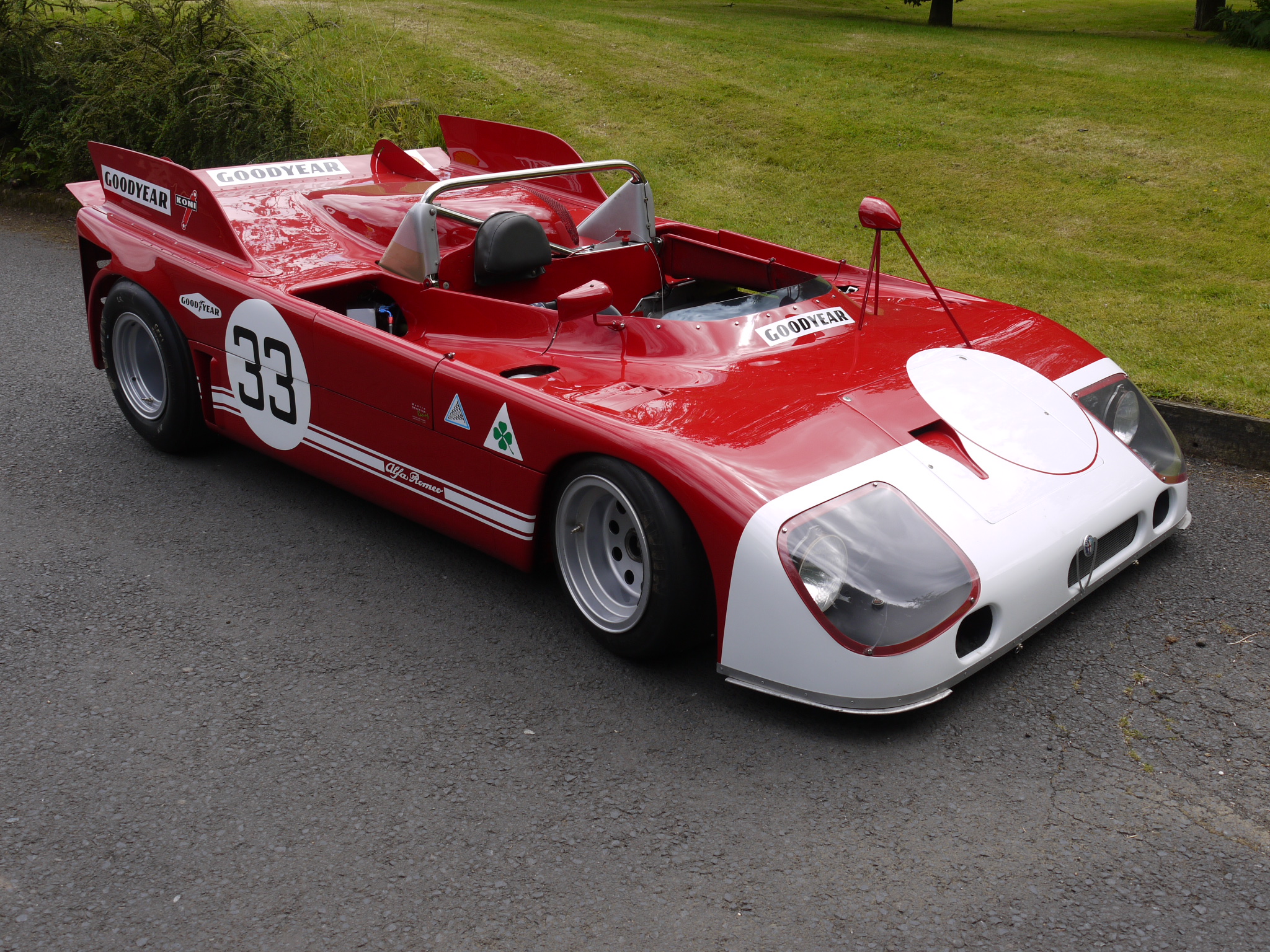
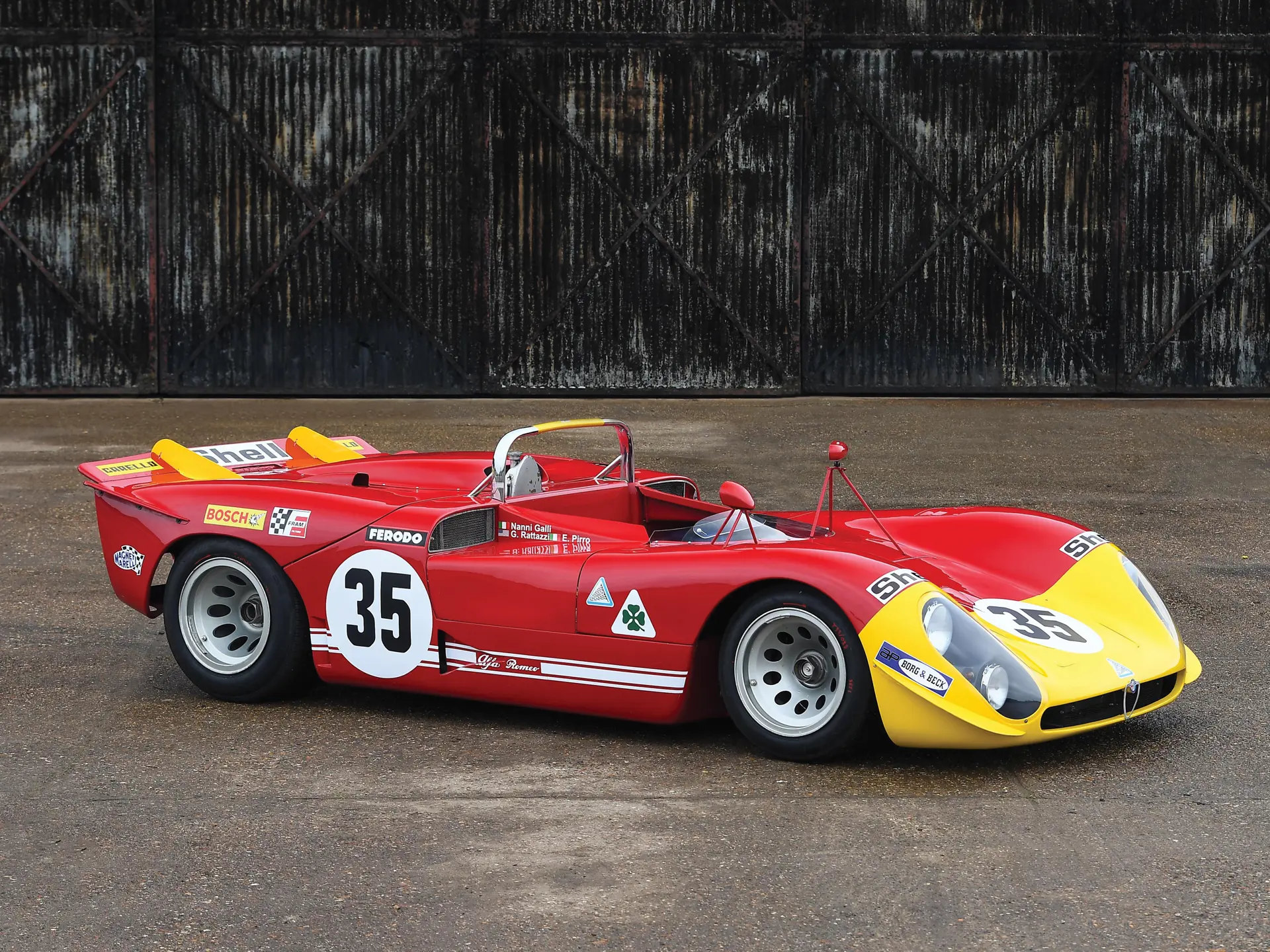
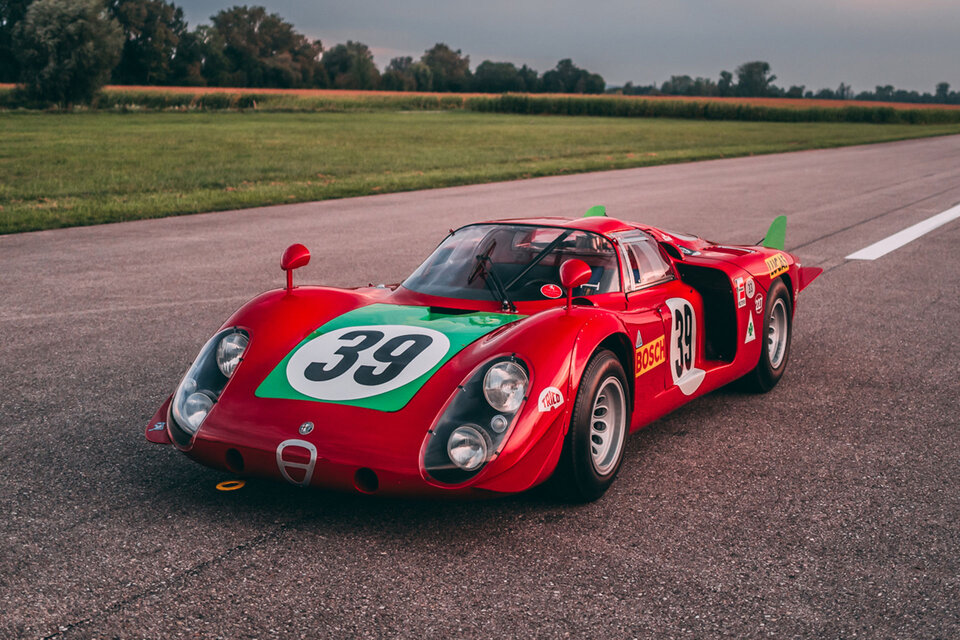
The legend of Alfa Romeo is inextricably linked to the scent of castor oil and the high-pitched scream of racing engines, but by the mid-1960s, the Milanese marque’s glorious pre-war competition history was fading into memory, replaced by the commercial success of the road-going Giulietta and Giulia. While the TZ1 and TZ2 had upheld Alfa’s honour in the GT classes, the boardroom yearned for outright victory in the World Sportscar Championship, an arena then dominated by the likes of Porsche, Ferrari, and Ford. The ambitious task of returning Alfa Romeo to the pinnacle of motorsport fell to Autodelta, the newly established competition department led by the former Ferrari engineer, the mercurial Carlo Chiti. The result of this mandate was not merely a single race car, but a defining dynasty that spanned a decade of technical revolution: the Tipo 33. This nomenclature covers an astonishingly diverse family of vehicles, ranging from fragile 2.0-litre prototypes and Franco Scaglione’s breathtaking Stradale road car to the brutish, turbocharged flat-12 monsters that eventually obliterated all opposition on the world’s fastest circuits. In an era defined by rapid pace of development, where iconic tracks like Le Mans, Spa, and the Targa Florio demanded entirely different logistical and technical solutions, the Tipo 33 line evolved to answer every challenge, creating an unassailable legacy of speed, beauty, and eventual mechanical domination.
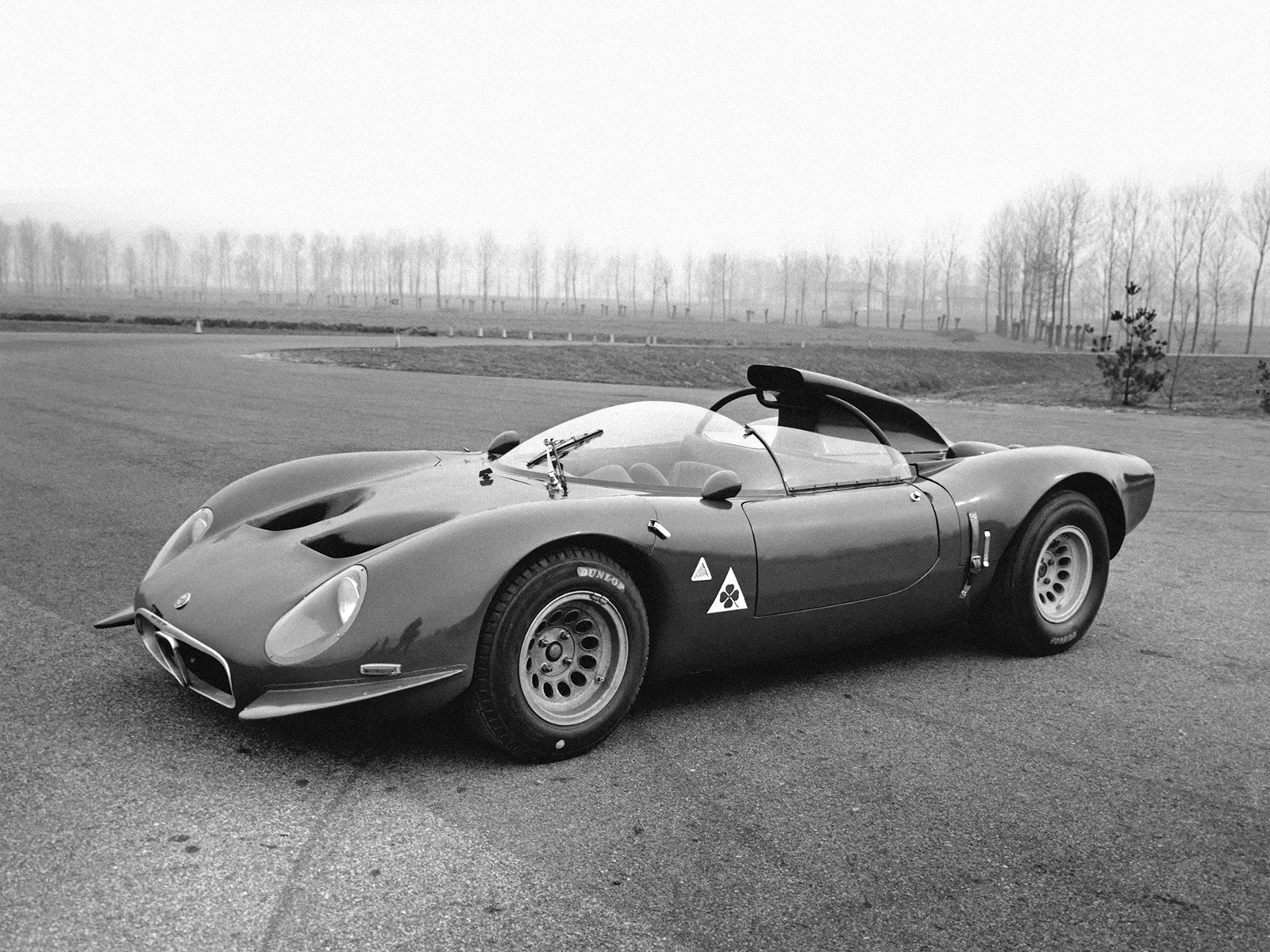
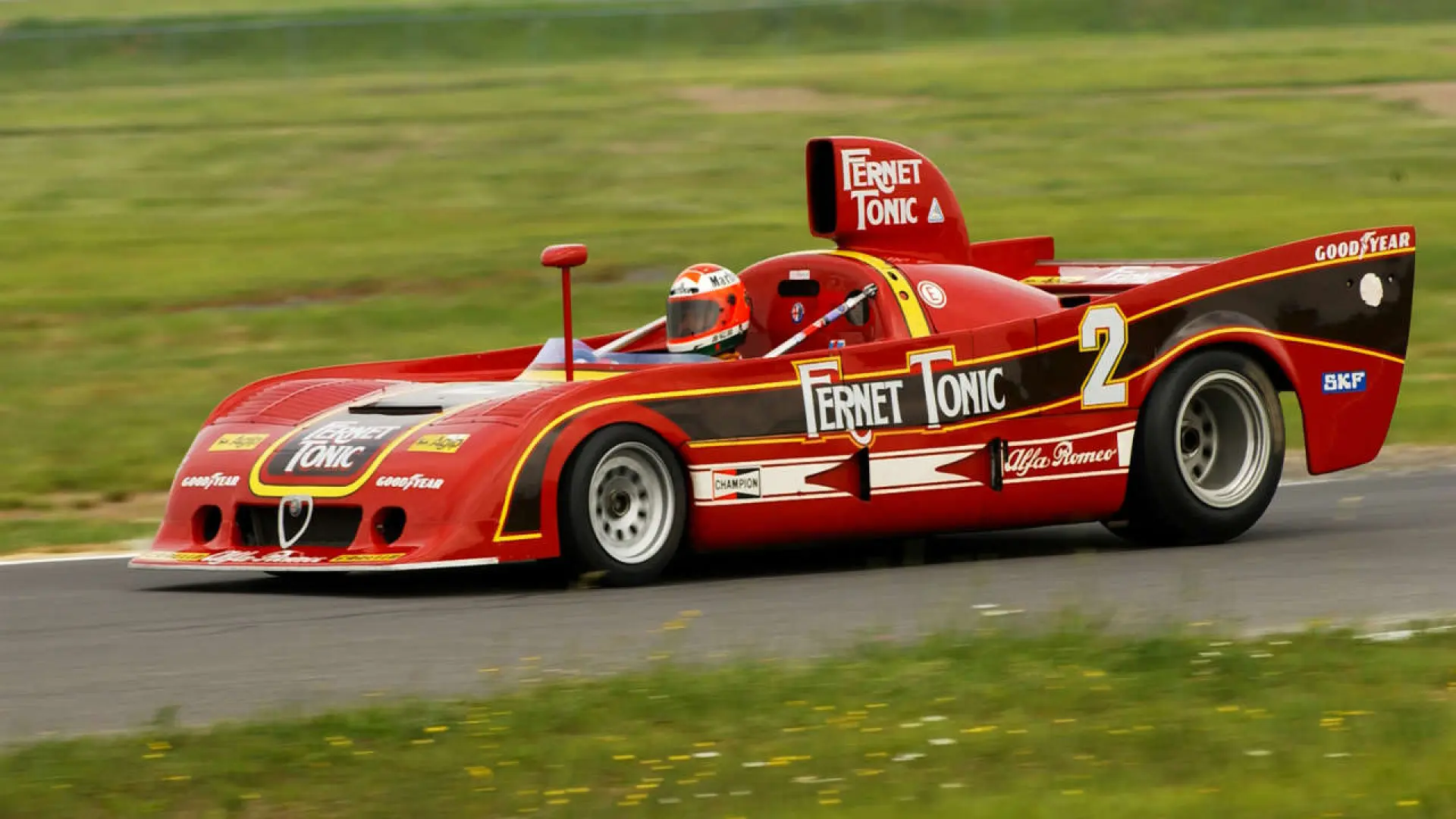
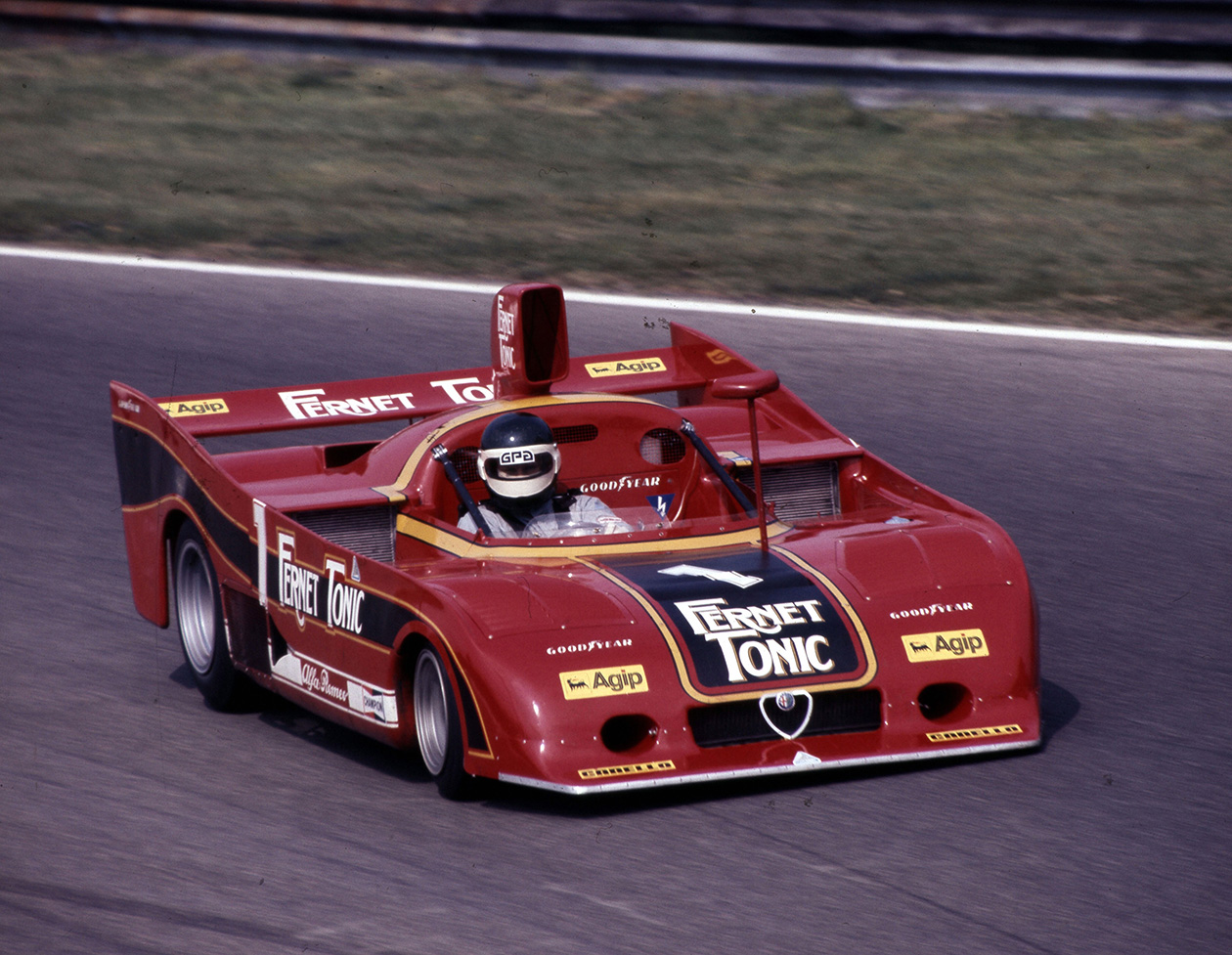
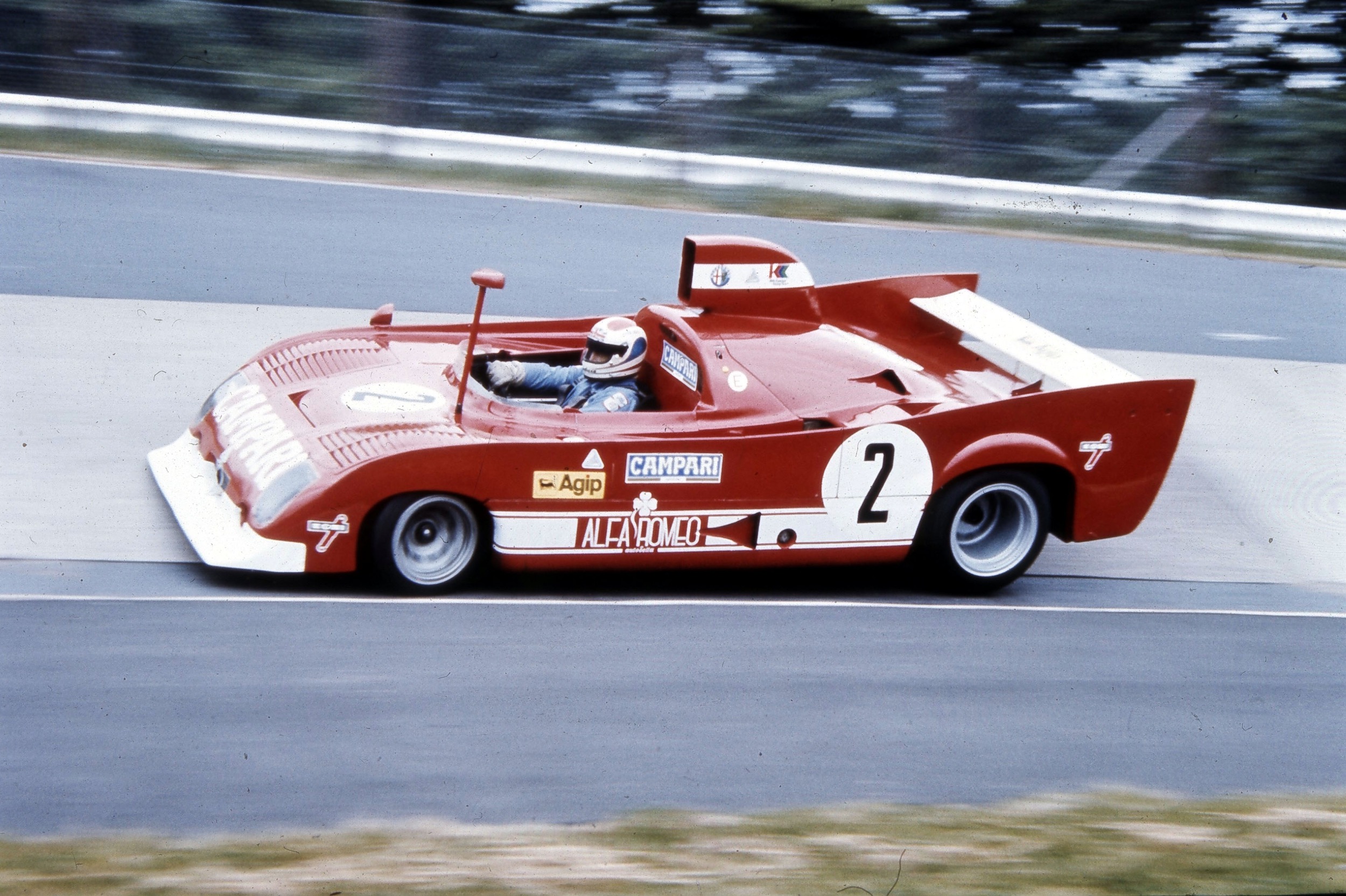
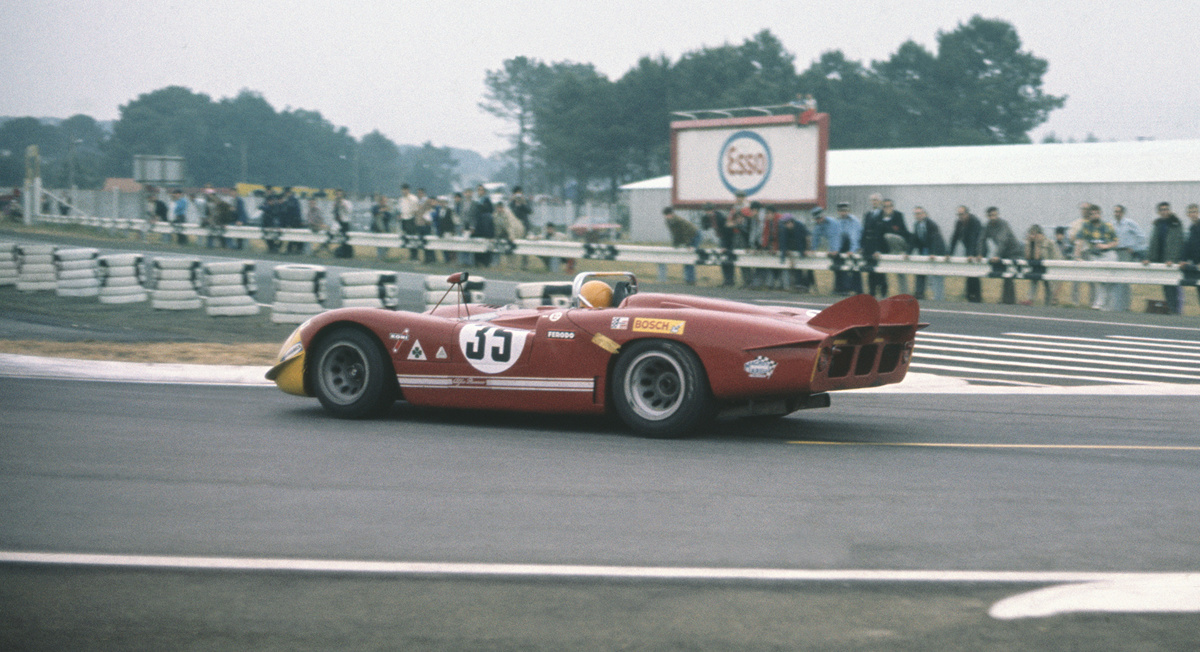
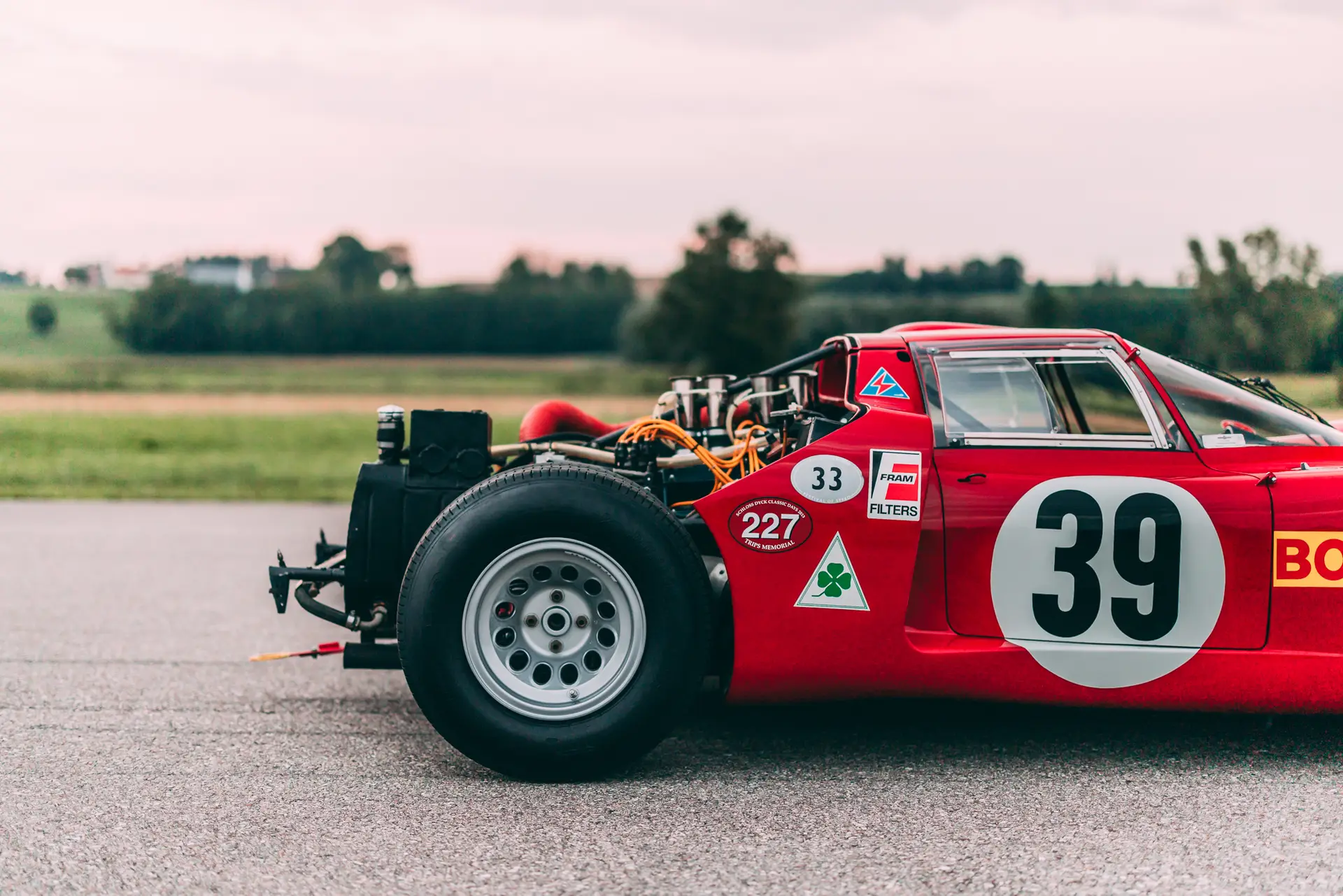
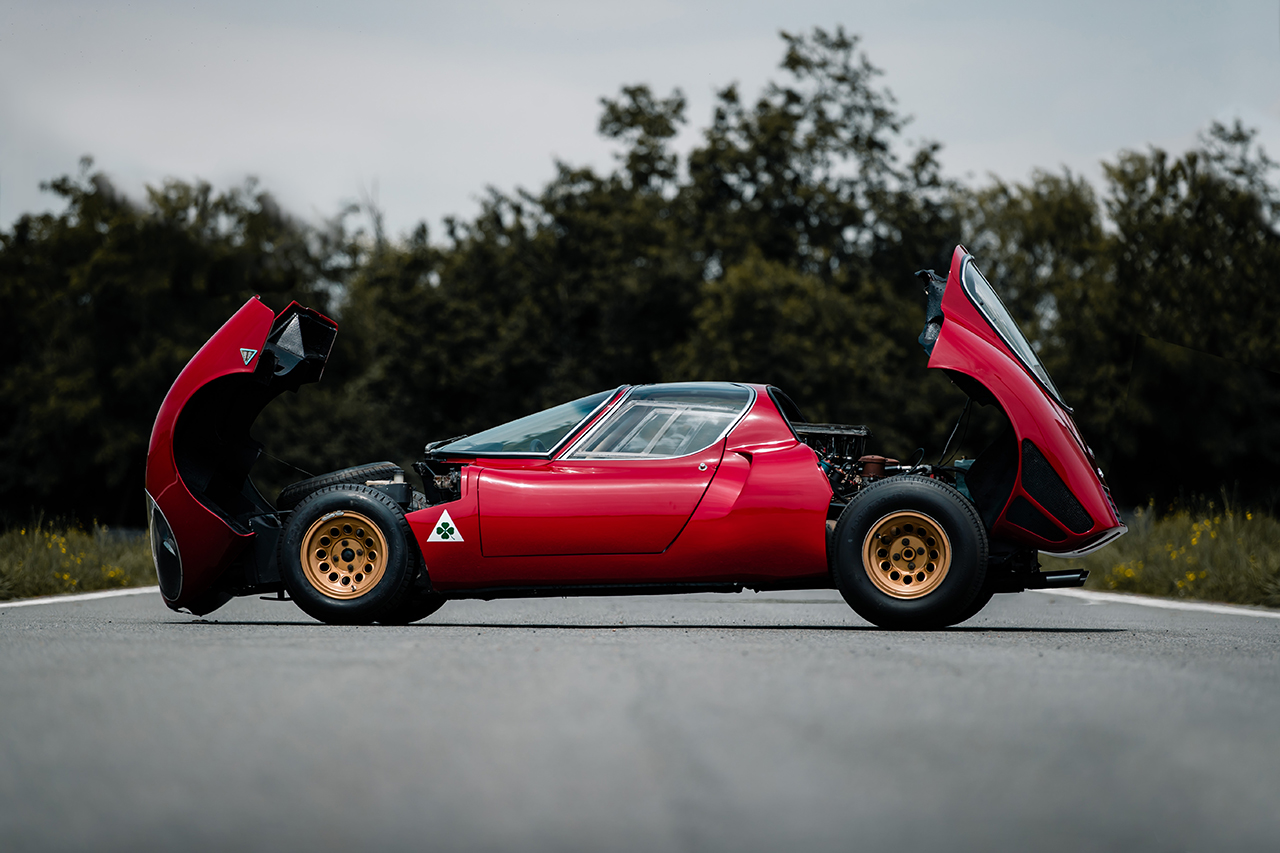
To trace the technical evolution of the Tipo 33 is to witness the development of the modern racing prototype. The story famously began in 1967 with the Tipo 33/2, colloquially known as the ‘Periscopica’ due to its distinctive high-mounted cockpit air intake. This early submodel established the mechanical soul of the lineage: a glorious, high-revving 90-degree V8 engine. Designed by Chiti himself, this all-alloy power unit featured quad camshafts, SPICA fuel injection, and twin-spark ignition, initially producing around 270 brake horsepower from just 2,000cc. It was slung amidships in a radical chassis consisting of three large-diameter aluminium tubes arranged in an ‘H’ shape, which simultaneously served as the primary structure and the fuel tanks—an ingenious, if terrifyingly vulnerable, design. By 1968, the V8 was punching out nearer 320 horsepower, draped in sleek, aerodynamic ‘Daytona’ coupe and spider bodywork crafted from lightweight fiberglass. However, as the championship battle shifted to a 3.0-litre limit, the T33 morphed into the formidable 33/3 of 1969. The engine was enlarged to 2,998cc, producing a robust 400 horsepower, and mounted in a new, stiffer aluminium sheet monocoque chassis that eventually incorporated titanium elements to combat weight. The final, most devastatingly potent iteration arrived in 1973 with the 33/TT/12. Chiti abandoned the V8 for a terrifyingly powerful, 3.0-liter flat-12 engine, capable of revving past 12,000 RPM and producing over 500 horsepower. This engineering masterpiece was installed in a tubular steel spaceframe (the Telaio Tubolare of its name) for greater repairability and rigidity, eventually culminating in the 33/SC/12’s boxed monocoque and, finally, the terrifying, 640-horsepower turbocharged version in 1977, which represented the absolute crescendo of naturally aspirated and forced-induction engineering of its era.
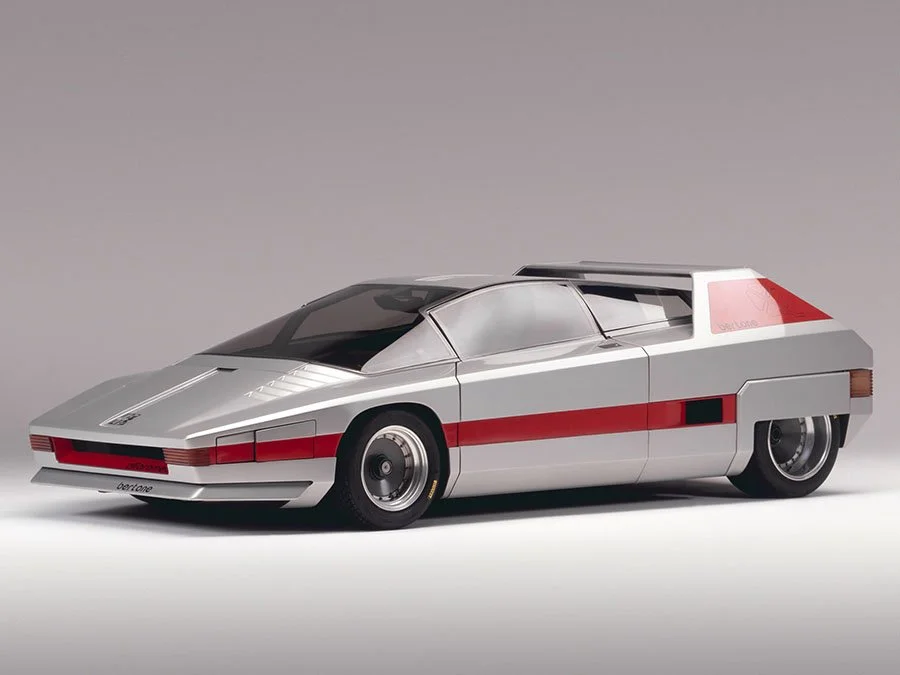
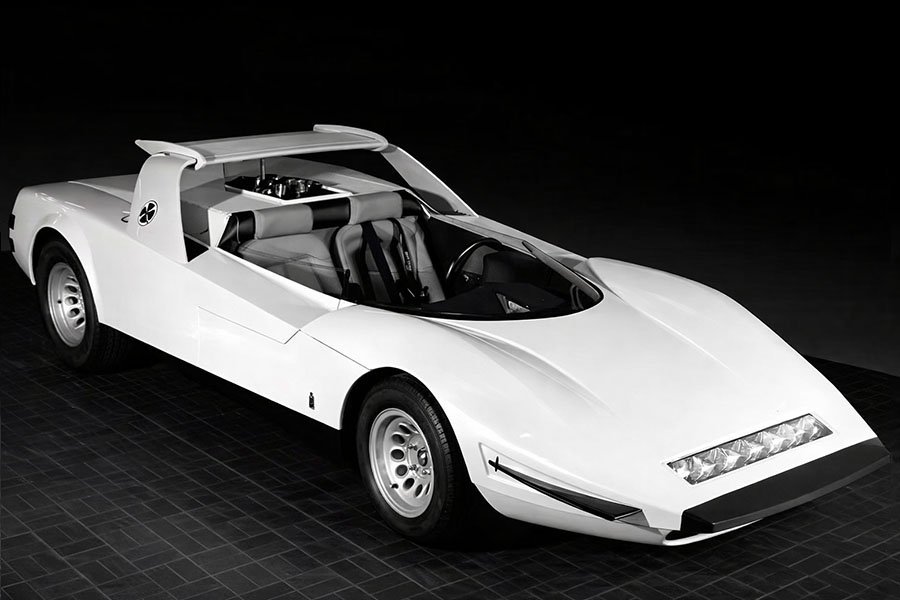
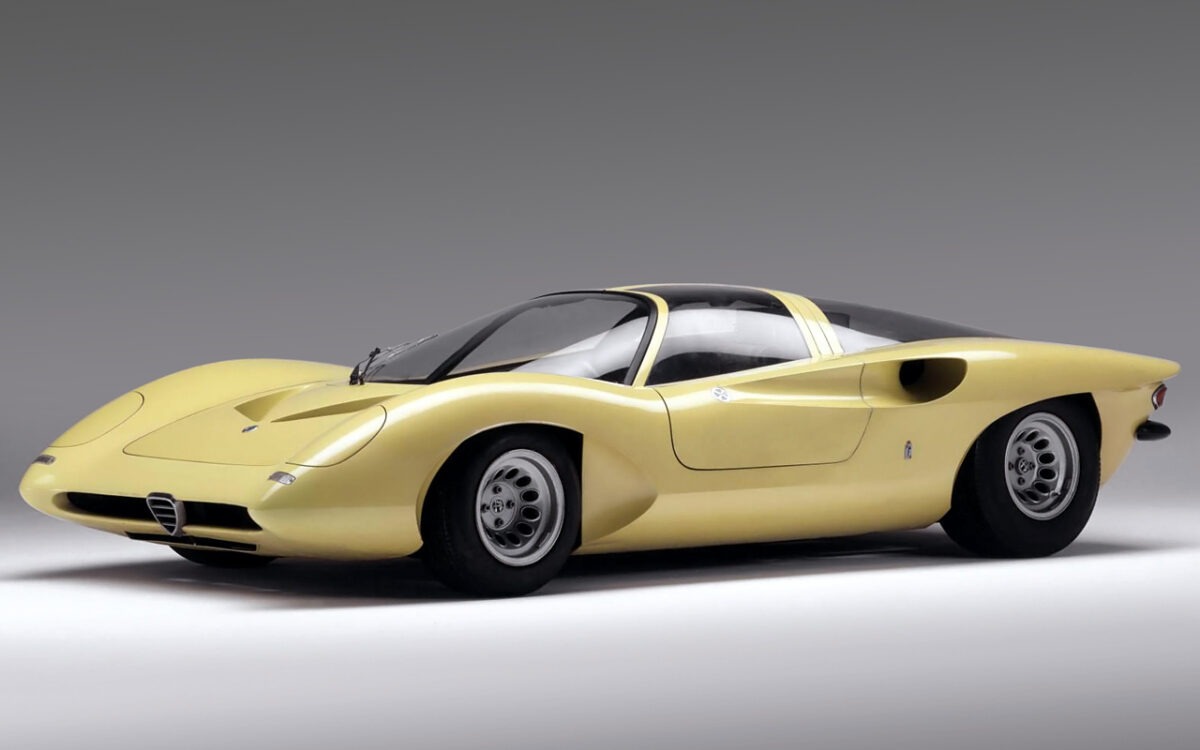
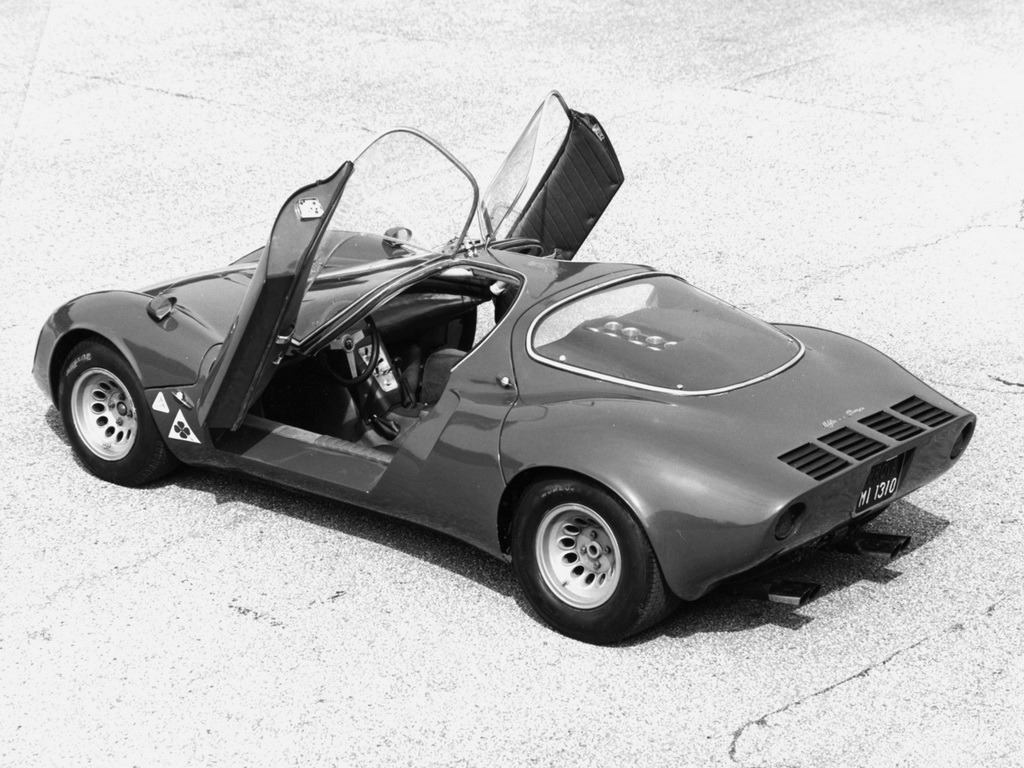
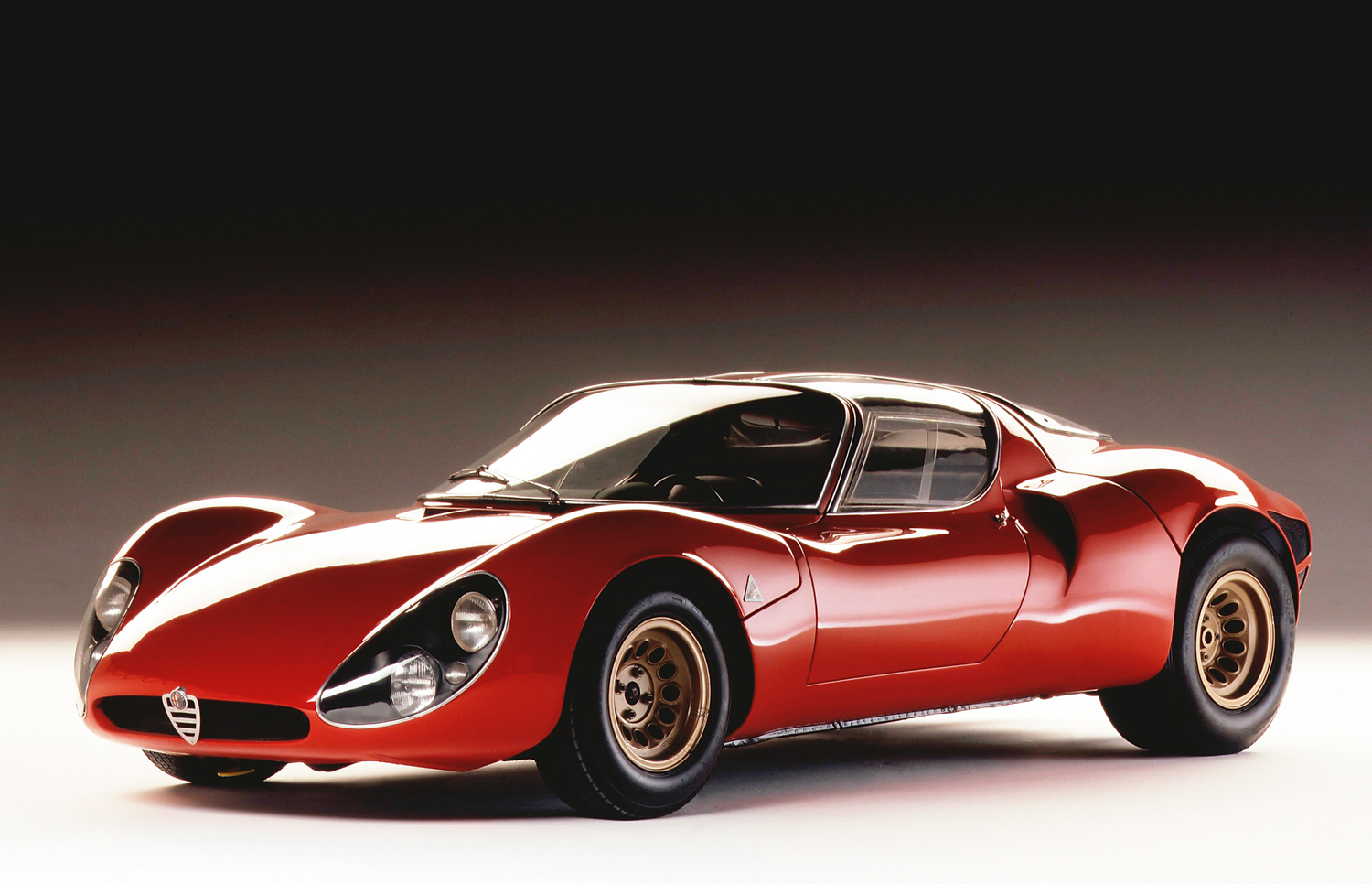
While mechanical innovation defined the race cars, Franco Scaglione was busy creating a masterpiece on the early ‘H-frame’ chassis that remains, arguably, the most beautiful road car ever built: the 1967 Alfa Romeo 33 Stradale. Draped in curvilinear aluminium bodywork that seemed sculpted by the wind, the Stradale featured groundbreaking dihedral doors and sweeping glass surfaces that offered unparalleled visibility. The race-bred V8 was slightly detuned for civility but still produced 230 horsepower, which, in a car weighing a mere 700 kilograms, resulted in a driving experience that was absolutely raw and unadulterated. The line’s cultural impact was further cemented by a series of sensational concept cars created by Italy’s finest design houses on the Stradale chassis. Marcello Gandini’s razor-sharp 1968 Alfa Romeo Carabo for Bertone introduced the ‘wedge’ design and scissor doors that would define the supercar aesthetic for decades to come, while Pininfarina’s series of studies, including the minimalist 1971 Cuneo and the 1969 Prototipo Speciale, pushed the boundaries of automotive sculpture and aerodynamic theory.
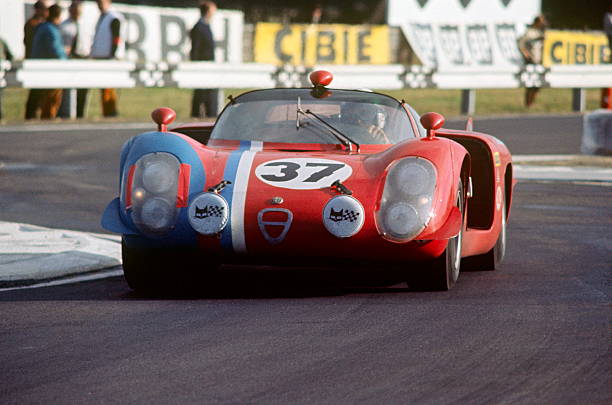
The competition history of the Tipo 33 line is a tale that shifts from early fragility to eventual, crushing absolute domination. The T33/2 made a winning debut at the obscure Fléron hillclimb in 1967, but it was at the 1968 24 Hours of Daytona where the world took notice, as the 2.0-litre coupes swept the class podium, creating the ‘Daytona’ moniker. While the early cars often struggled for outright reliability against the monolithic might of the Porsche 907 and 908, the 3.0-litre 33/3 of 1971 forged a legendary reputation as a Porsche-killer. Driven by legends like Nino Vaccarella, Andrea de Adamich, and Henri Pescarolo, the 33/3 conquered the Targa Florio, Brands Hatch, and the Watkins Glen 6 Hours, proving that Alfa Romeo was once again a credible force. The lineage reached its absolute zenith with the 12-cylinder cars. In 1975, the 33/TT/12, campaigned by the legendary Willi Kauhsen Racing Team and piloted by a ‘superteam’ including Derek Bell, Henri Pescarolo, and Arturo Merzario, simply overwhelmed the competition. The flat-12 brute won seven out of nine rounds, finally delivering the long-coveted World Championship for Makes to Milan. Alfa Romeo repeated this comprehensive domination in 1977 with the boxed-chassis 33/SC/12, winning every single race in the championship, a brutal validation of Carlo Chiti’s relentless engineering vision.
The legacy of the Alfa Romeo Tipo 33 line is multifaceted, securing its place not merely in race results, but in the panteon of human aesthetic and engineering achievement. It represents the absolute zenith of Alfa Romeo’s post-war sports car racing efforts, a decade-long crusade that validated the marque’s sporting soul. The race-bred V8 engine developed for the 33 found a second life powering the road-going Montreal, while the subsequent flat-12 engine was so potent that Bernie Ecclestone secured it to power his Brabham Formula 1 team, eventually leading Alfa Romeo back to the F1 grid as a constructor. Beyond the engineering, Franco Scaglione’s Stradale remains an eternal standard of automotive beauty, and Gandini’s Carabo redefined the very shape of speed.
Portal
Model line
Model generation
Predecessor
Sucessor
Brand
Produced from
Vehicle category
Portal
Model line
Model generation
Predecessor
Sucessor
About this model
The legend of Alfa Romeo is inextricably linked to the scent of castor oil and the high-pitched scream of racing engines, but by the mid-1960s, the Milanese marque’s glorious pre-war competition history was fading into memory, replaced by the commercial success of the road-going Giulietta and Giulia. While the TZ1 and TZ2 had upheld Alfa’s honour in the GT classes, the boardroom yearned for outright victory in the World Sportscar Championship, an arena then dominated by the likes of Porsche, Ferrari, and Ford. The ambitious task of returning Alfa Romeo to the pinnacle of motorsport fell to Autodelta, the newly established competition department led by the former Ferrari engineer, the mercurial Carlo Chiti. The result of this mandate was not merely a single race car, but a defining dynasty that spanned a decade of technical revolution: the Tipo 33. This nomenclature covers an astonishingly diverse family of vehicles, ranging from fragile 2.0-litre prototypes and Franco Scaglione’s breathtaking Stradale road car to the brutish, turbocharged flat-12 monsters that eventually obliterated all opposition on the world’s fastest circuits. In an era defined by rapid pace of development, where iconic tracks like Le Mans, Spa, and the Targa Florio demanded entirely different logistical and technical solutions, the Tipo 33 line evolved to answer every challenge, creating an unassailable legacy of speed, beauty, and eventual mechanical domination.
To trace the technical evolution of the Tipo 33 is to witness the development of the modern racing prototype. The story famously began in 1967 with the Tipo 33/2, colloquially known as the ‘Periscopica’ due to its distinctive high-mounted cockpit air intake. This early submodel established the mechanical soul of the lineage: a glorious, high-revving 90-degree V8 engine. Designed by Chiti himself, this all-alloy power unit featured quad camshafts, SPICA fuel injection, and twin-spark ignition, initially producing around 270 brake horsepower from just 2,000cc. It was slung amidships in a radical chassis consisting of three large-diameter aluminium tubes arranged in an ‘H’ shape, which simultaneously served as the primary structure and the fuel tanks—an ingenious, if terrifyingly vulnerable, design. By 1968, the V8 was punching out nearer 320 horsepower, draped in sleek, aerodynamic ‘Daytona’ coupe and spider bodywork crafted from lightweight fiberglass. However, as the championship battle shifted to a 3.0-litre limit, the T33 morphed into the formidable 33/3 of 1969. The engine was enlarged to 2,998cc, producing a robust 400 horsepower, and mounted in a new, stiffer aluminium sheet monocoque chassis that eventually incorporated titanium elements to combat weight. The final, most devastatingly potent iteration arrived in 1973 with the 33/TT/12. Chiti abandoned the V8 for a terrifyingly powerful, 3.0-liter flat-12 engine, capable of revving past 12,000 RPM and producing over 500 horsepower. This engineering masterpiece was installed in a tubular steel spaceframe (the Telaio Tubolare of its name) for greater repairability and rigidity, eventually culminating in the 33/SC/12’s boxed monocoque and, finally, the terrifying, 640-horsepower turbocharged version in 1977, which represented the absolute crescendo of naturally aspirated and forced-induction engineering of its era.
While mechanical innovation defined the race cars, Franco Scaglione was busy creating a masterpiece on the early ‘H-frame’ chassis that remains, arguably, the most beautiful road car ever built: the 1967 Alfa Romeo 33 Stradale. Draped in curvilinear aluminium bodywork that seemed sculpted by the wind, the Stradale featured groundbreaking dihedral doors and sweeping glass surfaces that offered unparalleled visibility. The race-bred V8 was slightly detuned for civility but still produced 230 horsepower, which, in a car weighing a mere 700 kilograms, resulted in a driving experience that was absolutely raw and unadulterated. The line’s cultural impact was further cemented by a series of sensational concept cars created by Italy’s finest design houses on the Stradale chassis. Marcello Gandini’s razor-sharp 1968 Alfa Romeo Carabo for Bertone introduced the ‘wedge’ design and scissor doors that would define the supercar aesthetic for decades to come, while Pininfarina’s series of studies, including the minimalist 1971 Cuneo and the 1969 Prototipo Speciale, pushed the boundaries of automotive sculpture and aerodynamic theory.
The competition history of the Tipo 33 line is a tale that shifts from early fragility to eventual, crushing absolute domination. The T33/2 made a winning debut at the obscure Fléron hillclimb in 1967, but it was at the 1968 24 Hours of Daytona where the world took notice, as the 2.0-litre coupes swept the class podium, creating the ‘Daytona’ moniker. While the early cars often struggled for outright reliability against the monolithic might of the Porsche 907 and 908, the 3.0-litre 33/3 of 1971 forged a legendary reputation as a Porsche-killer. Driven by legends like Nino Vaccarella, Andrea de Adamich, and Henri Pescarolo, the 33/3 conquered the Targa Florio, Brands Hatch, and the Watkins Glen 6 Hours, proving that Alfa Romeo was once again a credible force. The lineage reached its absolute zenith with the 12-cylinder cars. In 1975, the 33/TT/12, campaigned by the legendary Willi Kauhsen Racing Team and piloted by a ‘superteam’ including Derek Bell, Henri Pescarolo, and Arturo Merzario, simply overwhelmed the competition. The flat-12 brute won seven out of nine rounds, finally delivering the long-coveted World Championship for Makes to Milan. Alfa Romeo repeated this comprehensive domination in 1977 with the boxed-chassis 33/SC/12, winning every single race in the championship, a brutal validation of Carlo Chiti’s relentless engineering vision.
The legacy of the Alfa Romeo Tipo 33 line is multifaceted, securing its place not merely in race results, but in the panteon of human aesthetic and engineering achievement. It represents the absolute zenith of Alfa Romeo’s post-war sports car racing efforts, a decade-long crusade that validated the marque’s sporting soul. The race-bred V8 engine developed for the 33 found a second life powering the road-going Montreal, while the subsequent flat-12 engine was so potent that Bernie Ecclestone secured it to power his Brabham Formula 1 team, eventually leading Alfa Romeo back to the F1 grid as a constructor. Beyond the engineering, Franco Scaglione’s Stradale remains an eternal standard of automotive beauty, and Gandini’s Carabo redefined the very shape of speed.
Generations
Generations of this model
Generations
Generations of this model
Submodels
Discover all the variants of this model
Submodels
Discover all the variants of this model
Vehicles
Legendary Vehicles
Vehicles