Porsche 917
Brand
Produced from
Vehicle category
Portal
Model line
Model generation
Predecessor
Sucessor
Model Overview
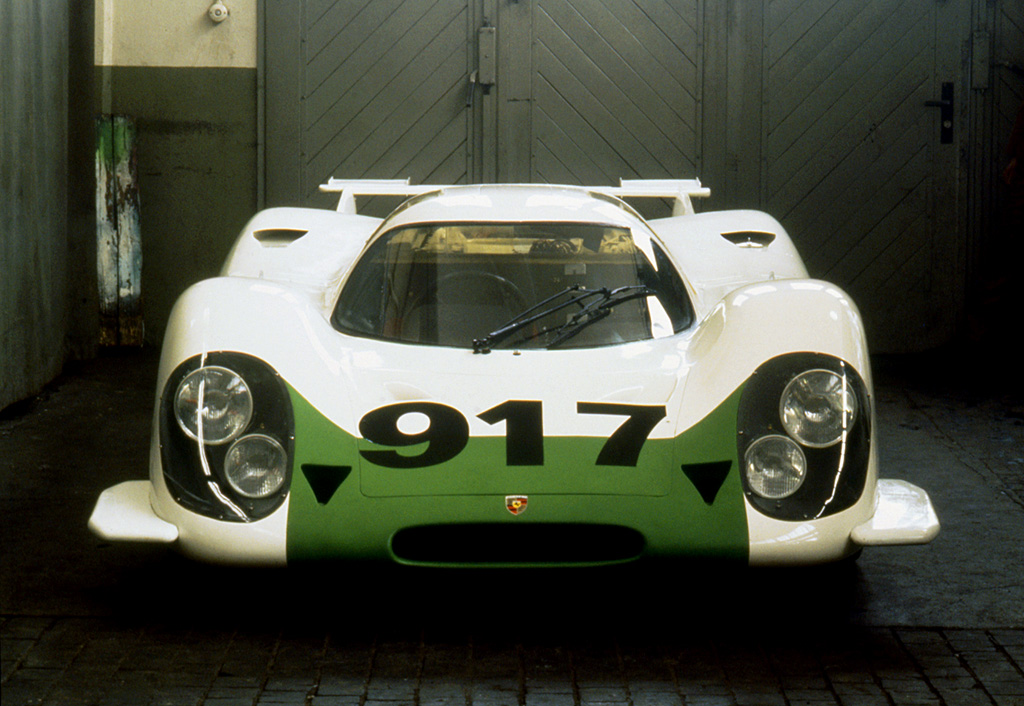
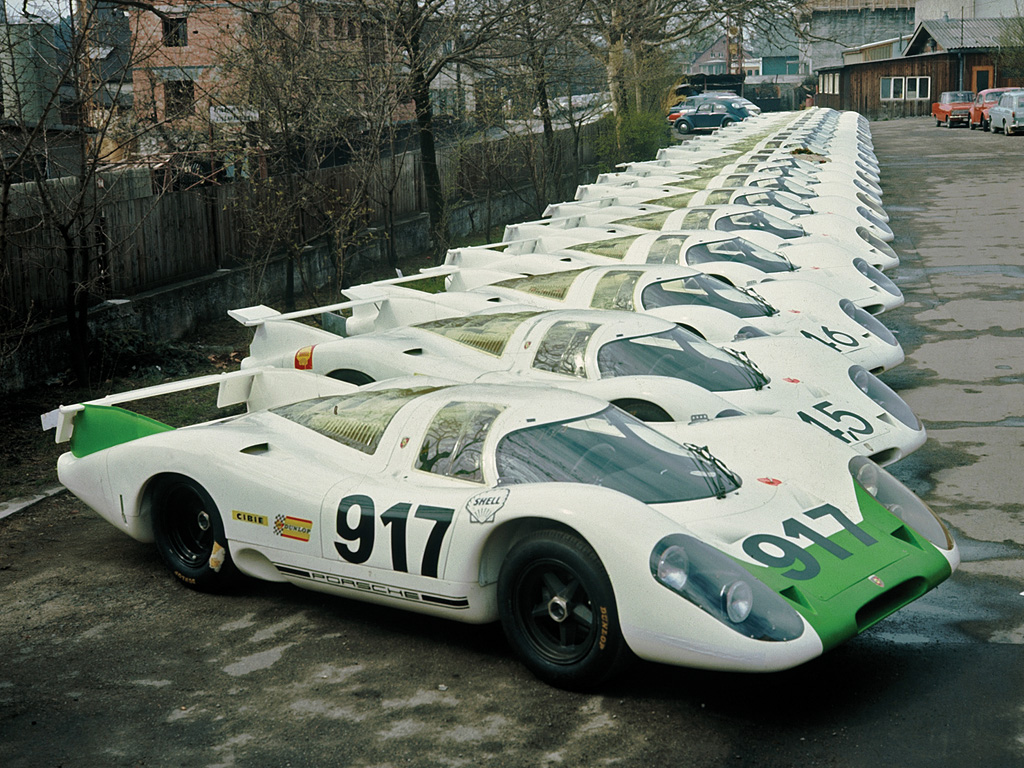
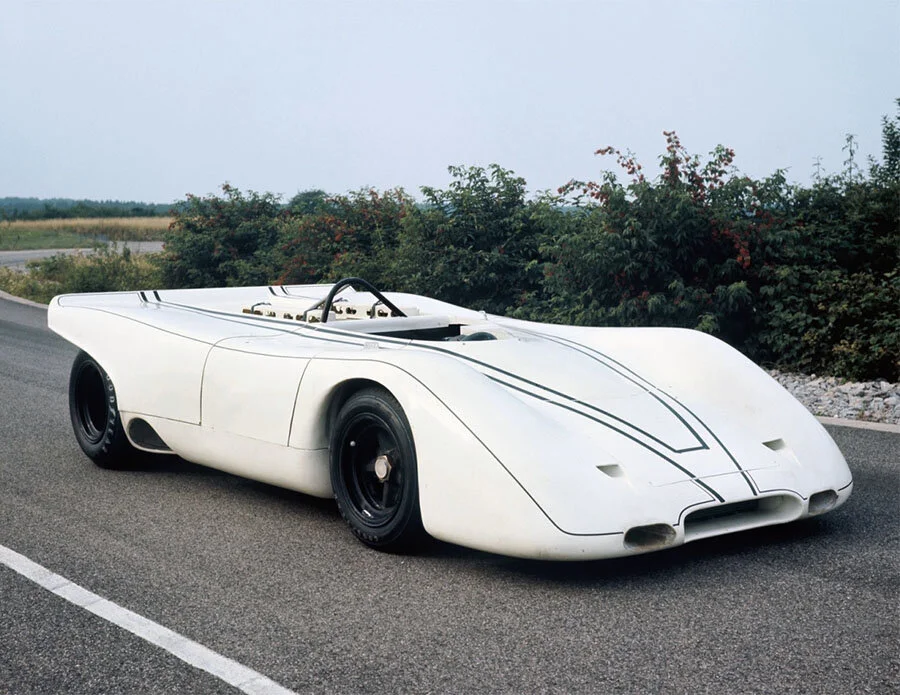
To fully grasp the magnitude of the Porsche 917, one must venture back to a pivotal boardroom gamble in the late 1960s—a moment of staggering audacity that forever altered the trajectory of international motorsport. The governing body, the FIA’s Commission Sportive Internationale (CSI), had grown increasingly concerned by the terrifying speeds of the unlimited-capacity Group 6 prototypes. In a bid to slow the cars down, they announced a 3.0-liter engine limit for 1968. However, recognizing that few manufacturers possessed viable 3.0-liter engines, the CSI created a loophole: the Group 4 sports car category, which permitted an engine capacity of up to 5.0 liters, provided a minimum of 50 cars were built to satisfy homologation. When that number proved too daunting, it was reduced to 25. While giants like Ferrari scoffed at the financial absurdity of producing 25 bespoke, 5.0-liter racing machines, Ferdinand Piëch, the brilliant and ruthlessly ambitious head of Porsche R&D, saw an unparalleled opportunity. Porsche had spent decades as the quintessential “giant-killer”, utilizing surgical, small-displacement prototypes like the 908 to steal class victories and occasionally embarrass the heavyweights on tight circuits. But Piëch no longer wanted to slay giants; he wanted to become the giant. Pushing the company to the absolute brink of financial ruin, he ordered the construction of twenty-five 4.5-liter monsters. In April 1969, CSI inspectors arrived at the Zuffenhausen courtyard to find twenty-five completed Porsche 917s lined up in a chilling display of teutonic resolve. It was the birth of an apex predator. The 917 was thrust into a mythical arena, designed specifically to crush the aging 5.0-liter Ford GT40s and to preempt Maranello’s inevitable, ferocious response: the Ferrari 512 S.
To peel away the gossamer-thin fiberglass bodywork of a Porsche 917 is to stare directly into the soul of obsessive, uncompromised racing engineering. The foundation of the machine was an incredibly complex, lightweight tubular spaceframe chassis, initially constructed from aluminum and later from magnesium. The tubes were so frighteningly thin that Piëch’s engineers pressurized the entire frame with a tire valve and installed a dashboard gauge; if the pressure dropped, the driver knew a weld had cracked and catastrophic failure was imminent. But the undisputed masterpiece of the 917 lay amidships: Hans Mezger’s colossal Type 912 flat-12 engine. Rather than a true boxer layout, Mezger designed a 180-degree V12 to minimize weight and reduce the length of the crankshaft. To prevent torsional vibration from shattering the massive crank, power was taken not from the end of the engine, but from a central gear drive that split the engine in two. Initially displacing 4.5 liters and later evolving to 4.9 and 5.0 liters, this air-cooled, mechanical marvel produced upwards of 600 naturally aspirated horsepower. It emitted an absolutely earth-shattering, guttural howl that became the defining soundtrack of the era. The cockpit was a terrifyingly cramped, heat-soaked aluminum cavern. To achieve the desired aerodynamics and weight distribution, the driver was pushed so far forward that their feet famously rested ahead of the front axle line, serving as the car’s primary crash structure. In a final, obsessive bid to save weight, the gear knob for the heavy four-speed transaxle was famously fashioned from balsa wood.
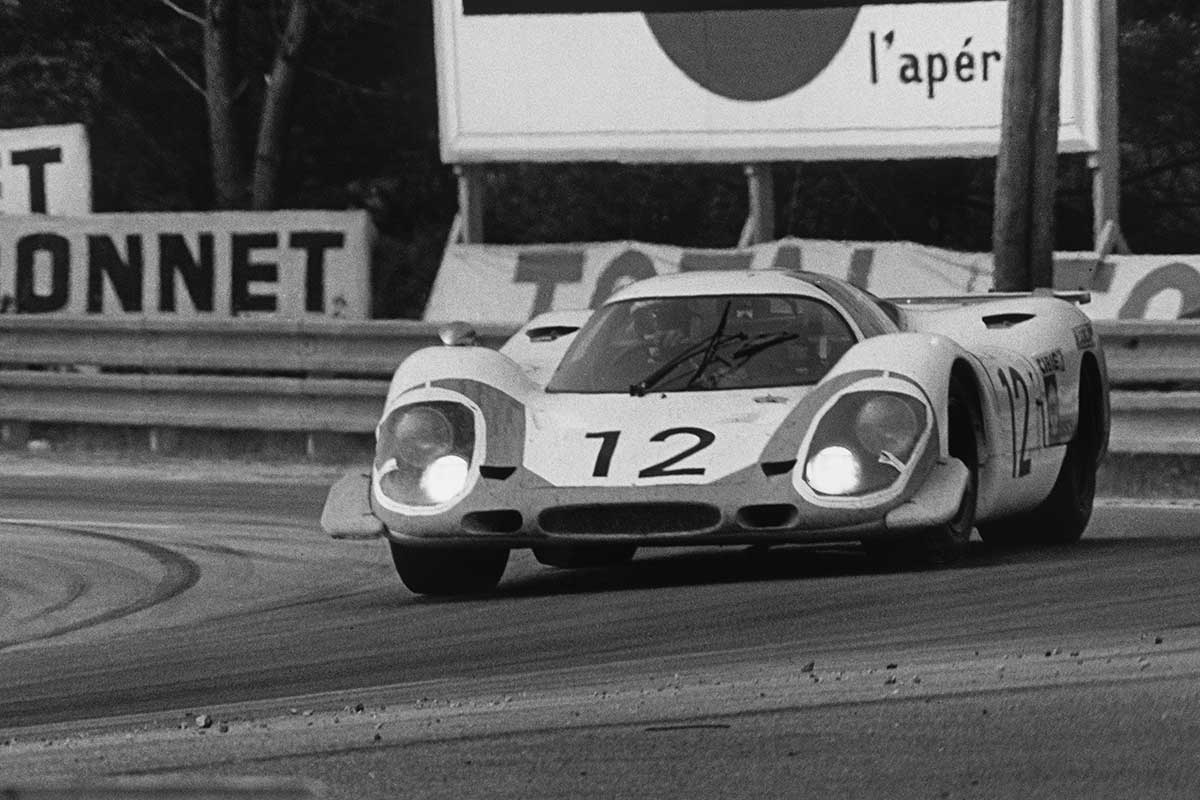
Yet, the early days of the 917 were defined by sheer terror rather than triumph. The original 1969 bodywork, designed for maximum top speed with minimal drag, produced lethal amounts of aerodynamic lift. At 350 km/h (220 mph) on the Mulsanne Straight, the car would weave uncontrollably, prompting factory drivers to actively refuse to drive it. The turning point arrived when Porsche outsourced the racing campaign to John Wyer’s J.W. Automotive Engineering. Wyer’s chief engineer, John Horsman, noticed that the dead gnats on the car’s bodywork stopped where the tail sloped downward, indicating a complete separation of airflow. Armed with aluminum sheet metal and duct tape, the team chopped and raised the rear deck, sacrificing a fraction of top speed for massive downforce. The Porsche 917K (Kurzheck, or short-tail) was born, instantly transforming the lethal widowmaker into a supremely planted, world-beating weapon.
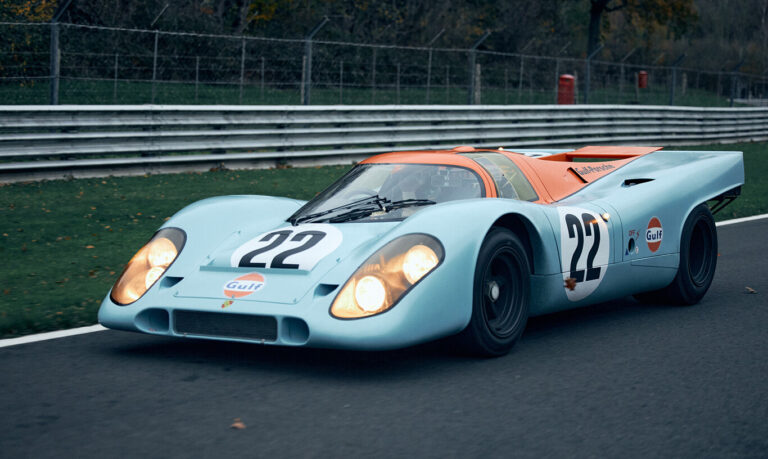
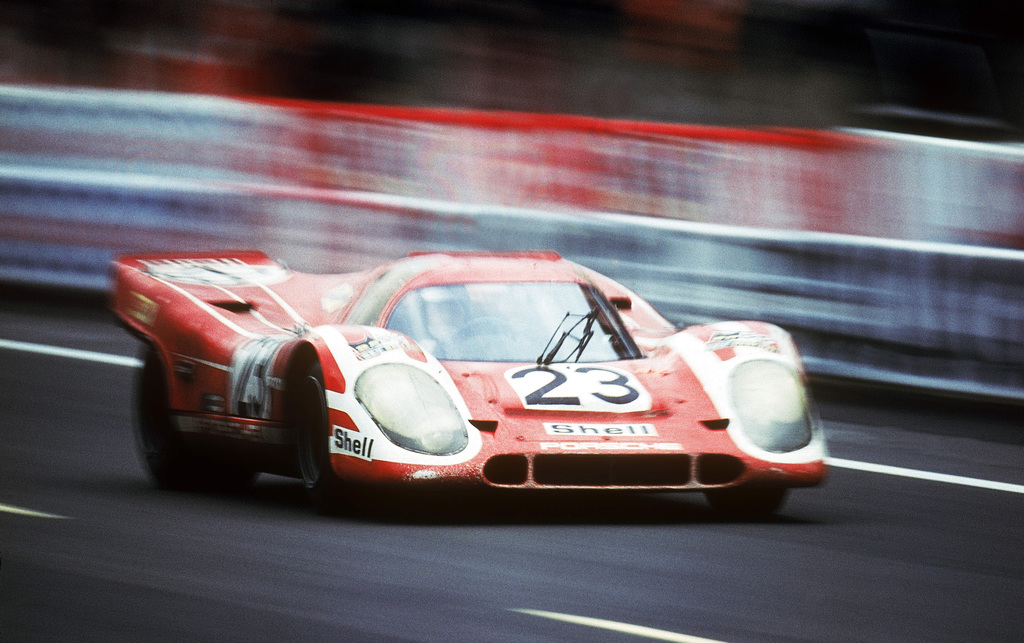
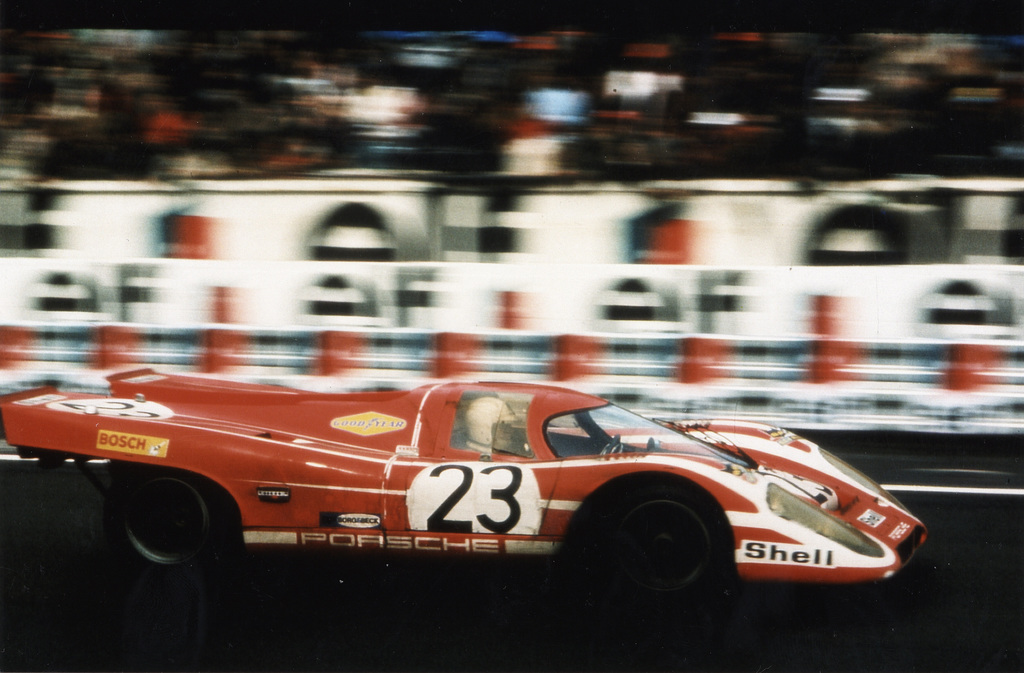
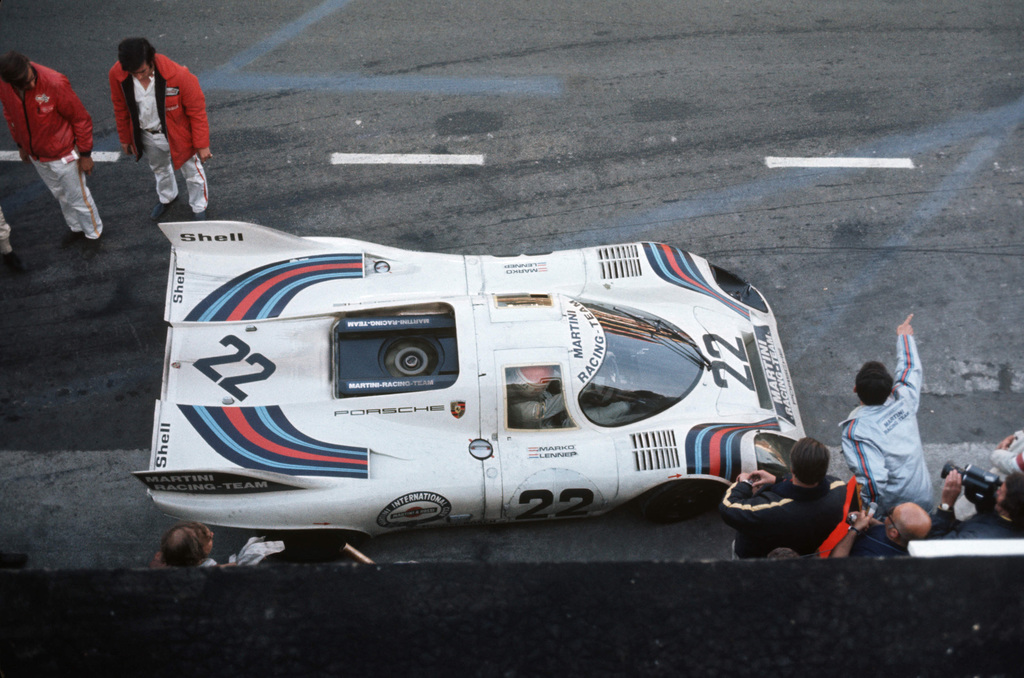
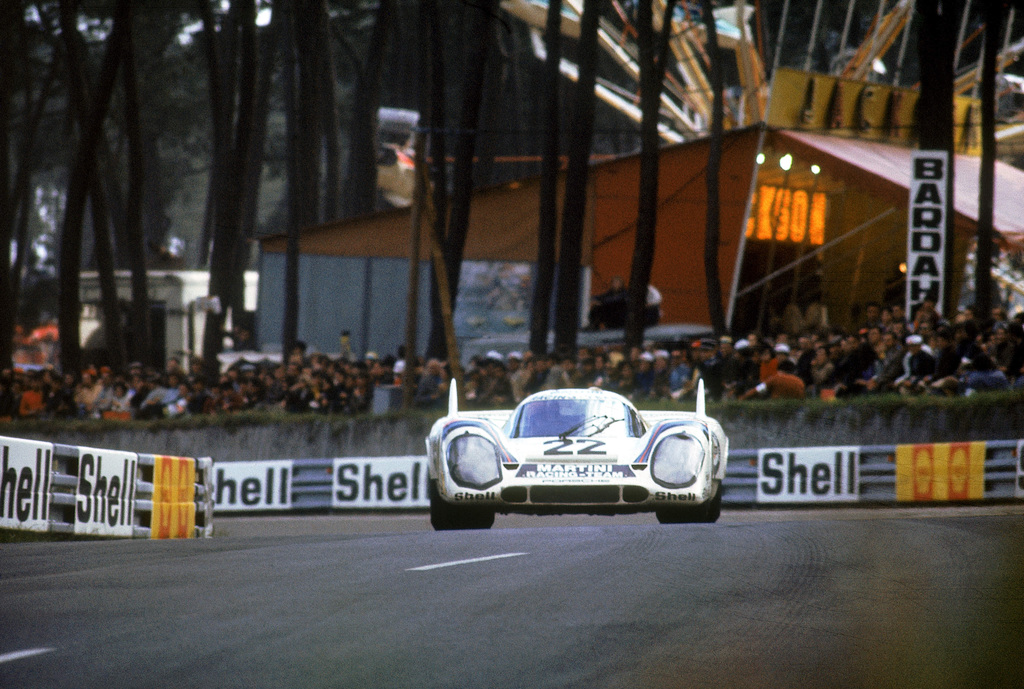
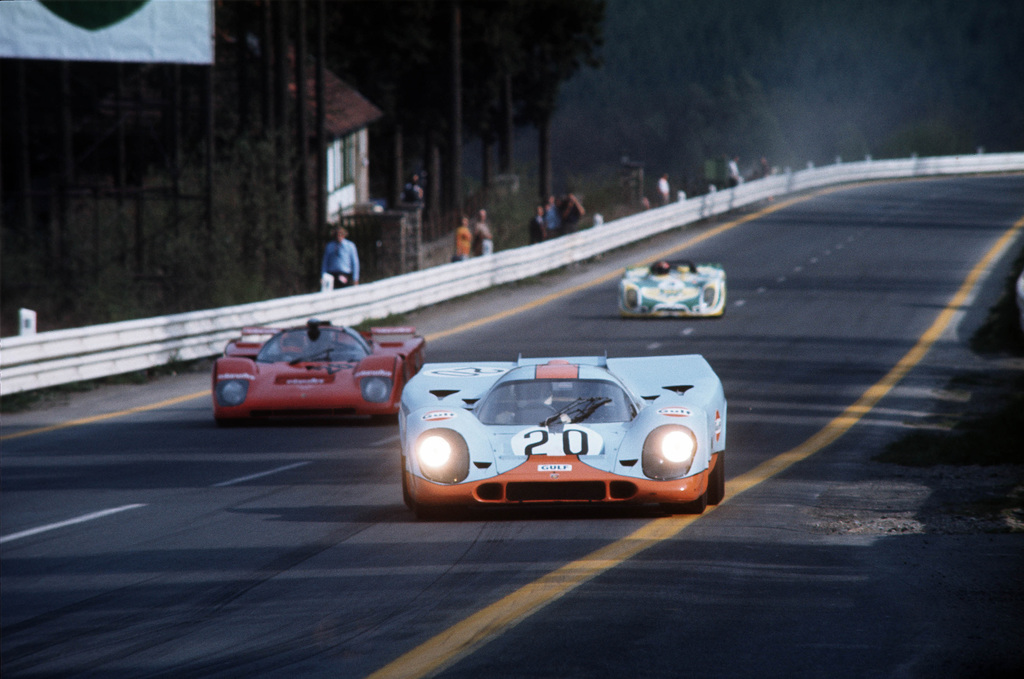
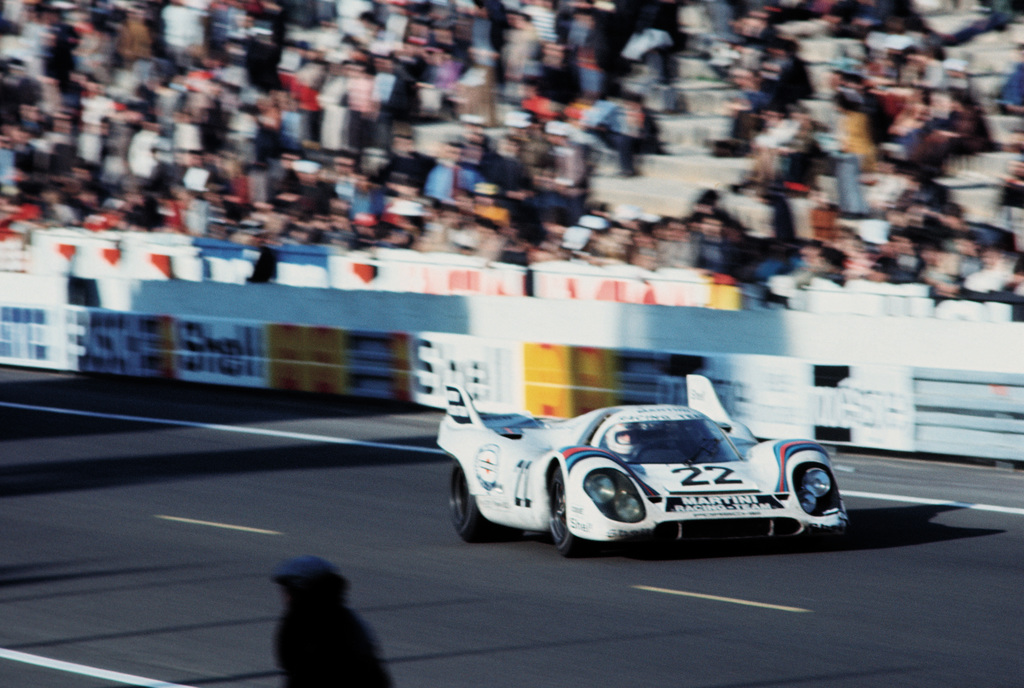
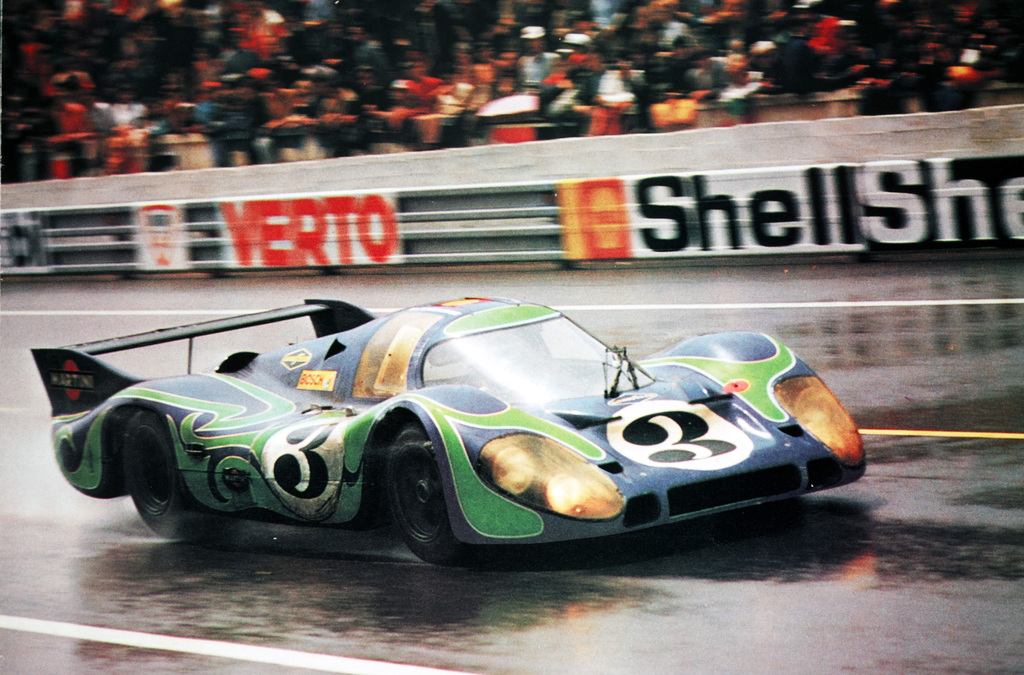
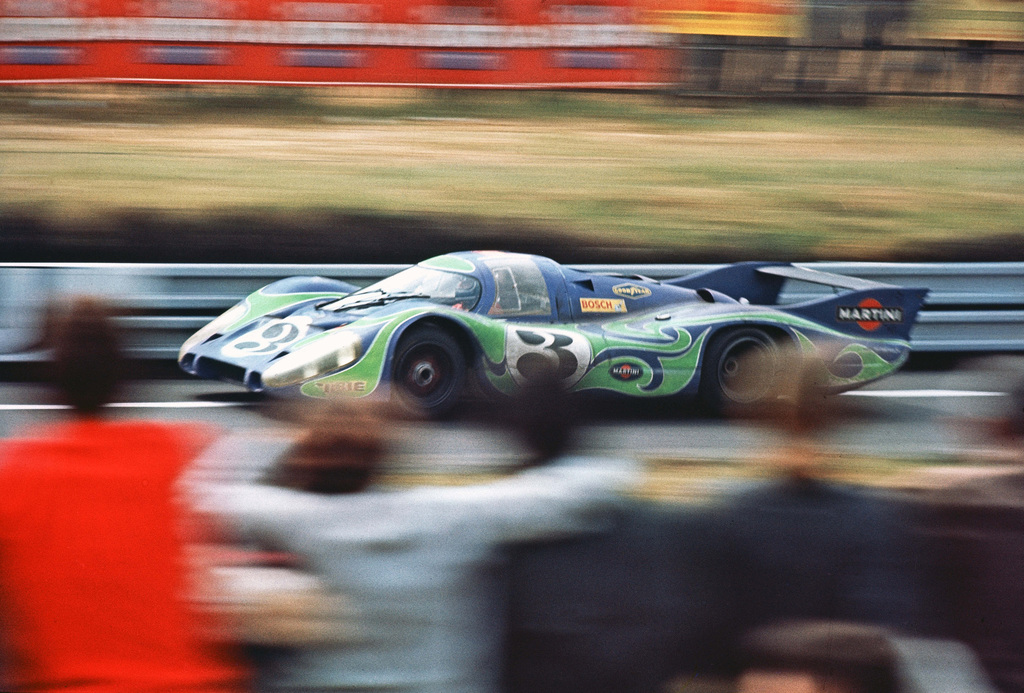
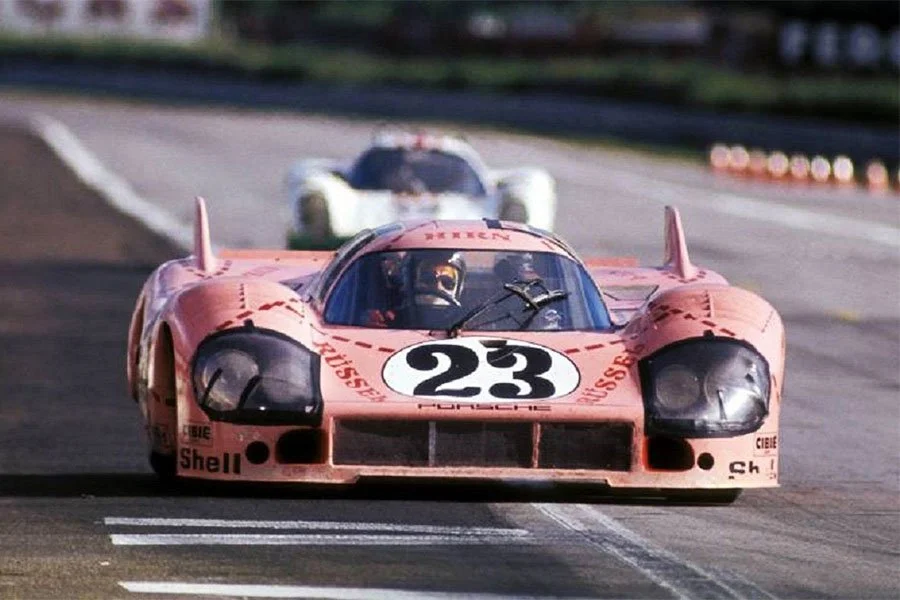
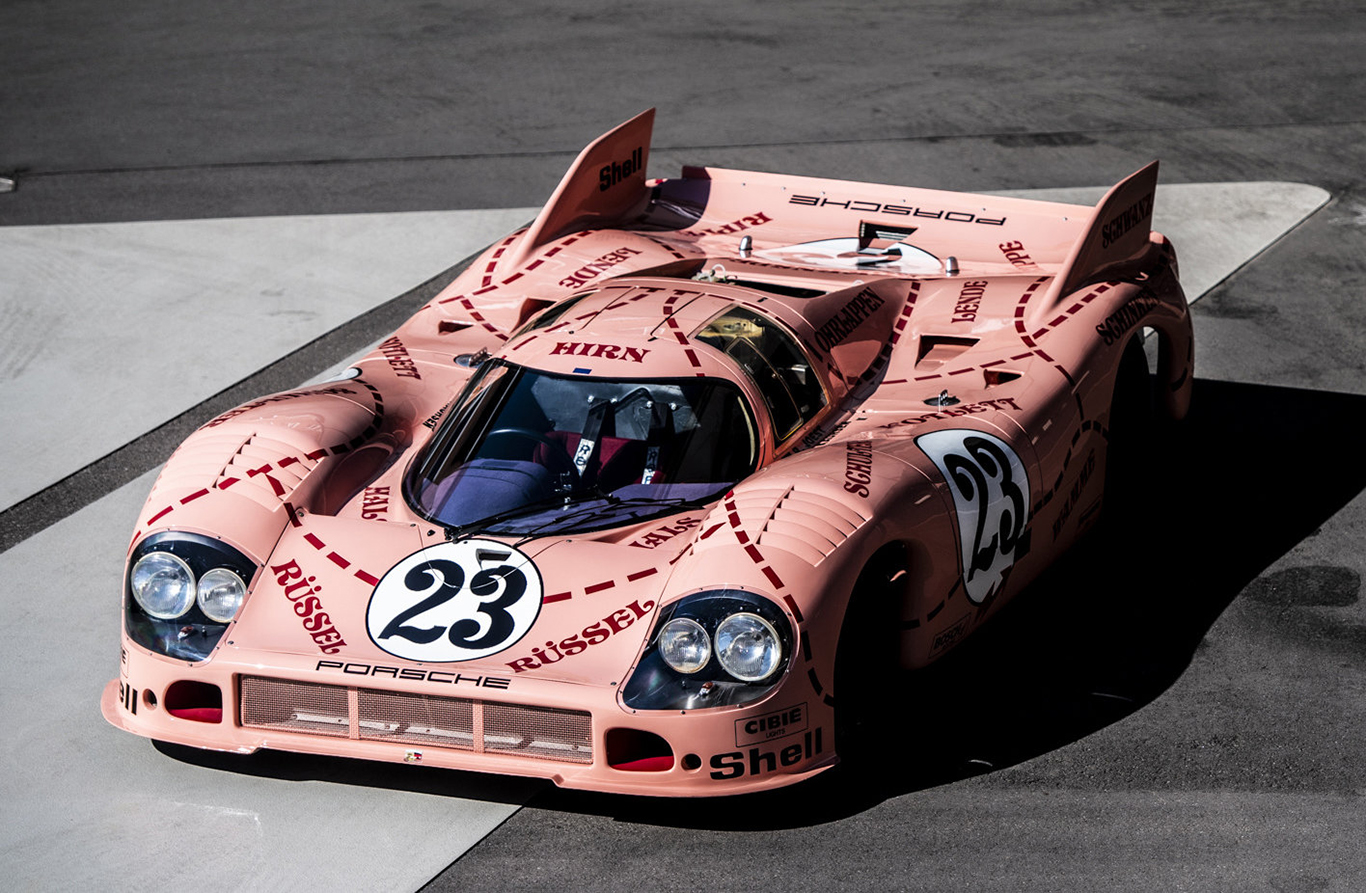
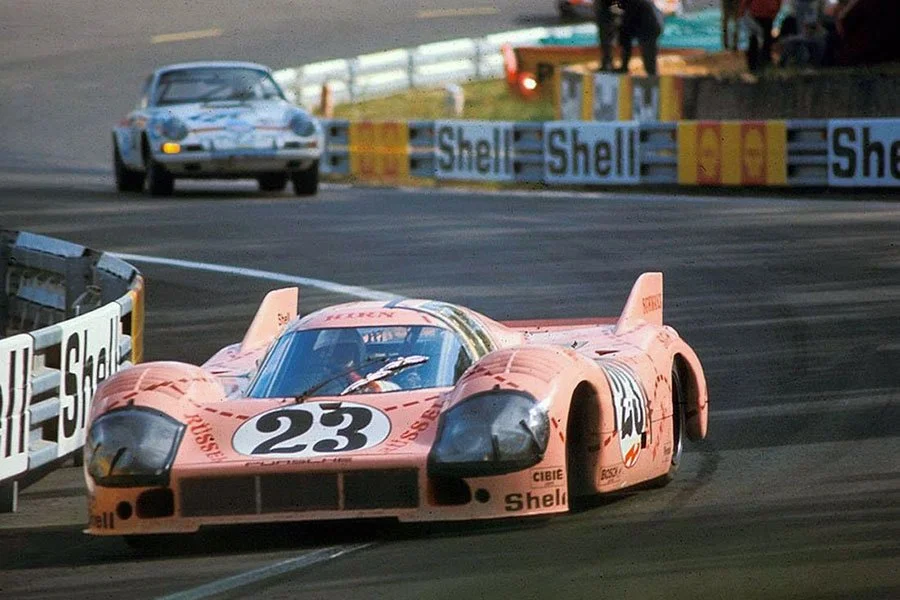
The competitive history of the Porsche 917 is an epic saga of total, unyielding global domination. Armed with the revised 917K and the specialized, low-drag 917 LH (Langheck) for Le Mans, Porsche embarked on an absolute crusade. At the 1970 24 Hours of Le Mans, amidst torrential rain, Richard Attwood and Hans Herrmann piloted their red and white Porsche Salzburg 917K to the marque’s first-ever overall victory at La Sarthe. The following year, Helmut Marko and Gijs van Lennep drove a breathtaking magnesium-framed 917K in the Martini Racing livery to a second consecutive victory, setting an astonishing distance record of 5,335 kilometers that would remain unbroken for nearly four decades. The 917 utterly crushed the World Sportscar Championship, driven by immortals like Pedro Rodriguez and Jo Siffert, who threw the 600-horsepower leviathans around the terrifying curves of Spa-Francorchamps and Monza in legendary, door-to-door battles against the V12 Ferrari 512s. Culturally, the car achieved absolute immortality when Steve McQueen selected the Gulf Oil-liveried 917K as his co-star for the 1971 cinematic masterpiece Le Mans, searing the image of the powder-blue and orange Porsche into the global consciousness forever.
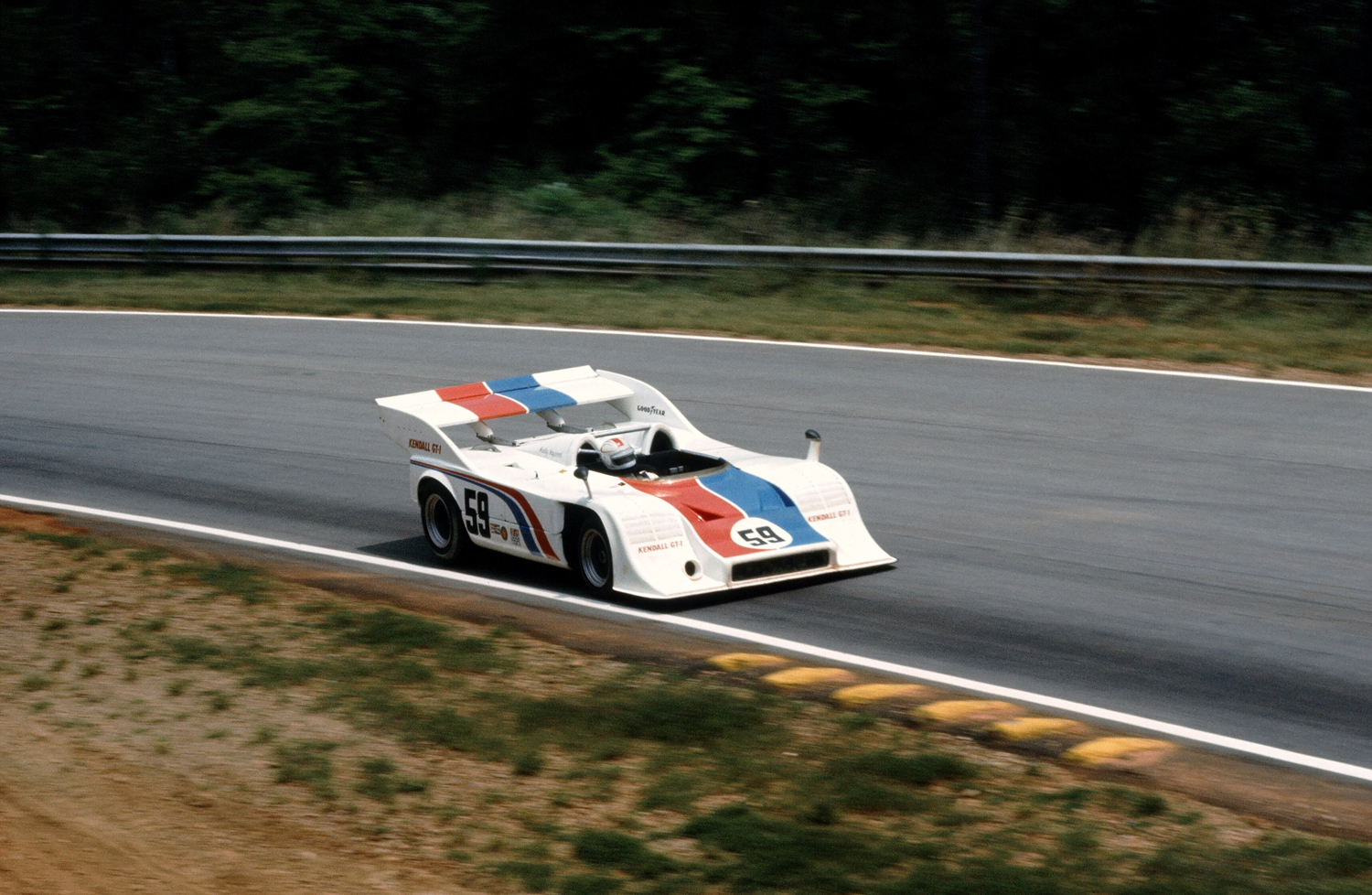
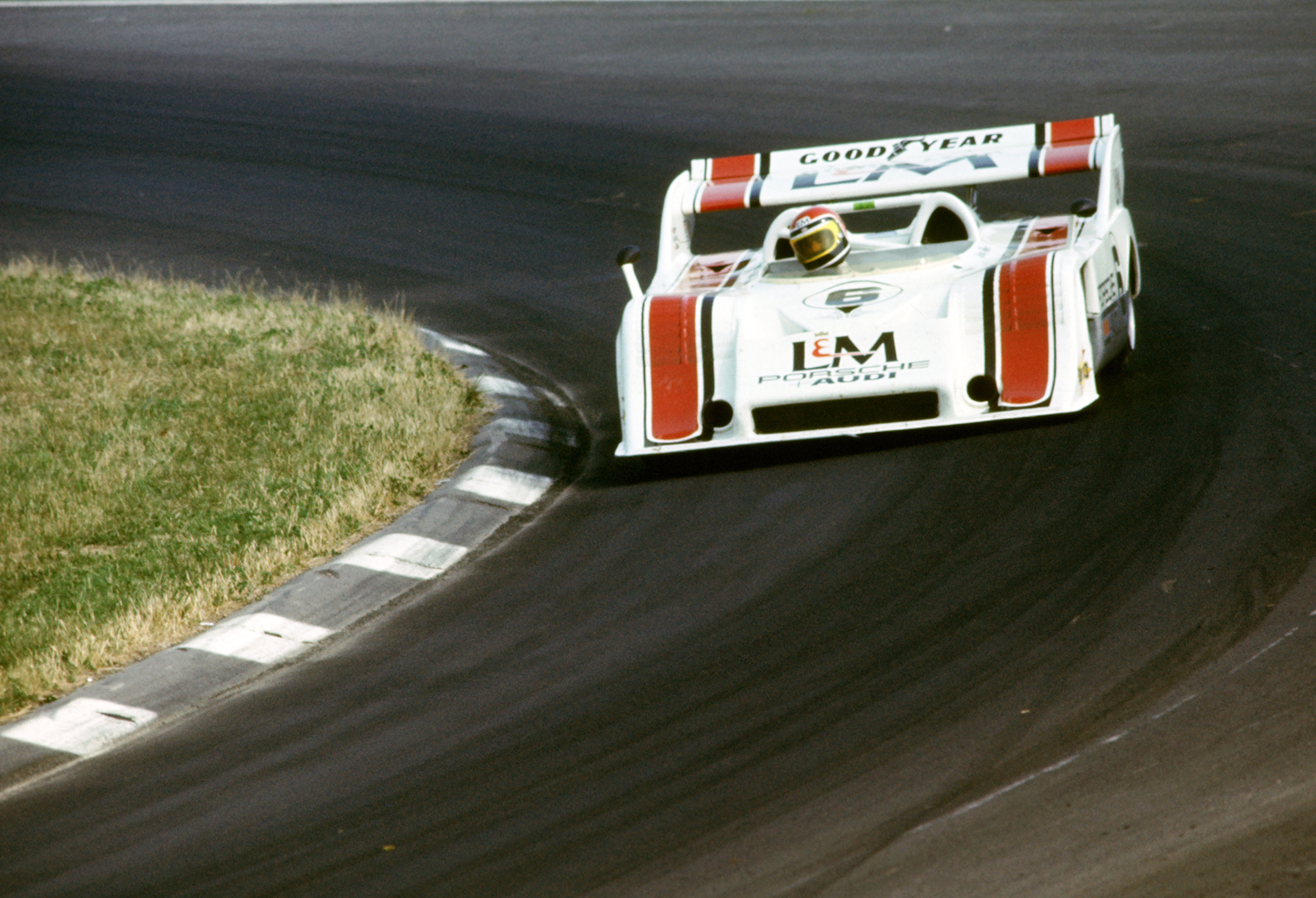
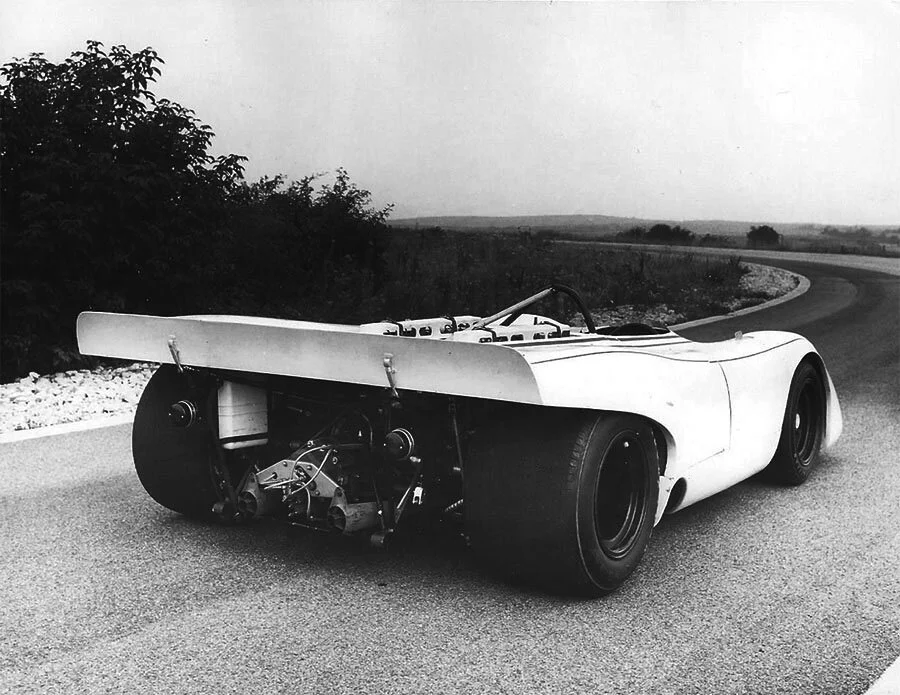
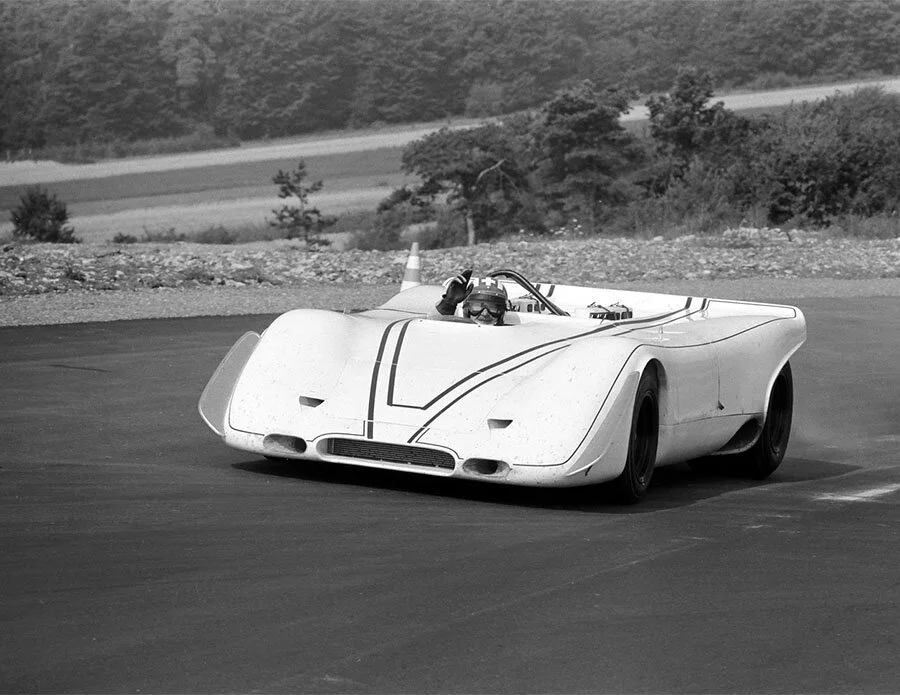
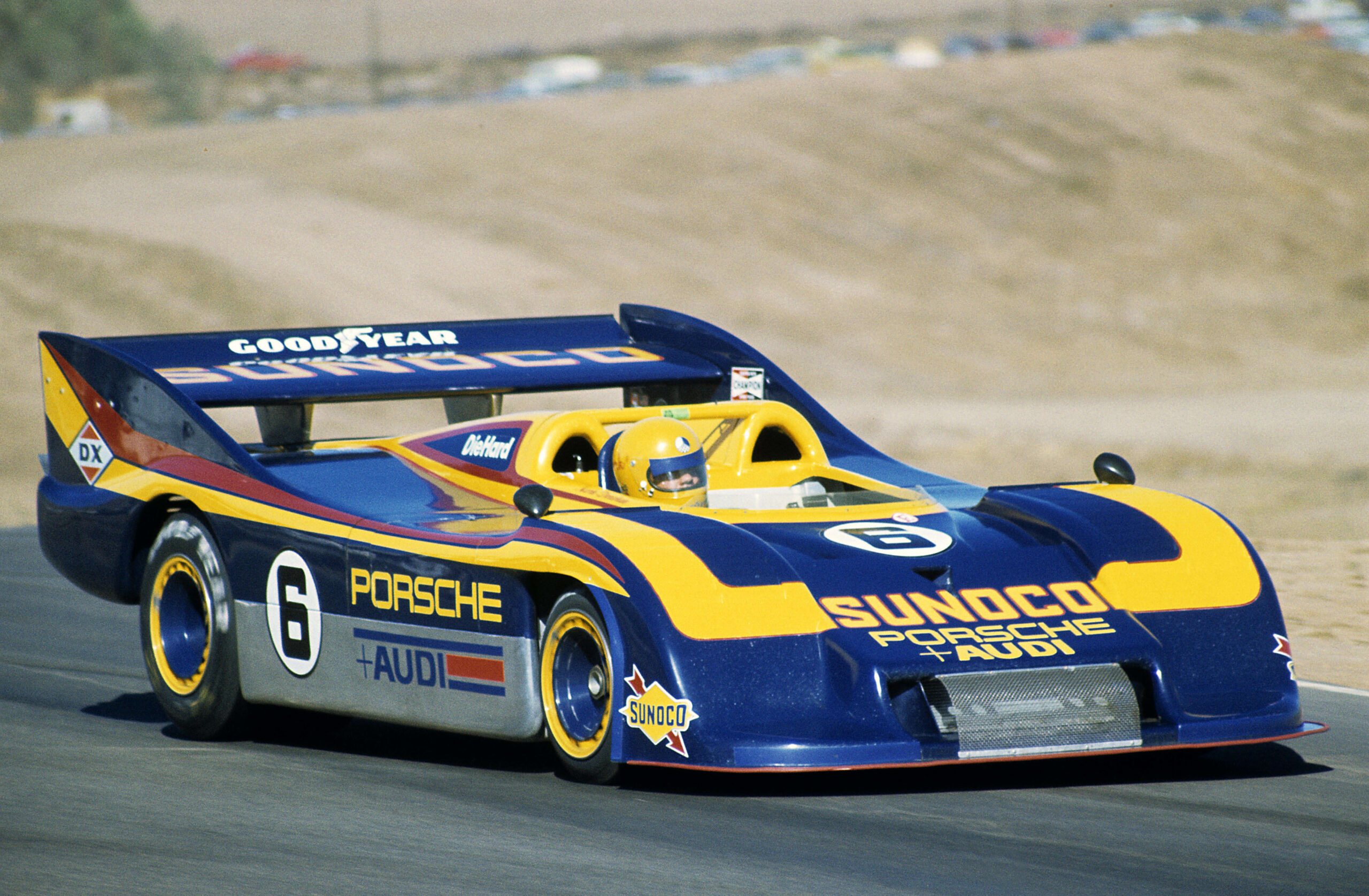
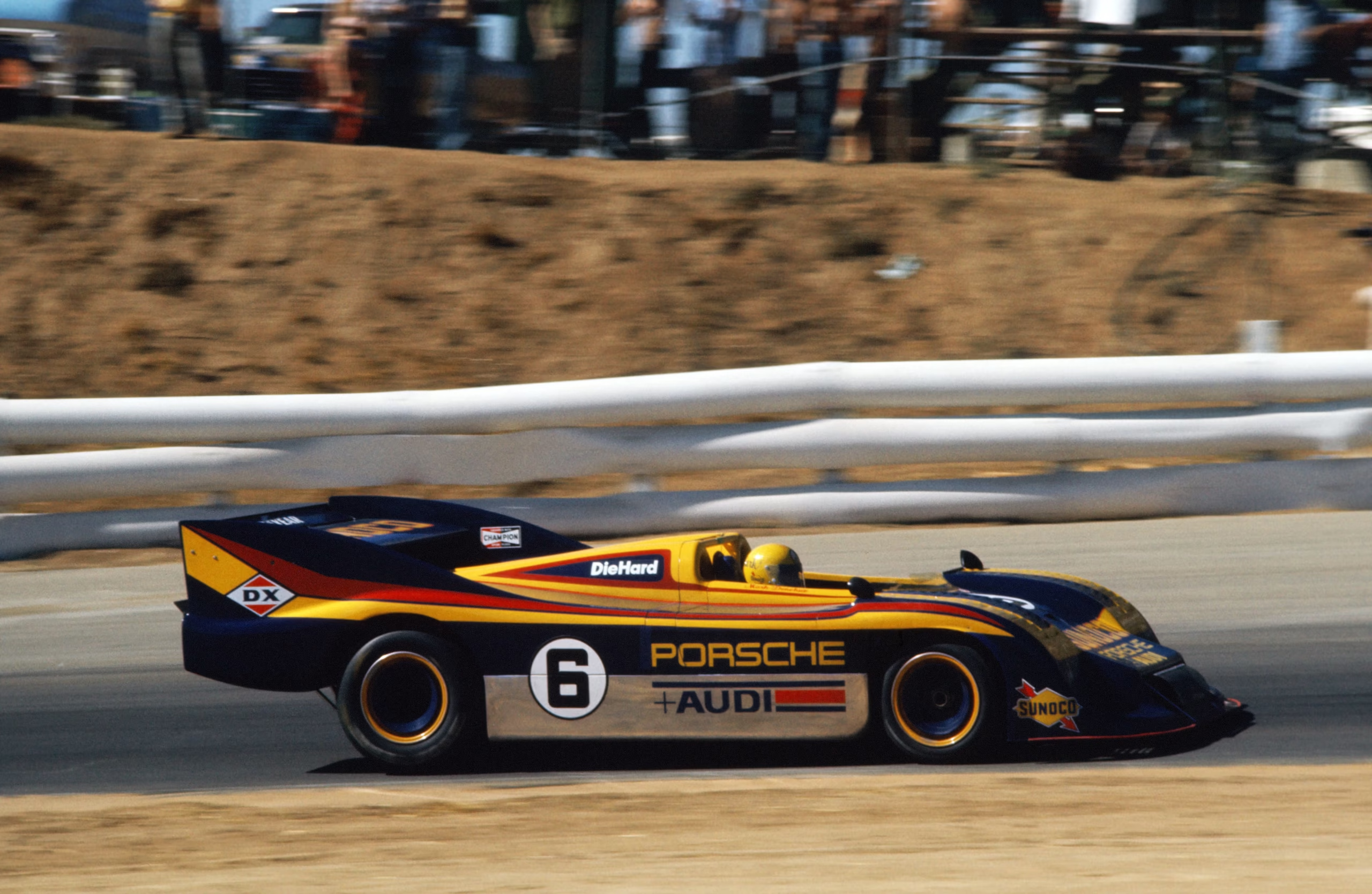
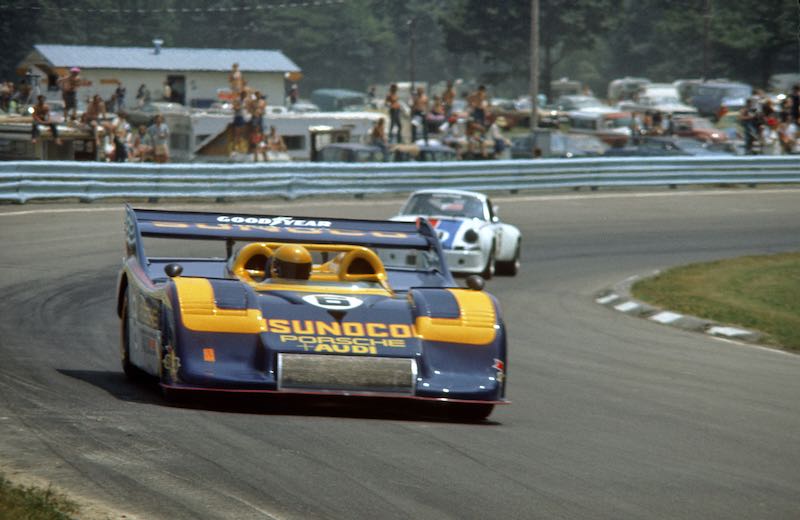
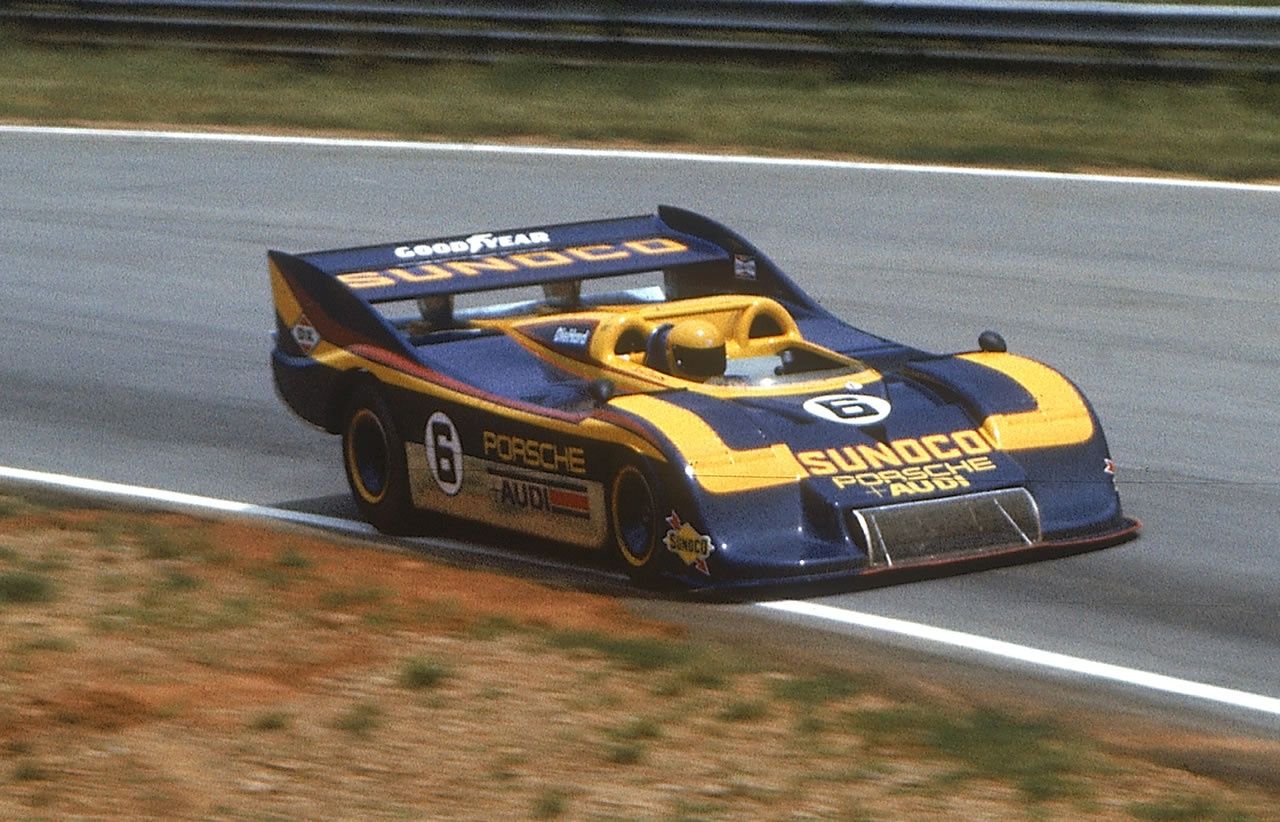
However, when the FIA altered the rules for 1972, banning the 5.0-liter beasts from European competition, the 917 did not retire to a museum; it simply crossed the Atlantic and mutated into something even more terrifying. Porsche targeted the unrestricted Canadian-American Challenge Cup (Can-Am), a series utterly dominated by the massive, naturally aspirated Chevrolet V8s of McLaren. Realizing their flat-12 lacked the outright torque of the 8.0-liter American engines, Porsche engineers did the unthinkable: they strapped twin Eberspächer turbochargers to the Type 912 engine. Partnering with Roger Penske and the brilliant engineer-driver Mark Donohue, Porsche unleashed the open-top 917/10, which secured the 1972 Can-Am title. But the absolute zenith of automotive violence arrived in 1973 with the 917/30. Featuring a lengthened wheelbase, massive aerodynamic wings, and a 5.4-liter turbocharged flat-12, the “Turbopanzer” produced an apocalyptic 1,100 horsepower in race trim and an estimated 1,500 horsepower with the turbo wastegates dialed shut for qualifying. Donohue wielded this earth-shattering power to utterly decimate the Can-Am series, winning six of the eight rounds. The 917/30 was so unfathomably fast, so brutally dominant, that it effectively killed the Can-Am series altogether, forcing the SCCA to rewrite the rulebook to ban it. In 1975, Donohue took the 917/30 to the Talladega Superspeedway and set a closed-course closed-course speed record of 355 km/h (221.12 mph), a staggering final testament to the chassis’ capabilities.
The 917 fundamentally transformed Porsche’s corporate identity; it proved that a boutique manufacturer of small, air-cooled sports cars possessed the engineering ruthlessness to conquer the world’s most prestigious and terrifying motorsport arenas. The technological leaps achieved during the 917’s lifespan—particularly the mastery of exhaust-driven turbocharging in the Can-Am series—directly birthed the Porsche 911 Turbo road car and laid the invincible foundation for the 936, 956, and 962 prototype dynasties that would rule the 1980s.
Portal
Model line
Model generation
Predecessor
Sucessor
Brand
Produced from
Vehicle category
Portal
Model line
Model generation
Predecessor
Sucessor
Model Overview
To fully grasp the magnitude of the Porsche 917, one must venture back to a pivotal boardroom gamble in the late 1960s—a moment of staggering audacity that forever altered the trajectory of international motorsport. The governing body, the FIA’s Commission Sportive Internationale (CSI), had grown increasingly concerned by the terrifying speeds of the unlimited-capacity Group 6 prototypes. In a bid to slow the cars down, they announced a 3.0-liter engine limit for 1968. However, recognizing that few manufacturers possessed viable 3.0-liter engines, the CSI created a loophole: the Group 4 sports car category, which permitted an engine capacity of up to 5.0 liters, provided a minimum of 50 cars were built to satisfy homologation. When that number proved too daunting, it was reduced to 25. While giants like Ferrari scoffed at the financial absurdity of producing 25 bespoke, 5.0-liter racing machines, Ferdinand Piëch, the brilliant and ruthlessly ambitious head of Porsche R&D, saw an unparalleled opportunity. Porsche had spent decades as the quintessential “giant-killer”, utilizing surgical, small-displacement prototypes like the 908 to steal class victories and occasionally embarrass the heavyweights on tight circuits. But Piëch no longer wanted to slay giants; he wanted to become the giant. Pushing the company to the absolute brink of financial ruin, he ordered the construction of twenty-five 4.5-liter monsters. In April 1969, CSI inspectors arrived at the Zuffenhausen courtyard to find twenty-five completed Porsche 917s lined up in a chilling display of teutonic resolve. It was the birth of an apex predator. The 917 was thrust into a mythical arena, designed specifically to crush the aging 5.0-liter Ford GT40s and to preempt Maranello’s inevitable, ferocious response: the Ferrari 512 S.
To peel away the gossamer-thin fiberglass bodywork of a Porsche 917 is to stare directly into the soul of obsessive, uncompromised racing engineering. The foundation of the machine was an incredibly complex, lightweight tubular spaceframe chassis, initially constructed from aluminum and later from magnesium. The tubes were so frighteningly thin that Piëch’s engineers pressurized the entire frame with a tire valve and installed a dashboard gauge; if the pressure dropped, the driver knew a weld had cracked and catastrophic failure was imminent. But the undisputed masterpiece of the 917 lay amidships: Hans Mezger’s colossal Type 912 flat-12 engine. Rather than a true boxer layout, Mezger designed a 180-degree V12 to minimize weight and reduce the length of the crankshaft. To prevent torsional vibration from shattering the massive crank, power was taken not from the end of the engine, but from a central gear drive that split the engine in two. Initially displacing 4.5 liters and later evolving to 4.9 and 5.0 liters, this air-cooled, mechanical marvel produced upwards of 600 naturally aspirated horsepower. It emitted an absolutely earth-shattering, guttural howl that became the defining soundtrack of the era. The cockpit was a terrifyingly cramped, heat-soaked aluminum cavern. To achieve the desired aerodynamics and weight distribution, the driver was pushed so far forward that their feet famously rested ahead of the front axle line, serving as the car’s primary crash structure. In a final, obsessive bid to save weight, the gear knob for the heavy four-speed transaxle was famously fashioned from balsa wood.
Yet, the early days of the 917 were defined by sheer terror rather than triumph. The original 1969 bodywork, designed for maximum top speed with minimal drag, produced lethal amounts of aerodynamic lift. At 350 km/h (220 mph) on the Mulsanne Straight, the car would weave uncontrollably, prompting factory drivers to actively refuse to drive it. The turning point arrived when Porsche outsourced the racing campaign to John Wyer’s J.W. Automotive Engineering. Wyer’s chief engineer, John Horsman, noticed that the dead gnats on the car’s bodywork stopped where the tail sloped downward, indicating a complete separation of airflow. Armed with aluminum sheet metal and duct tape, the team chopped and raised the rear deck, sacrificing a fraction of top speed for massive downforce. The Porsche 917K (Kurzheck, or short-tail) was born, instantly transforming the lethal widowmaker into a supremely planted, world-beating weapon.
The competitive history of the Porsche 917 is an epic saga of total, unyielding global domination. Armed with the revised 917K and the specialized, low-drag 917 LH (Langheck) for Le Mans, Porsche embarked on an absolute crusade. At the 1970 24 Hours of Le Mans, amidst torrential rain, Richard Attwood and Hans Herrmann piloted their red and white Porsche Salzburg 917K to the marque’s first-ever overall victory at La Sarthe. The following year, Helmut Marko and Gijs van Lennep drove a breathtaking magnesium-framed 917K in the Martini Racing livery to a second consecutive victory, setting an astonishing distance record of 5,335 kilometers that would remain unbroken for nearly four decades. The 917 utterly crushed the World Sportscar Championship, driven by immortals like Pedro Rodriguez and Jo Siffert, who threw the 600-horsepower leviathans around the terrifying curves of Spa-Francorchamps and Monza in legendary, door-to-door battles against the V12 Ferrari 512s. Culturally, the car achieved absolute immortality when Steve McQueen selected the Gulf Oil-liveried 917K as his co-star for the 1971 cinematic masterpiece Le Mans, searing the image of the powder-blue and orange Porsche into the global consciousness forever.
However, when the FIA altered the rules for 1972, banning the 5.0-liter beasts from European competition, the 917 did not retire to a museum; it simply crossed the Atlantic and mutated into something even more terrifying. Porsche targeted the unrestricted Canadian-American Challenge Cup (Can-Am), a series utterly dominated by the massive, naturally aspirated Chevrolet V8s of McLaren. Realizing their flat-12 lacked the outright torque of the 8.0-liter American engines, Porsche engineers did the unthinkable: they strapped twin Eberspächer turbochargers to the Type 912 engine. Partnering with Roger Penske and the brilliant engineer-driver Mark Donohue, Porsche unleashed the open-top 917/10, which secured the 1972 Can-Am title. But the absolute zenith of automotive violence arrived in 1973 with the 917/30. Featuring a lengthened wheelbase, massive aerodynamic wings, and a 5.4-liter turbocharged flat-12, the “Turbopanzer” produced an apocalyptic 1,100 horsepower in race trim and an estimated 1,500 horsepower with the turbo wastegates dialed shut for qualifying. Donohue wielded this earth-shattering power to utterly decimate the Can-Am series, winning six of the eight rounds. The 917/30 was so unfathomably fast, so brutally dominant, that it effectively killed the Can-Am series altogether, forcing the SCCA to rewrite the rulebook to ban it. In 1975, Donohue took the 917/30 to the Talladega Superspeedway and set a closed-course closed-course speed record of 355 km/h (221.12 mph), a staggering final testament to the chassis’ capabilities.
The 917 fundamentally transformed Porsche’s corporate identity; it proved that a boutique manufacturer of small, air-cooled sports cars possessed the engineering ruthlessness to conquer the world’s most prestigious and terrifying motorsport arenas. The technological leaps achieved during the 917’s lifespan—particularly the mastery of exhaust-driven turbocharging in the Can-Am series—directly birthed the Porsche 911 Turbo road car and laid the invincible foundation for the 936, 956, and 962 prototype dynasties that would rule the 1980s.
Submodels