
Abarth 124 Spider Rally




Brand
Produced from
Portal
Vehicle category
Model line
Model generation
Predecessor
Successor
Submodel Overview
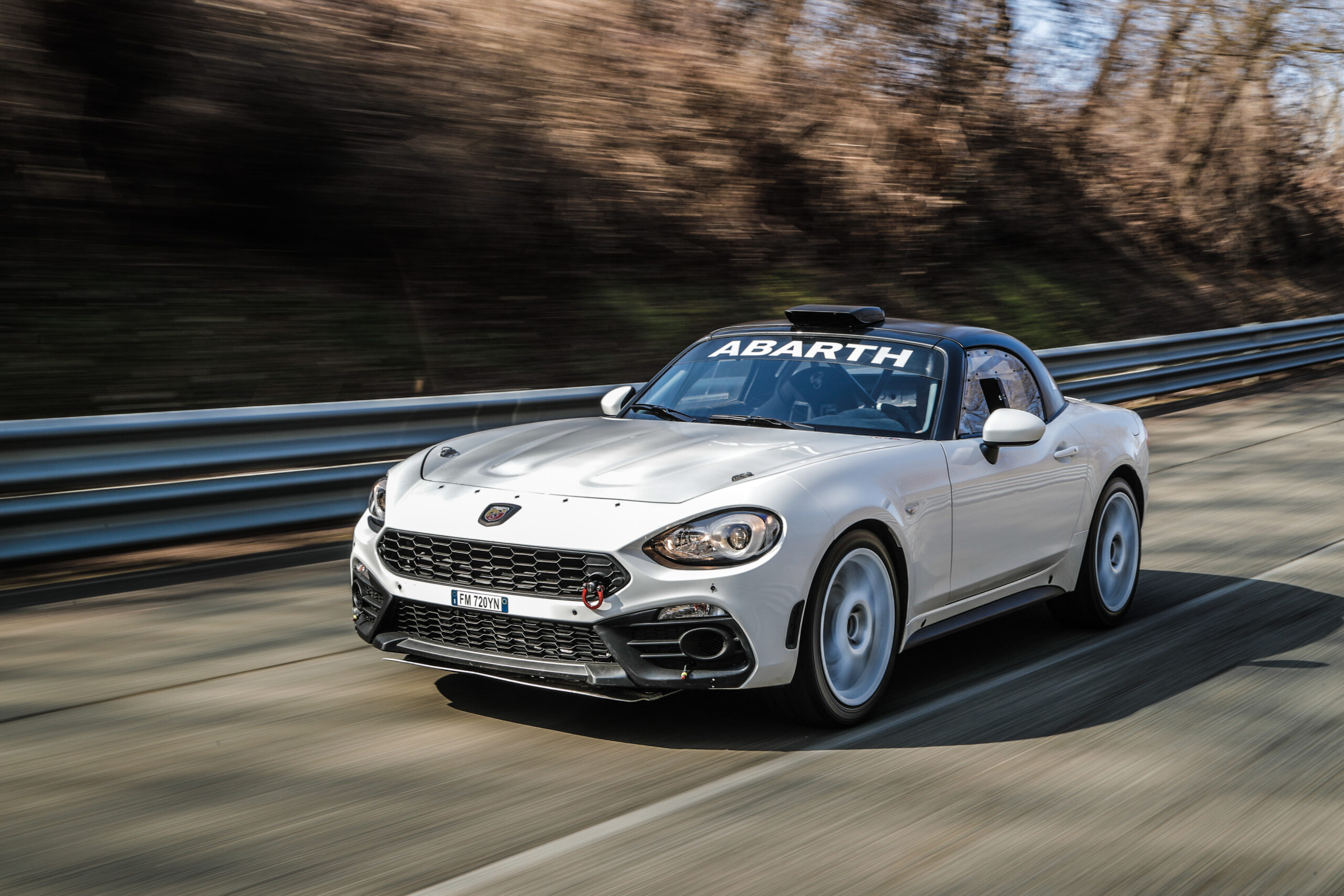
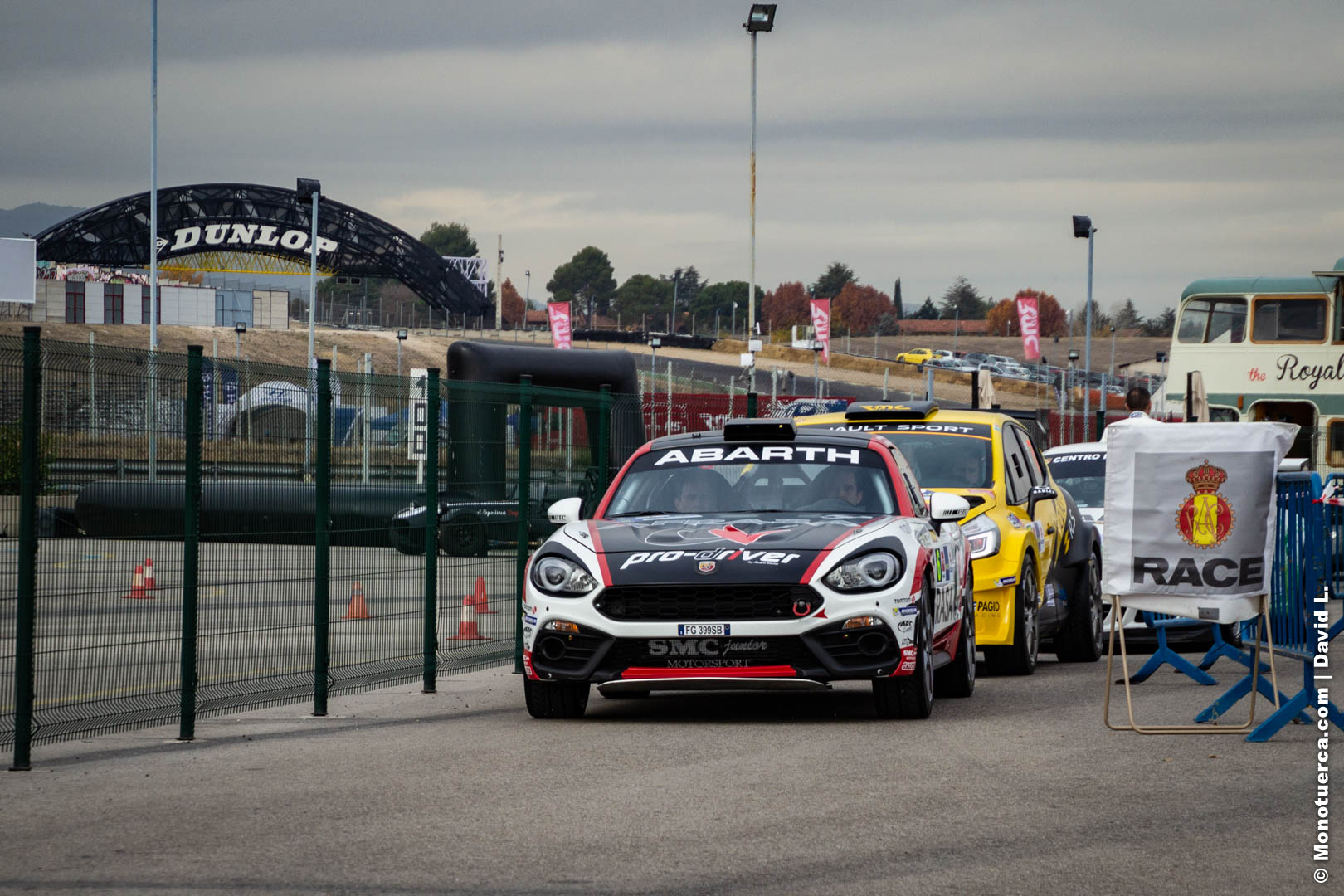
Modern rallying, for all its staggering technological proficiency, often borders on the clinical. The stages are ruled by all-wheel-drive, turbocharged hatchbacks that devour corners with absolute, unwavering grip. Yet, the romantic soul of the sport—the flamboyant, tail-happy spectacle that defined the 1970s—seemed lost to history. The FIA recognized this void and created the R-GT category, a set of regulations explicitly designed to coax exotic, rear-wheel-drive sports cars back into the forests and mountains. In 2016, the scorpion brand answered the call with breathtaking ferocity. Unveiled at the Geneva Motor Show, the Abarth 124 Spider Rally was a glorious, fire-spitting reincarnation of the legendary Fiat 124 Abarth Rally Group 4 that had conquered the European Championship four decades prior. It arrived on the scene as a lightweight, agile disruptor, tasked with battling the heavy-hitting Porsche 911 GT3s and anticipating the arrival of the Alpine A110 Rally in a magnificent revival of historic automotive rivalries.
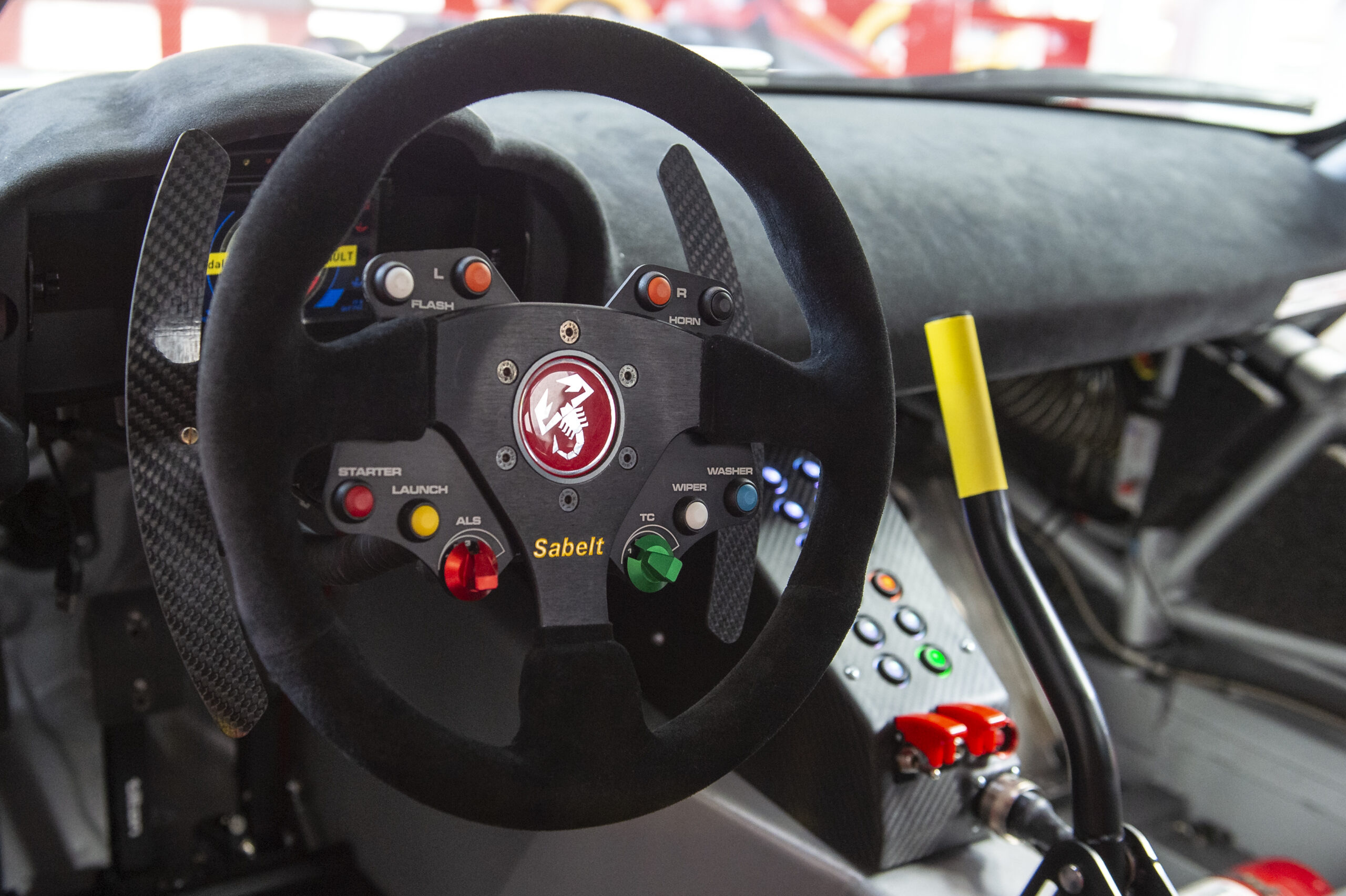
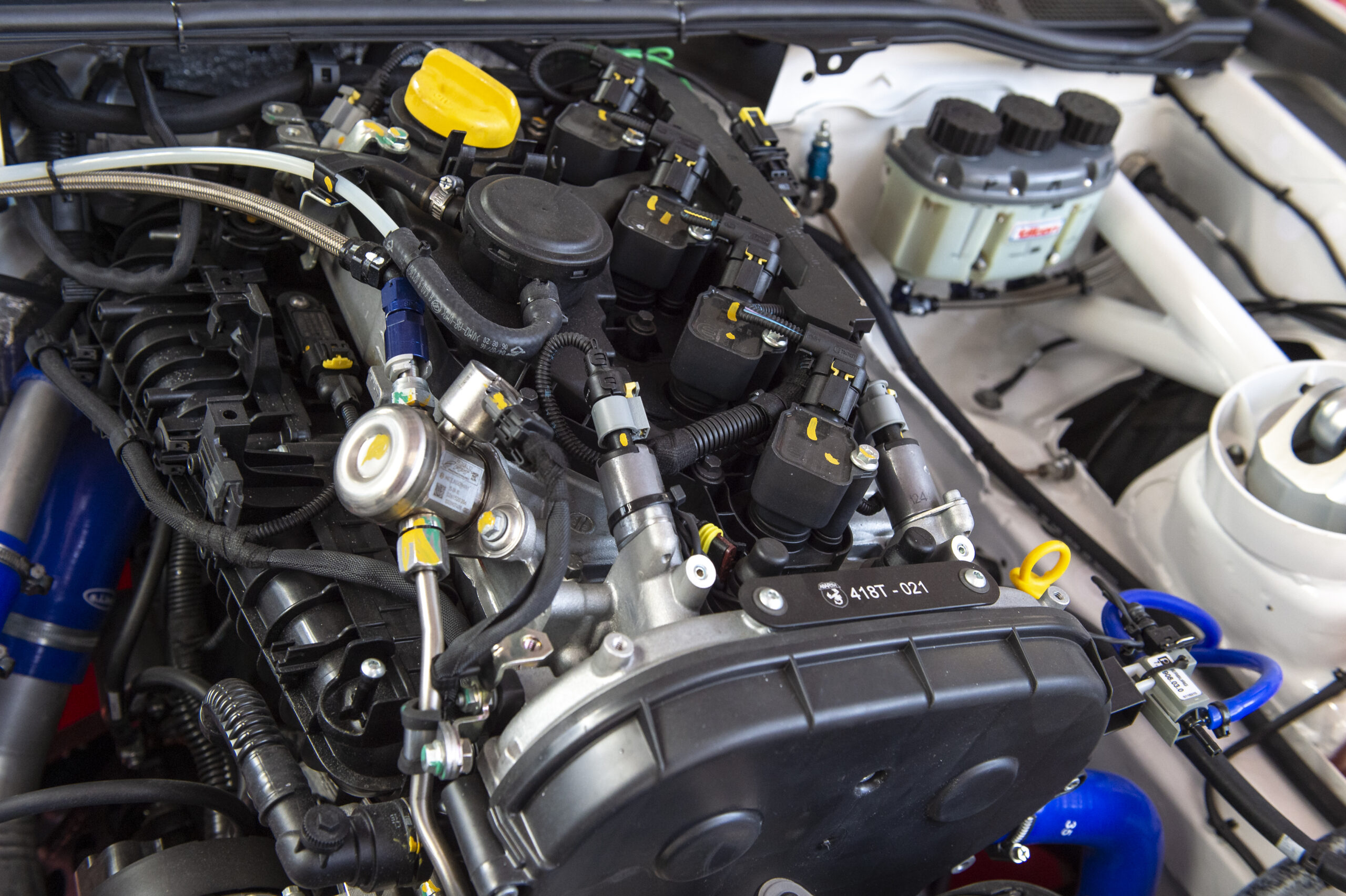
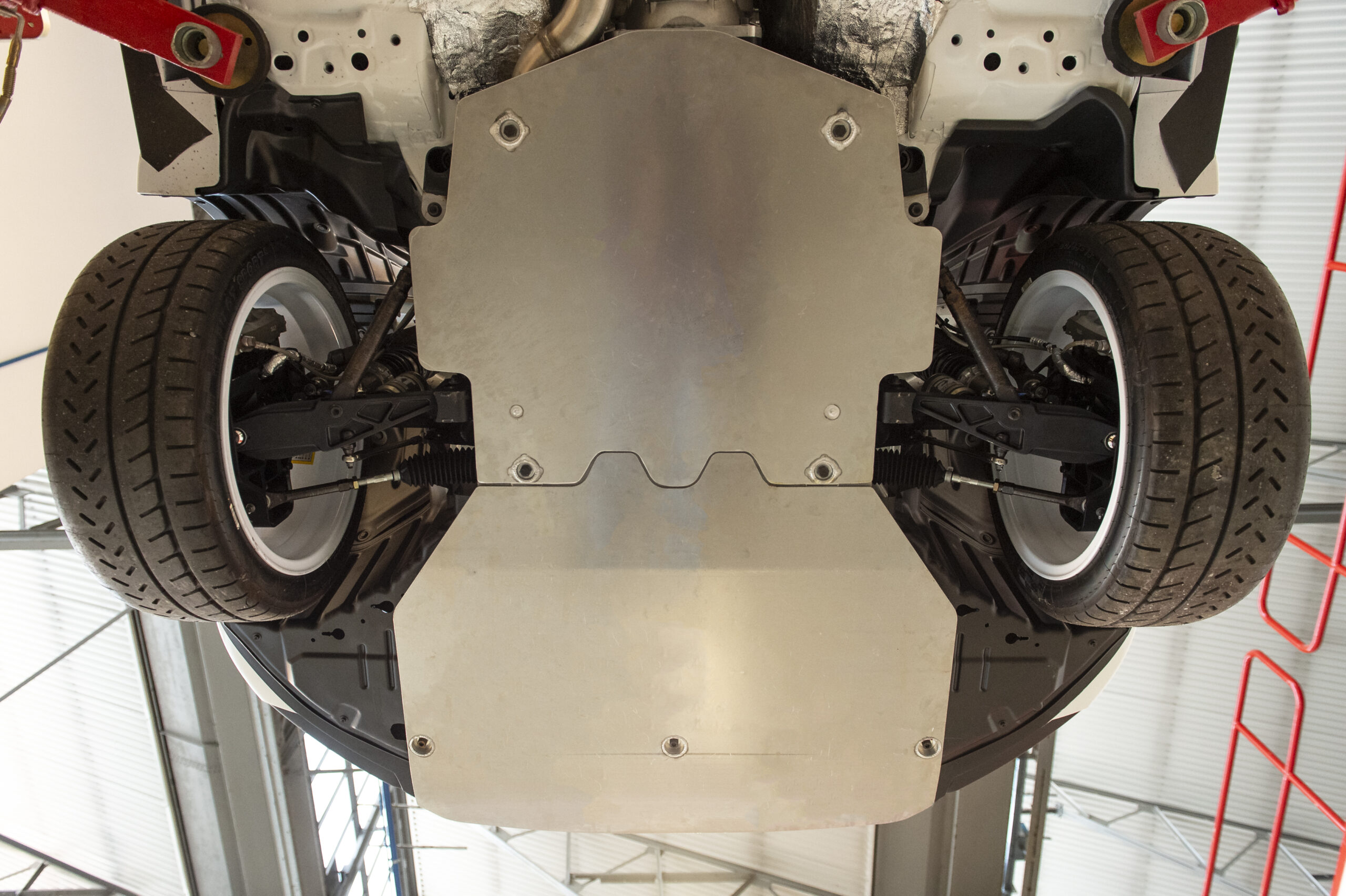
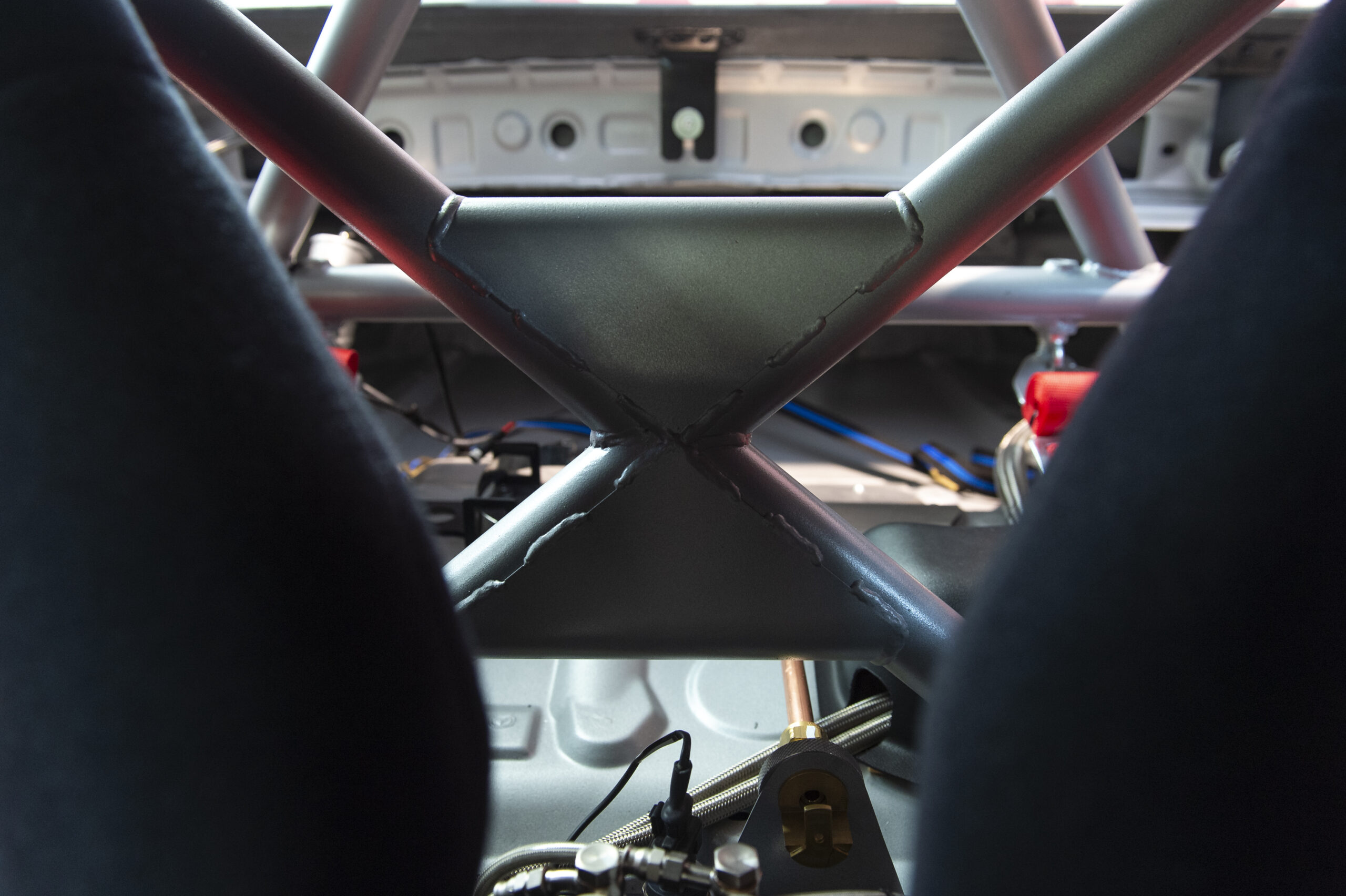
To achieve true rally supremacy, Abarth’s racing division in Turin realized the street car’s architecture required a radical, uncompromising overhaul. While the road-going Abarth 124 utilized a 1.4-liter MultiAir unit, the Rally variant demanded a heart capable of sustained violence. Engineers sourced the 1.8-liter (1750cc) ‘Bialbero’ turbocharged direct-injection inline-four from the Alfa Romeo 4C, mounting it longitudinally behind the front axle. This lightweight powerhouse was tuned to produce a venomous 300 brake horsepower, delivering a massive wave of torque perfectly calibrated for explosive corner-exit acceleration. Power was sent strictly to the rear wheels via a lightning-fast Sadev six-speed sequential gearbox and a mechanical limited-slip differential. The structural transformation was equally severe. The canvas soft top was entirely discarded in favor of a fixed, composite hardtop, working in tandem with the intricate FIA-homologated roll cage to vastly increase torsional rigidity. The suspension was completely redesigned, featuring four-way adjustable EXT Racing Shox to absorb the brutal impacts of rutted tarmac, while massive Brembo calipers ensured fade-free stopping power. Stripped to its absolute essence, the interior became a brutalist carbon-fiber workspace equipped with vital telemetry and deeply bolstered racing buckets. Visually, sitting low over white OZ Racing tarmac wheels, featuring an aggressive rear wing, roof scoop, and the iconic quad-fog-light pod, it was an aesthetic triumph that screamed motorsport pedigree.
When the Abarth 124 Rally hit the stages, it was a pure sensory assault. The aggressive anti-lag system fired a staccato of gunshots echoing through the alpine valleys, and its rear-wheel-drive layout meant it navigated tight hairpins in a constant, spectacular state of oversteer. It quickly transcended its status as a mere crowd-pleaser to become a devastatingly effective competitive weapon. Legendary French maverick François Delecour famously manhandled the Abarth through the icy precipices of the Monte Carlo Rally, proving its inherent balance and immense grip. But its true domination materialized in the FIA R-GT Cup. French driver Raphael Astier drove the Abarth to absolute supremacy in 2018, securing the R-GT World Championship, a feat brilliantly replicated by Italian Enrico Brazzoli in 2019. Beyond the global stage, it became a formidable force in the Italian Rally Championship (CIR) and the European Rally Championship (ERC). Drivers like Andrea Nucita utilized its immense tarmac grip and braking stability to regularly embarrass much more expensive, specialized four-wheel-drive R5 machinery on twisting asphalt events like the Rally di Roma Capitale.
The 2016 Abarth 124 Spider Rally occupies a sovereign and highly emotional space in the 21st-century motorsport pantheon. It was not engineered to challenge the overall World Rally Championship; it was built to remind the world why we fell in love with rallying in the first place. It proved that the essence of the sport—the howling engines, the aggressive counter-steering, the pure, unadulterated spectacle of a sports car fighting for traction on a narrow mountain pass—could successfully exist and thrive in the modern era. Although its production and competitive lifespan were ultimately constrained by the commercial fate of its road-going sibling, the Abarth 124 Rally succeeded brilliantly in turning back the clock. It stands as the ultimate modern tribute to the golden age of the Italian rally roadster, a glorious, sideways shooting star that brought the magic of rear-wheel drive back to the global stages.
Brand
Produced from
Portal
Vehicle category
Model line
Predecessor
Sucessor
Brand
Produced from
Portal
Vehicle category
Model line
Model generation
Predecessor
Sucessor
Submodel Overview
Modern rallying, for all its staggering technological proficiency, often borders on the clinical. The stages are ruled by all-wheel-drive, turbocharged hatchbacks that devour corners with absolute, unwavering grip. Yet, the romantic soul of the sport—the flamboyant, tail-happy spectacle that defined the 1970s—seemed lost to history. The FIA recognized this void and created the R-GT category, a set of regulations explicitly designed to coax exotic, rear-wheel-drive sports cars back into the forests and mountains. In 2016, the scorpion brand answered the call with breathtaking ferocity. Unveiled at the Geneva Motor Show, the Abarth 124 Spider Rally was a glorious, fire-spitting reincarnation of the legendary Fiat 124 Abarth Rally Group 4 that had conquered the European Championship four decades prior. It arrived on the scene as a lightweight, agile disruptor, tasked with battling the heavy-hitting Porsche 911 GT3s and anticipating the arrival of the Alpine A110 Rally in a magnificent revival of historic automotive rivalries.
To achieve true rally supremacy, Abarth’s racing division in Turin realized the street car’s architecture required a radical, uncompromising overhaul. While the road-going Abarth 124 utilized a 1.4-liter MultiAir unit, the Rally variant demanded a heart capable of sustained violence. Engineers sourced the 1.8-liter (1750cc) ‘Bialbero’ turbocharged direct-injection inline-four from the Alfa Romeo 4C, mounting it longitudinally behind the front axle. This lightweight powerhouse was tuned to produce a venomous 300 brake horsepower, delivering a massive wave of torque perfectly calibrated for explosive corner-exit acceleration. Power was sent strictly to the rear wheels via a lightning-fast Sadev six-speed sequential gearbox and a mechanical limited-slip differential. The structural transformation was equally severe. The canvas soft top was entirely discarded in favor of a fixed, composite hardtop, working in tandem with the intricate FIA-homologated roll cage to vastly increase torsional rigidity. The suspension was completely redesigned, featuring four-way adjustable EXT Racing Shox to absorb the brutal impacts of rutted tarmac, while massive Brembo calipers ensured fade-free stopping power. Stripped to its absolute essence, the interior became a brutalist carbon-fiber workspace equipped with vital telemetry and deeply bolstered racing buckets. Visually, sitting low over white OZ Racing tarmac wheels, featuring an aggressive rear wing, roof scoop, and the iconic quad-fog-light pod, it was an aesthetic triumph that screamed motorsport pedigree.
When the Abarth 124 Rally hit the stages, it was a pure sensory assault. The aggressive anti-lag system fired a staccato of gunshots echoing through the alpine valleys, and its rear-wheel-drive layout meant it navigated tight hairpins in a constant, spectacular state of oversteer. It quickly transcended its status as a mere crowd-pleaser to become a devastatingly effective competitive weapon. Legendary French maverick François Delecour famously manhandled the Abarth through the icy precipices of the Monte Carlo Rally, proving its inherent balance and immense grip. But its true domination materialized in the FIA R-GT Cup. French driver Raphael Astier drove the Abarth to absolute supremacy in 2018, securing the R-GT World Championship, a feat brilliantly replicated by Italian Enrico Brazzoli in 2019. Beyond the global stage, it became a formidable force in the Italian Rally Championship (CIR) and the European Rally Championship (ERC). Drivers like Andrea Nucita utilized its immense tarmac grip and braking stability to regularly embarrass much more expensive, specialized four-wheel-drive R5 machinery on twisting asphalt events like the Rally di Roma Capitale.
The 2016 Abarth 124 Spider Rally occupies a sovereign and highly emotional space in the 21st-century motorsport pantheon. It was not engineered to challenge the overall World Rally Championship; it was built to remind the world why we fell in love with rallying in the first place. It proved that the essence of the sport—the howling engines, the aggressive counter-steering, the pure, unadulterated spectacle of a sports car fighting for traction on a narrow mountain pass—could successfully exist and thrive in the modern era. Although its production and competitive lifespan were ultimately constrained by the commercial fate of its road-going sibling, the Abarth 124 Rally succeeded brilliantly in turning back the clock. It stands as the ultimate modern tribute to the golden age of the Italian rally roadster, a glorious, sideways shooting star that brought the magic of rear-wheel drive back to the global stages.
Tech Specs
Technical Specifications
Tech Specs
Technical Specifications
Engine
01
03
Internal combustion engine
Configuration
Fiat-Abarth Bialbero, Straight-4
Location
Front, longitudinally mounted
Construction
Aluminium block and head
Displacement (cc)
1,742 cc
Displacement (cu in)
106 cu in
Compression
-
Bore x Stroke
83.0 mm x 80.5 mm
Valvetrain
4 valves per cylinder, DOHC
Fuel feed
Direct Fuel Injection
Lubrication
-
Aspiration
Turbocharged
Output
Power (hp)
296 hp
Power (kW)
220 kW
Max power at
6,500 RPM
Torque (Nm)
602 Nm
Torque (ft lbs)
444 ft lbs
Max torque at
-
Drivetrain
02
03
Chassis
Type
Monocoque unibody
Material
Steel
Body
Material
Aluminium and steel
Transmission
Gearbox
Sadev, 6-speed sequential
Drive
Rear wheel drive
Suspension
Front
Five-link, 4-way adjustable coil-over racing shocks and coaxial adjustable ride height springs
Rear
Five-link, 4-way adjustable coil-over racing shocks and coaxial adjustable ride height springs
Steering
Type
Rack and pinion
Brakes
Front
Brembo ventilated discs Ø355 mm (14 in), 4-piston
Rear
Brembo ventilated discs Ø320 mm (12.6 in), 4-piston
Wheels
Front
18″ x 8″
Rear
18″ x 8″
Tires
Front
225/45R18C
Rear
225/45R18C
Dimensions and performance
03
03
Dimensions
Length (mm)
4,054 mm
Length (in)
159 in
Width (mm)
1,740 mm
Width (in)
68.5 in
Height (mm)
-
Height (in)
-
Wheelbase (mm)
2,309 mm
Wheelbase (in)
90.9 in
Weight (kg)
1,050 kg
Weight (lbs)
2,315 lbs
Performance
Power to weight
0.28 hp/kg
Top speed (km/h)
-
Top speed (mph)
-
0-100 km/h (0-60 mph)
-