
Alfa Romeo Giulietta Sprint Zagato ‘Coda Tronca’ (SZ2)
Brand
Produced from
Portal
Vehicle category
Model line
Model generation
Predecessor
Successor
Submodel Overview
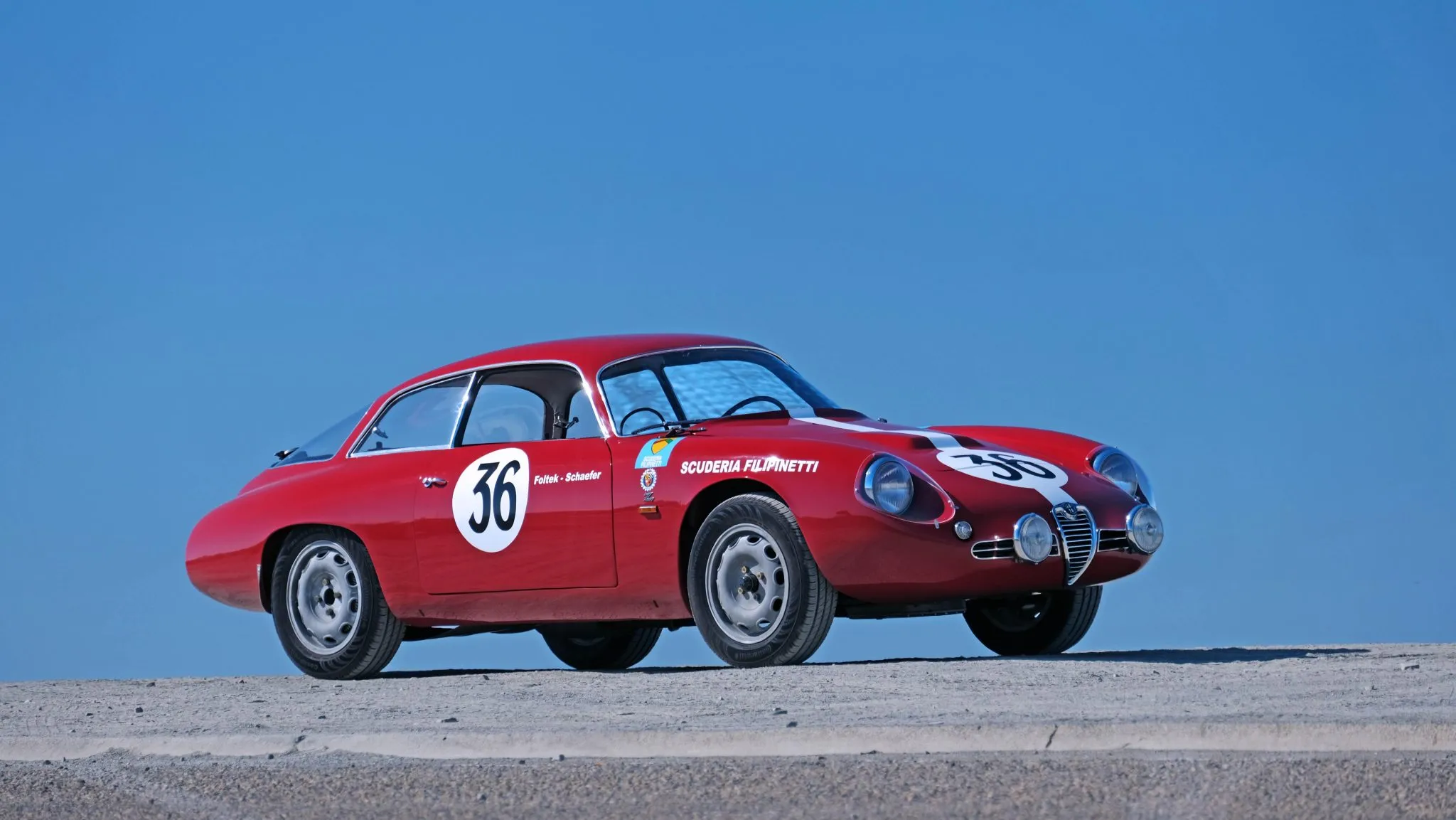
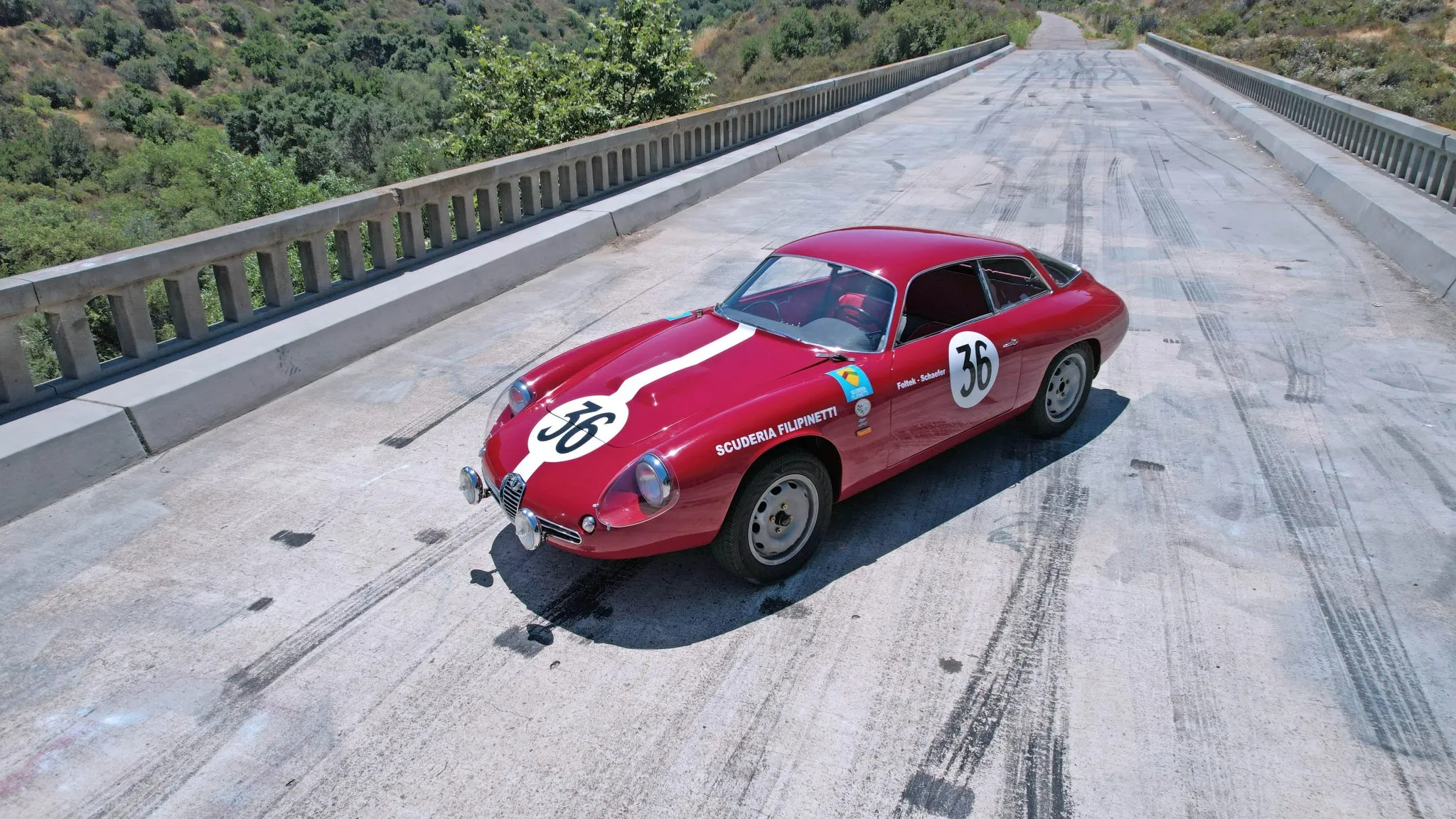
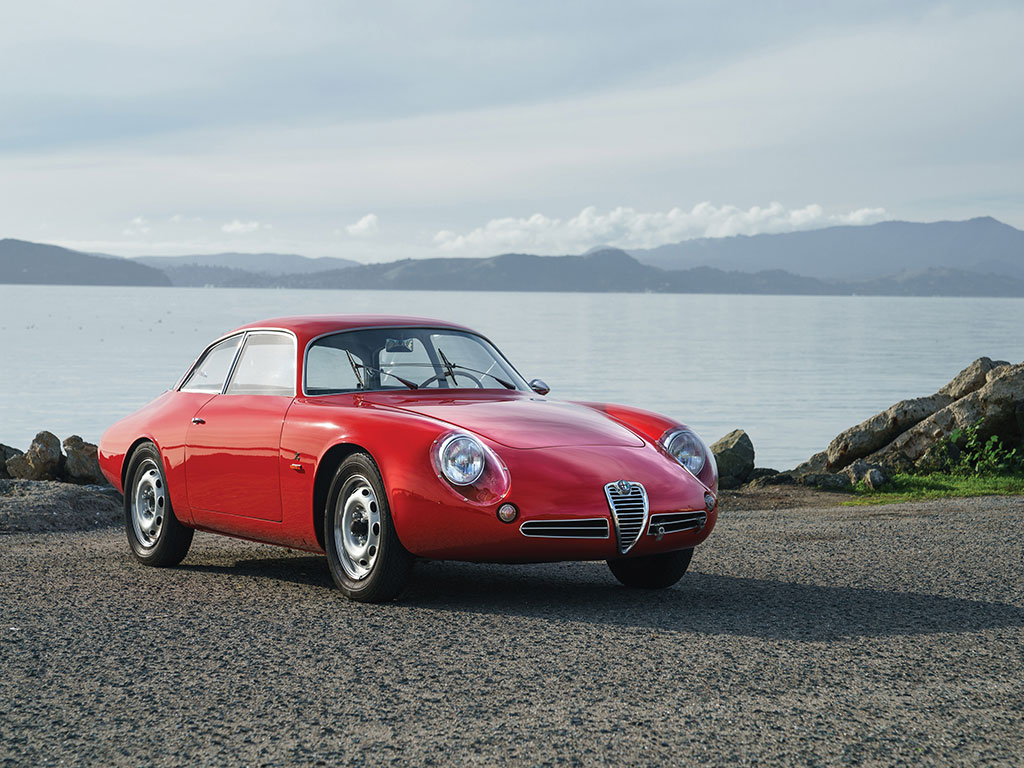
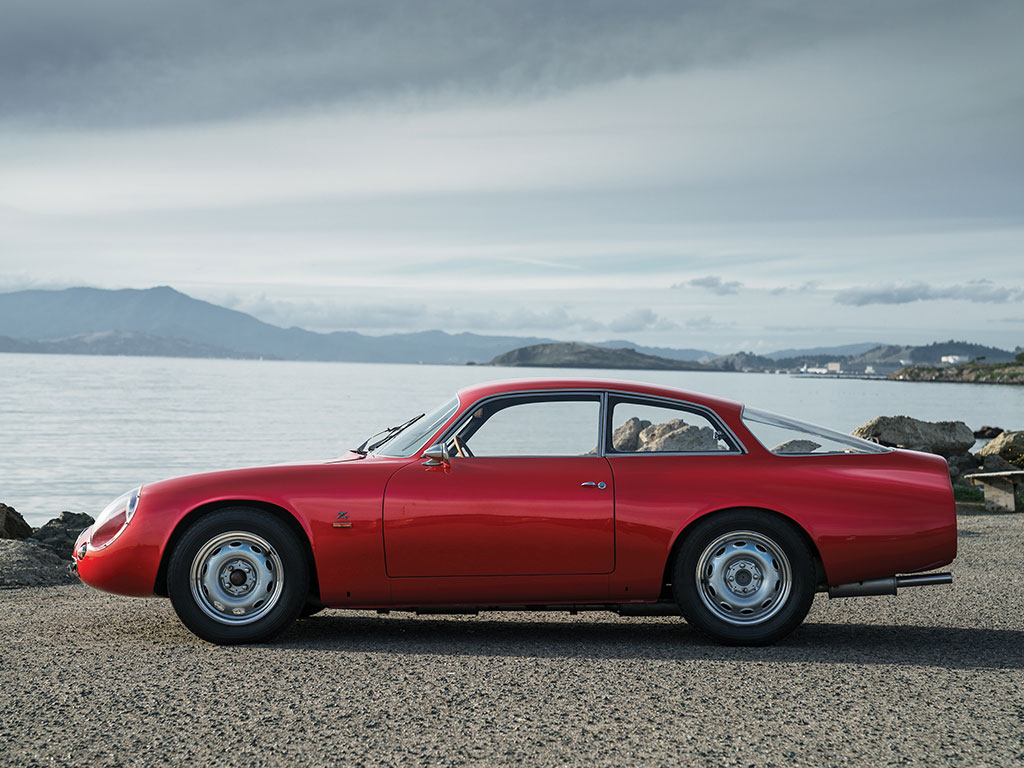
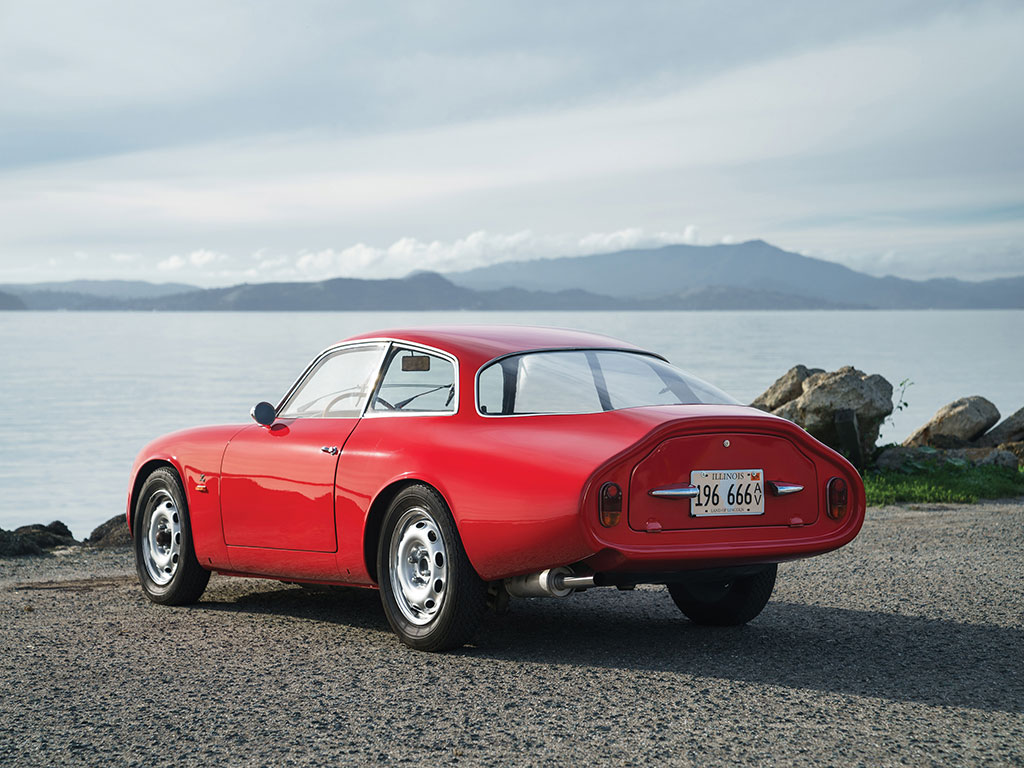
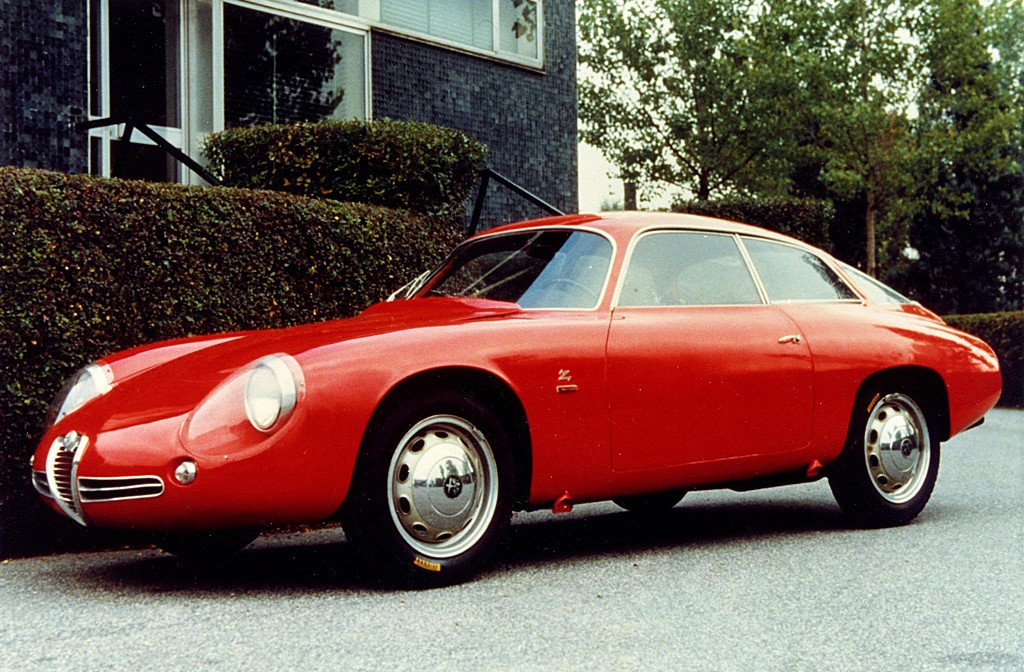
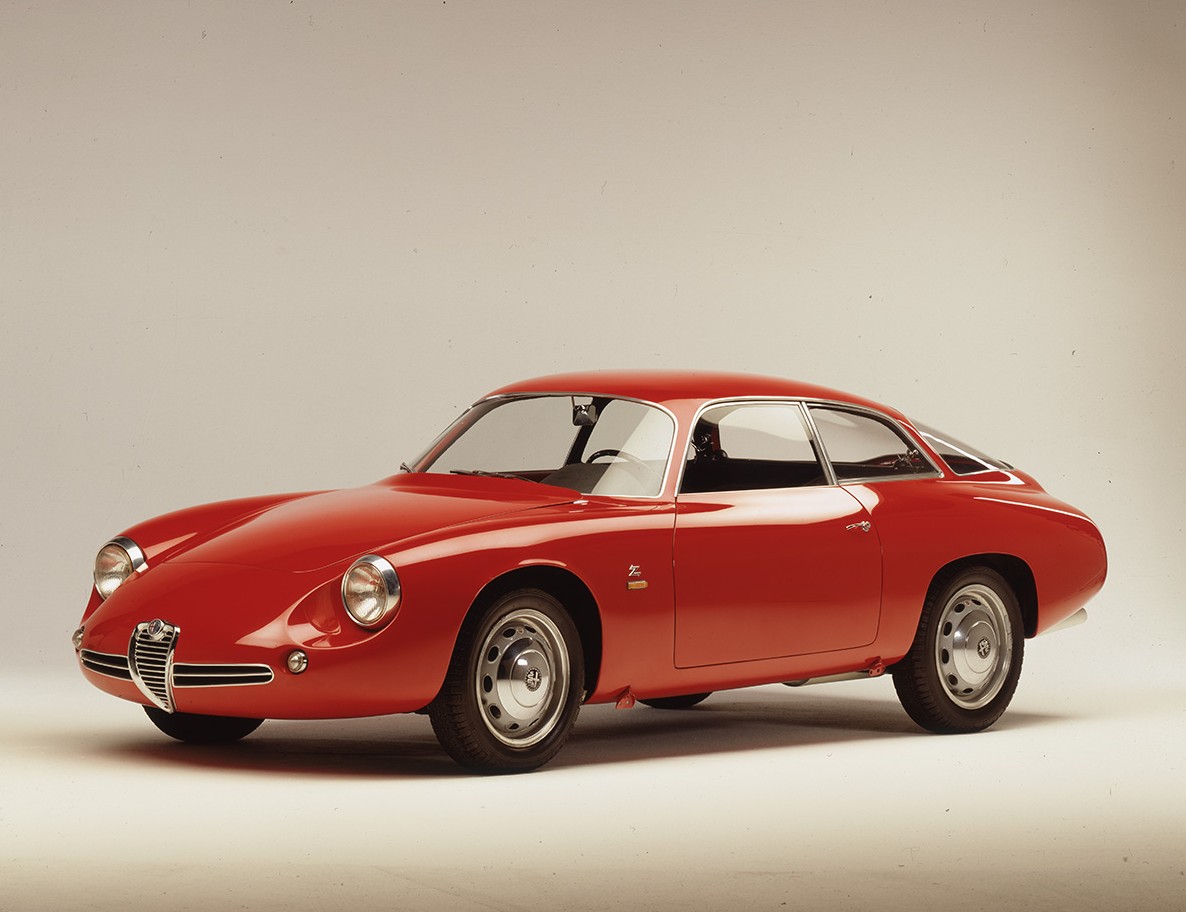
By 1961, Alfa Romeo’s Giulietta Sprint Zagato (SZ1)—the original “Coda Tonda” or round-tail—had already established itself as the undisputed tyrant of the 1.3-liter Grand Touring racing classes. However, in the high-stakes theater of European endurance racing, where the endless straights of Le Mans and Monza mercilessly exposed aerodynamic inefficiencies, even the slippery SZ was finding its limits against Colin Chapman’s featherweight Lotus Elite and Porsche’s incredibly slippery 356 B Carrera GTL Abarth. To maintain absolute supremacy, Alfa Romeo and the Milanese coachbuilder Zagato realized that coaxing more horsepower from the little 1290cc engine wasn’t enough; they had to cheat the wind. Drawing upon the pre-war aerodynamic theories of German aerodynamicist Dr. Wunibald Kamm, a young, visionary designer named Ercole Spada took the SZ and surgically severed its tail. The resulting 1961 Alfa Romeo Giulietta Sprint Zagato ‘Coda Tronca’ (SZ2) was a radical, bespoke homologation masterpiece that traded conventional mid-century beauty for mathematical aerodynamic perfection, redefining high-speed stability for small-displacement racers.
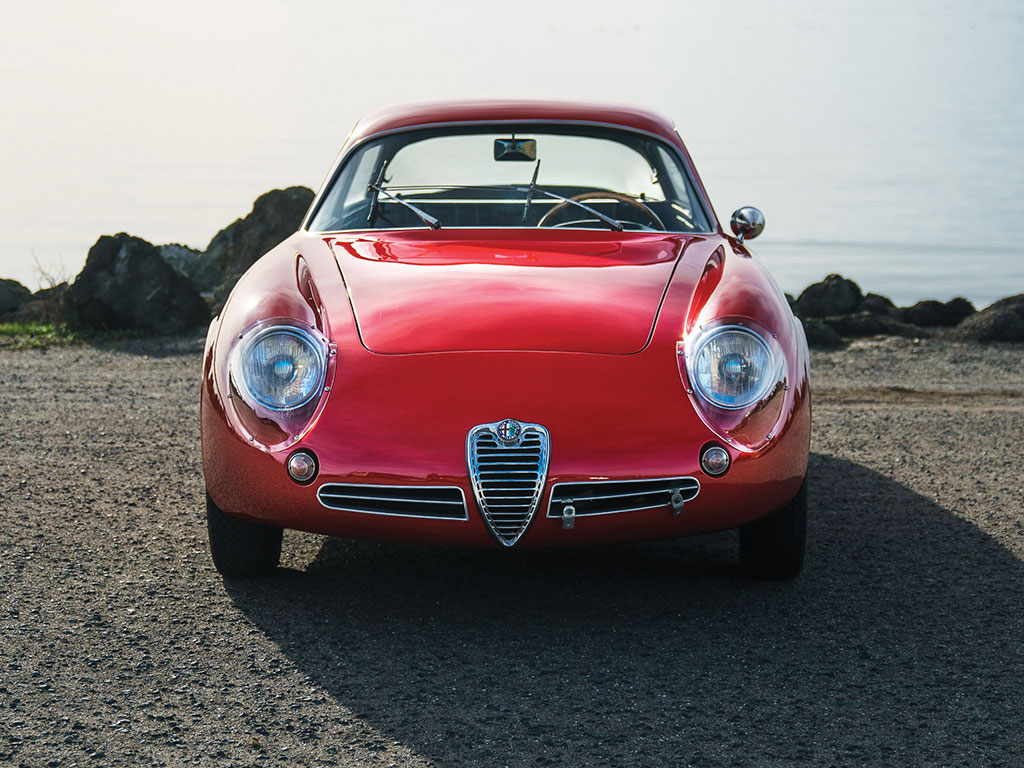
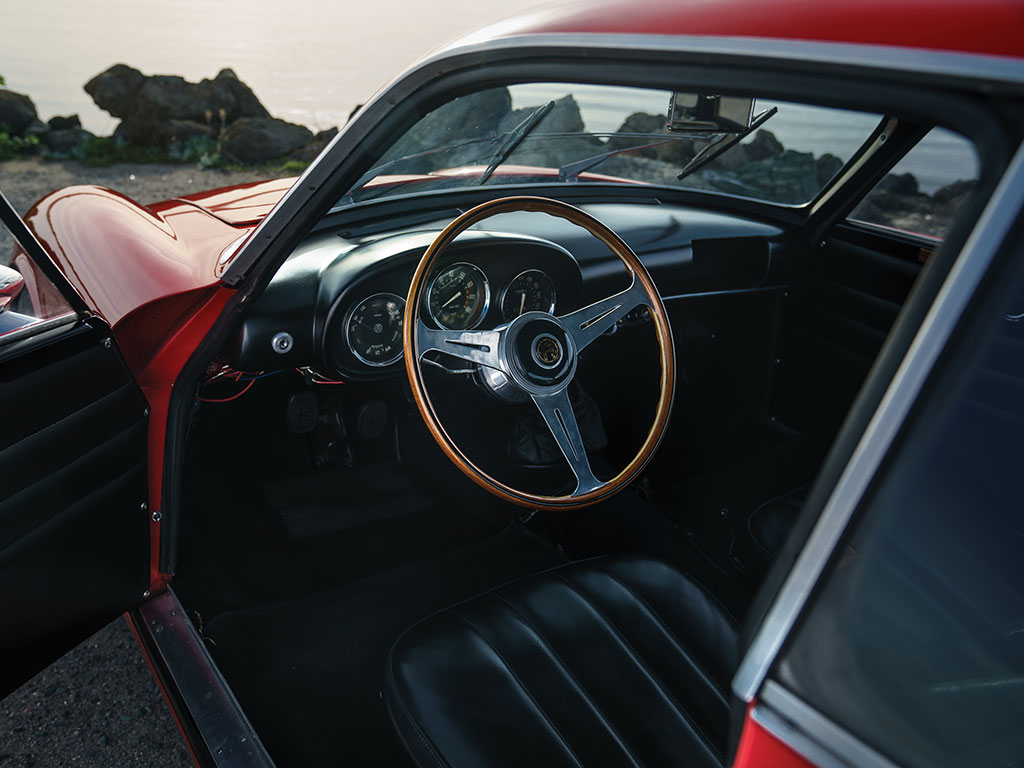
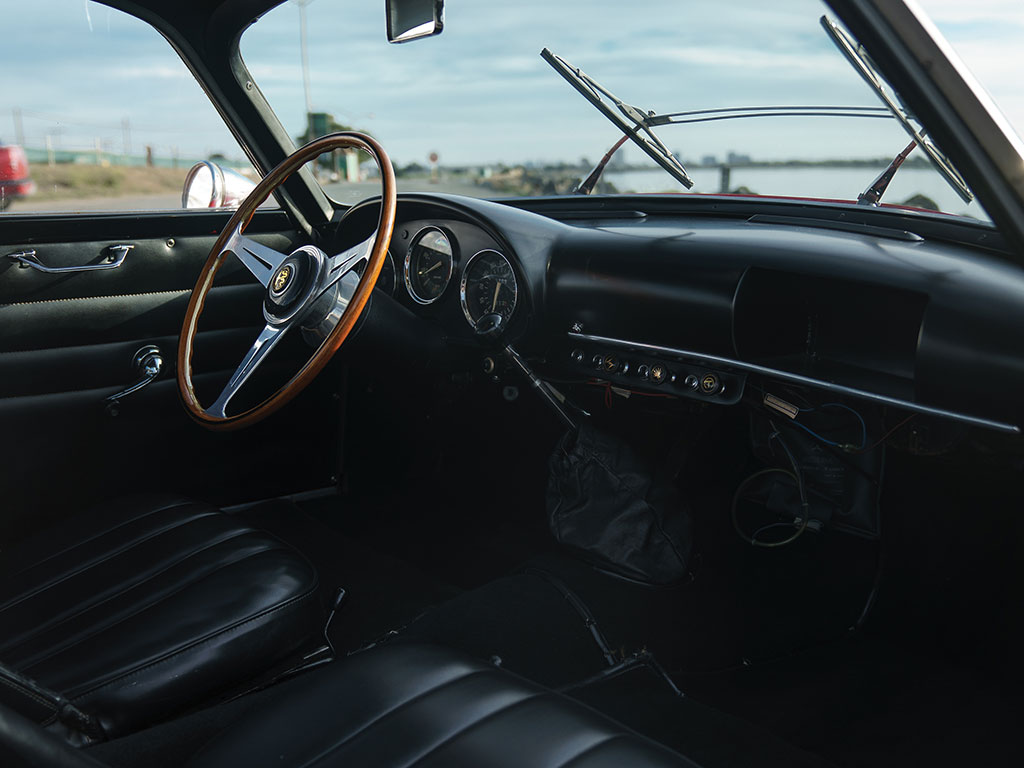
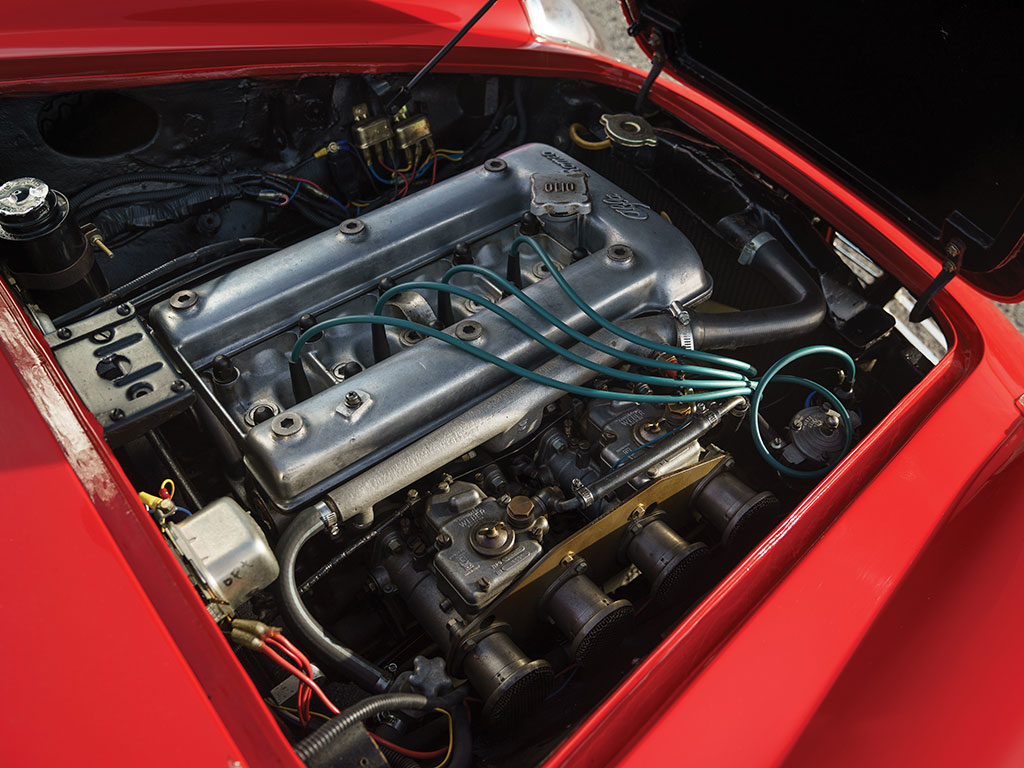
Beneath the drastically reshaped, hand-beaten aluminum skin, the SZ2 retained the spectacular mechanical underpinnings of the Tipo 101 chassis. The beating heart of the ‘Coda Tronca’ was the legendary 1,290cc Bialbero twin-cam inline-four. Massaged to the absolute limit for the era, it featured high-compression pistons, aggressive camshafts, and twin dual-choke Weber 40 DCOE carburettors to reliably produce over 100 brake horsepower—an astonishing figure for a 1.3-liter motor in 1961. But the true sorcery lay in the bodywork. Ercole Spada elongated the nose, lowered the roofline, and famously implemented the Kamm-tail design. By abruptly chopping off the rear end, the ‘Coda Tronca’ drastically reduced the turbulent aerodynamic wake and virtually eliminated the high-speed lift that plagued the earlier round-tail cars. Weighing a scant 740 kilograms, this aerodynamic efficiency allowed the tiny Alfa to breach the mythical 200 km/h (125 mph) barrier. To halt this newfound velocity, the SZ2 relied on massive, beautifully finned bi-metallic drum brakes, specifically employing a highly effective three-shoe setup at the front to combat fade. Inside, the cabin was a masterclass in spartan, purposeful design; bare painted metal, deeply bolstered lightweight Zagato bucket seats, and a prominent tachometer were the only concessions provided to the driver.
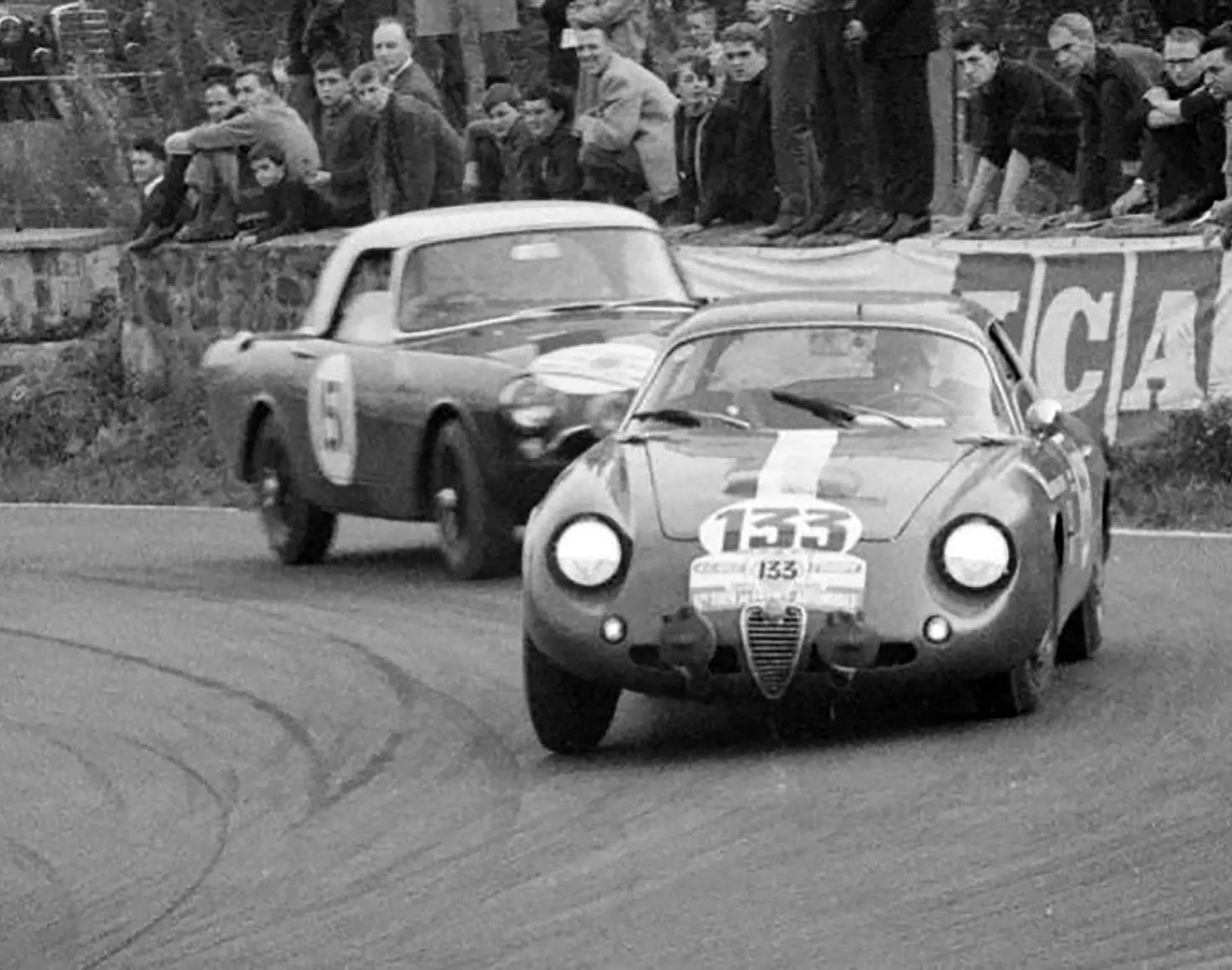
When the ‘Coda Tronca’ arrived on the grid, it was nothing short of a revelation. The chopped tail was initially met with aesthetic skepticism by the Italian press, but the stopwatch rapidly silenced all critics. The SZ2 possessed an undeniable aerodynamic superiority that allowed it to pull away from its rivals on fast, sweeping circuits. It utterly dominated the 1.3-liter Grand Touring class across Europe. At the 24 Hours of Le Mans, the Targa Florio, and the grueling Nürburgring 1000km, the ‘Coda Tronca’ humiliated the opposition, out-pacing the Lotus Elites and holding its own against vastly larger machinery. Legendary privateers and early works-supported drivers piloted the SZ2 with ruthless efficiency, capitalizing on its unburstable twin-cam engine and telepathic, drift-friendly chassis balance. It was the ultimate giant-killer of the early 1960s, a car that proved that aerodynamic intellect could overcome a massive displacement deficit. Production was incredibly scarce; it is believed that only around 30 to 44 examples of the ‘Coda Tronca’ were ever hammered out of aluminum by Zagato’s craftsmen, cementing its status as an elusive, highly coveted motorsport unicorn.
The legacy of the 1961 Alfa Romeo Giulietta SZ2 ‘Coda Tronca’ extends far beyond its impressive trophy cabinet. It validated the Kamm-tail aerodynamic theory in top-tier motorsport, pioneering a design philosophy that would quickly be adopted by heavyweights like the Ferrari 250 GTO, the Shelby Daytona Cobra Coupe, and the Ford GT40. For Alfa Romeo, it represented the ultimate, final evolution of the Giulietta line before the torch was passed to the legendary, bespoke-tubular-chassised Giulia TZ (Tubolare Zagato) series. Today, a genuine SZ2 ‘Coda Tronca’ is one of the most fiercely desired Alfa Romeos in existence, a crown jewel of any world-class collection. It stands immortalized in the pantheon of motoring as the absolute zenith of the Giulietta architecture—a featherweight, aerodynamically radical scalpel that sliced through the air and the competition with equal, devastating prejudice.
Brand
Produced from
Portal
Vehicle category
Model line
Model generation
Predecessor
Sucessor
Brand
Produced from
Portal
Vehicle category
Model line
Model generation
Predecessor
Sucessor
Submodel Overview
By 1961, Alfa Romeo’s Giulietta Sprint Zagato (SZ1)—the original “Coda Tonda” or round-tail—had already established itself as the undisputed tyrant of the 1.3-liter Grand Touring racing classes. However, in the high-stakes theater of European endurance racing, where the endless straights of Le Mans and Monza mercilessly exposed aerodynamic inefficiencies, even the slippery SZ was finding its limits against Colin Chapman’s featherweight Lotus Elite and Porsche’s incredibly slippery 356 B Carrera GTL Abarth. To maintain absolute supremacy, Alfa Romeo and the Milanese coachbuilder Zagato realized that coaxing more horsepower from the little 1290cc engine wasn’t enough; they had to cheat the wind. Drawing upon the pre-war aerodynamic theories of German aerodynamicist Dr. Wunibald Kamm, a young, visionary designer named Ercole Spada took the SZ and surgically severed its tail. The resulting 1961 Alfa Romeo Giulietta Sprint Zagato ‘Coda Tronca’ (SZ2) was a radical, bespoke homologation masterpiece that traded conventional mid-century beauty for mathematical aerodynamic perfection, redefining high-speed stability for small-displacement racers.
Beneath the drastically reshaped, hand-beaten aluminum skin, the SZ2 retained the spectacular mechanical underpinnings of the Tipo 101 chassis. The beating heart of the ‘Coda Tronca’ was the legendary 1,290cc Bialbero twin-cam inline-four. Massaged to the absolute limit for the era, it featured high-compression pistons, aggressive camshafts, and twin dual-choke Weber 40 DCOE carburettors to reliably produce over 100 brake horsepower—an astonishing figure for a 1.3-liter motor in 1961. But the true sorcery lay in the bodywork. Ercole Spada elongated the nose, lowered the roofline, and famously implemented the Kamm-tail design. By abruptly chopping off the rear end, the ‘Coda Tronca’ drastically reduced the turbulent aerodynamic wake and virtually eliminated the high-speed lift that plagued the earlier round-tail cars. Weighing a scant 740 kilograms, this aerodynamic efficiency allowed the tiny Alfa to breach the mythical 200 km/h (125 mph) barrier. To halt this newfound velocity, the SZ2 relied on massive, beautifully finned bi-metallic drum brakes, specifically employing a highly effective three-shoe setup at the front to combat fade. Inside, the cabin was a masterclass in spartan, purposeful design; bare painted metal, deeply bolstered lightweight Zagato bucket seats, and a prominent tachometer were the only concessions provided to the driver.
When the ‘Coda Tronca’ arrived on the grid, it was nothing short of a revelation. The chopped tail was initially met with aesthetic skepticism by the Italian press, but the stopwatch rapidly silenced all critics. The SZ2 possessed an undeniable aerodynamic superiority that allowed it to pull away from its rivals on fast, sweeping circuits. It utterly dominated the 1.3-liter Grand Touring class across Europe. At the 24 Hours of Le Mans, the Targa Florio, and the grueling Nürburgring 1000km, the ‘Coda Tronca’ humiliated the opposition, out-pacing the Lotus Elites and holding its own against vastly larger machinery. Legendary privateers and early works-supported drivers piloted the SZ2 with ruthless efficiency, capitalizing on its unburstable twin-cam engine and telepathic, drift-friendly chassis balance. It was the ultimate giant-killer of the early 1960s, a car that proved that aerodynamic intellect could overcome a massive displacement deficit. Production was incredibly scarce; it is believed that only around 30 to 44 examples of the ‘Coda Tronca’ were ever hammered out of aluminum by Zagato’s craftsmen, cementing its status as an elusive, highly coveted motorsport unicorn.
The legacy of the 1961 Alfa Romeo Giulietta SZ2 ‘Coda Tronca’ extends far beyond its impressive trophy cabinet. It validated the Kamm-tail aerodynamic theory in top-tier motorsport, pioneering a design philosophy that would quickly be adopted by heavyweights like the Ferrari 250 GTO, the Shelby Daytona Cobra Coupe, and the Ford GT40. For Alfa Romeo, it represented the ultimate, final evolution of the Giulietta line before the torch was passed to the legendary, bespoke-tubular-chassised Giulia TZ (Tubolare Zagato) series. Today, a genuine SZ2 ‘Coda Tronca’ is one of the most fiercely desired Alfa Romeos in existence, a crown jewel of any world-class collection. It stands immortalized in the pantheon of motoring as the absolute zenith of the Giulietta architecture—a featherweight, aerodynamically radical scalpel that sliced through the air and the competition with equal, devastating prejudice.
Tech Specs
Technical Specifications
Tech Specs
Technical Specifications
Engine
01
03
Internal combustion engine
Configuration
Alfa Romeo Twin Cam (Bialbero), Inline-4
Location
Front, longitudinally mounted
Construction
Aluminium alloy block and head
Displacement (cc)
1,290 cc
Displacement (cu in)
78.7 cu in
Compression
9.7:1
Bore x Stroke
74.0 mm x 75.0 mm
Valvetrain
2 valves per cylinder, DOHC
Fuel feed
2 x Weber 40 DCOE carburetors
Lubrication
Wet sump
Aspiration
Naturally aspirated
Output
Power (hp)
100 hp
Power (kW)
75 kW
Max power at
6,500 RPM
Torque (Nm)
113 Nm
Torque (ft lbs)
83 ft lbs
Max torque at
5,500 RPM
Drivetrain
02
03
Chassis
Type
Shortened unibody platform from Giulietta Spider
Material
Steel
Body
Material
Aluminium alloy
Transmission
Gearbox
Alfa Romeo, 5-speed manual
Drive
Rear Wheel Drive
Suspension
Front
Independent, double wishbones, coil springs, telescopic dampers, anti-roll bar
Rear
Live axle, trailing arms, upper A-bracket, coil springs, telescopic dampers
Steering
Type
Worm and roller, unassisted
Brakes
Front
Solid discs Ø267 mm (Girling)
Rear
Finned Aluminium Drum brakes Ø254 mm
Wheels
Front
4.5" x 15" (Borrani bi-metal or pressed steel)
Rear
4.5" x 15" (Borrani bi-metal or pressed steel)
Tires
Front
155 R15 (Pirelli Cinturato)
Rear
155 R15 (Pirelli Cinturato)
Dimensions and performance
03
03
Dimensions
Length (mm)
3,970 mm
Length (in)
156.3 in
Width (mm)
1,540 mm
Width (in)
60.6 in
Height (mm)
1,250 mm
Height (in)
49.2 in
Wheelbase (mm)
2,250 mm
Wheelbase (in)
88.6 in
Weight (kg)
740 kg
Weight (lbs)
1,631 lbs
Performance
Power to weight
~0.14 hp/kg
Top speed (km/h)
215 km/h
Top speed (mph)
133 mph
0-100 km/h (0-60 mph)
~10.5 s