
Porsche 911 Carrera RS 3.0
Brand
Produced from
Portal
Vehicle category
Model line
Model generation
Predecessor
Successor
Submodel Overview
As the dust settled on the triumphant 1973 racing season, the engineering department in Zuffenhausen found no time to rest on their laurels. The delicate, chrome-bumpered Porsche 911 Carrera RS 2.7 had been a resounding commercial and competitive success, but the motorsport landscape was evolving with terrifying speed. The FIA Group 4 regulations were becoming a playground for increasingly muscular machinery, spearheaded by the aggressively aerodynamic BMW E9 3.0 CSL ‘Batmobile’ and the brute force of the V8-powered De Tomaso Pantera. Furthermore, global safety regulations had forced Porsche to transition the 911 into the impact-bumpered G-Series generation for 1974. To maintain their iron grip on international GT racing, Porsche needed to homologate a wider, more powerful, and aerodynamically superior weapon based on this new G-Series shell. Because the FIA rules allowed an “evolution” of an existing homologated car provided a minimum of 100 units were built—a number Porsche miraculously skirted by producing just 54 examples—the 1974 Porsche 911 Carrera RS 3.0 was born. Costing nearly double the price of the outgoing 2.7 RS, it was not merely a sports car; it was a thinly veiled, uncompromising race car draped in a license plate, serving as the absolute apex of naturally aspirated, air-cooled performance for the discerning privateer.
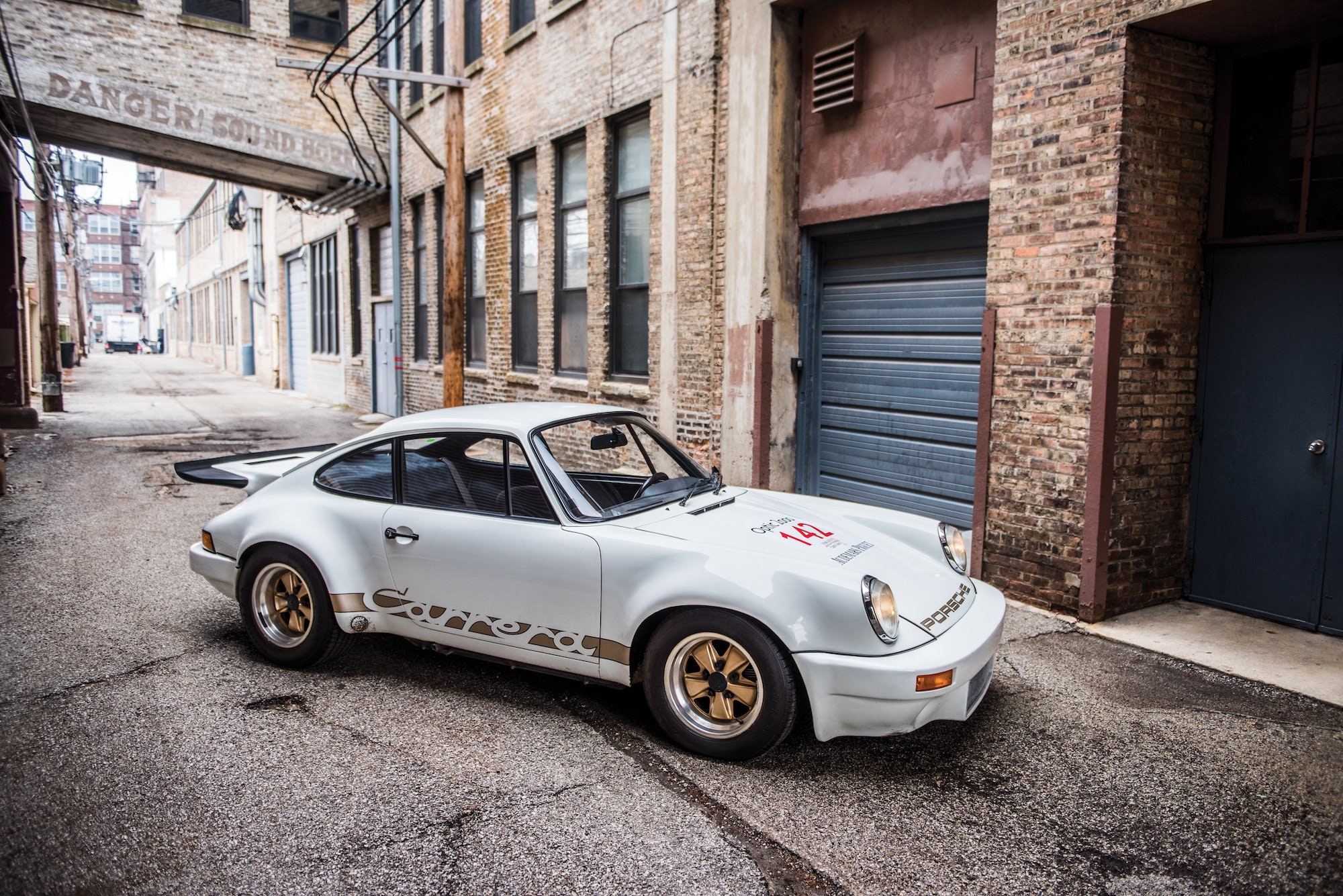
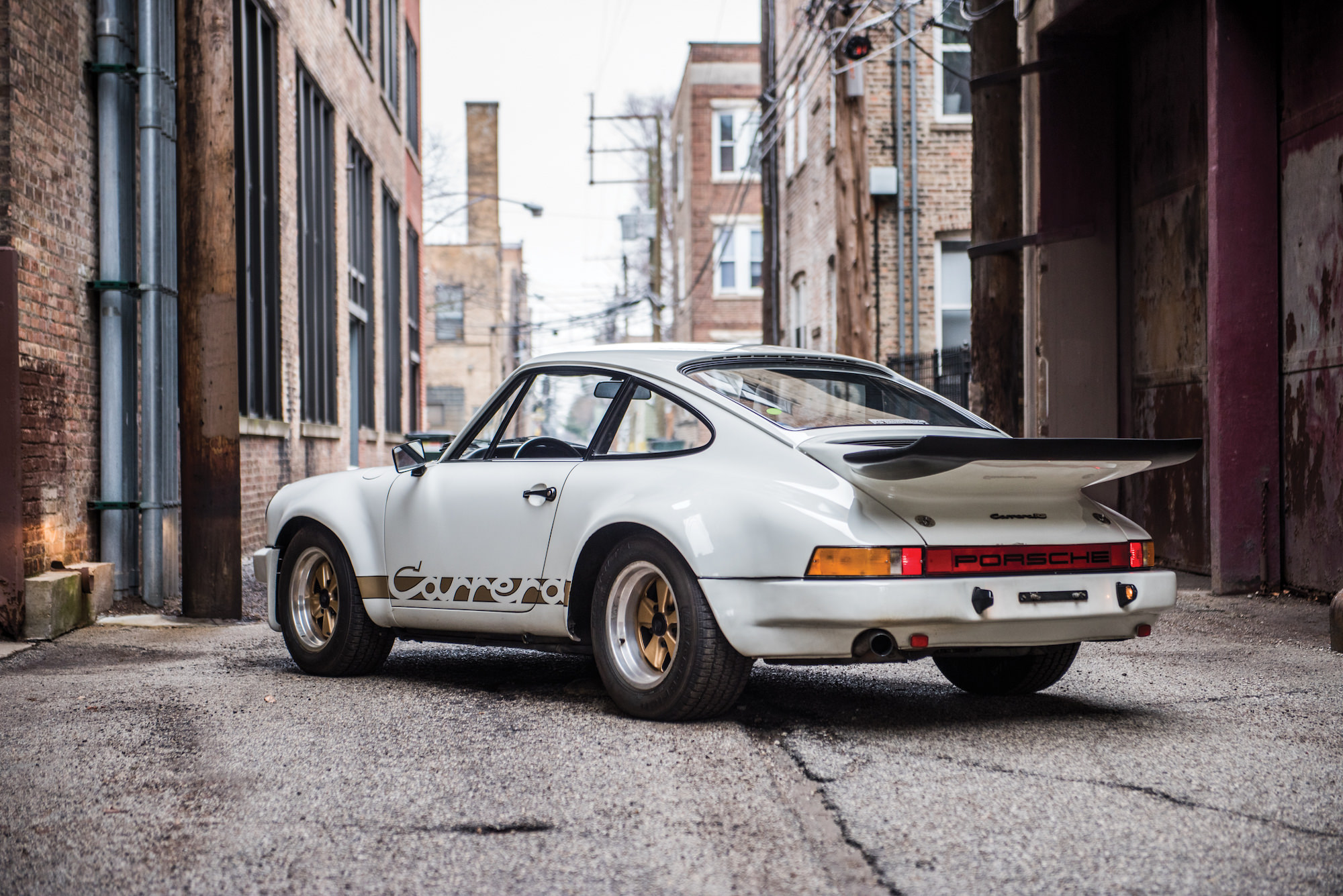
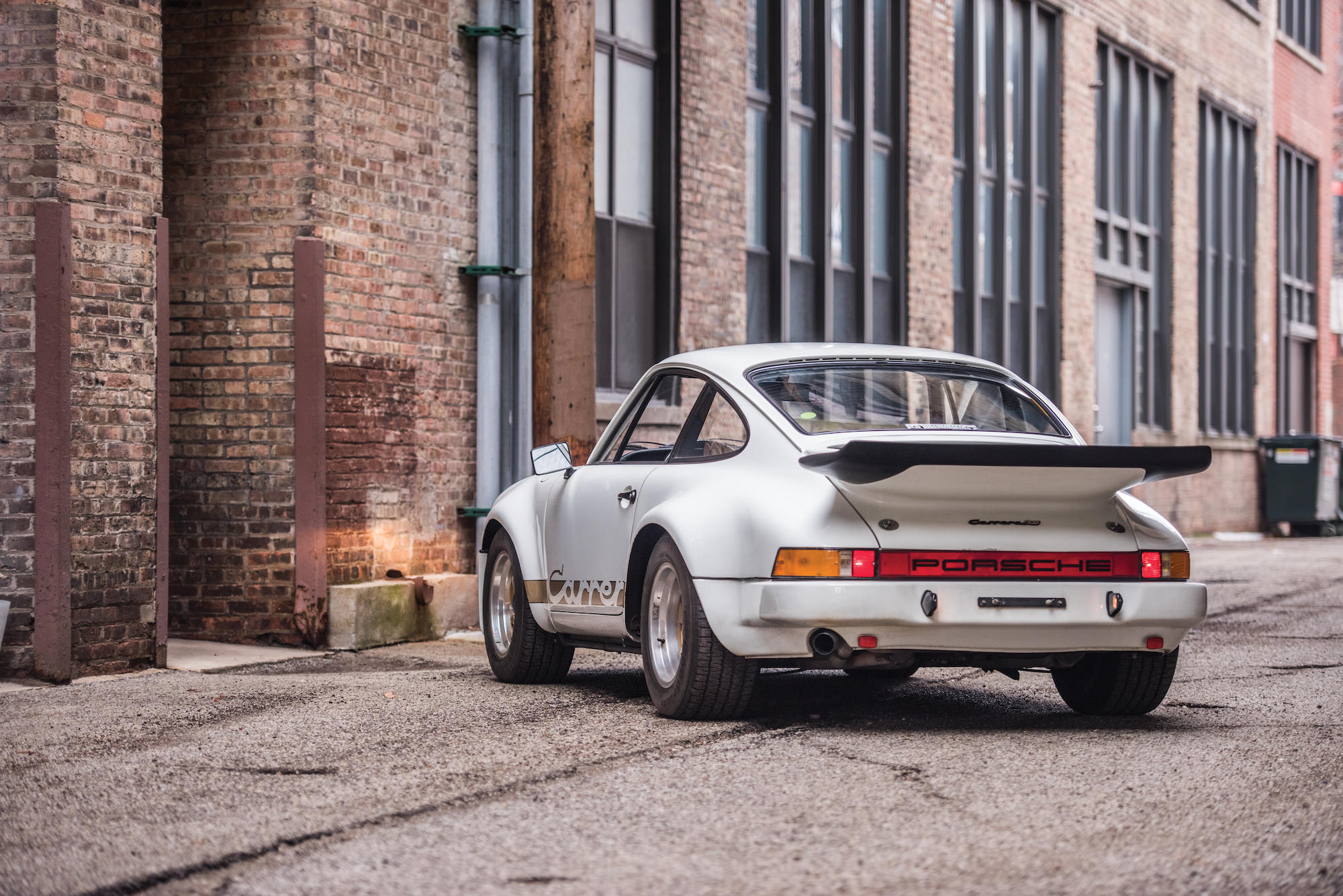
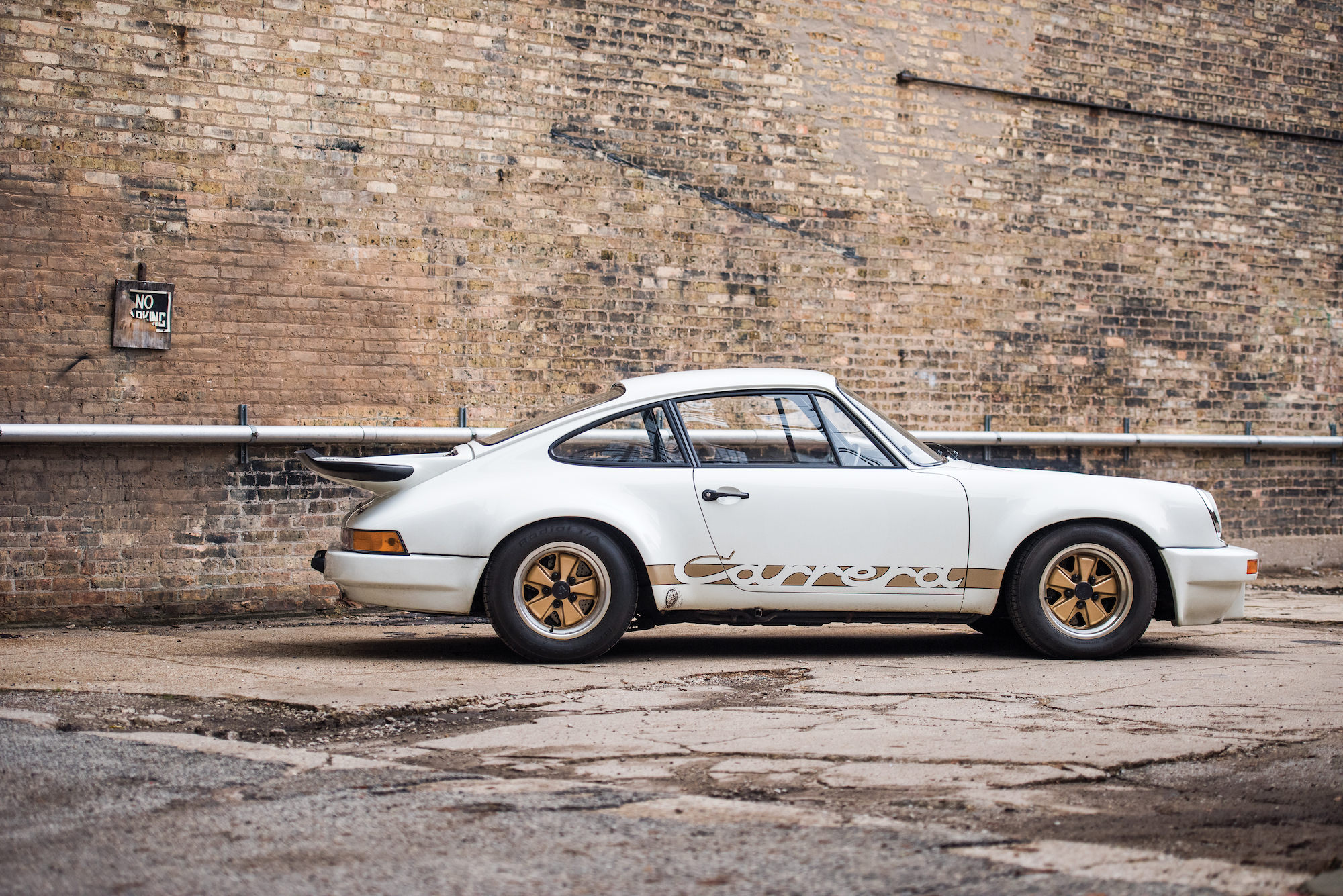
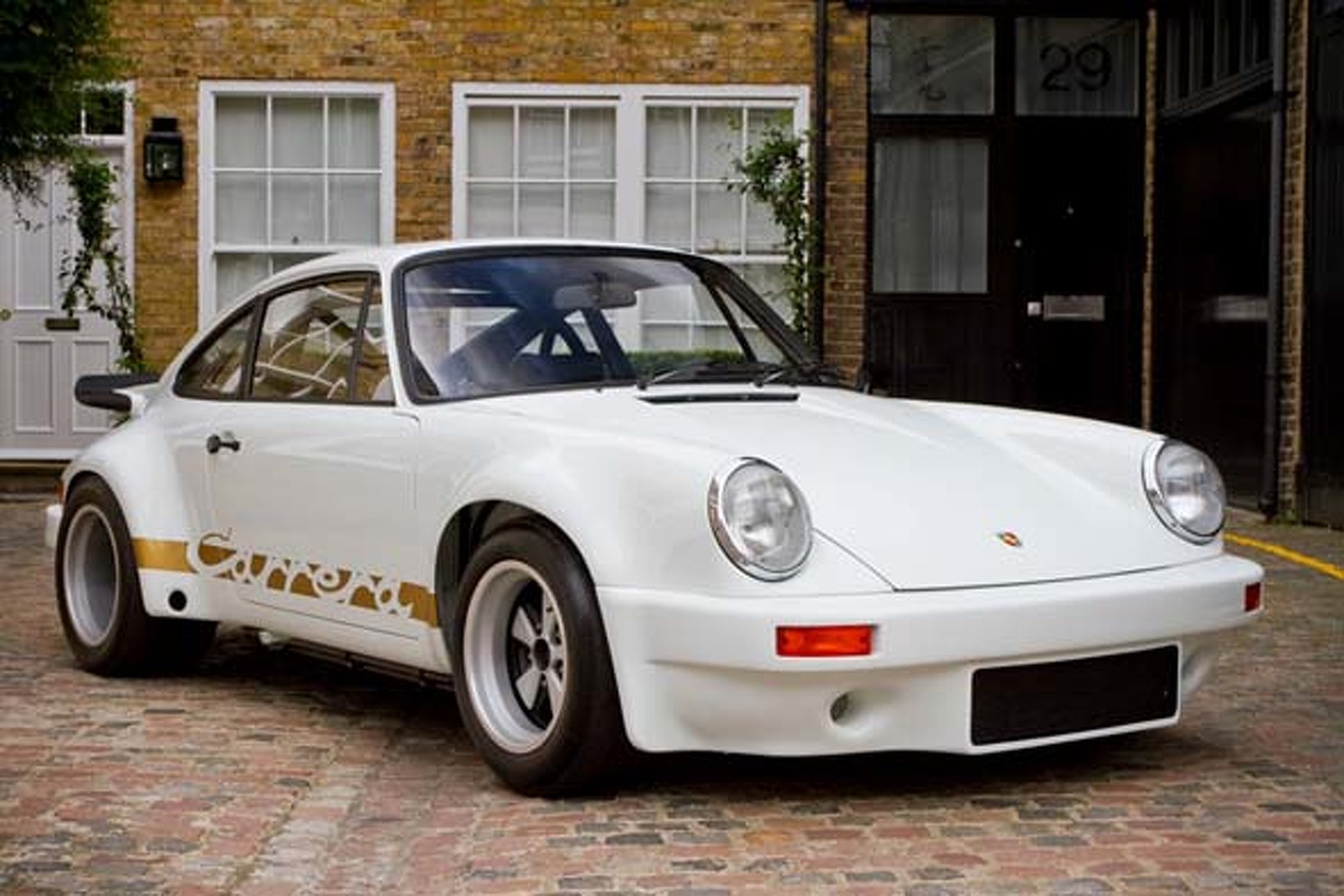
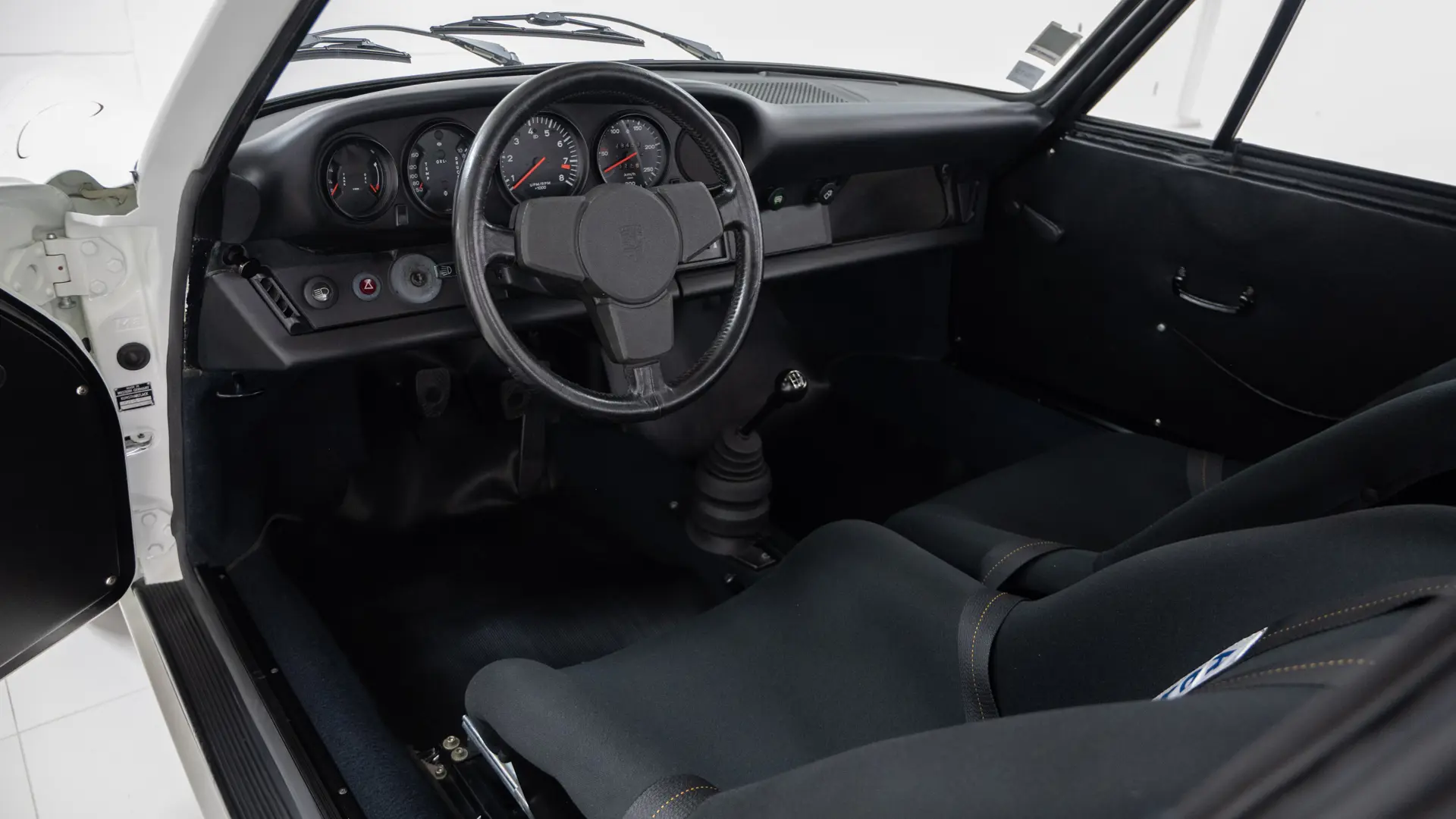
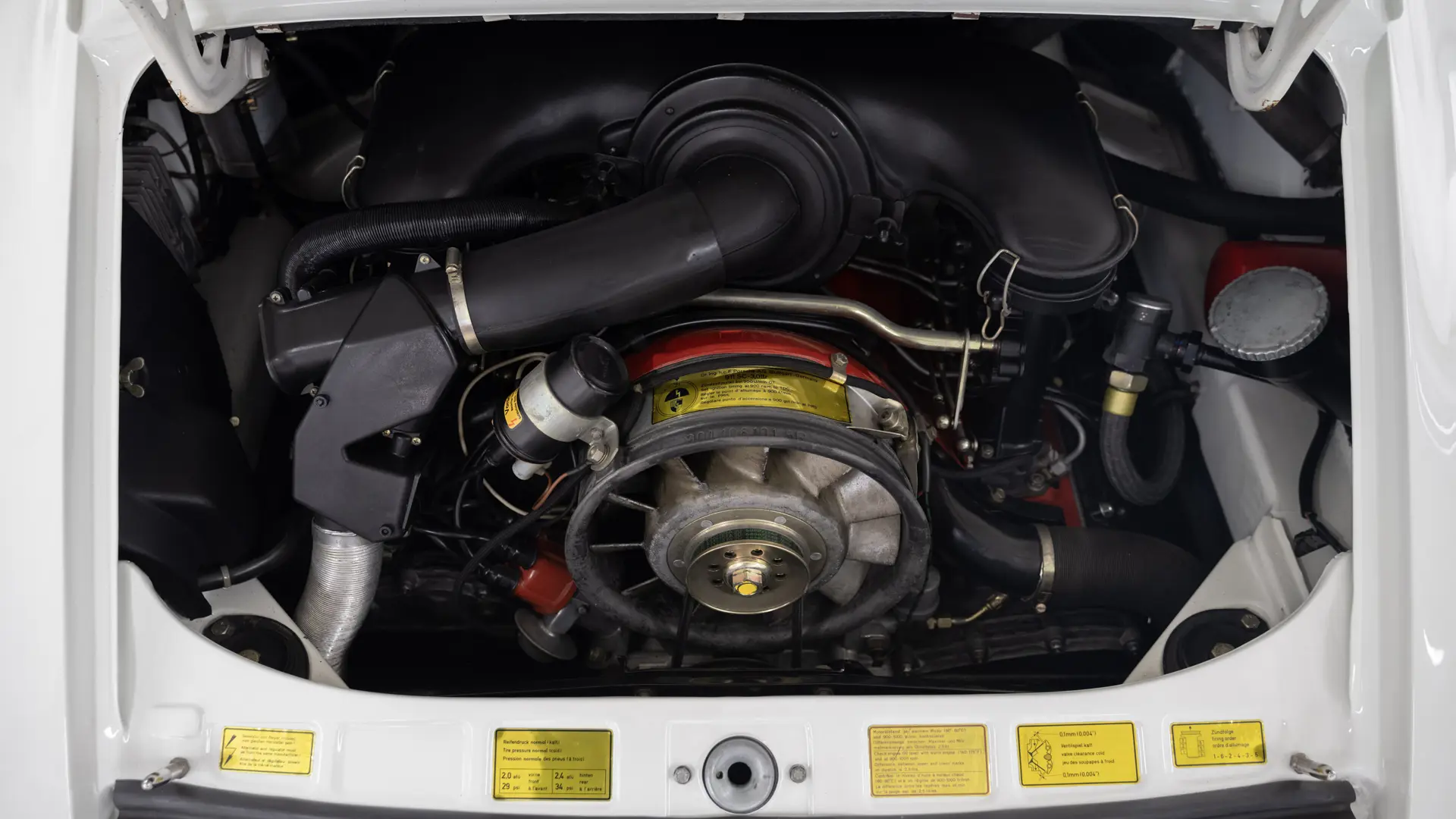
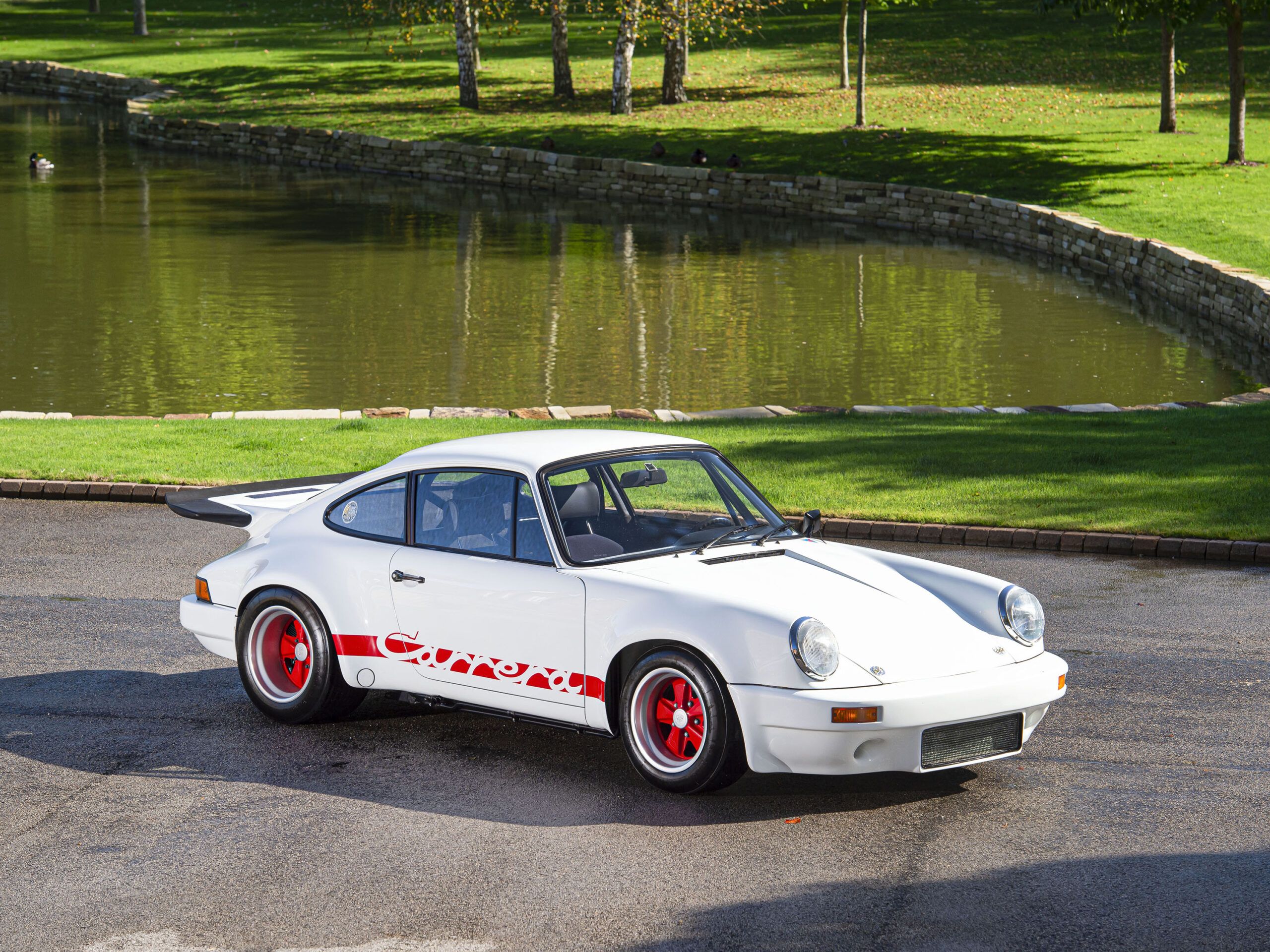
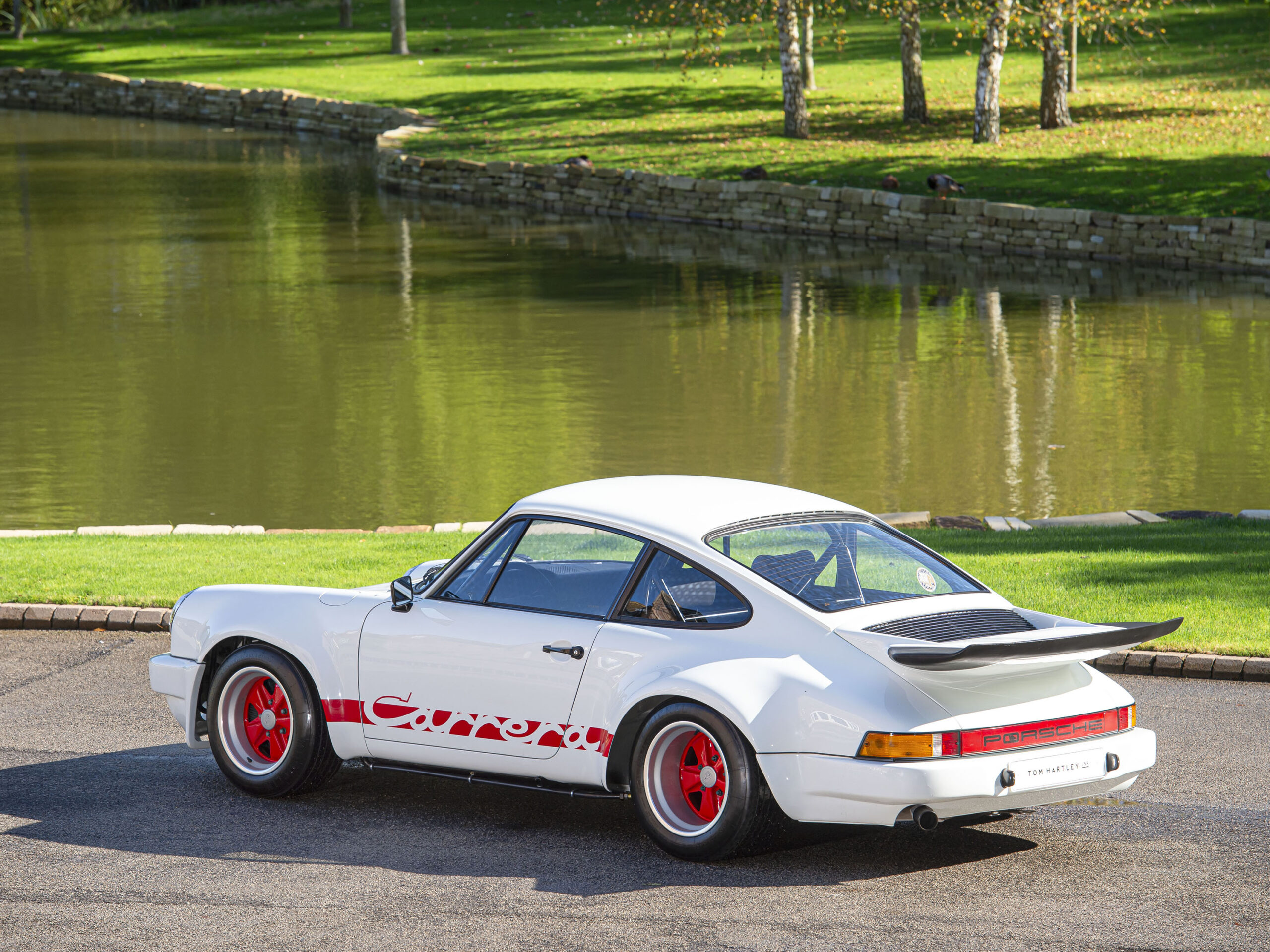
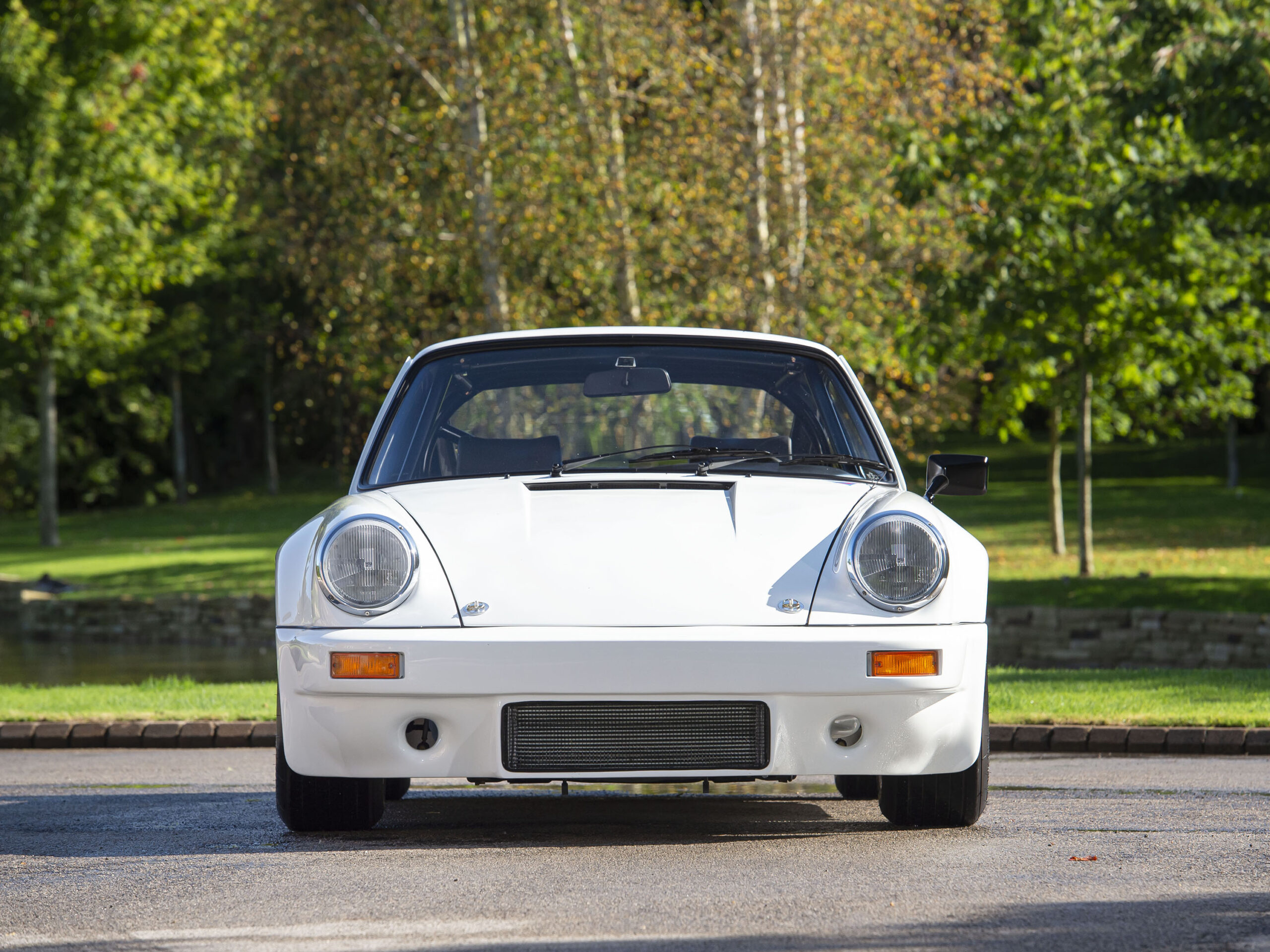
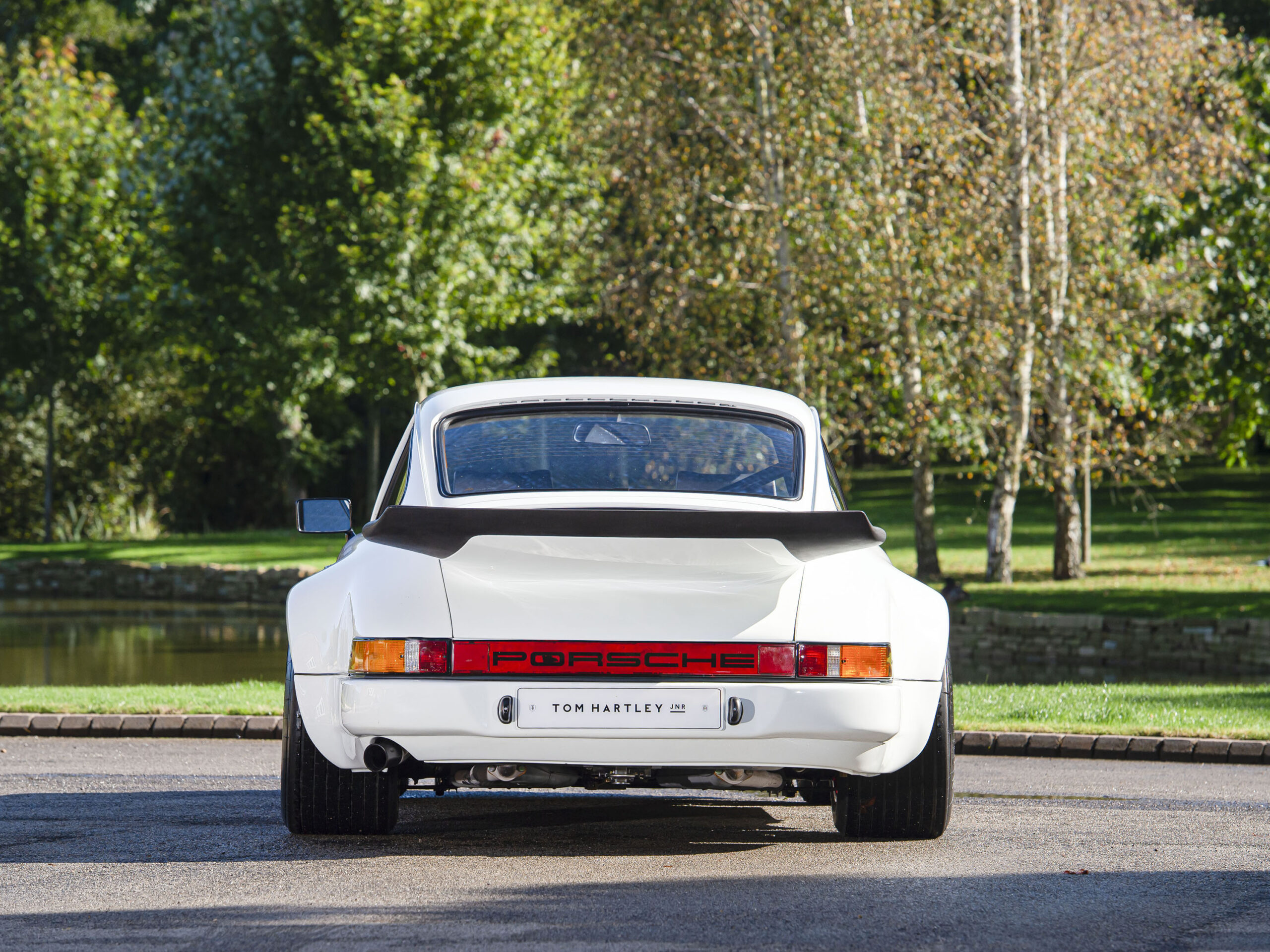
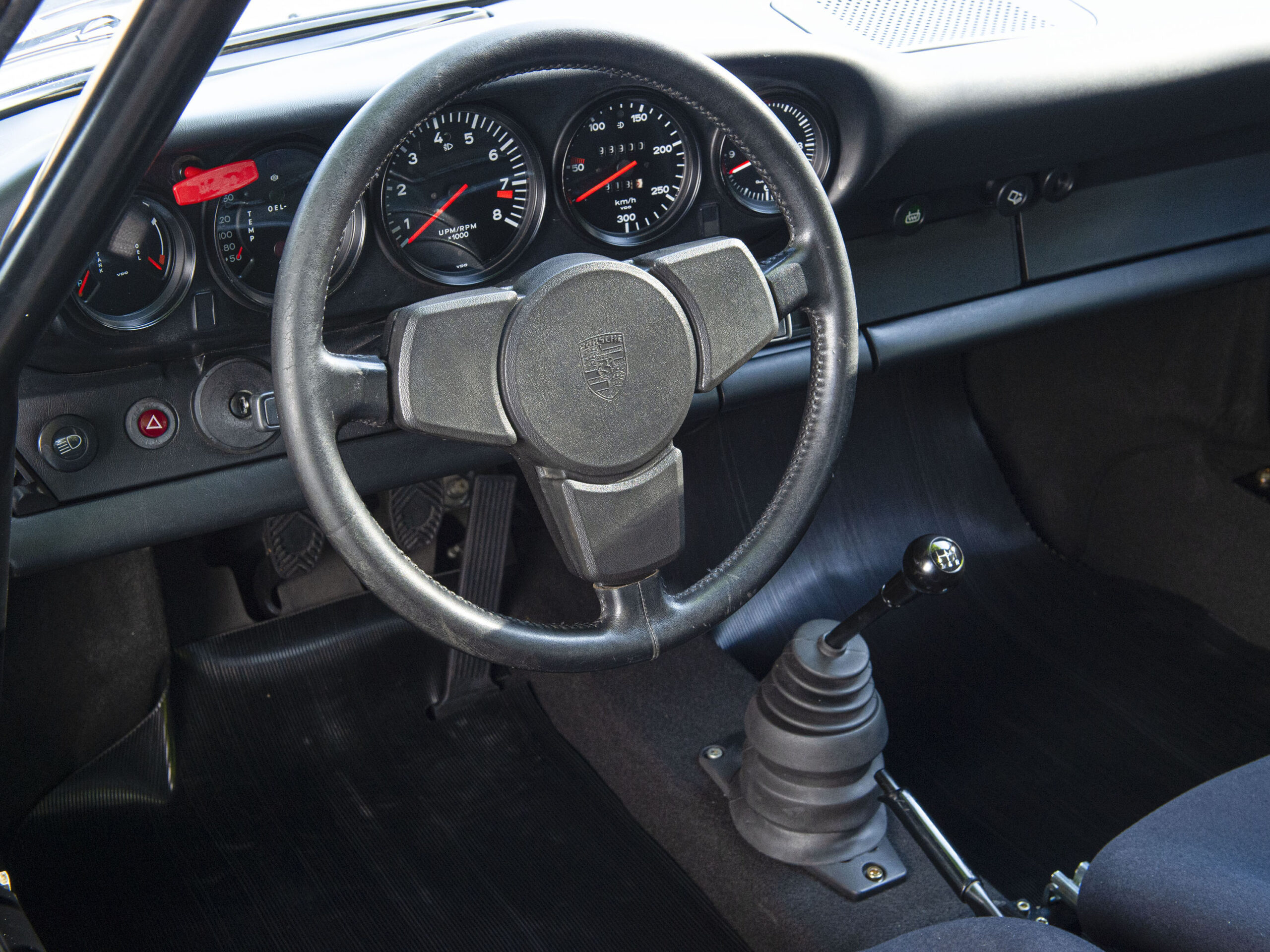
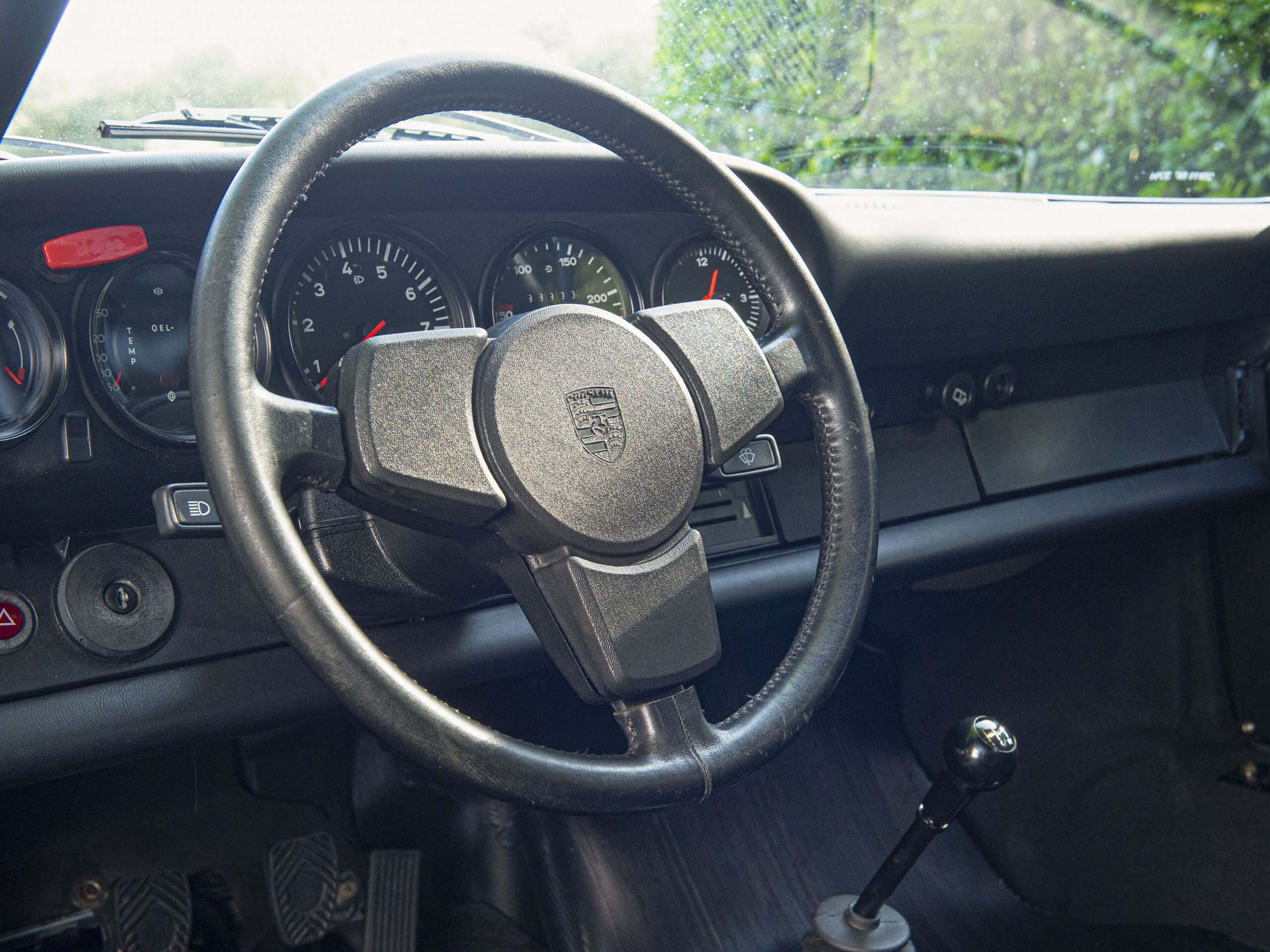
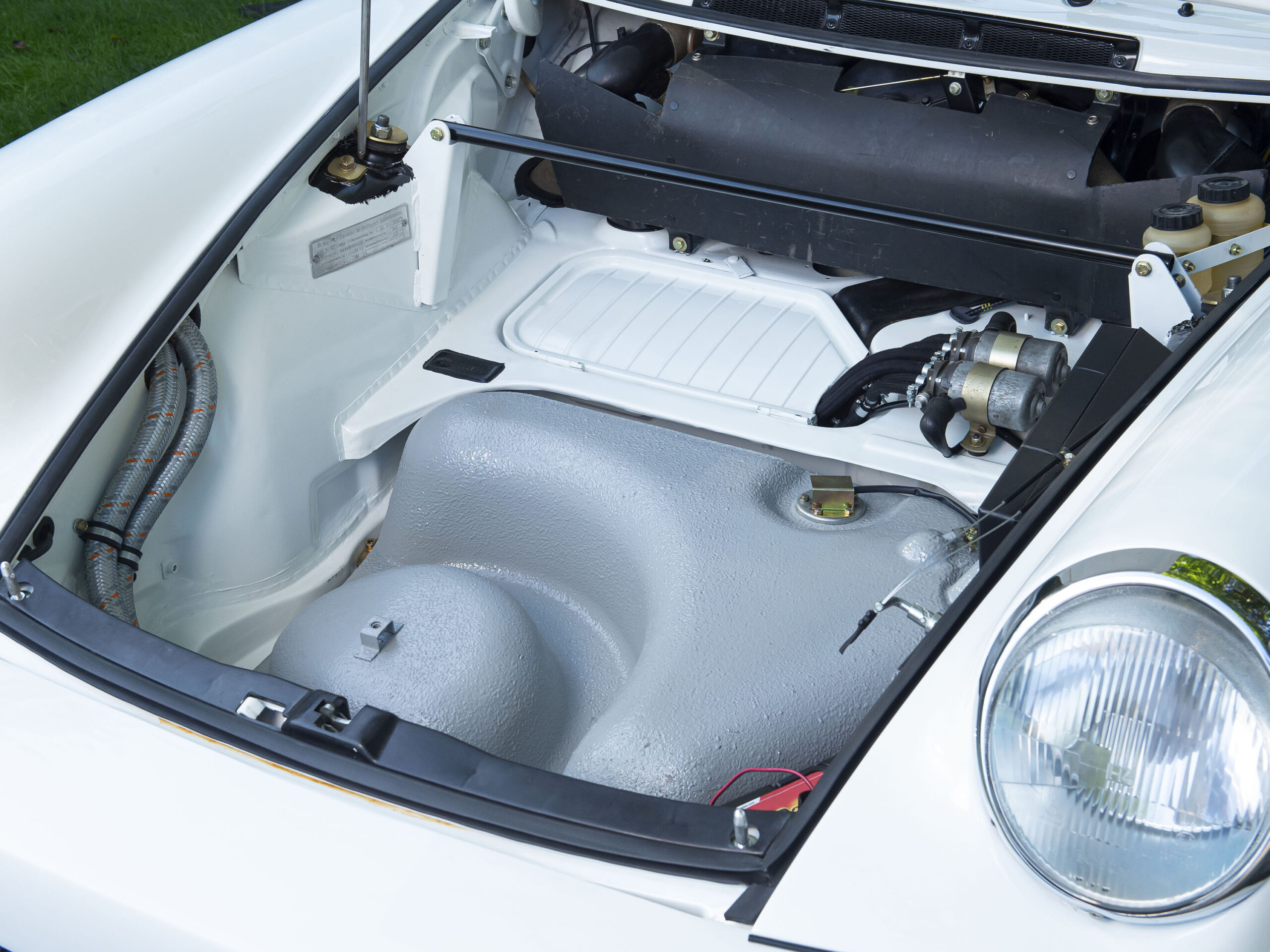
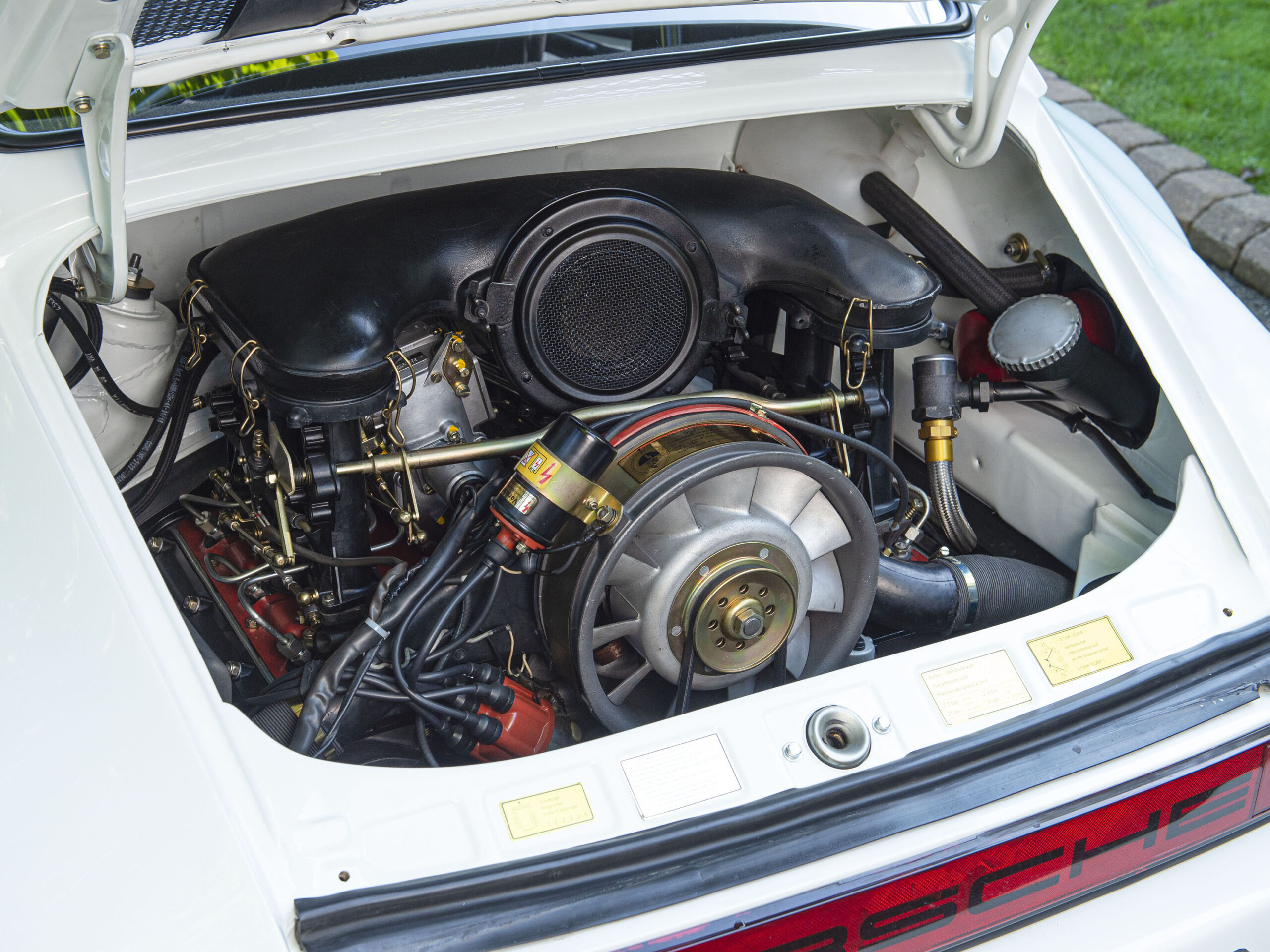
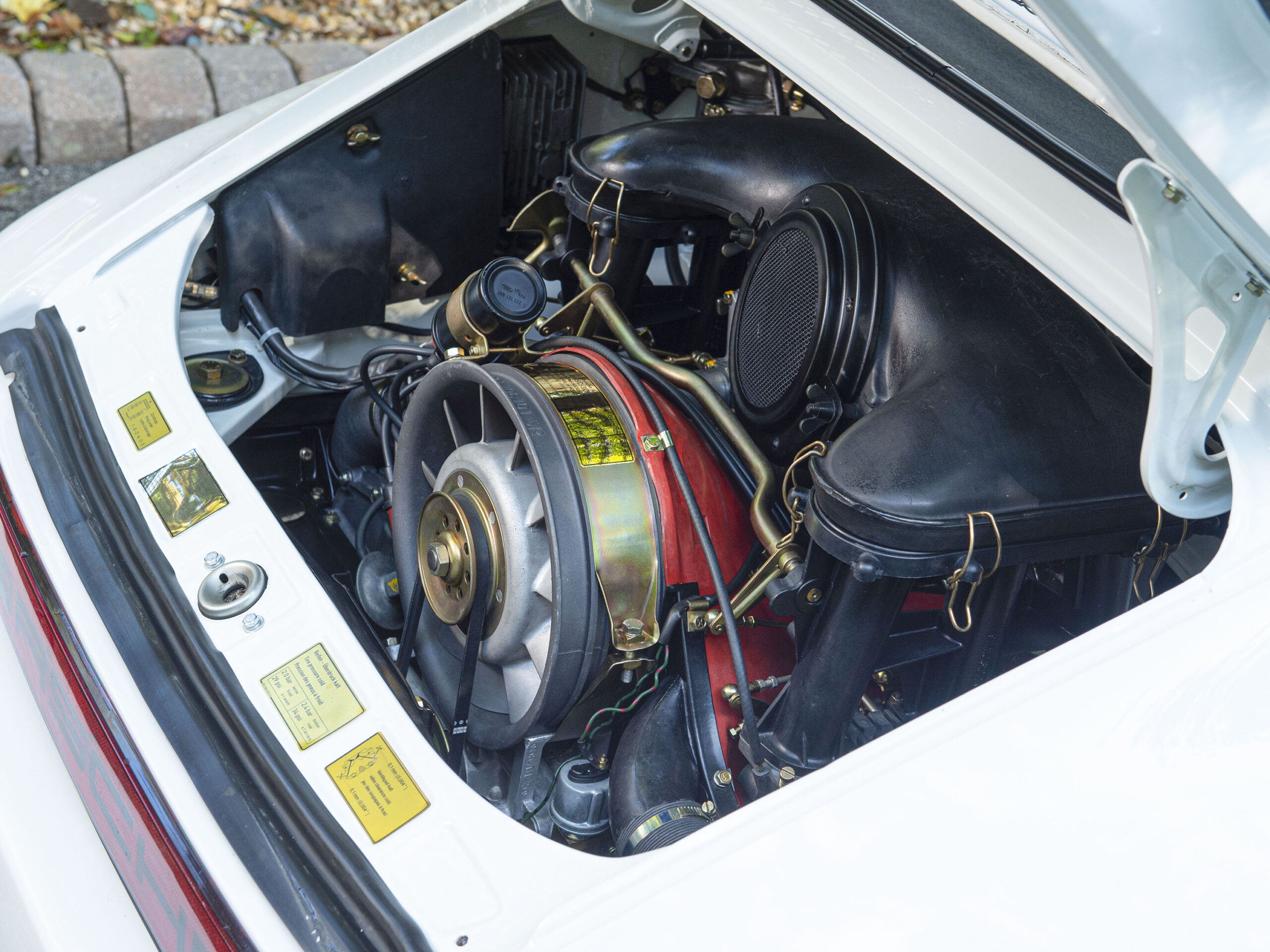
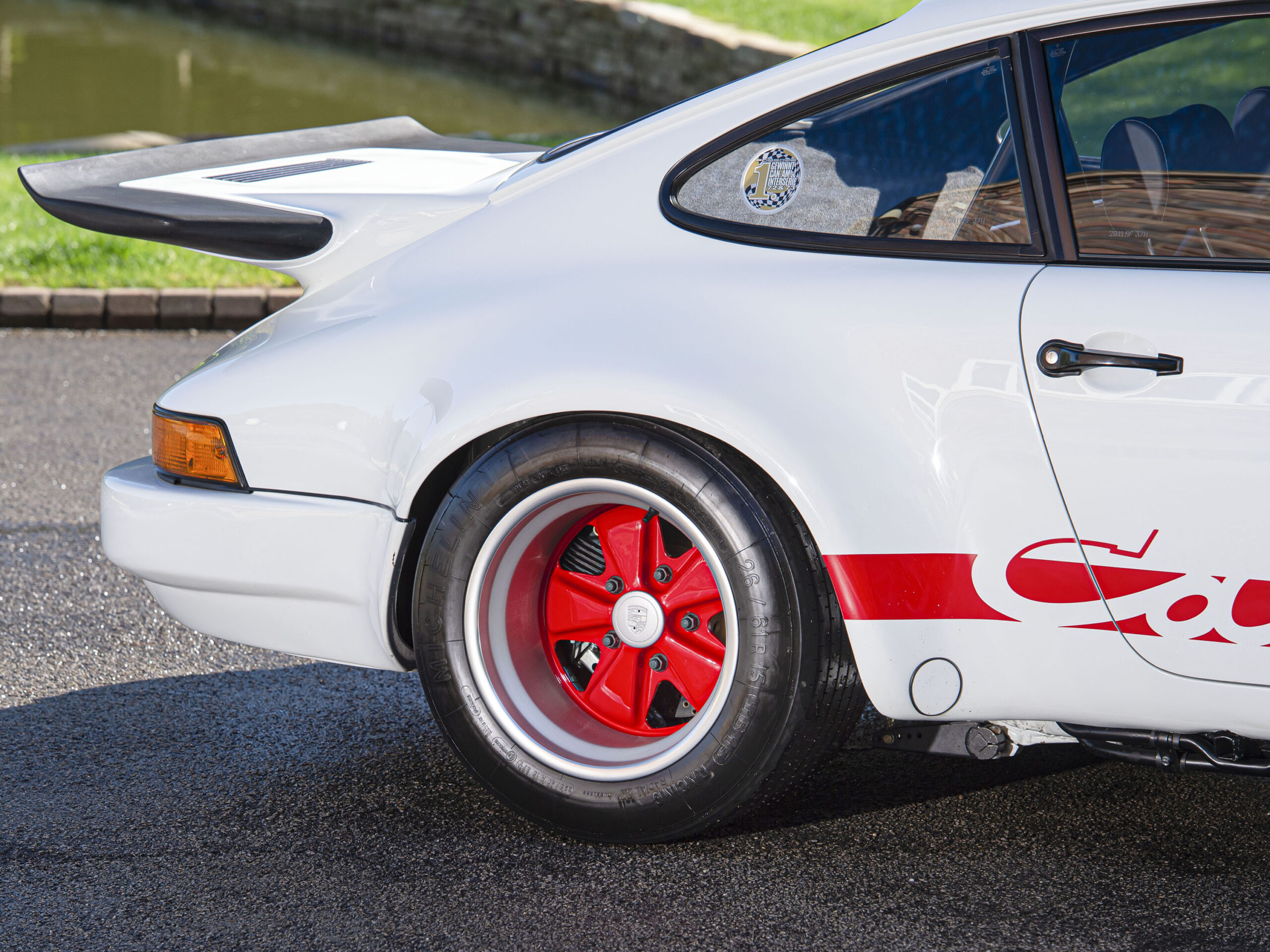
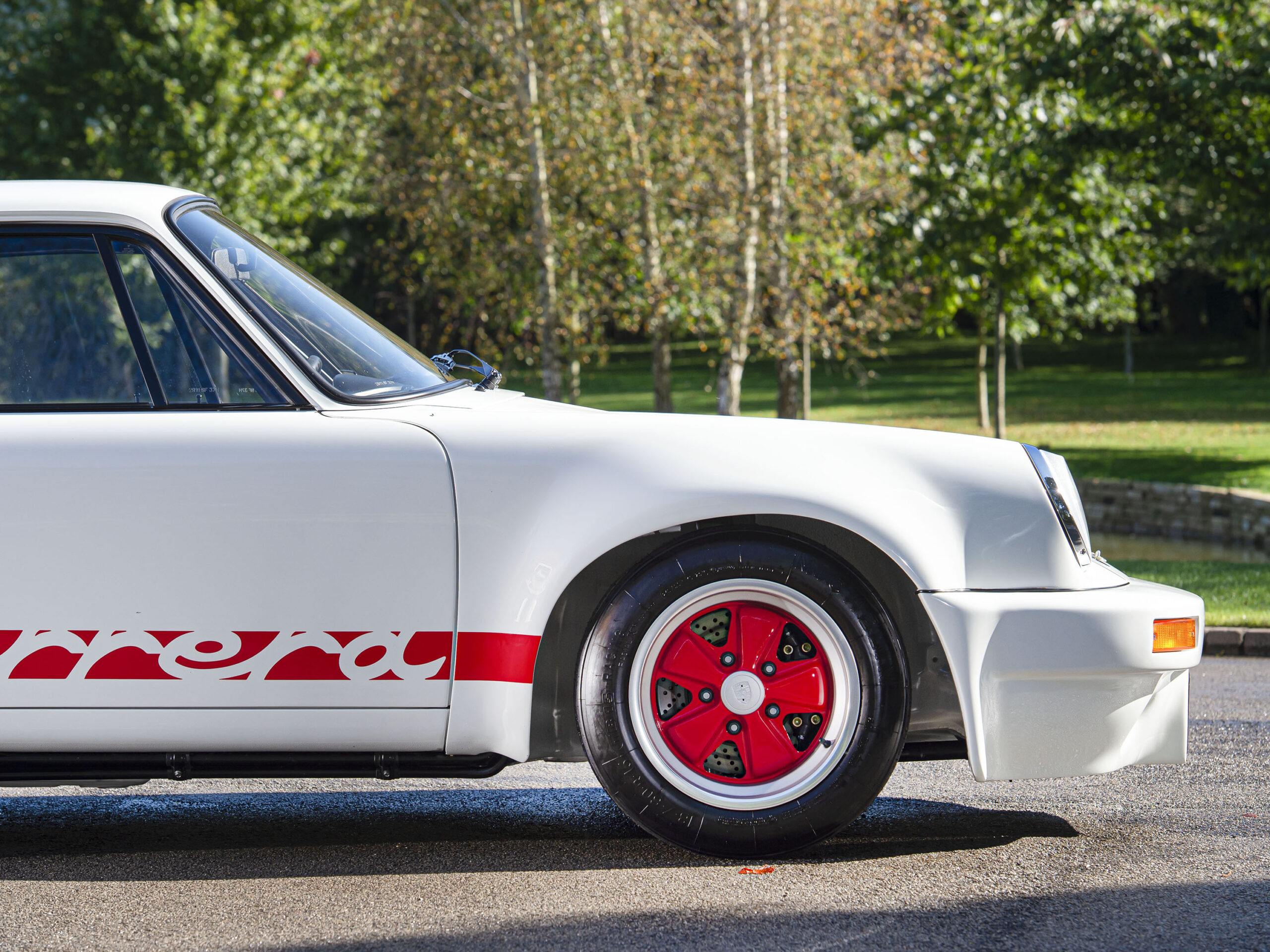
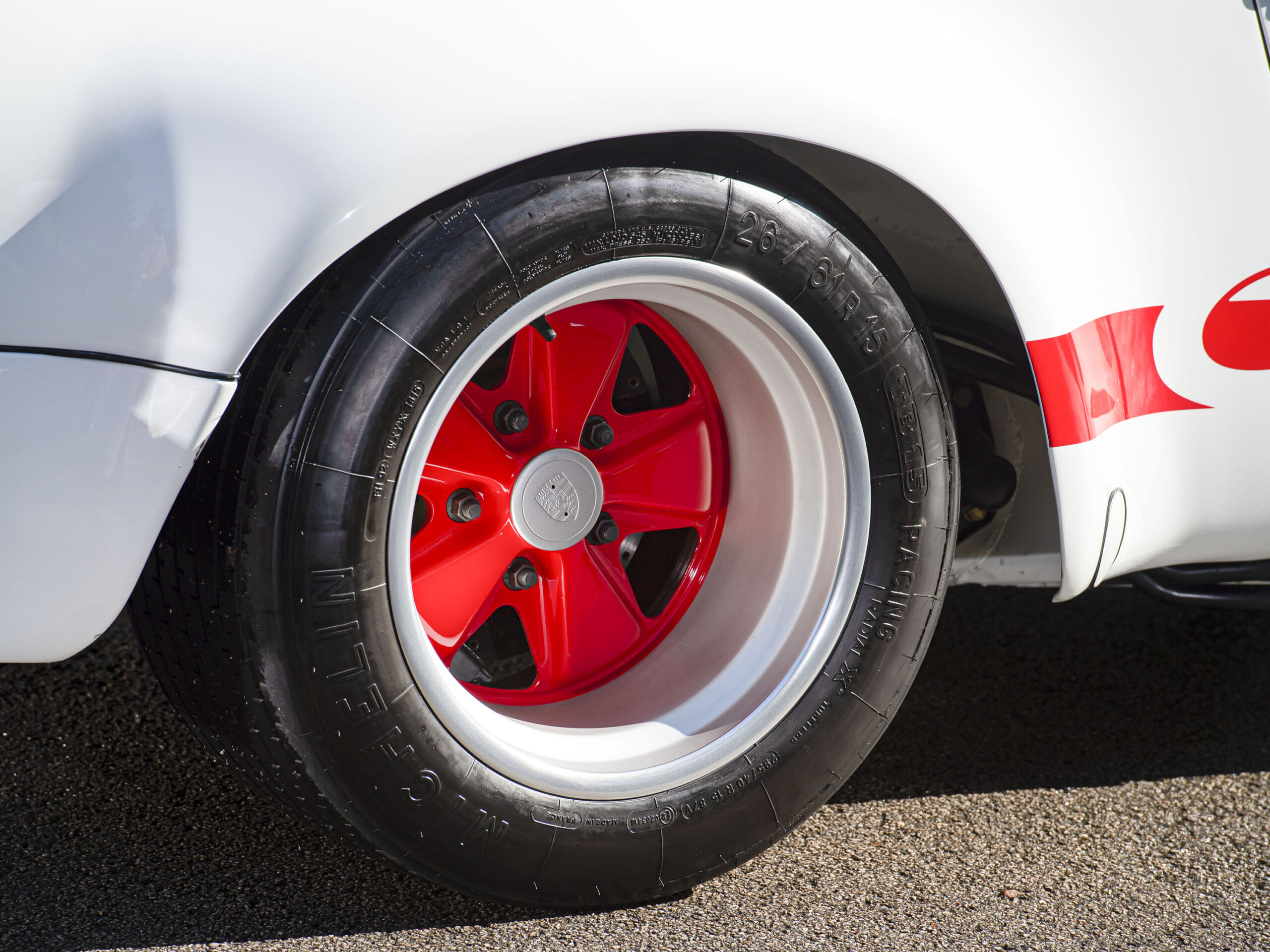
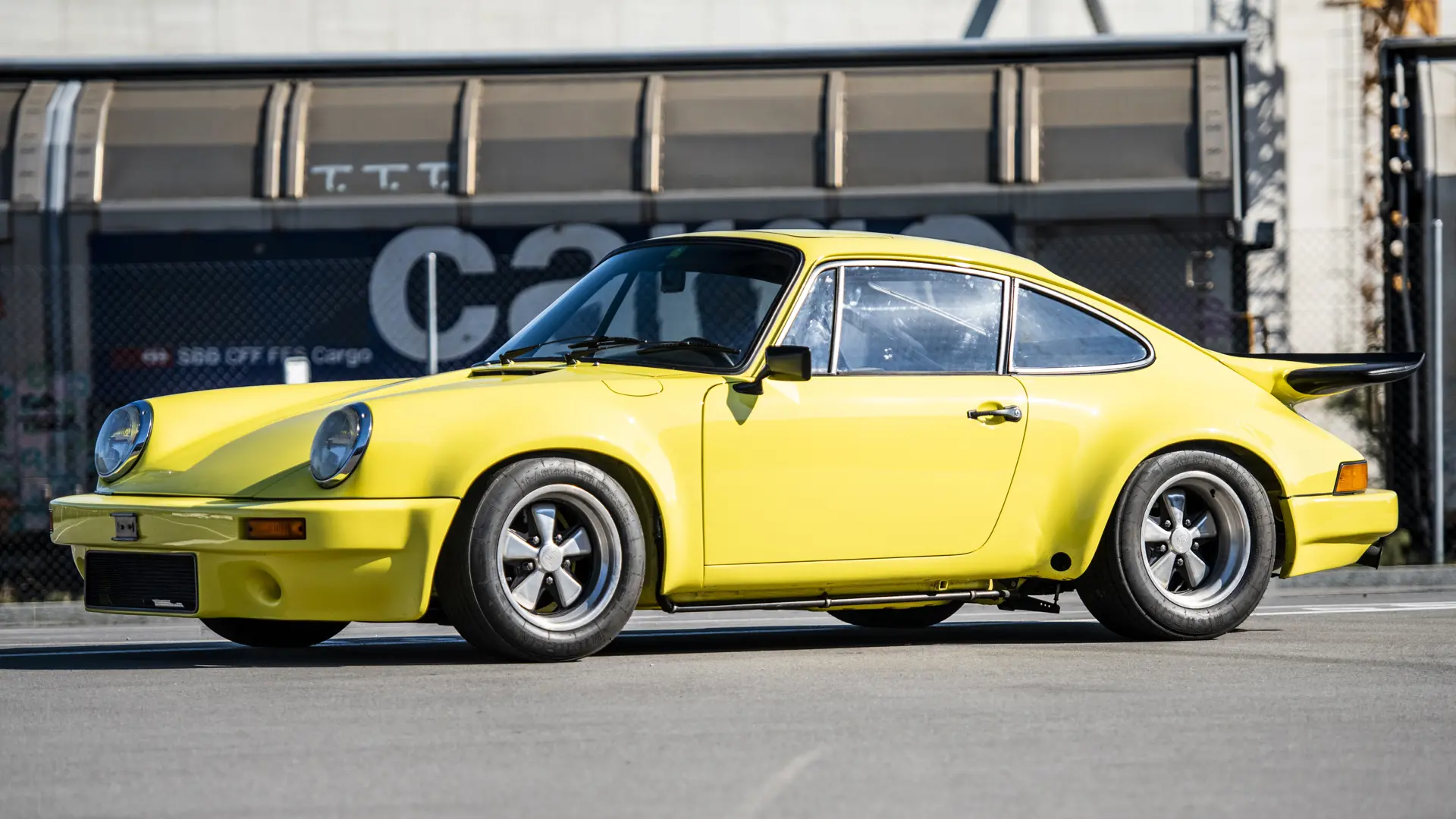
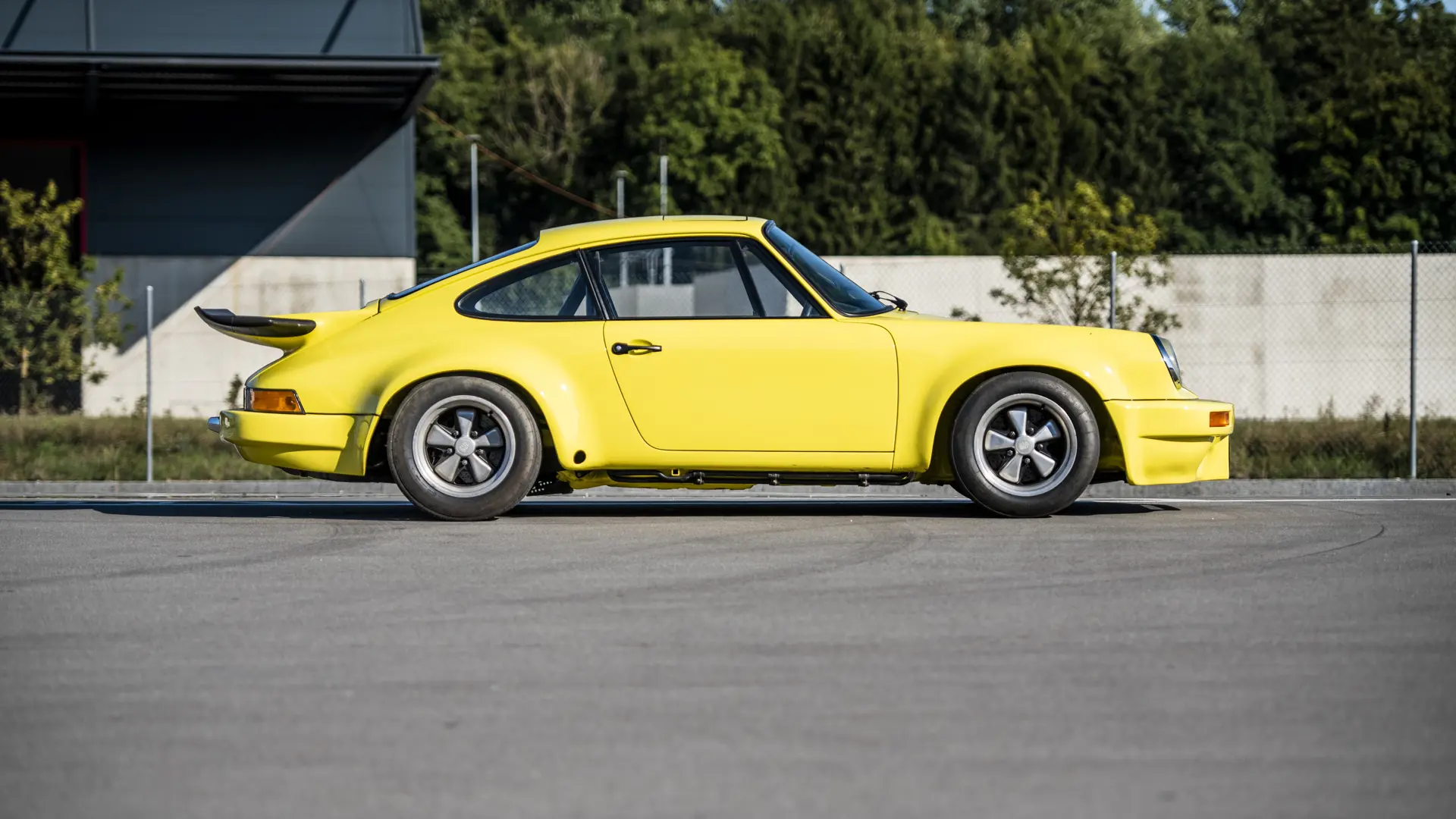
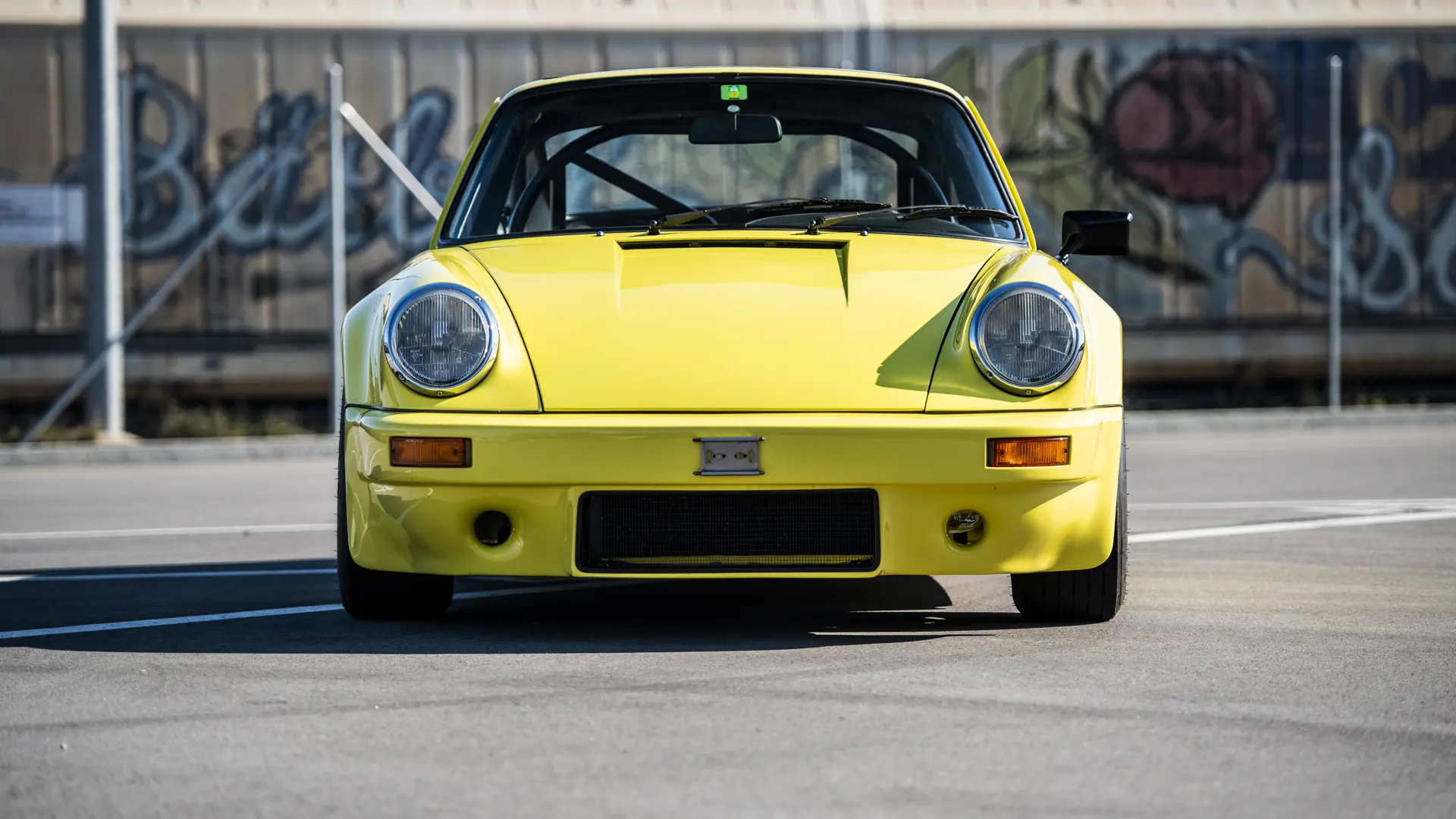
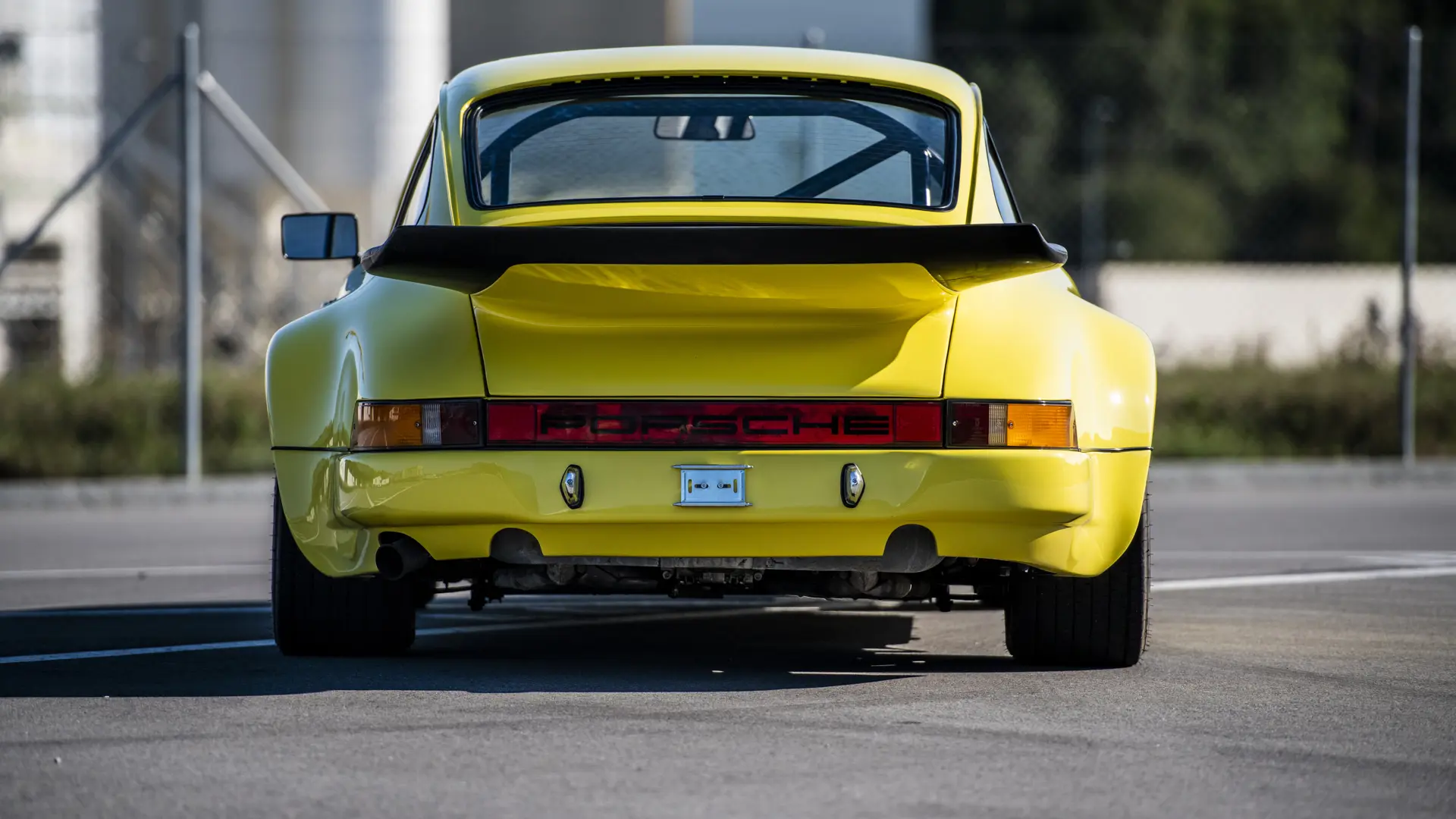
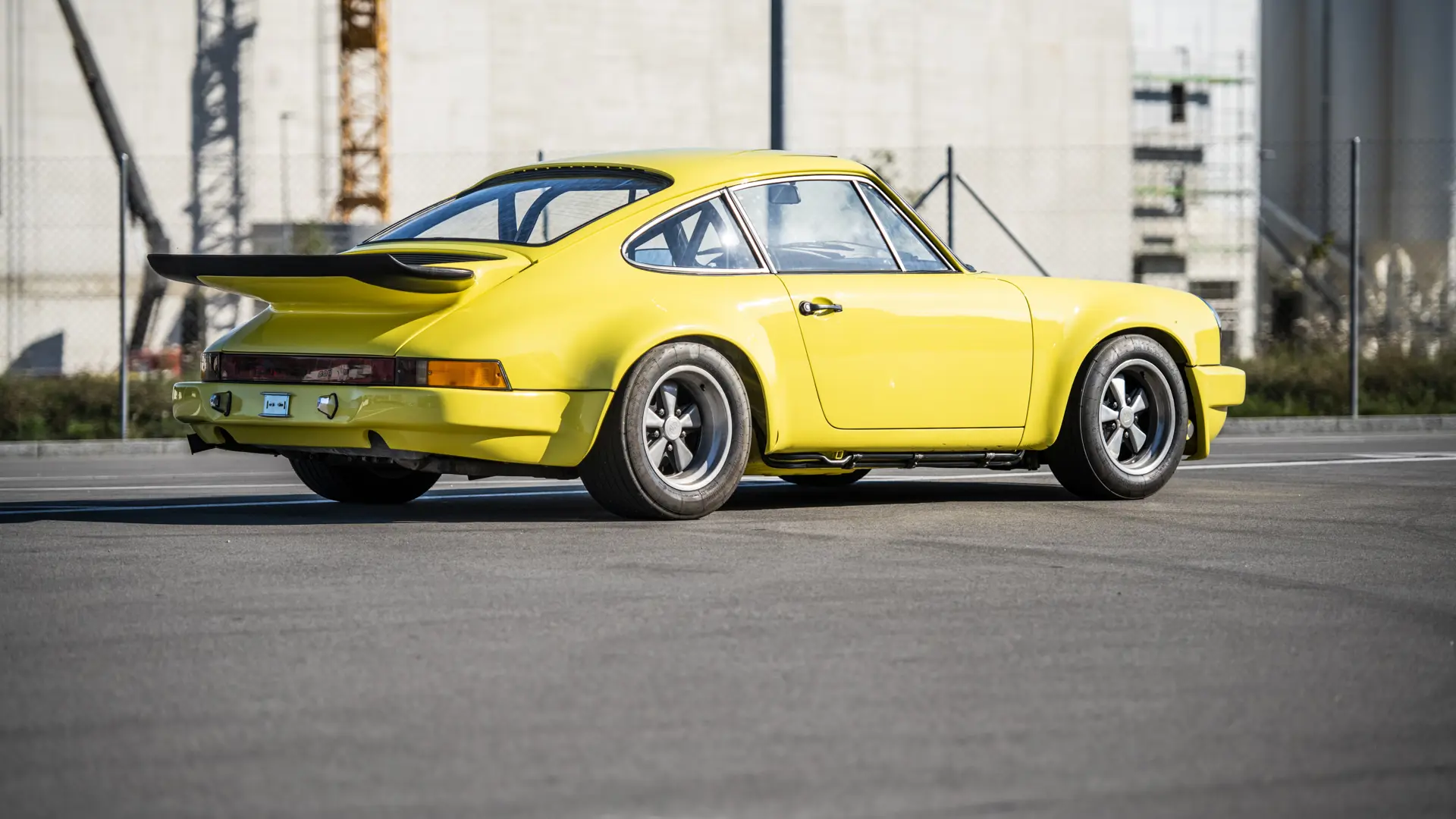
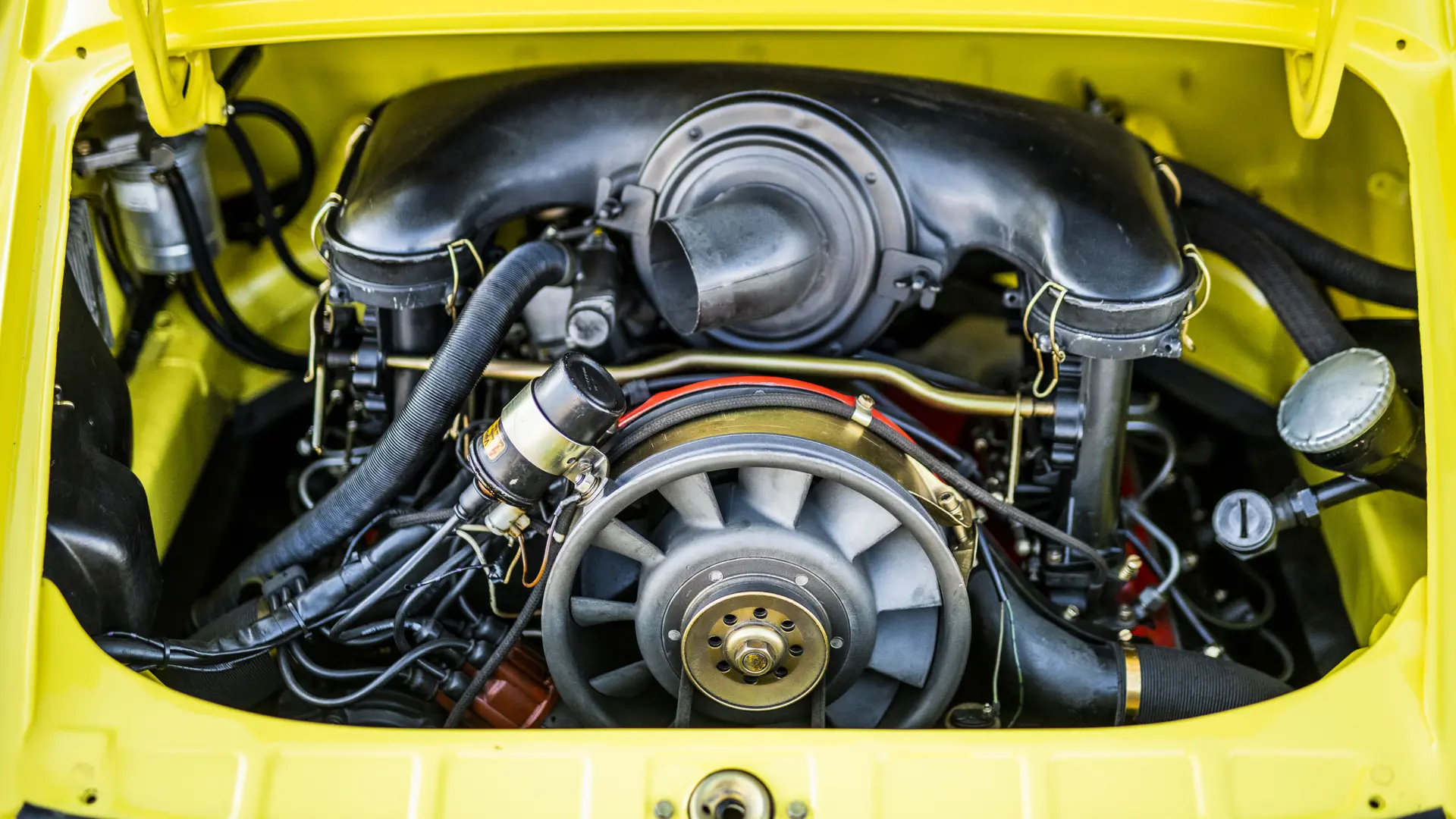
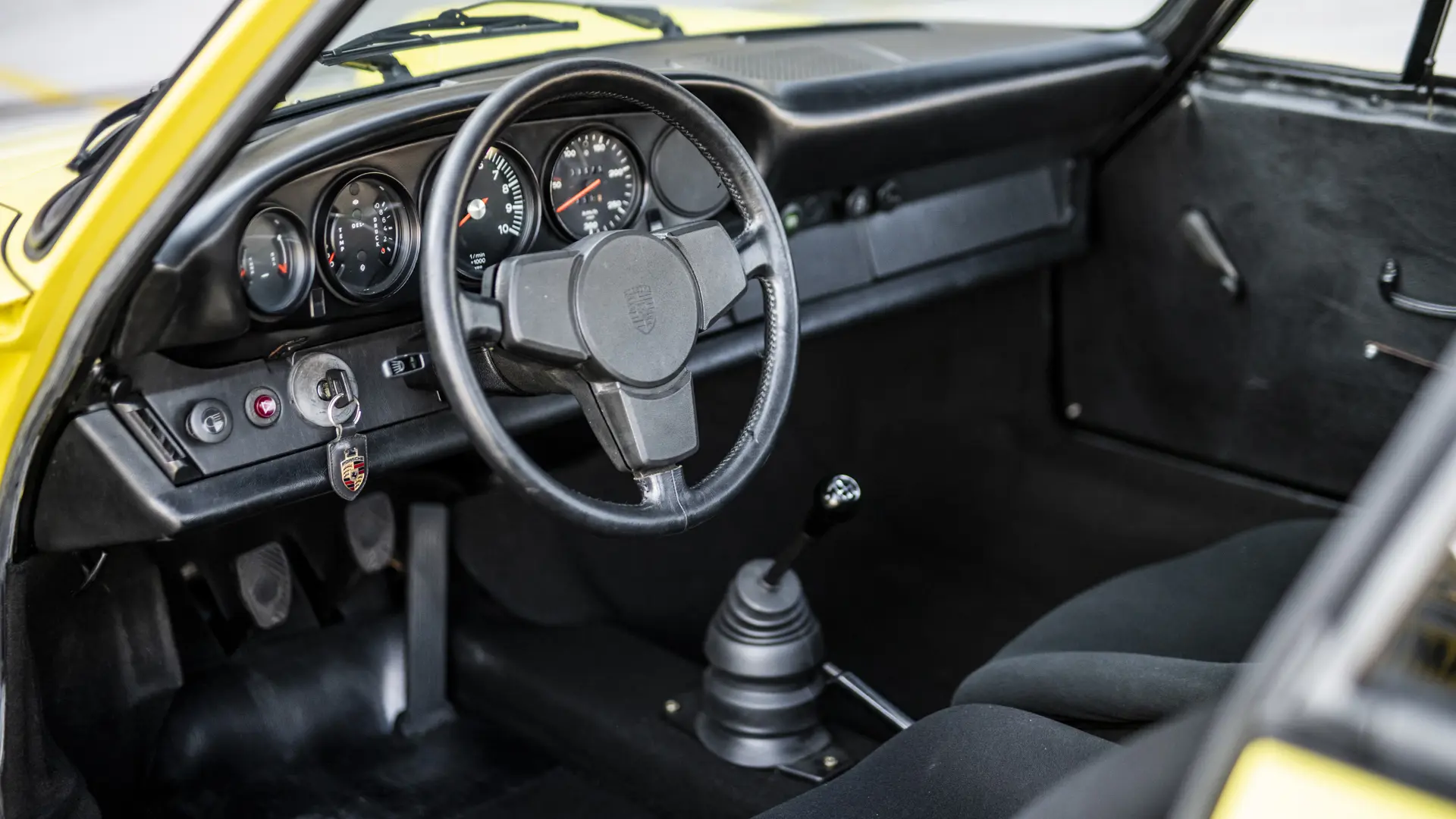
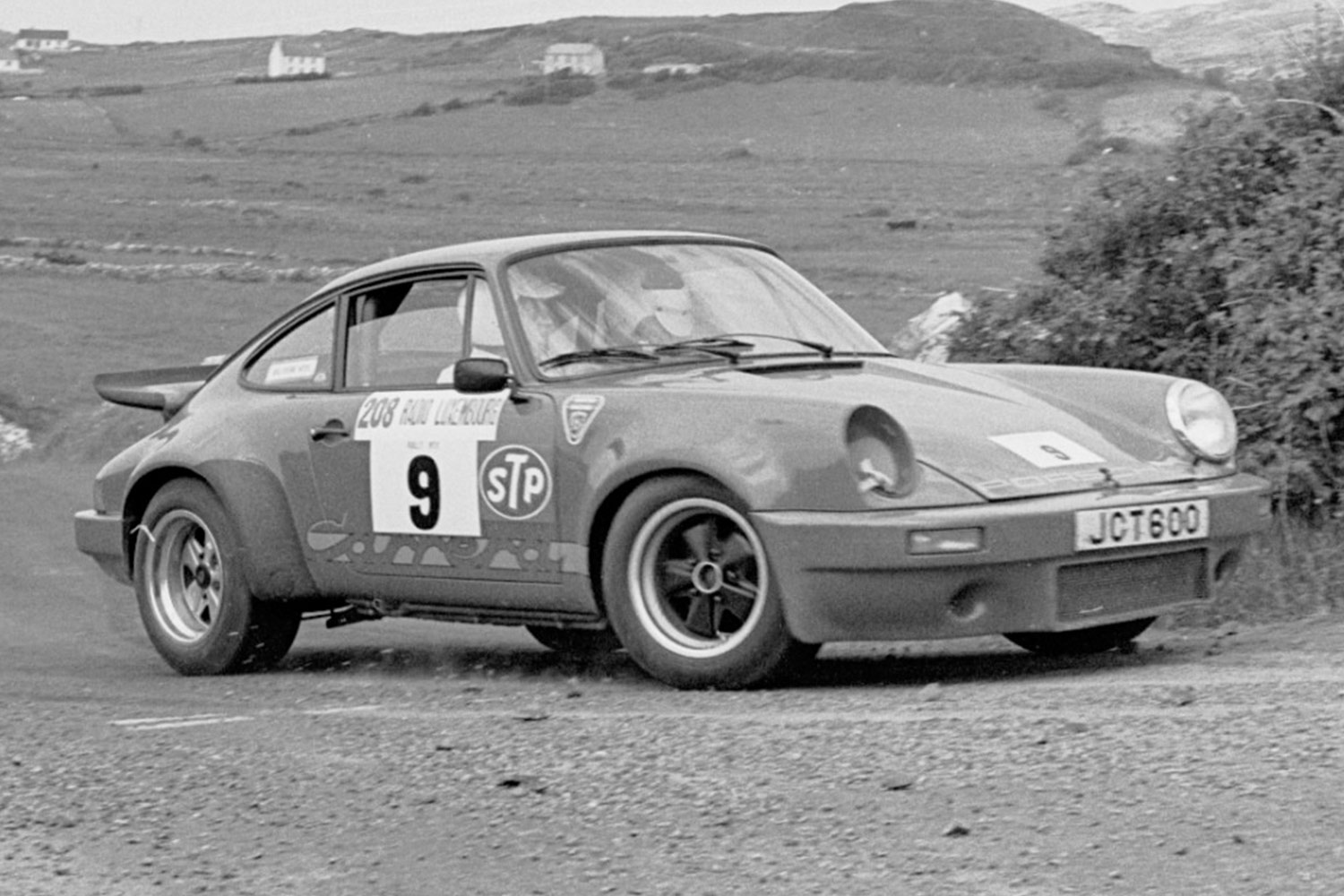
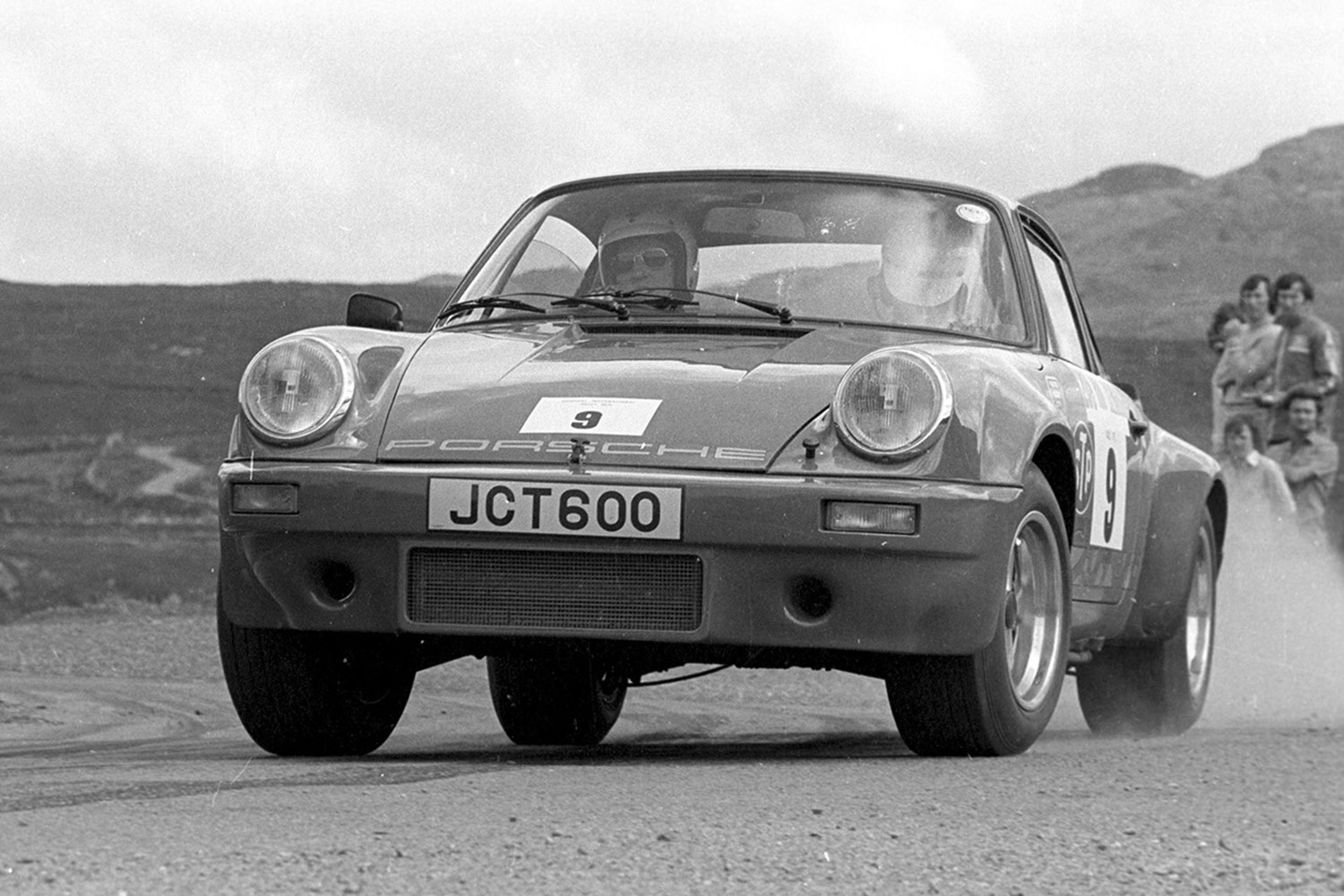
To walk around the 1974 Carrera RS 3.0 is to witness the brutal, function-over-form evolution of the 911 silhouette. While it wore the modernized face of the G-Series, the heavy, federally mandated impact bumpers were discarded entirely. In their place, Porsche fitted featherweight fiberglass facias, with the front air dam featuring a massive central opening to house a dedicated oil cooler. The steel unibody was stretched to its absolute limits, sporting exaggerated, muscular wheel arches to shroud massive 8-inch and 9-inch wide Fuchs forged alloy wheels. But the most significant aesthetic and aerodynamic departure was found at the rear. The elegant “ducktail” of the 2.7 RS was replaced by the sprawling, rubber-edged “whale tail” spoiler. This massive aerodynamic appendage was explicitly wind-tunnel designed to suck cold air into the engine bay while simultaneously pinning the rear axle to the tarmac at speeds exceeding 240 km/h (150 mph). Lifting this iconic spoiler revealed the mechanical heart of the beast: the Type 911/77 engine. Having reached the thermal limits of the 2.7-liter magnesium block, engineers cast a new, incredibly robust aluminum crankcase. Displacing 2,994cc and breathing through a highly responsive Bosch mechanical fuel injection (MFI) system, this flat-six produced a beautifully tractable 230 brake horsepower in street trim. To halt this 900-kilogram missile, Porsche raided their prototype parts bin, bolting on the massive, cross-drilled and ventilated disc brakes lifted directly from the Le Mans-winning Porsche 917. Inside, the cabin was a masterclass in spartan violence; sound deadening was entirely omitted, windows were made of thin-gauge Glaverbel glass, and the driver was strapped into a thinly padded racing bucket seat, gripping a thick steering wheel while staring at a 10,000-rpm tachometer.
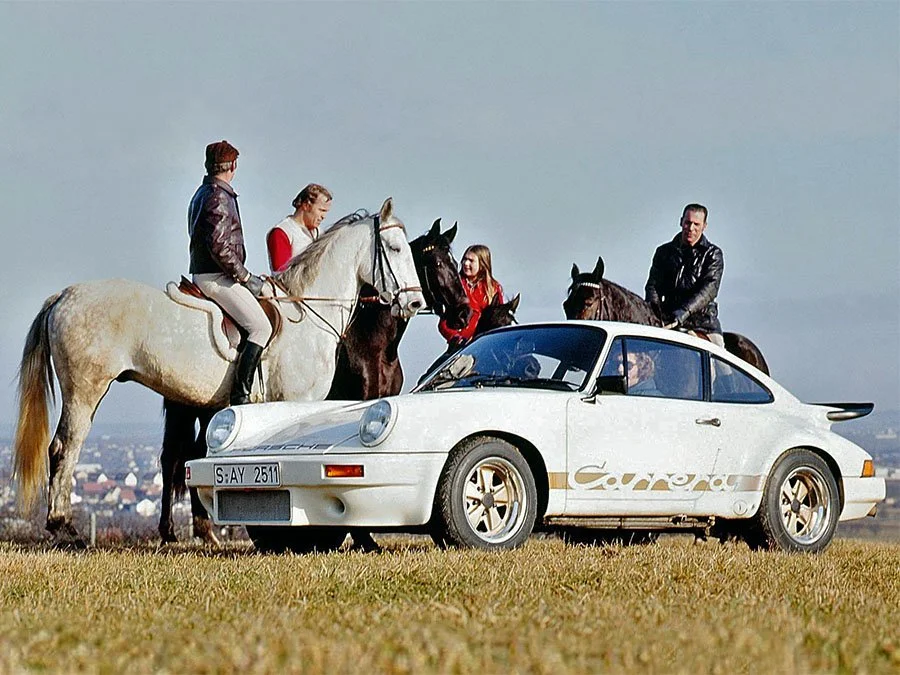
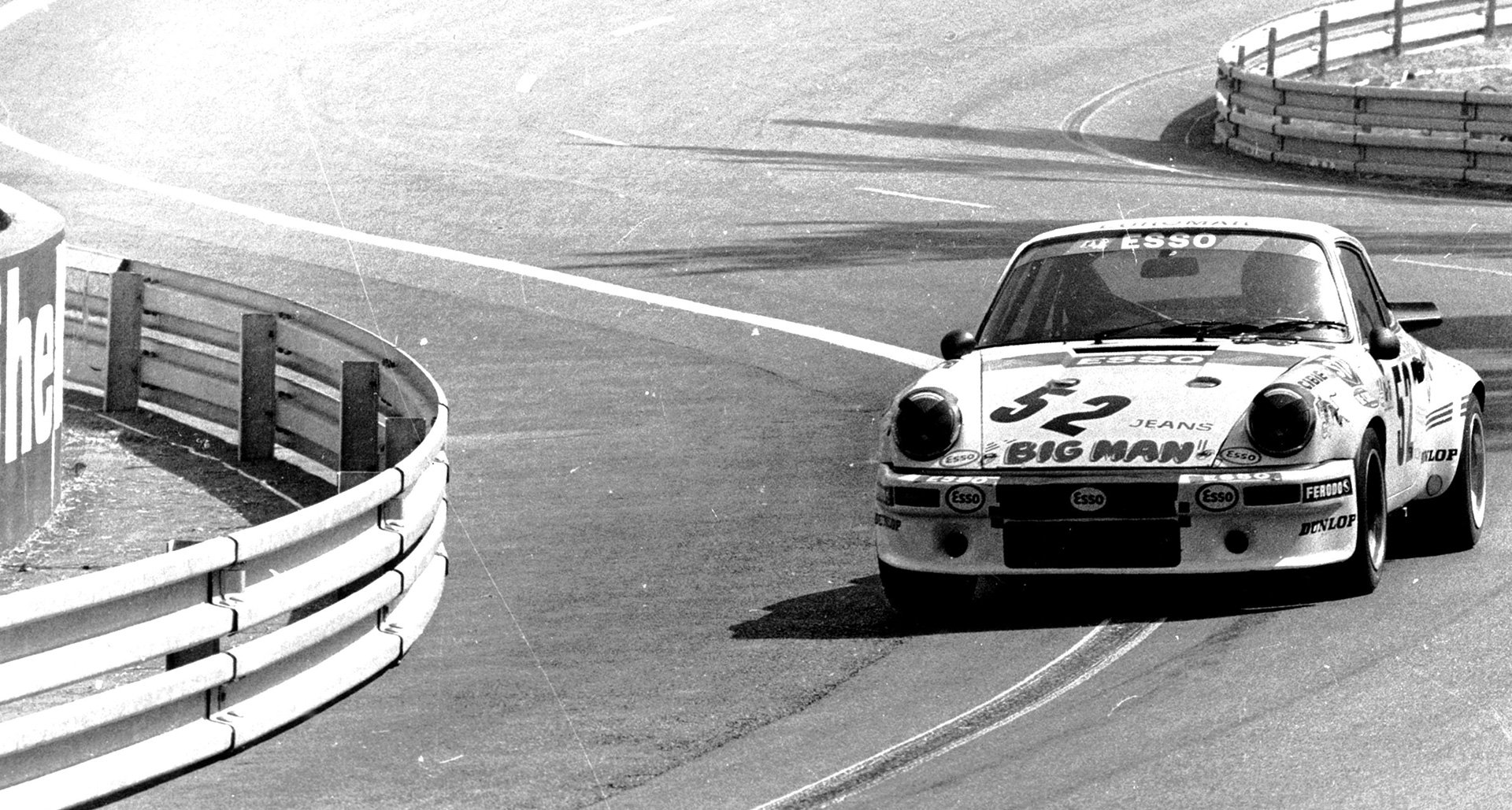
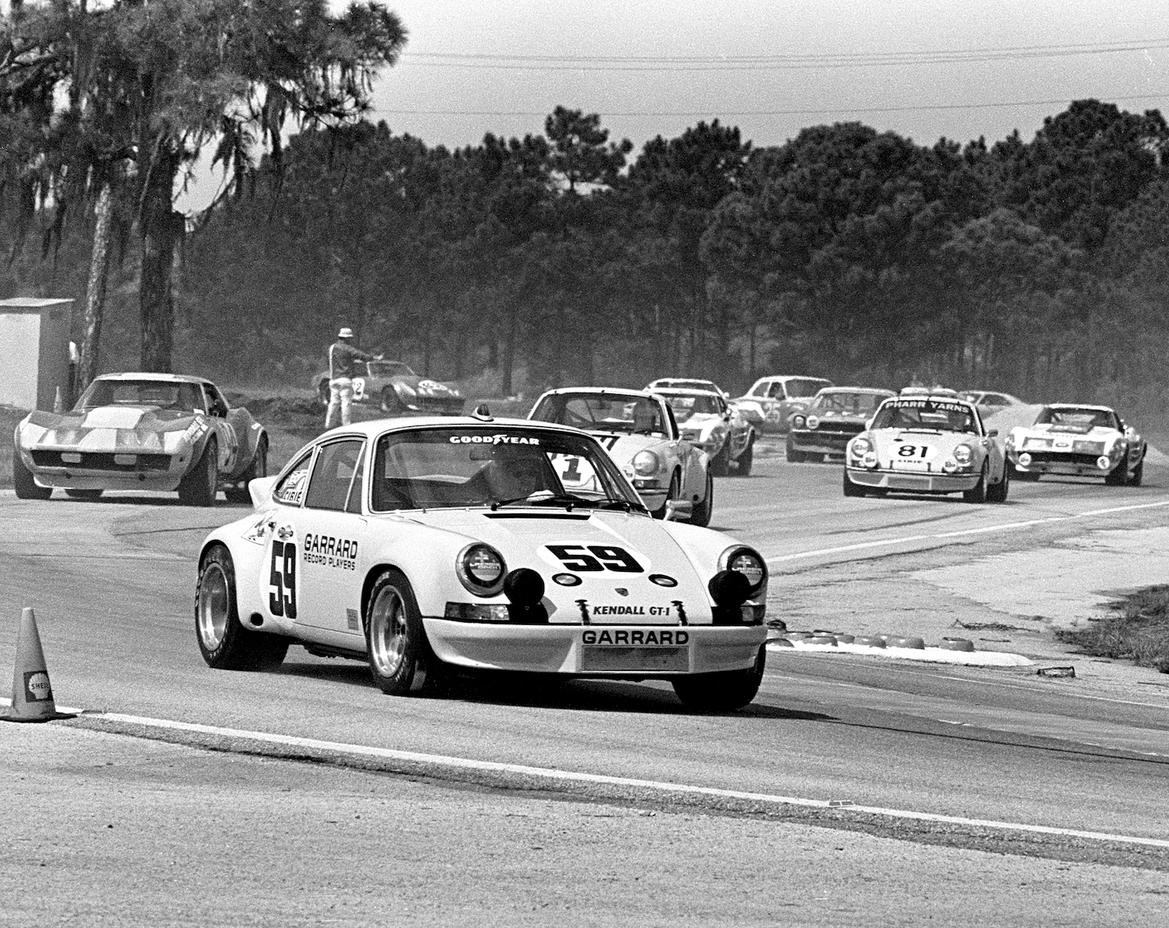
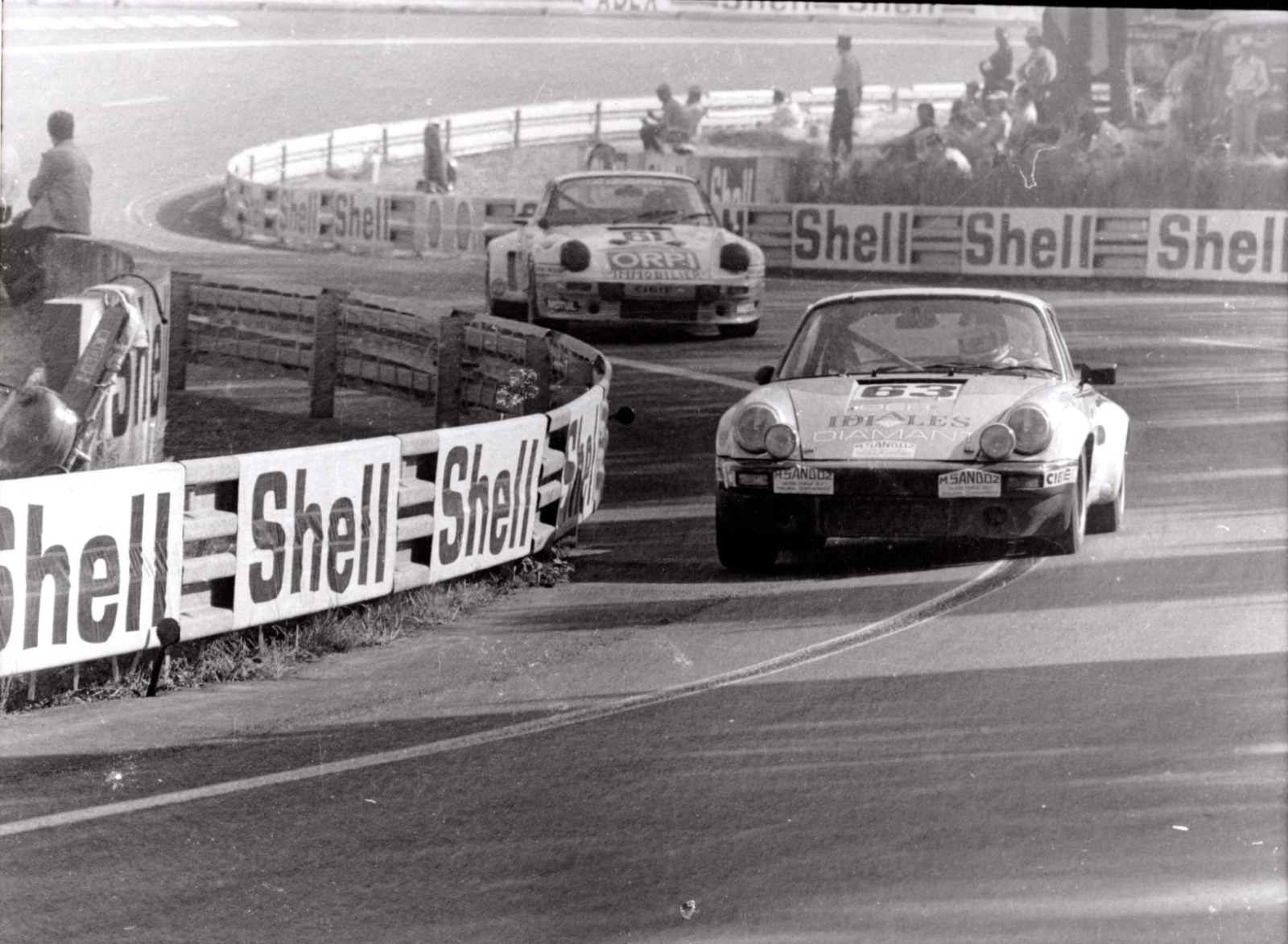
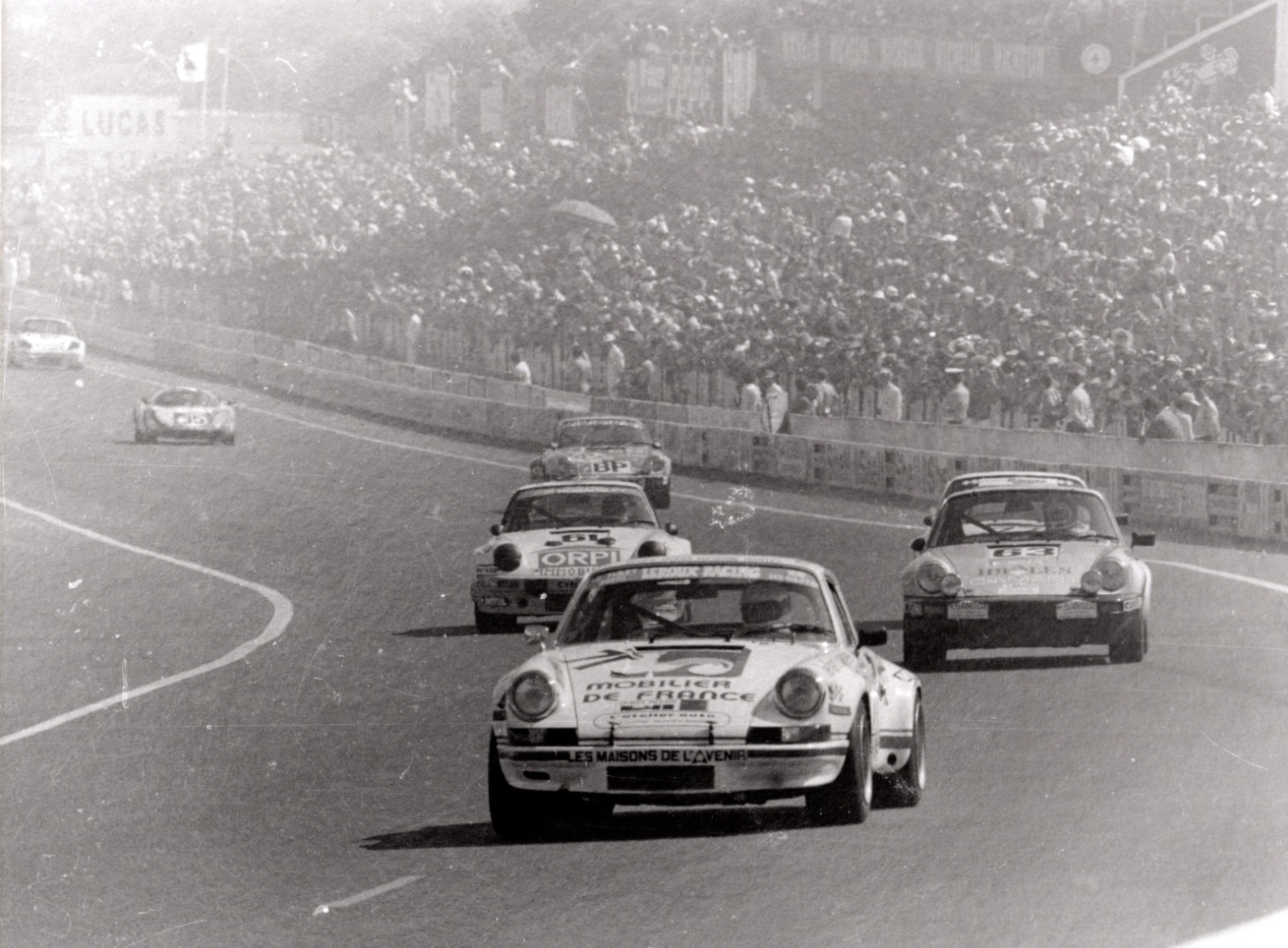
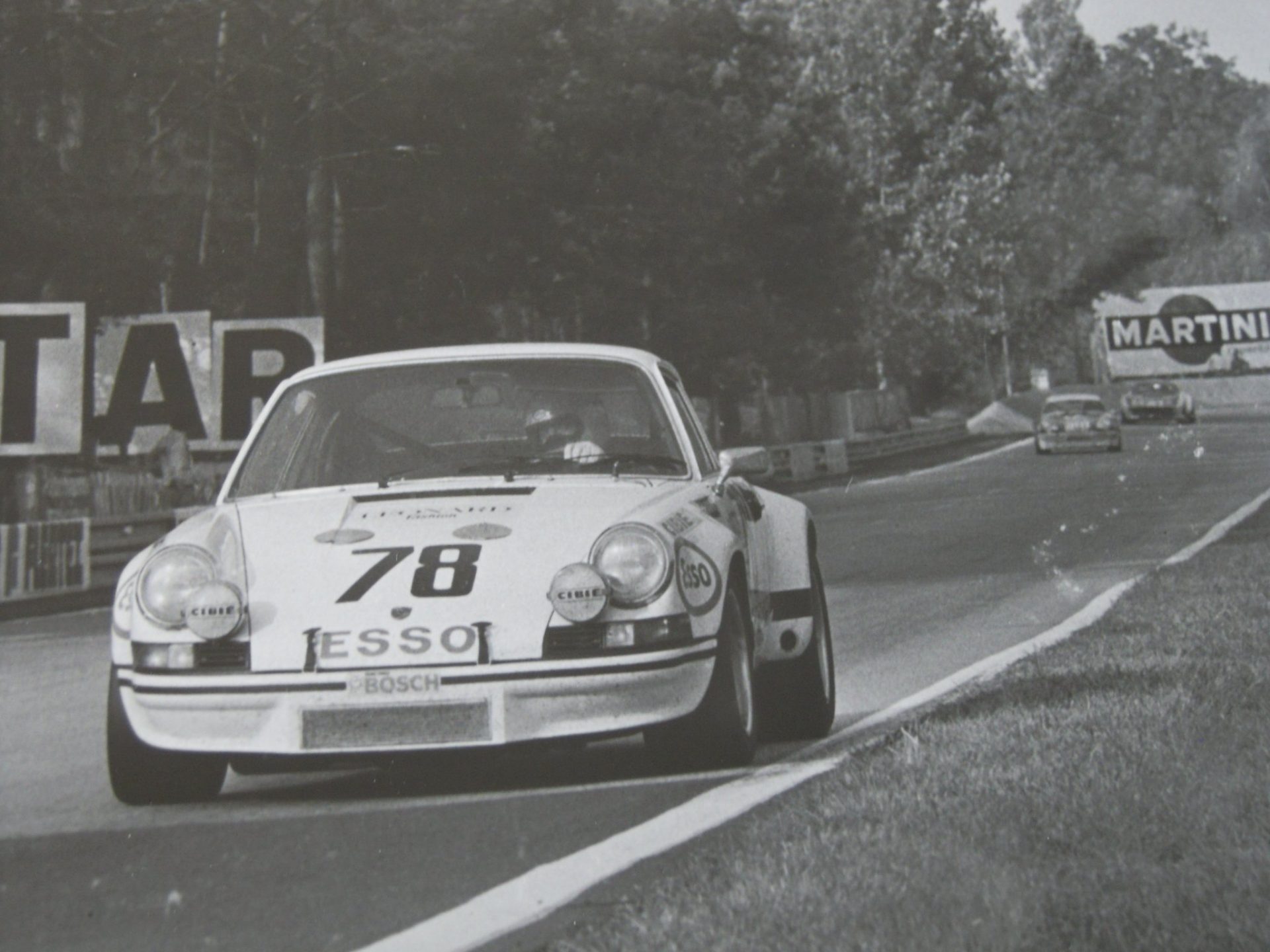
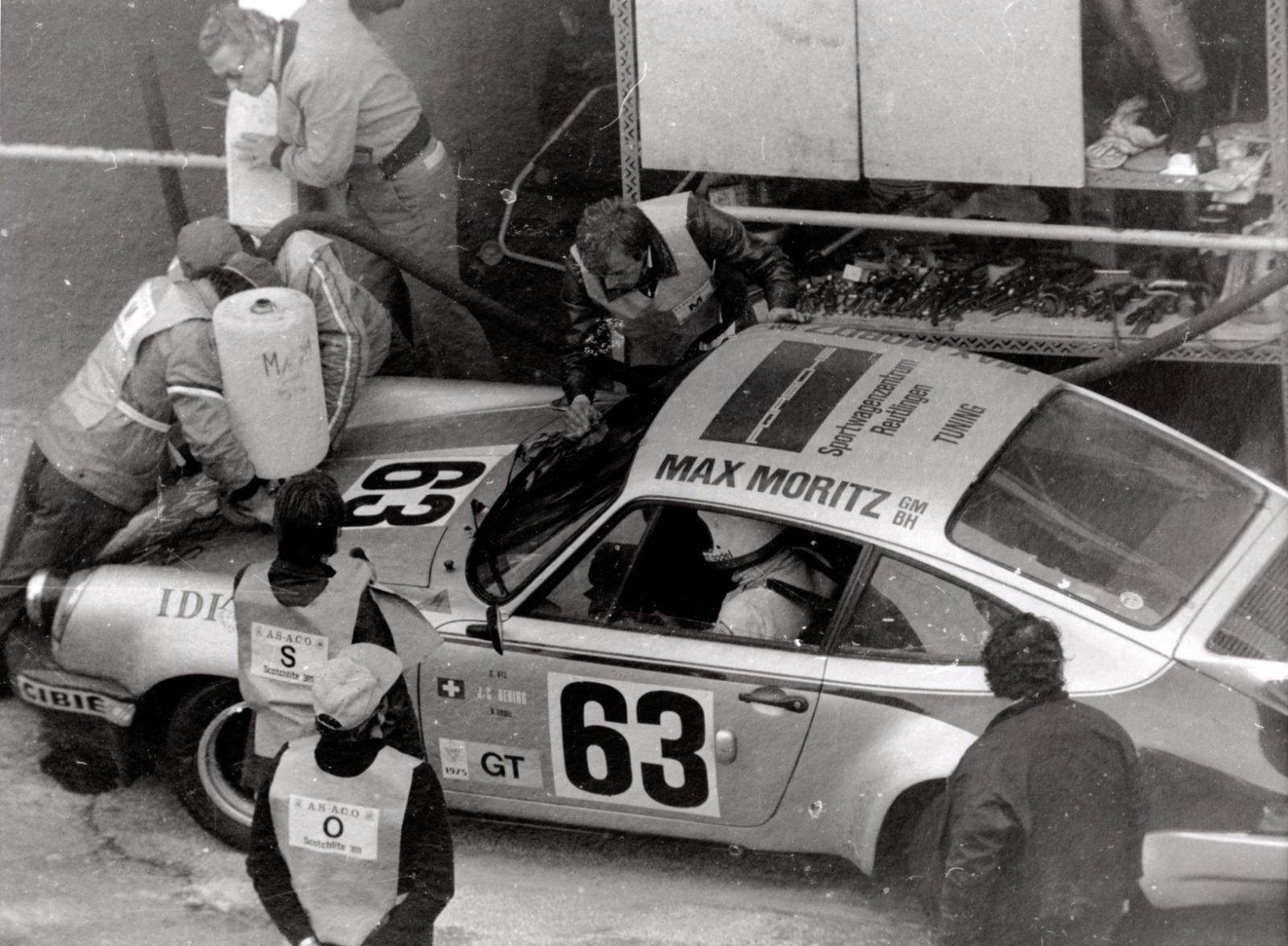
The historical footprint of the Carrera RS 3.0 is profoundly tied to its immediate weaponization on the racetrack. For the wealthy privateer, purchasing an RS 3.0 was effectively acquiring a turn-key podium finish. With the simple addition of a roll cage and a racing exhaust, the RS 3.0 was immediately eligible for Group 3 competition, where it routinely humiliated the Italian and British establishment. However, its most legendary cultural impact was arguably birthed across the Atlantic. When Roger Penske conceptualized the International Race of Champions (IROC) for the 1973-1974 season, he required a fleet of identical, reliable, and ferociously fast sports cars to test the greatest drivers in the world. He turned to Zuffenhausen, who provided fifteen brightly colored, identically prepared 911s that were effectively a hybrid of the RS 3.0 and the forthcoming RSR 3.0. Seeing motorsport titans like Mark Donohue, Emerson Fittipaldi, and Peter Revson sliding these wide-hipped, whale-tailed 3.0-liter Porsches door-to-door around the Riverside International Raceway cemented the car’s mythological status in the minds of the American public. In Europe, the RS 3.0 served as the unbreakable foundational bedrock for the legendary 330-horsepower Carrera RSR 3.0, a car that would go on to win its class at Le Mans, Daytona, and Sebring, effectively owning the Group 4 category until the advent of the turbocharged 934.
The legacy of the 1974 Porsche 911 Carrera RS 3.0 is sovereign within the classic car pantheon. Because it was built in such shockingly low numbers—merely 54 street cars and roughly 50 RSR track variants—it represents the ultimate holy grail for the air-cooled connoisseur. It was the crucial, transitional masterpiece that bridged the gap between the delicate, long-hood F-Series cars of the 1960s and the brutal, turbocharged G-Series monsters that defined the 1980s. Furthermore, the engineering leap of the aluminum 3.0-liter crankcase literally saved the 911 lineage, providing the indestructible foundation for the legendary 930 Turbo and the universally beloved 911 SC. Today, an authentic Carrera RS 3.0 is a multi-million-dollar blue-chip artifact, revered not just for its breathtaking rarity, but as the rawest, most visceral, and aerodynamically pioneering naturally aspirated homologation special Porsche ever unleashed upon the public roads.
Brand
Produced from
Portal
Vehicle category
Model line
Model generation
Predecessor
Sucessor
Brand
Produced from
Portal
Vehicle category
Model line
Model generation
Predecessor
Sucessor
Submodel Overview
As the dust settled on the triumphant 1973 racing season, the engineering department in Zuffenhausen found no time to rest on their laurels. The delicate, chrome-bumpered Porsche 911 Carrera RS 2.7 had been a resounding commercial and competitive success, but the motorsport landscape was evolving with terrifying speed. The FIA Group 4 regulations were becoming a playground for increasingly muscular machinery, spearheaded by the aggressively aerodynamic BMW E9 3.0 CSL ‘Batmobile’ and the brute force of the V8-powered De Tomaso Pantera. Furthermore, global safety regulations had forced Porsche to transition the 911 into the impact-bumpered G-Series generation for 1974. To maintain their iron grip on international GT racing, Porsche needed to homologate a wider, more powerful, and aerodynamically superior weapon based on this new G-Series shell. Because the FIA rules allowed an “evolution” of an existing homologated car provided a minimum of 100 units were built—a number Porsche miraculously skirted by producing just 54 examples—the 1974 Porsche 911 Carrera RS 3.0 was born. Costing nearly double the price of the outgoing 2.7 RS, it was not merely a sports car; it was a thinly veiled, uncompromising race car draped in a license plate, serving as the absolute apex of naturally aspirated, air-cooled performance for the discerning privateer.
To walk around the 1974 Carrera RS 3.0 is to witness the brutal, function-over-form evolution of the 911 silhouette. While it wore the modernized face of the G-Series, the heavy, federally mandated impact bumpers were discarded entirely. In their place, Porsche fitted featherweight fiberglass facias, with the front air dam featuring a massive central opening to house a dedicated oil cooler. The steel unibody was stretched to its absolute limits, sporting exaggerated, muscular wheel arches to shroud massive 8-inch and 9-inch wide Fuchs forged alloy wheels. But the most significant aesthetic and aerodynamic departure was found at the rear. The elegant “ducktail” of the 2.7 RS was replaced by the sprawling, rubber-edged “whale tail” spoiler. This massive aerodynamic appendage was explicitly wind-tunnel designed to suck cold air into the engine bay while simultaneously pinning the rear axle to the tarmac at speeds exceeding 240 km/h (150 mph). Lifting this iconic spoiler revealed the mechanical heart of the beast: the Type 911/77 engine. Having reached the thermal limits of the 2.7-liter magnesium block, engineers cast a new, incredibly robust aluminum crankcase. Displacing 2,994cc and breathing through a highly responsive Bosch mechanical fuel injection (MFI) system, this flat-six produced a beautifully tractable 230 brake horsepower in street trim. To halt this 900-kilogram missile, Porsche raided their prototype parts bin, bolting on the massive, cross-drilled and ventilated disc brakes lifted directly from the Le Mans-winning Porsche 917. Inside, the cabin was a masterclass in spartan violence; sound deadening was entirely omitted, windows were made of thin-gauge Glaverbel glass, and the driver was strapped into a thinly padded racing bucket seat, gripping a thick steering wheel while staring at a 10,000-rpm tachometer.
The historical footprint of the Carrera RS 3.0 is profoundly tied to its immediate weaponization on the racetrack. For the wealthy privateer, purchasing an RS 3.0 was effectively acquiring a turn-key podium finish. With the simple addition of a roll cage and a racing exhaust, the RS 3.0 was immediately eligible for Group 3 competition, where it routinely humiliated the Italian and British establishment. However, its most legendary cultural impact was arguably birthed across the Atlantic. When Roger Penske conceptualized the International Race of Champions (IROC) for the 1973-1974 season, he required a fleet of identical, reliable, and ferociously fast sports cars to test the greatest drivers in the world. He turned to Zuffenhausen, who provided fifteen brightly colored, identically prepared 911s that were effectively a hybrid of the RS 3.0 and the forthcoming RSR 3.0. Seeing motorsport titans like Mark Donohue, Emerson Fittipaldi, and Peter Revson sliding these wide-hipped, whale-tailed 3.0-liter Porsches door-to-door around the Riverside International Raceway cemented the car’s mythological status in the minds of the American public. In Europe, the RS 3.0 served as the unbreakable foundational bedrock for the legendary 330-horsepower Carrera RSR 3.0, a car that would go on to win its class at Le Mans, Daytona, and Sebring, effectively owning the Group 4 category until the advent of the turbocharged 934.
The legacy of the 1974 Porsche 911 Carrera RS 3.0 is sovereign within the classic car pantheon. Because it was built in such shockingly low numbers—merely 54 street cars and roughly 50 RSR track variants—it represents the ultimate holy grail for the air-cooled connoisseur. It was the crucial, transitional masterpiece that bridged the gap between the delicate, long-hood F-Series cars of the 1960s and the brutal, turbocharged G-Series monsters that defined the 1980s. Furthermore, the engineering leap of the aluminum 3.0-liter crankcase literally saved the 911 lineage, providing the indestructible foundation for the legendary 930 Turbo and the universally beloved 911 SC. Today, an authentic Carrera RS 3.0 is a multi-million-dollar blue-chip artifact, revered not just for its breathtaking rarity, but as the rawest, most visceral, and aerodynamically pioneering naturally aspirated homologation special Porsche ever unleashed upon the public roads.
Tech Specs
Technical Specifications
Tech Specs
Technical Specifications
Engine
01
03
Internal combustion engine
Configuration
Porsche Type 911/77, Flat-6 (Boxer) - Air-cooled
Location
Rear, longitudinally mounted
Construction
Aluminium alloy crankcase and heads
Displacement (cc)
2,994 cc
Displacement (cu in)
182.7 cu in
Compression
9.8:1
Bore x Stroke
95.0 mm x 70.4 mm
Valvetrain
2 valves per cylinder, SOHC
Fuel feed
Bosch mechanical fuel injection (MFI)
Lubrication
Dry sump
Aspiration
Naturally aspirated
Output
Power (hp)
230 hp
Power (kW)
172 kW
Max power at
6,200 RPM
Torque (Nm)
274 Nm
Torque (ft lbs)
202 ft lbs
Max torque at
5,000 RPM
Drivetrain
02
03
Chassis
Type
Monocoque unibody
Material
Lightweight steel
Body
Material
Steel with Fibreglass (GRP) bumpers and engine lid ("Whale tail")
Transmission
Gearbox
Porsche Type 915, 5-speed manual (with external oil cooler)
Drive
Rear Wheel Drive (Limited Slip Differential)
Suspension
Front
Independent, McPherson struts, longitudinal torsion bars, telescopic dampers, anti-roll bar
Rear
Independent, semi-trailing arms, transverse torsion bars, telescopic dampers, anti-roll bar
Steering
Type
ZF rack and pinion, unassisted
Brakes
Front
Ventilated and cross-drilled steel discs (Porsche 917 derived), 4-piston aluminium calipers
Rear
Ventilated and cross-drilled steel discs (Porsche 917 derived), 4-piston aluminium calipers
Wheels
Front
8" x 15" (Fuchs forged alloy)
Rear
9" x 15" (Fuchs forged alloy)
Tires
Front
215/60 VR15
Rear
235/60 VR15
Dimensions and performance
03
03
Dimensions
Length (mm)
-
Length (in)
-
Width (mm)
-
Width (in)
-
Height (mm)
-
Height (in)
-
Wheelbase (mm)
-
Wheelbase (in)
-
Weight (kg)
-
Weight (lbs)
-
Performance
Power to weight
-
Top speed (km/h)
-
Top speed (mph)
-
0-100 km/h (0-60 mph)
-