
Spice SE89P 6.0 Pontiac
Brand
Produced from
Portal
Vehicle category
Model line
Predecessor
Successor
Submodel Overview
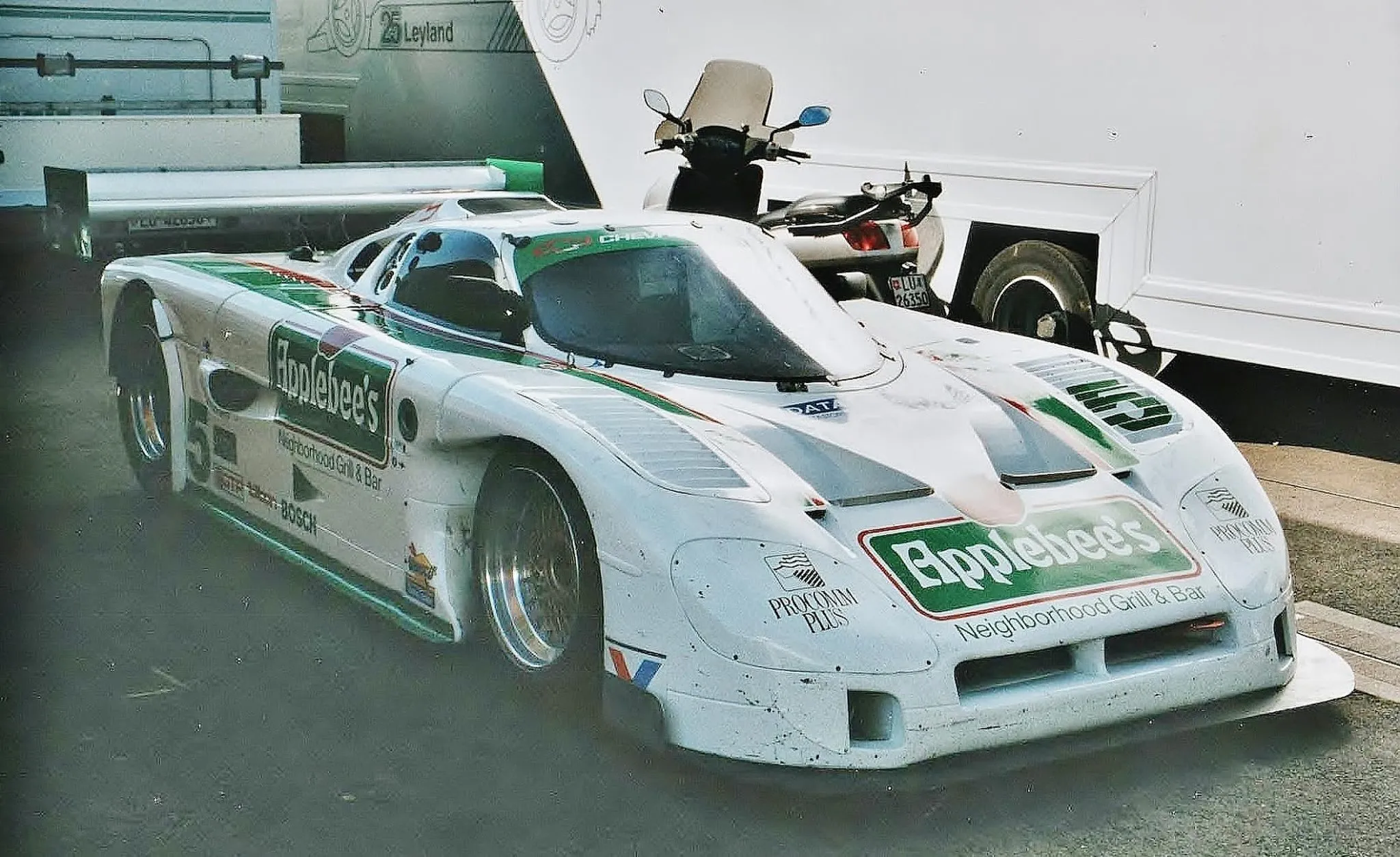
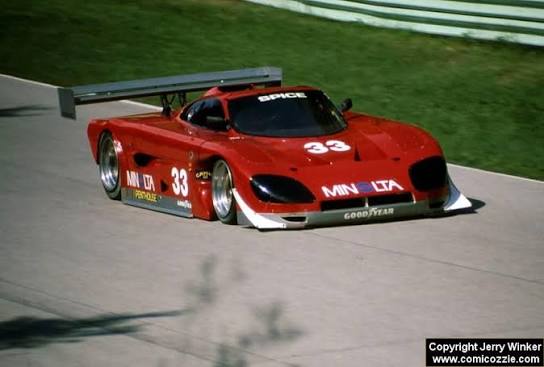
In the high-stakes, multimillion-dollar warzone of the late 1980s IMSA Camel GTP championship, the paddock was firmly divided between the untouchable factory titans and the ambitious, underfunded privateers. While Porsche, Jaguar, and Nissan waged an escalating technological war with molded carbon-fiber tubs and exotic, turbocharged engines, independent teams required a pragmatically engineered giant-killer. The brilliant British constructor Gordon Spice, alongside chief designer Graham Humphrys, provided exactly that with the SE89 chassis. However, while the European World Sports Prototype Championship cars (the SE89C) relied on high-strung, small-displacement Cosworth engines, the American IMSA variants—designated the SE89P—demanded a completely different philosophy. To conquer the abrasive airfields and tight street circuits of North America, privateers married the sophisticated European ground-effect chassis with unapologetic American brute force. Among the most spectacular and thunderous iterations of this transatlantic hybrid was the 1989 Spice SE89P powered by a massive 6.0-liter Pontiac V8. It was a machine that fundamentally rejected the whistling, turbocharged finesse of the era, relying instead on naturally aspirated, pushrod displacement to batter the establishment into submission.
To strip away the sleek, wind-tunnel-sculpted Kevlar and carbon-composite bodywork of the SE89P is to uncover a masterclass in privateer-focused engineering. Humphrys deliberately avoided the astronomically expensive carbon-fibre monocoques utilized by the factory teams. Instead, the Spice relied on an incredibly rigid, folded aluminium honeycomb tub. This pragmatic choice ensured that a weekend shunt would not bankrupt a privateer, as the aluminium could be repaired in a standard racing workshop. Yet, it was what sat bolted behind the driver’s bulkhead that defined this specific variant’s terrifying character. The 6.0-liter Pontiac V8 was a naturally aspirated pushrod leviathan. Stripped of road-going restrictions and highly tuned for endurance racing, this block produced well over 600 brake horsepower and a tidal wave of instant, low-end torque. Mated to a robust Hewland five-speed manual transaxle, the powertrain lacked the turbo-lag that famously plagued the Porsche 962s and Nissan GTPs. The SE89P featured incredibly deep underbody venturi tunnels designed to generate massive aerodynamic ground-effect downforce, while the suspension utilized a sophisticated double-wishbone setup with rocker-actuated inboard coil springs at the rear to clear those vital aerodynamic channels. Inside the right-hand-drive aluminium tub, the driver was subjected to an absolute sensory assault—the deafening, guttural roar of the Pontiac V8 vibrating through the chassis, demanding muscular steering inputs and lightning-fast reflexes.
On the American tarmac, the 6.0-liter Pontiac-powered Spice SE89P proved to be an exceptionally lethal weapon. While the factory Nissans and Jaguars possessed superior ultimate top speed on the sprawling straights of Daytona or Road America, the SE89P was a surgical instrument on IMSA’s tighter, more technical circuits. At street courses like Miami, Del Mar, or Long Beach, the immediate, lag-free throttle response of the massive Pontiac V8 allowed drivers to rocket out of slow corners, frequently harassing and out-qualifying the turbocharged factory cars. The Spice SE89 chassis was remarkably agile, utilizing its ground effects to maintain terrifying cornering speeds, while the reliable, naturally aspirated nature of the American pushrod engine meant it could absorb hours of relentless punishment without the thermal meltdowns that often sidelined its exotic rivals. It was a fan favourite; amidst the high-pitched screams of European prototypes, the earth-shaking, thunderous rumble of the Pontiac V8 announced the SE89P’s arrival long before it was visible. Teams campaigning these American-powered British chassis proved that sheer mechanical grip and reliable displacement could still occasionally beat millions of dollars of factory wind-tunnel research.
The Spice SE89P 6.0 Pontiac perfectly encapsulates a fleeting, glorious moment in motorsport history where an independent team could purchase a rolling chassis from the United Kingdom, stuff a thunderous American V8 into the engine bay, and legitimately fight for outright podiums against the greatest automotive manufacturers on earth.
Brand
Produced from
Portal
Vehicle category
Model line
Predecessor
Sucessor
Brand
Produced from
Portal
Vehicle category
Model line
Model generation
Predecessor
Sucessor
Submodel Overview
In the high-stakes, multimillion-dollar warzone of the late 1980s IMSA Camel GTP championship, the paddock was firmly divided between the untouchable factory titans and the ambitious, underfunded privateers. While Porsche, Jaguar, and Nissan waged an escalating technological war with molded carbon-fiber tubs and exotic, turbocharged engines, independent teams required a pragmatically engineered giant-killer. The brilliant British constructor Gordon Spice, alongside chief designer Graham Humphrys, provided exactly that with the SE89 chassis. However, while the European World Sports Prototype Championship cars (the SE89C) relied on high-strung, small-displacement Cosworth engines, the American IMSA variants—designated the SE89P—demanded a completely different philosophy. To conquer the abrasive airfields and tight street circuits of North America, privateers married the sophisticated European ground-effect chassis with unapologetic American brute force. Among the most spectacular and thunderous iterations of this transatlantic hybrid was the 1989 Spice SE89P powered by a massive 6.0-liter Pontiac V8. It was a machine that fundamentally rejected the whistling, turbocharged finesse of the era, relying instead on naturally aspirated, pushrod displacement to batter the establishment into submission.
To strip away the sleek, wind-tunnel-sculpted Kevlar and carbon-composite bodywork of the SE89P is to uncover a masterclass in privateer-focused engineering. Humphrys deliberately avoided the astronomically expensive carbon-fibre monocoques utilized by the factory teams. Instead, the Spice relied on an incredibly rigid, folded aluminium honeycomb tub. This pragmatic choice ensured that a weekend shunt would not bankrupt a privateer, as the aluminium could be repaired in a standard racing workshop. Yet, it was what sat bolted behind the driver’s bulkhead that defined this specific variant’s terrifying character. The 6.0-liter Pontiac V8 was a naturally aspirated pushrod leviathan. Stripped of road-going restrictions and highly tuned for endurance racing, this block produced well over 600 brake horsepower and a tidal wave of instant, low-end torque. Mated to a robust Hewland five-speed manual transaxle, the powertrain lacked the turbo-lag that famously plagued the Porsche 962s and Nissan GTPs. The SE89P featured incredibly deep underbody venturi tunnels designed to generate massive aerodynamic ground-effect downforce, while the suspension utilized a sophisticated double-wishbone setup with rocker-actuated inboard coil springs at the rear to clear those vital aerodynamic channels. Inside the right-hand-drive aluminium tub, the driver was subjected to an absolute sensory assault—the deafening, guttural roar of the Pontiac V8 vibrating through the chassis, demanding muscular steering inputs and lightning-fast reflexes.
On the American tarmac, the 6.0-liter Pontiac-powered Spice SE89P proved to be an exceptionally lethal weapon. While the factory Nissans and Jaguars possessed superior ultimate top speed on the sprawling straights of Daytona or Road America, the SE89P was a surgical instrument on IMSA’s tighter, more technical circuits. At street courses like Miami, Del Mar, or Long Beach, the immediate, lag-free throttle response of the massive Pontiac V8 allowed drivers to rocket out of slow corners, frequently harassing and out-qualifying the turbocharged factory cars. The Spice SE89 chassis was remarkably agile, utilizing its ground effects to maintain terrifying cornering speeds, while the reliable, naturally aspirated nature of the American pushrod engine meant it could absorb hours of relentless punishment without the thermal meltdowns that often sidelined its exotic rivals. It was a fan favourite; amidst the high-pitched screams of European prototypes, the earth-shaking, thunderous rumble of the Pontiac V8 announced the SE89P’s arrival long before it was visible. Teams campaigning these American-powered British chassis proved that sheer mechanical grip and reliable displacement could still occasionally beat millions of dollars of factory wind-tunnel research.
The Spice SE89P 6.0 Pontiac perfectly encapsulates a fleeting, glorious moment in motorsport history where an independent team could purchase a rolling chassis from the United Kingdom, stuff a thunderous American V8 into the engine bay, and legitimately fight for outright podiums against the greatest automotive manufacturers on earth.
Tech Specs
Technical Specifications
Tech Specs
Technical Specifications
Engine
01
03
Internal combustion engine
Configuration
Pontiac (GM Small Block architecture), V8 - 90º
Location
Mid, longitudinally mounted
Construction
Aluminium alloy block and heads
Displacement (cc)
5,998 cc
Displacement (cu in)
366.0 cu in
Compression
~12.0:1
Bore x Stroke
101.6 mm x 92.4 mm
Valvetrain
2 valves per cylinder, OHV
Fuel feed
Kinsler / Lucas electronic fuel injection
Lubrication
Dry sump
Aspiration
Naturally aspirated
Output
Power (hp)
~620 hp
Power (kW)
~462 kW
Max power at
7,500 RPM
Torque (Nm)
~637 Nm
Torque (ft lbs)
~470 ft lbs
Max torque at
5,500 RPM
Drivetrain
02
03
Chassis
Type
Monocoque
Material
Aluminium
Body
Material
Carbon fibre composite and Kevlar
Transmission
Gearbox
Hewland DCB, 5-speed manual transaxle
Drive
Rear Wheel Drive (Locked solid spool differential)
Suspension
Front
Independent, double wishbones, coil springs over shock absorbers, anti-roll bar
Rear
Independent, double wishbones, rocker-actuated coil springs over shock absorbers, anti-roll bar
Steering
Type
Rack and pinion, unassisted
Brakes
Front
Ventilated steel discs Ø330 mm, 4-piston calipers
Rear
Ventilated steel discs Ø330 mm, 4-piston calipers
Wheels
Front
12" x 16"
Rear
14" x 16"
Tires
Front
-
Rear
-
Dimensions and performance
03
03
Dimensions
Length (mm)
~4,800 mm
Length (in)
~189.0 in
Width (mm)
~2,000 mm
Width (in)
~78.7 in
Height (mm)
~1,020 mm
Height (in)
~40.1 in
Wheelbase (mm)
~2,750 mm
Wheelbase (in)
~108.3 in
Weight (kg)
~900 kg
Weight (lbs)
~1,984 lbs
Performance
Power to weight
~0.68 hp/kg
Top speed (km/h)
~340 km/h
Top speed (mph)
~211 mph
0-100 km/h (0-60 mph)
~3.2 s