
Born from the charred remains of a fractured Europe, the Formula One World Championship erupted as a visceral, high-octane expression of mechanical rebirth. In 1946, the antiquated Association Internationale des Automobile Clubs Reconnus (AIACR) morphed into the Fédération Internationale de l’Automobile (FIA). Their mandate was resolute: to establish a new, unified “formula”—a remarkably simple set of regulations dictating only maximum engine capacity, specifically 1.5-litre (91.5 cu in) supercharged or 4.5-litre (274.6 cu in) naturally aspirated engines, with no restrictions on vehicle weight whatsoever—designed to harmonise Grand Prix racing across the continent. Although standalone races ran to this formula from 1946, the official World Championship of Drivers was inaugurated in 1950. At its very soul, Formula One was defined as the absolute zenith of motor racing; an arena where budgets were historically limitless, and where fragile men and volatile machines were forced into a terrifying pursuit of absolute perfection.
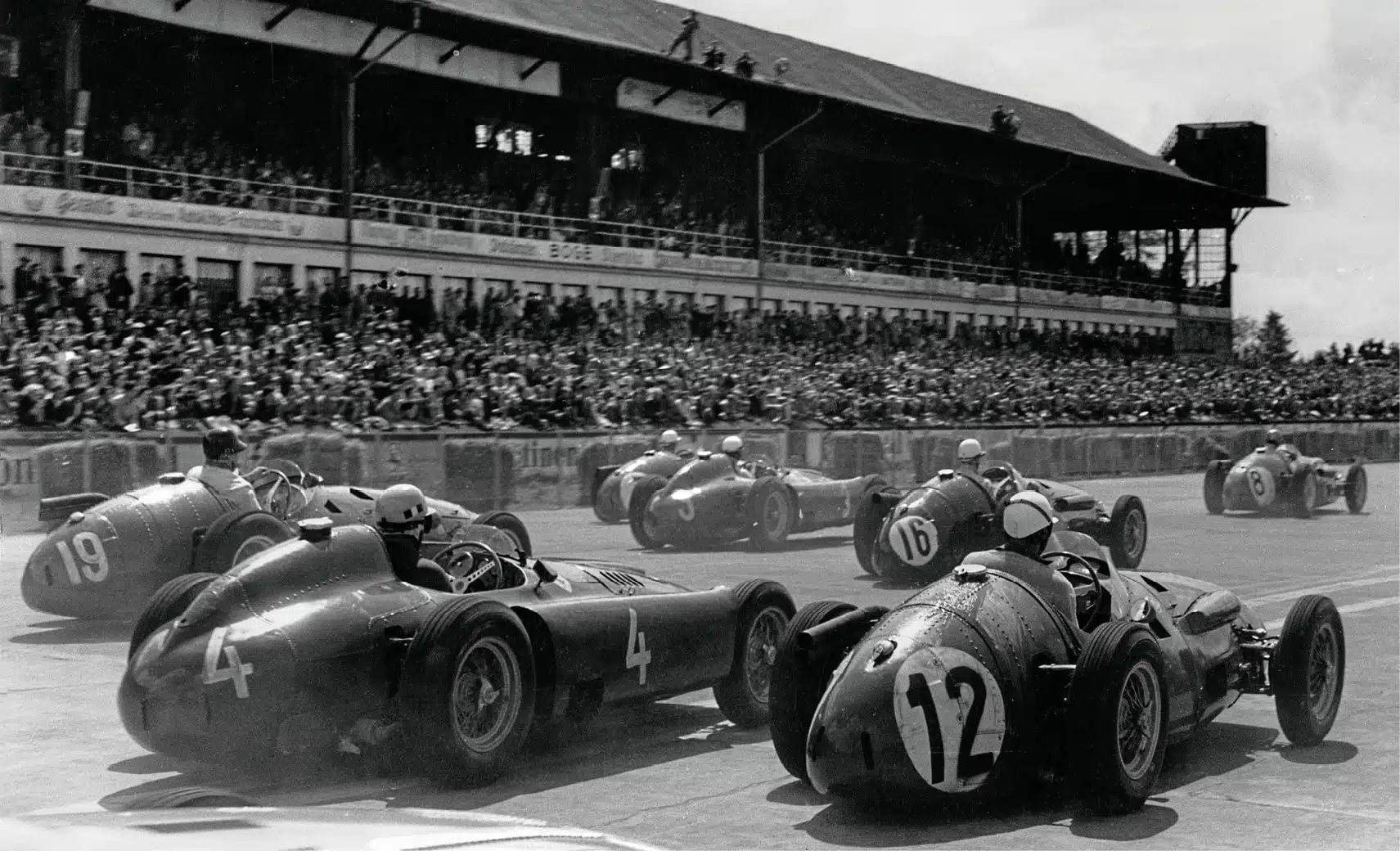
On 13 May 1950, the inaugural championship round shattered the rural quiet of a former bomber base at Silverstone. The grid was populated by thunderous, heavy front-engined leviathans, their exhausts spitting the pungent, unmistakable scent of methanol and castor oil into the British air. Early chariots like the supercharged Alfa Romeo 158 produced tremendous power, yet ran on terrifyingly narrow, treaded tyres. This was the dominion of Juan Manuel Fangio, the Argentine virtuoso who claimed five world titles across an unprecedented four marques: Alfa Romeo, Maserati, Mercedes, and Ferrari. It was a deeply romantic yet profoundly lethal epoch. Drivers wore linen helmets and goggles, actively shunning seatbelts under the chilling rationale that it was “safer” to be violently thrown clear of a crashing chassis than to burn alive trapped within a mangled wreck.
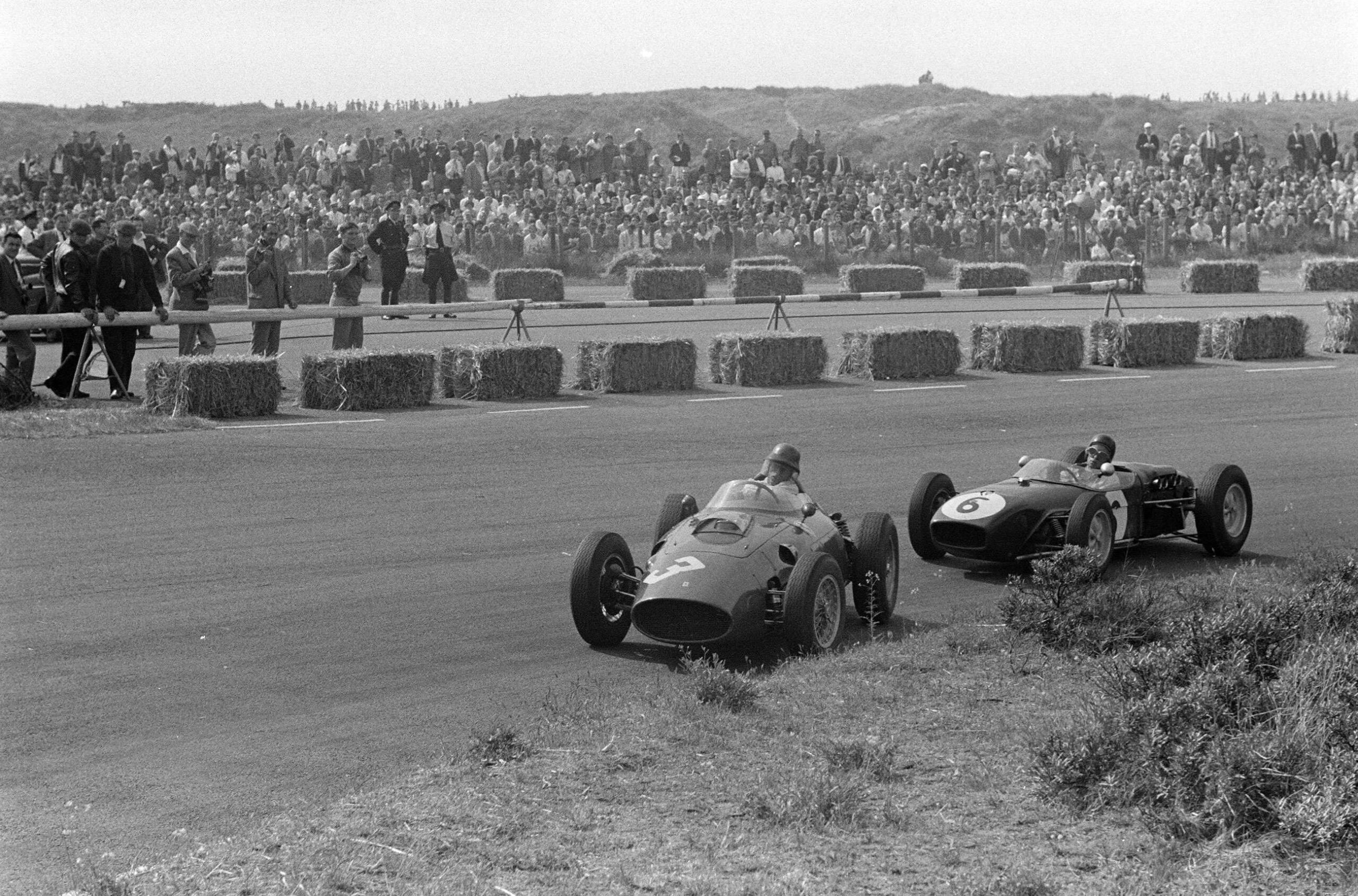
The 1960s heralded the sport’s first monumental technical revolution. A dismissive Enzo Ferrari famously labelled the British independent constructors as mere “garagistes”, scorning their pragmatic practice of bolting proprietary engines into chassis built in humble sheds. Yet, these visionaries forever altered the racing landscape. By relocating the engine behind the driver—a concept validated to championship success by the Coventry Climax-powered Cooper T51—they radically perfected aerodynamic profiles and weight distribution.
This decade belonged to the mercurial engineering genius of Colin Chapman and the silken, balletic driving style of his Lotus protégé, the Scotsman Jim Clark. As the decade waned, the cars grew visibly more brutal; traditional national racing colours were usurped by commercial sponsors, and rudimentary, perilously fragile aerofoils sprouted high above the engine covers, pressing the tyres into the tarmac with invisible force.
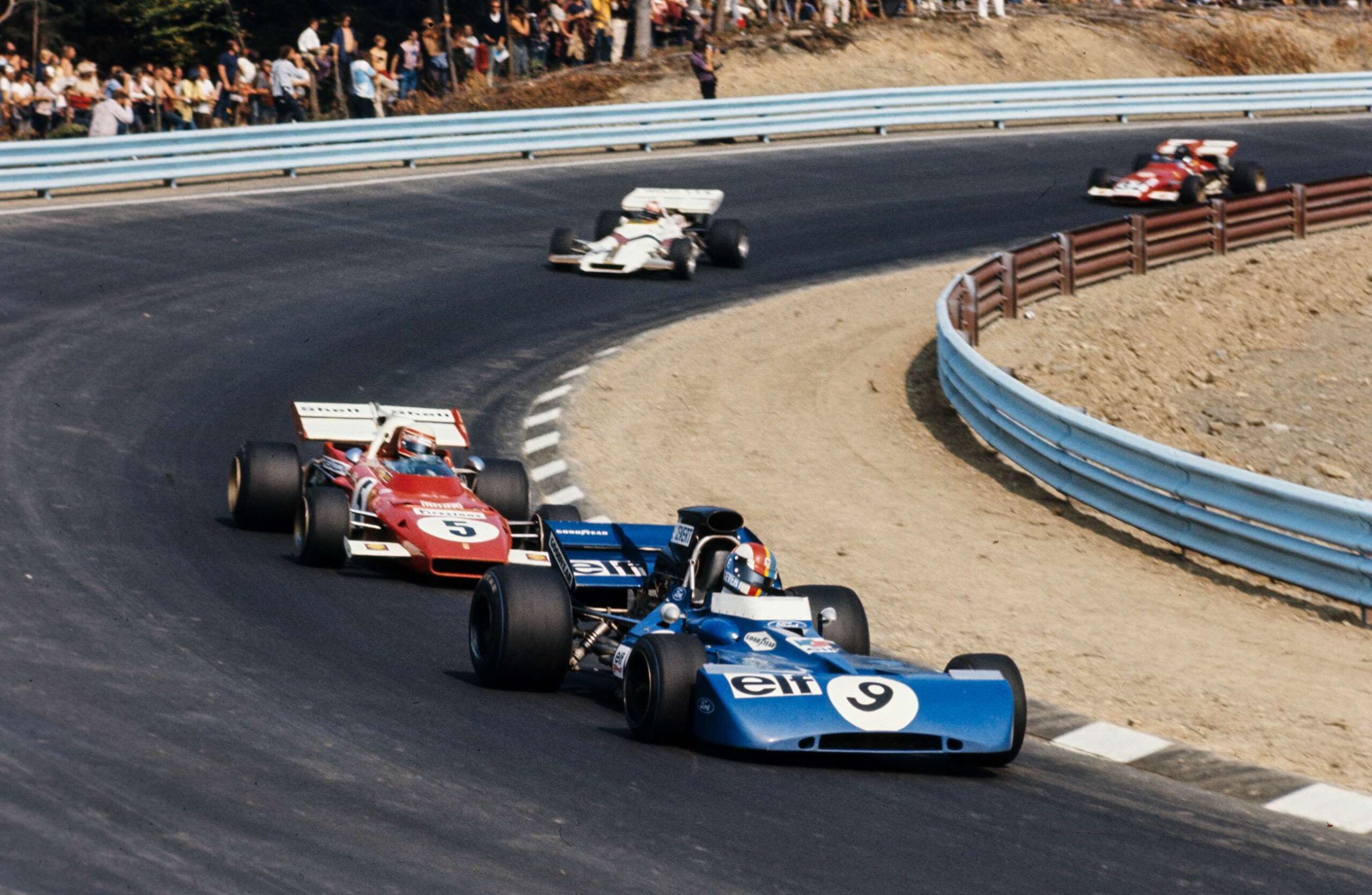
Aerodynamics tightened its grip in the 1970s. Engineers unlocked the black art of the “ground effect”, sculpting the undersides of the sidepods into inverted aircraft wings that sucked the cars to the asphalt through high-speed curves, an innovation beautifully weaponised in the Lotus 79. The grid was democratised by the legendary, cost-effective 3.0-litre (183 cu in) Ford Cosworth DFV engine, allowing privateers to battle the grandees.
The era is forever defined by the blazing 1976 season, a mythical duel between the calculating Niki Lauda—who miraculously survived a horrific inferno at the Nürburgring—and the swashbuckling James Hunt. Concurrently, appalled by the relentless death toll, Jackie Stewart embarked on an unyielding crusade for circuit safety, using the Grand Prix Drivers’ Association to force boycotts of lethal, tree-lined traps like Spa-Francorchamps and the Nordschleife.
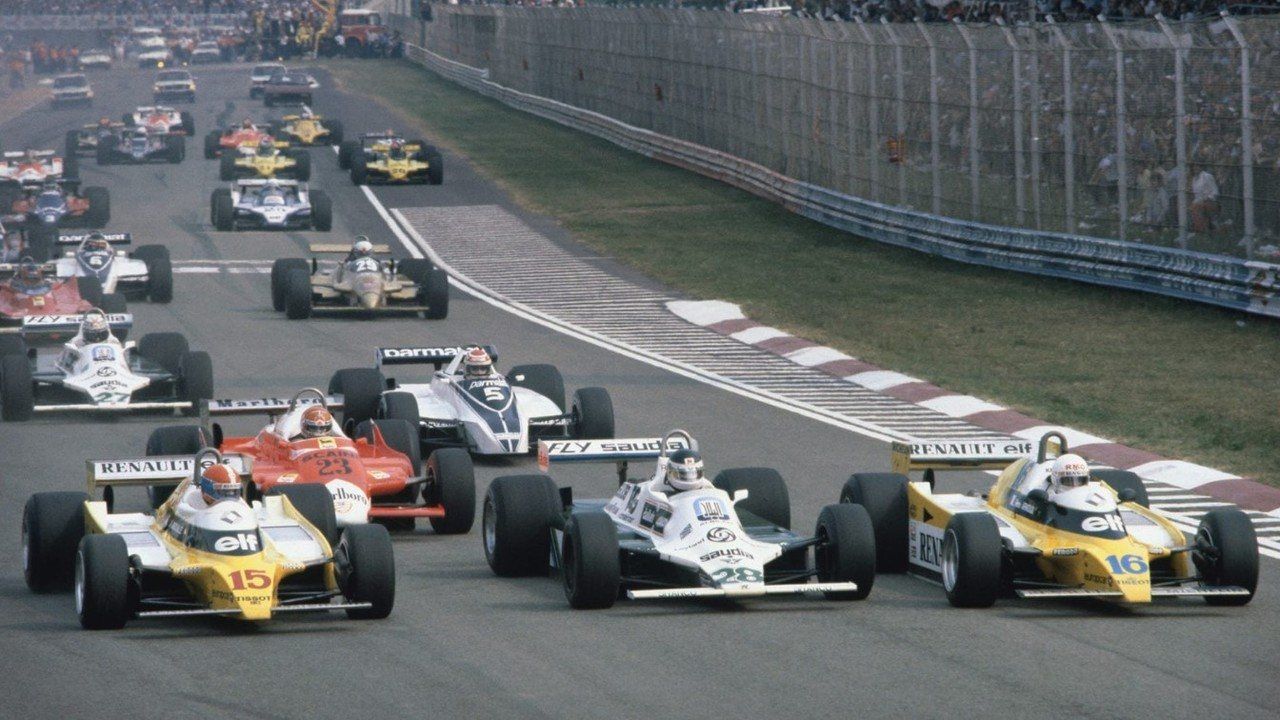
What followed was the most savage, hedonistic decade the sport has ever endured. The 1980s “turbo era”, which was characterised by unrestrained boost pressures, saw qualifying engines of a mere 1.5-litre (91.5 cu in) capacity detonating with over 1200 bhp (1216 PS), transforming the cars into violently twitchy, indomitable beasts that spat huge flames on the overrun.
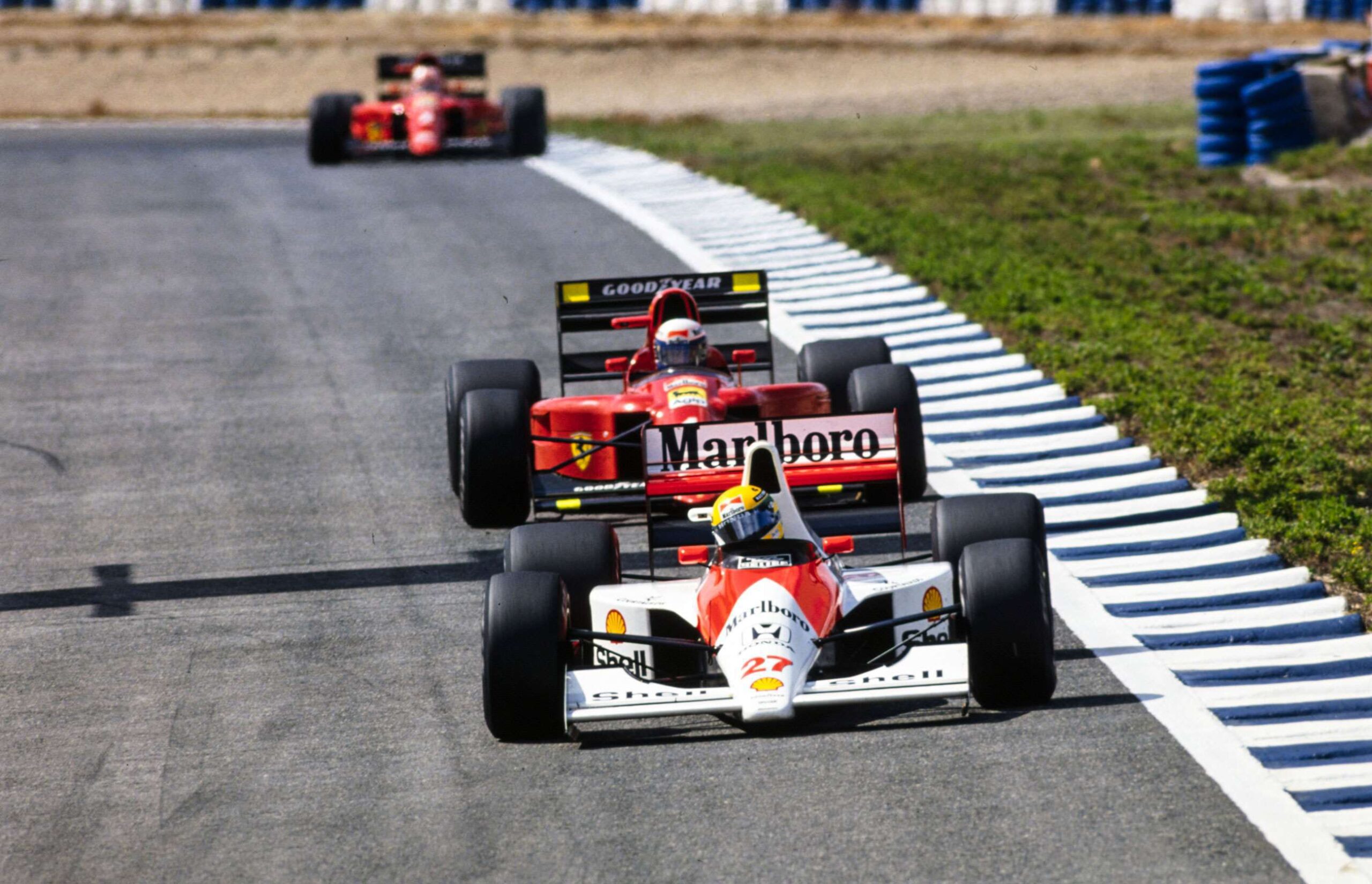
As the decade closed, it delivered the most toxic and captivating rivalry in motorsport history: Ayrton Senna and Alain Prost sharing a garage at McLaren in 1988 and 1989. Their deliberate, championship-deciding collisions at Suzuka—first as teammates in 1989, and again in 1990 after Prost had defected to Ferrari—perfectly encapsulated a time where pure, transcendent talent was irreparably laced with venomous sporting hatred, played out in front of feverish, adoring crowds.
By the early 1990s, technological development had spiralled into the realm of science fiction. Williams mastered active suspension, creating an electronic “smart car” that crushed all opposition with clinical precision. However, the modern sport suffered its darkest weekend at the 1994 San Marino Grand Prix, where Roland Ratzenberger and Ayrton Senna perished. The ensuing global trauma forced a radical, immediate rewrite of the safety regulations, stripping away electronic driver aids and reshaping chassis survival cells. From this gloom emerged a ruthless, relentlessly fit young German named Michael Schumacher, who captured two world titles with Benetton before departing to undertake the monumental task of rebuilding a floundering Ferrari.
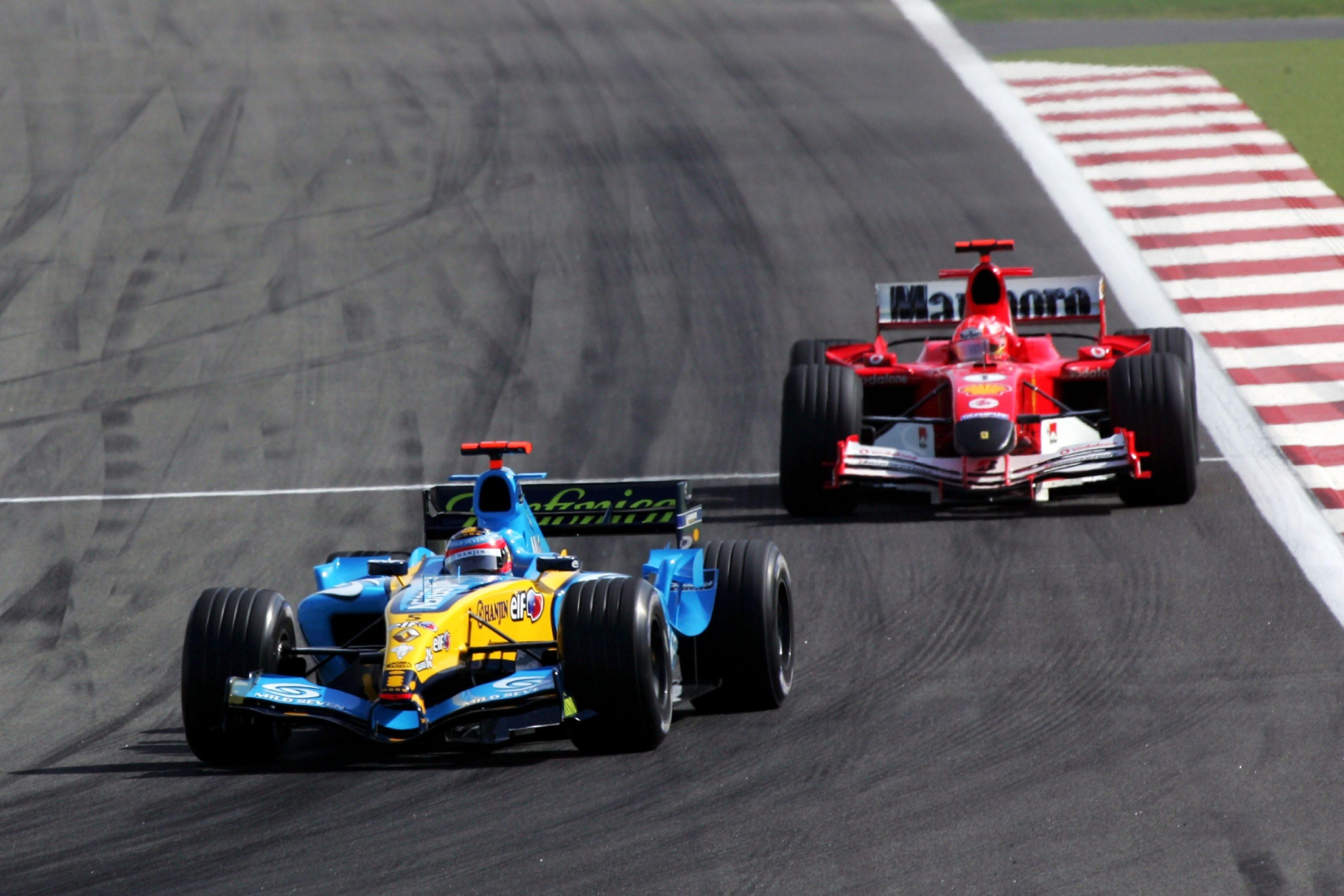
The dawn of the new millennium was defined by a shrieking, deafening chorus of normally aspirated V10 engines and a relentless tide of red. The sound of these grids starting in unison was a physical force that vibrated in the chest cavities of the fans packing the grandstands. Schumacher and Ferrari established an unassailable technical and sporting tyranny, sweeping five consecutive championships from 2000 to 2004.
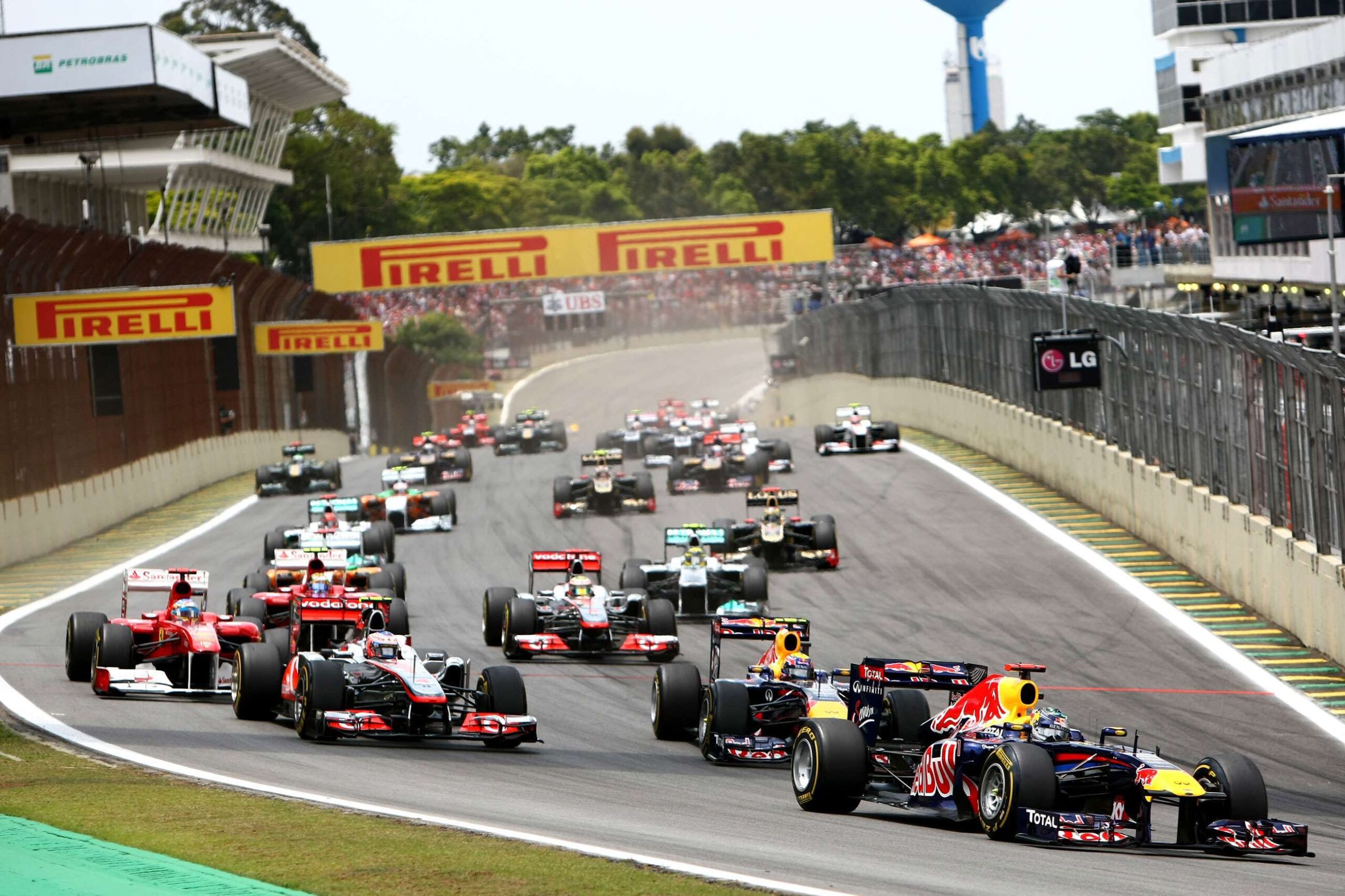
The FIA repeatedly altered the regulations in a desperate bid to handicap Maranello, paving the way for a young Spaniard, Fernando Alonso, to dethrone the Kaiser with Renault in 2005 and 2006. The decade culminated in the most dramatic climax imaginable in 2008, when McLaren‘s Lewis Hamilton snatched his maiden world title at the final corner of the final lap on a rain-slicked track in Brazil.
A brief period of Brawn GP magic and Sebastian Vettel’s Red Bull supremacy gave way to the most profound engine regulation change in history. In 2014, the sport abandoned the howling atmospheric engines for immensely complex, hyper-efficient 1.6-litre (97.6 cu in) V6 turbo-hybrid power units. This triggered an era of absolute Mercedes dominance, enabling Hamilton to equal Schumacher’s record of seven world titles while shattering historical records for victories and pole positions. This hegemony was violently ended at the controversial, epic Abu Dhabi finale in 2021, handing the crown to Max Verstappen and birthing the current “Verstappen Era”.
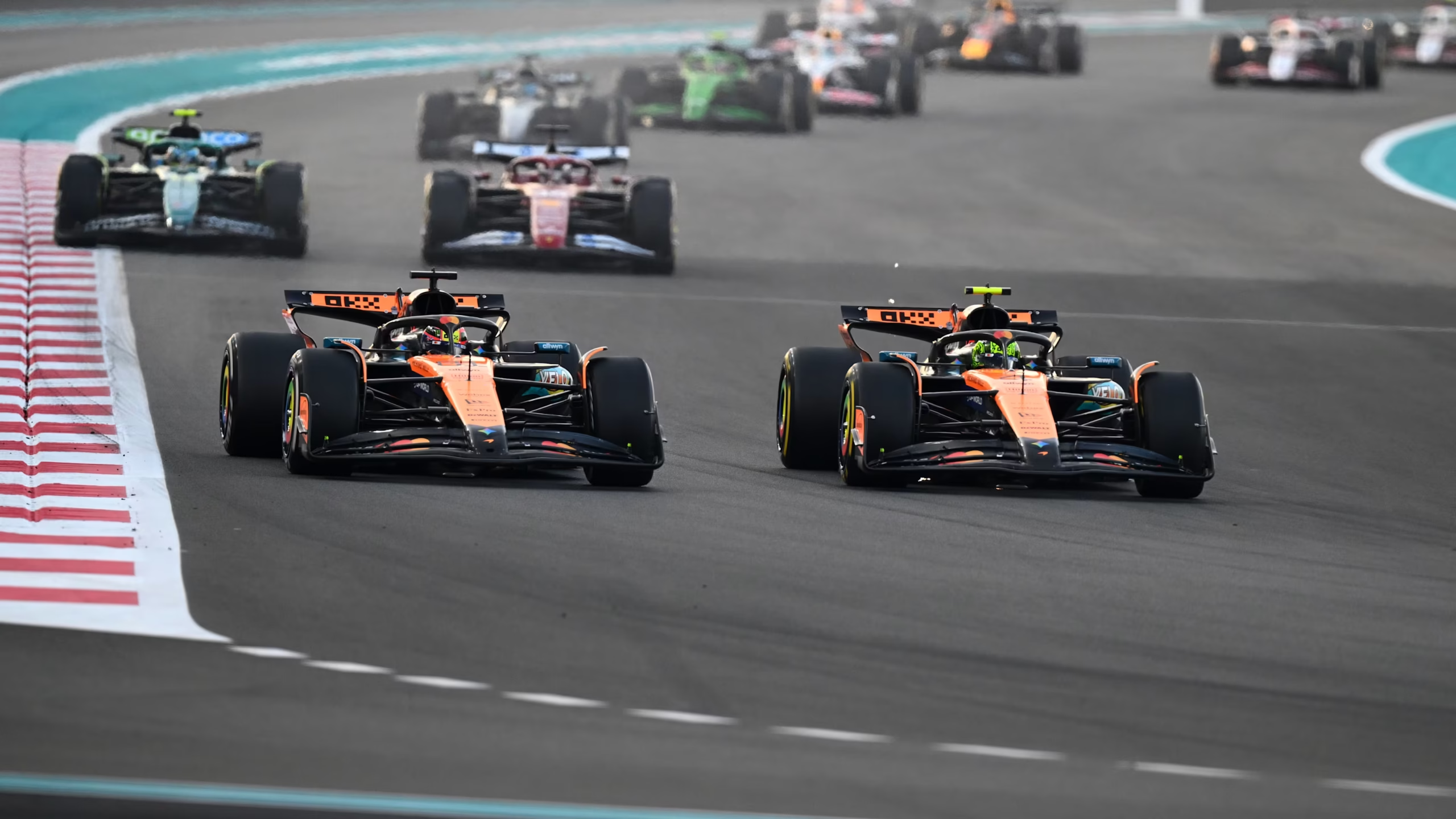
The return of ground effect aerodynamics in 2022 further entrenched Red Bull’s crushing dominance. However, recovering from a disastrous start to the 2024 campaign, McLaren developed the MCL39 into a formidable weapon, culminating in a spectacular 2025 season where Lando Norris finally conquered Verstappen to secure his maiden World Drivers’ Championship.
Today, Formula One exists as a completely transformed entity. To prevent the financial heavyweights from obliterating independent teams with limitless chequebooks, the FIA introduced a stringent budget cap, setting a baseline limit of $135 million (roughly £105 million) that scales to $215 million (£168 million) in 2026 to accommodate sprawling new engine development regulations. Simultaneously, the sport has mutated into a monster of modern entertainment. Following the buyout by the American firm Liberty Media in 2017, an aggressive digital strategy, the explosive popularity of the Netflix docuseries Drive to Survive, and the rapid expansion of the calendar into the United States and the Middle East have redefined the championship.
What was once a purist, heavily European pursuit of mechanical perfection has evolved into the definitive global entertainment phenomenon of the decade, roaring louder and reaching further than at any point in its blood-stained, glorious history.

Born from the charred remains of a fractured Europe, the Formula One World Championship erupted as a visceral, high-octane expression of mechanical rebirth. In 1946, the antiquated Association Internationale des Automobile Clubs Reconnus (AIACR) morphed into the Fédération Internationale de l’Automobile (FIA). Their mandate was resolute: to establish a new, unified “formula”—a remarkably simple set of regulations dictating only maximum engine capacity, specifically 1.5-litre (91.5 cu in) supercharged or 4.5-litre (274.6 cu in) naturally aspirated engines, with no restrictions on vehicle weight whatsoever—designed to harmonise Grand Prix racing across the continent. Although standalone races ran to this formula from 1946, the official World Championship of Drivers was inaugurated in 1950. At its very soul, Formula One was defined as the absolute zenith of motor racing; an arena where budgets were historically limitless, and where fragile men and volatile machines were forced into a terrifying pursuit of absolute perfection.
On 13 May 1950, the inaugural championship round shattered the rural quiet of a former bomber base at Silverstone. The grid was populated by thunderous, heavy front-engined leviathans, their exhausts spitting the pungent, unmistakable scent of methanol and castor oil into the British air. Early chariots like the supercharged Alfa Romeo 158 produced tremendous power, yet ran on terrifyingly narrow, treaded tyres. This was the dominion of Juan Manuel Fangio, the Argentine virtuoso who claimed five world titles across an unprecedented four marques: Alfa Romeo, Maserati, Mercedes, and Ferrari. It was a deeply romantic yet profoundly lethal epoch. Drivers wore linen helmets and goggles, actively shunning seatbelts under the chilling rationale that it was “safer” to be violently thrown clear of a crashing chassis than to burn alive trapped within a mangled wreck.
The 1960s heralded the sport’s first monumental technical revolution. A dismissive Enzo Ferrari famously labelled the British independent constructors as mere “garagistes”, scorning their pragmatic practice of bolting proprietary engines into chassis built in humble sheds. Yet, these visionaries forever altered the racing landscape. By relocating the engine behind the driver—a concept validated to championship success by the Coventry Climax-powered Cooper T51—they radically perfected aerodynamic profiles and weight distribution.
This decade belonged to the mercurial engineering genius of Colin Chapman and the silken, balletic driving style of his Lotus protégé, the Scotsman Jim Clark. As the decade waned, the cars grew visibly more brutal; traditional national racing colours were usurped by commercial sponsors, and rudimentary, perilously fragile aerofoils sprouted high above the engine covers, pressing the tyres into the tarmac with invisible force.
Aerodynamics tightened its grip in the 1970s. Engineers unlocked the black art of the “ground effect”, sculpting the undersides of the sidepods into inverted aircraft wings that sucked the cars to the asphalt through high-speed curves, an innovation beautifully weaponised in the Lotus 79. The grid was democratised by the legendary, cost-effective 3.0-litre (183 cu in) Ford Cosworth DFV engine, allowing privateers to battle the grandees.
The era is forever defined by the blazing 1976 season, a mythical duel between the calculating Niki Lauda—who miraculously survived a horrific inferno at the Nürburgring—and the swashbuckling James Hunt. Concurrently, appalled by the relentless death toll, Jackie Stewart embarked on an unyielding crusade for circuit safety, using the Grand Prix Drivers’ Association to force boycotts of lethal, tree-lined traps like Spa-Francorchamps and the Nordschleife.
What followed was the most savage, hedonistic decade the sport has ever endured. The 1980s “turbo era”, which was characterised by unrestrained boost pressures, saw qualifying engines of a mere 1.5-litre (91.5 cu in) capacity detonating with over 1200 bhp (1216 PS), transforming the cars into violently twitchy, indomitable beasts that spat huge flames on the overrun.
As the decade closed, it delivered the most toxic and captivating rivalry in motorsport history: Ayrton Senna and Alain Prost sharing a garage at McLaren in 1988 and 1989. Their deliberate, championship-deciding collisions at Suzuka—first as teammates in 1989, and again in 1990 after Prost had defected to Ferrari—perfectly encapsulated a time where pure, transcendent talent was irreparably laced with venomous sporting hatred, played out in front of feverish, adoring crowds.
By the early 1990s, technological development had spiralled into the realm of science fiction. Williams mastered active suspension, creating an electronic “smart car” that crushed all opposition with clinical precision. However, the modern sport suffered its darkest weekend at the 1994 San Marino Grand Prix, where Roland Ratzenberger and Ayrton Senna perished. The ensuing global trauma forced a radical, immediate rewrite of the safety regulations, stripping away electronic driver aids and reshaping chassis survival cells. From this gloom emerged a ruthless, relentlessly fit young German named Michael Schumacher, who captured two world titles with Benetton before departing to undertake the monumental task of rebuilding a floundering Ferrari.
The dawn of the new millennium was defined by a shrieking, deafening chorus of normally aspirated V10 engines and a relentless tide of red. The sound of these grids starting in unison was a physical force that vibrated in the chest cavities of the fans packing the grandstands. Schumacher and Ferrari established an unassailable technical and sporting tyranny, sweeping five consecutive championships from 2000 to 2004.
The FIA repeatedly altered the regulations in a desperate bid to handicap Maranello, paving the way for a young Spaniard, Fernando Alonso, to dethrone the Kaiser with Renault in 2005 and 2006. The decade culminated in the most dramatic climax imaginable in 2008, when McLaren‘s Lewis Hamilton snatched his maiden world title at the final corner of the final lap on a rain-slicked track in Brazil.
A brief period of Brawn GP magic and Sebastian Vettel’s Red Bull supremacy gave way to the most profound engine regulation change in history. In 2014, the sport abandoned the howling atmospheric engines for immensely complex, hyper-efficient 1.6-litre (97.6 cu in) V6 turbo-hybrid power units. This triggered an era of absolute Mercedes dominance, enabling Hamilton to equal Schumacher’s record of seven world titles while shattering historical records for victories and pole positions. This hegemony was violently ended at the controversial, epic Abu Dhabi finale in 2021, handing the crown to Max Verstappen and birthing the current “Verstappen Era”.
The return of ground effect aerodynamics in 2022 further entrenched Red Bull’s crushing dominance. However, recovering from a disastrous start to the 2024 campaign, McLaren developed the MCL39 into a formidable weapon, culminating in a spectacular 2025 season where Lando Norris finally conquered Verstappen to secure his maiden World Drivers’ Championship.
Today, Formula One exists as a completely transformed entity. To prevent the financial heavyweights from obliterating independent teams with limitless chequebooks, the FIA introduced a stringent budget cap, setting a baseline limit of $135 million (roughly £105 million) that scales to $215 million (£168 million) in 2026 to accommodate sprawling new engine development regulations. Simultaneously, the sport has mutated into a monster of modern entertainment. Following the buyout by the American firm Liberty Media in 2017, an aggressive digital strategy, the explosive popularity of the Netflix docuseries Drive to Survive, and the rapid expansion of the calendar into the United States and the Middle East have redefined the championship.
What was once a purist, heavily European pursuit of mechanical perfection has evolved into the definitive global entertainment phenomenon of the decade, roaring louder and reaching further than at any point in its blood-stained, glorious history.