Rondeau
Type
Foundation Year
Founder/s
Country
Headquarters
Brand Overview
In the century-long history of the 24 Hours of Le Mans, amidst the titanic battles of manufacturers like Porsche, Ferrari, Ford, and Audi, there exists a singular anomaly. It is a record that stands in isolation, a feat so personal and so improbably romantic that it seems lifted from the pages of a Boy’s Own adventure comic rather than the cold, hard record books of the ACO. Many men have won Le Mans. Many manufacturers have won Le Mans. But only one man has ever won the greatest endurance race in the world driving a car designed, built, and named by himself. That man was Jean Rondeau. His story is not one of corporate budgets and boardroom strategies; it is the story of a native son of Le Mans, a “Manceau” born and bred, who looked at the massive factory teams and decided that with enough grit, a Ford Cosworth engine, and a workshop in his backyard, he could beat them all.
To understand the brand, you must understand the man. Jean Rondeau was not an engineer by trade; he was a driver with a dream that bordered on obsession. Born in Le Mans in 1946, the race was not just an event to him; it was the rhythm of his life. In the mid-1970s, the sportscar world was in a state of flux. The oil crisis had dampened manufacturer interest, leaving the grid open to privateers and “garagistas.” Rondeau saw an opening. He started not with a Rondeau, but with the Inaltera. Securing sponsorship from a French wallpaper manufacturer (Inaltera), he commissioned a sleek, closed-cockpit GTP coupe. The defining characteristic was the engine: the Ford Cosworth DFV.
This was a radical choice. The DFV (Double Four Valve) was a Formula 1 sprint engine. It was designed to scream for two hours, not endure for twenty-four. It vibrated so violently that it was known to crack chassis and shake the fillings out of drivers’ teeth. Conventional wisdom said a DFV would never last the distance at Le Mans. Rondeau ignored conventional wisdom. In 1976 and 1977, the Inalteras not only finished; they won the GTP class. But when the wallpaper company withdrew sponsorship, they left Rondeau with the cars and equipment but no name. In 1978, the cars were rebranded. Automobiles Jean Rondeau was born.
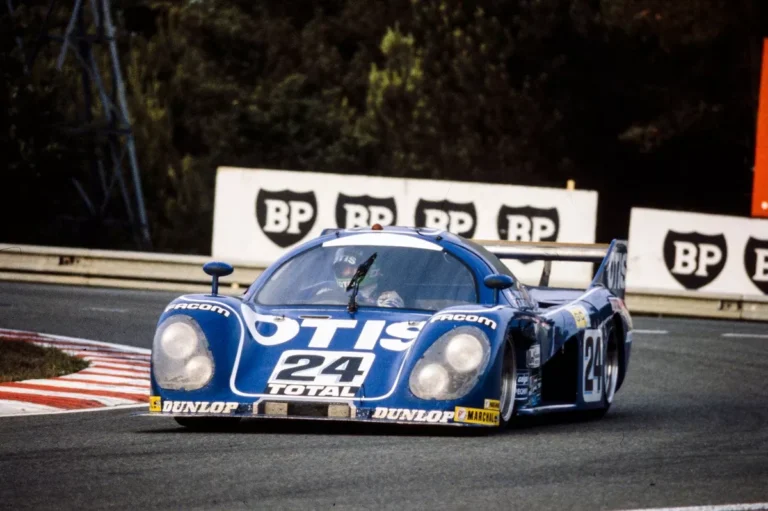
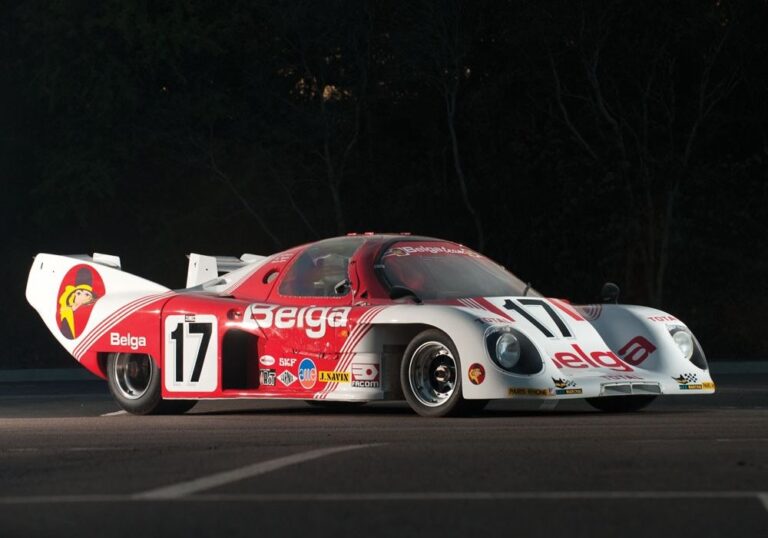
The car that would carve Rondeau’s name into history was the M379. It was a compact, purposeful sports prototype. It was not beautiful in the way a Ferrari 330 P4 is beautiful; it was functional, squat, and aggressive. It utilized a steel spaceframe reinforced with aluminium sheets, designed to withstand the brutal vibrations of the 3.0-liter Cosworth V8. While the factory Porsche 936s relied on turbocharging and complexity, Rondeau relied on lightness and the fuel efficiency of the naturally aspirated engine. The team operated out of a small workshop just a few miles from the Mulsanne Straight. It was a community effort; the mechanics were locals, the food was local, and the passion was palpable.
The miracle happened in 1980. The giants of Porsche were present, represented by the Martini-liveried 908/80 (essentially a 936) driven by the legendary Jacky Ickx and Reinhold Joest. They were the heavy favorites. Jean Rondeau shared his M379B with the veteran French driver Jean-Pierre Jaussaud. The race was a wet, miserable affair, conditions that neutralized the Porsche’s power advantage and played into the hands of the nimble, torquey Rondeau. As the rain fell, the attrition rate soared. The Cosworth engine, tuned for endurance rather than outright peak power, kept singing.
The final hour of the 1980 24 Hours of Le Mans is one of the most tense in the sport’s history. With Jacky Ickx hunting them down in the Porsche, the skies opened up again. Jaussaud, in the car for the final stint, made the call to stay on slick tires despite the rain, fearing that a pit stop would cost them the lead. The car was hydroplaning down the Mulsanne at 200 mph. At one point, Jaussaud spun, the car facing the wrong way on the track. The engine stalled. In that heart-stopping silence, the entire dream hung in the balance. The starter motor on the Cosworth was notoriously fragile. If it didn’t fire, it was over. Jaussaud hit the button. The V8 roared to life. He spun the car back around and crossed the line to take the victory.
The scenes that followed were pandemonium. A French car, built in Le Mans, driven by a Le Mans native, had won the 24 Hours. The crowd invaded the track. Jean Rondeau was carried on shoulders, weeping. He had achieved the impossible. He had beaten the might of Stuttgart with a car built in a shed.
Rondeau did not stop there. The M379 evolved into the M382 to meet the new Group C regulations. The team expanded, selling customer cars to keep the lights on. In 1982, they came agonizingly close to winning the World Sportscar Championship, finishing second to Porsche—an incredible achievement for a privateer constructor against a global industrial titan. The team was ambitious, perhaps too ambitious. They developed the M482, a radical ground-effect car with massive Venturi tunnels and a distinctive “double-wing” rear end. It was designed to generate massive downforce, but it was plagued by the persistent vibrations of the 3.9-litre version of the Cosworth engine (the DFL), which literally shook the car to pieces.
The tragedy of Rondeau is that the story was cut short not by financial ruin or racing failure, but by a cruel twist of fate. Jean Rondeau was still young, still driving, and still planning the next evolution of his cars. On December 27, 1985, while crossing a railway track in his Porsche road car, he was struck by a train. He died instantly. He was 39 years old.
The heart of the team died with him. Without his drive, his charisma, and his ability to pull sponsorship deals together, the team dissolved within months. The Rondeau cars disappeared from the grid, becoming museum pieces and historic racers.
But the legacy of Rondeau is more than just metal and rubber. It represents the absolute zenith of the “Garagista” spirit. In the modern era, where winning Le Mans requires a budget of hundreds of millions and a team of 500 engineers, the idea of a driver building his own car and winning seems like a fantasy. Jean Rondeau proved that, for a brief, glorious window in time, passion could defeat budget. His cars were not the most advanced, nor the most powerful. But they were built with a purity of purpose and a local pride that gave them a soul.
Type
Foundation Year
Country
Founder/s
Headquarters

Type
Foundation Year
Country
Founder/s
Headquarters
About this brand
In the century-long history of the 24 Hours of Le Mans, amidst the titanic battles of manufacturers like Porsche, Ferrari, Ford, and Audi, there exists a singular anomaly. It is a record that stands in isolation, a feat so personal and so improbably romantic that it seems lifted from the pages of a Boy’s Own adventure comic rather than the cold, hard record books of the ACO. Many men have won Le Mans. Many manufacturers have won Le Mans. But only one man has ever won the greatest endurance race in the world driving a car designed, built, and named by himself. That man was Jean Rondeau. His story is not one of corporate budgets and boardroom strategies; it is the story of a native son of Le Mans, a “Manceau” born and bred, who looked at the massive factory teams and decided that with enough grit, a Ford Cosworth engine, and a workshop in his backyard, he could beat them all.
To understand the brand, you must understand the man. Jean Rondeau was not an engineer by trade; he was a driver with a dream that bordered on obsession. Born in Le Mans in 1946, the race was not just an event to him; it was the rhythm of his life. In the mid-1970s, the sportscar world was in a state of flux. The oil crisis had dampened manufacturer interest, leaving the grid open to privateers and “garagistas.” Rondeau saw an opening. He started not with a Rondeau, but with the Inaltera. Securing sponsorship from a French wallpaper manufacturer (Inaltera), he commissioned a sleek, closed-cockpit GTP coupe. The defining characteristic was the engine: the Ford Cosworth DFV.
This was a radical choice. The DFV (Double Four Valve) was a Formula 1 sprint engine. It was designed to scream for two hours, not endure for twenty-four. It vibrated so violently that it was known to crack chassis and shake the fillings out of drivers’ teeth. Conventional wisdom said a DFV would never last the distance at Le Mans. Rondeau ignored conventional wisdom. In 1976 and 1977, the Inalteras not only finished; they won the GTP class. But when the wallpaper company withdrew sponsorship, they left Rondeau with the cars and equipment but no name. In 1978, the cars were rebranded. Automobiles Jean Rondeau was born.
The car that would carve Rondeau’s name into history was the M379. It was a compact, purposeful sports prototype. It was not beautiful in the way a Ferrari 330 P4 is beautiful; it was functional, squat, and aggressive. It utilized a steel spaceframe reinforced with aluminium sheets, designed to withstand the brutal vibrations of the 3.0-liter Cosworth V8. While the factory Porsche 936s relied on turbocharging and complexity, Rondeau relied on lightness and the fuel efficiency of the naturally aspirated engine. The team operated out of a small workshop just a few miles from the Mulsanne Straight. It was a community effort; the mechanics were locals, the food was local, and the passion was palpable.
The miracle happened in 1980. The giants of Porsche were present, represented by the Martini-liveried 908/80 (essentially a 936) driven by the legendary Jacky Ickx and Reinhold Joest. They were the heavy favorites. Jean Rondeau shared his M379B with the veteran French driver Jean-Pierre Jaussaud. The race was a wet, miserable affair, conditions that neutralized the Porsche’s power advantage and played into the hands of the nimble, torquey Rondeau. As the rain fell, the attrition rate soared. The Cosworth engine, tuned for endurance rather than outright peak power, kept singing.
The final hour of the 1980 24 Hours of Le Mans is one of the most tense in the sport’s history. With Jacky Ickx hunting them down in the Porsche, the skies opened up again. Jaussaud, in the car for the final stint, made the call to stay on slick tires despite the rain, fearing that a pit stop would cost them the lead. The car was hydroplaning down the Mulsanne at 200 mph. At one point, Jaussaud spun, the car facing the wrong way on the track. The engine stalled. In that heart-stopping silence, the entire dream hung in the balance. The starter motor on the Cosworth was notoriously fragile. If it didn’t fire, it was over. Jaussaud hit the button. The V8 roared to life. He spun the car back around and crossed the line to take the victory.
The scenes that followed were pandemonium. A French car, built in Le Mans, driven by a Le Mans native, had won the 24 Hours. The crowd invaded the track. Jean Rondeau was carried on shoulders, weeping. He had achieved the impossible. He had beaten the might of Stuttgart with a car built in a shed.
Rondeau did not stop there. The M379 evolved into the M382 to meet the new Group C regulations. The team expanded, selling customer cars to keep the lights on. In 1982, they came agonizingly close to winning the World Sportscar Championship, finishing second to Porsche—an incredible achievement for a privateer constructor against a global industrial titan. The team was ambitious, perhaps too ambitious. They developed the M482, a radical ground-effect car with massive Venturi tunnels and a distinctive “double-wing” rear end. It was designed to generate massive downforce, but it was plagued by the persistent vibrations of the 3.9-litre version of the Cosworth engine (the DFL), which literally shook the car to pieces.
The tragedy of Rondeau is that the story was cut short not by financial ruin or racing failure, but by a cruel twist of fate. Jean Rondeau was still young, still driving, and still planning the next evolution of his cars. On December 27, 1985, while crossing a railway track in his Porsche road car, he was struck by a train. He died instantly. He was 39 years old.
The heart of the team died with him. Without his drive, his charisma, and his ability to pull sponsorship deals together, the team dissolved within months. The Rondeau cars disappeared from the grid, becoming museum pieces and historic racers.
But the legacy of Rondeau is more than just metal and rubber. It represents the absolute zenith of the “Garagista” spirit. In the modern era, where winning Le Mans requires a budget of hundreds of millions and a team of 500 engineers, the idea of a driver building his own car and winning seems like a fantasy. Jean Rondeau proved that, for a brief, glorious window in time, passion could defeat budget. His cars were not the most advanced, nor the most powerful. But they were built with a purity of purpose and a local pride that gave them a soul.
Submodels
Latest Variants
Model Lines