
The piercing, metallic shriek of an unsilenced exhaust echoing off the limestone facades of a Sicilian mountain village at dawn was, for seven decades, the ultimate siren song of motorsport. Conceived in 1906, the Targa Florio was the intoxicating dream of Vincenzo Florio, a wealthy young heir to a vast Marsala wine and shipping empire who resolved to bring the terrifying spectacle of motor racing to his native island. The stage he initially chose was the Grande Circuito delle Madonie, a sprawling, diabolical network of public mountain roads stretching across an exhausting 148 km (92 miles) loop.
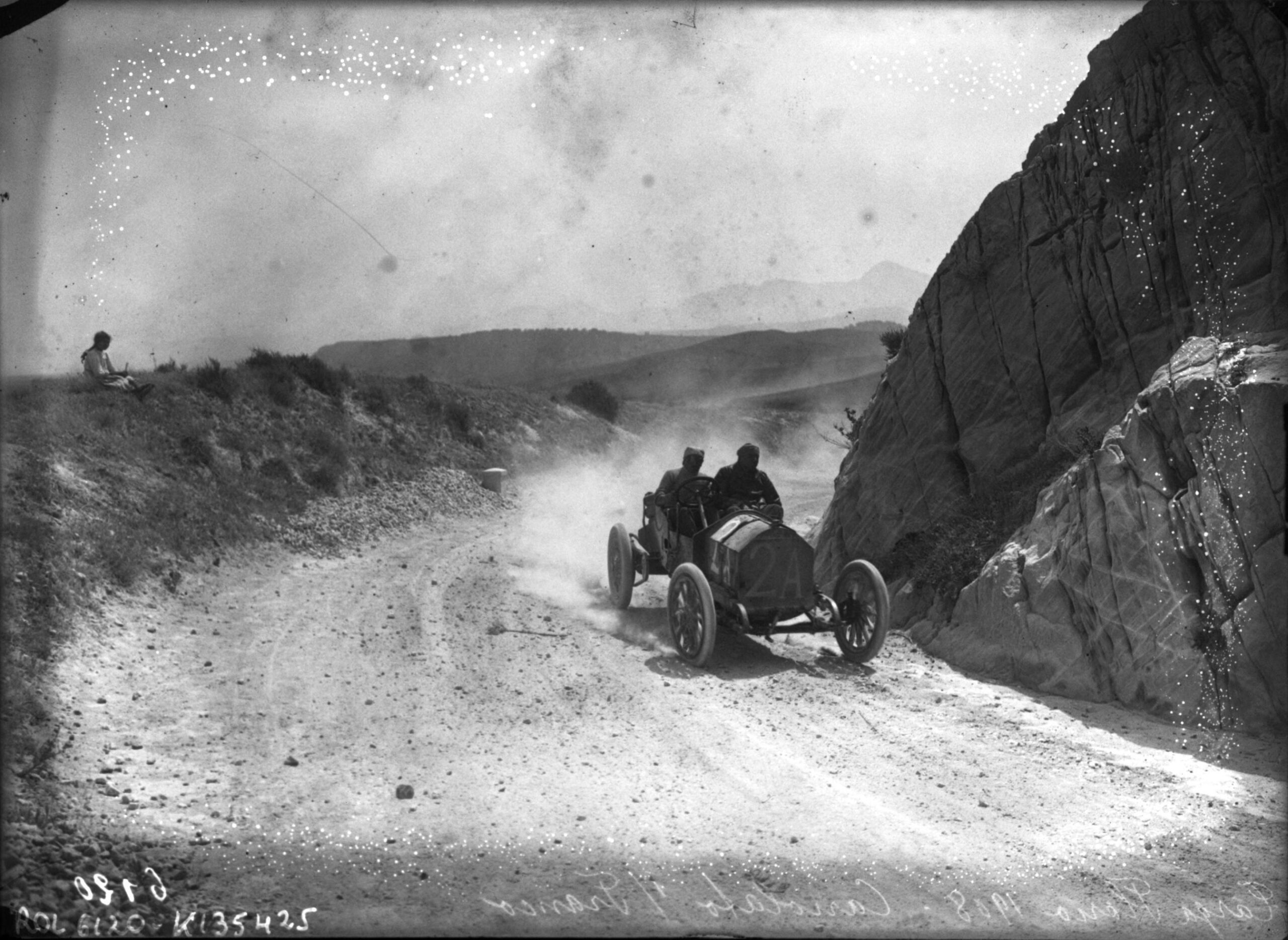
The inaugural 1906 edition saw Alessandro Cagno triumph in a primitive, heavyweight Itala, wrestling his deafening machine through unpaved tracks while dodging stray mule carts and local bandits. The race quickly consolidated its mythological status, standing as the ultimate crucible for early automotive reliability until the outbreak of the First World War silenced the engines. It was not until 1932 that the race would permanently adopt the infamous Piccolo Circuito delle Madonie, condensing the terror into an astonishing 72 km (45 miles) loop featuring over 800 treacherous corners, brutal altitude changes, and blinding clouds of white dust.
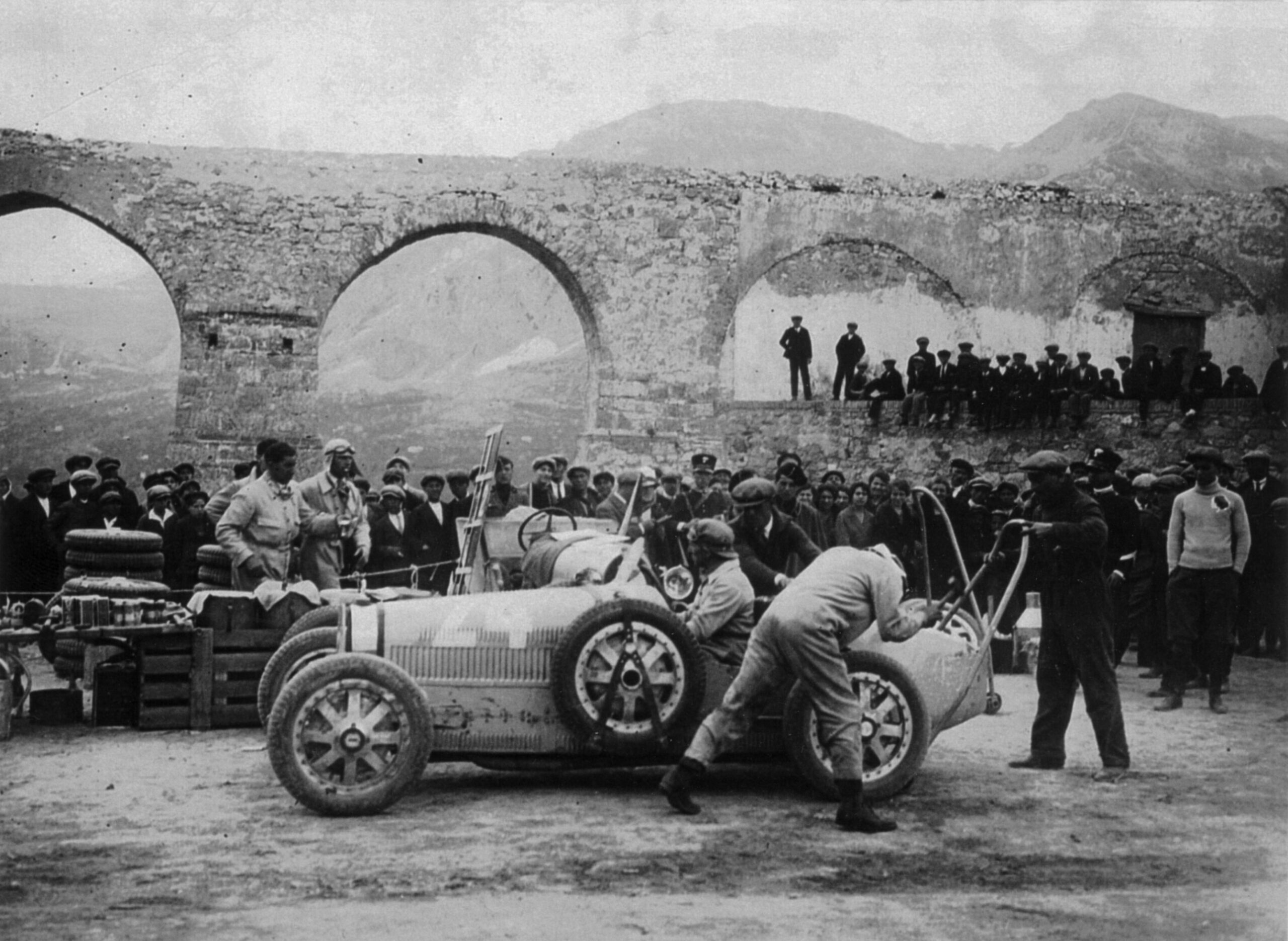
When the dust of global conflict settled, the roaring twenties brought an era of absolute domination by the legendary Bugatti Type 35. Between 1925 and 1929, Ettore Bugatti realised that the twisting, agonisingly tight Sicilian paths were the perfect hunting ground for his agile, lightweight masterpieces, which effortlessly danced around far more powerful, cumbersome monsters to claim five consecutive victories. Yet, the turn of the decade ushered in one of motorsport’s most fabled duels.
The 1930 event witnessed an epic, unyielding battle between Achille Varzi and Bugatti’s formidable ace, Louis Chiron. In a moment of pure, terrifying commitment while desperately chasing Chiron, Varzi’s Alfa Romeo caught fire; rather than braking and conceding the race, Varzi kept his foot pinned to the floorboards while his desperate riding mechanic beat out the flames with a seat cushion, securing a legendary victory.
Following Bugatti’s crushing French hegemony, Italian national pride demanded a ferocious response. Alfa Romeo took the mantle with violent intent from 1931 to 1935. Propelled by a near-nationalist fervour in the sun-baked grandstands, local heroes like Tazio Nuvolari—who claimed victory in 1931 and 1932—and Antonio Brivio painted the dirt roads crimson, restoring domestic glory. However, a dramatic twist altered the race’s DNA between 1937 and 1940.
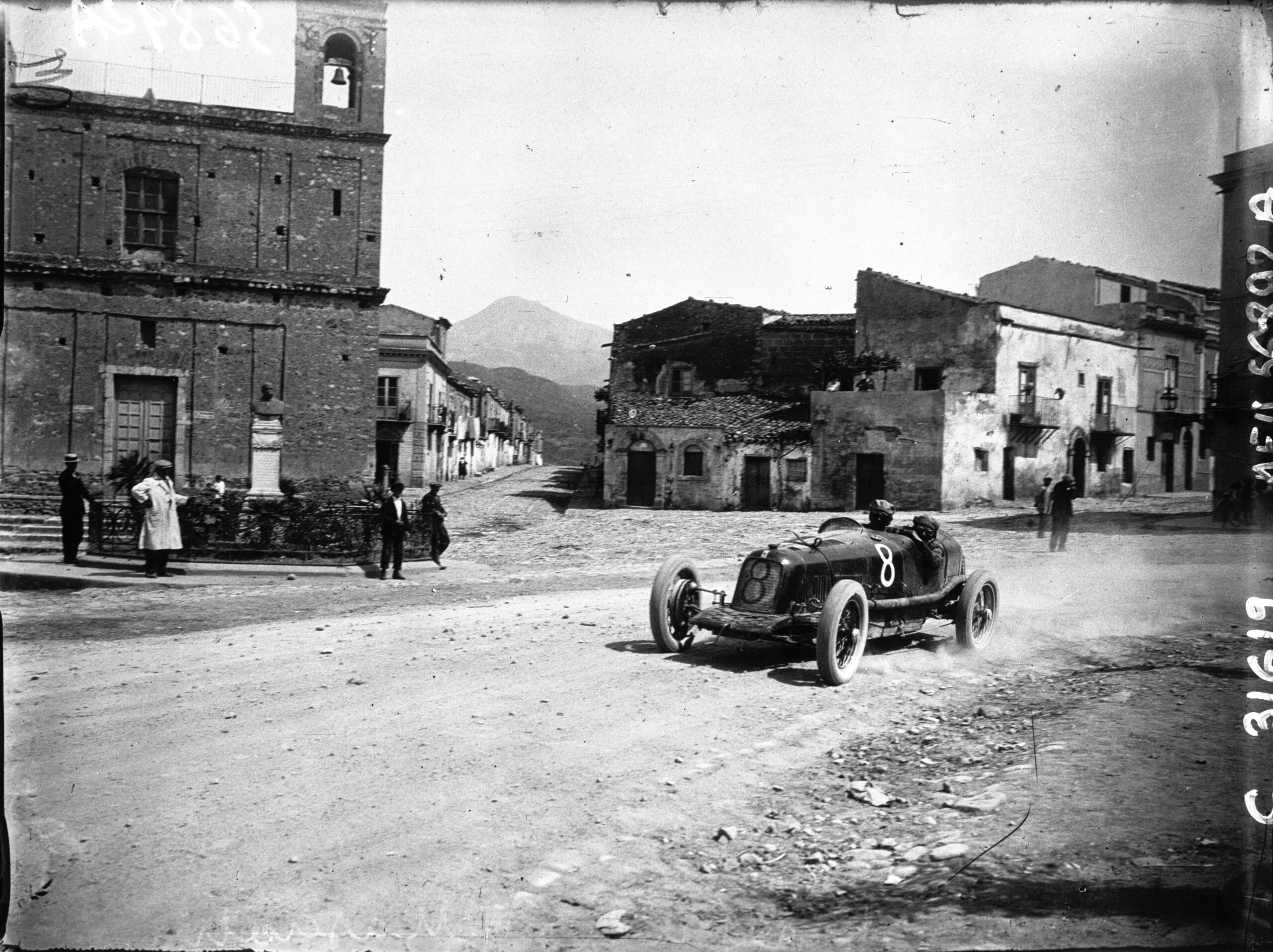
Crippled by the severe economic decline of the Florio family and facing immense pressure from the fascist regime to control and modernise sporting events, the race was abruptly torn from the wild Madonie mountains. It was relocated to a closed, asphalt circuit within the Parco della Favorita in Palermo and restricted to smaller 1500 cc (1.5 litres) voiturettes. In this sanitised environment, Maserati imposed its absolute will, winning four consecutive years and crowning Luigi Villoresi in 1940, just before the world plunged into darkness once again.
Vincenzo Florio flatly refused to let his dream perish in the ashes of the Second World War. To revive the event between 1948 and 1950, he temporarily merged it with the Giro di Sicilia, transforming the Targa into an exhausting, perimeter-hugging survival tour of the entire island. This desperate format kept the flame burning until 1951, when the race finally returned to its spiritual home in the Madonie mountains, setting the stage for its undisputed golden era. From 1955 to 1973, the Targa Florio was a cornerstone of the World Sportscar Championship, sharing the calendar with titans like Le Mans and the Nürburgring—with a singular exception in 1957, when the fatal Mille Miglia crash temporarily reduced the Targa to a heavily restricted regularity test.
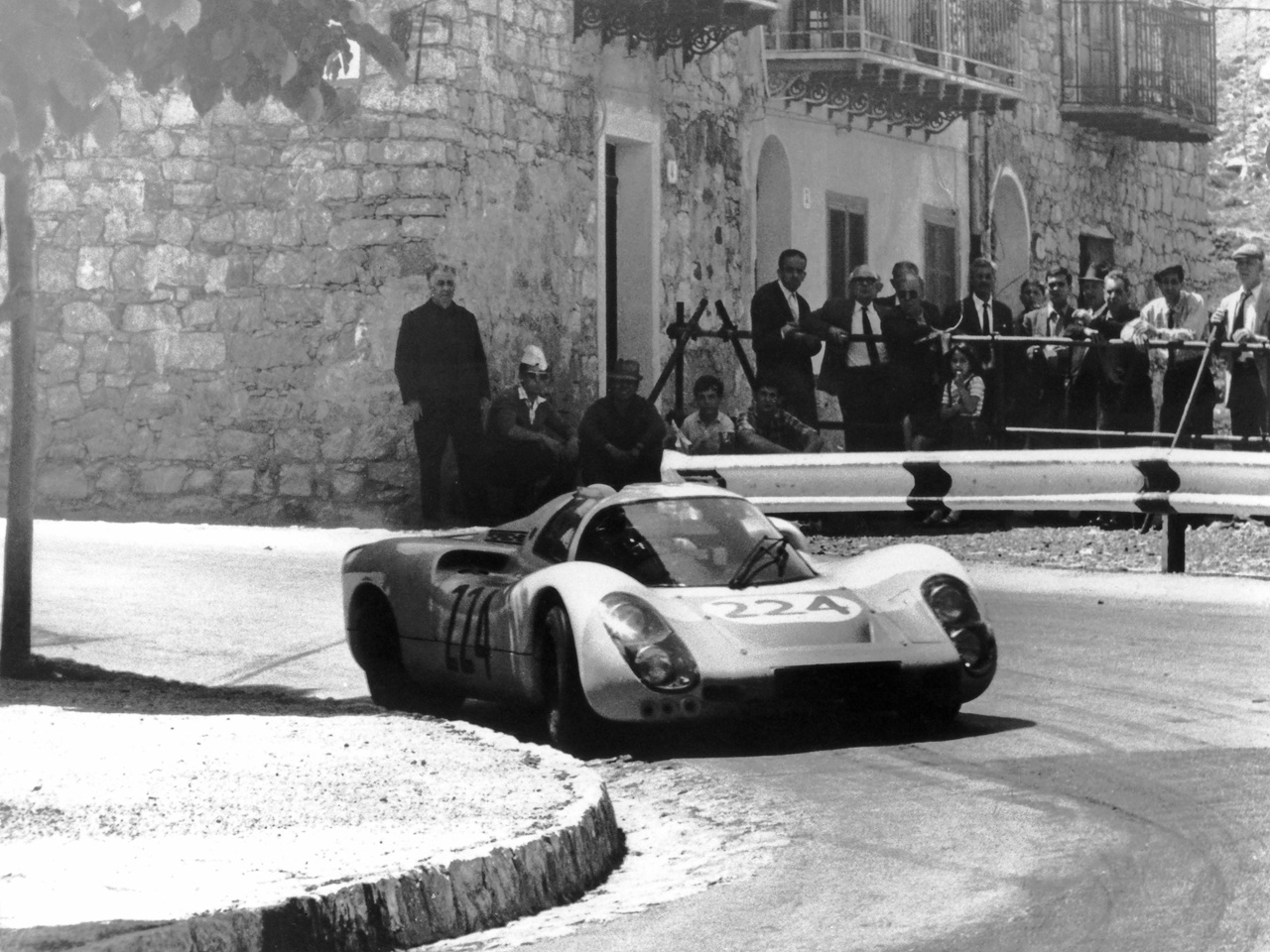
The world’s greatest works teams—Mercedes-Benz, Ferrari, Alfa Romeo, and Porsche—dispatched their finest gladiators to Sicily. The 1960s produced Herculean individual feats, none more astonishing than Briton Vic Elford’s 1968 comeback; after losing a wheel on his Porsche 907 and dropping 18 minutes behind the leaders, Elford shattered the lap record repeatedly to claim an impossible victory. Yet, the undisputed king of the era was Nino Vaccarella, a local Palermo school headmaster who rubbed shoulders with the global elite. Vaccarella’s effortless mastery of the circuit sent millions of Sicilians into raptures, his name immortalised by the words “Viva Nino” painted hastily on every available stone wall.
By 1973, however, the relentless march of aerodynamic progress rendered the mountain roads fundamentally suicidal. Factory prototypes like the Ferrari 312 PB and the Alfa Romeo T33 were achieving velocities exceeding 300 km/h (186 mph), threading through village squares and past unprotected spectators sitting on pavements. It was a high-speed game of Russian roulette, marking 1973 as the final year the race held world championship status. Stripped of its international prestige, the event endured a national agony from 1974 to 1977, surviving merely as a round of the Italian championship.
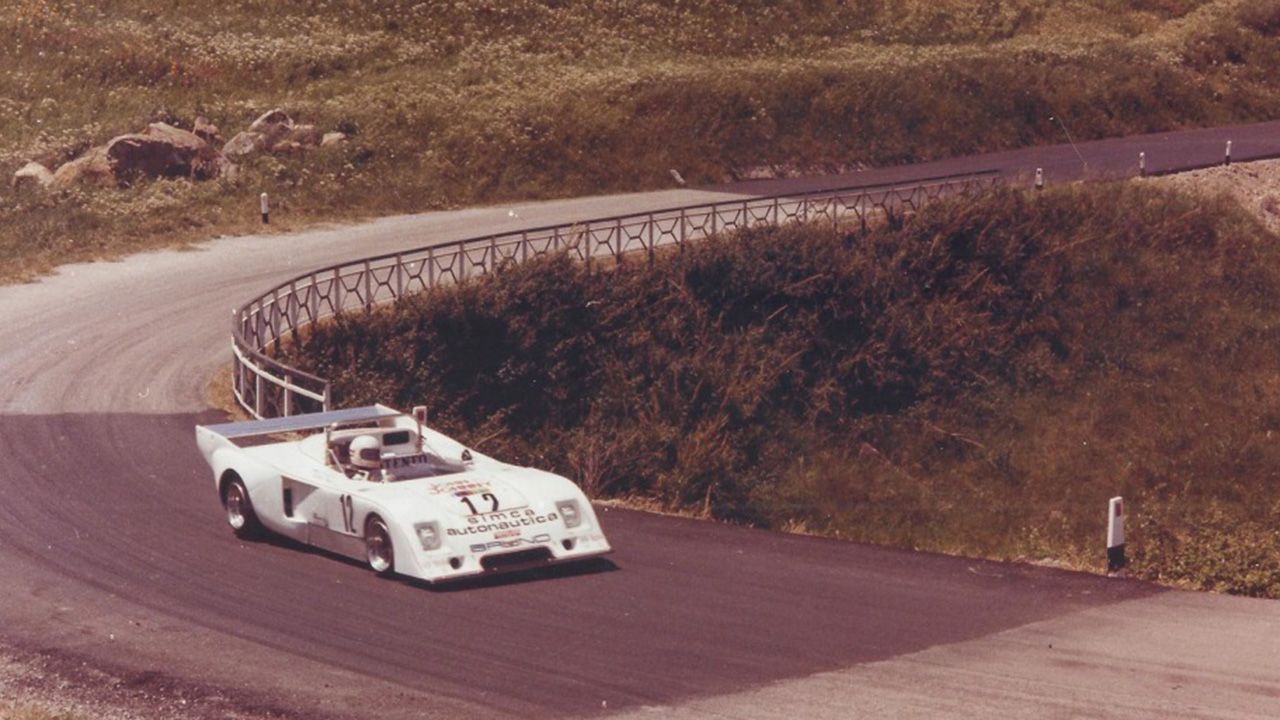
The inevitable, tragic full stop arrived during the 1977 race. During a fateful lap—debated by historians and police logs as either the third or the beginning of the fourth—Gabriele Ciuti suffered a catastrophic loss of control in his Osella prototype. The shattered car ploughed brutally into a group of spectators, killing two young onlookers and severely injuring five others, while leaving Ciuti in a coma. Authorities immediately and permanently shut down the Targa Florio as a competitive speed event that very afternoon.
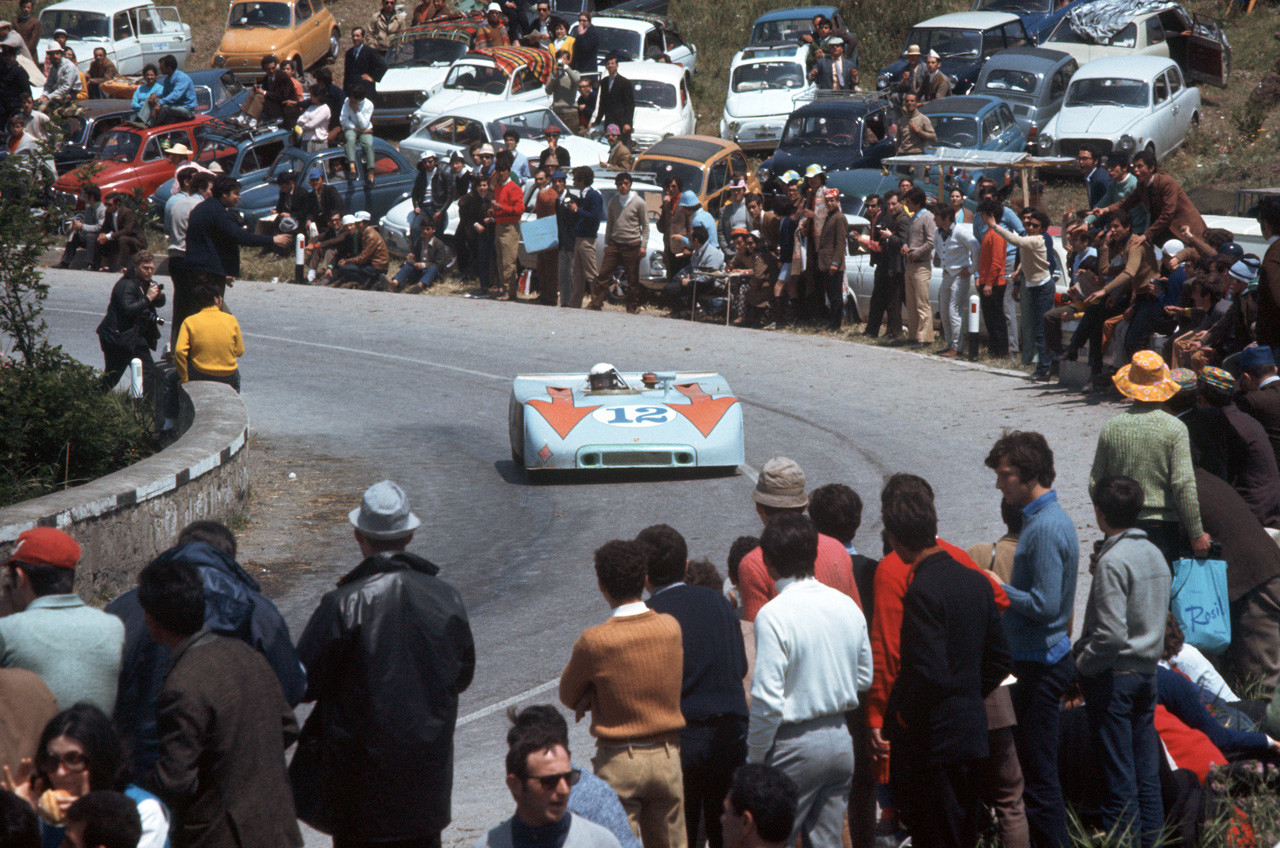
Today, the Targa Florio survives as a towering pillar of motoring culture. Porsche, the most successful manufacturer in the history of the event with 11 outright victories, immortalised the race by naming its iconic open-roof models the 911 “Targa”. The competitive spirit lives on through the modern Targa Florio Rally, while the Targa Florio Classica operates as a prestigious regularity event for historic jewels, keeping the echoes of the past alive in the Sicilian hills.
Alongside the Mille Miglia and the Carrera Panamericana, the mythos of the Targa Florio represents an unrepeatable epoch—a time when man, machine, and the raw natural environment clashed without filters, run-off areas, or safety barriers, united only by a profound, terrifying romance for speed.
The piercing, metallic shriek of an unsilenced exhaust echoing off the limestone facades of a Sicilian mountain village at dawn was, for seven decades, the ultimate siren song of motorsport. Conceived in 1906, the Targa Florio was the intoxicating dream of Vincenzo Florio, a wealthy young heir to a vast Marsala wine and shipping empire who resolved to bring the terrifying spectacle of motor racing to his native island. The stage he initially chose was the Grande Circuito delle Madonie, a sprawling, diabolical network of public mountain roads stretching across an exhausting 148 km (92 miles) loop.
The inaugural 1906 edition saw Alessandro Cagno triumph in a primitive, heavyweight Itala, wrestling his deafening machine through unpaved tracks while dodging stray mule carts and local bandits. The race quickly consolidated its mythological status, standing as the ultimate crucible for early automotive reliability until the outbreak of the First World War silenced the engines. It was not until 1932 that the race would permanently adopt the infamous Piccolo Circuito delle Madonie, condensing the terror into an astonishing 72 km (45 miles) loop featuring over 800 treacherous corners, brutal altitude changes, and blinding clouds of white dust.
When the dust of global conflict settled, the roaring twenties brought an era of absolute domination by the legendary Bugatti Type 35. Between 1925 and 1929, Ettore Bugatti realised that the twisting, agonisingly tight Sicilian paths were the perfect hunting ground for his agile, lightweight masterpieces, which effortlessly danced around far more powerful, cumbersome monsters to claim five consecutive victories. Yet, the turn of the decade ushered in one of motorsport’s most fabled duels.
The 1930 event witnessed an epic, unyielding battle between Achille Varzi and Bugatti’s formidable ace, Louis Chiron. In a moment of pure, terrifying commitment while desperately chasing Chiron, Varzi’s Alfa Romeo caught fire; rather than braking and conceding the race, Varzi kept his foot pinned to the floorboards while his desperate riding mechanic beat out the flames with a seat cushion, securing a legendary victory.
Following Bugatti’s crushing French hegemony, Italian national pride demanded a ferocious response. Alfa Romeo took the mantle with violent intent from 1931 to 1935. Propelled by a near-nationalist fervour in the sun-baked grandstands, local heroes like Tazio Nuvolari—who claimed victory in 1931 and 1932—and Antonio Brivio painted the dirt roads crimson, restoring domestic glory. However, a dramatic twist altered the race’s DNA between 1937 and 1940.
Crippled by the severe economic decline of the Florio family and facing immense pressure from the fascist regime to control and modernise sporting events, the race was abruptly torn from the wild Madonie mountains. It was relocated to a closed, asphalt circuit within the Parco della Favorita in Palermo and restricted to smaller 1500 cc (1.5 litres) voiturettes. In this sanitised environment, Maserati imposed its absolute will, winning four consecutive years and crowning Luigi Villoresi in 1940, just before the world plunged into darkness once again.
Vincenzo Florio flatly refused to let his dream perish in the ashes of the Second World War. To revive the event between 1948 and 1950, he temporarily merged it with the Giro di Sicilia, transforming the Targa into an exhausting, perimeter-hugging survival tour of the entire island. This desperate format kept the flame burning until 1951, when the race finally returned to its spiritual home in the Madonie mountains, setting the stage for its undisputed golden era. From 1955 to 1973, the Targa Florio was a cornerstone of the World Sportscar Championship, sharing the calendar with titans like Le Mans and the Nürburgring—with a singular exception in 1957, when the fatal Mille Miglia crash temporarily reduced the Targa to a heavily restricted regularity test.
The world’s greatest works teams—Mercedes-Benz, Ferrari, Alfa Romeo, and Porsche—dispatched their finest gladiators to Sicily. The 1960s produced Herculean individual feats, none more astonishing than Briton Vic Elford’s 1968 comeback; after losing a wheel on his Porsche 907 and dropping 18 minutes behind the leaders, Elford shattered the lap record repeatedly to claim an impossible victory. Yet, the undisputed king of the era was Nino Vaccarella, a local Palermo school headmaster who rubbed shoulders with the global elite. Vaccarella’s effortless mastery of the circuit sent millions of Sicilians into raptures, his name immortalised by the words “Viva Nino” painted hastily on every available stone wall.
By 1973, however, the relentless march of aerodynamic progress rendered the mountain roads fundamentally suicidal. Factory prototypes like the Ferrari 312 PB and the Alfa Romeo T33 were achieving velocities exceeding 300 km/h (186 mph), threading through village squares and past unprotected spectators sitting on pavements. It was a high-speed game of Russian roulette, marking 1973 as the final year the race held world championship status. Stripped of its international prestige, the event endured a national agony from 1974 to 1977, surviving merely as a round of the Italian championship.
The inevitable, tragic full stop arrived during the 1977 race. During a fateful lap—debated by historians and police logs as either the third or the beginning of the fourth—Gabriele Ciuti suffered a catastrophic loss of control in his Osella prototype. The shattered car ploughed brutally into a group of spectators, killing two young onlookers and severely injuring five others, while leaving Ciuti in a coma. Authorities immediately and permanently shut down the Targa Florio as a competitive speed event that very afternoon.
Today, the Targa Florio survives as a towering pillar of motoring culture. Porsche, the most successful manufacturer in the history of the event with 11 outright victories, immortalised the race by naming its iconic open-roof models the 911 “Targa”. The competitive spirit lives on through the modern Targa Florio Rally, while the Targa Florio Classica operates as a prestigious regularity event for historic jewels, keeping the echoes of the past alive in the Sicilian hills.
Alongside the Mille Miglia and the Carrera Panamericana, the mythos of the Targa Florio represents an unrepeatable epoch—a time when man, machine, and the raw natural environment clashed without filters, run-off areas, or safety barriers, united only by a profound, terrifying romance for speed.