Allard J2
Generation Overview
To understand the 1950 Allard J2 is to understand a moment in time when the sheer application of torque and grit could humble the most sophisticated engineering houses of Europe. In the grey, post-war landscape of London, Sydney Allard was not interested in the feline grace of the new Jaguar XK120 or the high-revving, jewel-like V12s emerging from Maranello. Instead, in his Clapham workshop, he was perfecting a recipe that would change the course of sports car history: a lightweight British chassis propelled by a massive American heart. The J2 was the successor to the more primitive J1, but it was a quantum leap forward in intent. While the J1 had been a trials-focused machine, the J2 was a road-racing assassin built to exploit the newly released overhead-valve V8s from Detroit. It arrived on a scene where its primary rivals were the aforementioned Jaguar and the delicate Ferrari 166 MM, but the Allard occupied a space all its own—it was a bare-knuckle brawler in a field of fencers.
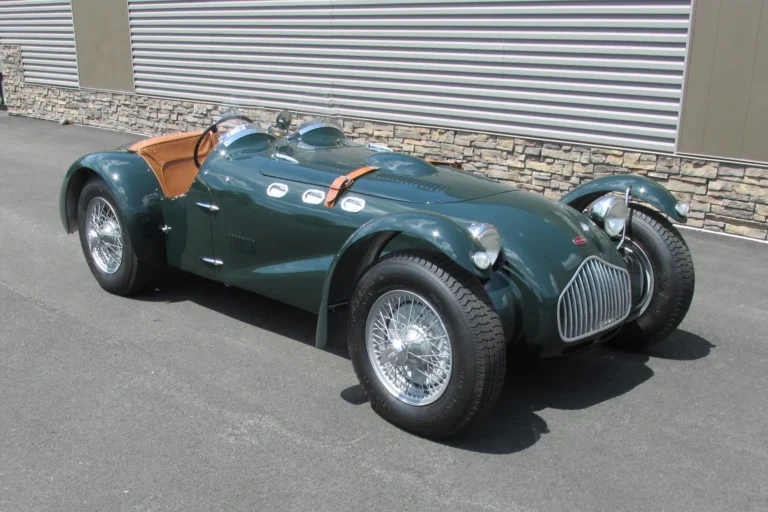
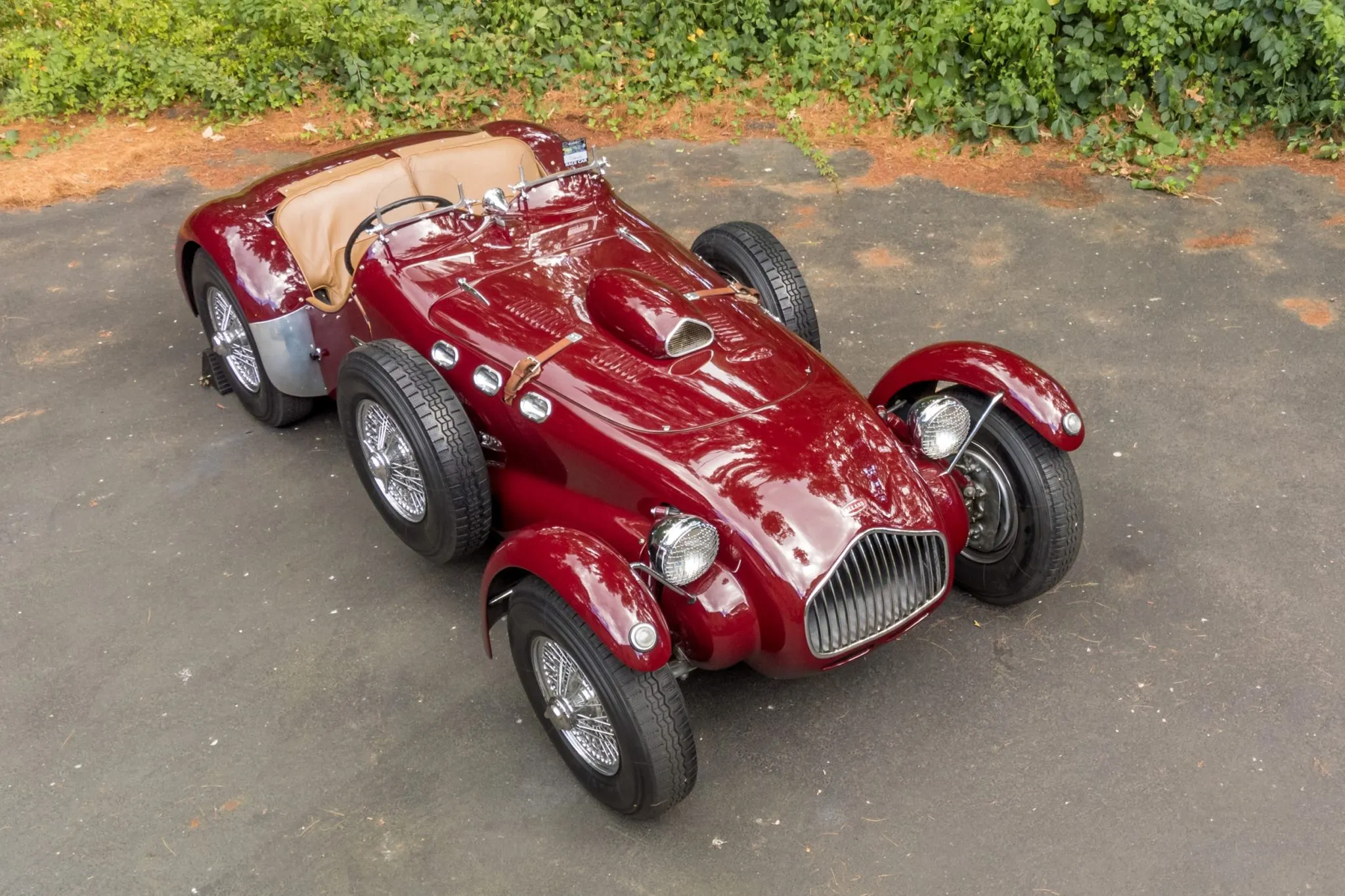
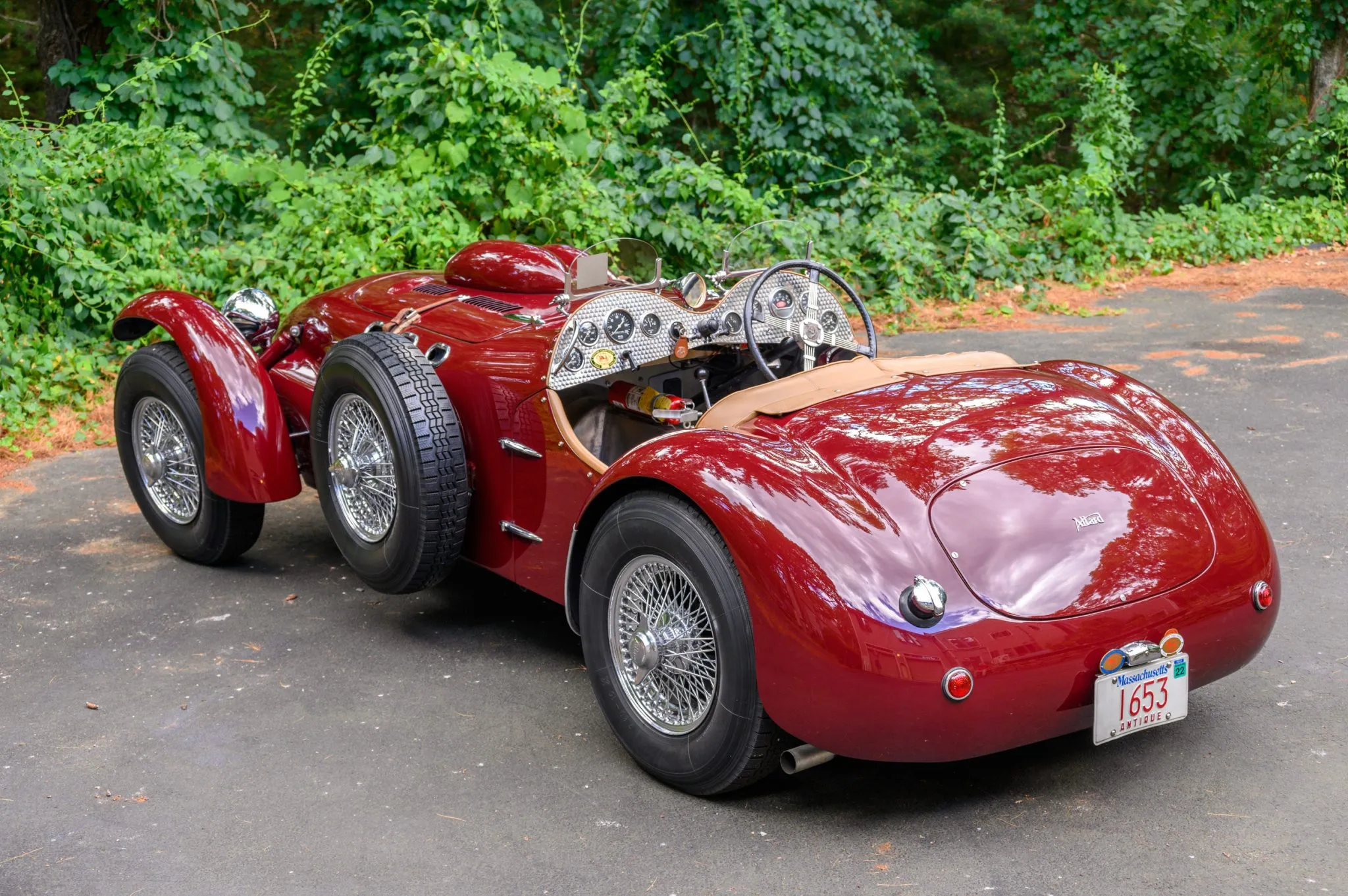
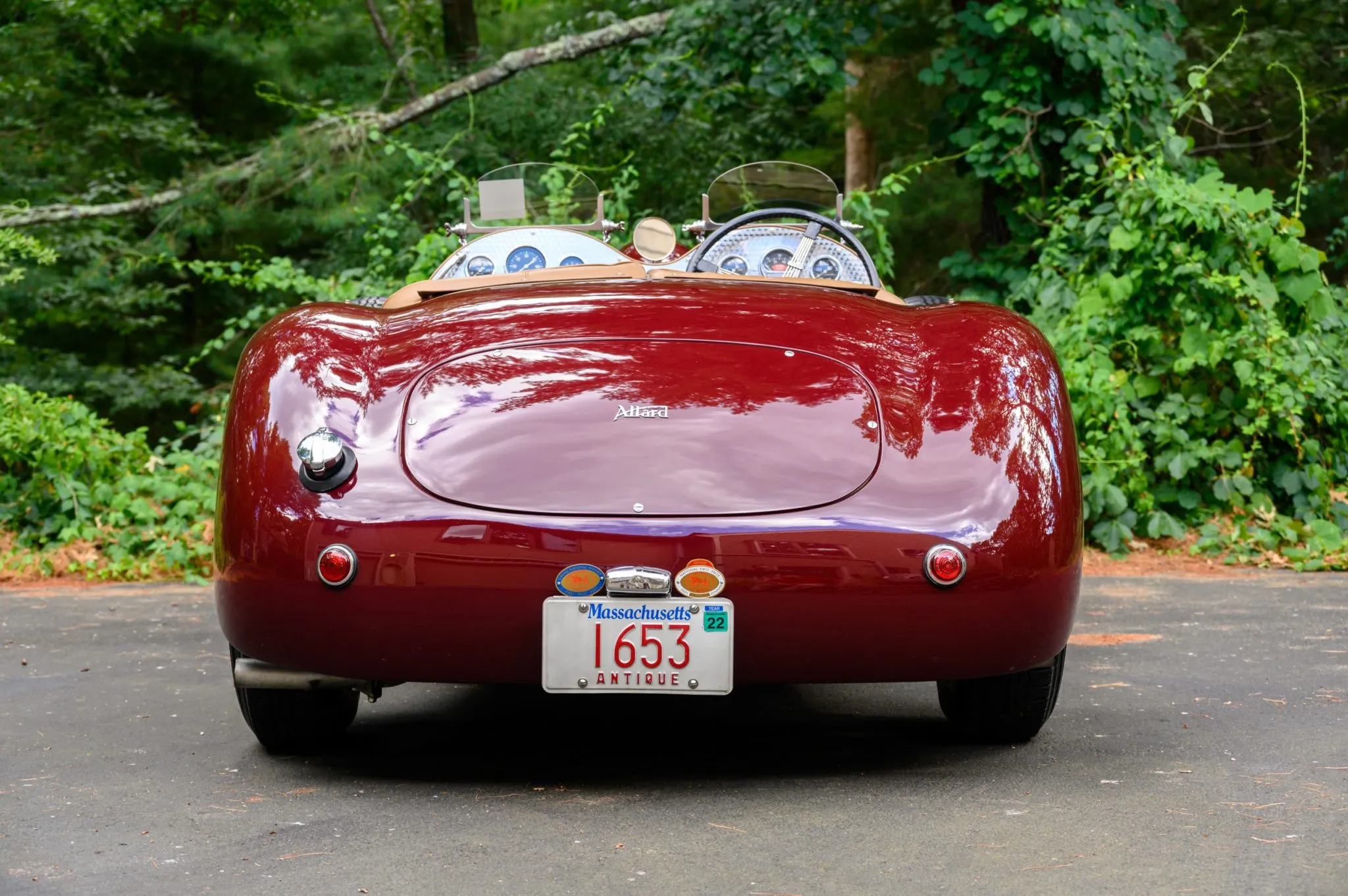
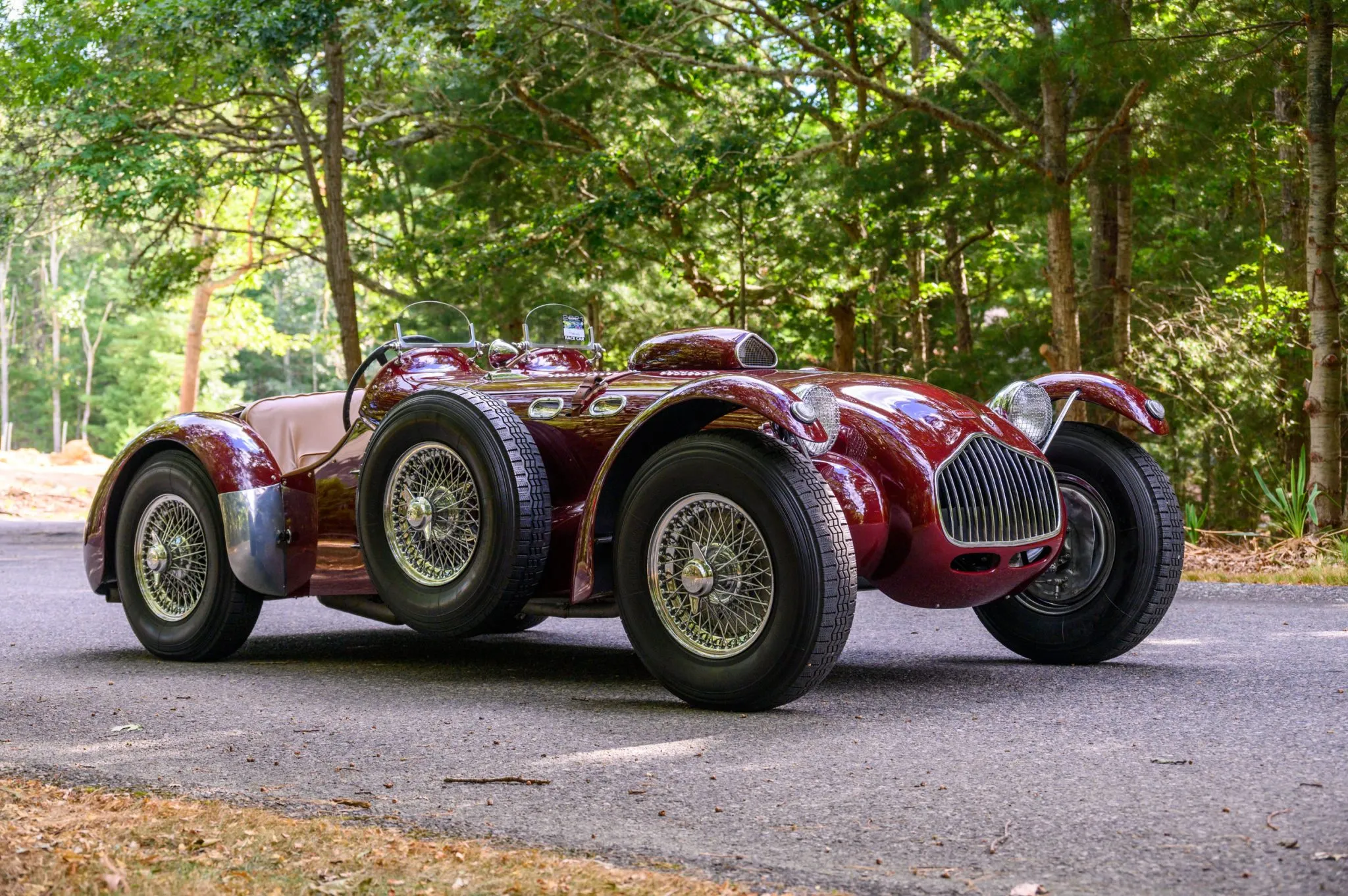
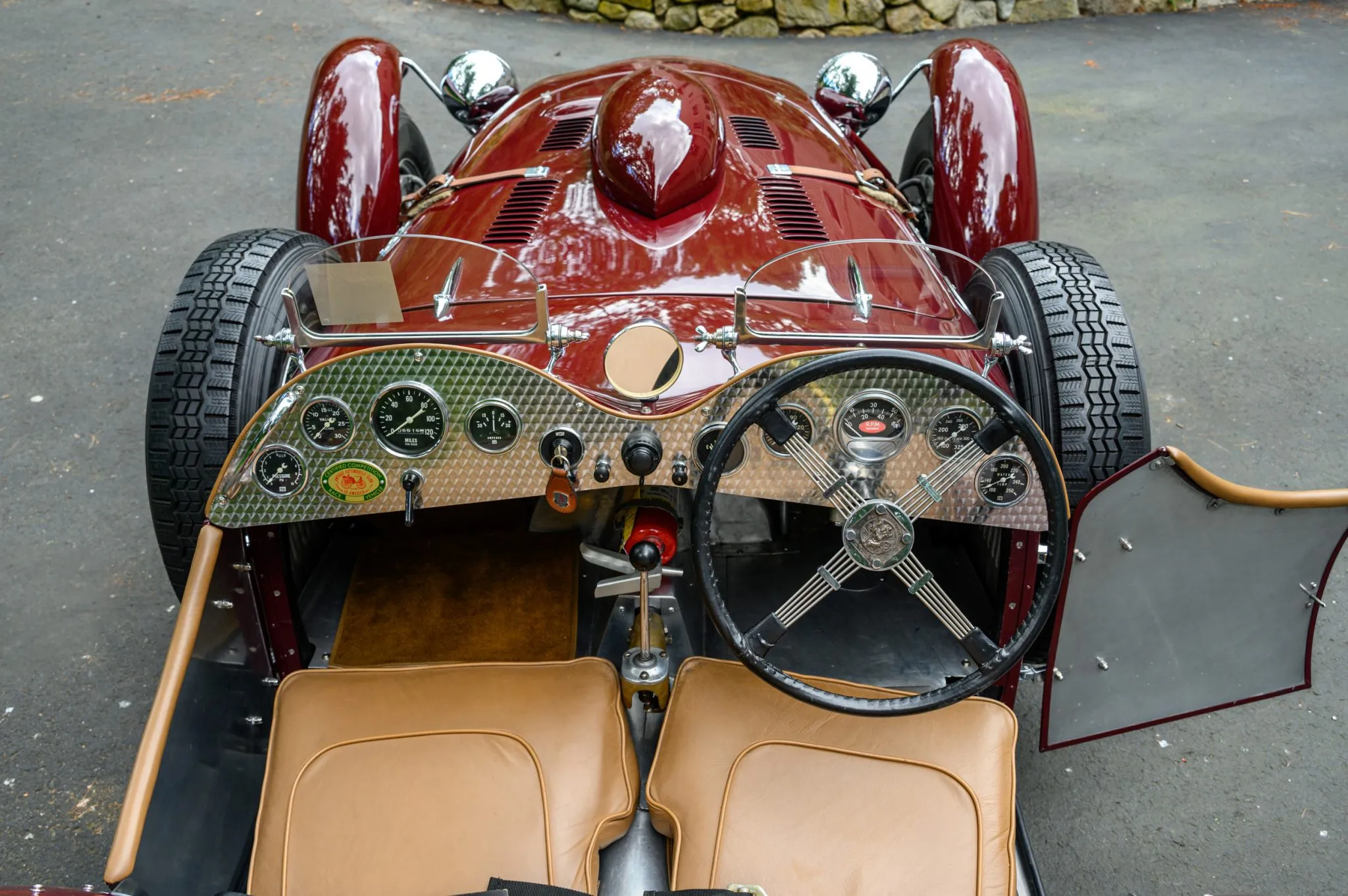
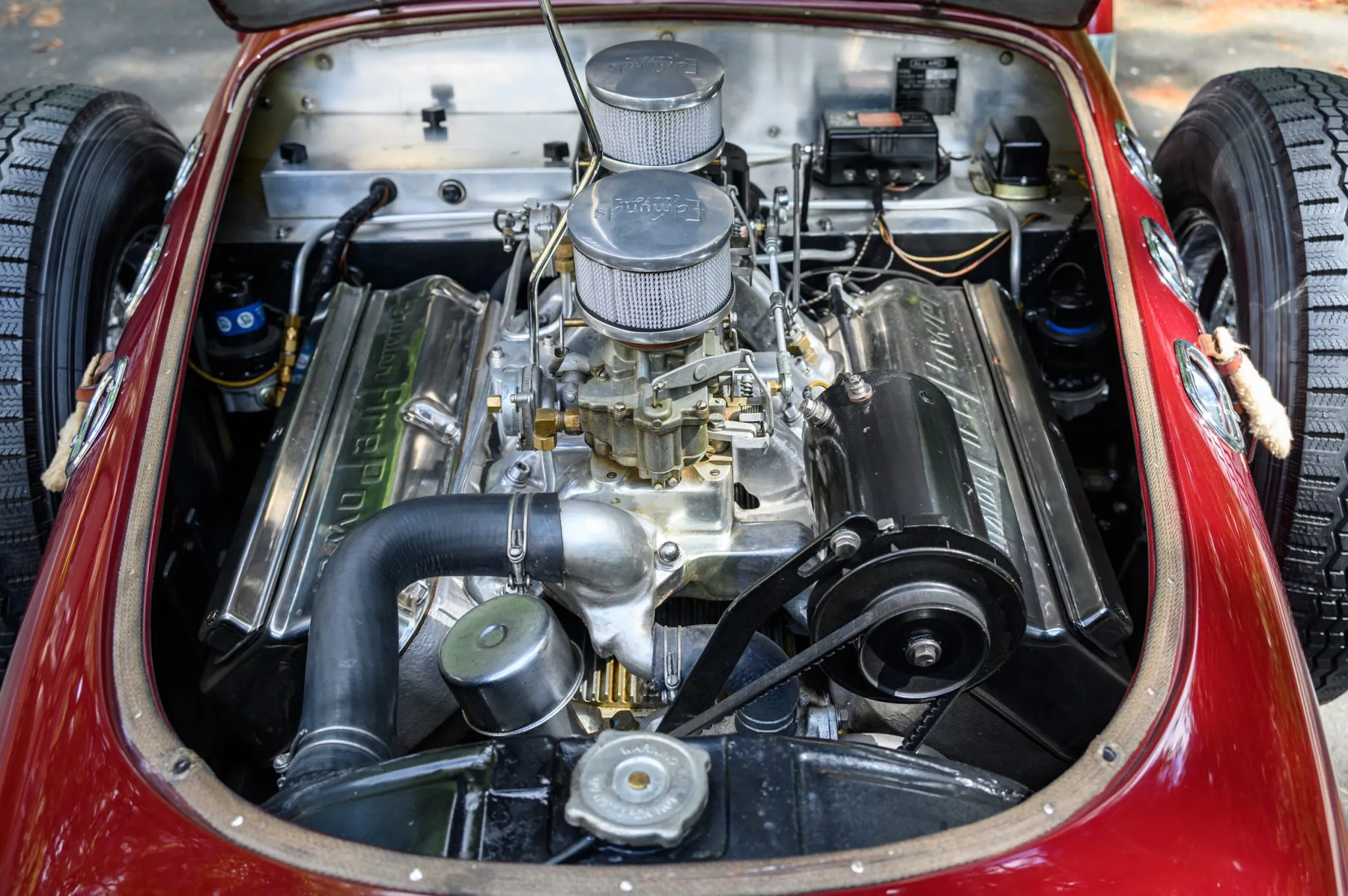
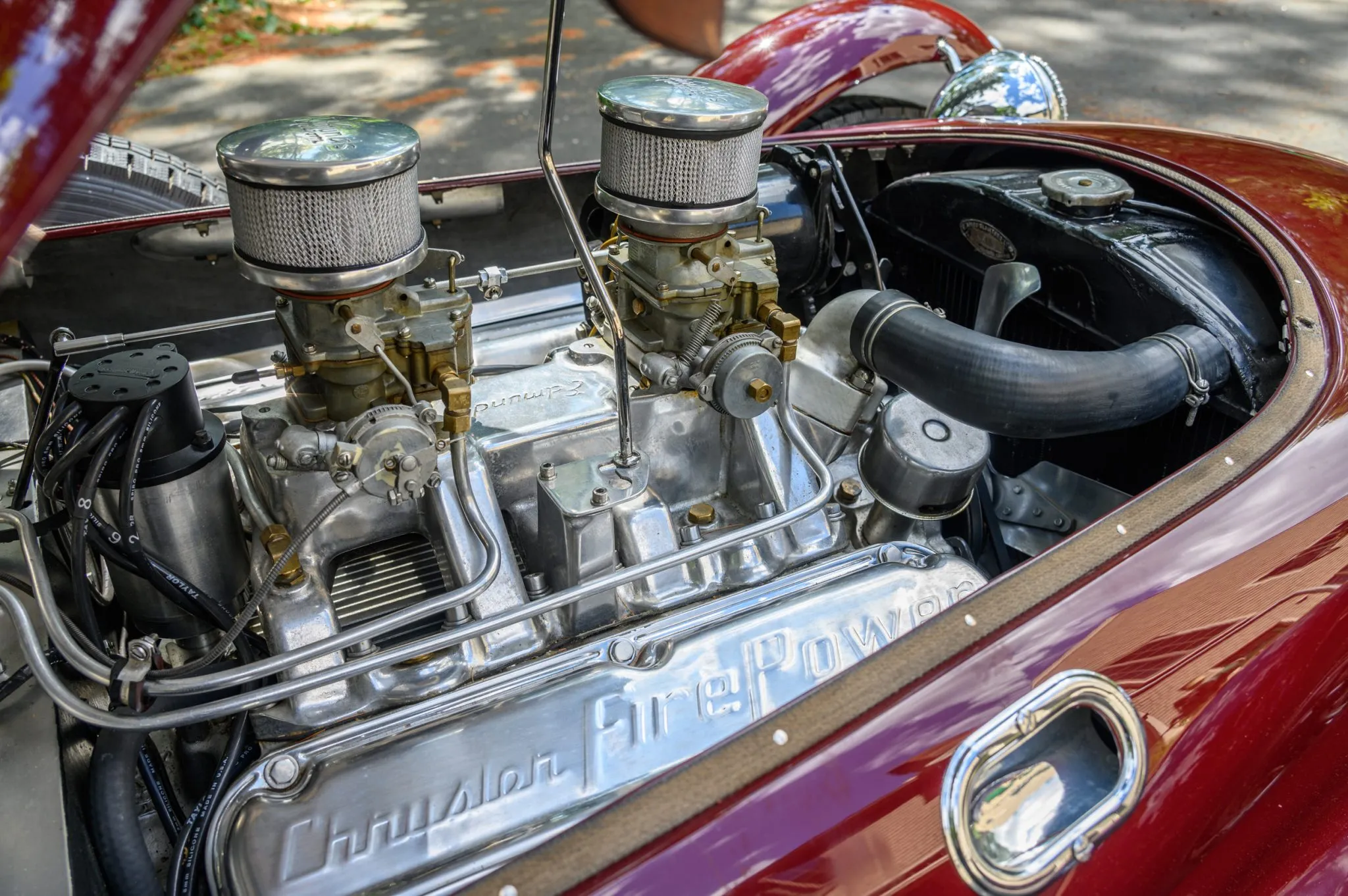
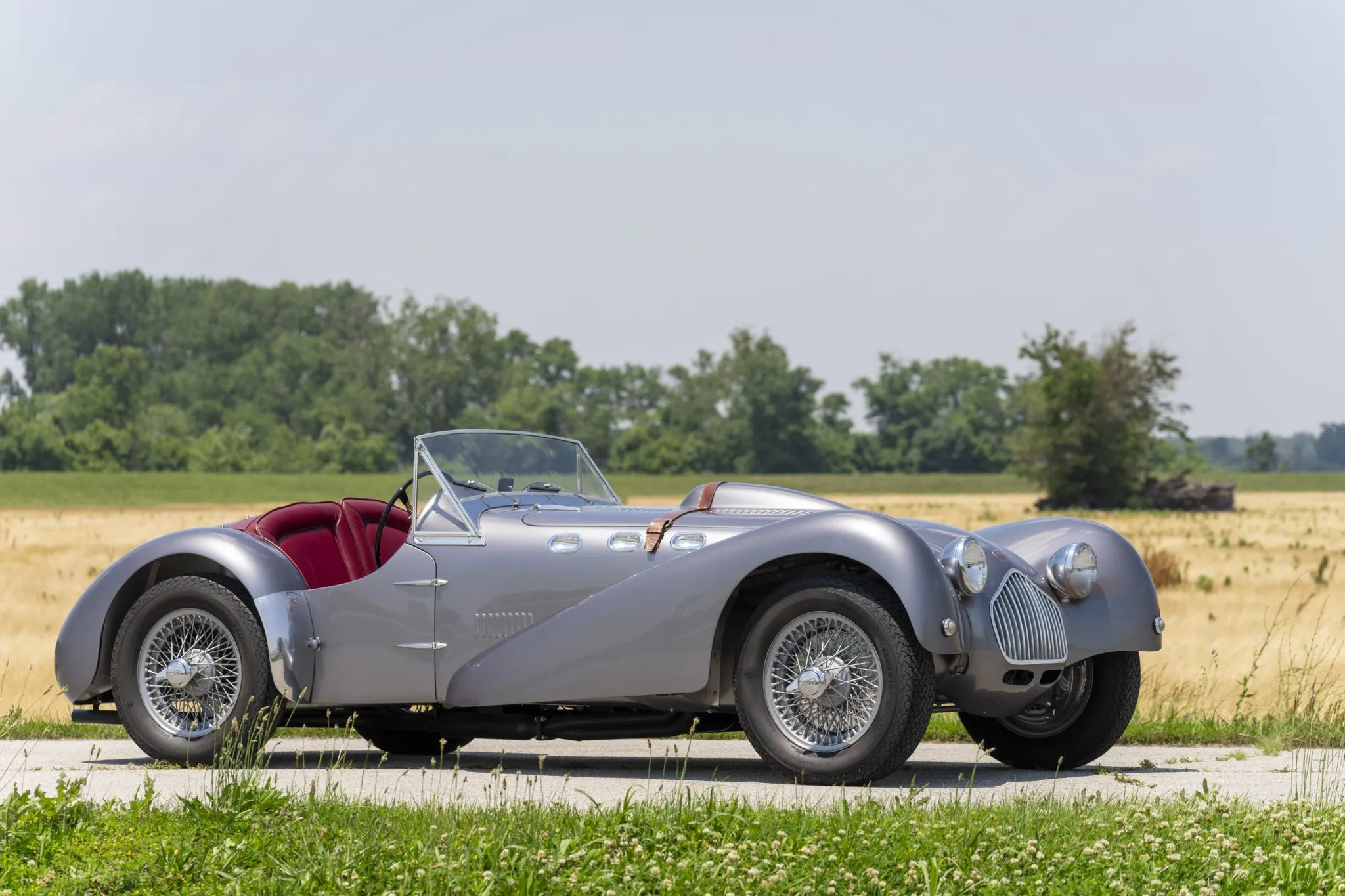
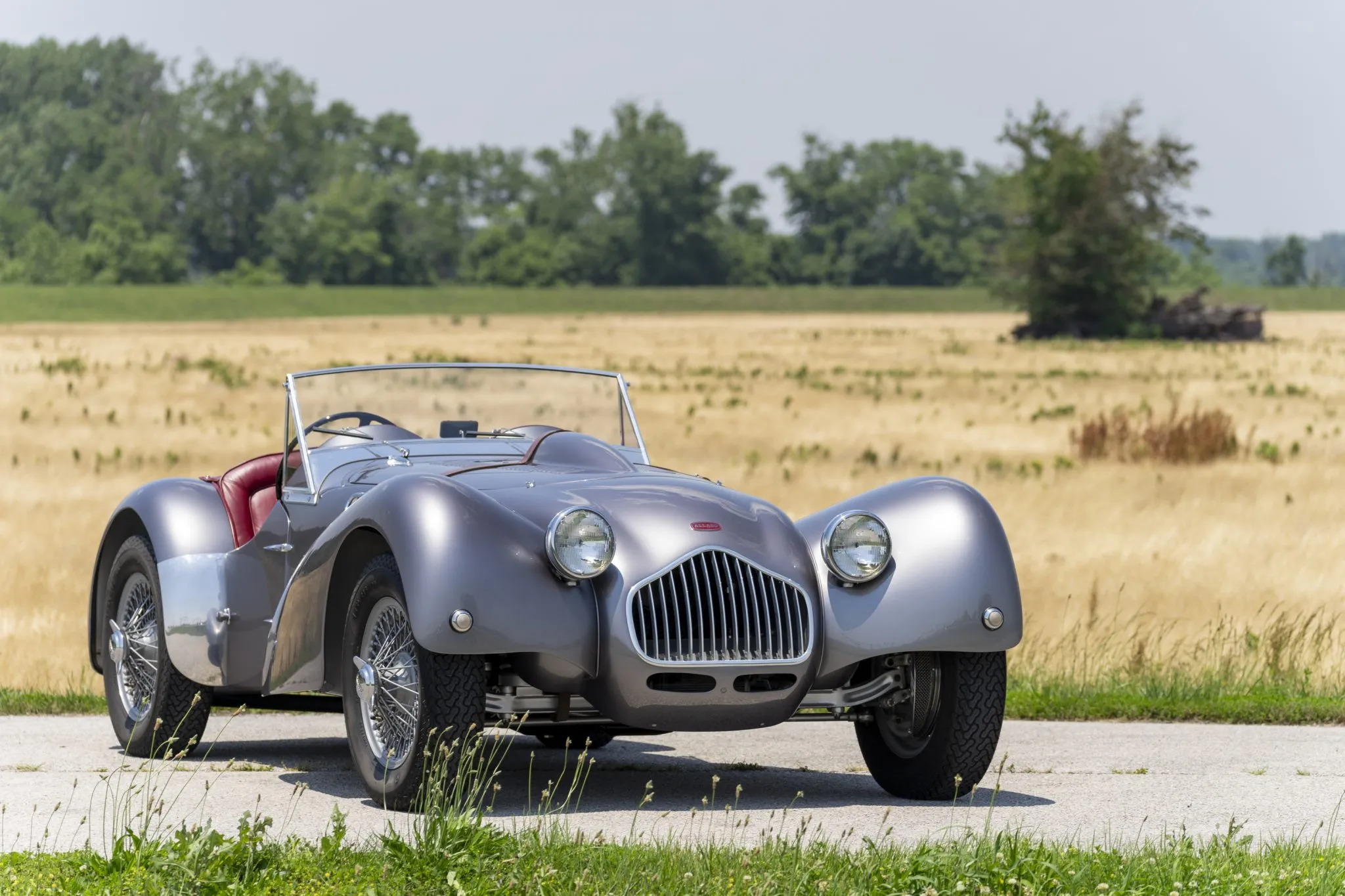
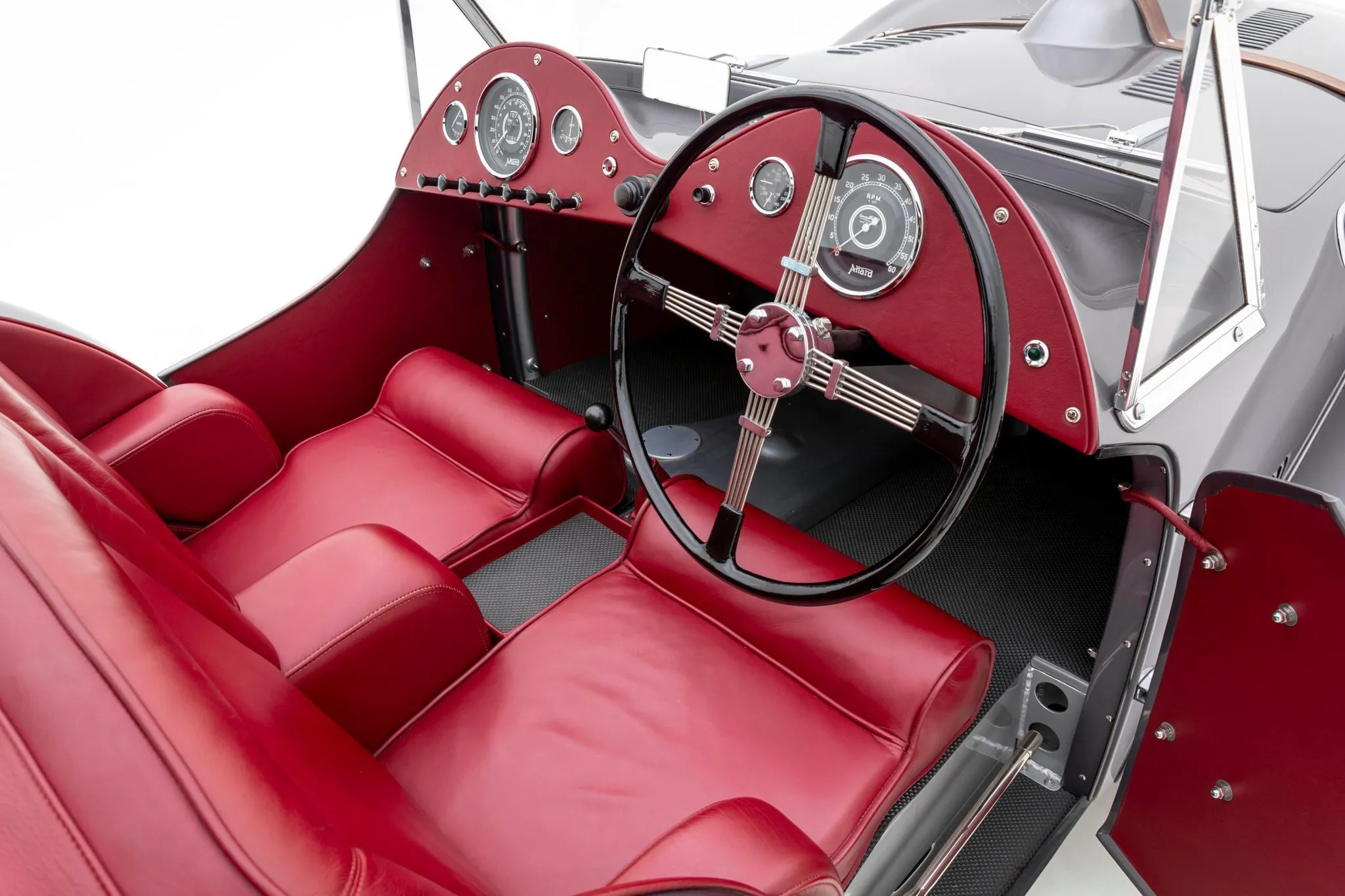
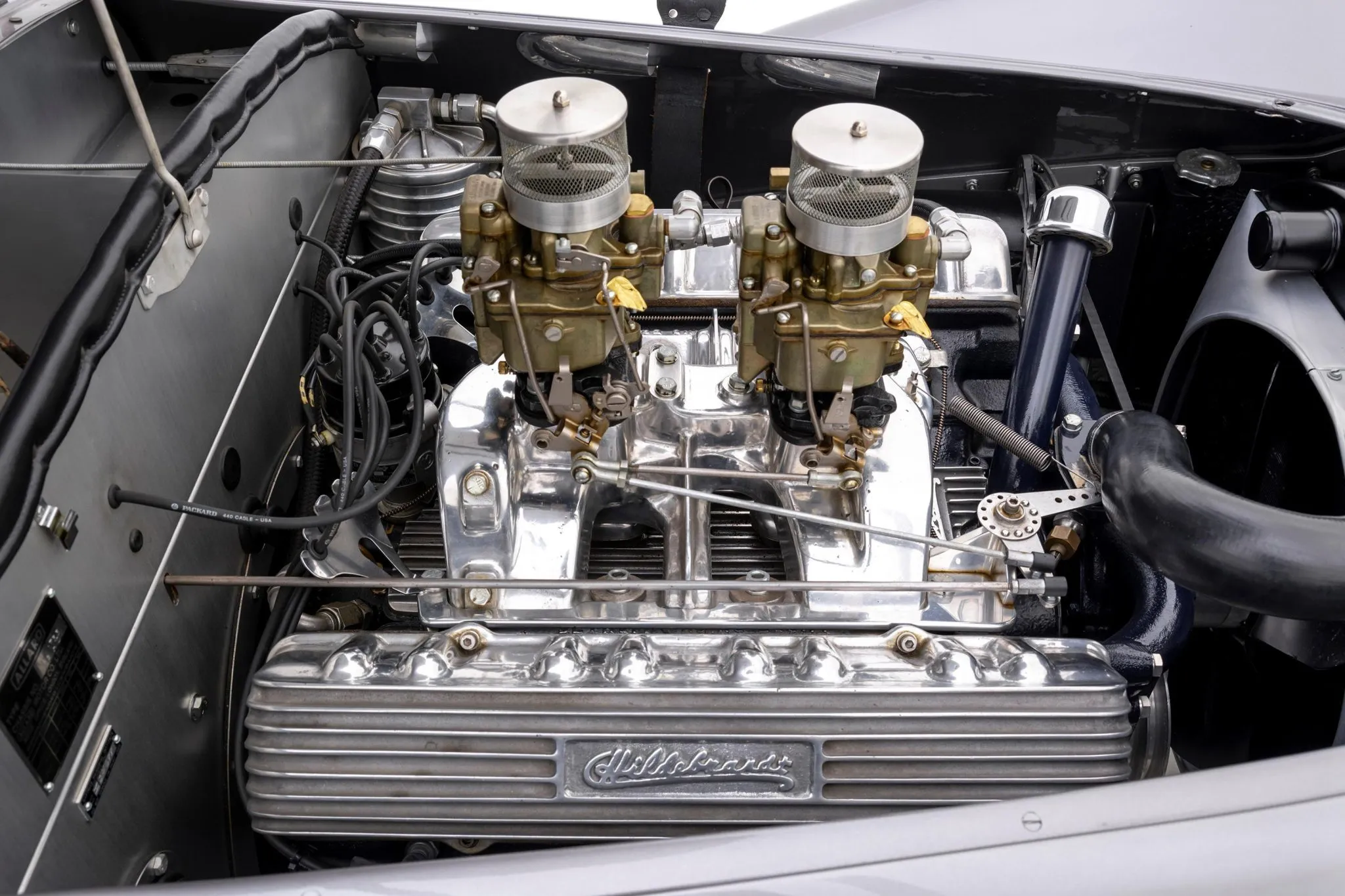
Technically, the Allard J2 was a masterclass in pragmatic, “blacksmith” engineering that yielded unexpected brilliance. The chassis was a robust steel box-section frame, but its soul lay in its idiosyncratic suspension. At the front, it utilized a Leslie Bellamy-designed split-axle independent setup. Essentially a swing-axle, it caused the front wheels to undergo violent camber changes as they traveled, giving the car a nervous, darting character that demanded a driver of immense physical strength and bravery. At the rear, however, Allard was surprisingly advanced, employing a De Dion tube setup with inboard Alfin drum brakes to keep the unsprung weight low and the rear tires—usually struggling against a tidal wave of torque—firmly planted. The genius of the J2 was Sydney Allard’s realization that his small firm couldn’t build engines as well as Cadillac or Chrysler. Consequently, most J2s were shipped to the United States “engine-less”. Once they arrived, tuners would drop in the revolutionary 331-cubic inch Cadillac OHV V8 or the early Chrysler Hemis. In a car weighing just over 2,000 pounds (900 kg), a 160-horsepower Cadillac V8 turned the J2 into a land-bound rocket. The exterior reflected this brutality: cycle fenders that flapped at speed, a low-slung cockpit that left the driver exposed to the elements, and a menacing, multi-louvered bonnet that struggled to contain the heat of the American iron beneath.
The competition history of the 1950 J2 is the stuff of legend. Its defining moment came at the 1950 24 Hours of Le Mans. Sydney Allard himself, partnered with Tom Cole, drove a Cadillac-powered J2 to an astonishing third place overall. The feat was made even more miraculous by the fact that the car’s three-speed gearbox had failed, leaving them to lap the final hours of the race entirely in top gear. The Cadillac V8’s immense torque simply pulled them through the corners where other cars would have bogged down. This result sent shockwaves through North America. In the hands of legends like John Fitch, Phil Hill, and a young, overall-clad Texan named Carroll Shelby, the ‘Cad-Allard’ became the car to beat in the formative years of the SCCA. Shelby famously cut his teeth in a J2, learning the devastating potential of mating a British chassis to a V8—a lesson he would famously apply to the AC Cobra a decade later. It was a car that didn’t just win; it intimidated. The sight of a J2 sliding through a corner at Watkins Glen, its front wheels at impossible angles and its V8 roaring through unsilenced pipes, remains one of the most evocative images of 1950s motorsport.
Ultimately, the 1950 Allard J2 was a shooting star. By 1951, it was replaced by the J2X, which featured a revised front suspension and a relocated engine to provide more cockpit room and better handling stability. But the original J2 remains the purer, more visceral machine. It was the absolute blueprint for the Anglo-American hybrid, proving that you didn’t need a factory in Modena to beat the world’s best; you just needed a light car and a very big engine. Its legacy lives on not just in the Cobras and Sunbeam Tigers that followed, but in the very DNA of American road racing. It taught a generation of drivers that speed was a matter of willpower and displacement. In the hallowed halls of automotive history, the 1950 Allard J2 stands as a magnificent, thunderous monument to the privateer spirit—a sledgehammer that taught the world to respect the power of the hybrid.
Generation Overview
To understand the 1950 Allard J2 is to understand a moment in time when the sheer application of torque and grit could humble the most sophisticated engineering houses of Europe. In the grey, post-war landscape of London, Sydney Allard was not interested in the feline grace of the new Jaguar XK120 or the high-revving, jewel-like V12s emerging from Maranello. Instead, in his Clapham workshop, he was perfecting a recipe that would change the course of sports car history: a lightweight British chassis propelled by a massive American heart. The J2 was the successor to the more primitive J1, but it was a quantum leap forward in intent. While the J1 had been a trials-focused machine, the J2 was a road-racing assassin built to exploit the newly released overhead-valve V8s from Detroit. It arrived on a scene where its primary rivals were the aforementioned Jaguar and the delicate Ferrari 166 MM, but the Allard occupied a space all its own—it was a bare-knuckle brawler in a field of fencers.
Technically, the Allard J2 was a masterclass in pragmatic, “blacksmith” engineering that yielded unexpected brilliance. The chassis was a robust steel box-section frame, but its soul lay in its idiosyncratic suspension. At the front, it utilized a Leslie Bellamy-designed split-axle independent setup. Essentially a swing-axle, it caused the front wheels to undergo violent camber changes as they traveled, giving the car a nervous, darting character that demanded a driver of immense physical strength and bravery. At the rear, however, Allard was surprisingly advanced, employing a De Dion tube setup with inboard Alfin drum brakes to keep the unsprung weight low and the rear tires—usually struggling against a tidal wave of torque—firmly planted. The genius of the J2 was Sydney Allard’s realization that his small firm couldn’t build engines as well as Cadillac or Chrysler. Consequently, most J2s were shipped to the United States “engine-less”. Once they arrived, tuners would drop in the revolutionary 331-cubic inch Cadillac OHV V8 or the early Chrysler Hemis. In a car weighing just over 2,000 pounds (900 kg), a 160-horsepower Cadillac V8 turned the J2 into a land-bound rocket. The exterior reflected this brutality: cycle fenders that flapped at speed, a low-slung cockpit that left the driver exposed to the elements, and a menacing, multi-louvered bonnet that struggled to contain the heat of the American iron beneath.
The competition history of the 1950 J2 is the stuff of legend. Its defining moment came at the 1950 24 Hours of Le Mans. Sydney Allard himself, partnered with Tom Cole, drove a Cadillac-powered J2 to an astonishing third place overall. The feat was made even more miraculous by the fact that the car’s three-speed gearbox had failed, leaving them to lap the final hours of the race entirely in top gear. The Cadillac V8’s immense torque simply pulled them through the corners where other cars would have bogged down. This result sent shockwaves through North America. In the hands of legends like John Fitch, Phil Hill, and a young, overall-clad Texan named Carroll Shelby, the ‘Cad-Allard’ became the car to beat in the formative years of the SCCA. Shelby famously cut his teeth in a J2, learning the devastating potential of mating a British chassis to a V8—a lesson he would famously apply to the AC Cobra a decade later. It was a car that didn’t just win; it intimidated. The sight of a J2 sliding through a corner at Watkins Glen, its front wheels at impossible angles and its V8 roaring through unsilenced pipes, remains one of the most evocative images of 1950s motorsport.
Ultimately, the 1950 Allard J2 was a shooting star. By 1951, it was replaced by the J2X, which featured a revised front suspension and a relocated engine to provide more cockpit room and better handling stability. But the original J2 remains the purer, more visceral machine. It was the absolute blueprint for the Anglo-American hybrid, proving that you didn’t need a factory in Modena to beat the world’s best; you just needed a light car and a very big engine. Its legacy lives on not just in the Cobras and Sunbeam Tigers that followed, but in the very DNA of American road racing. It taught a generation of drivers that speed was a matter of willpower and displacement. In the hallowed halls of automotive history, the 1950 Allard J2 stands as a magnificent, thunderous monument to the privateer spirit—a sledgehammer that taught the world to respect the power of the hybrid.
Submodels