Aston Martin DB2 Vantage Fixed Head Coupe Sports Saloon
Brand
Produced from
Portal
Vehicle category
Model line
Model generation
Predecessor
Sucessor
About this submodel
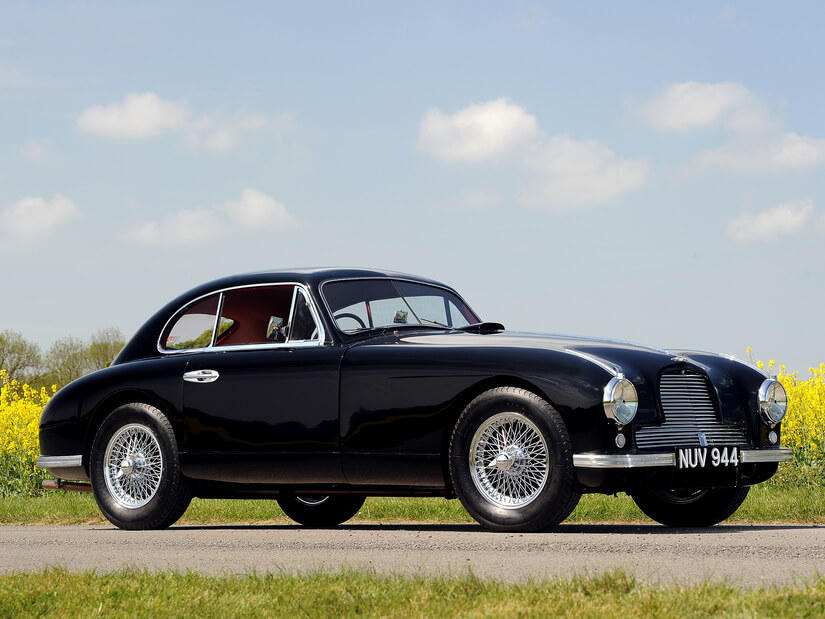
The Aston Martin DB2 was not merely a new car; it was a resurrection. It was the physical manifestation of one man’s colossal ambition, a flag planted in the scarred landscape of post-war Britain to declare that British engineering, elegance, and performance were not just alive, but ready to conquer the world. When tractor magnate David Brown bought the fledgling Aston Martin and the historic Lagonda marque in 1947, he possessed two halves of a puzzle: a promising chassis and the magnificent 2.6-litre, twin-cam straight-six engine designed by the great W.O. Bentley. The 1950 DB2 was the car that put those pieces together, creating a dynasty. But while the standard DB2 was a fine and fast grand tourer, it was its hard-bitten, high-performance sibling that forged the legend. This was the car that went to war. The story of the DB2 is truly the story of its most potent versions: the “Works” racers that stunned the world, and the “Vantage” road car that was born directly from their battlefield success.
This was a machine created to take on the world. Its primary rival was the Jaguar XK120, a car of sensuous beauty and brutal straight-line speed that had captured the public’s imagination. But where the Jaguar was a mass-market phenomenon, the Aston was a connoisseur’s choice, a thoroughbred aimed at the gentleman driver who demanded precision and exclusivity, with a price tag to match. On the world stage, its rivals were the coachbuilt V12 Ferraris and sophisticated Lancias. David Brown’s competition director, John Wyer, knew the only way to prove the DB2’s superiority was through the crucible of endurance racing. Thus, even before the production car was finalized, the “Works” competition cars were being prepared. These were the true “Vantage” prototypes, and they were built for one purpose: to win at Le Mans.
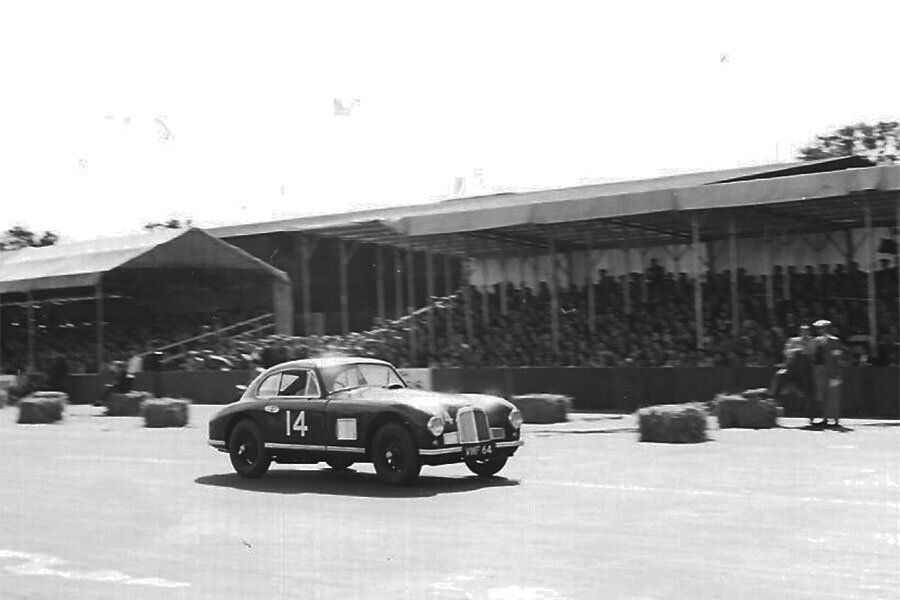
The “Works” cars, and the subsequent “Vantage” road cars, were a perfect blend of W.O. Bentley’s engine and Frank Feeley’s exquisite design. The engine was the 2,580cc Lagonda DOHC straight-six, a true jewel. In standard DB2 tune, with twin SU H4 carburettors, it produced a respectable 105 hp. The “Vantage” specification, however, was a direct upgrade. This package, which became available to the public in 1951, featured larger SU HV8 carburettors and a higher compression ratio (8.16:1, up from 6.5:1), liberating a potent 125 hp. The “Works” cars were another step beyond, meticulously hand-assembled by the competition department, blueprinted, and tuned to produce closer to 140 hp. The chassis was a sophisticated multi-tubular steel frame, providing immense rigidity, and the body was a masterclass in aerodynamic grace. Feeley’s fastback “Saloon” design was slippery, elegant, and timeless, with the competition cars often rendered in lighter-gauge aluminium. While the road-going Vantage featured a sumptuous cockpit of Connolly leather and polished walnut, the “Works” cars were spartan offices, stripped of all comfort, with metal-bucket seats, a massive fuel tank, and simplified instrumentation, all in the name of lightness and purpose.
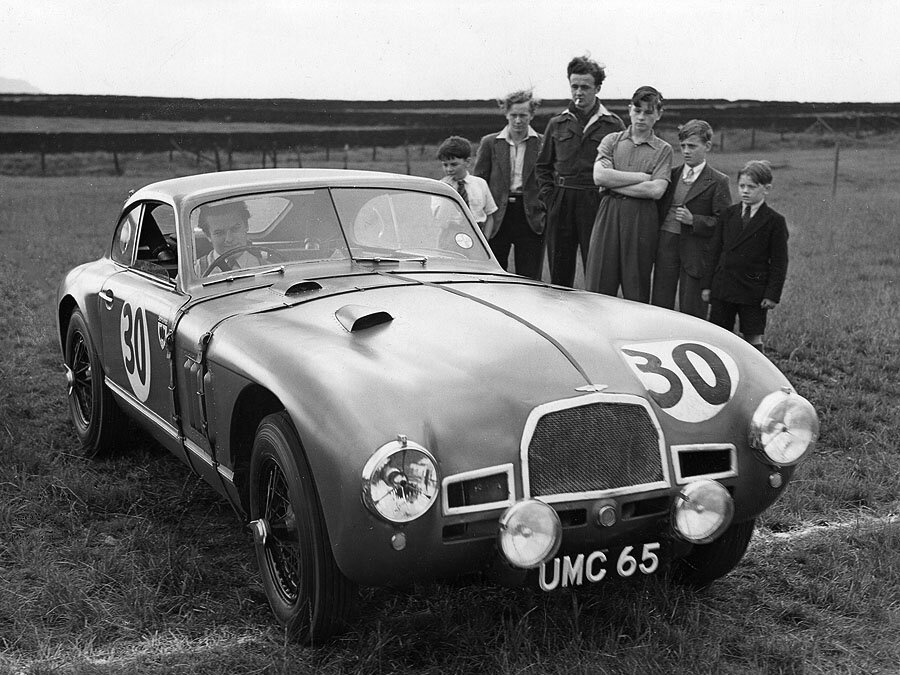
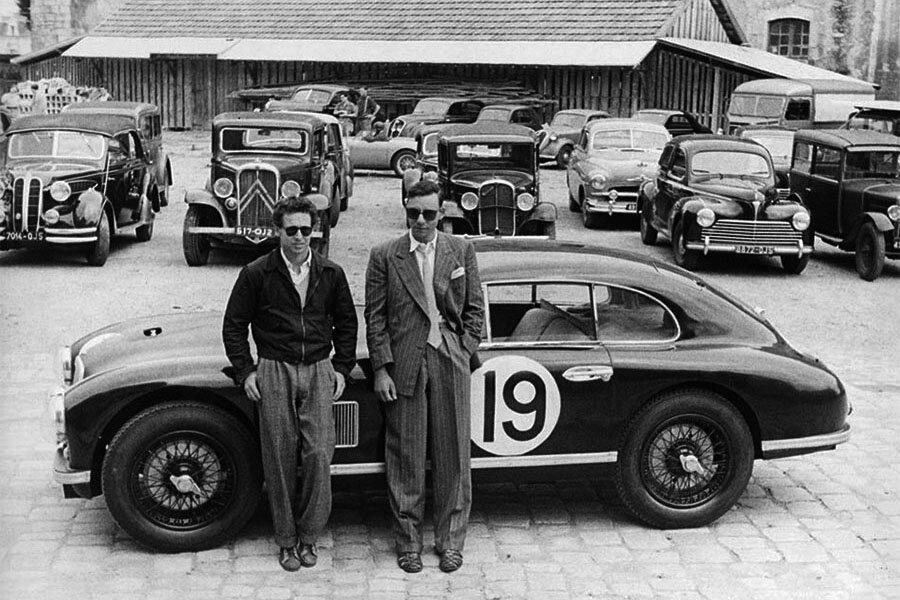
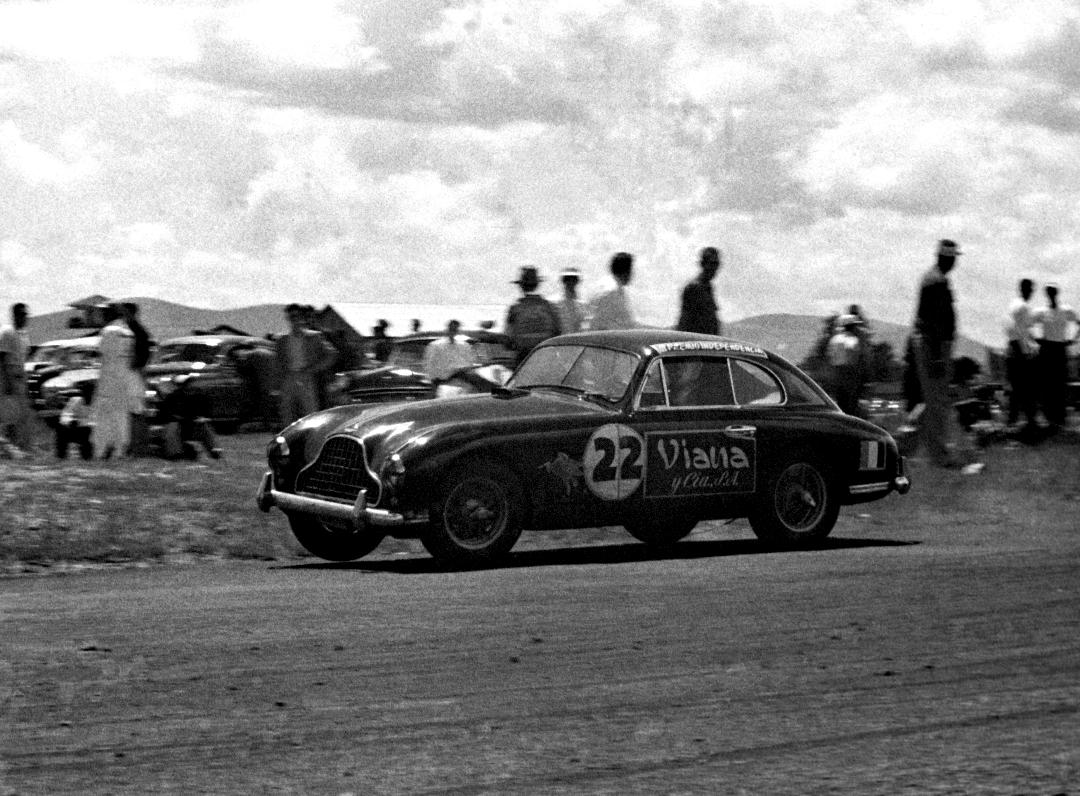
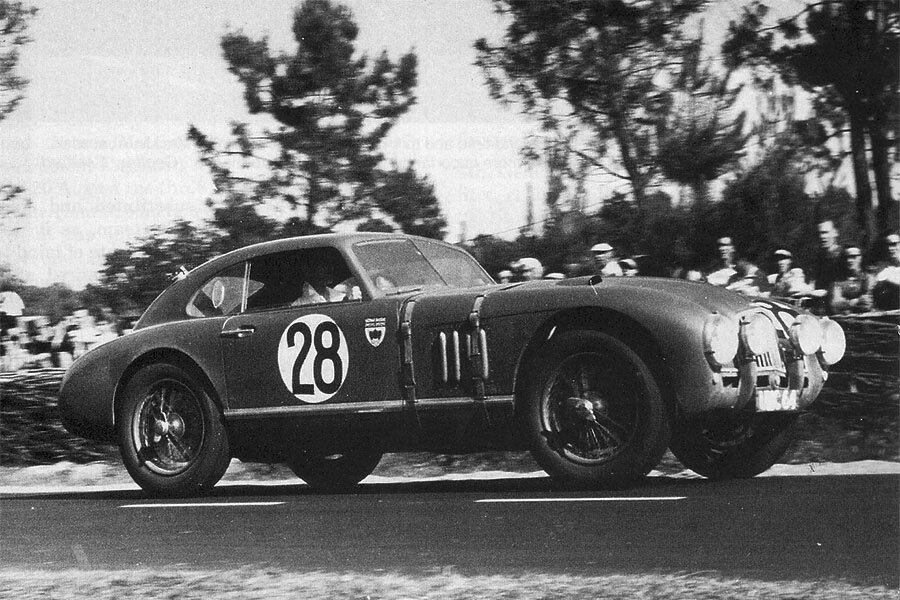
The history of the Vantage-spec DB2 is written on the circuits of the world. In 1950, John Wyer’s team arrived at the 24 Hours of Le Mans with three “Works” cars. Against a field of international titans, the DB2s ran with metronomic, race-honed precision. The result was a sensation: the cars finished 5th and 6th overall, securing a dominant 1-2 victory in the 3.0-litre class. This single event put Aston Martin on the global map. But it was no fluke. Wyer, a master of preparation, brought the team back in 1951. This time, the result was utter domination. The three “Works” DB2s finished 3rd, 5th, and 7th overall, locking out the 3.0-litre podium in a 1-2-3 finish. This was one of the greatest triumphs in the company’s history, an irrefutable display of the DB2’s performance and, crucially, its bulletproof endurance. The “Vantage” engine was now a proven world-beater.
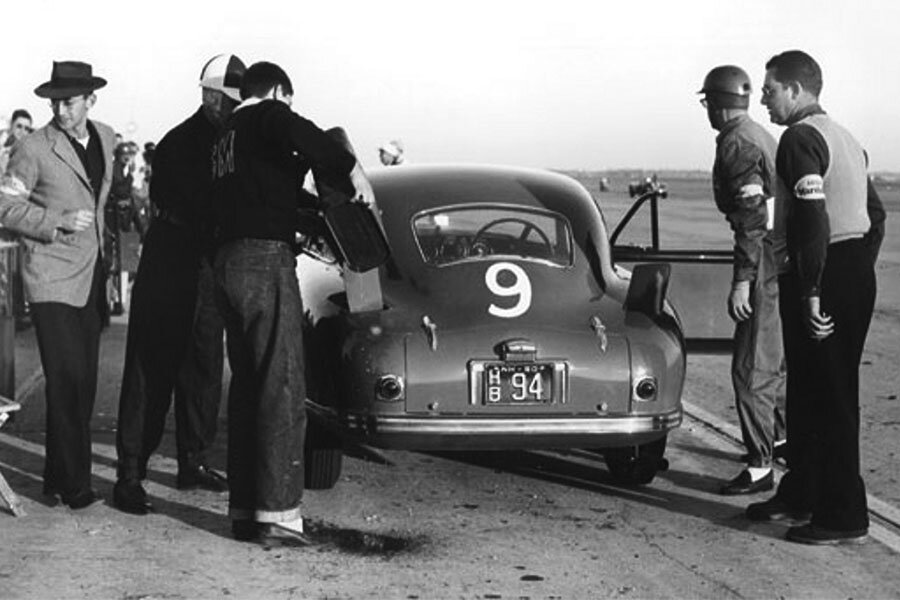
This success was not limited to Le Mans. The DB2 became the weapon of choice for gentlemen racers. Its greatest moment of giant-killing heroism came at the 1952 Mille Miglia. In the hands of privateer Giovanni Bracco, a 2.6-litre DB2 Vantage—in a field of 5.0-litre factory Ferraris—performed a miracle. In the driving rain, Bracco’s superior handling and skill saw him take the overall lead of the race, famously passing the works Ferrari of Eugenio Castellotti. He held this lead for a staggering distance before mechanical woes finally sidelined him. The point had been made: the DB2 Vantage was a giant-killer. Across the Atlantic, it scored a class win at the inaugural Sebring 12 Hours in 1950 and continued to be a dominant force in SCCA racing, securing the American market that David Brown so coveted.
This catalogue of victories was the greatest marketing tool imaginable. The “Vantage” name, born from the Works department’s tuning specs, was now offered to the public. It was an instant success. It was the first time an Aston Martin customer could walk into a showroom and buy, for a premium, a car that was a direct descendant of the Le Mans class-winner. The DB2 Vantage Fixed Head Coupe became the definitive British grand tourer, a car that could cruise the new motorways in complete luxury and yet feel perfectly at home on a circuit. It established the “DB” line as a performance-first brand, and it gave birth to the “Vantage” dynasty, a name that, even today, signifies the ultimate-performance Aston Martin. The car’s legacy is monumental. It was the foundation stone of David Brown’s empire, the car that proved his vision, and the machine that cemented the W.O. Bentley engine as a legend.
Brand
Produced from
Portal
Vehicle category
Model line
Model generation
Predecessor
Sucessor
Brand
Produced from
Portal
Vehicle category
Model line
Model generation
Predecessor
Sucessor
About this submodel
The Aston Martin DB2 was not merely a new car; it was a resurrection. It was the physical manifestation of one man’s colossal ambition, a flag planted in the scarred landscape of post-war Britain to declare that British engineering, elegance, and performance were not just alive, but ready to conquer the world. When tractor magnate David Brown bought the fledgling Aston Martin and the historic Lagonda marque in 1947, he possessed two halves of a puzzle: a promising chassis and the magnificent 2.6-litre, twin-cam straight-six engine designed by the great W.O. Bentley. The 1950 DB2 was the car that put those pieces together, creating a dynasty. But while the standard DB2 was a fine and fast grand tourer, it was its hard-bitten, high-performance sibling that forged the legend. This was the car that went to war. The story of the DB2 is truly the story of its most potent versions: the “Works” racers that stunned the world, and the “Vantage” road car that was born directly from their battlefield success.
This was a machine created to take on the world. Its primary rival was the Jaguar XK120, a car of sensuous beauty and brutal straight-line speed that had captured the public’s imagination. But where the Jaguar was a mass-market phenomenon, the Aston was a connoisseur’s choice, a thoroughbred aimed at the gentleman driver who demanded precision and exclusivity, with a price tag to match. On the world stage, its rivals were the coachbuilt V12 Ferraris and sophisticated Lancias. David Brown’s competition director, John Wyer, knew the only way to prove the DB2’s superiority was through the crucible of endurance racing. Thus, even before the production car was finalized, the “Works” competition cars were being prepared. These were the true “Vantage” prototypes, and they were built for one purpose: to win at Le Mans.
The “Works” cars, and the subsequent “Vantage” road cars, were a perfect blend of W.O. Bentley’s engine and Frank Feeley’s exquisite design. The engine was the 2,580cc Lagonda DOHC straight-six, a true jewel. In standard DB2 tune, with twin SU H4 carburettors, it produced a respectable 105 hp. The “Vantage” specification, however, was a direct upgrade. This package, which became available to the public in 1951, featured larger SU HV8 carburettors and a higher compression ratio (8.16:1, up from 6.5:1), liberating a potent 125 hp. The “Works” cars were another step beyond, meticulously hand-assembled by the competition department, blueprinted, and tuned to produce closer to 140 hp. The chassis was a sophisticated multi-tubular steel frame, providing immense rigidity, and the body was a masterclass in aerodynamic grace. Feeley’s fastback “Saloon” design was slippery, elegant, and timeless, with the competition cars often rendered in lighter-gauge aluminium. While the road-going Vantage featured a sumptuous cockpit of Connolly leather and polished walnut, the “Works” cars were spartan offices, stripped of all comfort, with metal-bucket seats, a massive fuel tank, and simplified instrumentation, all in the name of lightness and purpose.
The history of the Vantage-spec DB2 is written on the circuits of the world. In 1950, John Wyer’s team arrived at the 24 Hours of Le Mans with three “Works” cars. Against a field of international titans, the DB2s ran with metronomic, race-honed precision. The result was a sensation: the cars finished 5th and 6th overall, securing a dominant 1-2 victory in the 3.0-litre class. This single event put Aston Martin on the global map. But it was no fluke. Wyer, a master of preparation, brought the team back in 1951. This time, the result was utter domination. The three “Works” DB2s finished 3rd, 5th, and 7th overall, locking out the 3.0-litre podium in a 1-2-3 finish. This was one of the greatest triumphs in the company’s history, an irrefutable display of the DB2’s performance and, crucially, its bulletproof endurance. The “Vantage” engine was now a proven world-beater.
This success was not limited to Le Mans. The DB2 became the weapon of choice for gentlemen racers. Its greatest moment of giant-killing heroism came at the 1952 Mille Miglia. In the hands of privateer Giovanni Bracco, a 2.6-litre DB2 Vantage—in a field of 5.0-litre factory Ferraris—performed a miracle. In the driving rain, Bracco’s superior handling and skill saw him take the overall lead of the race, famously passing the works Ferrari of Eugenio Castellotti. He held this lead for a staggering distance before mechanical woes finally sidelined him. The point had been made: the DB2 Vantage was a giant-killer. Across the Atlantic, it scored a class win at the inaugural Sebring 12 Hours in 1950 and continued to be a dominant force in SCCA racing, securing the American market that David Brown so coveted.
This catalogue of victories was the greatest marketing tool imaginable. The “Vantage” name, born from the Works department’s tuning specs, was now offered to the public. It was an instant success. It was the first time an Aston Martin customer could walk into a showroom and buy, for a premium, a car that was a direct descendant of the Le Mans class-winner. The DB2 Vantage Fixed Head Coupe became the definitive British grand tourer, a car that could cruise the new motorways in complete luxury and yet feel perfectly at home on a circuit. It established the “DB” line as a performance-first brand, and it gave birth to the “Vantage” dynasty, a name that, even today, signifies the ultimate-performance Aston Martin. The car’s legacy is monumental. It was the foundation stone of David Brown’s empire, the car that proved his vision, and the machine that cemented the W.O. Bentley engine as a legend.
Tech Specs
Discover the technical specifications
Tech Specs
Discover the technical specifications
Engine
01
03
Internal combustion engine
Configuration
Inline-6
Location
Front, longitudinally mounted
Construction
Cast-iron block and head
Displacement (cc)
2,580 cc
Displacement (cu in)
157.4 cu in
Compression
8.2:1
Bore x Stroke
78.0 mm x 90.0 mm
Valvetrain
2 valves per cylinder, SOHC
Fuel feed
HV8 Carburettors
Lubrication
-
Aspiration
Naturally aspirated
Output
Power (hp)
125 hp
Power (kW)
93 kW
Max power at
-
Torque (Nm)
-
Torque (ft lbs)
-
Max torque at
-
Drivetrain
02
03
Chassis
Type
Tubular
Material
Steel
Body
Material
-
Transmission
Gearbox
4-speed manual
Drive
Rear Wheel Drive
Suspension
Front
Trailing parallel links, coil springs, Armstrong shock absorbers
Rear
Rigid axle, radius arms, coil springs, Armstrong shock absorbers
Steering
Type
Marles cam and double roller
Brakes
Front
Drums
Rear
Drums
Wheels
Front
-
Rear
-
Tires
Front
-
Rear
-
Dimensions and performance
03
03
Dimensions
Lenght (mm)
4,299 mm
Lenght (in)
169.3 in
Width (mm)
1,651 mm
Width (in)
65 in
Height (mm)
1,359 mm
Height (in)
53.5 in
Wheelbase (mm)
2,515 mm
Wheelbase (in)
99 in
Weight (kg)
1,200 kg
Weight (lbs)
2,646 lbs
Performance
Power to weight
0.1 hp/kg
Top speed (km/h)
-
Top speed (mph)
-
0-100 km/h (0-60 mph)
-
Submodels
Other variants of this model
Submodels