Austin-Healey 3000 Mk II (BN7) 2-Seater Roadster
Brand
Produced from
Portal
Vehicle category
Model generation
Predecessor
Sucessor
About this submodel
By 1961, the Austin-Healey 3000 had already carved its legend in rock. The original Mk I was a brawling, torque-laden hero, a “hairy-chested” British brute that had conquered American SCCA races and, in the hands of the BMC Competitions Department, had become a formidable force in the toughest international rallies. It was fast, spectacularly sideways, and possessed a thunderous soundtrack. But the game was moving on. Jaguar was about to unleash the E-Type, a car that would reset all expectations. Triumph was sharpening its TR3 into the civilized, Michelotti-penned TR4. Donald Healey’s “Big Healey” needed more firepower. The answer was the 3000 Mk II. And while the 2+2 “BT7” version catered to the crucial American market, for the purist, for the driver who understood the original Healey ethos, there was only one choice: the 1961 3000 Mk II BN7.
The BN7 was the true spiritual successor to the original, elemental 100/4. Its model code was a statement of intent: “B” for the C-Series engine, “N” for the strict two-seater body. This was not a compromised “family” sports car; it was a focused machine for the driver. It arrived in March 1961, and its primary change was worn like a badge of honour: a new vertical-slat front grille, replacing the Mk I’s horizontal bar. But this visual tweak hid a far more significant upgrade under the bonnet. The Mk II was the “hot rod” of the 3000 family, the only generation to be factory-fitted with a bank of three SU carburettors. This was an engine not for touring, but for attacking.
The heart of the beast remained the 2,912cc C-Series straight-six, an iron-block, iron-head lump of an engine that was all about torque. Where the Mk I had made do with two SU HD6 carbs, the Mk II (in both BN7 and BT7 forms) was fitted with three SU HS4 units, mounted on a new inlet manifold. This, combined with a revised camshaft profile, was a direct transplant from the world of competition tuning. Power jumped from the Mk I’s 124 hp to a far healthier 132 hp. While the horsepower figure was impressive, it was the character of the engine that changed. The triple-carb setup gave the 3000 a sharper throttle response, a more aggressive top-end charge, and a glorious, hard-edged induction roar that the twin-carb cars simply couldn’t match. This was the most powerful engine Donald Healey had ever put into a production car.
This new, more potent engine was bolted to the same robust, four-speed manual gearbox with its essential Laycock de Normanville overdrive. The chassis was the same simple, tough-as-nails ladder frame as the Mk I, with its independent front suspension and a live rear axle located by leaf springs and a Panhard rod. This was not a sophisticated setup; it was famously low-slung, with the exhaust and sump hanging perilously close to the road, a feature that gave rally drivers nightmares but also contributed to its low centre of gravity. Crucially, the Mk II carried over the Girling front disc brakes that the 3000 had introduced, giving it the stopping power to match its new-found urge. The BN7’s body was its defining feature. It was the last of the pure two-seater “Big Healeys,” with a simple, uncluttered rear deck and a cockpit designed for driving. The interior was pure 1950s sports car: a painted, crackle-finish metal dashboard, beautiful Smiths gauges, and rudimentary weather protection. There were no wind-up windows or walnut dashboards here; this was the “old school” Healey, with clip-on side-screens and a “build-it-yourself” folding roof.
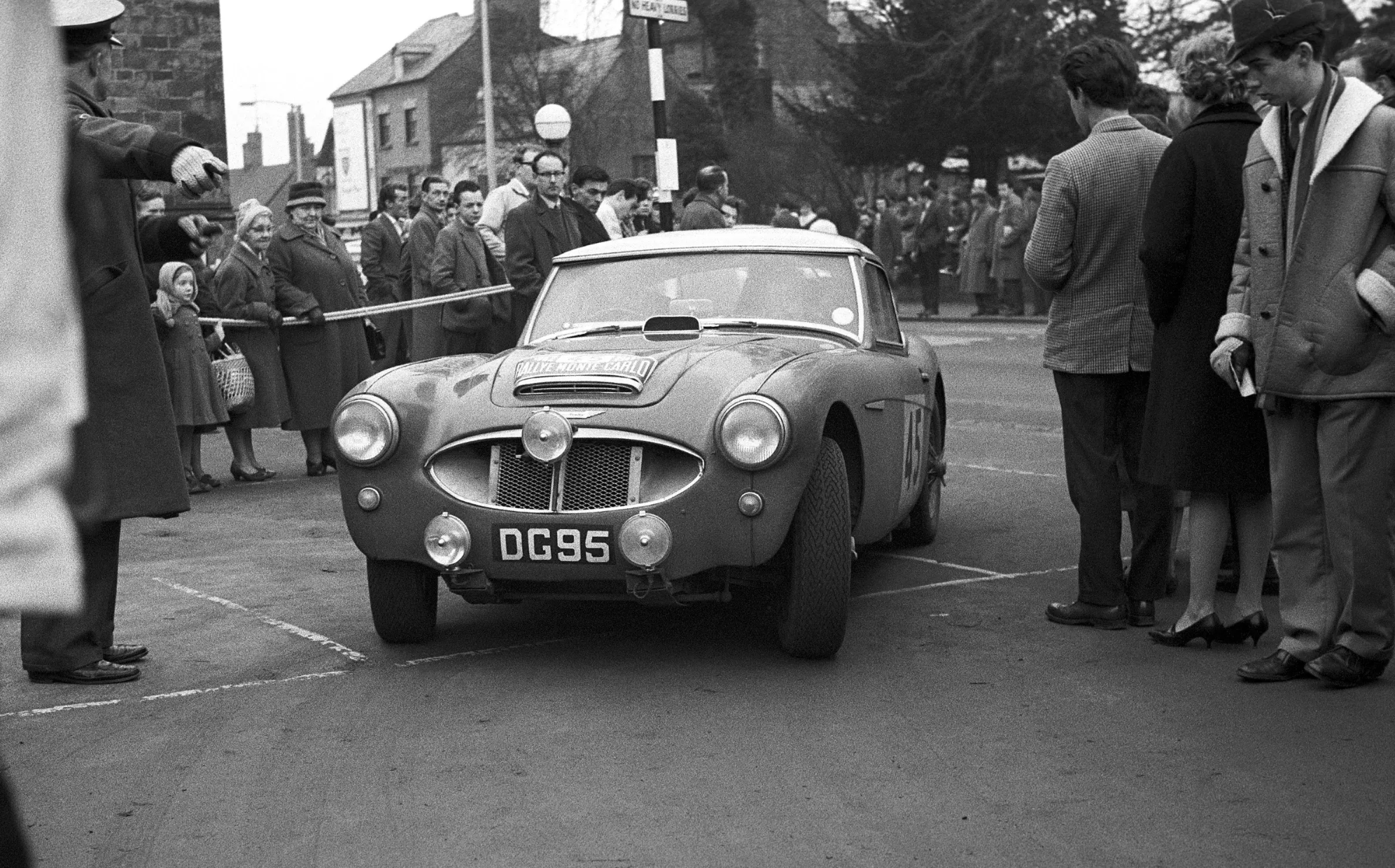
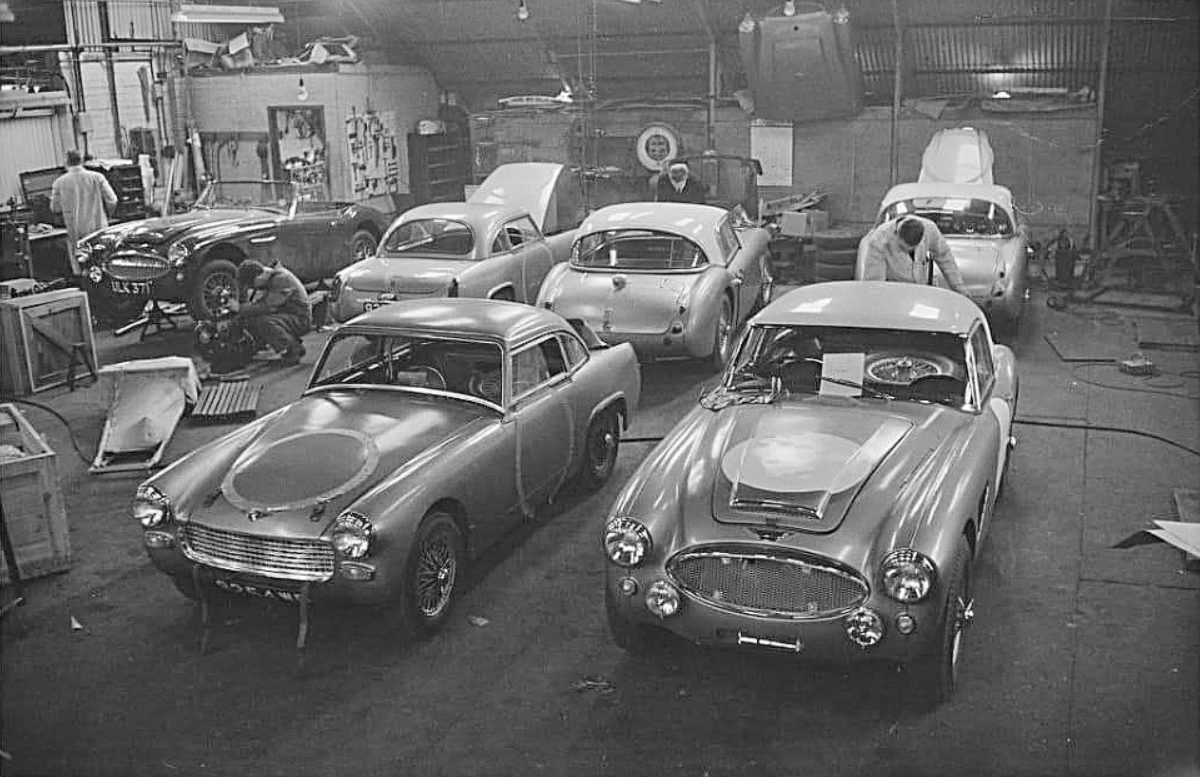
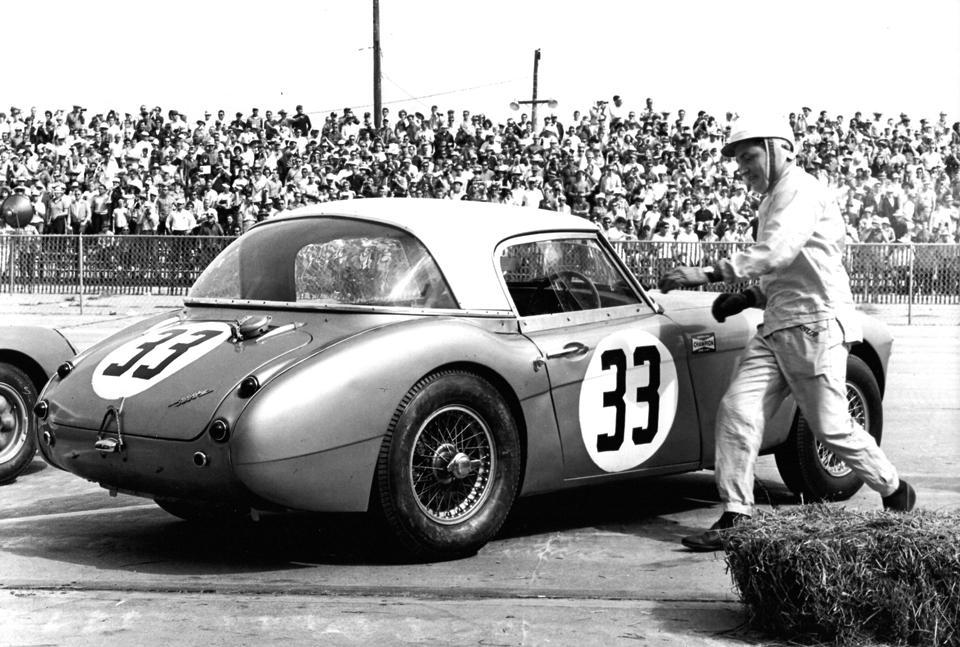
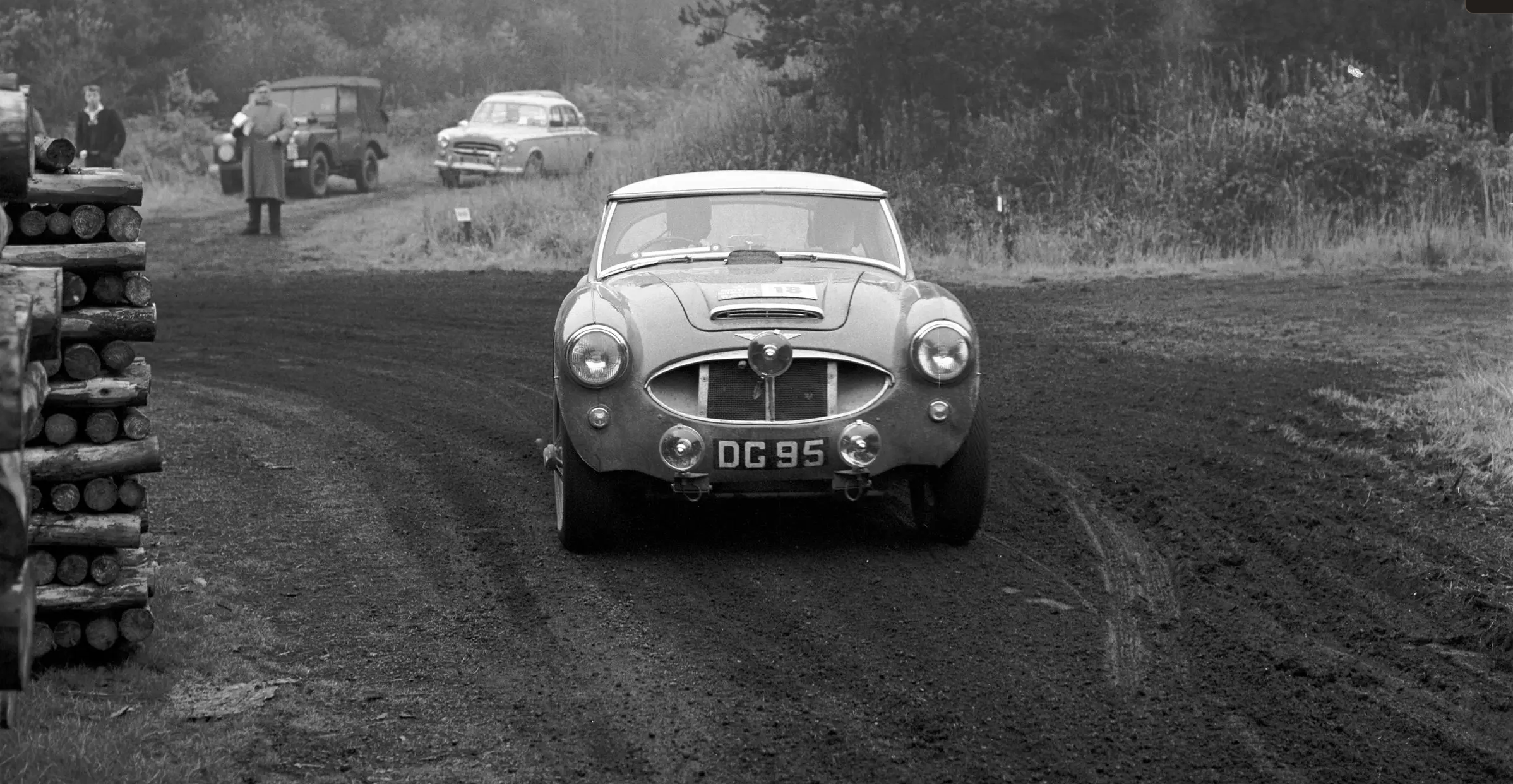
The Mk II BN7 was a glorious paradox. It was the most powerful, most aggressive Healey yet, but it was a commercial failure. The market, especially in America, had spoken: they wanted the 2+2 configuration of the BT7, even if those rear seats were better suited to luggage than humans. The result is that the BN7 version of the Mk II is one of the rarest “Big Healeys” ever built, with only 355 examples rolling out of the Abingdon factory. But its impact was not in sales; it was in competition. The Mk II, with its new triple-carb engine, became the definitive Works rally car. The BMC Competitions Department at Abingdon, led by Marcus Chambers, immediately seized on the new car. The power, the torque, and the tough chassis were the perfect ingredients. This was the car of the Morley brothers (Don and Erle), who piloted one to a stunning outright victory in the 1961 Alpine Rally. It was the car that Pat Moss and Ann Wisdom, fresh from their 1960 Liège-Rome-Liège win, used to continue their dominance. It was the car that became an icon of the great European rallies, a flame-spitting, sideways monster that thundered through mountain passes.
The Mk II’s reign as the “triple-carb” king was surprisingly short. By late 1962, it was replaced by the Mk IIA (designated BJ7). This new model, in a quest for more refinement, lost the triple-carb setup. It was deemed too complex for the average owner to keep in tune. The BJ7 reverted to two (larger) SU HS6 carbs and, more significantly, introduced the “civilized” features that would define the final Mk III: a proper folding “convertible” roof, a curved windscreen, and, for the first time, wind-up windows. This move cemented the Mk II BN7’s legacy. It was the absolute, high-water mark of raw, analogue Healey performance. It was the last of the “true” roadsters, the last to feature the classic metal dash and side-screens, and the only 3000 to come with the factory-fitted triple-carburettor engine. The later Mk III (BJ8) would be faster, with 150 hp, but it was a heavier, softer, more luxurious car. For the enthusiast who values purity over comfort, the Mk II BN7 is the ultimate “Big Healey”—a rare, raw, and magnificent beast.
Brand
Produced from
Portal
Vehicle category
Model generation
Predecessor
Sucessor
Brand
Produced from
Portal
Vehicle category
Model line
Model generation
Predecessor
Sucessor
About this submodel
By 1961, the Austin-Healey 3000 had already carved its legend in rock. The original Mk I was a brawling, torque-laden hero, a “hairy-chested” British brute that had conquered American SCCA races and, in the hands of the BMC Competitions Department, had become a formidable force in the toughest international rallies. It was fast, spectacularly sideways, and possessed a thunderous soundtrack. But the game was moving on. Jaguar was about to unleash the E-Type, a car that would reset all expectations. Triumph was sharpening its TR3 into the civilized, Michelotti-penned TR4. Donald Healey’s “Big Healey” needed more firepower. The answer was the 3000 Mk II. And while the 2+2 “BT7” version catered to the crucial American market, for the purist, for the driver who understood the original Healey ethos, there was only one choice: the 1961 3000 Mk II BN7.
The BN7 was the true spiritual successor to the original, elemental 100/4. Its model code was a statement of intent: “B” for the C-Series engine, “N” for the strict two-seater body. This was not a compromised “family” sports car; it was a focused machine for the driver. It arrived in March 1961, and its primary change was worn like a badge of honour: a new vertical-slat front grille, replacing the Mk I’s horizontal bar. But this visual tweak hid a far more significant upgrade under the bonnet. The Mk II was the “hot rod” of the 3000 family, the only generation to be factory-fitted with a bank of three SU carburettors. This was an engine not for touring, but for attacking.
The heart of the beast remained the 2,912cc C-Series straight-six, an iron-block, iron-head lump of an engine that was all about torque. Where the Mk I had made do with two SU HD6 carbs, the Mk II (in both BN7 and BT7 forms) was fitted with three SU HS4 units, mounted on a new inlet manifold. This, combined with a revised camshaft profile, was a direct transplant from the world of competition tuning. Power jumped from the Mk I’s 124 hp to a far healthier 132 hp. While the horsepower figure was impressive, it was the character of the engine that changed. The triple-carb setup gave the 3000 a sharper throttle response, a more aggressive top-end charge, and a glorious, hard-edged induction roar that the twin-carb cars simply couldn’t match. This was the most powerful engine Donald Healey had ever put into a production car.
This new, more potent engine was bolted to the same robust, four-speed manual gearbox with its essential Laycock de Normanville overdrive. The chassis was the same simple, tough-as-nails ladder frame as the Mk I, with its independent front suspension and a live rear axle located by leaf springs and a Panhard rod. This was not a sophisticated setup; it was famously low-slung, with the exhaust and sump hanging perilously close to the road, a feature that gave rally drivers nightmares but also contributed to its low centre of gravity. Crucially, the Mk II carried over the Girling front disc brakes that the 3000 had introduced, giving it the stopping power to match its new-found urge. The BN7’s body was its defining feature. It was the last of the pure two-seater “Big Healeys,” with a simple, uncluttered rear deck and a cockpit designed for driving. The interior was pure 1950s sports car: a painted, crackle-finish metal dashboard, beautiful Smiths gauges, and rudimentary weather protection. There were no wind-up windows or walnut dashboards here; this was the “old school” Healey, with clip-on side-screens and a “build-it-yourself” folding roof.
The Mk II BN7 was a glorious paradox. It was the most powerful, most aggressive Healey yet, but it was a commercial failure. The market, especially in America, had spoken: they wanted the 2+2 configuration of the BT7, even if those rear seats were better suited to luggage than humans. The result is that the BN7 version of the Mk II is one of the rarest “Big Healeys” ever built, with only 355 examples rolling out of the Abingdon factory. But its impact was not in sales; it was in competition. The Mk II, with its new triple-carb engine, became the definitive Works rally car. The BMC Competitions Department at Abingdon, led by Marcus Chambers, immediately seized on the new car. The power, the torque, and the tough chassis were the perfect ingredients. This was the car of the Morley brothers (Don and Erle), who piloted one to a stunning outright victory in the 1961 Alpine Rally. It was the car that Pat Moss and Ann Wisdom, fresh from their 1960 Liège-Rome-Liège win, used to continue their dominance. It was the car that became an icon of the great European rallies, a flame-spitting, sideways monster that thundered through mountain passes.
The Mk II’s reign as the “triple-carb” king was surprisingly short. By late 1962, it was replaced by the Mk IIA (designated BJ7). This new model, in a quest for more refinement, lost the triple-carb setup. It was deemed too complex for the average owner to keep in tune. The BJ7 reverted to two (larger) SU HS6 carbs and, more significantly, introduced the “civilized” features that would define the final Mk III: a proper folding “convertible” roof, a curved windscreen, and, for the first time, wind-up windows. This move cemented the Mk II BN7’s legacy. It was the absolute, high-water mark of raw, analogue Healey performance. It was the last of the “true” roadsters, the last to feature the classic metal dash and side-screens, and the only 3000 to come with the factory-fitted triple-carburettor engine. The later Mk III (BJ8) would be faster, with 150 hp, but it was a heavier, softer, more luxurious car. For the enthusiast who values purity over comfort, the Mk II BN7 is the ultimate “Big Healey”—a rare, raw, and magnificent beast.
Tech Specs
Discover the technical specifications
Tech Specs
Discover the technical specifications
Engine
01
03
Internal combustion engine
Configuration
Inline-6
Location
Front, longitudinally mounted
Construction
Cast-iron block and aluminium alloy head
Displacement (cc)
2,901 cc
Displacement (cu in)
177 cu in
Compression
9.0:1
Bore x Stroke
83.36 mm x 88.9 mm
Valvetrain
2 valves per cylinder, OHV
Fuel feed
3 SU Carburettors
Lubrication
Wet sump
Aspiration
Naturally aspirated
Output
Power (hp)
132 hp
Power (kW)
99 kW
Max power at
4,750 RPM
Torque (Nm)
226 Nm
Torque (ft lbs)
166 ft lbs
Max torque at
4,750 RPM
Drivetrain
02
03
Chassis
Type
Tubular spaceframe
Material
Steel
Body
Material
Aluminium panels
Transmission
Gearbox
6-speed sequential
Drive
Front Wheel Drive
Suspension
Front
Coil springs over shock absorbers, anti-roll bar
Rear
Rigid axle, semi-elliptic leaf springs, shock absorbers
Steering
Type
Cam-and-peg
Brakes
Front
Discs
Rear
Drums
Wheels
Front
-
Rear
-
Tires
Front
-
Rear
-
Dimensions and performance
03
03
Dimensions
Lenght (mm)
4,001 mm
Lenght (in)
157 in
Width (mm)
1,537 mm
Width (in)
60.5 in
Height (mm)
1,270 mm
Height (in)
50 in
Wheelbase (mm)
2,337 mm
Wheelbase (in)
92 in
Weight (kg)
1,158 kg
Weight (lbs)
2,553 lbs
Performance
Power to weight
0.11 hp/kg
Top speed (km/h)
185 km/h
Top speed (mph)
115 mph
0-100 km/h (0-60 mph)
11 s
Submodels
Other variants of this model
Submodels