Ferrari 275 GTB ‘Short Nose’
Brand
Produced from
Portal
Vehicle category
Model line
Predecessor
Sucessor
About this submodel
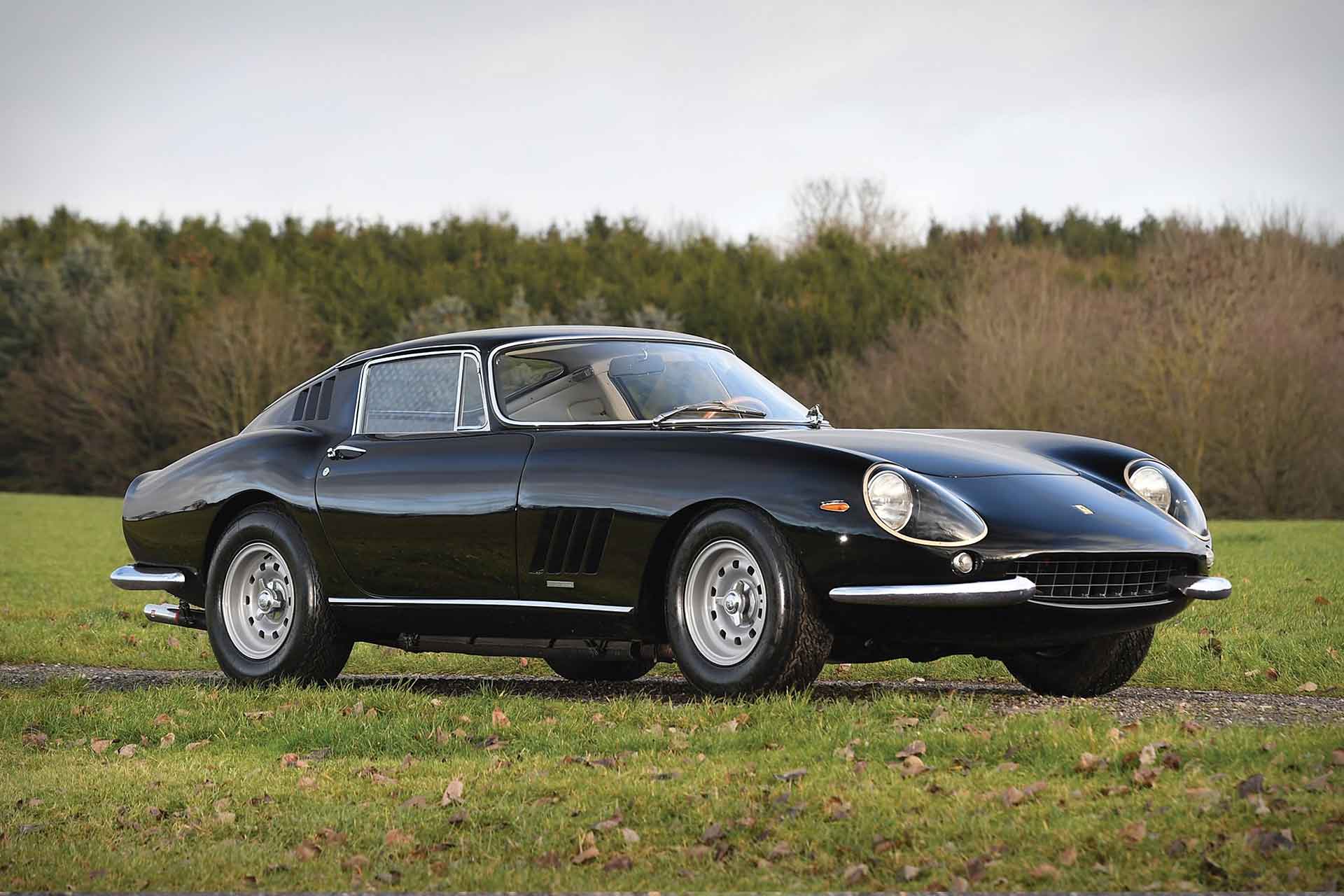
The autumn of 1964 marked a seismic shift in the tectonic plates of Maranello’s engineering philosophy. At the Paris Salon, amidst the flashbulbs and the smoke of Gauloises, Enzo Ferrari pulled the covers off a car that was not merely a replacement for the beloved 250 GT Lusso, but a total reimagining of the Gran Turismo concept. This was the Ferrari 275 GTB, later distinguished by historians as the ‘Short Nose’ to separate it from its aerodynamically corrected successor. It arrived at a moment of intense pressure. The Jaguar E-Type had democratized 150mph performance with independent rear suspension, and Ferruccio Lamborghini had just thrown down the gauntlet with the 350 GT. The 250 series, for all its glory, relied on a live rear axle that dated back to the horse and cart. The 275 GTB was Ferrari’s retort: a machine that embraced the future with a transaxle and fully independent suspension, bridging the gap between the raw, race-bred 250 GTO and the sophisticated continental express that the market now demanded.
Technically, the ‘Short Nose’ was a revolution wrapped in Scaglietti aluminium and steel. At its heart beat the final, 3.3-litre development of Gioacchino Colombo’s single-overhead-cam V12. Enlarged to 3,286cc, it breathed through a trio of Weber 40 DCZ/6 carburetors (or six, if the client ordered the high-performance option) to produce a lusty 280 bhp. But the engine was the only traditional element. Beneath the skin, the ladder frame chassis (Tipo 563) supported a radical new drivetrain layout. The transmission was moved to the rear, combined with the differential in a transaxle unit to achieve near-perfect 50/50 weight distribution. Furthermore, the archaic live axle was banished, replaced by double wishbones at all four corners.
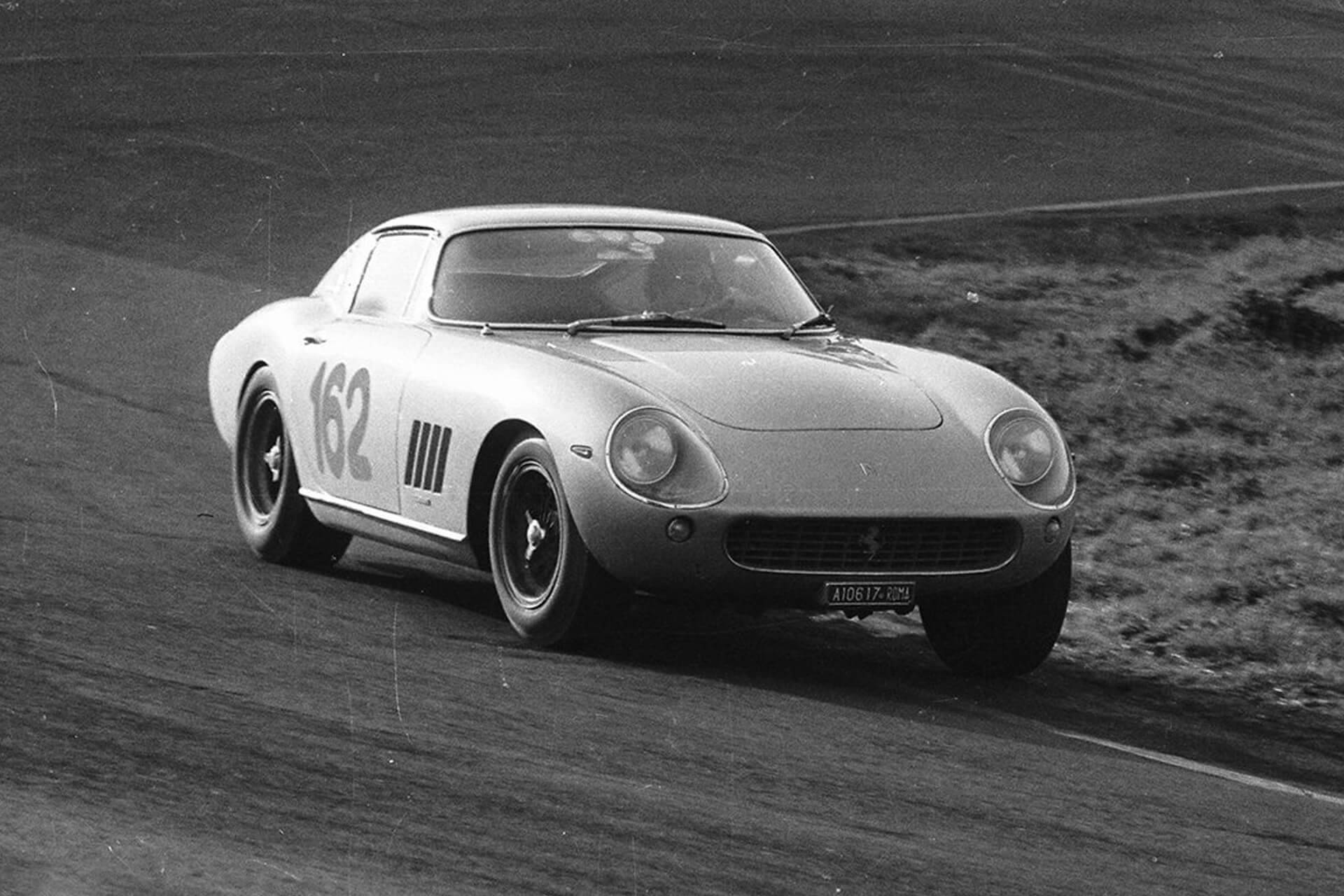
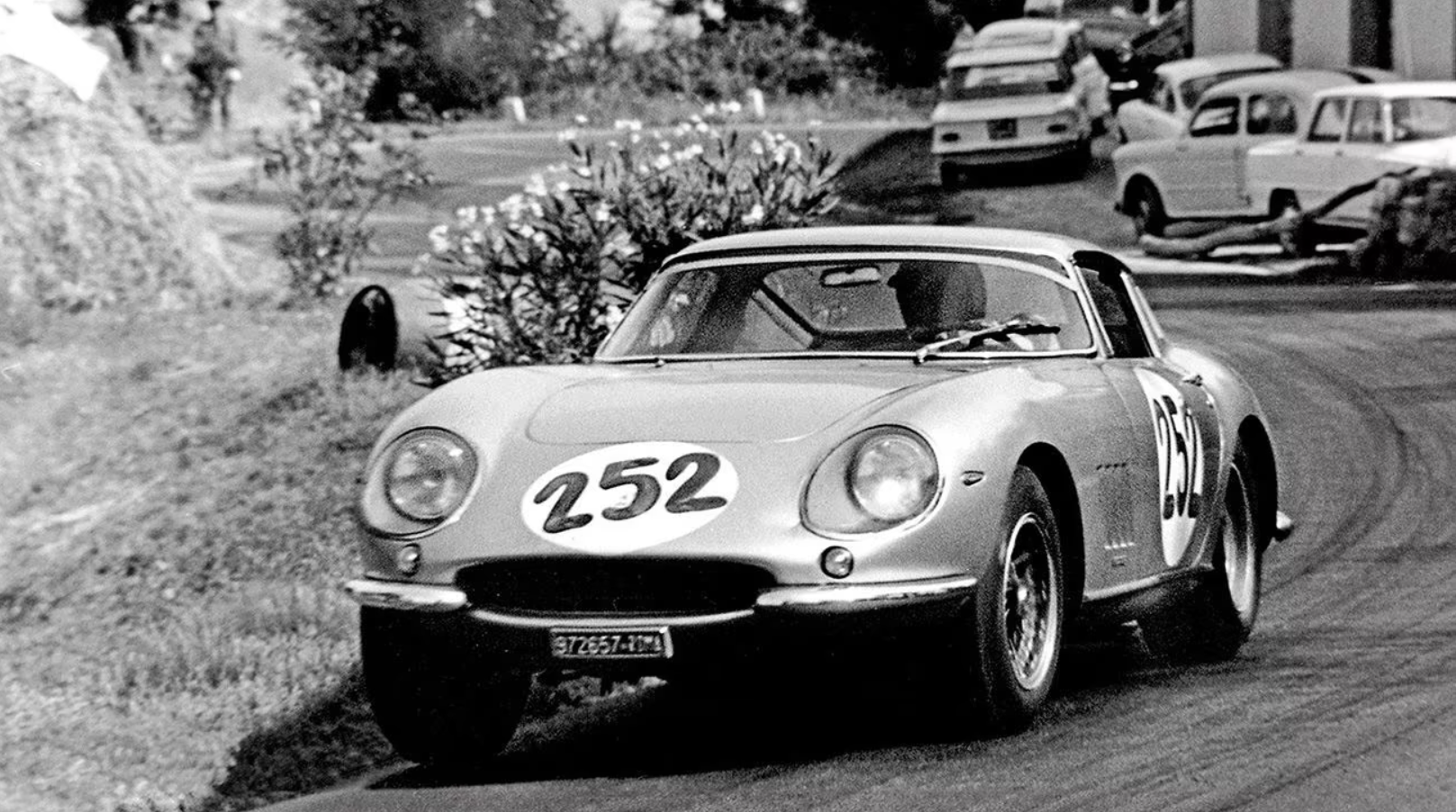
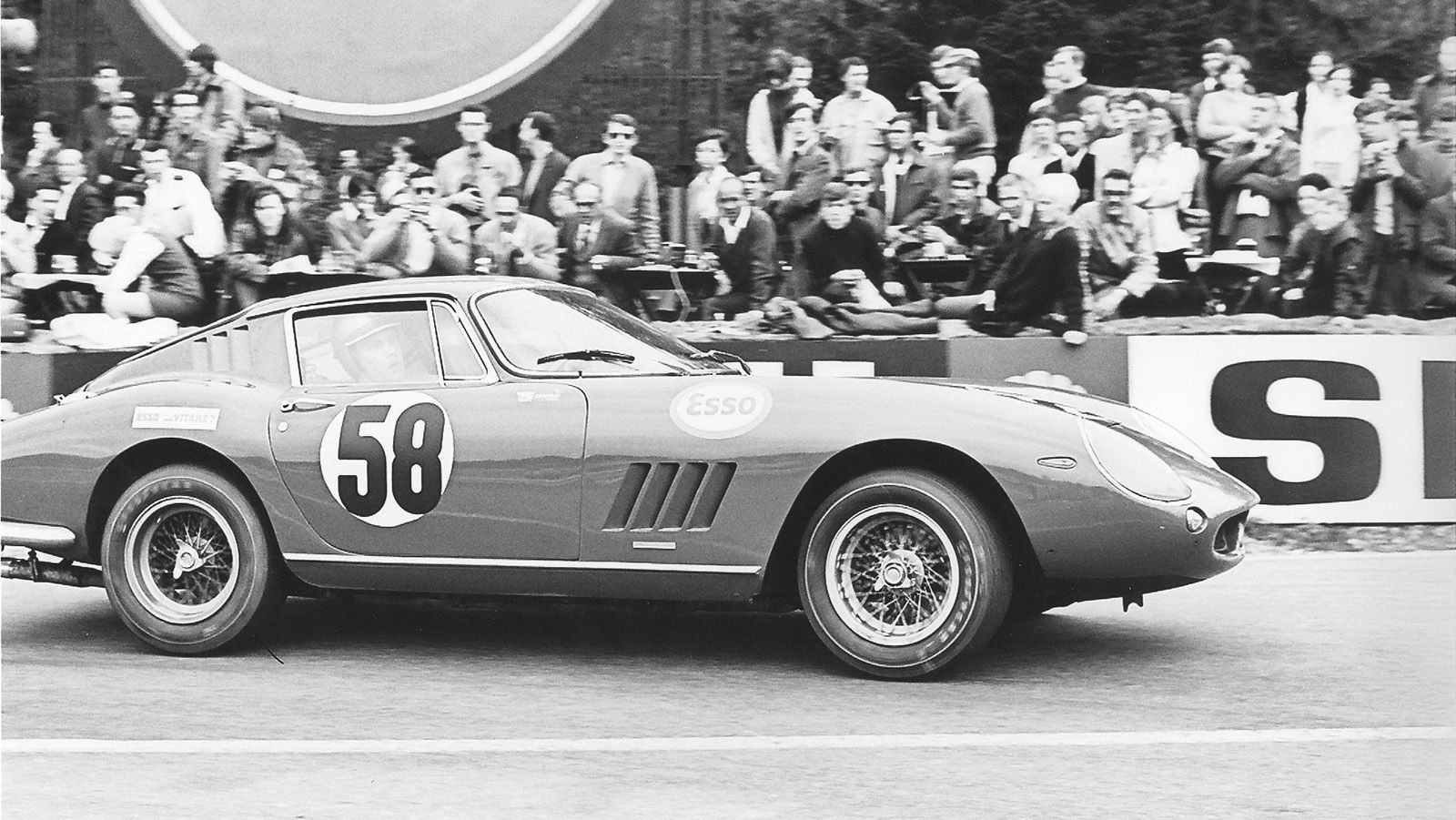
The exterior design, penned by Pininfarina, was a masterclass in tension. The ‘Short Nose’ is characterized by its blunt, aggressive front grille opening and a bonnet that seems to wrap tightly over the V12 like skin over muscle. It lacks the elongated elegance of the later cars; instead, it possesses a pugnacious, coiled-spring energy. The gills on the front fenders, the covered headlamps, and the abrupt Kamm tail were functional nods to the 250 GTO, yet the 275 GTB introduced the magnificent Campagnolo “Starburst” alloy wheels, signaling the end of the wire-wheel era.
However, the ‘Short Nose’ is defined as much by its flaws as its brilliance, traits that give it a distinct, dangerous charisma. The early cars utilized a sliding spline driveshaft between the engine and the rear-mounted transaxle. This setup, lacking the rigid torque tube introduced later, was notoriously difficult to align, often resulting in driveline vibrations that could shake the fillings out of a driver’s teeth at high rpm. More critically, the short front overhang created aerodynamic instability. Above 120 mph, the front end would go terrifyingly light, the steering becoming vague as the air pressure built up under the nose. It was a car that demanded respect and a steady hand, a Grand Tourer that still required the reflexes of a fighter pilot.
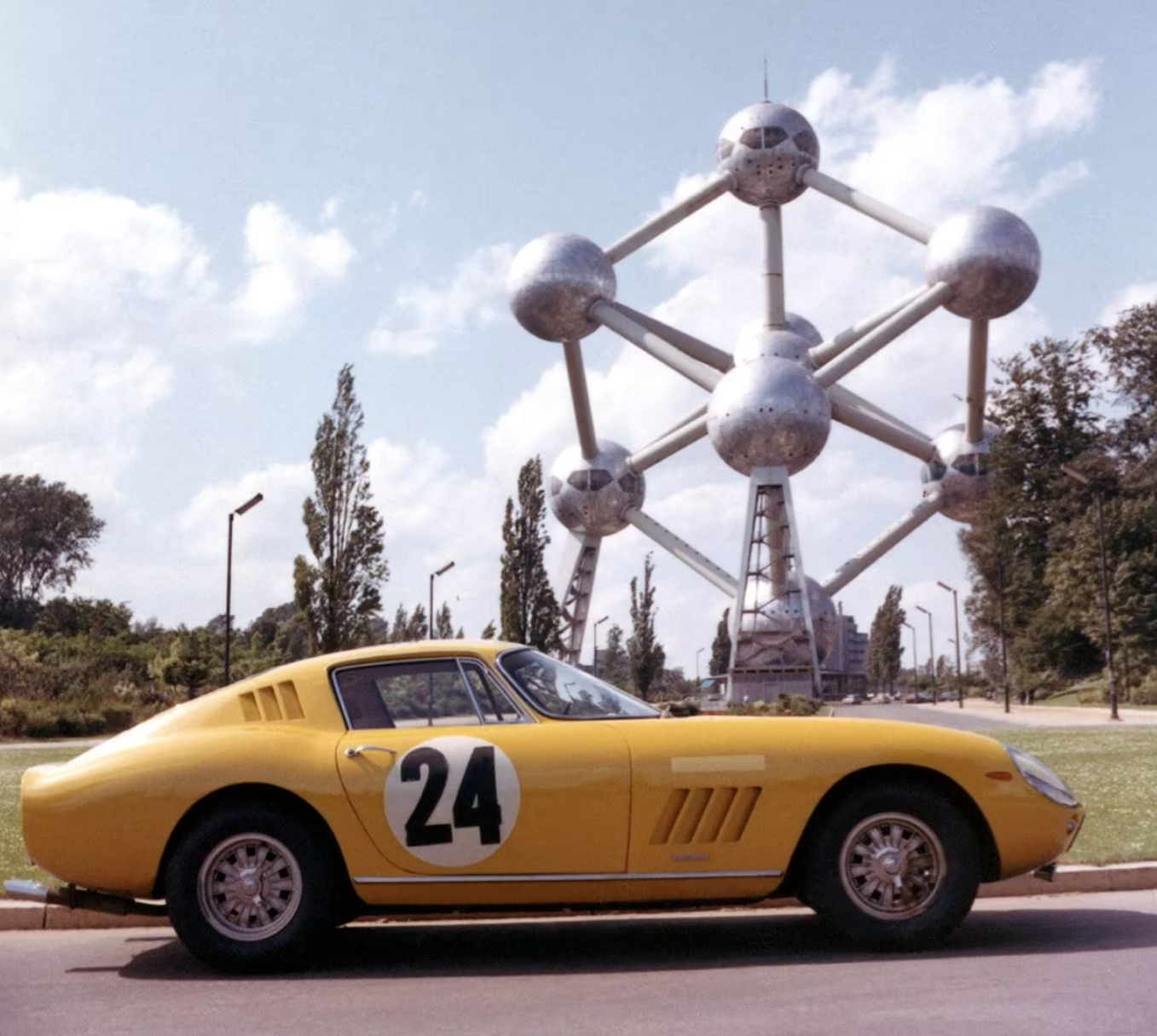
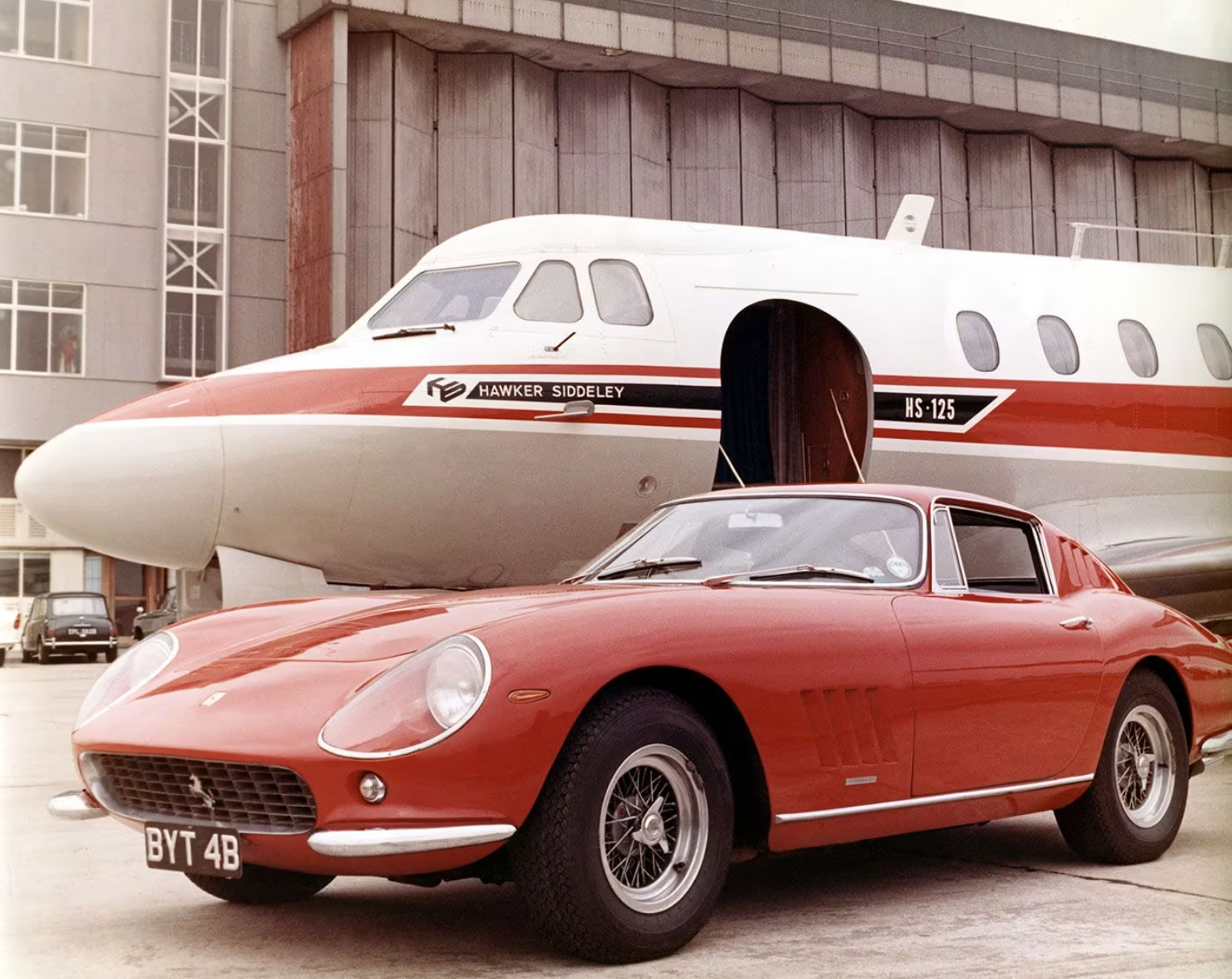
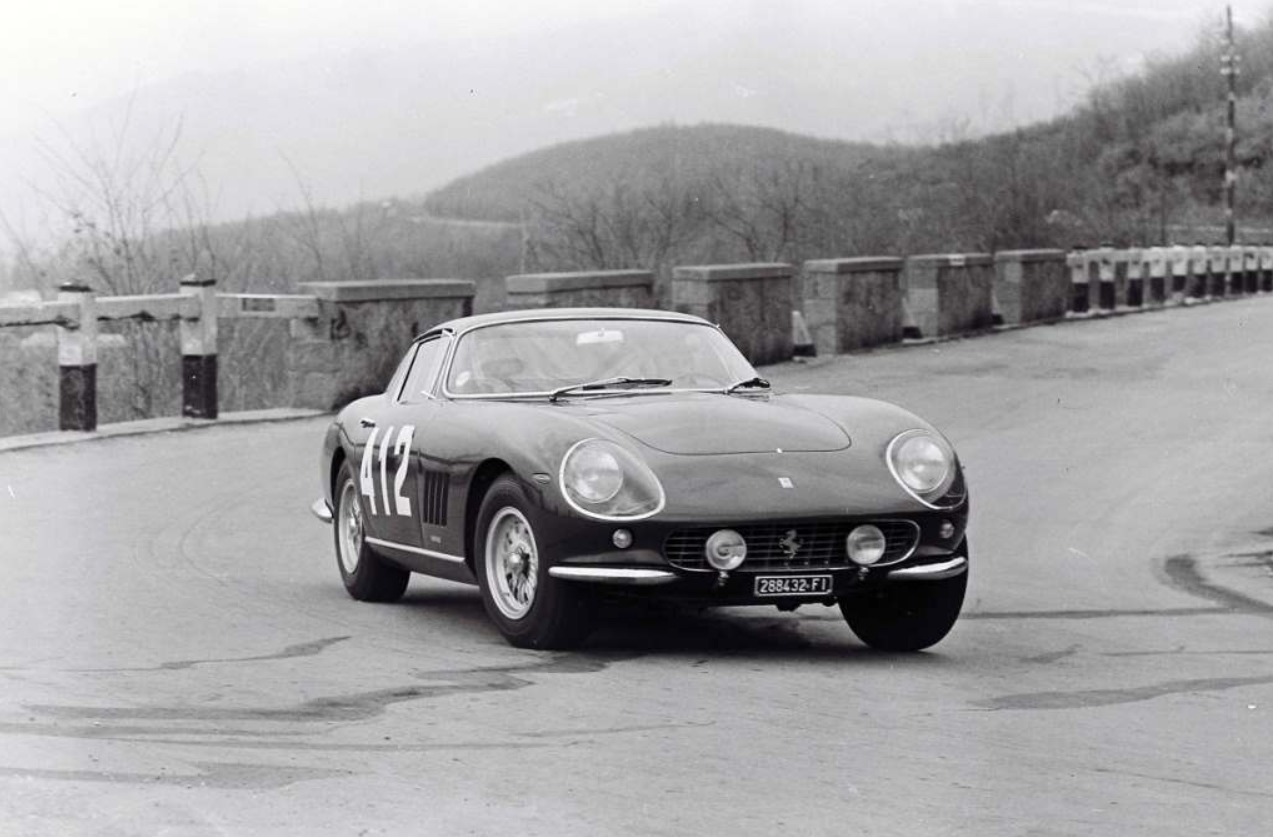
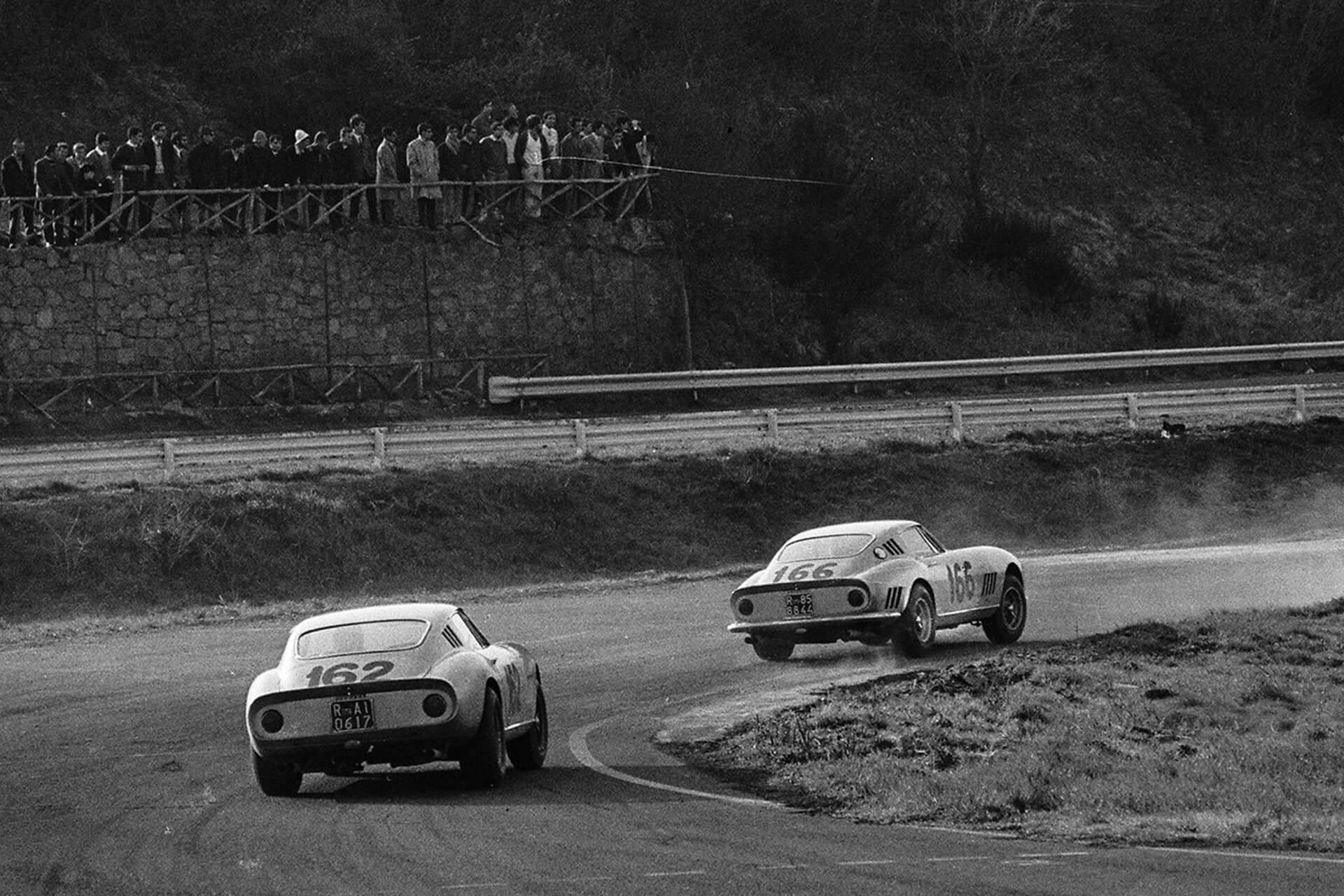
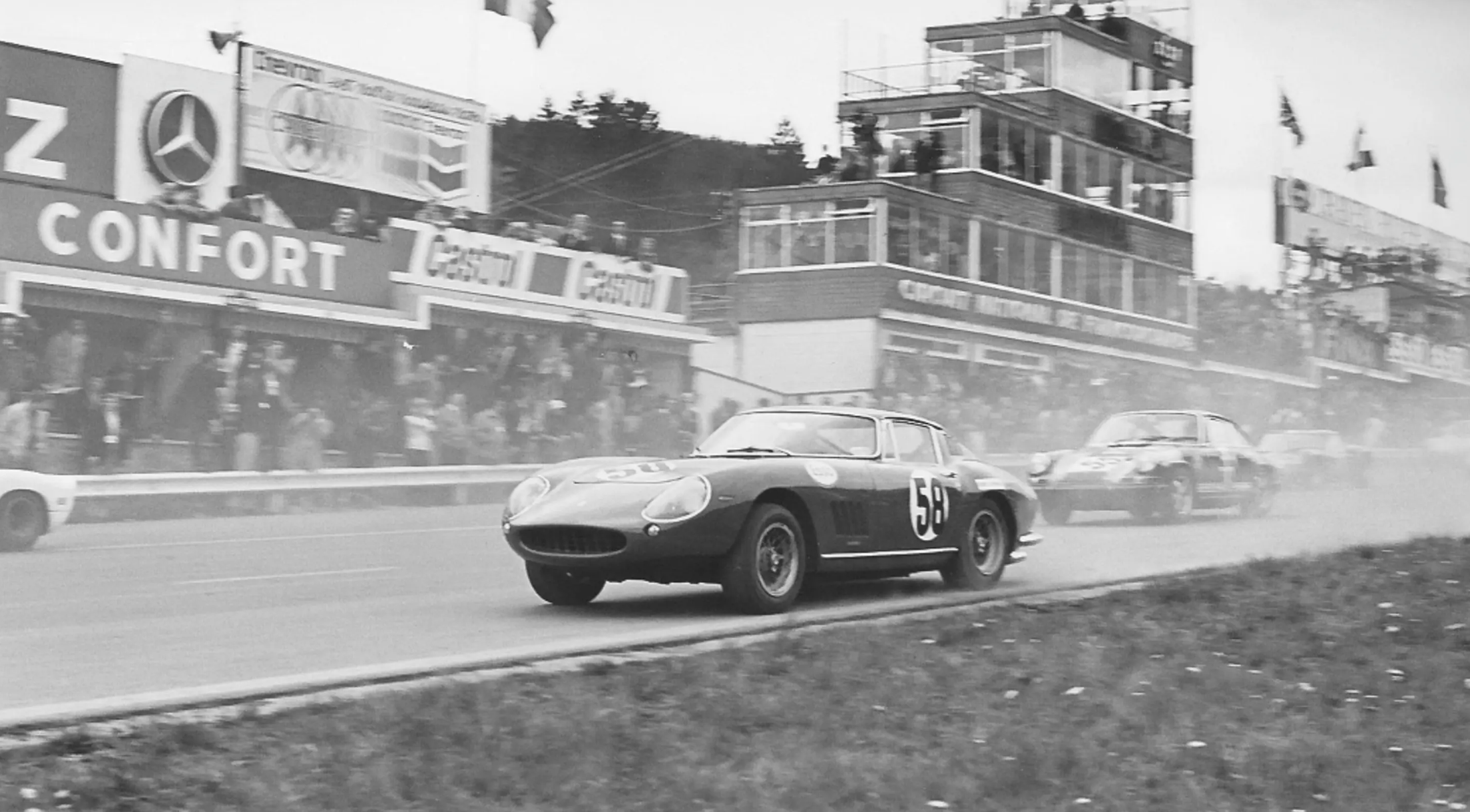
Despite these teething issues, the impact of the 275 GTB ‘Short Nose’ was profound. It proved that Ferrari could build a modern, independent-suspension road car without diluting the visceral excitement of the brand. On the street, it was the ultimate status symbol of the Jet Set, a car seen on the Riviera and the boulevards of Hollywood. In competition, the ‘Short Nose’ served as the basis for the first batch of Competizione cars. These lightweight, alloy-bodied racers (often referred to as ‘Speciale’) fought a valiant rearguard action in the GT class against the Shelby Cobras. While the later ‘Long Nose’ would cure the high-speed lift, the ‘Short Nose’ remains the purest expression of the original design concept. It represents the raw, unfiltered transition point—the moment when the crude mechanicals of the 1950s met the sophisticated chassis dynamics of the 1960s.
The legacy of the 1964 Ferrari 275 GTB ‘Short Nose’ is that of the flawed genius. It is the “Series I” of the 275 lineage, rarer than the Long Nose variants and arguably more aggressive in its stance. It stands in the pantheon of automobilia as the car that killed the live axle Ferrari, paving the way for the Daytona and every front-engined V12 flagship that followed. To drive one today is to experience a pivotal moment in history: the heavy unassisted steering lightening as you accelerate, the whine of the transaxle behind you, and the glorious, unending song of the 3.3-litre Colombo V12 pulling towards the horizon. It is a machine of character, demanding, beautiful, and utterly unforgettable.
Brand
Produced from
Portal
Vehicle category
Model line
Predecessor
Sucessor
Brand
Produced from
Portal
Vehicle category
Model line
Model generation
Predecessor
Sucessor
About this submodel
The autumn of 1964 marked a seismic shift in the tectonic plates of Maranello’s engineering philosophy. At the Paris Salon, amidst the flashbulbs and the smoke of Gauloises, Enzo Ferrari pulled the covers off a car that was not merely a replacement for the beloved 250 GT Lusso, but a total reimagining of the Gran Turismo concept. This was the Ferrari 275 GTB, later distinguished by historians as the ‘Short Nose’ to separate it from its aerodynamically corrected successor. It arrived at a moment of intense pressure. The Jaguar E-Type had democratized 150mph performance with independent rear suspension, and Ferruccio Lamborghini had just thrown down the gauntlet with the 350 GT. The 250 series, for all its glory, relied on a live rear axle that dated back to the horse and cart. The 275 GTB was Ferrari’s retort: a machine that embraced the future with a transaxle and fully independent suspension, bridging the gap between the raw, race-bred 250 GTO and the sophisticated continental express that the market now demanded.
Technically, the ‘Short Nose’ was a revolution wrapped in Scaglietti aluminium and steel. At its heart beat the final, 3.3-litre development of Gioacchino Colombo’s single-overhead-cam V12. Enlarged to 3,286cc, it breathed through a trio of Weber 40 DCZ/6 carburetors (or six, if the client ordered the high-performance option) to produce a lusty 280 bhp. But the engine was the only traditional element. Beneath the skin, the ladder frame chassis (Tipo 563) supported a radical new drivetrain layout. The transmission was moved to the rear, combined with the differential in a transaxle unit to achieve near-perfect 50/50 weight distribution. Furthermore, the archaic live axle was banished, replaced by double wishbones at all four corners.
The exterior design, penned by Pininfarina, was a masterclass in tension. The ‘Short Nose’ is characterized by its blunt, aggressive front grille opening and a bonnet that seems to wrap tightly over the V12 like skin over muscle. It lacks the elongated elegance of the later cars; instead, it possesses a pugnacious, coiled-spring energy. The gills on the front fenders, the covered headlamps, and the abrupt Kamm tail were functional nods to the 250 GTO, yet the 275 GTB introduced the magnificent Campagnolo “Starburst” alloy wheels, signaling the end of the wire-wheel era.
However, the ‘Short Nose’ is defined as much by its flaws as its brilliance, traits that give it a distinct, dangerous charisma. The early cars utilized a sliding spline driveshaft between the engine and the rear-mounted transaxle. This setup, lacking the rigid torque tube introduced later, was notoriously difficult to align, often resulting in driveline vibrations that could shake the fillings out of a driver’s teeth at high rpm. More critically, the short front overhang created aerodynamic instability. Above 120 mph, the front end would go terrifyingly light, the steering becoming vague as the air pressure built up under the nose. It was a car that demanded respect and a steady hand, a Grand Tourer that still required the reflexes of a fighter pilot.
Despite these teething issues, the impact of the 275 GTB ‘Short Nose’ was profound. It proved that Ferrari could build a modern, independent-suspension road car without diluting the visceral excitement of the brand. On the street, it was the ultimate status symbol of the Jet Set, a car seen on the Riviera and the boulevards of Hollywood. In competition, the ‘Short Nose’ served as the basis for the first batch of Competizione cars. These lightweight, alloy-bodied racers (often referred to as ‘Speciale’) fought a valiant rearguard action in the GT class against the Shelby Cobras. While the later ‘Long Nose’ would cure the high-speed lift, the ‘Short Nose’ remains the purest expression of the original design concept. It represents the raw, unfiltered transition point—the moment when the crude mechanicals of the 1950s met the sophisticated chassis dynamics of the 1960s.
The legacy of the 1964 Ferrari 275 GTB ‘Short Nose’ is that of the flawed genius. It is the “Series I” of the 275 lineage, rarer than the Long Nose variants and arguably more aggressive in its stance. It stands in the pantheon of automobilia as the car that killed the live axle Ferrari, paving the way for the Daytona and every front-engined V12 flagship that followed. To drive one today is to experience a pivotal moment in history: the heavy unassisted steering lightening as you accelerate, the whine of the transaxle behind you, and the glorious, unending song of the 3.3-litre Colombo V12 pulling towards the horizon. It is a machine of character, demanding, beautiful, and utterly unforgettable.
Tech Specs
Discover the technical specifications
Tech Specs
Discover the technical specifications
Engine
01
03
Internal combustion engine
Configuration
Ferrari Colombo Tipo 213, V12 - 60º
Location
Front-mid, longitudinally mounted
Construction
Silumin alloy block and heads
Displacement (cc)
3,286 cc
Displacement (cu in)
200.5 cu in
Compression
9.2:1
Bore x Stroke
77.0 mm x 58.8 mm
Valvetrain
2 valves per cylinder, SOHC
Fuel feed
3 x Weber 40 DCZ/6 carburetors (6 carburetors as option)
Lubrication
Dry sump
Aspiration
Naturally aspirated
Output
Power (hp)
280 hp
Power (kW)
206 kW
Max power at
7,600 RPM
Torque (Nm)
294 Nm
Torque (ft lbs)
217 ft lbs
Max torque at
5,000 RPM
Drivetrain
02
03
Chassis
Type
Tubular ladder frame
Material
Steel
Body
Material
Steel with aluminium doors, hood, and trunk (Full aluminium bodies were rare options)
Transmission
Gearbox
Ferrari 5-speed manual
Drive
Rear Wheel Drive
Suspension
Front
Independent, double wishbones, coil springs, Koni telescopic dampers, anti-roll bar
Rear
Independent, double wishbones, coil springs, Koni telescopic dampers, anti-roll bar
Steering
Type
Worm and roller
Brakes
Front
Solid discs
Rear
Solid discs
Wheels
Front
14" Campagnolo "Starburst" Alloy (Standard) or Borrani Wire Wheels
Rear
14" Campagnolo "Starburst" Alloy (Standard) or Borrani Wire Wheels
Tires
Front
205 VR 14
Rear
205 VR 14
Dimensions and performance
03
03
Dimensions
Lenght (mm)
4,325 mm
Lenght (in)
170.3 in
Width (mm)
1,725 mm
Width (in)
67.9 in
Height (mm)
1,200 mm
Height (in)
47.2 in
Wheelbase (mm)
2,400 mm
Wheelbase (in)
94.5 in
Weight (kg)
1,100 kg
Weight (lbs)
2,425 lbs
Performance
Power to weight
0.25 hp/kg
Top speed (km/h)
258 km/h
Top speed (mph)
160 mph
0-100 km/h (0-60 mph)
~6.5 s
Submodels
Other variants of this model
Submodels