Crosslé 9S Lotus-Ford Twin Cam
Brand
Produced from
Portal
Vehicle category
Model line
Predecessor
Sucessor
About this submodel
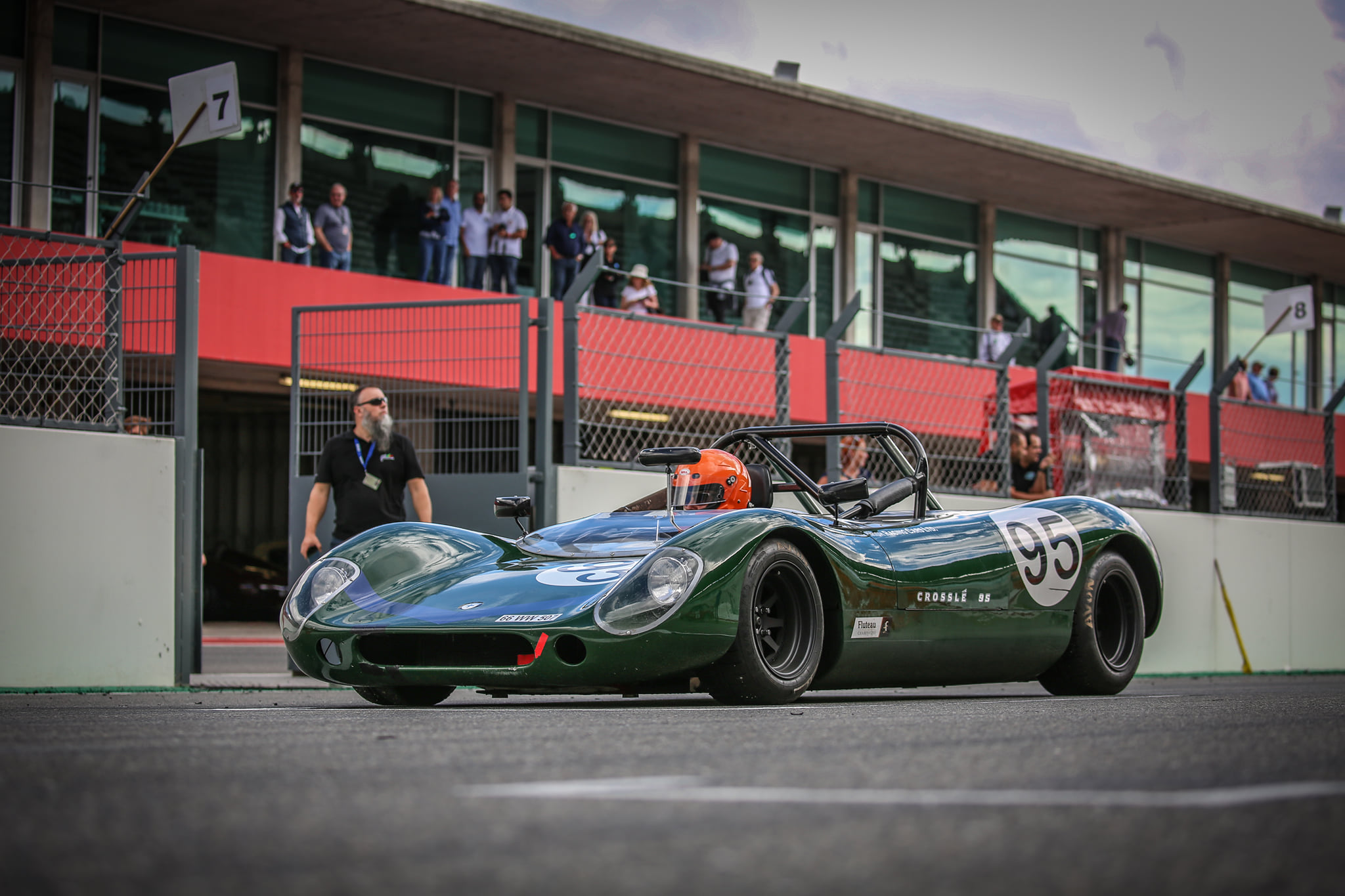
By 1966, the landscape of British club racing had been irrevocably altered by the mid-engined revolution. The days of the heavy, front-engined Jaguars and Astons dominating the podiums were gone, replaced by low-slung, lightweight spiders that prioritized agility over brute force. The benchmark was the Lotus 23B, a car of fragile genius that had set the template for the small-displacement sports racer. However, across the Irish Sea in Holywood, County Down, John Crosslé was engineering a response that would not only match the Lotus for speed but surpass it in durability and sheer aesthetic beauty. While the 2.0-litre BMW-powered variants of his new creation were destined to be the giant-killers, the spiritual heart of the range—the car that most perfectly captured the ethos of the 1960s British “garagiste”—was the 1966 Crosslé 9S Lotus-Ford Twin Cam. It was a machine that combined the robust engineering of Ulster with the most charismatic four-cylinder engine ever produced in England.
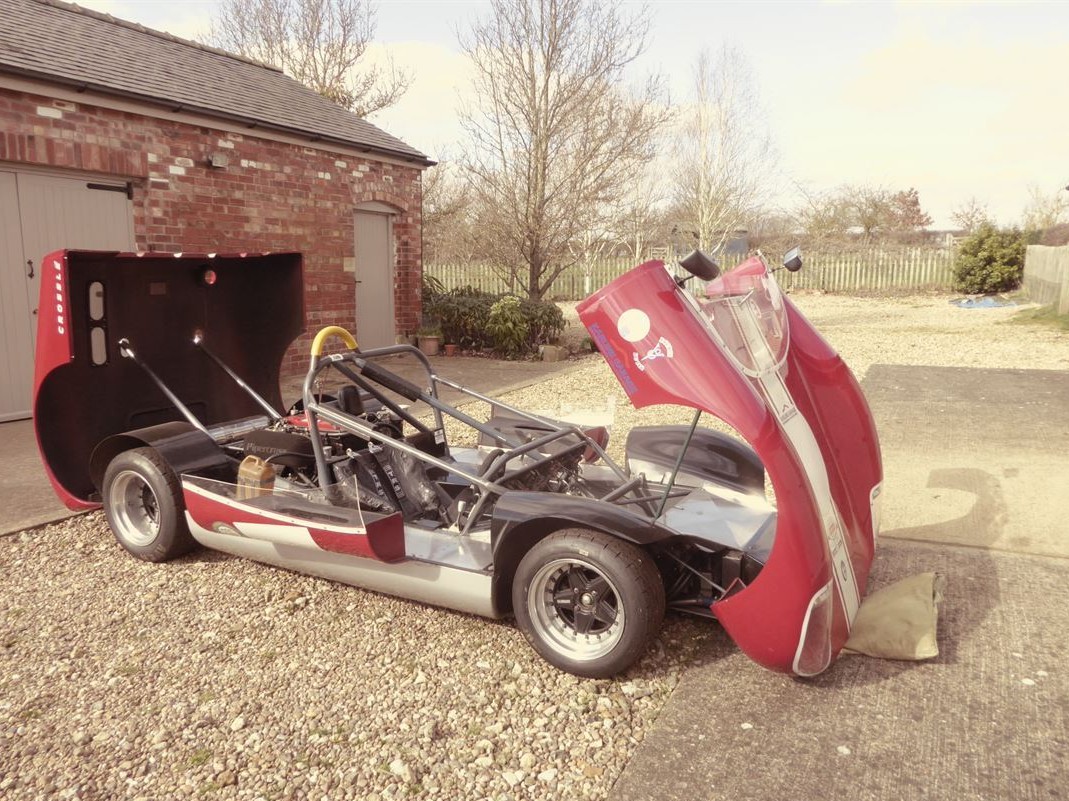
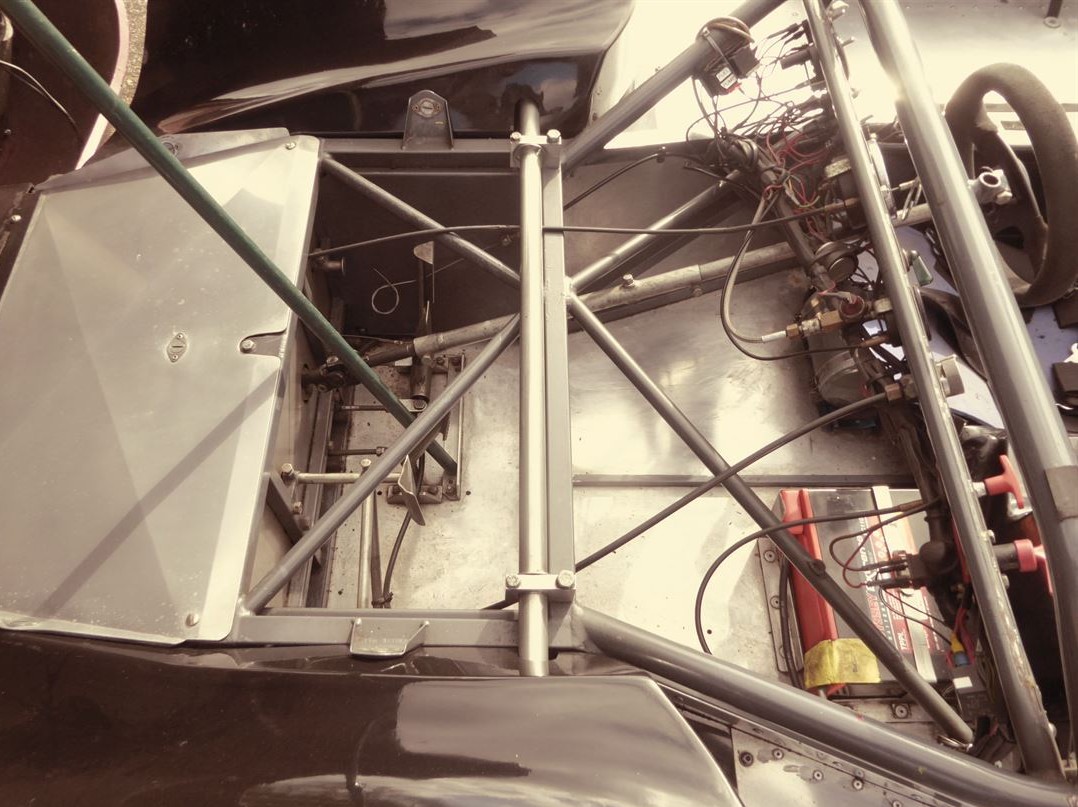
The Crosslé 9S was a masterclass in packaging. Unlike the Lotus 23, which utilized a somewhat flexible chassis that relied on the body for some stiffness, John Crosslé designed a complex, multi-tubular mild steel spaceframe. Bronze-welded by hand, this structure was incredibly rigid, providing a stable platform that allowed the suspension geometry to function correctly without being compromised by chassis flex. This skeleton was wrapped in a fibreglass body that is widely considered one of the most beautiful shapes in motorsport history. With its voluptuous curves, low nose, and abrupt Kamm tail, the 9S was aerodynamic, yes, but primarily it was a piece of industrial sculpture, free from the ugly wings and spoilers that would clutter the grid in the coming decade.
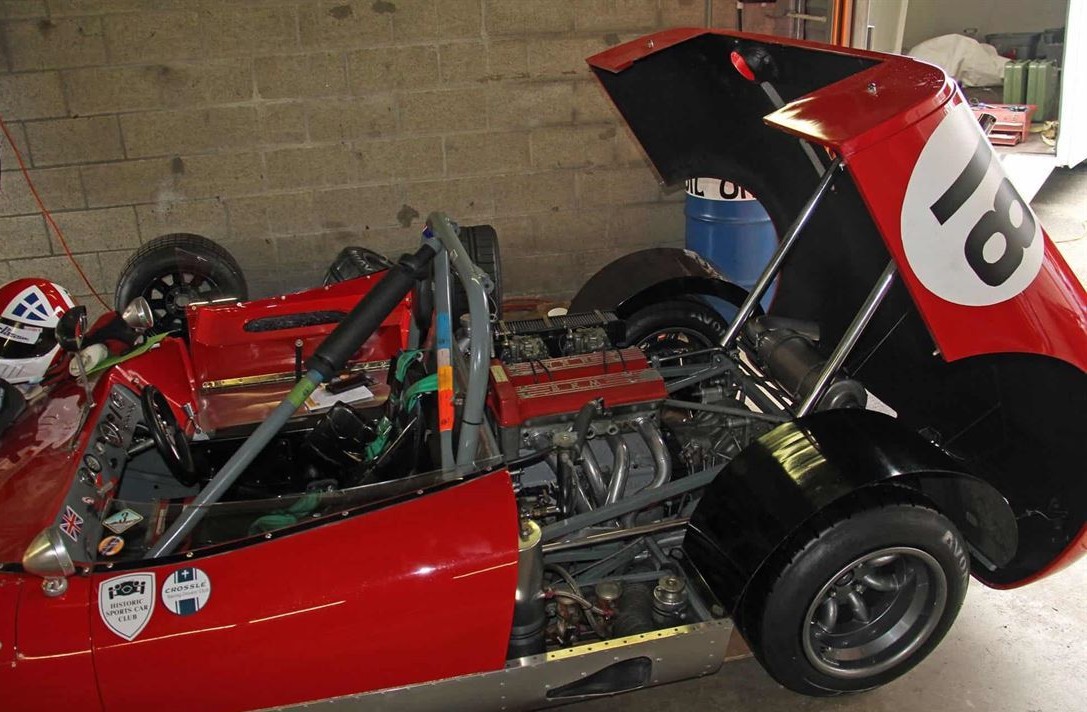
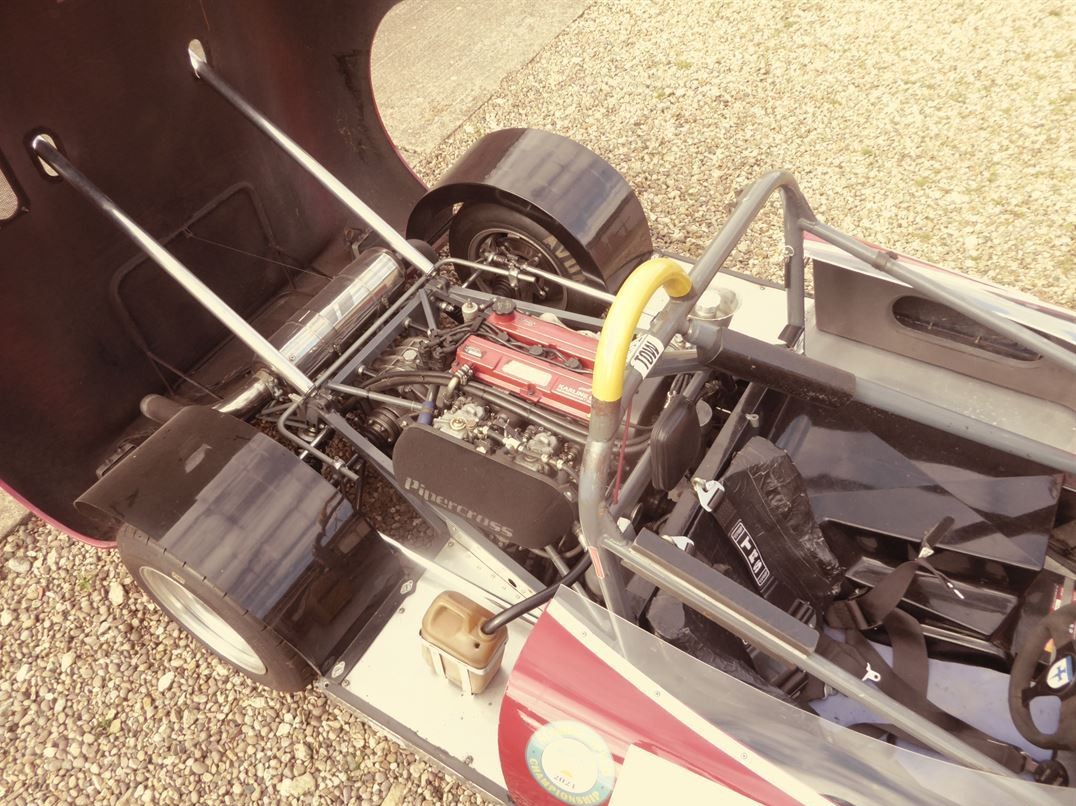
At the center of this chassis sat the defining element of this submodel: the 1.6-litre Lotus-Ford Twin Cam engine. Designed by Harry Mundy, this power unit was the heartbeat of 1960s motorsport. Based on the humble Ford 116E iron block, it featured a twin-cam aluminium cylinder head that allowed the engine to breathe and rev in a way that captivated a generation. In the back of the Crosslé 9S, fed by twin Weber 40 or 45 DCOE carburettors, the Twin Cam produced between 140 and 155 bhp depending on the state of tune. While this was a deficit compared to the 180 bhp of the BMW M10-powered 9S, the Twin Cam engine was significantly lighter and more compact. This reduced mass, located directly behind the driver, gave the Twin Cam variant a handling sweetness that the heavier BMW cars lacked. It reduced the polar moment of inertia, allowing the car to change direction with the immediacy of a single-seater.
Driving a Crosslé 9S Twin Cam was—and remains—a visceral, sensory experience. The induction roar of the Webers, sitting just inches from the driver’s left ear, provided an acoustic accompaniment that rose from a guttural gargle to a piercing, metallic rasp at 7,000 rpm. The chassis was compliant and communicative, designed for the bumpy road circuits of Ireland like Kirkistown and Bishopscourt. It was a car that didn’t need to be wrestled; it needed to be danced. Ideally suited to tight, technical tracks like Brands Hatch or Mallory Park, the 9S Twin Cam was a “momentum” car. Lacking the torque to punch out of corners like the 2.0-litre cars, the driver had to carry higher entry speeds, trusting in the mechanical grip of the double-wishbone suspension to stick. When driven well, it was a fluid, sliding masterpiece, capable of harassing much more powerful machinery through the twisty sections.
In the period competition of the late 1960s, the 9S Twin Cam was the weapon of choice for the privateer who valued reliability and handling. While the factory teams chased the 2.0-litre European Championship with BMW and Abarth power, the 1.6-litre Twin Cam cars dominated the domestic 1600cc classes. They were rugged, easy to maintain, and fast enough to win outright on smaller grids. The car’s legacy, however, extends far beyond its period results. Because Crosslé never ceased operation, the 9S Twin Cam has become the darling of the modern historic racing scene. The factory’s “Continuation” series often features this engine specification, as it represents the purest, most historically evocative version of the car. In championships across Europe, grids are filled with these screaming 1.6-litre beauties, proving that John Crosslé’s design is timeless.
The 1966 Crosslé 9S Lotus-Ford Twin Cam stands as a monument to a specific moment in automotive history: the apex of the pre-wing, pre-slick tire era. It is a car that relies on mechanical grip and driver finesse rather than aerodynamic downforce. It is the definitive “Clubman” racer, a machine that bridged the gap between the fragile lightweights of the early 60s and the slick-shod prototypes of the 70s. It remains one of the most rewarding cars to drive in existence, a rolling testament to the belief that a racing car should be strong, fast, and above all, beautiful.
Brand
Produced from
Portal
Vehicle category
Model line
Predecessor
Sucessor
Brand
Produced from
Portal
Vehicle category
Model line
Model generation
Predecessor
Sucessor
About this submodel
By 1966, the landscape of British club racing had been irrevocably altered by the mid-engined revolution. The days of the heavy, front-engined Jaguars and Astons dominating the podiums were gone, replaced by low-slung, lightweight spiders that prioritized agility over brute force. The benchmark was the Lotus 23B, a car of fragile genius that had set the template for the small-displacement sports racer. However, across the Irish Sea in Holywood, County Down, John Crosslé was engineering a response that would not only match the Lotus for speed but surpass it in durability and sheer aesthetic beauty. While the 2.0-litre BMW-powered variants of his new creation were destined to be the giant-killers, the spiritual heart of the range—the car that most perfectly captured the ethos of the 1960s British “garagiste”—was the 1966 Crosslé 9S Lotus-Ford Twin Cam. It was a machine that combined the robust engineering of Ulster with the most charismatic four-cylinder engine ever produced in England.
The Crosslé 9S was a masterclass in packaging. Unlike the Lotus 23, which utilized a somewhat flexible chassis that relied on the body for some stiffness, John Crosslé designed a complex, multi-tubular mild steel spaceframe. Bronze-welded by hand, this structure was incredibly rigid, providing a stable platform that allowed the suspension geometry to function correctly without being compromised by chassis flex. This skeleton was wrapped in a fibreglass body that is widely considered one of the most beautiful shapes in motorsport history. With its voluptuous curves, low nose, and abrupt Kamm tail, the 9S was aerodynamic, yes, but primarily it was a piece of industrial sculpture, free from the ugly wings and spoilers that would clutter the grid in the coming decade.
At the center of this chassis sat the defining element of this submodel: the 1.6-litre Lotus-Ford Twin Cam engine. Designed by Harry Mundy, this power unit was the heartbeat of 1960s motorsport. Based on the humble Ford 116E iron block, it featured a twin-cam aluminium cylinder head that allowed the engine to breathe and rev in a way that captivated a generation. In the back of the Crosslé 9S, fed by twin Weber 40 or 45 DCOE carburettors, the Twin Cam produced between 140 and 155 bhp depending on the state of tune. While this was a deficit compared to the 180 bhp of the BMW M10-powered 9S, the Twin Cam engine was significantly lighter and more compact. This reduced mass, located directly behind the driver, gave the Twin Cam variant a handling sweetness that the heavier BMW cars lacked. It reduced the polar moment of inertia, allowing the car to change direction with the immediacy of a single-seater.
Driving a Crosslé 9S Twin Cam was—and remains—a visceral, sensory experience. The induction roar of the Webers, sitting just inches from the driver’s left ear, provided an acoustic accompaniment that rose from a guttural gargle to a piercing, metallic rasp at 7,000 rpm. The chassis was compliant and communicative, designed for the bumpy road circuits of Ireland like Kirkistown and Bishopscourt. It was a car that didn’t need to be wrestled; it needed to be danced. Ideally suited to tight, technical tracks like Brands Hatch or Mallory Park, the 9S Twin Cam was a “momentum” car. Lacking the torque to punch out of corners like the 2.0-litre cars, the driver had to carry higher entry speeds, trusting in the mechanical grip of the double-wishbone suspension to stick. When driven well, it was a fluid, sliding masterpiece, capable of harassing much more powerful machinery through the twisty sections.
In the period competition of the late 1960s, the 9S Twin Cam was the weapon of choice for the privateer who valued reliability and handling. While the factory teams chased the 2.0-litre European Championship with BMW and Abarth power, the 1.6-litre Twin Cam cars dominated the domestic 1600cc classes. They were rugged, easy to maintain, and fast enough to win outright on smaller grids. The car’s legacy, however, extends far beyond its period results. Because Crosslé never ceased operation, the 9S Twin Cam has become the darling of the modern historic racing scene. The factory’s “Continuation” series often features this engine specification, as it represents the purest, most historically evocative version of the car. In championships across Europe, grids are filled with these screaming 1.6-litre beauties, proving that John Crosslé’s design is timeless.
The 1966 Crosslé 9S Lotus-Ford Twin Cam stands as a monument to a specific moment in automotive history: the apex of the pre-wing, pre-slick tire era. It is a car that relies on mechanical grip and driver finesse rather than aerodynamic downforce. It is the definitive “Clubman” racer, a machine that bridged the gap between the fragile lightweights of the early 60s and the slick-shod prototypes of the 70s. It remains one of the most rewarding cars to drive in existence, a rolling testament to the belief that a racing car should be strong, fast, and above all, beautiful.
Tech Specs
Discover the technical specifications
Tech Specs
Discover the technical specifications
Engine
01
03
Internal combustion engine
Configuration
Lotus-Ford Twin Cam, Inline-4
Location
Mid, longitudinally mounted
Construction
Cast iron block (Ford 116E), aluminium head (Lotus)
Displacement (cc)
1,558 cc
Displacement (cu in)
95.1 cu in
Compression
12.0:1
Bore x Stroke
82.55 mm x 72.75 mm
Valvetrain
2 valves per cylinder, DOHC
Fuel feed
2 x Weber 45 DCOE Carburetors
Lubrication
Dry sump
Aspiration
Naturally aspirated
Output
Power (hp)
~175 hp
Power (kW)
~130 kW
Max power at
7,200 RPM
Torque (Nm)
~183 Nm
Torque (ft lbs)
~135 ft lbs
Max torque at
5,500 RPM
Drivetrain
02
03
Chassis
Type
Multi-tubular spaceframe
Material
Nickel-bronze welded steel tubing
Body
Material
Fibreglass
Transmission
Gearbox
Hewland Mk9, 5-speed manual
Drive
Rear Wheel Drive
Suspension
Front
Double wishbones, coil springs over adjustable dampers, anti-roll bar
Rear
Reversed lower wishbones, top links, twin radius arms, coil springs over adjustable dampers
Steering
Type
Rack and pinion
Brakes
Front
Girling solid discs, 2-piston calipers
Rear
Girling solid discs, 2-piston calipers
Wheels
Front
8" x 13"
Rear
10" x 13"
Tires
Front
20.0/8.0-13
Rear
22.0/10.0-13
Dimensions and performance
03
03
Dimensions
Lenght (mm)
3,580 mm
Lenght (in)
140.9 in
Width (mm)
1,600 mm
Width (in)
63.0 in
Height (mm)
965 mm
Height (in)
38.0 in
Wheelbase (mm)
2,286 mm
Wheelbase (in)
90.0 in
Weight (kg)
540 kg
Weight (lbs)
1,190 lbs
Performance
Power to weight
~0.32 hp/kg
Top speed (km/h)
~240 km/h
Top speed (mph)
~149 mph
0-100 km/h (0-60 mph)
~4.0 s
Submodels
Other variants of this model
Submodels