Ferrari 275 GTB/4



Brand
Produced from
Portal
Vehicle category
Model line
Predecessor
Sucessor
About this submodel
If the original 1964 Ferrari 275 GTB was the opening statement of a new era, the 1966 Ferrari 275 GTB/4 was the emphatic, thundering conclusion. Unveiled at the Paris Salon in October 1966, this machine was Maranello’s direct riposte to the insolence of Ferruccio Lamborghini. The tractor magnate from Sant’Agata had dared to introduce a quad-cam V12 in his 350 GT and 400 GT, challenging Ferrari’s engineering supremacy. Enzo Ferrari, a man who viewed technological stagnation as a personal insult, responded not with a clean-sheet design, but with the ultimate refinement of his transaxle Grand Tourer. The GTB/4 was not merely a facelift; it was the mechanical apotheosis of the front-engined V12 Berlinetta, a car that bridged the gap between the raw, dual-purpose racers of the 1950s and the high-speed heavyweights like the Daytona that would follow. It arrived into a market teeming with talent—the Jaguar E-Type was still a potent force, and the Maserati Ghibli was on the horizon—but the GTB/4 offered a pedigree and a mechanical sophistication that placed it in a league of its own.
The heart of the GTB/4, and the source of its numerical suffix, was the Tipo 226 engine. While it retained the 3.3-litre displacement of its predecessor, the cylinder heads were completely redesigned. For the first time in a series-production Ferrari road car, the V12 featured four overhead camshafts—two per bank—acting directly on the valves. This architecture, derived from the P-series sports prototypes, allowed for better breathing at high rpm and a more precise valvetrain. Crucially, the engine utilized a dry-sump lubrication system, a feature lifted straight from the racetrack. This huge 16-quart oil capacity ensured consistent lubrication under high-G cornering and allowed the engine to sit lower in the chassis, improving the center of gravity. Breathing through six Weber 40 DCN carburetors as standard—a spectacular sight when the bonnet is raised—the quad-cam V12 produced 300 bhp at 8,000 rpm. It was a masterpiece of flexibility, tractable in traffic yet screaming with a turbine-like ferocity as it approached the redline.
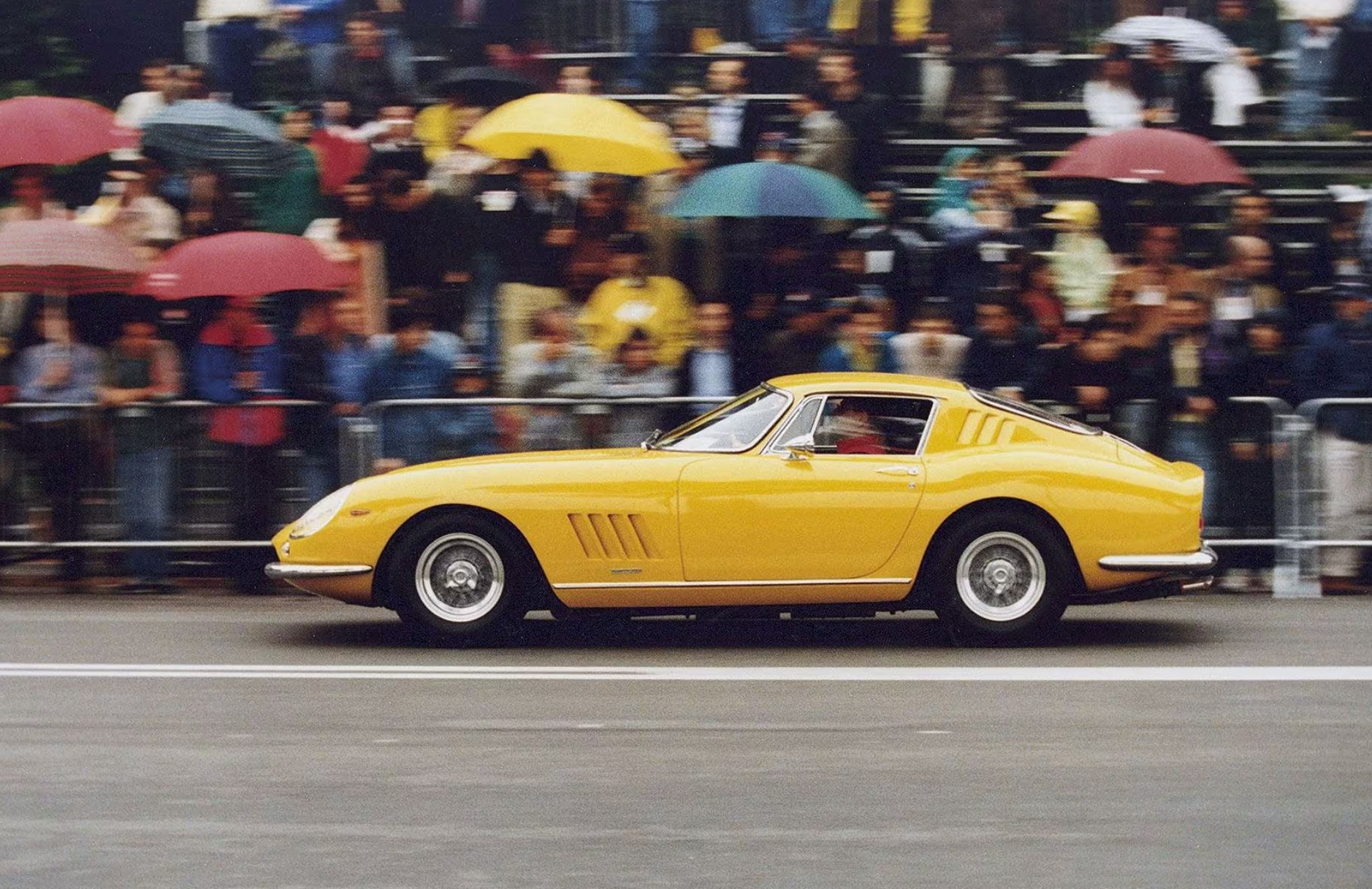
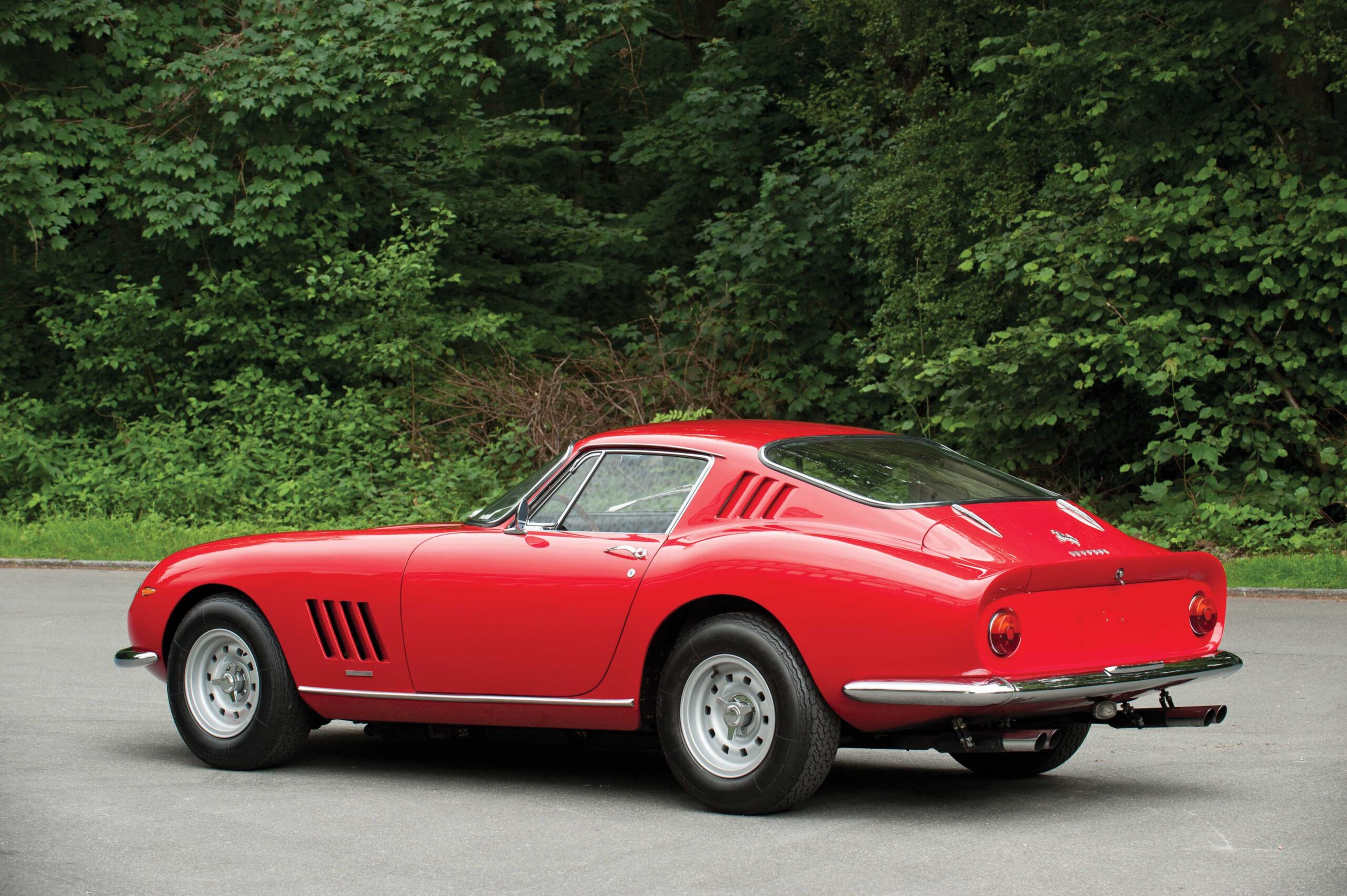
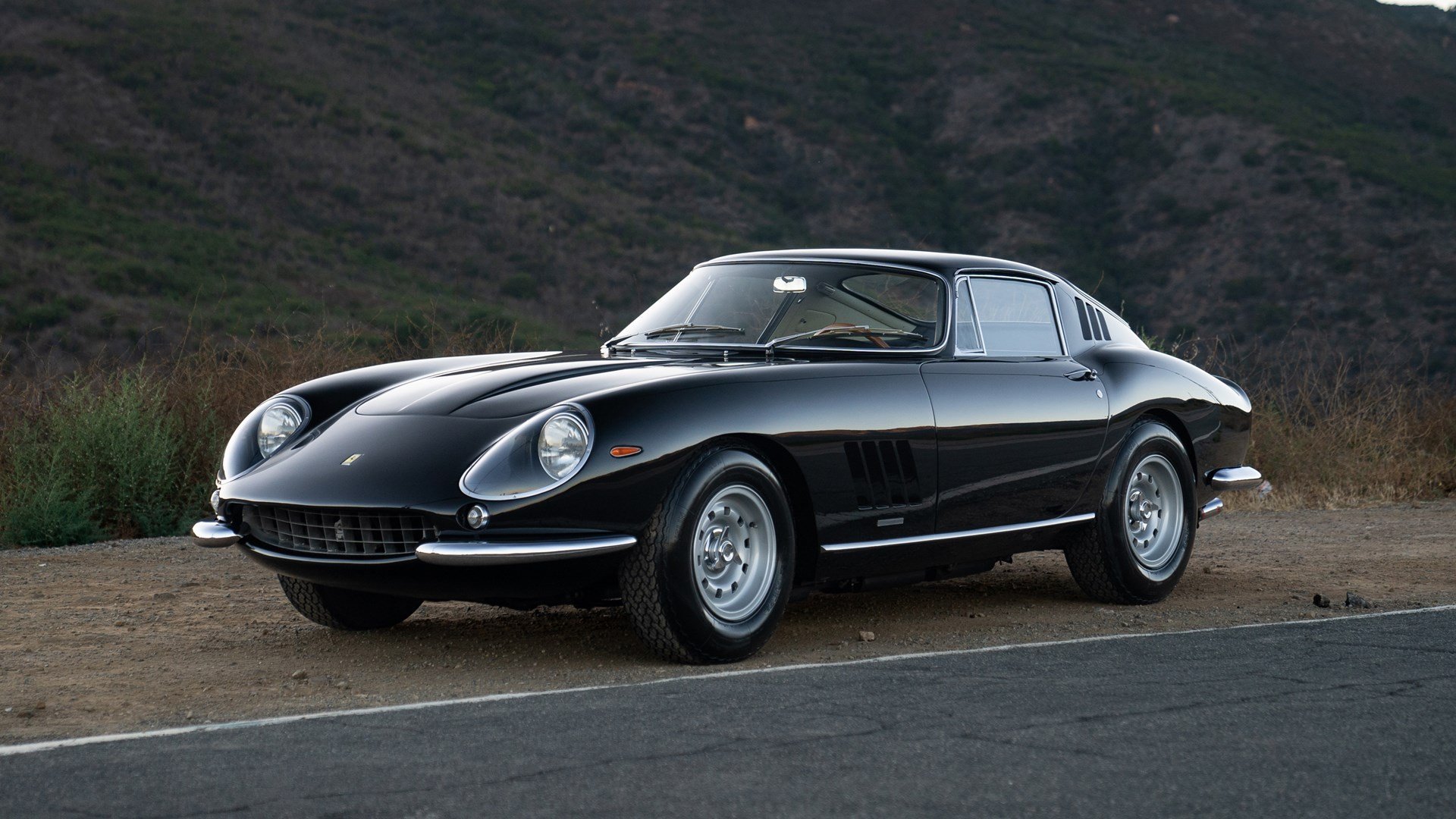
This jewel of an engine was mounted in the refined chassis of the “Long Nose” 275. By 1966, Ferrari had cured the aerodynamic instability of the early cars and, most importantly, solved the driveline vibration issues by installing a rigid torque tube connecting the engine and the rear-mounted transaxle. This created a solid backbone for the car, eliminating the whip of the propshaft and sharpening the throttle response. The fully independent suspension, with double wishbones at all four corners, was tuned to exploit the near-perfect weight distribution. Visually, the GTB/4 is a study in subtlety. It shares the seductive, muscular lines of the standard Long Nose 275—penned by Pininfarina and hand-crafted by Scaglietti in steel and aluminium—but is distinguished by a shallow, longitudinal bulge running down the center of the hood to accommodate the taller air cleaners of the quad-cam setup. It sits on the iconic Campagnolo “Starburst” alloy wheels, completing a silhouette that is widely regarded as one of the most beautiful in automotive history.
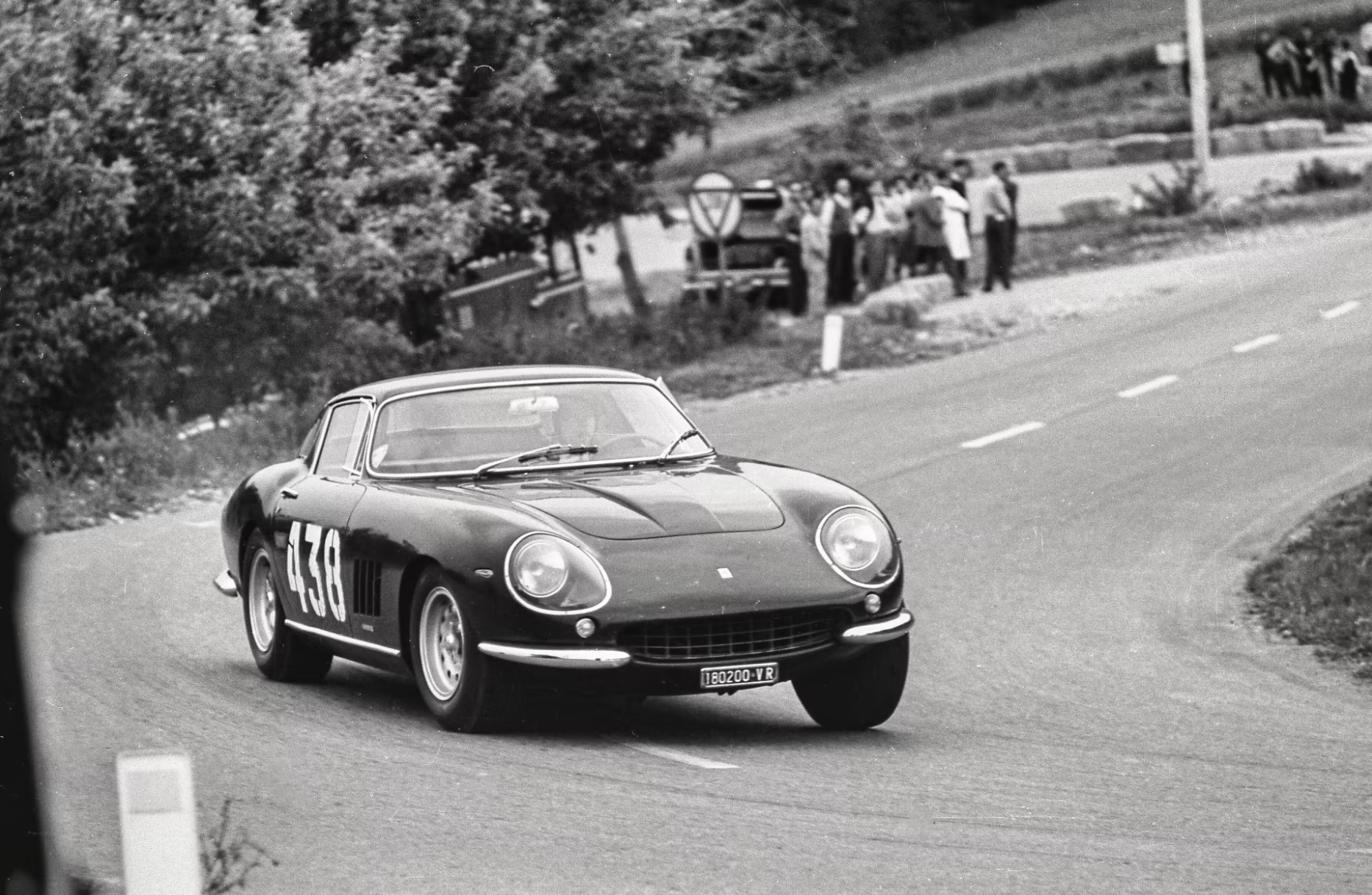
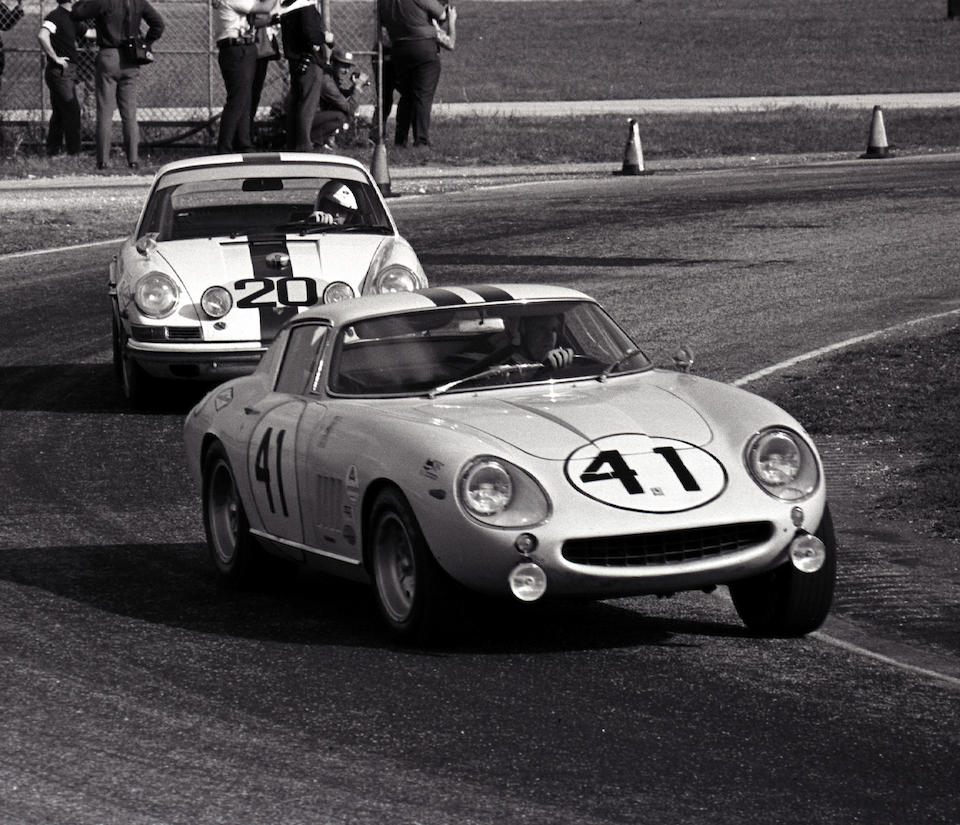
While the GTB/4 was primarily a road car, a Gran Turismo in the truest sense, its DNA was steeped in competition. It did not have a factory racing career like the 250 GTO, but it was campaigned by privateers who recognized the potential of its bulletproof engine and balanced chassis. A GTB/4 won the GT class at the 1967 24 Hours of Le Mans (entered by Scuderia Filipinetti), proving that even in “street” trim, it was capable of beating purpose-built racers. However, the car’s true legend was forged on the street and in the culture of the era. It was the car of choice for the ultimate connoisseur, most notably Steve McQueen. The “King of Cool” famously took delivery of a Nocciola (hazelnut) GTB/4 while filming Bullitt in San Francisco, later repainting it Chianti Red. McQueen’s association with the car cemented its status as the ultimate driver’s Ferrari—a machine that demanded skill to drive fast but rewarded it with a sensory experience unmatched by anything else on the road.
The legacy of the 1966 Ferrari 275 GTB/4 is monumental. It represents the “Goldilocks” moment of the classic V12 Ferrari lineage. It possesses the classic beauty and compact proportions of the 1960s cars, but offers the mechanical modernity—independent suspension, transaxle, torque tube, high-revving quad-cam power—that makes it genuinely usable in modern traffic. It laid the groundwork for the 365 GTB/4 Daytona, which would take the quad-cam concept and scale it up for the 1970s. Today, the GTB/4 is a blue-chip asset, commanding a significant premium over the two-cam models. It is revered not just for its rarity (only around 330 were built) or its value, but because it is arguably the most complete, most balanced, and most satisfying front-engined car Enzo Ferrari ever built.
Brand
Produced from
Portal
Vehicle category
Model line
Predecessor
Sucessor
Brand
Produced from
Portal
Vehicle category
Model line
Model generation
Predecessor
Sucessor
About this submodel
If the original 1964 Ferrari 275 GTB was the opening statement of a new era, the 1966 Ferrari 275 GTB/4 was the emphatic, thundering conclusion. Unveiled at the Paris Salon in October 1966, this machine was Maranello’s direct riposte to the insolence of Ferruccio Lamborghini. The tractor magnate from Sant’Agata had dared to introduce a quad-cam V12 in his 350 GT and 400 GT, challenging Ferrari’s engineering supremacy. Enzo Ferrari, a man who viewed technological stagnation as a personal insult, responded not with a clean-sheet design, but with the ultimate refinement of his transaxle Grand Tourer. The GTB/4 was not merely a facelift; it was the mechanical apotheosis of the front-engined V12 Berlinetta, a car that bridged the gap between the raw, dual-purpose racers of the 1950s and the high-speed heavyweights like the Daytona that would follow. It arrived into a market teeming with talent—the Jaguar E-Type was still a potent force, and the Maserati Ghibli was on the horizon—but the GTB/4 offered a pedigree and a mechanical sophistication that placed it in a league of its own.
The heart of the GTB/4, and the source of its numerical suffix, was the Tipo 226 engine. While it retained the 3.3-litre displacement of its predecessor, the cylinder heads were completely redesigned. For the first time in a series-production Ferrari road car, the V12 featured four overhead camshafts—two per bank—acting directly on the valves. This architecture, derived from the P-series sports prototypes, allowed for better breathing at high rpm and a more precise valvetrain. Crucially, the engine utilized a dry-sump lubrication system, a feature lifted straight from the racetrack. This huge 16-quart oil capacity ensured consistent lubrication under high-G cornering and allowed the engine to sit lower in the chassis, improving the center of gravity. Breathing through six Weber 40 DCN carburetors as standard—a spectacular sight when the bonnet is raised—the quad-cam V12 produced 300 bhp at 8,000 rpm. It was a masterpiece of flexibility, tractable in traffic yet screaming with a turbine-like ferocity as it approached the redline.
This jewel of an engine was mounted in the refined chassis of the “Long Nose” 275. By 1966, Ferrari had cured the aerodynamic instability of the early cars and, most importantly, solved the driveline vibration issues by installing a rigid torque tube connecting the engine and the rear-mounted transaxle. This created a solid backbone for the car, eliminating the whip of the propshaft and sharpening the throttle response. The fully independent suspension, with double wishbones at all four corners, was tuned to exploit the near-perfect weight distribution. Visually, the GTB/4 is a study in subtlety. It shares the seductive, muscular lines of the standard Long Nose 275—penned by Pininfarina and hand-crafted by Scaglietti in steel and aluminium—but is distinguished by a shallow, longitudinal bulge running down the center of the hood to accommodate the taller air cleaners of the quad-cam setup. It sits on the iconic Campagnolo “Starburst” alloy wheels, completing a silhouette that is widely regarded as one of the most beautiful in automotive history.
While the GTB/4 was primarily a road car, a Gran Turismo in the truest sense, its DNA was steeped in competition. It did not have a factory racing career like the 250 GTO, but it was campaigned by privateers who recognized the potential of its bulletproof engine and balanced chassis. A GTB/4 won the GT class at the 1967 24 Hours of Le Mans (entered by Scuderia Filipinetti), proving that even in “street” trim, it was capable of beating purpose-built racers. However, the car’s true legend was forged on the street and in the culture of the era. It was the car of choice for the ultimate connoisseur, most notably Steve McQueen. The “King of Cool” famously took delivery of a Nocciola (hazelnut) GTB/4 while filming Bullitt in San Francisco, later repainting it Chianti Red. McQueen’s association with the car cemented its status as the ultimate driver’s Ferrari—a machine that demanded skill to drive fast but rewarded it with a sensory experience unmatched by anything else on the road.
The legacy of the 1966 Ferrari 275 GTB/4 is monumental. It represents the “Goldilocks” moment of the classic V12 Ferrari lineage. It possesses the classic beauty and compact proportions of the 1960s cars, but offers the mechanical modernity—independent suspension, transaxle, torque tube, high-revving quad-cam power—that makes it genuinely usable in modern traffic. It laid the groundwork for the 365 GTB/4 Daytona, which would take the quad-cam concept and scale it up for the 1970s. Today, the GTB/4 is a blue-chip asset, commanding a significant premium over the two-cam models. It is revered not just for its rarity (only around 330 were built) or its value, but because it is arguably the most complete, most balanced, and most satisfying front-engined car Enzo Ferrari ever built.
Tech Specs
Discover the technical specifications
Tech Specs
Discover the technical specifications
Engine
01
03
Internal combustion engine
Configuration
Ferrari Colombo Tipo 226, V12 - 60º
Location
Front-mid, longitudinally mounted
Construction
Silumin alloy block and heads
Displacement (cc)
3,286 cc
Displacement (cu in)
200.5 cu in
Compression
9.5:1
Bore x Stroke
77.0 mm x 58.8 mm
Valvetrain
2 valves per cylinder, DOHC (4 overhead camshafts)
Fuel feed
6 x Weber 40 DCN/9, 17, or 18
Lubrication
Dry sump
Aspiration
Naturally aspirated
Output
Power (hp)
300 hp
Power (kW)
221 kW
Max power at
8,000 RPM
Torque (Nm)
294 Nm
Torque (ft lbs)
217 ft lbs
Max torque at
6,000 RPM
Drivetrain
02
03
Chassis
Type
Tubular ladder frame
Material
Steel
Body
Material
Steel with aluminium doors, hood, and trunk lid
Transmission
Gearbox
Ferrari 5-speed manual
Drive
Rear Wheel Drive
Suspension
Front
Independent, double wishbones, coil springs, Koni telescopic dampers, anti-roll bar
Rear
Independent, double wishbones, coil springs, Koni telescopic dampers, anti-roll bar
Steering
Type
Worm and roller
Brakes
Front
Dunlop solid discs (Girling on later models), vacuum assisted
Rear
Dunlop solid discs (Girling on later models), vacuum assisted
Wheels
Front
14" Campagnolo "Starburst" Alloy or Borrani Wire Wheels
Rear
14" Campagnolo "Starburst" Alloy or Borrani Wire Wheels
Tires
Front
205 VR 14
Rear
205 VR 14
Dimensions and performance
03
03
Dimensions
Lenght (mm)
4,410 mm
Lenght (in)
173.6 in
Width (mm)
1,725 mm
Width (in)
67.9 in
Height (mm)
1,200 mm
Height (in)
47.2 in
Wheelbase (mm)
2,400 mm
Wheelbase (in)
94.5 in
Weight (kg)
1,150 kg
Weight (lbs)
2,535 lbs
Performance
Power to weight
0.26 hp/kg
Top speed (km/h)
268 km/h
Top speed (mph)
166.5 mph
0-100 km/h (0-60 mph)
5.5 s
Submodels
Other variants of this model
Submodels