Jaguar E-Type 3.8 Group 3
Brand
Produced from
Portal
Vehicle category
Model line
Model generation
Predecessor
Sucessor
About this submodel
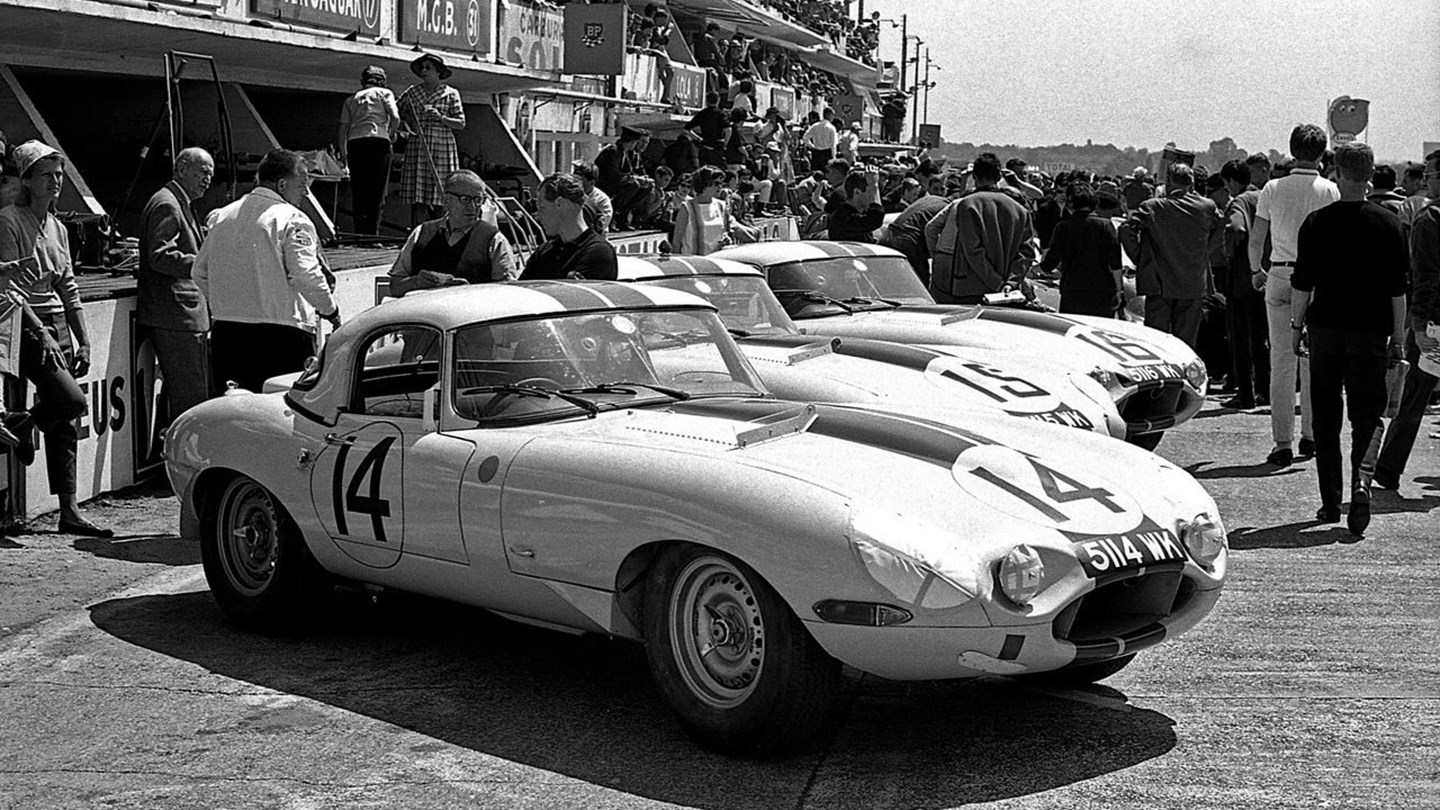
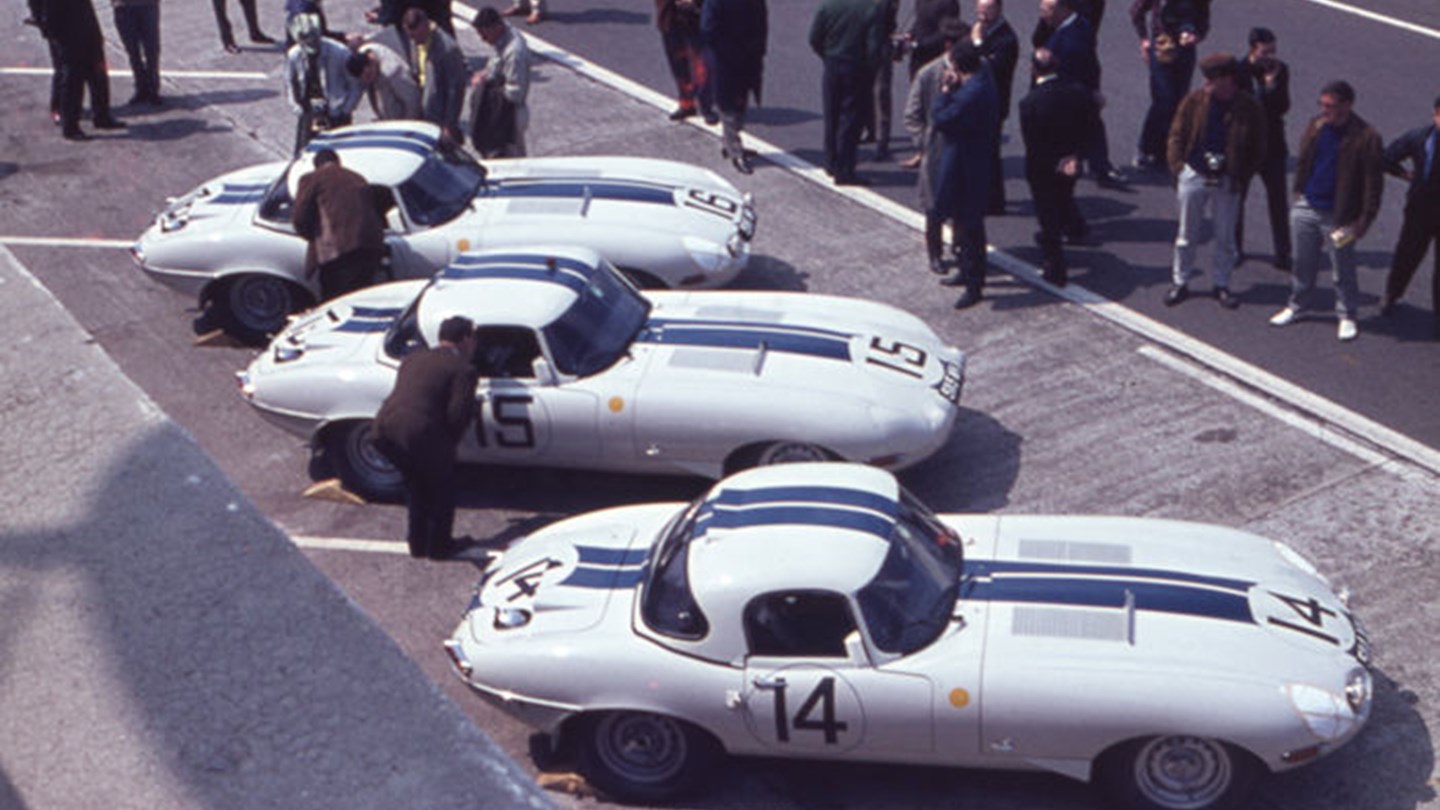
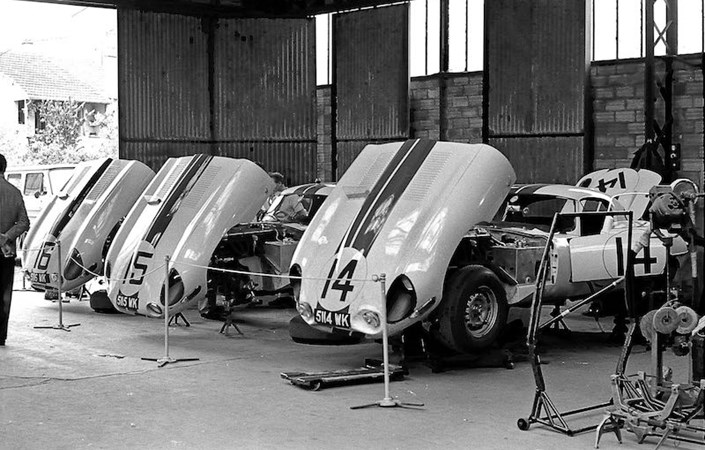
By 1966, the Jaguar E-Type had transitioned from a startling revelation to an established icon of the motoring landscape. While the showroom floors were occupied by the torque-rich, comfort-oriented 4.2-litre models introduced late in 1964, the racing paddocks of Europe and America told a different story. Here, in the cut-and-thrust world of FIA Group 3 Grand Touring, the earlier 3.8-litre engine remained the weapon of choice for the discerning privateer. The 1966 Jaguar E-Type 3.8 Group 3 represents a specific and fascinating niche in the car’s history: the steel-bodied, production-based racer. Unlike the factory-built “Lightweight” E-Types with their aluminium monocoques and fuel injection—which were essentially prototypes disguised as GT cars—the Group 3 E-Type was the honest, blue-collar hero. It was the machine that allowed wealthy amateurs and rising stars to battle the aristocratic Ferrari 275 GTB and the brutish Shelby Cobra 289 on a somewhat level playing field, relying on superior aerodynamics and independent suspension to counter the raw horsepower of its rivals.
From a technical standpoint, the Group 3 E-Type was a study in optimization within strict regulations. The chassis retained the standard production steel monocoque and front tubular spaceframe, making it significantly heavier than the exotic Lightweights or the Ferrari GTOs. However, the inherent rigidity of Malcolm Sayer’s design meant the platform was more than capable of handling increased cornering loads. The suspension, utilizing the famous independent rear setup with inboard brakes, was stiffened with thicker anti-roll bars, uprated torsion bars, and adjustable Koni dampers, transforming the car from a supple grand tourer into a flat-cornering track weapon.
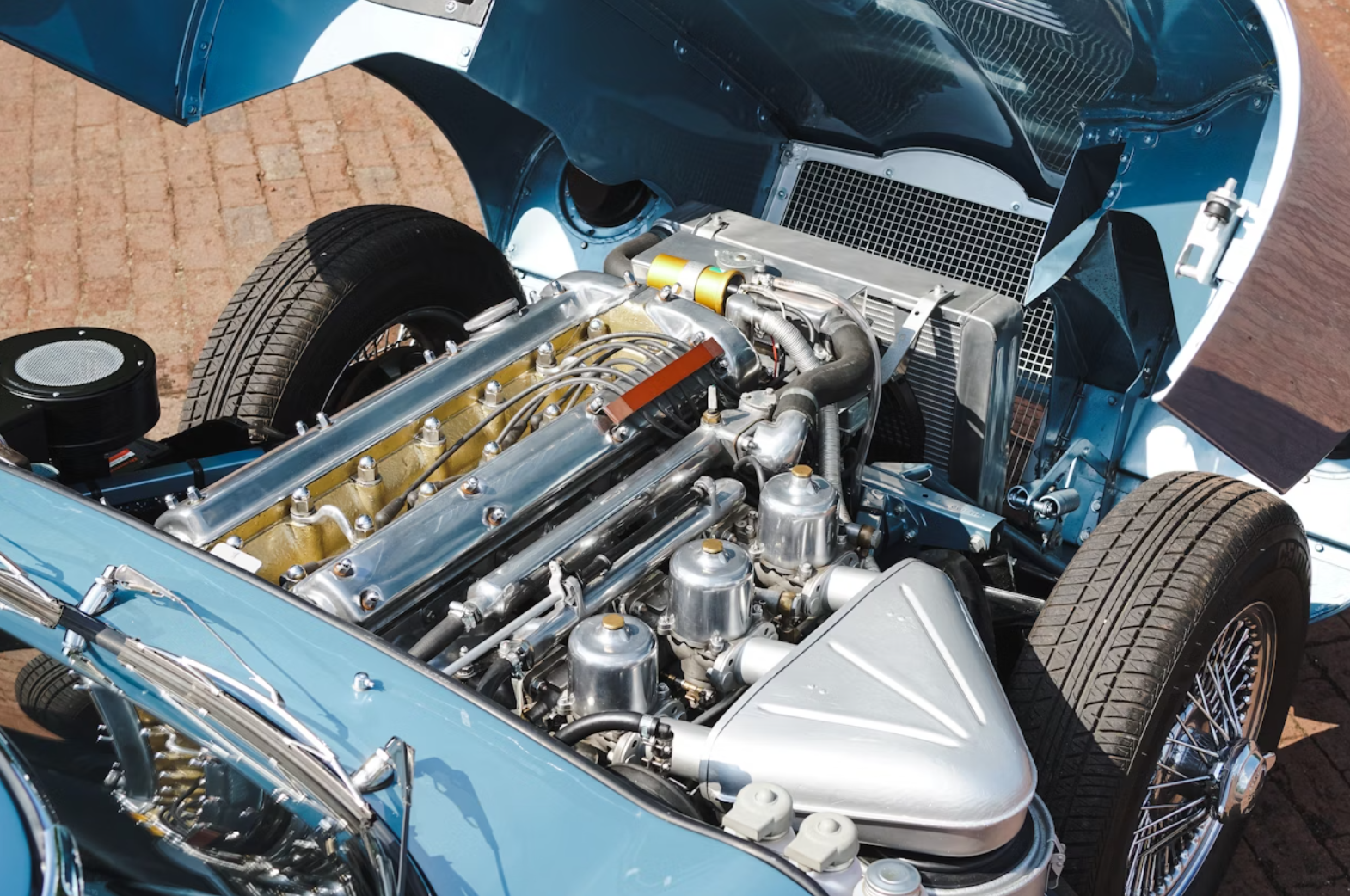
The decision to campaign the 3.8-litre XK straight-six over the newer 4.2-litre unit in 1966 was purely a matter of physics. The 3.8-litre block, with its “square” cylinder dimensions, was far happier at high revolutions than the long-stroke 4.2, which was designed for low-end torque. In Group 3 tune, with polished ports, high-compression pistons, and aggressive camshafts, the 3.8 could scream to 6,500 rpm and beyond, producing a reliable 300 brake horsepower. While the factory cars experimented with Lucas mechanical fuel injection, the Group 3 regulations often tethered these privateer cars to triple Weber 45 DCOE carburetors or highly modified SU units, creating a visceral, gasping induction roar that is synonymous with historic racing today. Braking remained the E-Type’s Achilles’ heel; the Dunlop discs, while advanced for 1961, struggled to shed the heat generated by the steel car’s weight during endurance events, often necessitating careful management by the driver.
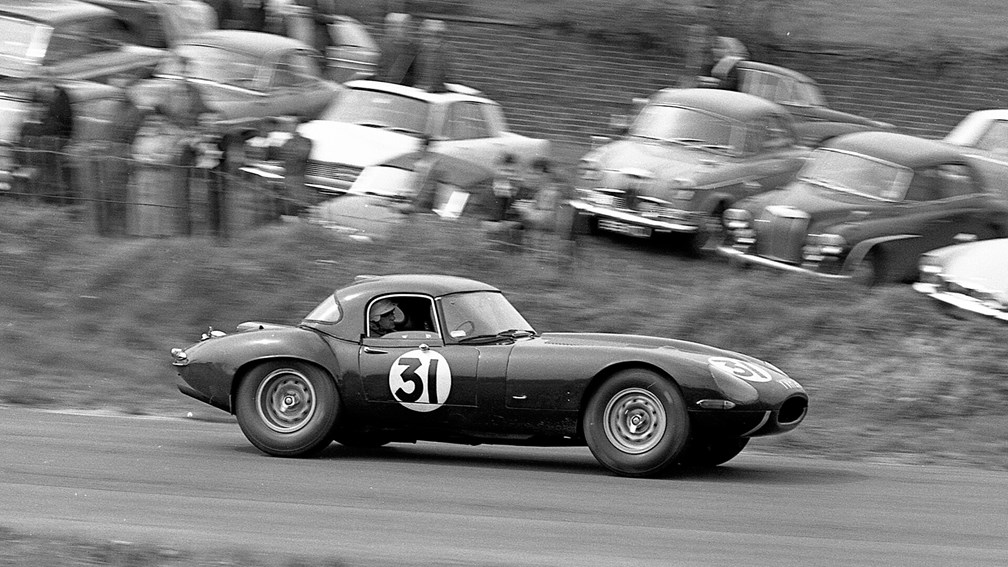
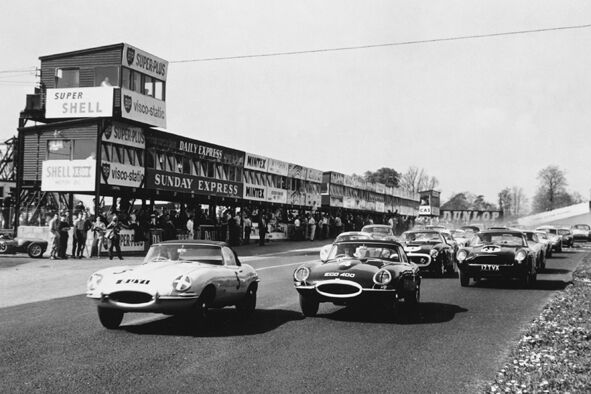
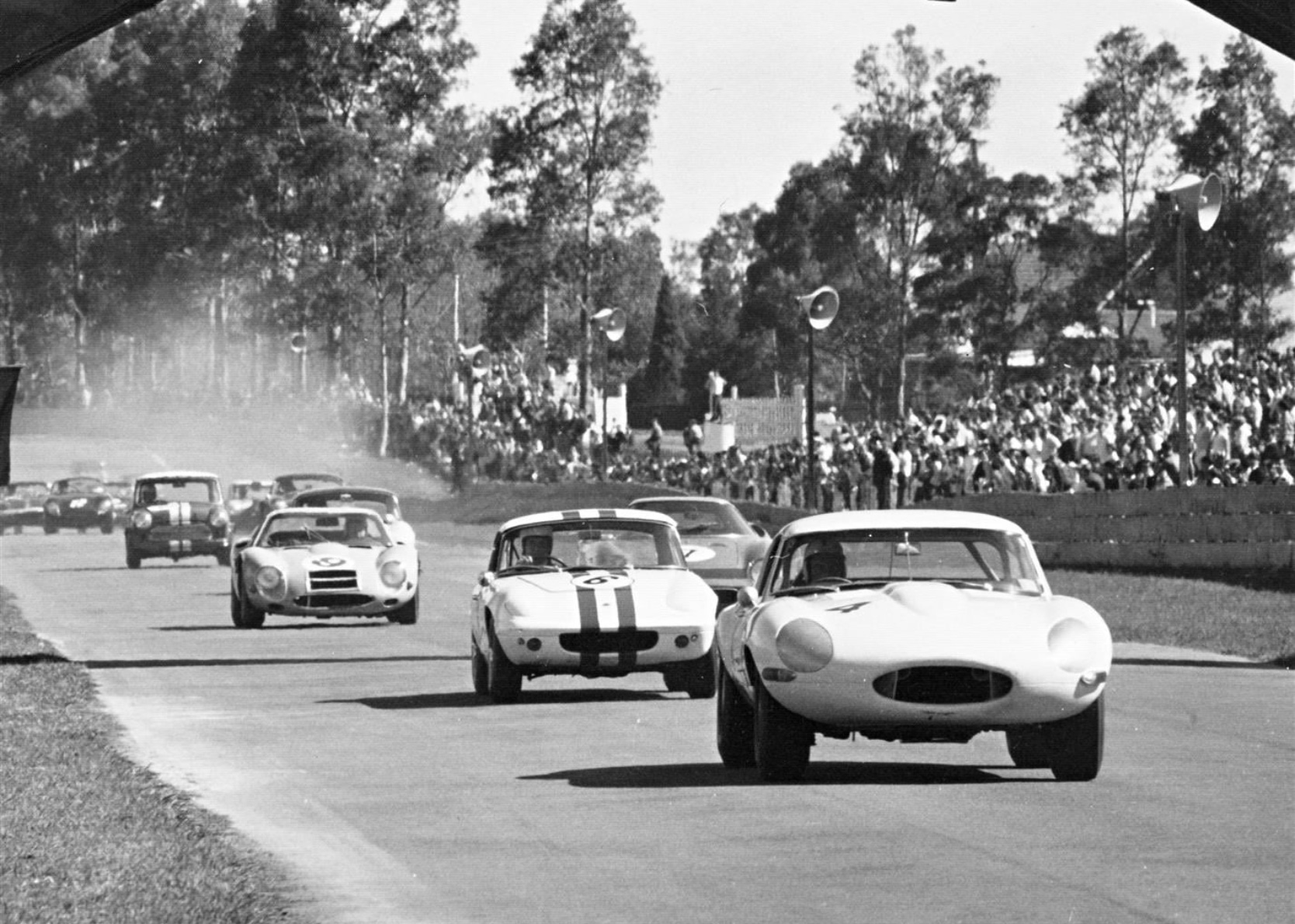
The competitive history of the steel-bodied 3.8 Group 3 car is a testament to durability and versatility. While the Lightweights hunted overall wins at Le Mans, the Group 3 cars were the backbone of national series like the British Autosport Championship and SCCA C-Production in the United States. In 1966, despite the arrival of mid-engined machinery, a well-driven E-Type was still a formidable force. They were ubiquitous at club meetings at Goodwood, Oulton Park, and Silverstone, often driven to the track, raced hard, and driven home—the very definition of a Grand Tourer. Drivers found that while the Cobra would vanish on the straights, the E-Type’s sophisticated rear suspension allowed it to carry significantly more speed through complex sections like Woodcote or Becketts. It was a car that rewarded finesse; a driver who could manage the weight transfer and preserve the brakes could harass much more expensive machinery.
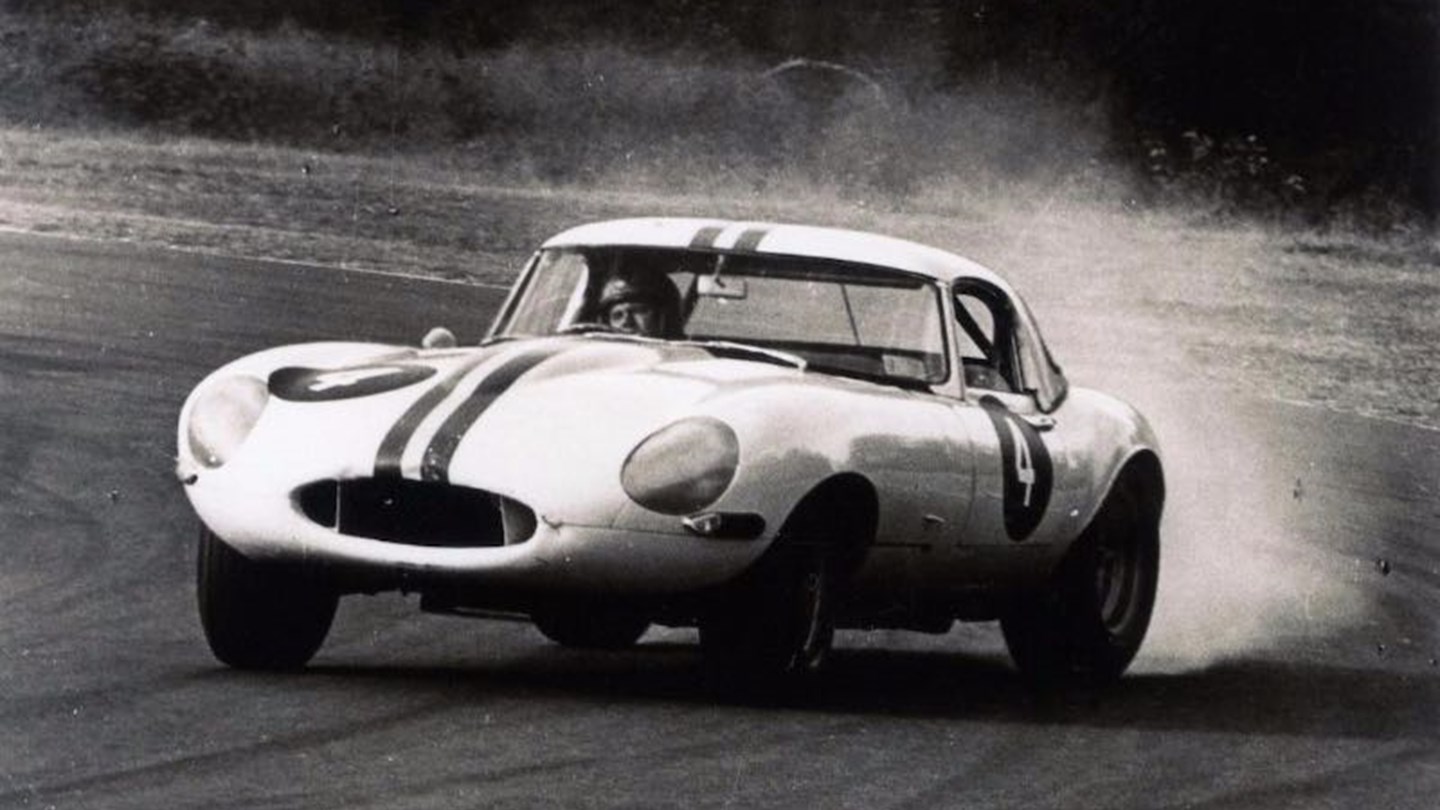
Culturally, the racing E-Type maintained the model’s “cool” factor long after the initial shock of the launch had faded. It bridged the gap between the road car and the race car in a way that modern vehicles simply do not. A spectator could watch a Group 3 E-Type sliding through a corner at Brands Hatch and see a direct, tangible link to the car sitting in their driveway. This connection fortified the E-Type’s reputation not just as a pretty face, but as a genuine performance machine.
The legacy of the 1966 Jaguar E-Type 3.8 Group 3 is one of purity. It represents the E-Type before it was softened by federal regulations, bloated by V12 engines, or adorned with heavy chrome bumpers. It was the final stand of the straight-six as a frontline racing engine for Jaguar. While the V12 Series 3 would later find success in Group 44 and TWR hands, the 3.8 Group 3 remains the archetypal historic racer—a beautiful, noisy, sliding sculpture that proved Sir William Lyons’ masterpiece was as effective on the stopwatch as it was on the eye. It occupies a place in the pantheon as the “everyman’s exotic,” the car that proved you didn’t need an Italian surname or a royal title to go racing in style.
Brand
Produced from
Portal
Vehicle category
Model line
Model generation
Predecessor
Sucessor
Brand
Produced from
Portal
Vehicle category
Model line
Model generation
Predecessor
Sucessor
About this submodel
By 1966, the Jaguar E-Type had transitioned from a startling revelation to an established icon of the motoring landscape. While the showroom floors were occupied by the torque-rich, comfort-oriented 4.2-litre models introduced late in 1964, the racing paddocks of Europe and America told a different story. Here, in the cut-and-thrust world of FIA Group 3 Grand Touring, the earlier 3.8-litre engine remained the weapon of choice for the discerning privateer. The 1966 Jaguar E-Type 3.8 Group 3 represents a specific and fascinating niche in the car’s history: the steel-bodied, production-based racer. Unlike the factory-built “Lightweight” E-Types with their aluminium monocoques and fuel injection—which were essentially prototypes disguised as GT cars—the Group 3 E-Type was the honest, blue-collar hero. It was the machine that allowed wealthy amateurs and rising stars to battle the aristocratic Ferrari 275 GTB and the brutish Shelby Cobra 289 on a somewhat level playing field, relying on superior aerodynamics and independent suspension to counter the raw horsepower of its rivals.
From a technical standpoint, the Group 3 E-Type was a study in optimization within strict regulations. The chassis retained the standard production steel monocoque and front tubular spaceframe, making it significantly heavier than the exotic Lightweights or the Ferrari GTOs. However, the inherent rigidity of Malcolm Sayer’s design meant the platform was more than capable of handling increased cornering loads. The suspension, utilizing the famous independent rear setup with inboard brakes, was stiffened with thicker anti-roll bars, uprated torsion bars, and adjustable Koni dampers, transforming the car from a supple grand tourer into a flat-cornering track weapon.
The decision to campaign the 3.8-litre XK straight-six over the newer 4.2-litre unit in 1966 was purely a matter of physics. The 3.8-litre block, with its “square” cylinder dimensions, was far happier at high revolutions than the long-stroke 4.2, which was designed for low-end torque. In Group 3 tune, with polished ports, high-compression pistons, and aggressive camshafts, the 3.8 could scream to 6,500 rpm and beyond, producing a reliable 300 brake horsepower. While the factory cars experimented with Lucas mechanical fuel injection, the Group 3 regulations often tethered these privateer cars to triple Weber 45 DCOE carburetors or highly modified SU units, creating a visceral, gasping induction roar that is synonymous with historic racing today. Braking remained the E-Type’s Achilles’ heel; the Dunlop discs, while advanced for 1961, struggled to shed the heat generated by the steel car’s weight during endurance events, often necessitating careful management by the driver.
The competitive history of the steel-bodied 3.8 Group 3 car is a testament to durability and versatility. While the Lightweights hunted overall wins at Le Mans, the Group 3 cars were the backbone of national series like the British Autosport Championship and SCCA C-Production in the United States. In 1966, despite the arrival of mid-engined machinery, a well-driven E-Type was still a formidable force. They were ubiquitous at club meetings at Goodwood, Oulton Park, and Silverstone, often driven to the track, raced hard, and driven home—the very definition of a Grand Tourer. Drivers found that while the Cobra would vanish on the straights, the E-Type’s sophisticated rear suspension allowed it to carry significantly more speed through complex sections like Woodcote or Becketts. It was a car that rewarded finesse; a driver who could manage the weight transfer and preserve the brakes could harass much more expensive machinery.
Culturally, the racing E-Type maintained the model’s “cool” factor long after the initial shock of the launch had faded. It bridged the gap between the road car and the race car in a way that modern vehicles simply do not. A spectator could watch a Group 3 E-Type sliding through a corner at Brands Hatch and see a direct, tangible link to the car sitting in their driveway. This connection fortified the E-Type’s reputation not just as a pretty face, but as a genuine performance machine.
The legacy of the 1966 Jaguar E-Type 3.8 Group 3 is one of purity. It represents the E-Type before it was softened by federal regulations, bloated by V12 engines, or adorned with heavy chrome bumpers. It was the final stand of the straight-six as a frontline racing engine for Jaguar. While the V12 Series 3 would later find success in Group 44 and TWR hands, the 3.8 Group 3 remains the archetypal historic racer—a beautiful, noisy, sliding sculpture that proved Sir William Lyons’ masterpiece was as effective on the stopwatch as it was on the eye. It occupies a place in the pantheon as the “everyman’s exotic,” the car that proved you didn’t need an Italian surname or a royal title to go racing in style.
Tech Specs
Discover the technical specifications
Tech Specs
Discover the technical specifications
Engine
01
03
Internal combustion engine
Configuration
Jaguar XK "Wide Angle", Inline-6
Location
Front, longitudinally mounted
Construction
Cast iron block, Aluminium alloy head
Displacement (cc)
3,781 cc
Displacement (cu in)
230.7 cu in
Compression
11.0:1
Bore x Stroke
87.0 mm x 106.0 mm
Valvetrain
2 valves per cylinder, DOHC
Fuel feed
3 x Weber 45 DCOE carburetors
Lubrication
Wet sump or Dry Sump (Optional)
Aspiration
Naturally aspirated
Output
Power (hp)
~300 hp
Power (kW)
~224 kW
Max power at
6,000 RPM
Torque (Nm)
~360 Nm
Torque (ft lbs)
~270 ft lbs
Max torque at
4,500 RPM
Drivetrain
02
03
Chassis
Type
Monocoque tub with front tubular subframe
Material
Steel
Body
Material
Steel
Transmission
Gearbox
Jaguar 4-speed manual
Drive
Rear Wheel Drive (Salisbury Limited Slip Differential)
Suspension
Front
Independent, double wishbones, torsion bars, telescopic dampers, anti-roll bar
Rear
Independent, lower wishbones, driveshaft as upper link, radius arms, twin coil springs over dampers
Steering
Type
Rack and pinion
Brakes
Front
Dunlop solid discs Ø280 mm
Rear
Dunlop solid discs Ø254 mm
Wheels
Front
6.5" x 15" or 7" x 15"
Rear
6.5" x 15" or 7" x 15"
Tires
Front
6.00 L 15
Rear
6.50 L 15
Dimensions and performance
03
03
Dimensions
Lenght (mm)
4,455 mm
Lenght (in)
175.4 in
Width (mm)
1,657 mm
Width (in)
65.2 in
Height (mm)
1,220 mm
Height (in)
48.0 in
Wheelbase (mm)
2,438 mm
Wheelbase (in)
96.0 in
Weight (kg)
~1,150 kg
Weight (lbs)
~2,535 lbs
Performance
Power to weight
~0.26 hp/kg
Top speed (km/h)
~255 km/h
Top speed (mph)
~158 mph
0-100 km/h (0-60 mph)
~5.8 s
Submodels
Other variants of this model
Submodels