Chevrolet Corvette Stingray L88 ‘Filipinetti’ Group 3
Brand
Produced from
Portal
Vehicle category
Model line
Model generation
Predecessor
Sucessor
About this submodel
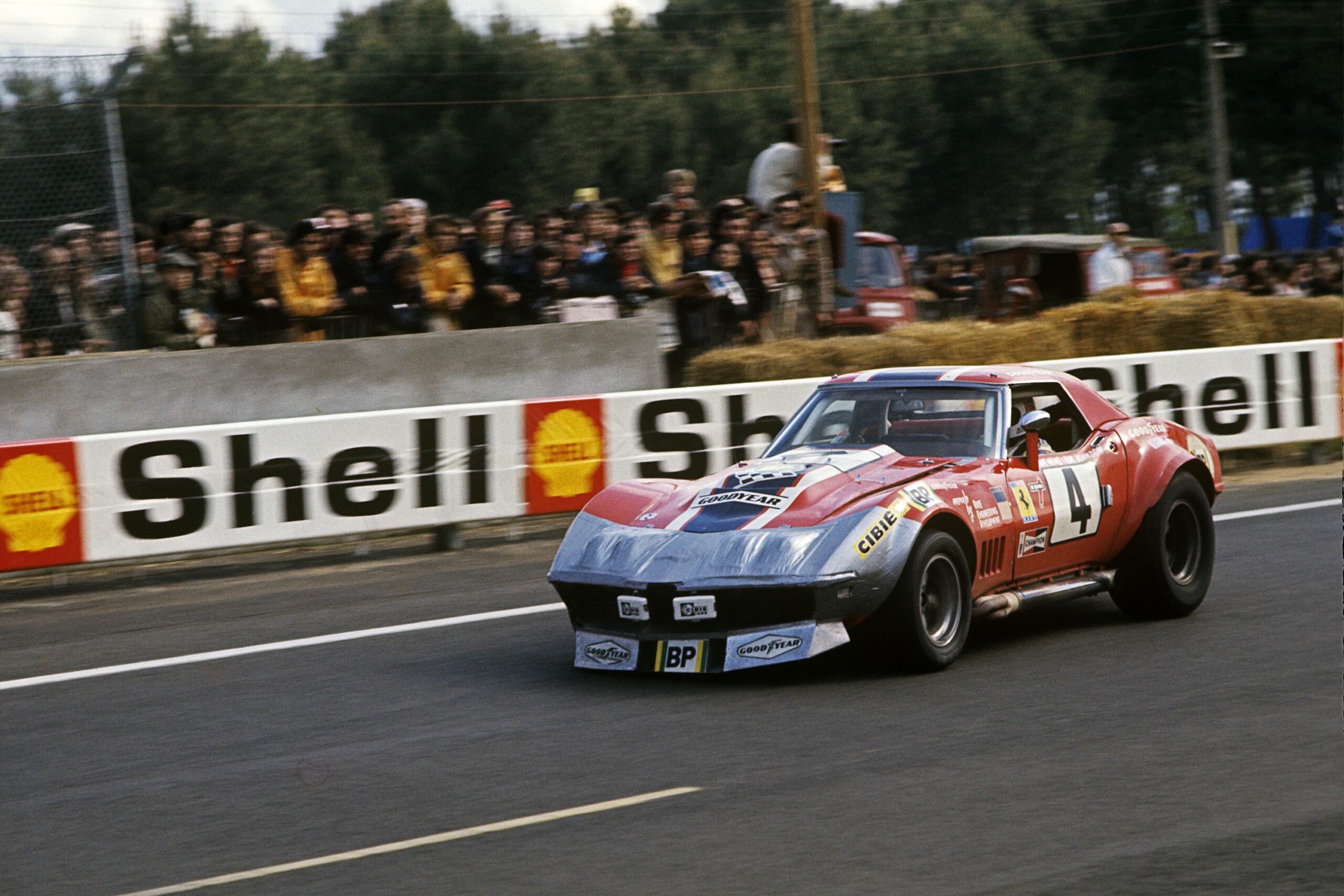
In the late 1960s, the 24 Hours of Le Mans was a theatre of war dominated by European aristocracy. Porsche, Ford, and Ferrari were the titans, battling for overall supremacy with sports prototypes. But in the GT ranks, a loud, brash, and unapologetically American insurgency was brewing. While the domestic SCCA tracks were teeming with Corvettes, seeing one at La Sarthe was a rarity, a spectacle of displacement against finesse. The 1968 Chevrolet Corvette L88 ‘Filipinetti’ was the spearhead of this invasion. It was not a factory effort—General Motors was officially out of racing—but a weapon forged by the legendary Scuderia Filipinetti. This Swiss team, more famous for running Ferraris and Ford GT40s, saw the potential in the new C3 Stingray’s brute force. They took Zora Arkus-Duntov’s underground racing special, the L88, and prepared it to fight the Porsches on their home turf.
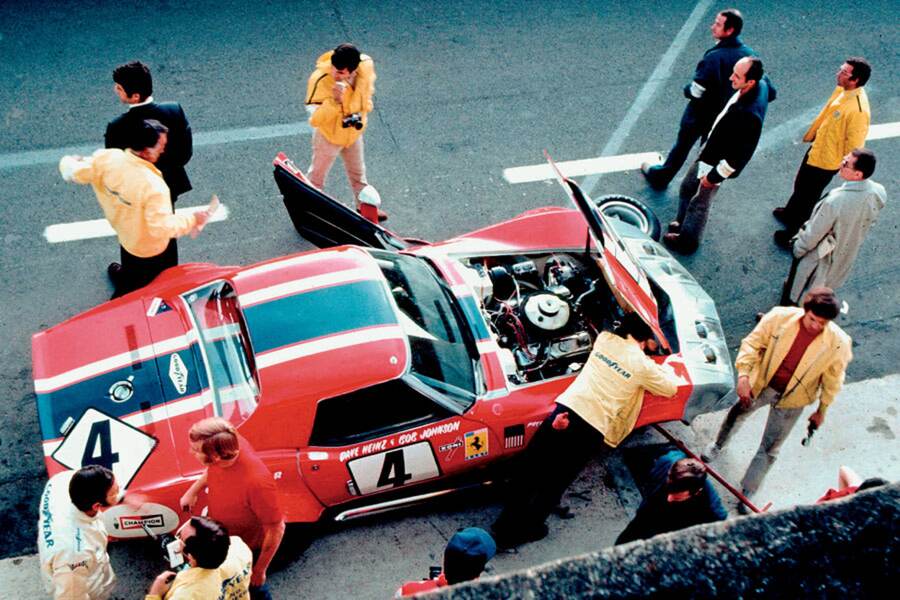
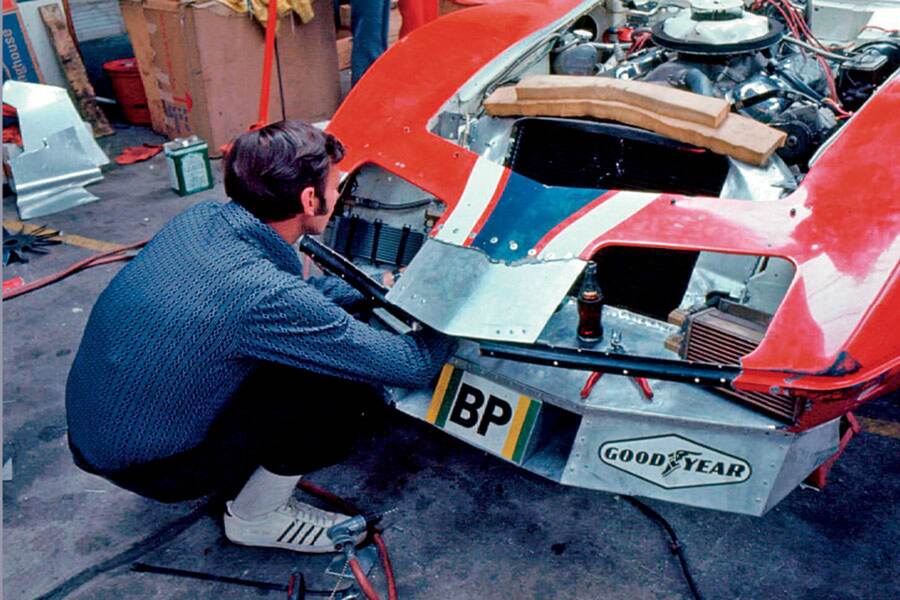
The car itself was a beast, a seemingly crude hammer in a field of scalpels. Visually, it was the brand-new 1968 C3 body style, the “Coke-bottle” shape that had just hit showrooms, but stripping away the chrome bumpers and adding recessed driving lights gave it a menacing, endurance-ready visage. Under the fibreglass hood beat the heart of a monster: the L88 427 cubic-inch (7.0-litre) V8. This was no ordinary big block. It featured aluminium heads, a solid-lifter camshaft, a massive Holley 850 CFM carburettor, and a 12.5:1 compression ratio. Factory rated at a laughable 430 horsepower to fool insurance agents, in race trim, with open headers, it churned out nearly 600 horsepower. This power was sent through a Muncie M22 “Rock Crusher” 4-speed gearbox to a heavy-duty rear end. The suspension was stiffened, the brakes were the heavy-duty J56 option, and it rode on wide racing slicks. It was heavy, it was thirsty, and it was brutally fast in a straight line, capable of over 190 mph on the Mulsanne Straight, shaking the trees as it passed.
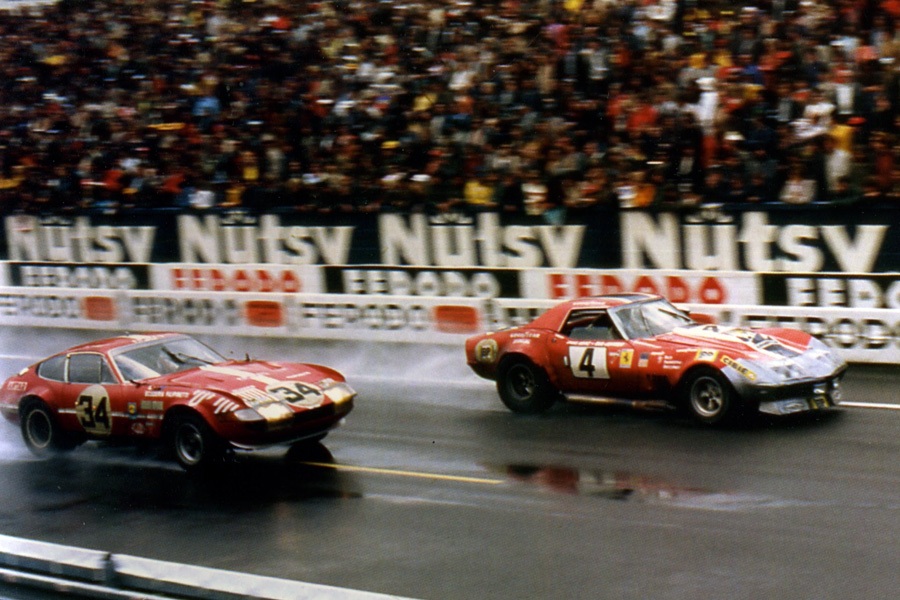
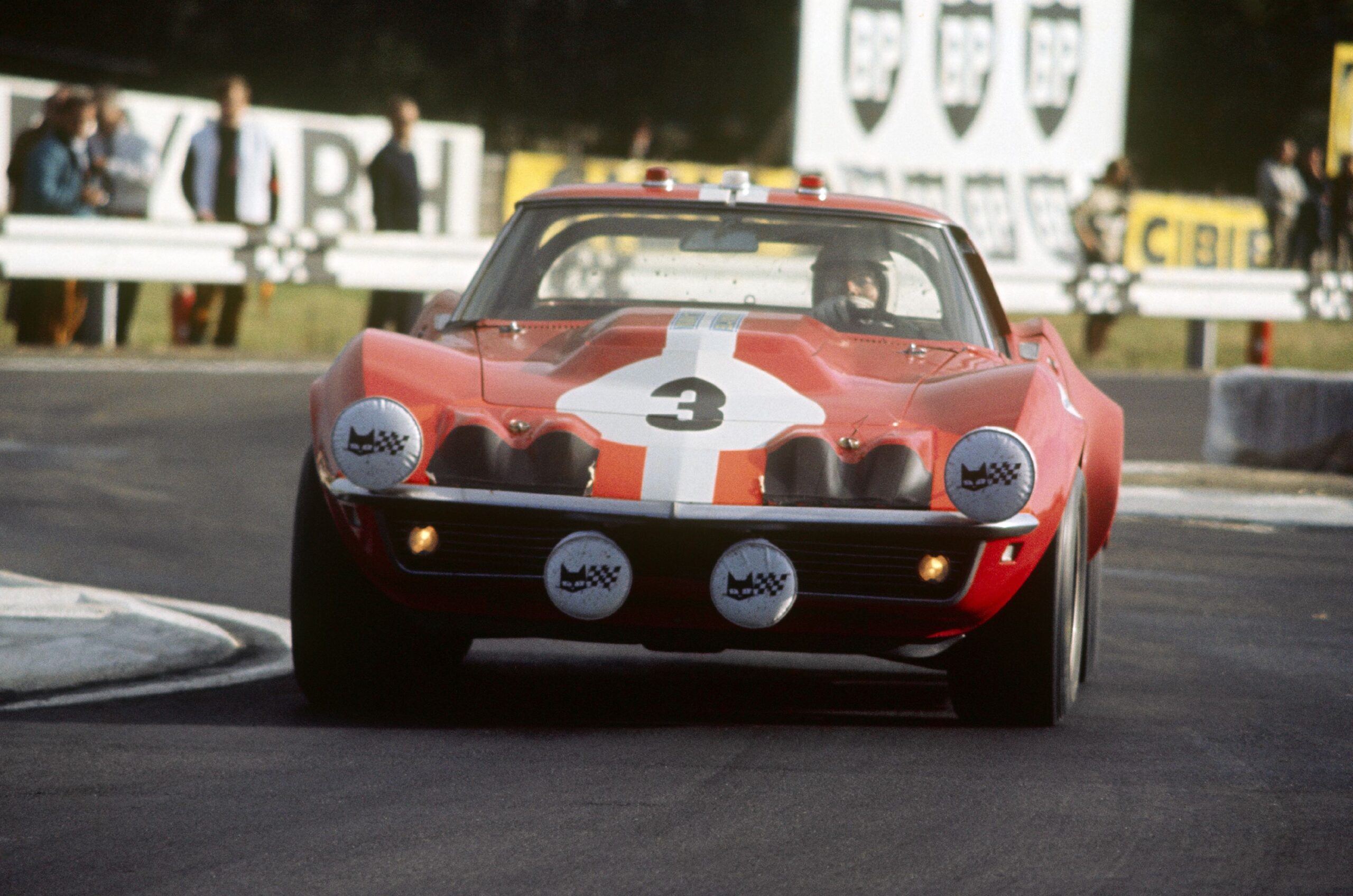
The Filipinetti Corvette’s debut at the 1968 24 Hours of Le Mans is the stuff of legend and heartbreak. Painted in the team’s signature red with a white stripe, it stood out vividly against the grey French track. Driven by the Swiss duo of Henri Greder and Umberto Maglioli, the car was a revelation in the GT class (Group 3). It used its massive torque to thunder out of corners, and its top-end power to devour the long straights. For hour after hour, the American leviathan led the GT category, holding off the swarm of agile Porsche 911s. It looked set for a historic class victory, proving that the Corvette was not just a drag racer, but a genuine endurance machine. However, Le Mans is unforgiving. In the 6th hour, while leading the GT class and running as high as 14th overall, the engine—stressed by the unique, low-octane fuel supplied at the track that year—succumbed to a melted piston. The car retired, but the point had been made. The Corvette could lead at La Sarthe.
The legacy of the Filipinetti L88 is far greater than its DNF result suggests. It was the catalyst. Henri Greder, the driver, was so impressed by the car’s potential that he would go on to form Greder Racing, campaigning Corvettes at Le Mans for the next seven years, becoming the de facto flag-bearer for Chevrolet in Europe. This specific car proved that the heavy, big-block American sports car could go toe-to-toe with the European elite on the most difficult circuit in the world. It paved the way for the Greenwood monsters that followed and established a lineage of Corvette at Le Mans that continues directly to the modern C8.R. It remains a symbol of the trans-Atlantic bridge, a Swiss-run, American-built hot rod that terrified the establishment.
Brand
Produced from
Portal
Vehicle category
Model line
Model generation
Predecessor
Sucessor
Brand
Produced from
Portal
Vehicle category
Model line
Model generation
Predecessor
Sucessor
About this submodel
In the late 1960s, the 24 Hours of Le Mans was a theatre of war dominated by European aristocracy. Porsche, Ford, and Ferrari were the titans, battling for overall supremacy with sports prototypes. But in the GT ranks, a loud, brash, and unapologetically American insurgency was brewing. While the domestic SCCA tracks were teeming with Corvettes, seeing one at La Sarthe was a rarity, a spectacle of displacement against finesse. The 1968 Chevrolet Corvette L88 ‘Filipinetti’ was the spearhead of this invasion. It was not a factory effort—General Motors was officially out of racing—but a weapon forged by the legendary Scuderia Filipinetti. This Swiss team, more famous for running Ferraris and Ford GT40s, saw the potential in the new C3 Stingray’s brute force. They took Zora Arkus-Duntov’s underground racing special, the L88, and prepared it to fight the Porsches on their home turf.
The car itself was a beast, a seemingly crude hammer in a field of scalpels. Visually, it was the brand-new 1968 C3 body style, the “Coke-bottle” shape that had just hit showrooms, but stripping away the chrome bumpers and adding recessed driving lights gave it a menacing, endurance-ready visage. Under the fibreglass hood beat the heart of a monster: the L88 427 cubic-inch (7.0-litre) V8. This was no ordinary big block. It featured aluminium heads, a solid-lifter camshaft, a massive Holley 850 CFM carburettor, and a 12.5:1 compression ratio. Factory rated at a laughable 430 horsepower to fool insurance agents, in race trim, with open headers, it churned out nearly 600 horsepower. This power was sent through a Muncie M22 “Rock Crusher” 4-speed gearbox to a heavy-duty rear end. The suspension was stiffened, the brakes were the heavy-duty J56 option, and it rode on wide racing slicks. It was heavy, it was thirsty, and it was brutally fast in a straight line, capable of over 190 mph on the Mulsanne Straight, shaking the trees as it passed.
The Filipinetti Corvette’s debut at the 1968 24 Hours of Le Mans is the stuff of legend and heartbreak. Painted in the team’s signature red with a white stripe, it stood out vividly against the grey French track. Driven by the Swiss duo of Henri Greder and Umberto Maglioli, the car was a revelation in the GT class (Group 3). It used its massive torque to thunder out of corners, and its top-end power to devour the long straights. For hour after hour, the American leviathan led the GT category, holding off the swarm of agile Porsche 911s. It looked set for a historic class victory, proving that the Corvette was not just a drag racer, but a genuine endurance machine. However, Le Mans is unforgiving. In the 6th hour, while leading the GT class and running as high as 14th overall, the engine—stressed by the unique, low-octane fuel supplied at the track that year—succumbed to a melted piston. The car retired, but the point had been made. The Corvette could lead at La Sarthe.
The legacy of the Filipinetti L88 is far greater than its DNF result suggests. It was the catalyst. Henri Greder, the driver, was so impressed by the car’s potential that he would go on to form Greder Racing, campaigning Corvettes at Le Mans for the next seven years, becoming the de facto flag-bearer for Chevrolet in Europe. This specific car proved that the heavy, big-block American sports car could go toe-to-toe with the European elite on the most difficult circuit in the world. It paved the way for the Greenwood monsters that followed and established a lineage of Corvette at Le Mans that continues directly to the modern C8.R. It remains a symbol of the trans-Atlantic bridge, a Swiss-run, American-built hot rod that terrified the establishment.
Tech Specs
Discover the technical specifications
Tech Specs
Discover the technical specifications
Engine
01
03
Internal combustion engine
Configuration
Chevrolet Big Block 427 L88, V8 - 90º
Location
Front-mid, longitudinally mounted
Construction
Cast iron block, aluminium cylinder head
Displacement (cc)
6,998 cc
Displacement (cu in)
427.0 cu in
Compression
12.5:1
Bore x Stroke
108.0 mm x 95.5 mm
Valvetrain
2 valves per cylinder, OHV
Fuel feed
1 x Holley 850 CFM 4-barrel carburetor
Lubrication
Wet sump
Aspiration
Naturally aspirated
Output
Power (hp)
550 hp
Power (kW)
410 kW
Max power at
6,400 RPM
Torque (Nm)
637 Nm
Torque (ft lbs)
470 ft lbs
Max torque at
5,200 RPM
Drivetrain
02
03
Chassis
Type
Ladder frame (frame with crossmembers)
Material
Steel
Body
Material
Fibreglass
Transmission
Gearbox
Muncie M22 "Rock Crusher", 4-speed manual
Drive
Rear Wheel Drive
Suspension
Front
Independent, unequal length A-arms, coil springs, telescopic dampers, anti-roll bar
Rear
Independent, trailing arms, transverse leaf spring, telescopic dampers, anti-roll bar
Steering
Type
Recirculating ball
Brakes
Front
J56 Heavy Duty ventilated discs Ø298 mm, 4-piston calipers
Rear
J56 Heavy Duty ventilated discs Ø298 mm, 4-piston calipers
Wheels
Front
15" Magnesium Minilite or Reinforced Steel
Rear
15" Magnesium Minilite or Reinforced Steel
Tires
Front
9.20 x 15 (Racing Slicks, typically Firestone or Goodyear)
Rear
9.20 x 15 (Racing Slicks, typically Firestone or Goodyear)
Dimensions and performance
03
03
Dimensions
Lenght (mm)
4,636 mm
Lenght (in)
182.5 in
Width (mm)
1,753 mm
Width (in)
69.0 in
Height (mm)
1,214 mm
Height (in)
47.8 in
Wheelbase (mm)
2,489 mm
Wheelbase (in)
98.0 in
Weight (kg)
1,380 kg
Weight (lbs)
3,042 lbs
Performance
Power to weight
0.40 hp/kg
Top speed (km/h)
307 km/h
Top speed (mph)
191 mph
0-100 km/h (0-60 mph)
~4.2 s
Submodels
Other variants of this model
Submodels