Chevron B16 Ford Cosworth FVA
Brand
Produced from
Portal
Model line
Predecessor
Sucessor
About this submodel
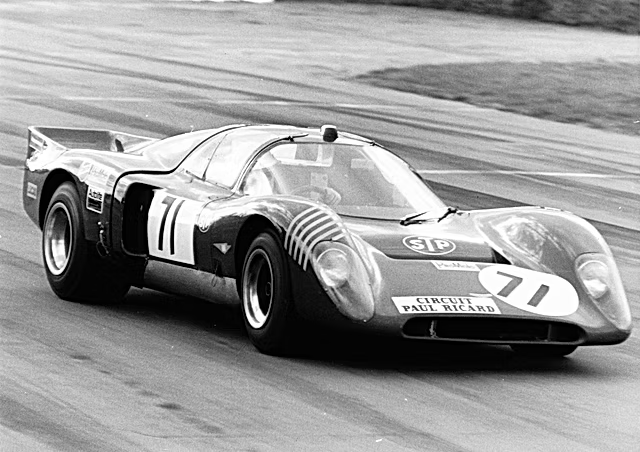
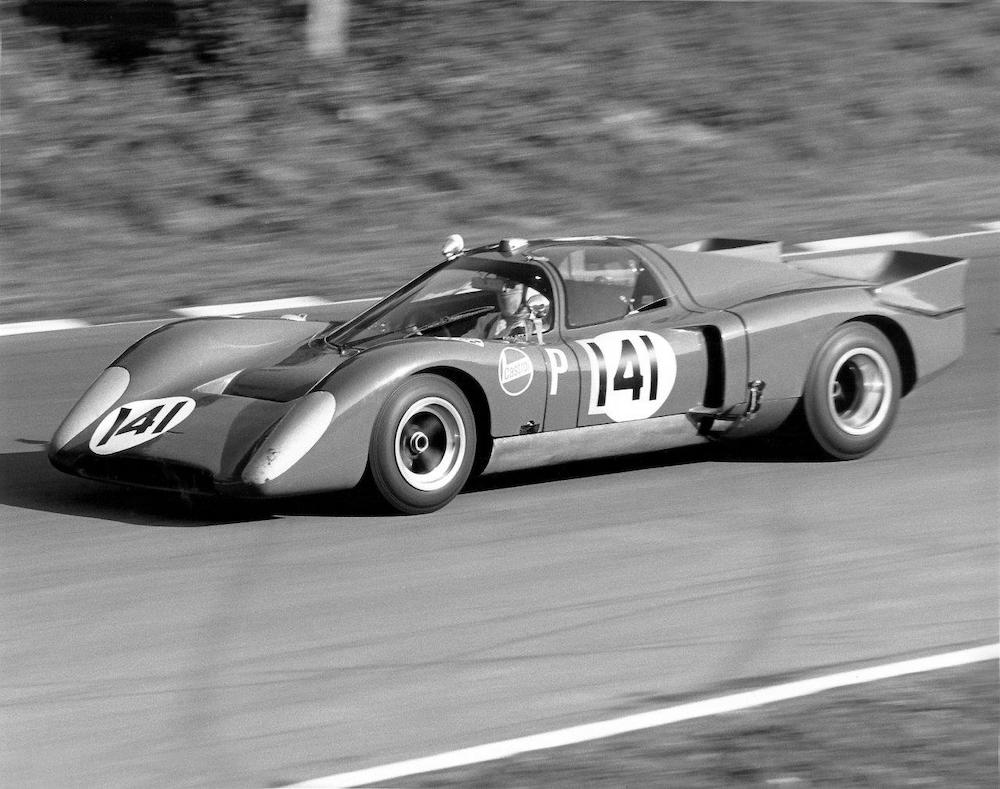
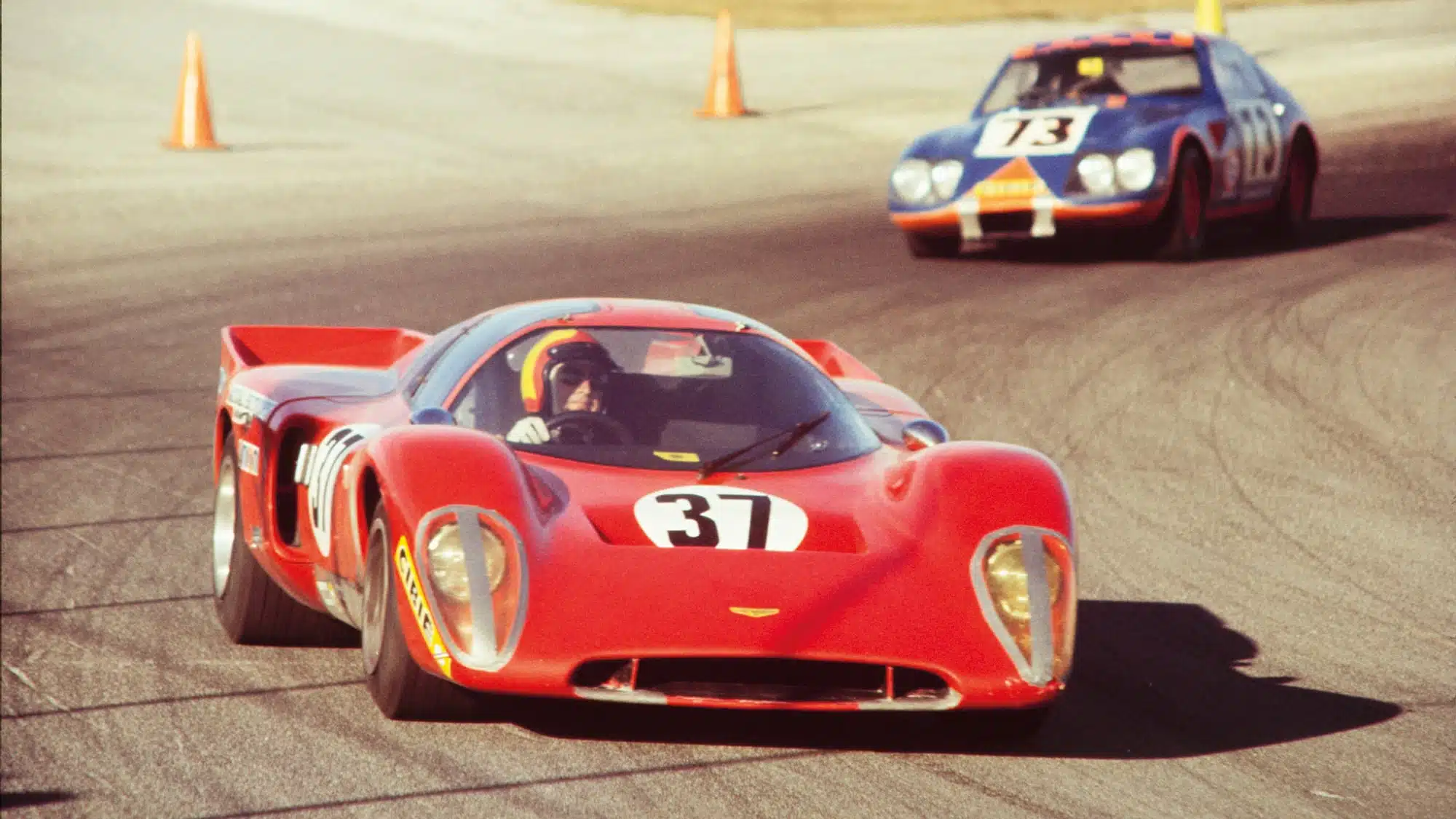
There are debut performances in motorsport history that whisper, and then there are those that scream. The arrival of the Chevron B16 Ford Cosworth FVA in September 1969 was deafening. It did not just arrive; it descended upon the Nürburgring 500km like a visitor from a faster, more beautiful future. At the time, the 2.0-litre sports car class was a chaotic mix of aging Porsches, rugged Abarths, and various modified GTs. Derek Bennett, the visionary founder of Chevron, had already conquered the GT world with his B8, but he knew the game was changing. The future lay in low-drag, purpose-built prototypes. He penned a shape that is universally regarded as one of the most exquisite to ever grace a racetrack—a low, curvaceous coupé that looked like it was moving 200 mph while standing still. But beauty was merely a byproduct of function; the real revolution was the engine Bennett chose to power his new masterpiece for its maiden voyage. He ignored the reliable, torquey BMW units he had used before and instead bolted in the undisputed king of sprint racing: the Ford Cosworth FVA.
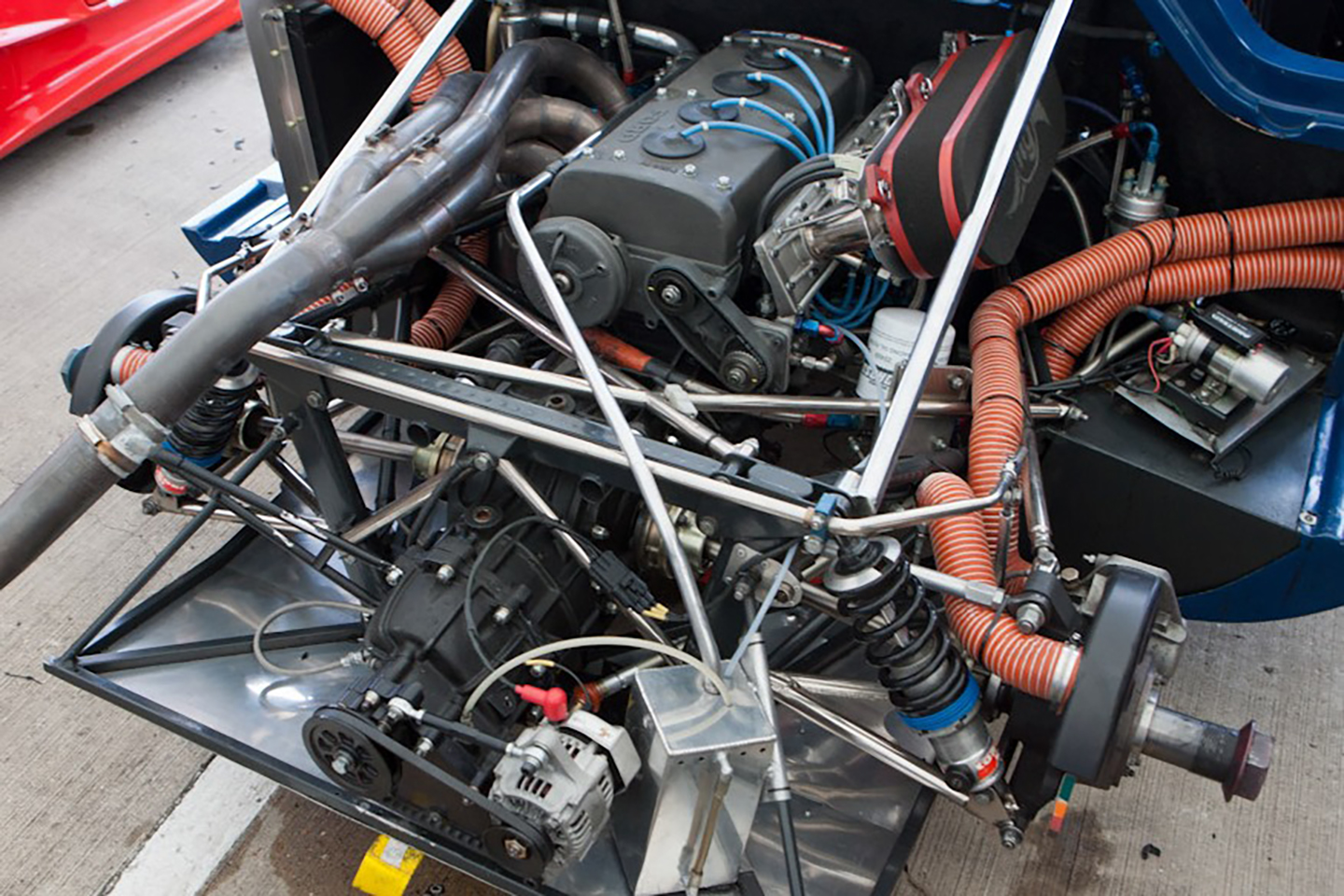
The FVA (Four Valve Type A) was not a sports car engine by nature; it was a Formula 2 engine. Designed by the legendary Keith Duckworth, it was the technological precursor to the DFV V8 that would dominate Formula 1. Displacing just 1,598cc, this inline-four was a masterpiece of high-revving precision. It featured a gear-driven double overhead camshaft cylinder head sitting atop a Ford Cortina block, fed by Lucas mechanical fuel injection. In the back of the B16, it produced around 225 bhp, but it did so at a frenetic 9,000 rpm. It was a peaky, aggressive powerplant that demanded a driver who was precise with the gearbox and unafraid to live near the redline. Bennett mated this jewel of an engine to his signature chassis philosophy: a tubular steel spaceframe. While bigger manufacturers were experimenting with aluminium monocoques, Bennett believed the spaceframe offered better feedback and easier repairability for the privateer teams that were his bread and butter. The bodywork, crafted by Specialised Mouldings, was a triumph of aerodynamics, generating genuine downforce with a low drag coefficient, essential for the long straights of European circuits.
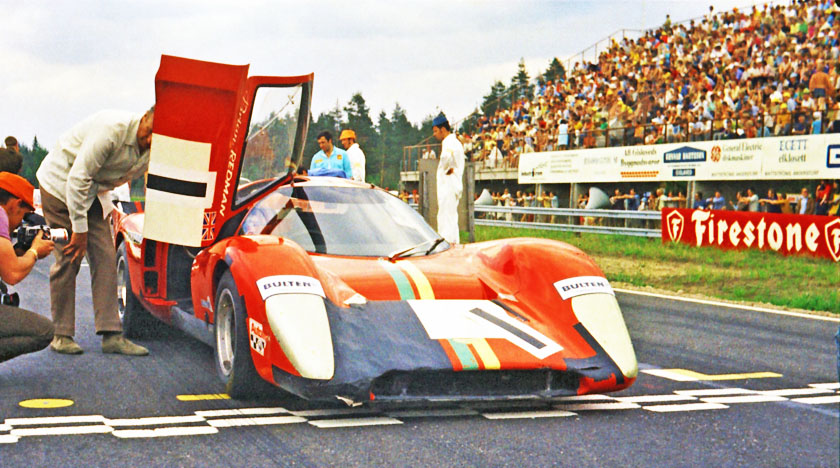
The impact of this specific combination—the B16 chassis and the FVA engine—was instantaneous and absolute. At its debut race at the Nürburgring, legendary driver Brian Redman put the factory-entered B16 on pole position. This was no mean feat; the grid was packed with larger-capacity prototypes and local specialists. In the race, Redman disappeared. The high-revving FVA engine screamed through the Eifel mountains, and the B16’s compliant suspension absorbed the bumps of the Nordschleife with uncanny composure. Redman won the race outright, beating the factory Abarths and Lolas on the car’s very first outing. It was a “mic drop” moment for Chevron. The B16 FVA proved that a small team from Bolton could build a car that was not only prettier than the establishment’s efforts but significantly faster.
However, the FVA-powered B16 was a specialized weapon. While it was unbeatable in a sprint on a technical track, the frenetic nature of the Formula 2 engine made it less suited to long-distance endurance racing than its BMW-powered siblings. The FVA lacked the low-end torque needed to punch out of slow corners in traffic, forcing drivers to drive it like a single-seater, carrying massive momentum and keeping the revs stratospheric. It was a “driver’s car” in the purest sense, rewarding commitment and punishing hesitation. As the 1970 season approached, the 1.6-litre FVA was largely superseded by the larger 1.8-litre Cosworth FVC for the 2.0-litre class, but the FVA cars found a niche in the 1.6-litre category, where they remained the gold standard for speed.
The legacy of the B16 FVA is defined by that singular, perfect debut. It represents the brief, magical window where a 1.6-litre car could win an international sports car race outright through sheer engineering brilliance. It established Chevron as a premier constructor of prototypes, not just GTs. Visually, the FVA-spec cars are often identified by their slightly different rear deck treatments and the distinct, piercing bark of the Cosworth engine compared to the guttural roar of the BMWs. It remains one of the most desirable historic racing cars in the world, a machine that captures the optimism, the technology, and the sheer beauty of late-60s motorsport in a package that is as thrilling to drive today as it was when Brian Redman first unleashed it on the Green Hell.
Brand
Produced from
Portal
Model line
Predecessor
Sucessor
Brand
Produced from
Portal
Model line
Model generation
Predecessor
Sucessor
About this submodel
There are debut performances in motorsport history that whisper, and then there are those that scream. The arrival of the Chevron B16 Ford Cosworth FVA in September 1969 was deafening. It did not just arrive; it descended upon the Nürburgring 500km like a visitor from a faster, more beautiful future. At the time, the 2.0-litre sports car class was a chaotic mix of aging Porsches, rugged Abarths, and various modified GTs. Derek Bennett, the visionary founder of Chevron, had already conquered the GT world with his B8, but he knew the game was changing. The future lay in low-drag, purpose-built prototypes. He penned a shape that is universally regarded as one of the most exquisite to ever grace a racetrack—a low, curvaceous coupé that looked like it was moving 200 mph while standing still. But beauty was merely a byproduct of function; the real revolution was the engine Bennett chose to power his new masterpiece for its maiden voyage. He ignored the reliable, torquey BMW units he had used before and instead bolted in the undisputed king of sprint racing: the Ford Cosworth FVA.
The FVA (Four Valve Type A) was not a sports car engine by nature; it was a Formula 2 engine. Designed by the legendary Keith Duckworth, it was the technological precursor to the DFV V8 that would dominate Formula 1. Displacing just 1,598cc, this inline-four was a masterpiece of high-revving precision. It featured a gear-driven double overhead camshaft cylinder head sitting atop a Ford Cortina block, fed by Lucas mechanical fuel injection. In the back of the B16, it produced around 225 bhp, but it did so at a frenetic 9,000 rpm. It was a peaky, aggressive powerplant that demanded a driver who was precise with the gearbox and unafraid to live near the redline. Bennett mated this jewel of an engine to his signature chassis philosophy: a tubular steel spaceframe. While bigger manufacturers were experimenting with aluminium monocoques, Bennett believed the spaceframe offered better feedback and easier repairability for the privateer teams that were his bread and butter. The bodywork, crafted by Specialised Mouldings, was a triumph of aerodynamics, generating genuine downforce with a low drag coefficient, essential for the long straights of European circuits.
The impact of this specific combination—the B16 chassis and the FVA engine—was instantaneous and absolute. At its debut race at the Nürburgring, legendary driver Brian Redman put the factory-entered B16 on pole position. This was no mean feat; the grid was packed with larger-capacity prototypes and local specialists. In the race, Redman disappeared. The high-revving FVA engine screamed through the Eifel mountains, and the B16’s compliant suspension absorbed the bumps of the Nordschleife with uncanny composure. Redman won the race outright, beating the factory Abarths and Lolas on the car’s very first outing. It was a “mic drop” moment for Chevron. The B16 FVA proved that a small team from Bolton could build a car that was not only prettier than the establishment’s efforts but significantly faster.
However, the FVA-powered B16 was a specialized weapon. While it was unbeatable in a sprint on a technical track, the frenetic nature of the Formula 2 engine made it less suited to long-distance endurance racing than its BMW-powered siblings. The FVA lacked the low-end torque needed to punch out of slow corners in traffic, forcing drivers to drive it like a single-seater, carrying massive momentum and keeping the revs stratospheric. It was a “driver’s car” in the purest sense, rewarding commitment and punishing hesitation. As the 1970 season approached, the 1.6-litre FVA was largely superseded by the larger 1.8-litre Cosworth FVC for the 2.0-litre class, but the FVA cars found a niche in the 1.6-litre category, where they remained the gold standard for speed.
The legacy of the B16 FVA is defined by that singular, perfect debut. It represents the brief, magical window where a 1.6-litre car could win an international sports car race outright through sheer engineering brilliance. It established Chevron as a premier constructor of prototypes, not just GTs. Visually, the FVA-spec cars are often identified by their slightly different rear deck treatments and the distinct, piercing bark of the Cosworth engine compared to the guttural roar of the BMWs. It remains one of the most desirable historic racing cars in the world, a machine that captures the optimism, the technology, and the sheer beauty of late-60s motorsport in a package that is as thrilling to drive today as it was when Brian Redman first unleashed it on the Green Hell.
Tech Specs
Discover the technical specifications
Tech Specs
Discover the technical specifications
Engine
01
03
Internal combustion engine
Configuration
Ford Cosworth FVA, Inline-4
Location
Mid, longitudinally mounted
Construction
Cast iron block, aluminium alloy head
Displacement (cc)
1,596 cc
Displacement (cu in)
97.3 cu in
Compression
-
Bore x Stroke
85.7 mm x 69.1 mm
Valvetrain
4 valves per cylinder, DOHC
Fuel feed
Lucas Fuel Injection
Lubrication
Dry sump
Aspiration
Naturally aspirated
Output
Power (hp)
225 hp
Power (kW)
168 kW
Max power at
9,000 RPM
Torque (Nm)
-
Torque (ft lbs)
-
Max torque at
-
Drivetrain
02
03
Chassis
Type
Tubular frame
Material
Duraluminium and steel
Body
Material
Fibreglass
Transmission
Gearbox
5-speed manual
Drive
Rear Wheel Drive
Suspension
Front
Double wishbones, coil springs over dampers, anti-roll bar
Rear
Reversed lower wishbones, top links, twin trailing arms, coil springs over dampers, anti-roll bar
Steering
Type
Rack and pinion
Brakes
Front
Discs
Rear
Discs
Wheels
Front
-
Rear
-
Tires
Front
-
Rear
-
Dimensions and performance
03
03
Dimensions
Lenght (mm)
3,937 mm
Lenght (in)
155 in
Width (mm)
1,778 mm
Width (in)
70 in
Height (mm)
940 mm
Height (in)
37 in
Wheelbase (mm)
2,362 mm
Wheelbase (in)
93 in
Weight (kg)
-
Weight (lbs)
-
Performance
Power to weight
-
Top speed (km/h)
-
Top speed (mph)
-
0-100 km/h (0-60 mph)
-
Submodels
Other variants of this model
Submodels