Alfa Romeo Giulia 2000 GTAm
Brand
Produced from
Portal
Vehicle category
Model line
Model generation
Predecessor
Sucessor
About this submodel
In the glorious, high-stakes theatre of 1970s European touring car racing, victory was not won with subtlety. It was taken with brute force, flared arches, and screaming engines. While Alfa Romeo’s 1.6-litre Giulia Sprint GTA had been a scalpel, a lightweight masterpiece that dominated its class, by the end of the decade the main event had moved on. The overall European Touring Car Championship was now the domain of the heavyweights: the 2.0-litre-plus “Group 2” monsters. Ford was pouring resources into its potent Capri RS, and BMW was a constant threat with its powerful 2800 CS. Alfa Romeo’s Autodelta, the legendary competition department led by the brilliant and fearsome Carlo Chiti, needed more than a scalpel. It needed a sledgehammer. The result was this car, the 2000 GTAm: the most aggressive, powerful, and brutal factory-built Giulia ever created.
The story of the GTAm is shrouded in the kind of mythology that only Carlo Chiti’s clandestine Autodelta workshop could create. Even its name is a subject of wonderful debate. The “GTA” part was inherited from its Alleggerita predecessor, but the “m” is the mystery. Many believe it stands for Maggiorata (“Enlarged”), a simple, functional description for its new 2.0-litre engine. But a more compelling and widely accepted theory is that it stood for America Maggiorata. This references the car’s surprising origin, as Autodelta chose to base this new Group 2 weapon not on the European-spec 1750 GTV, but on the US-market version. Why? Because the US-bound car, built to meet strict American emissions regulations, came factory-equipped with a sophisticated SPICA mechanical fuel-injection system instead of the twin Weber carburettors used in Europe. Chiti, a man who understood that Webers were romantic but fuel injection was precise, saw the SPICA system as the perfect, homologated base for a dominant racing engine.
This decision defined the car’s soul. The engine, while still a “Nord” block, was a world away from its 1.6-litre twin-spark GTA cousin. Autodelta’s engineers bored and stroked the 1750 block to its absolute limit, creating a 1,985cc (later 1,999cc) four-cylinder powerhouse. This engine, featuring a single-plug cylinder head, dry-sump lubrication, and the finely-tuned SPICA injection, was a masterpiece of reliability and power, belting out a ferocious 220 hp. Later in its life, Autodelta developed a special twin-plug, 8-valve head that pushed output closer to 240 hp, its exhaust note a deafening, metallic bark that became the soundtrack of the ETCC. This power was harnessed by a reinforced five-speed gearbox and a specially developed Autodelta rear axle that used a “slitta” or “sliding block” arrangement—a clever, sliding T-arm that gave the live axle the lateral control of an independent setup, allowing the drivers to deploy the power with shocking efficiency.
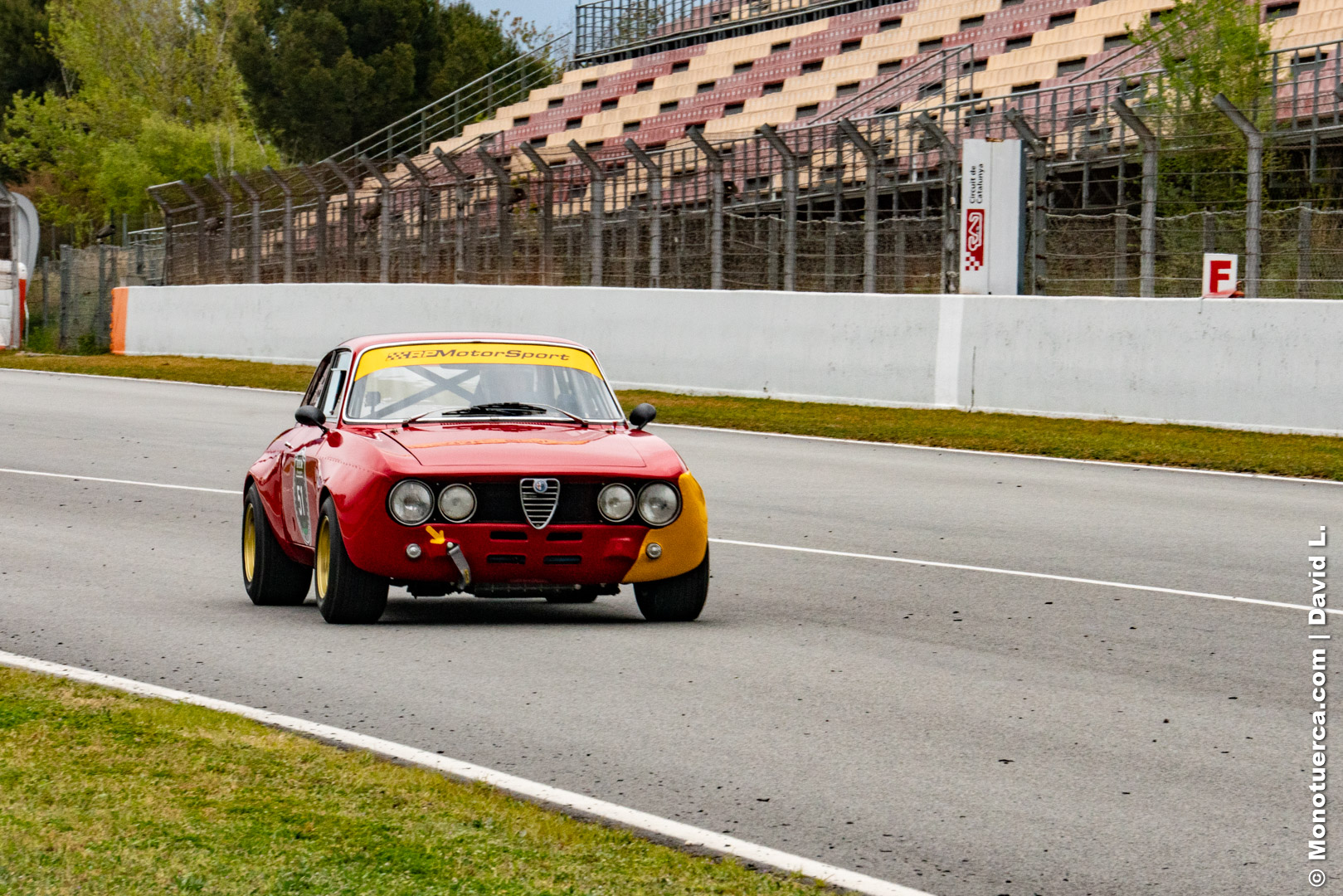
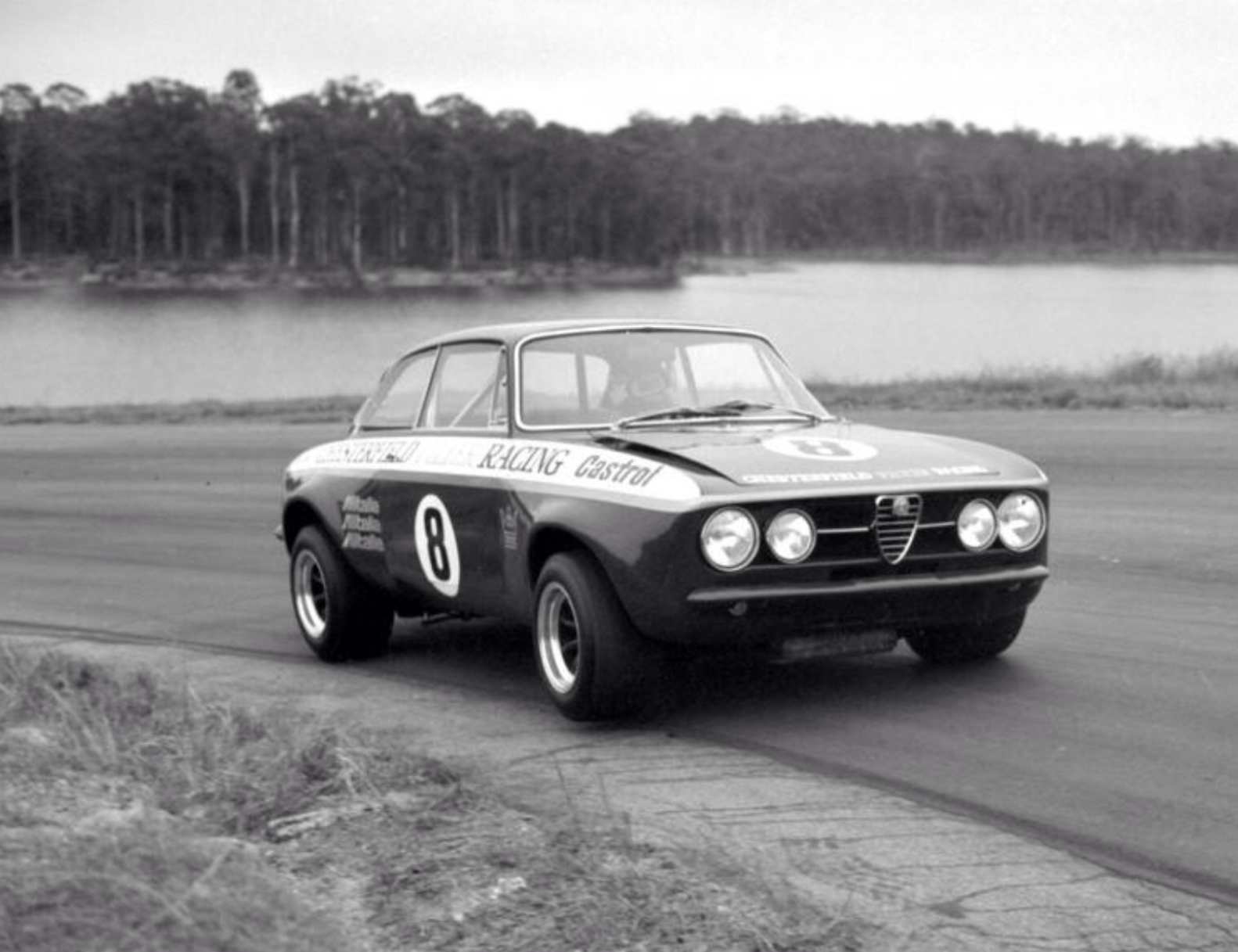
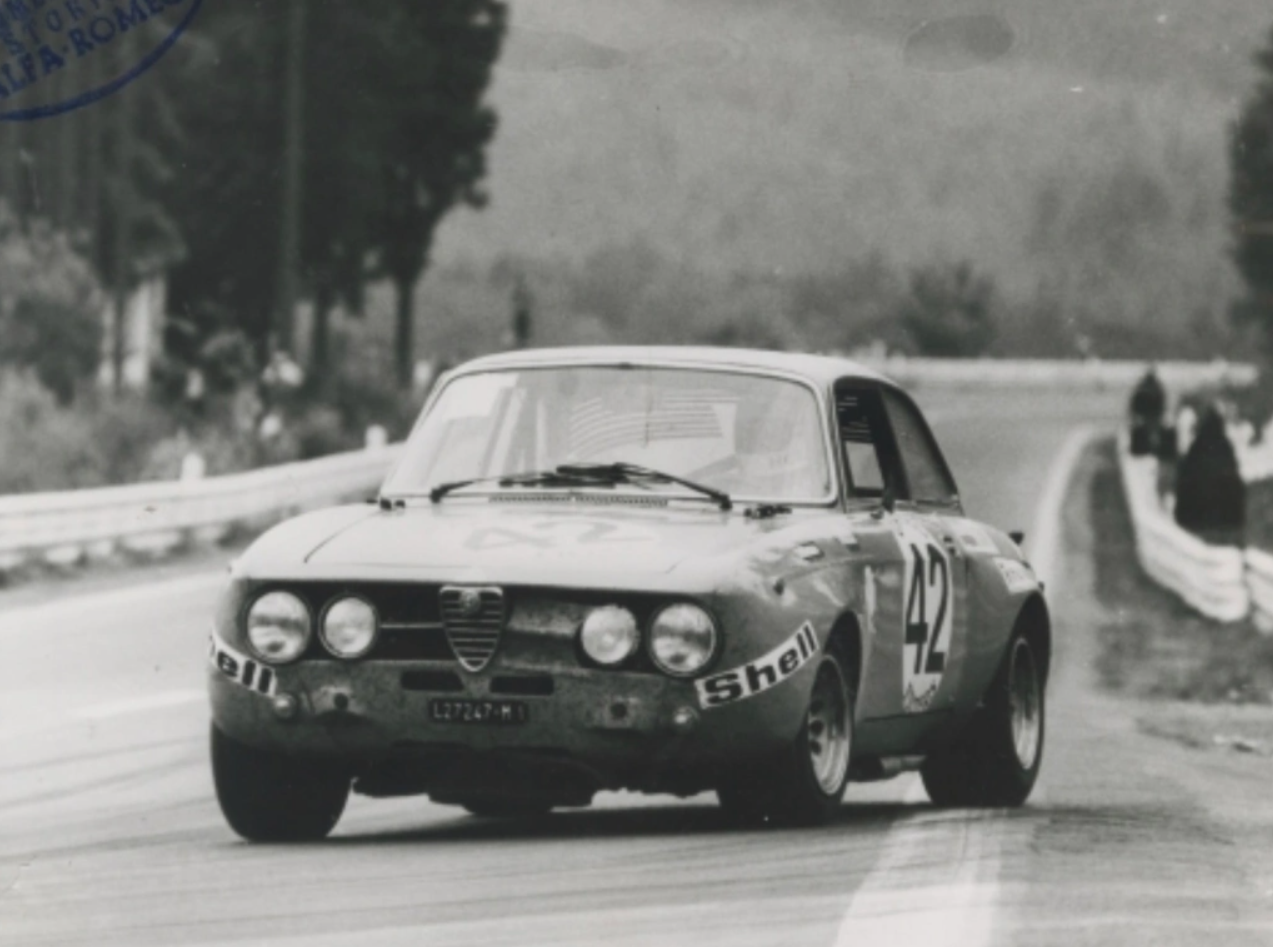
Visually, the GTAm was pure menace. It was a complete and utter betrayal of Giugiaro’s original, delicate 1963 design. Autodelta ripped the elegant coupé apart, junking the steel wings and fitting massive, riveted fibreglass flares. These were not the blended, sculpted arches of a road car; they were crude, functional, and terrifyingly wide, necessary to cover the 13-inch-wide Campagnolo magnesium wheels shod in enormous Firestone slicks. The doors, bonnet, and boot lid were often remade in lightweight aluminium or plastic, and all glass was replaced with Plexiglas. The interior was a stark, functional office, stripped bare of all sound deadening and comfort, featuring a single bucket seat, a web of roll-cage tubing, and a giant fuel tank in the boot. The GTAm’s stance, with its nose down, its tiny 13-inch wheels lost inside those cavernous arches, and its slotted front valance gaping for air, remains one of the most intimidating sights in motorsport history.
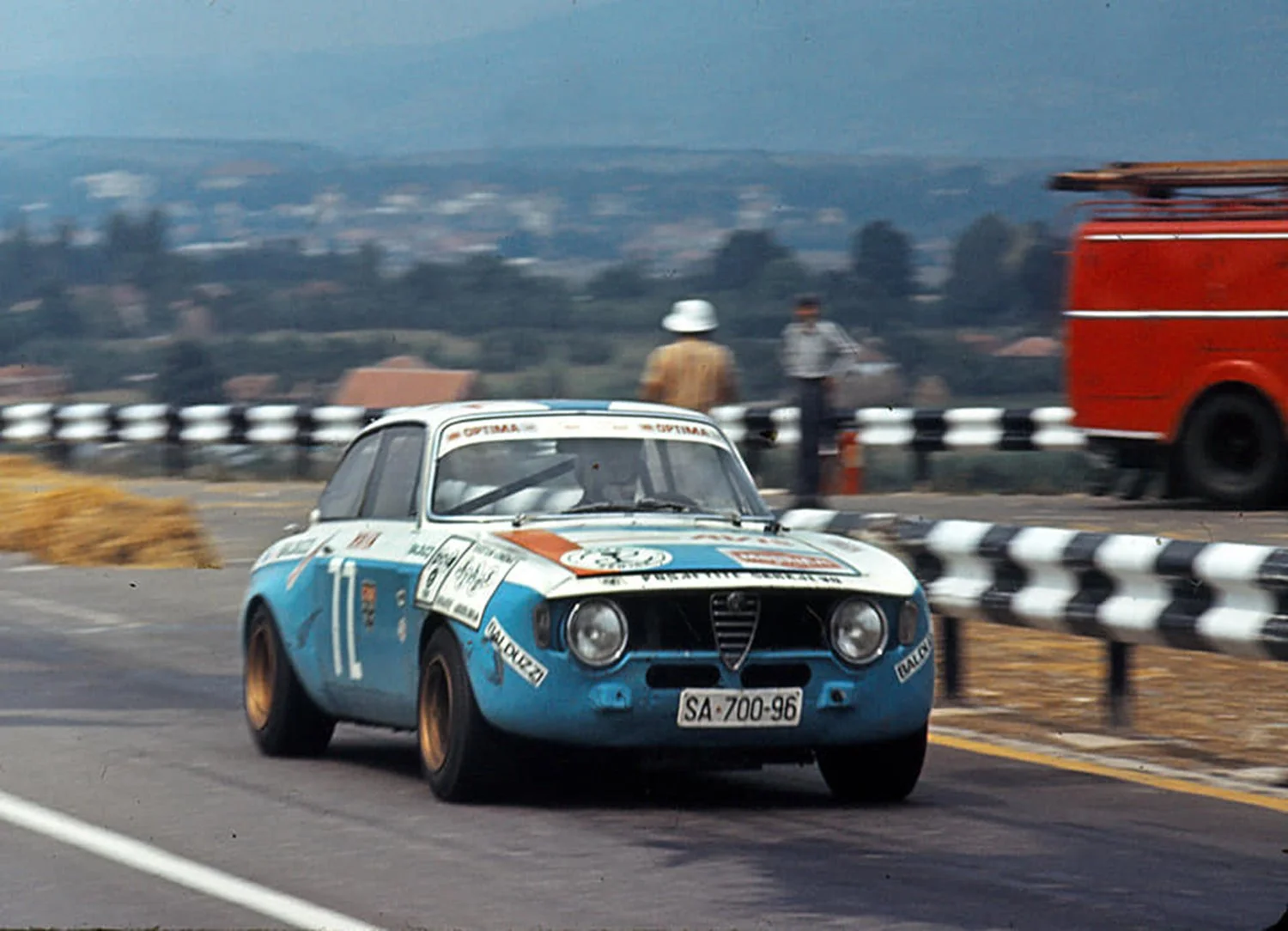
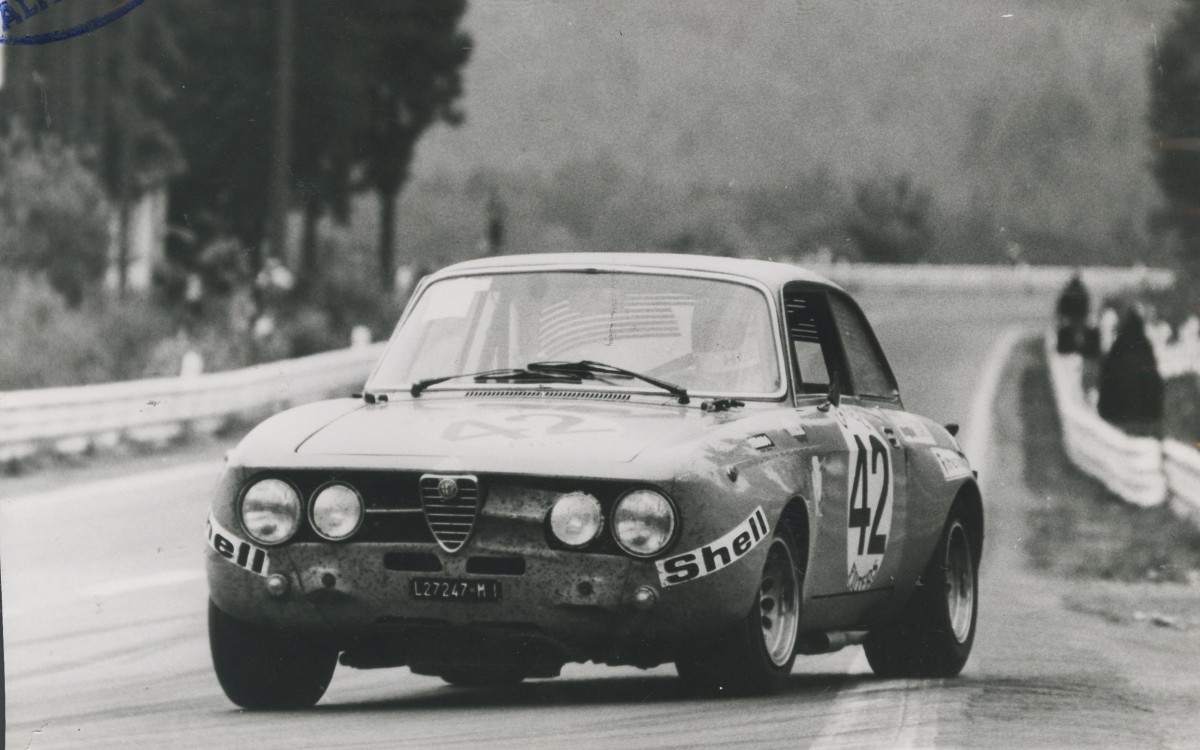
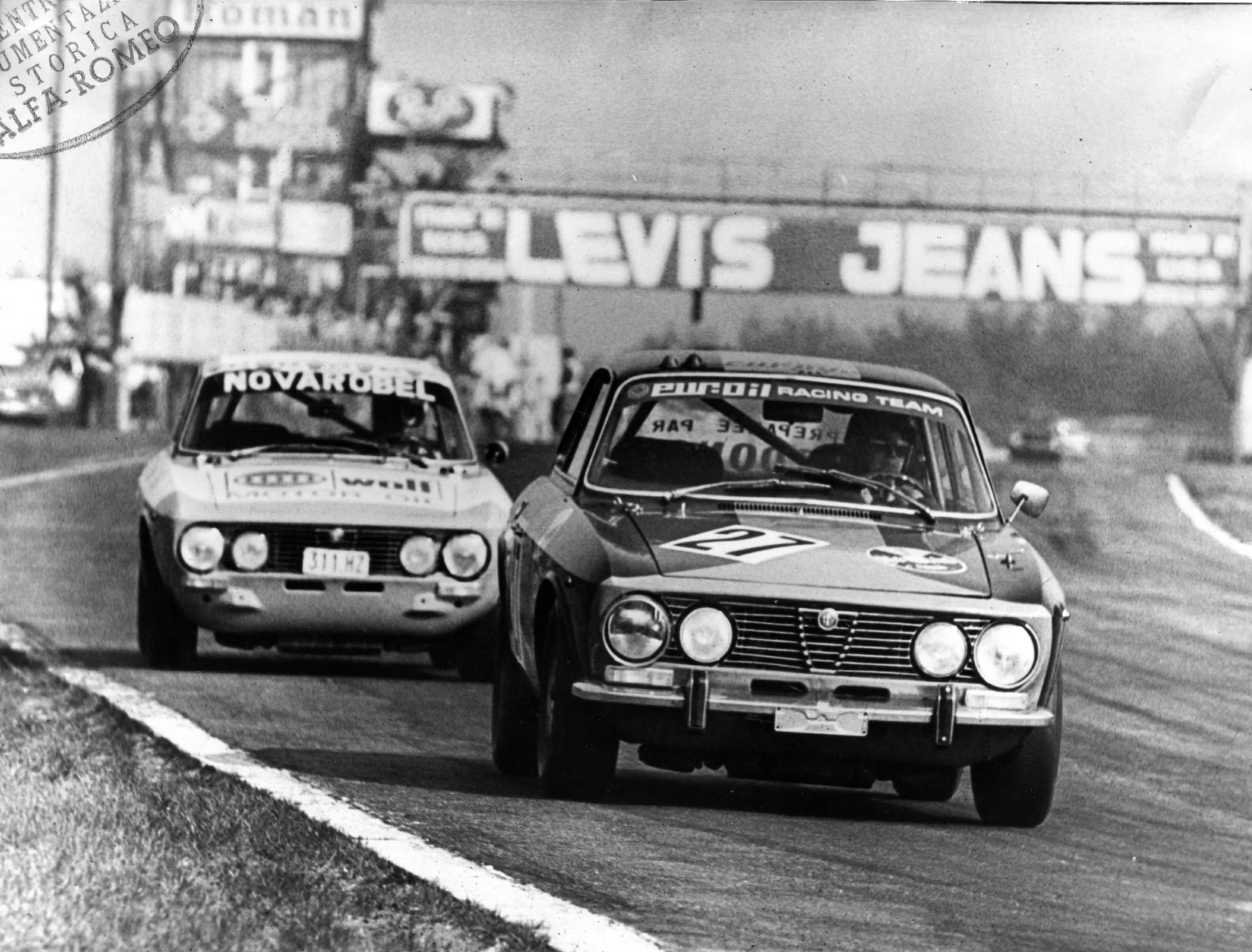
The GTAm’s competition history was a short, violent, and glorious war, waged primarily against the armada of factory-backed Ford Capri RS2600s. Its chosen battleground was the ETCC. In 1970, Autodelta unleashed the car with the perfect driver: a young, aggressive, and incredibly fast Dutchman named Toine Hezemans. Hezemans, nicknamed “The Flying Dutchman,” was fearless, and he manhandled the GTAm in a series of spectacular duels against Ford’s Jochen Mass. In a dominant season, Hezemans won his class at Monza, Budapest, Brno, and Jarama, securing the 1970 European Touring Car Championship Driver’s title and instantly cementing the GTAm as a legend. The 1971 season was even more brutal, as Ford doubled down on its efforts. The racing was wheel-to-wheel, with the Alfa-Ford rivalry becoming one of the bitterest in motorsport. At the 24 Hours of Spa, the GTAm of Hezemans and Gijs van Lennep famously battled the factory Capris and the Chevrolet Camaro Z28s. Though a Capri won, the GTAm’s consistent speed and reliability over the season, with wins at Monza, the Nürburgring, and Paul Ricard, secured the coveted Manufacturers’ Championship for Alfa Romeo.
The GTAm was the final, glorious chapter for the 105-series coupé in international motorsport. It was the absolute zenith of what could be achieved with the Giulia platform, a car that had evolved from a lightweight 1.6-litre dancer into a 2.0-litre heavyweight puncher. It was succeeded in spirit by the Alfetta GTV6, but the GTAm remains a standalone icon. It was the ultimate expression of Autodelta’s “win-at-all-costs” philosophy, a brutal and beautiful monster that took on the giants of touring car racing and, in a blaze of fire-spitting glory, won.
Brand
Produced from
Portal
Vehicle category
Model line
Model generation
Predecessor
Sucessor
Brand
Produced from
Portal
Vehicle category
Model line
Model generation
Predecessor
Sucessor
About this submodel
In the glorious, high-stakes theatre of 1970s European touring car racing, victory was not won with subtlety. It was taken with brute force, flared arches, and screaming engines. While Alfa Romeo’s 1.6-litre Giulia Sprint GTA had been a scalpel, a lightweight masterpiece that dominated its class, by the end of the decade the main event had moved on. The overall European Touring Car Championship was now the domain of the heavyweights: the 2.0-litre-plus “Group 2” monsters. Ford was pouring resources into its potent Capri RS, and BMW was a constant threat with its powerful 2800 CS. Alfa Romeo’s Autodelta, the legendary competition department led by the brilliant and fearsome Carlo Chiti, needed more than a scalpel. It needed a sledgehammer. The result was this car, the 2000 GTAm: the most aggressive, powerful, and brutal factory-built Giulia ever created.
The story of the GTAm is shrouded in the kind of mythology that only Carlo Chiti’s clandestine Autodelta workshop could create. Even its name is a subject of wonderful debate. The “GTA” part was inherited from its Alleggerita predecessor, but the “m” is the mystery. Many believe it stands for Maggiorata (“Enlarged”), a simple, functional description for its new 2.0-litre engine. But a more compelling and widely accepted theory is that it stood for America Maggiorata. This references the car’s surprising origin, as Autodelta chose to base this new Group 2 weapon not on the European-spec 1750 GTV, but on the US-market version. Why? Because the US-bound car, built to meet strict American emissions regulations, came factory-equipped with a sophisticated SPICA mechanical fuel-injection system instead of the twin Weber carburettors used in Europe. Chiti, a man who understood that Webers were romantic but fuel injection was precise, saw the SPICA system as the perfect, homologated base for a dominant racing engine.
This decision defined the car’s soul. The engine, while still a “Nord” block, was a world away from its 1.6-litre twin-spark GTA cousin. Autodelta’s engineers bored and stroked the 1750 block to its absolute limit, creating a 1,985cc (later 1,999cc) four-cylinder powerhouse. This engine, featuring a single-plug cylinder head, dry-sump lubrication, and the finely-tuned SPICA injection, was a masterpiece of reliability and power, belting out a ferocious 220 hp. Later in its life, Autodelta developed a special twin-plug, 8-valve head that pushed output closer to 240 hp, its exhaust note a deafening, metallic bark that became the soundtrack of the ETCC. This power was harnessed by a reinforced five-speed gearbox and a specially developed Autodelta rear axle that used a “slitta” or “sliding block” arrangement—a clever, sliding T-arm that gave the live axle the lateral control of an independent setup, allowing the drivers to deploy the power with shocking efficiency.
Visually, the GTAm was pure menace. It was a complete and utter betrayal of Giugiaro’s original, delicate 1963 design. Autodelta ripped the elegant coupé apart, junking the steel wings and fitting massive, riveted fibreglass flares. These were not the blended, sculpted arches of a road car; they were crude, functional, and terrifyingly wide, necessary to cover the 13-inch-wide Campagnolo magnesium wheels shod in enormous Firestone slicks. The doors, bonnet, and boot lid were often remade in lightweight aluminium or plastic, and all glass was replaced with Plexiglas. The interior was a stark, functional office, stripped bare of all sound deadening and comfort, featuring a single bucket seat, a web of roll-cage tubing, and a giant fuel tank in the boot. The GTAm’s stance, with its nose down, its tiny 13-inch wheels lost inside those cavernous arches, and its slotted front valance gaping for air, remains one of the most intimidating sights in motorsport history.
The GTAm’s competition history was a short, violent, and glorious war, waged primarily against the armada of factory-backed Ford Capri RS2600s. Its chosen battleground was the ETCC. In 1970, Autodelta unleashed the car with the perfect driver: a young, aggressive, and incredibly fast Dutchman named Toine Hezemans. Hezemans, nicknamed “The Flying Dutchman,” was fearless, and he manhandled the GTAm in a series of spectacular duels against Ford’s Jochen Mass. In a dominant season, Hezemans won his class at Monza, Budapest, Brno, and Jarama, securing the 1970 European Touring Car Championship Driver’s title and instantly cementing the GTAm as a legend. The 1971 season was even more brutal, as Ford doubled down on its efforts. The racing was wheel-to-wheel, with the Alfa-Ford rivalry becoming one of the bitterest in motorsport. At the 24 Hours of Spa, the GTAm of Hezemans and Gijs van Lennep famously battled the factory Capris and the Chevrolet Camaro Z28s. Though a Capri won, the GTAm’s consistent speed and reliability over the season, with wins at Monza, the Nürburgring, and Paul Ricard, secured the coveted Manufacturers’ Championship for Alfa Romeo.
The GTAm was the final, glorious chapter for the 105-series coupé in international motorsport. It was the absolute zenith of what could be achieved with the Giulia platform, a car that had evolved from a lightweight 1.6-litre dancer into a 2.0-litre heavyweight puncher. It was succeeded in spirit by the Alfetta GTV6, but the GTAm remains a standalone icon. It was the ultimate expression of Autodelta’s “win-at-all-costs” philosophy, a brutal and beautiful monster that took on the giants of touring car racing and, in a blaze of fire-spitting glory, won.
Tech Specs
Discover the technical specifications
Tech Specs
Discover the technical specifications
Engine
01
03
Internal combustion engine
Configuration
Inline-4
Location
Front, longitudinally mounted
Construction
Aluminium alloy block and head
Displacement (cc)
1,985 cc
Displacement (cu in)
121.1 cu in
Compression
10.5:1
Bore x Stroke
84.5 mm x 88.5 mm
Valvetrain
2 valves per cylinder, DOHC
Fuel feed
SPICA mechanical Fuel Injection
Lubrication
Wet sump
Aspiration
Naturally aspirated
Output
Power (hp)
207 hp
Power (kW)
154 kW
Max power at
7,000 RPM
Torque (Nm)
220 Nm
Torque (ft lbs)
162 ft lbs
Max torque at
-
Drivetrain
02
03
Chassis
Type
Monocoque unibody
Material
Steel
Body
Material
Steel with alluminium panels
Transmission
Gearbox
5-speed manual
Drive
Rear Wheel Drive
Suspension
Front
Independent, double wishbone, coil springs, anti-roll bar
Rear
Live axle, trailing arms, coil springs, anti-roll bar
Steering
Type
Recirculating ball
Brakes
Front
Ventilated discs
Rear
Ventilated discs
Wheels
Front
-
Rear
-
Tires
Front
-
Rear
-
Dimensions and performance
03
03
Dimensions
Lenght (mm)
4,080 mm
Lenght (in)
160.6 in
Width (mm)
1,590 mm
Width (in)
62.6 in
Height (mm)
1,280 mm
Height (in)
50.4 in
Wheelbase (mm)
2,350 mm
Wheelbase (in)
92.5 in
Weight (kg)
920 kg
Weight (lbs)
2,028 lbs
Performance
Power to weight
0.22 hp/kg
Top speed (km/h)
220 km/h
Top speed (mph)
137 mph
0-100 km/h (0-60 mph)
-
Submodels
Other variants of this model
Submodels