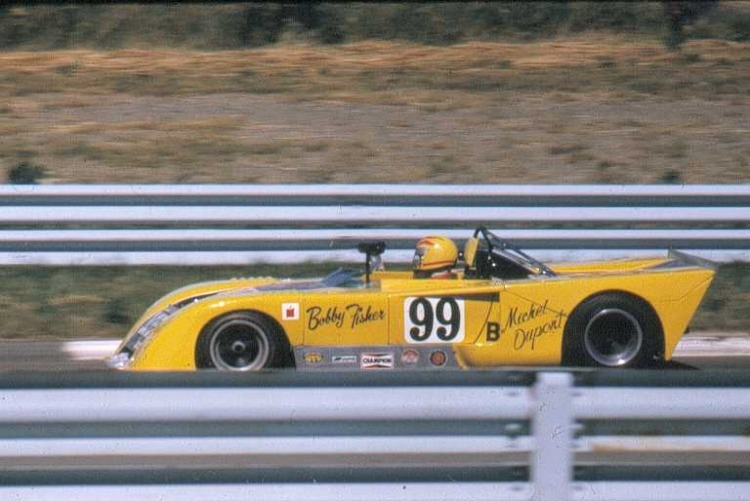
Chevron B21 Ford Cosworth FVC
Brand
Produced from
Portal
Vehicle category
Model line
Predecessor
Sucessor
About this submodel
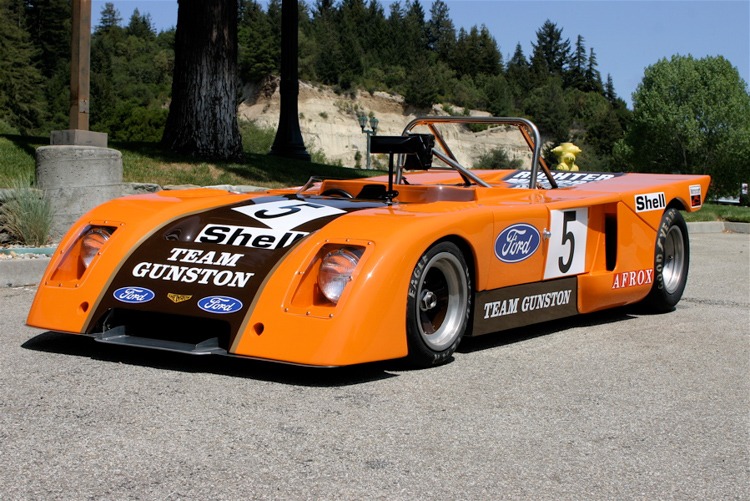
By 1972, the European 2-Litre Sports Car Championship had transformed into the most ferocious and technically diverse battleground in motorsport. The previous year had belonged to the Chevron B19, a car that swarmed the grids and democratized speed for the privateer. But Derek Bennett, the genius engineer behind Chevron, knew that stagnation was death. The arrival of the monocoque Lola T290 and the factory-backed Abarth-Osella PA1 signalled a new era of rigidity and aerodynamics. Bennett’s response was the B21, a chassis evolved to handle higher speeds and stickier tires. And while the factory drivers and well-heeled teams chased the explosive horsepower of the BMW M12 or the lightweight allure of the alloy-block BDG, the backbone of the grid—the men who paid their own bills and needed to finish every race to afford the next one—stayed loyal to the definitive endurance weapon: the Chevron B21 Ford Cosworth FVC.
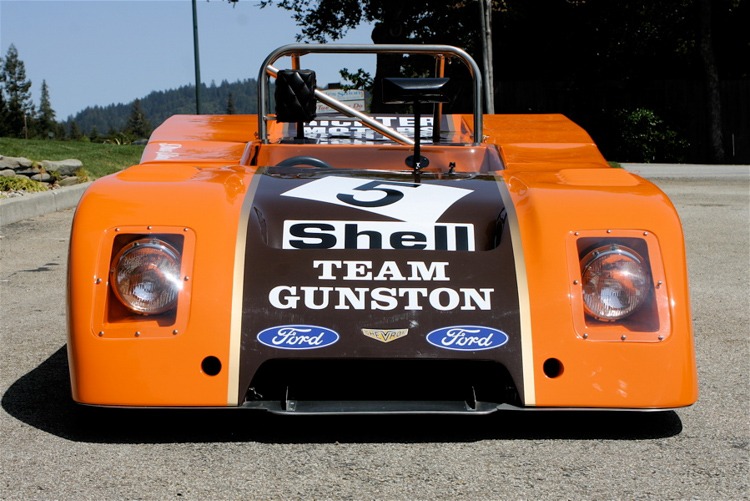
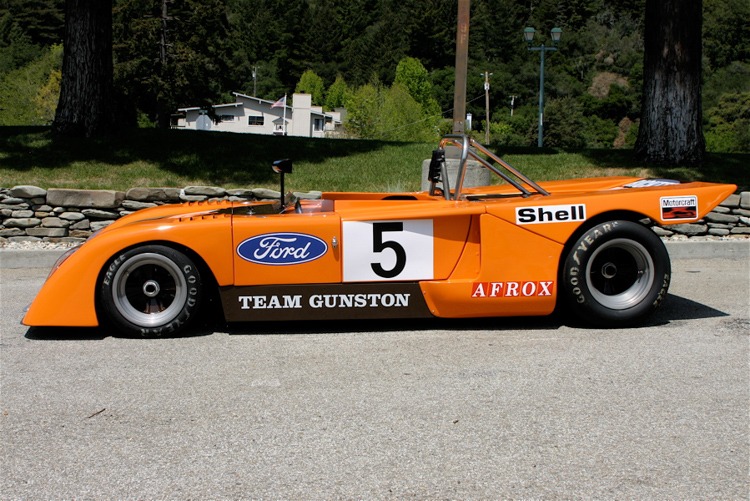
The B21 was a pragmatic evolution, born from the realization that the agile, short-wheelbase B19 was becoming nervous on the faster, sweeping circuits that were populating the calendar. Bennett lengthened the tubular steel spaceframe by four inches, increasing the wheelbase to improve high-speed stability. He also flattened the nose and cleaned up the rear deck, refining the aerodynamics for better penetration and downforce. But the decision to spec the car with the Ford Cosworth FVC (Four Valve Type C) engine was a statement of intent. It signaled a prioritization of reliability and mid-range driveability over peak dyno numbers.
The FVC was the anvil upon which the 2.0-litre class had been forged. Based on the robust cast-iron Ford Cortina block, it was a heavier unit than the emerging aluminium-block BDG, but it was bulletproof. Displacing 1,790cc (often bored out to 1.8 or 1.9 litres by specialist engine builders like Richardson), it featured the legendary gear-driven, 16-valve Cosworth cylinder head. Producing a reliable 245 bhp at 8,750 rpm, it gave away nearly 40-50 bhp to the screaming BMW engines. However, on a twisting track or during a grueling endurance race, the FVC had an ace up its sleeve: torque. It offered a linear, muscular power delivery that allowed drivers to short-shift and haul the car out of corners without the frantic gear-rowing required by the peakier engines.
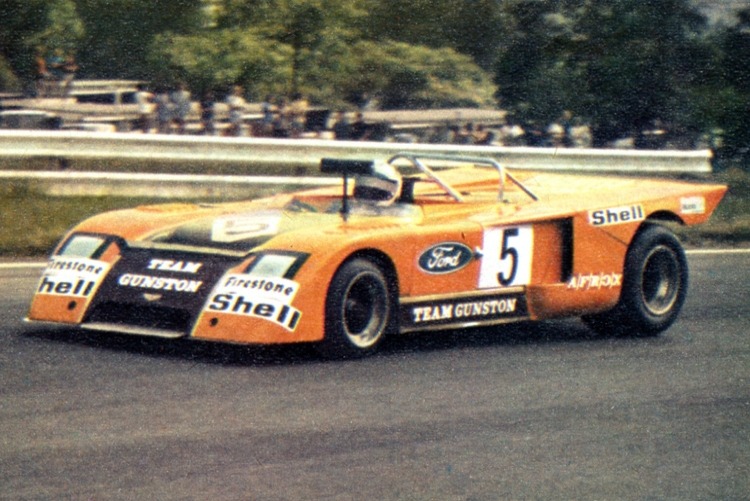
In 1972, the B21 FVC became the gold standard for the privateer who wanted to finish. While the BMW-powered cars often rattled themselves to pieces or suffered from vibrational failures, and the early BDG engines struggled with teething issues, the FVC cars just kept running. In the European 2-Litre Championship, B21 FVCs were omnipresent, often filling the top ten behind the factory entries. Drivers like John Lepp and Chris Craft used the B21’s predictable handling and the FVC’s reliability to score consistent points, often inheriting podiums when the faster cars expired. The steel spaceframe chassis, while theoretically less rigid than the Lola’s monocoque, offered a level of feedback and compliance that inspired confidence, particularly in the wet or on rougher circuits like the Targa Florio or the Nürburgring Nordschleife.
The B21 FVC found a particularly warm welcome in the South African Springbok Series. In the 9-hour endurance races at Kyalami and Cape Town, where heat and altitude punished fragile machinery, the iron-block Cosworth engine was king. It could run flat-out for hours without overheating, allowing Chevron to maintain its stranglehold on the southern hemisphere’s sports car scene. The car was also a staple of the British Sports Car Championship, where its lower running costs compared to the BMW variants made it the default choice for the clubman racer looking to step up to international speeds.
Ultimately, the B21 FVC represents the high-water mark of the “sensible” supercar. It was a machine that balanced performance with pragmatism, a car that allowed a small team of mechanics to take on the might of Abarth and Lola and beat them through sheer consistency. It was the bridge between the raw B19 and the ultimate B23, proving that in endurance racing, to finish first, you must first finish. Today, in the world of historic motorsport, the B21 FVC remains a favorite for the same reasons: it is fast, beautiful, and brilliantly robust, a rolling testament to Derek Bennett’s philosophy that simple, effective engineering will always find a way to win.
Brand
Produced from
Portal
Vehicle category
Model line
Predecessor
Sucessor
Brand
Produced from
Portal
Vehicle category
Model line
Model generation
Predecessor
Sucessor
About this submodel
By 1972, the European 2-Litre Sports Car Championship had transformed into the most ferocious and technically diverse battleground in motorsport. The previous year had belonged to the Chevron B19, a car that swarmed the grids and democratized speed for the privateer. But Derek Bennett, the genius engineer behind Chevron, knew that stagnation was death. The arrival of the monocoque Lola T290 and the factory-backed Abarth-Osella PA1 signalled a new era of rigidity and aerodynamics. Bennett’s response was the B21, a chassis evolved to handle higher speeds and stickier tires. And while the factory drivers and well-heeled teams chased the explosive horsepower of the BMW M12 or the lightweight allure of the alloy-block BDG, the backbone of the grid—the men who paid their own bills and needed to finish every race to afford the next one—stayed loyal to the definitive endurance weapon: the Chevron B21 Ford Cosworth FVC.
The B21 was a pragmatic evolution, born from the realization that the agile, short-wheelbase B19 was becoming nervous on the faster, sweeping circuits that were populating the calendar. Bennett lengthened the tubular steel spaceframe by four inches, increasing the wheelbase to improve high-speed stability. He also flattened the nose and cleaned up the rear deck, refining the aerodynamics for better penetration and downforce. But the decision to spec the car with the Ford Cosworth FVC (Four Valve Type C) engine was a statement of intent. It signaled a prioritization of reliability and mid-range driveability over peak dyno numbers.
The FVC was the anvil upon which the 2.0-litre class had been forged. Based on the robust cast-iron Ford Cortina block, it was a heavier unit than the emerging aluminium-block BDG, but it was bulletproof. Displacing 1,790cc (often bored out to 1.8 or 1.9 litres by specialist engine builders like Richardson), it featured the legendary gear-driven, 16-valve Cosworth cylinder head. Producing a reliable 245 bhp at 8,750 rpm, it gave away nearly 40-50 bhp to the screaming BMW engines. However, on a twisting track or during a grueling endurance race, the FVC had an ace up its sleeve: torque. It offered a linear, muscular power delivery that allowed drivers to short-shift and haul the car out of corners without the frantic gear-rowing required by the peakier engines.
In 1972, the B21 FVC became the gold standard for the privateer who wanted to finish. While the BMW-powered cars often rattled themselves to pieces or suffered from vibrational failures, and the early BDG engines struggled with teething issues, the FVC cars just kept running. In the European 2-Litre Championship, B21 FVCs were omnipresent, often filling the top ten behind the factory entries. Drivers like John Lepp and Chris Craft used the B21’s predictable handling and the FVC’s reliability to score consistent points, often inheriting podiums when the faster cars expired. The steel spaceframe chassis, while theoretically less rigid than the Lola’s monocoque, offered a level of feedback and compliance that inspired confidence, particularly in the wet or on rougher circuits like the Targa Florio or the Nürburgring Nordschleife.
The B21 FVC found a particularly warm welcome in the South African Springbok Series. In the 9-hour endurance races at Kyalami and Cape Town, where heat and altitude punished fragile machinery, the iron-block Cosworth engine was king. It could run flat-out for hours without overheating, allowing Chevron to maintain its stranglehold on the southern hemisphere’s sports car scene. The car was also a staple of the British Sports Car Championship, where its lower running costs compared to the BMW variants made it the default choice for the clubman racer looking to step up to international speeds.
Ultimately, the B21 FVC represents the high-water mark of the “sensible” supercar. It was a machine that balanced performance with pragmatism, a car that allowed a small team of mechanics to take on the might of Abarth and Lola and beat them through sheer consistency. It was the bridge between the raw B19 and the ultimate B23, proving that in endurance racing, to finish first, you must first finish. Today, in the world of historic motorsport, the B21 FVC remains a favorite for the same reasons: it is fast, beautiful, and brilliantly robust, a rolling testament to Derek Bennett’s philosophy that simple, effective engineering will always find a way to win.
Tech Specs
Discover the technical specifications
Tech Specs
Discover the technical specifications
Engine
01
03
Internal combustion engine
Configuration
Ford Cosworth FVC, Inline-4
Location
Mid, longitudinally mounted
Construction
Cast iron block, aluminium alloy head
Displacement (cc)
1,790 cc
Displacement (cu in)
109.2 cu in
Compression
-
Bore x Stroke
85.7 mm x 77.5 mm
Valvetrain
4 valves per cylinder, DOHC
Fuel feed
Lucas Fuel Injection
Lubrication
Dry sump
Aspiration
Naturally aspirated
Output
Power (hp)
245 hp
Power (kW)
183 kW
Max power at
9,000 RPM
Torque (Nm)
-
Torque (ft lbs)
-
Max torque at
-
Drivetrain
02
03
Chassis
Type
Tubular spaceframe
Material
Steel and aluminium
Body
Material
Fibreglass
Transmission
Gearbox
5-speed manual
Drive
Rear Wheel Drive
Suspension
Front
Double wishbones, coil springs over dampers, anti-roll bar
Rear
Single top links, twin lower links, twin trailing arms, coil springs over dampers, anti-roll bar
Steering
Type
Rack and pinion
Brakes
Front
Ventilated discs
Rear
Ventilated discs
Wheels
Front
-
Rear
-
Tires
Front
-
Rear
-
Dimensions and performance
03
03
Dimensions
Lenght (mm)
3,683 mm
Lenght (in)
145 in
Width (mm)
1,676 mm
Width (in)
66 in
Height (mm)
-
Height (in)
-
Wheelbase (mm)
2,362 mm
Wheelbase (in)
93 in
Weight (kg)
490 kg
Weight (lbs)
1,080 lbs
Performance
Power to weight
0.5 hp/kg
Top speed (km/h)
-
Top speed (mph)
-
0-100 km/h (0-60 mph)
-
Submodels
Other variants of this model
Submodels