Lola T290 Ford Cosworth FVC
Brand
Produced from
Portal
Vehicle category
Model line
Predecessor
Sucessor
About this submodel
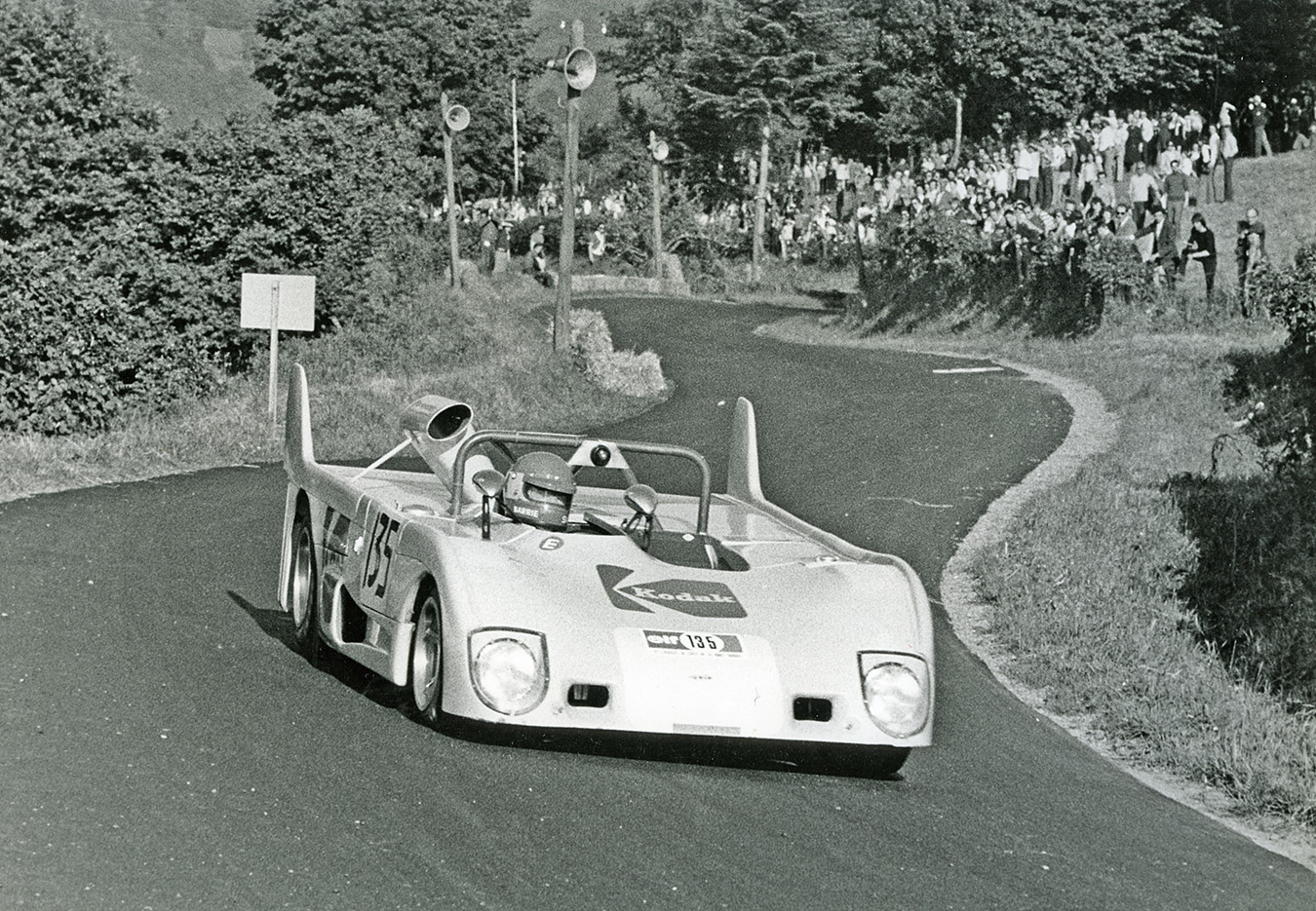
The year 1972 marked a definitive rupture in the aesthetic and mechanical philosophy of the sports racing car. The voluptuous curves of the 1960s were being ruthlessly sheared away by the wind tunnel and the ruler, replaced by the functional brutality of the wedge. Standing at the vanguard of this revolution was the 1972 Lola T290, specifically in its most potent and populous guise: powered by the screaming Ford Cosworth FVC. As the replacement for the successful but tubular-framed T212, the T290 was Eric Broadley’s manifesto for the newly inaugurated European 2-Litre Sports Car Championship. It was a machine designed to democratize speed, offering privateer teams a turn-key solution that could—on a tight, technical circuit—embarrass the heavyweight 3.0-litre prototypes from Ferrari and Matra. While its arch-nemesis, the Chevron B21, relied on a traditional spaceframe that offered compliance and forgiveness, the T290 was a rigid, uncompromising aluminium anvil designed to hammer the tarmac into submission.
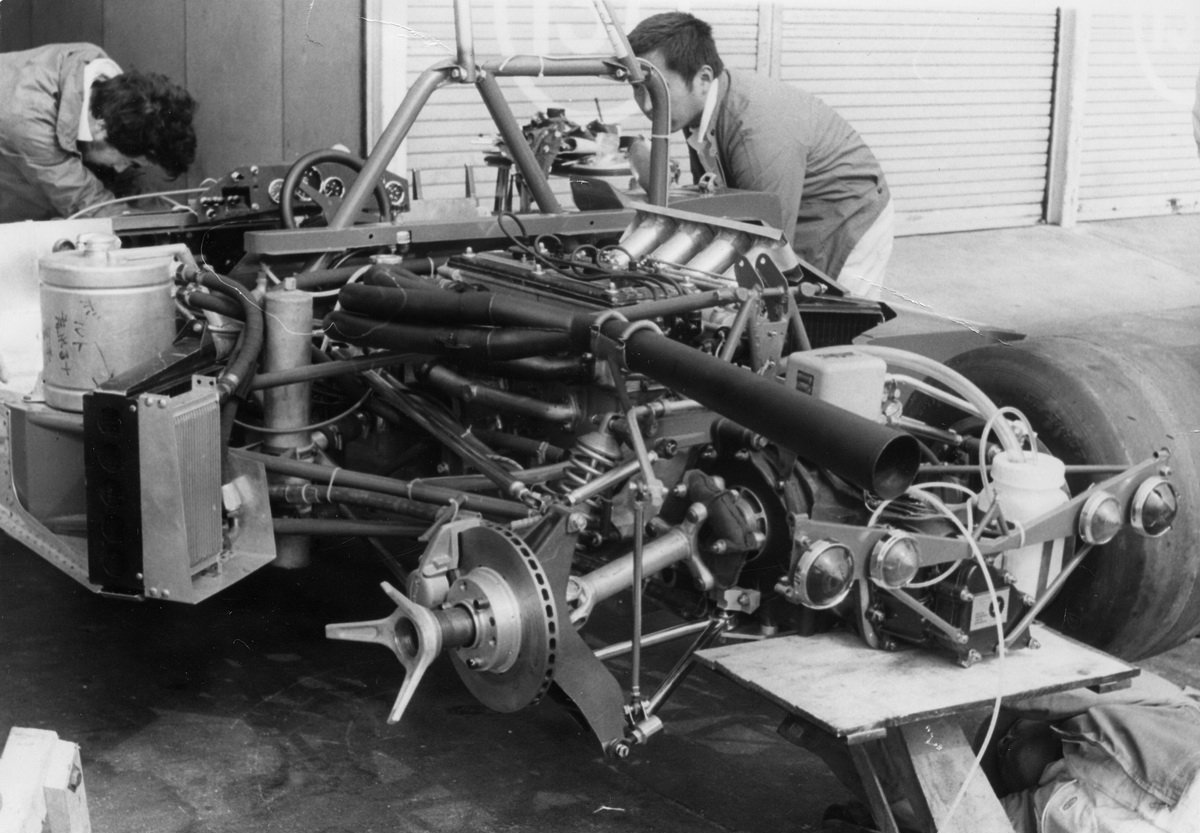
To understand the T290 is to understand the transition from “garagiste” welding to aerospace bonding. The chassis was a full aluminium monocoque, a “bathtub” structure riveted and bonded to create a torsional stiffness that was light years ahead of the older tube-frame cars. This stiffness was crucial not just for suspension accuracy, but for managing the violent harmonics of the engine bolted directly behind the driver’s spine. That engine was the Ford Cosworth FVC (Four Valve, C-Series). A derivative of the FVA Formula 2 engine, the FVC was an inline-four enlarged to approximately 1.8 litres (1,790cc), producing a frenetic 275 brake horsepower at a devastating 9,000 rpm. It was an engine that didn’t hum; it shrieked. It was a chaotic assembly of noise and vibration that turned the stiff Lola tub into a resonance chamber, numbing the driver’s hands and loosening dental fillings, but delivering a throttle response so instantaneous it felt telepathic.
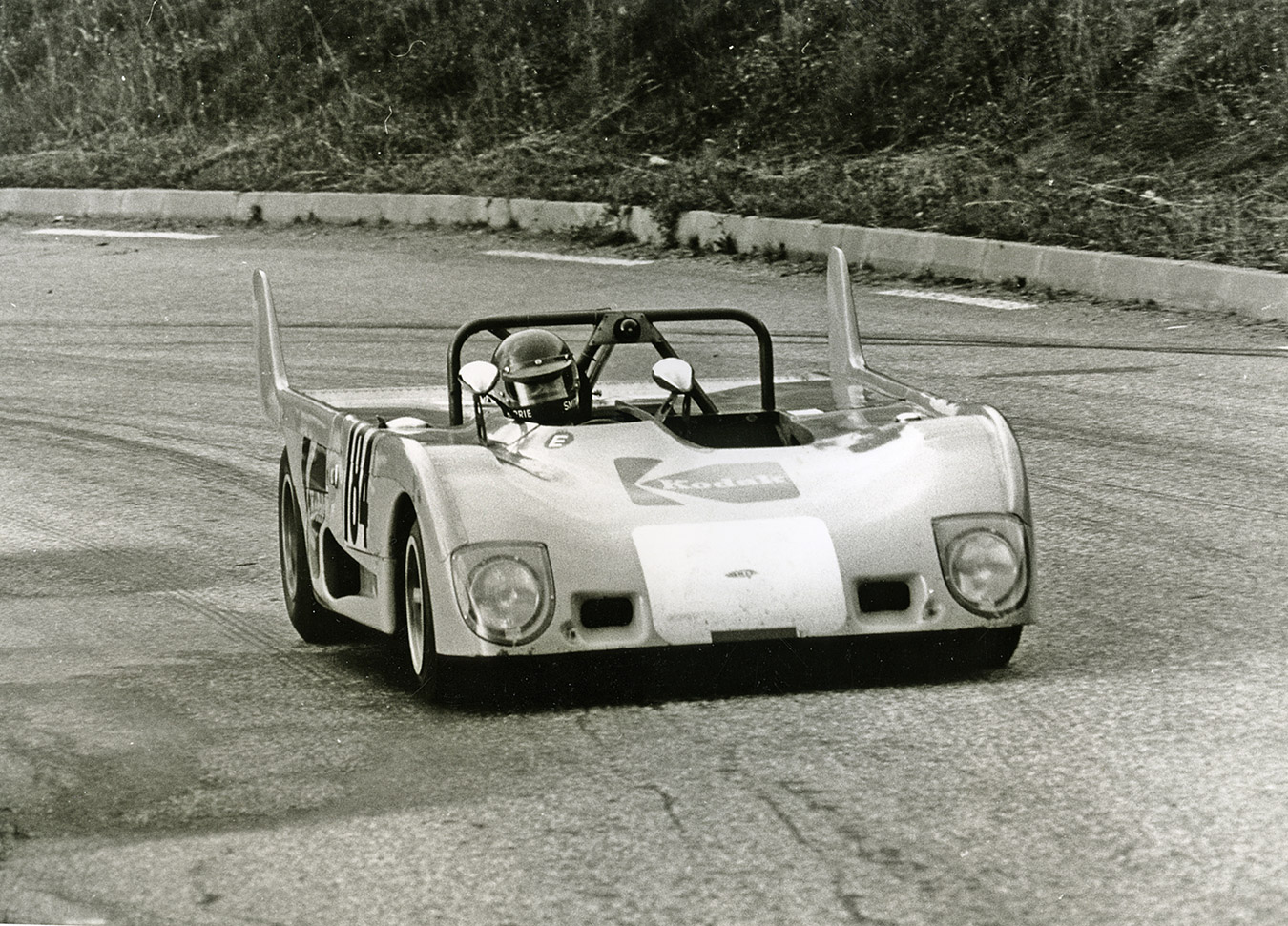
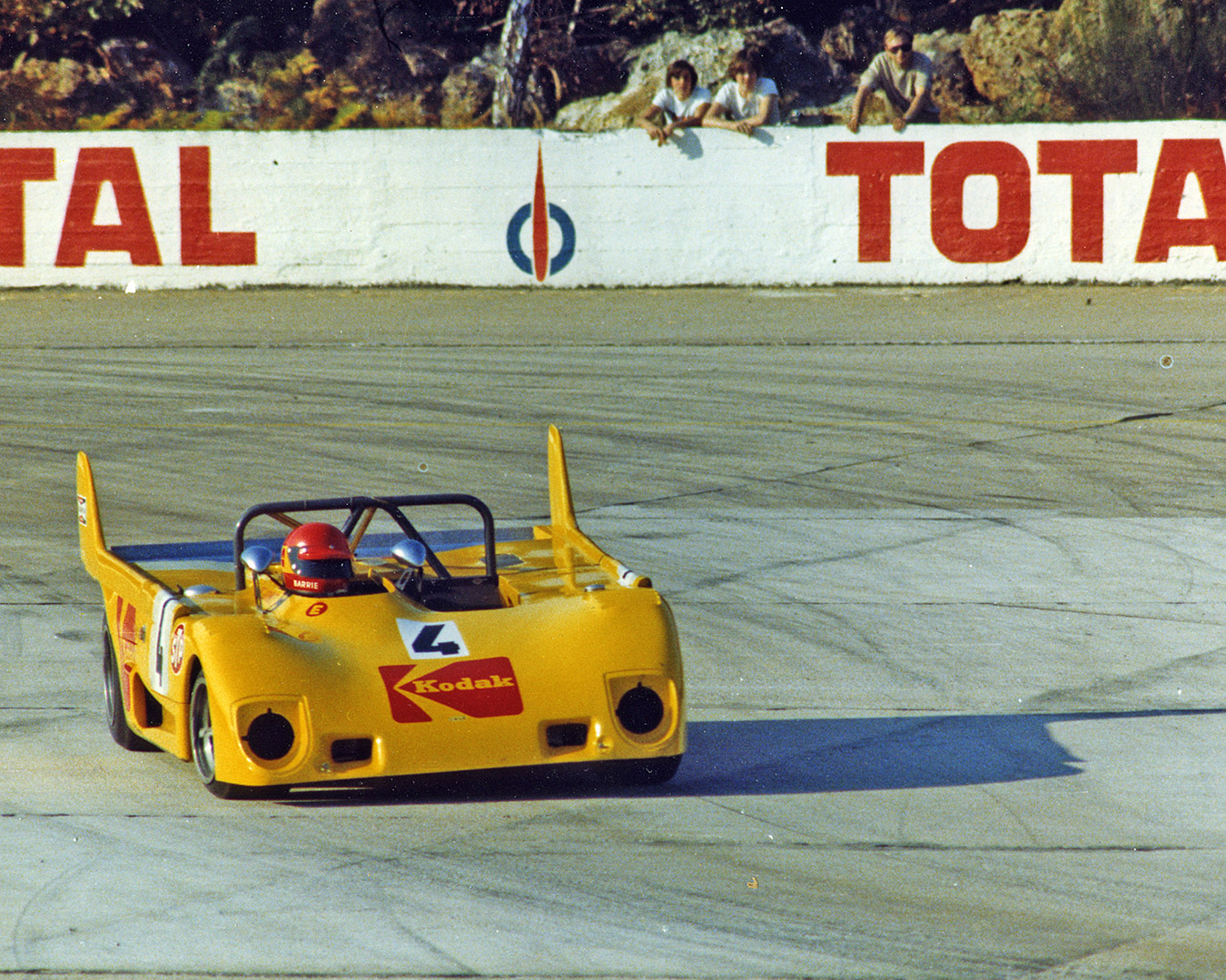
Power was transmitted to the rear Avon or Firestone slicks via a Hewland FT200 five-speed transaxle, the standard handshake of the British racing industry. The suspension followed pure single-seater orthodoxy: double wishbones at the front and a multi-link setup at the rear, with the brakes mounted inboard next to the gearbox to reduce unsprung weight. This inboard braking setup, while efficient for handling, meant that brake cooling was a constant battle, with mechanics cutting varied ducts and scoops into the rear bodywork to feed air to the glowing Girling discs. Visually, the T290 was unmistakable. Its “shovel” nose was designed to aggressively shovel air over the front wheels to generate downforce, while the rear deck was flat, dominated by a separate, strut-mounted wing that sat high in the airflow. It was a design of pure function, stripping away the romance of the T70 era in favor of lap time efficiency.
The impact of the Cosworth-powered T290 on the 1972 season was seismic. It became the weapon of choice for the serious privateer. Ecurie Bonnier, run by the F1 veteran Jo Bonnier, effectively operated as the factory squad, with drivers like Chris Craft and Gérard Larrousse showcasing the car’s blistering pace. In the European 2-Litre Championship, the T290 engaged in a season-long duel with the Abarth-Osella and the Chevron B21. While the Italian Abarth ultimately secured the title due to superior factory reliability, the Lola T290 Cosworth was frequently the fastest car over a single lap. At the Dijon 500km, Chris Craft took a spectacular victory, proving that the British monocoque could outrun the Italian thoroughbreds.
However, the T290’s story is also one of fragility. The solid-mounted FVC engine was a notorious “shaker”. The vibrations were so severe that they would crack exhaust manifolds, loosen suspension bolts, and fracture ancillary brackets mid-race. Finishing a long-distance event in a T290 required a high degree of mechanical sympathy—a trait often lacking in the sprint-race mentality of the 2-litre class. Despite this, the car’s sheer proliferation meant it was ubiquitous. If you attended a race at the Nürburgring, Vallelunga, or Silverstone in 1972, the grid was awash with the cacophony of FVC-powered Lolas.
Beyond the circuit, the T290 found a second, perhaps even more successful life in the European Hill Climb Championship. The car’s diminutive footprint, featherweight mass (barely 550kg), and the explosive torque delivery of the Cosworth engine made it the perfect tool for scaling mountain passes. In the hands of Swiss and French mountain kings, the T290 became a legend of the Course de Côte, often modified with even wider bodywork and larger wings to glue it to the precipitous switchbacks of the Alps.
The legacy of the 1972 Lola T290 Cosworth FVC is that of the patriarch. It established the “T29” bloodline—the T292, T294, T296, and T298—that would dominate the 2-litre class for the remainder of the decade. It proved that the monocoque was the future of sports prototypes, eventually forcing rival Chevron to abandon their beloved spaceframes.
Brand
Produced from
Portal
Vehicle category
Model line
Predecessor
Sucessor
Brand
Produced from
Portal
Vehicle category
Model line
Model generation
Predecessor
Sucessor
About this submodel
The year 1972 marked a definitive rupture in the aesthetic and mechanical philosophy of the sports racing car. The voluptuous curves of the 1960s were being ruthlessly sheared away by the wind tunnel and the ruler, replaced by the functional brutality of the wedge. Standing at the vanguard of this revolution was the 1972 Lola T290, specifically in its most potent and populous guise: powered by the screaming Ford Cosworth FVC. As the replacement for the successful but tubular-framed T212, the T290 was Eric Broadley’s manifesto for the newly inaugurated European 2-Litre Sports Car Championship. It was a machine designed to democratize speed, offering privateer teams a turn-key solution that could—on a tight, technical circuit—embarrass the heavyweight 3.0-litre prototypes from Ferrari and Matra. While its arch-nemesis, the Chevron B21, relied on a traditional spaceframe that offered compliance and forgiveness, the T290 was a rigid, uncompromising aluminium anvil designed to hammer the tarmac into submission.
To understand the T290 is to understand the transition from “garagiste” welding to aerospace bonding. The chassis was a full aluminium monocoque, a “bathtub” structure riveted and bonded to create a torsional stiffness that was light years ahead of the older tube-frame cars. This stiffness was crucial not just for suspension accuracy, but for managing the violent harmonics of the engine bolted directly behind the driver’s spine. That engine was the Ford Cosworth FVC (Four Valve, C-Series). A derivative of the FVA Formula 2 engine, the FVC was an inline-four enlarged to approximately 1.8 litres (1,790cc), producing a frenetic 275 brake horsepower at a devastating 9,000 rpm. It was an engine that didn’t hum; it shrieked. It was a chaotic assembly of noise and vibration that turned the stiff Lola tub into a resonance chamber, numbing the driver’s hands and loosening dental fillings, but delivering a throttle response so instantaneous it felt telepathic.
Power was transmitted to the rear Avon or Firestone slicks via a Hewland FT200 five-speed transaxle, the standard handshake of the British racing industry. The suspension followed pure single-seater orthodoxy: double wishbones at the front and a multi-link setup at the rear, with the brakes mounted inboard next to the gearbox to reduce unsprung weight. This inboard braking setup, while efficient for handling, meant that brake cooling was a constant battle, with mechanics cutting varied ducts and scoops into the rear bodywork to feed air to the glowing Girling discs. Visually, the T290 was unmistakable. Its “shovel” nose was designed to aggressively shovel air over the front wheels to generate downforce, while the rear deck was flat, dominated by a separate, strut-mounted wing that sat high in the airflow. It was a design of pure function, stripping away the romance of the T70 era in favor of lap time efficiency.
The impact of the Cosworth-powered T290 on the 1972 season was seismic. It became the weapon of choice for the serious privateer. Ecurie Bonnier, run by the F1 veteran Jo Bonnier, effectively operated as the factory squad, with drivers like Chris Craft and Gérard Larrousse showcasing the car’s blistering pace. In the European 2-Litre Championship, the T290 engaged in a season-long duel with the Abarth-Osella and the Chevron B21. While the Italian Abarth ultimately secured the title due to superior factory reliability, the Lola T290 Cosworth was frequently the fastest car over a single lap. At the Dijon 500km, Chris Craft took a spectacular victory, proving that the British monocoque could outrun the Italian thoroughbreds.
However, the T290’s story is also one of fragility. The solid-mounted FVC engine was a notorious “shaker”. The vibrations were so severe that they would crack exhaust manifolds, loosen suspension bolts, and fracture ancillary brackets mid-race. Finishing a long-distance event in a T290 required a high degree of mechanical sympathy—a trait often lacking in the sprint-race mentality of the 2-litre class. Despite this, the car’s sheer proliferation meant it was ubiquitous. If you attended a race at the Nürburgring, Vallelunga, or Silverstone in 1972, the grid was awash with the cacophony of FVC-powered Lolas.
Beyond the circuit, the T290 found a second, perhaps even more successful life in the European Hill Climb Championship. The car’s diminutive footprint, featherweight mass (barely 550kg), and the explosive torque delivery of the Cosworth engine made it the perfect tool for scaling mountain passes. In the hands of Swiss and French mountain kings, the T290 became a legend of the Course de Côte, often modified with even wider bodywork and larger wings to glue it to the precipitous switchbacks of the Alps.
The legacy of the 1972 Lola T290 Cosworth FVC is that of the patriarch. It established the “T29” bloodline—the T292, T294, T296, and T298—that would dominate the 2-litre class for the remainder of the decade. It proved that the monocoque was the future of sports prototypes, eventually forcing rival Chevron to abandon their beloved spaceframes.
Tech Specs
Discover the technical specifications
Tech Specs
Discover the technical specifications
Engine
01
03
Internal combustion engine
Configuration
Ford Cosworth FVC, Inline-4
Location
Mid, longitudinally mounted
Construction
Aluminium alloy block and head
Displacement (cc)
1,790 cc
Displacement (cu in)
109.2 cu in
Compression
12.0:1
Bore x Stroke
85.7 mm x 77.6 mm
Valvetrain
4 valves per cylinder, DOHC
Fuel feed
Lucas mechanical fuel injection
Lubrication
Dry sump
Aspiration
Naturally aspirated
Output
Power (hp)
245 hp
Power (kW)
183 kW
Max power at
9,000 RPM
Torque (Nm)
203 Nm
Torque (ft lbs)
150 ft lbs
Max torque at
7,000 RPM
Drivetrain
02
03
Chassis
Type
Monocoque
Material
Aluminium sheet (L72) riveted and bonded
Body
Material
Fibreglass reinforced plastic
Transmission
Gearbox
Hewland FT 200, 5-speed manual
Drive
Rear Wheel Drive (Cam-and-pawl Limited Slip Differential)
Suspension
Front
Independent, double wishbones, coil springs over adjustable dampers, anti-roll bar
Rear
Independent, reversed lower wishbones, top link, twin radius arms, coil springs over adjustable dampers
Steering
Type
Rack and pinion
Brakes
Front
Ventilated discs Ø254 mm, 4-piston calipers (Girling)
Rear
Ventilated discs Ø254 mm, 4-piston calipers (Girling)
Wheels
Front
10" x 13" (Cast Magnesium)
Rear
14" x 13" (Cast Magnesium)
Tires
Front
245/550-13
Rear
325/600-13
Dimensions and performance
03
03
Dimensions
Lenght (mm)
3,550 mm
Lenght (in)
139.8 in
Width (mm)
1,800 mm
Width (in)
70.9 in
Height (mm)
900 mm
Height (in)
35.4 in
Wheelbase (mm)
2,337 mm
Wheelbase (in)
92.0 in
Weight (kg)
570 kg
Weight (lbs)
1,257 lbs
Performance
Power to weight
~0.43 hp/kg
Top speed (km/h)
~275 km/h
Top speed (mph)
~171 mph
0-100 km/h (0-60 mph)
~3.4 s
Submodels
Other variants of this model
Submodels