BMW 3.0 CSL Group 2
Brand
Produced from
Portal
Vehicle category
Model line
Model generation
Predecessor
Sucessor
About this submodel
The 1971 BMW 3.0 CSi was a gentleman’s express. It was a sophisticated, fast, and beautiful pillarless coupé for the connoisseur, a car that proved BMW could build a world-class grand tourer. But in the brutal, paint-trading, steel-cage warfare of the 1970s European Touring Car Championship, it was a knife in a gunfight. The undisputed king of the grid was the Ford Capri RS2600, a V6-powered, lightweight brute that was running roughshod over the championship. For BMW, a company built on a new identity of “The Ultimate Driving Machine,” this was an unacceptable state of affairs. They weren’t just being beaten; they were being humiliated. The answer was not a car; it was a statement of war. It was the formation of a new division, BMW Motorsport GmbH, and the creation of their first, and most iconic, weapon: the 3.0 CSL Group 2.
This car, the “Batmobile,” was not a tuned road car. It was a purpose-built, barely-disguised prototype, created with a single, ruthless objective: to dethrone Ford. Jochen Neerpasch, the brilliant ex-Ford competition manager, was poached by BMW to lead this new M division, and he knew exactly what it would take to win. First, they needed a homologation special. This was the road-going 3.0 CSL, the “L” for Leicht (Light). BMW took the standard E9 CSi shell, built it from thinner-gauge steel, and fitted aluminium-alloy doors, bonnet, and boot lid. All soundproofing was ripped out, and Plexiglas side windows were fitted. This saved 200kg, creating the perfect, lightweight “clean-sheet” for the race engineers.
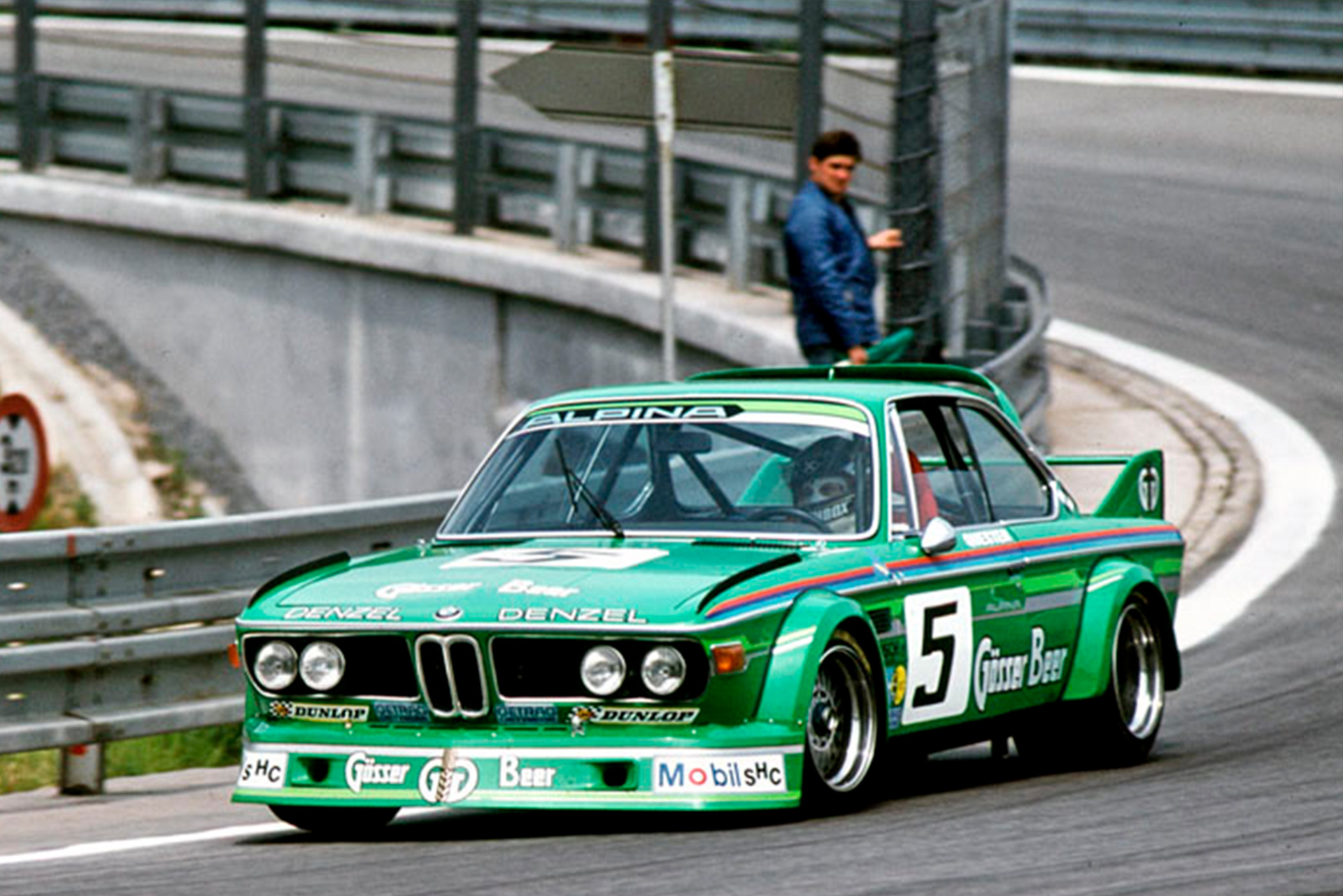
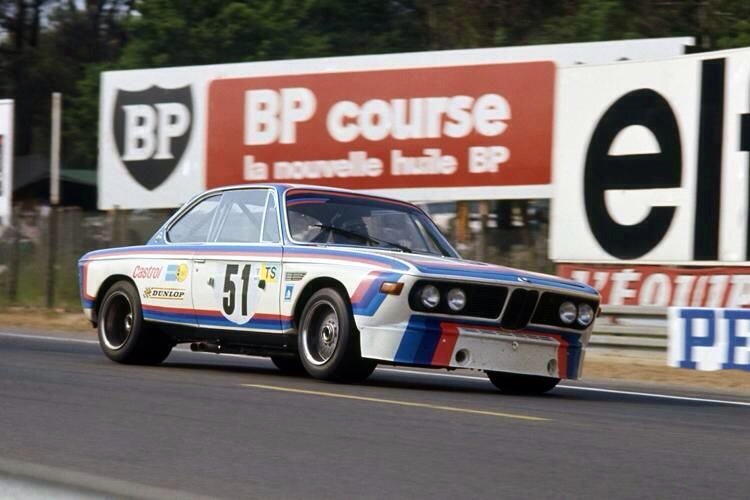
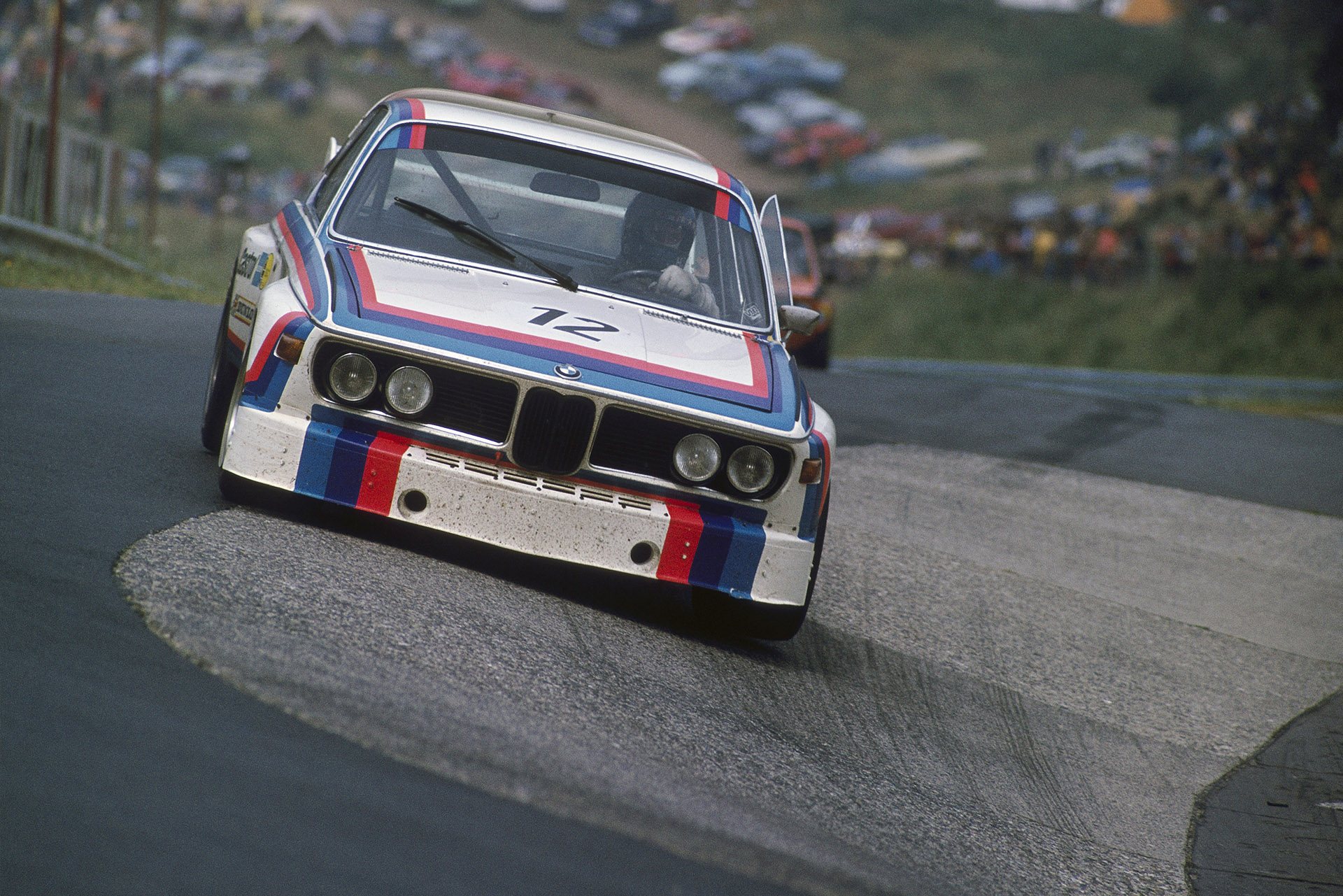
This homologation “L” model was the base, but the Group 2 car was the transformation. The M division took the lightweight shell and turned it into a monster. The chassis was acid-dipped to shed every last gram, then seam-welded for profound structural rigidity. The standard suspension—a MacPherson strut front and semi-trailing arm rear—was thrown out and replaced with a pure-bred racing setup. New geometry, adjustable coil-over dampers, and massive, variable-rate anti-roll bars were fitted. The brakes were enormous, four-piston, ventilated discs at all four corners, taken from the Porsche 917 parts bin. The car’s visual signature was born from necessity: the standard, elegant wings were hacked off with tin snips, and massive, riveted-on fibreglass “pig cheek” flares were fitted. This was the only way to cover the 12-inch-wide (front) and 14-inch-wide (rear) three-piece BBS “mag” wheels, shod in enormous racing slicks.
But the most iconic element was the aero. Developed in the wind tunnel at Stuttgart University, the “Batmobile” aero kit was a masterpiece of function. A deep, “cow-catcher” front air dam pinned the nose to the ground. A set of strakes on the front fenders bled high-pressure air from the wheel wells. A guide-vane on the roof’s trailing edge directed air cleanly to the car’s pièce de résistance: a massive, three-piece rear wing. This package, so aggressive that it was famously illegal for German road use (the wing was left in the boot for the customer to install on CSL road cars), gave the CSL the high-speed stability it needed to fight the Capris.
The engine, however, was the car’s soul. While the CSL road car used a 3.0-litre (and later 3.2L) engine, the Group 2 car was a different beast. It used the M30 straight-six block, but it was bored and stroked to 3,498cc. This was the new M49 engine, a 12-valve (SOHC) unit, but it was tuned to the absolute limit. It featured a dry-sump lubrication system, forged pistons, titanium connecting rods, and, crucially, a high-pressure, slide-throttle Kugelfischer mechanical fuel-injection system. Breathing through six unfiltered trumpets, the engine produced a reliable 380 hp at 8,500 rpm, and its soundtrack was not a V8 rumble, but a glorious, metallic, high-RPM shriek that would become a hallmark of BMW M.
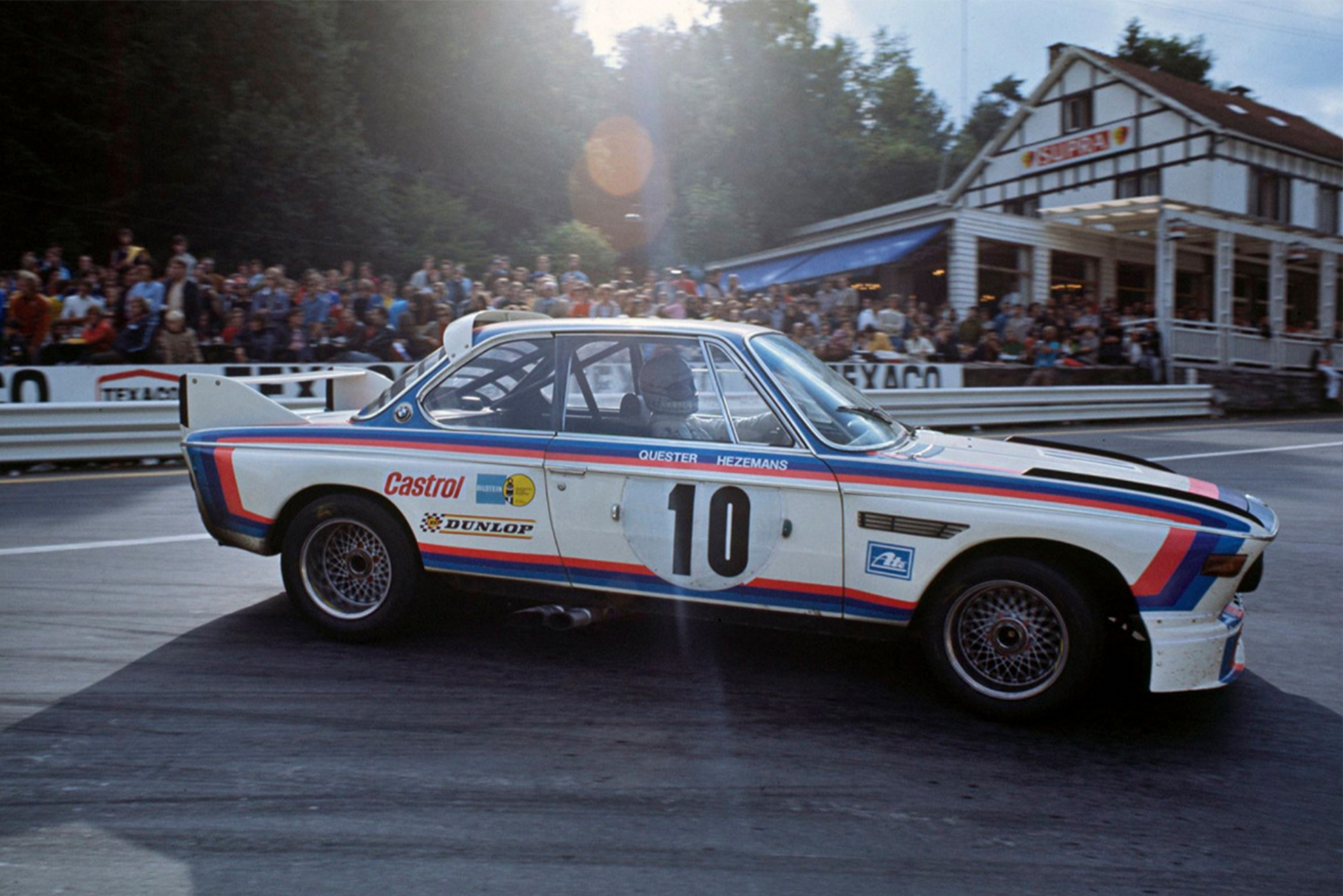
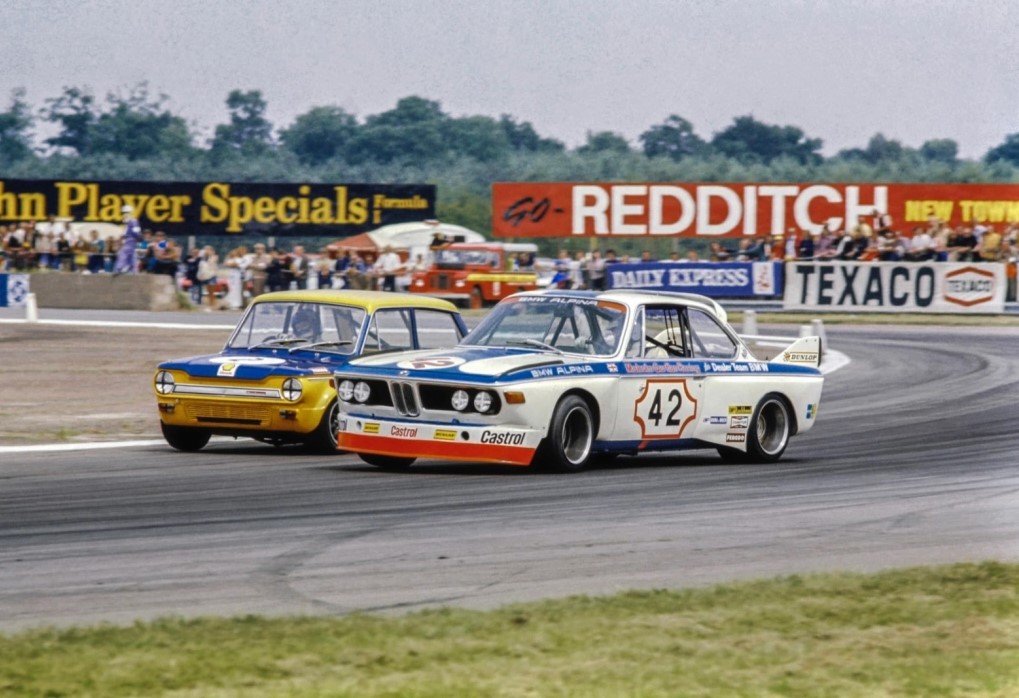
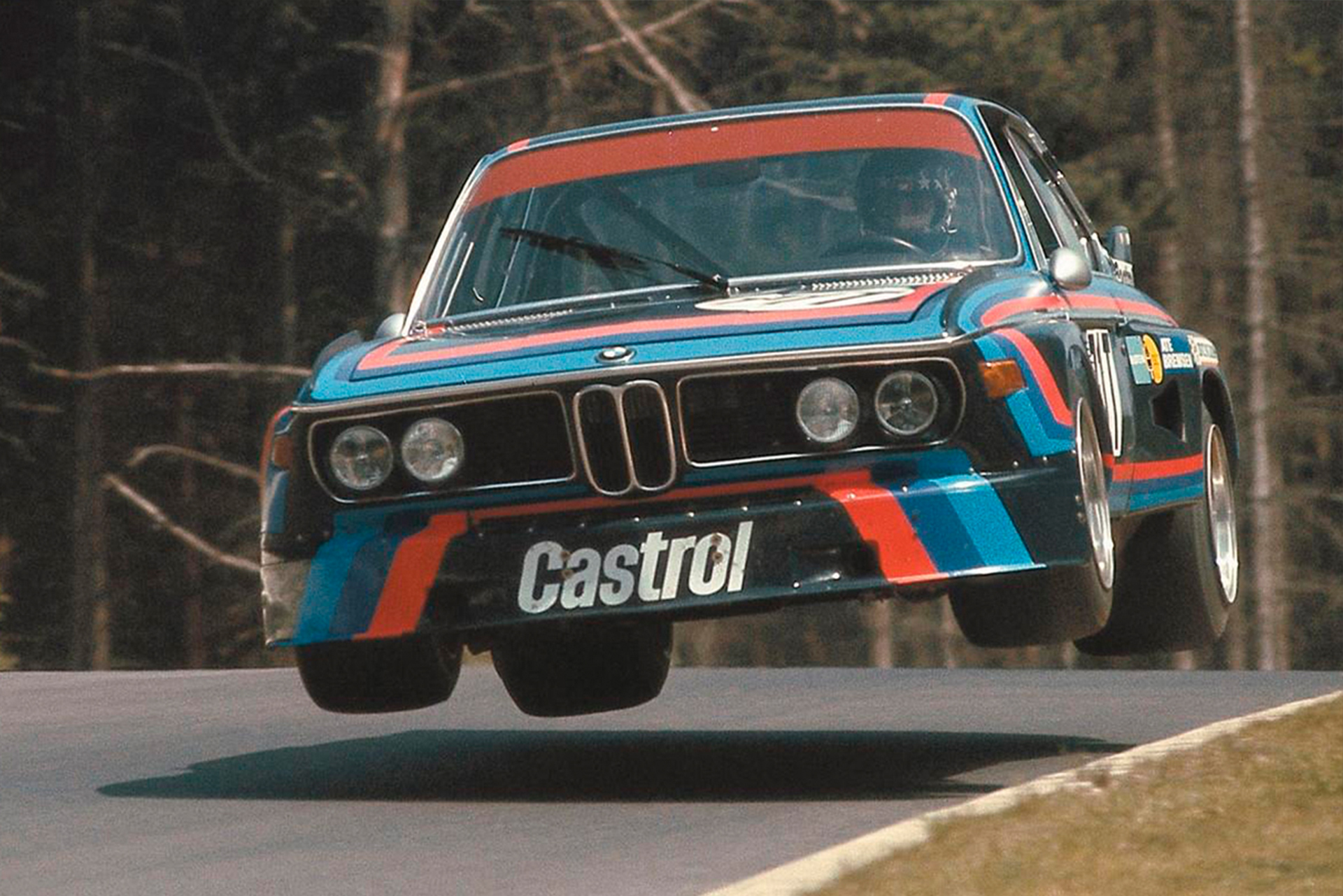
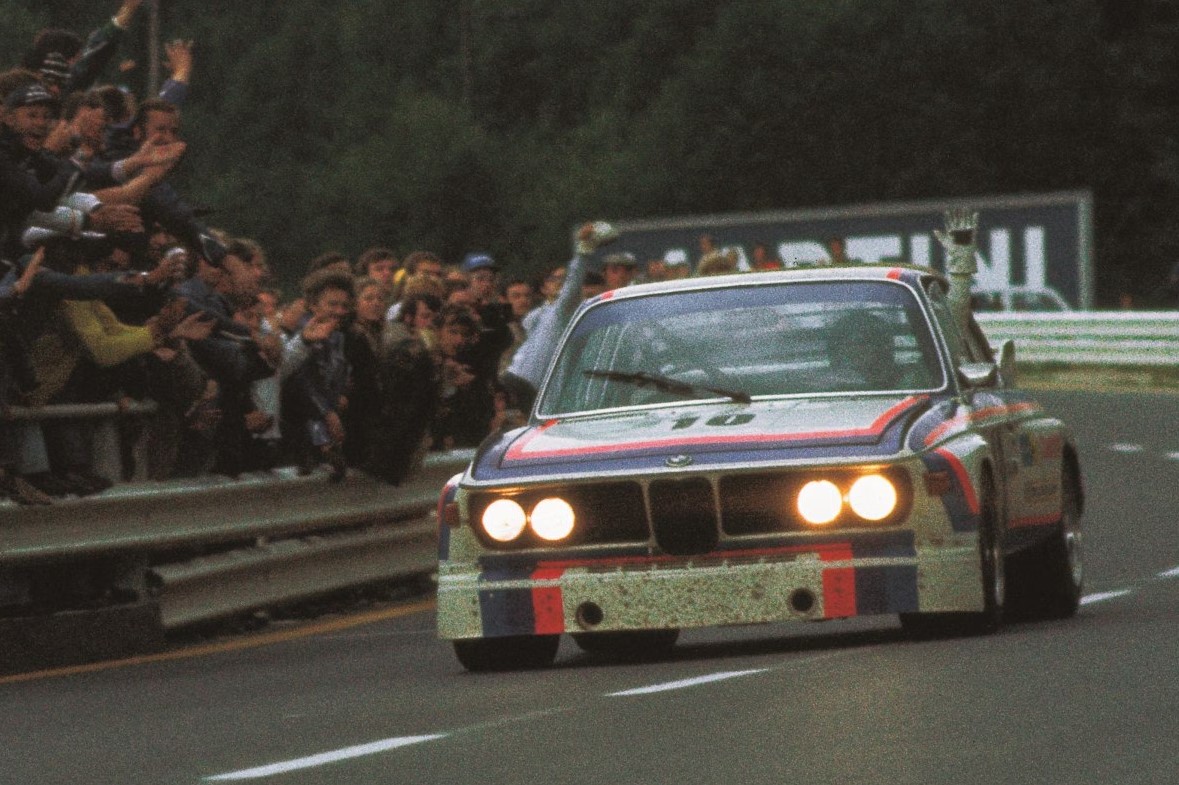
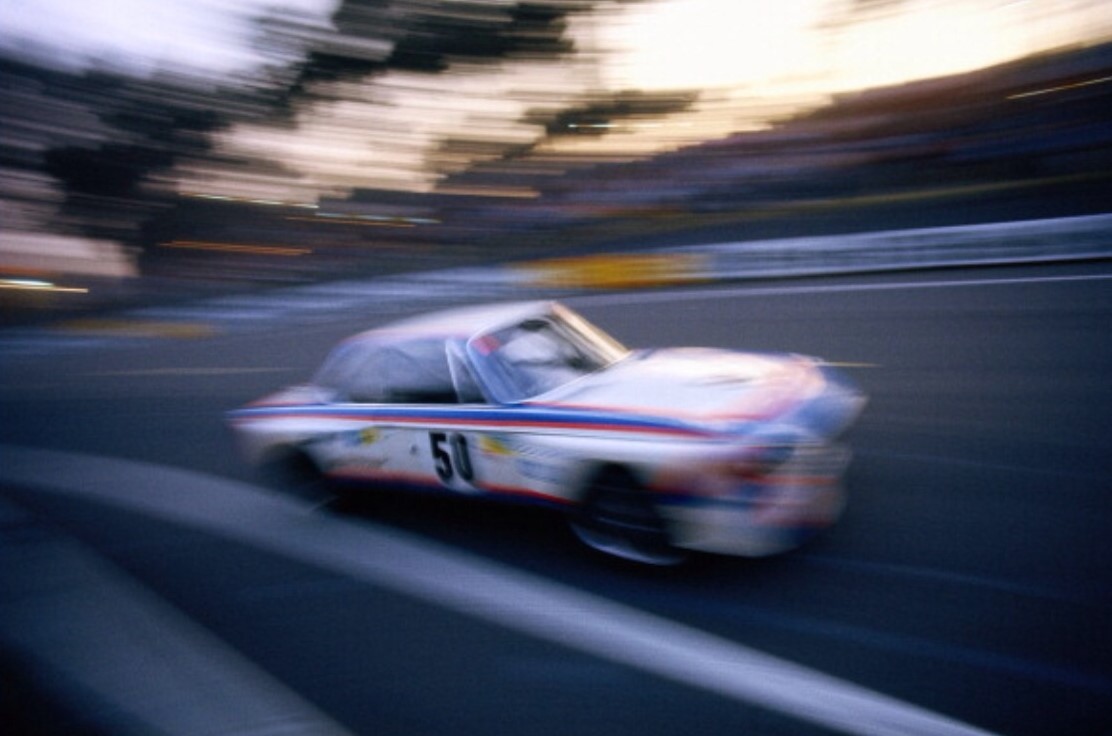
This technical marvel was not built to be admired; it was built to win. The 1973 ETCC season became one of the greatest, most brutal duels in touring car history: the new BMW M “Batmobiles” versus the established “Works” Ford Capris. It was a season-long war. The drivers were a pantheon of legends: Toine Hezemans, Dieter Quester, Chris Amon, and a young, spectacularly talented Hans-Joachim Stuck. The CSL was an immediate success. At the 24 Hours of Spa, the CSL of Hezemans and Quester scored a dominant 1-2 finish with a sister car, crushing the factory Fords and announcing the arrival of a new champion. But the CSL’s true home was the Nürburgring. At the 6-Hour race, Hans-Joachim Stuck put on a driving display for the ages, famously launching the CSL completely airborne over the Pflanzgarten jump, his feet dancing on the pedals, wrestling the car with a flamboyant, sideways style that cemented both him and the “Batmobile” as immortal legends. At the end of the season, BMW had won. Toine Hezemans was crowned ETCC champion, and BMW M had won its first-ever championship in its first-ever attempt.
The Group 2 CSL’s story didn’t end there. It continued to dominate the ETCC for years, winning the championship again in 1975. It also came to America, where BMW of North America ran the car in the 1975 IMSA GT Championship. Against the dominant Porsche 911 RSRs, the CSL won the 12 Hours of Sebring, the 6 Hours of Watkins Glen, and at tracks like Laguna Seca, proving its prowess on both sides of the Atlantic. Its final, and most culturally significant, act came at the 1975 24 Hours of Le Mans. French auctioneer and driver Hervé Poulain had a wild idea: what if a race car could be a canvas? He convinced BMW and the artist Alexander Calder to paint a CSL. The result, the first-ever BMW “Art Car”, was a rolling, primary-coloured sculpture that, while it retired, became one of the most famous racing cars in history.
The Group 2 CSL was the alpha and the omega. It was the first car of BMW M, the weapon that established the brand’s “win-at-all-costs” mentality. It was the direct, battle-hardened testbed for the even wilder Group 5 CSLs that would follow, and it was the spiritual grandfather of every M3, M5, and M6. The “Batmobile” was not just a champion; it was the car that made the M-tricolor the most feared and respected badge in motorsport.
Brand
Produced from
Portal
Vehicle category
Model line
Model generation
Predecessor
Sucessor
Brand
Produced from
Portal
Vehicle category
Model line
Model generation
Predecessor
Sucessor
About this submodel
The 1971 BMW 3.0 CSi was a gentleman’s express. It was a sophisticated, fast, and beautiful pillarless coupé for the connoisseur, a car that proved BMW could build a world-class grand tourer. But in the brutal, paint-trading, steel-cage warfare of the 1970s European Touring Car Championship, it was a knife in a gunfight. The undisputed king of the grid was the Ford Capri RS2600, a V6-powered, lightweight brute that was running roughshod over the championship. For BMW, a company built on a new identity of “The Ultimate Driving Machine,” this was an unacceptable state of affairs. They weren’t just being beaten; they were being humiliated. The answer was not a car; it was a statement of war. It was the formation of a new division, BMW Motorsport GmbH, and the creation of their first, and most iconic, weapon: the 3.0 CSL Group 2.
This car, the “Batmobile,” was not a tuned road car. It was a purpose-built, barely-disguised prototype, created with a single, ruthless objective: to dethrone Ford. Jochen Neerpasch, the brilliant ex-Ford competition manager, was poached by BMW to lead this new M division, and he knew exactly what it would take to win. First, they needed a homologation special. This was the road-going 3.0 CSL, the “L” for Leicht (Light). BMW took the standard E9 CSi shell, built it from thinner-gauge steel, and fitted aluminium-alloy doors, bonnet, and boot lid. All soundproofing was ripped out, and Plexiglas side windows were fitted. This saved 200kg, creating the perfect, lightweight “clean-sheet” for the race engineers.
This homologation “L” model was the base, but the Group 2 car was the transformation. The M division took the lightweight shell and turned it into a monster. The chassis was acid-dipped to shed every last gram, then seam-welded for profound structural rigidity. The standard suspension—a MacPherson strut front and semi-trailing arm rear—was thrown out and replaced with a pure-bred racing setup. New geometry, adjustable coil-over dampers, and massive, variable-rate anti-roll bars were fitted. The brakes were enormous, four-piston, ventilated discs at all four corners, taken from the Porsche 917 parts bin. The car’s visual signature was born from necessity: the standard, elegant wings were hacked off with tin snips, and massive, riveted-on fibreglass “pig cheek” flares were fitted. This was the only way to cover the 12-inch-wide (front) and 14-inch-wide (rear) three-piece BBS “mag” wheels, shod in enormous racing slicks.
But the most iconic element was the aero. Developed in the wind tunnel at Stuttgart University, the “Batmobile” aero kit was a masterpiece of function. A deep, “cow-catcher” front air dam pinned the nose to the ground. A set of strakes on the front fenders bled high-pressure air from the wheel wells. A guide-vane on the roof’s trailing edge directed air cleanly to the car’s pièce de résistance: a massive, three-piece rear wing. This package, so aggressive that it was famously illegal for German road use (the wing was left in the boot for the customer to install on CSL road cars), gave the CSL the high-speed stability it needed to fight the Capris.
The engine, however, was the car’s soul. While the CSL road car used a 3.0-litre (and later 3.2L) engine, the Group 2 car was a different beast. It used the M30 straight-six block, but it was bored and stroked to 3,498cc. This was the new M49 engine, a 12-valve (SOHC) unit, but it was tuned to the absolute limit. It featured a dry-sump lubrication system, forged pistons, titanium connecting rods, and, crucially, a high-pressure, slide-throttle Kugelfischer mechanical fuel-injection system. Breathing through six unfiltered trumpets, the engine produced a reliable 380 hp at 8,500 rpm, and its soundtrack was not a V8 rumble, but a glorious, metallic, high-RPM shriek that would become a hallmark of BMW M.
This technical marvel was not built to be admired; it was built to win. The 1973 ETCC season became one of the greatest, most brutal duels in touring car history: the new BMW M “Batmobiles” versus the established “Works” Ford Capris. It was a season-long war. The drivers were a pantheon of legends: Toine Hezemans, Dieter Quester, Chris Amon, and a young, spectacularly talented Hans-Joachim Stuck. The CSL was an immediate success. At the 24 Hours of Spa, the CSL of Hezemans and Quester scored a dominant 1-2 finish with a sister car, crushing the factory Fords and announcing the arrival of a new champion. But the CSL’s true home was the Nürburgring. At the 6-Hour race, Hans-Joachim Stuck put on a driving display for the ages, famously launching the CSL completely airborne over the Pflanzgarten jump, his feet dancing on the pedals, wrestling the car with a flamboyant, sideways style that cemented both him and the “Batmobile” as immortal legends. At the end of the season, BMW had won. Toine Hezemans was crowned ETCC champion, and BMW M had won its first-ever championship in its first-ever attempt.
The Group 2 CSL’s story didn’t end there. It continued to dominate the ETCC for years, winning the championship again in 1975. It also came to America, where BMW of North America ran the car in the 1975 IMSA GT Championship. Against the dominant Porsche 911 RSRs, the CSL won the 12 Hours of Sebring, the 6 Hours of Watkins Glen, and at tracks like Laguna Seca, proving its prowess on both sides of the Atlantic. Its final, and most culturally significant, act came at the 1975 24 Hours of Le Mans. French auctioneer and driver Hervé Poulain had a wild idea: what if a race car could be a canvas? He convinced BMW and the artist Alexander Calder to paint a CSL. The result, the first-ever BMW “Art Car”, was a rolling, primary-coloured sculpture that, while it retired, became one of the most famous racing cars in history.
The Group 2 CSL was the alpha and the omega. It was the first car of BMW M, the weapon that established the brand’s “win-at-all-costs” mentality. It was the direct, battle-hardened testbed for the even wilder Group 5 CSLs that would follow, and it was the spiritual grandfather of every M3, M5, and M6. The “Batmobile” was not just a champion; it was the car that made the M-tricolor the most feared and respected badge in motorsport.
Tech Specs
Discover the technical specifications
Tech Specs
Discover the technical specifications
Engine
01
03
Internal combustion engine
Configuration
M49, Inline-6
Location
Front, longitudinally mounted
Construction
Cast iron block, aluminium head
Displacement (cc)
3,498 cc
Displacement (cu in)
213.4 cu in
Compression
11.0:1
Bore x Stroke
94.0 mm x 84.0 mm
Valvetrain
4 valves per cylinder, DOHC
Fuel feed
Kugelfischer Mechanical Fuel Injection
Lubrication
-
Aspiration
Naturally aspirated
Output
Power (hp)
380 hp
Power (kW)
283.3 kW
Max power at
8,500 RPM
Torque (Nm)
-
Torque (ft lbs)
-
Max torque at
-
Drivetrain
02
03
Chassis
Type
Monocoque unibody
Material
Steel
Body
Material
Steel and aluminium alloy parts (doors, engine cover and rear cover)
Transmission
Gearbox
5-speed manual
Drive
Rear Wheel Drive
Suspension
Front
McPherson struts, Bilstein gas-pressurised shock absorbers, anti-roll bar
Rear
Semi trailing arms, coil springs, Bilstein gas pressurised telescopic dampers, anti-roll bar
Steering
Type
Rack and pinion
Brakes
Front
Ventilated discs
Rear
Ventilated discs
Wheels
Front
-
Rear
-
Tires
Front
-
Rear
-
Dimensions and performance
03
03
Dimensions
Lenght (mm)
4,630 mm
Lenght (in)
182.3 in
Width (mm)
1,730 mm
Width (in)
68.1 in
Height (mm)
1,366 mm
Height (in)
53.8 in
Wheelbase (mm)
2,625 mm
Wheelbase (in)
103.3 in
Weight (kg)
1,062 kg
Weight (lbs)
2,341 lbs
Performance
Power to weight
0.35 hp/kg
Top speed (km/h)
270 km/h
Top speed (mph)
168 mph
0-100 km/h (0-60 mph)
4.6 s
Submodels
Other variants of this model
Submodels