Chevron B36 Ford Cosworth BDH
Brand
Produced from
Portal
Vehicle category
Model line
Predecessor
Sucessor
About this submodel
In the high-stakes ecosystem of 1970s sports car racing, the glory was almost exclusively hoarded by the 2.0-litre titans. The thunderous BMW M12s and the muscular Cosworth BDGs grabbed the headlines, the pole positions, and the overall trophies. Yet, operating in the slipstream of these giants was a sub-category of motorsport that was arguably even more frenetic, technical, and demanding: the small-displacement prototype class. For the connoisseur of precision engineering—the driver who valued corner speed over straight-line grunt and agility over brute force—there was no finer instrument in 1976 than the Chevron B36 Ford Cosworth BDH. While its big brothers were sledgehammers designed to crack the Nürburgring, the B36 BDH was a scalpel, a machine built to dissect the tightest circuits and steepest hill climbs of Europe and America.
The B36 chassis was Derek Bennett’s ultimate expression of the aluminium monocoque sports car. By 1976, it had been refined into a platform of immense stiffness and aerodynamic sophistication, designed to handle the 300-horsepower stresses of a BMW engine. When fitted with the diminutive Cosworth BDH, the chassis was effectively “over-engineered”. The BDH (Belt Drive, H-series) was the baby of the Cosworth BDA family. Originally designed for the 1,300cc class (though often stretched to 1.6 litres for specific regulations), it was a mechanical jewel. It featured the same advanced aluminium block and 16-valve head architecture as the BDG but scaled down. This resulted in an engine that was incredibly light and compact. In a car that already tipped the scales at a featherweight 540kg, the removal of the larger engine’s mass from behind the cockpit transformed the B36’s dynamics. It reduced the polar moment of inertia to near zero, creating a car with telepathic turn-in response.
Driving the B36 BDH was an exercise in momentum conservation. Producing between 190 and 210 bhp at a stratospheric 10,000 rpm, the BDH lacked the torque to mask driving errors. There was no power to dig you out of a slow corner exit; speed had to be carried in. The driver had to commit to the corner entry at speeds that seemed physically impossible, trusting in the B36’s immense mechanical grip and downforce to stick. It was a “light-switch” car—the throttle was either wide open or closed, and the revs had to be kept in the stratosphere where the Lucas mechanical fuel injection delivered its crisp, metallic bark. On a technical circuit, a well-driven B36 BDH could embarrass much more powerful machinery, braking metres later and carrying 10 mph more through the apex, buzzing around the outside of 2.0-litre cars like an angry hornet.
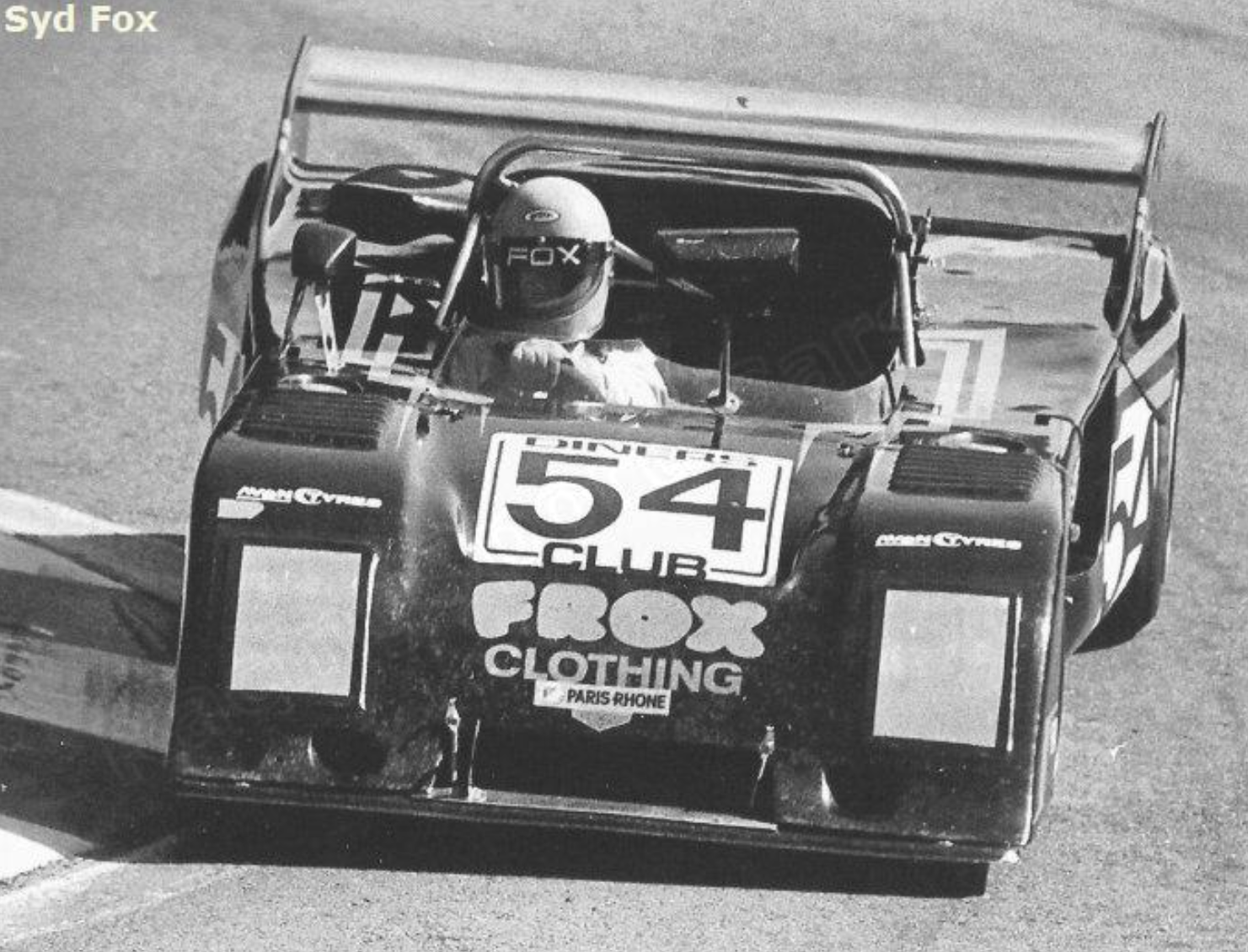
The B36 BDH found its spiritual home in two distinct arenas: the European Hill Climb Championship and the American SCCA C-Sports Racer (CSR) class. In Europe, the “Mountain Kings” prized the car for its agility. On the winding, terrifying ascents of Mont-Dore or Trento-Bondone, where top speed was irrelevant and traction was everything, the lightweight B36 BDH was a dominant force, dancing up the switchbacks with a fluidity the heavy V8s could not match. Across the Atlantic, the car became a legend in SCCA club racing. The 1.3-litre CSR class was a hotbed of innovation, and the B36 BDH was the “Cadillac” option—a professional, factory-built race car that offered safety and sophistication far beyond the home-built specials it competed against. At the SCCA Runoffs at Road Atlanta, the scream of the 10,000-rpm Cosworth in a Chevron chassis became the soundtrack of victory for a generation of amateur racers.
While it never achieved the overall wins of the BDG-powered cars at Le Mans or Monza, the B36 BDH occupies a special place in the Chevron hierarchy. It represents the ultimate “momentum car”, a machine where the chassis capabilities far exceeded the engine’s output, resulting in a driving experience of pure, unadulterated grip. It was a car that rewarded finesse, bravery, and precision, proving that in the world of motorsport, less weight is often worth just as much as more power. Today, seeing a B36 BDH on a historic grid is a rare treat, its high-pitched, frenetic exhaust note serving as a reminder of the era when small-bore prototypes were the sharpest tools in the box.
Brand
Produced from
Portal
Vehicle category
Model line
Predecessor
Sucessor
Brand
Produced from
Portal
Vehicle category
Model line
Model generation
Predecessor
Sucessor
About this submodel
In the high-stakes ecosystem of 1970s sports car racing, the glory was almost exclusively hoarded by the 2.0-litre titans. The thunderous BMW M12s and the muscular Cosworth BDGs grabbed the headlines, the pole positions, and the overall trophies. Yet, operating in the slipstream of these giants was a sub-category of motorsport that was arguably even more frenetic, technical, and demanding: the small-displacement prototype class. For the connoisseur of precision engineering—the driver who valued corner speed over straight-line grunt and agility over brute force—there was no finer instrument in 1976 than the Chevron B36 Ford Cosworth BDH. While its big brothers were sledgehammers designed to crack the Nürburgring, the B36 BDH was a scalpel, a machine built to dissect the tightest circuits and steepest hill climbs of Europe and America.
The B36 chassis was Derek Bennett’s ultimate expression of the aluminium monocoque sports car. By 1976, it had been refined into a platform of immense stiffness and aerodynamic sophistication, designed to handle the 300-horsepower stresses of a BMW engine. When fitted with the diminutive Cosworth BDH, the chassis was effectively “over-engineered”. The BDH (Belt Drive, H-series) was the baby of the Cosworth BDA family. Originally designed for the 1,300cc class (though often stretched to 1.6 litres for specific regulations), it was a mechanical jewel. It featured the same advanced aluminium block and 16-valve head architecture as the BDG but scaled down. This resulted in an engine that was incredibly light and compact. In a car that already tipped the scales at a featherweight 540kg, the removal of the larger engine’s mass from behind the cockpit transformed the B36’s dynamics. It reduced the polar moment of inertia to near zero, creating a car with telepathic turn-in response.
Driving the B36 BDH was an exercise in momentum conservation. Producing between 190 and 210 bhp at a stratospheric 10,000 rpm, the BDH lacked the torque to mask driving errors. There was no power to dig you out of a slow corner exit; speed had to be carried in. The driver had to commit to the corner entry at speeds that seemed physically impossible, trusting in the B36’s immense mechanical grip and downforce to stick. It was a “light-switch” car—the throttle was either wide open or closed, and the revs had to be kept in the stratosphere where the Lucas mechanical fuel injection delivered its crisp, metallic bark. On a technical circuit, a well-driven B36 BDH could embarrass much more powerful machinery, braking metres later and carrying 10 mph more through the apex, buzzing around the outside of 2.0-litre cars like an angry hornet.
The B36 BDH found its spiritual home in two distinct arenas: the European Hill Climb Championship and the American SCCA C-Sports Racer (CSR) class. In Europe, the “Mountain Kings” prized the car for its agility. On the winding, terrifying ascents of Mont-Dore or Trento-Bondone, where top speed was irrelevant and traction was everything, the lightweight B36 BDH was a dominant force, dancing up the switchbacks with a fluidity the heavy V8s could not match. Across the Atlantic, the car became a legend in SCCA club racing. The 1.3-litre CSR class was a hotbed of innovation, and the B36 BDH was the “Cadillac” option—a professional, factory-built race car that offered safety and sophistication far beyond the home-built specials it competed against. At the SCCA Runoffs at Road Atlanta, the scream of the 10,000-rpm Cosworth in a Chevron chassis became the soundtrack of victory for a generation of amateur racers.
While it never achieved the overall wins of the BDG-powered cars at Le Mans or Monza, the B36 BDH occupies a special place in the Chevron hierarchy. It represents the ultimate “momentum car”, a machine where the chassis capabilities far exceeded the engine’s output, resulting in a driving experience of pure, unadulterated grip. It was a car that rewarded finesse, bravery, and precision, proving that in the world of motorsport, less weight is often worth just as much as more power. Today, seeing a B36 BDH on a historic grid is a rare treat, its high-pitched, frenetic exhaust note serving as a reminder of the era when small-bore prototypes were the sharpest tools in the box.
Tech Specs
Discover the technical specifications
Tech Specs
Discover the technical specifications
Engine
01
03
Internal combustion engine
Configuration
Ford Cosworth BDH, Inline-4
Location
Mid, longitudinally mounted
Construction
Cast iron block, aluminium alloy head
Displacement (cc)
1,300 cc
Displacement (cu in)
79.3 cu in
Compression
-
Bore x Stroke
-
Valvetrain
-
Fuel feed
Fuel Injection
Lubrication
Dry sump
Aspiration
Naturally aspirated
Output
Power (hp)
190 hp
Power (kW)
141 kW
Max power at
-
Torque (Nm)
-
Torque (ft lbs)
-
Max torque at
-
Drivetrain
02
03
Chassis
Type
Monocoque with front and rear subframes
Material
Aluminium
Body
Material
Fibreglass
Transmission
Gearbox
5-speed manual
Drive
Rear Wheel Drive
Suspension
Front
Double wishbones, coil springs over dampers, anti-roll bar
Rear
Single top links, twin lower links, twin trailing arms, coil springs over dampers, anti-roll bar
Steering
Type
Rack and pinion
Brakes
Front
Ventilated discs
Rear
Ventilated discs
Wheels
Front
-
Rear
-
Tires
Front
-
Rear
-
Dimensions and performance
03
03
Dimensions
Lenght (mm)
-
Lenght (in)
-
Width (mm)
-
Width (in)
-
Height (mm)
-
Height (in)
-
Wheelbase (mm)
2,400 mm
Wheelbase (in)
94.5 in
Weight (kg)
-
Weight (lbs)
-
Performance
Power to weight
-
Top speed (km/h)
-
Top speed (mph)
-
0-100 km/h (0-60 mph)
-
Submodels
Other variants of this model
Submodels