Lola T286 Ford Cosworth DFV
Brand
Produced from
Portal
Vehicle category
Predecessor
Sucessor
About this submodel
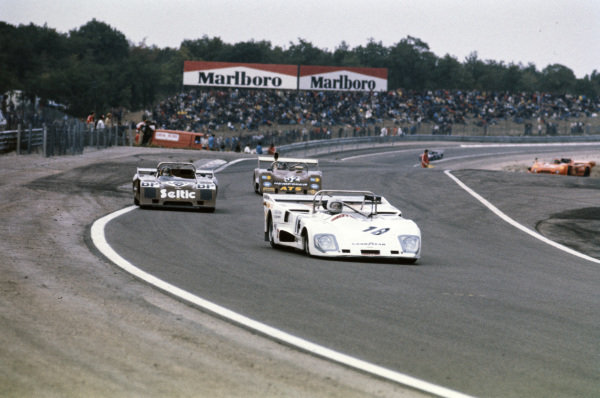
By the mid-1970s, the landscape of top-tier sports car racing had mutated into a battlefield of technological divergence. The glamorous, big-banger era of the Porsche 917 and Ferrari 512 was a fading memory, legislated out of existence by the 3.0-litre displacement cap. In its wake, the World Sportscar Championship had become a duopoly of factory might versus privateer ingenuity. On one side stood the turbo-charged juggernauts: the sinister, Martini-striped Porsche 936s and the frenetic Renault-Alpine A442s, cars that used forced induction to crush the stopwatch. On the other side stood the “garagistes”, the British specialist manufacturers who believed that a lightweight chassis married to the ubiquitous Ford-Cosworth DFV Formula 1 engine was still the purest path to victory. It was into this high-stakes environment that the Lola T286 was born in 1976. As the ultimate evolution of the T280 lineage initiated in 1972, the T286 was Eric Broadley’s definitive answer to the 3.0-litre question. It was a machine built for the wealthy privateer who wanted to go wheel-to-wheel with the factories, a car that traded the complex, lag-prone power of the turbos for the razor-sharp, ear-splitting immediacy of a Grand Prix engine.
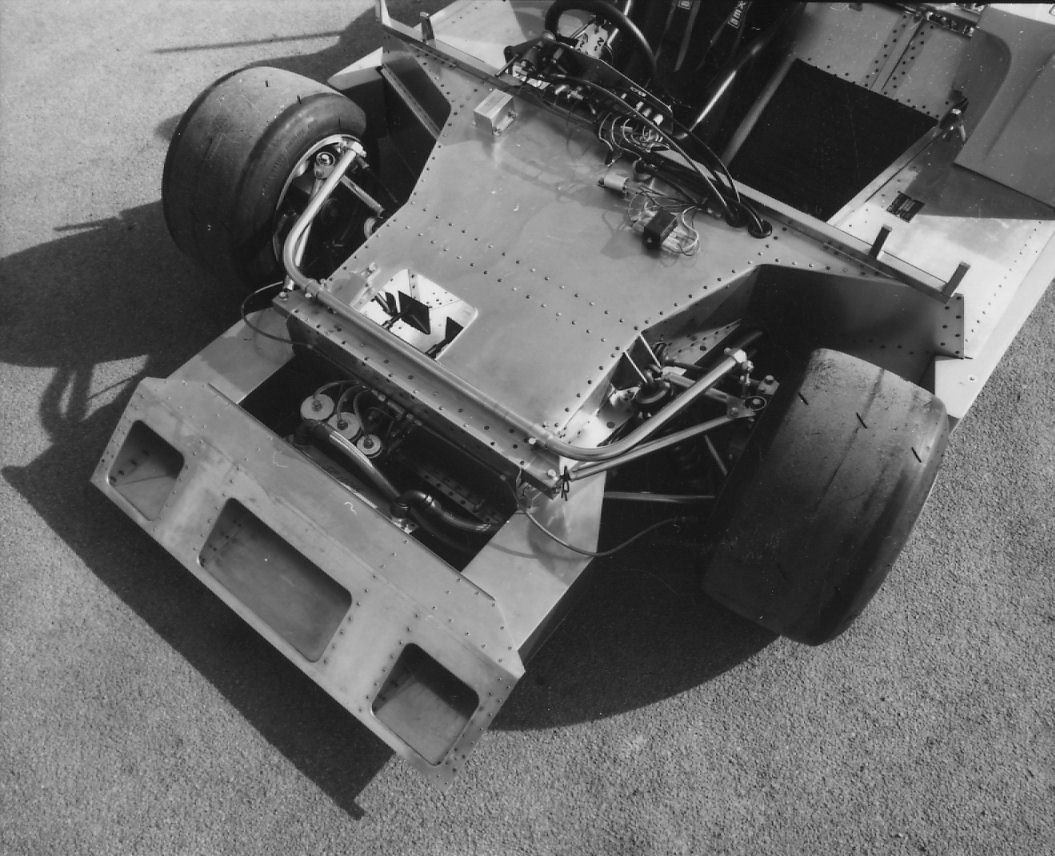
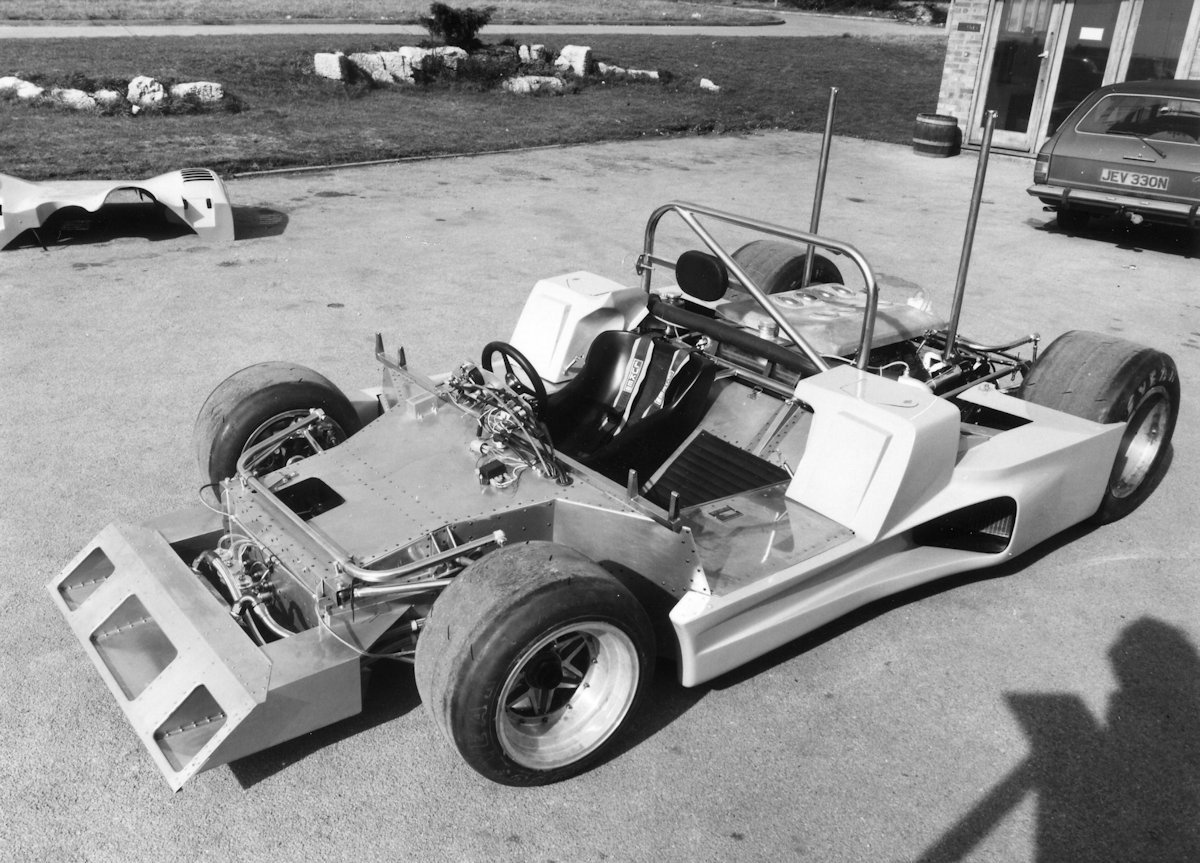
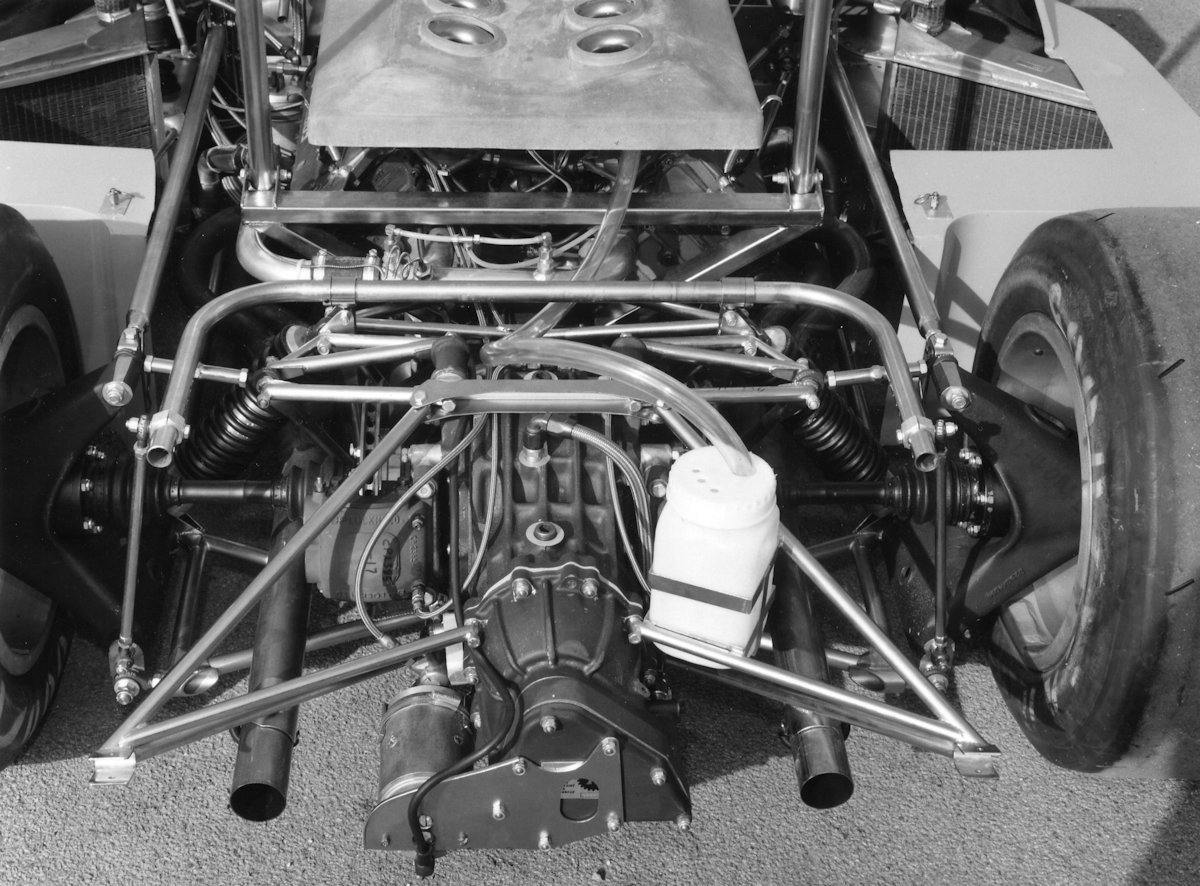
Technically, the T286 was a study in incremental perfection rather than radical revolution, a testament to Broadley’s philosophy of refining a proven concept until it sang. The chassis was a bonded and riveted aluminium monocoque, a “bathtub” design that was exceptionally light and stiff, derived directly from Lola’s extensive Formula 1 and Formula 5000 experience. Unlike the earlier T280, which was notoriously fragile due to the destructive harmonics of the solid-mounted DFV engine, the T286 featured revised subframes and mounting points designed to better isolate the chassis from the violent vibrations of the flat-plane crank V8. The suspension followed the classic open-wheel template: double wishbones at the front with coil-over dampers, and a multi-link setup at the rear, with the brakes mounted inboard to reduce unsprung weight and improve the car’s reaction to the undulating European tarmac.
However, the soul of the T286 remained the engine. The Cosworth DFV (Double Four Valve) was, by 1976, the standard-bearer of motorsport excellence. In the back of the Lola, it was a stressed member, screaming to 10,500 rpm and delivering approximately 485 to 500 brake horsepower. While the turbo Porsches could dial up more boost to achieve 540hp or more, the Lola had the advantage of throttle response. On tight, technical circuits like Dijon or the twists of the Nürburgring, the T286 could dance. The power was fed through a Hewland DG300 five-speed transaxle, a gearbox that required a firm, precise hand and perfect heel-and-toe downshifts to prevent the rear wheels from locking up—a distinct possibility in a car that weighed barely 700 kilograms. Aerodynamically, the T286 was cleaner and more purposeful than its predecessors. The nose was a refined wedge, featuring a full-width splitter to pin the front end, while the rear was dominated by a high-mounted wing on a central strut, a move away from the integrated bodywork spoilers of the early 70s, reflecting the increasing understanding of downforce efficiency. A substantial airbox, often fed by a periscope intake, sat above the driver’s head, force-feeding air into the thirsty Lucas mechanical fuel injection trumpets.
The history of the Lola T286 is a fascinating narrative of national dominance and international struggle. While it was designed to compete in the World Sportscar Championship (Group 6), the budget disparity between a privateer Lola team and the factory Porsche system was becoming insurmountable on the endurance stage. At the 24 Hours of Le Mans, the T286 faced the brutal reality of the DFV engine: it was a sprinter, not a marathon runner. The vibrations that made the car so visceral to drive were hell on components over 24 hours. Notable entries, such as those by the French team owner and driver Xavier Lapeyre, showed blistering qualifying pace. In 1976 and 1977, T286s appeared at La Sarthe, looking every bit the contender, only to succumb to the mechanical attrition that defined the era.
However, to judge the T286 solely by Le Mans is to misunderstand its purpose. The car found its true calling in the shorter, fiercer sprint races of the European sportscar scene. It was in the hands of Xavier Lapeyre that the T286 became a legend of the French circuits. In the 1976 and 1977 seasons of the French Sportscar Championship, Lapeyre and his T286 were virtually untouchable. The car’s agility and the punch of the DFV engine made it the perfect weapon for tracks like Paul Ricard, Magny-Cours, and Nogaro. Lapeyre decimated the opposition, proving that in a race of 500 kilometres or less, the atmospheric Lola could hold its head high against anything in the world. The car also found a home in the Interserie championship, the European equivalent of Can-Am, where the regulations were looser. Here, the T286s were often modified, sometimes fitted with larger wings or different bodywork, continuing to win races well into the late 70s against surplus machinery from Alfa Romeo and McLaren.
The driving experience of a T286 was described by contemporaries as “intense.” With the driver’s feet positioned ahead of the front axle line and the screaming V8 bolted directly to their spine, it was a sensory assault. The steering was unassisted and heavy, loading up immensely in high-speed corners, while the cockpit was a furnace of heat radiating from the front-mounted radiators and oil pipes running through the sills. It was a car that separated the gentlemen drivers from the professionals; to extract the last tenth of a second from a T286 required a commitment level that bordered on the suicidal, trusting that the downforce would arrive just as the grip from the massive slick tires began to fade.
The legacy of the Lola T286 is that of the final, glorious stand of the traditional 3.0-litre sports prototype. It was the bridge between the purity of the early 70s and the technological arms race of the Ground Effect era that would follow with the Lola T600. The T286 proved that Eric Broadley’s vision of a customer race car was still valid, even in an era dominated by factory giants. It provided a template for the future Group C Junior (C2) class—lightweight, Cosworth-powered cars that could be run by small teams. More importantly, it kept the grid alive. Without cars like the T286, the fields of the late 70s would have been a procession of Porsches. The Lola added noise, color, and legitimate competition to the grid. Today, the T286 is a prized jewel in historic racing, particularly in series like Peter Auto’s CER (Classic Endurance Racing). When a T286 fires up in the paddock, the sharp, jagged bark of its DFV engine cuts through the air, instantly silencing the turbo murmurs of its rivals, serving as a violent, beautiful reminder of a time when the only electronic aid a driver had was the spark plug.
Brand
Produced from
Portal
Vehicle category
Predecessor
Sucessor
Brand
Produced from
Portal
Vehicle category
Model line
Model generation
Predecessor
Sucessor
About this submodel
By the mid-1970s, the landscape of top-tier sports car racing had mutated into a battlefield of technological divergence. The glamorous, big-banger era of the Porsche 917 and Ferrari 512 was a fading memory, legislated out of existence by the 3.0-litre displacement cap. In its wake, the World Sportscar Championship had become a duopoly of factory might versus privateer ingenuity. On one side stood the turbo-charged juggernauts: the sinister, Martini-striped Porsche 936s and the frenetic Renault-Alpine A442s, cars that used forced induction to crush the stopwatch. On the other side stood the “garagistes”, the British specialist manufacturers who believed that a lightweight chassis married to the ubiquitous Ford-Cosworth DFV Formula 1 engine was still the purest path to victory. It was into this high-stakes environment that the Lola T286 was born in 1976. As the ultimate evolution of the T280 lineage initiated in 1972, the T286 was Eric Broadley’s definitive answer to the 3.0-litre question. It was a machine built for the wealthy privateer who wanted to go wheel-to-wheel with the factories, a car that traded the complex, lag-prone power of the turbos for the razor-sharp, ear-splitting immediacy of a Grand Prix engine.
Technically, the T286 was a study in incremental perfection rather than radical revolution, a testament to Broadley’s philosophy of refining a proven concept until it sang. The chassis was a bonded and riveted aluminium monocoque, a “bathtub” design that was exceptionally light and stiff, derived directly from Lola’s extensive Formula 1 and Formula 5000 experience. Unlike the earlier T280, which was notoriously fragile due to the destructive harmonics of the solid-mounted DFV engine, the T286 featured revised subframes and mounting points designed to better isolate the chassis from the violent vibrations of the flat-plane crank V8. The suspension followed the classic open-wheel template: double wishbones at the front with coil-over dampers, and a multi-link setup at the rear, with the brakes mounted inboard to reduce unsprung weight and improve the car’s reaction to the undulating European tarmac.
However, the soul of the T286 remained the engine. The Cosworth DFV (Double Four Valve) was, by 1976, the standard-bearer of motorsport excellence. In the back of the Lola, it was a stressed member, screaming to 10,500 rpm and delivering approximately 485 to 500 brake horsepower. While the turbo Porsches could dial up more boost to achieve 540hp or more, the Lola had the advantage of throttle response. On tight, technical circuits like Dijon or the twists of the Nürburgring, the T286 could dance. The power was fed through a Hewland DG300 five-speed transaxle, a gearbox that required a firm, precise hand and perfect heel-and-toe downshifts to prevent the rear wheels from locking up—a distinct possibility in a car that weighed barely 700 kilograms. Aerodynamically, the T286 was cleaner and more purposeful than its predecessors. The nose was a refined wedge, featuring a full-width splitter to pin the front end, while the rear was dominated by a high-mounted wing on a central strut, a move away from the integrated bodywork spoilers of the early 70s, reflecting the increasing understanding of downforce efficiency. A substantial airbox, often fed by a periscope intake, sat above the driver’s head, force-feeding air into the thirsty Lucas mechanical fuel injection trumpets.
The history of the Lola T286 is a fascinating narrative of national dominance and international struggle. While it was designed to compete in the World Sportscar Championship (Group 6), the budget disparity between a privateer Lola team and the factory Porsche system was becoming insurmountable on the endurance stage. At the 24 Hours of Le Mans, the T286 faced the brutal reality of the DFV engine: it was a sprinter, not a marathon runner. The vibrations that made the car so visceral to drive were hell on components over 24 hours. Notable entries, such as those by the French team owner and driver Xavier Lapeyre, showed blistering qualifying pace. In 1976 and 1977, T286s appeared at La Sarthe, looking every bit the contender, only to succumb to the mechanical attrition that defined the era.
However, to judge the T286 solely by Le Mans is to misunderstand its purpose. The car found its true calling in the shorter, fiercer sprint races of the European sportscar scene. It was in the hands of Xavier Lapeyre that the T286 became a legend of the French circuits. In the 1976 and 1977 seasons of the French Sportscar Championship, Lapeyre and his T286 were virtually untouchable. The car’s agility and the punch of the DFV engine made it the perfect weapon for tracks like Paul Ricard, Magny-Cours, and Nogaro. Lapeyre decimated the opposition, proving that in a race of 500 kilometres or less, the atmospheric Lola could hold its head high against anything in the world. The car also found a home in the Interserie championship, the European equivalent of Can-Am, where the regulations were looser. Here, the T286s were often modified, sometimes fitted with larger wings or different bodywork, continuing to win races well into the late 70s against surplus machinery from Alfa Romeo and McLaren.
The driving experience of a T286 was described by contemporaries as “intense.” With the driver’s feet positioned ahead of the front axle line and the screaming V8 bolted directly to their spine, it was a sensory assault. The steering was unassisted and heavy, loading up immensely in high-speed corners, while the cockpit was a furnace of heat radiating from the front-mounted radiators and oil pipes running through the sills. It was a car that separated the gentlemen drivers from the professionals; to extract the last tenth of a second from a T286 required a commitment level that bordered on the suicidal, trusting that the downforce would arrive just as the grip from the massive slick tires began to fade.
The legacy of the Lola T286 is that of the final, glorious stand of the traditional 3.0-litre sports prototype. It was the bridge between the purity of the early 70s and the technological arms race of the Ground Effect era that would follow with the Lola T600. The T286 proved that Eric Broadley’s vision of a customer race car was still valid, even in an era dominated by factory giants. It provided a template for the future Group C Junior (C2) class—lightweight, Cosworth-powered cars that could be run by small teams. More importantly, it kept the grid alive. Without cars like the T286, the fields of the late 70s would have been a procession of Porsches. The Lola added noise, color, and legitimate competition to the grid. Today, the T286 is a prized jewel in historic racing, particularly in series like Peter Auto’s CER (Classic Endurance Racing). When a T286 fires up in the paddock, the sharp, jagged bark of its DFV engine cuts through the air, instantly silencing the turbo murmurs of its rivals, serving as a violent, beautiful reminder of a time when the only electronic aid a driver had was the spark plug.
Tech Specs
Discover the technical specifications
Tech Specs
Discover the technical specifications
Engine
01
03
Internal combustion engine
Configuration
Ford Cosworth DFV, V8 - 90º
Location
Mid, longitudinally mounted
Construction
Aluminium block and heads
Displacement (cc)
2,993 cc
Displacement (cu in)
182.6 cu in
Compression
11.0:1
Bore x Stroke
85.7 mm x 64.8 mm
Valvetrain
4 valves per cylinder, DOHC
Fuel feed
Lucas mechanical fuel injection
Lubrication
Dry sump
Aspiration
Naturally aspirated
Output
Power (hp)
~460 hp
Power (kW)
~343 kW
Max power at
10,000 RPM
Torque (Nm)
340 Nm
Torque (ft lbs)
250 ft lbs
Max torque at
8,500 RPM
Drivetrain
02
03
Chassis
Type
Monocoque with rear subframe
Material
Aluminium sheet (riveted and bonded) and steel
Body
Material
Fibreglass reinforced plastic
Transmission
Gearbox
Hewland TL200 or DG300, 5-speed manual
Drive
Rear Wheel Drive (Limited Slip Differential)
Suspension
Front
Independent, double wishbones, coil springs over adjustable dampers, anti-roll bar
Rear
Independent, reversed lower wishbones, top links, twin radius arms, coil springs over adjustable dampers, anti-roll bar
Steering
Type
Rack and pinion
Brakes
Front
Ventilated discs Ø280 mm, 4-piston calipers (AP Lockheed)
Rear
Ventilated discs Ø280 mm, 4-piston calipers (Inboard mounted)
Wheels
Front
10" x 13" (Cast Magnesium)
Rear
14" x 13" (Cast Magnesium)
Tires
Front
240/600-13
Rear
350/700-13
Dimensions and performance
03
03
Dimensions
Lenght (mm)
4,300 mm
Lenght (in)
169.3 in
Width (mm)
1,980 mm
Width (in)
78.0 in
Height (mm)
990 mm
Height (in)
39.0 in
Wheelbase (mm)
2,500 mm
Wheelbase (in)
98.4 in
Weight (kg)
725 kg
Weight (lbs)
1,598 lbs
Performance
Power to weight
~0.63 hp/kg
Top speed (km/h)
~340 km/h
Top speed (mph)
~211 mph
0-100 km/h (0-60 mph)
~3.1 s
Submodels
Other variants of this model
Submodels