Dodge Viper GTS-R

Brand
Produced from
Portal
Vehicle category
Model line
Model generation
Predecessor
Sucessor
About this submodel
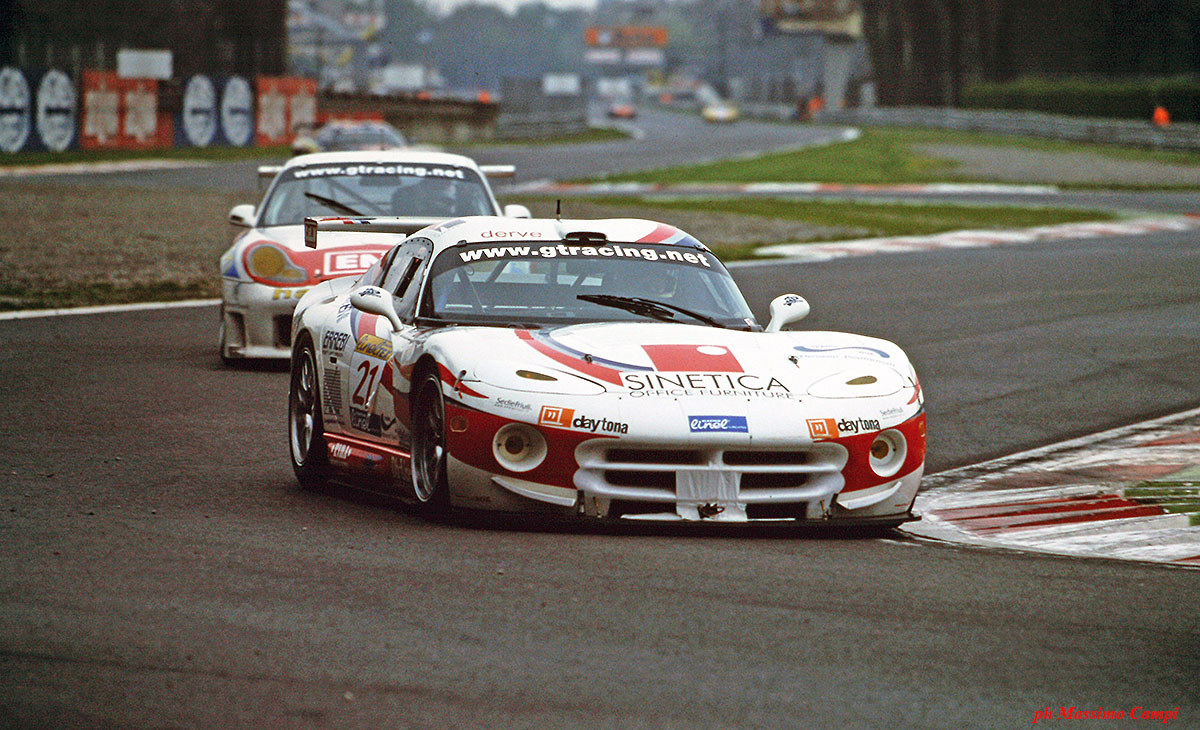
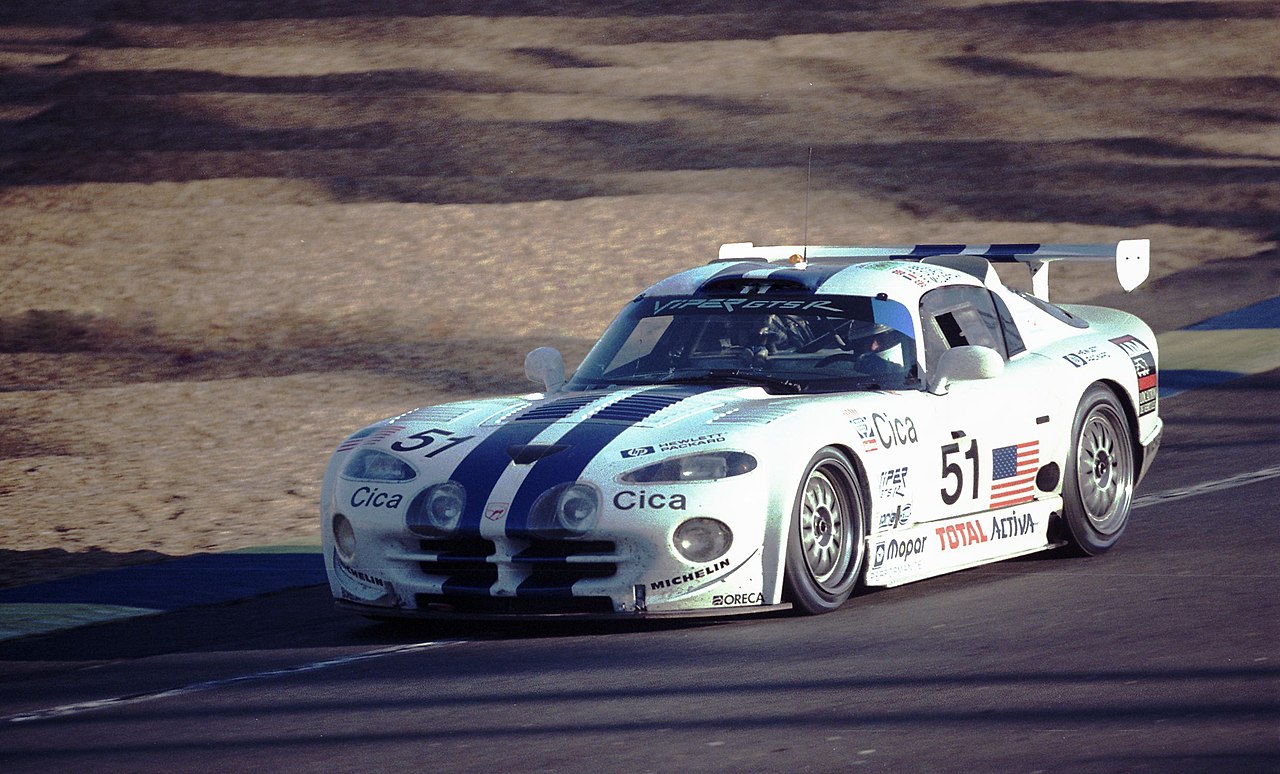
The 1996 debut of the Dodge Viper GTS-R was not merely a motorsport program launch; it was a transatlantic declaration of war. For decades, the recipe for Grand Touring success at the 24 Hours of Le Mans had been written in German dialect or Italian verse. American entries were often regarded as brutish curiosities—fast in a straight line, perhaps, but destined to disintegrate under the relentless braking and cornering demands of the Circuit de la Sarthe. Chrysler, led by the cavalier Bob Lutz, sought to shatter this prejudice. Having transformed the crude RT/10 roadster into the sleek GTS Coupe, Dodge aimed to prove that their 8.0-liter V10 monster was more than just a drag strip hero. To do so, they forged an unlikely but historically decisive alliance with the French motorsport experts at Oreca and the British chassis wizards at Reynard. The resulting offspring, the GTS-R, became the most dominant American production-based racer since the Ford GT40, a machine that would bludgeon the European aristocracy into submission with sheer, unrelenting torque.
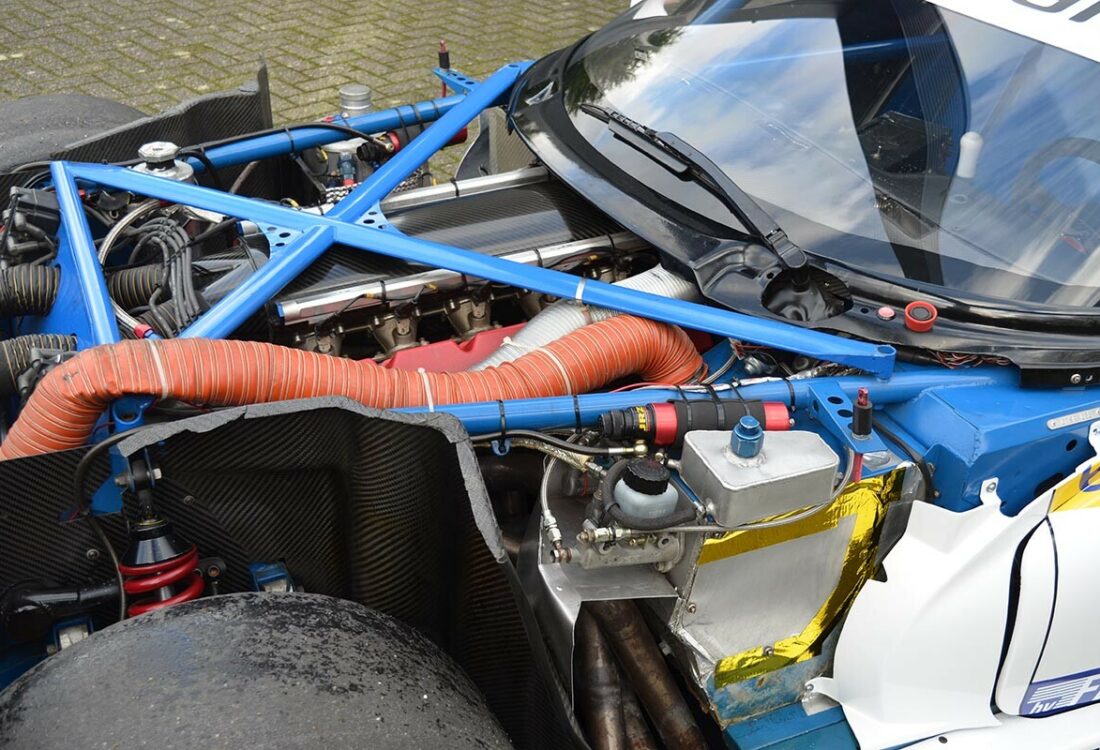
Technically, the Viper GTS-R was a masterclass in refining a sledgehammer. While the road-going GTS provided the silhouette and the engine block, the race car was a bespoke creation designed to withstand 24 hours of abuse. The heart of the beast remained the gargantuan 8.0-liter (488 cu in) V10. However, Caldwell Development and Oreca massaged the internals, fitting a dry-sump lubrication system to prevent oil starvation in high-G corners—a critical weakness of the street car. Breathing through restrictors mandated by the GT2 class regulations, the engine produced a reliable 650 to 700 horsepower, but the horsepower figure was almost irrelevant. It was the torque—a locomotive-like wall of force available from idle—that defined the car. It allowed drivers to pull out of corners a gear higher than their Porsche rivals, saving shifts on the BorgWarner T-56 (and later Hewland sequential) transmission and reducing driver fatigue.
The chassis was a significant evolution of the road car’s tubular steel frame. Reynard Motorsport employed extensive finite element analysis to stiffen the structure, integrating a comprehensive aerospace-grade roll cage that tied the suspension points together. The bodywork, while retaining the sensual, “double-bubble” roofline and the aggressive snout of the Pete Brock-inspired GTS, was remolded in carbon fiber and Kevlar to shed weight. The track was widened, necessitating bulbous, flared fenders to house the massive Michelin slicks. Aerodynamically, the GTS-R was far more sophisticated than its brutish looks suggested. A deep front splitter and a prominent rear wing, initially adjustable and later fixed depending on series regulations, worked in concert with a flat floor and rear diffuser to glue the car to the track. Unlike the delicate, high-revving Ferrari F355s or the turbo-complex Porsche 911 GT2s, the Viper was a study in mechanical grip and reliable, under-stressed displacement.
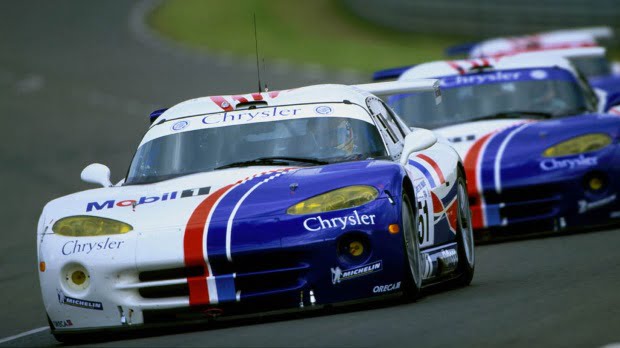
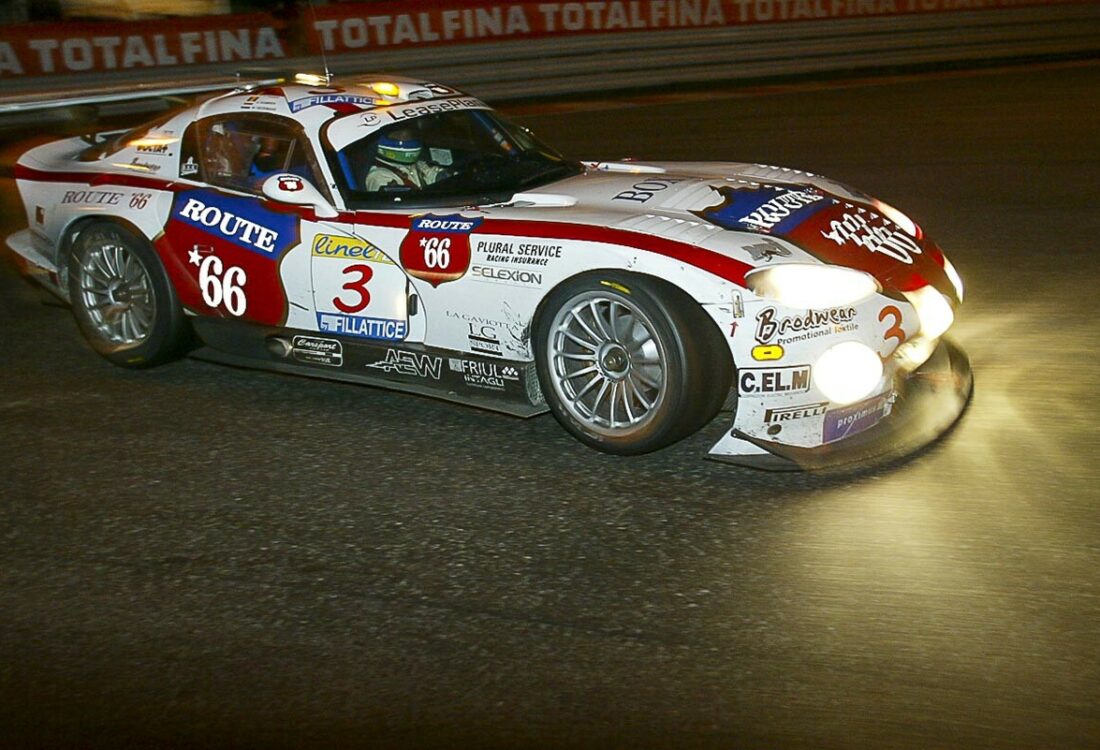
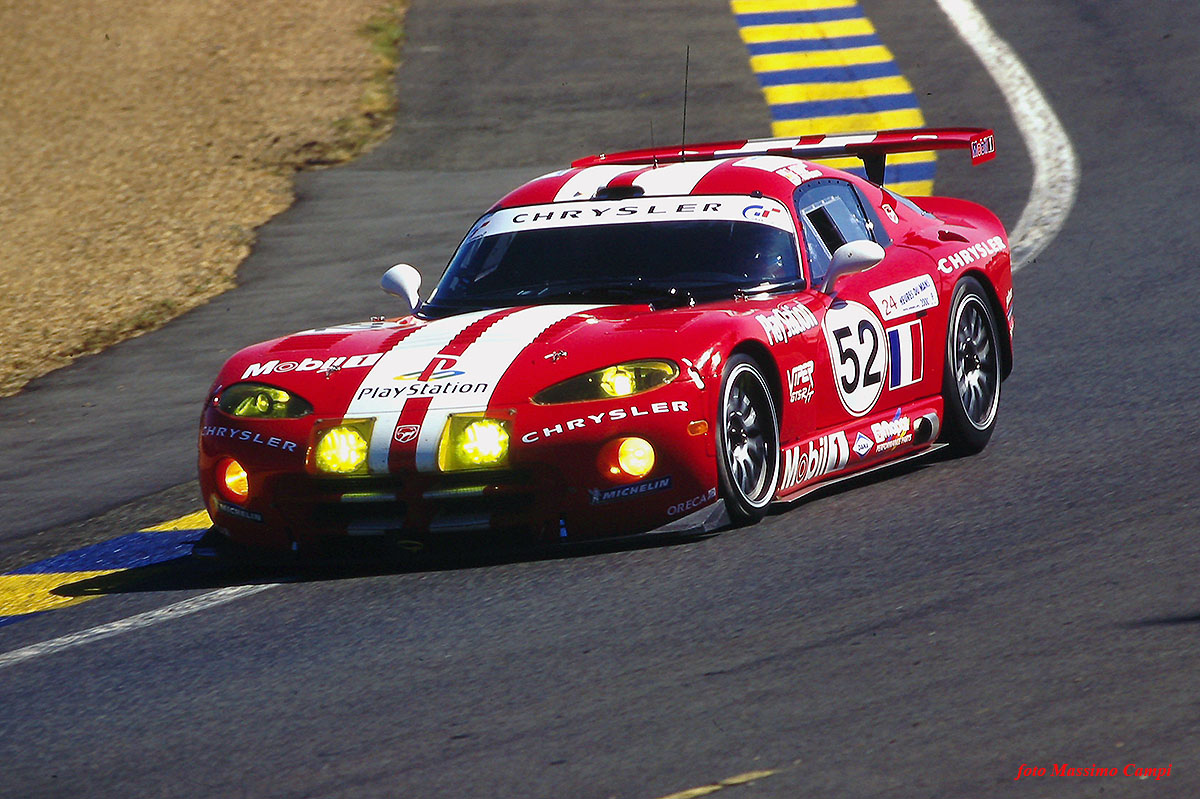
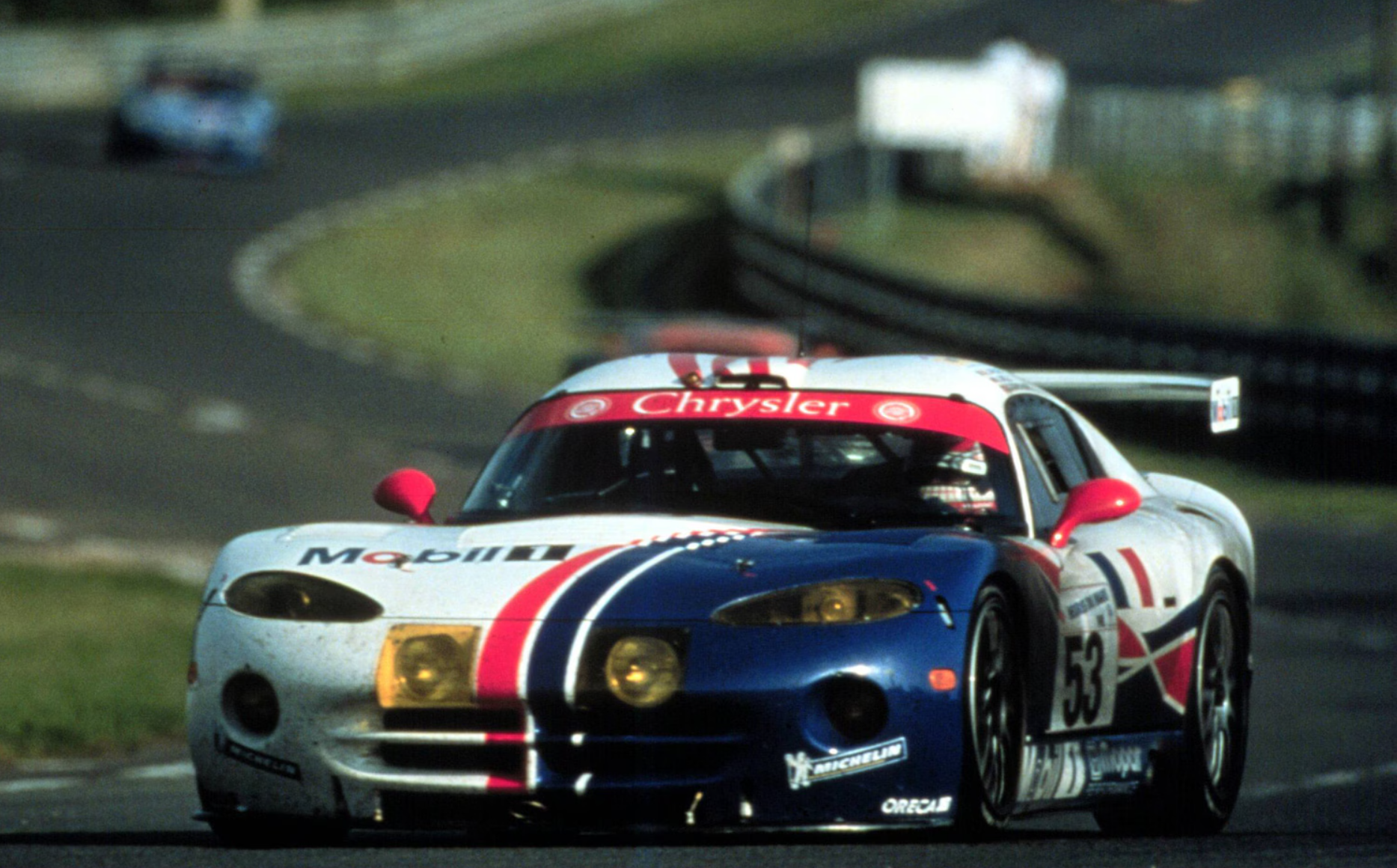
The impact of the Viper GTS-R on the racing world was absolute. After a learning year in 1996, where the team faced teething issues with reliability, the Viper dynasty began in earnest. In 1997, Team Oreca captured the FIA GT Championship, serving notice to the world. But it was in 1998 that the dam broke. The Viper GTS-R secured a dominant 1-2 finish in the GT2 class at the 24 Hours of Le Mans, the first of three consecutive class victories at the French classic (1998, 1999, 2000). The image of the red-white-and-blue Oreca Vipers thundering in formation across the finish line became one of the defining visuals of late-90s motorsport.
However, the car’s crowning achievement—the moment that elevated it from “class winner” to “legend”—occurred at the 2000 Rolex 24 at Daytona. In a race typically dominated by purpose-built sports prototypes, the #91 Viper GTS-R driven by Olivier Beretta, Karl Wendlinger, and Dominique Dupuy did the unthinkable: it won the race overall. It defeated the Ferrari 333 SPs, the Riley & Scotts, and the Cadillacs, proving that a GT car, if reliable and fast enough, could outlast the fragile prototypes. It was a victory of durability and consistency, the ultimate vindication of the “displacement replaces replacement” philosophy.
The legacy of the 1996 Dodge Viper GTS-R is immense. It single-handedly legitimized the Viper as a world-class sports car, stripping away the “crudeness” label that dogged the early RT/10s. It forced General Motors to respond, directly precipitating the creation of the Corvette C5-R and sparking the “Corvette vs. Viper” rivalry that would sustain the American Le Mans Series for years. Culturally, the car became an icon for a generation of gamers through its prominence in Gran Turismo, where the Team Oreca livery became as recognizable as the Gulf or Martini colors of yesteryear. The Viper GTS-R proved that American iron could go to Europe’s backyard and beat them at their own game, leaving behind a legacy of V10 thunder that still echoes at Le Mans today.
Brand
Produced from
Portal
Vehicle category
Model line
Model generation
Predecessor
Sucessor
Brand
Produced from
Portal
Vehicle category
Model line
Model generation
Predecessor
Sucessor
About this submodel
The 1996 debut of the Dodge Viper GTS-R was not merely a motorsport program launch; it was a transatlantic declaration of war. For decades, the recipe for Grand Touring success at the 24 Hours of Le Mans had been written in German dialect or Italian verse. American entries were often regarded as brutish curiosities—fast in a straight line, perhaps, but destined to disintegrate under the relentless braking and cornering demands of the Circuit de la Sarthe. Chrysler, led by the cavalier Bob Lutz, sought to shatter this prejudice. Having transformed the crude RT/10 roadster into the sleek GTS Coupe, Dodge aimed to prove that their 8.0-liter V10 monster was more than just a drag strip hero. To do so, they forged an unlikely but historically decisive alliance with the French motorsport experts at Oreca and the British chassis wizards at Reynard. The resulting offspring, the GTS-R, became the most dominant American production-based racer since the Ford GT40, a machine that would bludgeon the European aristocracy into submission with sheer, unrelenting torque.
Technically, the Viper GTS-R was a masterclass in refining a sledgehammer. While the road-going GTS provided the silhouette and the engine block, the race car was a bespoke creation designed to withstand 24 hours of abuse. The heart of the beast remained the gargantuan 8.0-liter (488 cu in) V10. However, Caldwell Development and Oreca massaged the internals, fitting a dry-sump lubrication system to prevent oil starvation in high-G corners—a critical weakness of the street car. Breathing through restrictors mandated by the GT2 class regulations, the engine produced a reliable 650 to 700 horsepower, but the horsepower figure was almost irrelevant. It was the torque—a locomotive-like wall of force available from idle—that defined the car. It allowed drivers to pull out of corners a gear higher than their Porsche rivals, saving shifts on the BorgWarner T-56 (and later Hewland sequential) transmission and reducing driver fatigue.
The chassis was a significant evolution of the road car’s tubular steel frame. Reynard Motorsport employed extensive finite element analysis to stiffen the structure, integrating a comprehensive aerospace-grade roll cage that tied the suspension points together. The bodywork, while retaining the sensual, “double-bubble” roofline and the aggressive snout of the Pete Brock-inspired GTS, was remolded in carbon fiber and Kevlar to shed weight. The track was widened, necessitating bulbous, flared fenders to house the massive Michelin slicks. Aerodynamically, the GTS-R was far more sophisticated than its brutish looks suggested. A deep front splitter and a prominent rear wing, initially adjustable and later fixed depending on series regulations, worked in concert with a flat floor and rear diffuser to glue the car to the track. Unlike the delicate, high-revving Ferrari F355s or the turbo-complex Porsche 911 GT2s, the Viper was a study in mechanical grip and reliable, under-stressed displacement.
The impact of the Viper GTS-R on the racing world was absolute. After a learning year in 1996, where the team faced teething issues with reliability, the Viper dynasty began in earnest. In 1997, Team Oreca captured the FIA GT Championship, serving notice to the world. But it was in 1998 that the dam broke. The Viper GTS-R secured a dominant 1-2 finish in the GT2 class at the 24 Hours of Le Mans, the first of three consecutive class victories at the French classic (1998, 1999, 2000). The image of the red-white-and-blue Oreca Vipers thundering in formation across the finish line became one of the defining visuals of late-90s motorsport.
However, the car’s crowning achievement—the moment that elevated it from “class winner” to “legend”—occurred at the 2000 Rolex 24 at Daytona. In a race typically dominated by purpose-built sports prototypes, the #91 Viper GTS-R driven by Olivier Beretta, Karl Wendlinger, and Dominique Dupuy did the unthinkable: it won the race overall. It defeated the Ferrari 333 SPs, the Riley & Scotts, and the Cadillacs, proving that a GT car, if reliable and fast enough, could outlast the fragile prototypes. It was a victory of durability and consistency, the ultimate vindication of the “displacement replaces replacement” philosophy.
The legacy of the 1996 Dodge Viper GTS-R is immense. It single-handedly legitimized the Viper as a world-class sports car, stripping away the “crudeness” label that dogged the early RT/10s. It forced General Motors to respond, directly precipitating the creation of the Corvette C5-R and sparking the “Corvette vs. Viper” rivalry that would sustain the American Le Mans Series for years. Culturally, the car became an icon for a generation of gamers through its prominence in Gran Turismo, where the Team Oreca livery became as recognizable as the Gulf or Martini colors of yesteryear. The Viper GTS-R proved that American iron could go to Europe’s backyard and beat them at their own game, leaving behind a legacy of V10 thunder that still echoes at Le Mans today.
Tech Specs
Discover the technical specifications
Tech Specs
Discover the technical specifications
Engine
01
03
Internal combustion engine
Configuration
Chrysler V10 - 90º
Location
Front-mid, longitudinally mounted
Construction
Aluminium block and heads
Displacement (cc)
7,998 cc
Displacement (cu in)
488.1 cu in
Compression
12.0:1
Bore x Stroke
101.6 mm x 98.6 mm
Valvetrain
2 valves per cylinder, OHV
Fuel feed
Sequential Multi-point Fuel Injection
Lubrication
Dry sump
Aspiration
Naturally aspirated
Output
Power (hp)
~650 hp
Power (kW)
~485 kW
Max power at
6,200 RPM
Torque (Nm)
~800 Nm
Torque (ft lbs)
~590 ft lbs
Max torque at
5,000 RPM
Drivetrain
02
03
Chassis
Type
Tubular spaceframe (Reinforced with integrated roll cage)
Material
Steel
Body
Material
Carbon fibre, Kevlar and fibreglass
Transmission
Gearbox
Borg Warner T-56, 6-speed manual
Drive
Rear Wheel Drive (Limited Slip Differential)
Suspension
Front
Independent, double wishbones, coil springs over adjustable dampers, anti-roll bar
Rear
Independent, double wishbones, coil springs over adjustable dampers, anti-roll bar
Steering
Type
Rack and pinion, power assisted
Brakes
Front
Ventilated steel discs Ø380 mm, 4-piston calipers (Brembo)
Rear
Ventilated steel discs Ø355 mm, 4-piston calipers (Brembo)
Wheels
Front
12" x 18" (BBS Magnesium Center-lock)
Rear
13" x 18" (BBS Magnesium Center-lock)
Tires
Front
29/65-18 (Michelin Racing Slicks)
Rear
31/71-18 (Michelin Racing Slicks)
Dimensions and performance
03
03
Dimensions
Lenght (mm)
4,548 mm
Lenght (in)
179.1 in
Width (mm)
1,924 mm
Width (in)
75.7 in
Height (mm)
1,146 mm
Height (in)
45.1 in
Wheelbase (mm)
2,443 mm
Wheelbase (in)
96.2 in
Weight (kg)
1,150 kg
Weight (lbs)
2,535 lbs
Performance
Power to weight
~0.56 hp/kg
Top speed (km/h)
~310 km/h
Top speed (mph)
~192 mph
0-100 km/h (0-60 mph)
~3.5 s
Submodels
Other variants of this model
Submodels