Bentley Speed 8


Brand
Produced from
Portal
Vehicle category
Model line
Model generation
Predecessor
Sucessor
About this submodel
The 2001 Bentley EXP Speed 8 had been a glorious statement of intent. It had arrived at Le Mans after a 71-year absence, wrapped in British Racing Green, and audaciously planted its flag on the podium. The 2002 car was a solid, if lonely, fourth-place consolidation. But these cars were dress rehearsals. They were Audi R8s in elegant evening wear, testbeds for a concept. For 2003, the mission was no longer exploratory; it was an all-out assault. This was the year the Volkswagen Group, in a masterful piece of internal choreography, cleared the stage for its British prestige brand. The all-conquering “Works” Audi Joest team was officially stood down, leaving the benchmark R8s in the (highly-capable) hands of customer teams. Bentley, in turn, did not just update its old car; it unleashed a new one. This was the 2003 Bentley Speed 8, a machine that was no longer an Audi cousin, but a bespoke, purpose-built, Le Mans-killing predator.
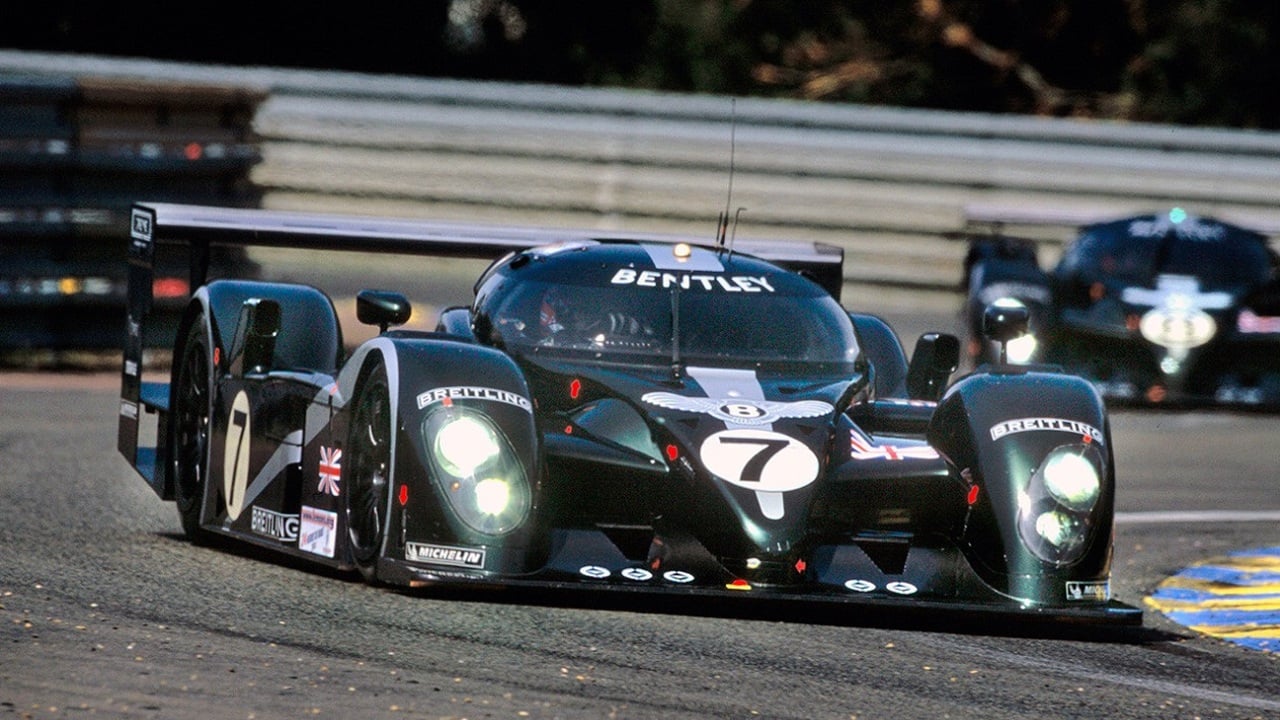
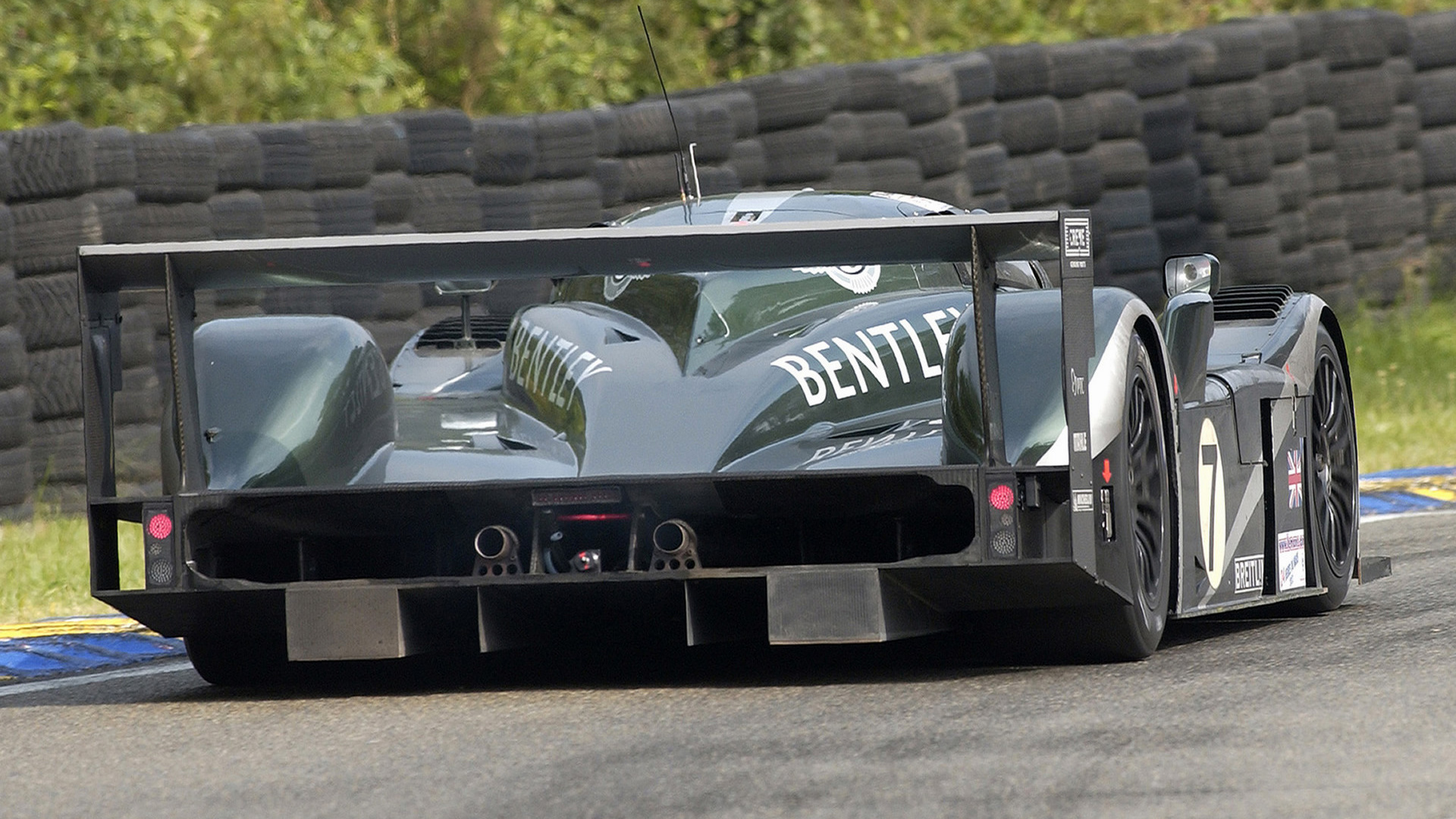
The 2003 car, which dropped the “EXP” (Experimental) tag, was a clean-sheet evolution, incorporating every lesson learned from the previous two years. While the 2001 car had used a modified Audi R8 chassis, the 2003 Speed 8 was built around a brand-new, bespoke carbon-fibre monocoque, designed and built in-house at RTN in Norfolk. This new tub was lighter, stiffer, and packaged more efficiently. The exterior, penned by Peter Ellery, was a stunning evolution of the LMGTP (closed-roof) concept. It was visibly lower, sleeker, and more aerodynamically aggressive than its predecessor. The cockpit was narrower, the sidepods more dramatically sculpted, and the front-end lower, all in the pursuit of cutting through the Mulsanne air with minimal drag. The closed-roof design, a requirement for the LMGTP class, gave it a theoretical top-speed advantage over the open-top LMP900 R8s, and by 2003, Bentley had mastered the complex cooling challenges that came with it.
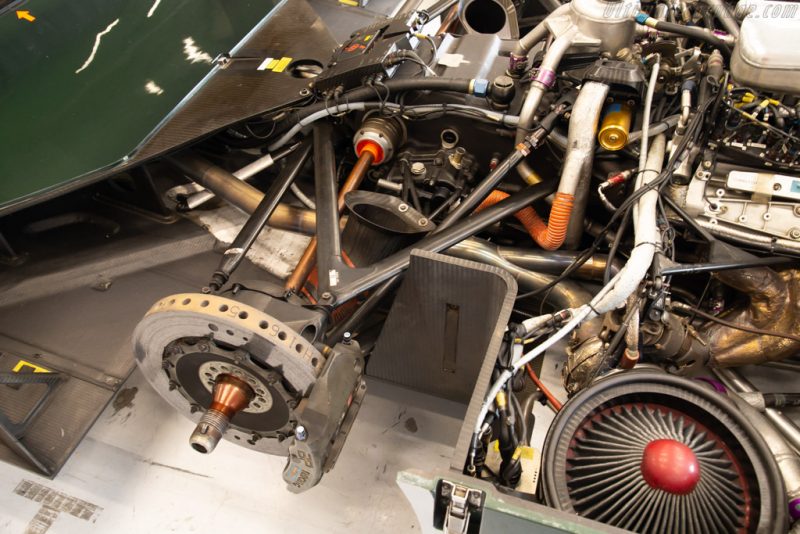
The heart of the beast was the most significant change. The 3.6-litre Audi V8 that had powered the EXP models was gone. In its place was a Bentley-specific, 4.0-litre, twin-turbocharged V8. This was not a tuning job; it was a re-engineered block, bored-out and optimized for Bentley’s purposes. While still using Audi’s FSI (Fuel Stratified Injection) technology, this new engine had a fatter torque curve and a higher, restrictor-limited output of over 615 hp. This engine, with its unique, howling exhaust note, was mated to a lighter, more reliable Xtrac 6-speed sequential transaxle, which was operated via a new-for-2003 pneumatic paddle-shift system. The suspension was all-new, designed to work in harmony with the new chassis and the latest Michelin tyres. This was, in every meaningful way, a unique Bentley, not a re-skinned Audi. It was the finest prototype of its generation.
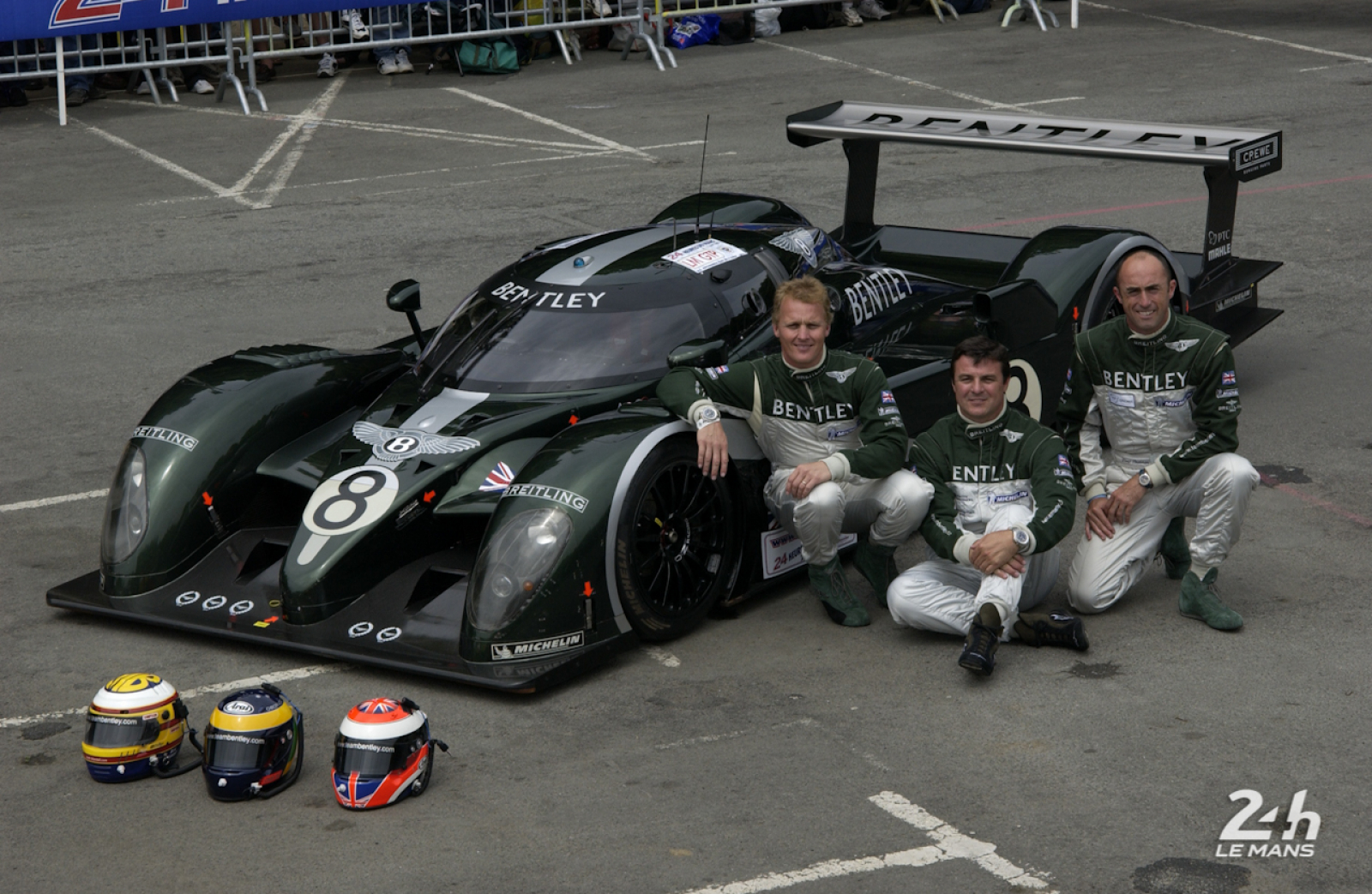
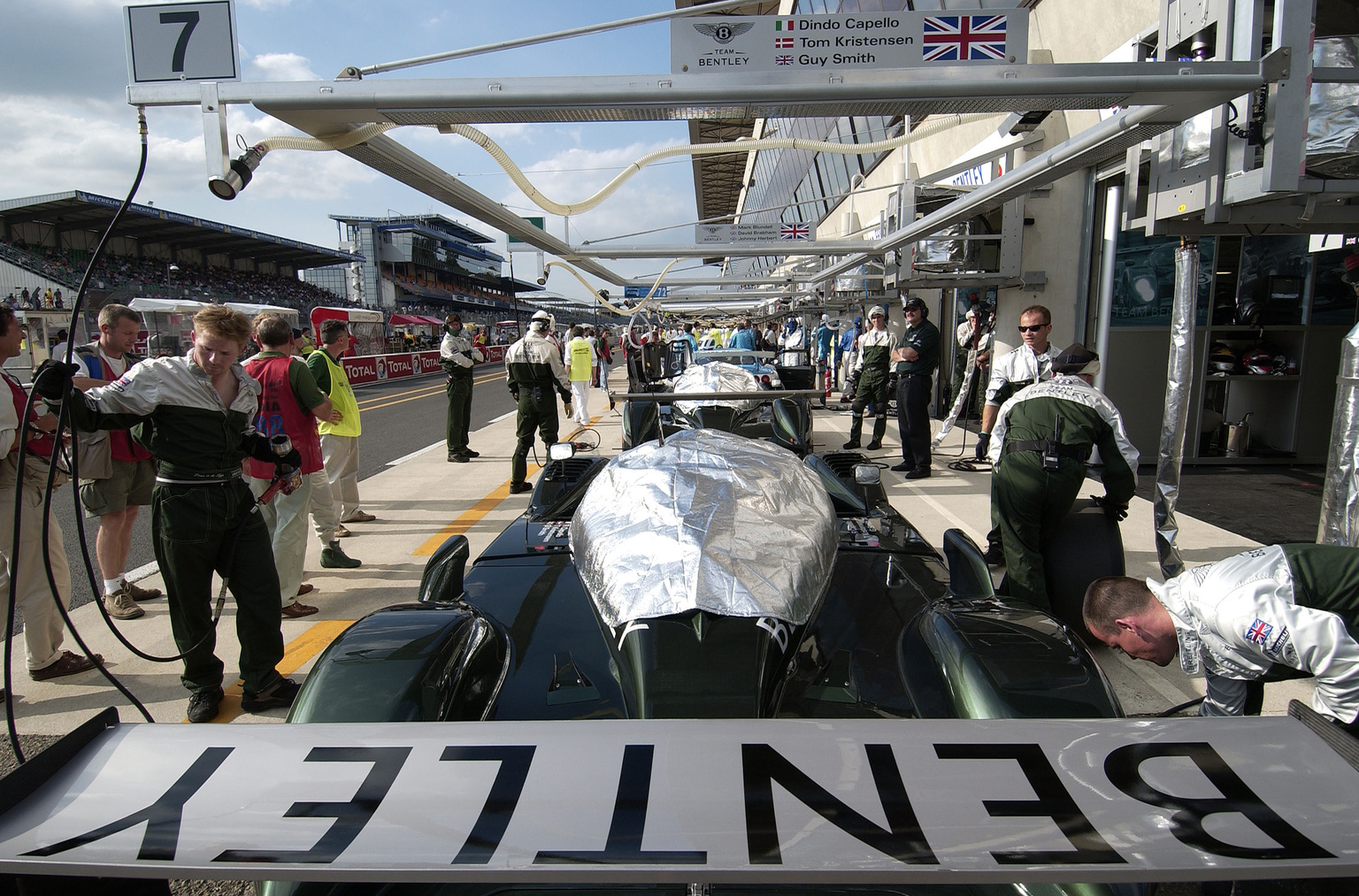
Bentley arrived at the 2003 24 Hours of Le Mans with two cars, an army of personnel, and an air of absolute confidence. The driver lineups were a dream team. The #8 car was a trio of British ex-F1 stars: Mark Blundell, David Brabham, and Johnny Herbert. The #7 car was a strategic masterstroke, mixing the Italian speed of Dindo Capello with the youthful talent of Guy Smith and, in the ultimate signal of intent, “Mr. Le Mans” himself, Tom Kristensen, who was “loaned” from the resting Audi team to secure the victory. The rivals were formidable, most notably the “customer” Audi R8s from Champion Racing (USA) and Team Goh (Japan), cars that had won the 12 Hours of Sebring and were the undisputed benchmark.
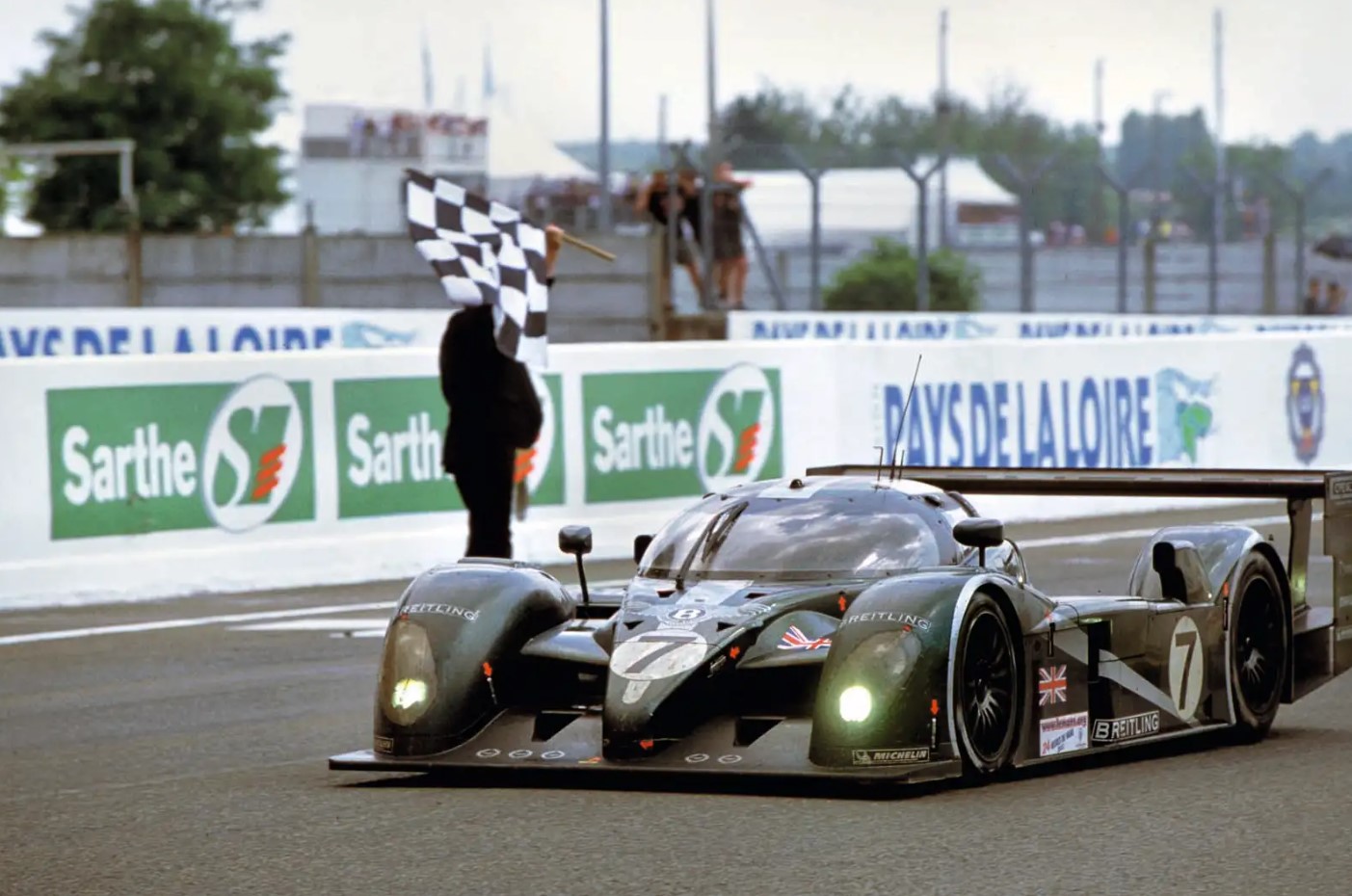
From the moment they hit the track, the Speed 8s were untouchable. They qualified 1-2, with the #7 car of Kristensen/Capello/Smith on pole. The race itself was not a duel; it was a demonstration. The two dark green machines ran a fast, flawless, and perfectly orchestrated race. While the rival Audis, particularly the Champion R8, fought valiantly, they could not match the Bentleys’ relentless pace or, crucially, their fuel efficiency. The Speed 8s were able to run longer stints, their FSI-fed 4.0L V8 sipping fuel while their closed-roof aerodynamics gave them an edge on the straights. Through the night and into the next day, the two Bentleys ran together, separated only by strategy and circumstance. There were no major mechanical dramas, no driver errors. It was a surgical, perfect 24-hour performance. As 4 p.m. approached, the cars formed up, and Guy Smith in the #7 Speed 8 had the honour of crossing the finish line, closing a 73-year gap to the company’s last victory in 1930. The sister #8 car was right behind it in second place. It was a perfect, crushing 1-2 finish.
The 2003 Speed 8’s legacy is unique. It is a car of perfect, singular purpose. Having achieved its goal in the most dominant way possible, the program was immediately shut down. The Speed 8 never raced again. It retired with a 100% win record—one race entered, one race won. It was the ultimate marketing tool, a project that re-ignited a 73-year-old legend and provided the perfect, heroic narrative for the launch of the all-new Bentley Continental GT road car. It remains one of the most beautiful prototypes ever to grace La Sarthe and a symbol of one of the most clinically-executed, successful, and short-lived racing campaigns in modern history.
Brand
Produced from
Portal
Vehicle category
Model line
Model generation
Predecessor
Sucessor
Brand
Produced from
Portal
Vehicle category
Model line
Model generation
Predecessor
Sucessor
About this submodel
The 2001 Bentley EXP Speed 8 had been a glorious statement of intent. It had arrived at Le Mans after a 71-year absence, wrapped in British Racing Green, and audaciously planted its flag on the podium. The 2002 car was a solid, if lonely, fourth-place consolidation. But these cars were dress rehearsals. They were Audi R8s in elegant evening wear, testbeds for a concept. For 2003, the mission was no longer exploratory; it was an all-out assault. This was the year the Volkswagen Group, in a masterful piece of internal choreography, cleared the stage for its British prestige brand. The all-conquering “Works” Audi Joest team was officially stood down, leaving the benchmark R8s in the (highly-capable) hands of customer teams. Bentley, in turn, did not just update its old car; it unleashed a new one. This was the 2003 Bentley Speed 8, a machine that was no longer an Audi cousin, but a bespoke, purpose-built, Le Mans-killing predator.
The 2003 car, which dropped the “EXP” (Experimental) tag, was a clean-sheet evolution, incorporating every lesson learned from the previous two years. While the 2001 car had used a modified Audi R8 chassis, the 2003 Speed 8 was built around a brand-new, bespoke carbon-fibre monocoque, designed and built in-house at RTN in Norfolk. This new tub was lighter, stiffer, and packaged more efficiently. The exterior, penned by Peter Ellery, was a stunning evolution of the LMGTP (closed-roof) concept. It was visibly lower, sleeker, and more aerodynamically aggressive than its predecessor. The cockpit was narrower, the sidepods more dramatically sculpted, and the front-end lower, all in the pursuit of cutting through the Mulsanne air with minimal drag. The closed-roof design, a requirement for the LMGTP class, gave it a theoretical top-speed advantage over the open-top LMP900 R8s, and by 2003, Bentley had mastered the complex cooling challenges that came with it.
The heart of the beast was the most significant change. The 3.6-litre Audi V8 that had powered the EXP models was gone. In its place was a Bentley-specific, 4.0-litre, twin-turbocharged V8. This was not a tuning job; it was a re-engineered block, bored-out and optimized for Bentley’s purposes. While still using Audi’s FSI (Fuel Stratified Injection) technology, this new engine had a fatter torque curve and a higher, restrictor-limited output of over 615 hp. This engine, with its unique, howling exhaust note, was mated to a lighter, more reliable Xtrac 6-speed sequential transaxle, which was operated via a new-for-2003 pneumatic paddle-shift system. The suspension was all-new, designed to work in harmony with the new chassis and the latest Michelin tyres. This was, in every meaningful way, a unique Bentley, not a re-skinned Audi. It was the finest prototype of its generation.
Bentley arrived at the 2003 24 Hours of Le Mans with two cars, an army of personnel, and an air of absolute confidence. The driver lineups were a dream team. The #8 car was a trio of British ex-F1 stars: Mark Blundell, David Brabham, and Johnny Herbert. The #7 car was a strategic masterstroke, mixing the Italian speed of Dindo Capello with the youthful talent of Guy Smith and, in the ultimate signal of intent, “Mr. Le Mans” himself, Tom Kristensen, who was “loaned” from the resting Audi team to secure the victory. The rivals were formidable, most notably the “customer” Audi R8s from Champion Racing (USA) and Team Goh (Japan), cars that had won the 12 Hours of Sebring and were the undisputed benchmark.
From the moment they hit the track, the Speed 8s were untouchable. They qualified 1-2, with the #7 car of Kristensen/Capello/Smith on pole. The race itself was not a duel; it was a demonstration. The two dark green machines ran a fast, flawless, and perfectly orchestrated race. While the rival Audis, particularly the Champion R8, fought valiantly, they could not match the Bentleys’ relentless pace or, crucially, their fuel efficiency. The Speed 8s were able to run longer stints, their FSI-fed 4.0L V8 sipping fuel while their closed-roof aerodynamics gave them an edge on the straights. Through the night and into the next day, the two Bentleys ran together, separated only by strategy and circumstance. There were no major mechanical dramas, no driver errors. It was a surgical, perfect 24-hour performance. As 4 p.m. approached, the cars formed up, and Guy Smith in the #7 Speed 8 had the honour of crossing the finish line, closing a 73-year gap to the company’s last victory in 1930. The sister #8 car was right behind it in second place. It was a perfect, crushing 1-2 finish.
The 2003 Speed 8’s legacy is unique. It is a car of perfect, singular purpose. Having achieved its goal in the most dominant way possible, the program was immediately shut down. The Speed 8 never raced again. It retired with a 100% win record—one race entered, one race won. It was the ultimate marketing tool, a project that re-ignited a 73-year-old legend and provided the perfect, heroic narrative for the launch of the all-new Bentley Continental GT road car. It remains one of the most beautiful prototypes ever to grace La Sarthe and a symbol of one of the most clinically-executed, successful, and short-lived racing campaigns in modern history.
Tech Specs
Discover the technical specifications
Tech Specs
Discover the technical specifications
Engine
01
03
Internal combustion engine
Configuration
V8 - 90º
Location
Mid, longitudinally mounted
Construction
Aluminium alloy block and head
Displacement (cc)
3,995 cc
Displacement (cu in)
243.7 cu in
Compression
-
Bore x Stroke
87.0 mm x 84.0 mm
Valvetrain
4 valves per cylinder, DOHC
Fuel feed
Audi FSI (Fuel Stratified Injection)
Lubrication
Dry sump
Aspiration
Twin turbo
Output
Power (hp)
615 hp
Power (kW)
459 kW
Max power at
-
Torque (Nm)
800 Nm
Torque (ft lbs)
590 ft lbs
Max torque at
3,000 RPM
Drivetrain
02
03
Chassis
Type
Monocoque unibody
Material
Carbon fibre
Body
Material
Carbon fibre
Transmission
Gearbox
X-trac, 6-speed sequential
Drive
Rear Wheel Drive
Suspension
Front
Double unequal length wishbones, push-rod actuated torsion bars and telescopic shock absorbers
Rear
Double unequal length wishbones, push-rod actuated coil springs and telescopic shock absorbers
Steering
Type
Rack and pinion, power assisted
Brakes
Front
Ventilated carbon ceramic discs
Rear
Ventilated carbon ceramic discs
Wheels
Front
-
Rear
-
Tires
Front
-
Rear
-
Dimensions and performance
03
03
Dimensions
Lenght (mm)
4,640 mm
Lenght (in)
182.7 in
Width (mm)
1,990 mm
Width (in)
78.3 in
Height (mm)
-
Height (in)
-
Wheelbase (mm)
2,740 mm
Wheelbase (in)
107.9 in
Weight (kg)
900 kg
Weight (lbs)
1,984 lbs
Performance
Power to weight
0.68 hp/kg
Top speed (km/h)
350 km/h
Top speed (mph)
217 mph
0-100 km/h (0-60 mph)
-
Submodels
Other variants of this model
Submodels