Aston Martin V8 Vantage GT2/GTE
Brand
Produced from
Portal
Model line
Model generation
Predecessor
Sucessor
About this submodel
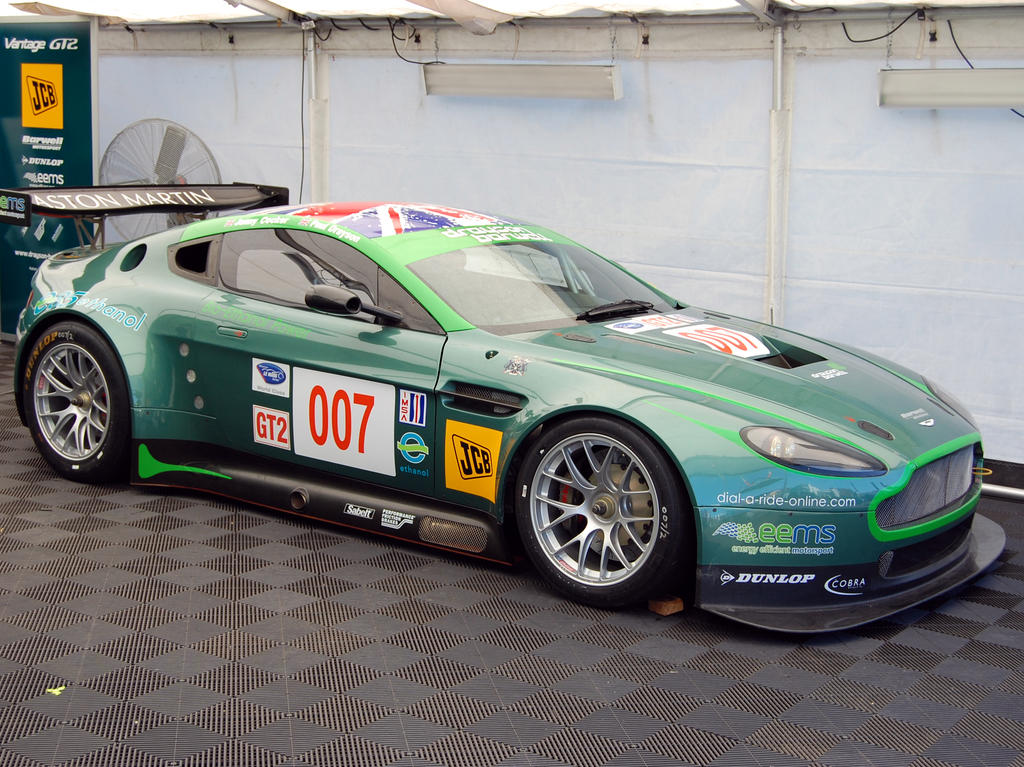
In the mid-2000s, Aston Martin Racing was riding a wave of V12-powered glory. Their magnificent, thunderous DBR9 had returned the brand to the top step of the podium, conquering the GT1 class at Le Mans and vanquishing the factory Corvettes in a glorious, high-stakes duel. But even as the DBR9 was spraying champagne, the writing was on the wall. The exotic GT1 category was dying, a victim of its own incredible expense. The future of international sports car racing was being built on a new, more cost-effective, and far more competitive foundation: the GT2 class. This was a category for cars much closer to their production counterparts, a bare-knuckle brawl that was already home to the most formidable names in racing. This was the territory of the Porsche 911 RSR and the Ferrari F430 GTC. For Aston Martin to have a future in GT racing, it had to enter this war, and it had to do it not with the V12, but with its new “baby” Aston: the V8 Vantage.
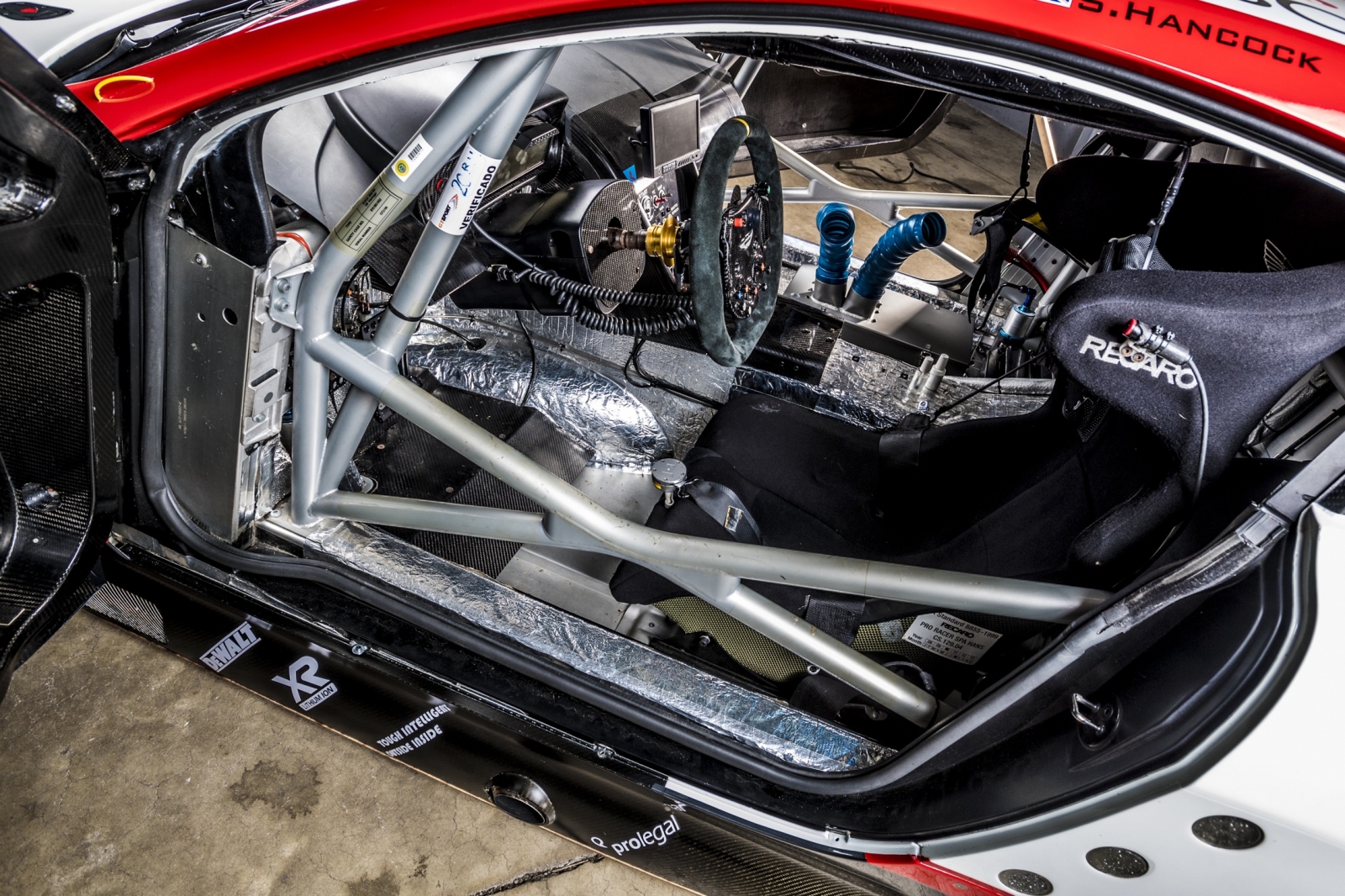
Unveiled in 2008, the V8 Vantage GT2 (which would later be known simply as the V8 Vantage GTE) was a car of profound importance. It was the second act, the car that had to prove Aston Martin Racing was more than a one-hit-wonder. It was also a massive engineering challenge. Unlike the DBR9, which was a “silhouette” racer with a bespoke racing engine, the GT2 rules were far more restrictive. The new car had to be, at its core, a production V8 Vantage. This meant it was built around the same magnificent, bonded-aluminium “VH” platform as the road car, a testament to the chassis’s inherent strength and stiffness. Prodrive, the engineering magicians behind the AMR program, took this foundation and stripped it back to its bare essence, seam-welding and reinforcing the tub before adding a comprehensive FIA-spec roll cage.
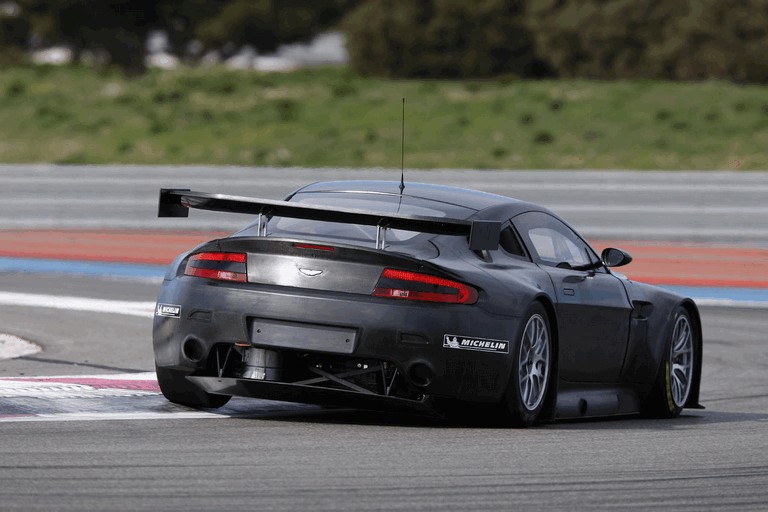
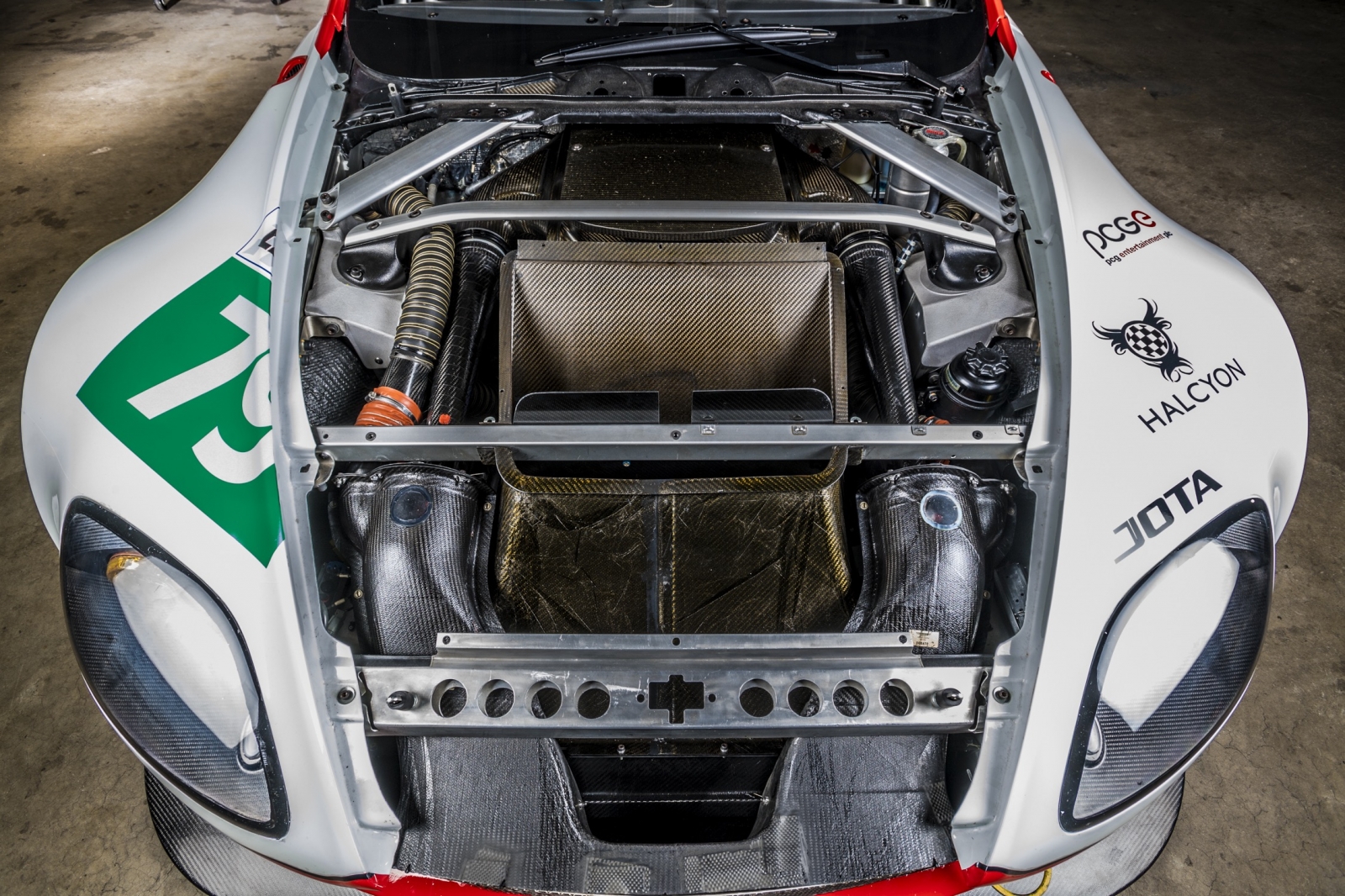
The heart of the new warrior was a bespoke version of the road car’s all-alloy V8. But to be competitive against the established 4.0-litre Porsches and 4.3-litre Ferraris, Aston Martin and Prodrive pulled an ace from the rulebook. The 4.3-litre V8 (soon enlarged to 4.5 litres) was meticulously re-engineered to run on E85 bio-ethanol. This “green” fuel was not just a marketing exercise; it was a pure performance play. The high-octane, oxygen-rich fuel allowed for a much higher compression ratio, enabling the naturally-aspirated V8 to punch far above its weight, producing more than 450 hp while also offering improved fuel economy—a critical advantage in endurance racing. This potent engine was mated to a 6-speed sequential transaxle gearbox, and the entire package was wrapped in a lightweight, carbon-fibre body. While it retained the V8 Vantage’s unmistakable, beautiful profile, the GT2 was visibly more aggressive: wider, lower, and defined by a deep front splitter, a flat floor, and a large, swan-neck rear wing.
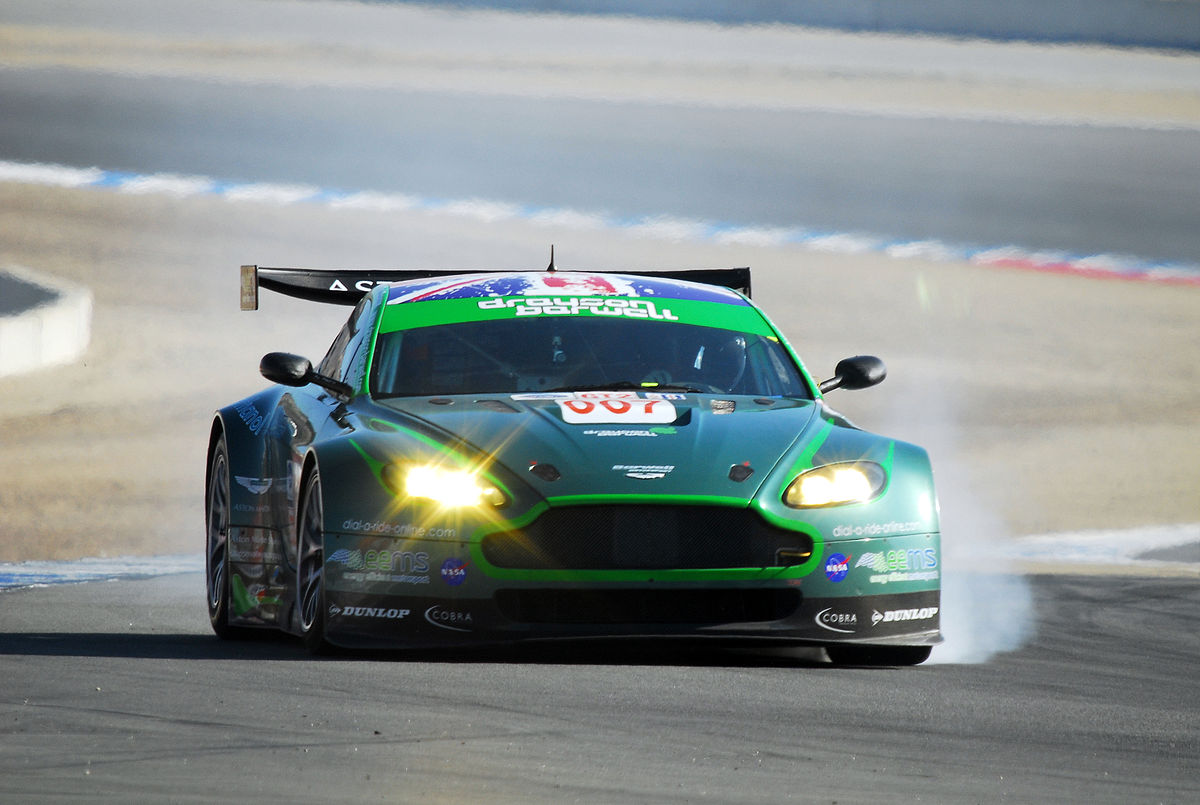
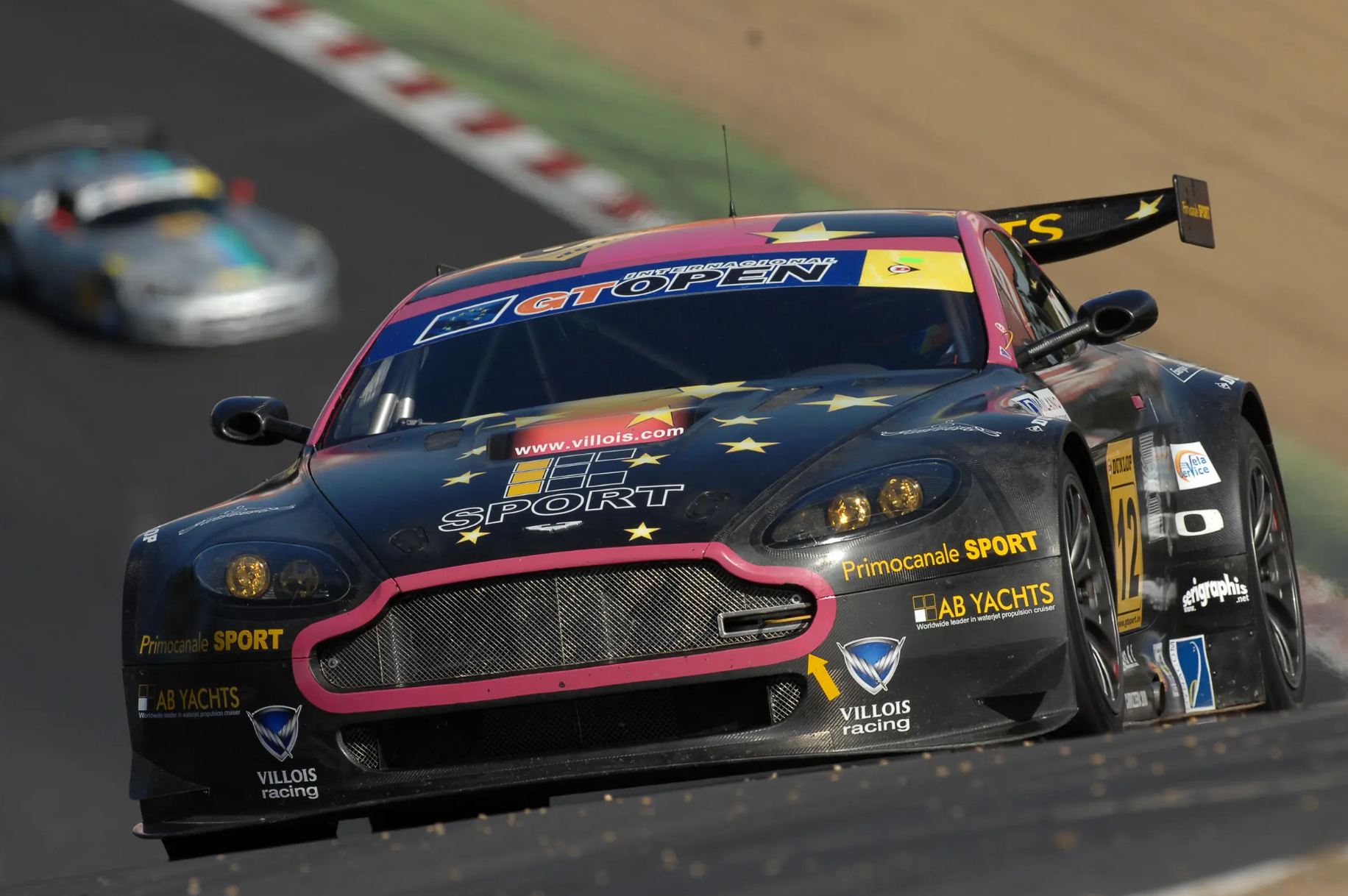
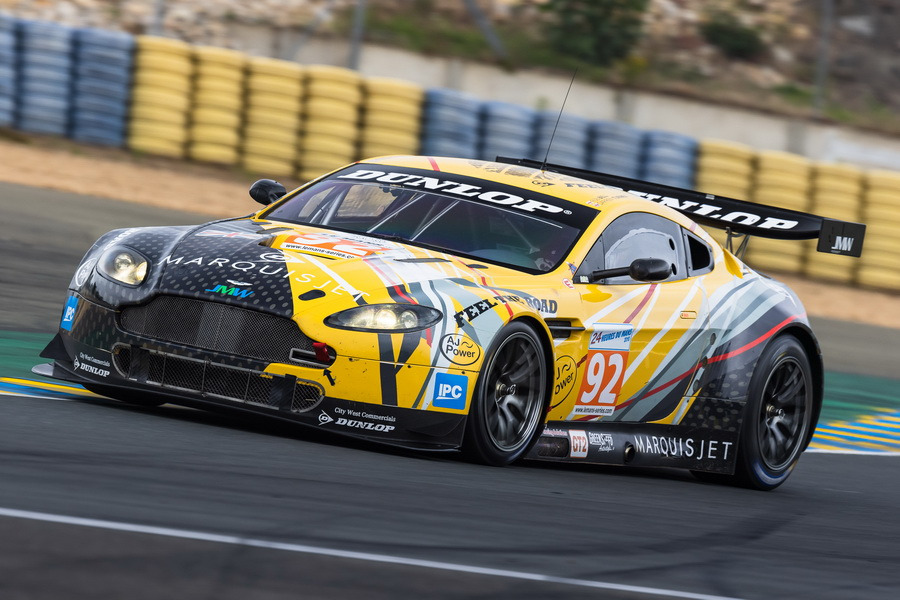
The car’s debut in 2008 was a baptism by fire. It was thrown into the deep end of the American Le Mans Series and the Le Mans Series in Europe, run by highly-capable privateer teams like Drayson Racing and James Watt Automotive. The car was immediately quick, and its high-pitched, flat-plane-crank V8 shriek was an instant fan favourite, a perfect counter-melody to the DBR9’s V12 roar. But it was also fragile. It was a new car fighting against rivals that had been developed and perfected for years. Its first seasons were a gruelling process of public development, a story of flashes of speed followed by frustrating mechanical retirements. It was an underdog, but it was learning, evolving, and getting stronger with every race.
The car’s entire destiny changed in 2012 with the formation of the FIA World Endurance Championship (WEC). The GT2 class was officially renamed “GTE,” and Aston Martin Racing committed to a full-factory “Works” program. This was the moment the V8 Vantage GTE, as it was now known, came of age. Now cloaked in the iconic Gulf livery, the factory team returned to Le Mans in force. The car had been transformed. Years of development had cured its reliability issues, and the Prodrive engineers had become masters of its chassis. It was now a true endurance champion. It won its class at the WEC 6 Hours of Shanghai in 2012, and in 2014, the “Dane Train” GTE-Am car of Kristian Poulsen, David Heinemeier Hansson, and Nicki Thiim won its class at the 24 Hours of Le Mans. The V8 Vantage was a Le Mans winner.
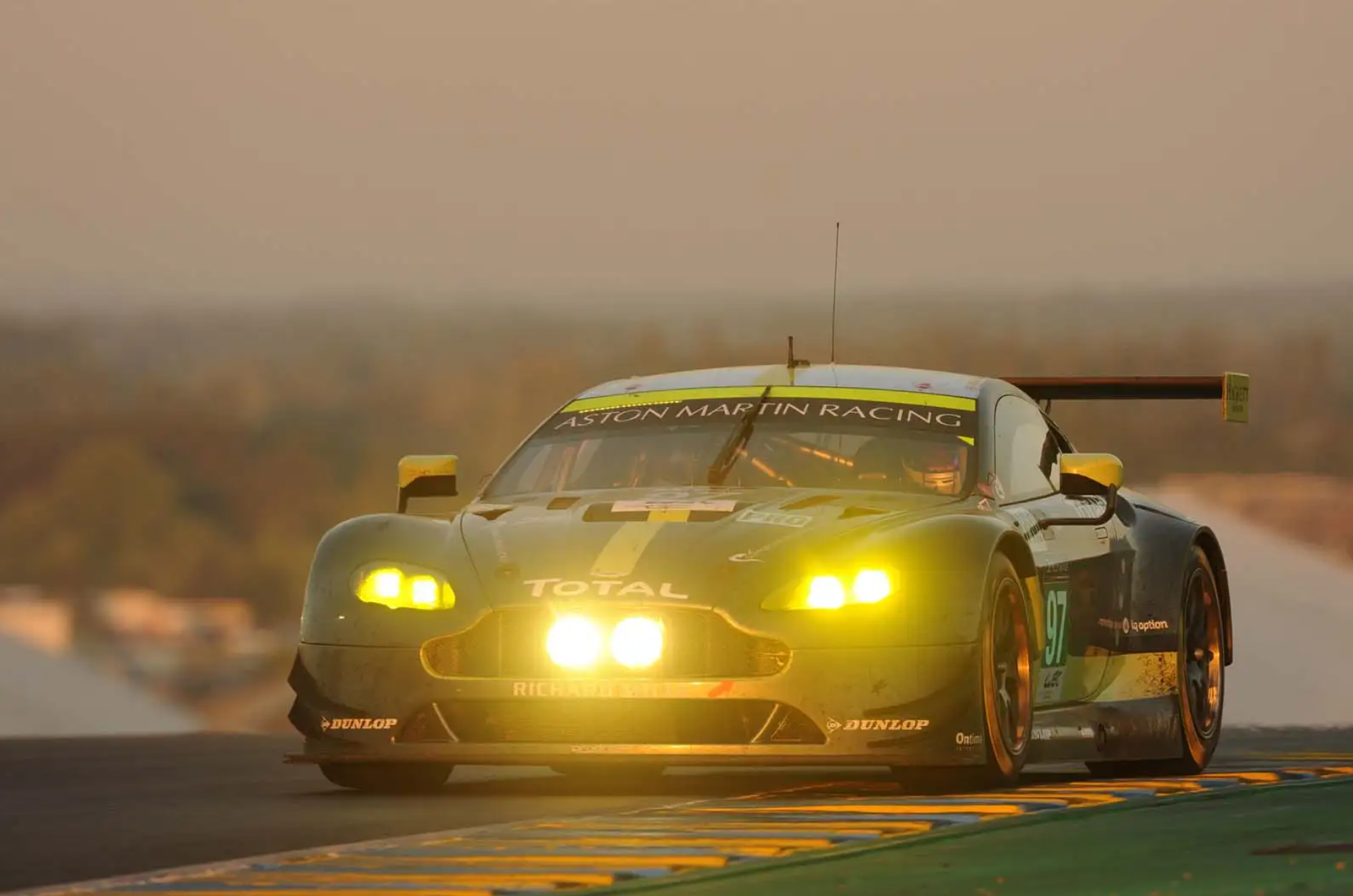
But the ultimate prize, the GTE-Pro class—the true factory-on-factory fight—remained elusive. For years, the Vantage GTE waged a brutal, decade-long war against the factory Ferraris, Porsches, and the returning Corvettes. It was the ironman of the GTE grid, a car that raced on for seasons after its road-going counterpart was considered old news. Its career culminated in one of the most cinematic and heroic moments in modern motorsport history: the 2017 24 Hours of Le Mans. It was the car’s final Le Mans in GTE-Pro, an old warrior against a field of newer machinery. The #97 car, driven by Darren Turner, Jonny Adam, and Daniel Serra, engaged in a cat-and-mouse battle with the #63 Corvette for 24 hours. On the final lap, Adam, in second place, stalked the struggling Corvette. He forced a pass, the Corvette fought back, its tyres failing. Adam seized the lead, and moments later, the Corvette’s tyre exploded. The Vantage, on its very last lap of its very last Le Mans, had won.
It was a perfect, unbelievable ending. The V8 Vantage GT2/GTE was never the V12-powered glamour car, but it became the heart and soul of Aston Martin Racing. It was the tenacious, reliable, screaming V8 workhorse that, through a decade of grit and relentless development, outlasted its rivals and wrote its own, perfect, fairytale ending.
Brand
Produced from
Portal
Model line
Model generation
Predecessor
Sucessor
Brand
Produced from
Portal
Model line
Model generation
Predecessor
Sucessor
About this submodel
In the mid-2000s, Aston Martin Racing was riding a wave of V12-powered glory. Their magnificent, thunderous DBR9 had returned the brand to the top step of the podium, conquering the GT1 class at Le Mans and vanquishing the factory Corvettes in a glorious, high-stakes duel. But even as the DBR9 was spraying champagne, the writing was on the wall. The exotic GT1 category was dying, a victim of its own incredible expense. The future of international sports car racing was being built on a new, more cost-effective, and far more competitive foundation: the GT2 class. This was a category for cars much closer to their production counterparts, a bare-knuckle brawl that was already home to the most formidable names in racing. This was the territory of the Porsche 911 RSR and the Ferrari F430 GTC. For Aston Martin to have a future in GT racing, it had to enter this war, and it had to do it not with the V12, but with its new “baby” Aston: the V8 Vantage.
Unveiled in 2008, the V8 Vantage GT2 (which would later be known simply as the V8 Vantage GTE) was a car of profound importance. It was the second act, the car that had to prove Aston Martin Racing was more than a one-hit-wonder. It was also a massive engineering challenge. Unlike the DBR9, which was a “silhouette” racer with a bespoke racing engine, the GT2 rules were far more restrictive. The new car had to be, at its core, a production V8 Vantage. This meant it was built around the same magnificent, bonded-aluminium “VH” platform as the road car, a testament to the chassis’s inherent strength and stiffness. Prodrive, the engineering magicians behind the AMR program, took this foundation and stripped it back to its bare essence, seam-welding and reinforcing the tub before adding a comprehensive FIA-spec roll cage.
The heart of the new warrior was a bespoke version of the road car’s all-alloy V8. But to be competitive against the established 4.0-litre Porsches and 4.3-litre Ferraris, Aston Martin and Prodrive pulled an ace from the rulebook. The 4.3-litre V8 (soon enlarged to 4.5 litres) was meticulously re-engineered to run on E85 bio-ethanol. This “green” fuel was not just a marketing exercise; it was a pure performance play. The high-octane, oxygen-rich fuel allowed for a much higher compression ratio, enabling the naturally-aspirated V8 to punch far above its weight, producing more than 450 hp while also offering improved fuel economy—a critical advantage in endurance racing. This potent engine was mated to a 6-speed sequential transaxle gearbox, and the entire package was wrapped in a lightweight, carbon-fibre body. While it retained the V8 Vantage’s unmistakable, beautiful profile, the GT2 was visibly more aggressive: wider, lower, and defined by a deep front splitter, a flat floor, and a large, swan-neck rear wing.
The car’s debut in 2008 was a baptism by fire. It was thrown into the deep end of the American Le Mans Series and the Le Mans Series in Europe, run by highly-capable privateer teams like Drayson Racing and James Watt Automotive. The car was immediately quick, and its high-pitched, flat-plane-crank V8 shriek was an instant fan favourite, a perfect counter-melody to the DBR9’s V12 roar. But it was also fragile. It was a new car fighting against rivals that had been developed and perfected for years. Its first seasons were a gruelling process of public development, a story of flashes of speed followed by frustrating mechanical retirements. It was an underdog, but it was learning, evolving, and getting stronger with every race.
The car’s entire destiny changed in 2012 with the formation of the FIA World Endurance Championship (WEC). The GT2 class was officially renamed “GTE,” and Aston Martin Racing committed to a full-factory “Works” program. This was the moment the V8 Vantage GTE, as it was now known, came of age. Now cloaked in the iconic Gulf livery, the factory team returned to Le Mans in force. The car had been transformed. Years of development had cured its reliability issues, and the Prodrive engineers had become masters of its chassis. It was now a true endurance champion. It won its class at the WEC 6 Hours of Shanghai in 2012, and in 2014, the “Dane Train” GTE-Am car of Kristian Poulsen, David Heinemeier Hansson, and Nicki Thiim won its class at the 24 Hours of Le Mans. The V8 Vantage was a Le Mans winner.
But the ultimate prize, the GTE-Pro class—the true factory-on-factory fight—remained elusive. For years, the Vantage GTE waged a brutal, decade-long war against the factory Ferraris, Porsches, and the returning Corvettes. It was the ironman of the GTE grid, a car that raced on for seasons after its road-going counterpart was considered old news. Its career culminated in one of the most cinematic and heroic moments in modern motorsport history: the 2017 24 Hours of Le Mans. It was the car’s final Le Mans in GTE-Pro, an old warrior against a field of newer machinery. The #97 car, driven by Darren Turner, Jonny Adam, and Daniel Serra, engaged in a cat-and-mouse battle with the #63 Corvette for 24 hours. On the final lap, Adam, in second place, stalked the struggling Corvette. He forced a pass, the Corvette fought back, its tyres failing. Adam seized the lead, and moments later, the Corvette’s tyre exploded. The Vantage, on its very last lap of its very last Le Mans, had won.
It was a perfect, unbelievable ending. The V8 Vantage GT2/GTE was never the V12-powered glamour car, but it became the heart and soul of Aston Martin Racing. It was the tenacious, reliable, screaming V8 workhorse that, through a decade of grit and relentless development, outlasted its rivals and wrote its own, perfect, fairytale ending.
Tech Specs
Discover the technical specifications
Tech Specs
Discover the technical specifications
Engine
01
03
Internal combustion engine
Configuration
V8 - 90º
Location
Front, longitudinally mounted
Construction
Aluminium alloy block and head
Displacement (cc)
4,475 cc
Displacement (cu in)
273.0 cu in
Compression
-
Bore x Stroke
-
Valvetrain
4 valves per cylinder, DOHC
Fuel feed
Fuel Injection
Lubrication
Dry sump
Aspiration
Naturally aspirated
Output
Power (hp)
450 hp
Power (kW)
336 kW
Max power at
-
Torque (Nm)
500 Nm
Torque (ft lbs)
369 ft lbs
Max torque at
3,000 RPM
Drivetrain
02
03
Chassis
Type
Spaceframe
Material
Aluminium
Body
Material
Aluminium alloy and carbon fibre body parts
Transmission
Gearbox
6-speed sequential
Drive
Rear Wheel Drive
Suspension
Front
Double wishbones, coil springs over Koni shock absorbers, anti-roll bar
Rear
Double wishbones, coil springs over Koni shock absorbers, anti-roll bar
Steering
Type
Rack and pinion, power assisted
Brakes
Front
Ventilated discs
Rear
Ventilated discs
Wheels
Front
-
Rear
-
Tires
Front
-
Rear
-
Dimensions and performance
03
03
Dimensions
Lenght (mm)
-
Lenght (in)
-
Width (mm)
-
Width (in)
-
Height (mm)
-
Height (in)
-
Wheelbase (mm)
-
Wheelbase (in)
-
Weight (kg)
1,175 kg
Weight (lbs)
2,590 lbs
Performance
Power to weight
0.38 hp/kg
Top speed (km/h)
-
Top speed (mph)
-
0-100 km/h (0-60 mph)
-
Submodels
Other variants of this model
Submodels